Immigration Caseworker Resume Example
An immigration caseworker resume example for immigration law graduates. See how to present your OISC registration, casework experience, and visa application knowledge.

Laddro Team
Free to use. No account needed to start.
Free to use. No account needed to start.
Overview
Immigration caseworkers prepare and submit visa applications, advise clients on their immigration status, and represent clients at tribunal hearings. In the UK, anyone providing immigration advice for payment must be regulated by the OISC (Office of the Immigration Services Commissioner) or be a solicitor regulated by the SRA. This means the resume needs to show both legal knowledge and regulatory compliance. Employers hiring junior caseworkers want to see evidence that you understand the immigration rules, have handled real case files, and can work under the pressure of Home Office deadlines.
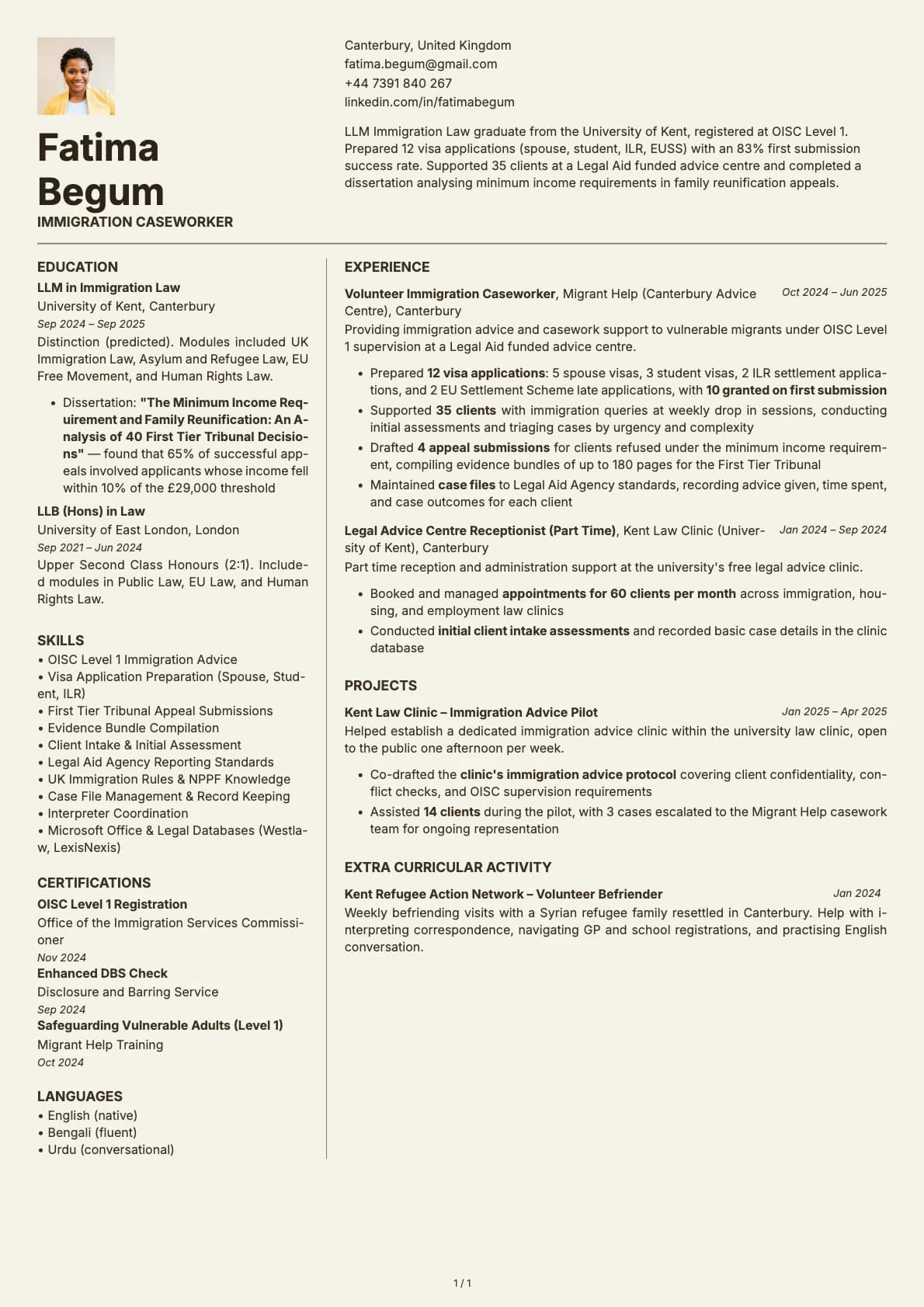
This resume belongs to Fatima Begum, who completed an LLM in Immigration Law at the University of Kent and worked as a volunteer caseworker at a legal advice centre during her studies. She has supported 35 clients with immigration queries, prepared 12 visa applications, and is registered at OISC Level 1. Her resume demonstrates practical casework alongside academic expertise.
What Makes This Resume Work
OISC registration level is clearly stated. Fatima is registered at OISC Level 1, which permits her to provide immigration advice on straightforward matters (family visas, student visas, settlement applications). This tells an employer she is legally authorised to do the work and has passed the OISC competence assessment. The registration level determines what cases she can handle independently.
Casework is described with application types and outcomes. She prepared 12 visa applications: 5 spouse visas, 3 student visas, 2 settlement (ILR) applications, and 2 EU Settlement Scheme applications. Of these, 10 were granted on first submission. Naming the application types and the success rate gives an employer a clear picture of her competence.
Legal aid and pro bono experience adds credibility. Fatima worked at a legal advice centre funded by Legal Aid, which means she worked with vulnerable clients on complex cases involving domestic violence exemptions, destitution applications, and human rights claims. This experience is valued by immigration firms because legal aid cases require thorough documentation and strict compliance with the Legal Aid Agency's billing and reporting requirements.
The LLM dissertation tackled a current policy issue. Her research analysed the impact of the minimum income requirement on family reunification, studying 40 appeal tribunal decisions and finding that 65% of successful appeals involved applicants whose income fell within 10% of the threshold. This demonstrates analytical rigour and deep engagement with immigration policy.
Key Takeaways
State your OISC level or SRA status. Without regulatory authorisation, you cannot provide immigration advice for payment. Making your level visible on your resume is the first thing an employer will check.
Quantify your casework by application type and outcome. Spouse visas, student visas, ILR, asylum, and human rights claims are distinct case types. Showing a range demonstrates versatility, and quoting success rates demonstrates quality.
If you have legal aid experience, highlight it. Legal aid immigration work is underfunded and oversubscribed, and experience with it shows you can work with vulnerable clients under resource constraints.
Build your own version
Open this layout in the builder and swap in your own details. It takes a few minutes.
Free to use. No account needed to start.
Was this resume example helpful?
Rate this example to help us create better content for you.
4.7 average from 71 ratingsRelated resume examples
Junior Compliance Officer
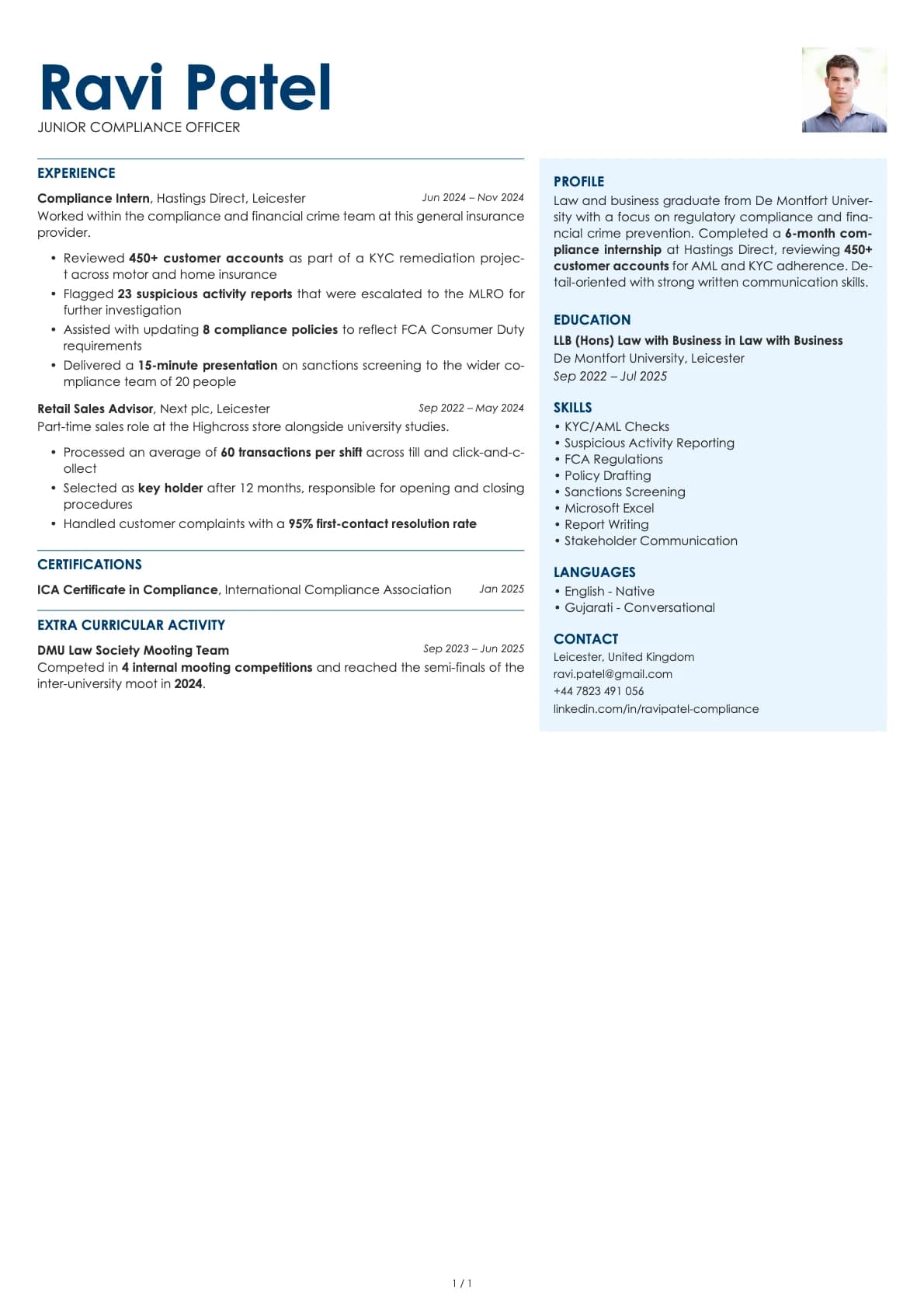
A junior compliance officer resume example with insurance compliance internship experience and AML knowledge.
Junior Conservation Officer
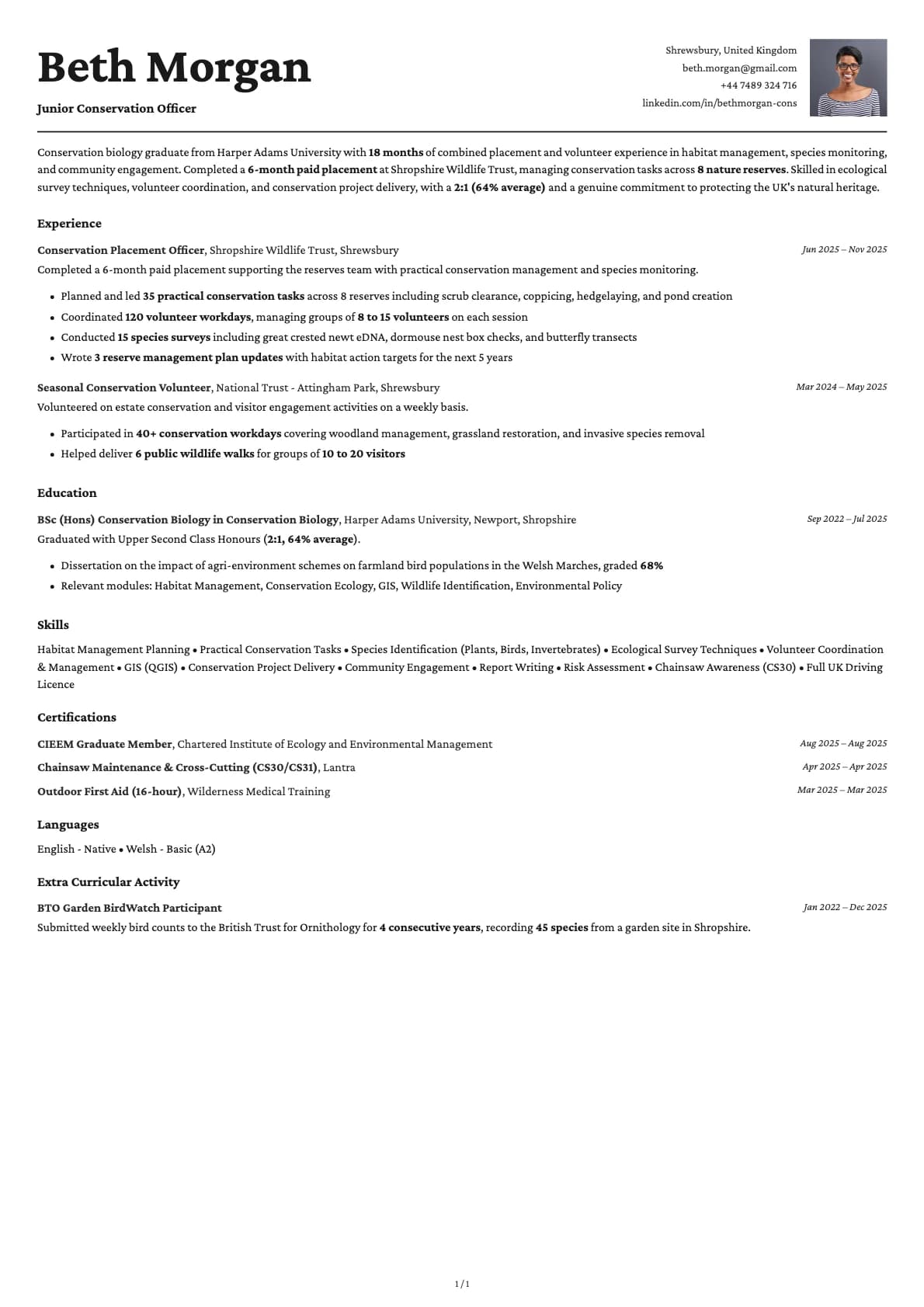
A junior conservation officer resume example with wildlife trust placement experience, volunteer coordination, and habitat management skills.
Junior Consultant
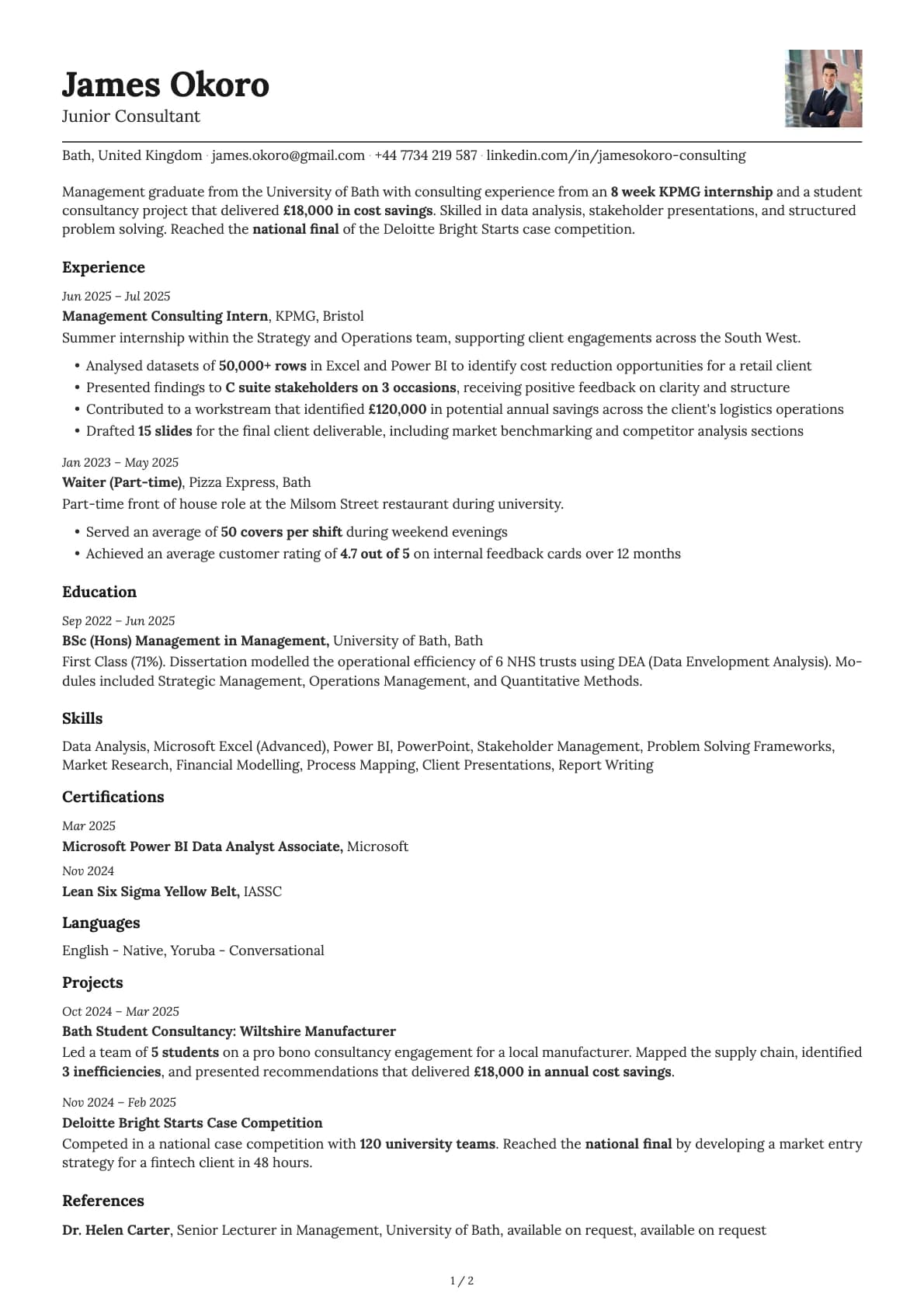
A junior consultant resume example with management degree, Big Four internship, and client facing project delivery experience.
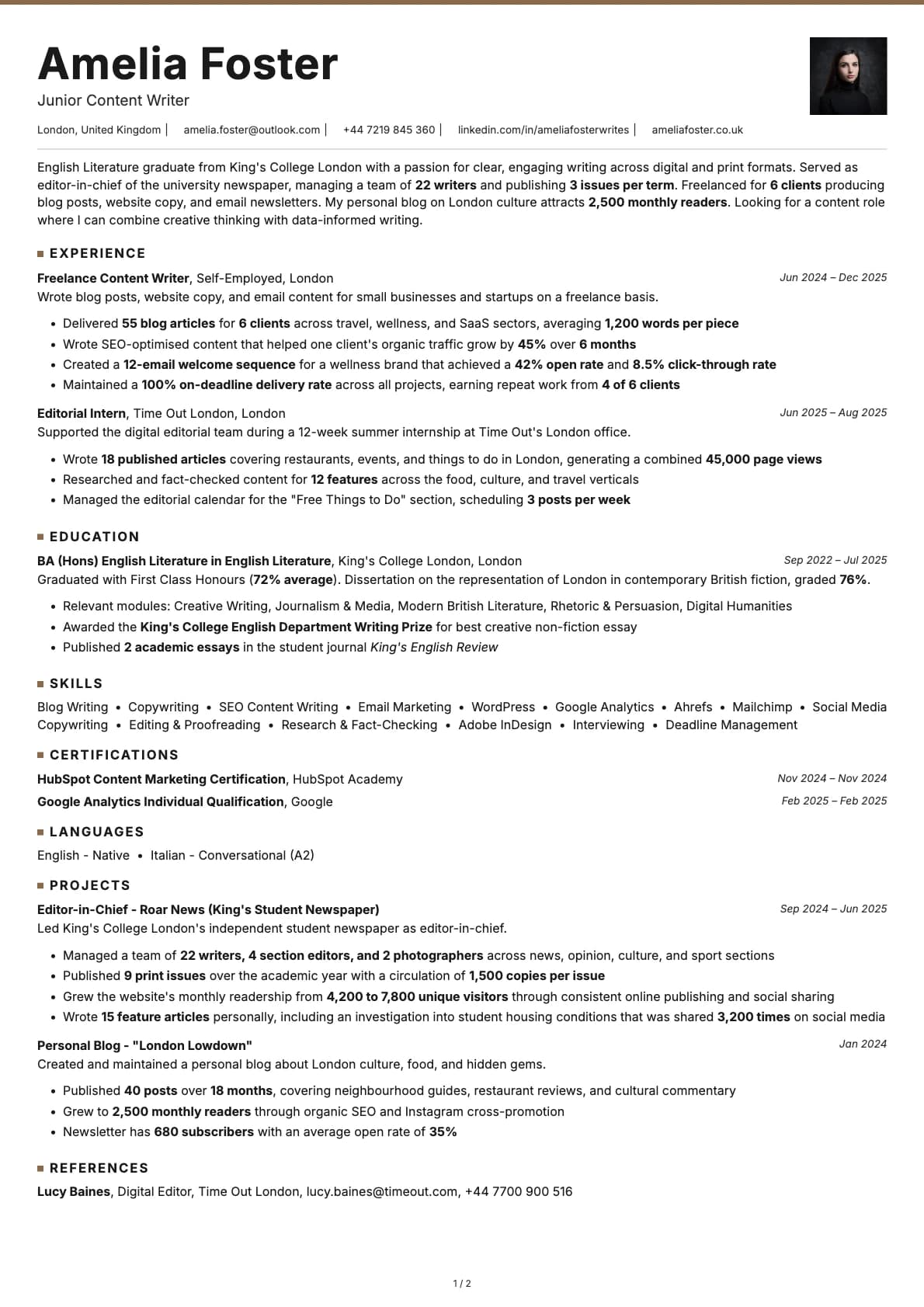
Junior Content Writer
A junior content writer resume example for recent graduates. See how to showcase your writing portfolio, SEO knowledge, and published work to land your first content role.

Junior Copywriter
A junior copywriter resume example for English graduates. See how to present freelance writing, student newspaper experience, and a portfolio to land your first agency or in-house role.
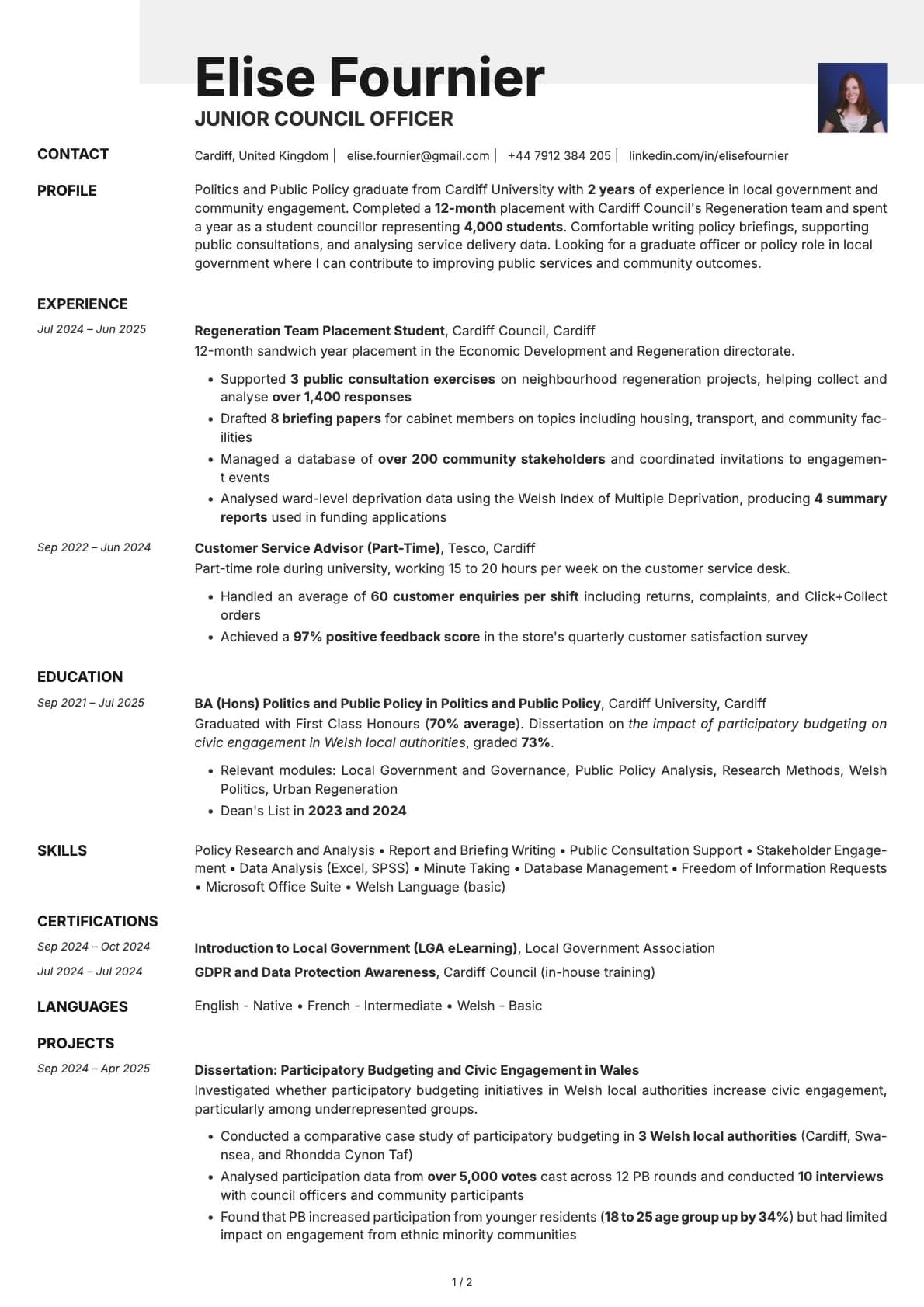
Junior Council Officer
A junior council officer resume example showing how to turn a council placement, student politics, and a public policy degree into a local government career.
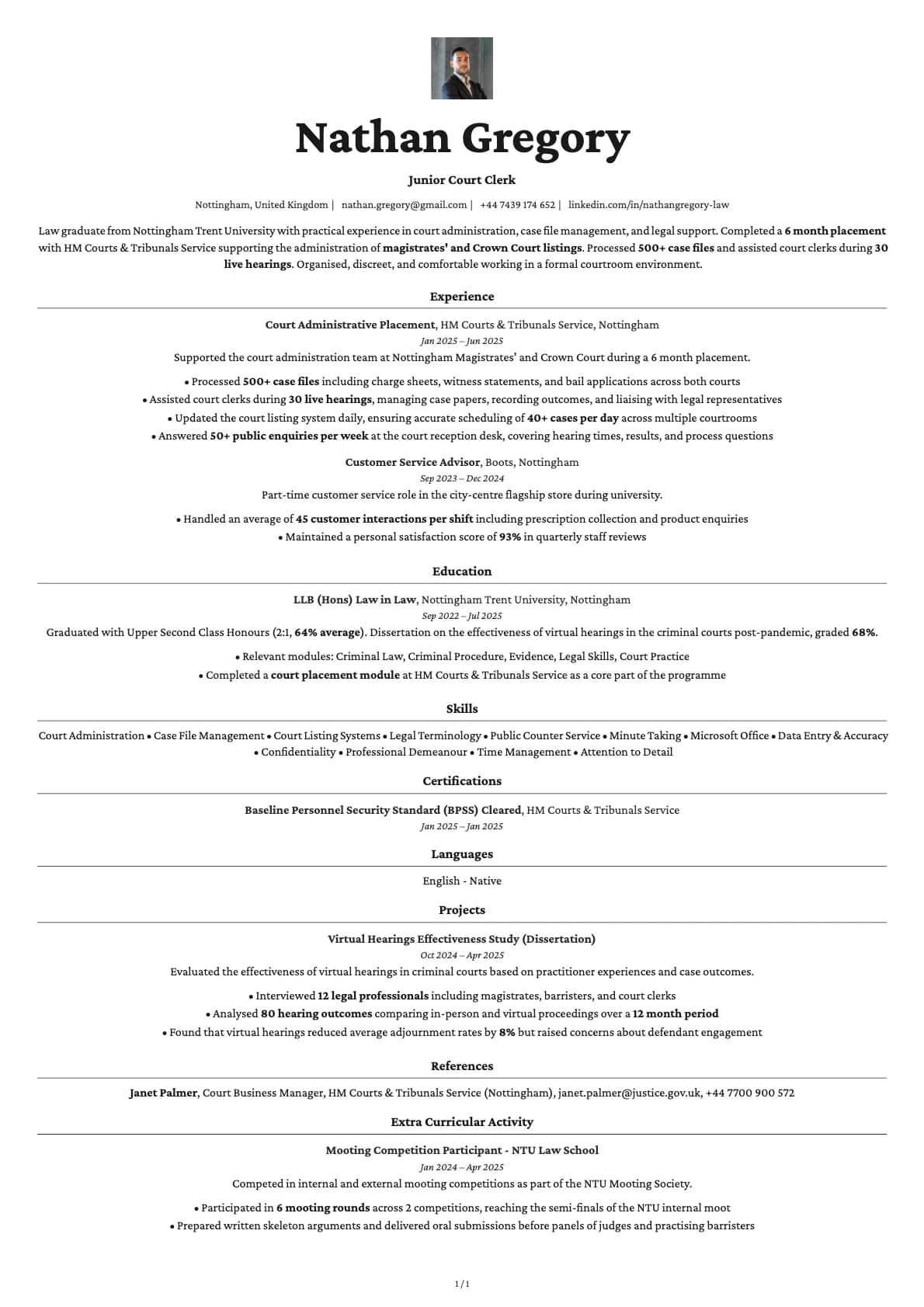
Junior Court Clerk
A junior court clerk resume example for law graduates. See how to present court administration experience, case file management, and HMCTS placement work to land your first court clerk role.
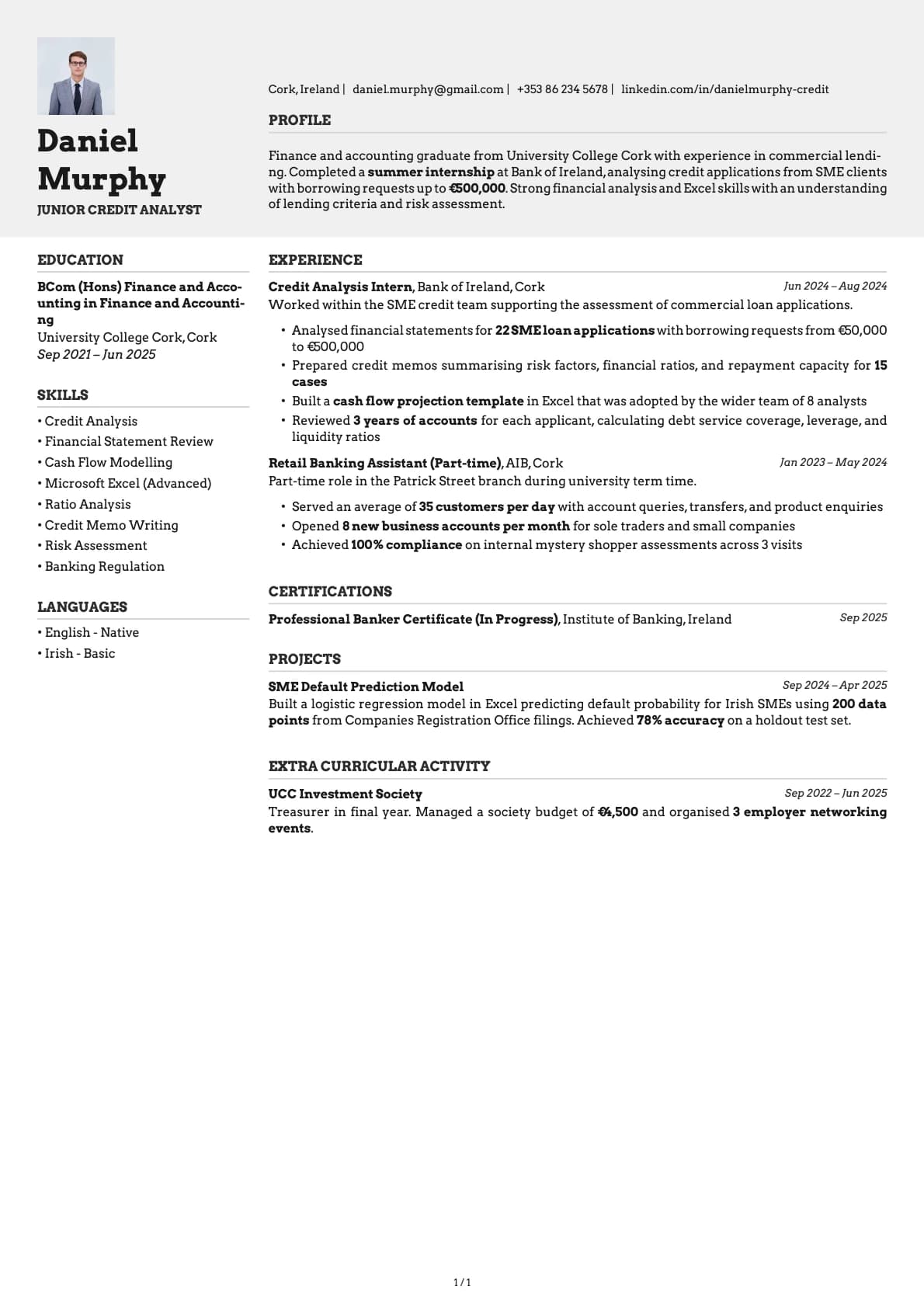
Junior Credit Analyst
A junior credit analyst resume example with Bank of Ireland internship experience and financial analysis skills.
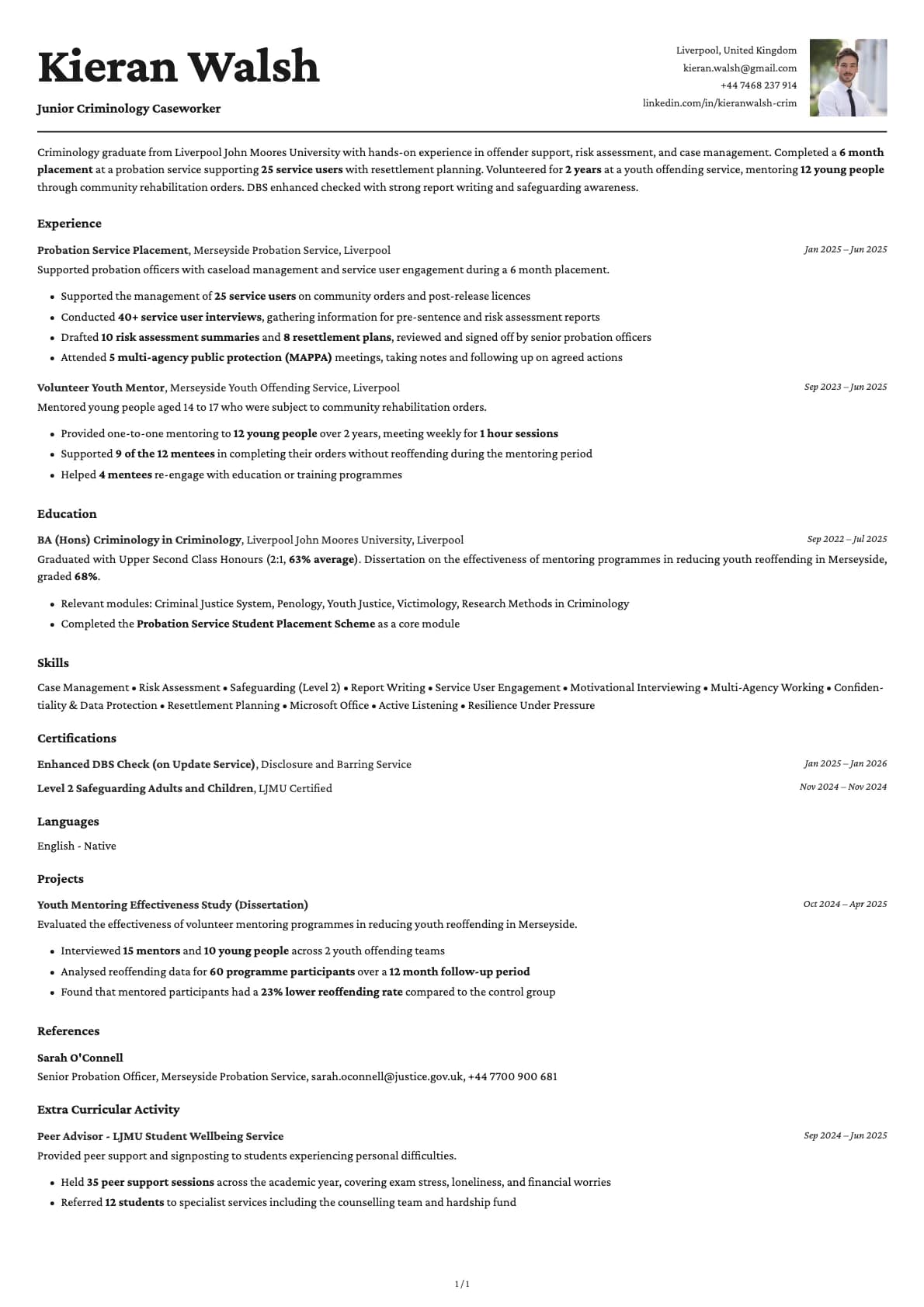
Junior Criminology Caseworker
A junior criminology caseworker resume example for graduates. See how to present probation experience, risk assessment skills, and mentoring work to land your first caseworker role.
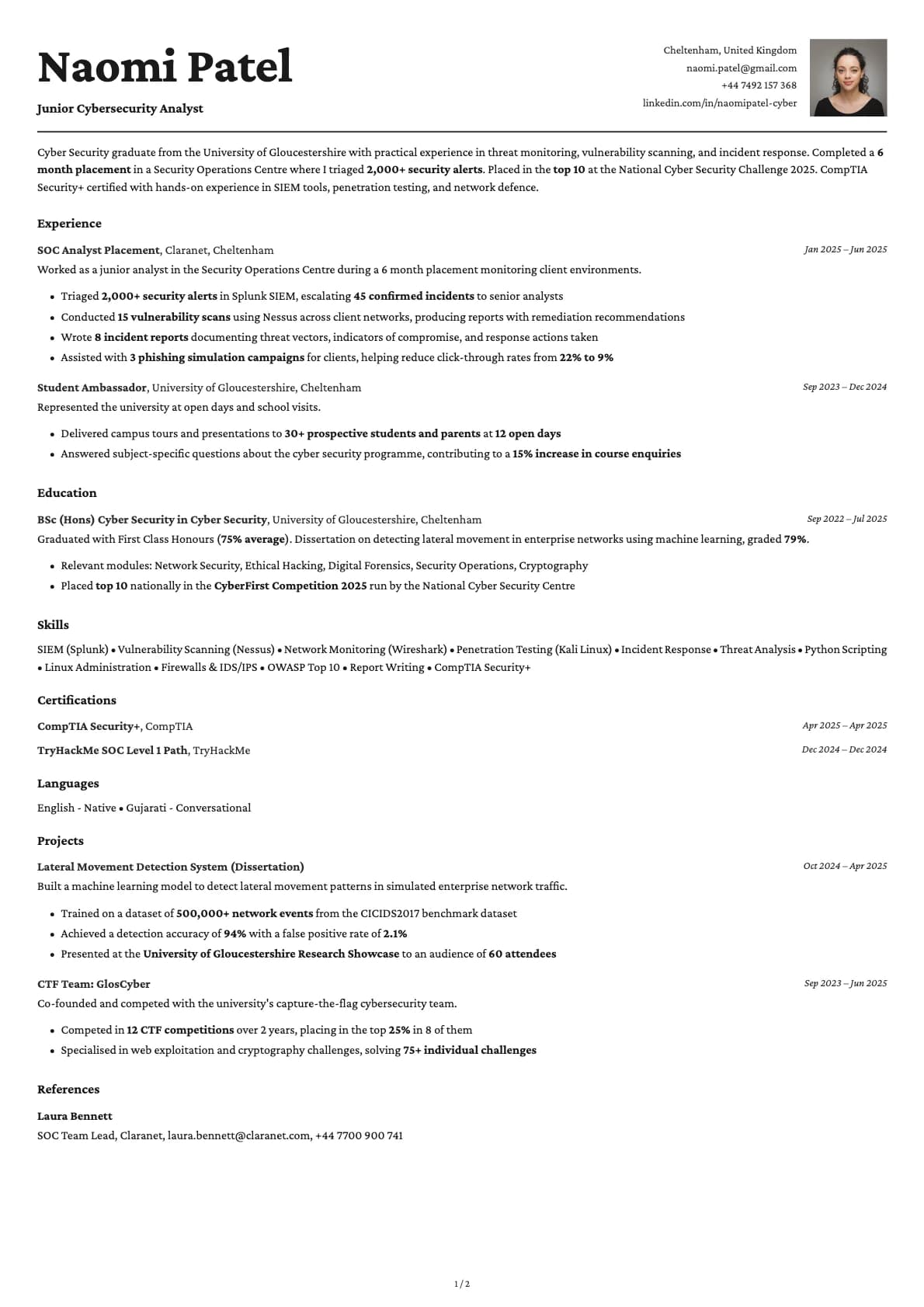
Junior Cybersecurity Analyst
A junior cybersecurity analyst resume example for graduates. See how to present SOC experience, CTF competitions, and Security+ certification to land your first cyber role.
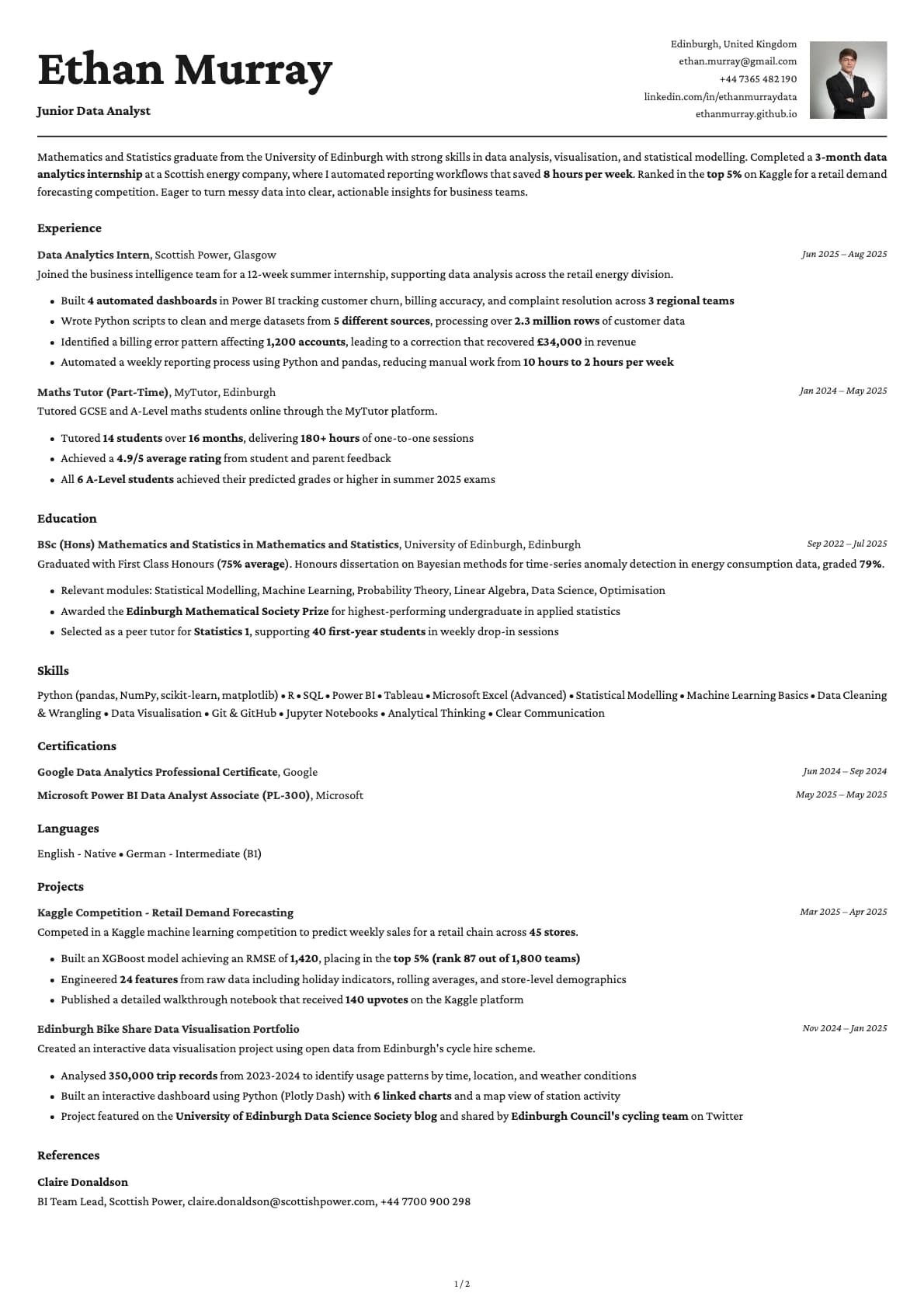
Junior Data Analyst
A junior data analyst resume example for recent graduates. See how to showcase your SQL skills, Python projects, and analytical experience to land your first analyst role.
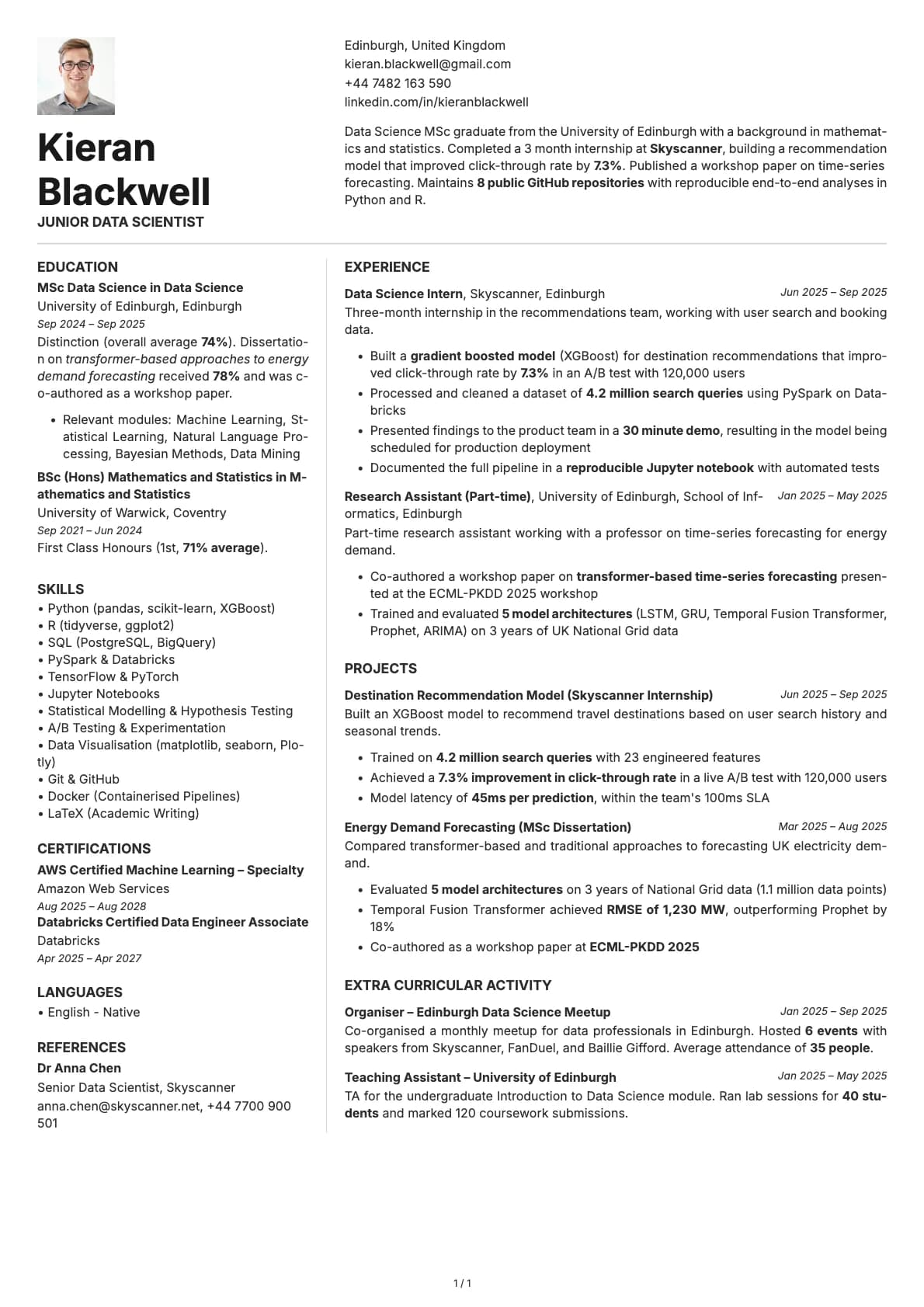
Junior Data Scientist
A junior data scientist resume example with Python projects, model accuracy metrics, and published research from a Data Science MSc graduate entering the field.