Graduate Optometrist Resume Example
A graduate optometrist resume example with pre-registration experience, GOC registration, and eye examination numbers for newly qualifying optometrists.

Laddro Team
Free to use. No account needed to start.
Free to use. No account needed to start.
Overview
The optometry job market is strong, but the best positions at established practices still go to candidates who can demonstrate high clinical volumes, strong detection rates, and genuine commercial awareness. Your pre-registration year is your biggest selling point, and your resume needs to show exactly how many patients you have seen and what you found.
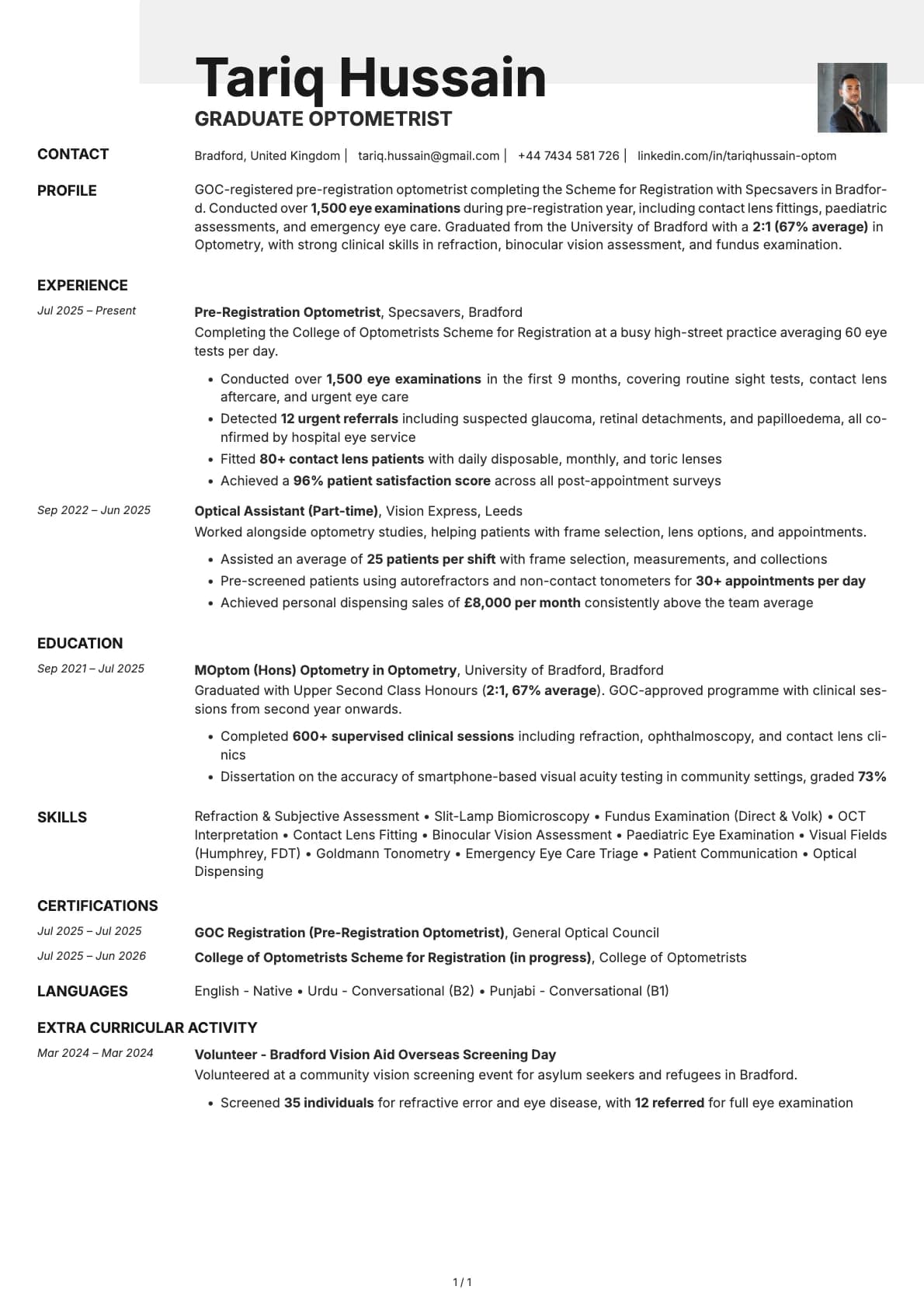
This resume belongs to Tariq Hussain, a pre-registration optometrist completing his Scheme for Registration at Specsavers in Bradford. He has conducted over 1,500 eye examinations in his first nine months, detected 12 urgent referrals that were all confirmed at hospital, and fitted 80 contact lens patients. He also worked as an optical assistant throughout his degree, giving him dispensing and commercial skills that most new optometrists lack.
What Makes This Resume Work
Examination volume and detection rates lead the story. Tariq's 1,500 examinations and 12 confirmed urgent referrals tell a practice owner two things: he can handle a full appointment diary, and he does not miss pathology. These are the two most important qualities in a newly qualified optometrist.
The optical assistant role demonstrates commercial value. Practices are businesses, and Tariq's dispensing experience and monthly sales figures show he understands the retail side of optometry. Candidates who can examine patients well and contribute to the commercial performance of the practice are highly sought after.
Community language skills are a genuine asset. In a diverse city like Bradford, being able to conduct eye examinations in Urdu and Punjabi means Tariq can serve a significant portion of the local patient base more effectively. This is a practical advantage that sets him apart.
Key Takeaways
Pre-registration and newly qualified optometrists should highlight examination numbers, urgent referral detection rates, and contact lens fitting volumes. If you have prior optical retail experience, include your dispensing sales figures because they demonstrate commercial awareness. Language skills relevant to your local patient population are worth featuring prominently, and any community screening work shows commitment to public eye health.
Build your own version
Open this layout in the builder and swap in your own details. It takes a few minutes.
Free to use. No account needed to start.
Was this resume example helpful?
Rate this example to help us create better content for you.
4.7 average from 96 ratingsRelated resume examples
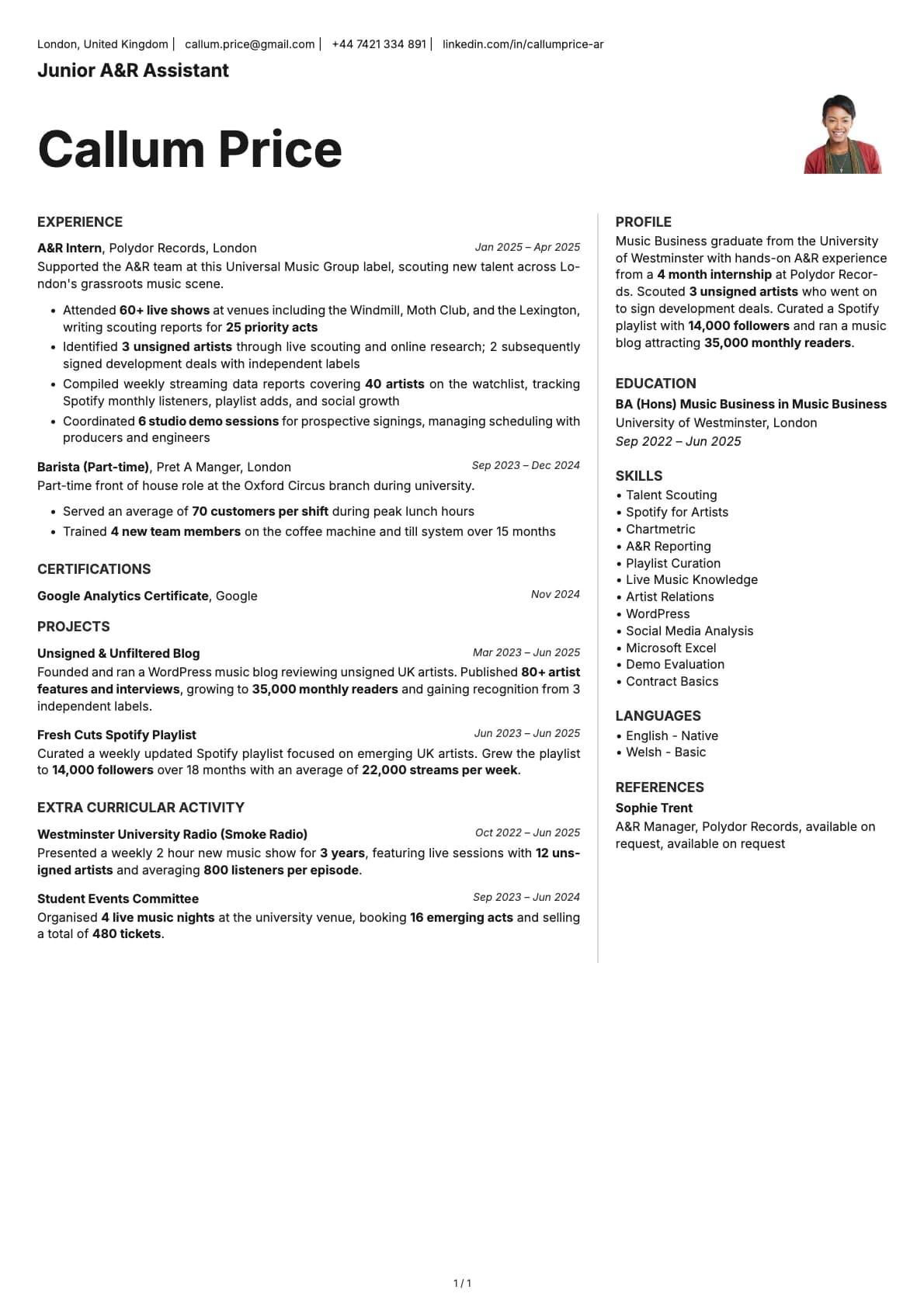
Junior A&R Assistant
A junior A&R assistant resume example with music business degree, label internship, and artist scouting experience for 2026.
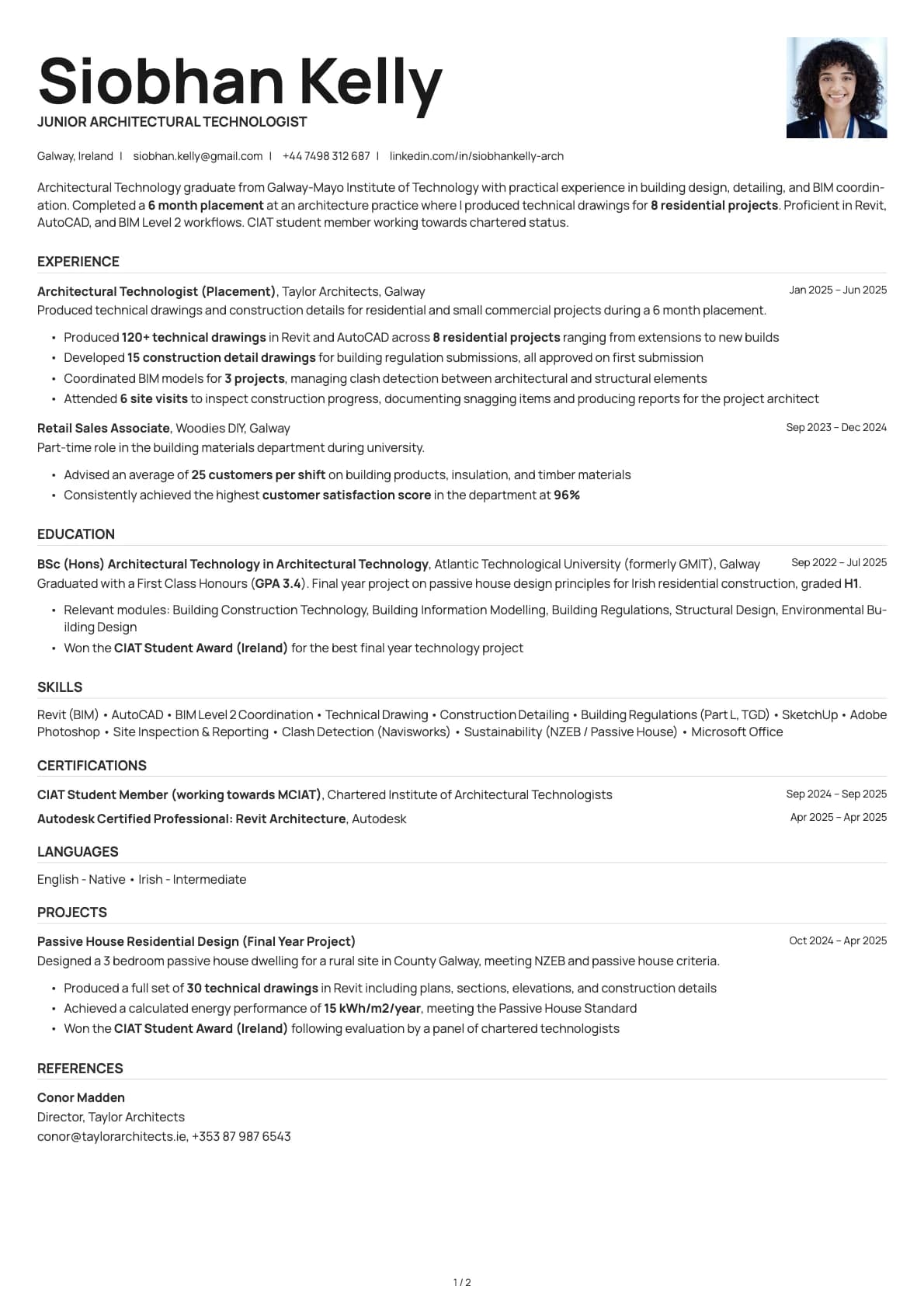
Junior Architectural Technologist
A junior architectural technologist resume example for graduates. See how to present Revit skills, BIM experience, and technical drawing output to land your first architectural technology role.
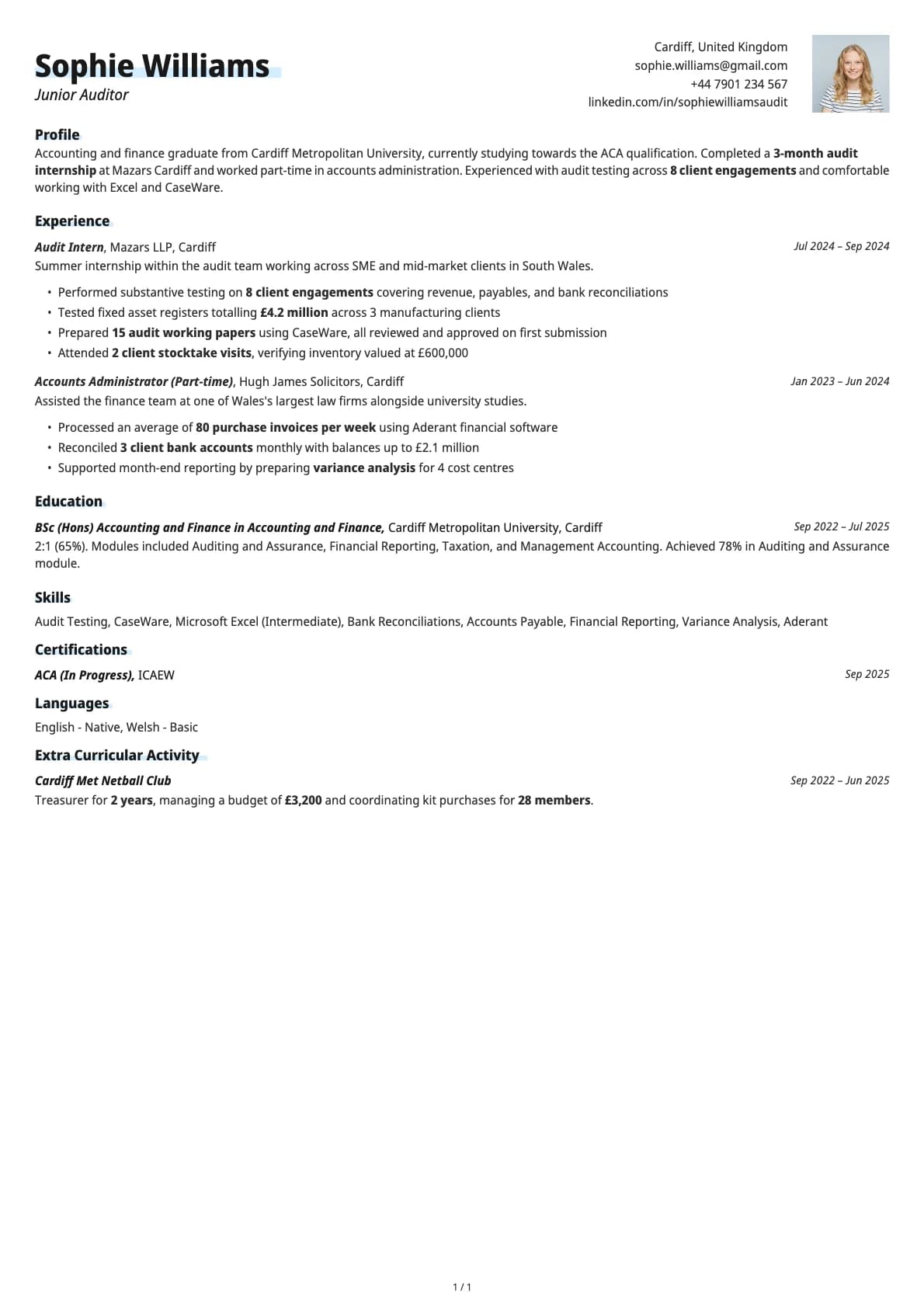
Junior Auditor
A junior auditor resume example with Mazars internship experience and accounts administration background.
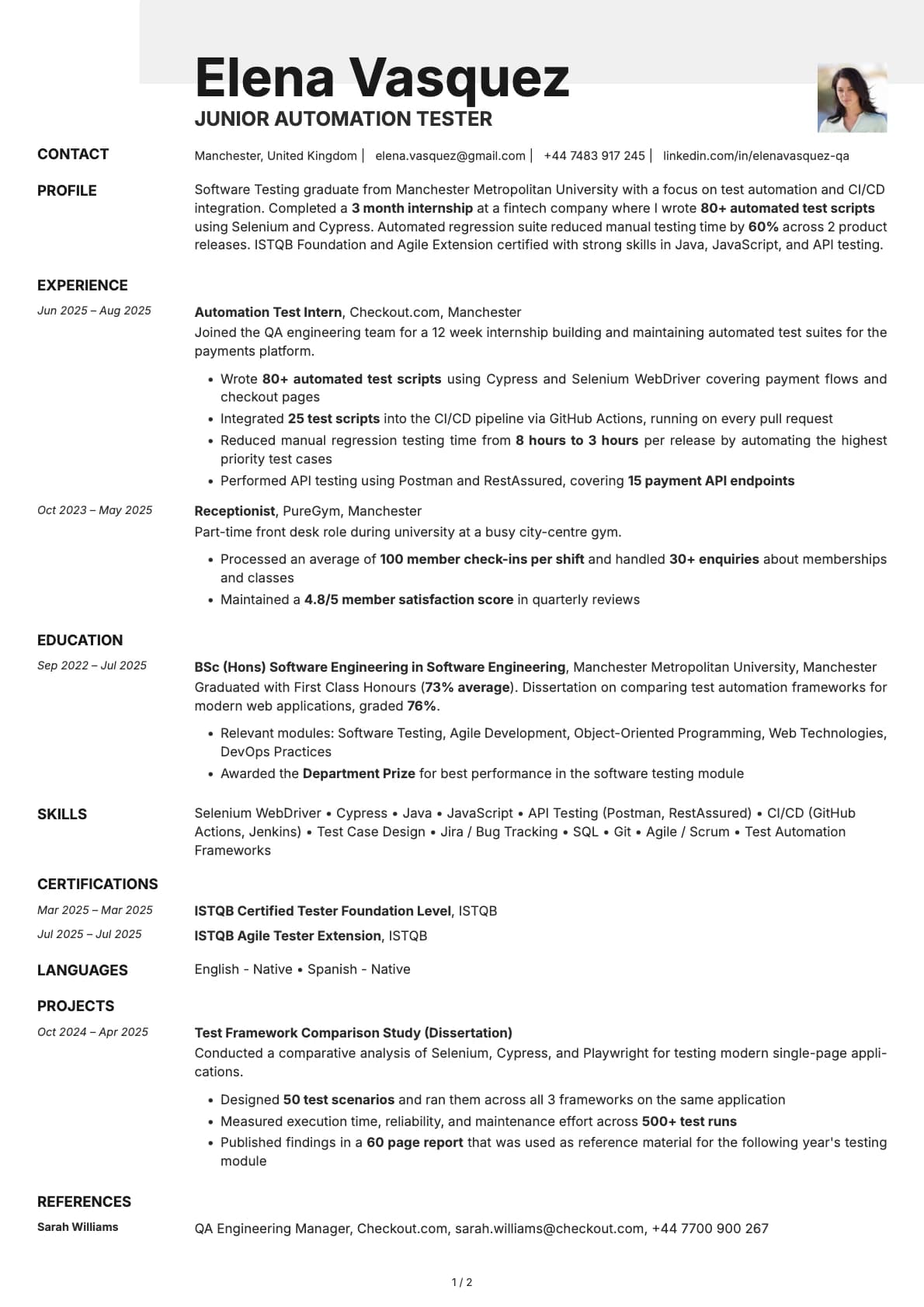
Junior Automation Tester
A junior automation tester resume example for graduates. See how to present test automation scripts, CI/CD integration, and ISTQB certification to land your first automation testing role.
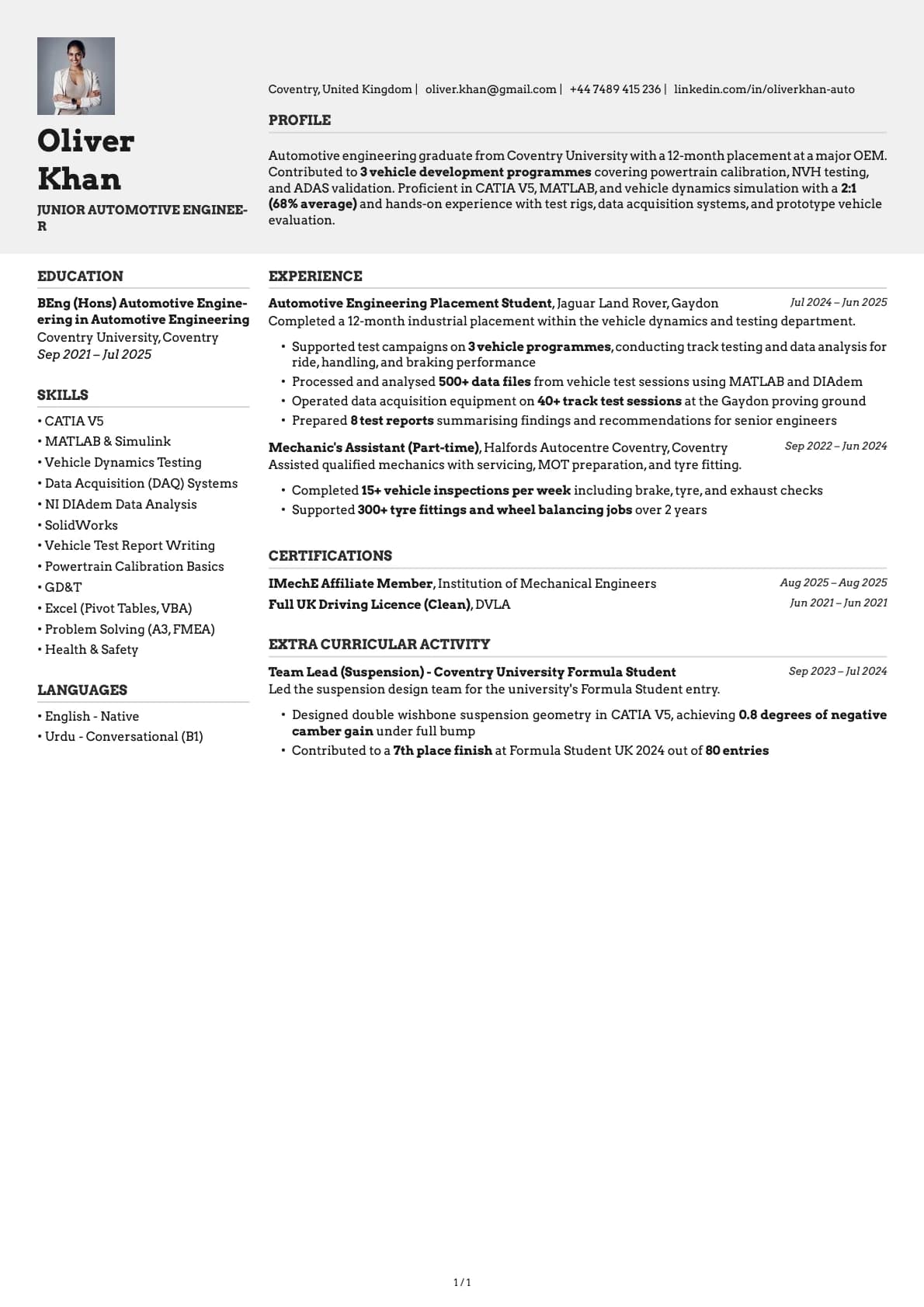
Junior Automotive Engineer
A junior automotive engineer resume example with OEM placement experience, vehicle testing data, and Formula Student achievements.
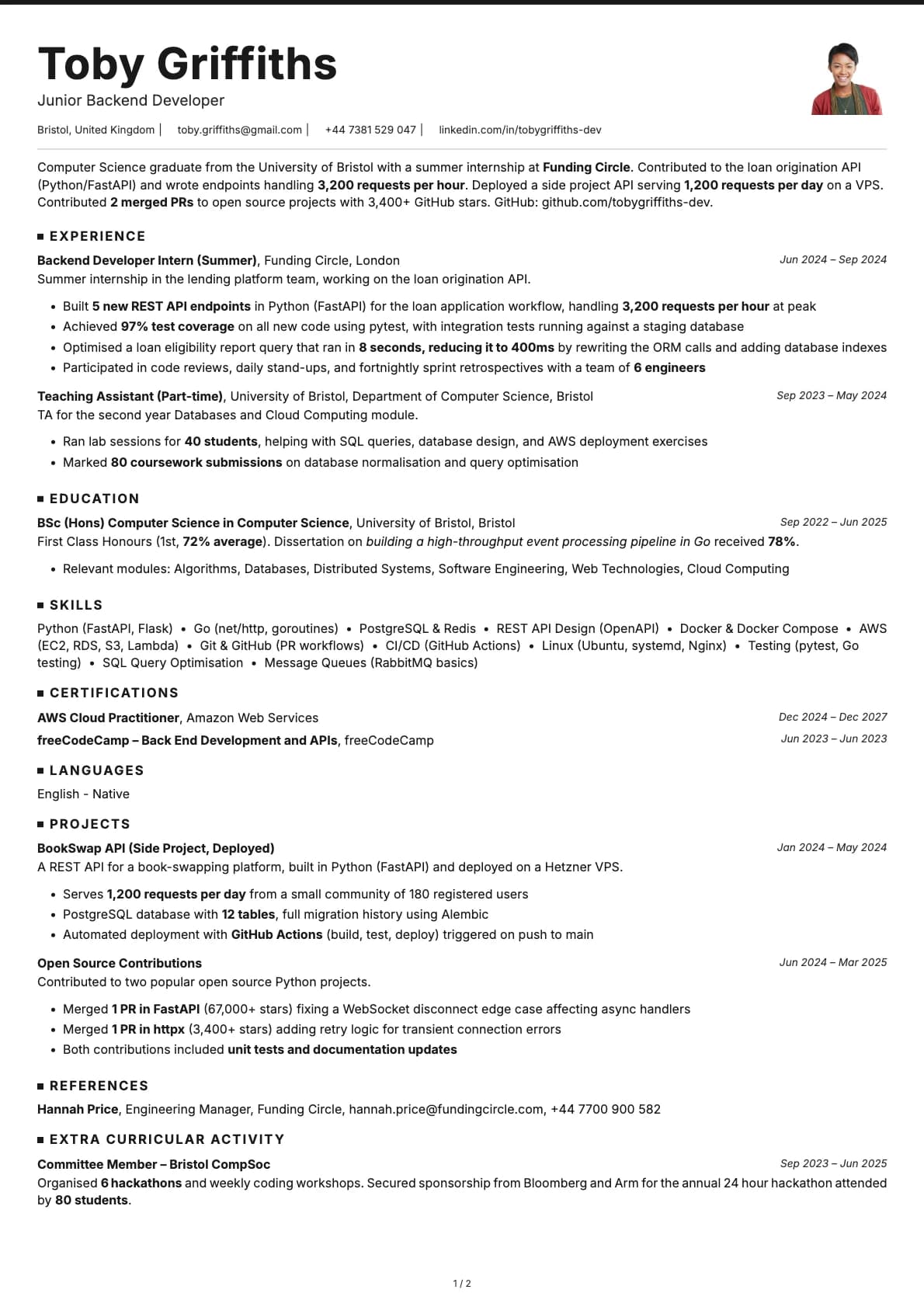
Junior Backend Developer
A junior backend developer resume example with REST API projects, PostgreSQL experience, and deployed services from a Computer Science BSc graduate entering development.
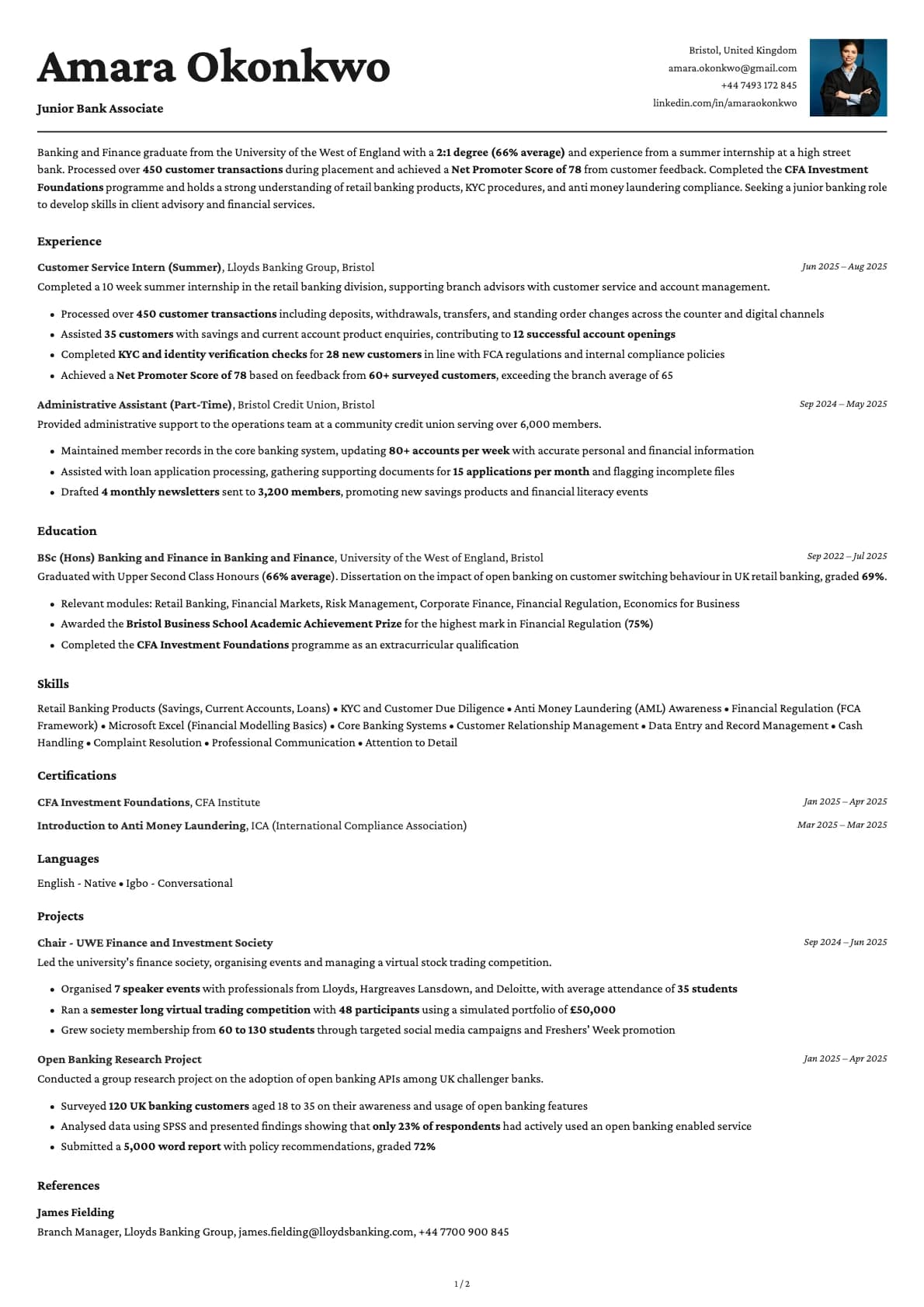
Junior Bank Associate
A junior bank associate resume example for banking graduates. See how to present your compliance knowledge, customer service skills, and internship experience.
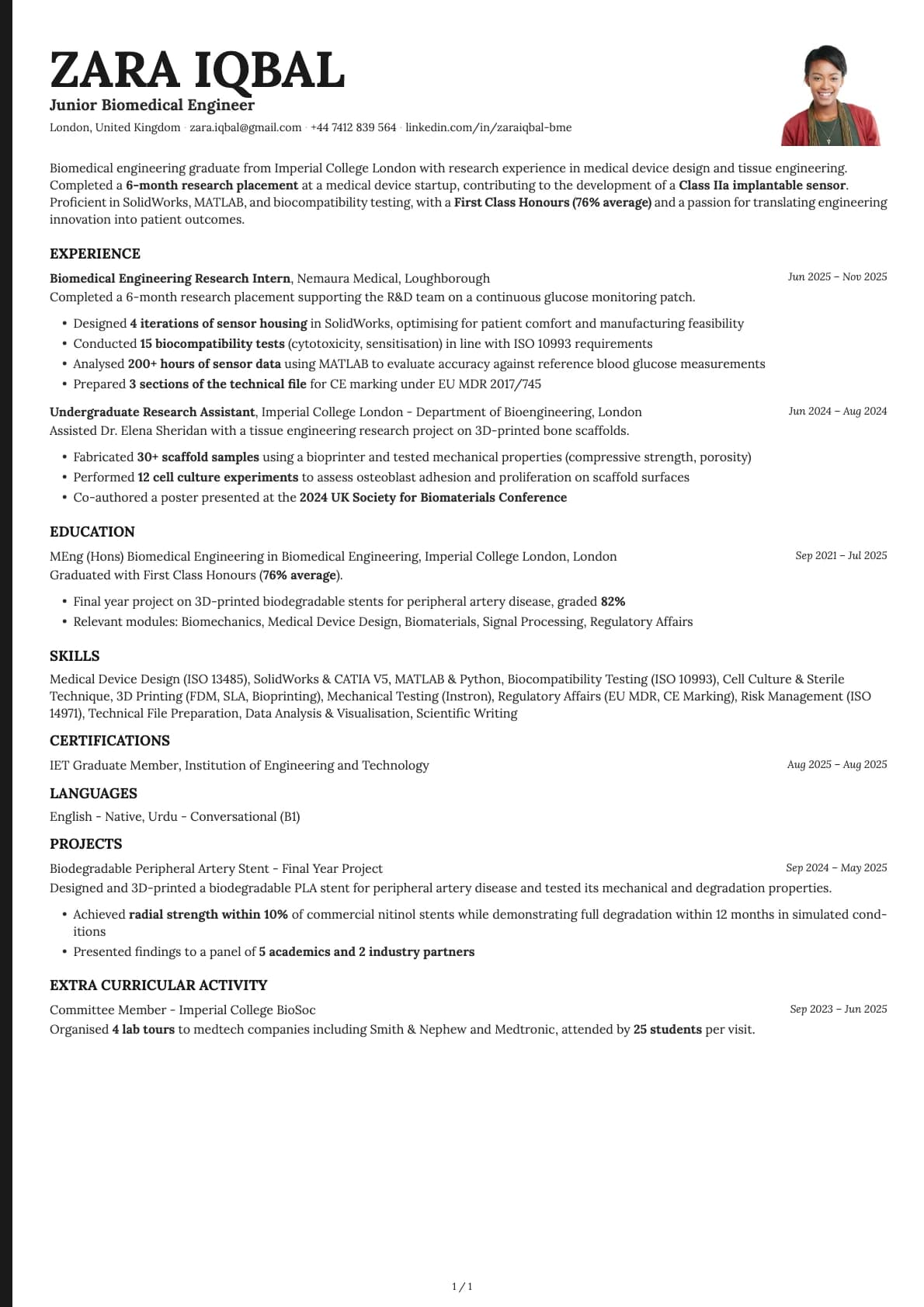
Junior Biomedical Engineer
A junior biomedical engineer resume example with medical device R&D experience, ISO standards knowledge, and research publications.
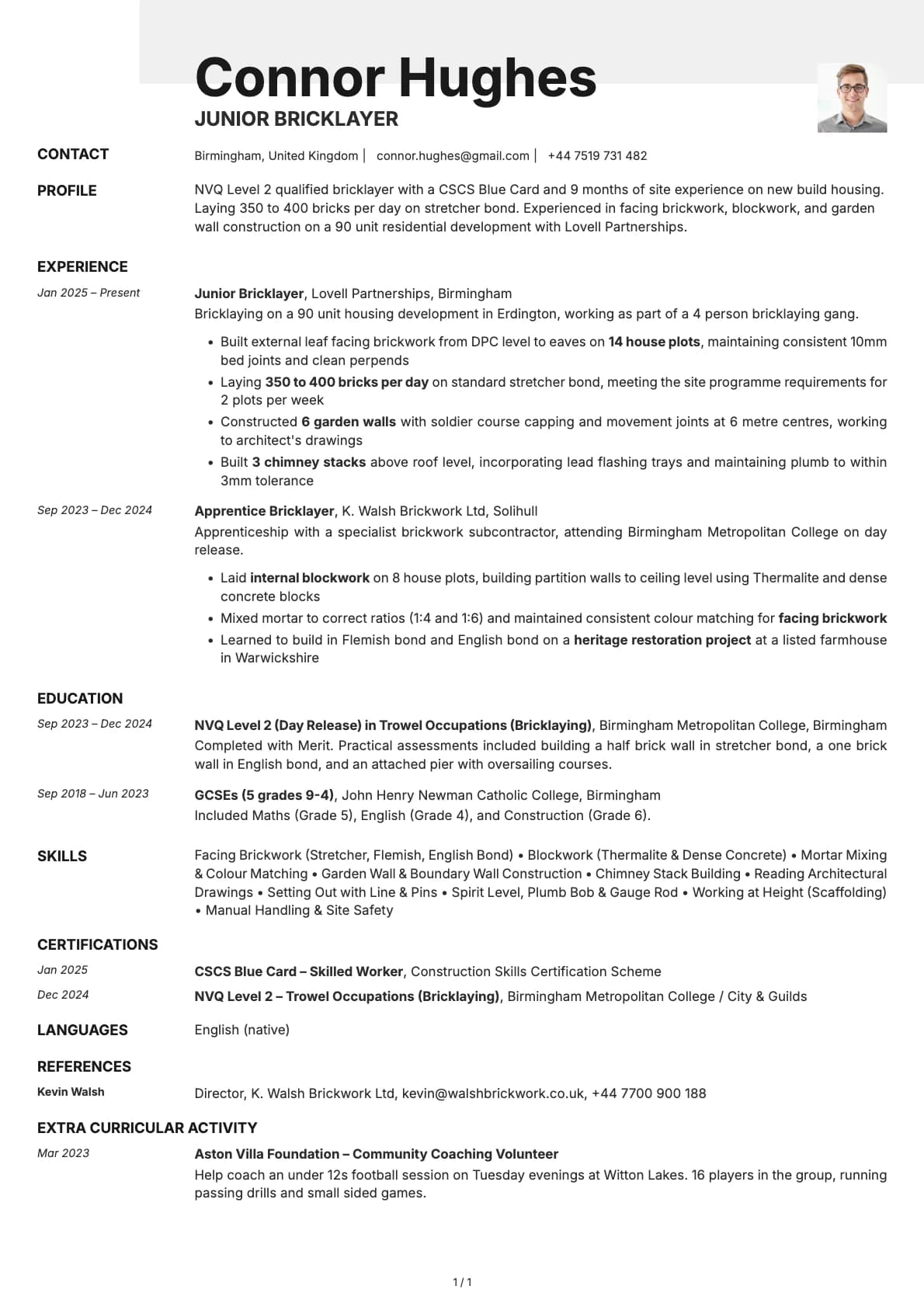
Junior Bricklayer
A junior bricklayer resume example for NVQ qualified bricklayers entering the trade. See how to present your bricklaying skills, CSCS card, and site experience.

Junior Business Analyst
A junior business analyst resume example for career changers. See how to use retail management and a business degree to break into business analysis.
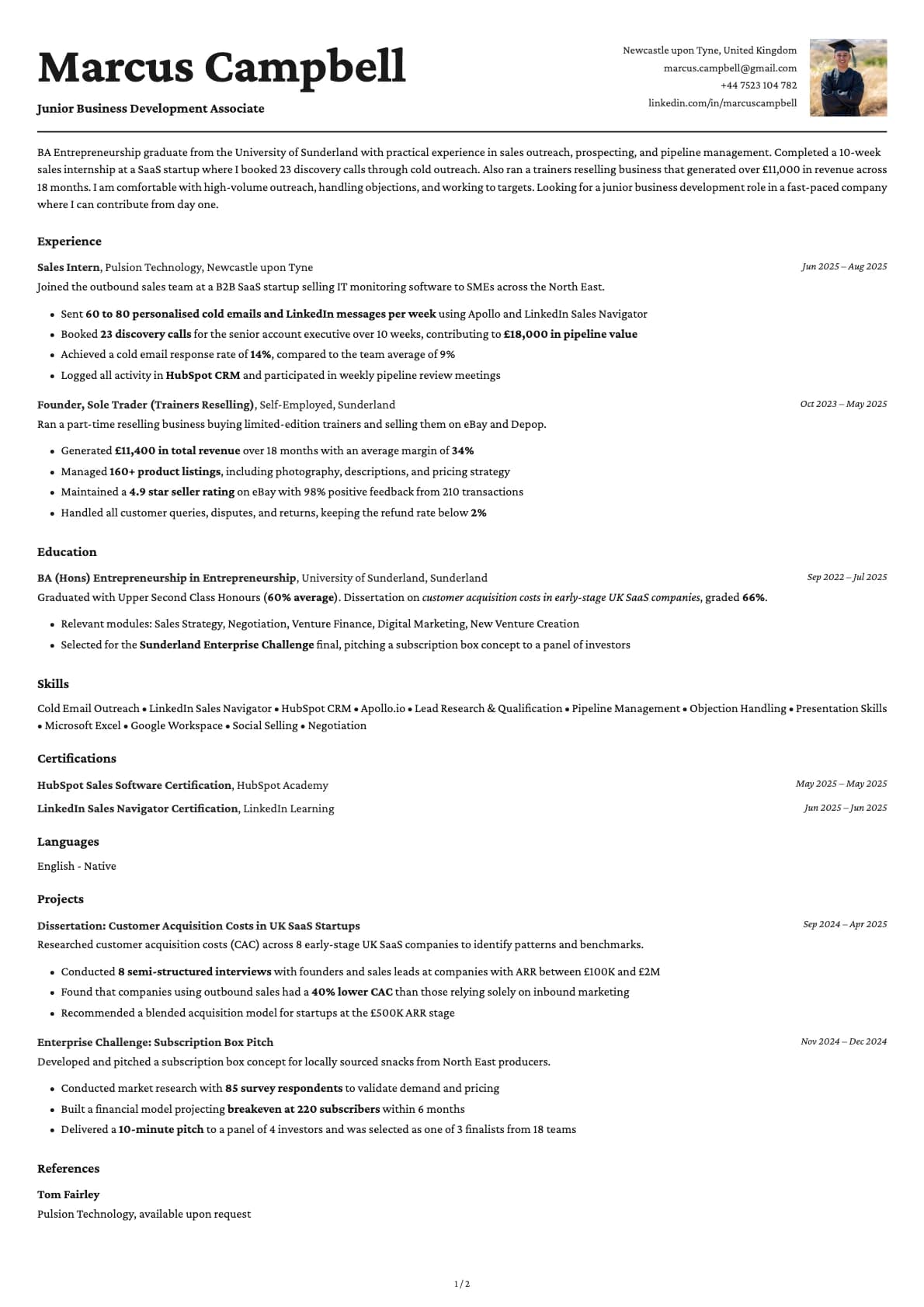
Junior Business Development Associate
A junior business development associate resume example for entrepreneurship graduates. See how cold outreach metrics and startup experience win interviews.
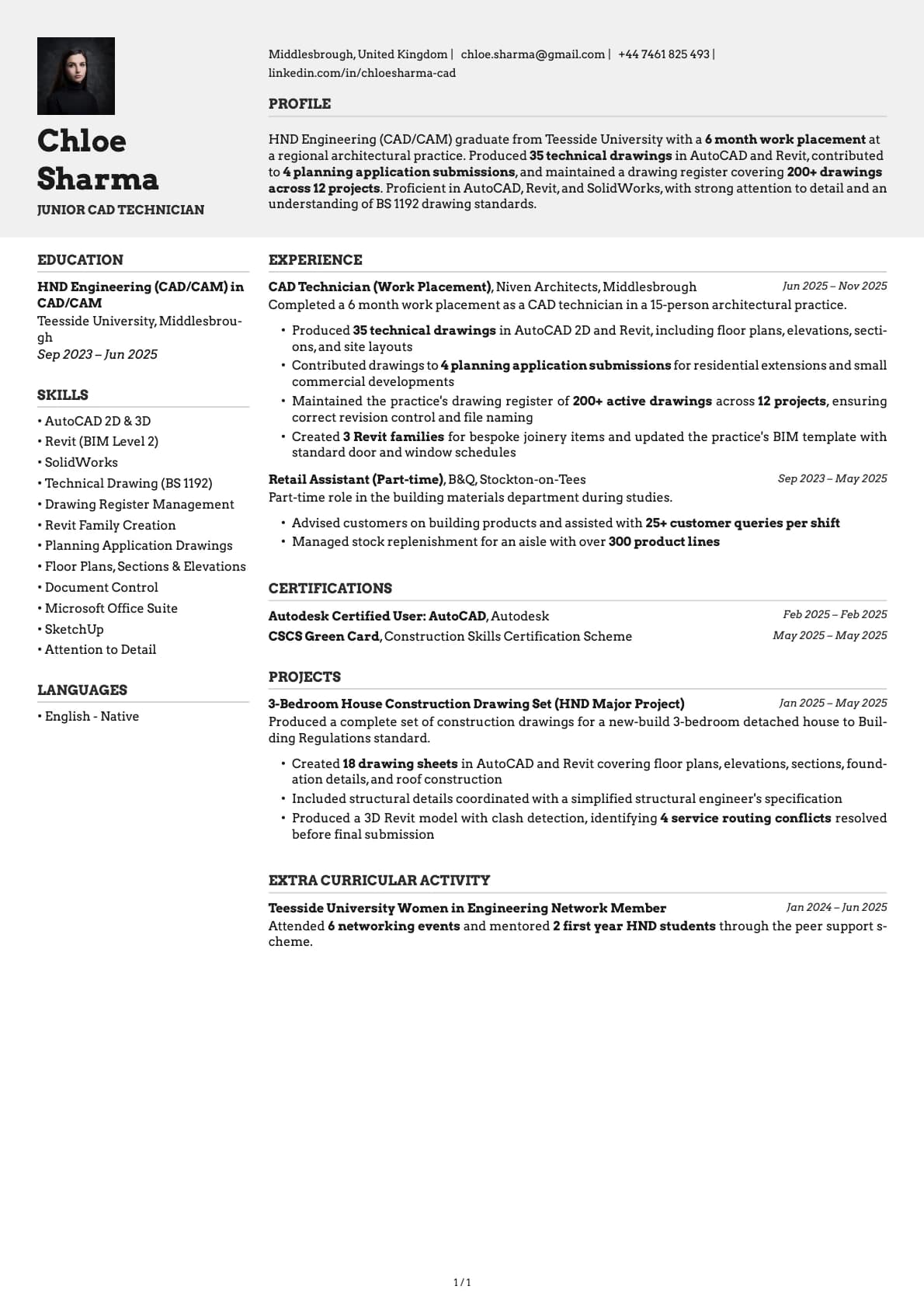
Junior CAD Technician
A junior CAD technician resume example with HND qualification, AutoCAD and Revit proficiency, and architectural practice experience.