Bookkeeper Cover Letter Example
A bookkeeper cover letter example for a multi-site hospitality role at YTL Hotels.

Laddro Team
Free to use. No account needed to start.
Free to use. No account needed to start.
Overview
Bookkeeper cover letters are often too modest. Bookkeepers tend to describe their work in functional terms: "I process invoices, reconcile bank accounts, and prepare VAT returns." All true, but it does not tell the hiring manager how much volume you handle, how accurately you work, or whether you have ever improved anything. The best bookkeeper cover letters put numbers to the routine and highlight the moments where you caught something or fixed something.
This letter belongs to Neil Cartwright, a bookkeeper with five years of experience in hospitality and retail, applying for a role at YTL Hotels. His letter works because he treats everyday bookkeeping tasks as evidence of capability and backs each one with a number.
The opening: volume and sector experience
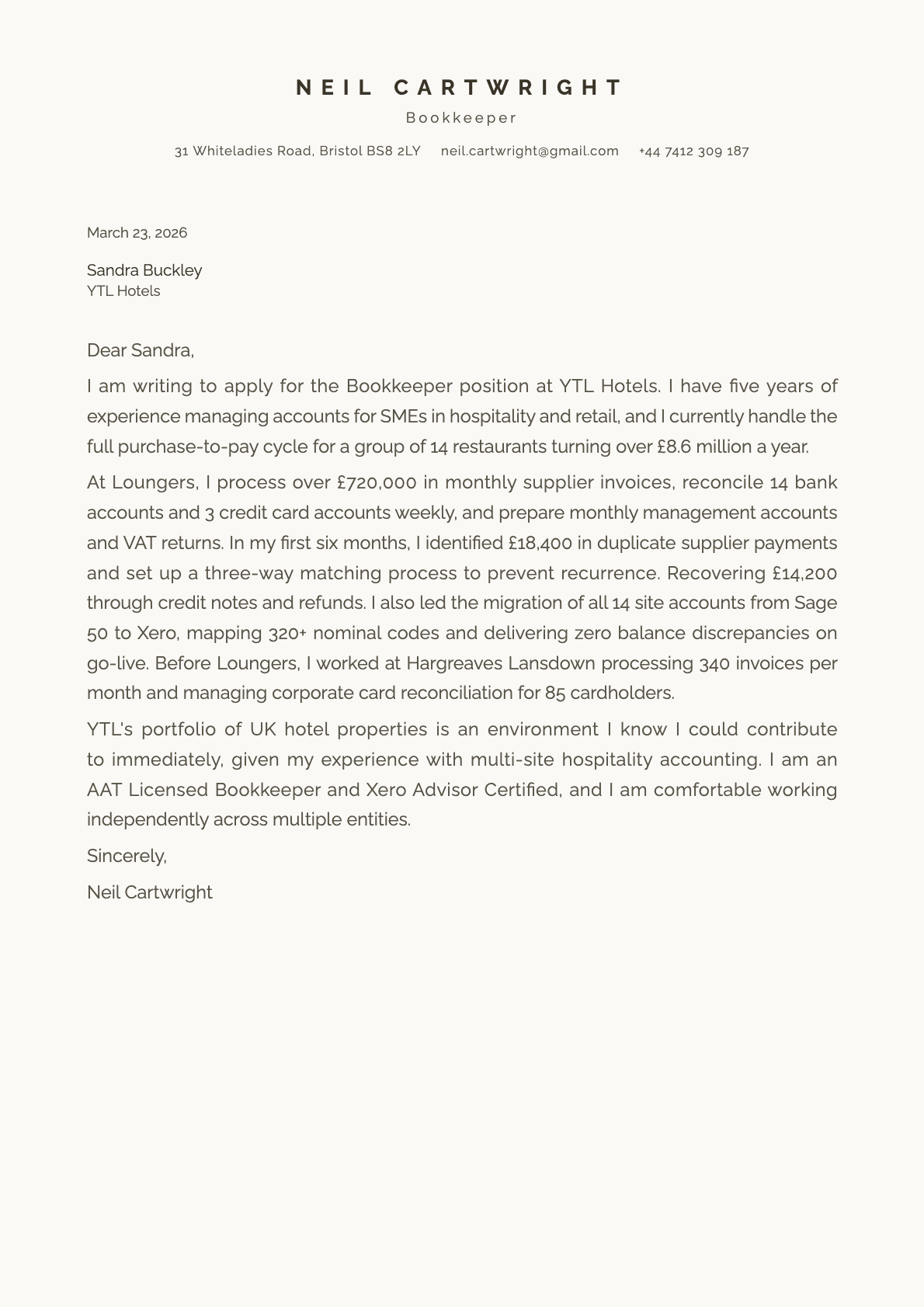
Neil opens by stating his experience and immediately quantifying his current workload. He handles the full purchase-to-pay cycle for 14 restaurants turning over £8.6 million a year. That single detail tells the hiring manager the scale and complexity of his work.
I have five years of experience managing accounts for SMEs in hospitality and retail, and I currently handle the full purchase-to-pay cycle for a group of 14 restaurants turning over £8.6 million a year.
For your own letter: state the type of bookkeeping you do (purchase ledger, sales ledger, full purchase-to-pay, management accounts) and the size of the business or businesses you work with. Revenue figures, entity counts, and transaction volumes all help the reader understand your level.
The body: routine work, extraordinary detail
The middle paragraph covers Neil's day-to-day work at Loungers and then pivots to two specific achievements. The £18,400 duplicate payment discovery is the standout moment. Finding duplicate payments is not unusual, but the follow-up matters: he set up a three-way matching process to prevent recurrence and recovered £14,200 through credit notes. That shows he does not just find problems. He fixes them and builds systems to stop them happening again.
The Sage 50 to Xero migration is the second highlight. Migrating 14 sites, mapping 320+ nominal codes, and achieving zero balance discrepancies on go-live is a meaningful technical achievement. Software migrations are stressful and error-prone, and completing one cleanly demonstrates both technical skill and attention to detail.
The takeaway for bookkeepers: your cover letter should include at least one "catch" story (something you found that was wrong) and one "build" story (something you set up or improved). These are the stories that show you are more than a data entry role.
The closing: sector fit and qualifications
Neil's closing is short and effective. He connects his multi-site hospitality experience to YTL's portfolio of hotel properties, which shows he understands the company's structure. He mentions his AAT Licensed Bookkeeper status and Xero Advisor Certification, both of which are relevant and credible.
The final line, "I am comfortable working independently across multiple entities," is a quiet but important signal. Many bookkeeping roles, especially in hospitality and property, require managing multiple entities with minimal supervision. Stating this directly tells the employer you can handle that.
If you hold AAT qualifications, always include them. The AAT is the most recognised bookkeeping qualification in the UK, and hiring managers actively look for it. If you also hold software-specific certifications (Xero Advisor, QuickBooks ProAdvisor, Sage Certified), include those too.
What makes this letter work
Neil does not try to sound impressive through language. He lets the numbers do the talking. Monthly invoice volumes, bank account counts, duplicate payment values, nominal code counts. These details build a picture of someone who handles a high volume of work carefully and has a track record of improving things.
The letter also flows naturally from routine responsibilities to specific achievements to company fit. The reader finishes the letter with a clear understanding of what Neil does, how well he does it, and why he wants this particular job.
Common mistakes in bookkeeper cover letters
Being too vague about software. "Proficient in accounting software" is not helpful. Name the specific platforms: Xero, QuickBooks, Sage 50, Sage 200, FreeAgent, or whatever you use. If you have migrated between systems, mention that too. It is a valuable and relatively uncommon skill.
Underselling the volume. If you process 700 invoices a month, say so. If you reconcile 14 bank accounts weekly, say so. Volume is a proxy for capability, and bookkeeping roles are fundamentally about handling high volumes accurately.
Not mentioning VAT. If you prepare VAT returns, state it explicitly and note whether you work under Making Tax Digital. VAT is a critical bookkeeping skill and many job descriptions list it as a requirement.
Skipping the sector connection. If you are applying for a hospitality bookkeeping role and you have hospitality experience, make that connection obvious. Different sectors have different accounting patterns (seasonal cash flow, high supplier volumes, stock management) and showing you understand those patterns is a real advantage.
Was this cover letter example helpful?
Rate this example to help us create better content for you.
4.6 average from 142 ratingsBuild your own version
Open this layout in the builder and swap in your own details. It takes a few minutes.
Free to use. No account needed to start.
Related cover letter examples
Accountant
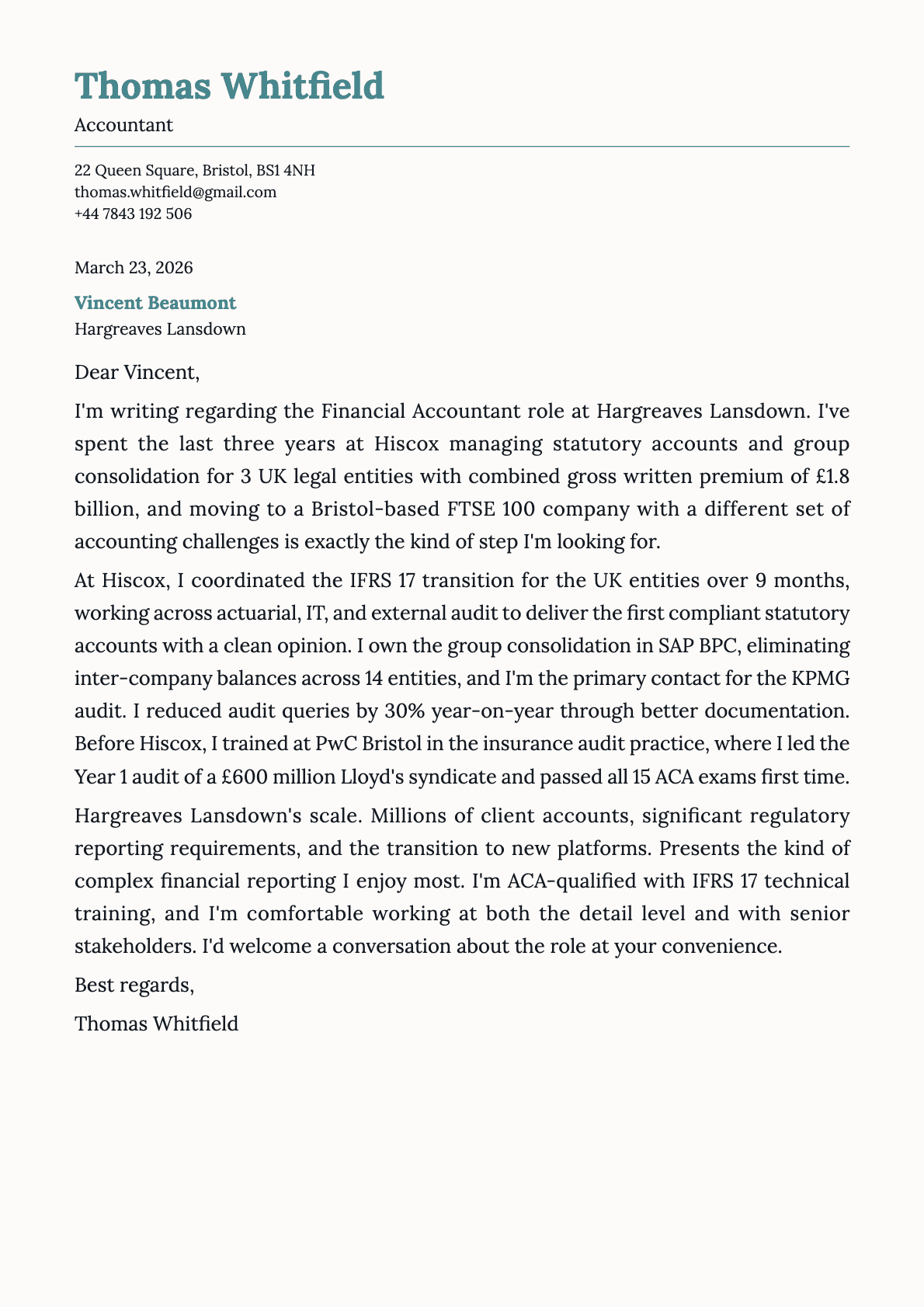
An accountant cover letter example showing how to present IFRS expertise, audit coordination, and financial reporting skills when applying to a FTSE 100.
Financial Analyst
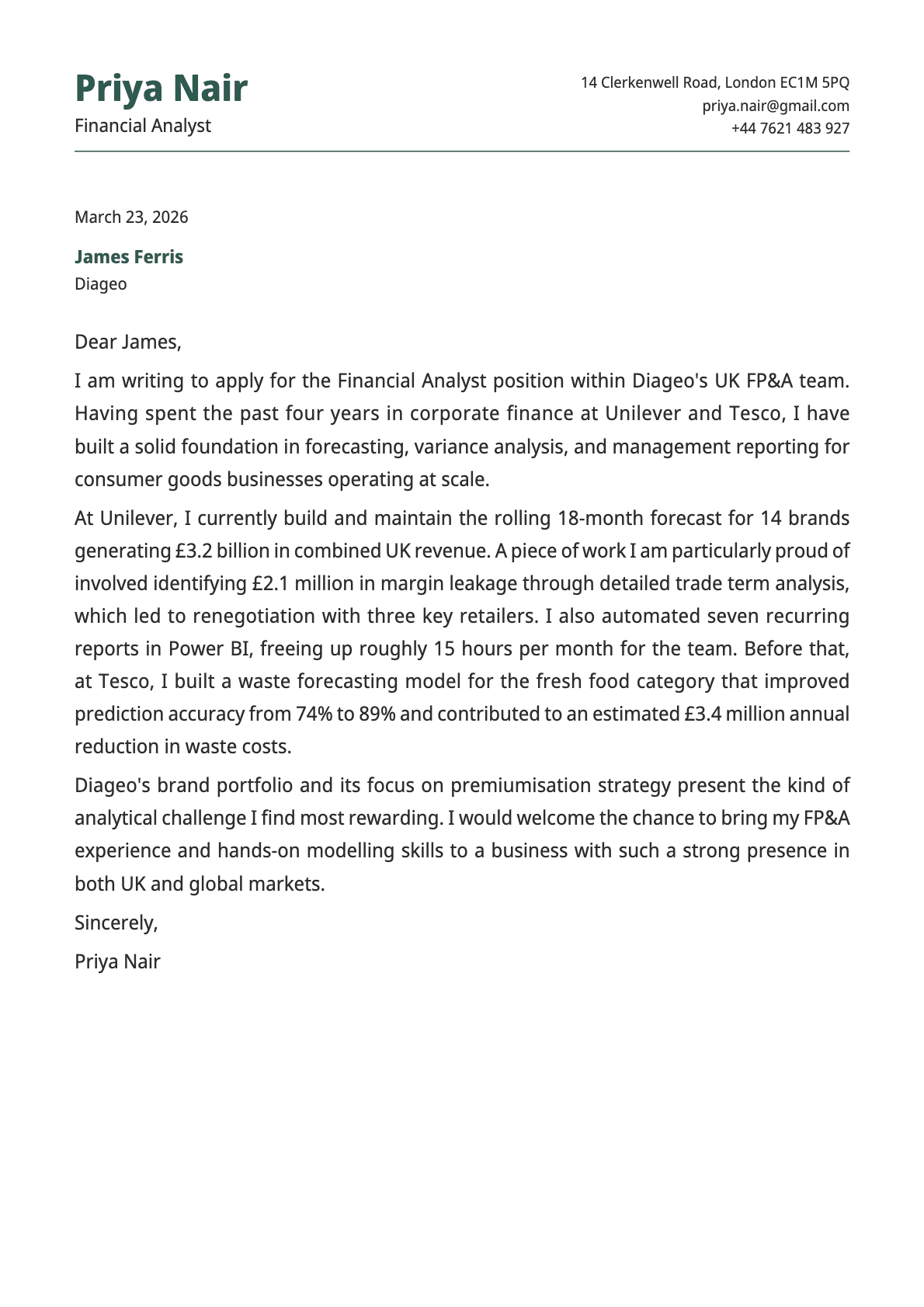
A financial analyst cover letter example targeting an FP&A role at Diageo. See how to present forecasting skills, variance analysis, and commercial impact.
Management Consultant
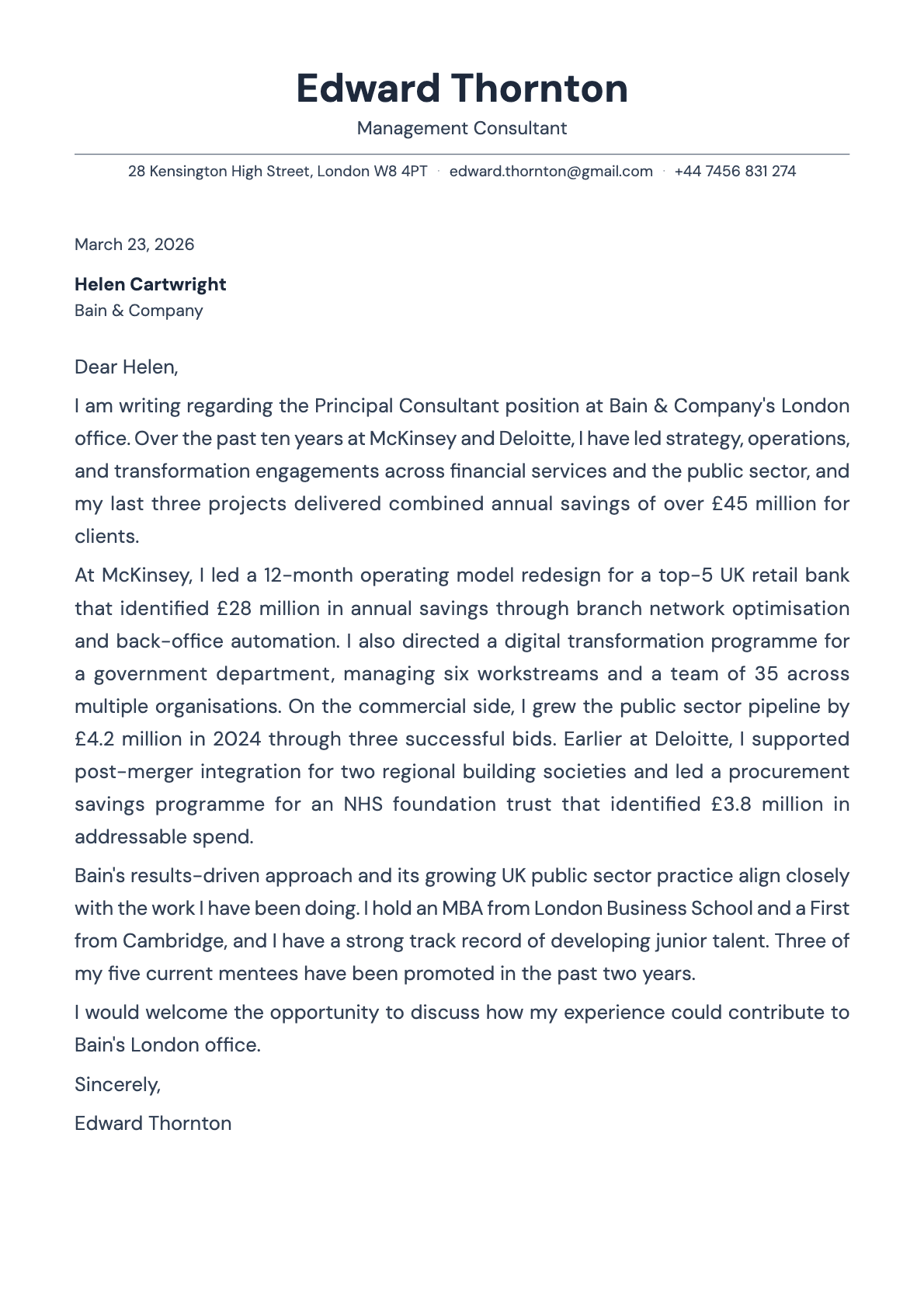
A management consultant cover letter example targeting Bain & Company. See how to present engagement results, team leadership, and business development.
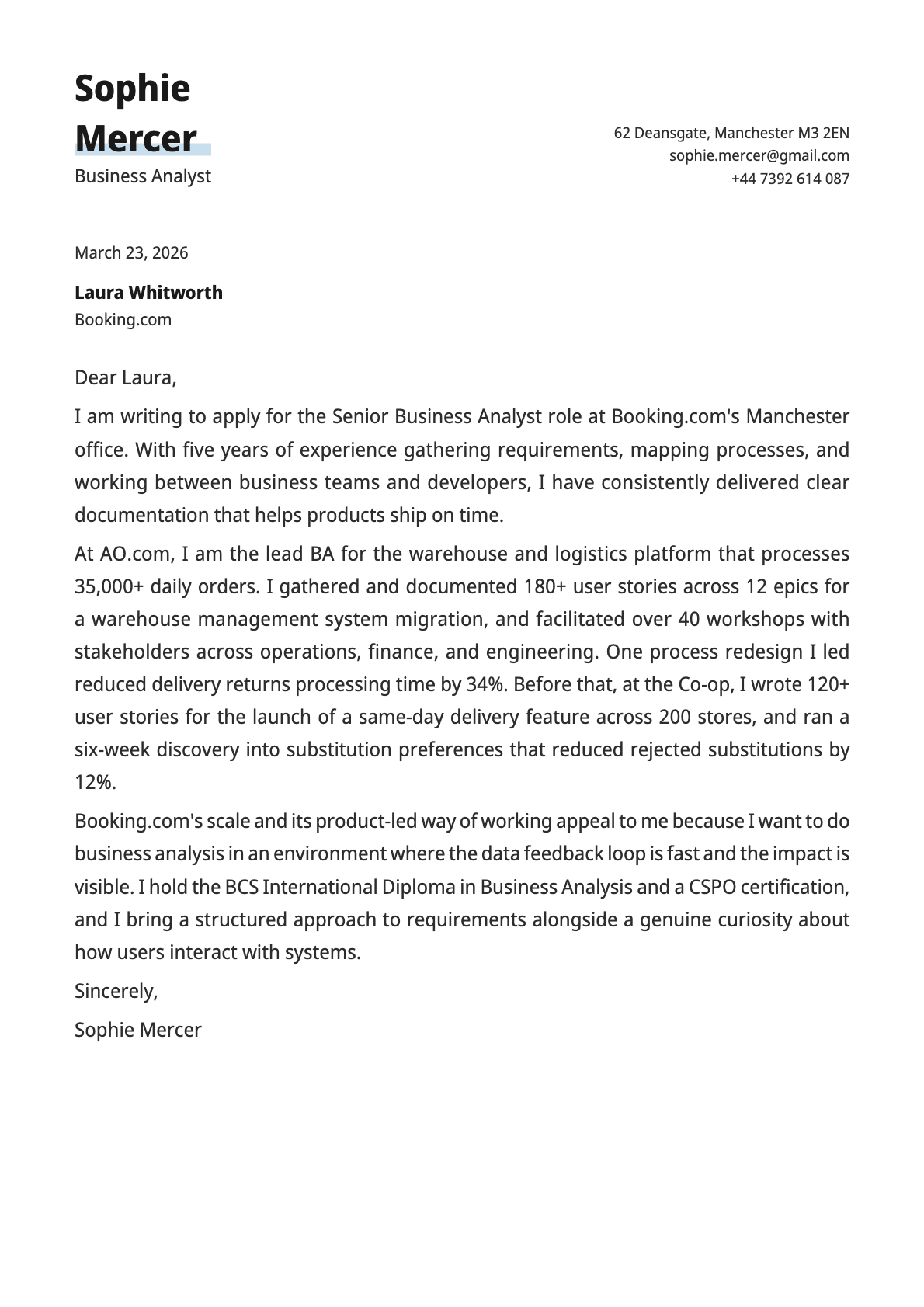
Business Analyst
A business analyst cover letter example for a senior BA role at Booking.com.
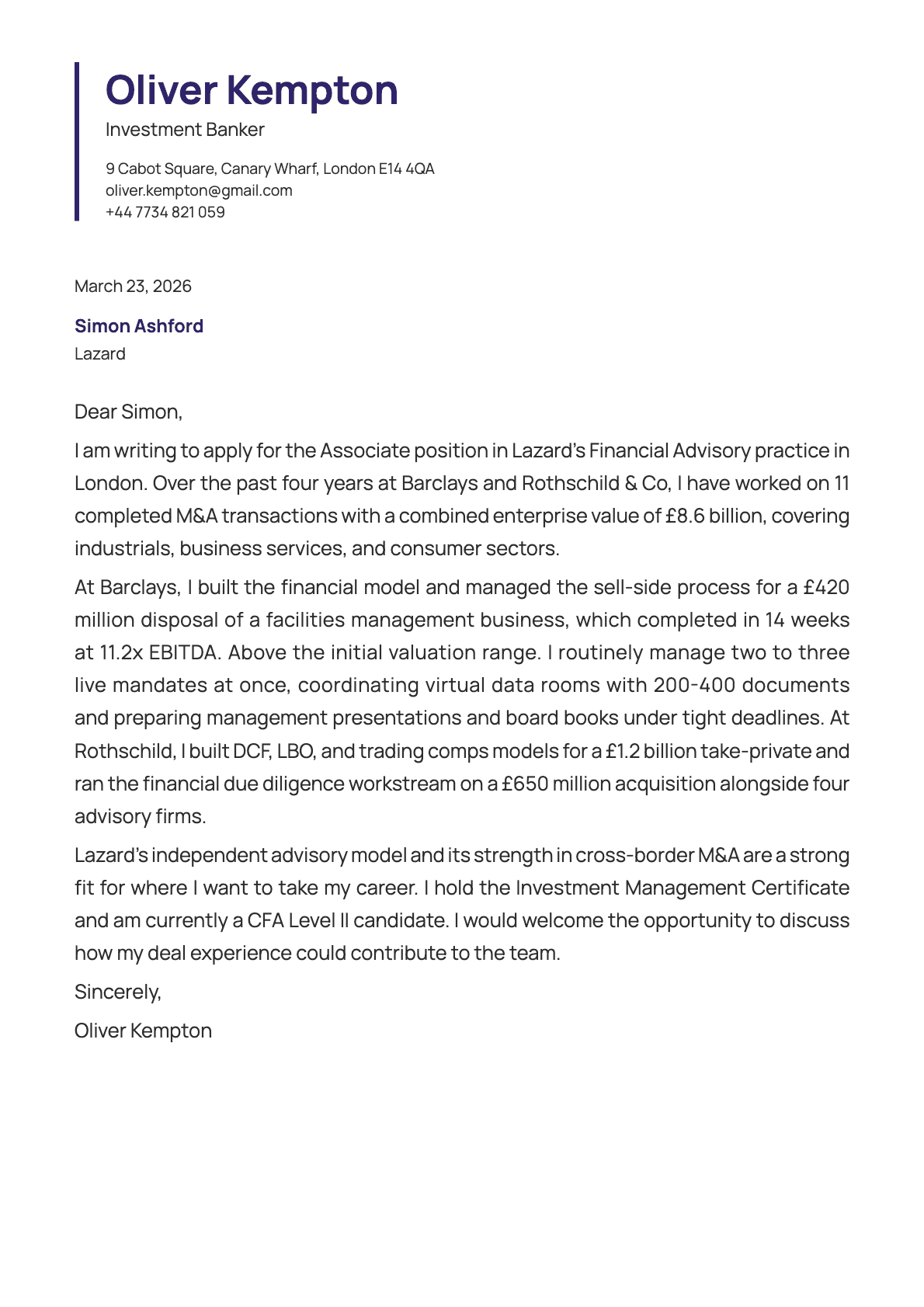
Investment Banker
An investment banking cover letter example targeting an associate role at Lazard.
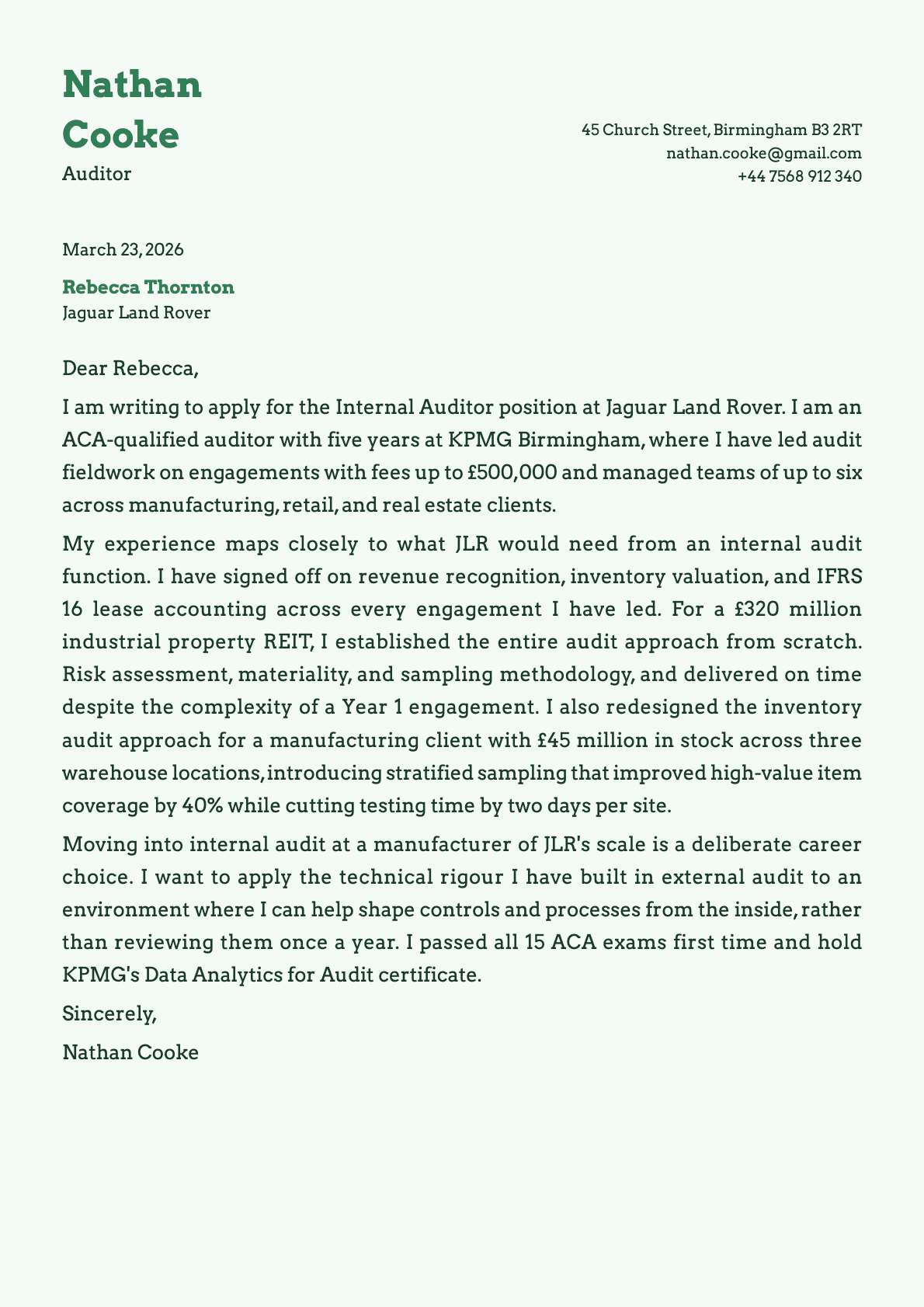
Auditor
An ACA-qualified auditor cover letter example targeting an internal audit role at Jaguar Land Rover.
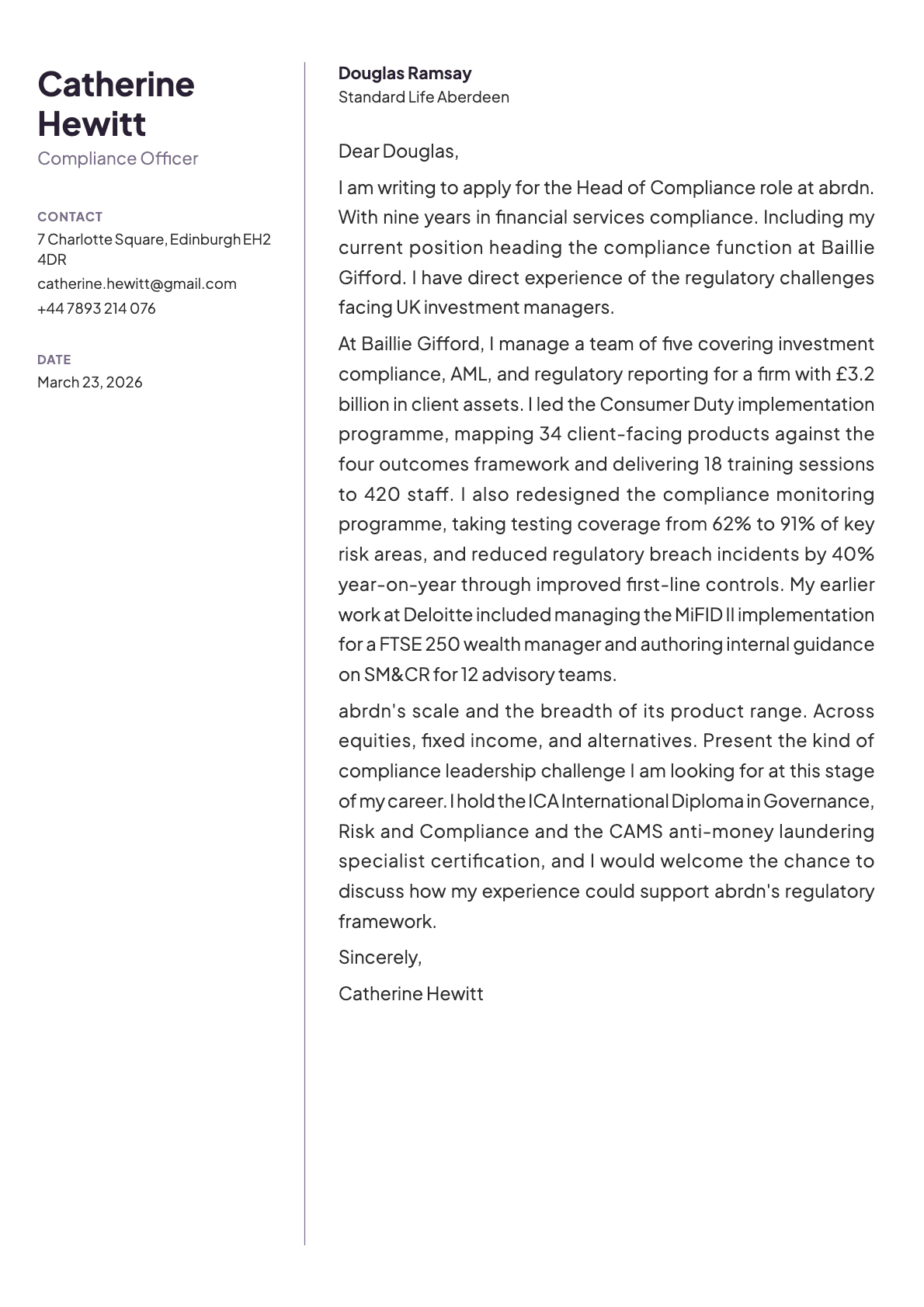
Compliance Officer
A compliance officer cover letter example for a senior role at abrdn.
Related articles

AI Is Screening Your Resume Before Any Human Sees It
AI screens most resumes before a human ever reads them. 97.4% of Fortune 500 companies run an ATS. This is what that means for you and what you can do about it.

The Best Resume Builders in 2026, Compared Honestly
Resume.io, Zety, Enhancv, Kickresume, Teal, and Laddro compared honestly: real pricing, free tiers, mobile apps, and where each tool wins. All prices checked in September 2026.

Burnout Recovery: A Real Timeline, Not 'Take a Bubble Bath'
55% of the U.S. workforce is burned out. Recovery takes 3 to 12 months. Here's what that actually looks like, stage by stage.