Junior Robotics Engineer Resume Example
A junior robotics engineer resume example with ROS programming experience, computer vision skills, and a university robotics competition win.

Laddro Team
Free to use. No account needed to start.
Free to use. No account needed to start.
Overview
Robotics engineering combines mechanical design, electronics, and software into systems that interact with the physical world. UK employers in automation, defence, and warehouse logistics are actively recruiting graduates who can program robotic systems, integrate sensors, and work with frameworks like ROS. Competition wins, personal projects, and placement experience are the strongest signals that a graduate can build systems that actually work.
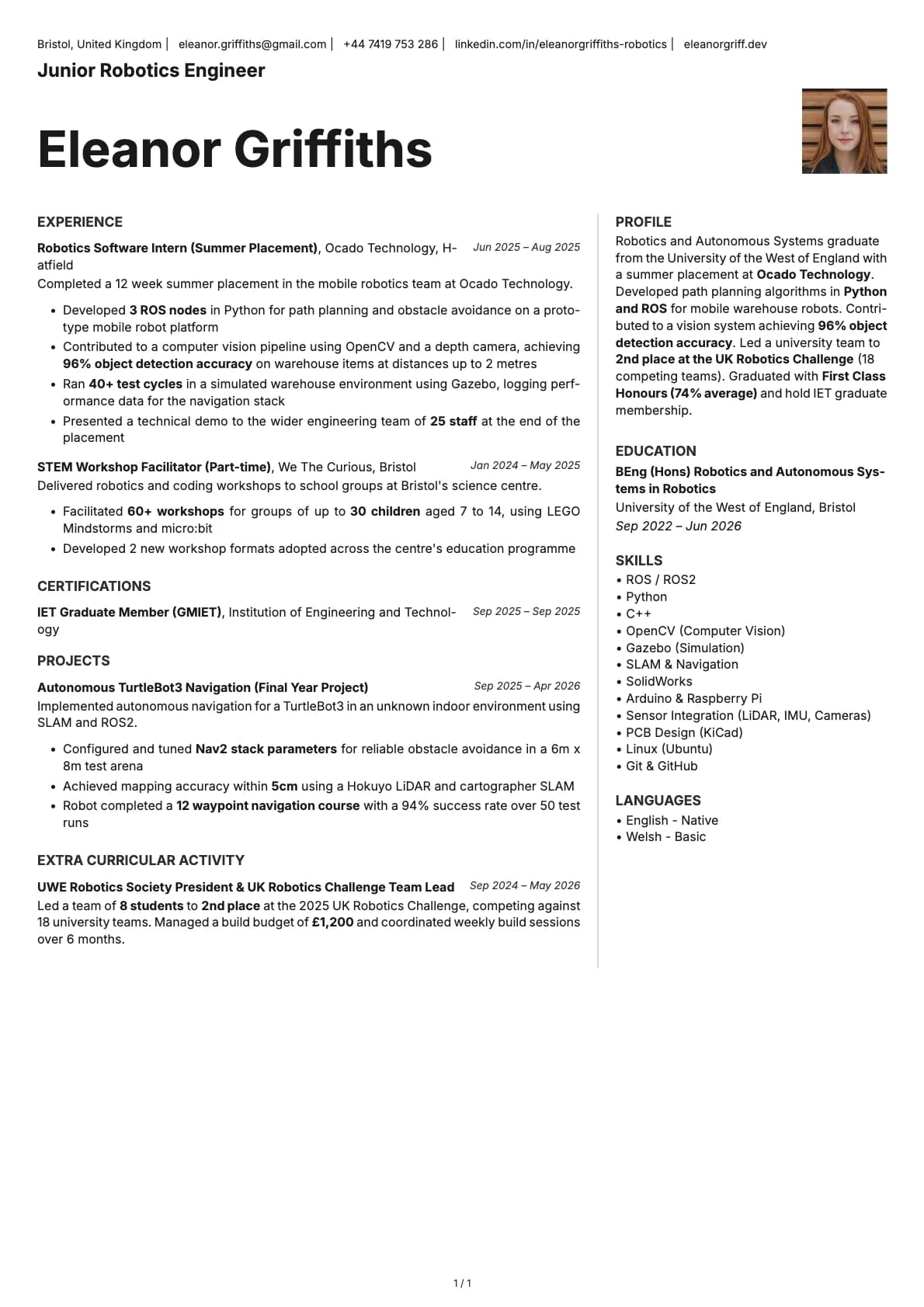
This resume belongs to Eleanor Griffiths, a Robotics and Autonomous Systems graduate from the University of the West of England who completed a summer placement at Ocado Technology. She developed path planning algorithms for mobile robots in Python and ROS, contributed to a vision system that achieved 96% object detection accuracy, and led her university team to 2nd place at the UK Robotics Challenge.
What Makes This Resume Work
ROS experience is described through specific deliverables. Rather than listing ROS as a skill, Eleanor describes developing path planning nodes and integrating them with sensor data. This shows she understands the ROS ecosystem at an implementation level, not just from tutorials.
Computer vision results include accuracy metrics. Achieving 96% object detection accuracy is a measurable result that allows an employer to gauge the quality of the work. In robotics, where system reliability matters, this kind of metric is highly relevant.
Competition success provides external validation. Placing 2nd at the UK Robotics Challenge against 18 teams shows that Eleanor can deliver a working system under competitive pressure and tight deadlines. This is one of the strongest extracurricular achievements a robotics graduate can include.
Key Takeaways
Junior robotics engineers should describe the specific frameworks (ROS, ROS2), programming languages (Python, C++), and hardware platforms they have worked with. Quantify system performance with metrics like accuracy, speed, or payload capacity. Competition results and personal projects with working demonstrations are more persuasive than coursework alone. IET membership on the CEng pathway shows professional intent in a field that is rapidly professionalising.
Build your own version
Open this layout in the builder and swap in your own details. It takes a few minutes.
Free to use. No account needed to start.
Was this resume example helpful?
Rate this example to help us create better content for you.
4.7 average from 91 ratingsRelated resume examples
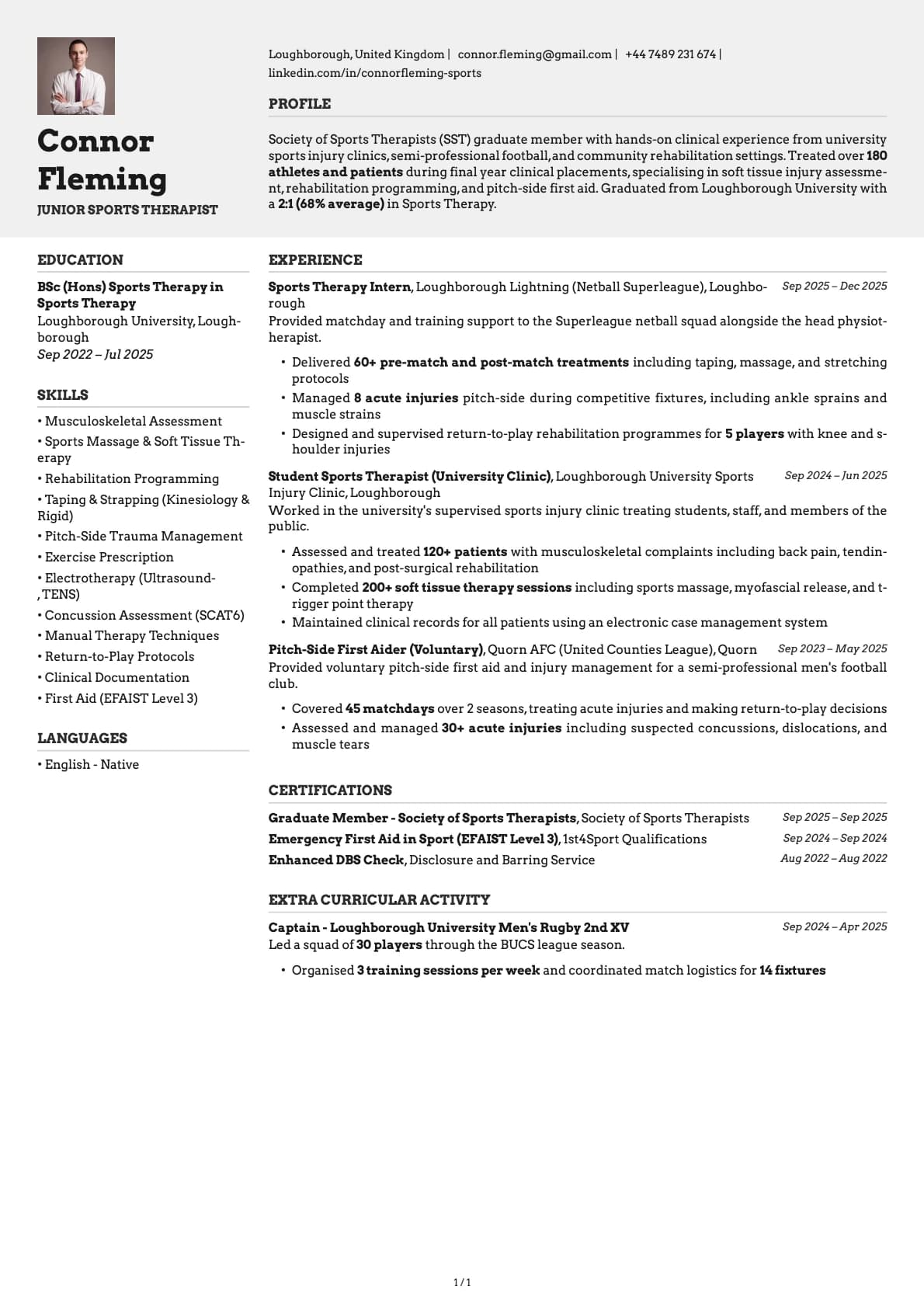
Junior Sports Therapist
A junior sports therapist resume example with clinical treatment numbers, pitch-side experience, and SST membership for new graduates.
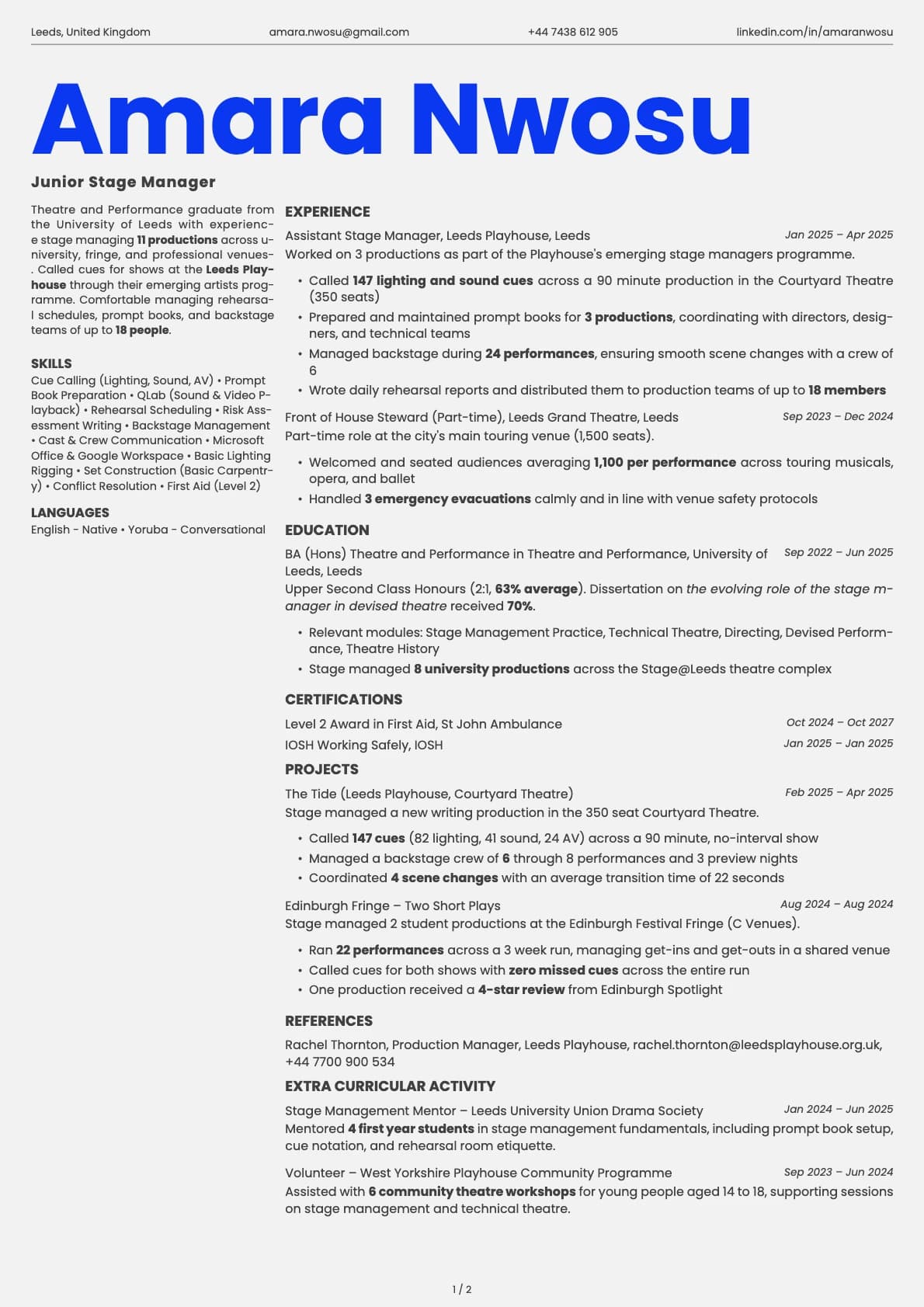
Junior Stage Manager
A junior stage manager resume example with prompt book experience, production counts, and cue calling from a Theatre Studies graduate entering professional stage management.
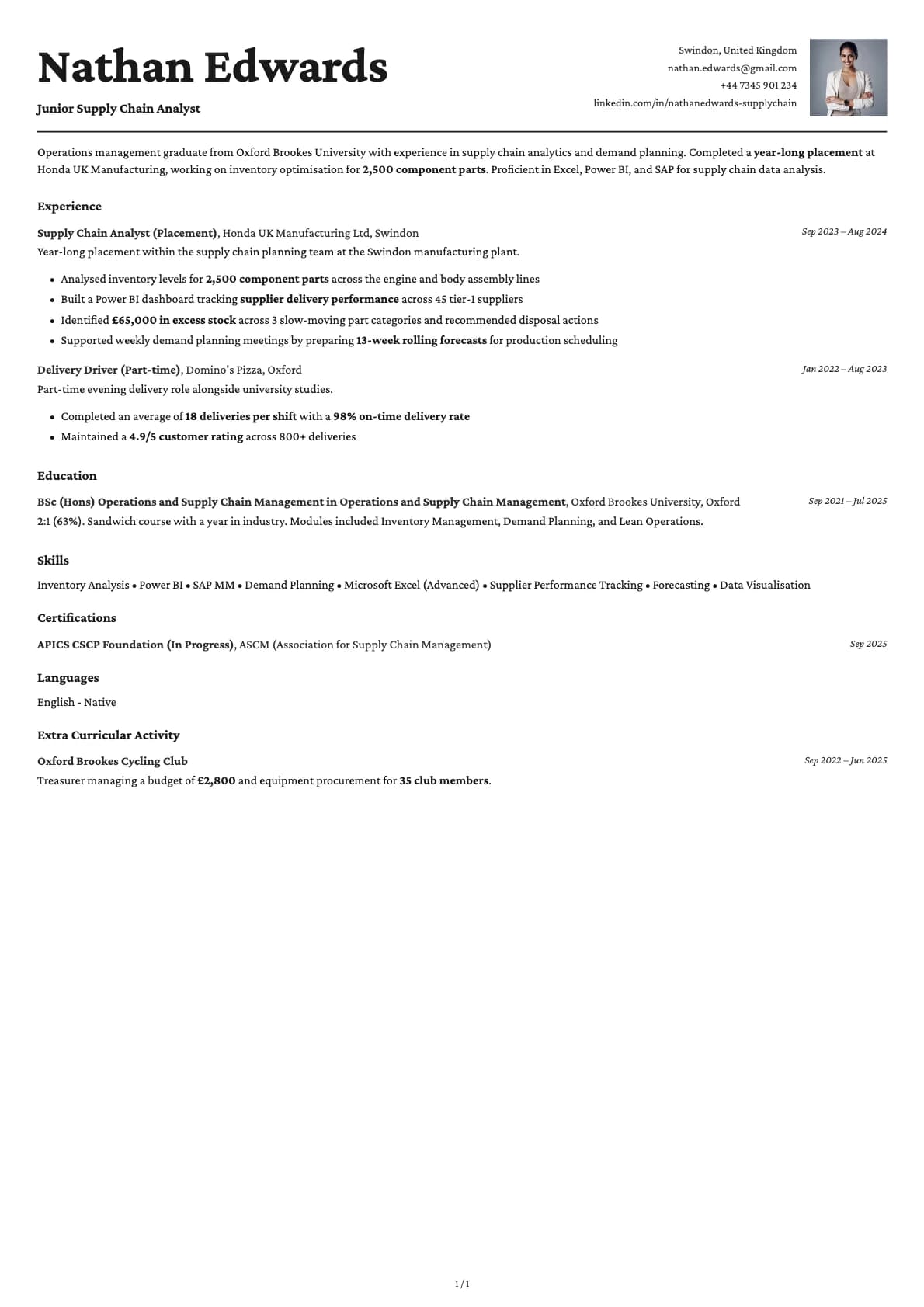
Junior Supply Chain Analyst
A junior supply chain analyst resume example with Honda UK placement and inventory optimisation experience.

Junior Sustainability Consultant
A junior sustainability consultant resume example for environmental science graduates. See how to present carbon auditing, consultancy internships, and environmental volunteering.
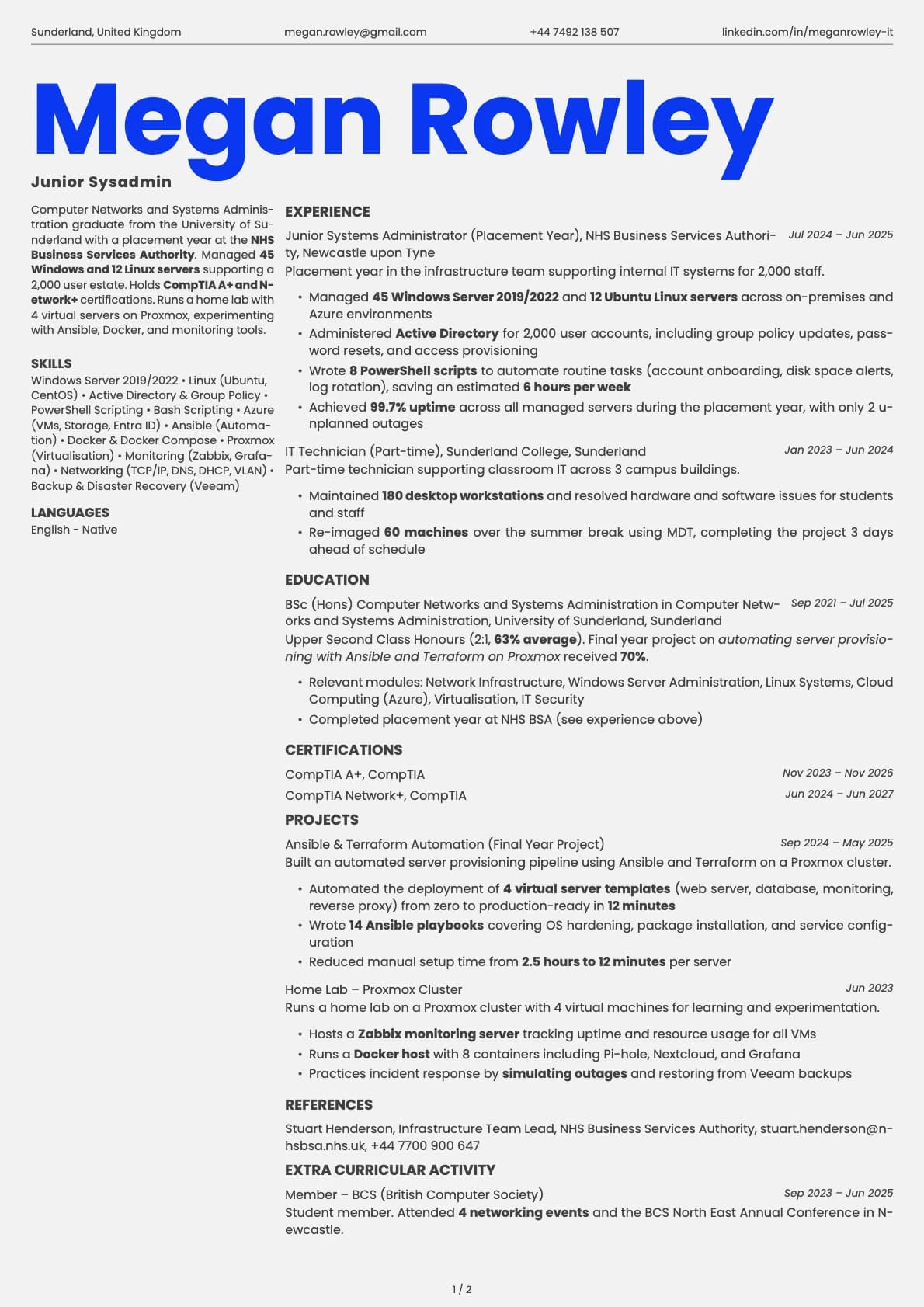
Junior Sysadmin
A junior sysadmin resume example with Linux server management, Active Directory experience, and CompTIA certifications from an IT graduate entering systems administration.
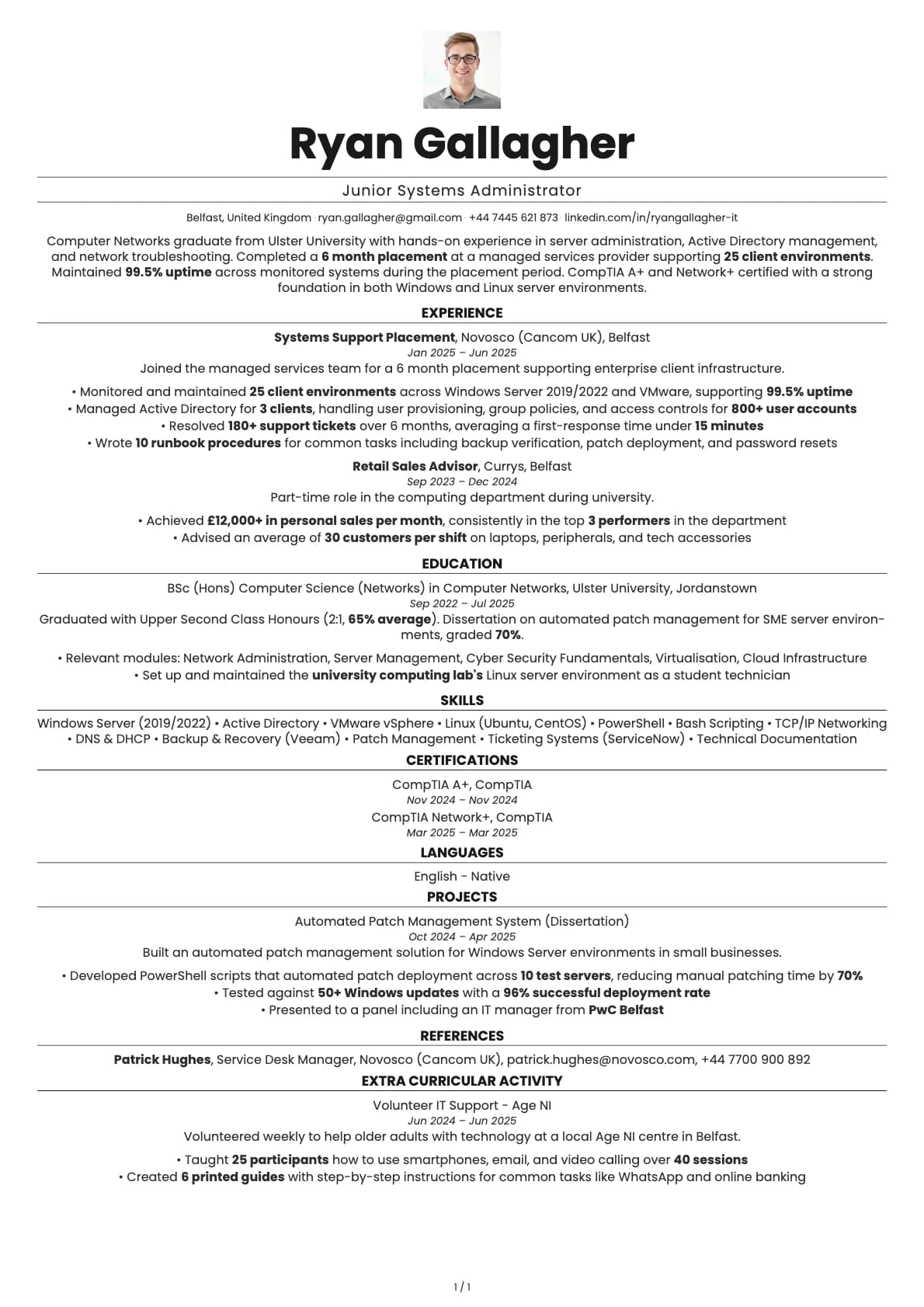
Junior Systems Administrator
A junior systems administrator resume example for graduates. See how to present server management, Active Directory, and CompTIA certifications to land your first sysadmin role.
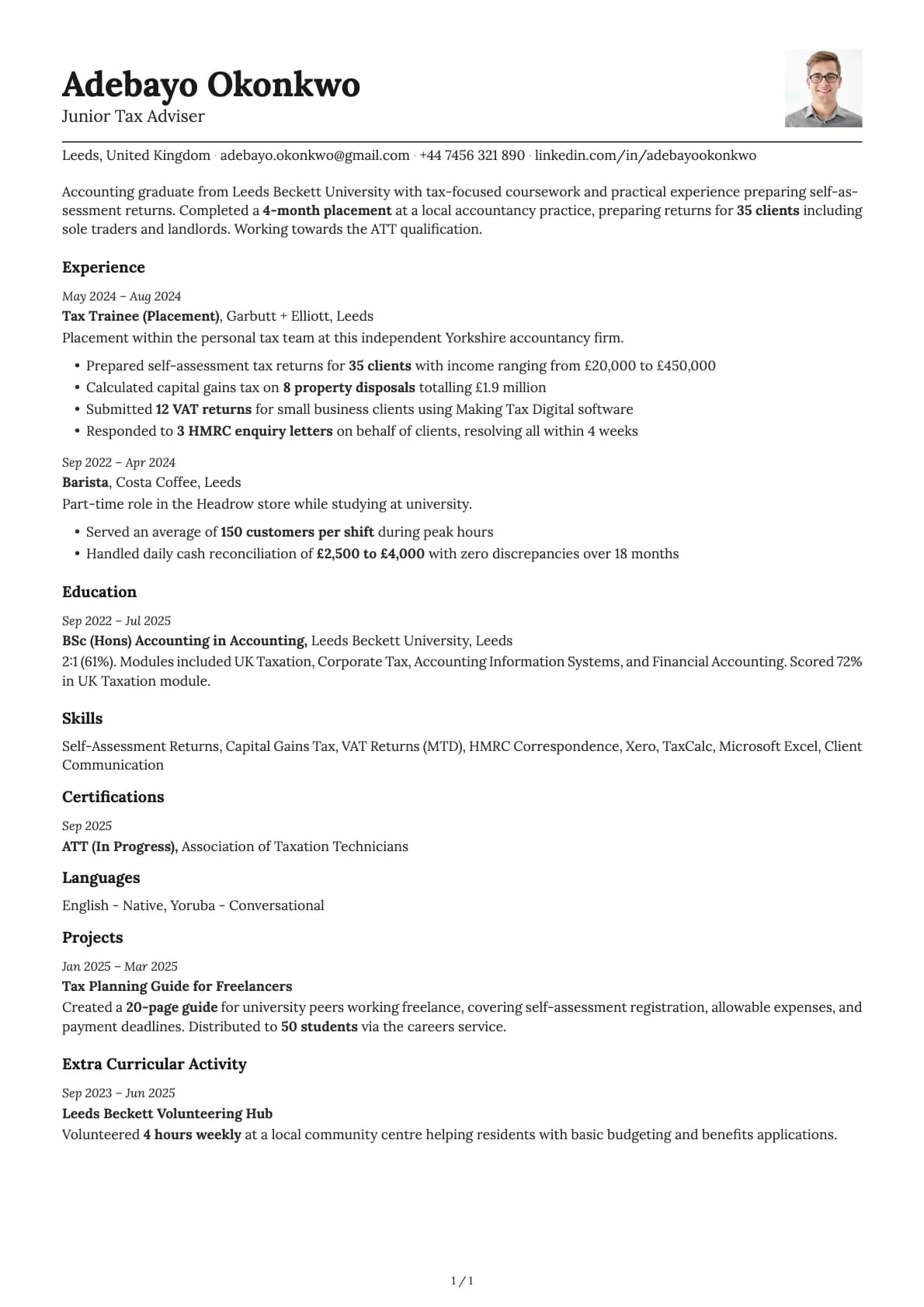
Junior Tax Adviser
A junior tax adviser resume example with placement experience at a regional accountancy firm and ATT study.
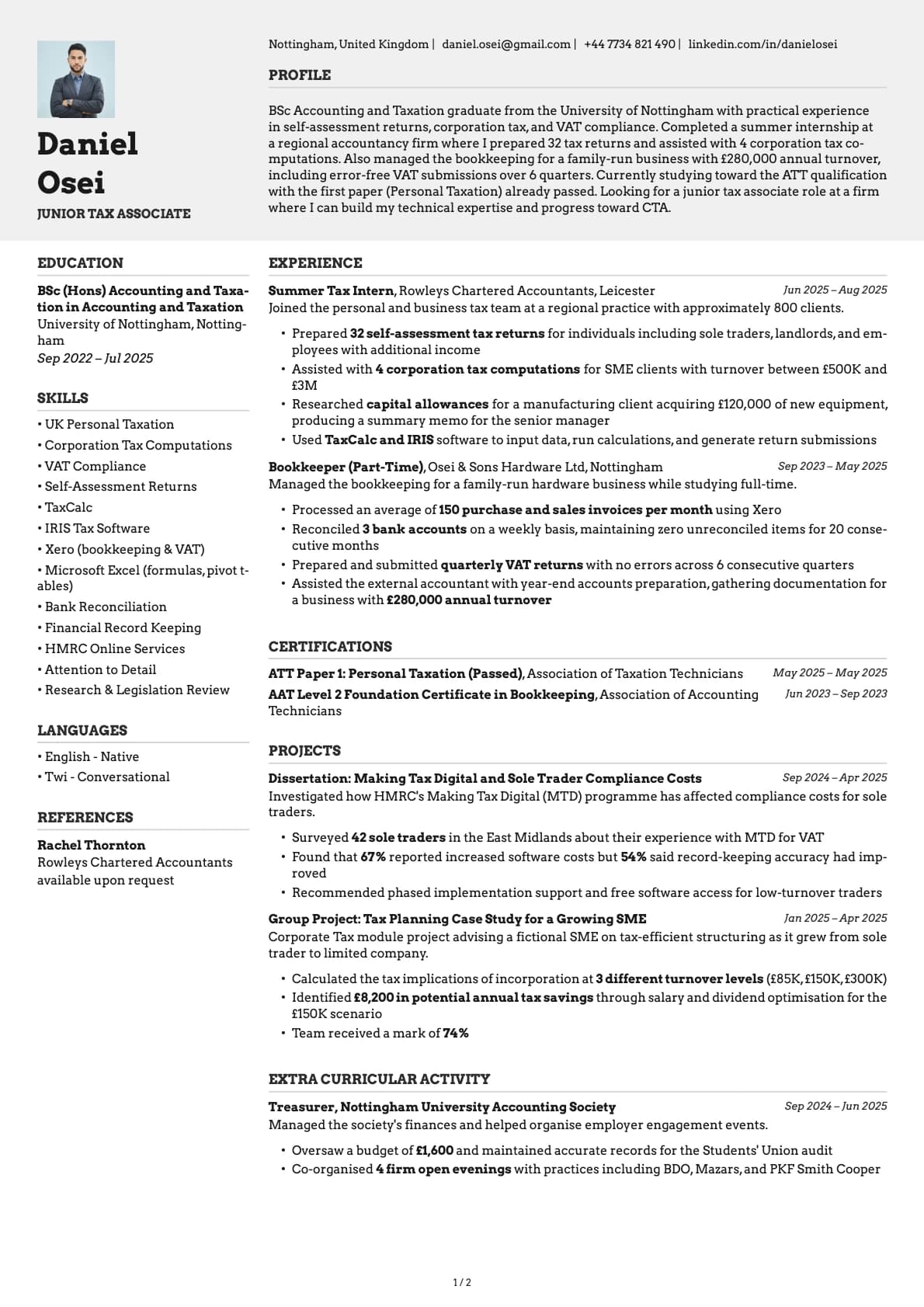
Junior Tax Associate
A junior tax associate resume example for tax and accounting graduates. See how HMRC work experience and ATT progress help you stand out to employers.
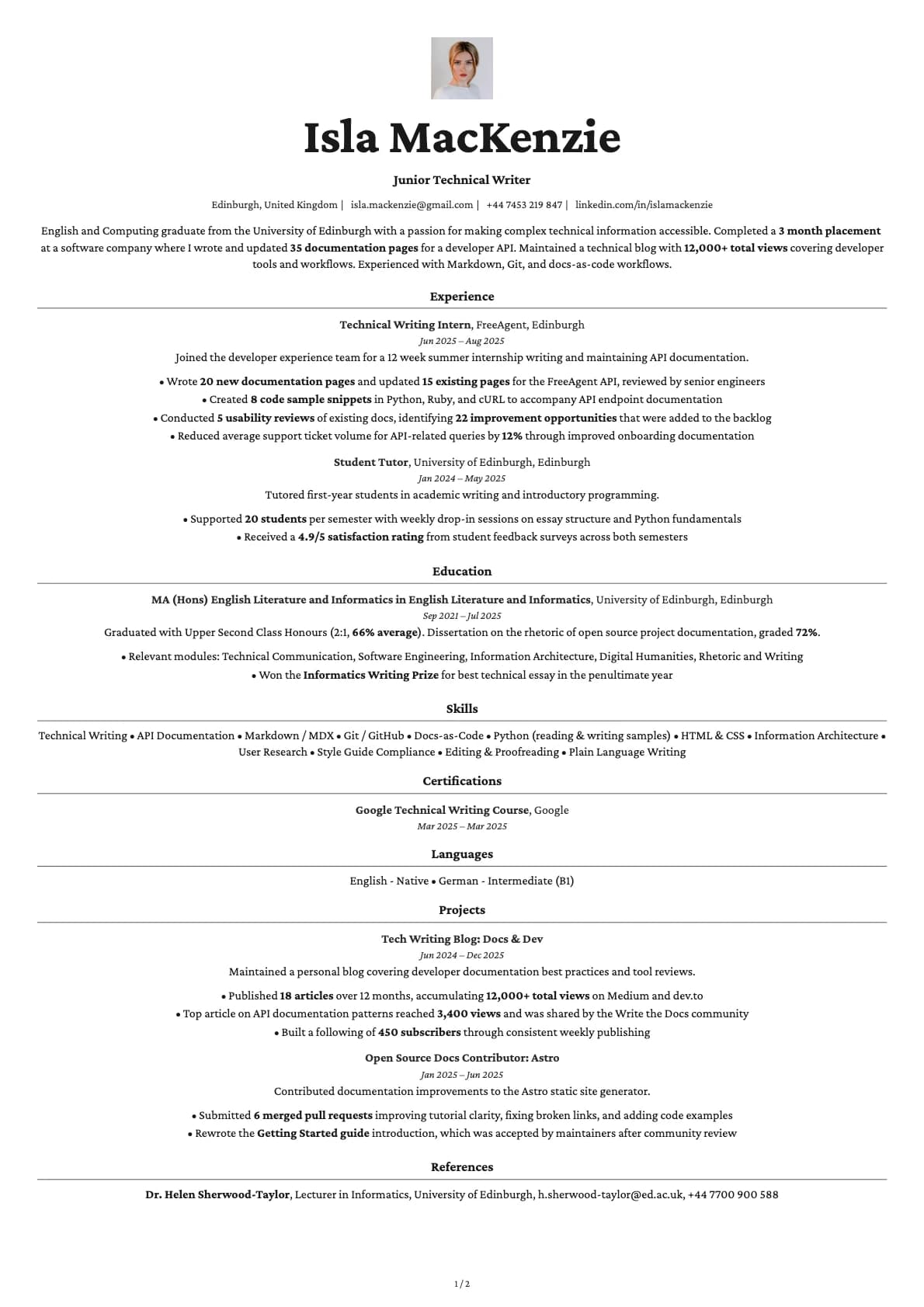
Junior Technical Writer
A junior technical writer resume example for graduates. See how to present documentation experience, API writing samples, and open source contributions to land your first tech writing role.
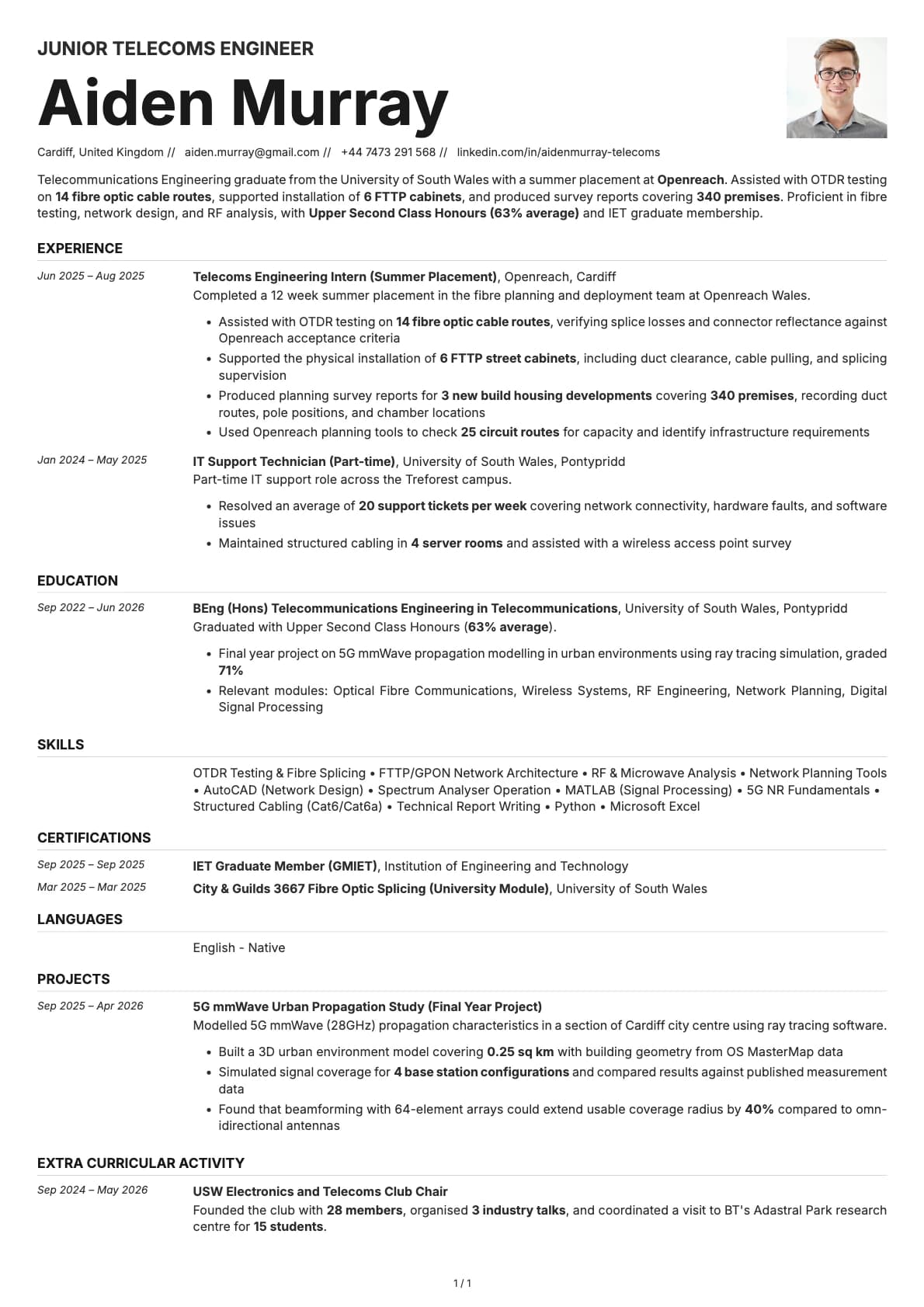
Junior Telecoms Engineer
A junior telecoms engineer resume example with fibre optic network experience, OTDR testing skills, and placement at Openreach.
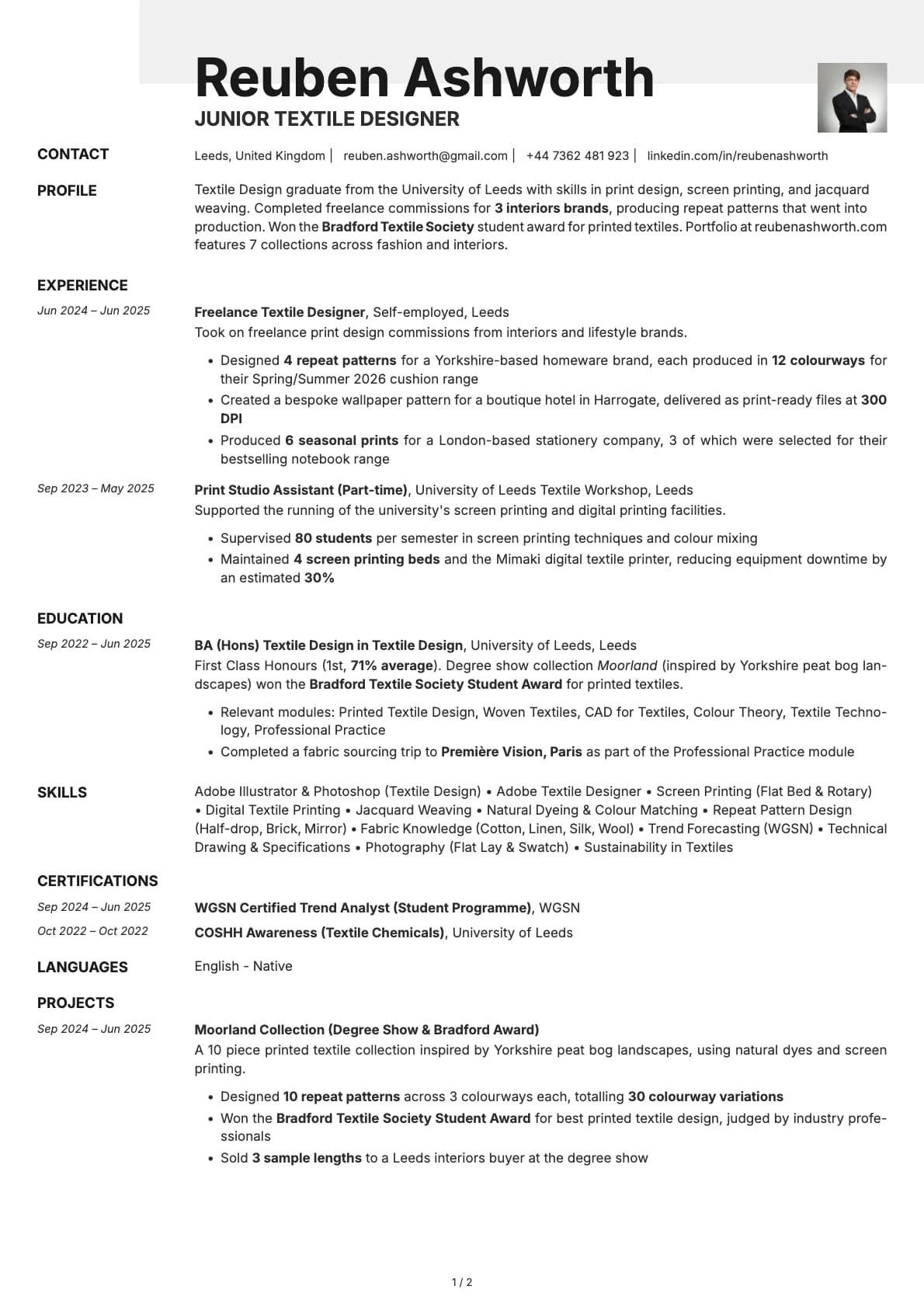
Junior Textile Designer
A junior textile designer resume example with print design projects, client commissions, and weaving skills from a Textile Design BA graduate entering the industry.
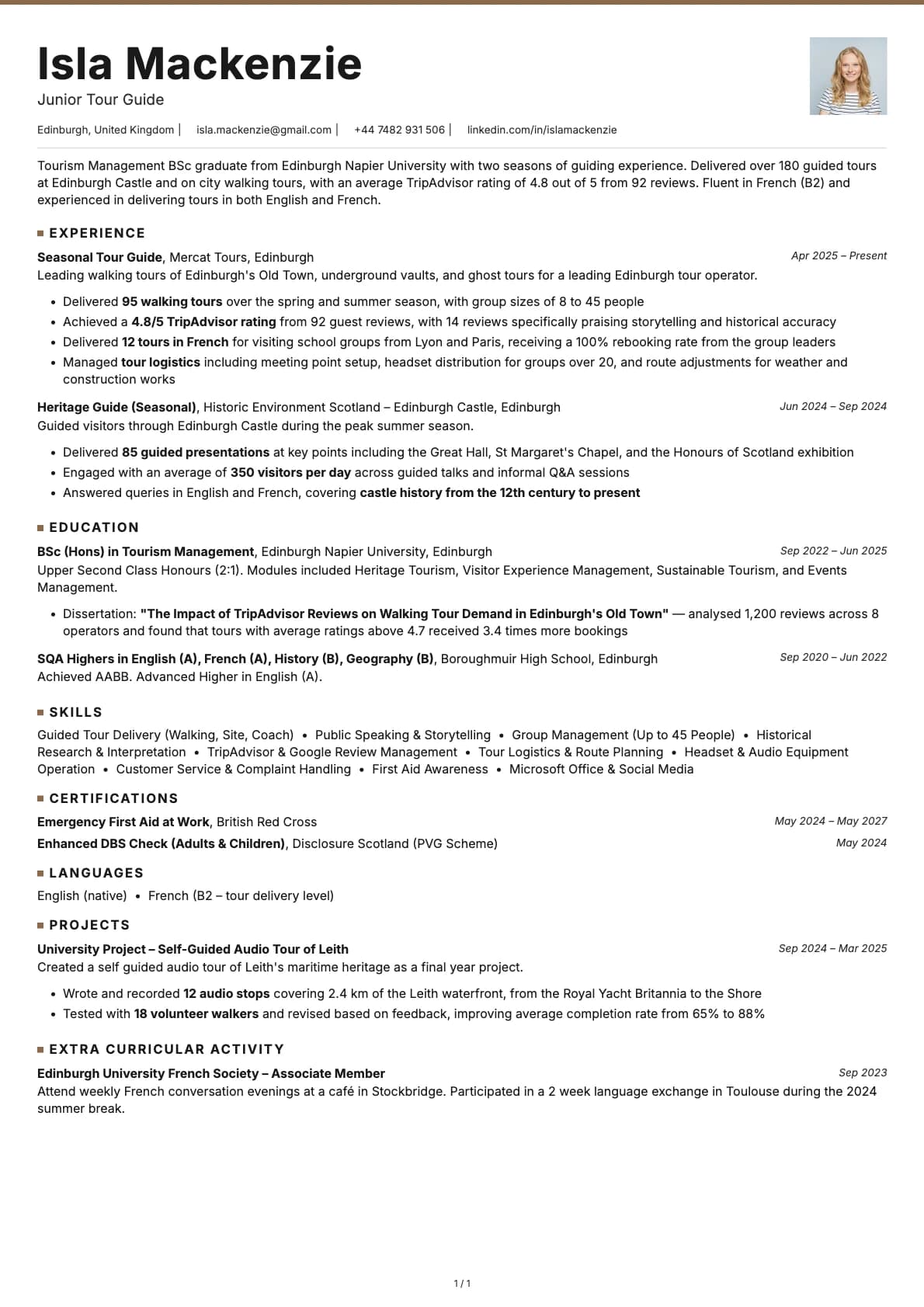
Junior Tour Guide
A junior tour guide resume example for tourism graduates. See how to present your guiding experience, customer satisfaction scores, and language skills for the UK tourism industry.