Junior Sports Therapist Resume Example
A junior sports therapist resume example with clinical treatment numbers, pitch-side experience, and SST membership for new graduates.

Laddro Team
Free to use. No account needed to start.
Free to use. No account needed to start.
Overview
Sports therapy is a competitive field to break into, whether you are targeting professional sport, private practice, or NHS musculoskeletal services. Employers want to see that you have treated real people in real settings, not just passed practical exams in a university lab. Pitch-side experience, clinic hours, and rehabilitation outcomes are what make your resume stand out.
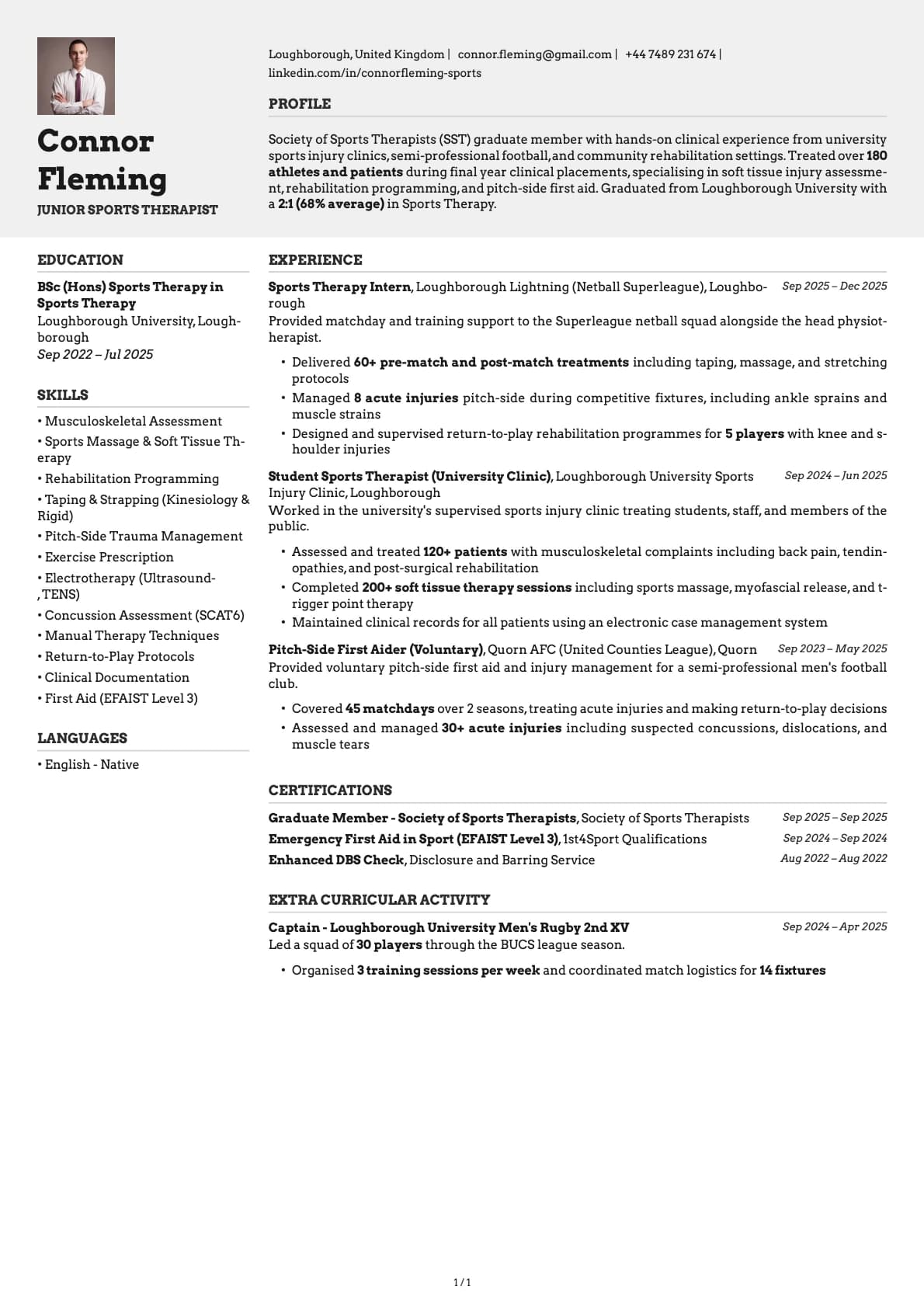
This resume belongs to Connor Fleming, a sports therapy graduate from Loughborough University. He treated over 180 athletes and patients during his final year, interned with a Superleague netball team, provided pitch-side first aid for a semi-professional football club, and worked in the university sports injury clinic. His combination of competitive sport exposure and clinic-based treatment makes him a well-rounded candidate.
What Makes This Resume Work
Three distinct clinical settings show versatility. Connor has experience in elite sport (Loughborough Lightning), a general population clinic (university clinic), and grass-roots sport (Quorn AFC). This breadth tells employers he can adapt to different patient populations and clinical environments.
Treatment numbers provide tangible evidence. Listing 120 patients treated, 200 soft tissue sessions delivered, and 60 pre/post-match treatments gives employers a concrete sense of how much hands-on experience Connor has accumulated. In sports therapy, hours on the treatment table matter more than modules studied.
Pitch-side emergency management builds trust. Covering 45 matchdays and managing 30 acute injuries demonstrates that Connor can make quick clinical decisions under pressure. For roles involving pitch-side responsibilities, this experience is essential.
Key Takeaways
Sports therapy graduates should quantify their clinical experience with patient counts, treatment session numbers, and matchdays covered. Include any internships or voluntary roles with sports teams, even at grassroots level, because they demonstrate practical pitch-side competence. SST membership and relevant first aid qualifications should be clearly listed, and any personal sporting involvement adds context about your understanding of athletic performance and injury.
Build your own version
Open this layout in the builder and swap in your own details. It takes a few minutes.
Free to use. No account needed to start.
Was this resume example helpful?
Rate this example to help us create better content for you.
4.5 average from 86 ratingsRelated resume examples
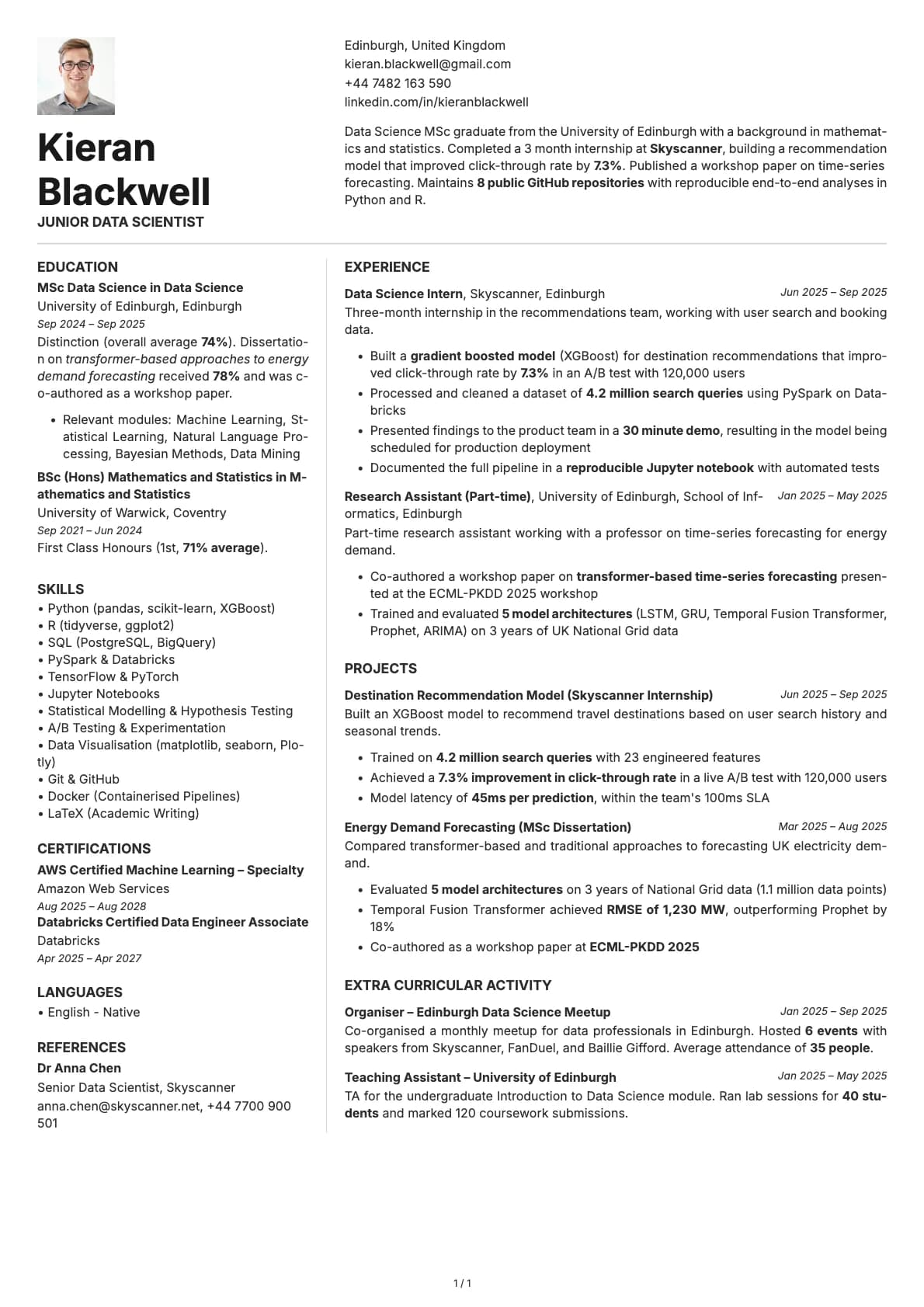
Junior Data Scientist
A junior data scientist resume example with Python projects, model accuracy metrics, and published research from a Data Science MSc graduate entering the field.
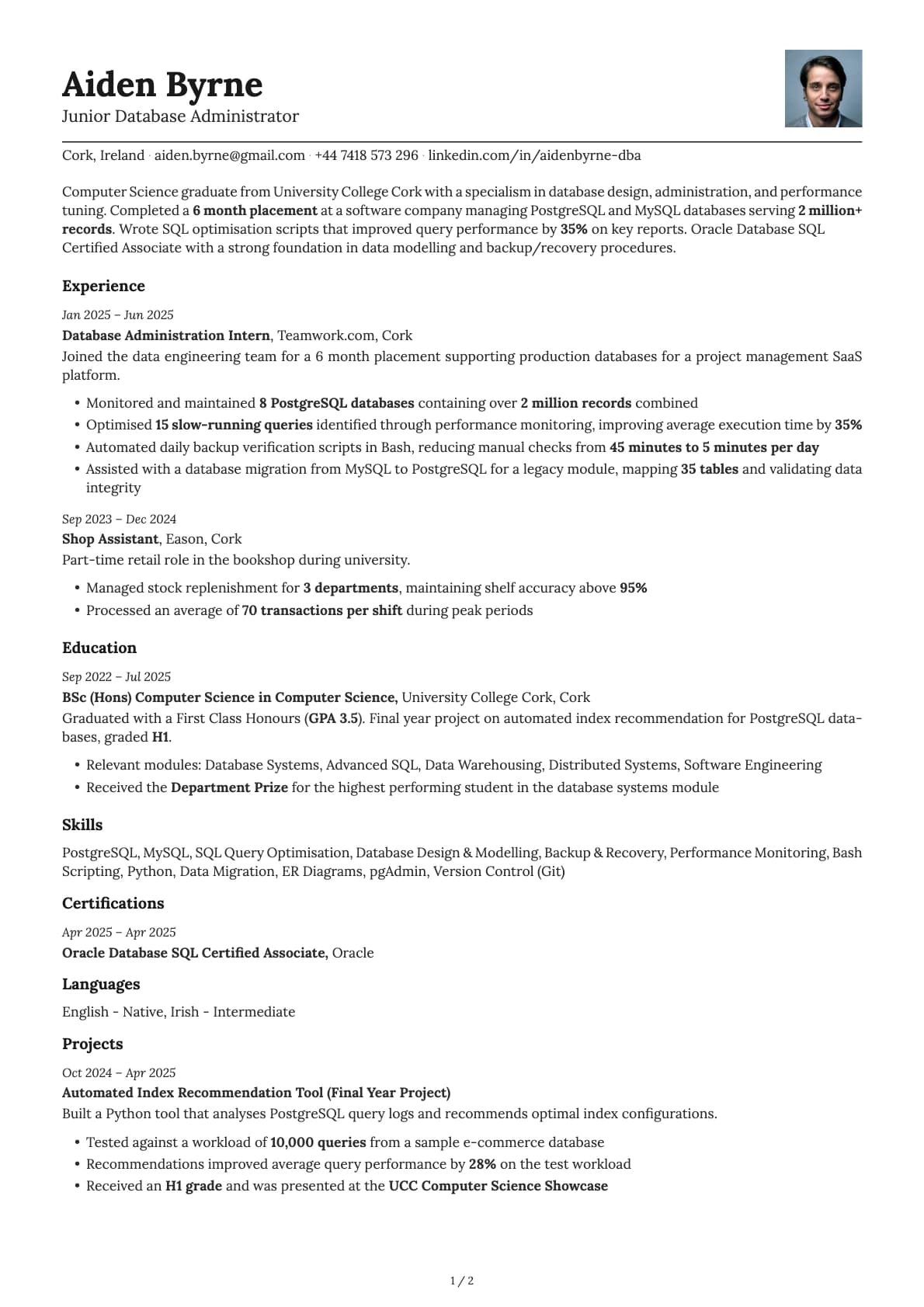
Junior Database Administrator
A junior database administrator resume example for graduates. See how to present SQL skills, performance tuning, and database management experience to land your first DBA role.
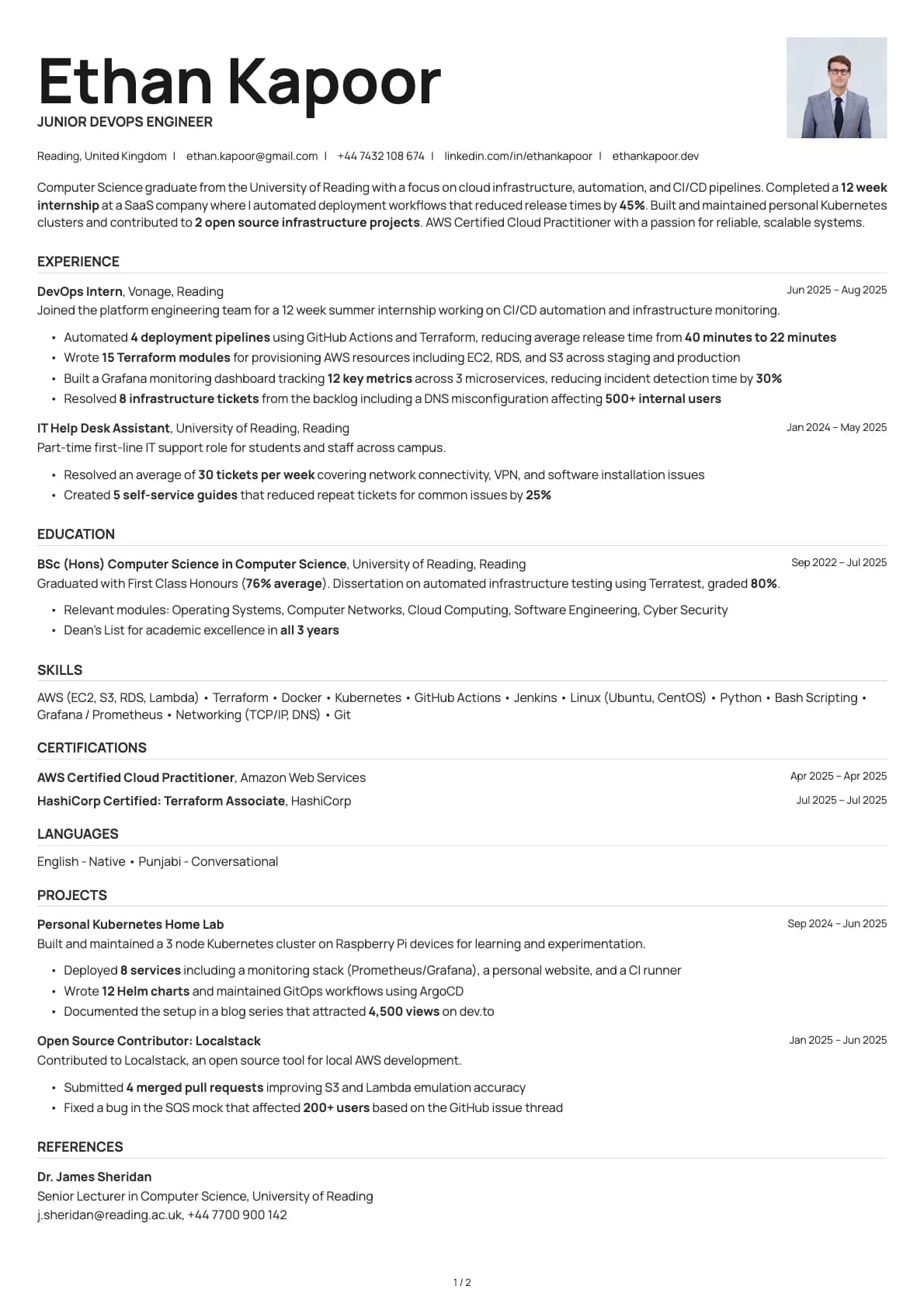
Junior DevOps Engineer
A junior DevOps engineer resume example for graduates. See how to present CI/CD experience, cloud certifications, and infrastructure projects to land your first DevOps role.
Junior Dietitian
A junior dietitian resume example with NHS clinical placement experience, HCPC registration, and patient caseload numbers for new graduates.
Junior Digital Commerce Executive
A junior digital commerce executive resume example showing how an e-commerce graduate used Shopify internships and campaign metrics to land a first role.
Junior Diplomat
A junior diplomat resume example showing how to combine an FCDO internship, a year at Sciences Po, and Model UN leadership into a Fast Stream application.
Junior Economic Analyst
A junior economic analyst resume example with government internship experience and strong quantitative skills.
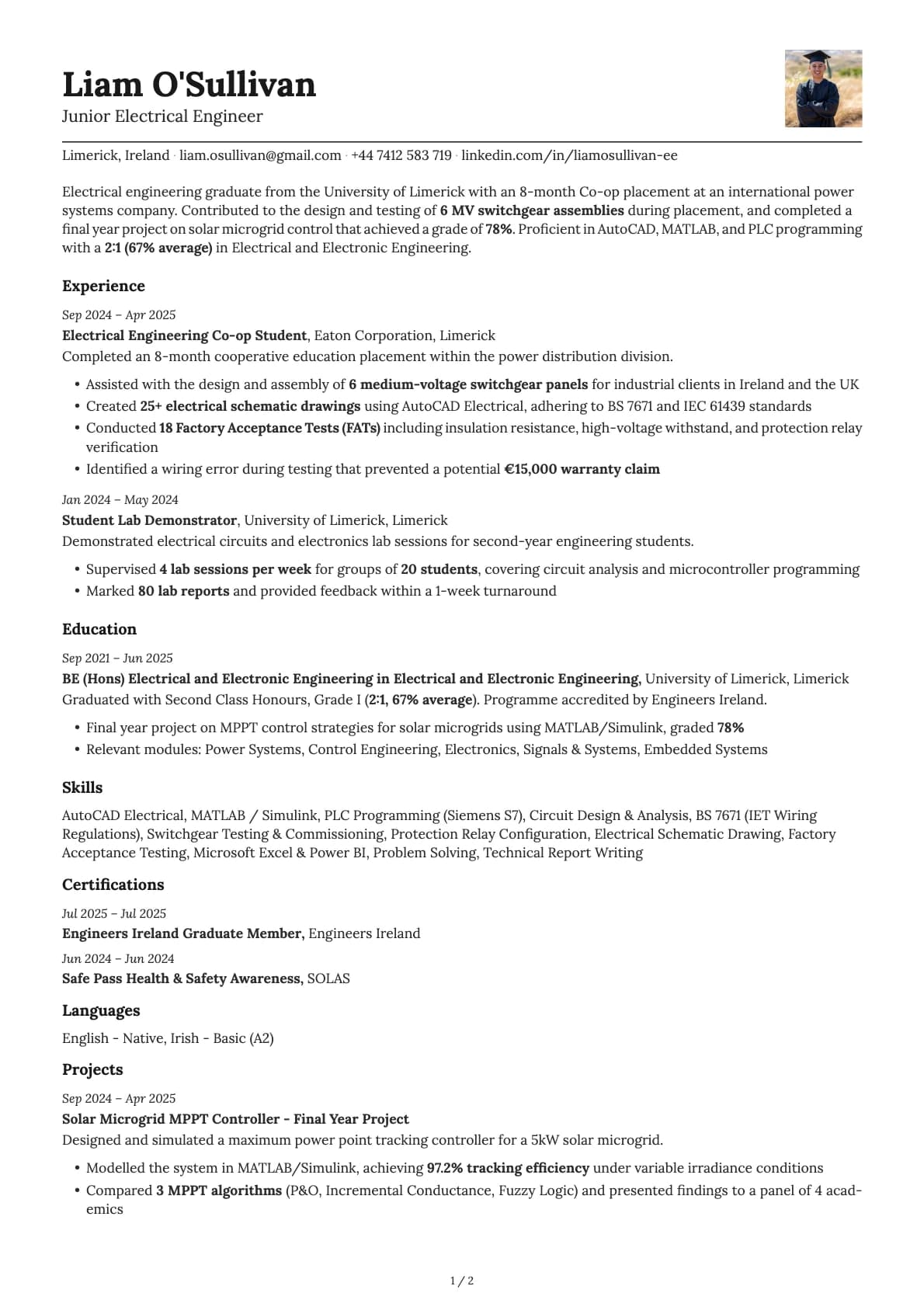
Junior Electrical Engineer
A junior electrical engineer resume example with power systems placement experience, AutoCAD skills, and Engineers Ireland membership.
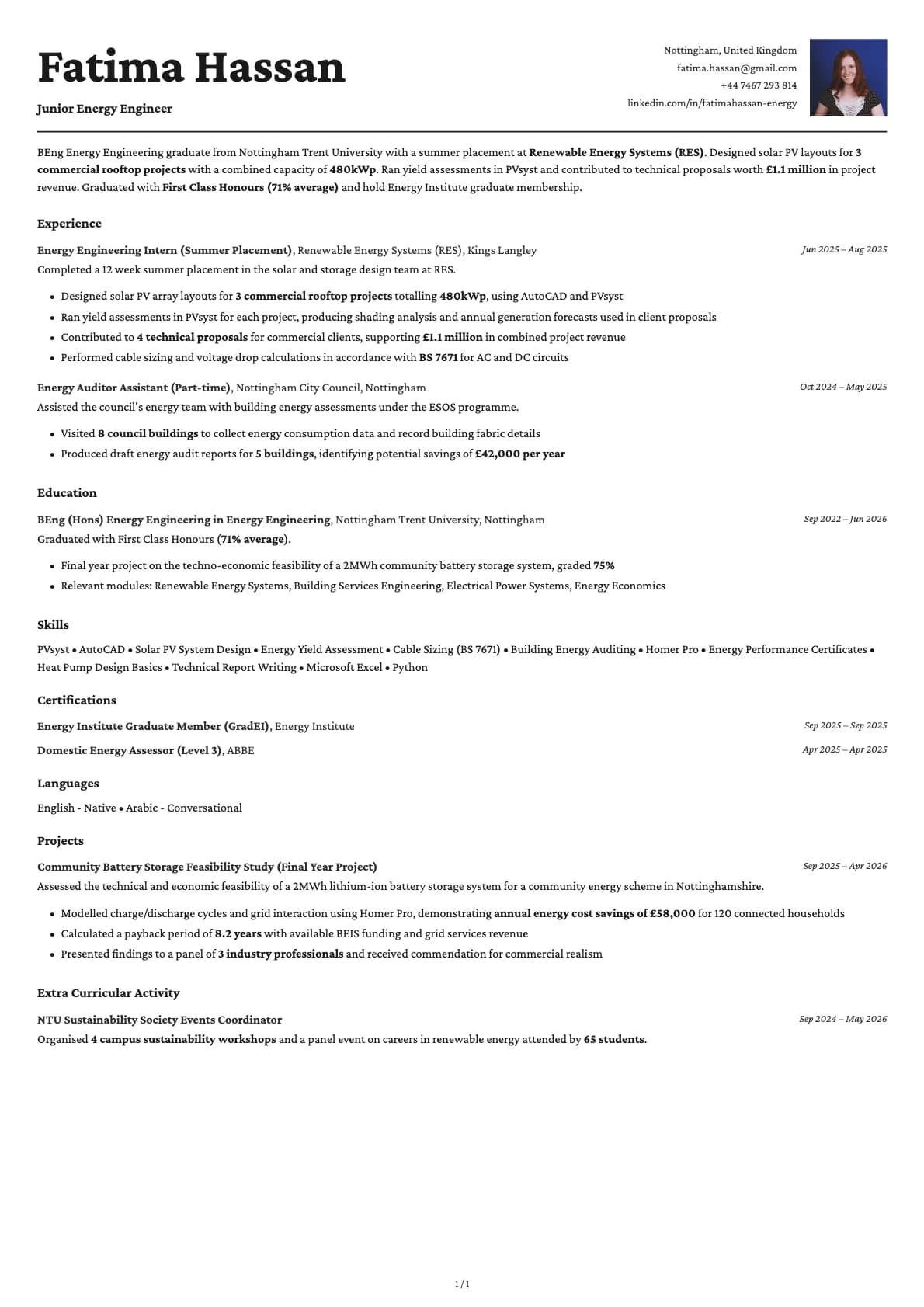
Junior Energy Engineer
A junior energy engineer resume example with renewable energy placement experience, solar PV design skills, and Energy Institute membership.
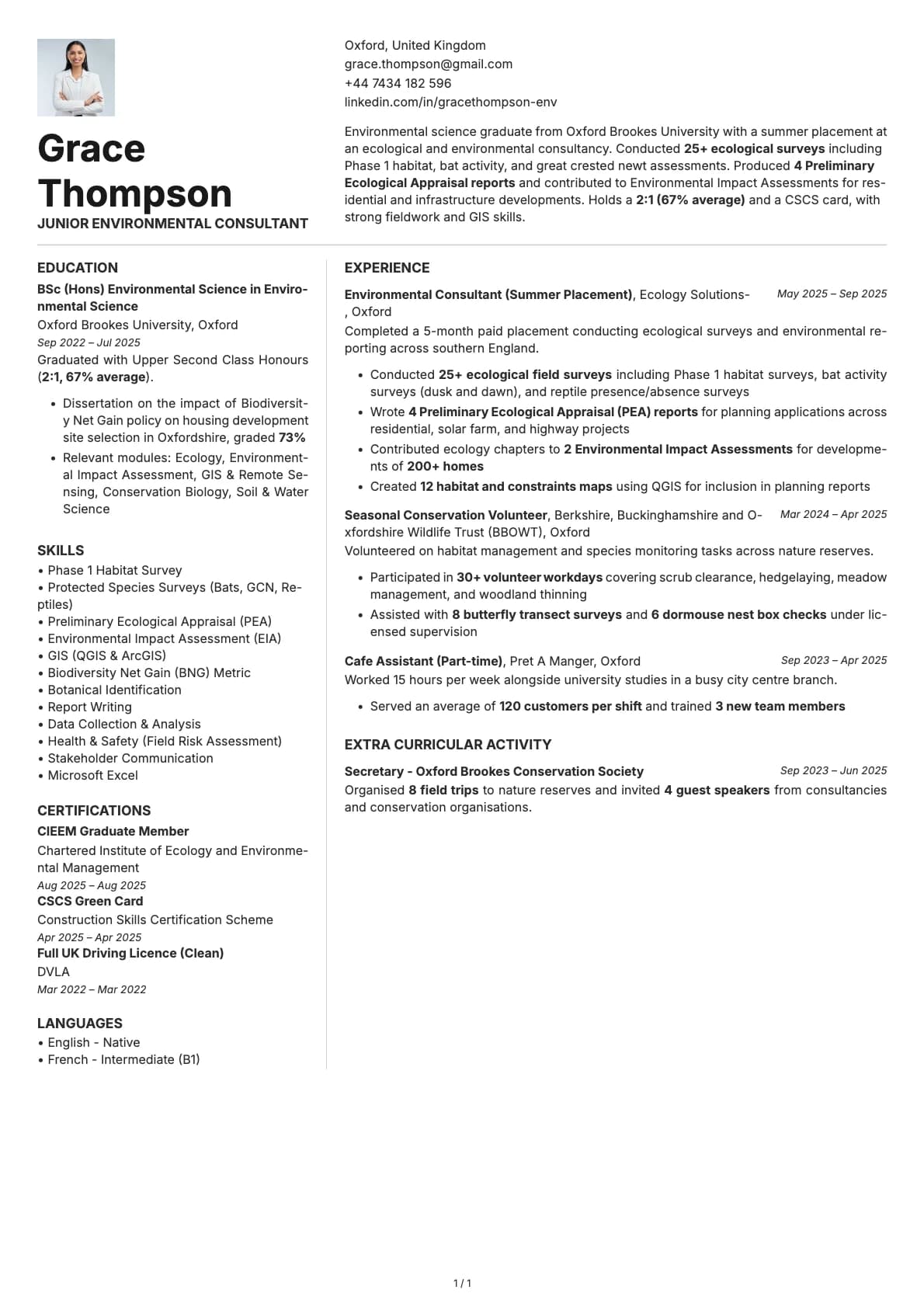
Junior Environmental Consultant
A junior environmental consultant resume example with ecological survey experience, PEA report writing, and GIS mapping skills for graduates.
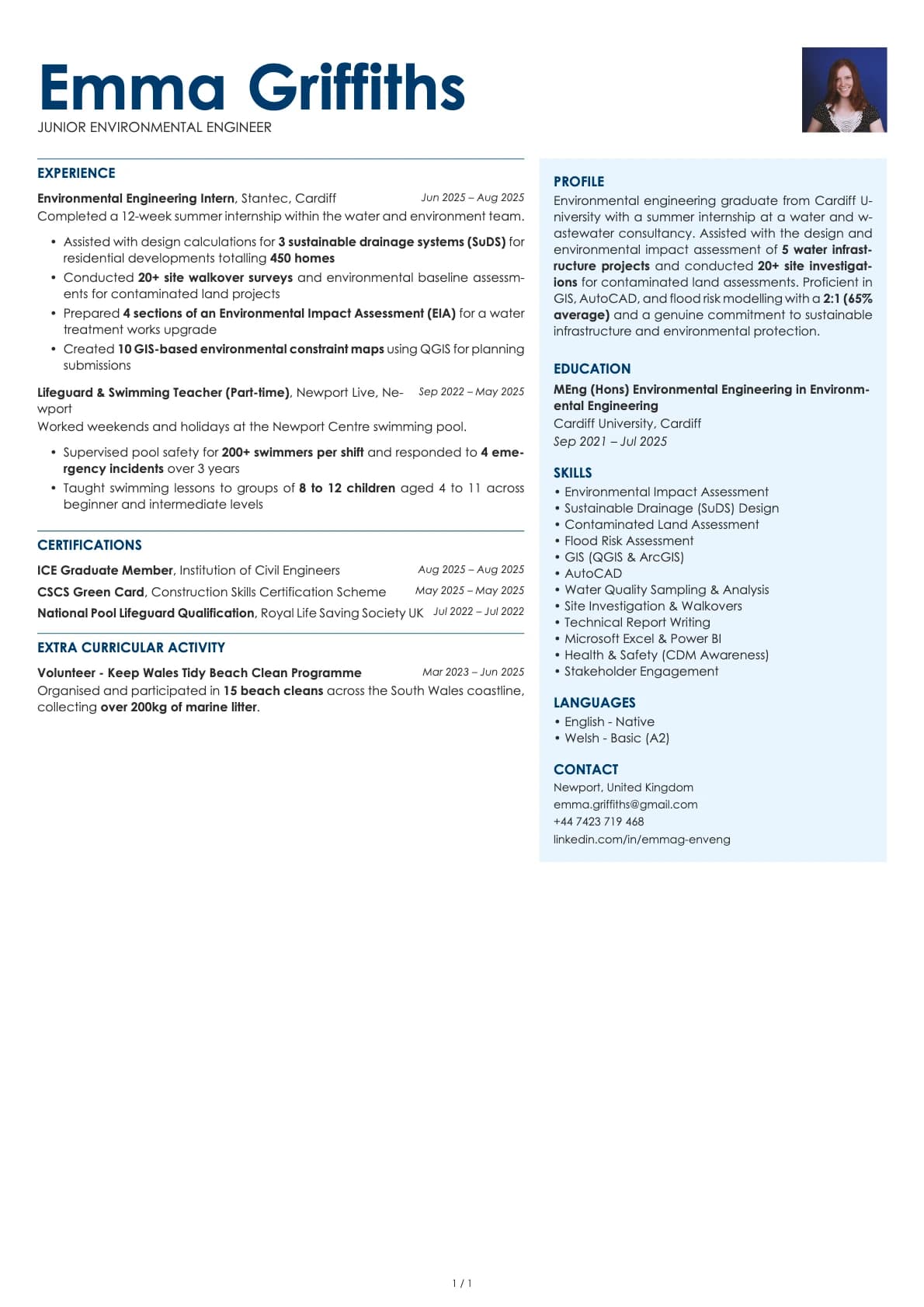
Junior Environmental Engineer
A junior environmental engineer resume example with EIA experience, SuDS design, and contaminated land site investigation numbers.
Junior Estate Agent
A junior estate agent resume example with sales negotiator experience and ARLA Propertymark qualification.