Junior Supply Chain Analyst Resume Example
A junior supply chain analyst resume example with Honda UK placement and inventory optimisation experience.

Laddro Team
Free to use. No account needed to start.
Free to use. No account needed to start.
Overview
Supply chain analyst roles combine data analysis with operational problem-solving. You use data to track supplier performance, optimise inventory levels, and forecast demand, all of which directly affect a company's ability to manufacture and deliver products on time. Employers want graduates who can work with ERP systems, build dashboards, and turn supply chain data into actionable insights.
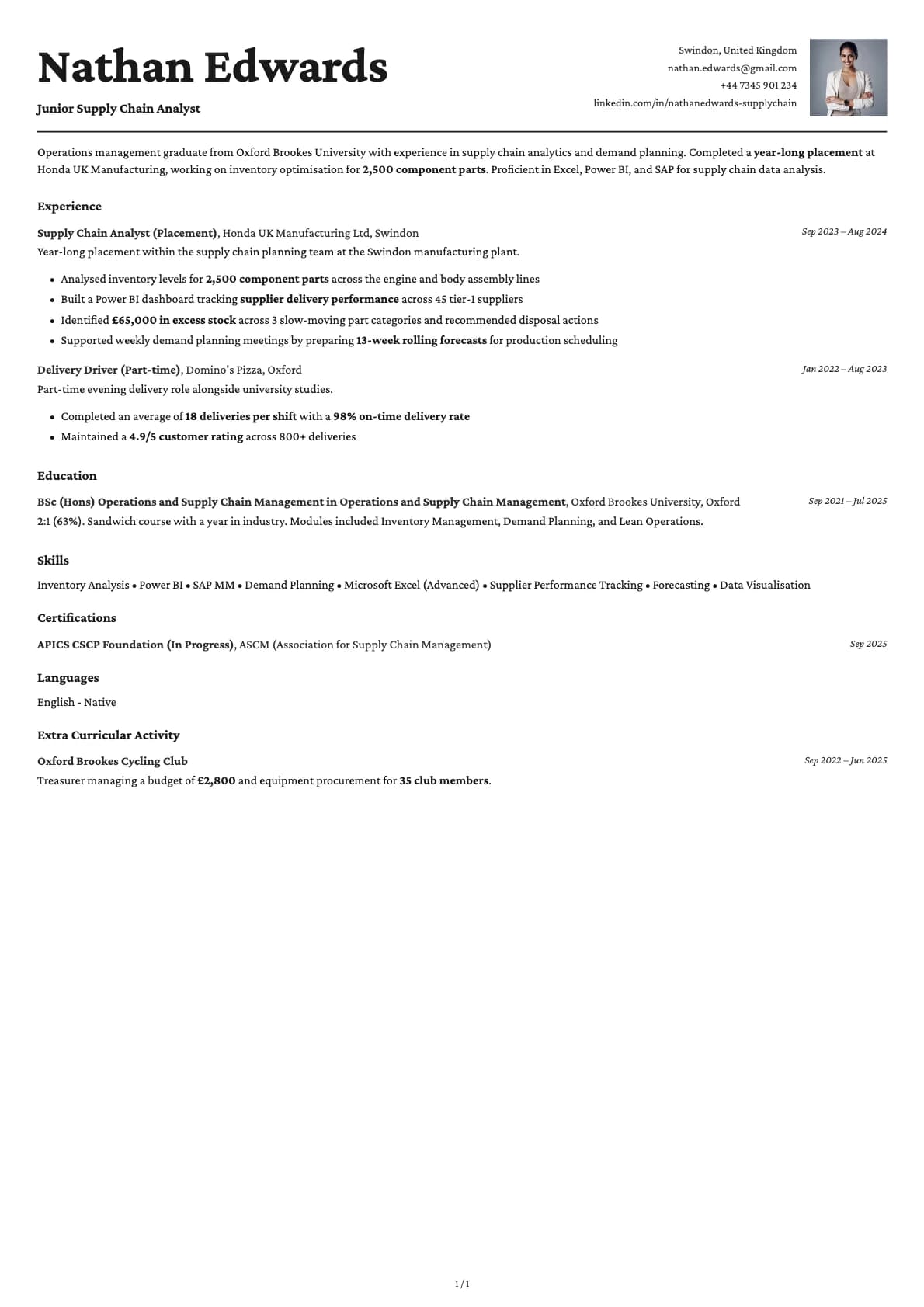
Nathan Edwards is an operations management graduate from Oxford Brookes University who completed a year-long placement at Honda UK Manufacturing in Swindon. His resume works because it shows real inventory analysis at scale, a supplier performance dashboard, and a tangible cost-saving recommendation.
What Makes This Resume Work
Inventory analysis covering 2,500 component parts. This scale of analysis is impressive for a placement student. It shows Nathan worked with real manufacturing complexity, not a simplified dataset or university exercise.
A supplier performance dashboard used by the team. Building a Power BI dashboard tracking 45 tier-1 suppliers shows Nathan can create analytical tools that others rely on. It demonstrates both technical skill and an understanding of what supply chain teams need to monitor.
Excess stock identification with a financial value. Finding £65,000 in excess stock and recommending disposal actions is a direct financial contribution. It shows Nathan can move from analysis to recommendation, which is the core skill of an analyst role.
Demand planning meeting support. Preparing 13-week rolling forecasts for production scheduling shows Nathan understands the cyclical nature of supply chain planning and has experience with the forecasting tools and processes that manufacturers use.
Key Takeaways
For junior supply chain analyst roles, describe the data you worked with, the number of parts or suppliers involved, and the tools you used (Power BI, SAP MM, Excel). If you identified cost savings or excess stock, lead with the financial value. If you built dashboards or forecasting tools, describe who used them and how often. An APICS or CILT qualification in progress shows professional commitment. Even delivery or warehouse work demonstrates supply chain awareness if you frame it around performance metrics and on-time delivery.
Build your own version
Open this layout in the builder and swap in your own details. It takes a few minutes.
Free to use. No account needed to start.
Was this resume example helpful?
Rate this example to help us create better content for you.
4.6 average from 92 ratingsRelated resume examples
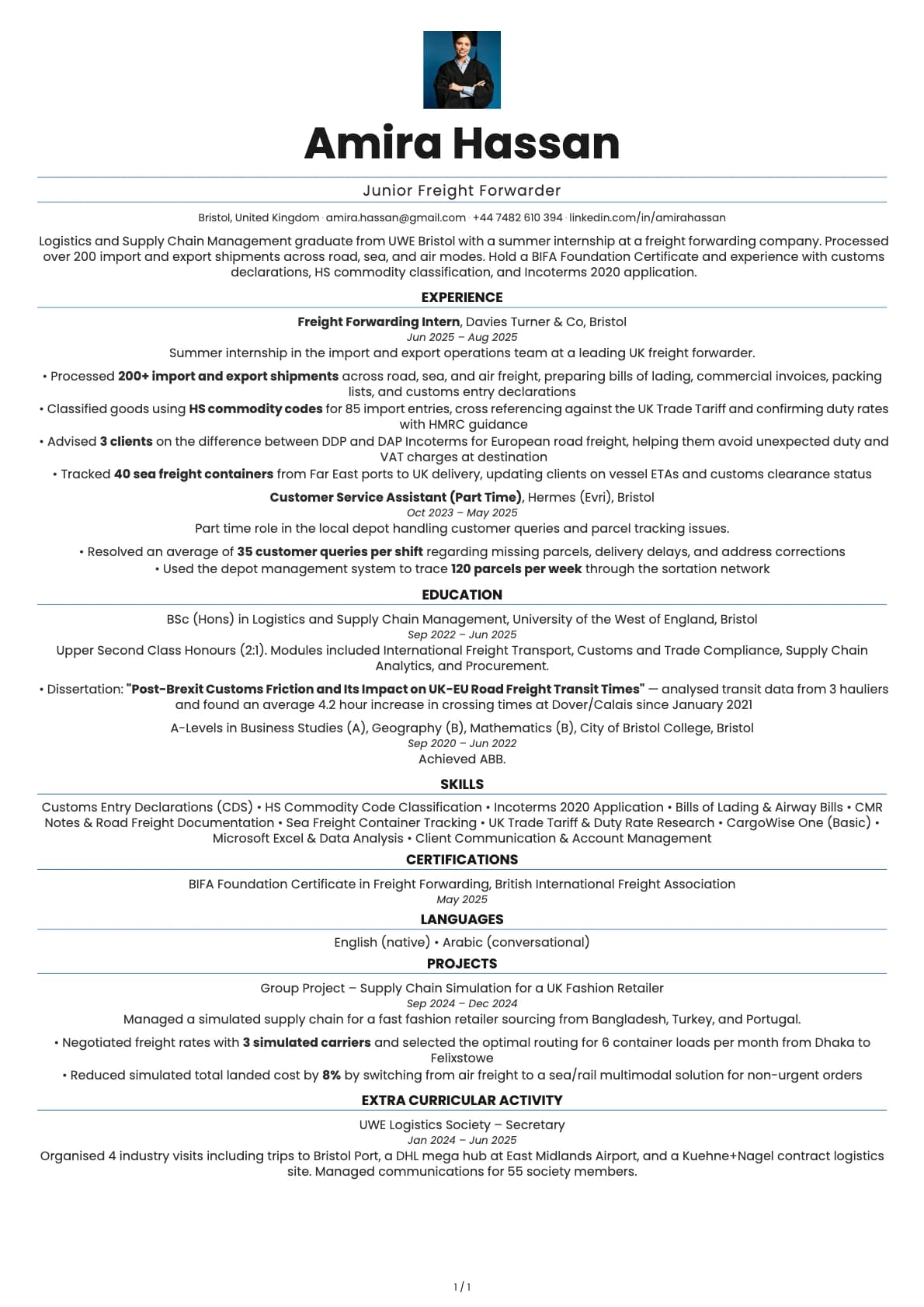
Junior Freight Forwarder
A junior freight forwarder resume example for logistics graduates entering international freight. See how to present your customs documentation, Incoterms knowledge, and freight operations experience.
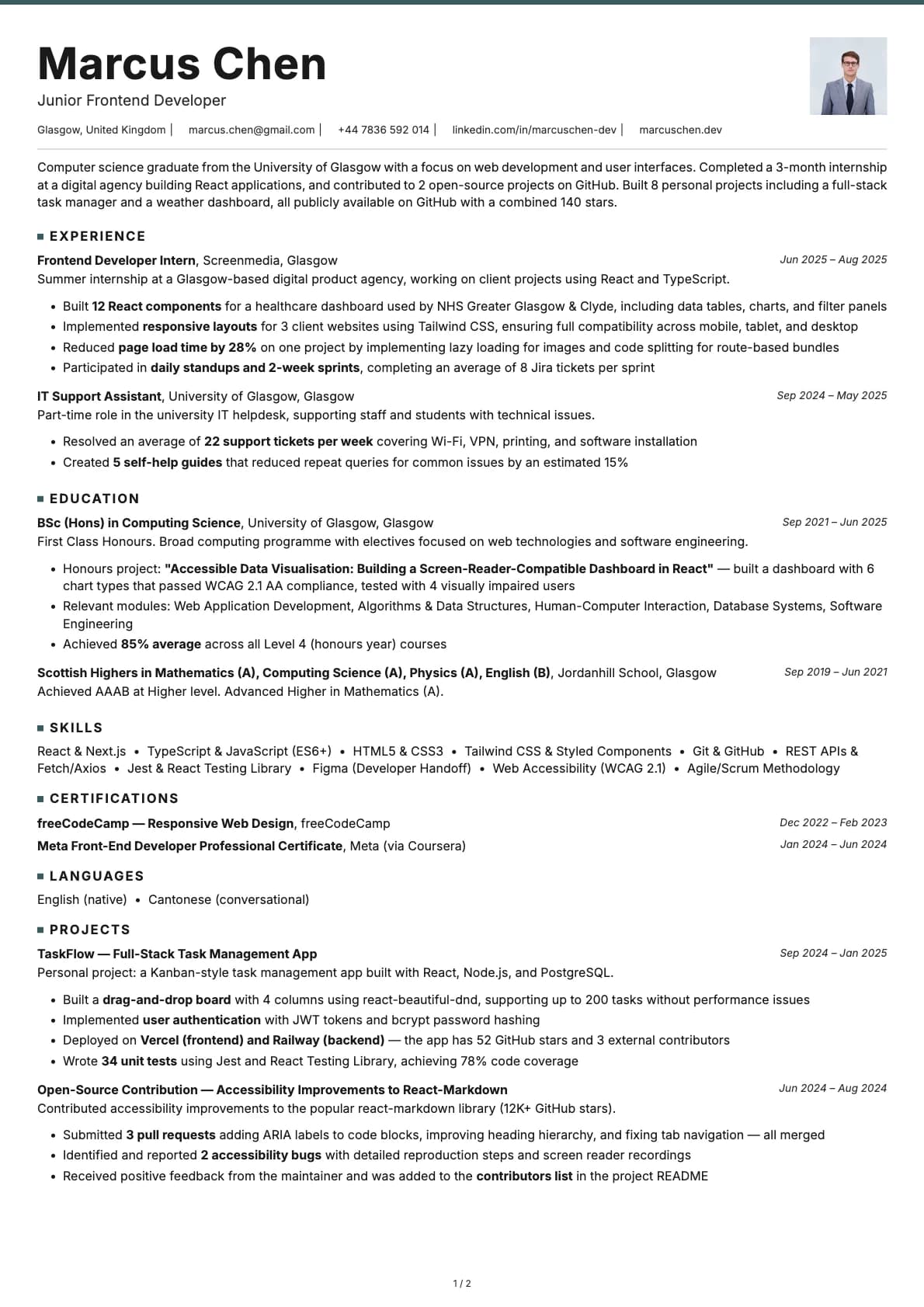
Junior Frontend Developer
A junior frontend developer resume example for recent graduates. Learn how to present your React projects, responsive design skills, and coding experience to get your first dev job.
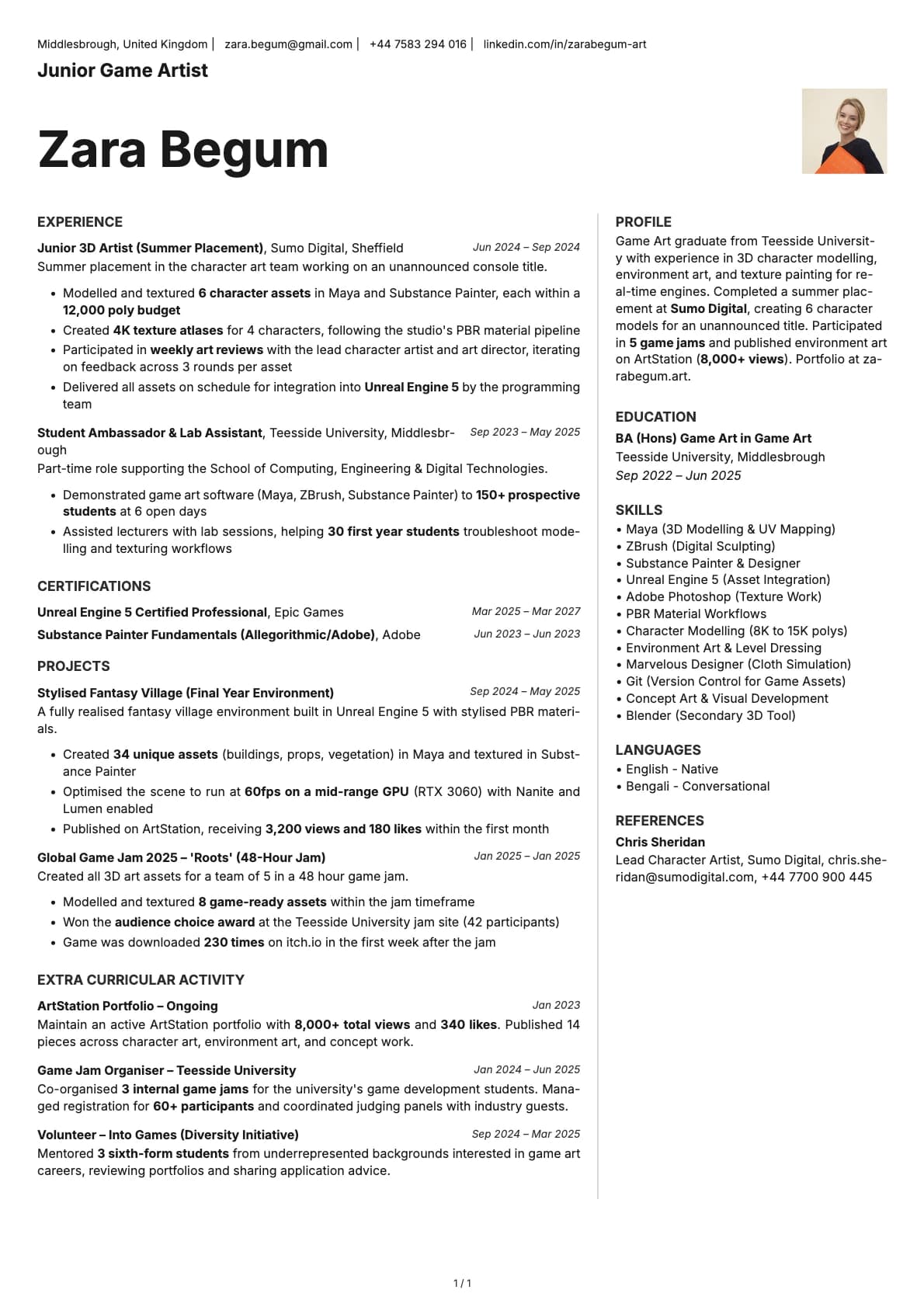
Junior Game Artist
A junior game artist resume example with 3D character models, game jam entries, and portfolio highlights from a Game Art BA graduate breaking into the industry.
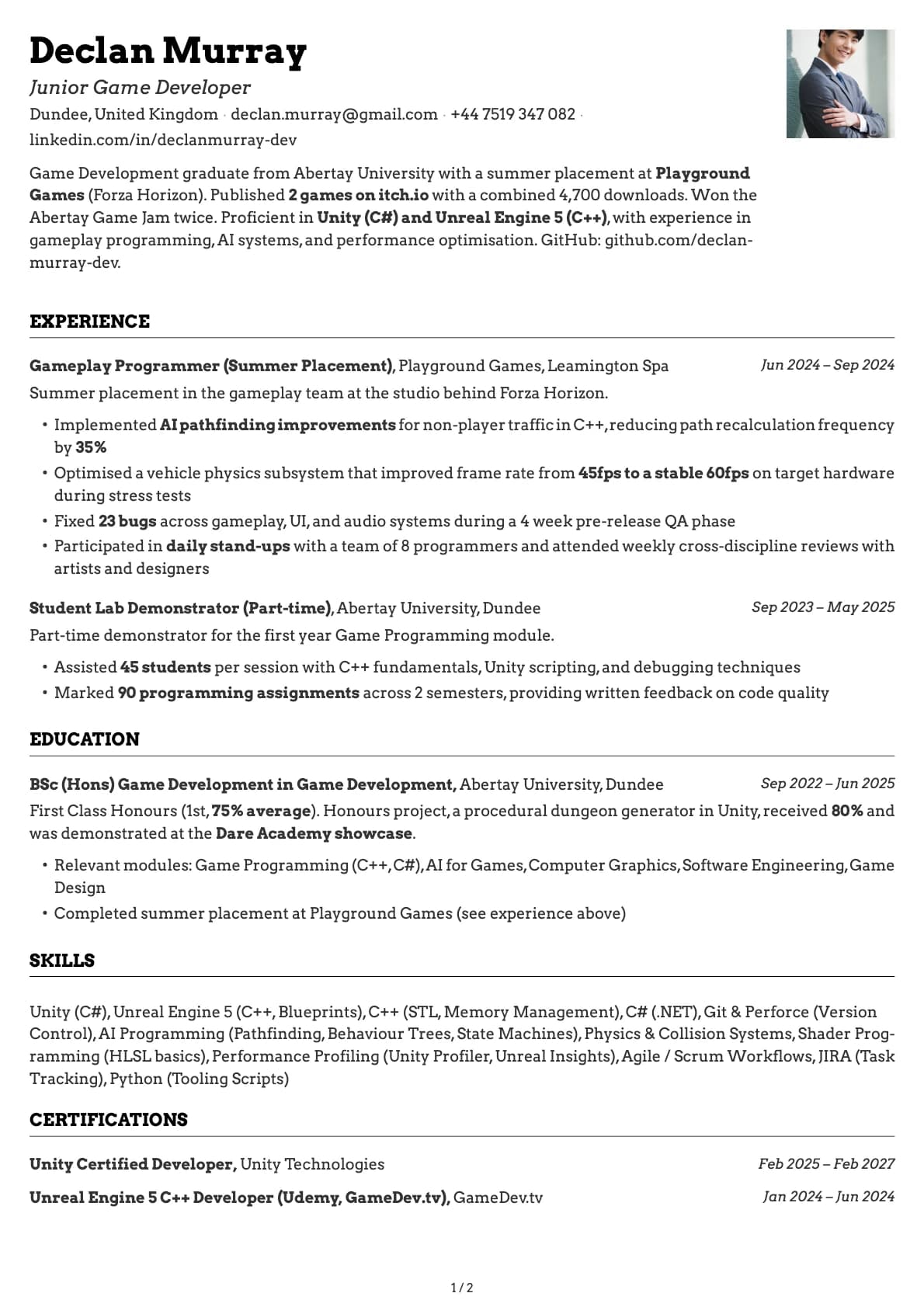
Junior Game Developer
A junior game developer resume example with Unity projects, published games, and game jam wins from a Game Development BSc graduate entering the games industry.
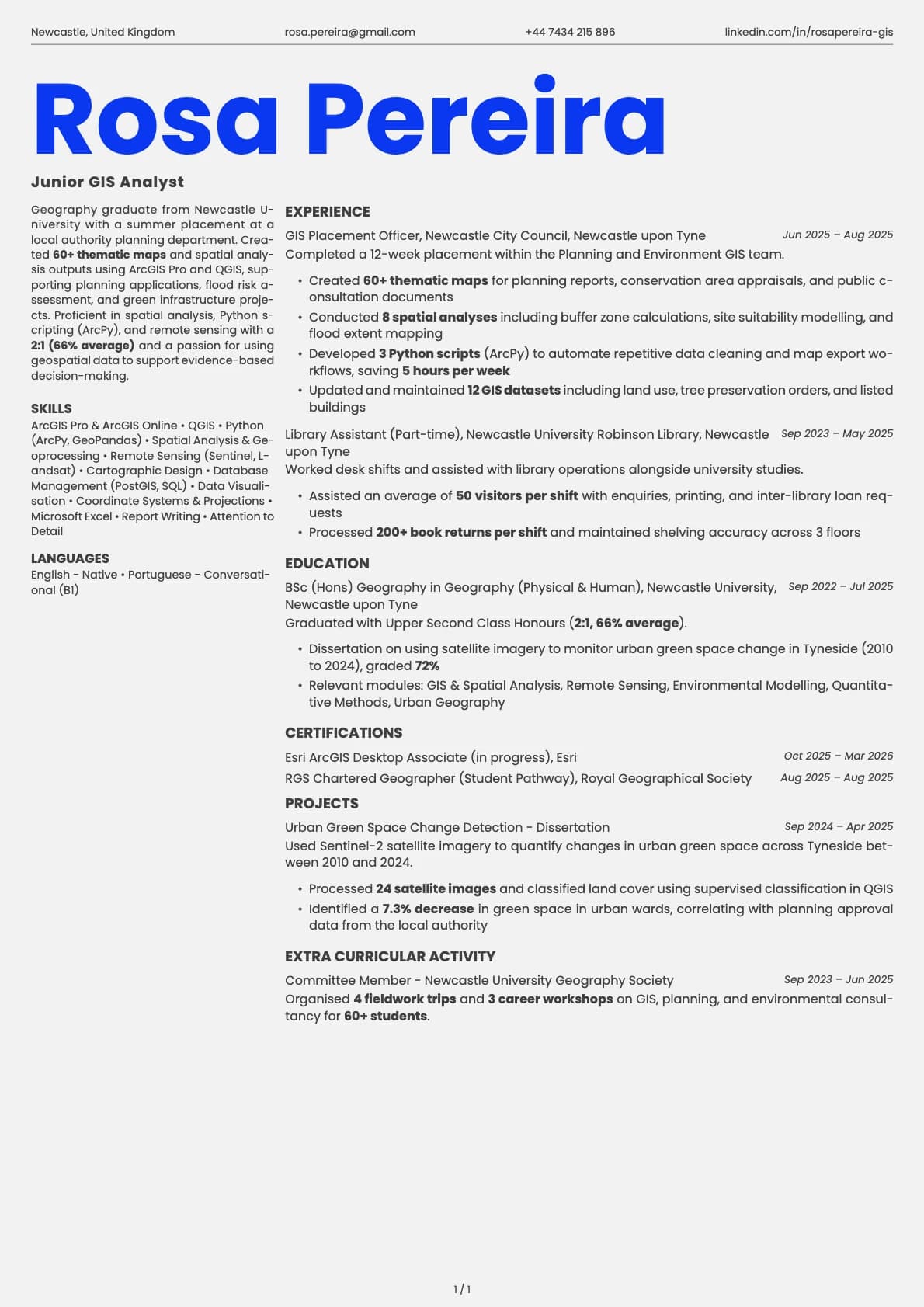
Junior GIS Analyst
A junior GIS analyst resume example with local authority placement experience, spatial analysis, and Python scripting skills for geography graduates.
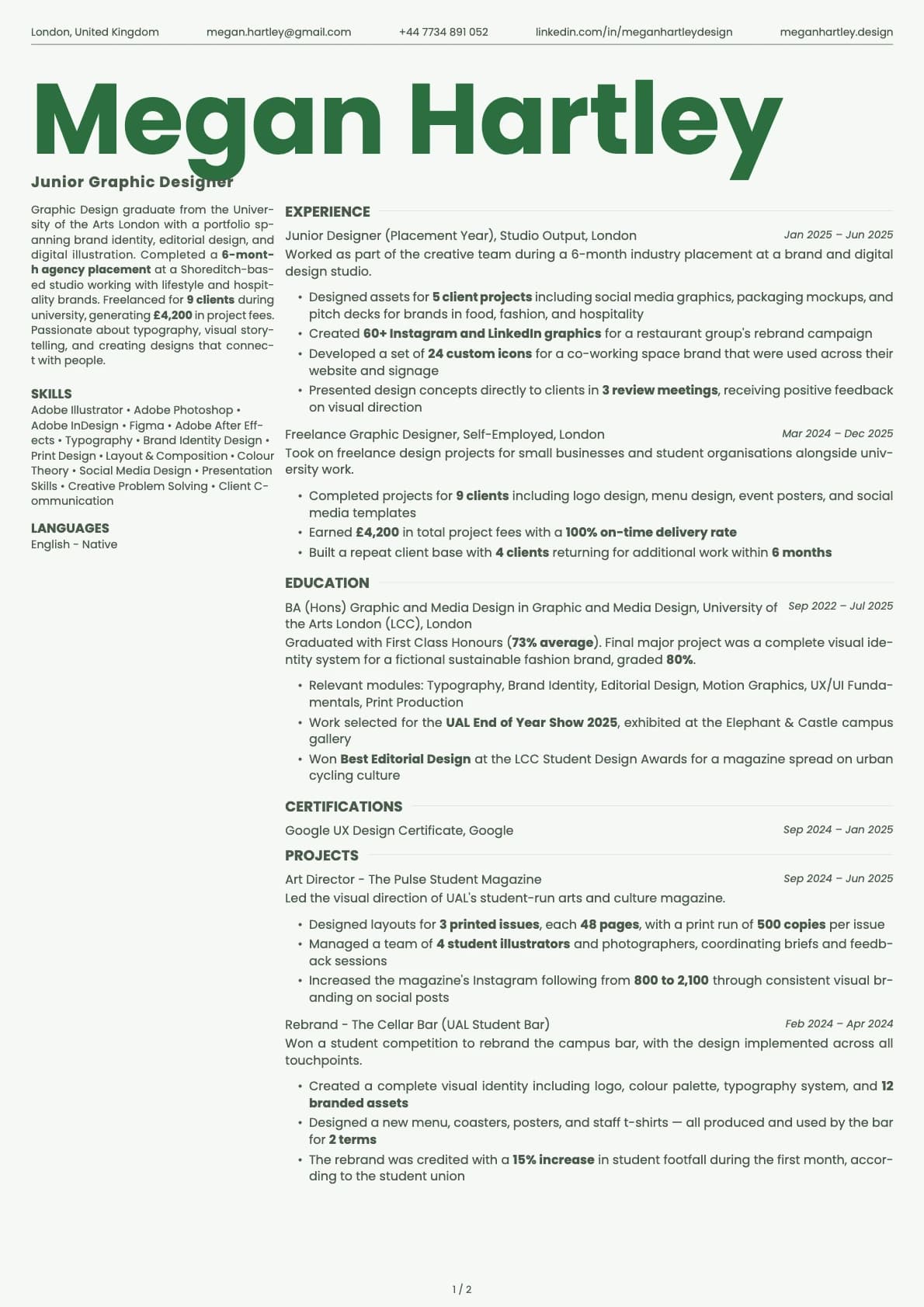
Junior Graphic Designer
A junior graphic designer resume example for recent graduates. Learn how to present your portfolio, design tools, and freelance work to land your first design role.
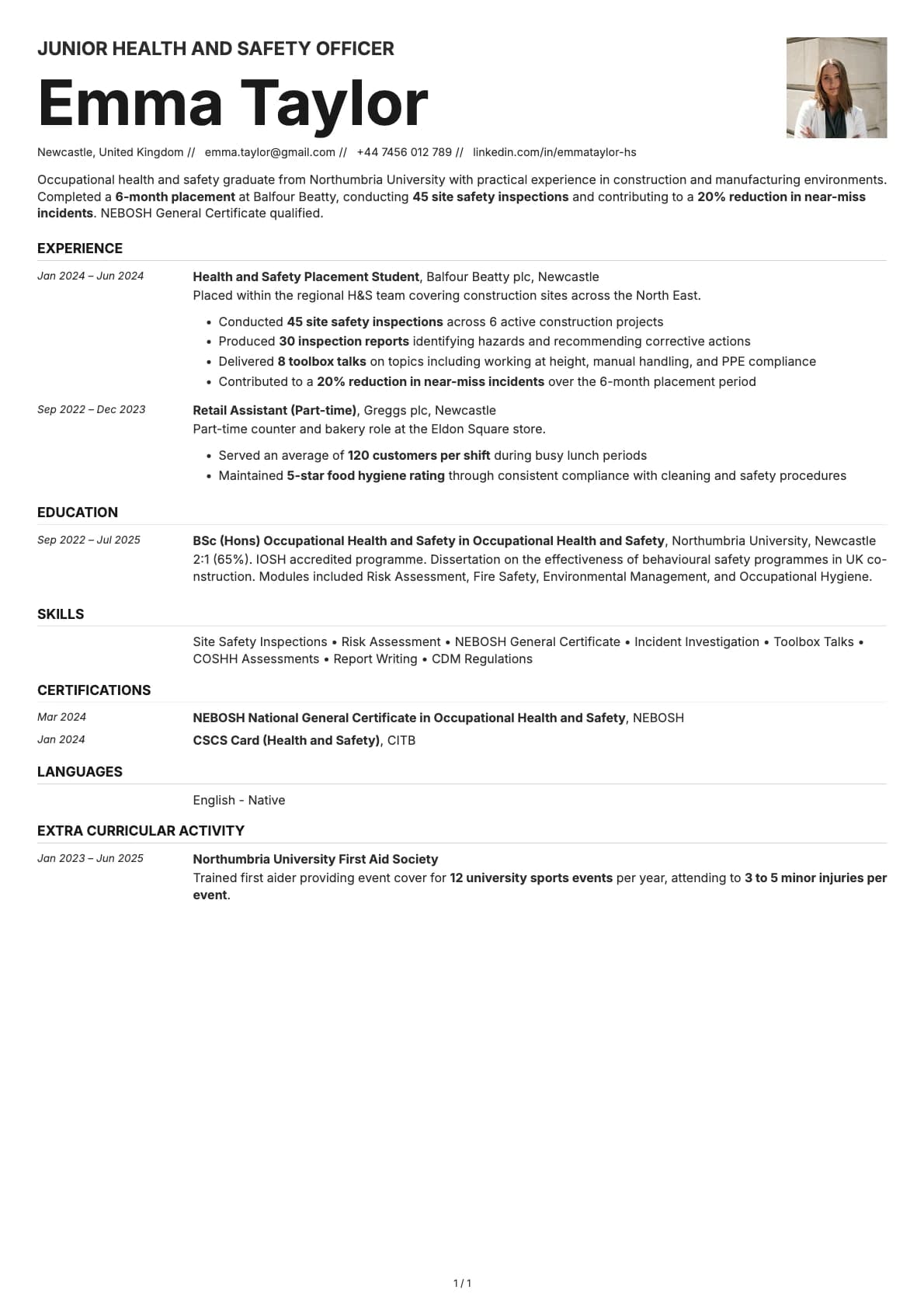
Junior Health and Safety Officer
A junior health and safety officer resume example with Balfour Beatty placement and NEBOSH qualification.
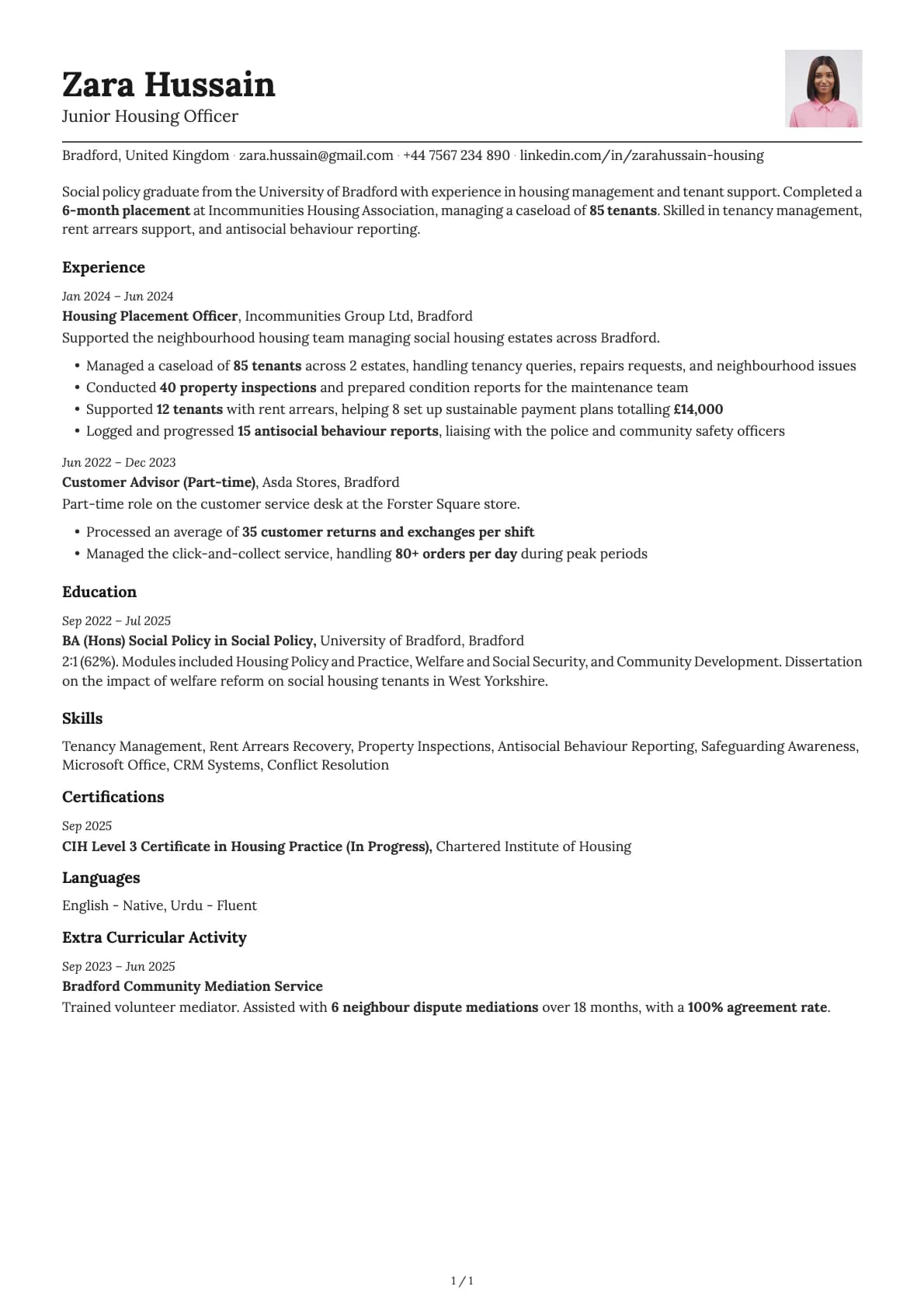
Junior Housing Officer
A junior housing officer resume example with housing association placement and tenant management experience.
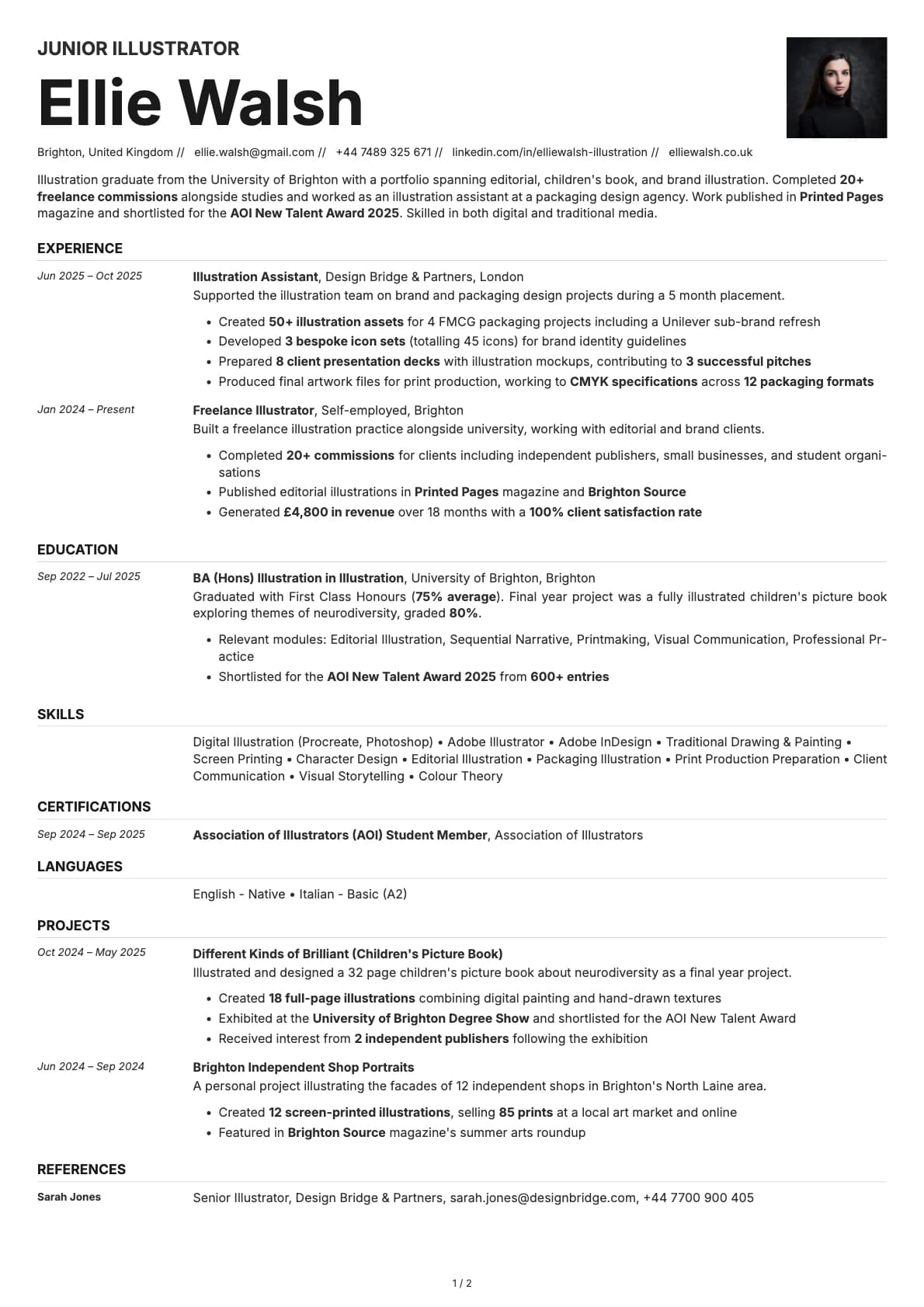
Junior Illustrator
A junior illustrator resume example for graduates. See how to present freelance commissions, agency experience, and published work to land your first illustration role.
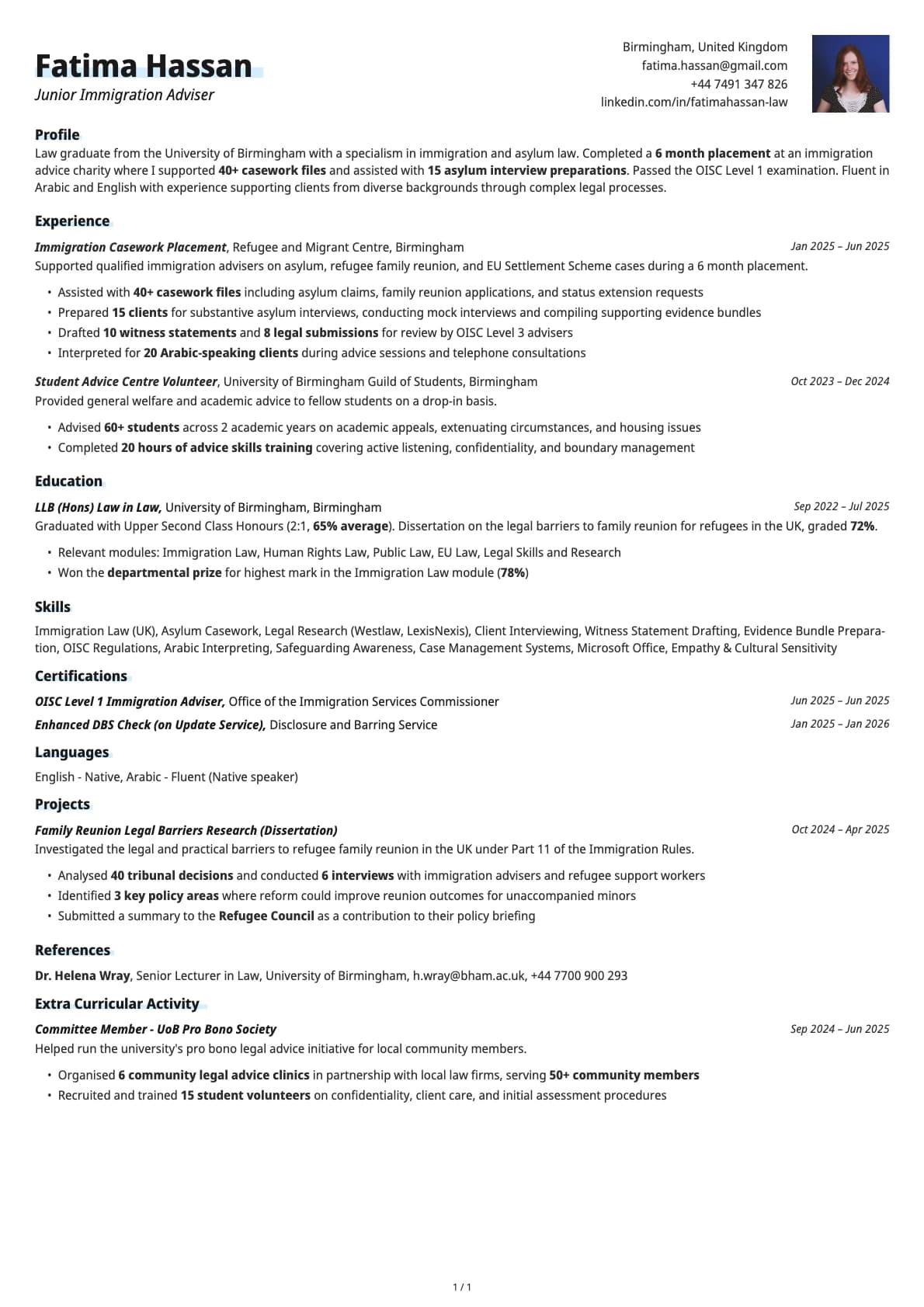
Junior Immigration Adviser
A junior immigration adviser resume example for law graduates. See how to present asylum casework, OISC qualification, and client support experience to land your first immigration advisory role.
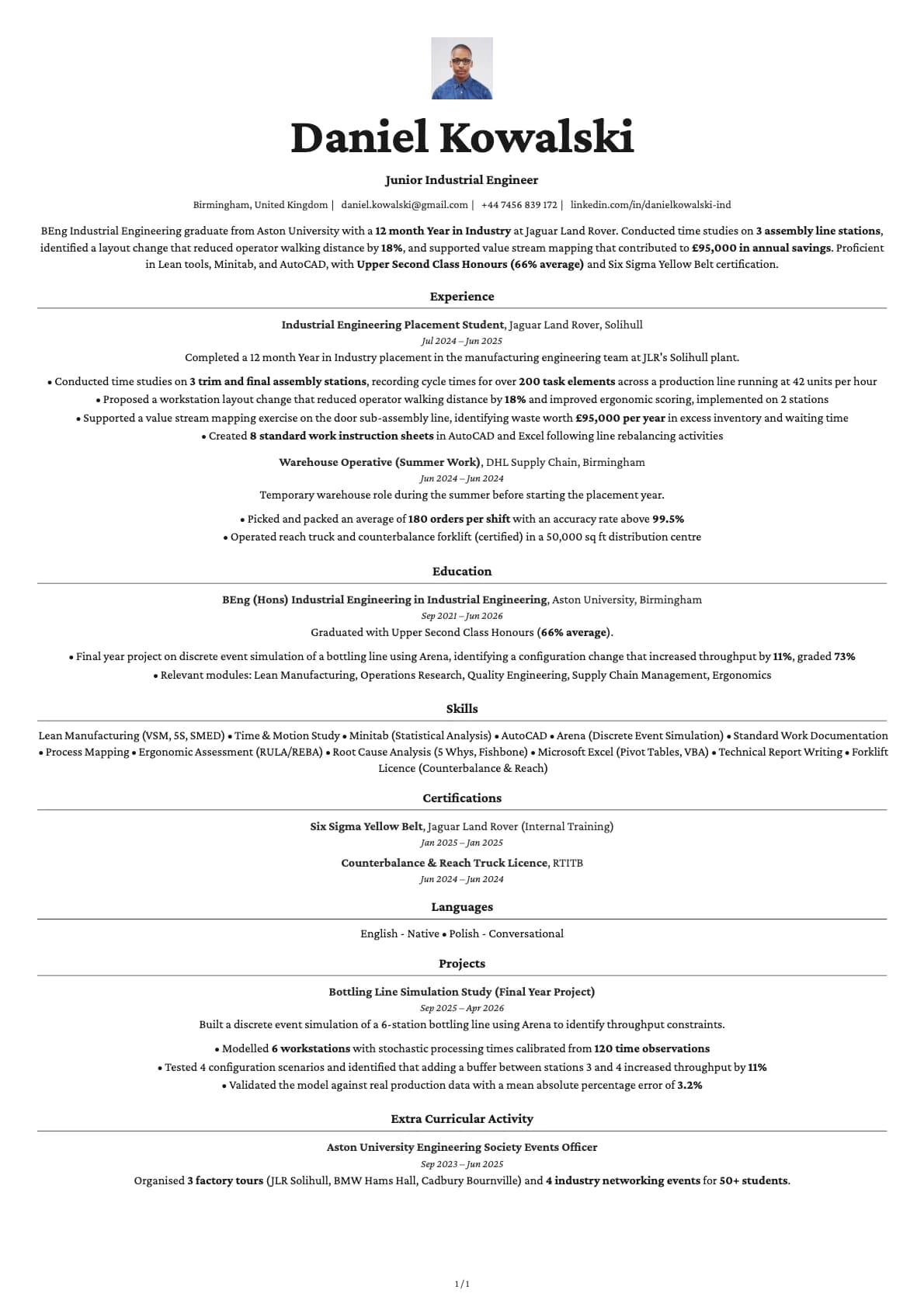
Junior Industrial Engineer
A junior industrial engineer resume example with lean manufacturing placement experience, time study skills, and Six Sigma Yellow Belt.
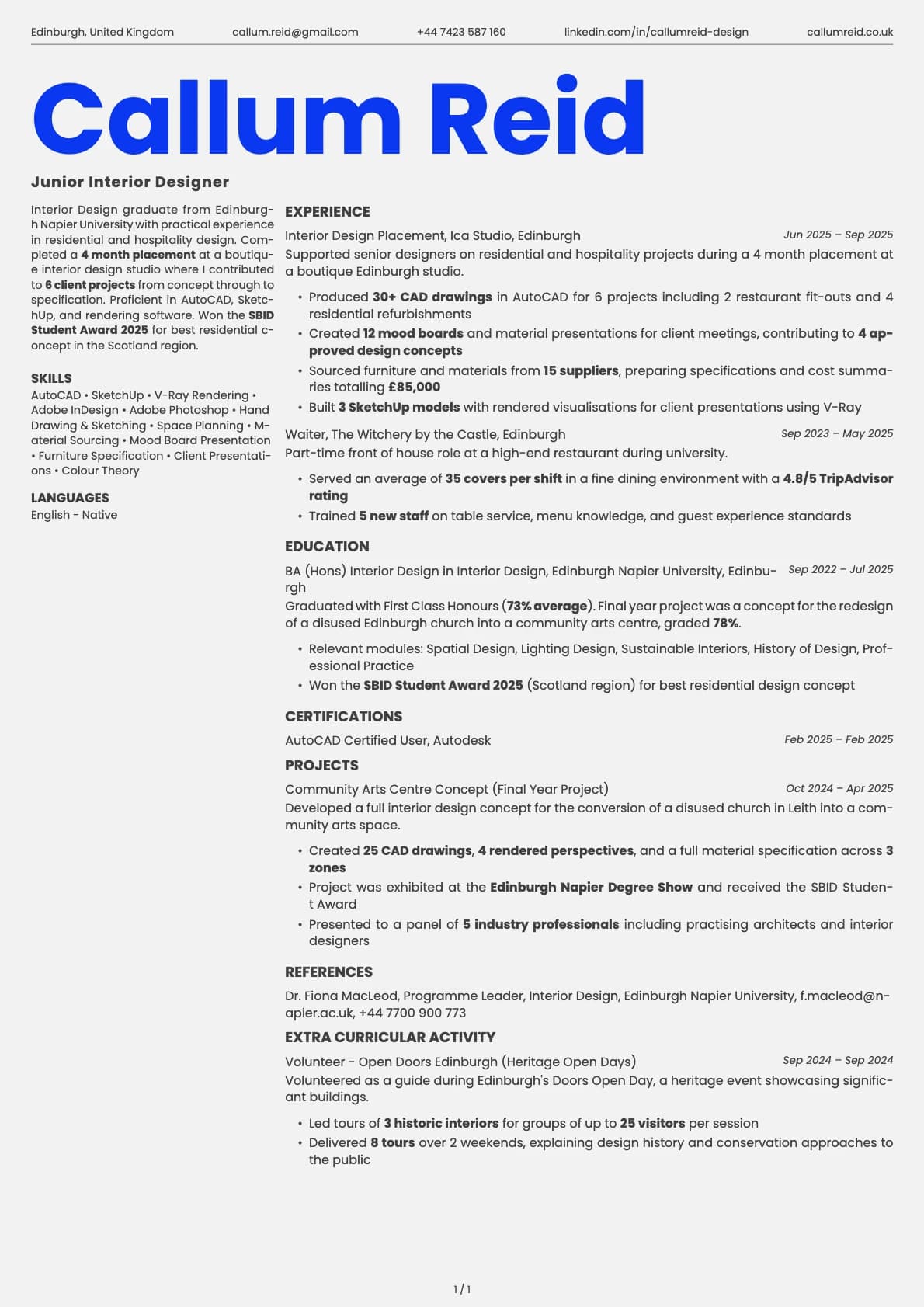
Junior Interior Designer
A junior interior designer resume example for graduates. Learn how to present studio placement experience, CAD skills, and design awards to land your first interior design role.