Junior Tax Associate Resume Example
A junior tax associate resume example for tax and accounting graduates. See how HMRC work experience and ATT progress help you stand out to employers.

Laddro Team
Free to use. No account needed to start.
Free to use. No account needed to start.
Overview
Junior tax associates prepare tax computations, assist with returns, and research legislation to support senior advisors. The role demands accuracy, an understanding of UK tax law, and the patience to work through detailed calculations without cutting corners. Most firms want graduates who are already working toward the ATT or CTA qualification.
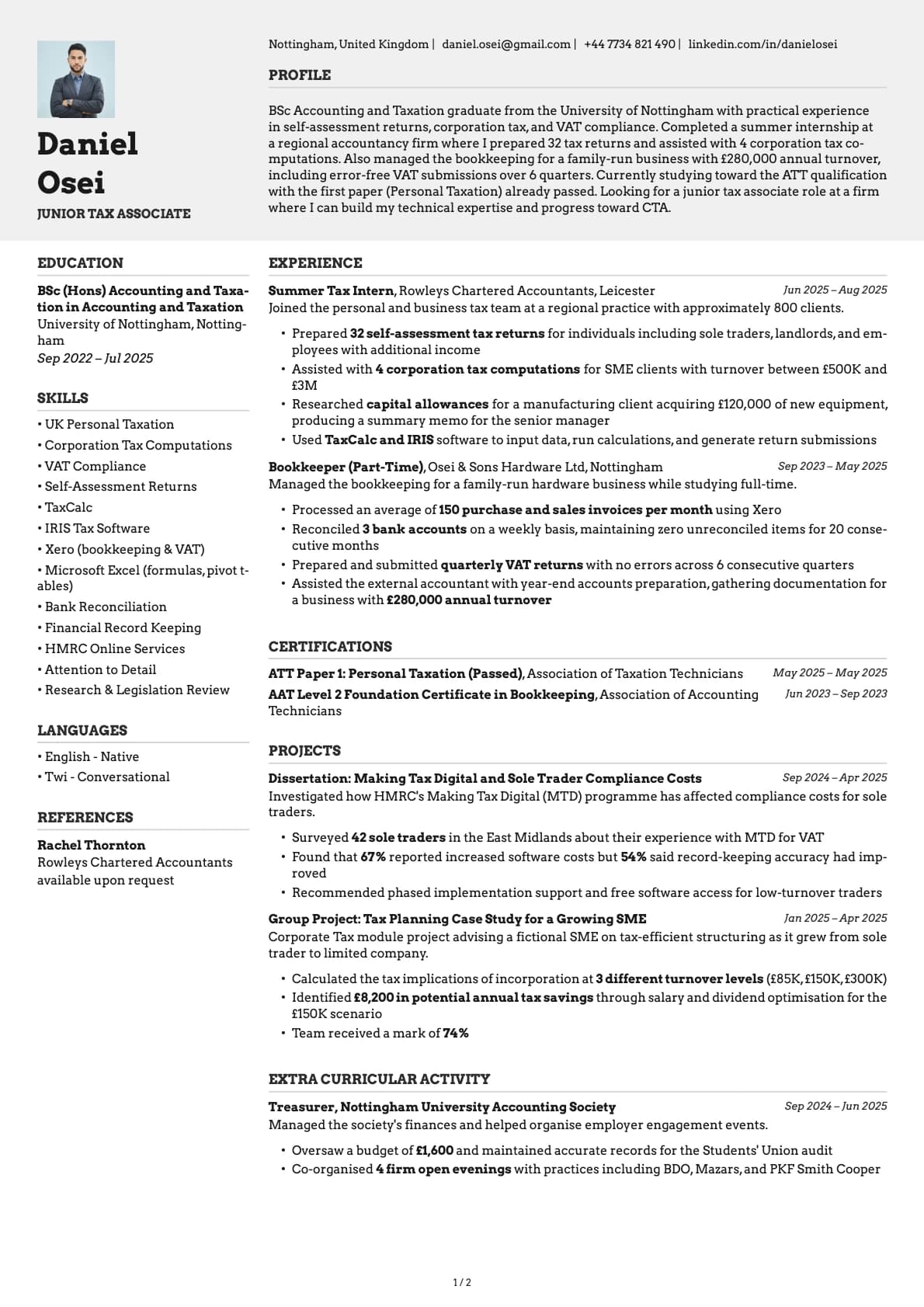
This resume belongs to Daniel Osei, a recent BSc Accounting and Taxation graduate from the University of Nottingham. He completed a summer internship at a regional accountancy firm and worked part-time as a bookkeeper for a family-run business. His resume works because it shows he has already handled real tax work and is committed to the profession through his ATT progress.
What Makes This Resume Work
The internship includes genuine tax deliverables. Daniel prepared 32 self-assessment tax returns during his 10-week summer placement at a mid-tier firm. He also assisted with 4 corporation tax computations and researched capital allowances for a client acquiring new manufacturing equipment. These are tasks that junior tax associates do in their first year, so hiring managers can see he will not need to start from zero.
Bookkeeping experience demonstrates accuracy under pressure. Managing the books for a business with £280,000 annual turnover meant reconciling bank statements, processing 150 invoices per month, and preparing quarterly VAT returns. He kept the VAT submissions error-free for 6 consecutive quarters. This level of detail orientation is exactly what tax work demands.
ATT progress signals professional commitment. Daniel has already passed the first ATT paper (Personal Taxation) and is studying for the second. Starting a professional qualification before your first permanent role tells employers you are serious about tax as a career, not just taking whatever job comes along.
Technical skills are tax-specific. His skills section lists Xero, IRIS, and TaxCalc alongside Excel. These are the actual tools that small and mid-tier firms use, and listing them shows he has real exposure rather than just classroom theory.
Key Takeaways
For junior tax roles, your academic results matter less than your practical exposure and professional qualification progress. If you have done any bookkeeping, payroll, or return preparation, put it front and centre with specific numbers. Start working toward the ATT or AAT qualification while you are still studying, because firms actively prefer candidates who have already passed at least one paper. Accuracy metrics, like error-free submissions or reconciliation records, carry more weight than generic soft skills.
Build your own version
Open this layout in the builder and swap in your own details. It takes a few minutes.
Free to use. No account needed to start.
Was this resume example helpful?
Rate this example to help us create better content for you.
4.8 average from 87 ratingsRelated resume examples
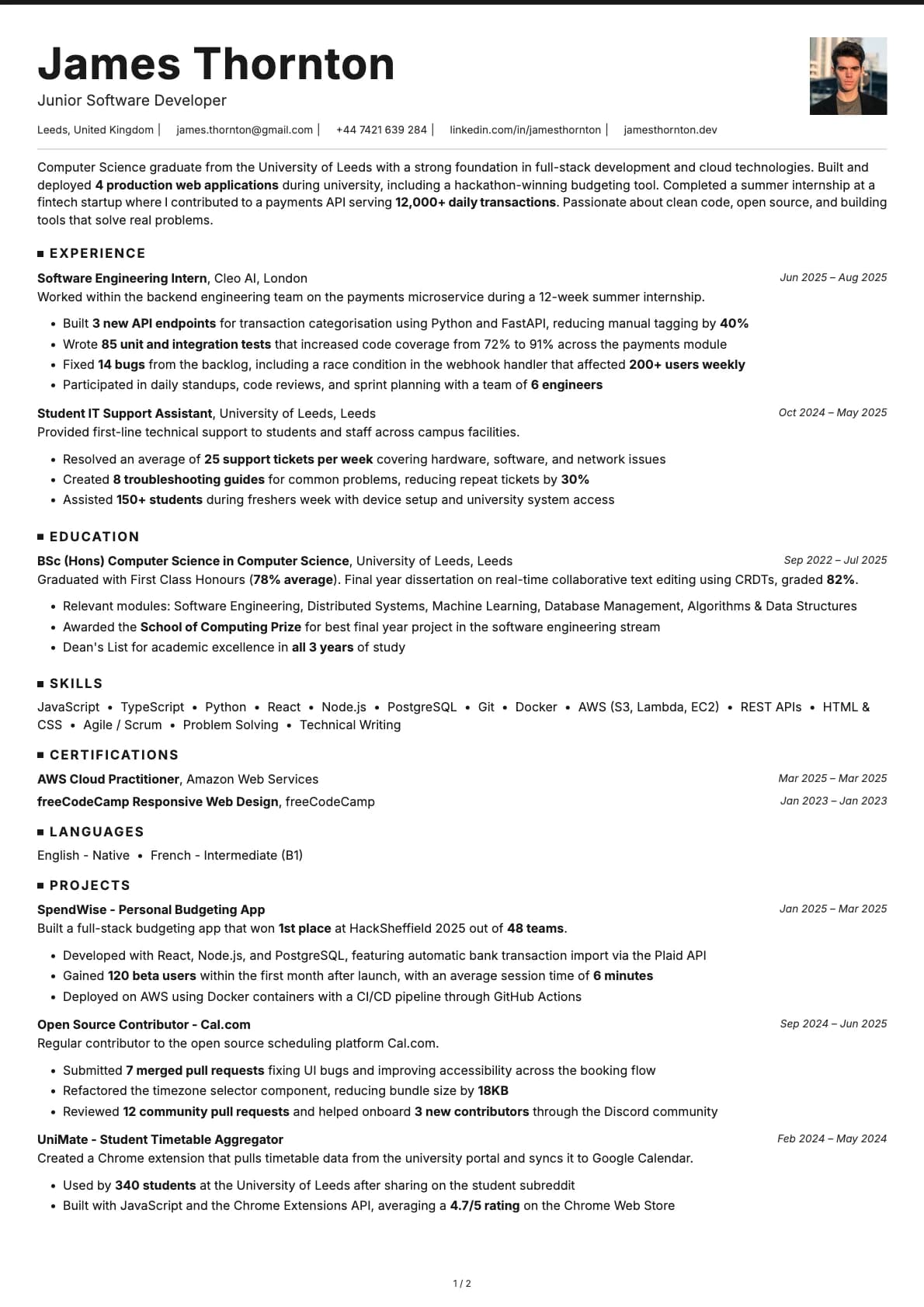
Junior Software Developer
A junior software developer resume example for recent graduates. See how to present personal projects, technical skills, and internship experience to land your first dev role.
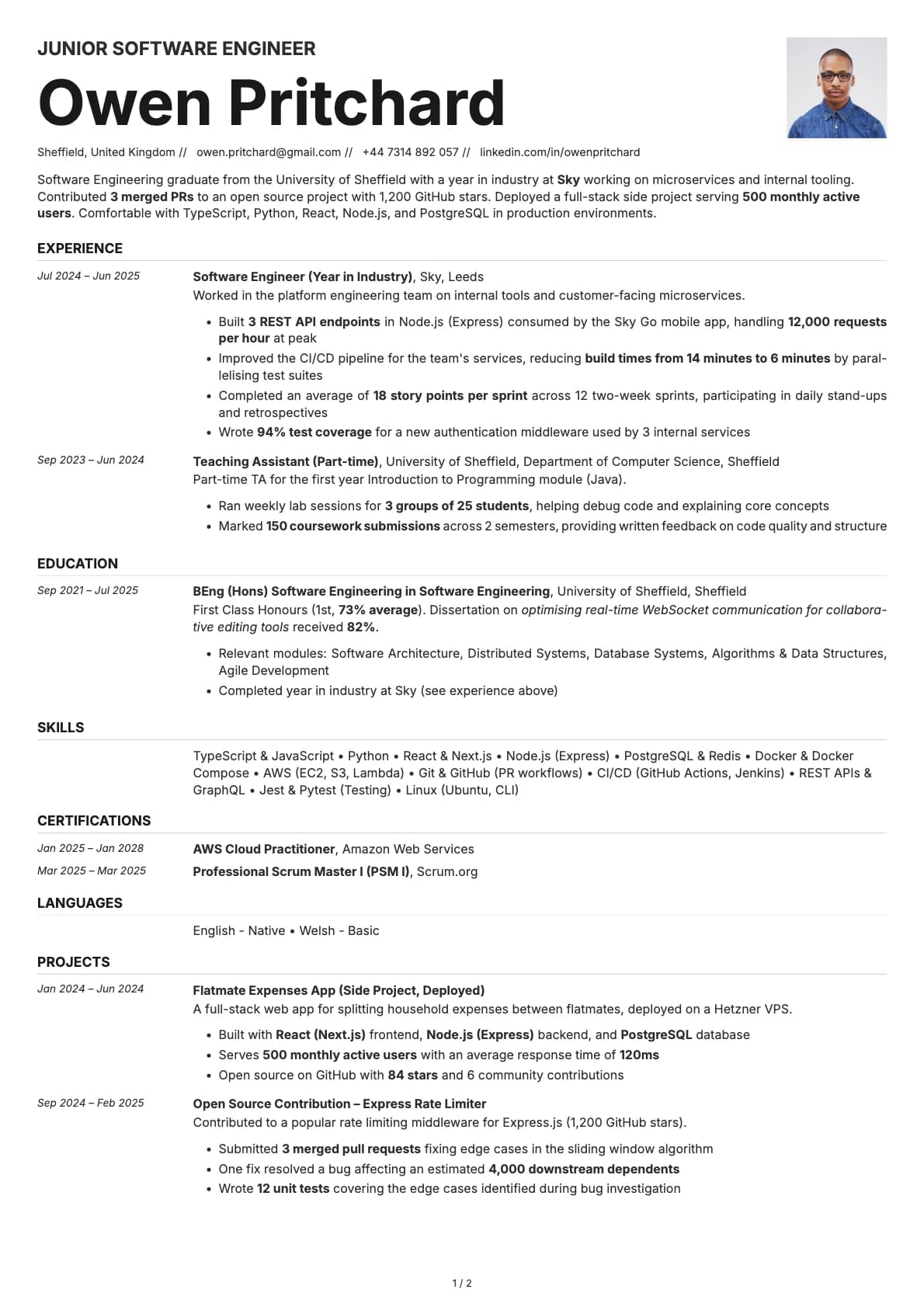
Junior Software Engineer
A junior software engineer resume example with deployed projects, GitHub contributions, and agile sprint experience from a Software Engineering BEng graduate.
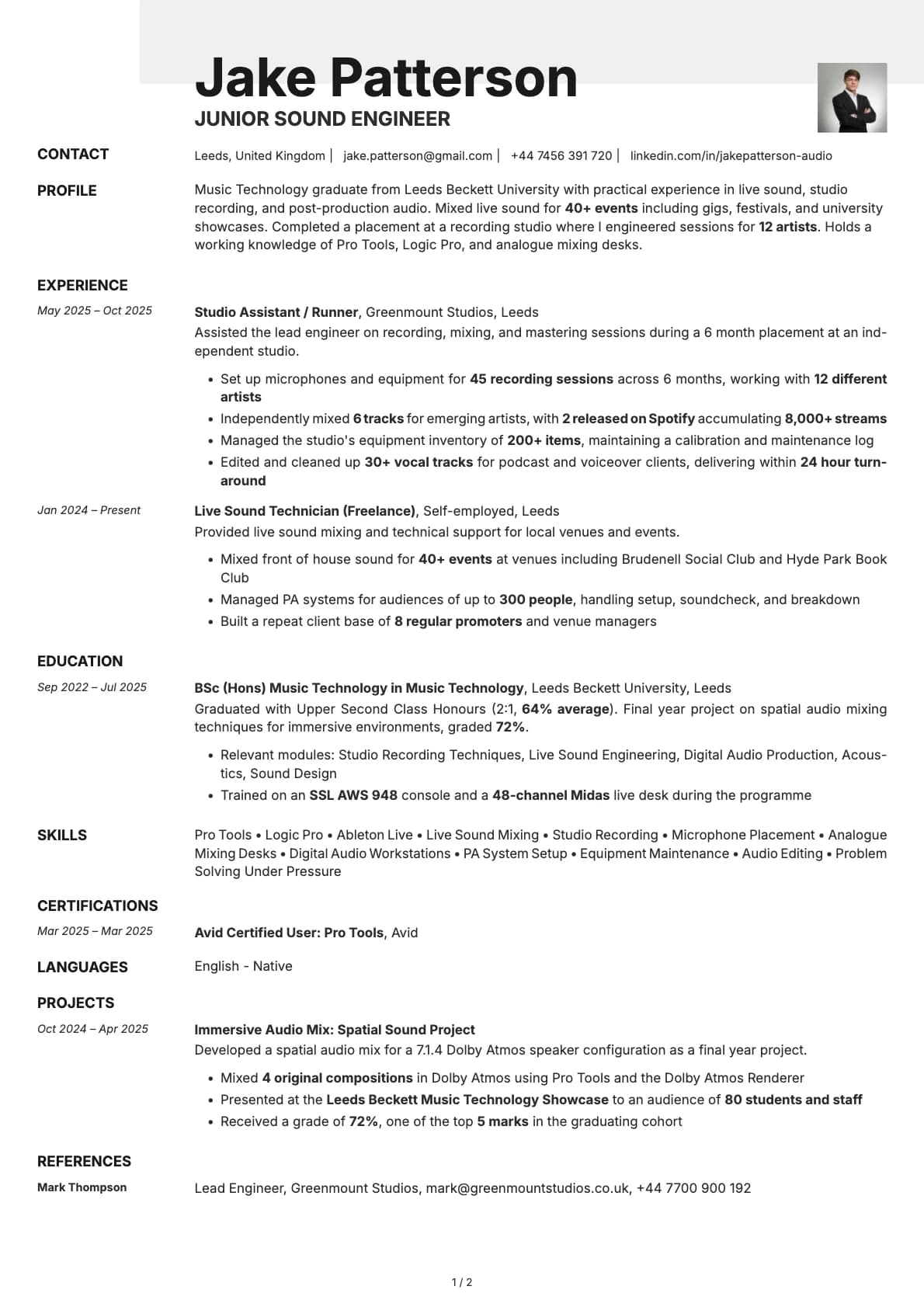
Junior Sound Engineer
A junior sound engineer resume example for graduates. Learn how to present live sound, studio recording, and audio production experience to land your first engineering role.
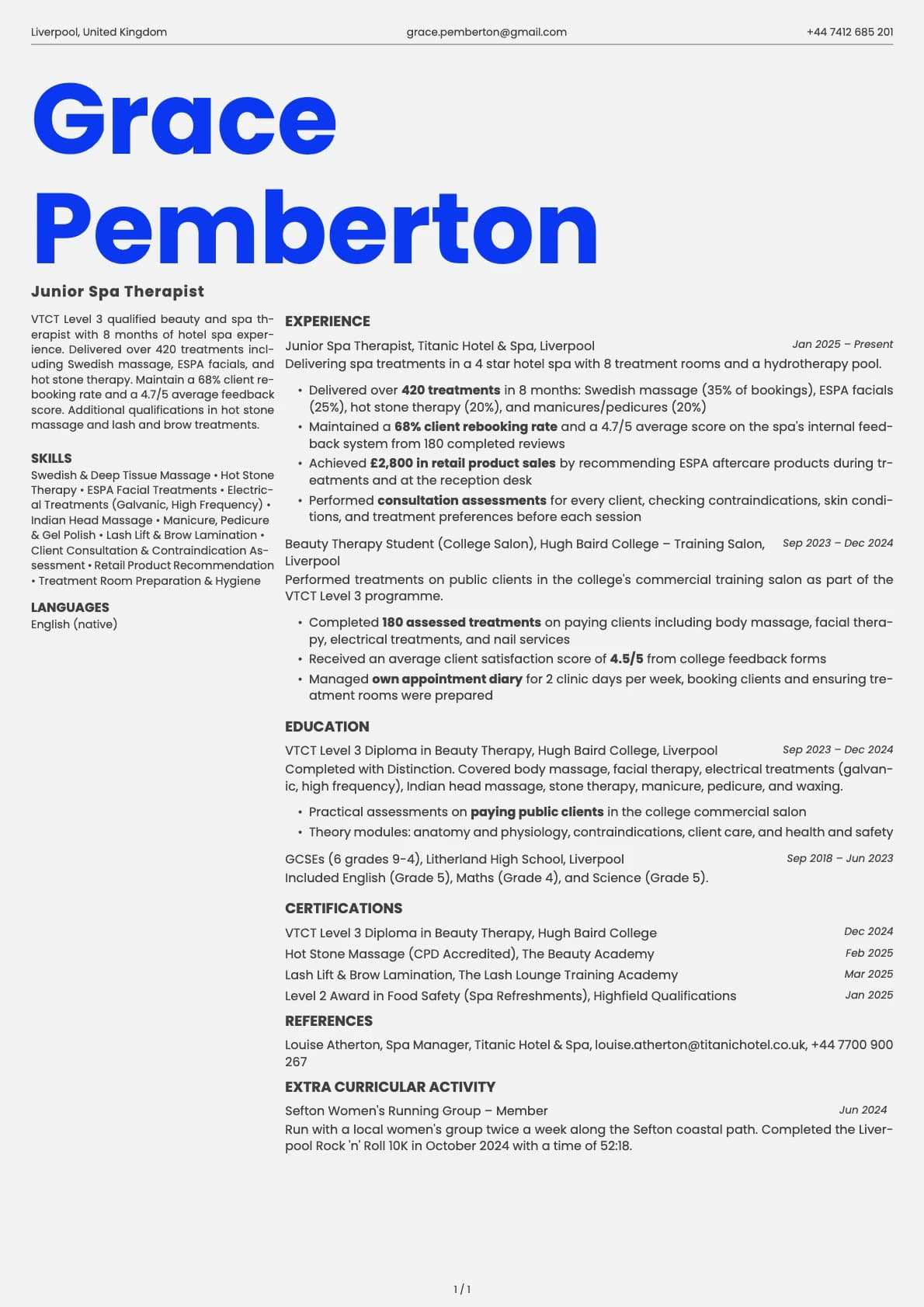
Junior Spa Therapist
A junior spa therapist resume example for VTCT Level 3 qualified therapists. See how to present your treatment skills, client feedback, and spa industry experience.
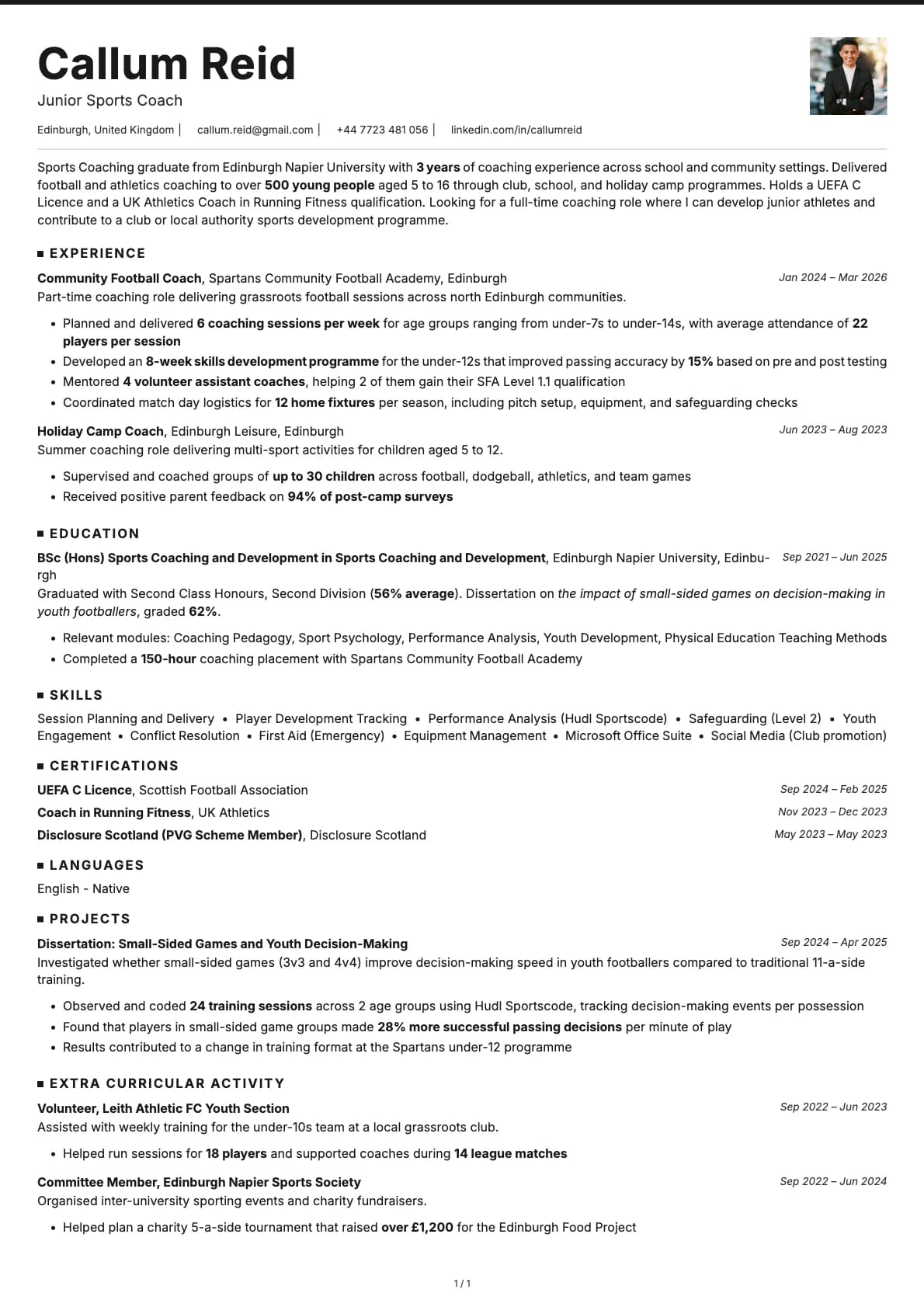
Junior Sports Coach
A junior sports coach resume example showing how to combine a coaching degree, UEFA C Licence, and grassroots football experience into a full-time coaching career.
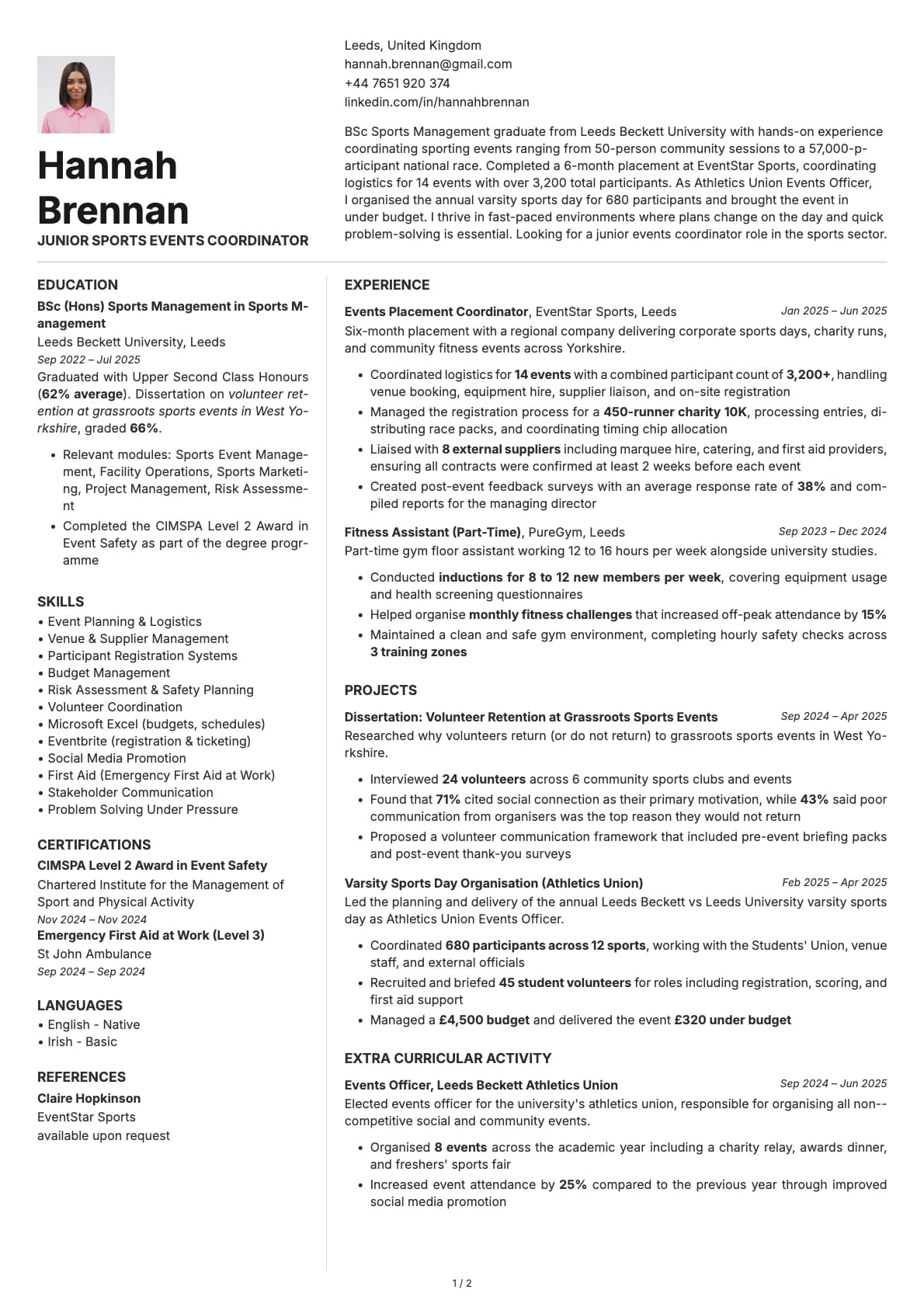
Junior Sports Events Coordinator
A junior sports events coordinator resume example for sports management graduates. See how event logistics and participant numbers make your resume stand out.
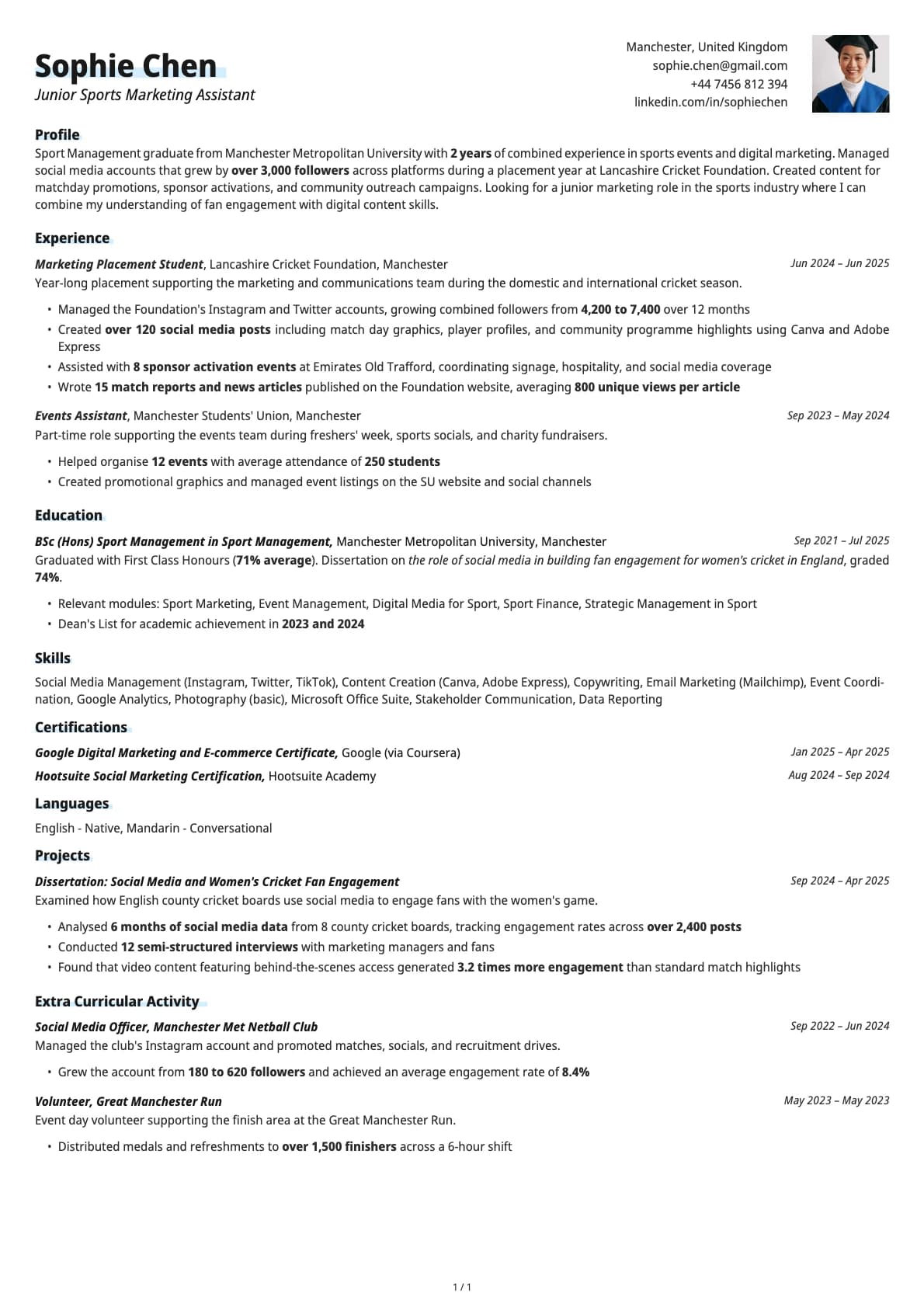
Junior Sports Marketing Assistant
A junior sports marketing assistant resume example showing how to combine a cricket foundation placement, social media growth, and a sport management degree.
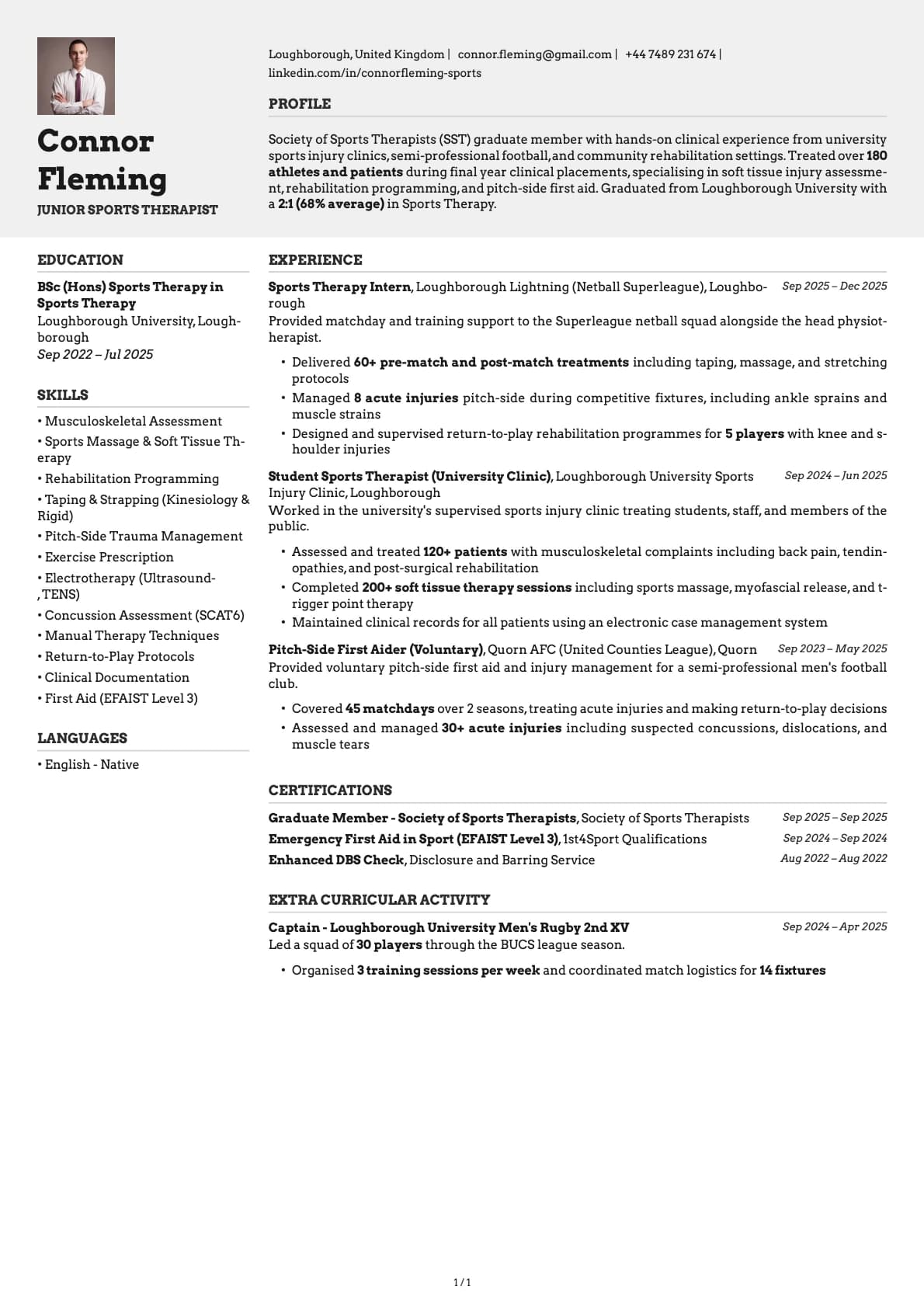
Junior Sports Therapist
A junior sports therapist resume example with clinical treatment numbers, pitch-side experience, and SST membership for new graduates.
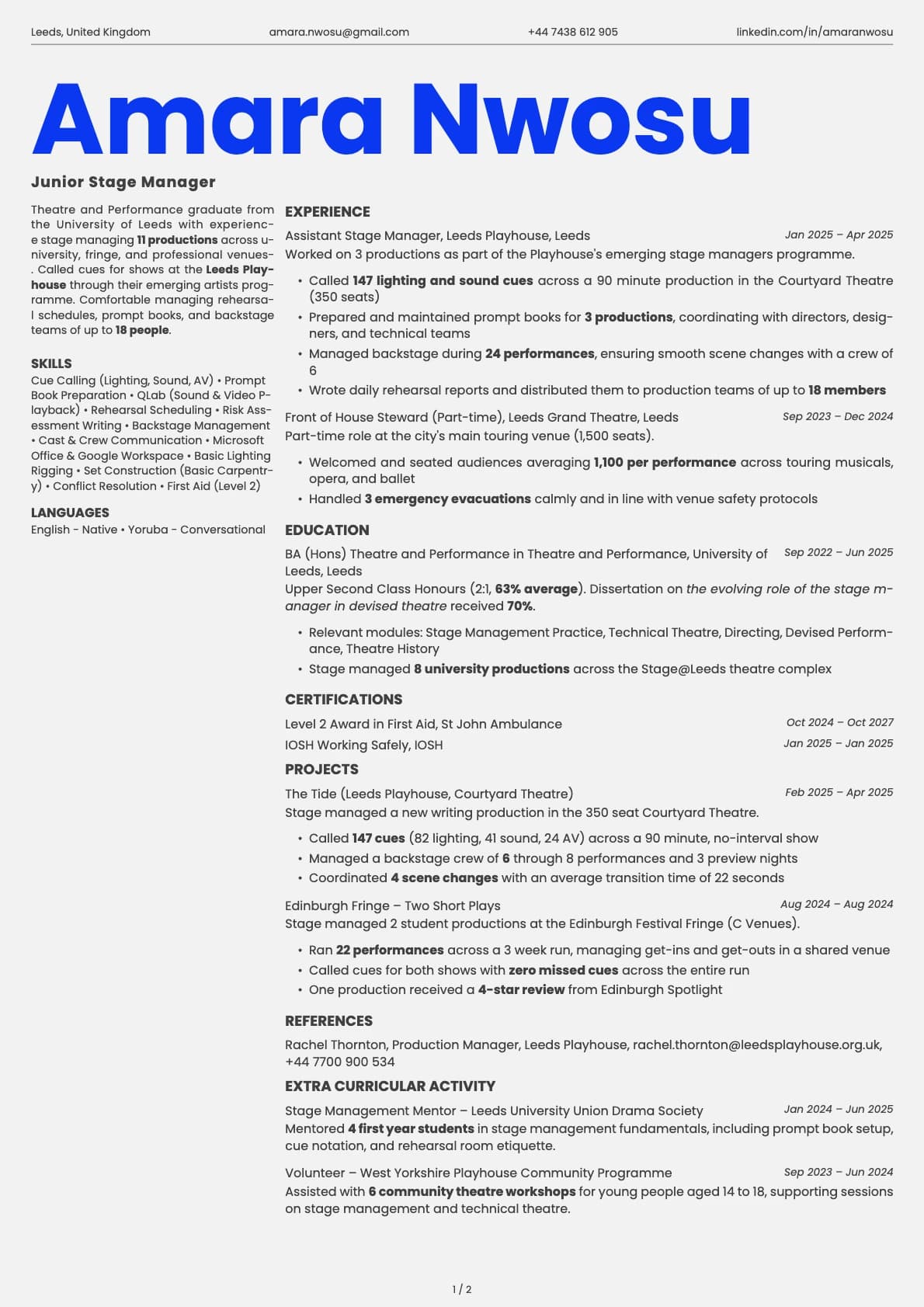
Junior Stage Manager
A junior stage manager resume example with prompt book experience, production counts, and cue calling from a Theatre Studies graduate entering professional stage management.
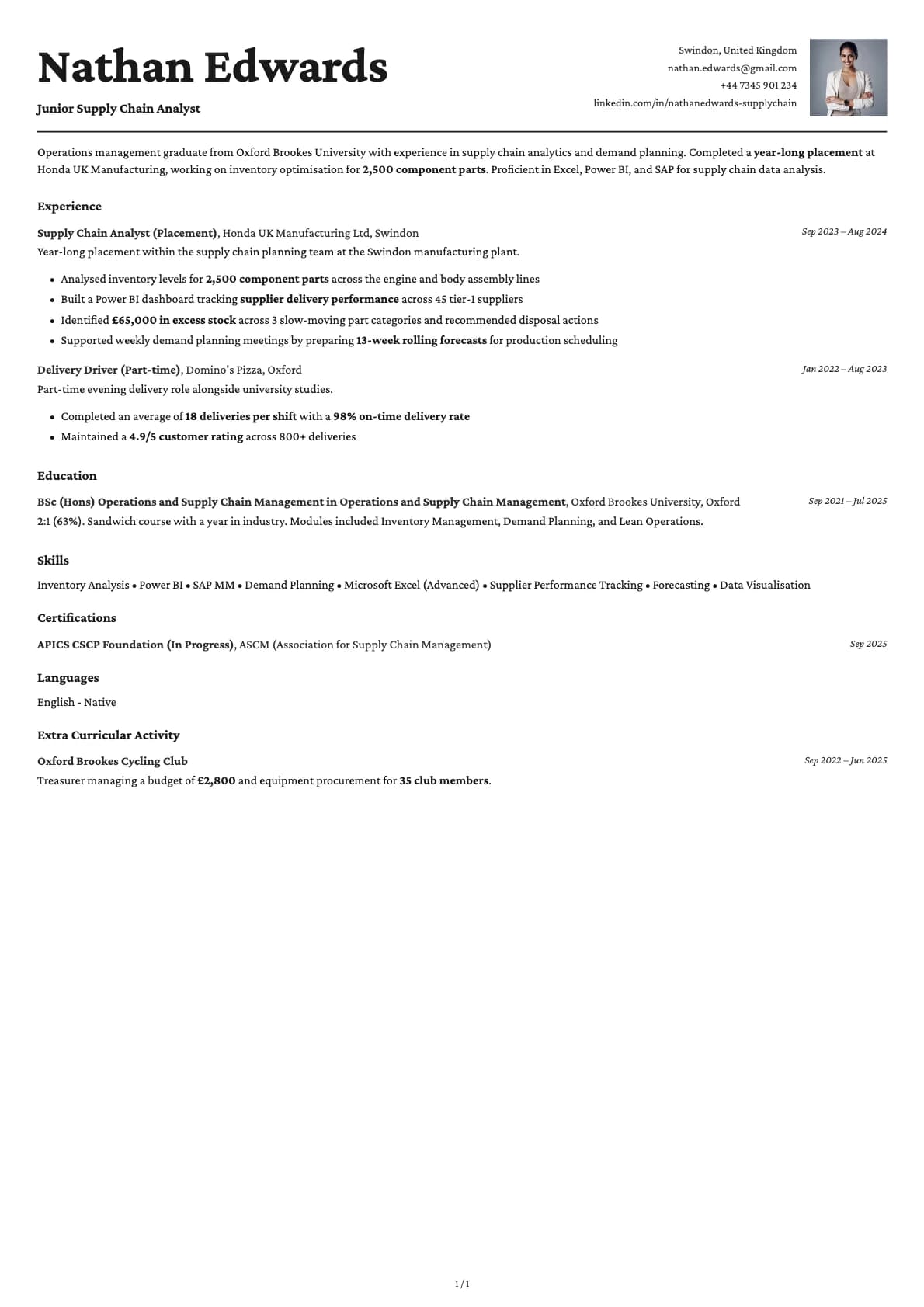
Junior Supply Chain Analyst
A junior supply chain analyst resume example with Honda UK placement and inventory optimisation experience.

Junior Sustainability Consultant
A junior sustainability consultant resume example for environmental science graduates. See how to present carbon auditing, consultancy internships, and environmental volunteering.
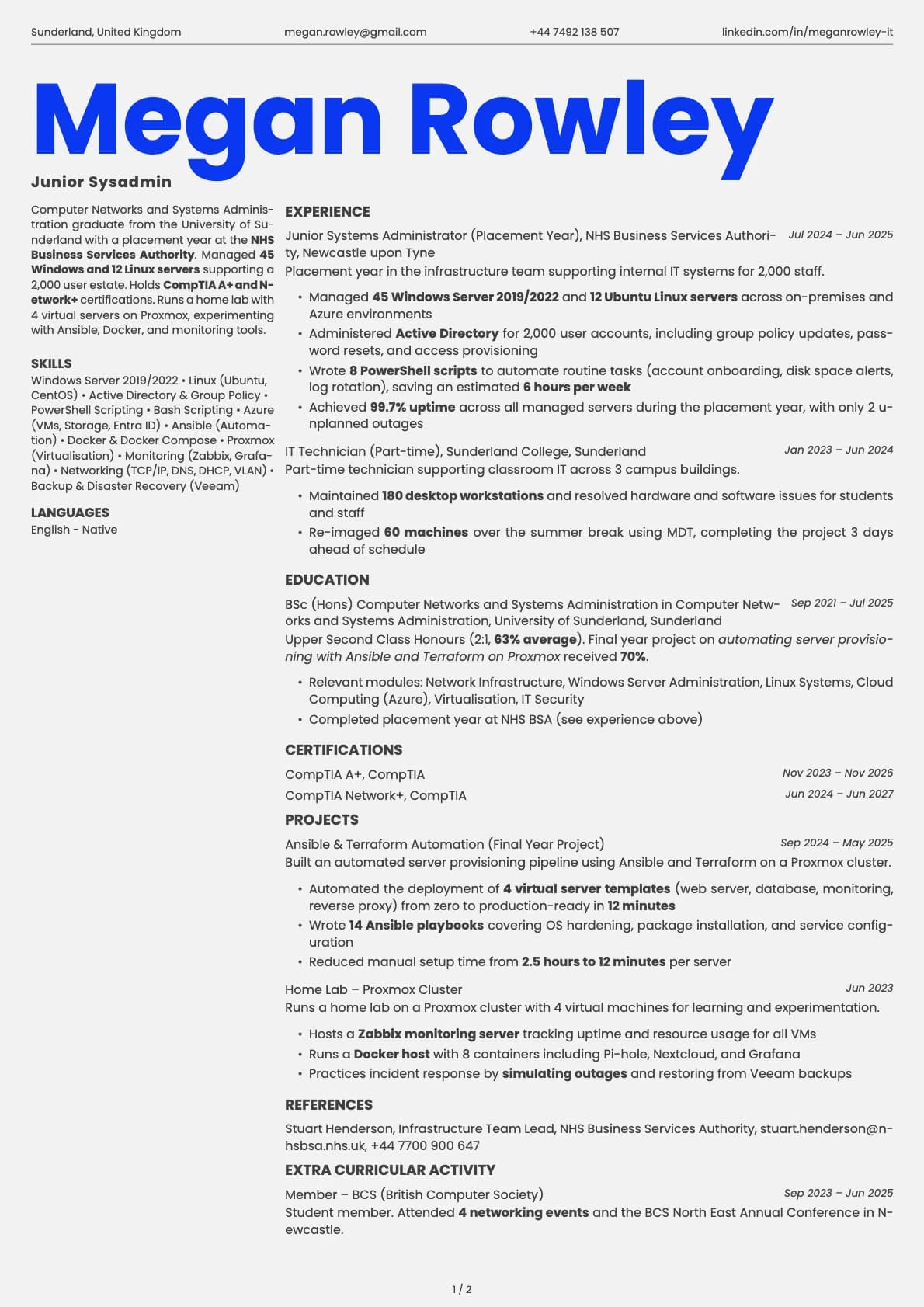
Junior Sysadmin
A junior sysadmin resume example with Linux server management, Active Directory experience, and CompTIA certifications from an IT graduate entering systems administration.