Junior Telecoms Engineer Resume Example
A junior telecoms engineer resume example with fibre optic network experience, OTDR testing skills, and placement at Openreach.

Laddro Team
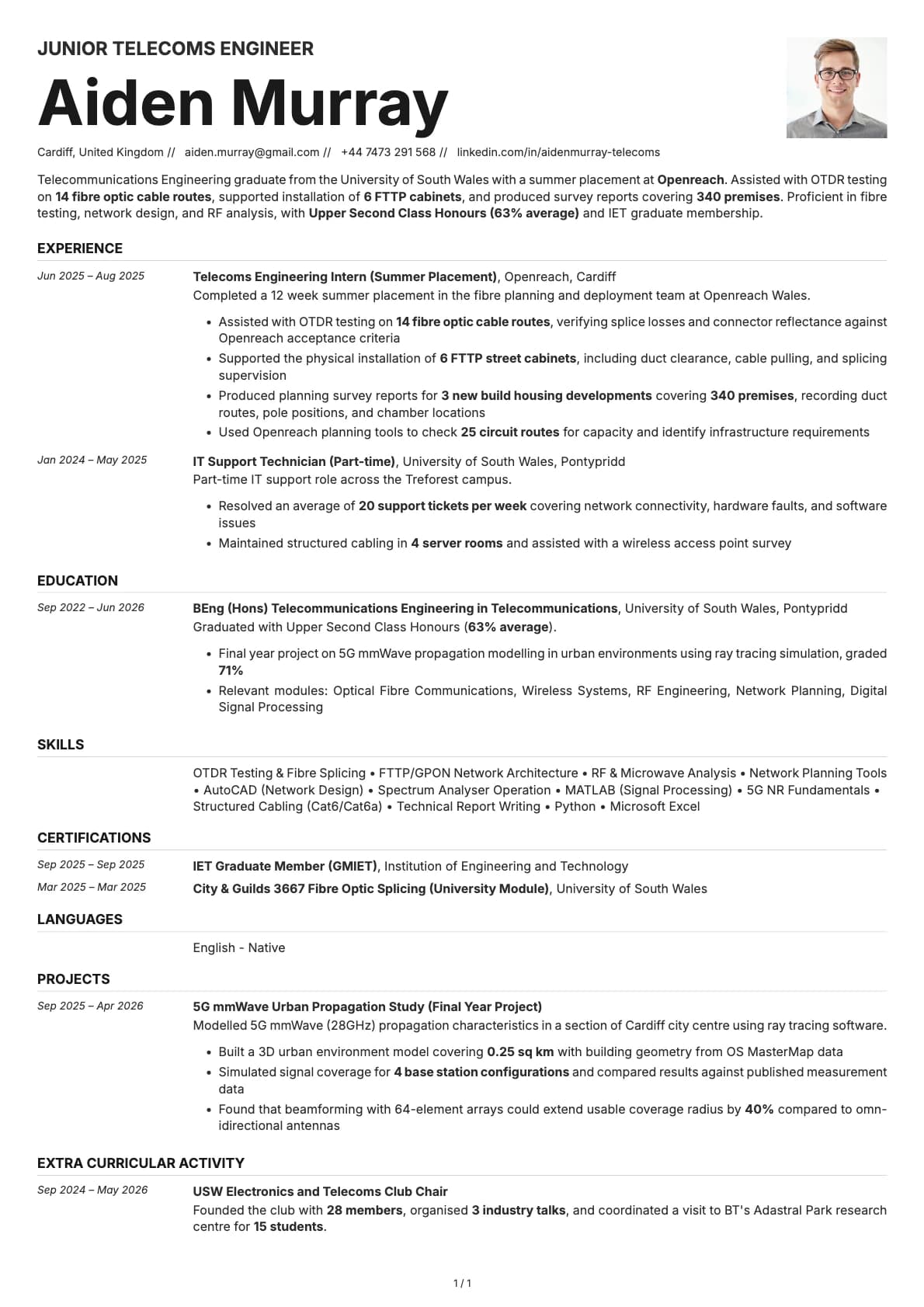
Free to use. No account needed to start.
Free to use. No account needed to start.
Overview
The UK's full-fibre broadband rollout and 5G deployment are creating strong demand for telecoms engineers at all levels. Graduates entering this field need to demonstrate understanding of network architecture, signal propagation, and the practical side of installation and testing. Employers value candidates who have used industry-standard test equipment like OTDRs and spectrum analysers, and who can work safely on site. The combination of theoretical network knowledge and hands-on cable testing experience is what gets graduates hired.
This resume belongs to Aiden Murray, a Telecommunications Engineering graduate from the University of South Wales who completed a summer placement at Openreach. He assisted with OTDR testing on 14 fibre optic cable routes, supported the installation of 6 FTTP cabinets, and produced survey reports for new build developments covering 340 premises.
What Makes This Resume Work
Fibre testing is described with route counts and equipment. Specifying 14 cable routes tested with an OTDR gives the reader a clear sense of field experience. This is more persuasive than listing "fibre optic testing" as a skill without evidence of application.
FTTP cabinet installation shows practical capability. Supporting the installation of 6 cabinets demonstrates that Aiden can work on site, handle physical infrastructure, and understand how network components are deployed in the real world.
Survey work connects to the planning process. Producing survey reports for 340 premises shows that Aiden understands the planning and design phase of telecoms deployment, not just the testing and installation. This breadth is valuable in a sector where engineers often need to cover multiple stages of a project.
Key Takeaways
Junior telecoms engineers should reference the specific network technologies (FTTP, GPON, 5G NR) and test equipment (OTDR, spectrum analyser, power meter) they have used. Quantify fieldwork with route counts, premises numbers, or cabinet installations. IET membership signals professional commitment in the telecoms sector, and a final year project related to current deployment challenges (such as 5G coverage or fibre network planning) demonstrates relevant technical depth.
Build your own version
Open this layout in the builder and swap in your own details. It takes a few minutes.
Free to use. No account needed to start.
Was this resume example helpful?
Rate this example to help us create better content for you.
4.5 average from 65 ratingsRelated resume examples
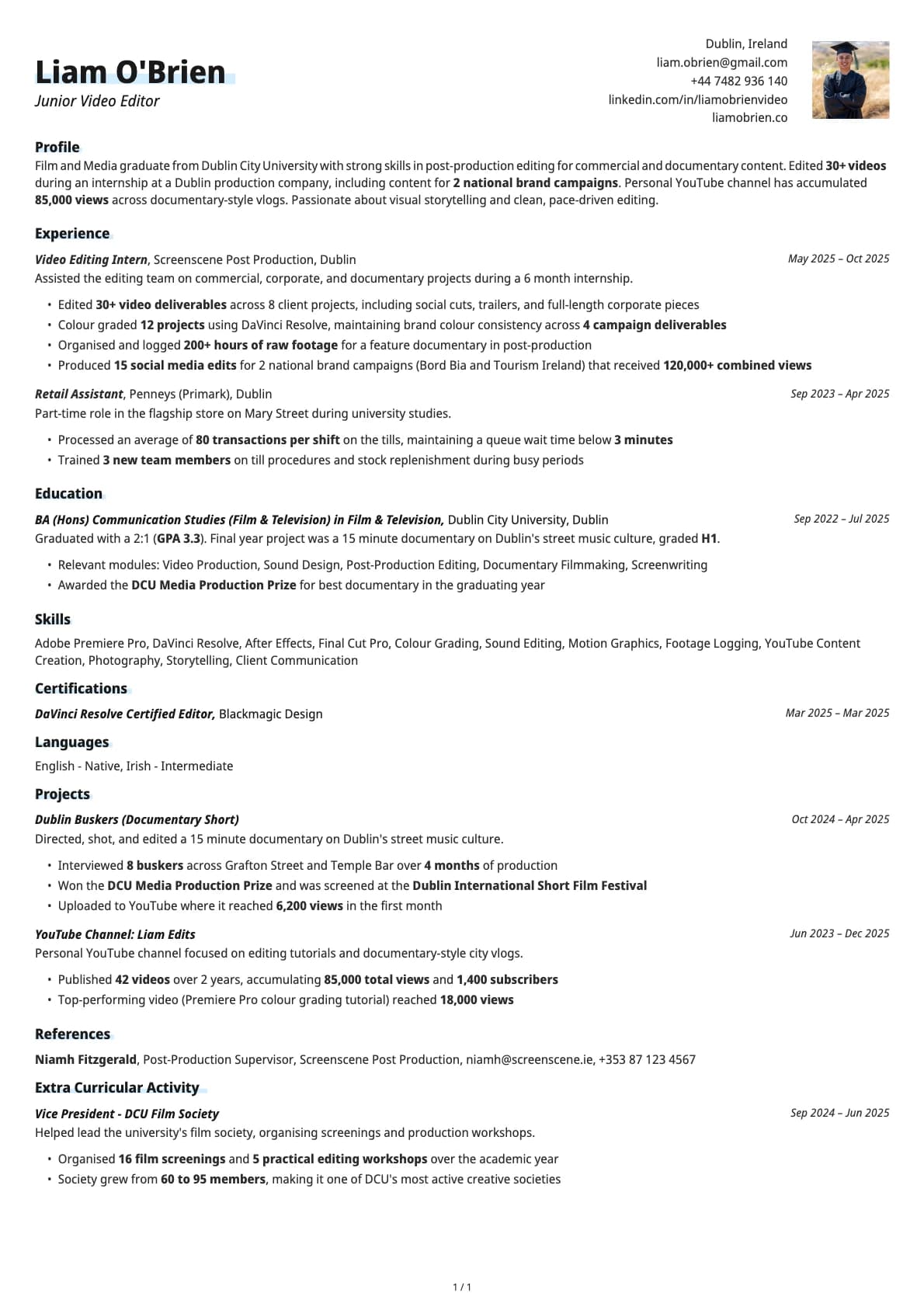
Junior Video Editor
A junior video editor resume example for recent graduates. Learn how to present post-production experience, personal projects, and editing skills to land your first editing role.
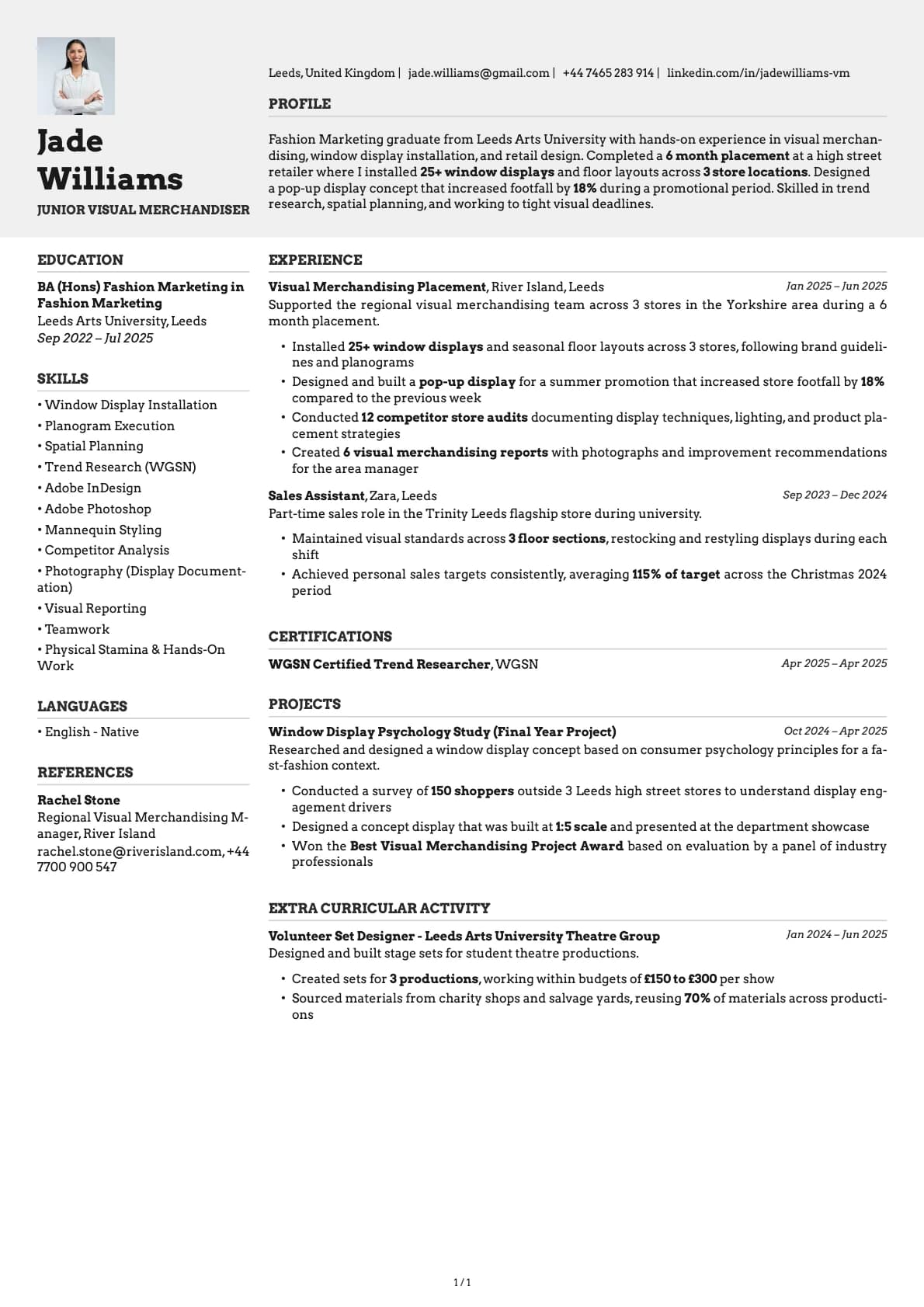
Junior Visual Merchandiser
A junior visual merchandiser resume example for graduates. See how to present display installation experience, retail knowledge, and trend research skills to land your first VM role.
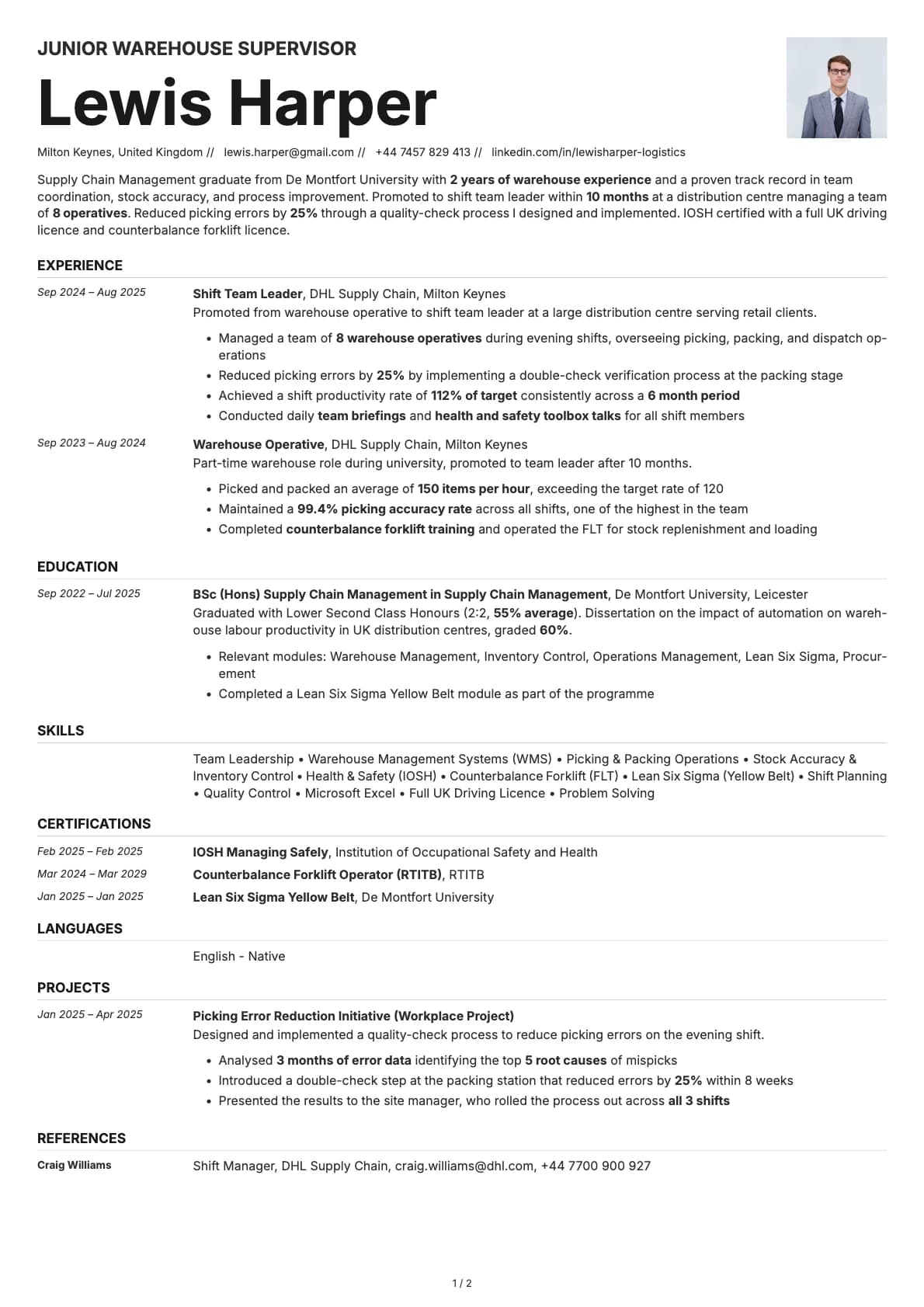
Junior Warehouse Supervisor
A junior warehouse supervisor resume example for graduates. See how to present team leadership, process improvement, and logistics experience to land your first warehouse supervision role.
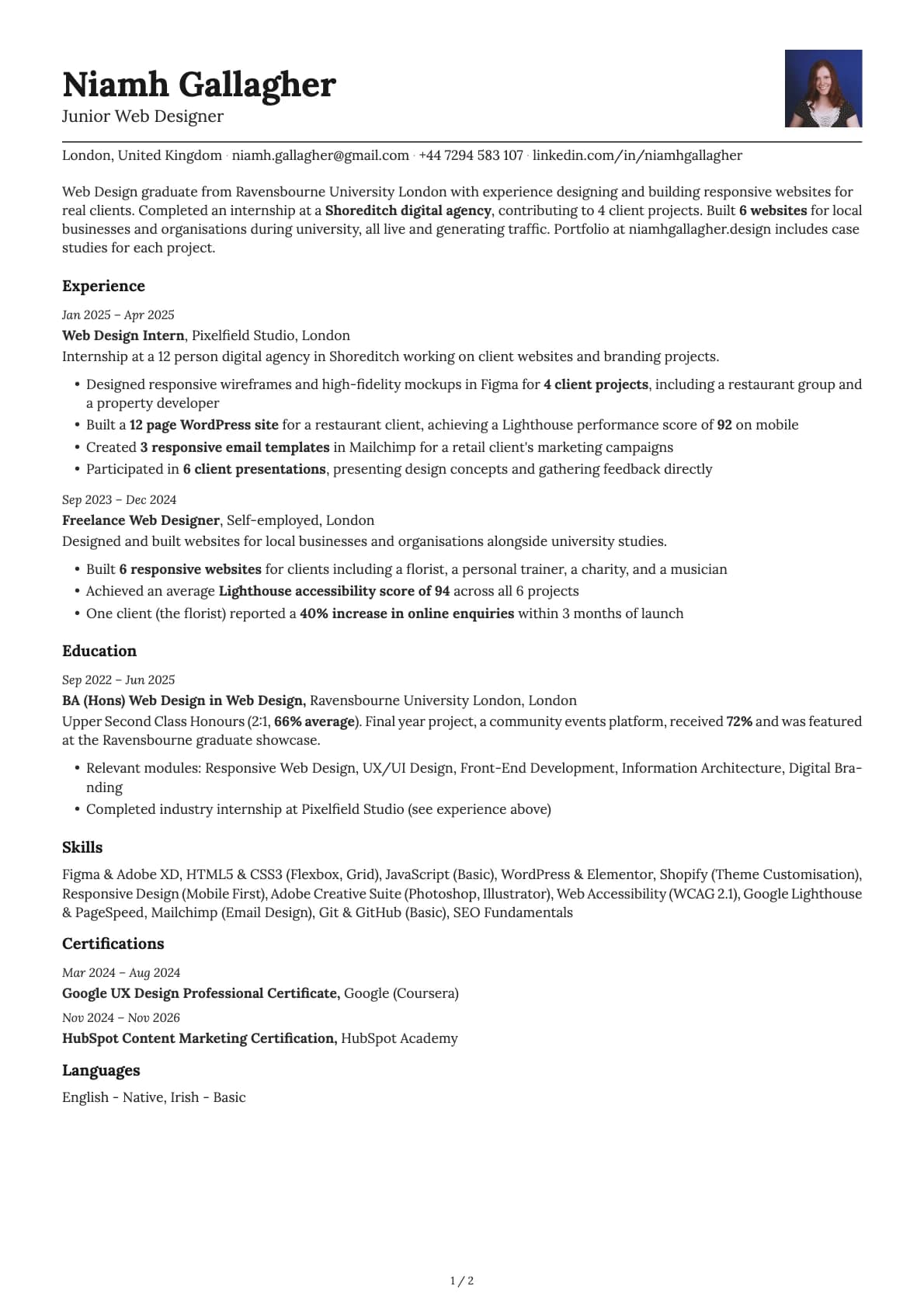
Junior Web Designer
A junior web designer resume example with responsive site builds, client projects, and Figma prototypes from a Web Design graduate starting their career.
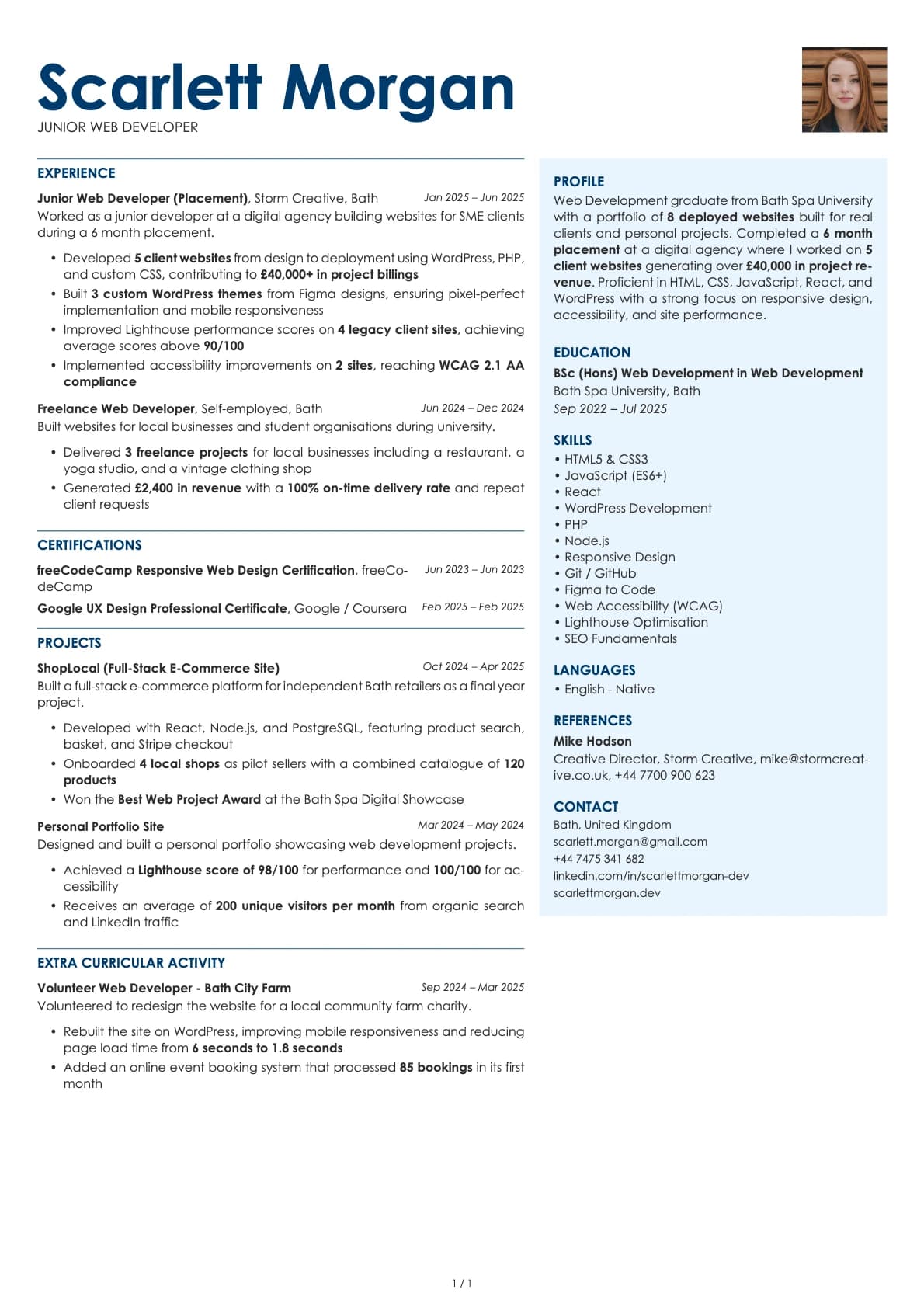
Junior Web Developer
A junior web developer resume example for graduates. See how to present client work, freelance projects, and performance optimisation to land your first web development role.
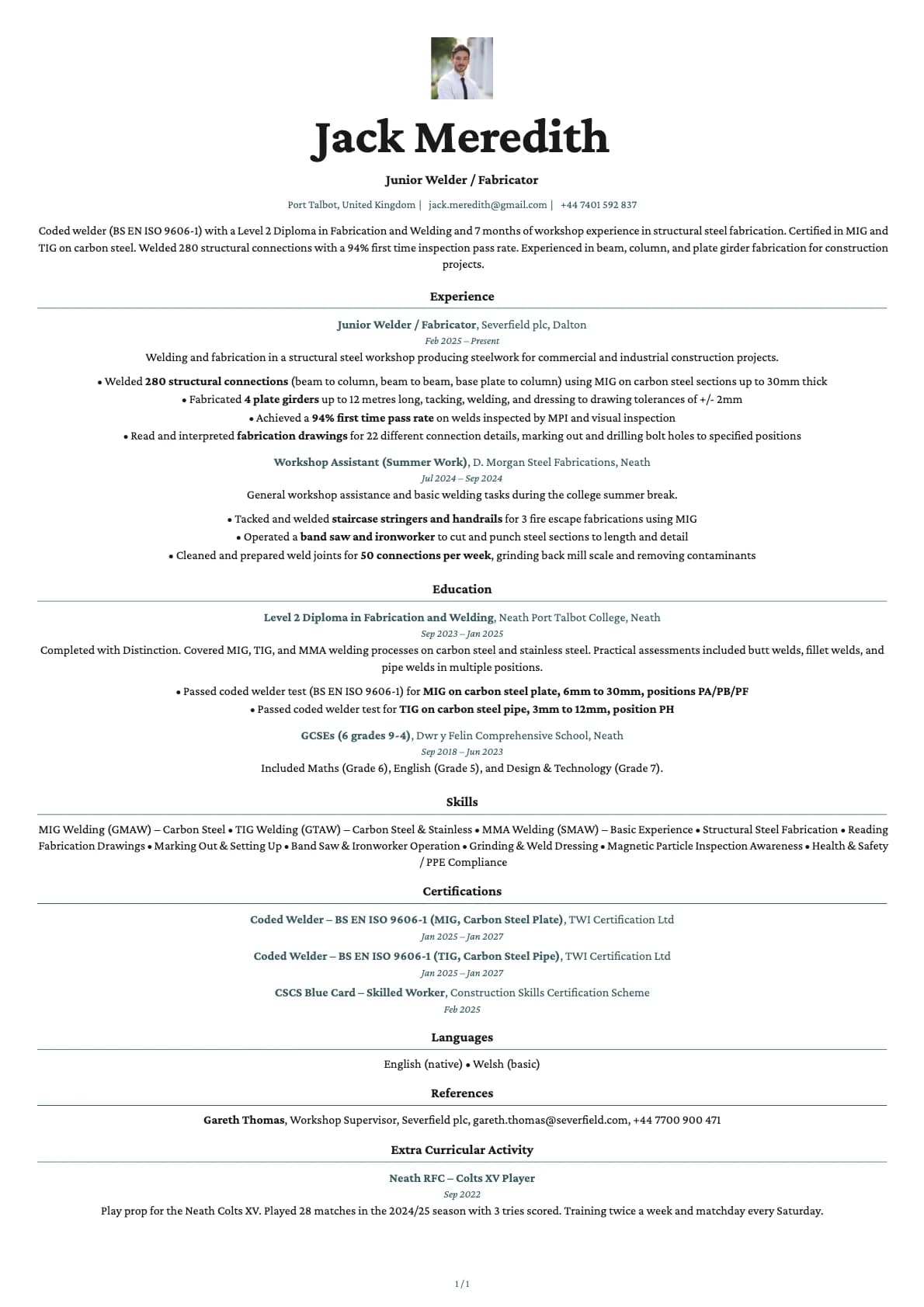
Junior Welder
A junior welder resume example for welding course graduates with coded welder certification. See how to present your welding processes, materials experience, and test certifications.

Lab Research Assistant
A lab research assistant resume example for science graduates. See how to present laboratory skills, research placements, and academic projects to land your first research role.
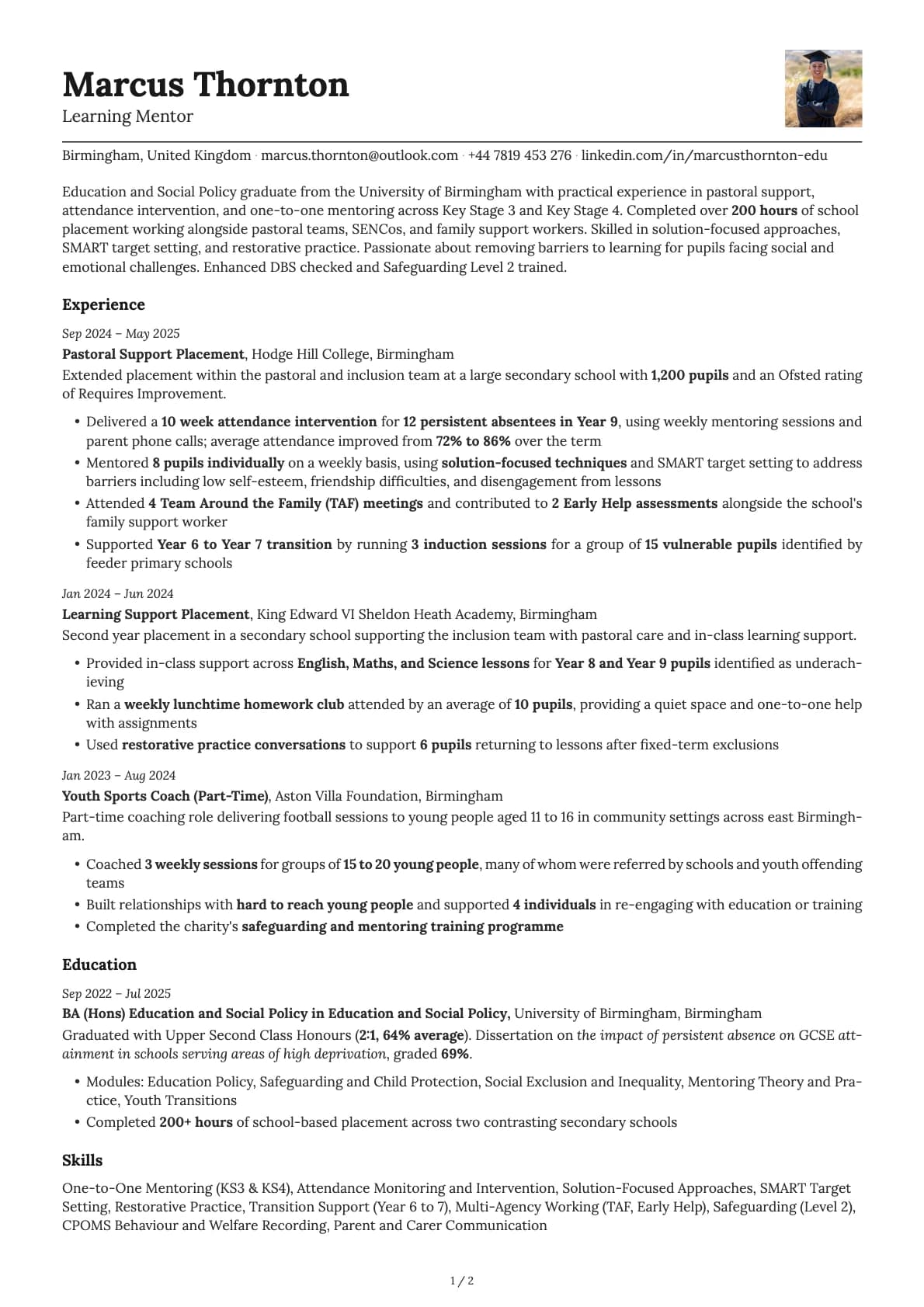
Learning Mentor
A graduate learning mentor resume example with pastoral support, attendance intervention, and pupil mentoring experience. See how to present your skills for learning mentor roles.
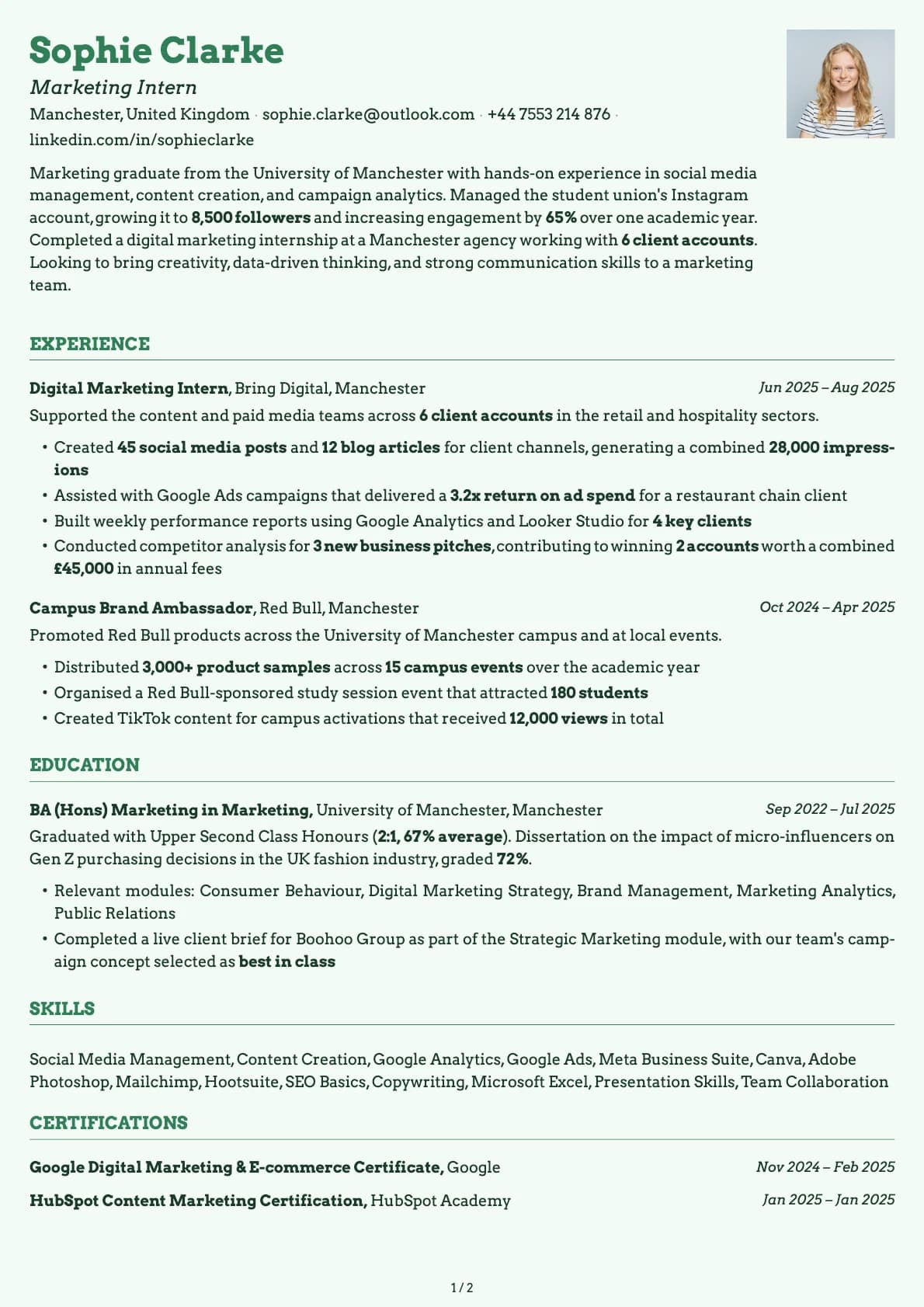
Marketing Intern
A marketing intern resume example for recent graduates. Learn how to showcase campaign results, social media metrics, and university marketing projects on your resume.
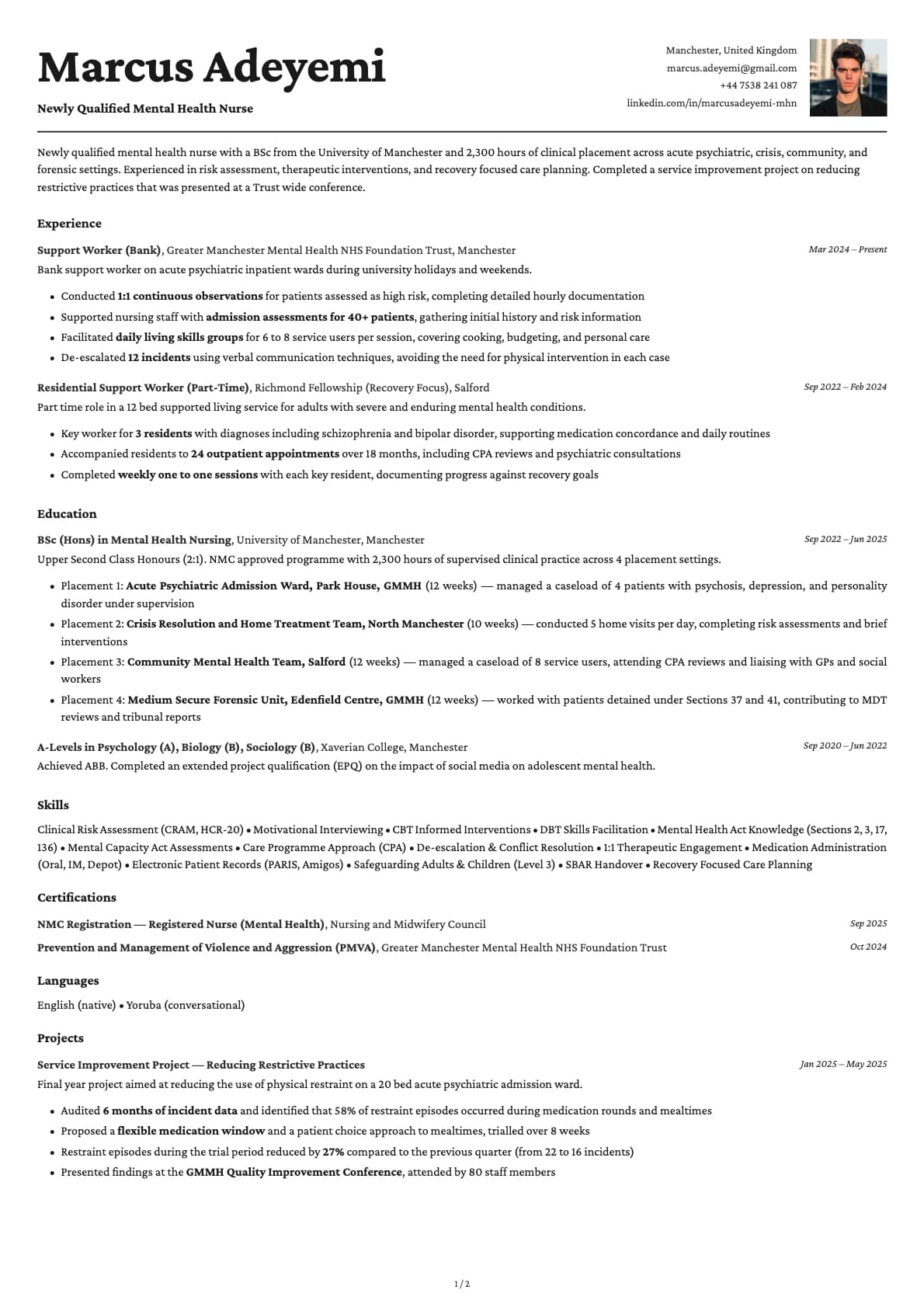
Mental Health Nurse
A newly qualified mental health nurse resume example showing how to present psychiatric placements, therapeutic skills, and NMC registration for your first Band 5 role.
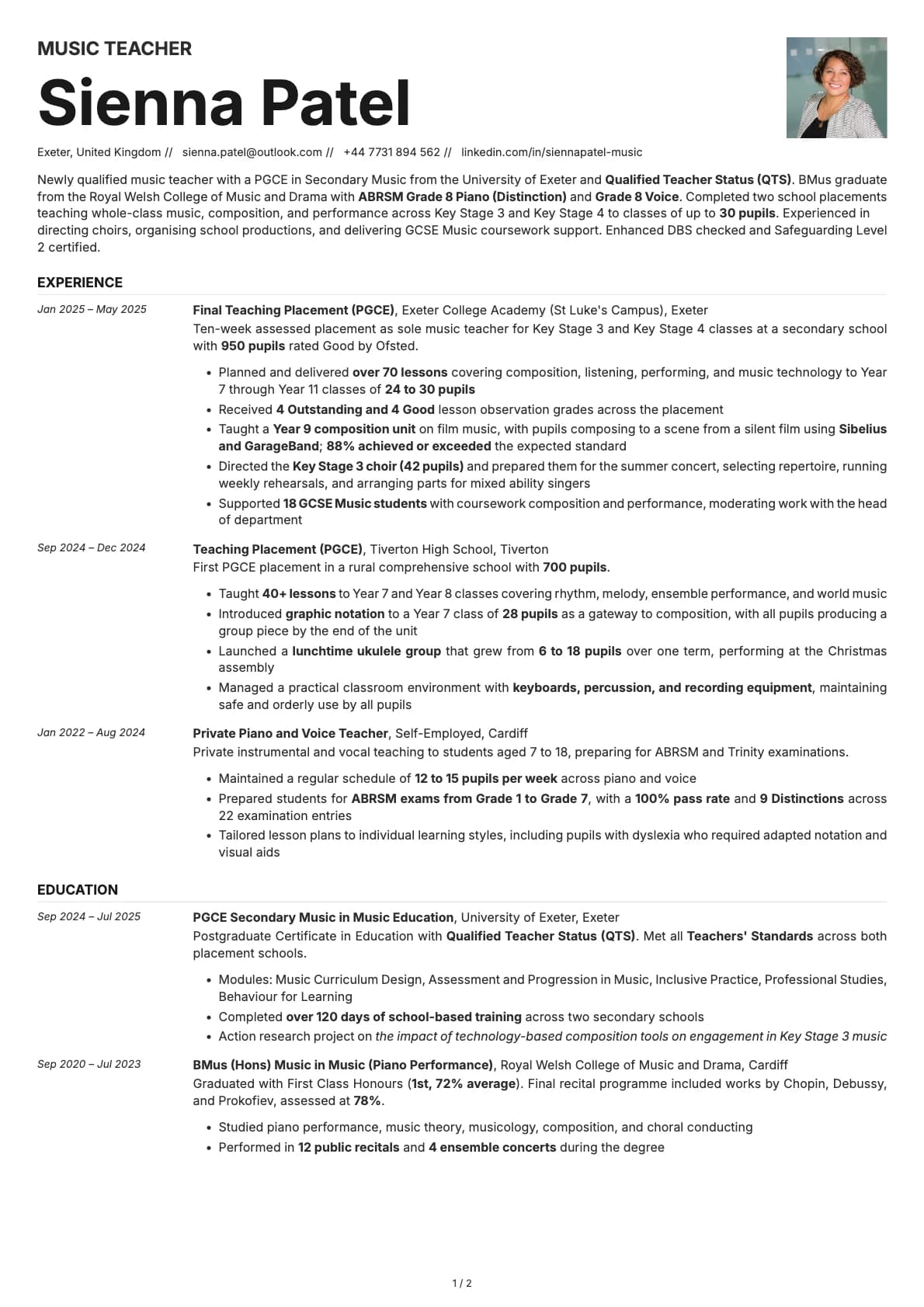
Music Teacher
A graduate music teacher resume example with PGCE, QTS, and classroom music teaching placements. See how to present your performance and teaching skills for music teacher roles.
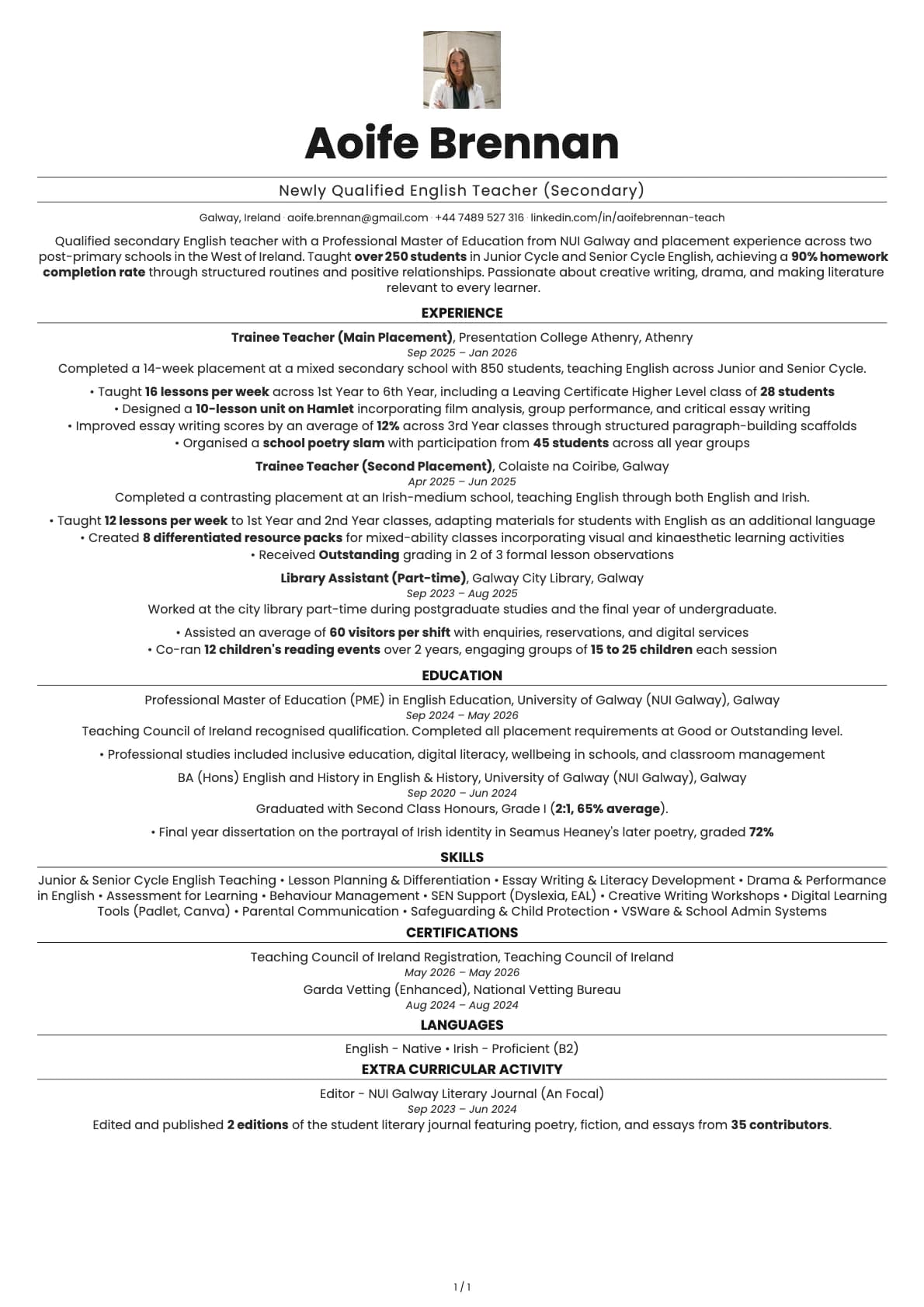
Newly Qualified Secondary English Teacher
A newly qualified secondary English teacher resume example with placement experience, student outcome data, and Teaching Council registration.