Junior Stage Manager Resume Example
A junior stage manager resume example with prompt book experience, production counts, and cue calling from a Theatre Studies graduate entering professional stage management.

Laddro Team
Free to use. No account needed to start.
Free to use. No account needed to start.
Overview
Stage management is one of the most demanding entry points in theatre. You need to be organised, calm under pressure, and capable of running a show from the prompt desk while managing a cast and crew who rely on your cues. Hiring managers at theatres and production companies want evidence that you have already done this work, even on small-scale productions.
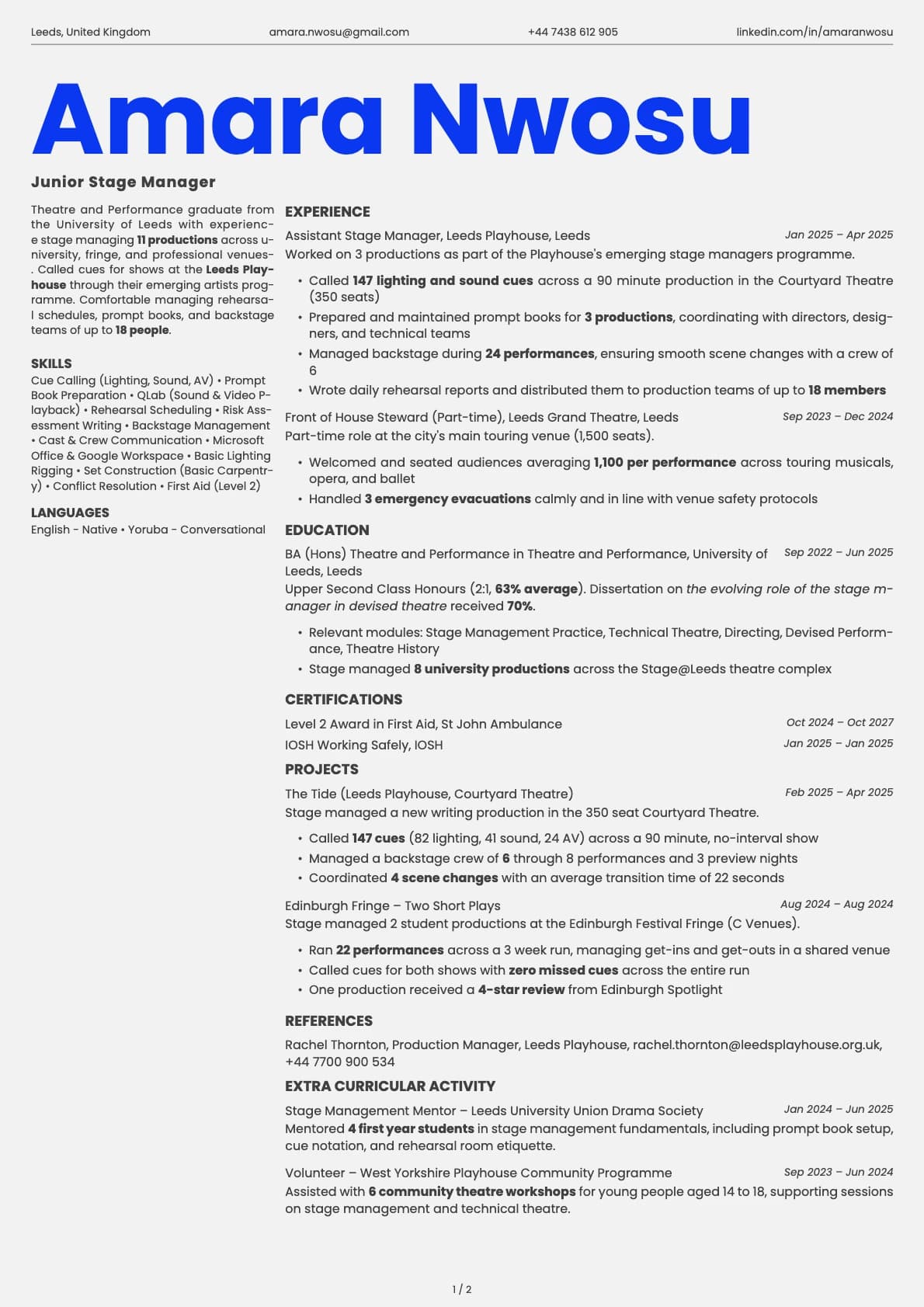
This resume belongs to Amara Nwosu, a Theatre and Performance graduate from the University of Leeds. She stage managed 11 productions during her degree, including 3 at the Leeds Playhouse as part of their emerging artists programme. Her resume works because it treats every university and fringe production as professional experience, with cast sizes, cue counts, and performance numbers.
What Makes This Resume Work
Production counts create immediate credibility. Listing 11 stage managed productions across 3 years shows Amara has substantial hands-on experience. The breakdown between university, fringe, and professional venue productions demonstrates range.
Cue calling is described with technical precision. Mentioning she called 147 lighting and sound cues across a 90 minute show tells a stage manager reading this resume that Amara can handle a complex prompt book. These are the details that matter in this field.
The Leeds Playhouse connection elevates student work. Working in a professional receiving house, even through a university partnership, exposes candidates to professional standards. Amara names the venue and the programme, giving her credits institutional weight.
Practical skills are listed alongside interpersonal ones. Prompt book preparation, risk assessments, and QLab sit next to cast liaison, schedule management, and conflict resolution. Stage management requires both technical and people skills, and the resume reflects that.
Key Takeaways
Junior stage manager resumes must list your productions with specifics: cast sizes, cue counts, venue names, and performance runs. Professional or semi-professional credits (fringe festivals, youth theatres, professional venue partnerships) carry more weight than purely academic work. Show that you can call a complex show, manage a rehearsal schedule, and keep a production running smoothly night after night.
Build your own version
Open this layout in the builder and swap in your own details. It takes a few minutes.
Free to use. No account needed to start.
Was this resume example helpful?
Rate this example to help us create better content for you.
4.8 average from 88 ratingsRelated resume examples
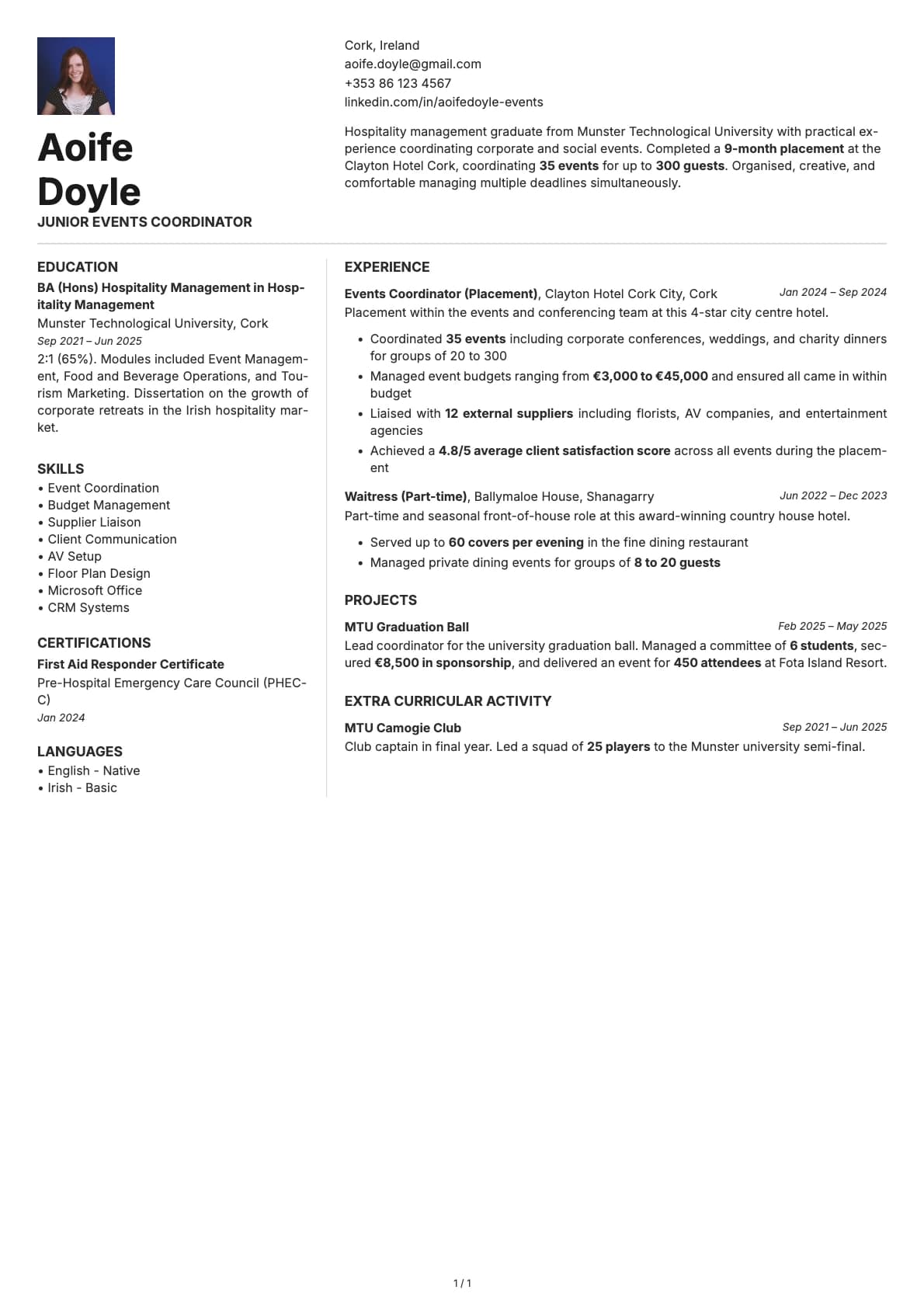
Junior Events Coordinator
A junior events coordinator resume example with hotel placement experience and corporate event management skills.
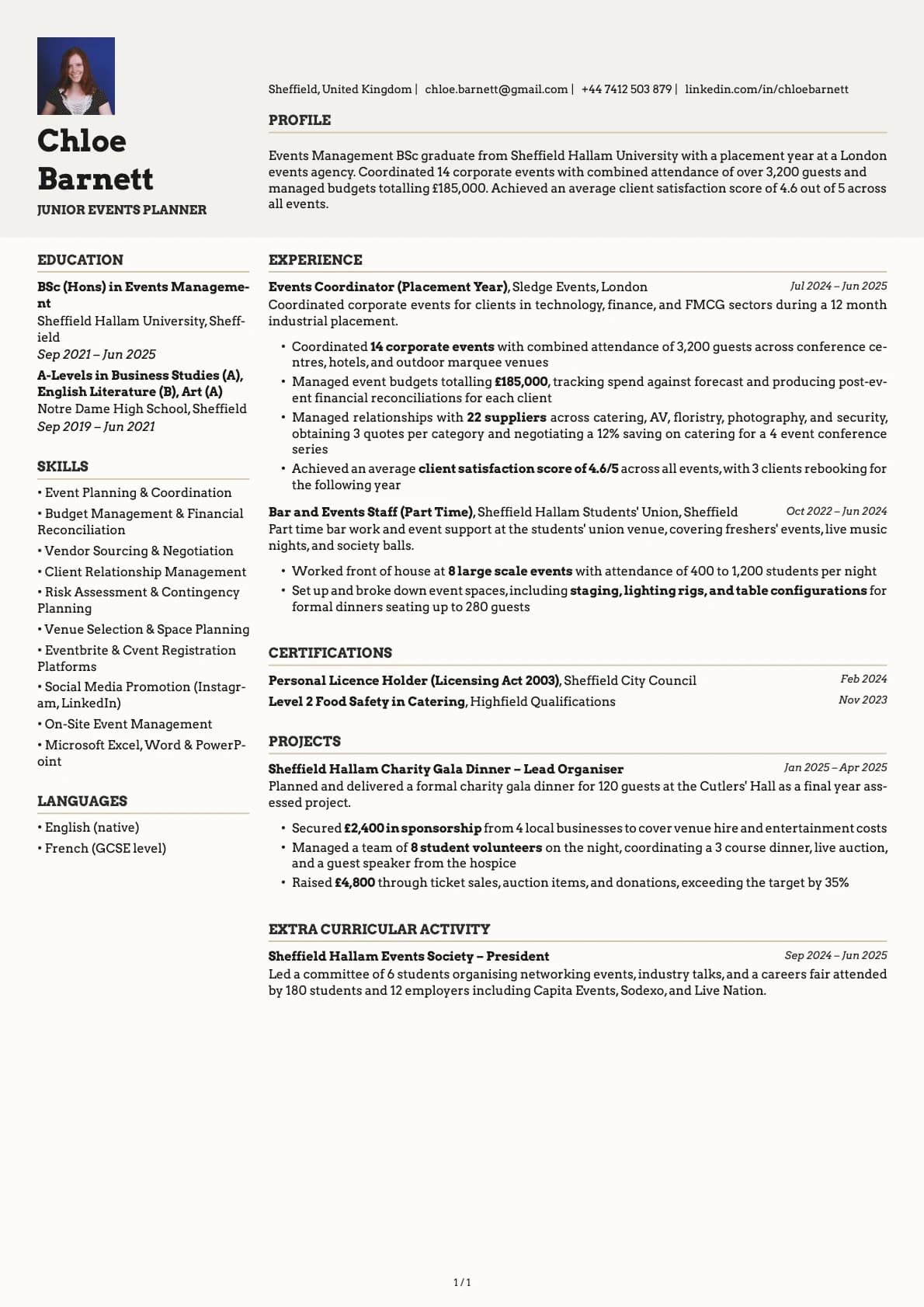
Junior Events Planner
A junior events planner resume example for events management graduates. See how to present your event coordination experience, guest counts, budgets, and vendor management skills.
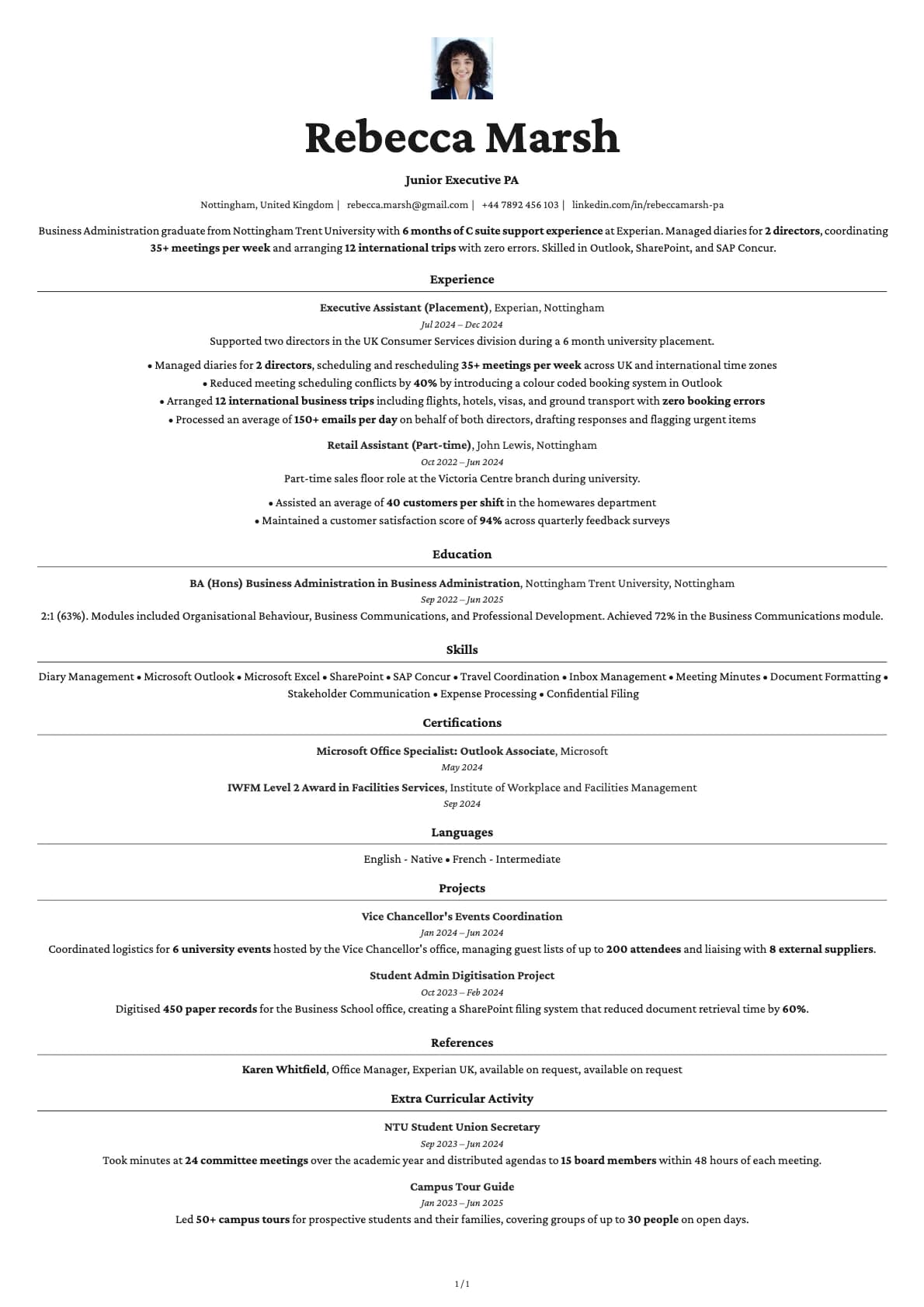
Junior Executive PA
A junior executive PA resume example with business administration degree, C-suite support experience, and diary management skills.
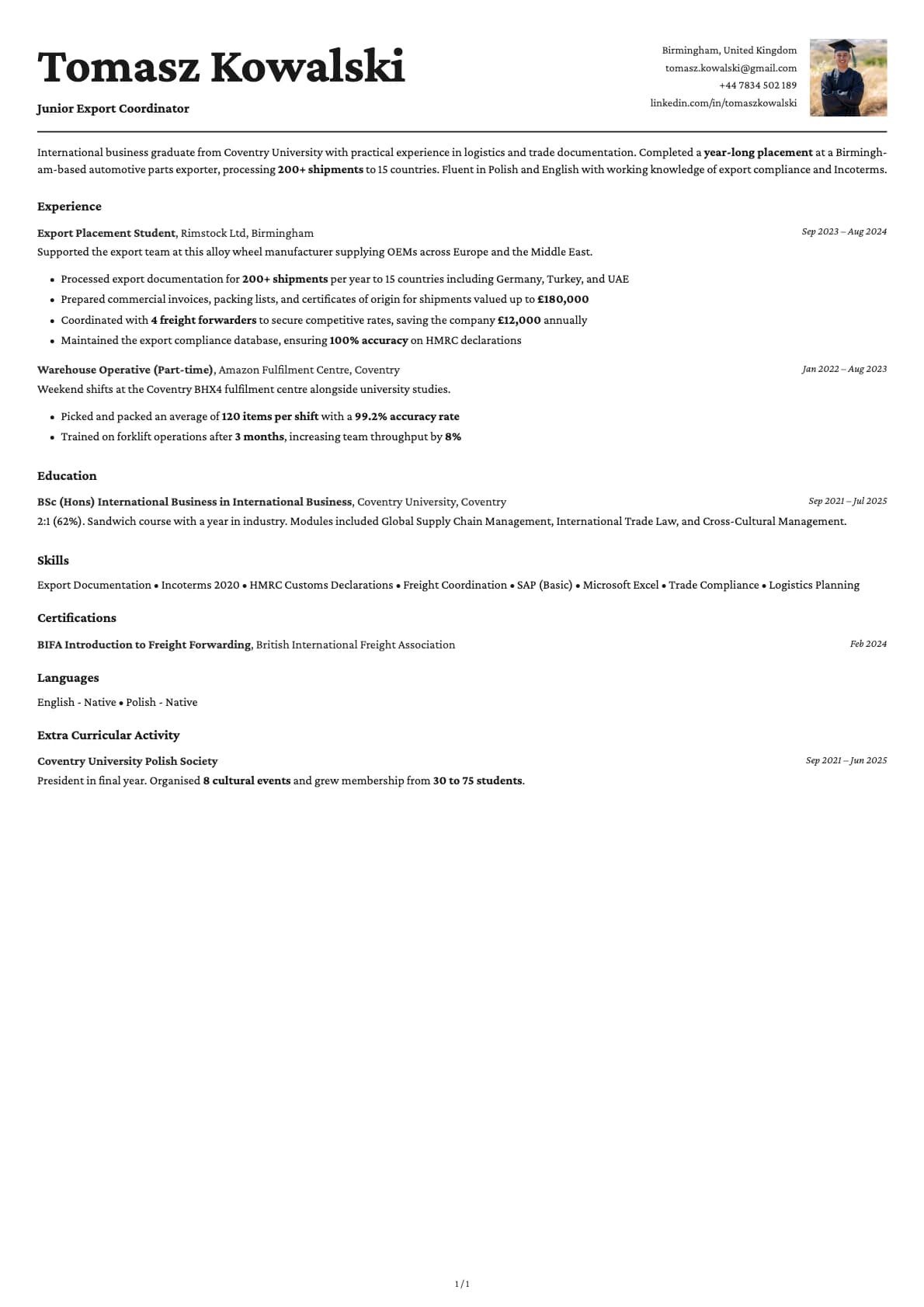
Junior Export Coordinator
A junior export coordinator resume example with placement experience in automotive exports and bilingual skills.
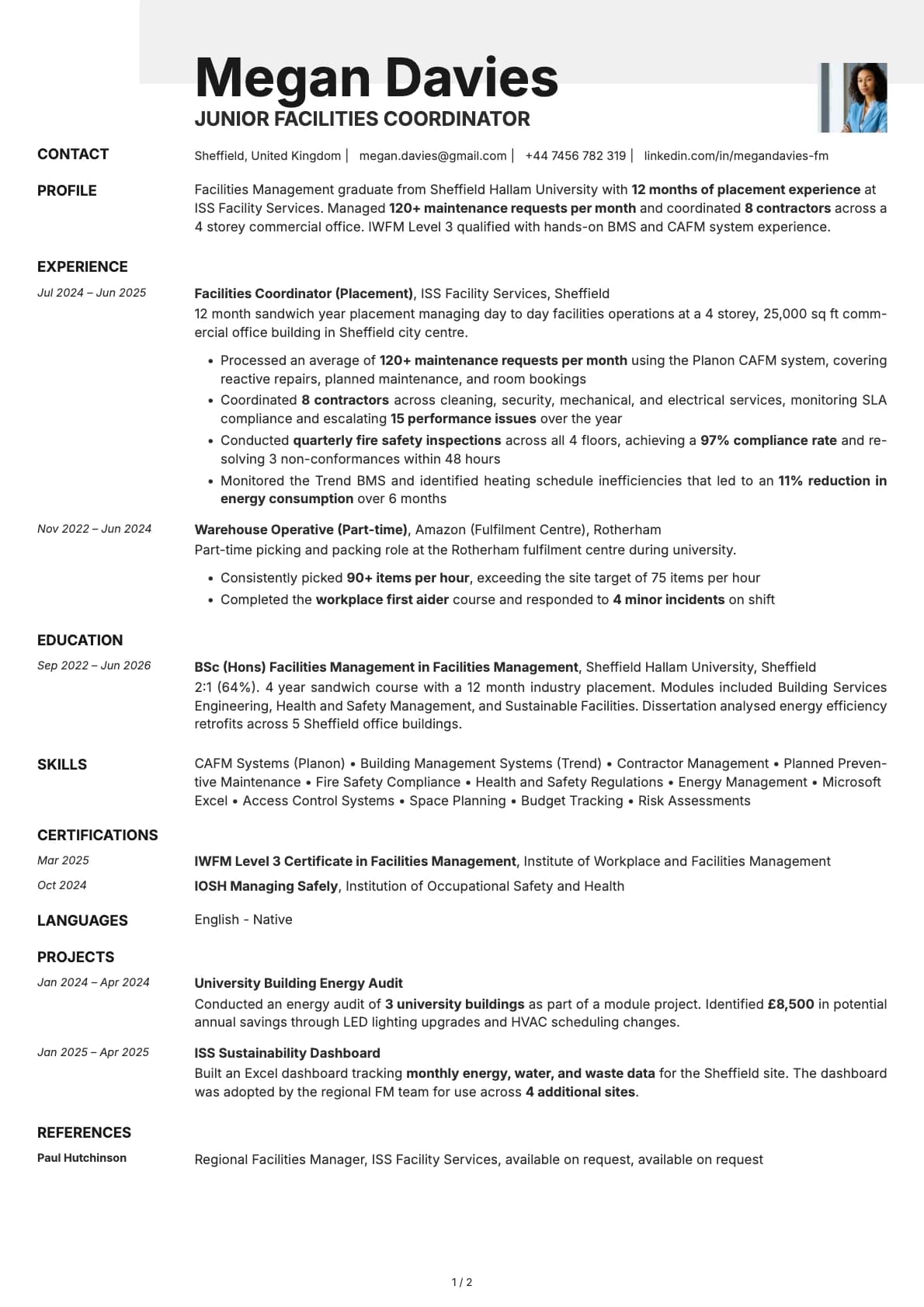
Junior Facilities Coordinator
A junior facilities coordinator resume example with facilities management degree, building services experience, and IWFM qualification.
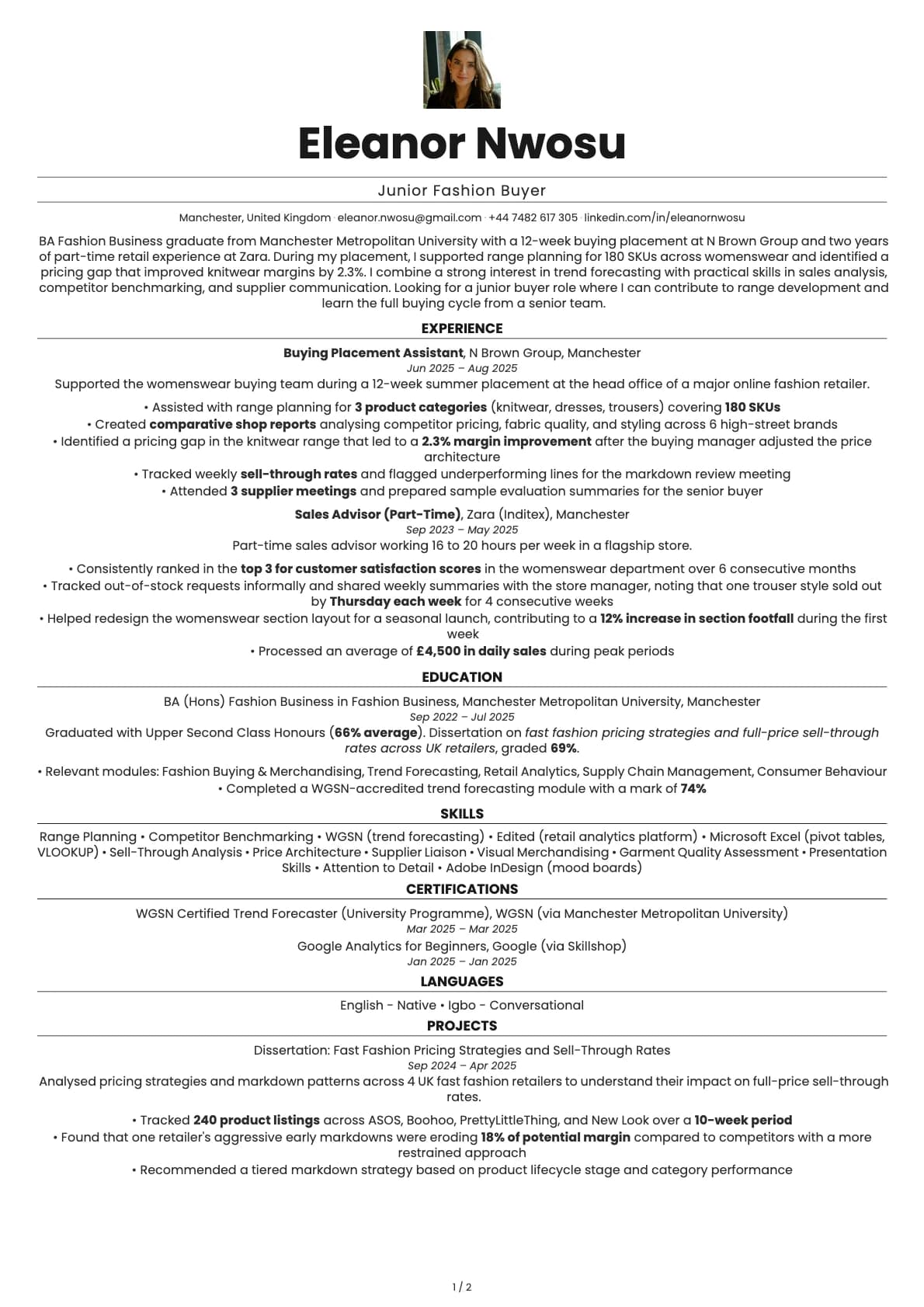
Junior Fashion Buyer
A junior fashion buyer resume example for fashion business graduates. See how retail experience and trend forecasting skills help you land a buying role.
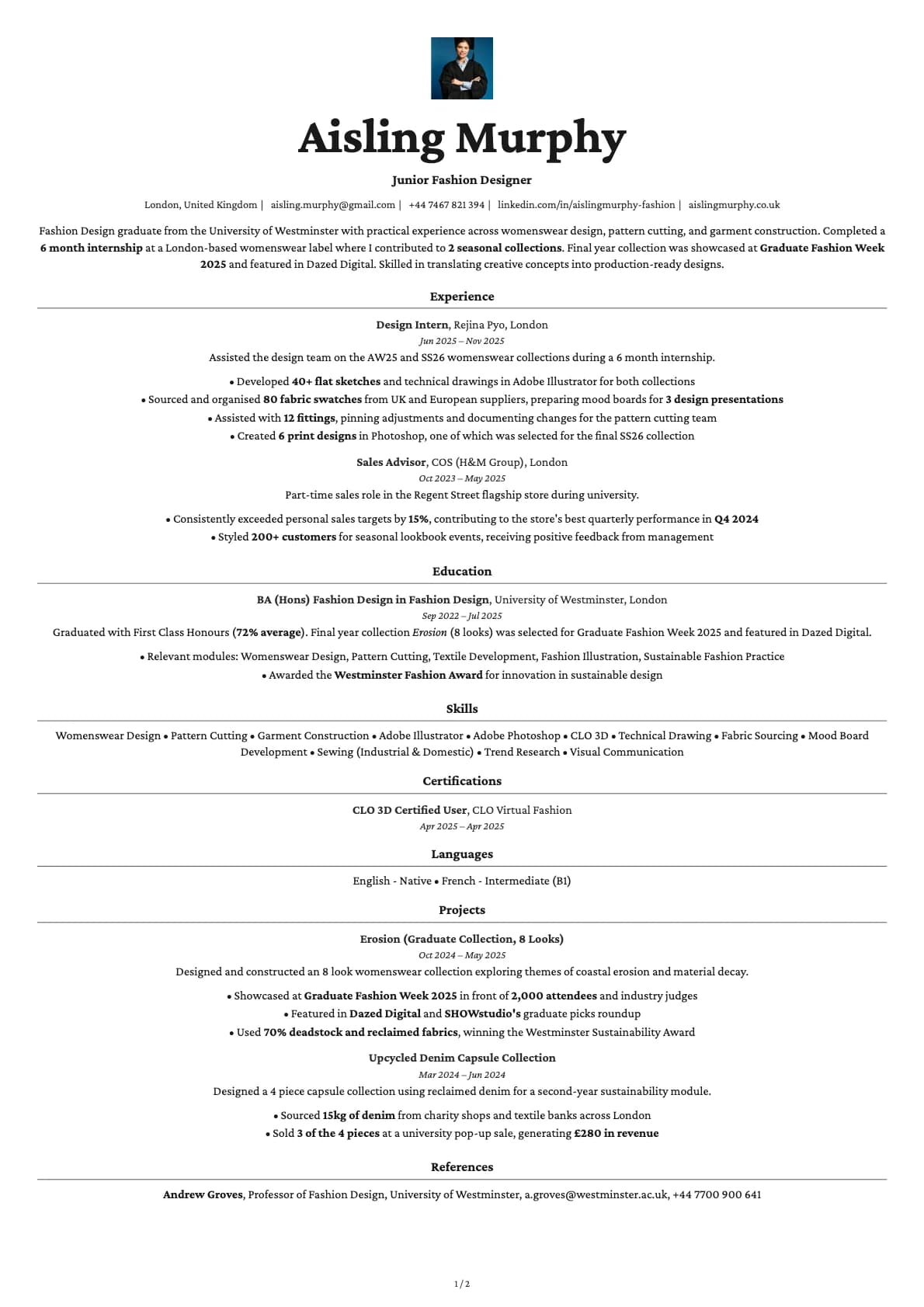
Junior Fashion Designer
A junior fashion designer resume example for recent graduates. See how to present collections, internship experience, and technical skills to land your first design role.
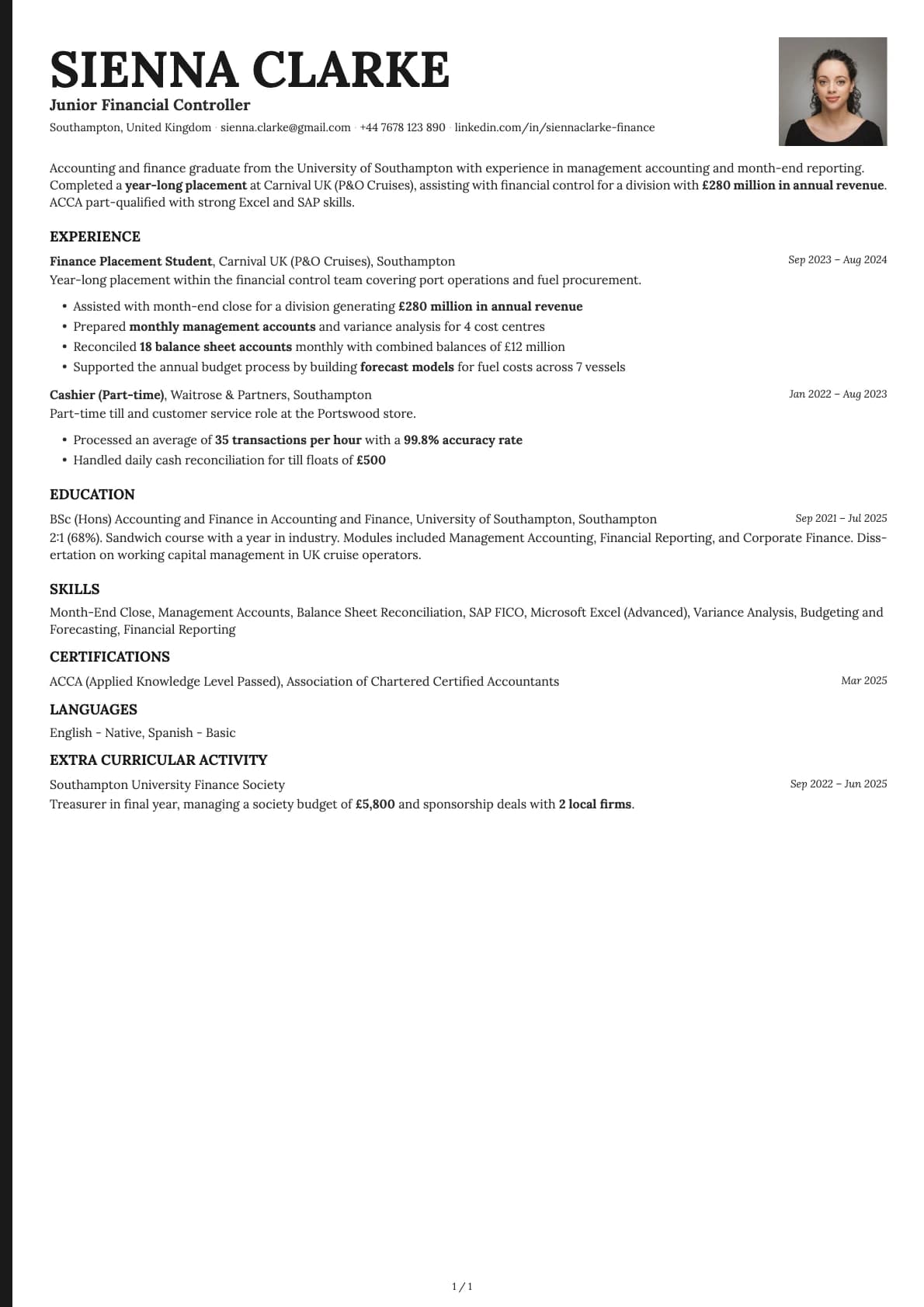
Junior Financial Controller
A junior financial controller resume example with Carnival UK placement and management accounting experience.
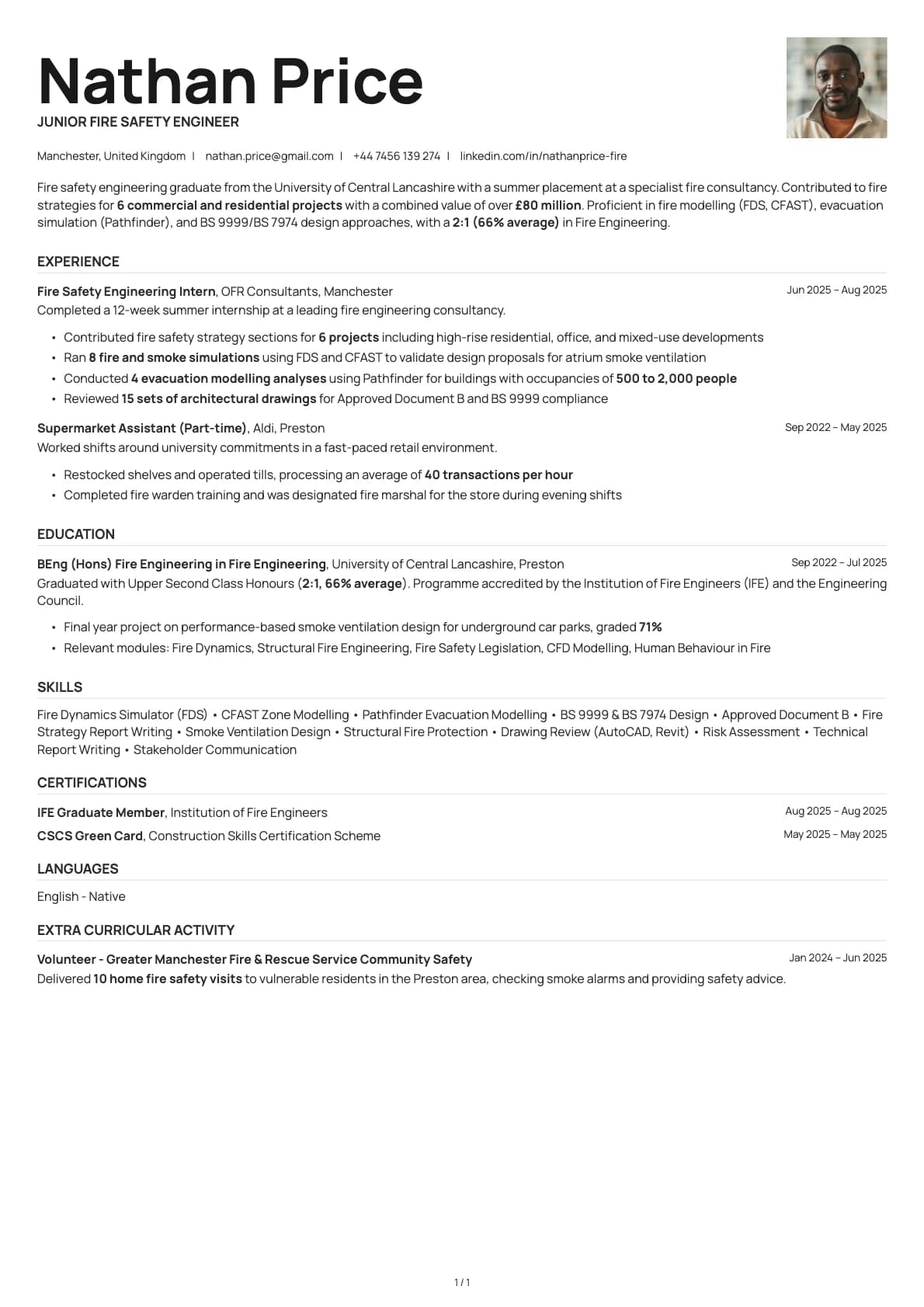
Junior Fire Safety Engineer
A junior fire safety engineer resume example with fire modelling experience, BS 9999 knowledge, and IFE membership for graduates.
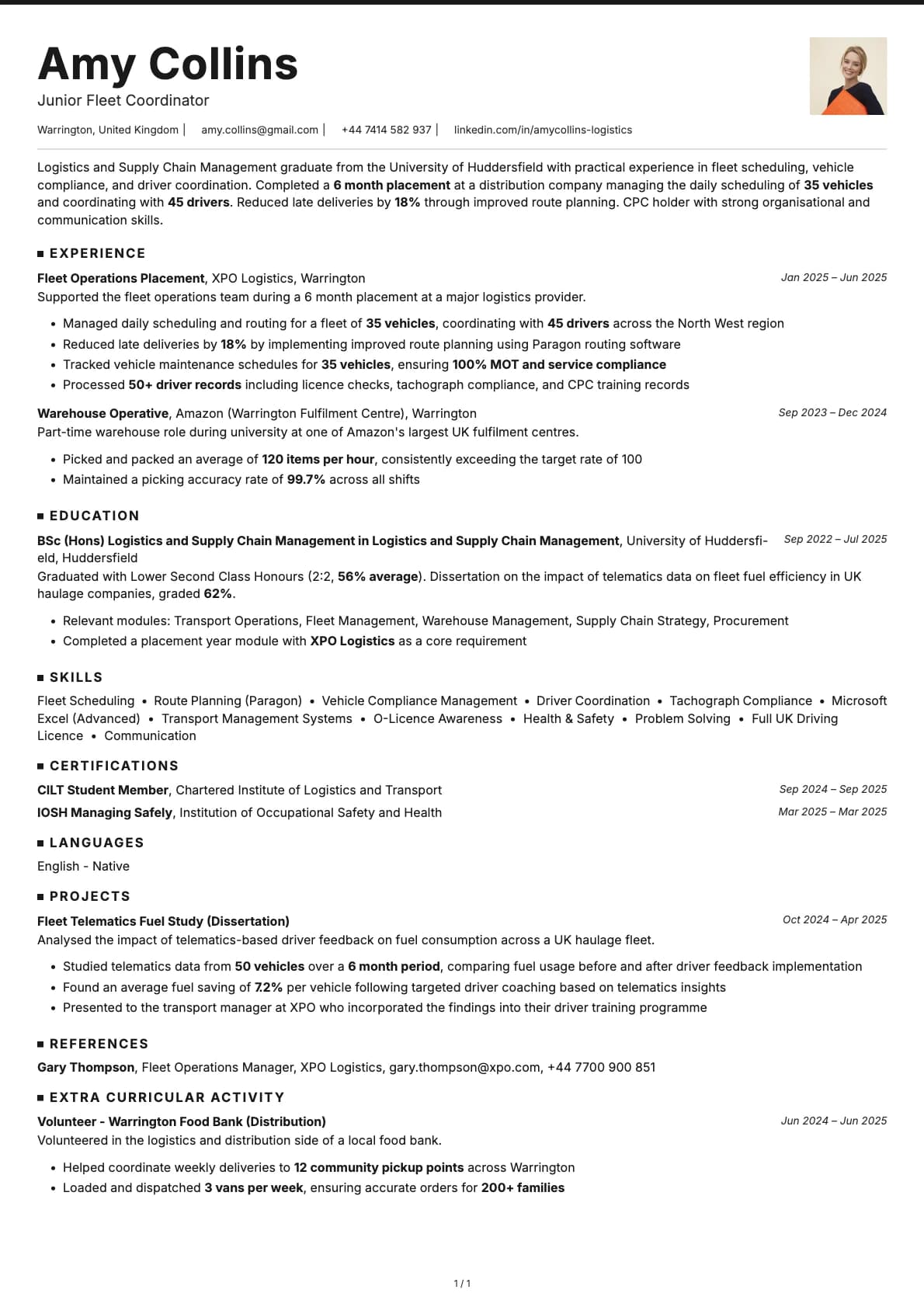
Junior Fleet Coordinator
A junior fleet coordinator resume example for graduates. See how to present fleet management, route planning, and vehicle compliance experience to land your first fleet coordination role.
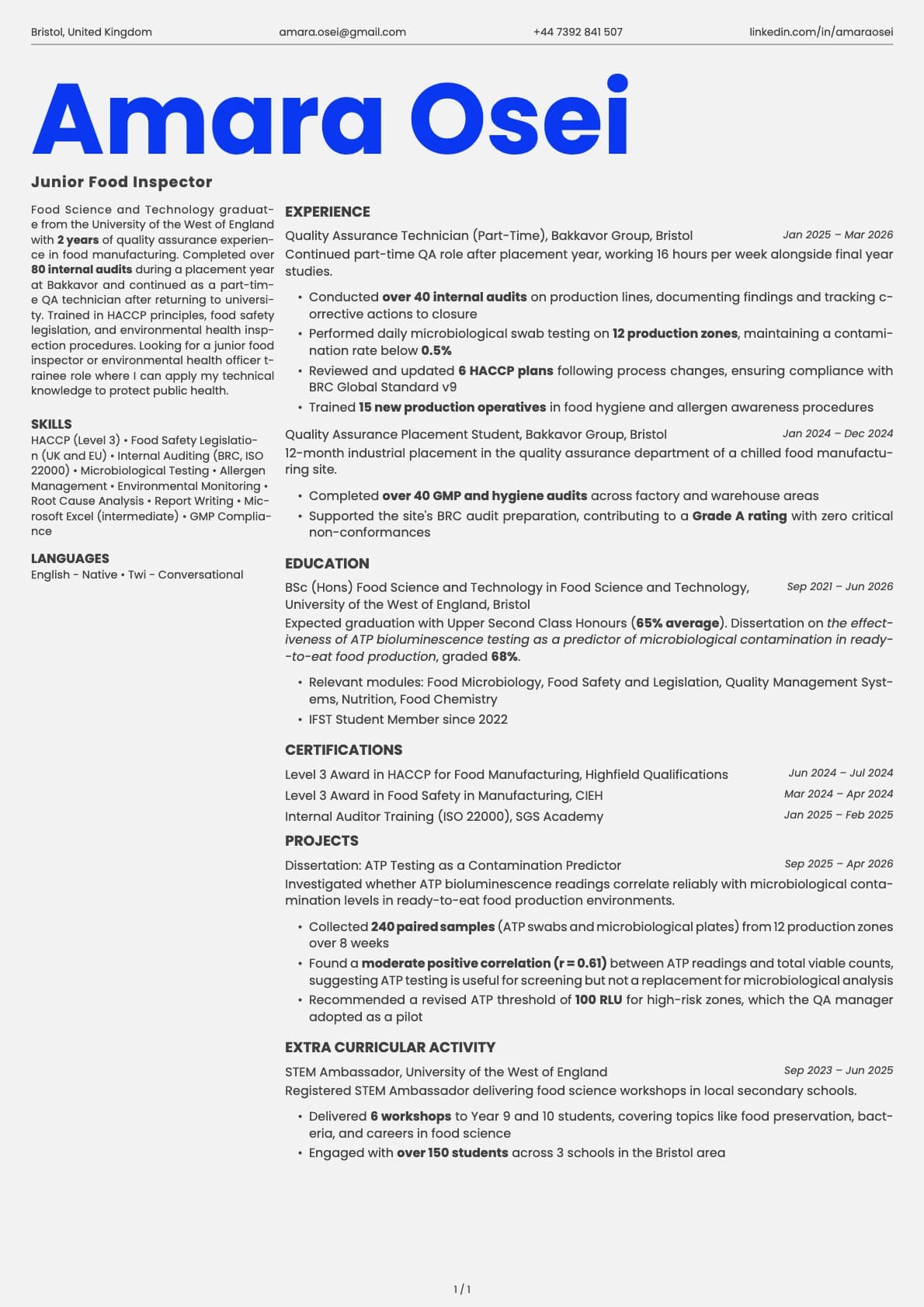
Junior Food Inspector
A junior food inspector resume example showing how to leverage QA experience in food manufacturing, HACCP training, and a food science degree.
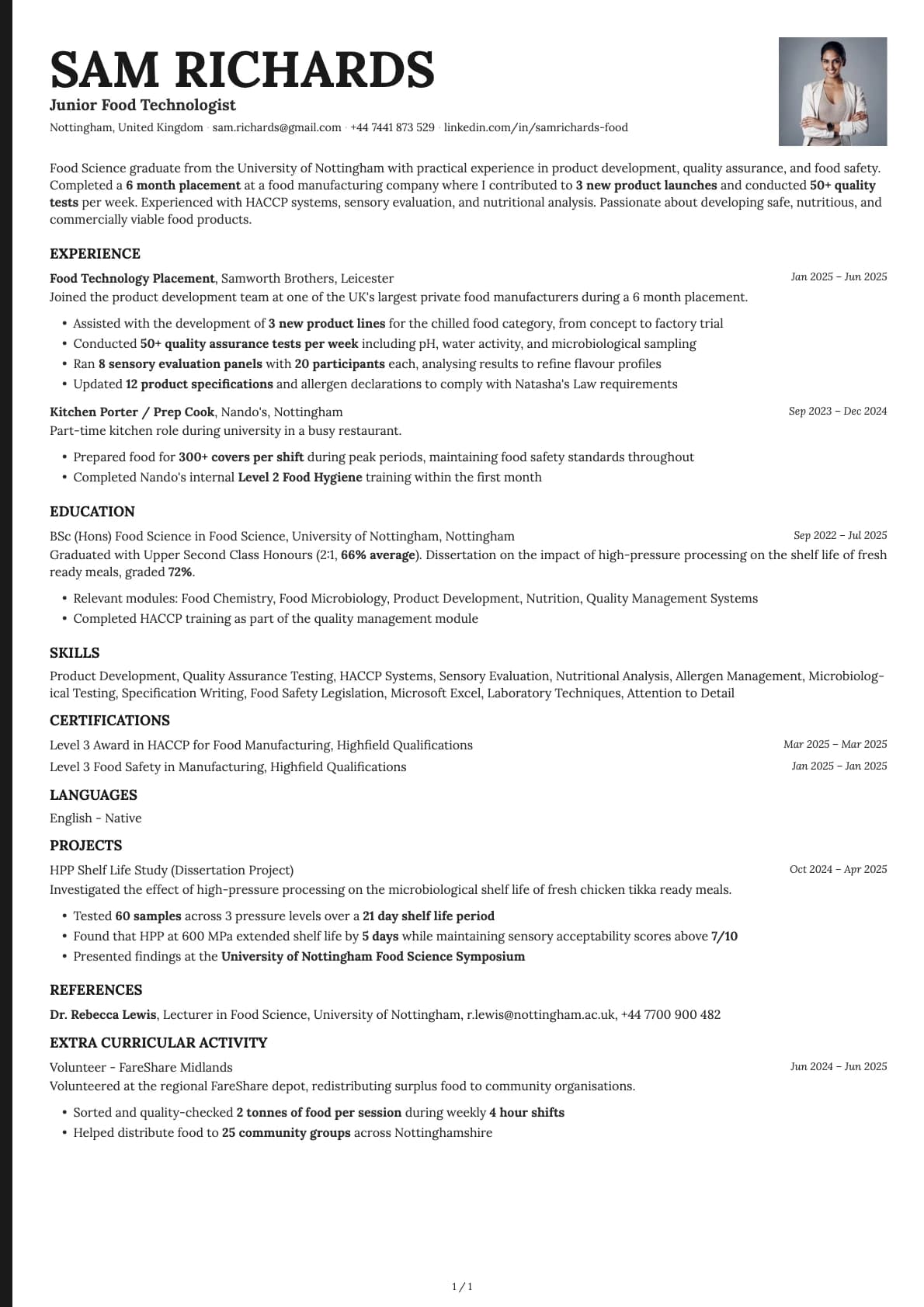
Junior Food Technologist
A junior food technologist resume example for graduates. See how to present product development, quality testing, and food safety experience to land your first food technology role.