Junior Textile Designer Resume Example
A junior textile designer resume example with print design projects, client commissions, and weaving skills from a Textile Design BA graduate entering the industry.

Laddro Team
Free to use. No account needed to start.
Free to use. No account needed to start.
Overview
Textile design roles require a blend of creative skill and technical knowledge. Employers at fashion houses, interiors brands, and print studios want evidence that you can design repeating patterns, understand fabric construction, and work to a commercial brief. A portfolio is critical, but the resume must show you can meet deadlines, work with production teams, and translate client feedback into finished designs.
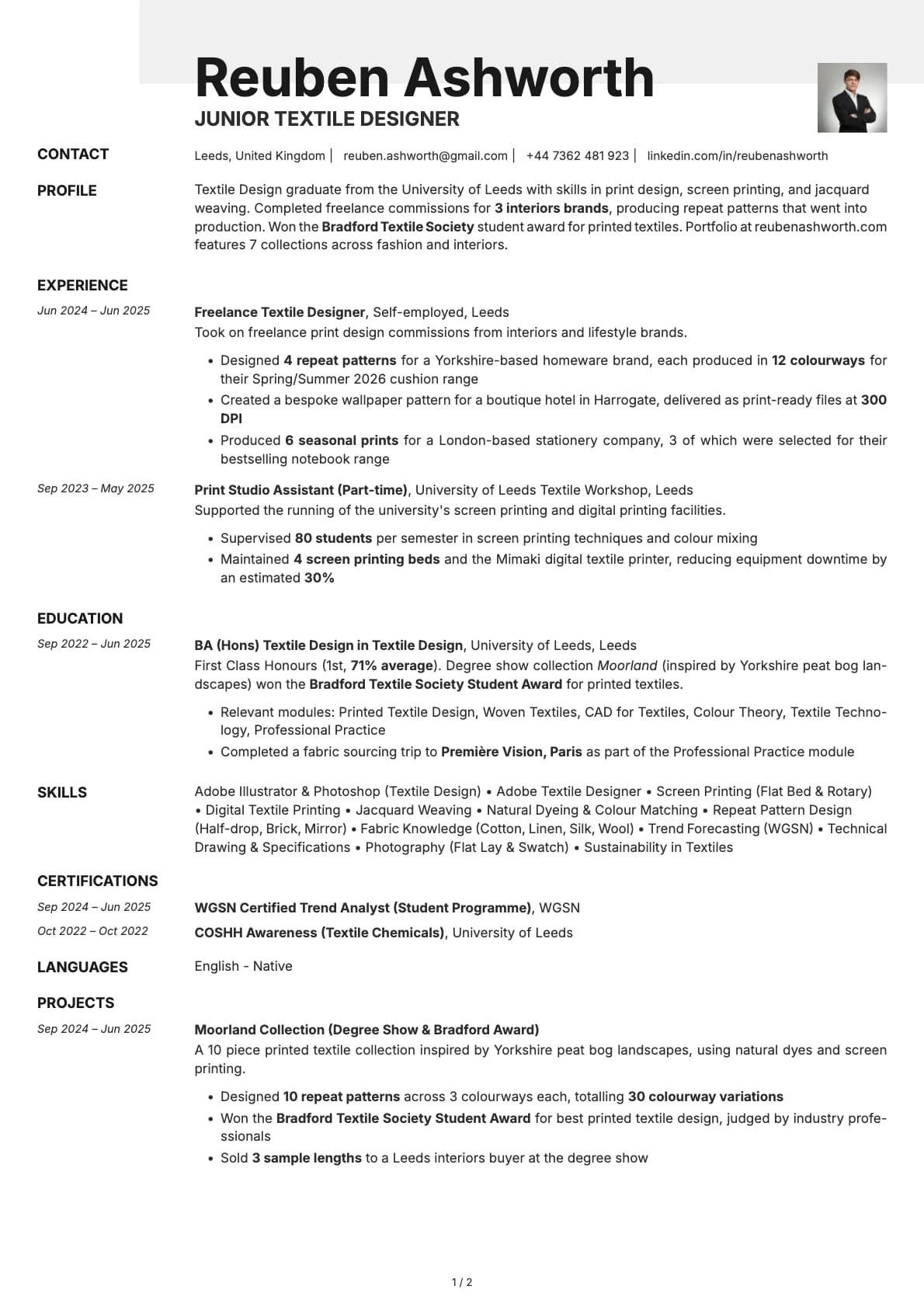
This resume belongs to Reuben Ashworth, a Textile Design graduate from the Royal College of Art's feeder programme at the University of Leeds. He completed freelance commissions for 3 interiors brands, designed prints that went into production, and won the Bradford Textile Society student award. His resume works because it connects every design project to a commercial or exhibition outcome.
What Makes This Resume Work
Freelance commissions prove commercial readiness. Three separate client projects, each with named brands and specific deliverables (12 colourways, 4 repeat patterns per brief), show that Reuben can work to a commercial standard, not just produce academic work.
The Bradford Textile Society award adds industry recognition. This is a well-known award within the UK textiles sector. Naming it immediately signals that Reuben's work has been assessed by industry professionals and found worthy.
Technical skills span digital and analogue. Adobe Textile Designer, Photoshop, and Illustrator sit alongside screen printing, jacquard weaving, and natural dyeing. This range shows Reuben can work in studios that use digital workflows as well as traditional craft techniques.
Repeat pattern design is emphasised as a core competency. The ability to create seamless repeats is fundamental to commercial textile design. Reuben mentions specific repeat types (half-drop, brick, mirror) and the number of patterns produced, giving hiring managers confidence in his technical grounding.
Key Takeaways
Junior textile designer resumes should balance digital software skills with hands-on making techniques. Name your freelance clients, production outcomes, and any industry awards. Specify the types of patterns you design, the colourways you produce, and the production methods you understand. If your degree show work sold or went into production, those are your strongest credentials.
Build your own version
Open this layout in the builder and swap in your own details. It takes a few minutes.
Free to use. No account needed to start.
Was this resume example helpful?
Rate this example to help us create better content for you.
4.8 average from 91 ratingsRelated resume examples
Newly Qualified Secondary Maths Teacher
A newly qualified secondary maths teacher resume example with PGCE placement experience, student outcome data, and QTS for ECTs.
Newly Qualified Secondary Science Teacher
A newly qualified secondary science teacher resume example with PGCE placement data, GCSE results, and practical lesson experience for ECTs.

Newly Qualified Teacher
A newly qualified teacher resume example with school placements, QTS, and classroom experience. See how to present your training to stand out in NQT applications.
Paediatric Nurse
A newly qualified paediatric nurse resume example showing how to present children's nursing placements, family communication skills, and NMC registration for your first Band 5 role.
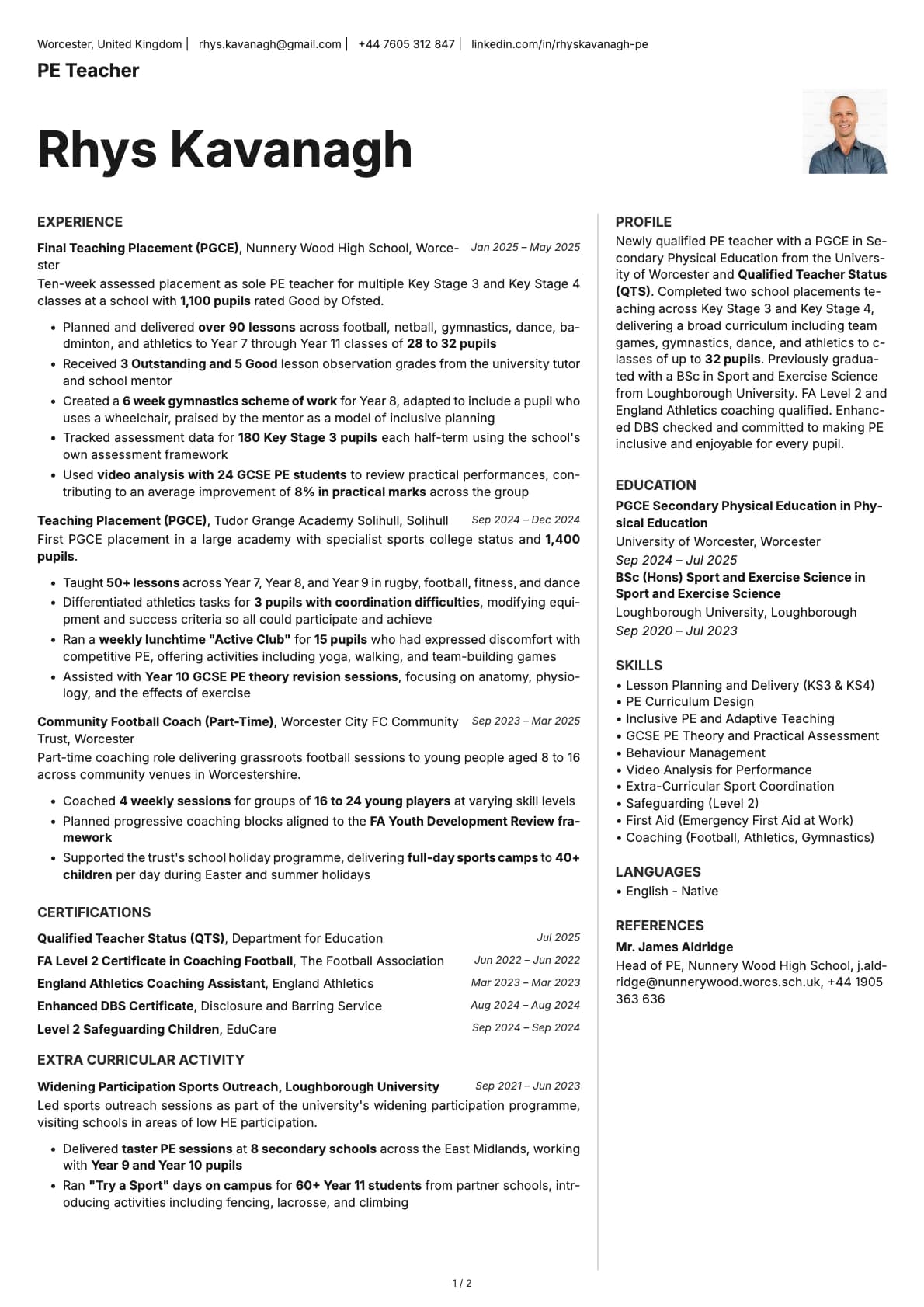
PE Teacher
A graduate PE teacher resume example with PGCE, QTS, and Key Stage 3/4 teaching placements. See how to present your coaching and teaching experience for PE teacher roles.
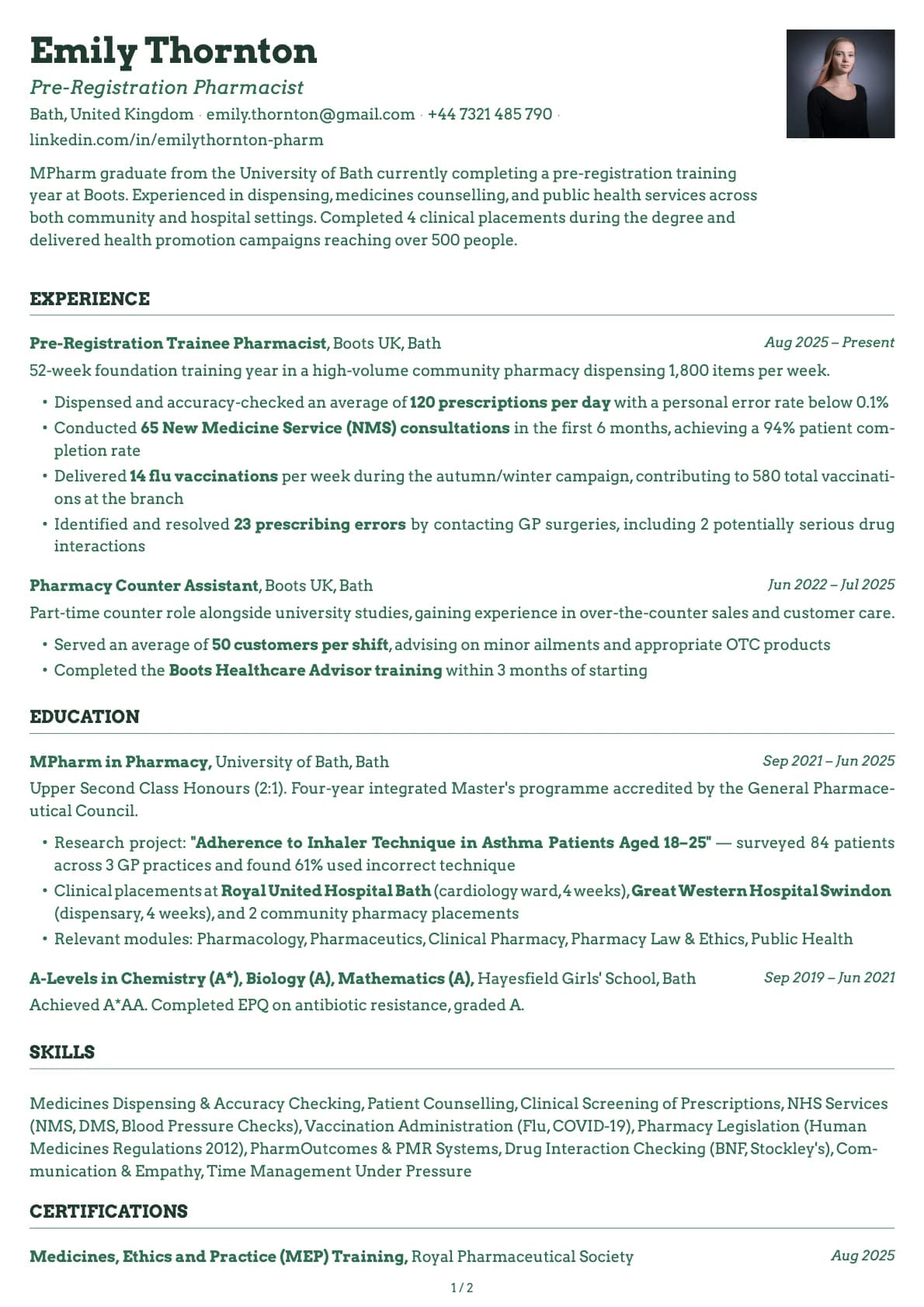
Pharmacy Intern
A pharmacy intern resume example for recent graduates. See how to present your dispensing experience, clinical placements, and patient interaction skills to land your first pharmacy role.
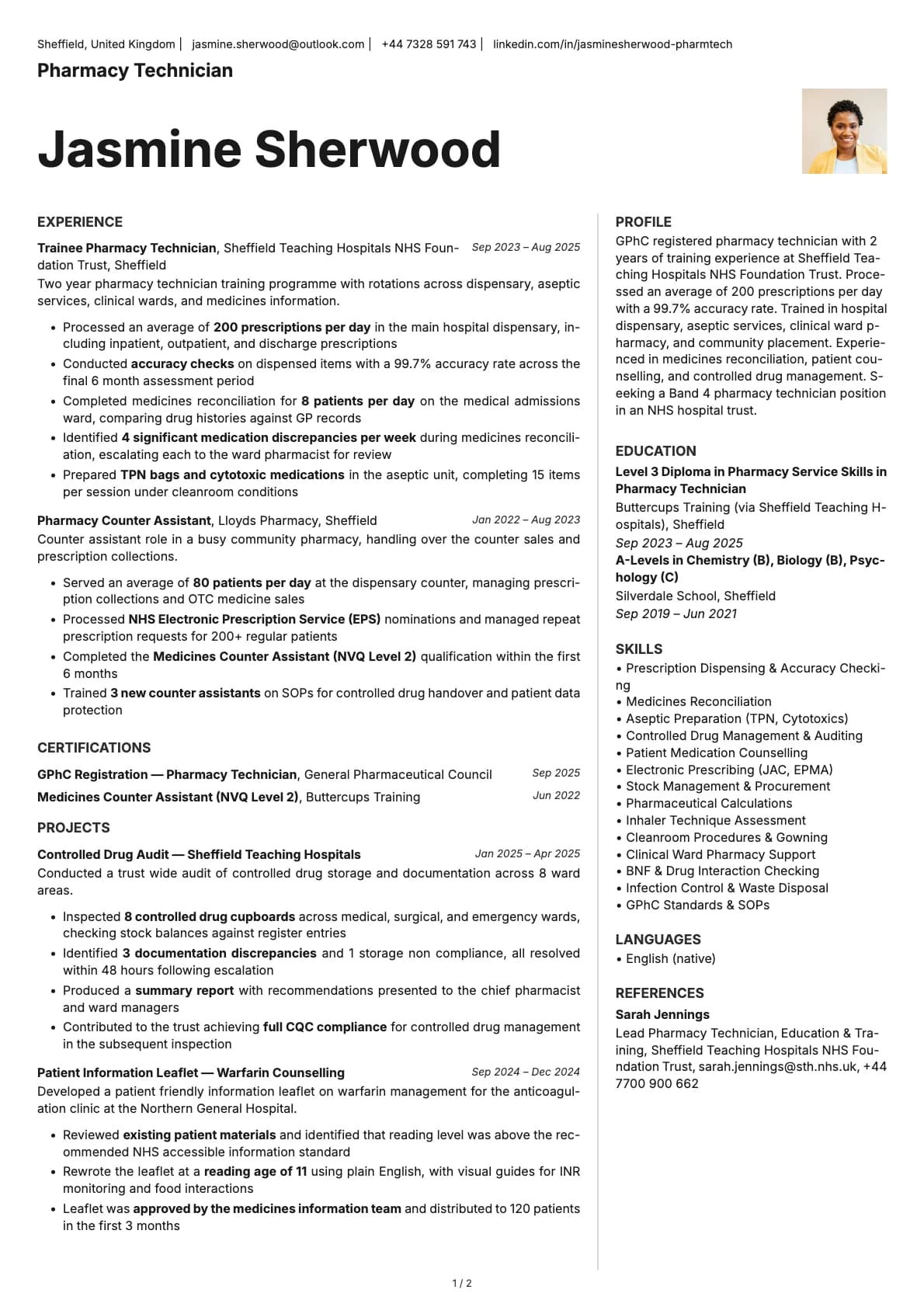
Pharmacy Technician
A pharmacy technician resume example for newly qualified candidates showing how to present GPhC registration, dispensing accuracy, and clinical skills for NHS and community pharmacy roles.
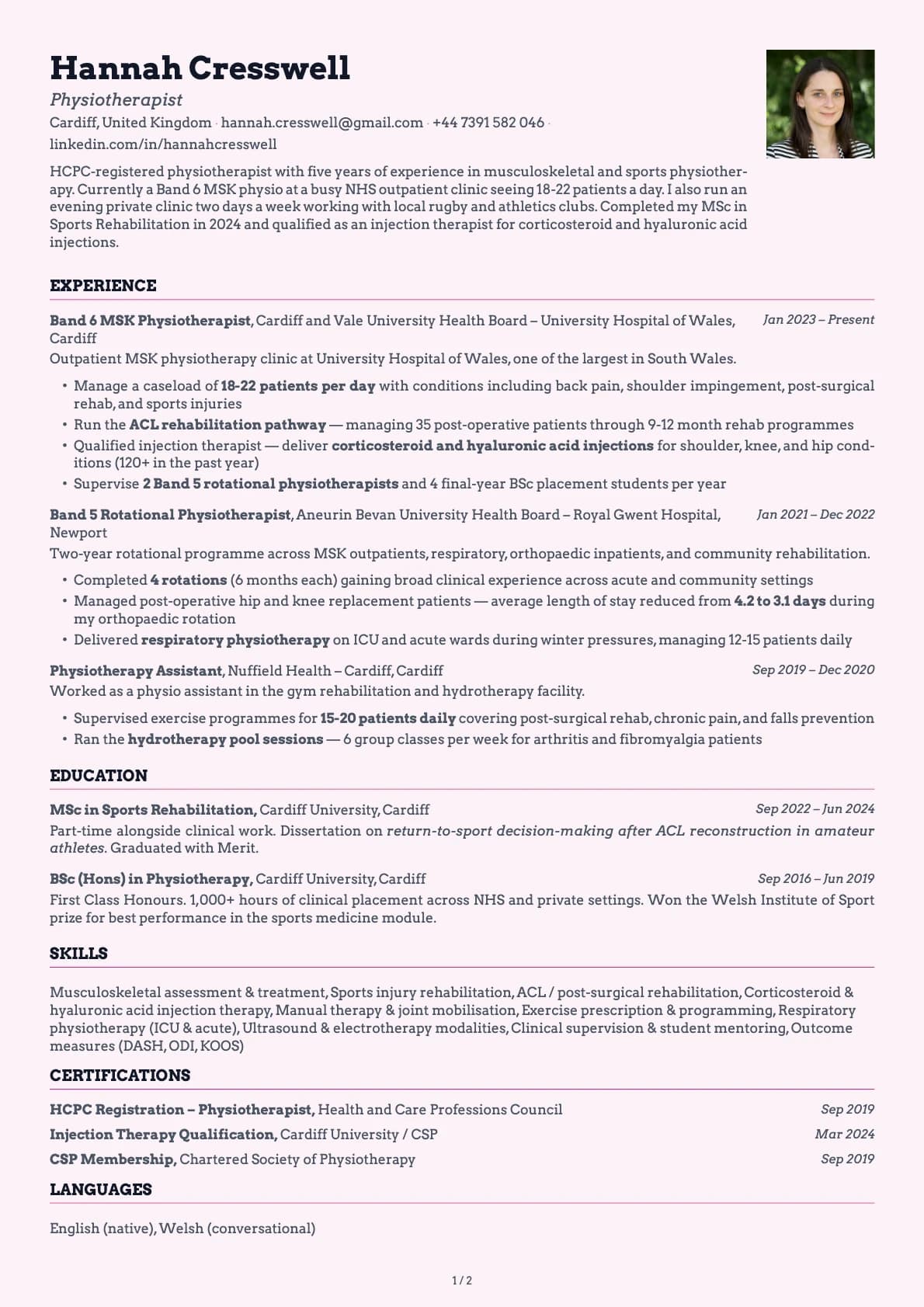
Physiotherapist
A physiotherapist resume example with NHS placement experience. See how to present clinical placements, patient outcomes, and HCPC registration on your first CV.
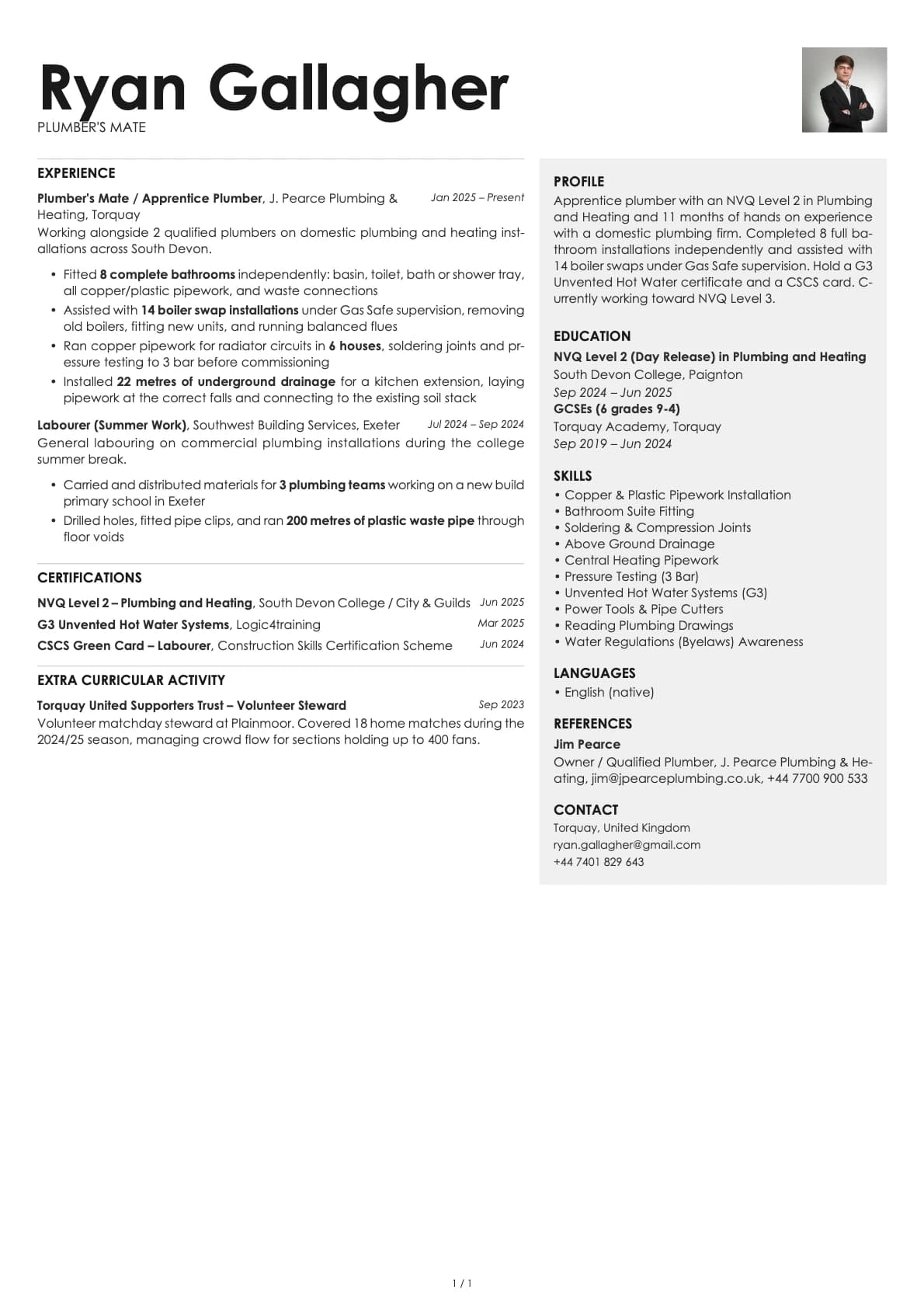
Plumber's Mate
A plumber's mate resume example for apprentice plumbers with NVQ Level 2 qualifications. See how to present your practical plumbing experience for your first employed role.
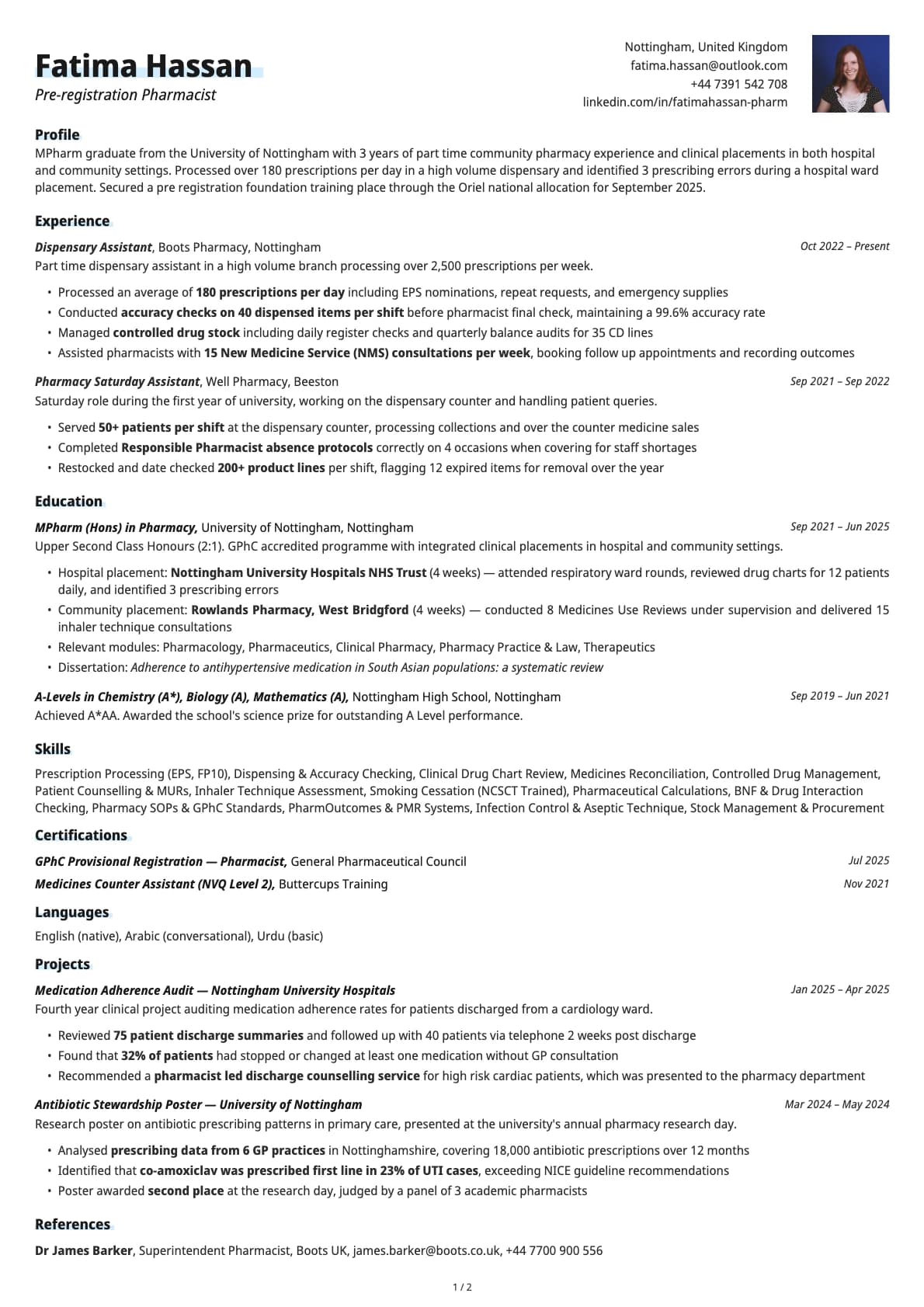
Pre-registration Pharmacist
A pre-registration pharmacist resume example showing how to present your MPharm degree, clinical placements, and GPhC registration progress for your foundation year role.
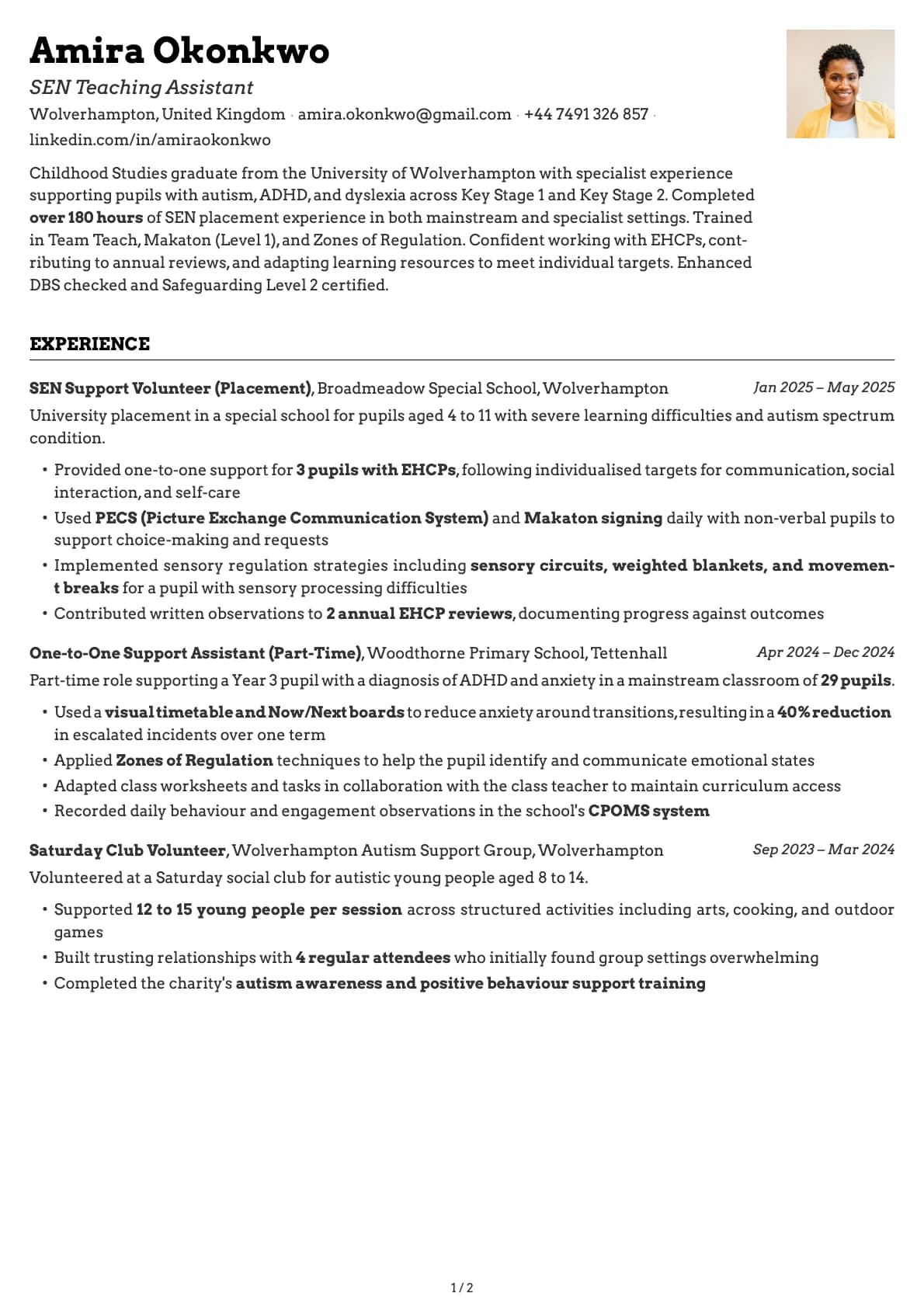
SEN Teaching Assistant
A graduate SEN teaching assistant resume example with SEND placement experience, EHCPs, and autism support. See how to present your specialist skills for SEN TA roles.
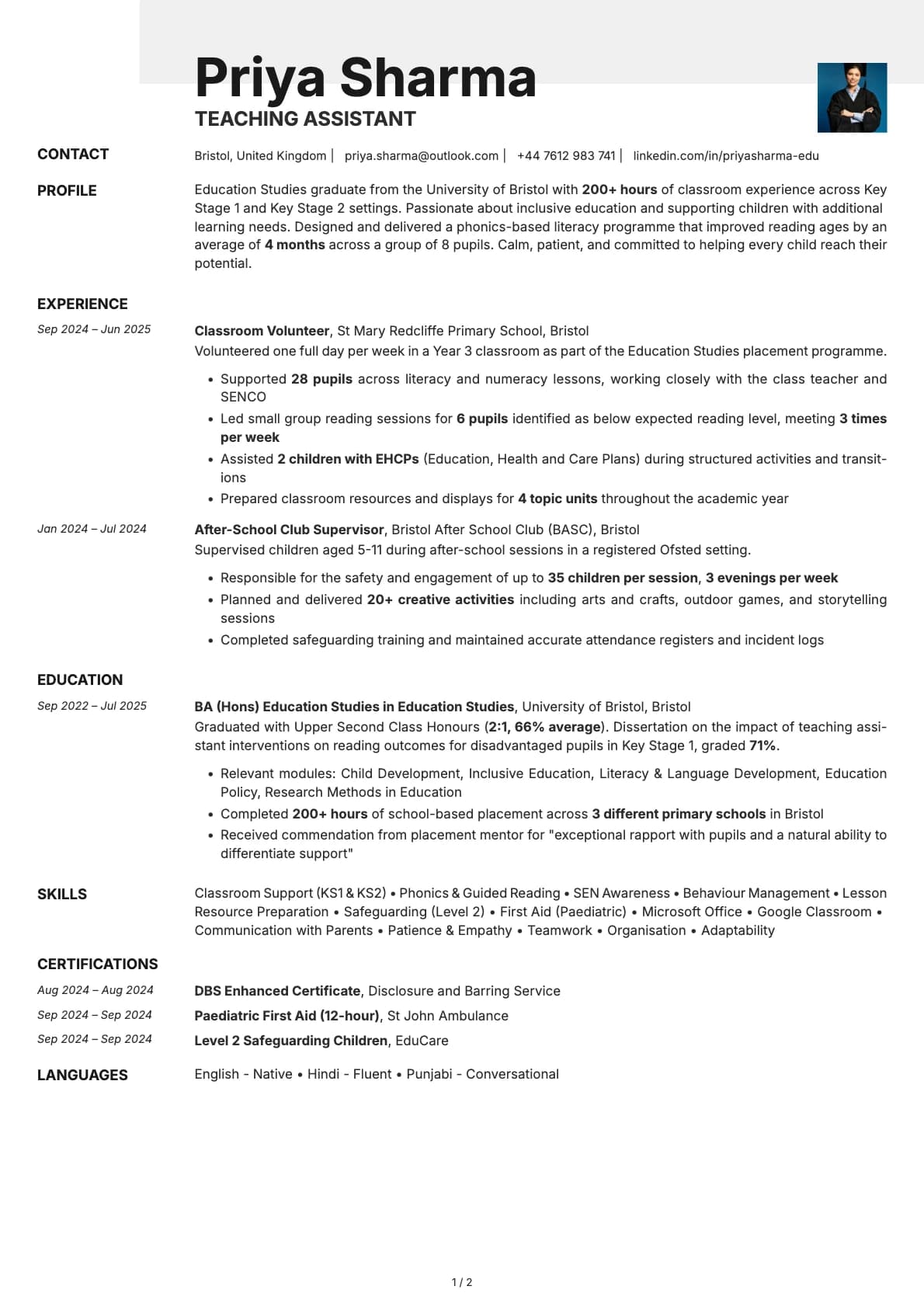
Teaching Assistant
A teaching assistant resume example for recent graduates. See how to present your classroom experience, volunteer work, and education degree to get hired as a TA.