Graduate Lab Technician Resume Example
A graduate lab technician resume example showing how to present your chemistry BSc, lab skills, and analytical techniques to land your first lab role.

Laddro Team
Free to use. No account needed to start.
Free to use. No account needed to start.
Overview
Graduate lab technician resumes tend to fall into two camps. The first type lists every instrument they saw during their degree and hopes for the best. The second type writes vague bullet points about "conducting experiments" without a single number. Neither works.
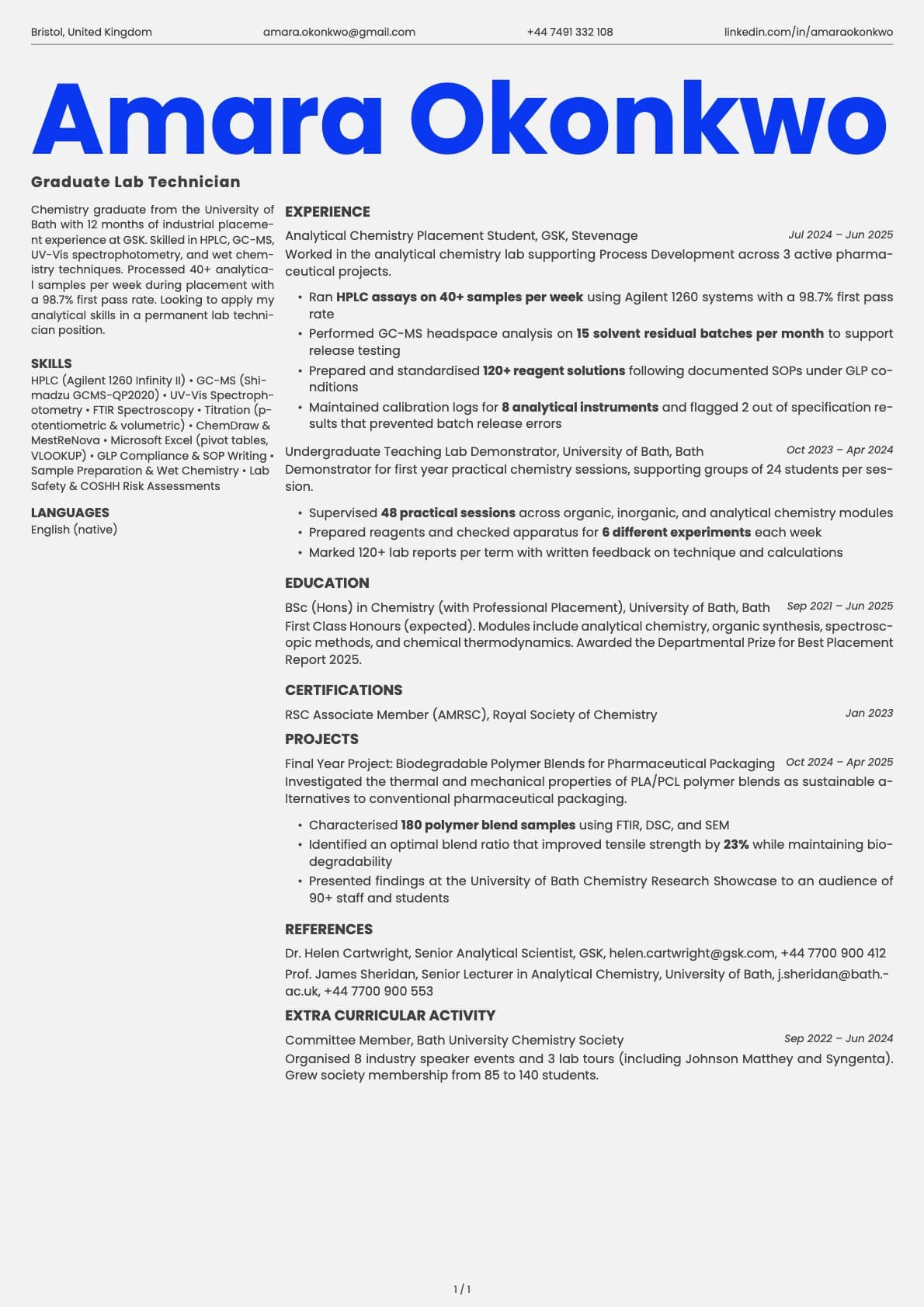
This resume belongs to Amara, a Chemistry BSc graduate from the University of Bath who completed a 12 month placement year at GSK's Stevenage facility. She is applying for her first permanent lab technician role. What makes this resume effective is that every bullet point mentions a specific instrument, a sample count, or a turnaround time. Recruiters scanning for someone who can actually run a lab bench will find what they need in seconds.
Lead with your placement or lab experience
For graduate lab roles, your industrial placement is the most important section on your resume. Academic labs matter too, but a hiring manager wants to know you have worked in a regulated environment with SOPs, batch records, and quality systems.
Amara's placement entry at GSK opens with the environment: "Analytical chemistry lab supporting Process Development across 3 active pharmaceutical projects." Then each bullet answers the question: what did you do, how many times, and what was the result?
"Ran HPLC assays on 40+ samples per week with a 98.7% first pass rate" tells a lab manager everything. You know HPLC. You can handle volume. Your accuracy is high.
If you did not do a placement year, lean heavily on your final year project and any summer lab work. The same principle applies: name the instruments, count the samples, report the outcomes.
Skills: instruments first, software second
Lab technician roles are screened by instrument experience. Put your analytical techniques at the top of your skills section, not buried after "teamwork" and "attention to detail."
This resume lists HPLC, GC-MS, UV-Vis spectrophotometry, FTIR, and titration methods before moving to software (ChemDraw, MestReNova, Excel). That ordering matches what a hiring manager scans for.
If you have used a specific model (Agilent 1260, Shimadzu Nexera), include it. Some job listings name exact instruments and an ATS will match on those model numbers.
Your degree project is a project, not education
Many graduates bury their final year project inside the education section as a single line. That wastes valuable space. Amara pulls her dissertation out into a dedicated projects section: the title, the techniques used (FTIR, DSC, SEM), the sample count (180 polymer blends), and the outcome (findings presented at a departmental conference).
This gives her an extra 3 or 4 lines to show competence without needing more work experience.
GLP and quality systems matter
If you worked in a GLP, GMP, or ISO 17025 environment during your placement, say so. These compliance frameworks are non negotiable for pharmaceutical and food labs. Amara's resume mentions GLP compliance and SOPs explicitly. That single line can be the difference between landing in the interview pile or the reject pile.
One thing to watch
Graduate lab technician resumes should stay on one page. You do not have enough experience for two pages yet, and hiring managers in science roles expect concise documents. If your resume is creeping onto a second page, cut the extracurricular section or reduce your project descriptions.
Build your own version
Open this layout in the builder and swap in your own details. It takes a few minutes.
Free to use. No account needed to start.
Was this resume example helpful?
Rate this example to help us create better content for you.
4.7 average from 134 ratingsRelated resume examples
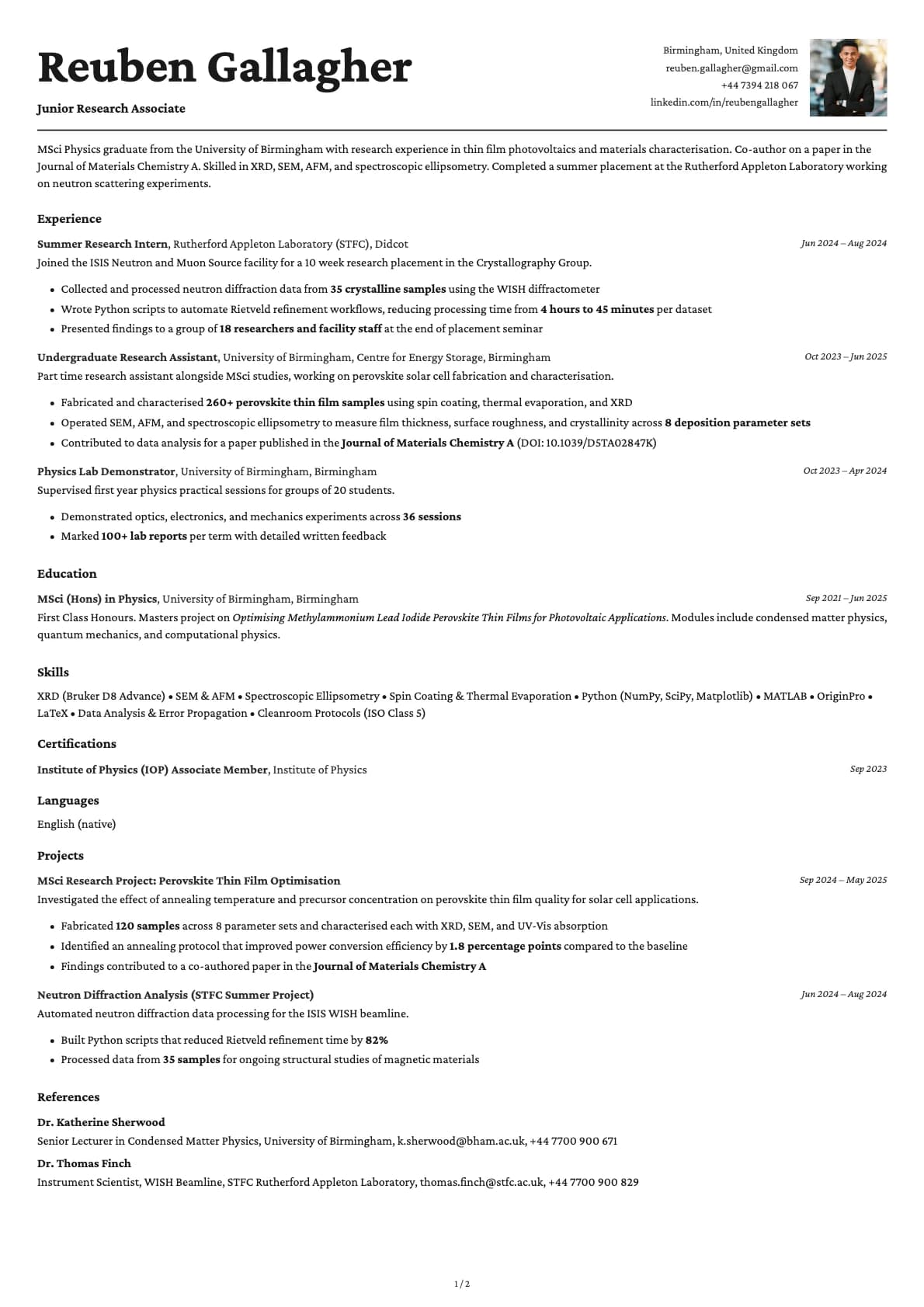
Junior Research Associate
A junior research associate resume example for physics MSci graduates, showing how to present lab research, publications, and technical skills.
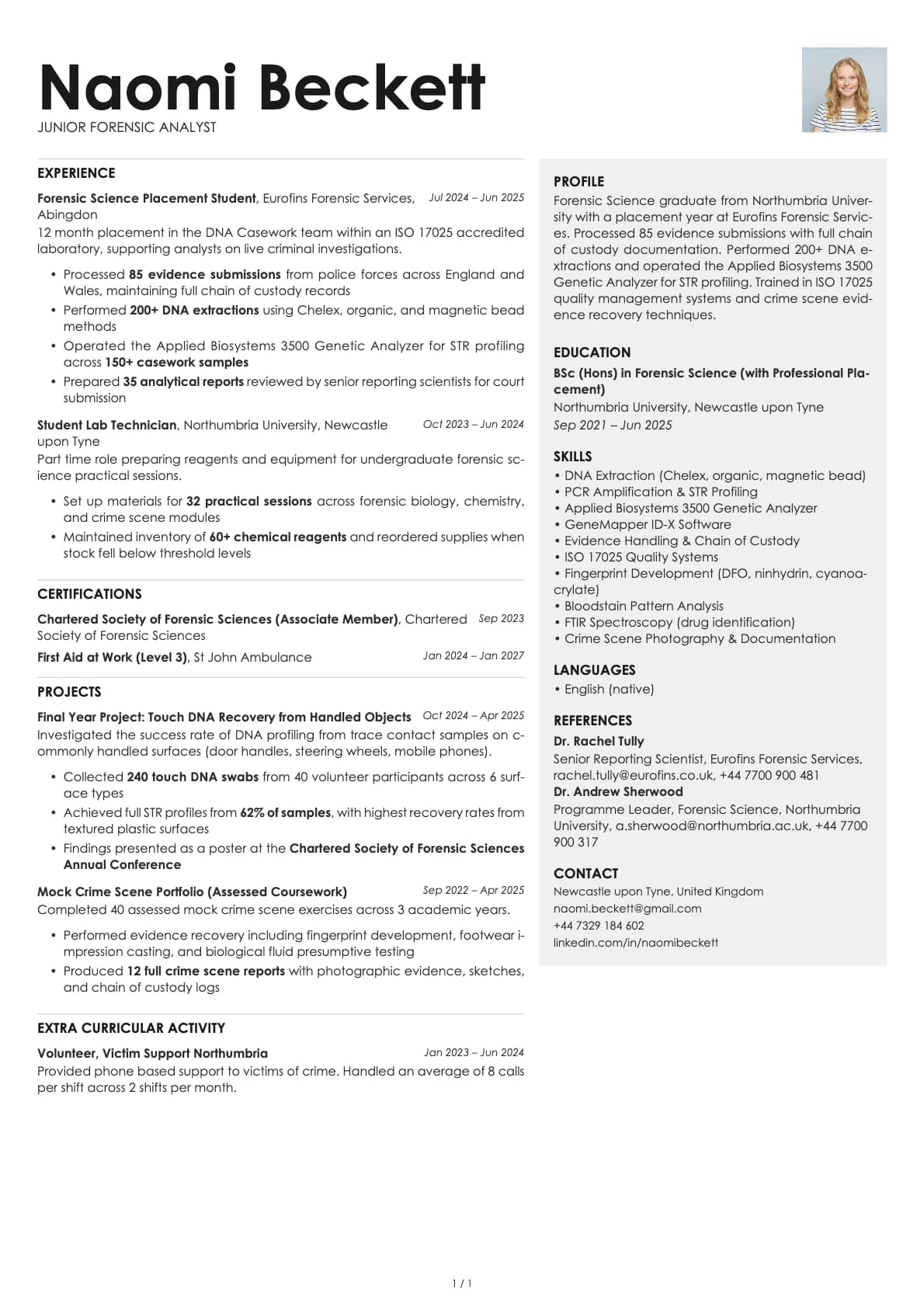
Junior Forensic Analyst
A junior forensic analyst resume example for forensic science graduates, showing how to present lab techniques, chain of custody, and casework experience.
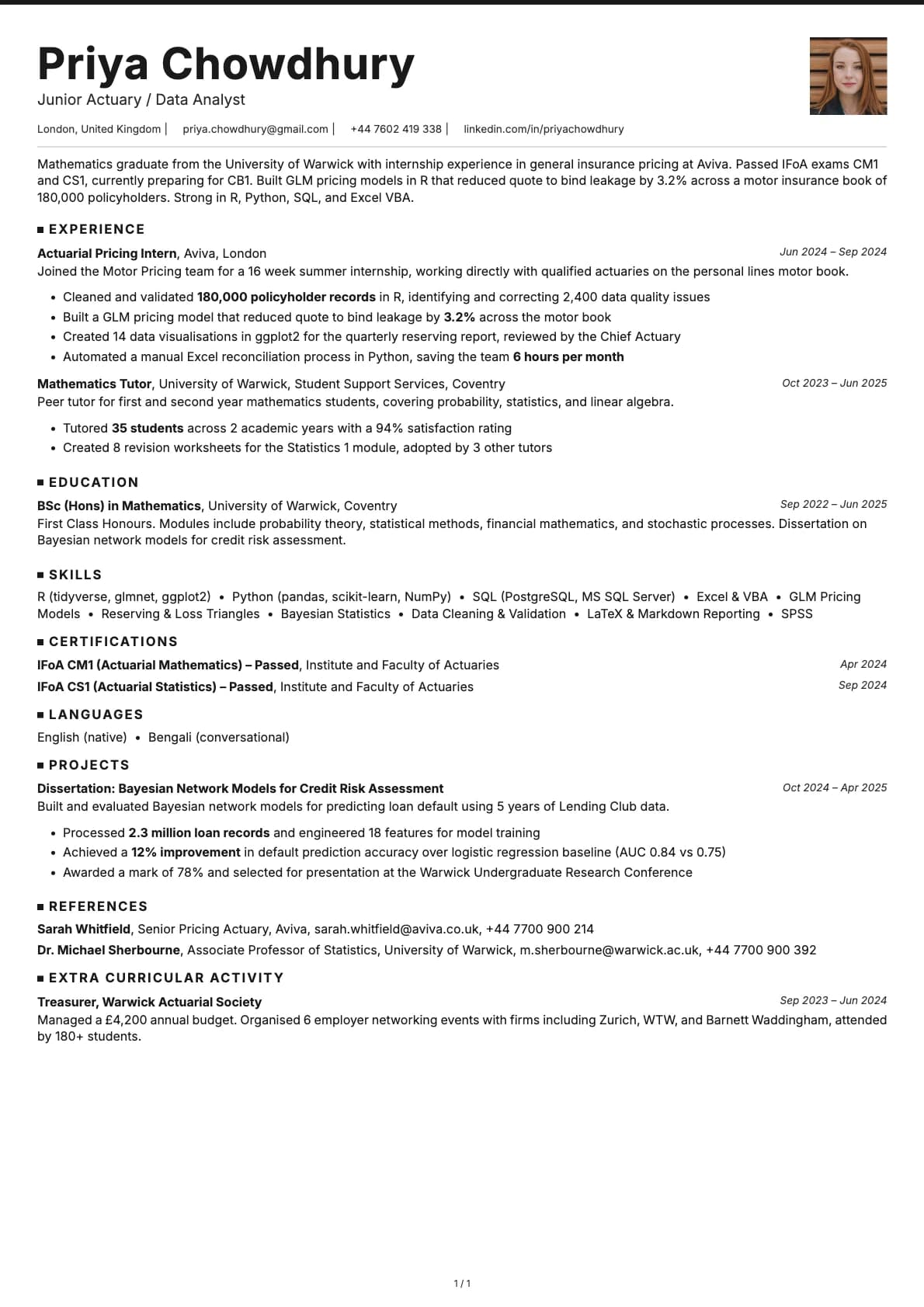
Junior Actuary / Data Analyst
A junior actuary resume example for maths graduates, showing how to present actuarial exams, R and Python skills, and quantitative analysis experience.
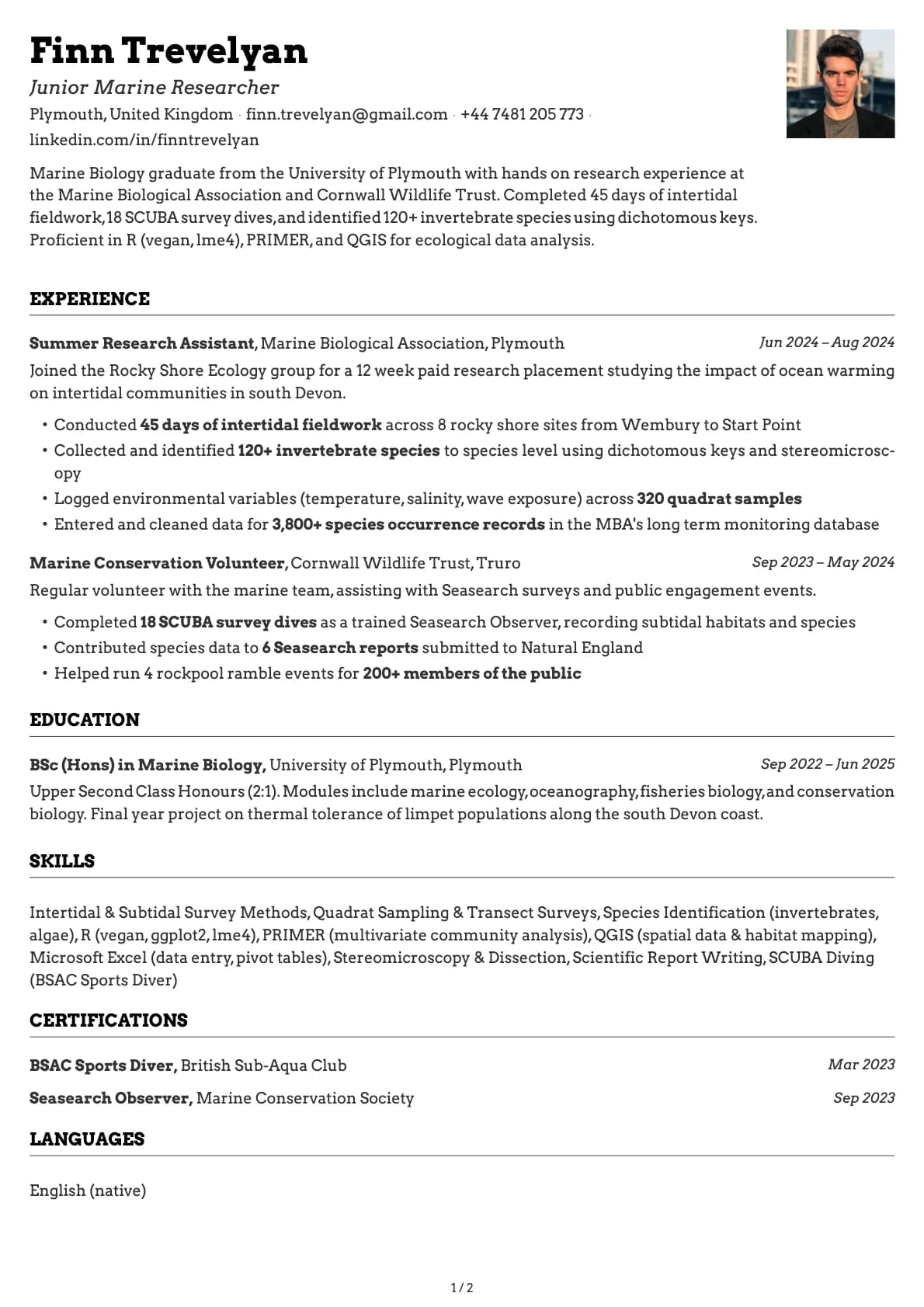
Junior Marine Researcher
A junior marine researcher resume example for marine biology graduates, covering fieldwork, species surveys, and data collection techniques.
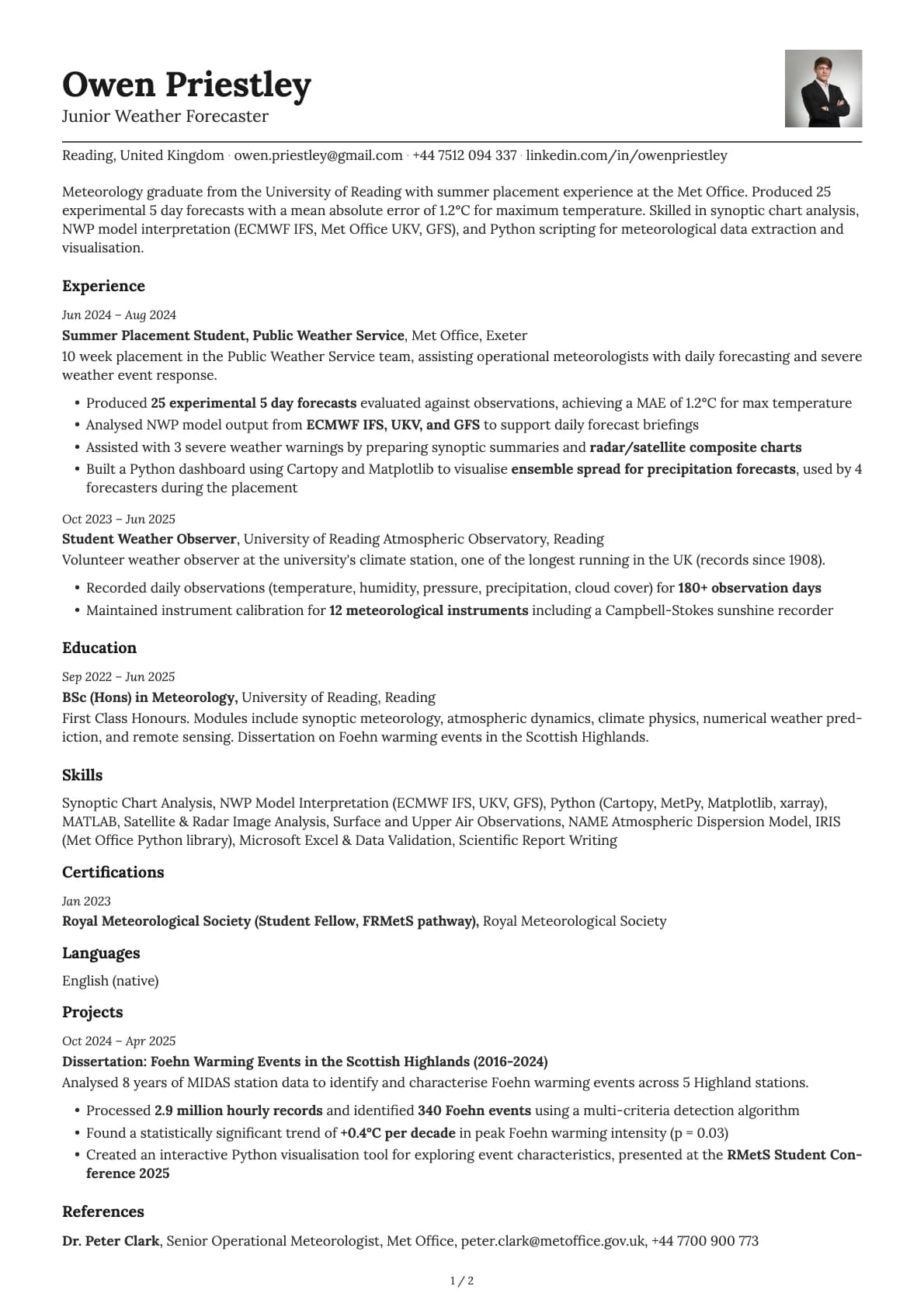
Junior Weather Forecaster
A junior weather forecaster resume example for meteorology graduates, showing how to present NWP models, synoptic analysis, and forecasting tools.
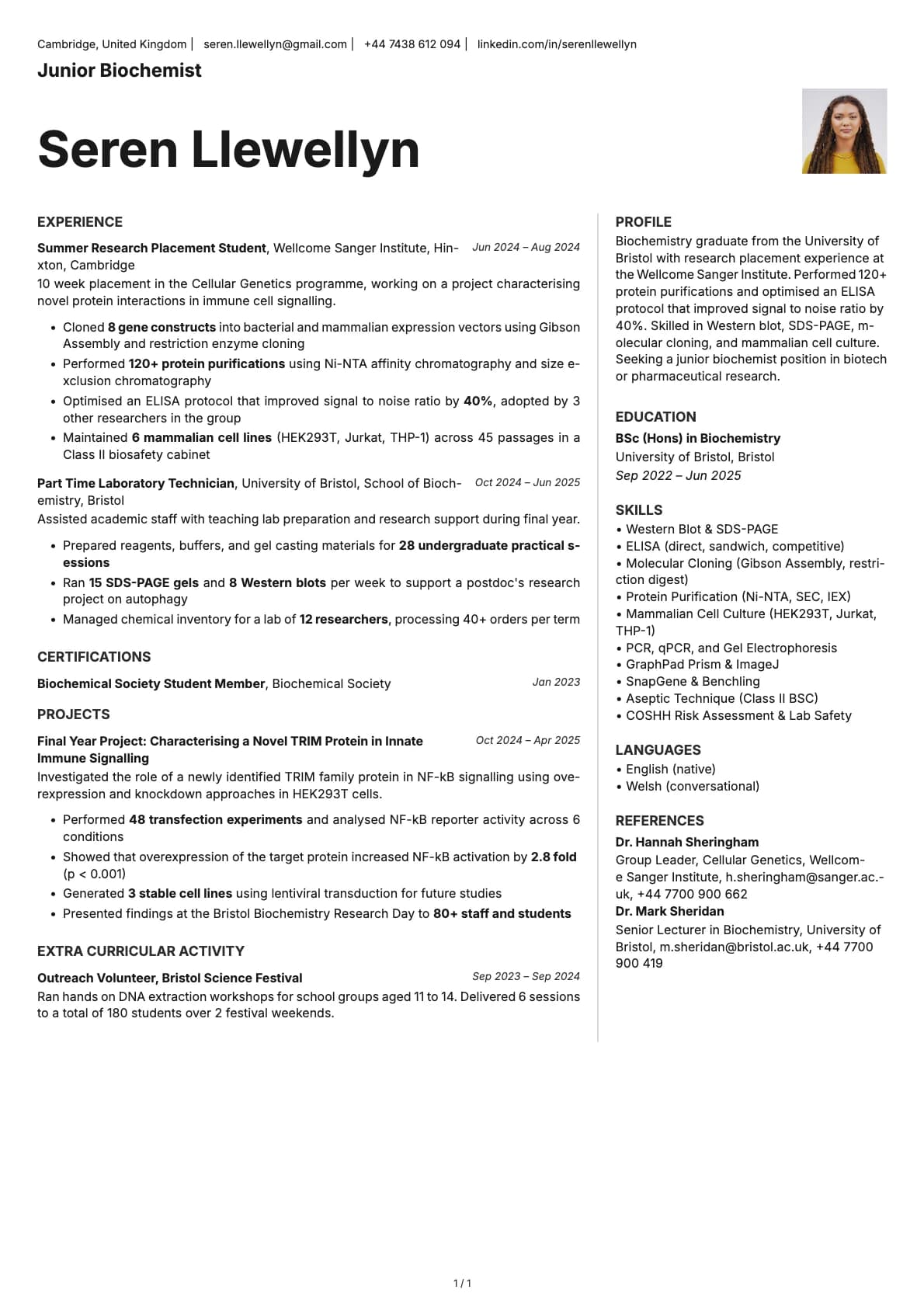
Junior Biochemist
A junior biochemist resume example for biochemistry graduates, covering protein assays, cell culture, and molecular biology techniques.
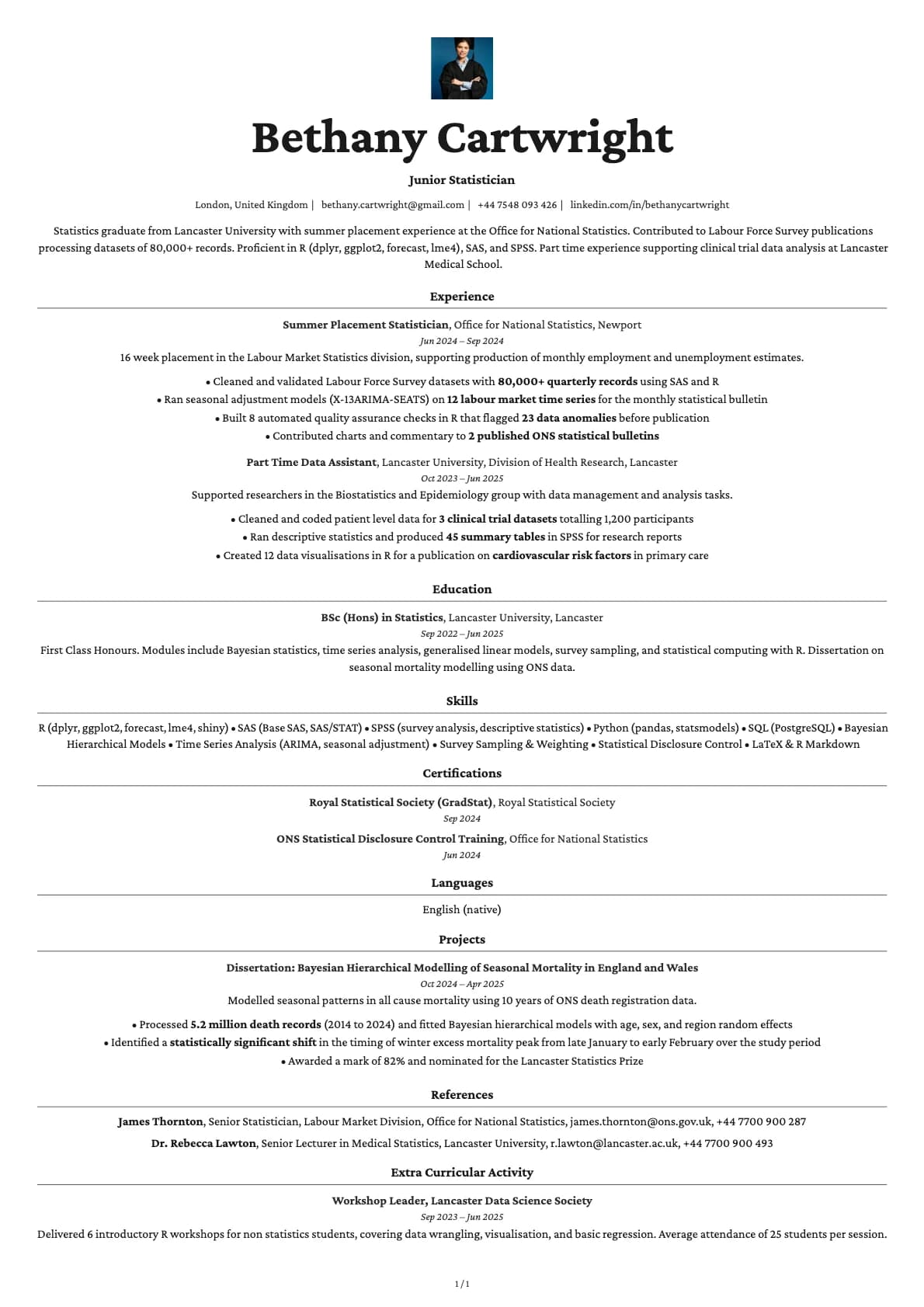
Junior Statistician
A junior statistician resume example for statistics graduates, showing how to present R, SPSS, SAS experience, and government or health statistics work.
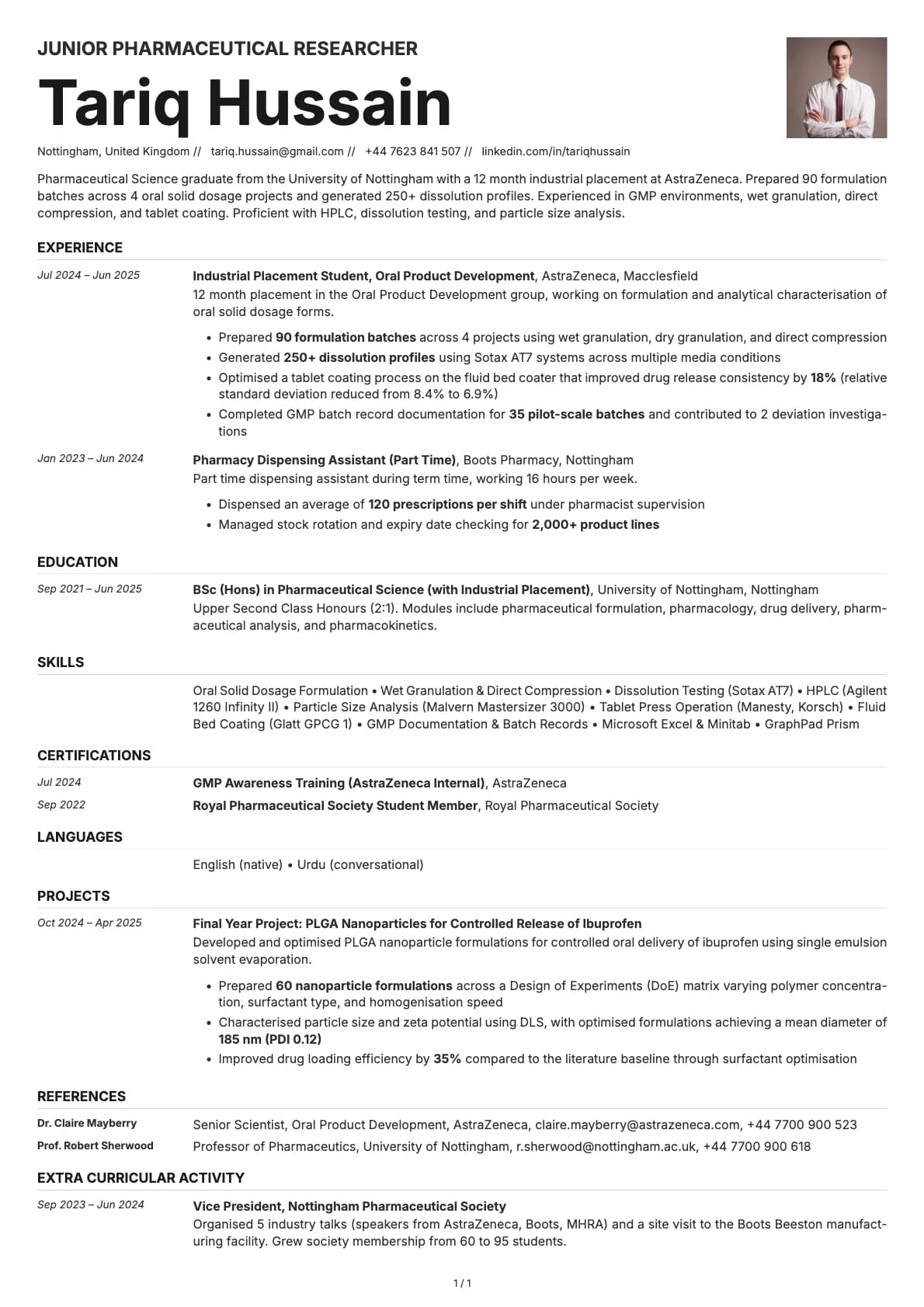
Junior Pharmaceutical Researcher
A junior pharmaceutical researcher resume example for pharmaceutical science graduates, showing formulation work, dissolution testing, and GMP experience.