Junior Biochemist Resume Example
A junior biochemist resume example for biochemistry graduates, covering protein assays, cell culture, and molecular biology techniques.

Laddro Team
Free to use. No account needed to start.
Free to use. No account needed to start.
Overview
Biochemistry graduates often struggle to differentiate themselves because the degree curriculum is so standardised. Everyone has done SDS-PAGE, everyone has run a Western blot, and everyone has pipetted in a teaching lab. The graduates who get hired are the ones who can show they have done these techniques at scale, under real conditions, with results that mattered.
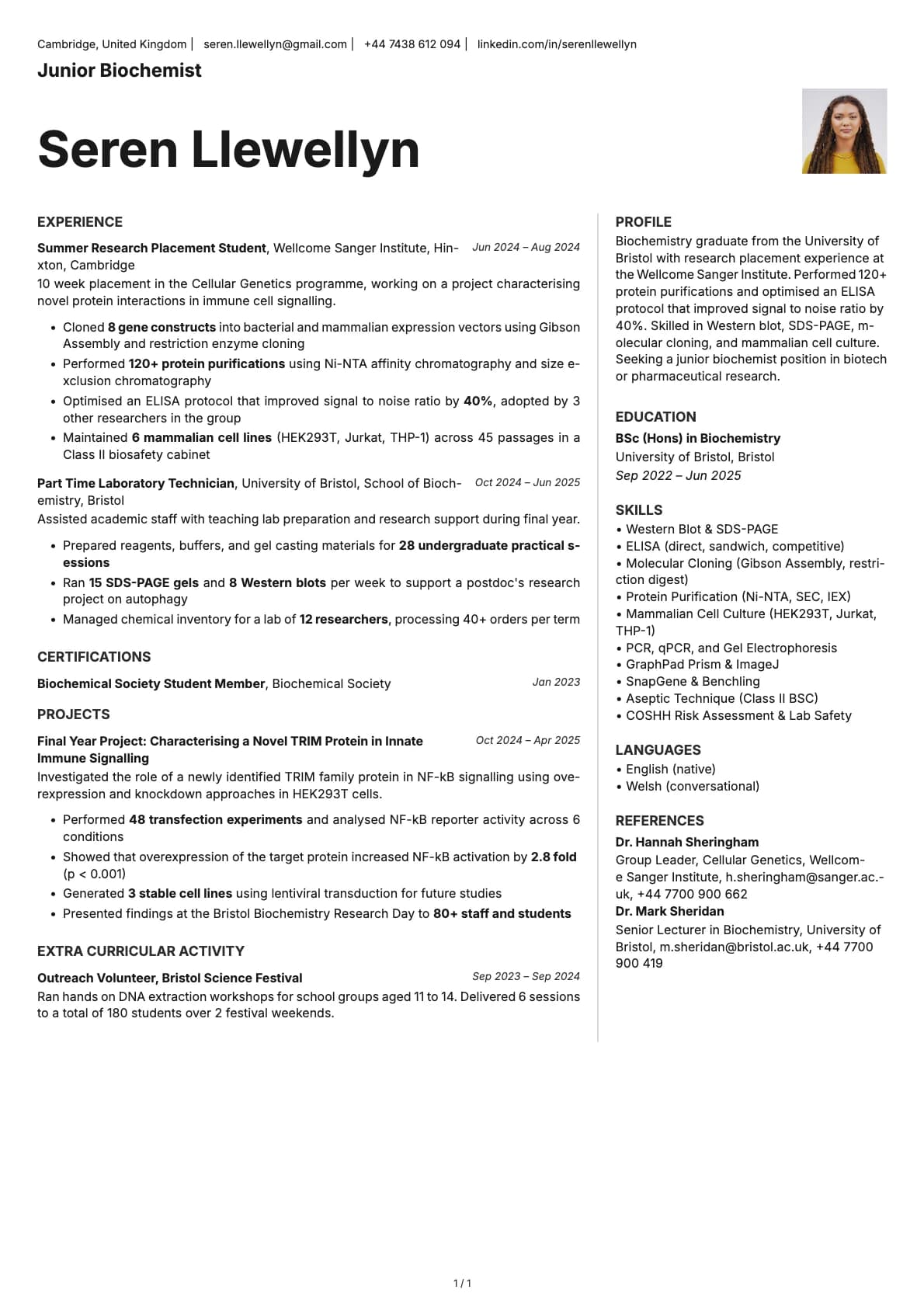
This resume belongs to Seren, a Biochemistry BSc graduate from the University of Bristol who completed a summer research placement at the Wellcome Sanger Institute and worked part time as a lab technician during her final year. Her resume is effective because every bullet includes either a sample count, a technique name, or a measurable outcome.
Research placements in prestigious institutes
The Wellcome Sanger Institute, Francis Crick Institute, MRC Laboratory of Molecular Biology, and Babraham Institute are among the UK's top life science research centres. If you worked at any of them, that affiliation alone carries weight. But you still need to back it up with specifics.
Seren's 10 week placement involved cloning 8 gene constructs, performing 120+ protein purifications, and optimising an ELISA protocol that improved signal to noise ratio by 40%. These numbers tell the hiring manager she can work independently at a high throughput bench.
Cell culture and aseptic technique
If you have cell culture experience, specify the cell lines, passage numbers, and scale. "Maintained 6 mammalian cell lines across 45 passages" is concrete. "Experience with cell culture" is not.
For biotech and pharmaceutical roles, aseptic technique is a fundamental requirement. Seren mentions working in a Class II biosafety cabinet and maintaining contamination free cultures across her placement. That single detail matters more than listing "sterile technique" as a skill.
Molecular biology technique list
For biochemistry roles, your technical skills section should read like a protocol list. Western blot, ELISA, SDS-PAGE, PCR, qPCR, molecular cloning, protein purification (affinity, size exclusion, ion exchange). Each of these is a keyword that hiring managers and ATS systems scan for.
Seren lists 10 techniques, each specific enough to confirm competence. She does not list "laboratory skills" as a catch all.
Software for data analysis
GraphPad Prism is standard in biochemistry labs. If you used it for curve fitting, statistical tests, or dose response analysis, say so. ImageJ, SnapGene, and PyMOL are also common. R or Python for bioinformatics analysis is increasingly valued, especially for roles in genomics or proteomics.
Build your own version
Open this layout in the builder and swap in your own details. It takes a few minutes.
Free to use. No account needed to start.
Was this resume example helpful?
Rate this example to help us create better content for you.
4.7 average from 121 ratingsRelated resume examples
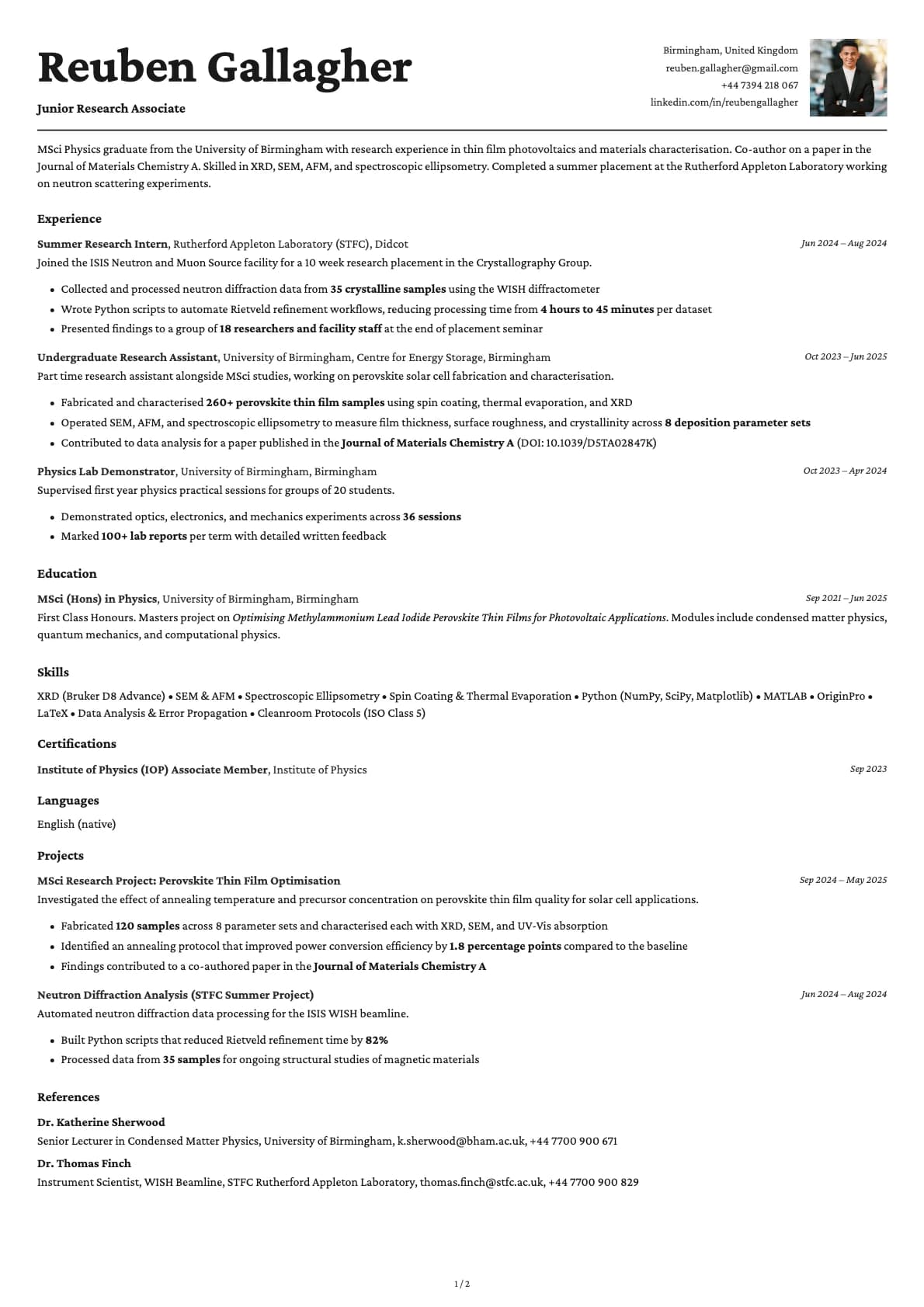
Junior Research Associate
A junior research associate resume example for physics MSci graduates, showing how to present lab research, publications, and technical skills.
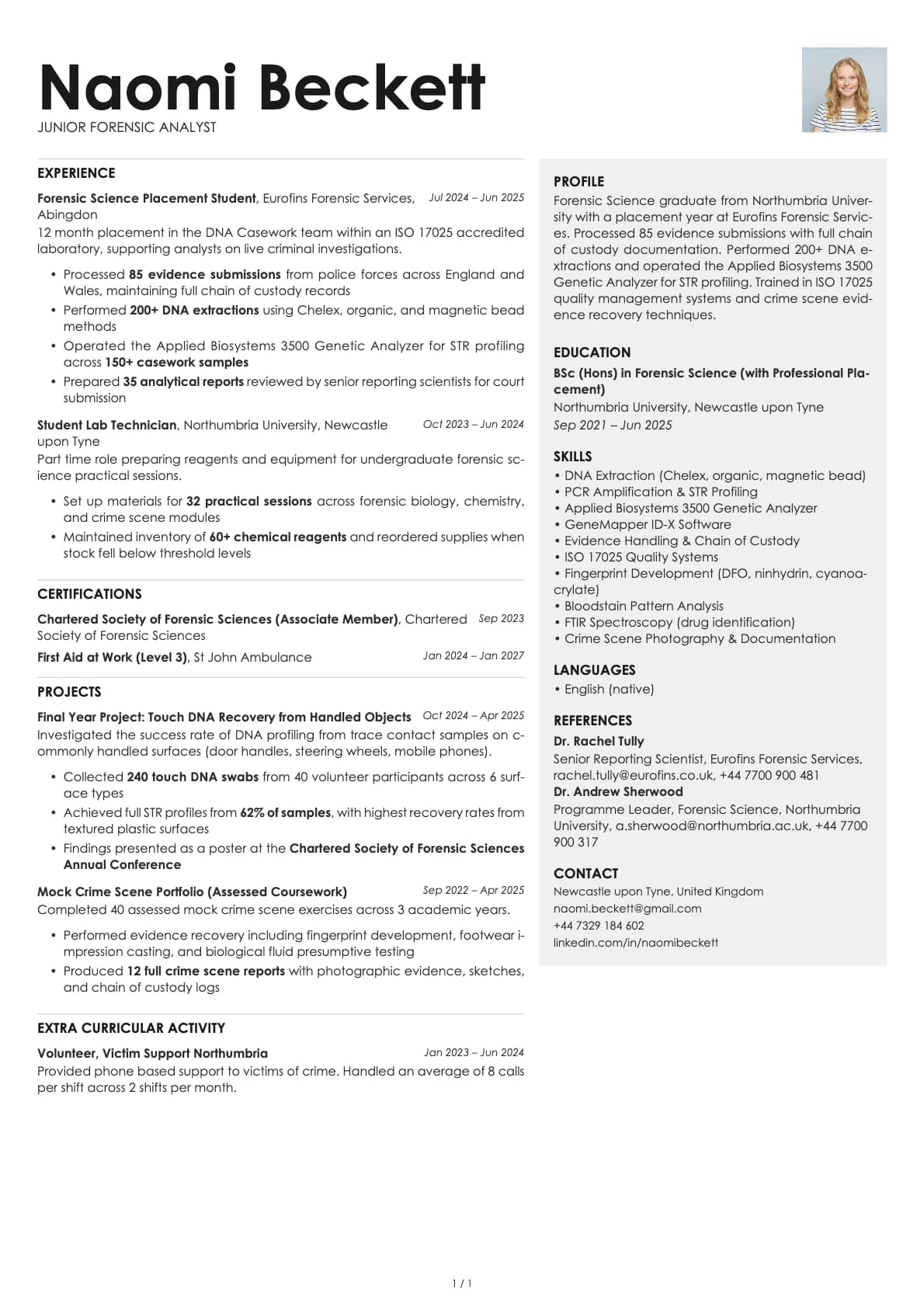
Junior Forensic Analyst
A junior forensic analyst resume example for forensic science graduates, showing how to present lab techniques, chain of custody, and casework experience.
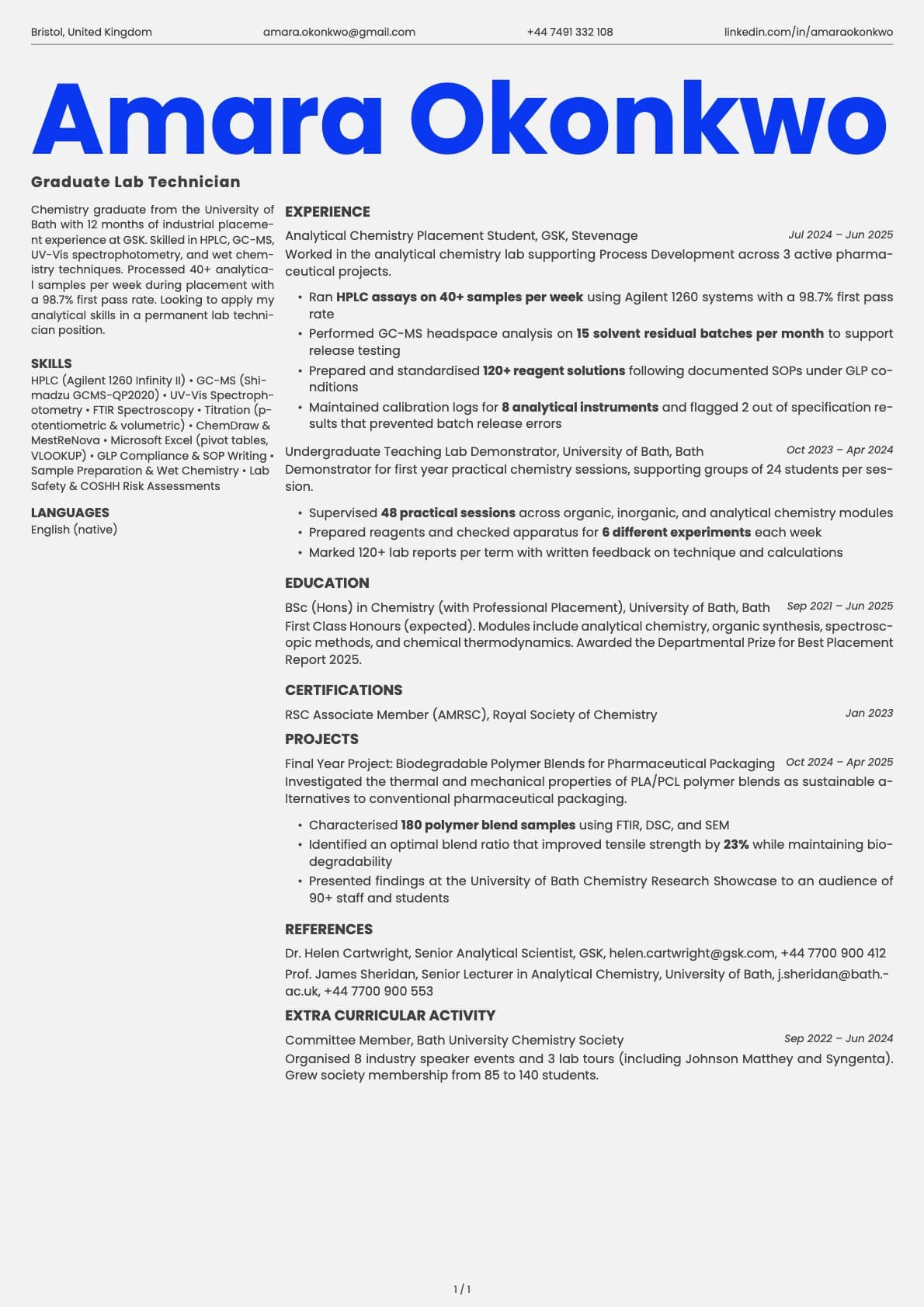
Graduate Lab Technician
A graduate lab technician resume example showing how to present your chemistry BSc, lab skills, and analytical techniques to land your first lab role.
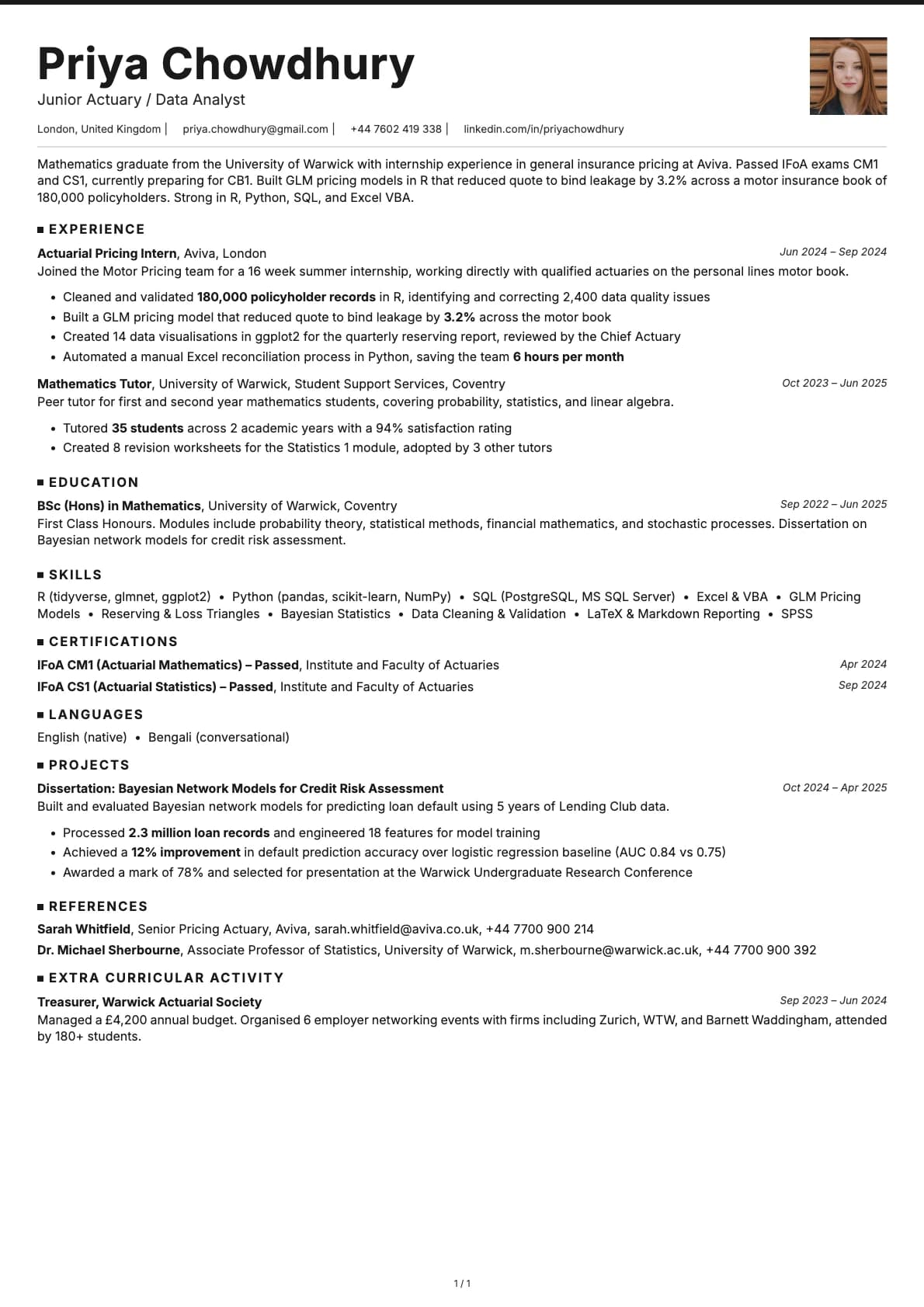
Junior Actuary / Data Analyst
A junior actuary resume example for maths graduates, showing how to present actuarial exams, R and Python skills, and quantitative analysis experience.
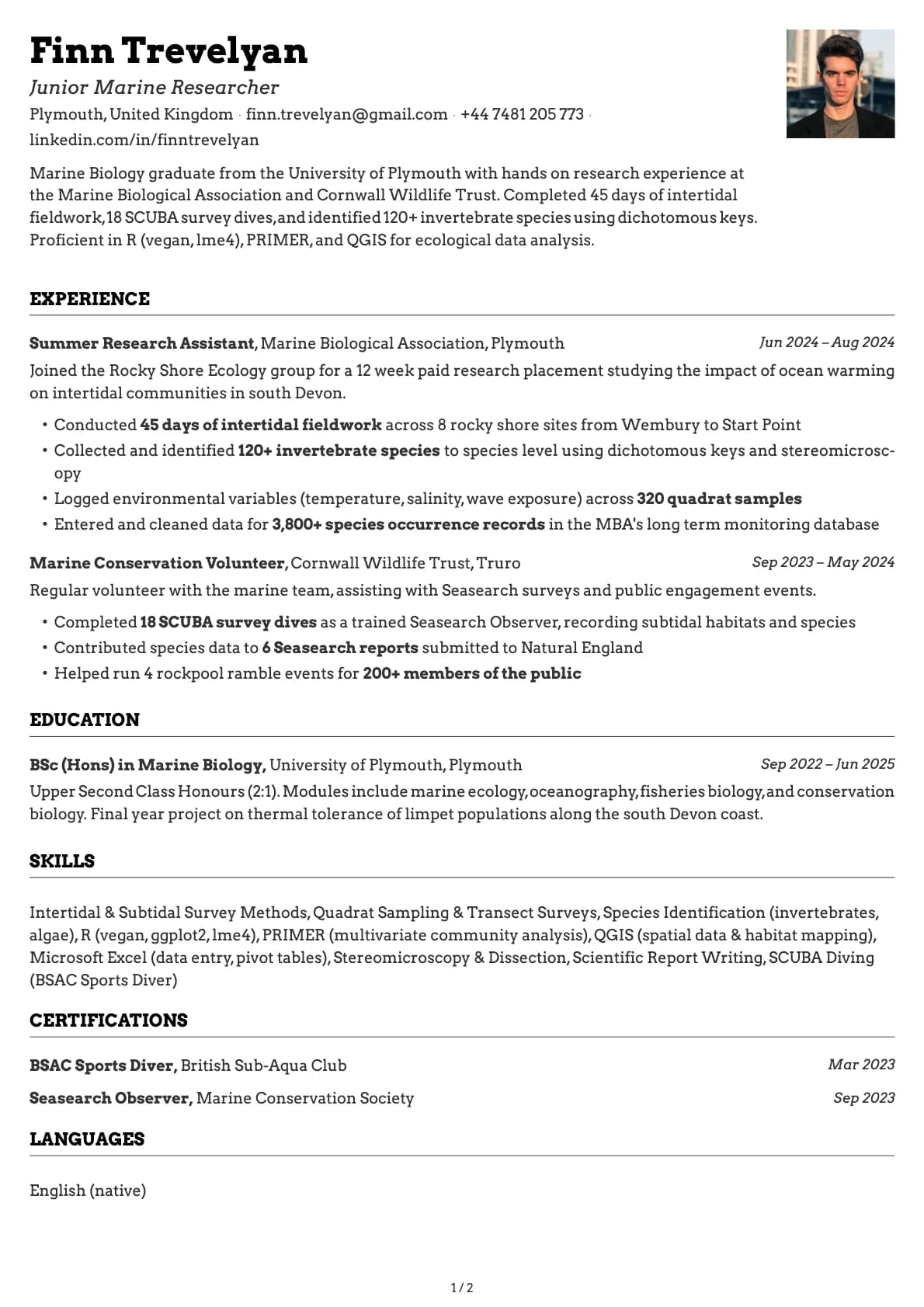
Junior Marine Researcher
A junior marine researcher resume example for marine biology graduates, covering fieldwork, species surveys, and data collection techniques.
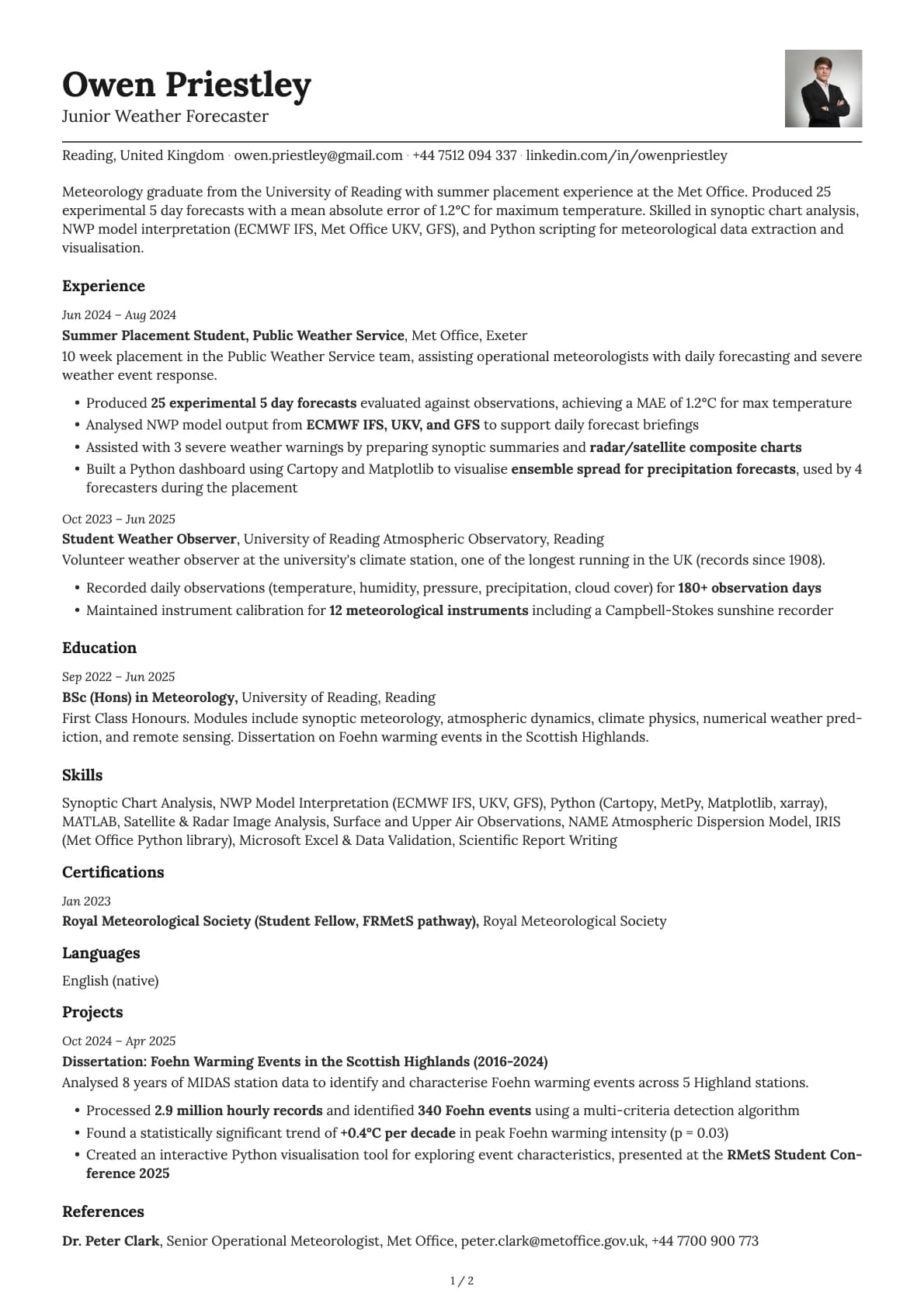
Junior Weather Forecaster
A junior weather forecaster resume example for meteorology graduates, showing how to present NWP models, synoptic analysis, and forecasting tools.
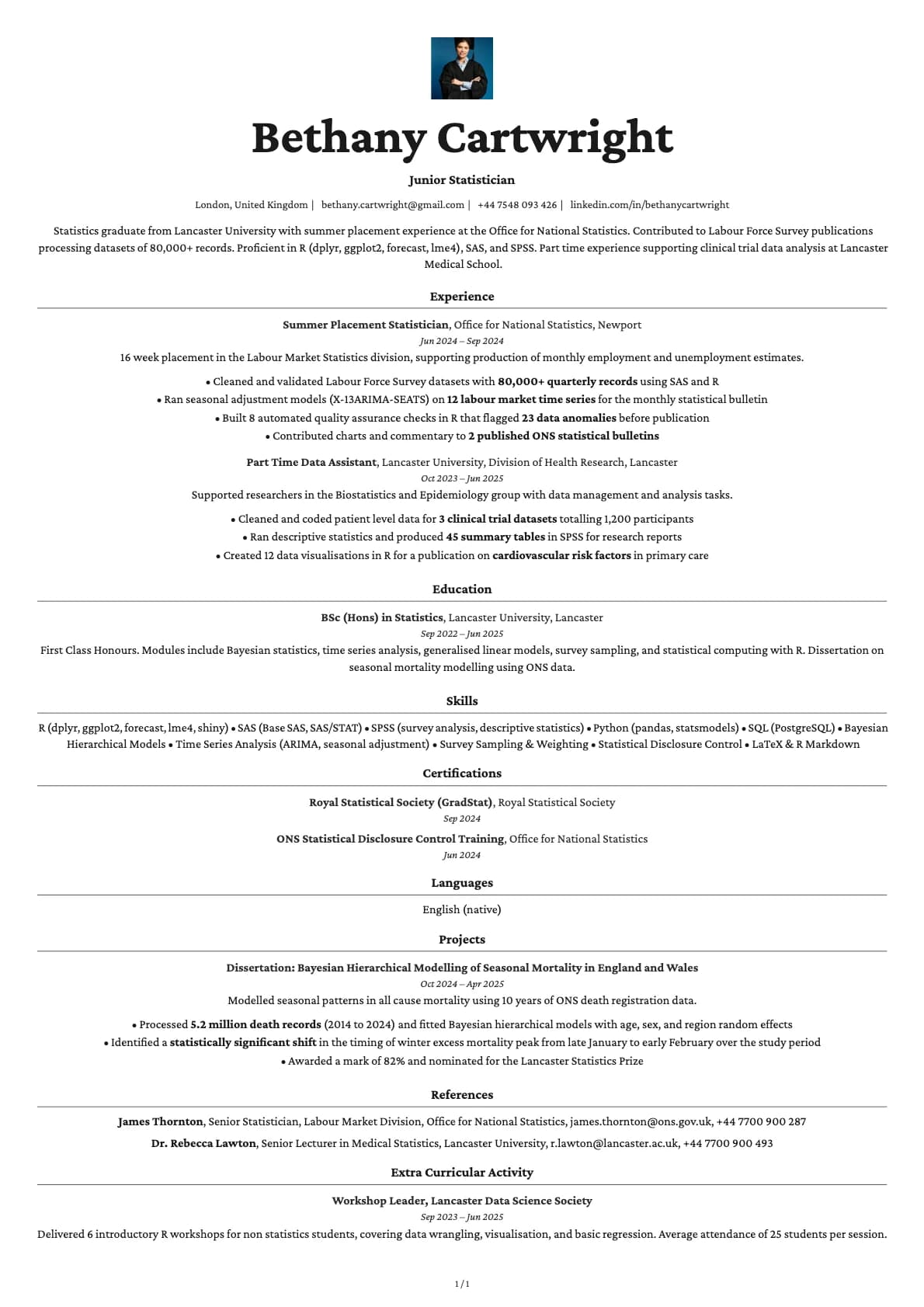
Junior Statistician
A junior statistician resume example for statistics graduates, showing how to present R, SPSS, SAS experience, and government or health statistics work.
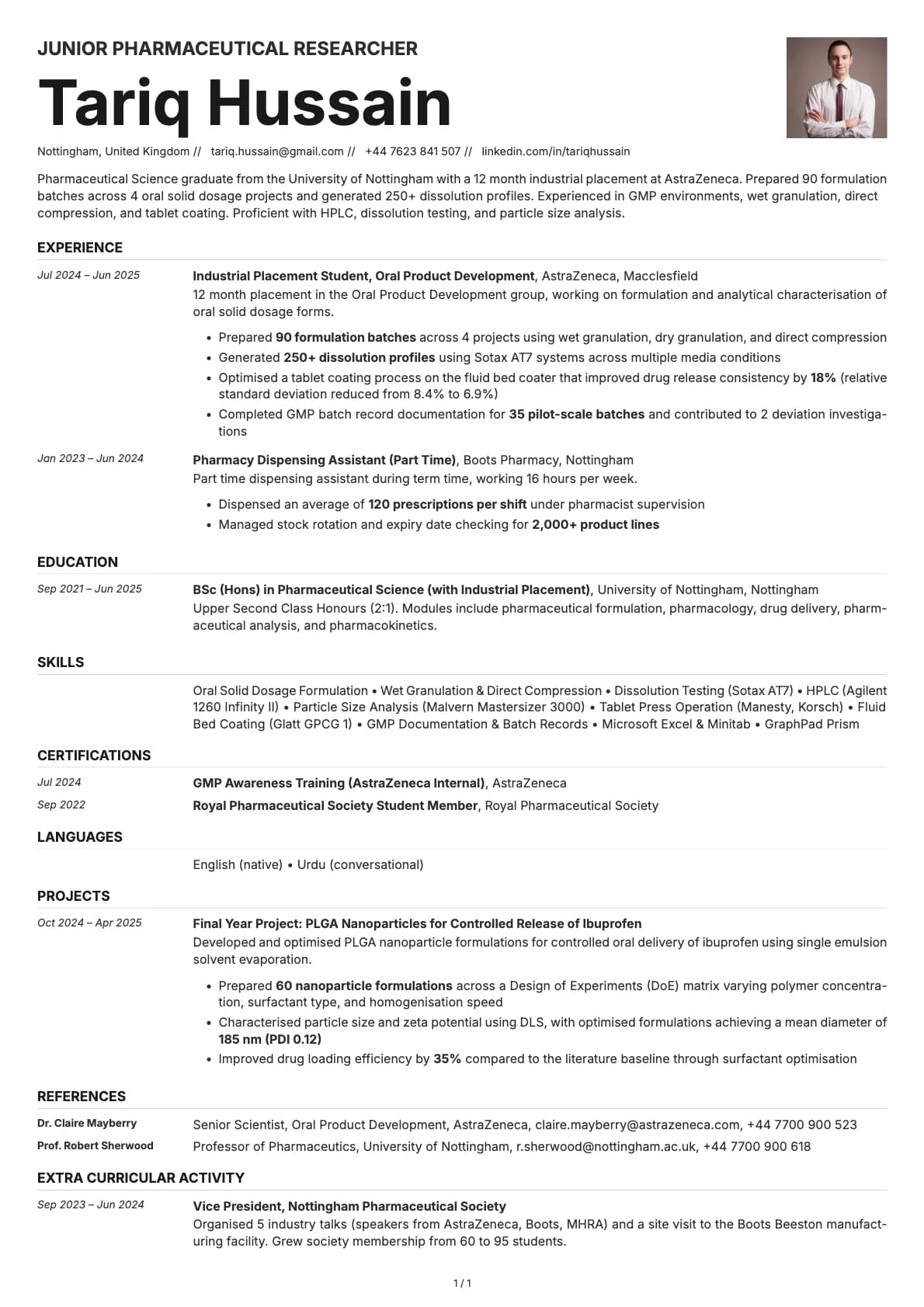
Junior Pharmaceutical Researcher
A junior pharmaceutical researcher resume example for pharmaceutical science graduates, showing formulation work, dissolution testing, and GMP experience.