Junior Actuary / Data Analyst Resume Example
A junior actuary resume example for maths graduates, showing how to present actuarial exams, R and Python skills, and quantitative analysis experience.

Laddro Team
Free to use. No account needed to start.
Free to use. No account needed to start.
Overview
Actuarial graduate resumes all look the same. They list "CT1 passed" and "strong numeracy skills" and hope that an employer will fill in the blanks. The problem is that every maths graduate applying for these roles has strong numeracy skills. That is the baseline, not a differentiator.
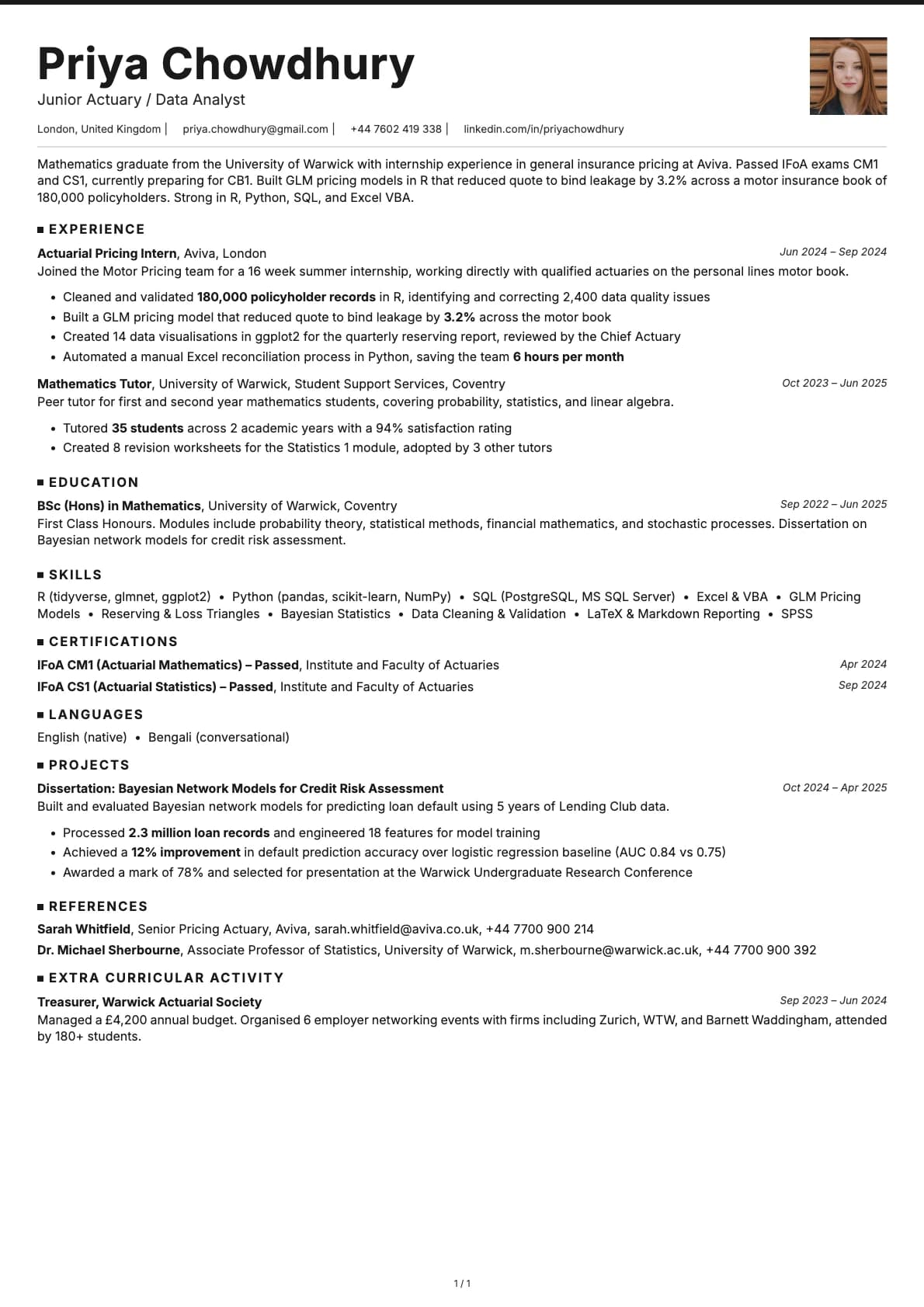
This resume belongs to Priya, a Mathematics BSc graduate from the University of Warwick who interned at Aviva's pricing team and has passed two IFoA exams (CM1 and CS1). What makes her resume work is that she translates her mathematical skills into business language. Instead of "performed statistical analysis," she writes "built a GLM pricing model that reduced quote to bind leakage by 3.2% across the motor book."
That is the difference between sounding like a student and sounding like someone who can do the job.
Actuarial exams belong in a prominent position
Hiring managers for actuarial roles scan for exam progress before anything else. If you have passed one or more IFoA or IFOA exams, list them in your certifications section with the date passed. If you are sitting an exam soon, include it with "Sitting [month] 2026" so they know you are progressing through the qualification.
Priya lists CM1 and CS1 as passed, with CB1 scheduled. That tells the employer she is on track and self motivated about the qualification pathway.
Internship experience with numbers
For actuarial and data analyst roles, your internship is where you prove you can work with real data at scale. Priya's Aviva internship shows she worked with a motor insurance book, built pricing models in R, and quantified her impact in pounds.
"Cleaned and validated 180,000 policyholder records" shows she can handle messy real world data. "Reduced quote to bind leakage by 3.2%" shows she understands the business outcome. These details matter far more than listing R and Python in your skills section.
University projects as proof of analytical thinking
Your dissertation or final year project is your chance to demonstrate independent quantitative research. Priya's project on Bayesian network models for credit risk shows advanced methodology, a real dataset (5 years of Lending Club data, 2.3 million records), and a clear finding (12% improvement in default prediction accuracy over logistic regression).
A hiring manager reading this knows she can scope a problem, choose appropriate methods, work with large datasets, and evaluate results. That is exactly what a junior actuary does on day one.
Software skills: be specific about what you built
"R" on its own tells the reader nothing. "R (tidyverse, glmnet, ggplot2)" tells them you do data wrangling, modelling, and visualisation. Priya also lists Python with pandas and scikit-learn, SQL, and Excel VBA. Each tool is paired with context so the reader knows what kind of work she used it for.
Build your own version
Open this layout in the builder and swap in your own details. It takes a few minutes.
Free to use. No account needed to start.
Was this resume example helpful?
Rate this example to help us create better content for you.
4.8 average from 147 ratingsRelated resume examples
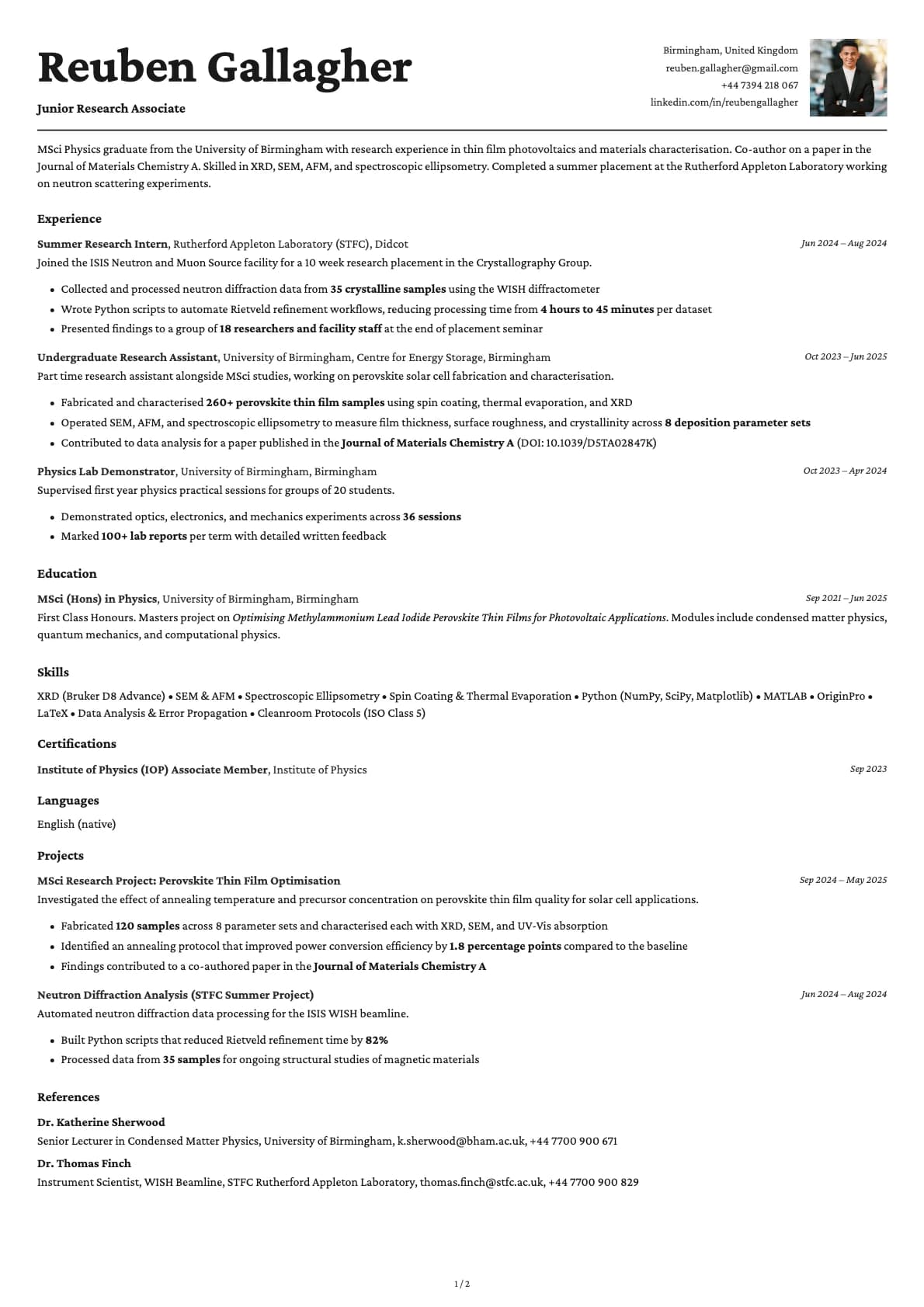
Junior Research Associate
A junior research associate resume example for physics MSci graduates, showing how to present lab research, publications, and technical skills.
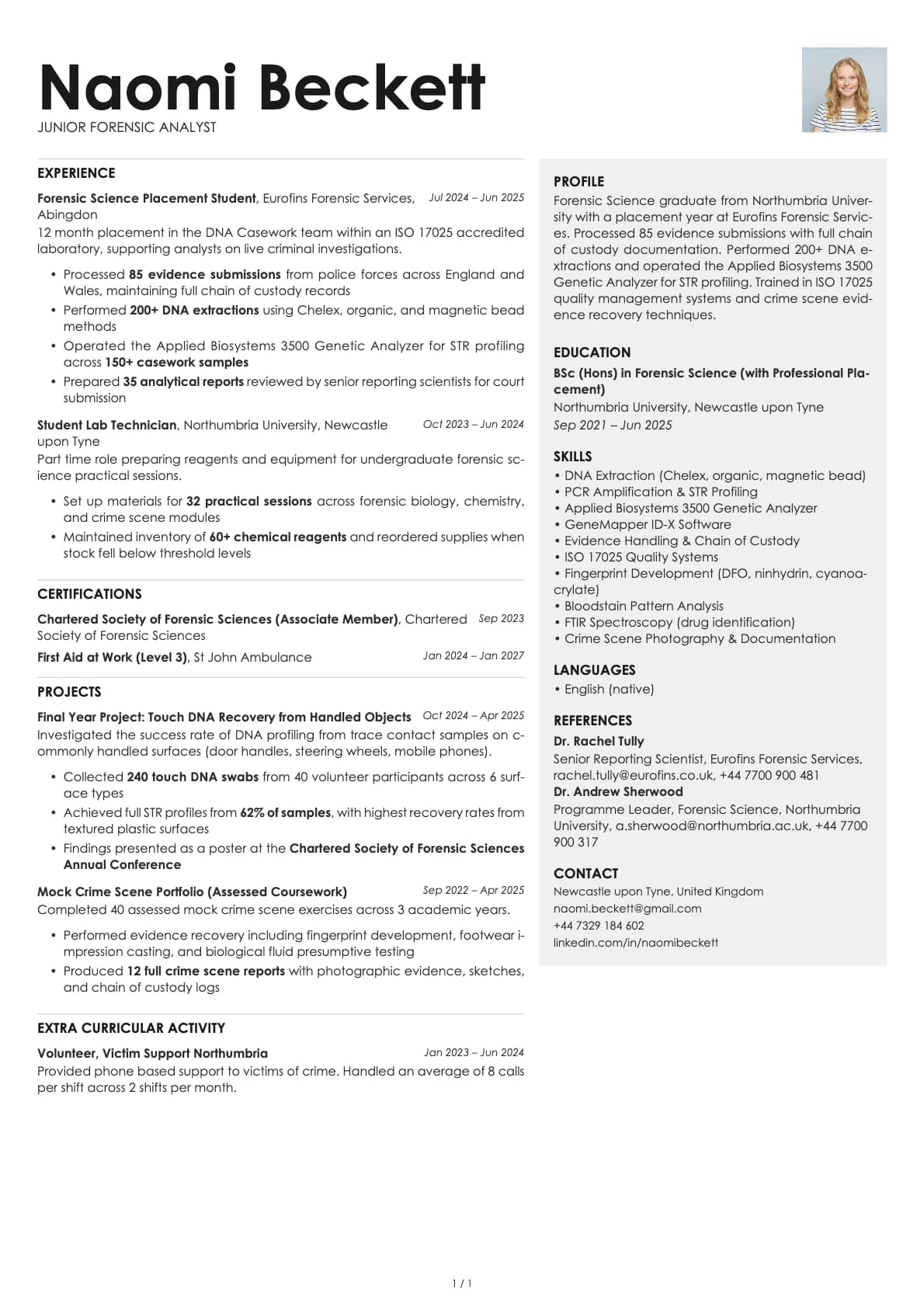
Junior Forensic Analyst
A junior forensic analyst resume example for forensic science graduates, showing how to present lab techniques, chain of custody, and casework experience.
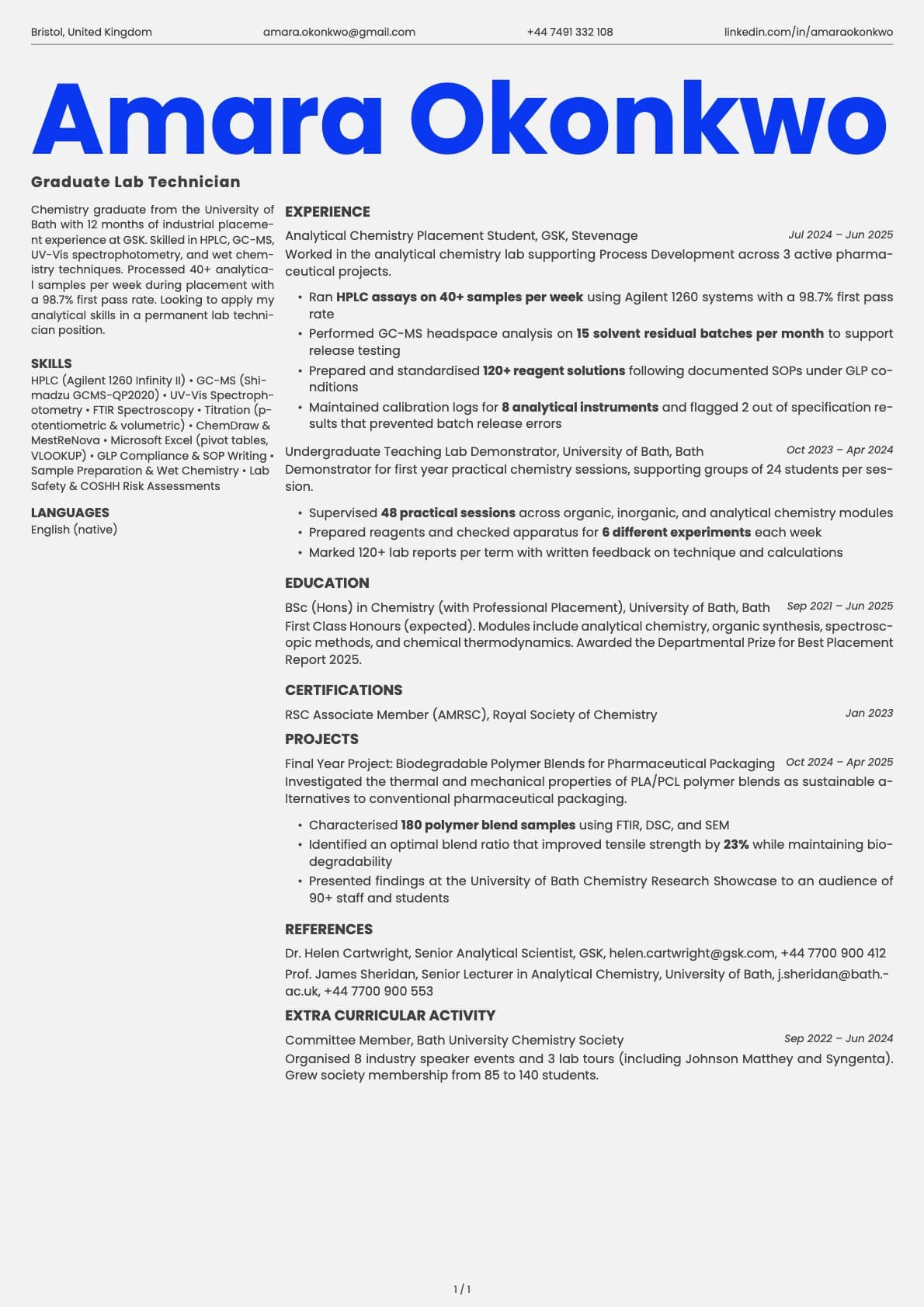
Graduate Lab Technician
A graduate lab technician resume example showing how to present your chemistry BSc, lab skills, and analytical techniques to land your first lab role.
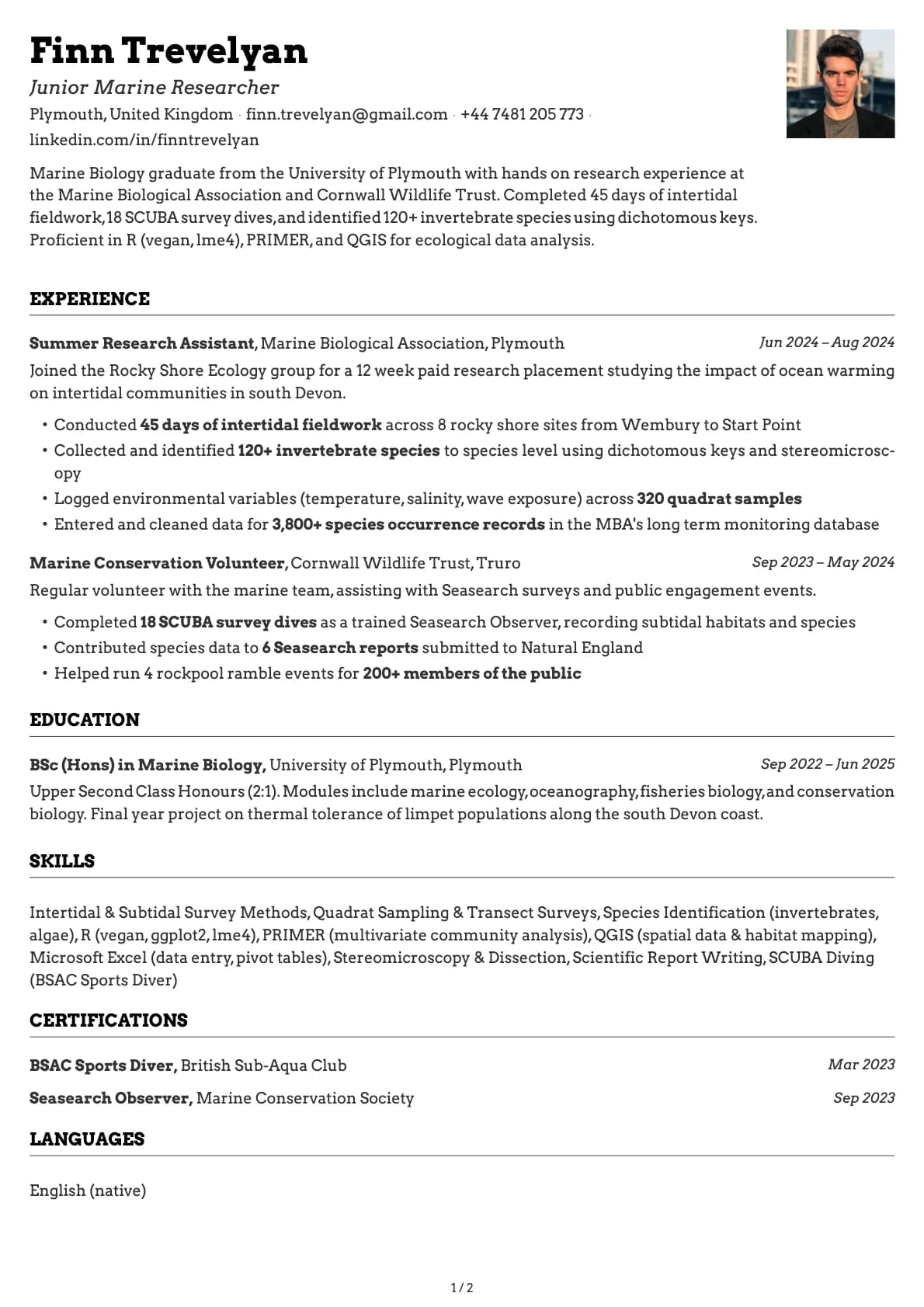
Junior Marine Researcher
A junior marine researcher resume example for marine biology graduates, covering fieldwork, species surveys, and data collection techniques.
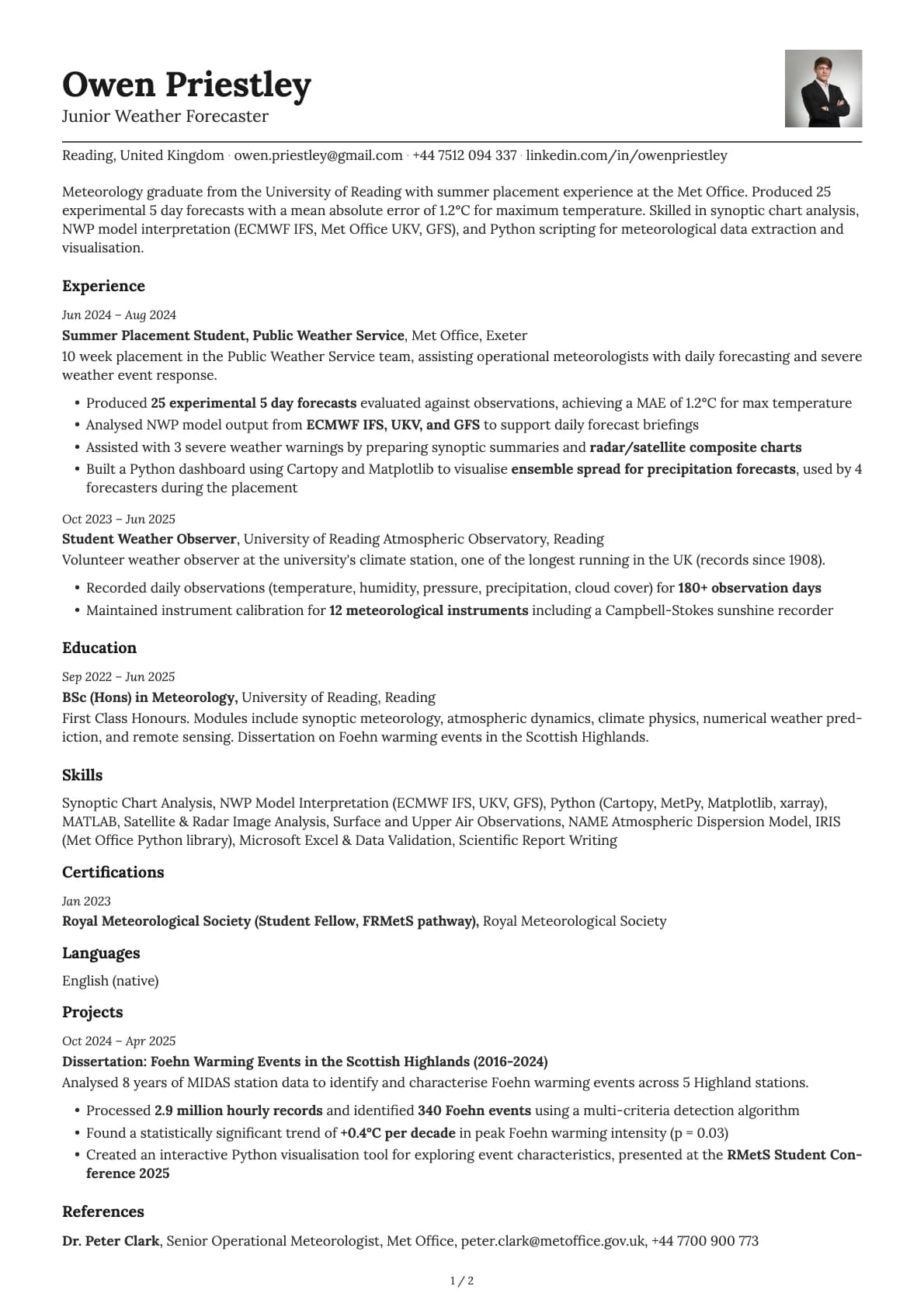
Junior Weather Forecaster
A junior weather forecaster resume example for meteorology graduates, showing how to present NWP models, synoptic analysis, and forecasting tools.
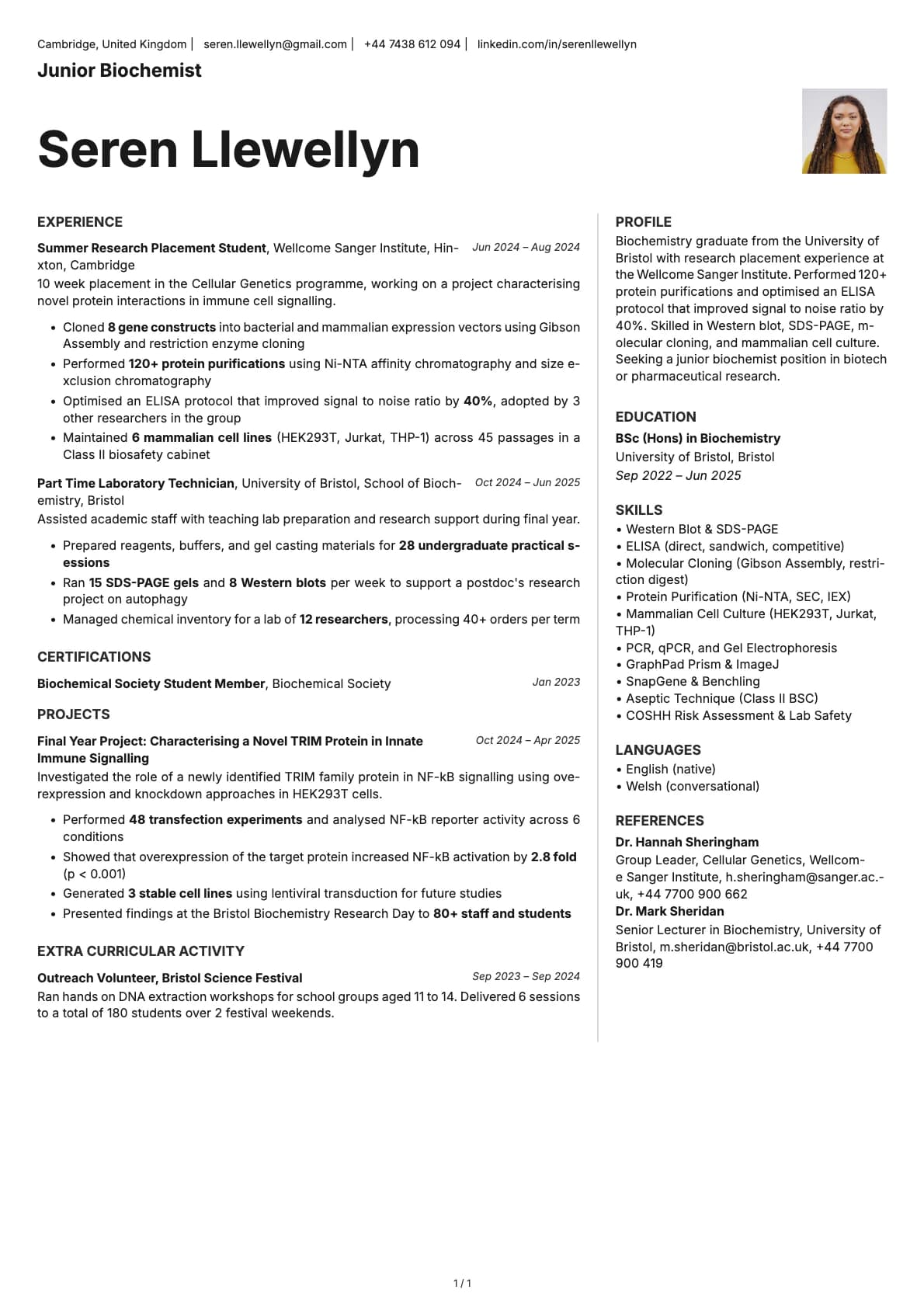
Junior Biochemist
A junior biochemist resume example for biochemistry graduates, covering protein assays, cell culture, and molecular biology techniques.
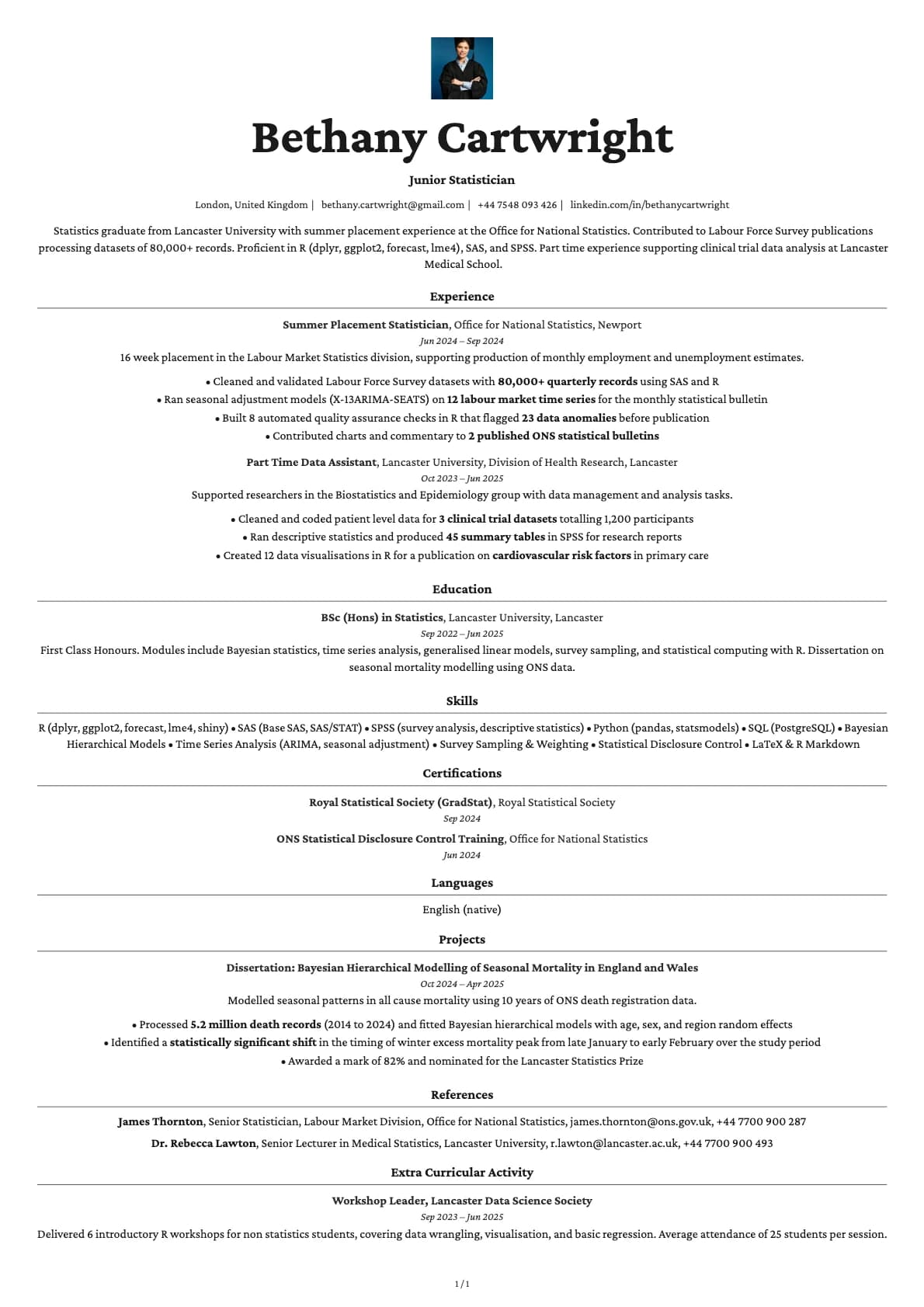
Junior Statistician
A junior statistician resume example for statistics graduates, showing how to present R, SPSS, SAS experience, and government or health statistics work.
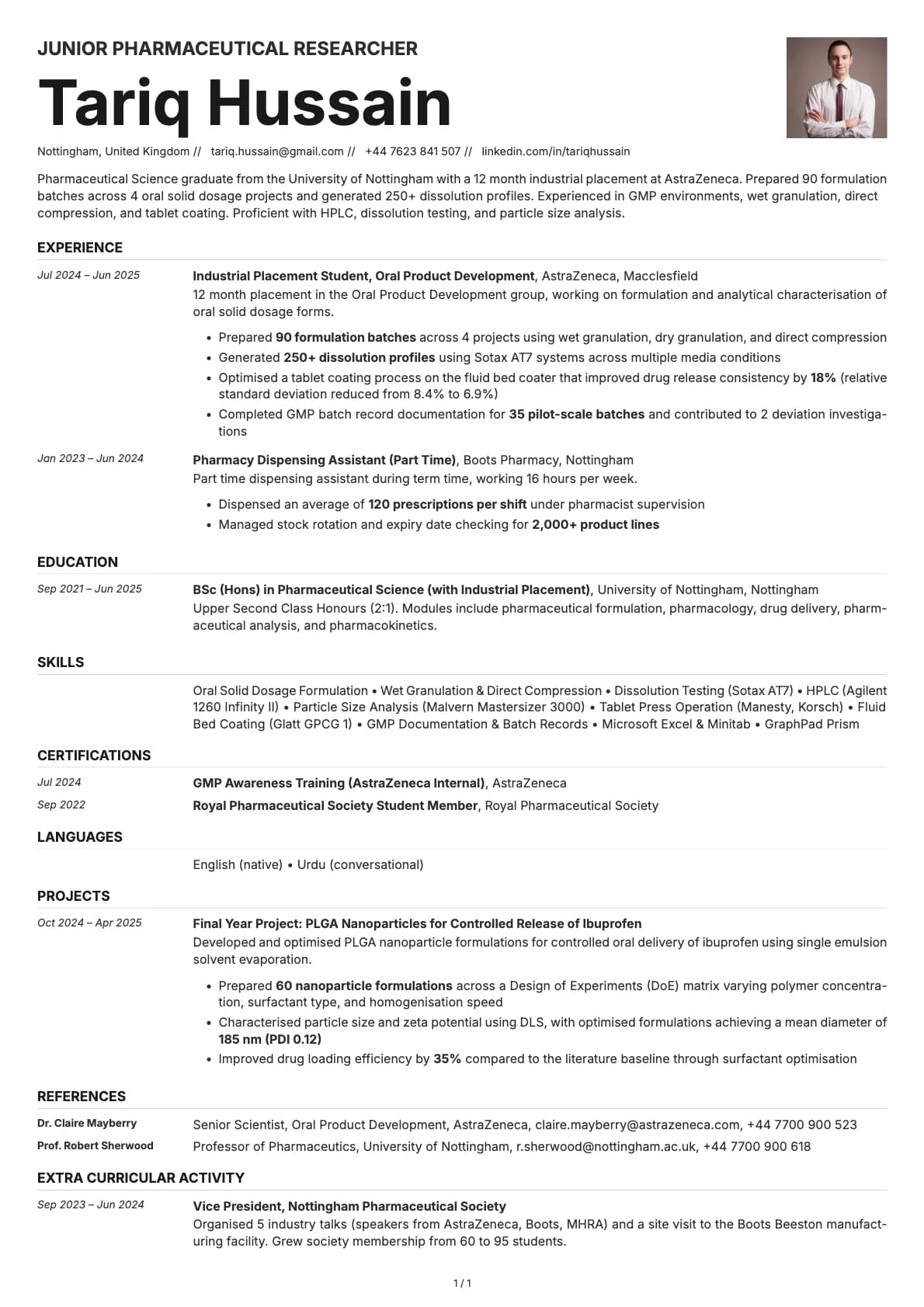
Junior Pharmaceutical Researcher
A junior pharmaceutical researcher resume example for pharmaceutical science graduates, showing formulation work, dissolution testing, and GMP experience.