Junior Forensic Analyst Resume Example
A junior forensic analyst resume example for forensic science graduates, showing how to present lab techniques, chain of custody, and casework experience.

Laddro Team
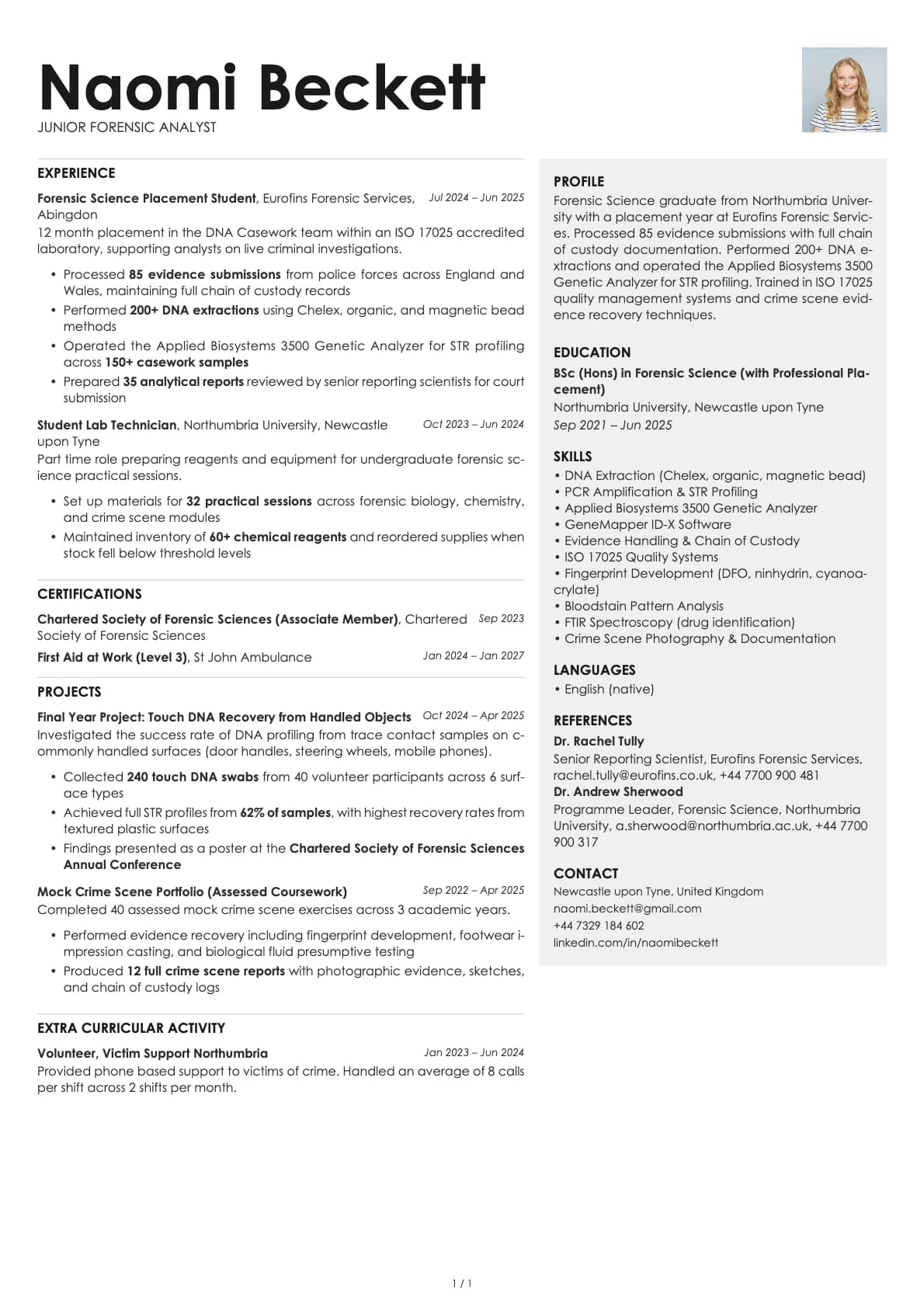
Free to use. No account needed to start.
Free to use. No account needed to start.
Overview
Forensic science is a field where precision is not optional. One contaminated sample, one broken chain of custody, and an entire case can collapse. Hiring managers know this, which is why forensic analyst resumes that talk about "attention to detail" without evidence are immediately unconvincing.
This resume belongs to Naomi, a Forensic Science BSc graduate from Northumbria University who completed a placement year at Eurofins Forensic Services. Her resume works because it reads like a log of actual casework: 85 evidence submissions processed, 200+ DNA extractions performed, 40 mock crime scene assessments completed. Every bullet proves she has done the work, not just studied the theory.
Placement experience in an accredited lab
For forensic analyst roles, a placement in an ISO 17025 accredited lab is the strongest thing you can put on your resume. Naomi's year at Eurofins gave her exposure to real casework pipelines: evidence intake, DNA extraction, PCR amplification, and STR profiling. She names the specific instruments (Applied Biosystems 3500 Genetic Analyzer) and quantifies the volume of work she handled.
If your placement was in a police forensic unit, a private forensic lab, or a toxicology facility, the same principle applies. Name the accreditation standard, the instruments, and the sample volumes.
Chain of custody and quality systems
Forensic labs operate under strict quality management. If you have experience with chain of custody documentation, evidence handling protocols, or ISO 17025 compliance, say so explicitly. These are not soft skills. They are hard requirements for any forensic analyst position.
Naomi's resume mentions processing 85 evidence submissions with full chain of custody documentation. That single bullet tells the hiring manager she understands the legal weight of her work.
Mock crime scenes and practical assessments
Most forensic science degrees include mock crime scene modules. Do not dismiss these as "just coursework." A well described mock crime scene assessment shows you can apply theory under simulated pressure. Naomi completed 40 mock crime scene assessments across her degree, including bloodstain pattern analysis, footwear impression recovery, and fingerprint development.
Software and analytical instruments
List your instruments by manufacturer and model where possible. For forensic roles, common instruments include the Applied Biosystems 3500, Agilent 7890 GC, and various FTIR spectrometers. For software, mention any LIMS systems, GeneMapper, or STRmix that you have used.
Build your own version
Open this layout in the builder and swap in your own details. It takes a few minutes.
Free to use. No account needed to start.
Was this resume example helpful?
Rate this example to help us create better content for you.
4.7 average from 112 ratingsRelated resume examples
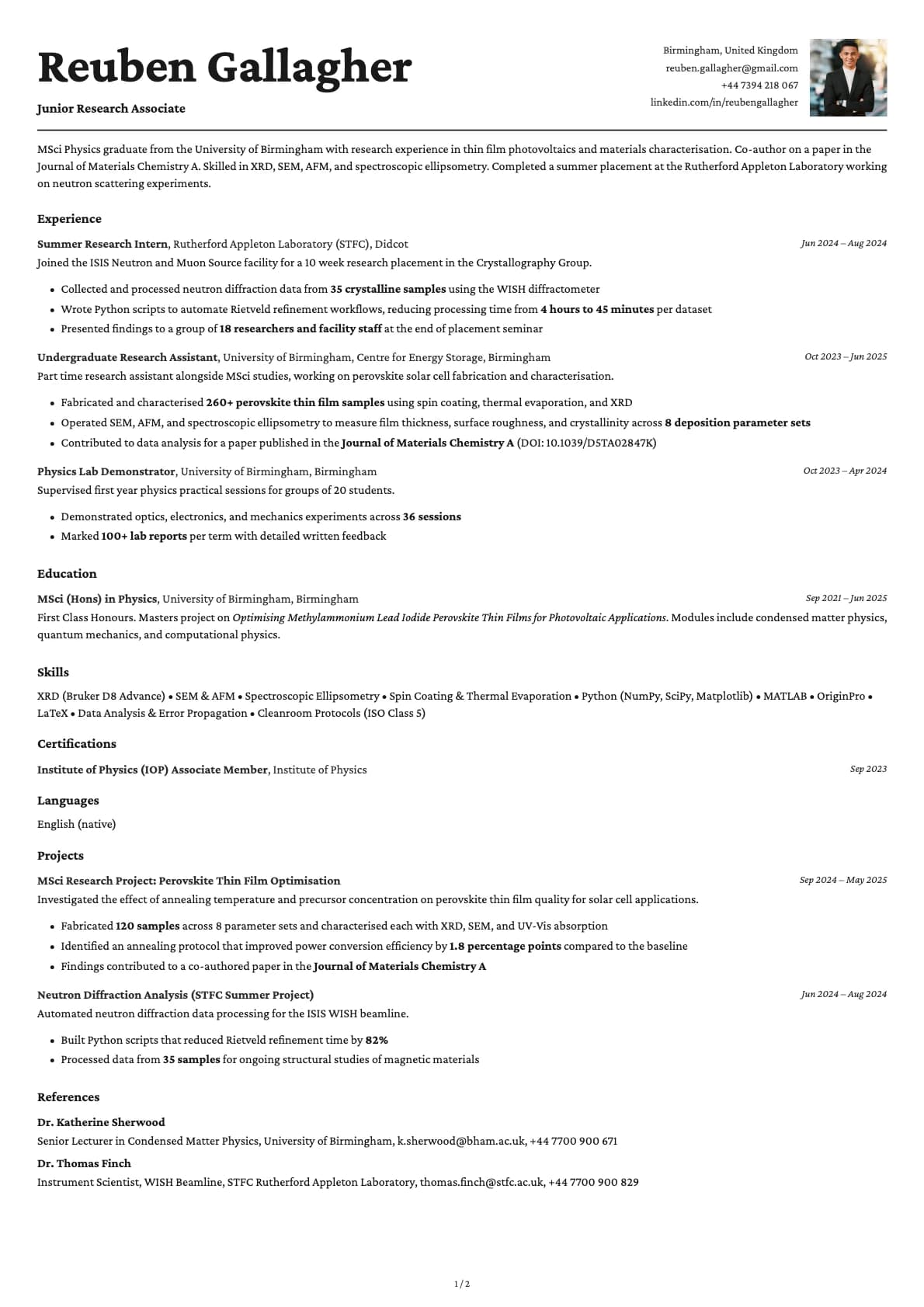
Junior Research Associate
A junior research associate resume example for physics MSci graduates, showing how to present lab research, publications, and technical skills.
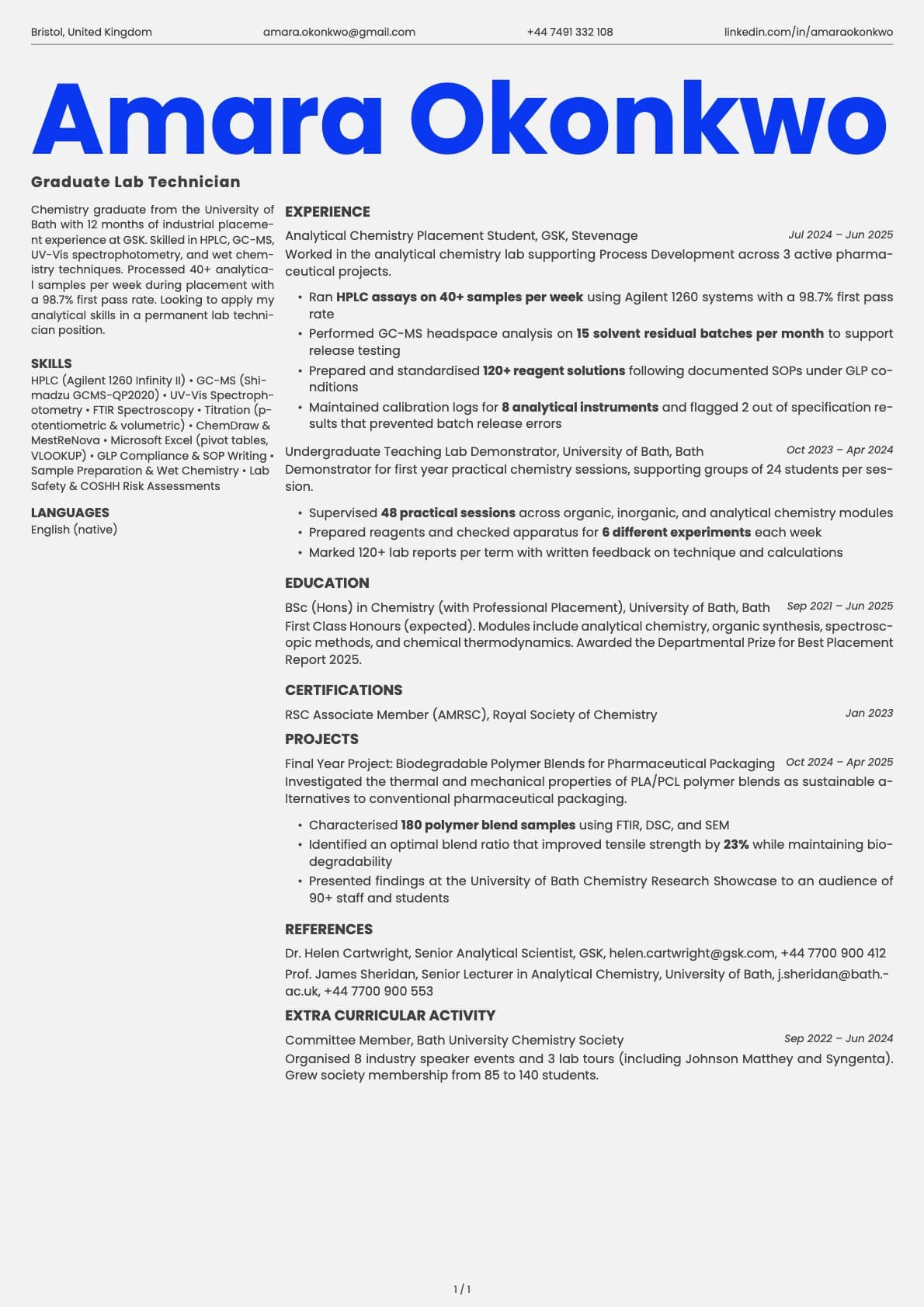
Graduate Lab Technician
A graduate lab technician resume example showing how to present your chemistry BSc, lab skills, and analytical techniques to land your first lab role.
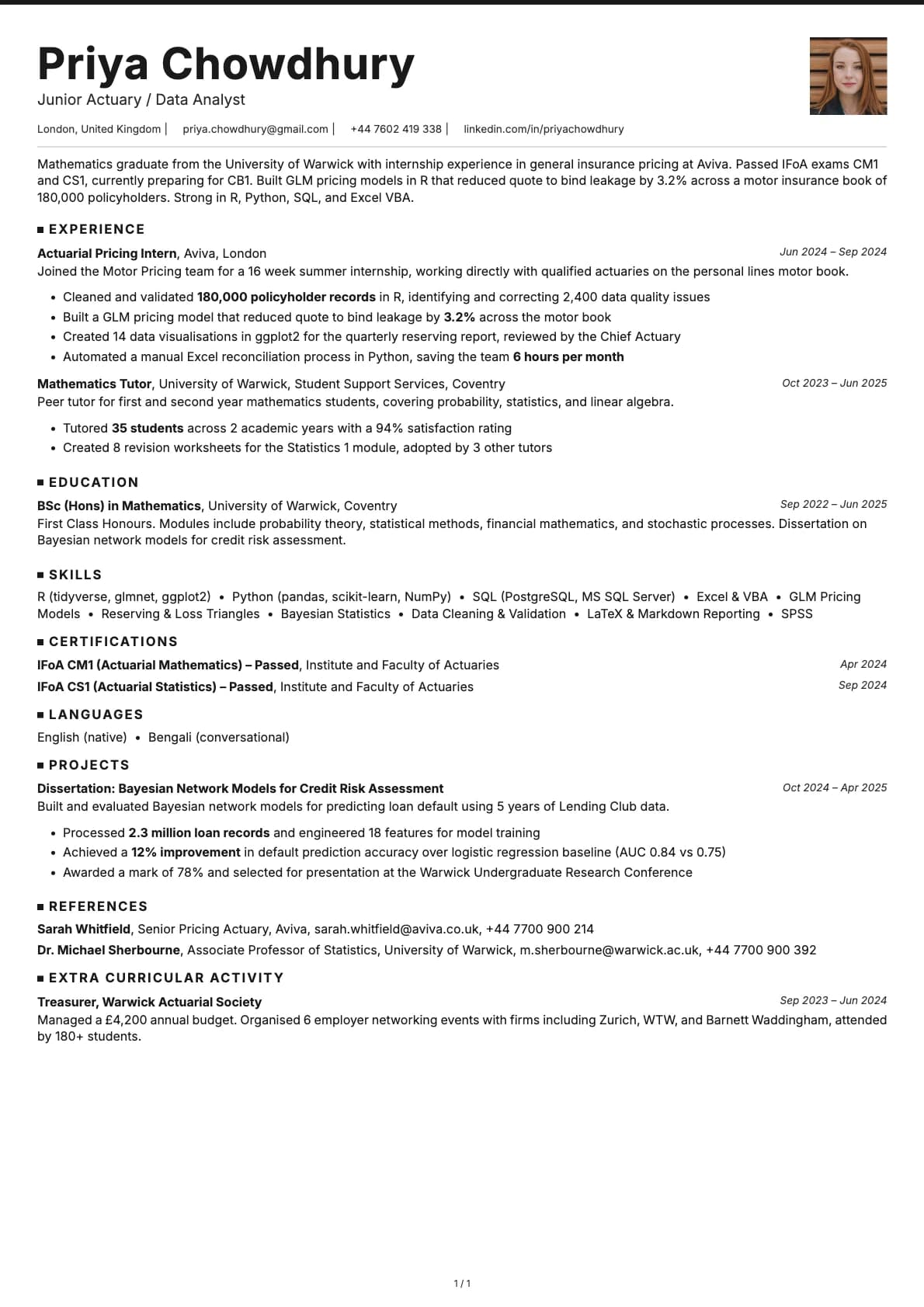
Junior Actuary / Data Analyst
A junior actuary resume example for maths graduates, showing how to present actuarial exams, R and Python skills, and quantitative analysis experience.
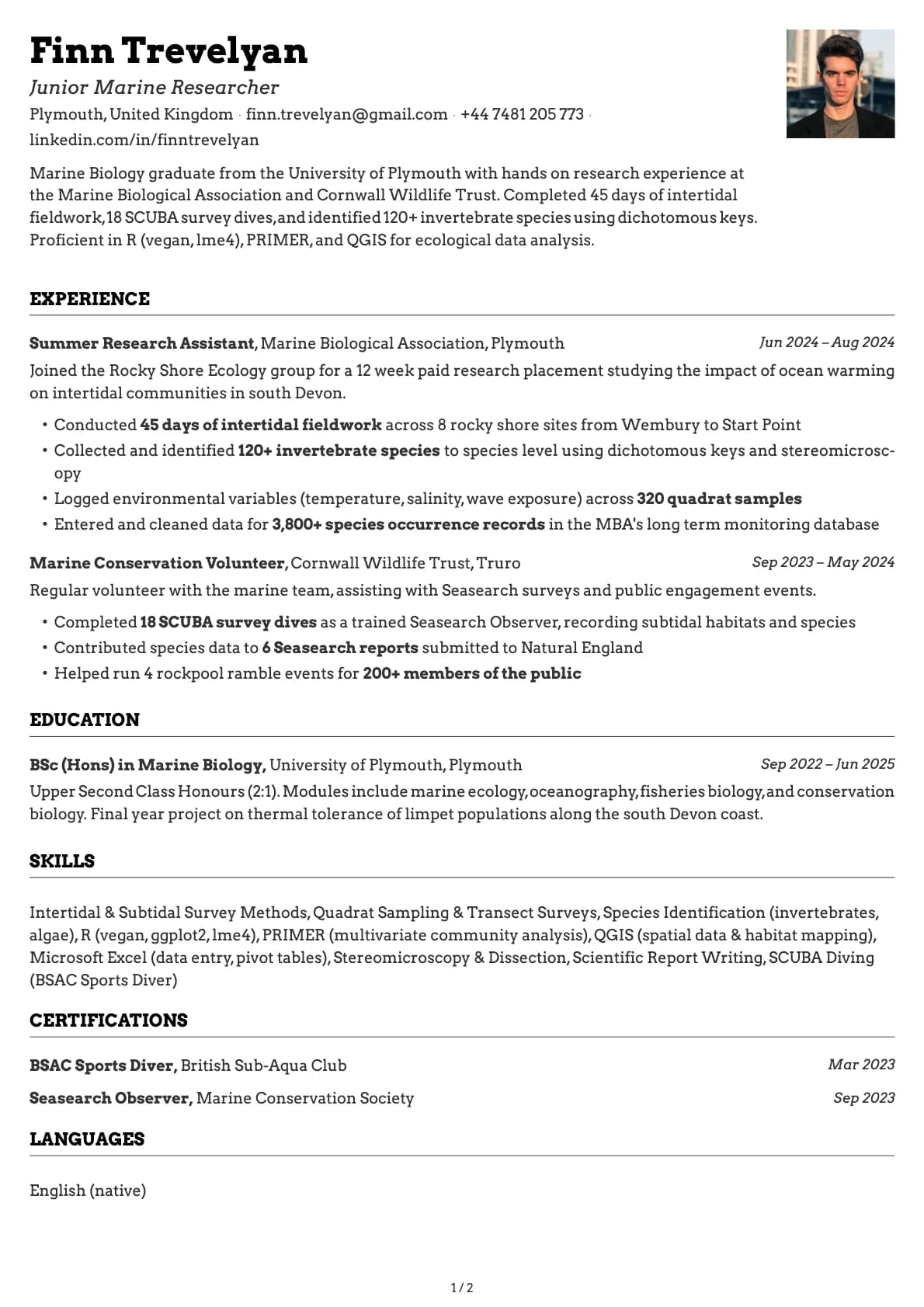
Junior Marine Researcher
A junior marine researcher resume example for marine biology graduates, covering fieldwork, species surveys, and data collection techniques.
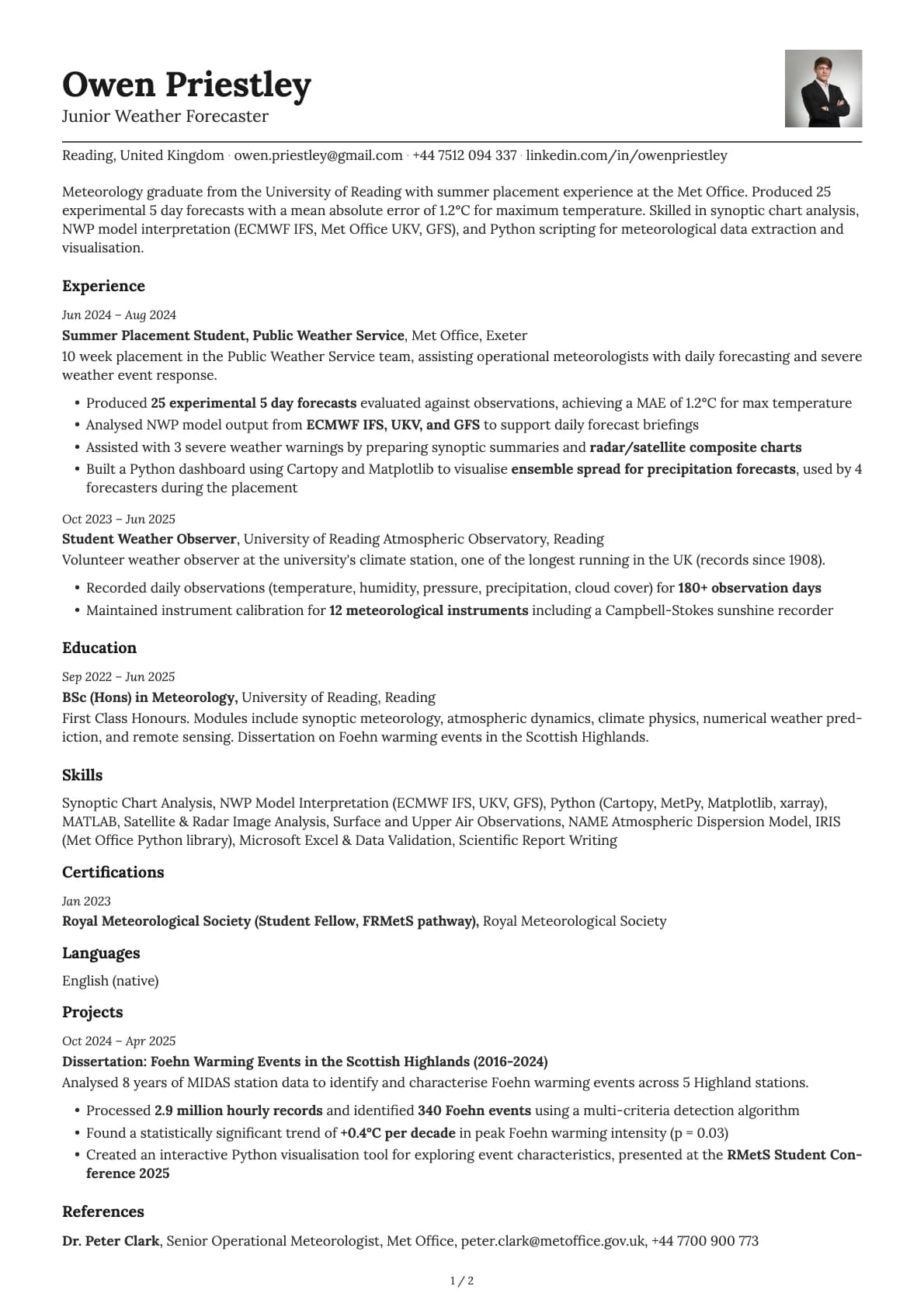
Junior Weather Forecaster
A junior weather forecaster resume example for meteorology graduates, showing how to present NWP models, synoptic analysis, and forecasting tools.
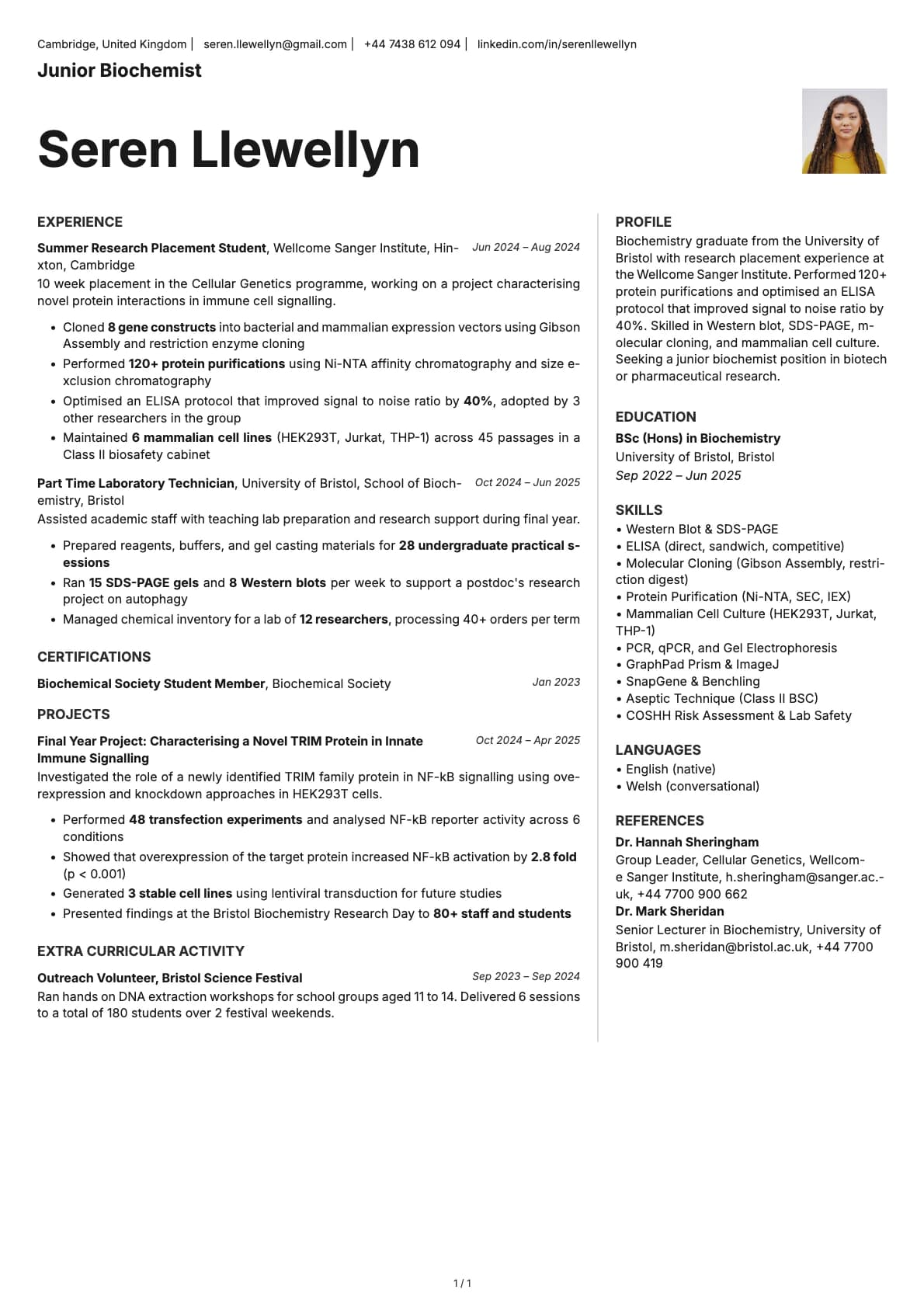
Junior Biochemist
A junior biochemist resume example for biochemistry graduates, covering protein assays, cell culture, and molecular biology techniques.
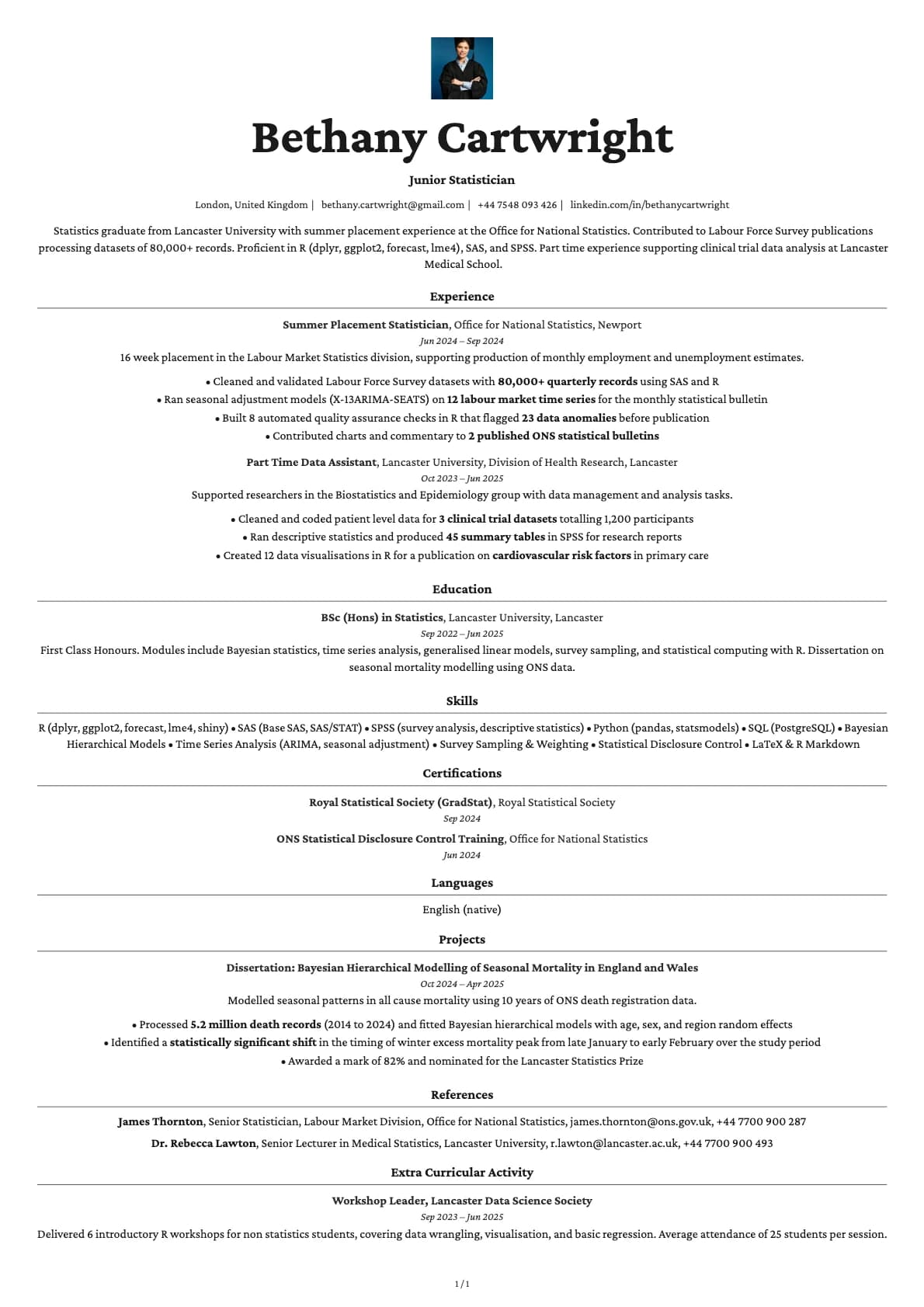
Junior Statistician
A junior statistician resume example for statistics graduates, showing how to present R, SPSS, SAS experience, and government or health statistics work.
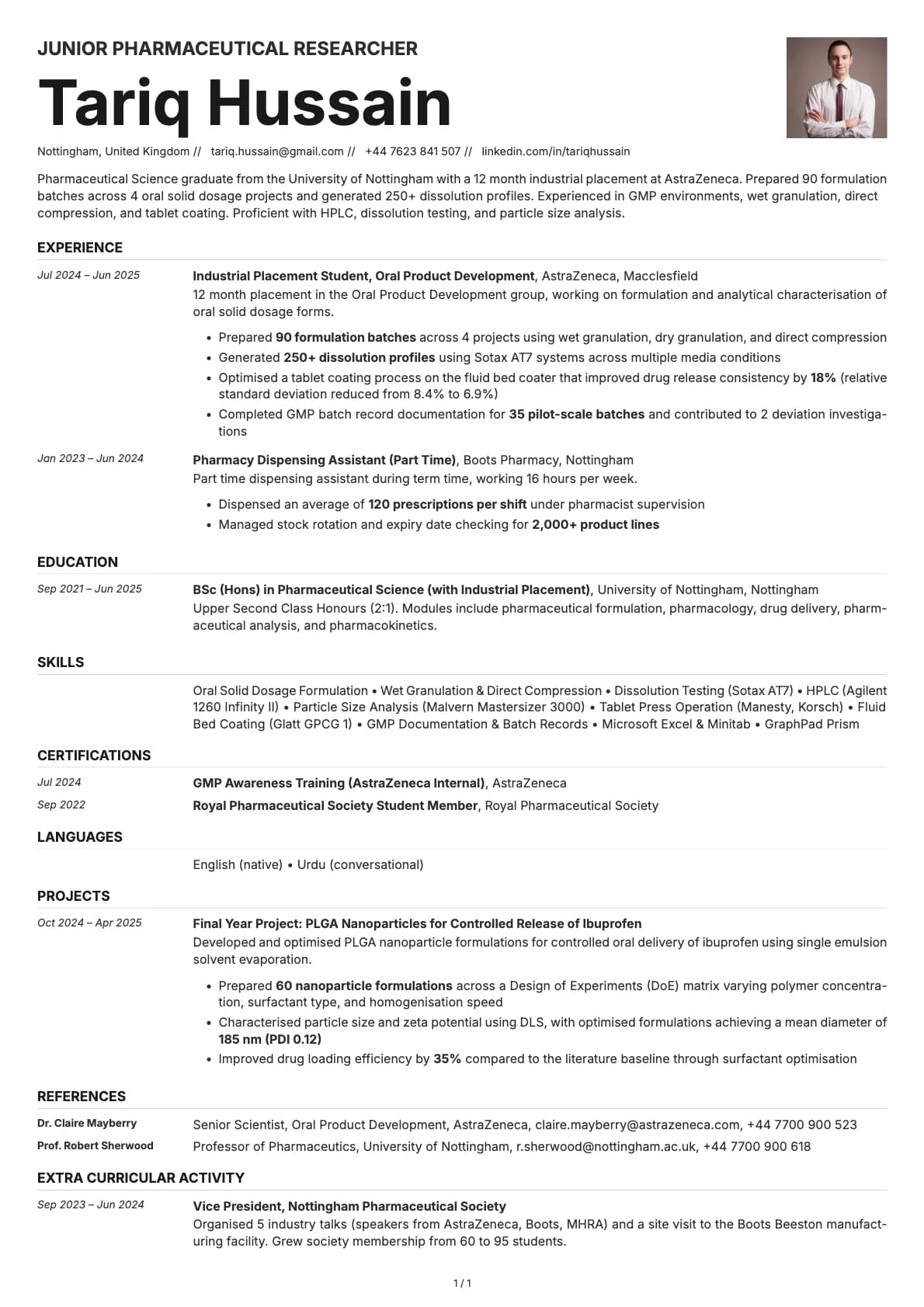
Junior Pharmaceutical Researcher
A junior pharmaceutical researcher resume example for pharmaceutical science graduates, showing formulation work, dissolution testing, and GMP experience.