Junior Statistician Resume Example
A junior statistician resume example for statistics graduates, showing how to present R, SPSS, SAS experience, and government or health statistics work.

Laddro Team
Free to use. No account needed to start.
Free to use. No account needed to start.
Overview
Statistics graduates have an unusual advantage in the UK job market: the Government Statistical Service (GSS) alone employs over 7,000 statisticians, and the NHS, ONS, Bank of England, and research councils all hire graduates with strong quantitative skills. The challenge is not finding roles. It is writing a resume that proves you can do applied statistics, not just pass exams about it.
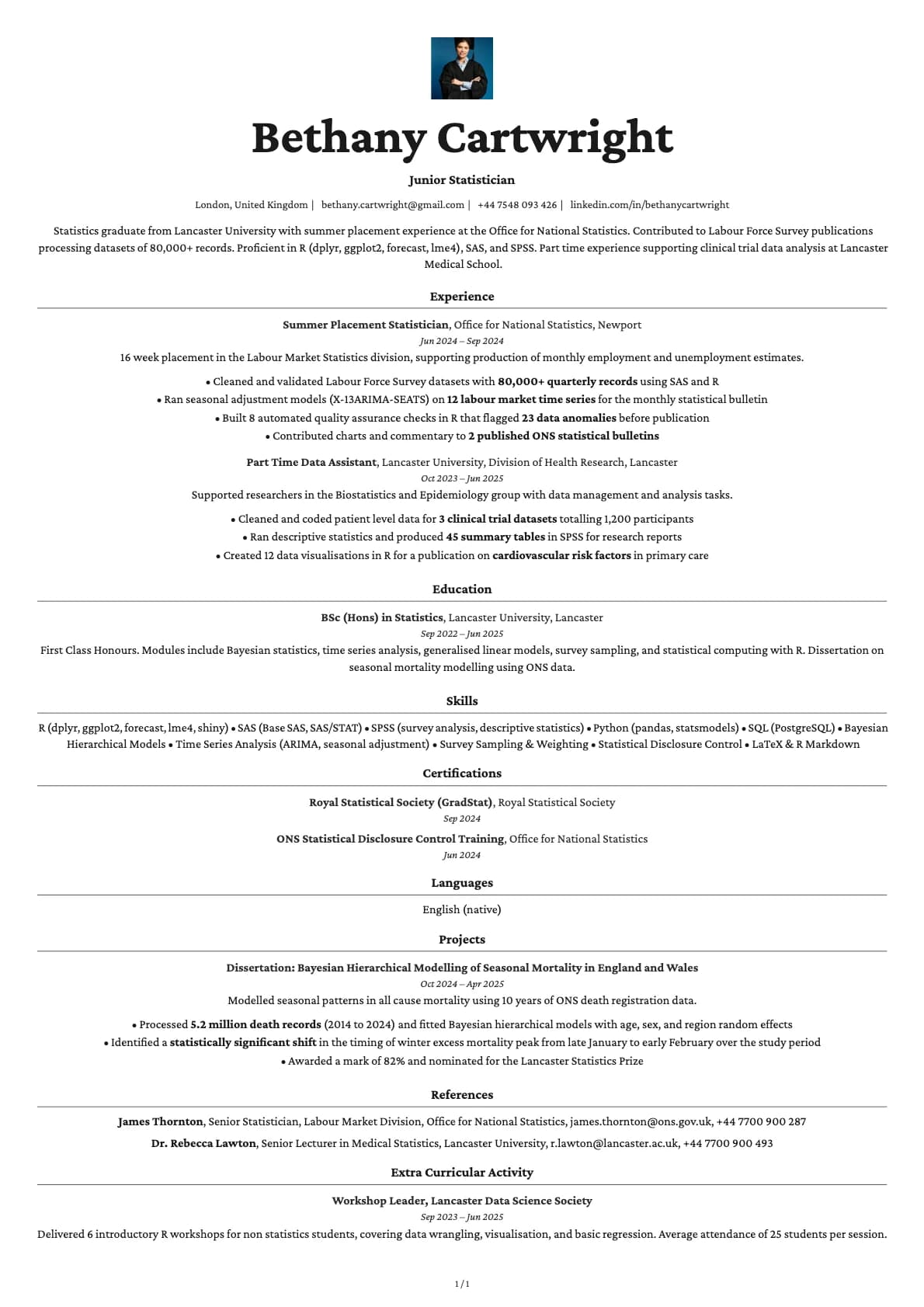
This resume belongs to Bethany, a Statistics BSc graduate from Lancaster University who completed a summer placement at the Office for National Statistics and worked part time as a data assistant at the Lancaster Medical School. Her resume works because every bullet connects a statistical method to a real dataset and a real outcome.
ONS and GSS placements
If you completed a placement at the ONS, a government department, or any part of the GSS, lead with it. The GSS is the largest employer of statisticians in the UK, and experience there signals you understand official statistics methodology, disclosure control, and publication cycles.
Bethany's ONS placement put her in the Labour Market Statistics team where she worked on the Labour Force Survey. She cleaned datasets with 80,000+ records, ran seasonal adjustment models, and contributed to a published statistical bulletin. That is exactly the kind of end to end statistical work that hiring managers look for.
Statistical software: depth over breadth
"R, SPSS, SAS, Stata, Python" as a flat list tells the reader nothing about your proficiency. Bethany's approach is better: she lists R with specific packages (dplyr, ggplot2, forecast, lme4), SAS for official statistics production, and SPSS for survey analysis. Each tool is paired with context.
For government roles, SAS and SPSS are still widely used alongside R. For private sector analytics roles, Python and SQL may be more relevant. Tailor your list to the role you are applying for.
Health statistics experience
Bethany's part time role at Lancaster Medical School gave her exposure to clinical trial data and health outcomes research. Working with patient level data, even in a support role, shows you understand the sensitivity and governance requirements that come with health statistics. If you have completed any information governance or data protection training, mention it.
Dissertation with real world data
A dissertation using real data is vastly more impressive than one using simulated data. Bethany's project used 10 years of England and Wales mortality data (5.2 million records) from the ONS to model seasonal mortality patterns using Bayesian hierarchical models. The combination of a large real dataset, an advanced method, and a clear finding (identifying a shift in the timing of winter excess mortality) makes this project a genuine portfolio piece.
Build your own version
Open this layout in the builder and swap in your own details. It takes a few minutes.
Free to use. No account needed to start.
Was this resume example helpful?
Rate this example to help us create better content for you.
4.8 average from 115 ratingsRelated resume examples
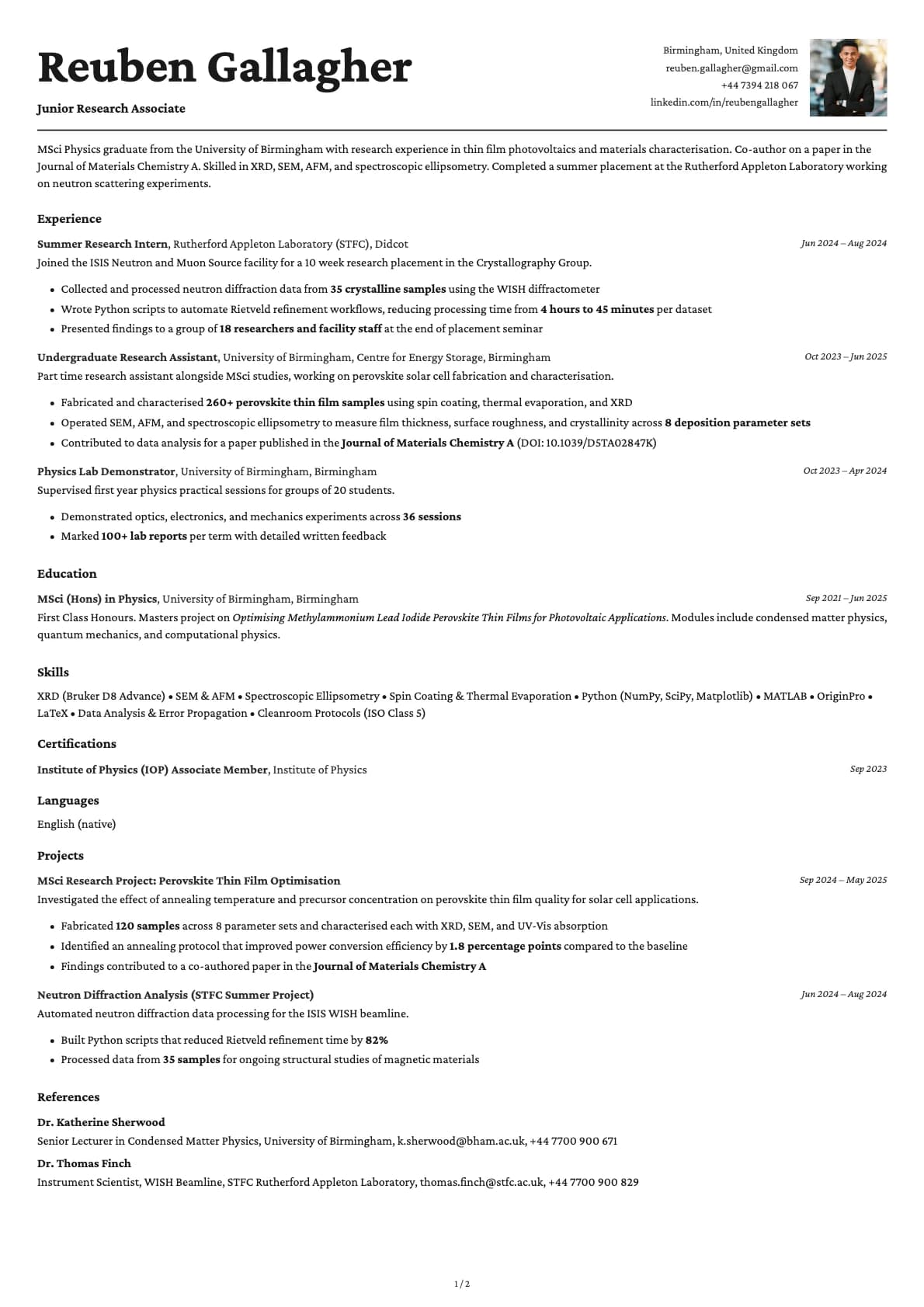
Junior Research Associate
A junior research associate resume example for physics MSci graduates, showing how to present lab research, publications, and technical skills.
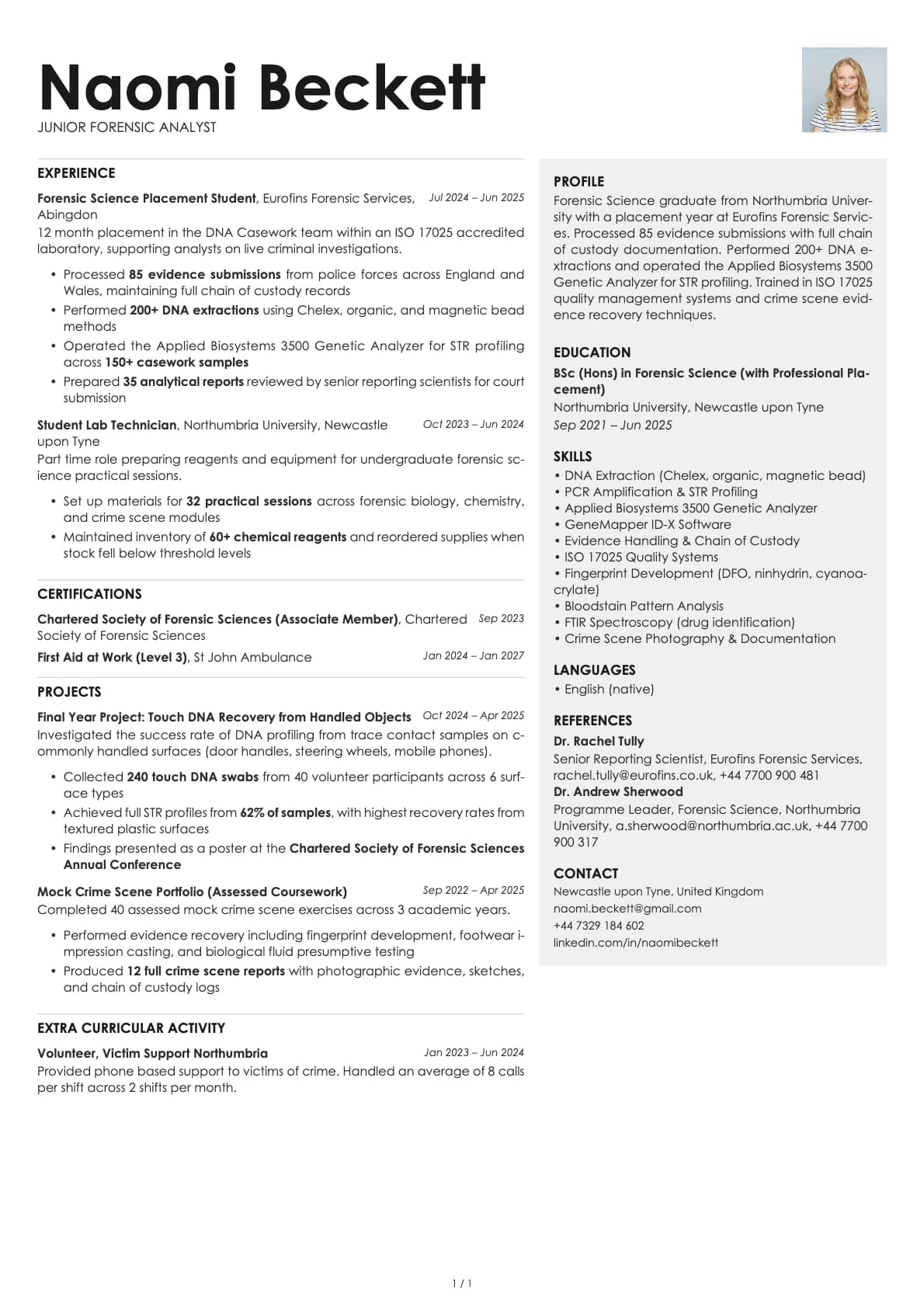
Junior Forensic Analyst
A junior forensic analyst resume example for forensic science graduates, showing how to present lab techniques, chain of custody, and casework experience.
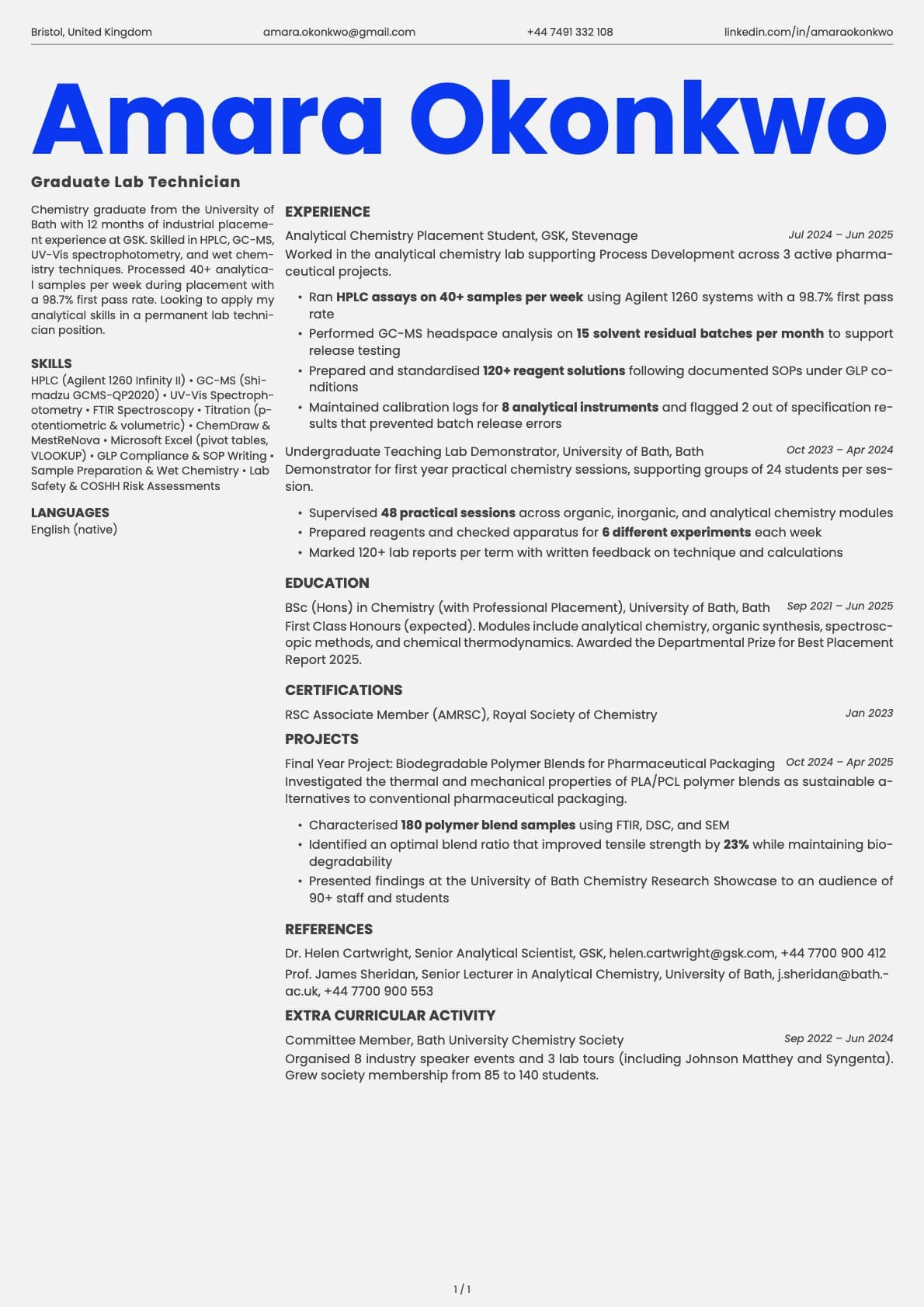
Graduate Lab Technician
A graduate lab technician resume example showing how to present your chemistry BSc, lab skills, and analytical techniques to land your first lab role.
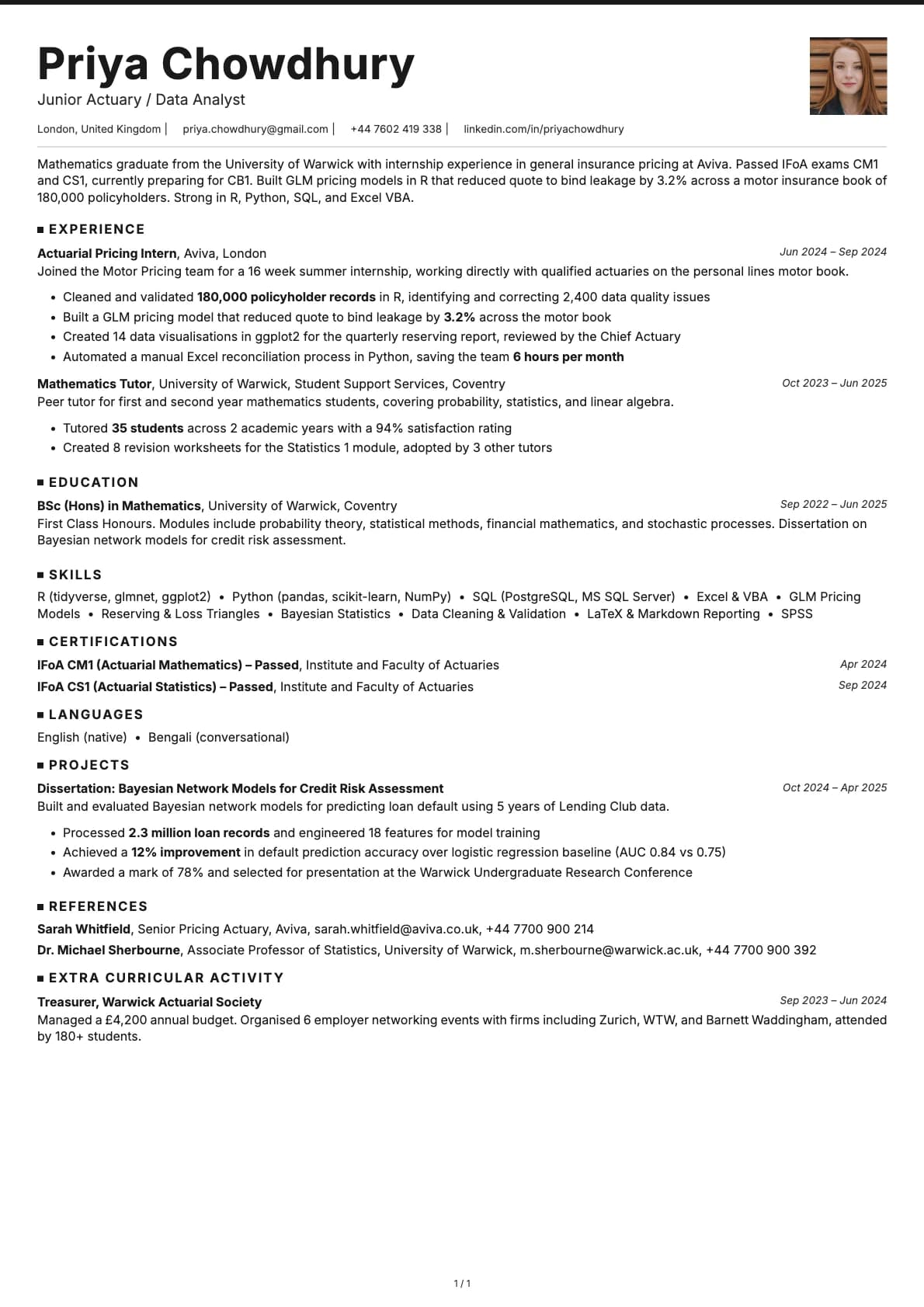
Junior Actuary / Data Analyst
A junior actuary resume example for maths graduates, showing how to present actuarial exams, R and Python skills, and quantitative analysis experience.
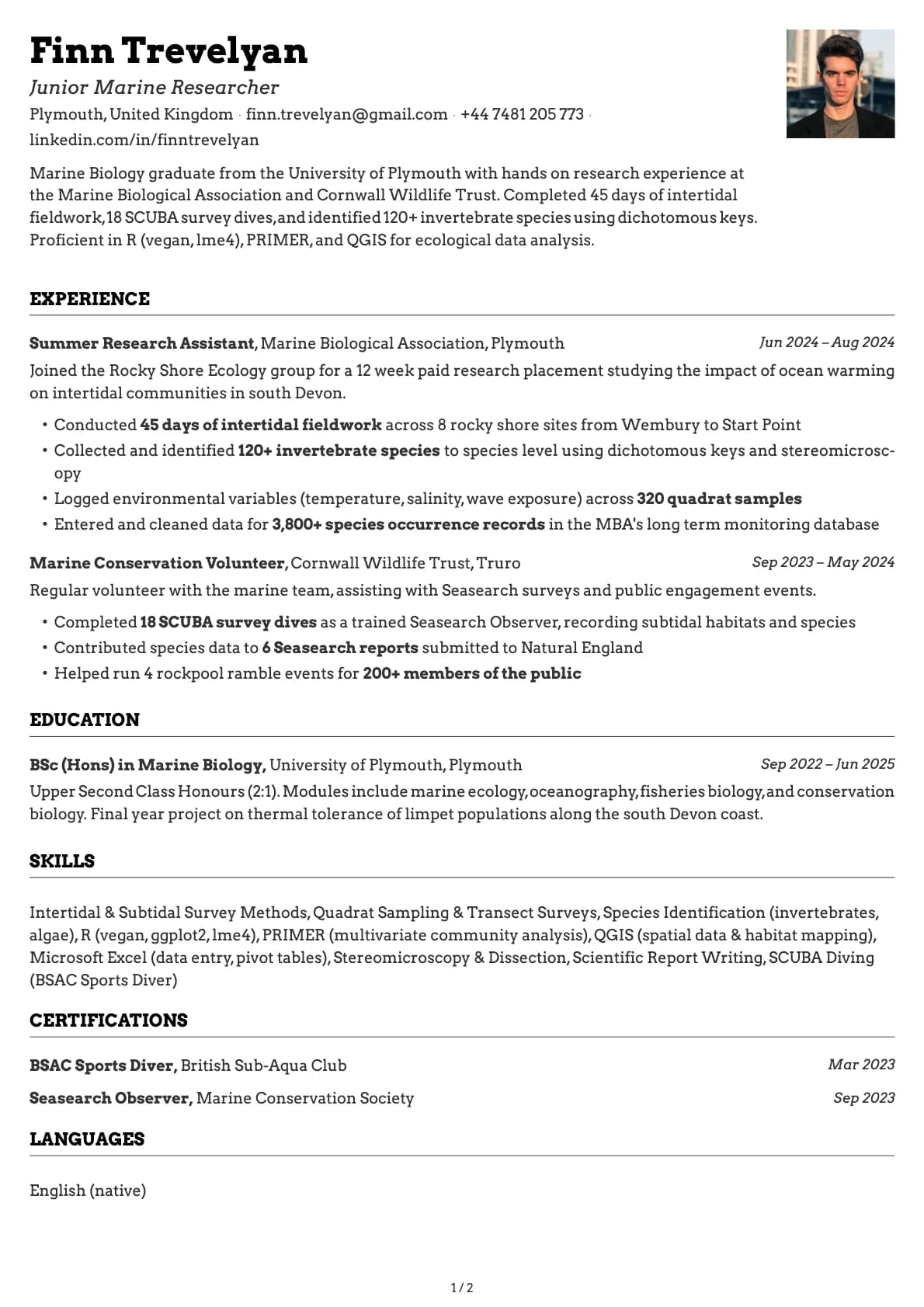
Junior Marine Researcher
A junior marine researcher resume example for marine biology graduates, covering fieldwork, species surveys, and data collection techniques.
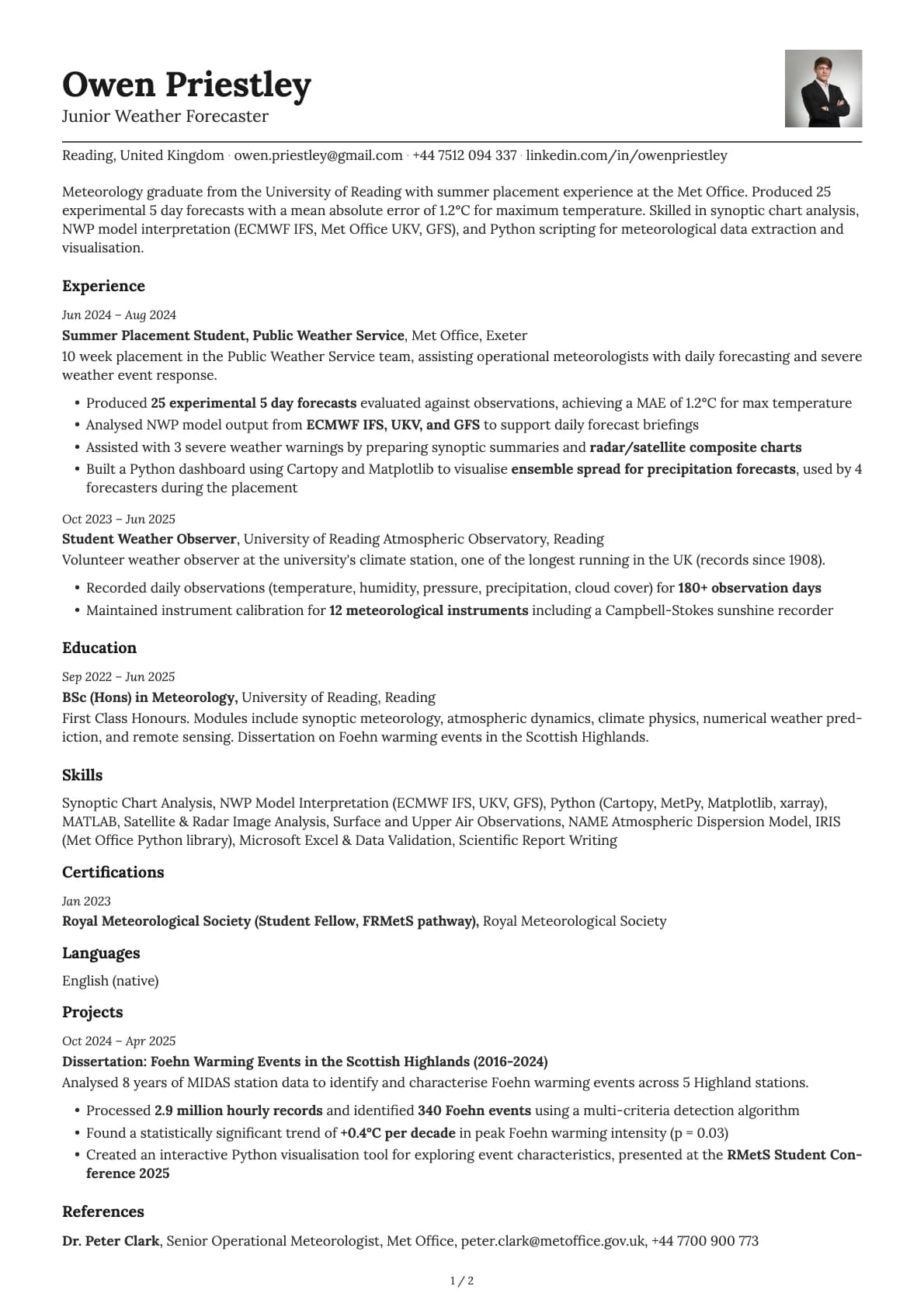
Junior Weather Forecaster
A junior weather forecaster resume example for meteorology graduates, showing how to present NWP models, synoptic analysis, and forecasting tools.
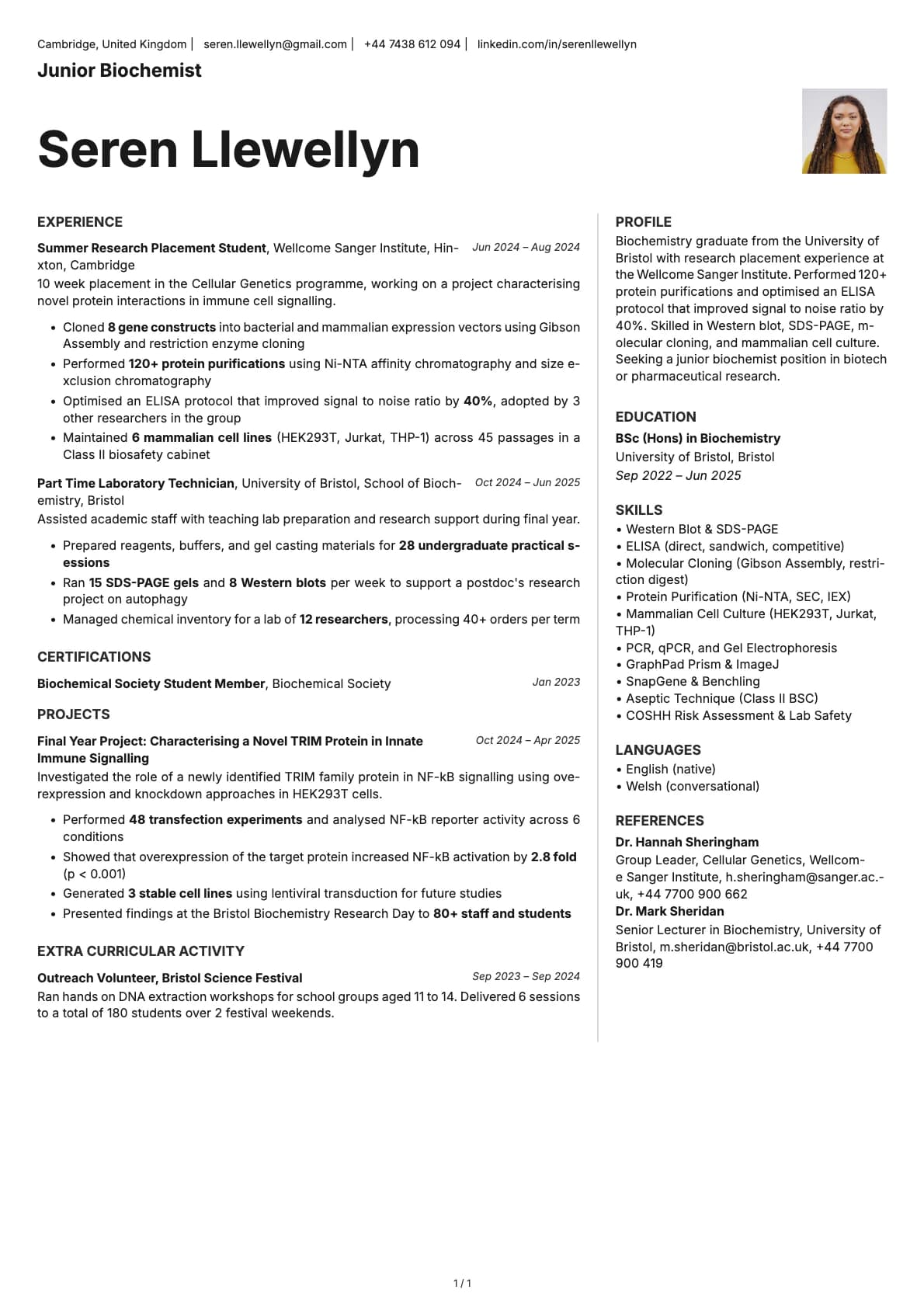
Junior Biochemist
A junior biochemist resume example for biochemistry graduates, covering protein assays, cell culture, and molecular biology techniques.
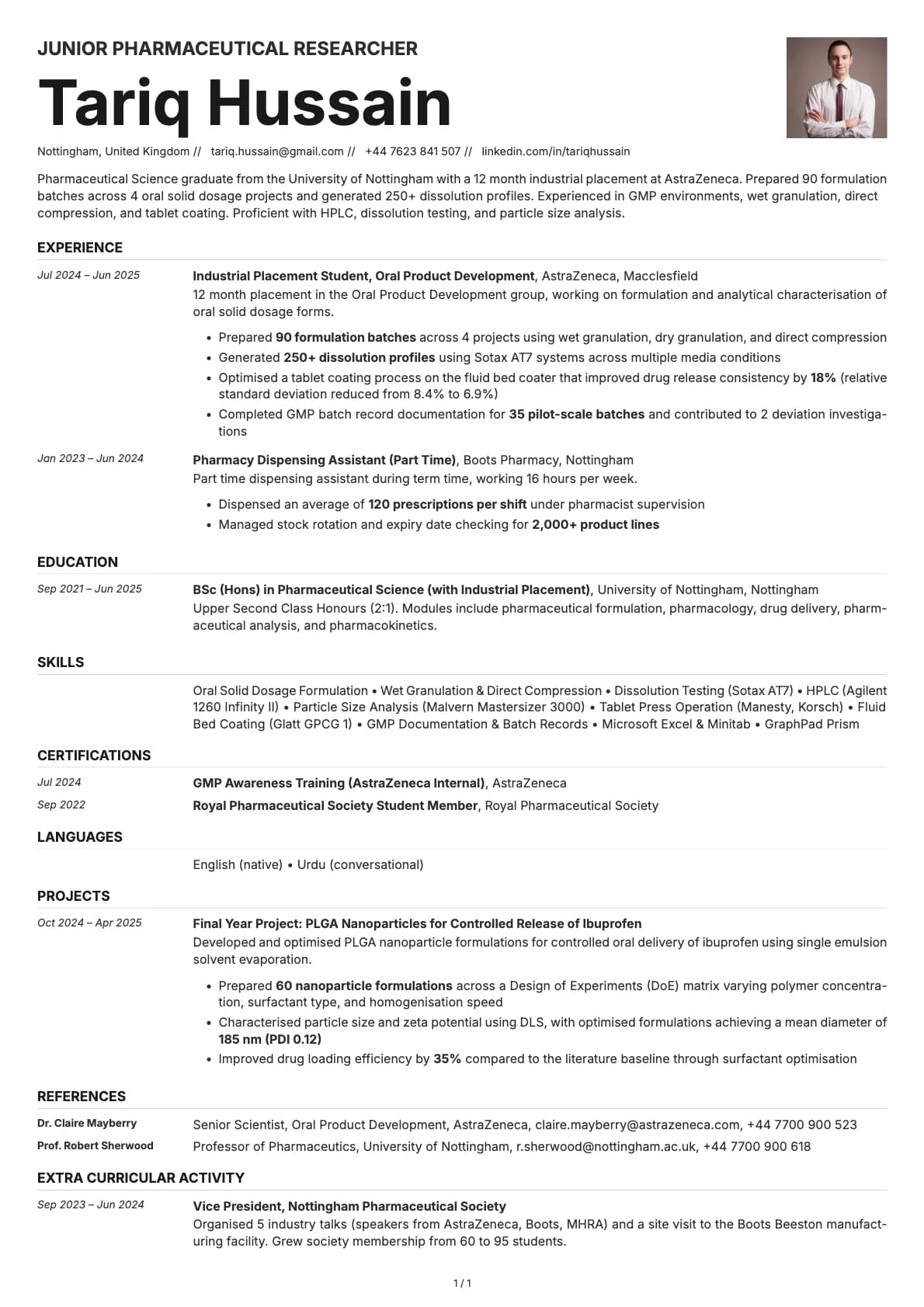
Junior Pharmaceutical Researcher
A junior pharmaceutical researcher resume example for pharmaceutical science graduates, showing formulation work, dissolution testing, and GMP experience.