Junior Research Associate Resume Example
A junior research associate resume example for physics MSci graduates, showing how to present lab research, publications, and technical skills.

Laddro Team
Free to use. No account needed to start.
Free to use. No account needed to start.
Overview
Physics graduates applying for research associate positions face a particular challenge: they have spent four years doing serious technical work, but most of them write resumes that could belong to anyone. "Conducted experiments and analysed data" appears on nearly every physics graduate's CV. It says nothing.
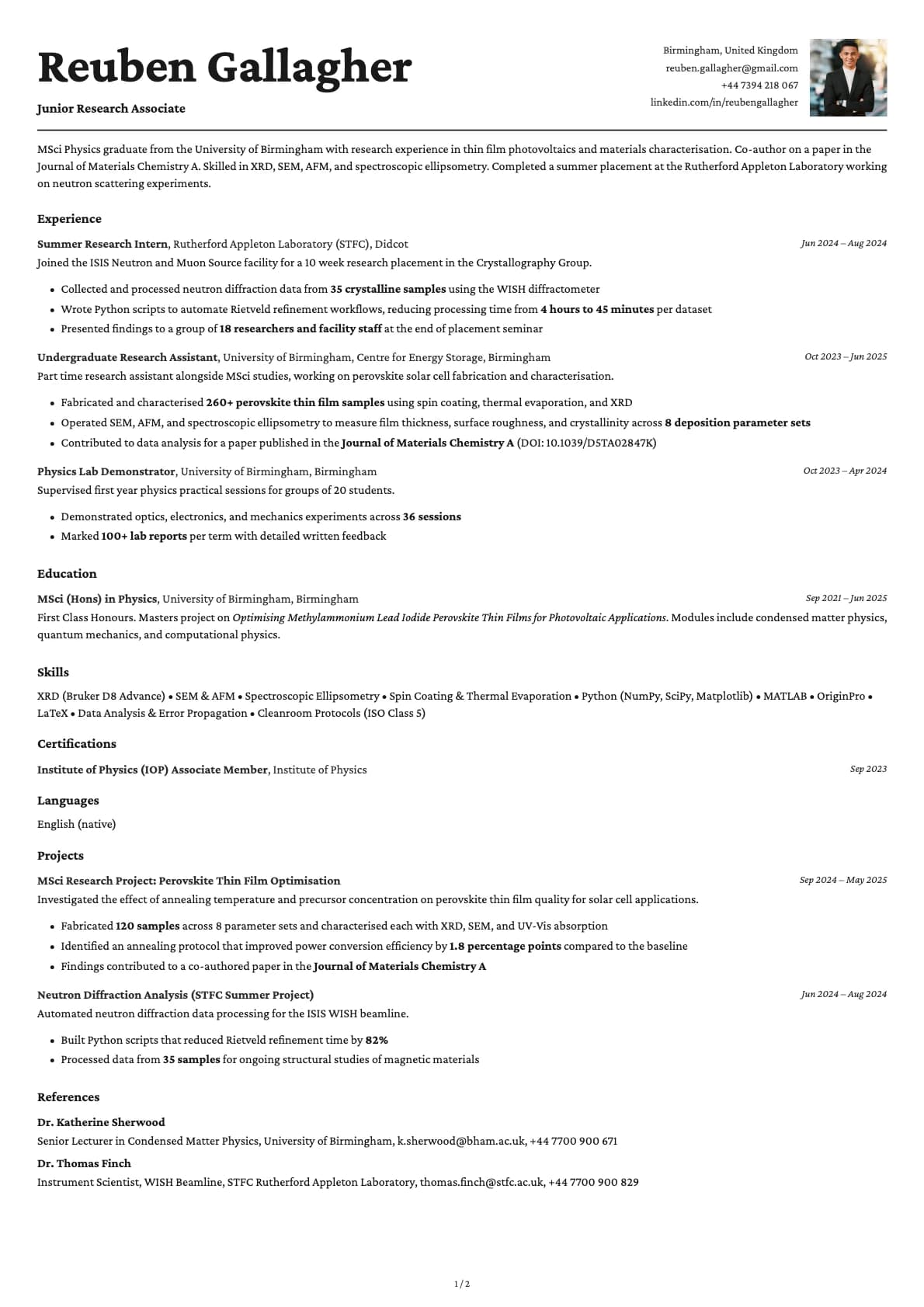
This resume belongs to Reuben, an MSci Physics graduate from the University of Birmingham who spent his final year working on thin film photovoltaics in the university's Centre for Energy Storage. He also completed a summer research placement at the Rutherford Appleton Laboratory. What sets this resume apart is specificity. Every bullet names the equipment, the dataset size, or the outcome.
Publications change everything at this level
If you have a publication, even as a co-author, it belongs near the top of your resume. For junior research roles, a published paper or conference proceeding signals that you can do the full research cycle: design an experiment, collect data, write it up, and survive peer review.
Reuben lists one co-authored paper in the Journal of Materials Chemistry A. He includes the DOI. That is more impressive than any bullet point about "strong analytical skills" could ever be.
If you do not have a publication yet, list any conference posters, departmental presentations, or submitted manuscripts. They all count.
How to write research experience bullets
The formula for research bullets is different from industry bullets. In industry, impact means revenue or efficiency. In research, impact means: what did you measure, how much data did you collect, and what did you find?
"Fabricated and characterised 260+ perovskite thin film samples using spin coating, thermal evaporation, and XRD" tells a hiring PI three things: you can make samples at volume, you know multiple deposition techniques, and you can do structural characterisation.
Compare that to "Assisted with sample preparation and analysis" which tells them absolutely nothing.
MATLAB, Python, and statistical software
Physics research roles expect computational skills. List the programming languages and specific libraries you used. "Python (NumPy, SciPy, Matplotlib)" is better than just "Python" because it tells the reader you used it for scientific computing, not web development.
Reuben lists MATLAB, Python with scientific libraries, OriginPro, and LaTeX. That is exactly the stack a research group expects from a new hire.
Your MSci project is your flagship
For an MSci graduate, the integrated masters project is the centrepiece of your resume. It should have its own detailed section in projects, separate from education. Include the research question, methods, key findings, and any presentations or publications that came from it.
This is the work that shows whether you can function as an independent researcher. Give it the space it deserves.
Build your own version
Open this layout in the builder and swap in your own details. It takes a few minutes.
Free to use. No account needed to start.
Was this resume example helpful?
Rate this example to help us create better content for you.
4.8 average from 109 ratingsRelated resume examples
Junior Forensic Analyst
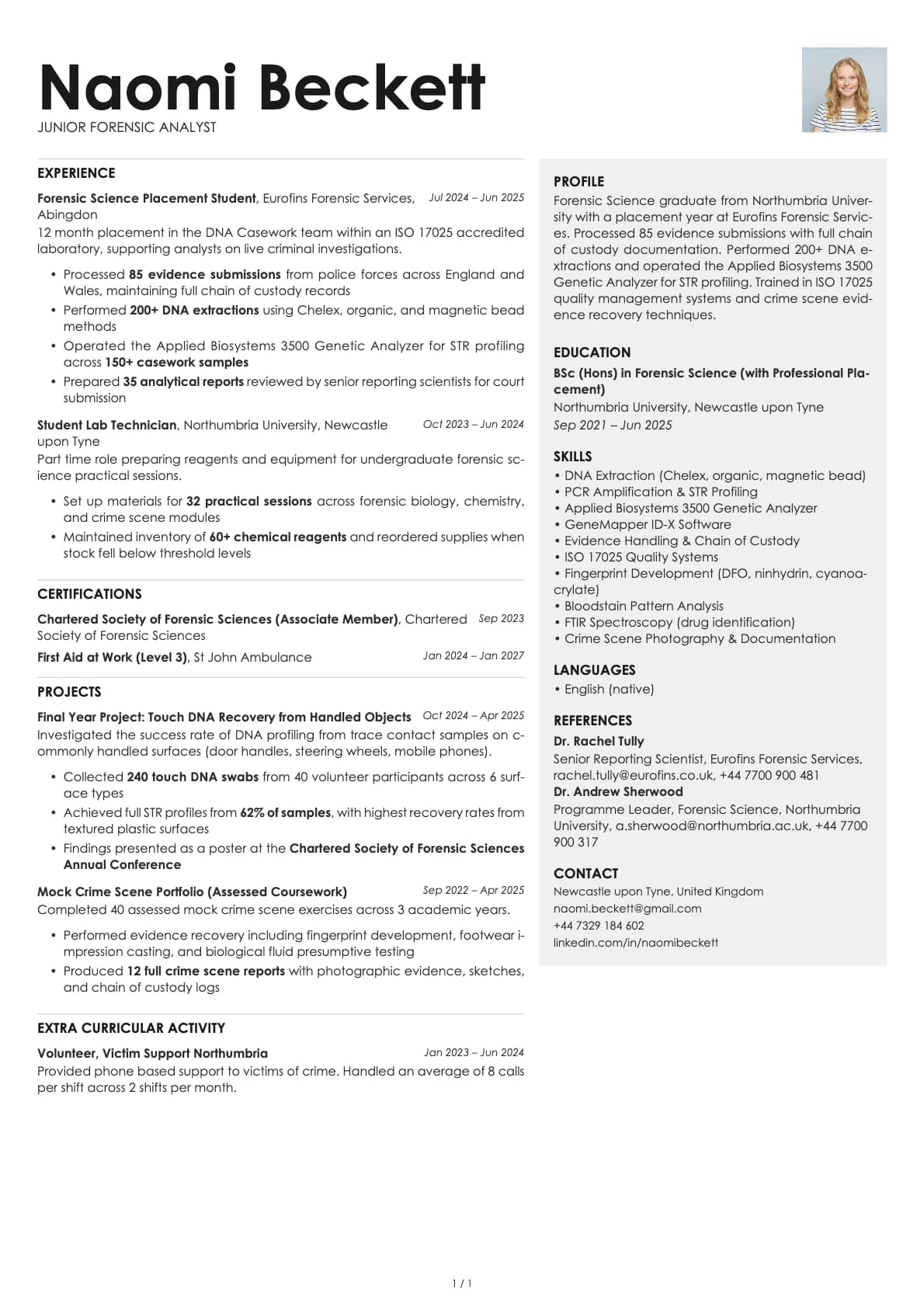
A junior forensic analyst resume example for forensic science graduates, showing how to present lab techniques, chain of custody, and casework experience.
Graduate Lab Technician
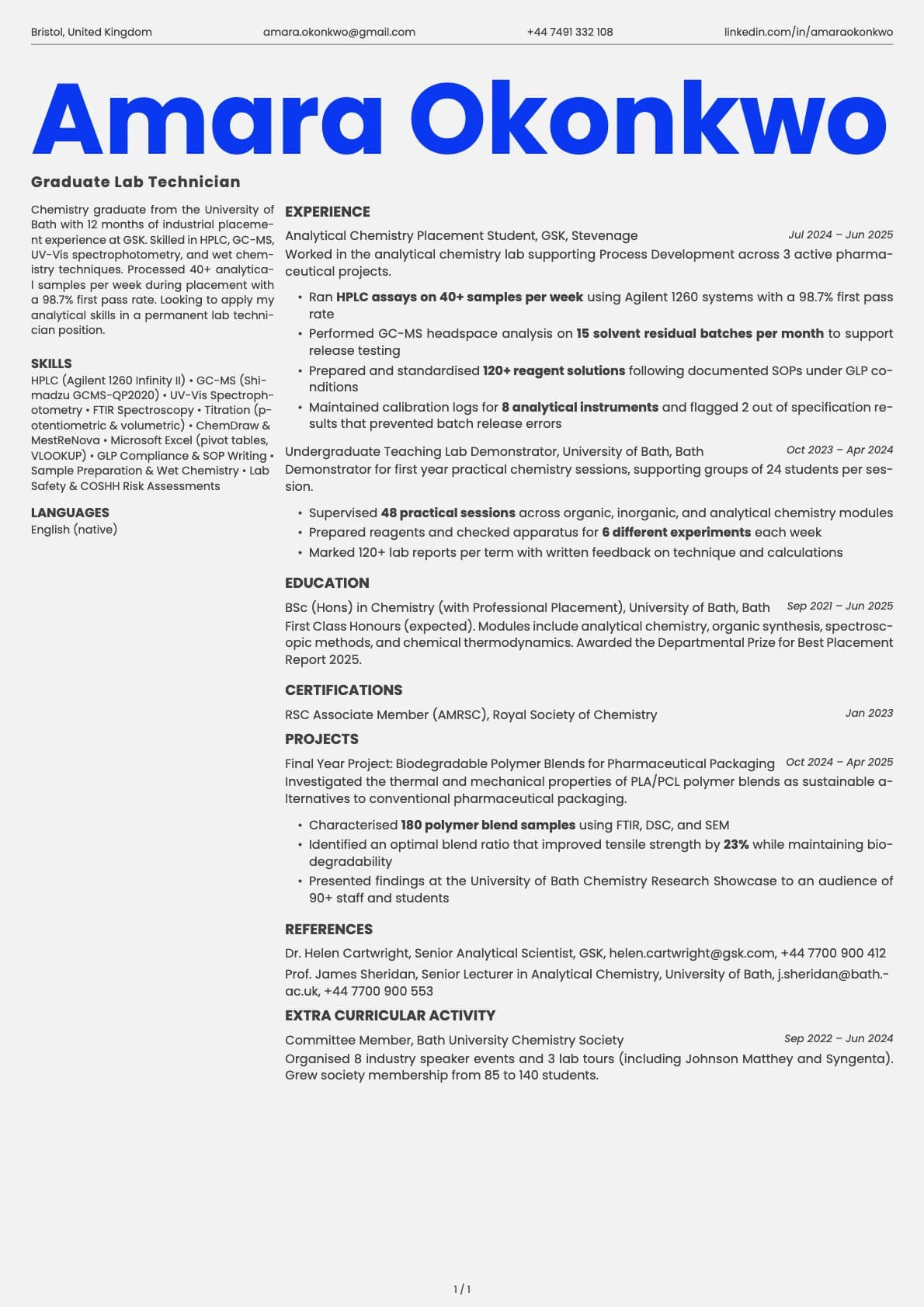
A graduate lab technician resume example showing how to present your chemistry BSc, lab skills, and analytical techniques to land your first lab role.
Junior Actuary / Data Analyst
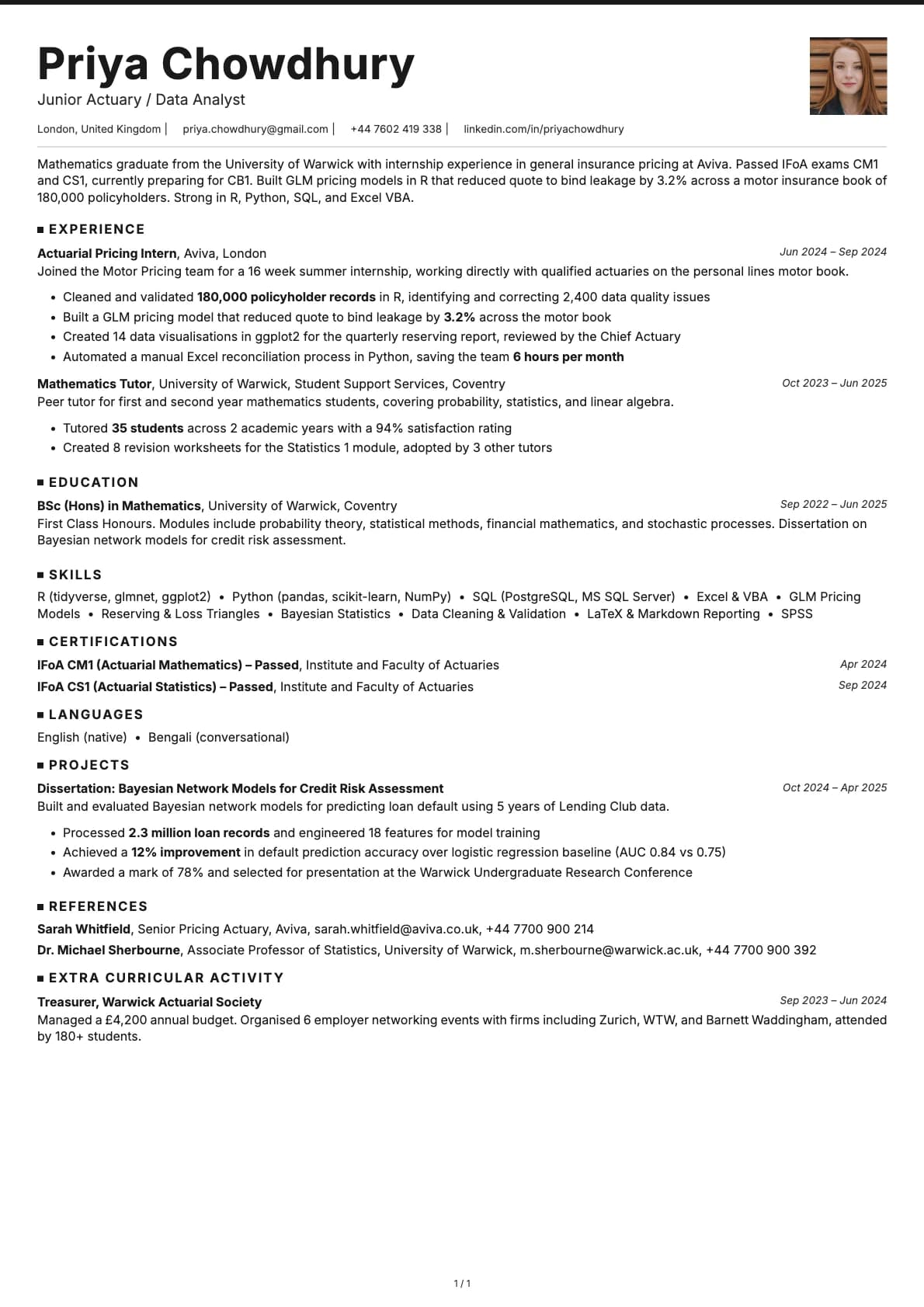
A junior actuary resume example for maths graduates, showing how to present actuarial exams, R and Python skills, and quantitative analysis experience.
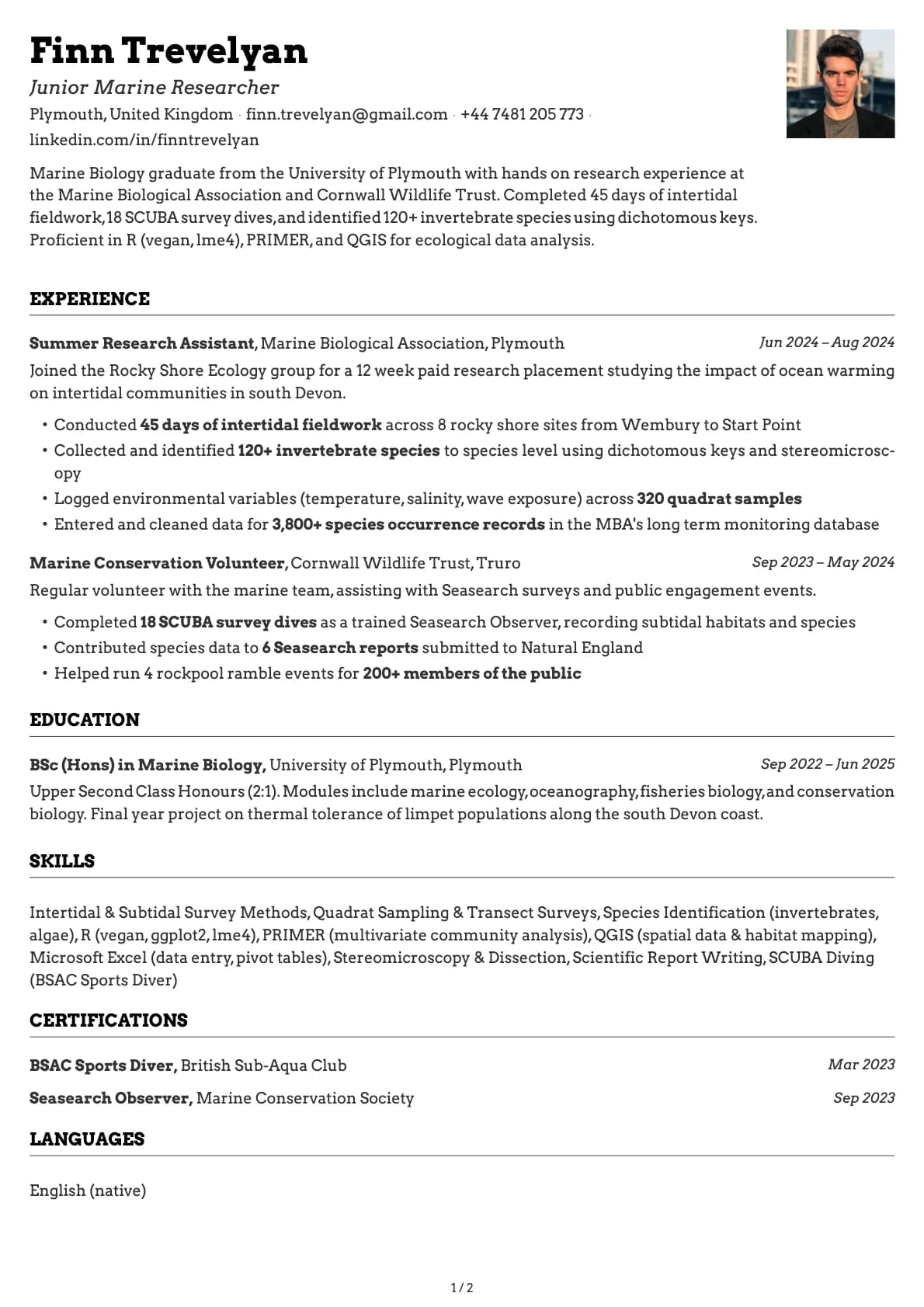
Junior Marine Researcher
A junior marine researcher resume example for marine biology graduates, covering fieldwork, species surveys, and data collection techniques.
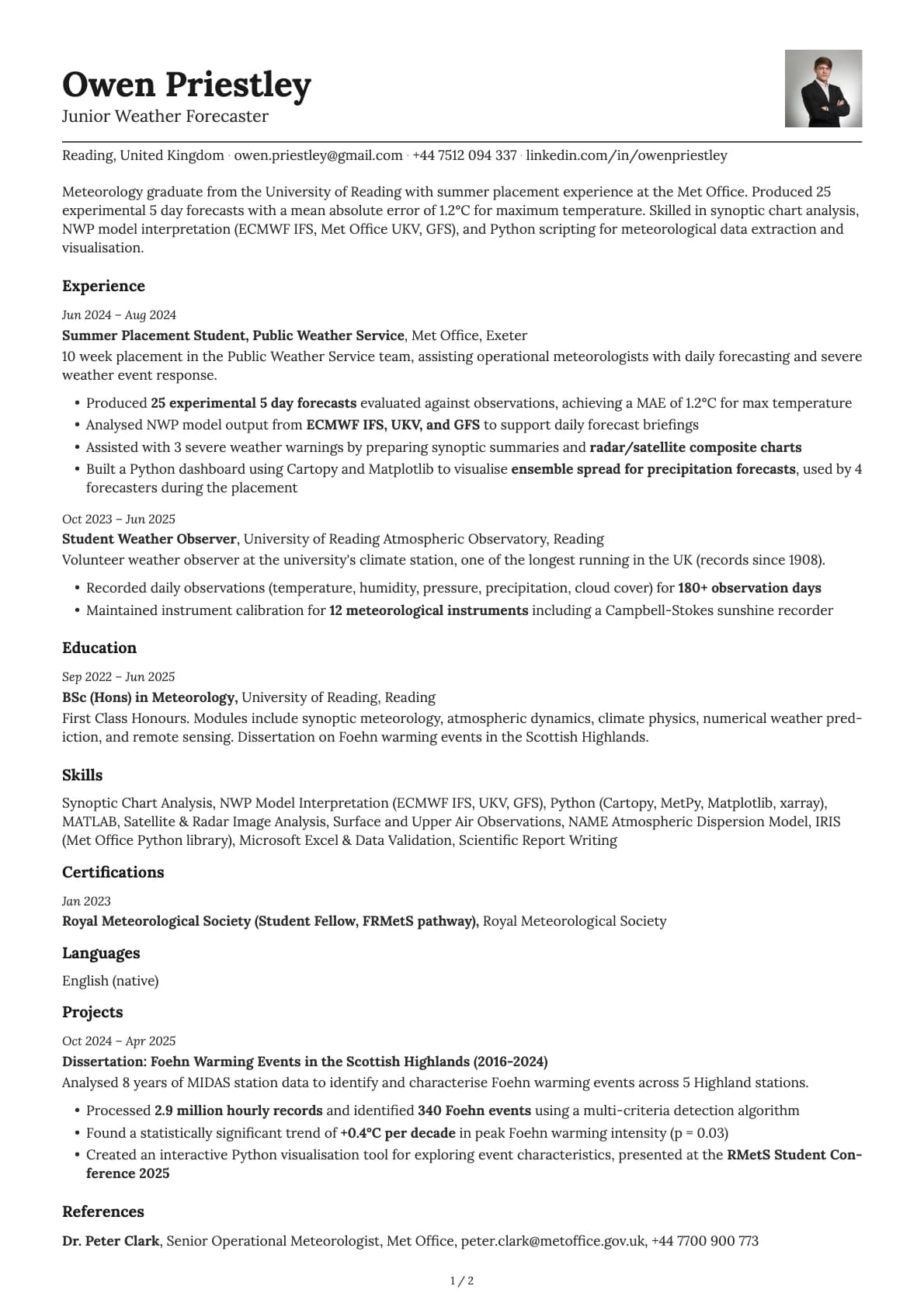
Junior Weather Forecaster
A junior weather forecaster resume example for meteorology graduates, showing how to present NWP models, synoptic analysis, and forecasting tools.
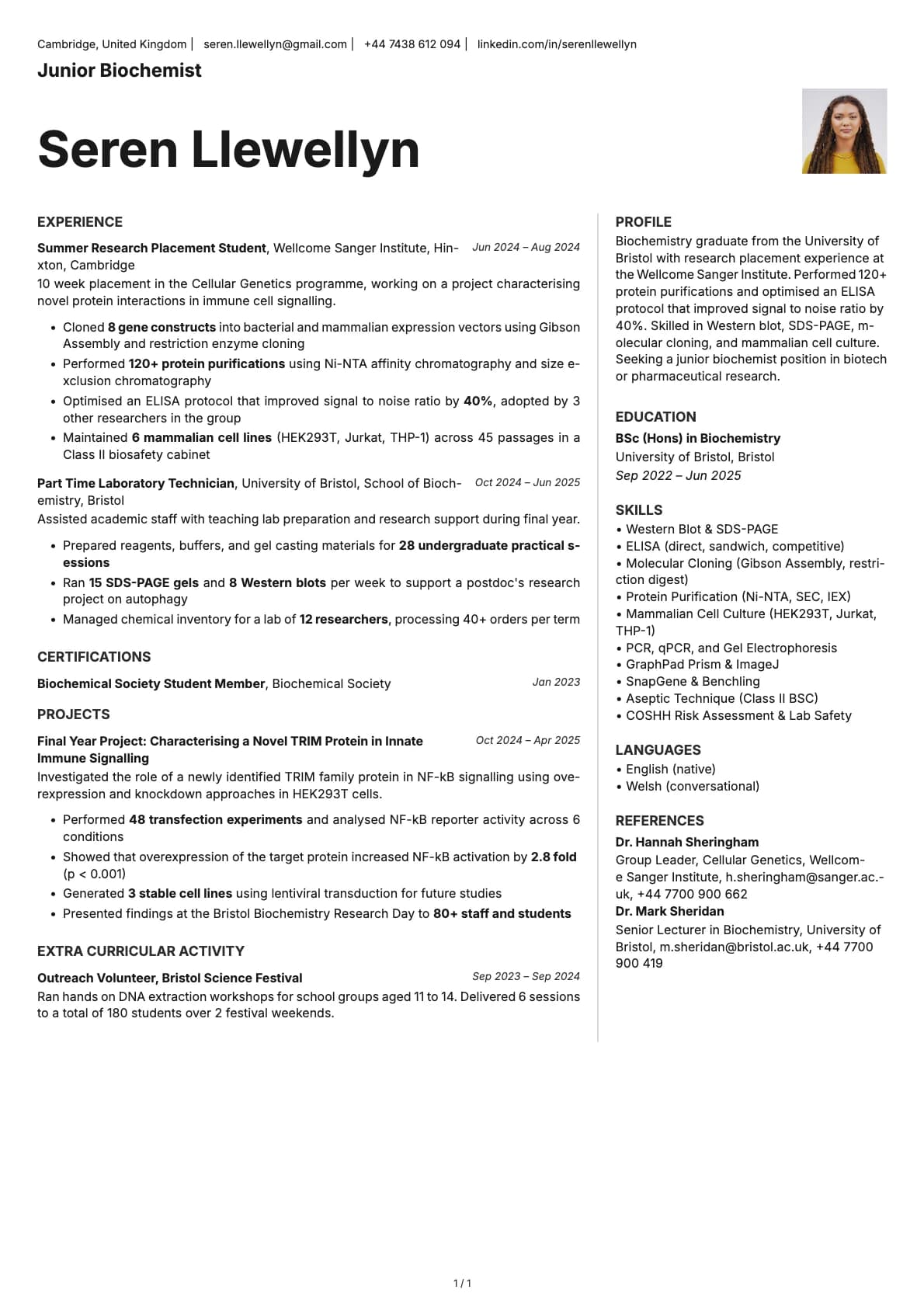
Junior Biochemist
A junior biochemist resume example for biochemistry graduates, covering protein assays, cell culture, and molecular biology techniques.
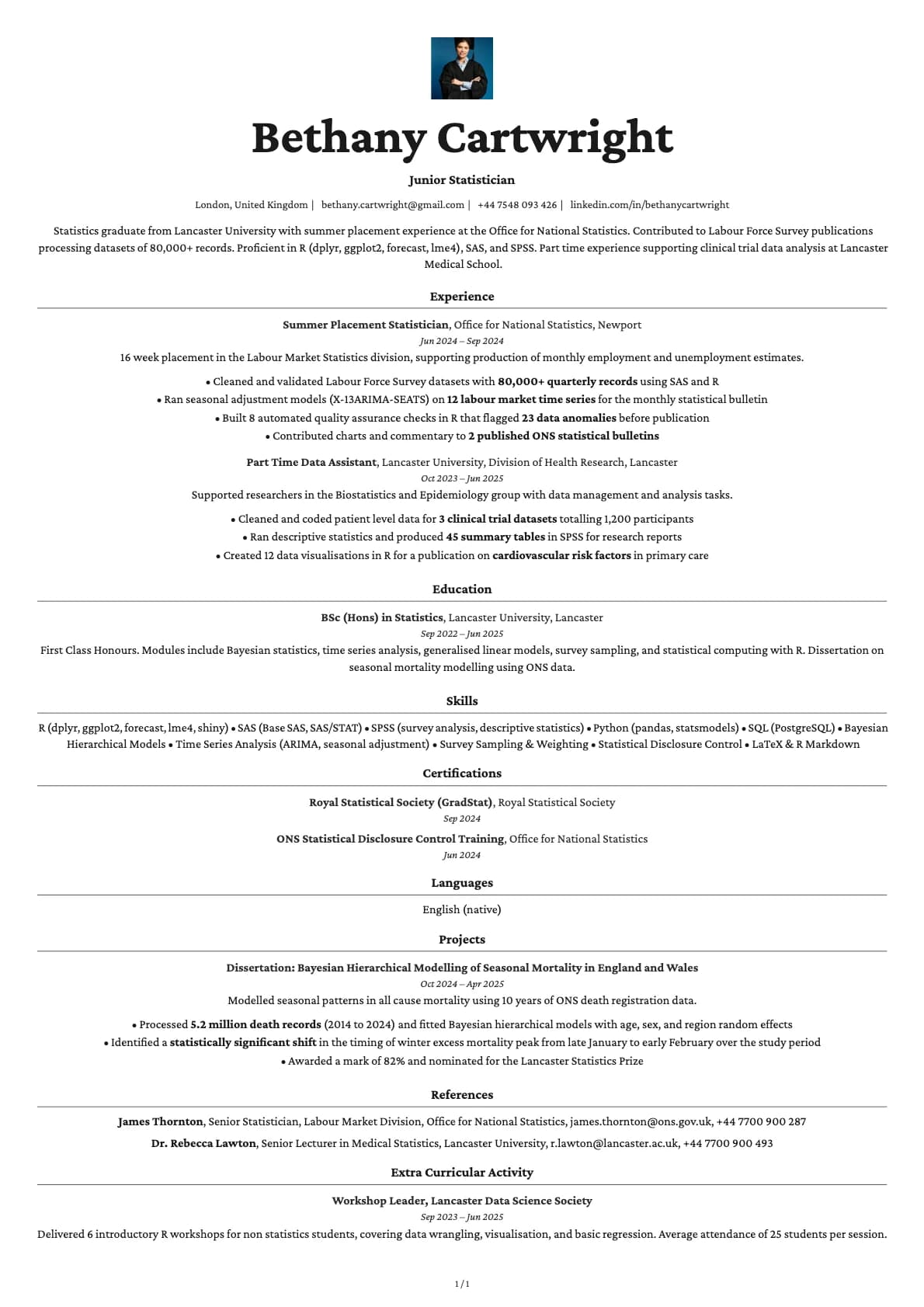
Junior Statistician
A junior statistician resume example for statistics graduates, showing how to present R, SPSS, SAS experience, and government or health statistics work.
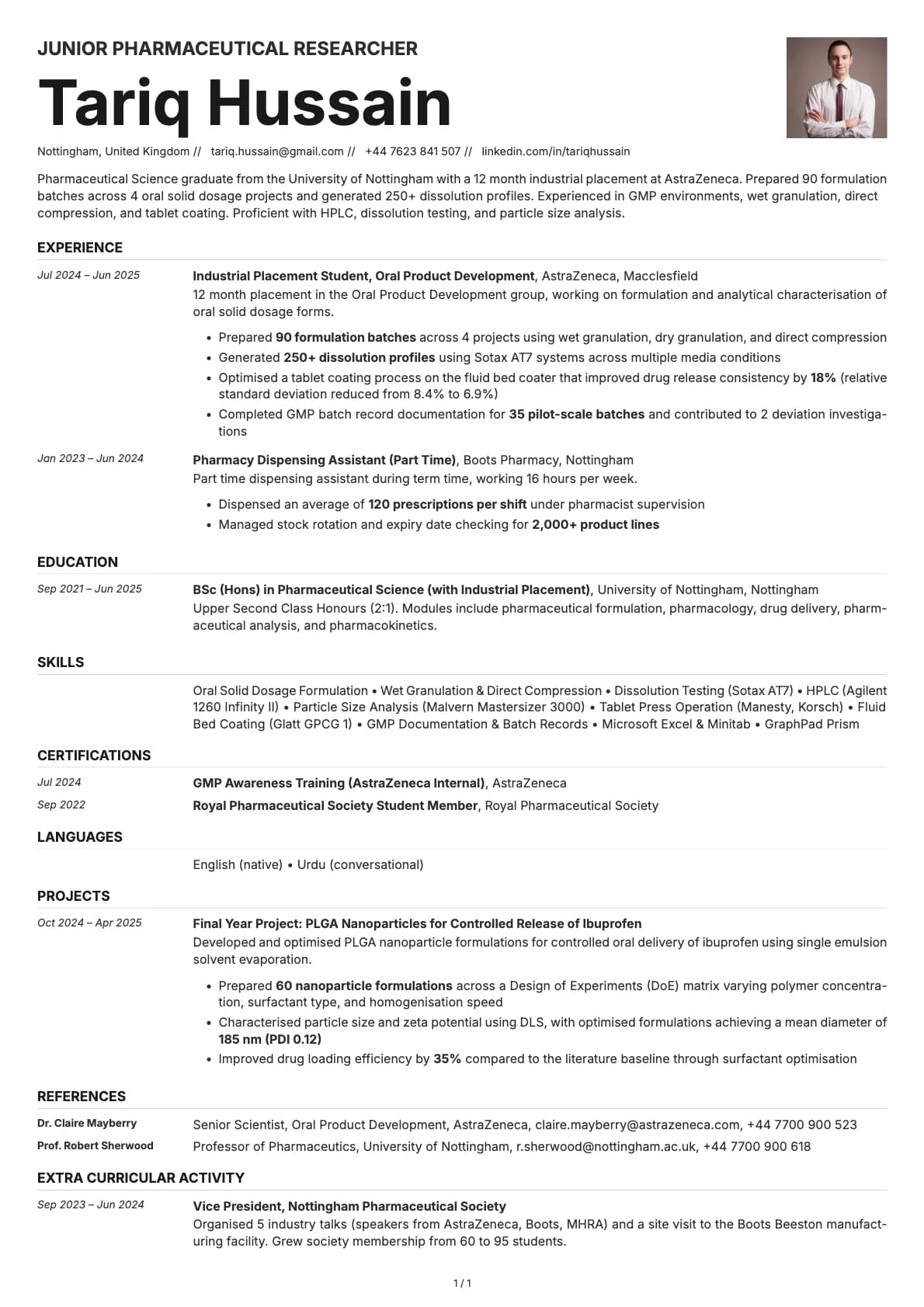
Junior Pharmaceutical Researcher
A junior pharmaceutical researcher resume example for pharmaceutical science graduates, showing formulation work, dissolution testing, and GMP experience.