Junior Marine Researcher Resume Example
A junior marine researcher resume example for marine biology graduates, covering fieldwork, species surveys, and data collection techniques.

Laddro Team
Free to use. No account needed to start.
Free to use. No account needed to start.
Overview
Marine biology is one of the most competitive graduate fields in the UK. There are far more graduates than there are funded research positions, which means your resume needs to be exceptional just to get an interview. The graduates who get hired are the ones who can prove they have spent serious time in the field, not just in a lecture hall.
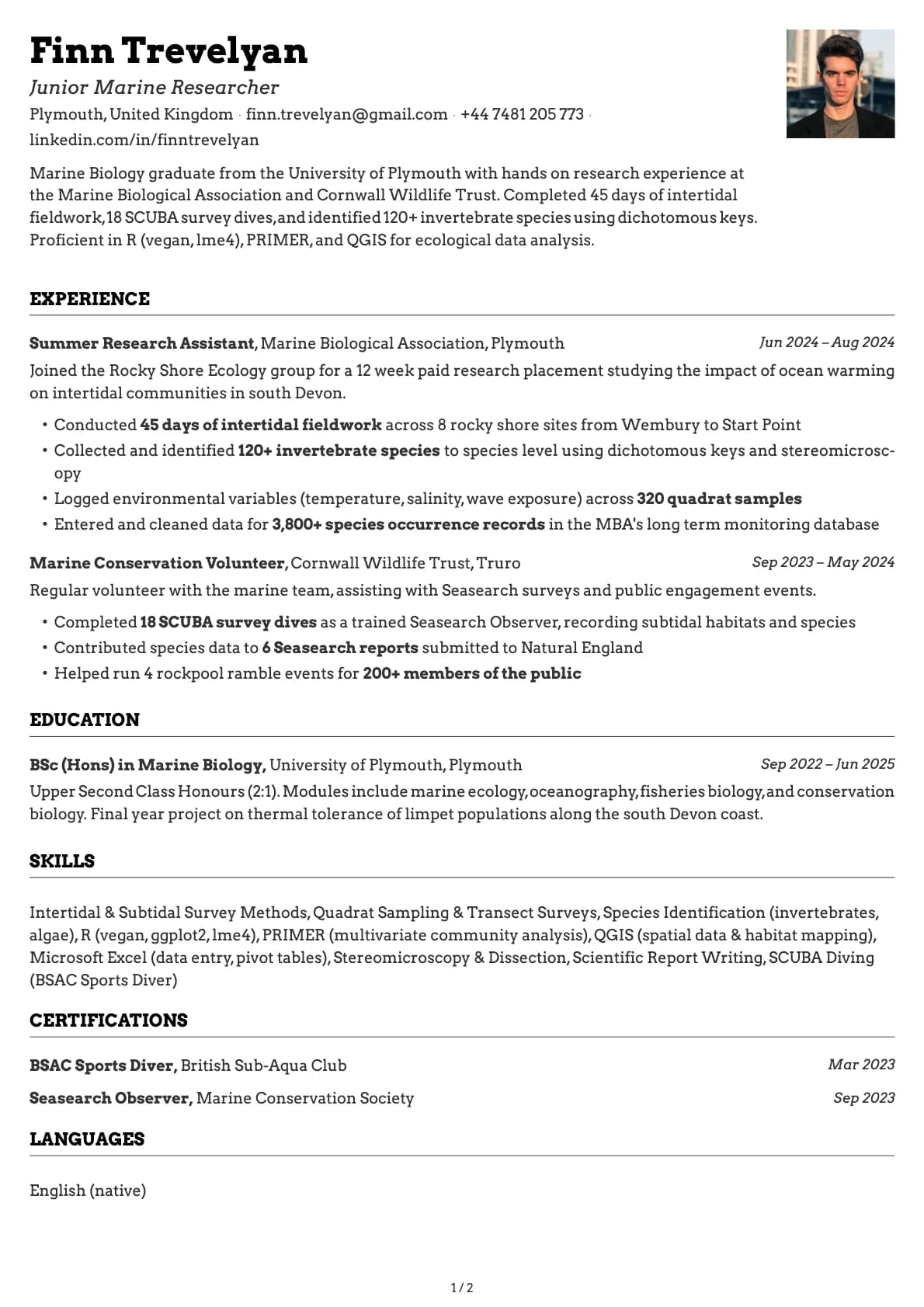
This resume belongs to Finn, a Marine Biology BSc graduate from the University of Plymouth who completed a summer research placement with the Marine Biological Association and volunteered with the Cornwall Wildlife Trust. His resume stands out because it is packed with fieldwork specifics: 45 days of intertidal survey work, 120+ species identifications, 18 SCUBA dives for data collection.
Numbers like these tell a hiring PI that Finn can handle the physical and logistical demands of marine fieldwork, not just the theory.
Fieldwork is everything
For marine research roles, your fieldwork section is the equivalent of an engineer's tech stack. Name the survey methods (quadrat sampling, transect surveys, kick sampling), the environments (rocky intertidal, subtidal, estuarine), and the duration. "Completed 45 days of intertidal fieldwork" is a concrete commitment that shows you are not someone who studied marine biology because they liked Blue Planet.
If you hold a PADI Advanced Open Water or a BSAC Sports Diver qualification, put it in certifications. For subtidal research, dive certification is a job requirement, not a nice to have.
Species identification and taxonomy
Marine research roles require taxonomic competence. If you can identify species to genus or species level, say so. Finn's resume mentions identifying 120+ intertidal invertebrate species using dichotomous keys. That is specific enough for a hiring manager to gauge his level.
If you have done any work with eDNA, plankton net sampling, or acoustic survey methods, include those too. The more specific your survey toolkit, the better.
Statistical software for ecological data
R is the standard in ecological research. If you used R, list the specific packages: vegan for community ecology, ggplot2 for visualisation, lme4 for mixed effects models. PRIMER is another common tool for multivariate analysis of community data. Mention it if you used it.
Finn also lists GIS (QGIS) which is increasingly important for spatial ecology and marine protected area work.
Publications, even small ones
Conference posters and departmental presentations matter at this career stage. Finn presented at the Marine Biological Association's postgraduate conference. If you have contributed to a report for Natural England, the Environment Agency, or any wildlife trust, cite it.
Build your own version
Open this layout in the builder and swap in your own details. It takes a few minutes.
Free to use. No account needed to start.
Was this resume example helpful?
Rate this example to help us create better content for you.
4.6 average from 98 ratingsRelated resume examples
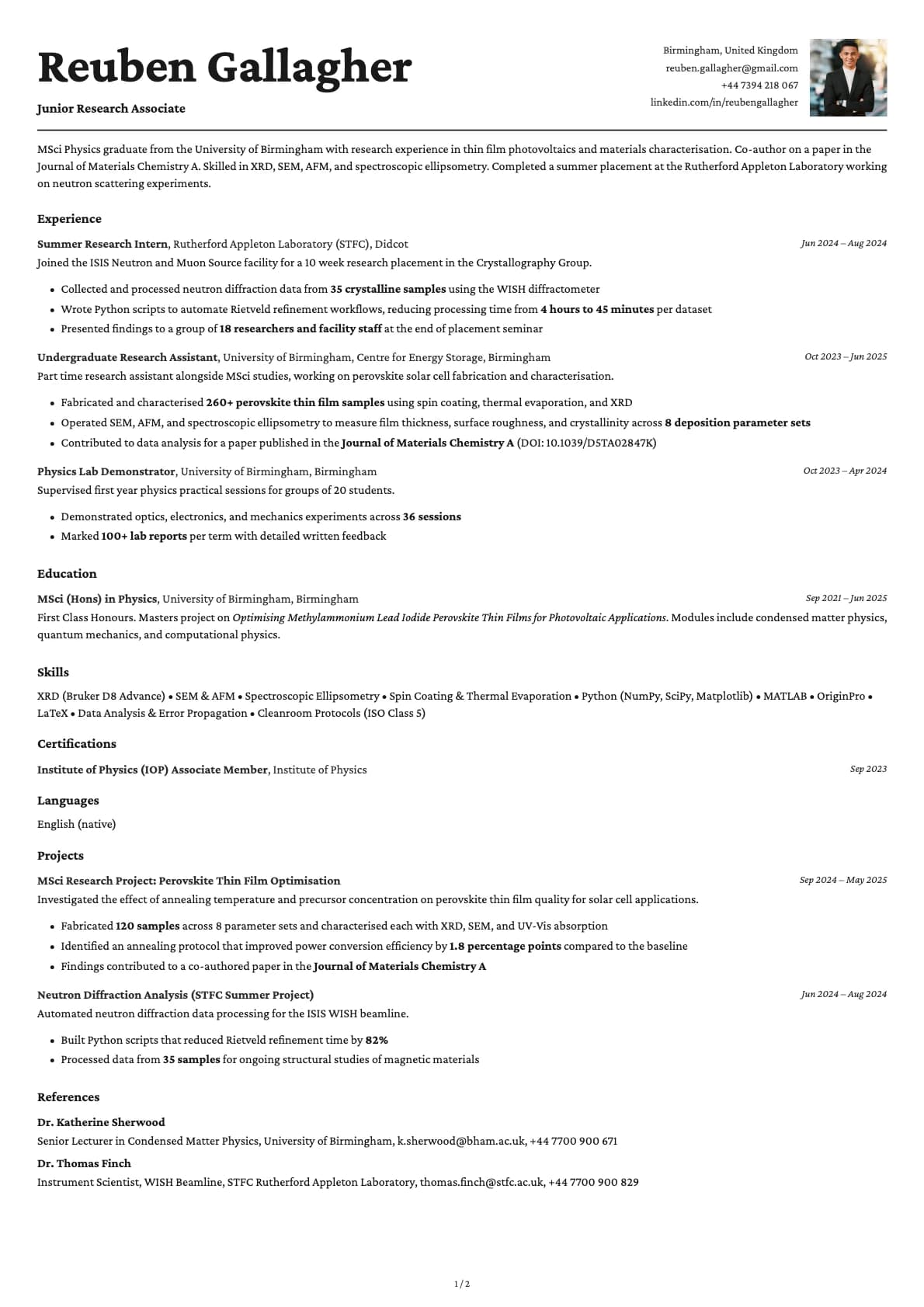
Junior Research Associate
A junior research associate resume example for physics MSci graduates, showing how to present lab research, publications, and technical skills.
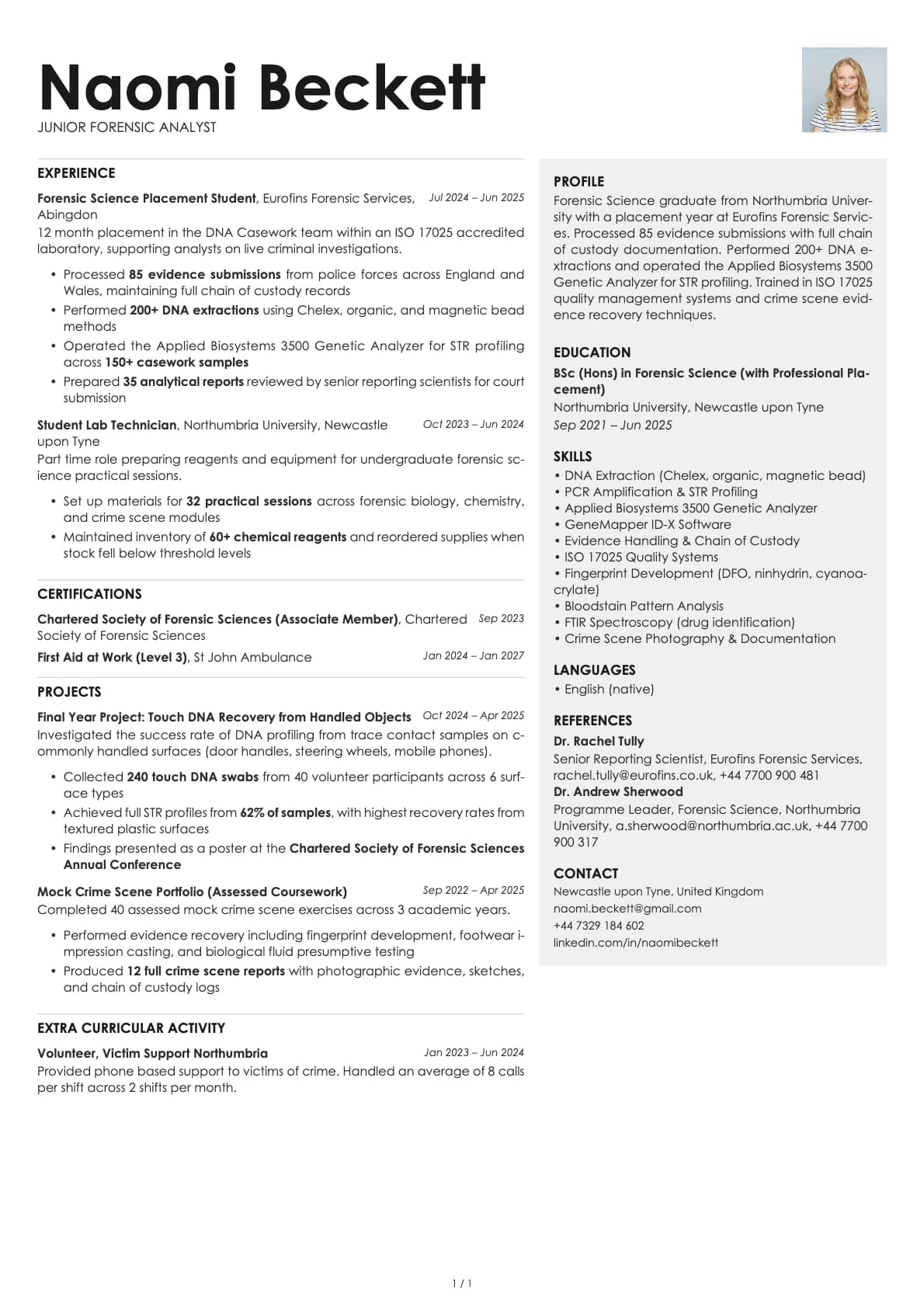
Junior Forensic Analyst
A junior forensic analyst resume example for forensic science graduates, showing how to present lab techniques, chain of custody, and casework experience.
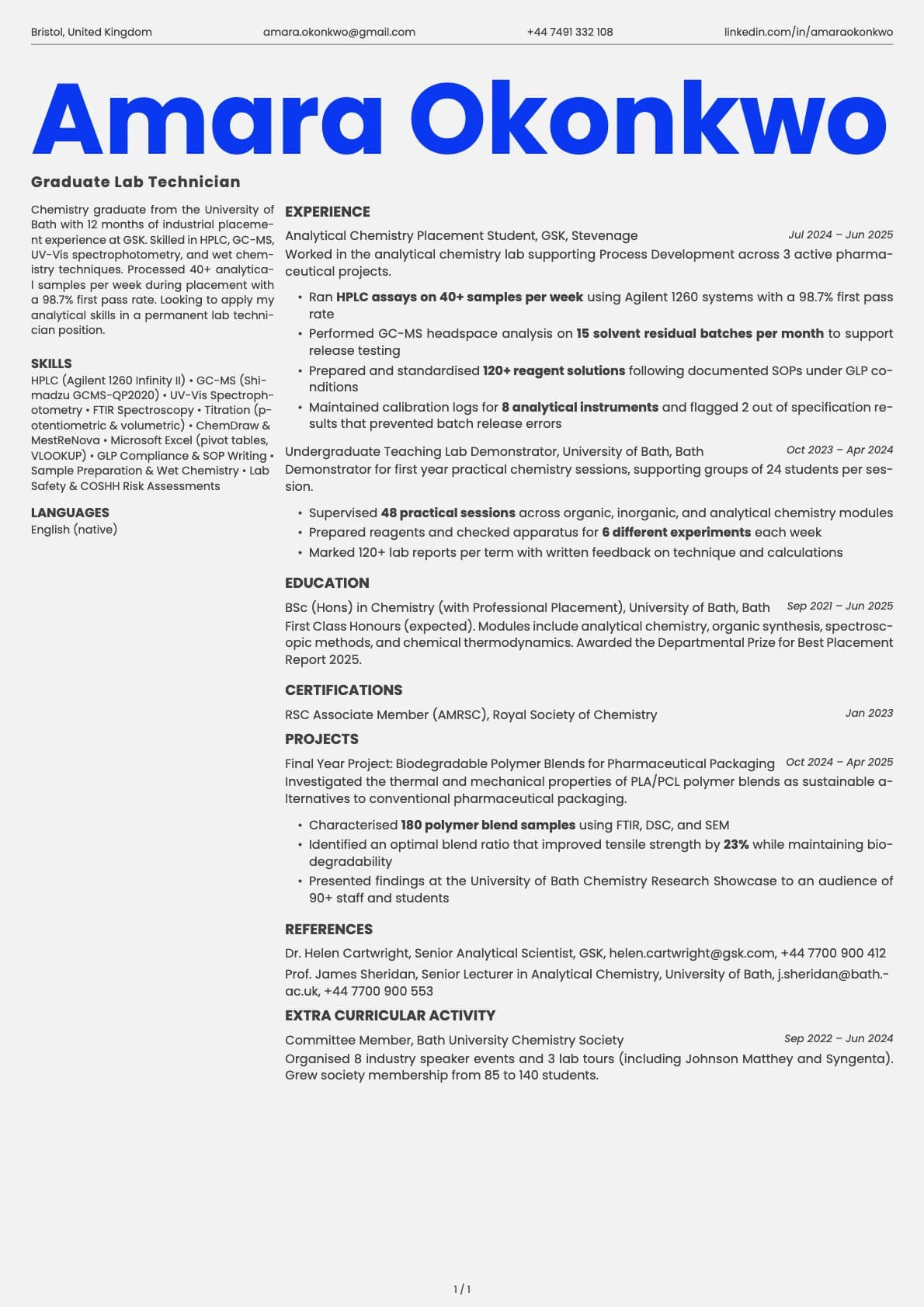
Graduate Lab Technician
A graduate lab technician resume example showing how to present your chemistry BSc, lab skills, and analytical techniques to land your first lab role.
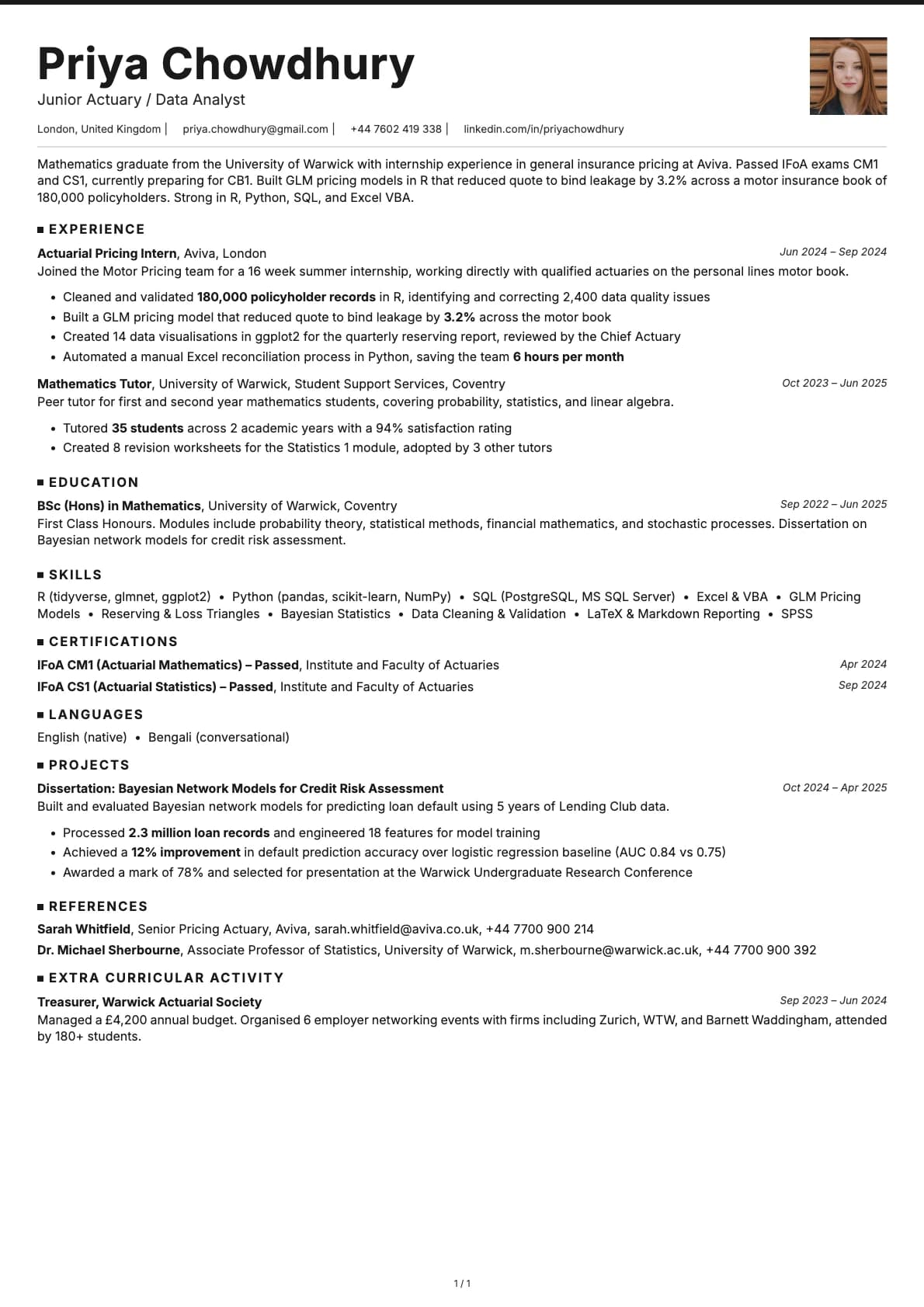
Junior Actuary / Data Analyst
A junior actuary resume example for maths graduates, showing how to present actuarial exams, R and Python skills, and quantitative analysis experience.
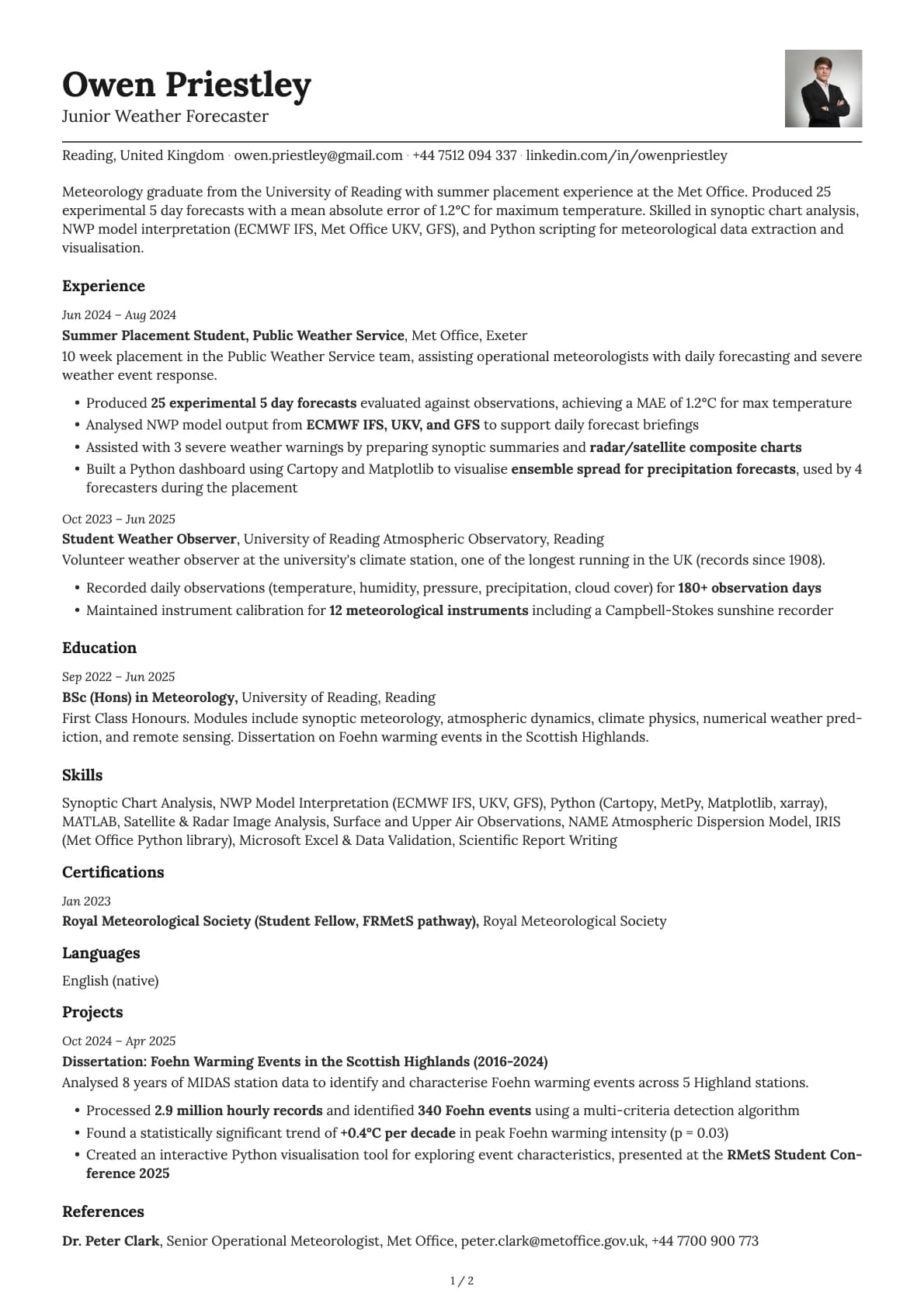
Junior Weather Forecaster
A junior weather forecaster resume example for meteorology graduates, showing how to present NWP models, synoptic analysis, and forecasting tools.
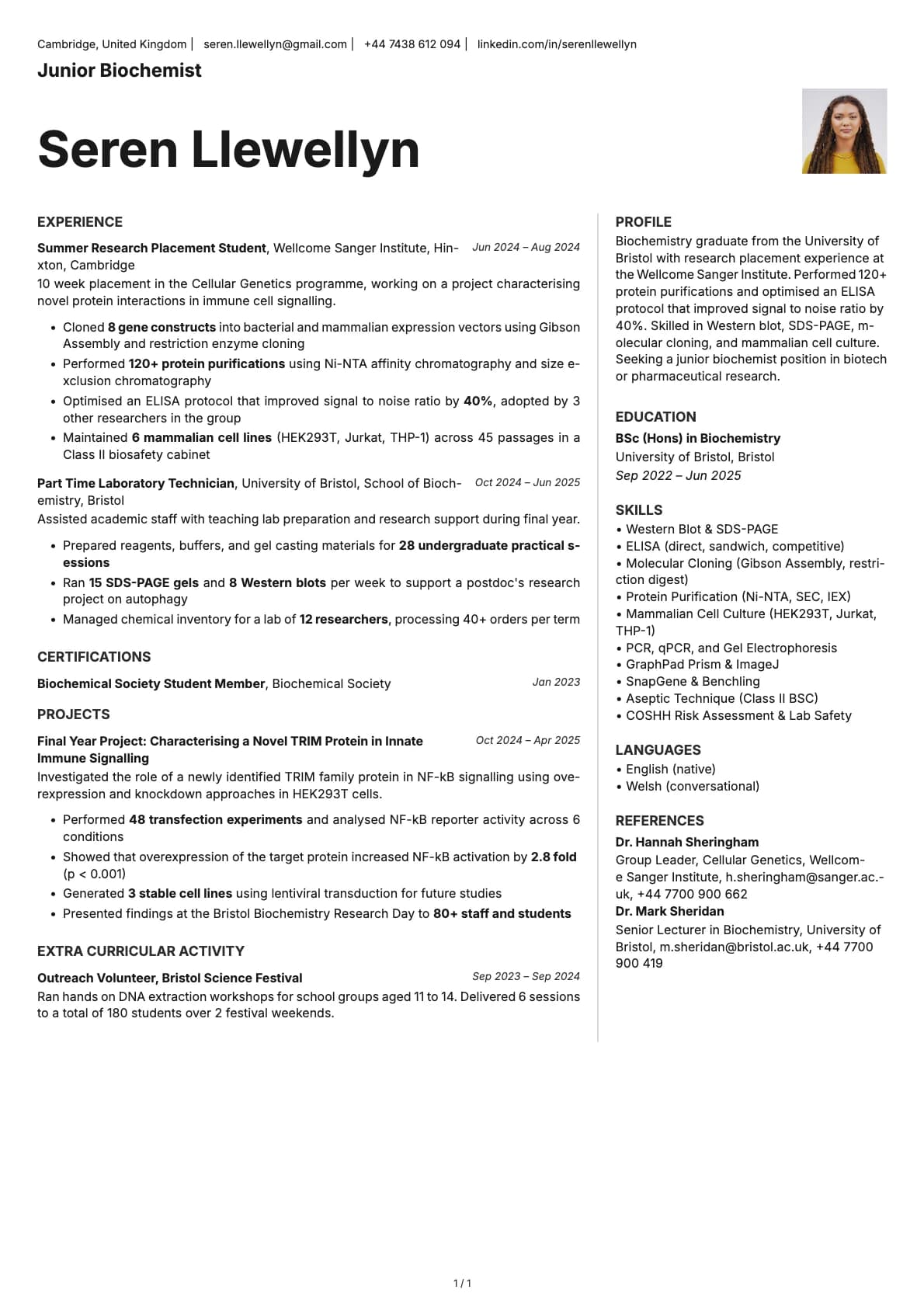
Junior Biochemist
A junior biochemist resume example for biochemistry graduates, covering protein assays, cell culture, and molecular biology techniques.
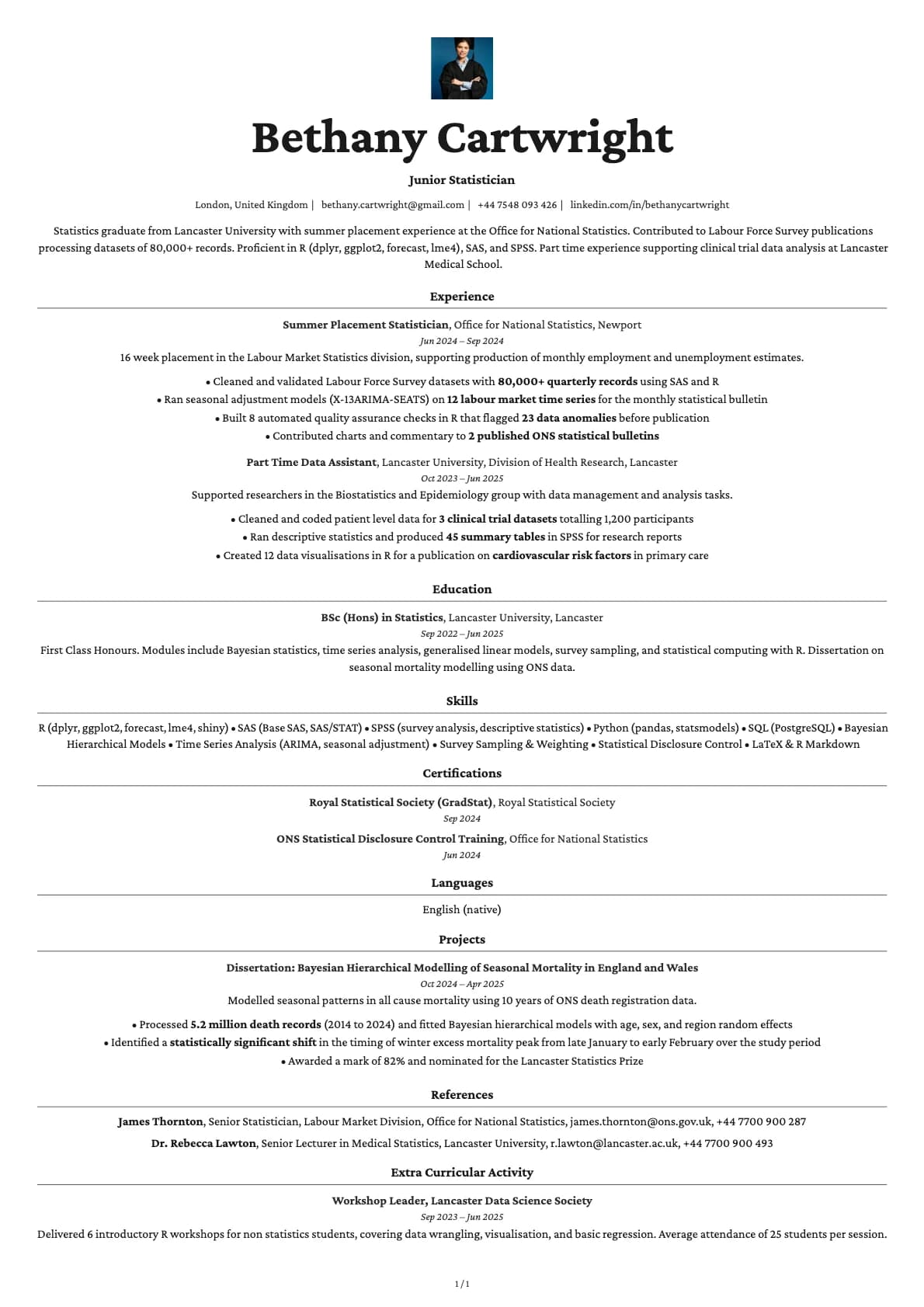
Junior Statistician
A junior statistician resume example for statistics graduates, showing how to present R, SPSS, SAS experience, and government or health statistics work.
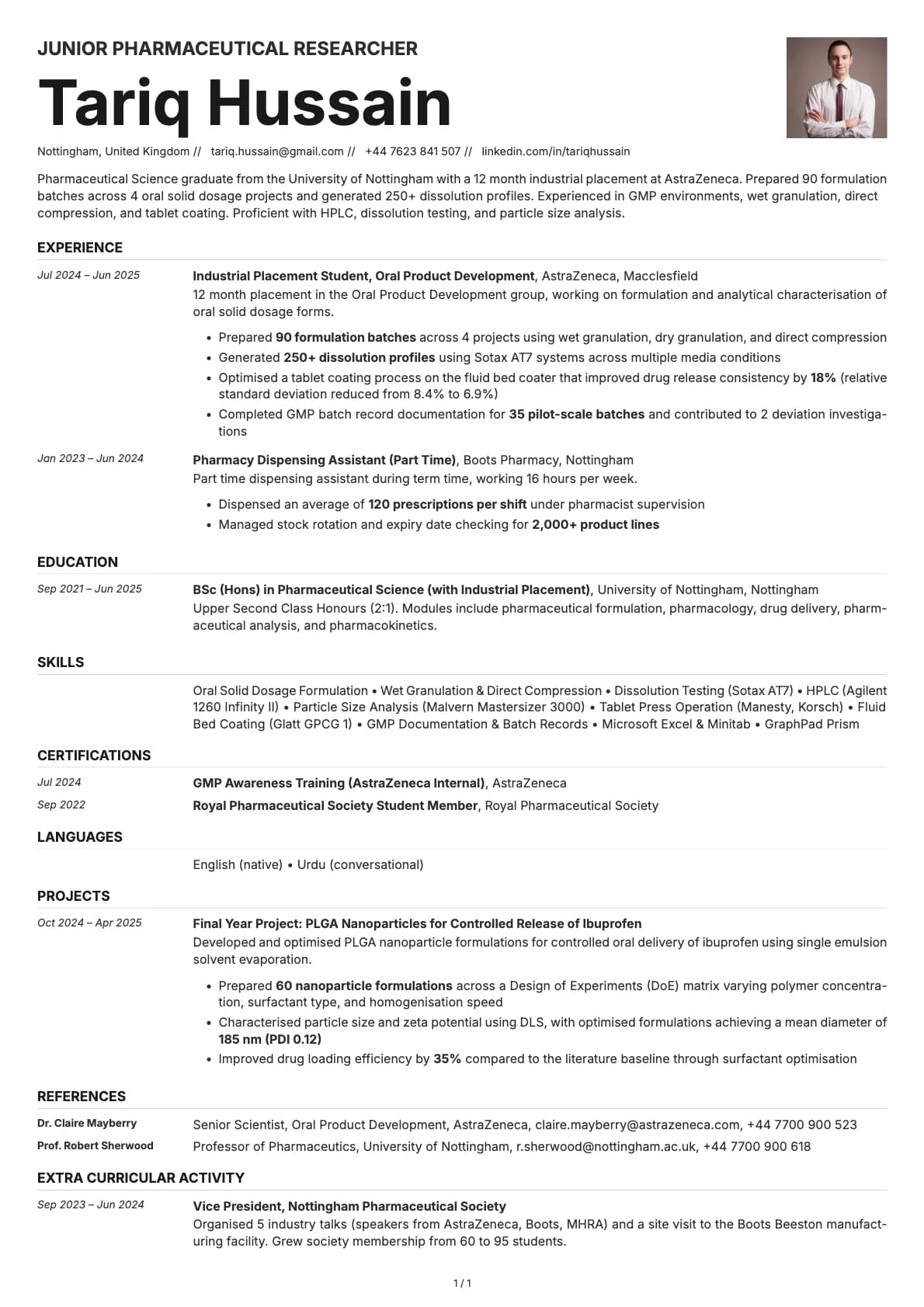
Junior Pharmaceutical Researcher
A junior pharmaceutical researcher resume example for pharmaceutical science graduates, showing formulation work, dissolution testing, and GMP experience.