Junior Pharmaceutical Researcher Resume Example
A junior pharmaceutical researcher resume example for pharmaceutical science graduates, showing formulation work, dissolution testing, and GMP experience.

Laddro Team
Free to use. No account needed to start.
Free to use. No account needed to start.
Overview
Pharmaceutical research roles are among the most sought after graduate positions in the UK life sciences sector. Companies like AstraZeneca, GSK, Pfizer, and smaller CROs receive hundreds of applications for each graduate opening. The resumes that make the shortlist are the ones that demonstrate real formulation, analytical, or process development experience, not just a degree certificate.
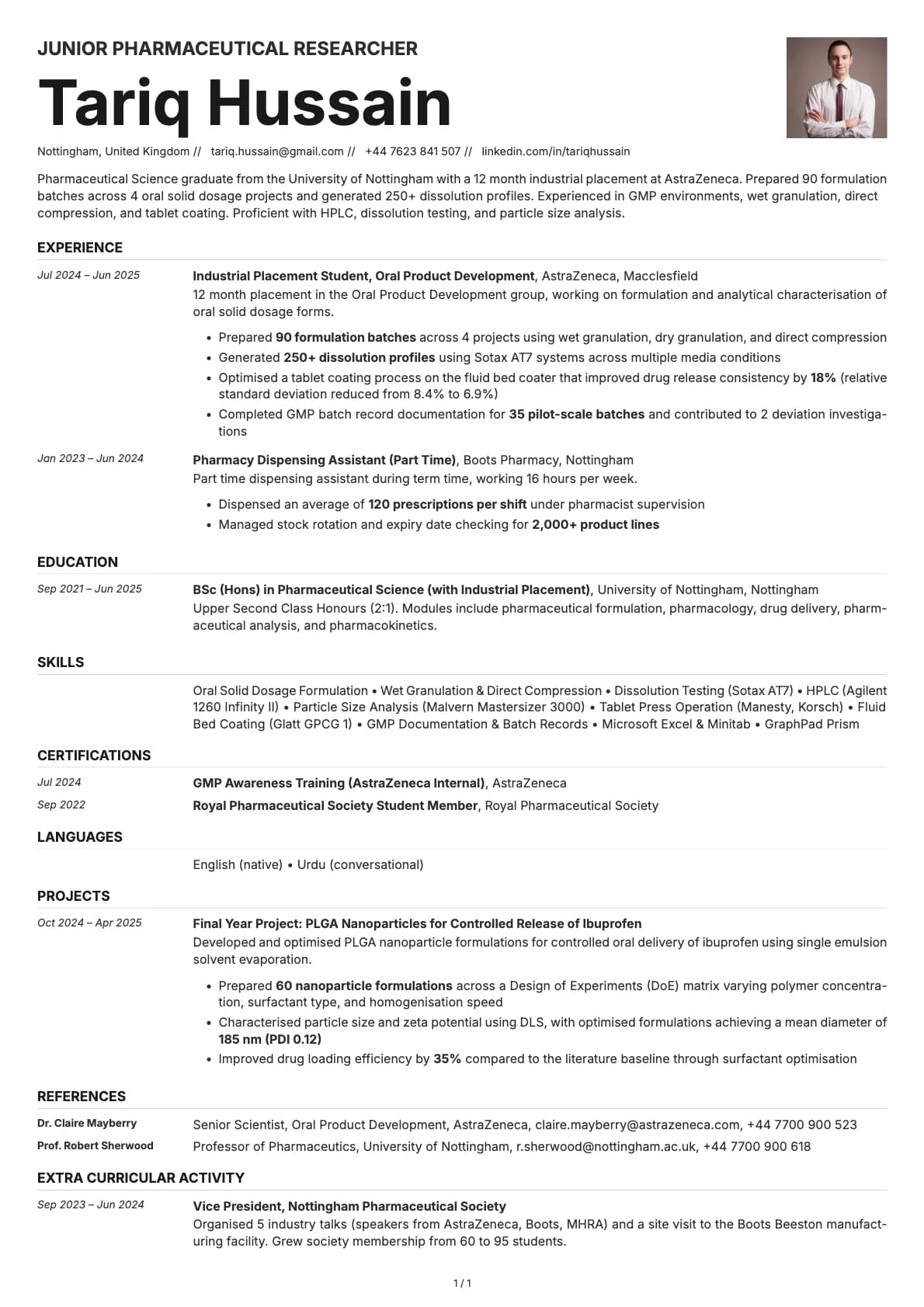
This resume belongs to Tariq, a Pharmaceutical Science BSc graduate from the University of Nottingham who completed a 12 month industrial placement at AstraZeneca's Macclesfield site. His resume works because it reads like a summary of actual project contributions: 90 formulation batches prepared, 250+ dissolution profiles generated, and a tablet coating optimisation that improved drug release consistency by 18%.
Industrial placement in pharma
For pharmaceutical research roles, a placement year at a major pharma company or CRO is extremely valuable. Tariq's year at AstraZeneca put him in a GMP environment working on oral solid dosage formulation. He names specific equipment (tablet press, fluid bed coater, dissolution bath), quantifies his output, and ties his work to real project milestones.
"Prepared 90 formulation batches across 4 oral solid dosage projects using wet granulation and direct compression" tells the hiring manager he has hands on manufacturing experience at scale.
GMP and regulatory awareness
Pharmaceutical companies operate under Good Manufacturing Practice. If you worked in a GMP classified area, mention it. If you completed GMP training, documented batch records, or participated in deviation investigations, include those details. Tariq's resume mentions GMP compliance, batch record documentation, and participation in 2 deviation investigations.
These regulatory skills are hard to teach and highly valued. A graduate who already understands GMP documentation will be productive much faster than one who does not.
Analytical techniques for pharma
Dissolution testing, HPLC, and particle size analysis are the bread and butter of pharmaceutical development labs. Tariq lists these alongside specific instruments (Sotax AT7 dissolution bath, Agilent 1260 HPLC, Malvern Mastersizer 3000). Including model numbers shows genuine familiarity rather than theoretical knowledge.
Formulation science projects
Your final year project should demonstrate formulation thinking. Tariq's dissertation on nanoparticle drug delivery systems shows he can work at the intersection of materials science and pharmaceutics. He prepared 60 nanoparticle formulations, characterised them using DLS and TEM, and achieved a 35% improvement in drug loading efficiency.
Build your own version
Open this layout in the builder and swap in your own details. It takes a few minutes.
Free to use. No account needed to start.
Was this resume example helpful?
Rate this example to help us create better content for you.
4.7 average from 103 ratingsRelated resume examples
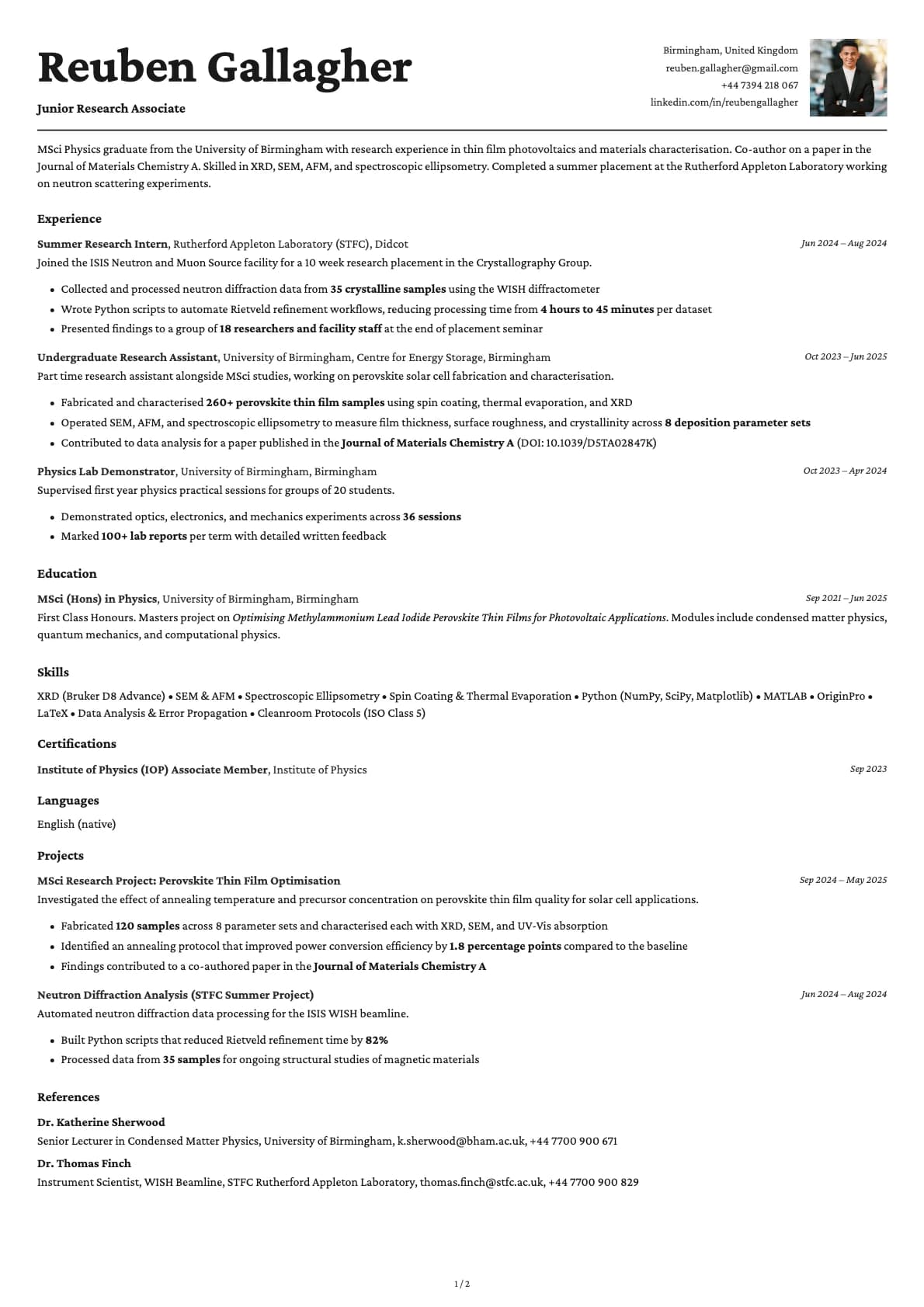
Junior Research Associate
A junior research associate resume example for physics MSci graduates, showing how to present lab research, publications, and technical skills.
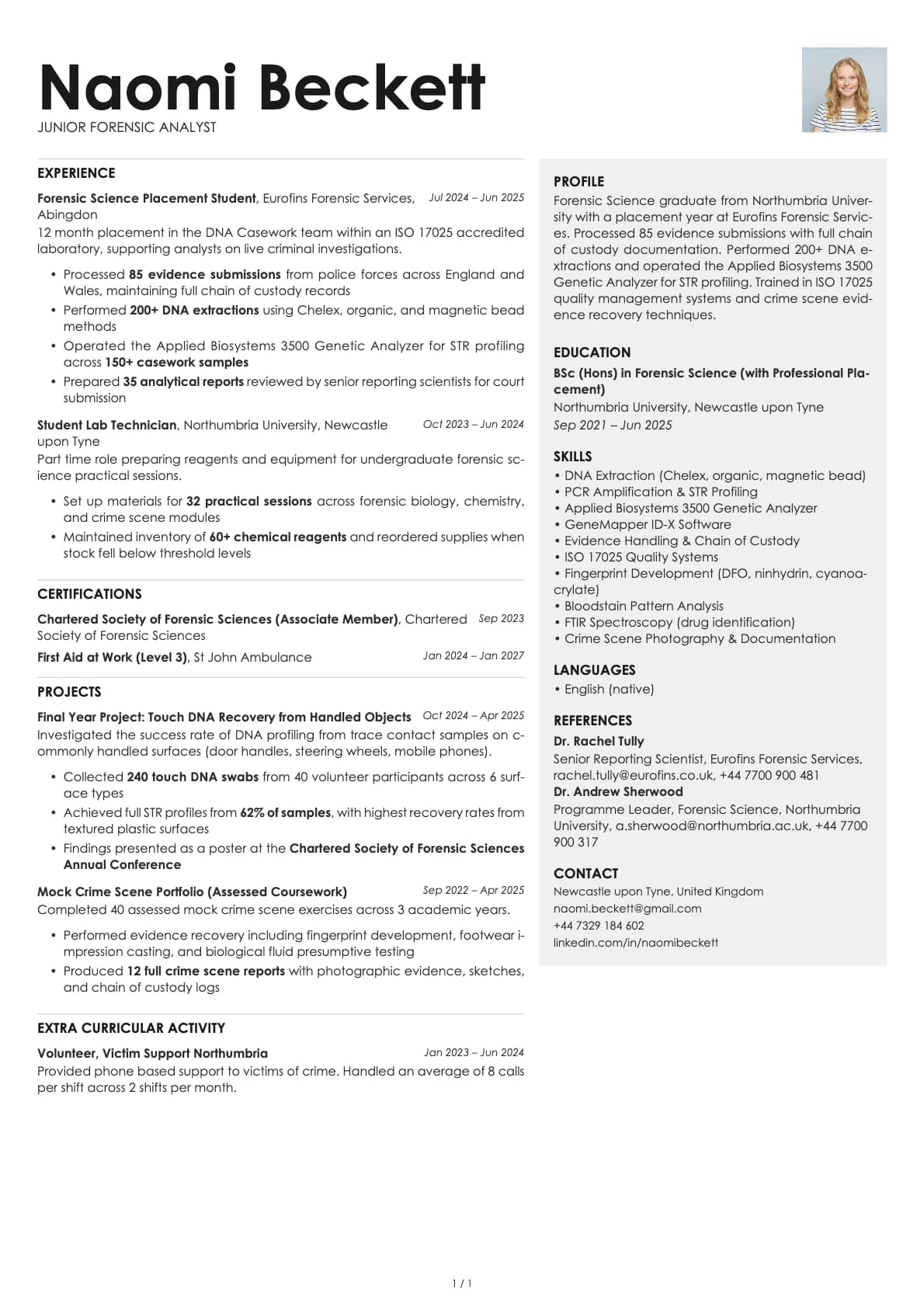
Junior Forensic Analyst
A junior forensic analyst resume example for forensic science graduates, showing how to present lab techniques, chain of custody, and casework experience.
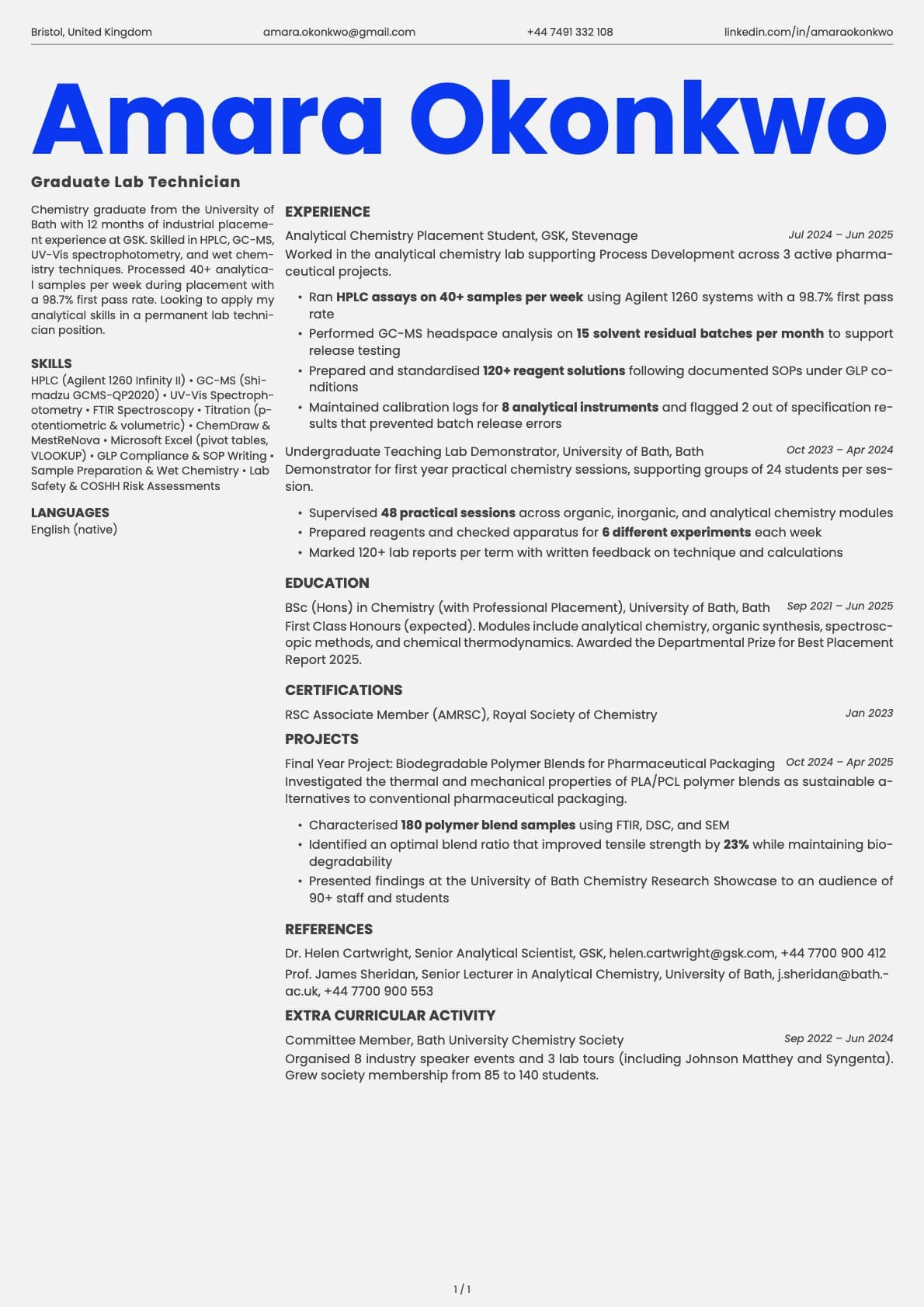
Graduate Lab Technician
A graduate lab technician resume example showing how to present your chemistry BSc, lab skills, and analytical techniques to land your first lab role.
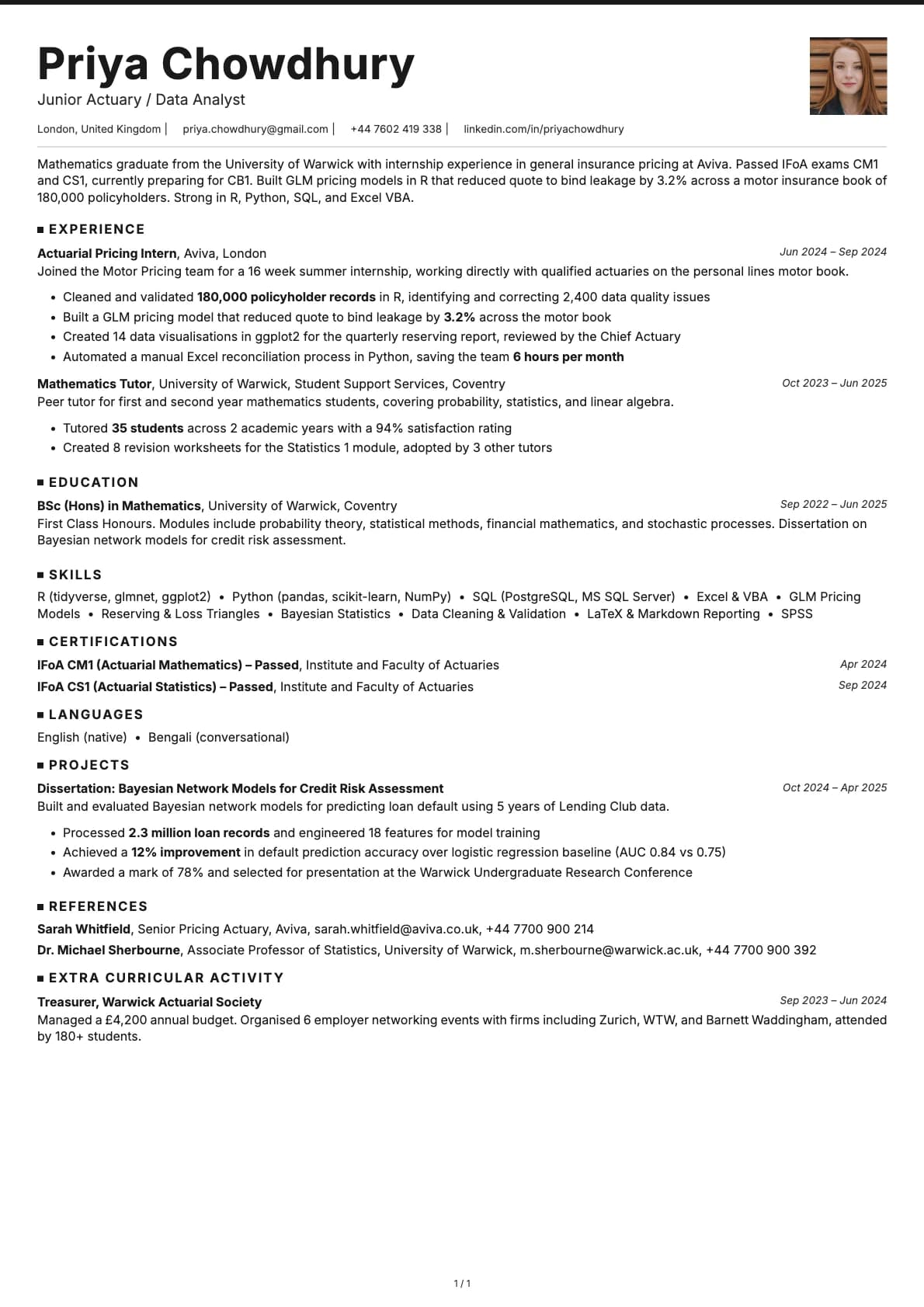
Junior Actuary / Data Analyst
A junior actuary resume example for maths graduates, showing how to present actuarial exams, R and Python skills, and quantitative analysis experience.
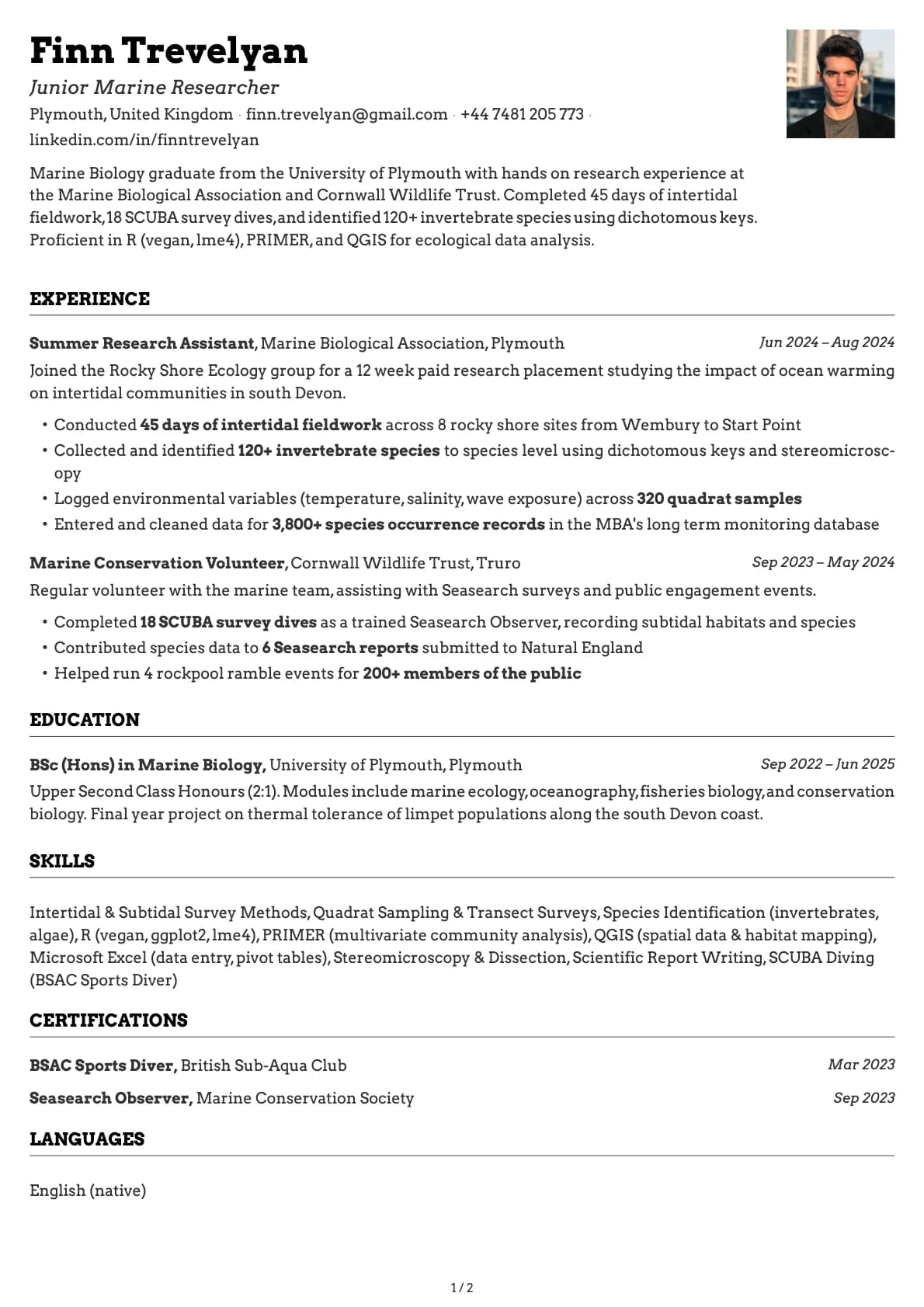
Junior Marine Researcher
A junior marine researcher resume example for marine biology graduates, covering fieldwork, species surveys, and data collection techniques.
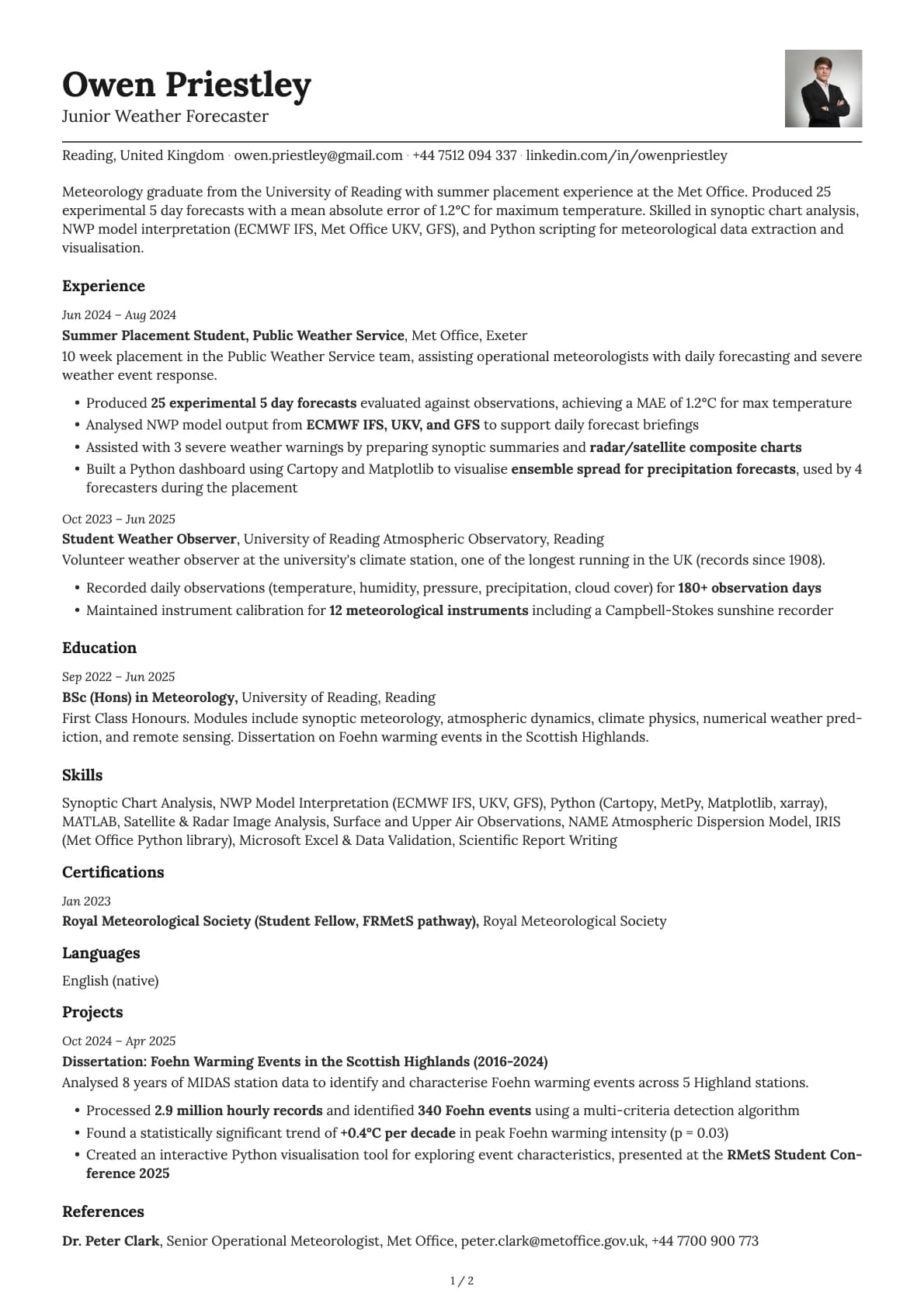
Junior Weather Forecaster
A junior weather forecaster resume example for meteorology graduates, showing how to present NWP models, synoptic analysis, and forecasting tools.
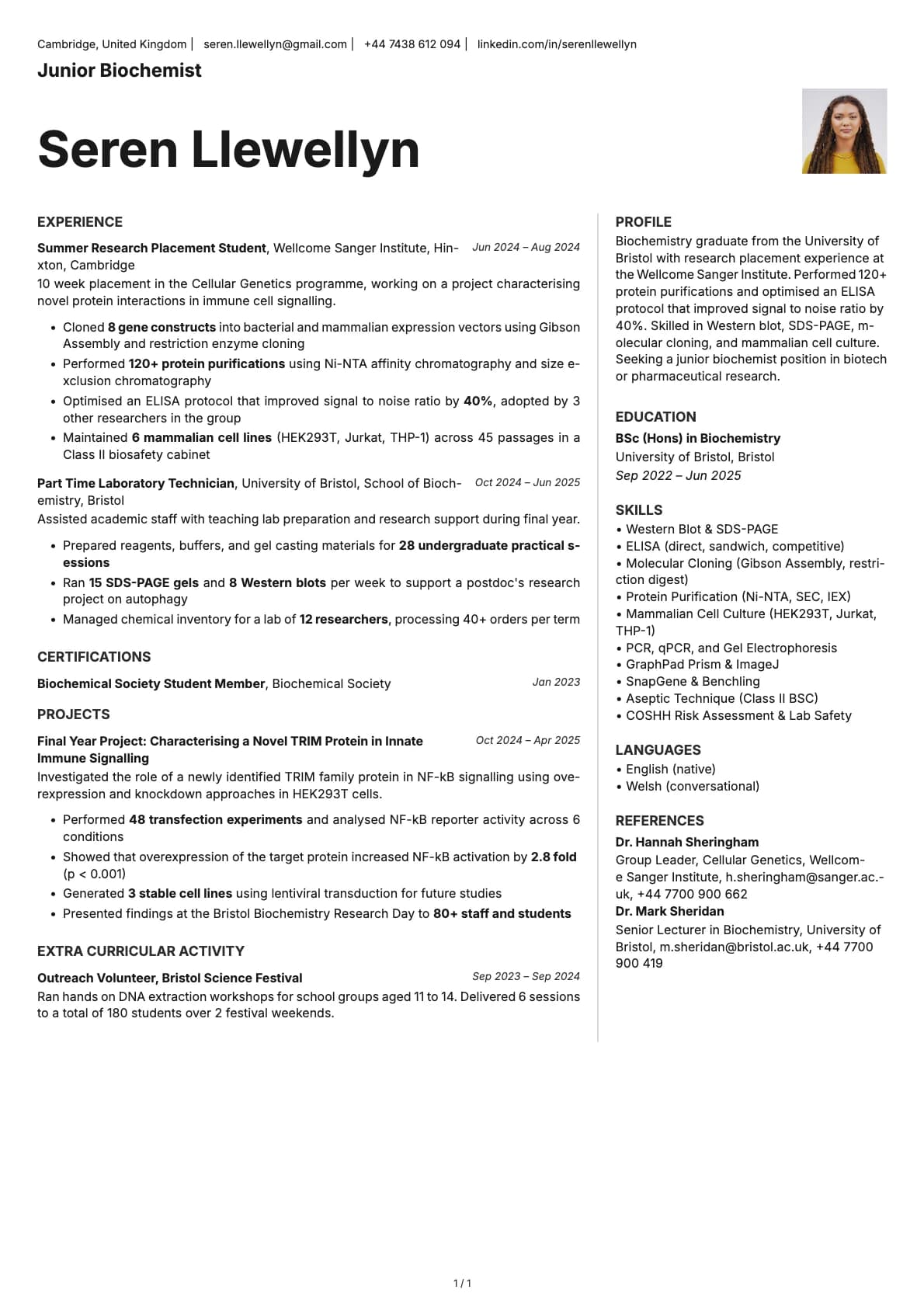
Junior Biochemist
A junior biochemist resume example for biochemistry graduates, covering protein assays, cell culture, and molecular biology techniques.
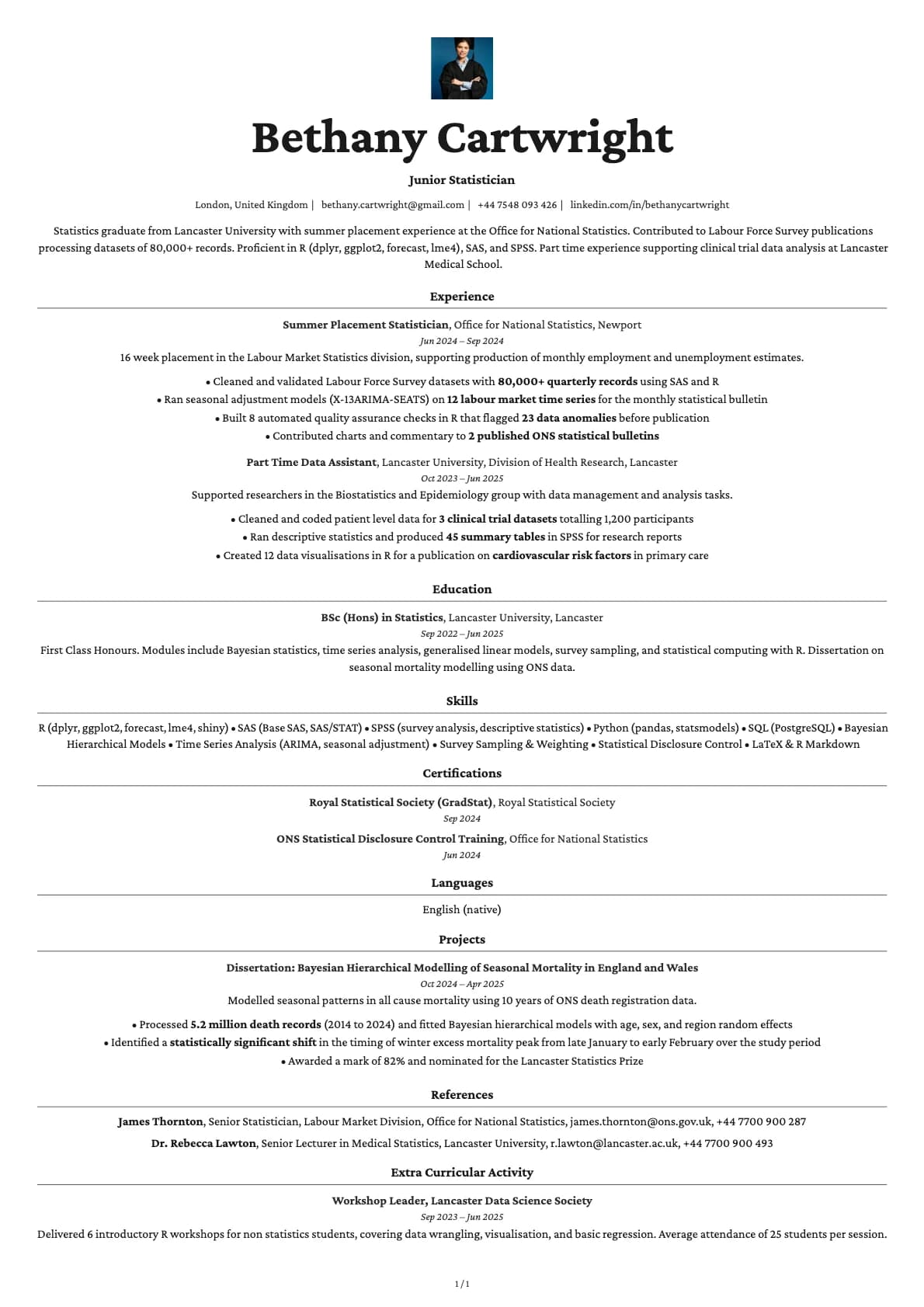
Junior Statistician
A junior statistician resume example for statistics graduates, showing how to present R, SPSS, SAS experience, and government or health statistics work.