Junior Weather Forecaster Resume Example
A junior weather forecaster resume example for meteorology graduates, showing how to present NWP models, synoptic analysis, and forecasting tools.

Laddro Team
Free to use. No account needed to start.
Free to use. No account needed to start.
Overview
Meteorology is a small field in the UK. The Met Office, a handful of private weather companies, and some aviation consultancies account for most of the forecasting roles. That means competition is fierce for graduate positions, and your resume needs to demonstrate that you understand operational forecasting, not just atmospheric physics theory.
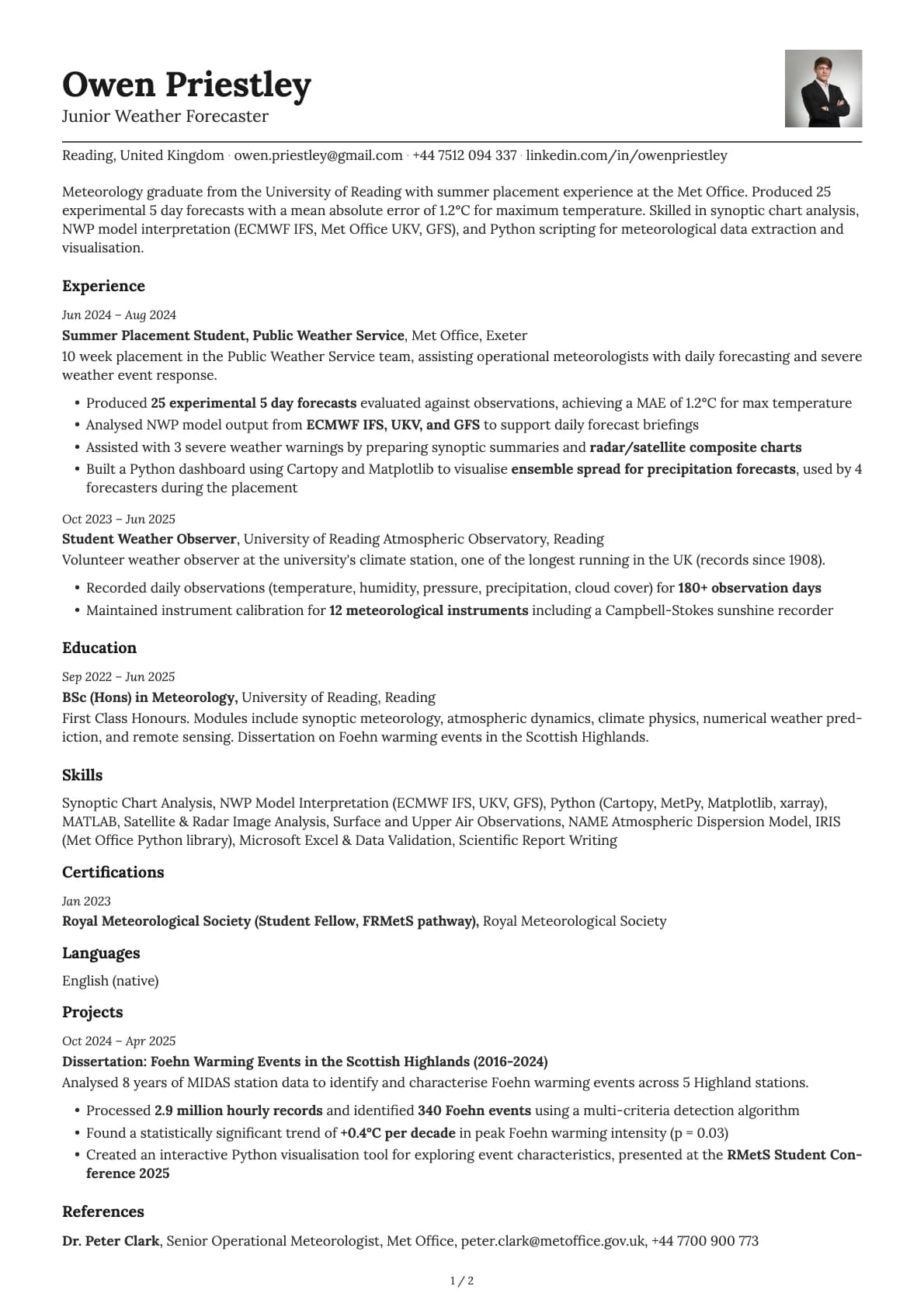
This resume belongs to Owen, a Meteorology BSc graduate from the University of Reading who completed a summer placement at the Met Office in Exeter. His resume works because it bridges the gap between academic knowledge and operational skill. He names specific NWP models (ECMWF IFS, Met Office UKV), mentions synoptic chart analysis, and quantifies his forecasting accuracy during his placement.
Met Office placement is the gold standard
If you completed a placement, internship, or vacation scheme at the Met Office, lead with it. Owen's summer placement in the Public Weather Service team gave him exposure to operational forecasting cycles, media briefings, and severe weather warnings. Each bullet names what he did and how his work was used.
"Produced 25 experimental 5 day forecasts during the placement with a mean absolute error of 1.2°C for maximum temperature" is the kind of specific, verifiable claim that gets interviews.
NWP models and analysis tools
For forecasting roles, your technical toolkit matters enormously. Owen lists ECMWF IFS, Met Office UKV, GFS, and the NAME dispersion model. He also mentions Python scripting for data extraction and visualisation, which is increasingly expected for modern meteorological roles.
If you have used specific tools like IRIS, Cartopy, MetPy, or IDV, list them. Many forecasting roles now require programming alongside traditional synoptic skills.
Academic projects with real world applications
Owen's dissertation on Foehn warming events in the Scottish Highlands shows applied meteorology. He analysed 8 years of MIDAS station data (2.9 million hourly records), identified 340 Foehn events, and found a statistically significant warming trend. This kind of project shows a hiring manager that you can work with real observational data at scale.
Professional memberships
The Royal Meteorological Society (RMetS) offers student and graduate membership. If you hold it, include it. For some Met Office roles, Chartered Meteorologist (CMet) status is the long term goal, and showing you are already on the pathway signals commitment to the profession.
Build your own version
Open this layout in the builder and swap in your own details. It takes a few minutes.
Free to use. No account needed to start.
Was this resume example helpful?
Rate this example to help us create better content for you.
4.6 average from 87 ratingsRelated resume examples
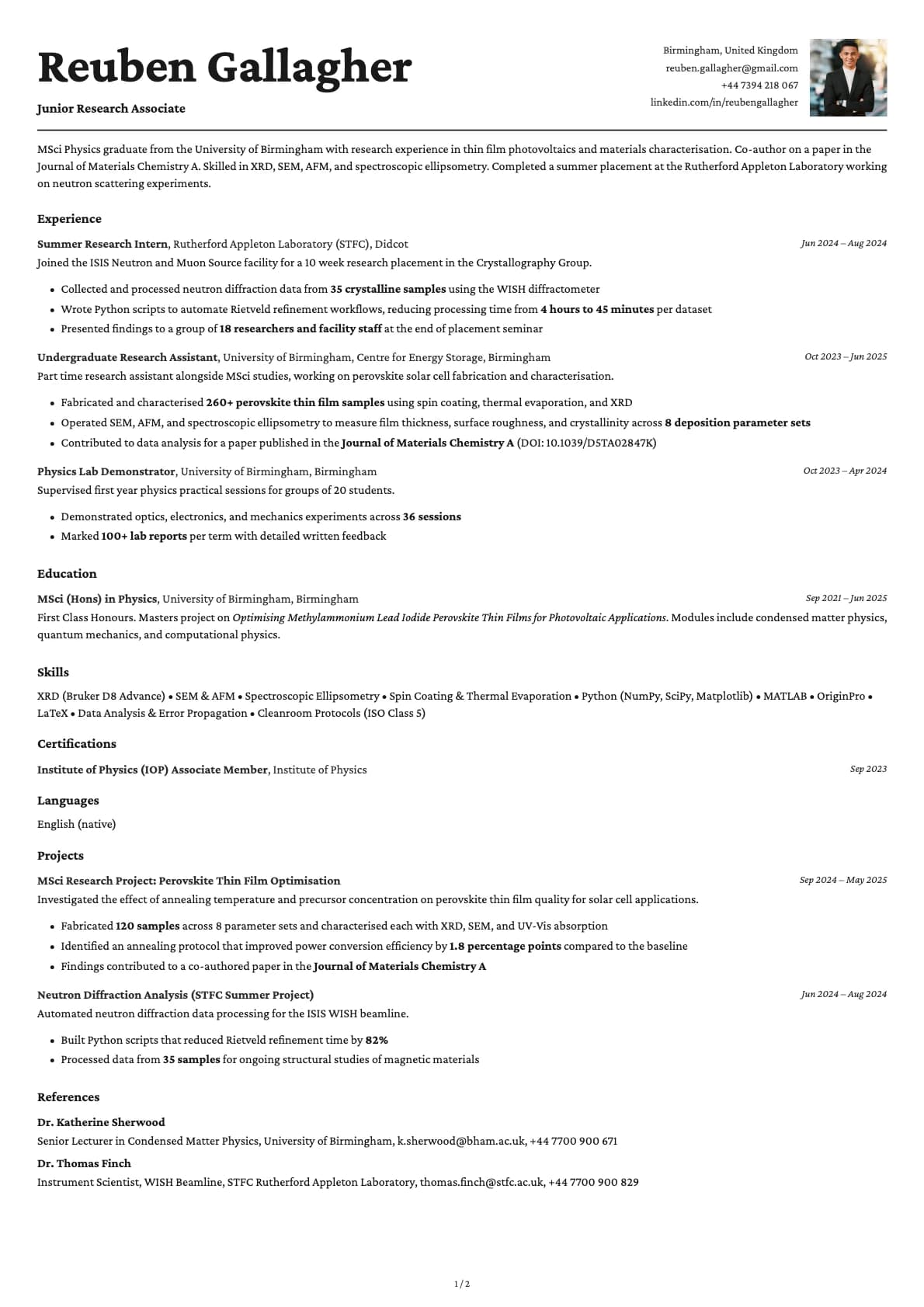
Junior Research Associate
A junior research associate resume example for physics MSci graduates, showing how to present lab research, publications, and technical skills.
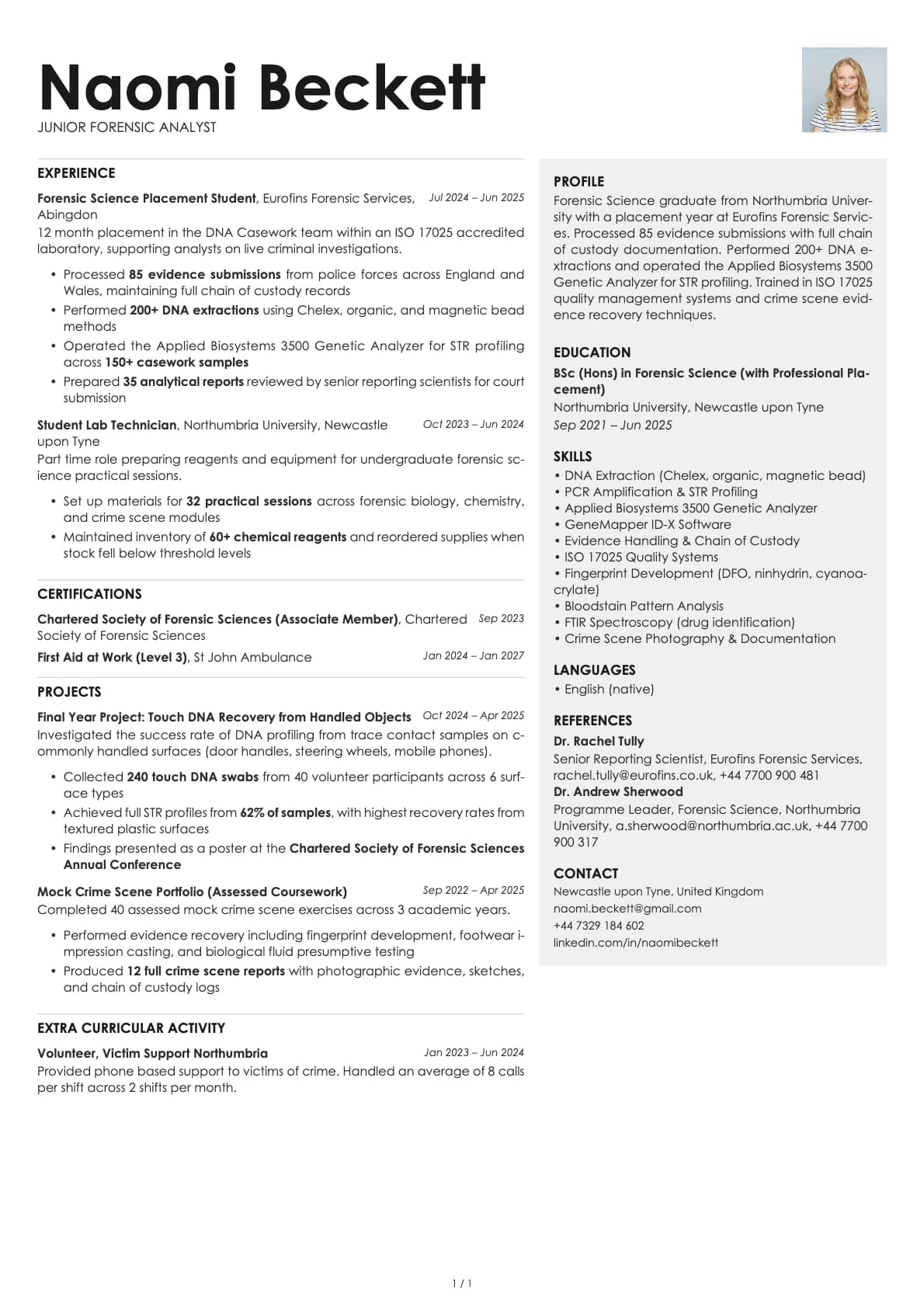
Junior Forensic Analyst
A junior forensic analyst resume example for forensic science graduates, showing how to present lab techniques, chain of custody, and casework experience.
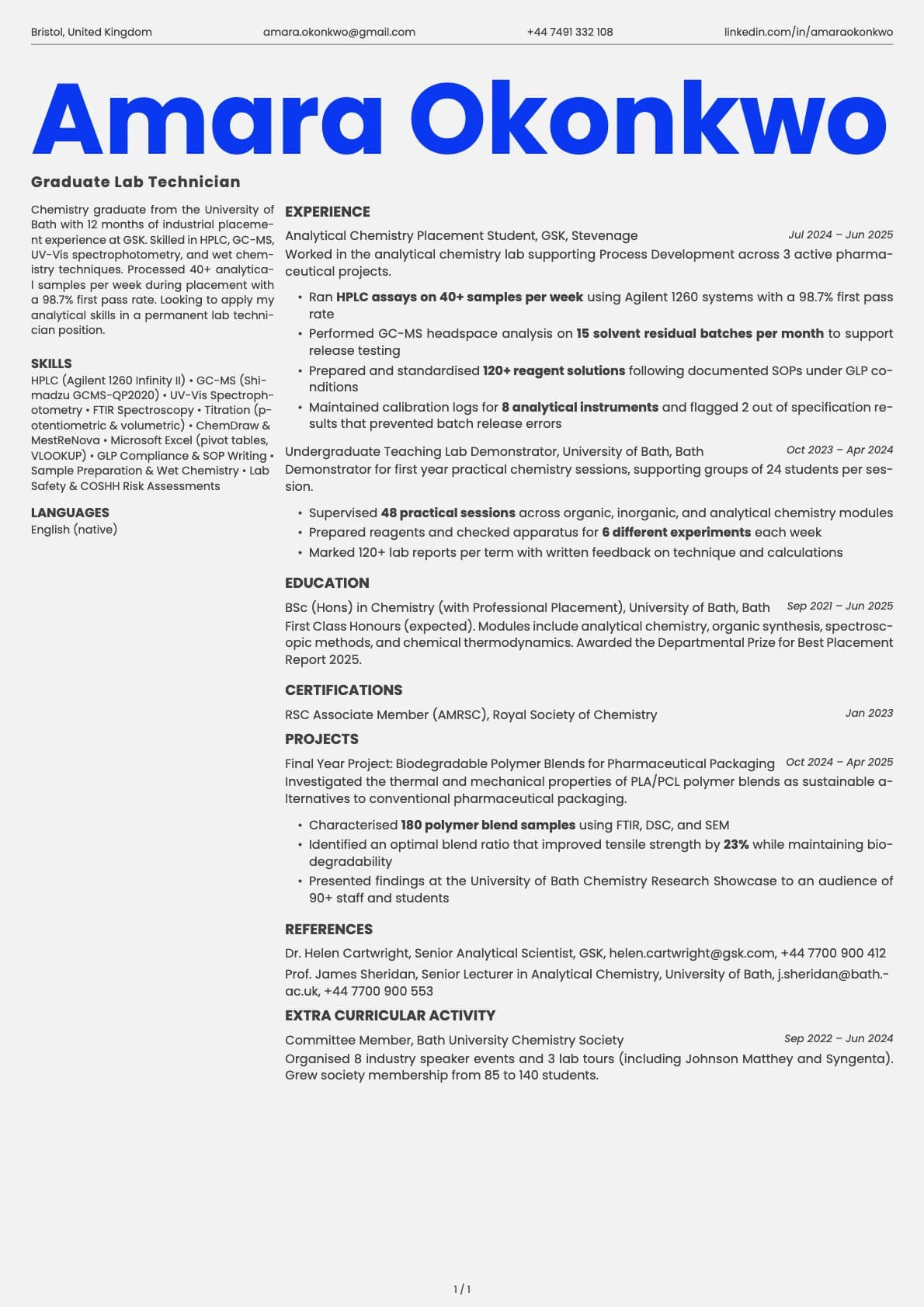
Graduate Lab Technician
A graduate lab technician resume example showing how to present your chemistry BSc, lab skills, and analytical techniques to land your first lab role.
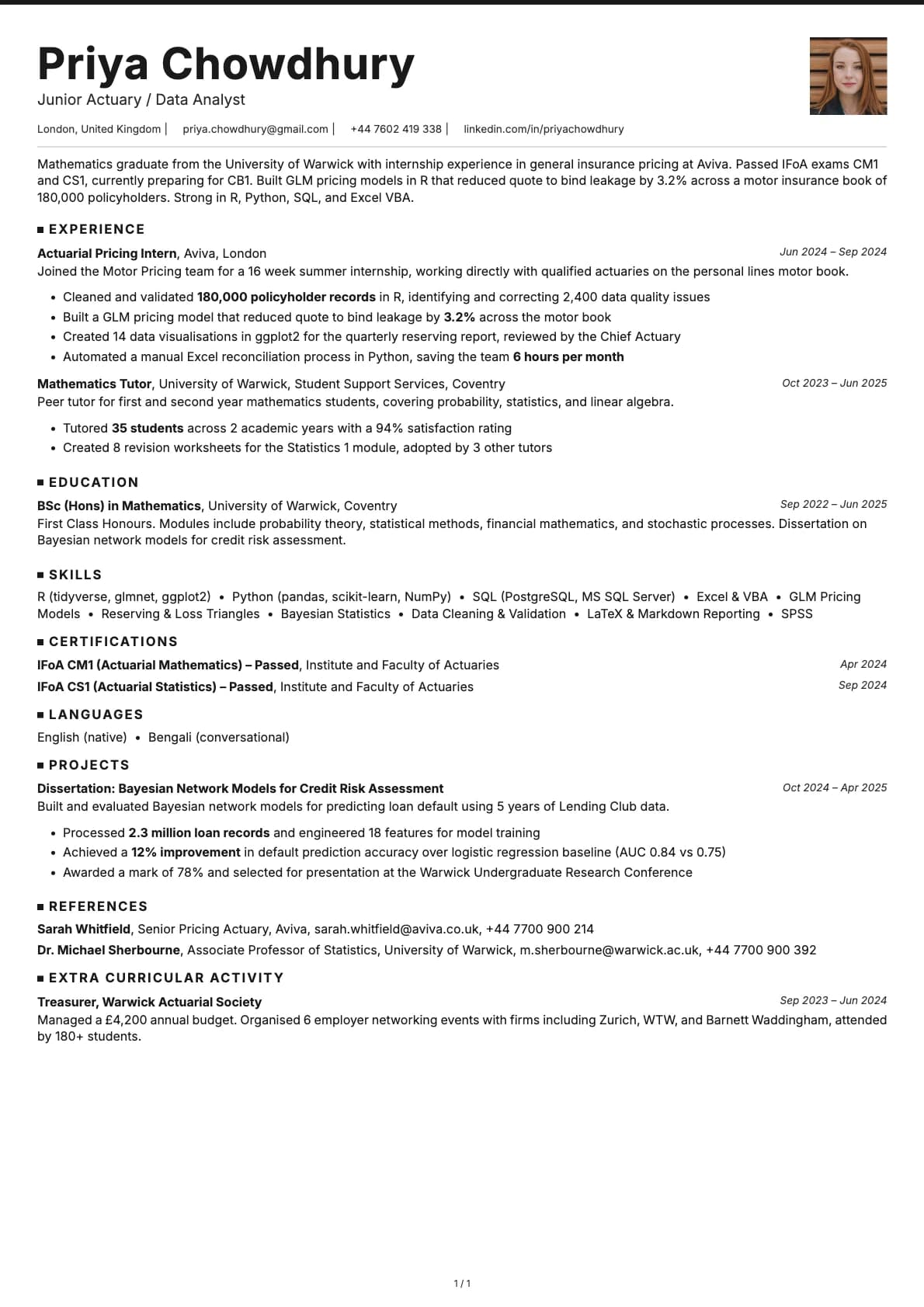
Junior Actuary / Data Analyst
A junior actuary resume example for maths graduates, showing how to present actuarial exams, R and Python skills, and quantitative analysis experience.
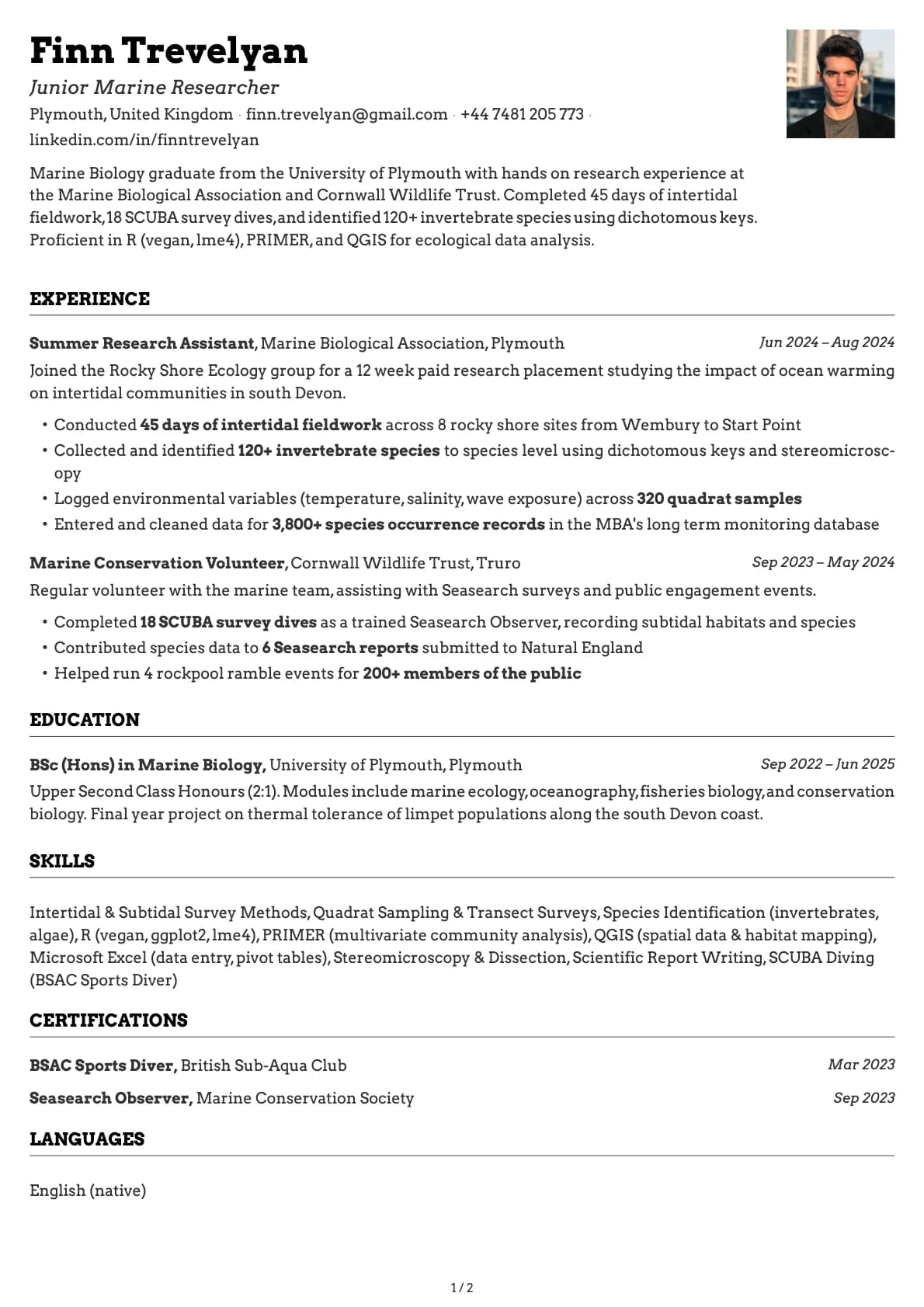
Junior Marine Researcher
A junior marine researcher resume example for marine biology graduates, covering fieldwork, species surveys, and data collection techniques.
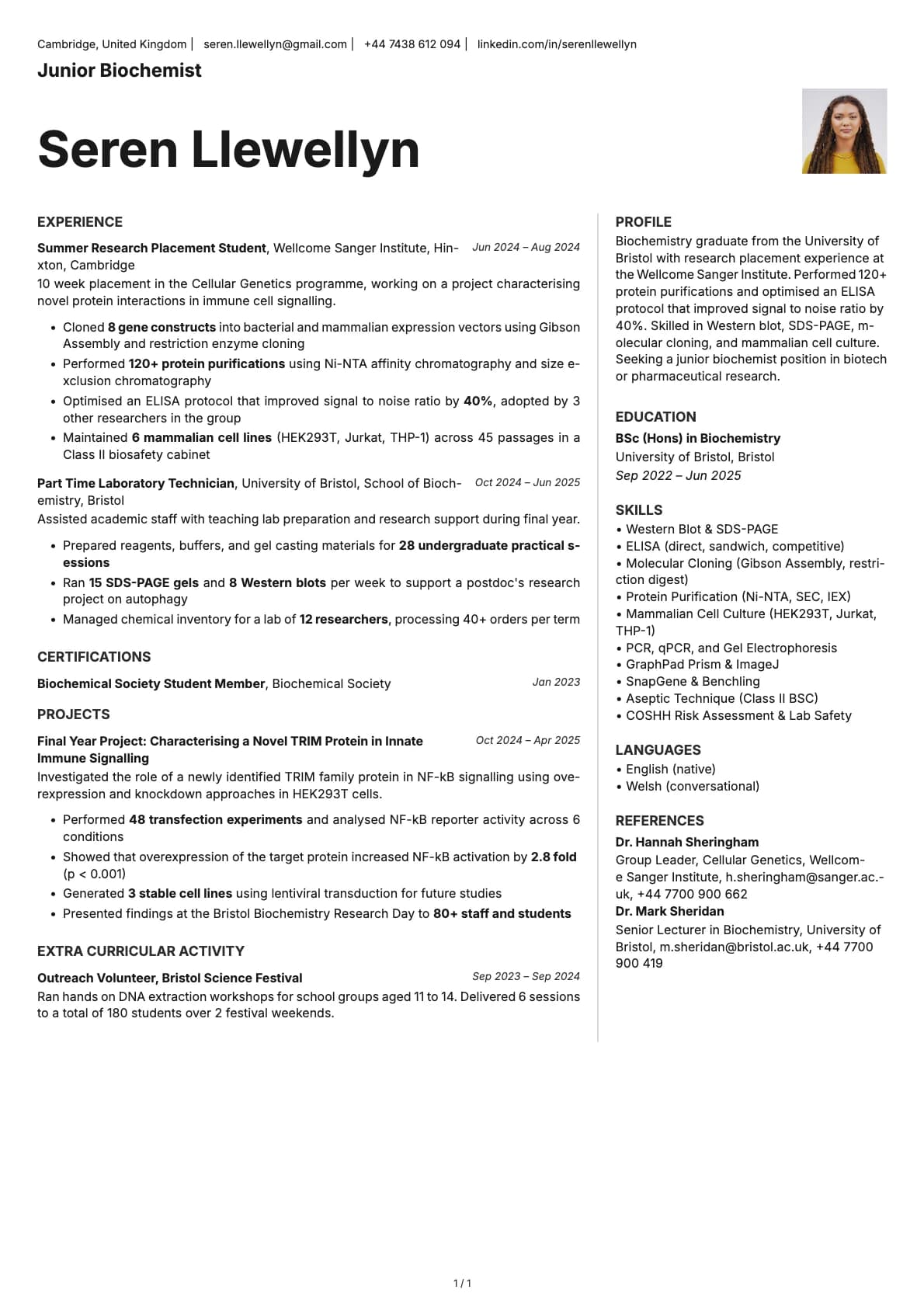
Junior Biochemist
A junior biochemist resume example for biochemistry graduates, covering protein assays, cell culture, and molecular biology techniques.
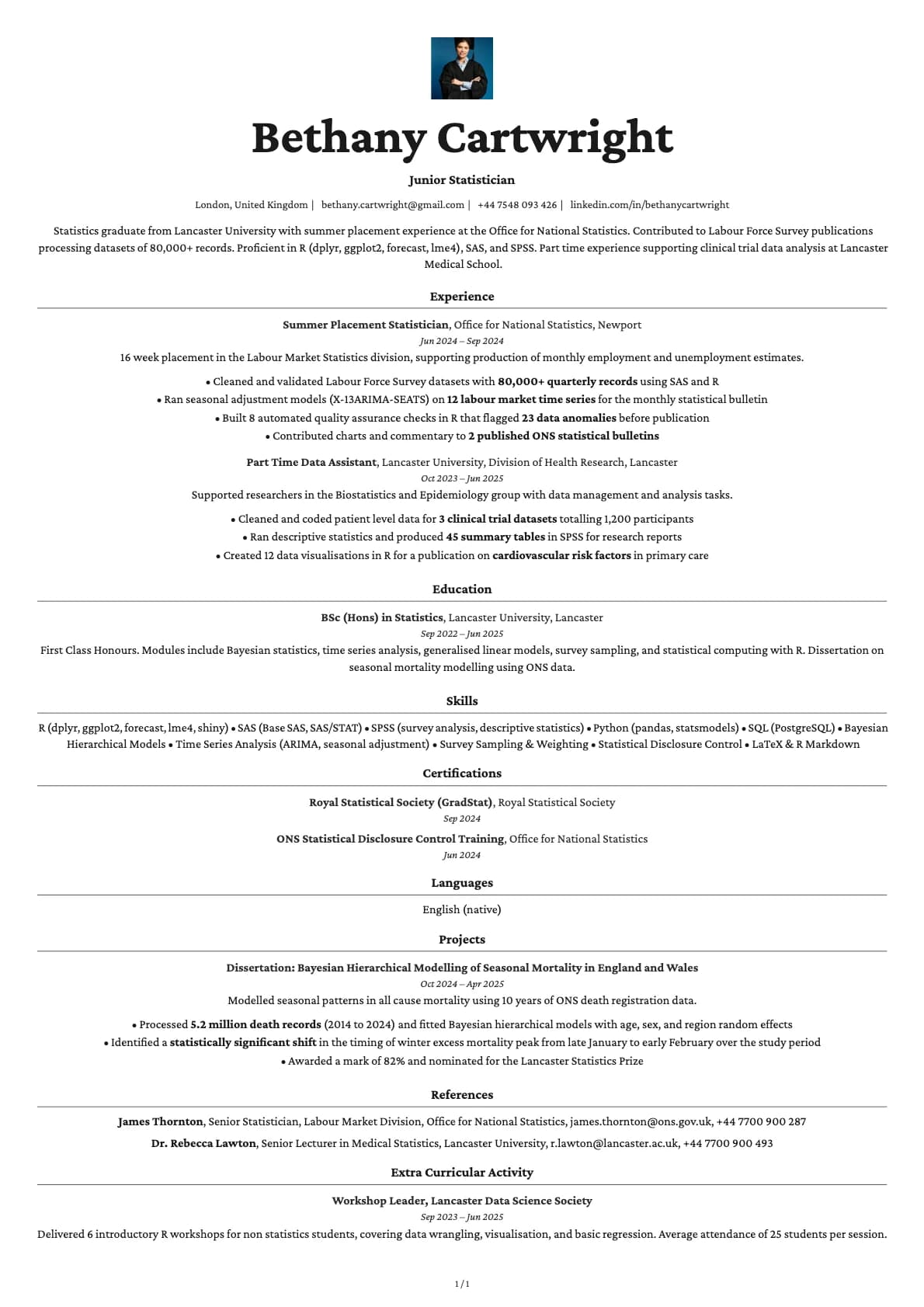
Junior Statistician
A junior statistician resume example for statistics graduates, showing how to present R, SPSS, SAS experience, and government or health statistics work.
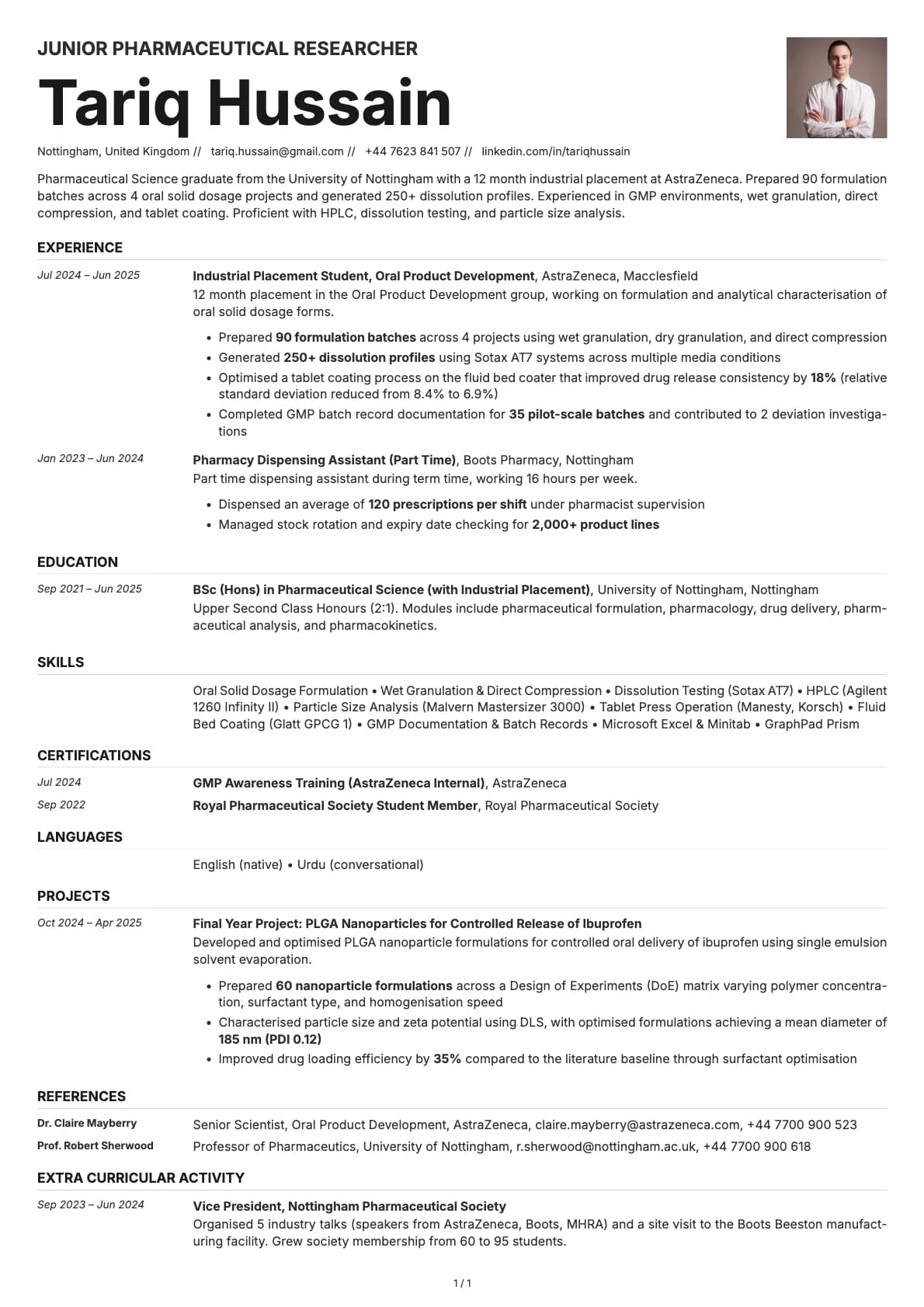
Junior Pharmaceutical Researcher
A junior pharmaceutical researcher resume example for pharmaceutical science graduates, showing formulation work, dissolution testing, and GMP experience.