Physiotherapist Cover Letter Example
A physiotherapist cover letter example showing how to present MSK caseload, rehabilitation pathways.

Laddro Team
Free to use. No account needed to start.
Free to use. No account needed to start.
What physiotherapist hiring managers want to see
Whether you are applying to an NHS band position or a private practice role, physiotherapy hiring managers want the same thing: evidence that you can manage a caseload, deliver results, and bring specialist skills the team needs. Generic cover letters about "helping people recover" do not cut it.
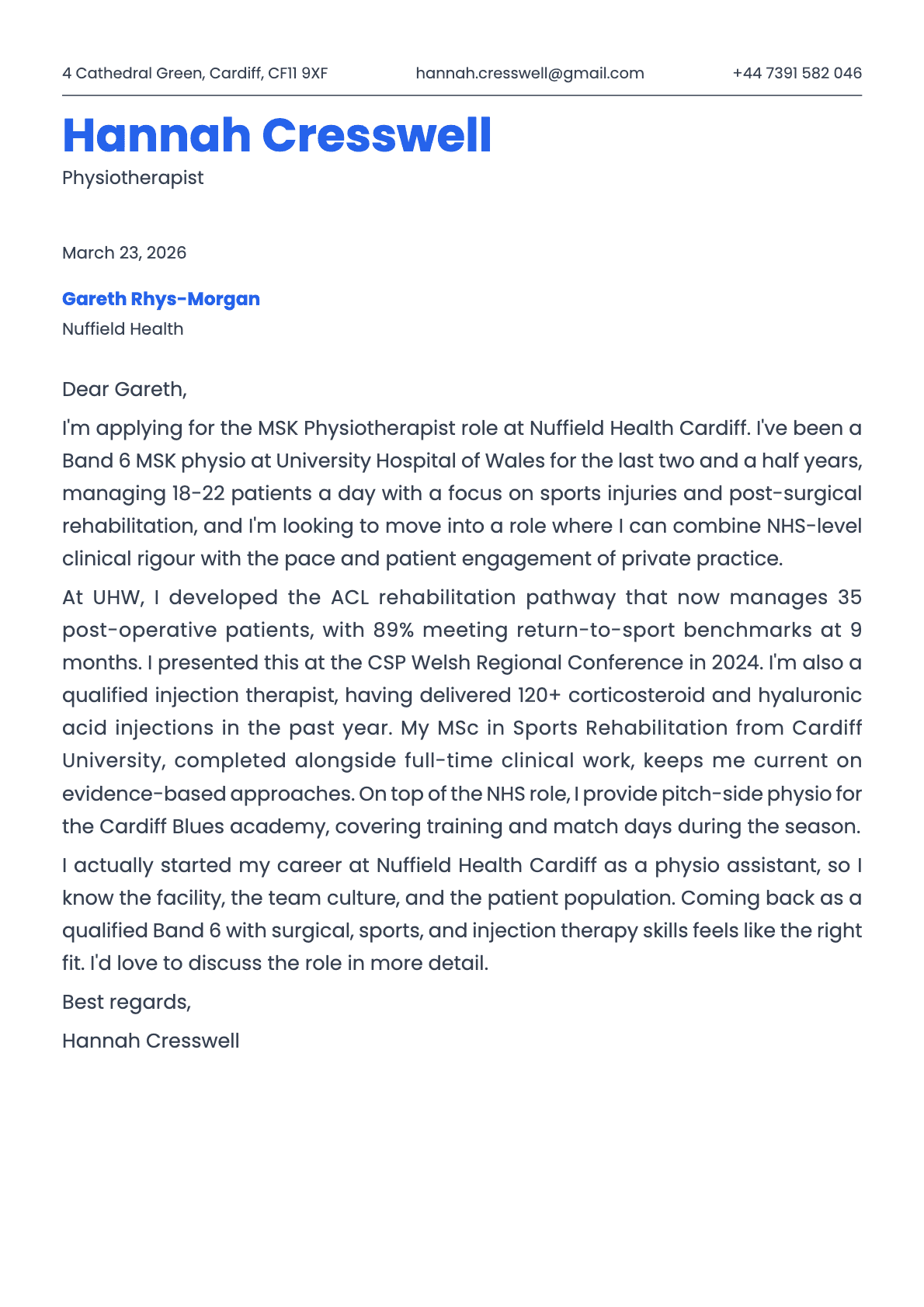
This example from Hannah Cresswell takes a practical approach. She is a Band 6 MSK physiotherapist at University Hospital of Wales, applying for a role at Nuffield Health Cardiff. Her letter is built on clinical numbers, not soft statements.
Open with your current caseload and specialism
Hannah begins by stating her banding, her daily patient volume (18 to 22 per day), and her clinical focus: sports injuries and post-surgical rehabilitation. She also names her reason for the move: combining NHS clinical rigour with the pace and patient engagement of private practice.
This opening tells the hiring manager exactly what level she operates at and what kind of work she does.
Your takeaway: Name your banding or equivalent, your daily patient numbers, and your clinical specialism. These three details set the context for everything that follows.
Prove your clinical impact with outcomes
The body of Hannah's letter is where she stands out. She developed an ACL rehabilitation pathway that now manages 35 post-operative patients with 89% meeting return-to-sport benchmarks at nine months. She presented this at the CSP Welsh Regional Conference. She has delivered over 120 corticosteroid and hyaluronic acid injections in the past year. She completed an MSc in Sports Rehabilitation alongside full-time clinical work.
She also provides pitch-side physiotherapy for the Cardiff Blues academy, which adds a sports medicine dimension to her profile.
Your takeaway: Pick two or three clinical achievements and describe them with patient numbers, outcomes, and any recognition (conferences, publications). If you have injection therapy or specialist skills, state the volume.
Use a personal connection authentically
Hannah's closing paragraph contains a detail that many candidates would overlook: she started her career at Nuffield Health Cardiff as a physio assistant. Coming back as a qualified Band 6 with surgical, sports, and injection therapy skills makes a compelling narrative. It shows loyalty and growth, not just job-hopping.
What to include in your physiotherapist cover letter
- Daily patient volume and clinical setting
- Specialism (MSK, neuro, respiratory, paediatrics) with specific conditions treated
- Rehabilitation pathways or programmes you have developed with outcome data
- Specialist skills (injection therapy, acupuncture, hydrotherapy) with volumes
- Professional development (MSc, CSP special interest groups, conference presentations)
- A specific reason for choosing this practice, trust, or clinic
What to leave out
Do not list every undergraduate placement you completed. Do not describe yourself as "broad" or "patient-centred" without backing it up. And do not spend a paragraph explaining why physiotherapy matters. The hiring manager already knows.
Final thoughts
A strong physiotherapist cover letter reads like a clinical audit summary: it describes what you treat, how many patients you manage, and what outcomes you achieve. Combine that with specialist skills and a genuine reason for wanting the role, and you have a letter that earns an interview. Keep it practical, keep it specific, and let your clinical track record do the work.
Was this cover letter example helpful?
Rate this example to help us create better content for you.
4.7 average from 123 ratingsBuild your own version
Open this layout in the builder and swap in your own details. It takes a few minutes.
Free to use. No account needed to start.
Related cover letter examples
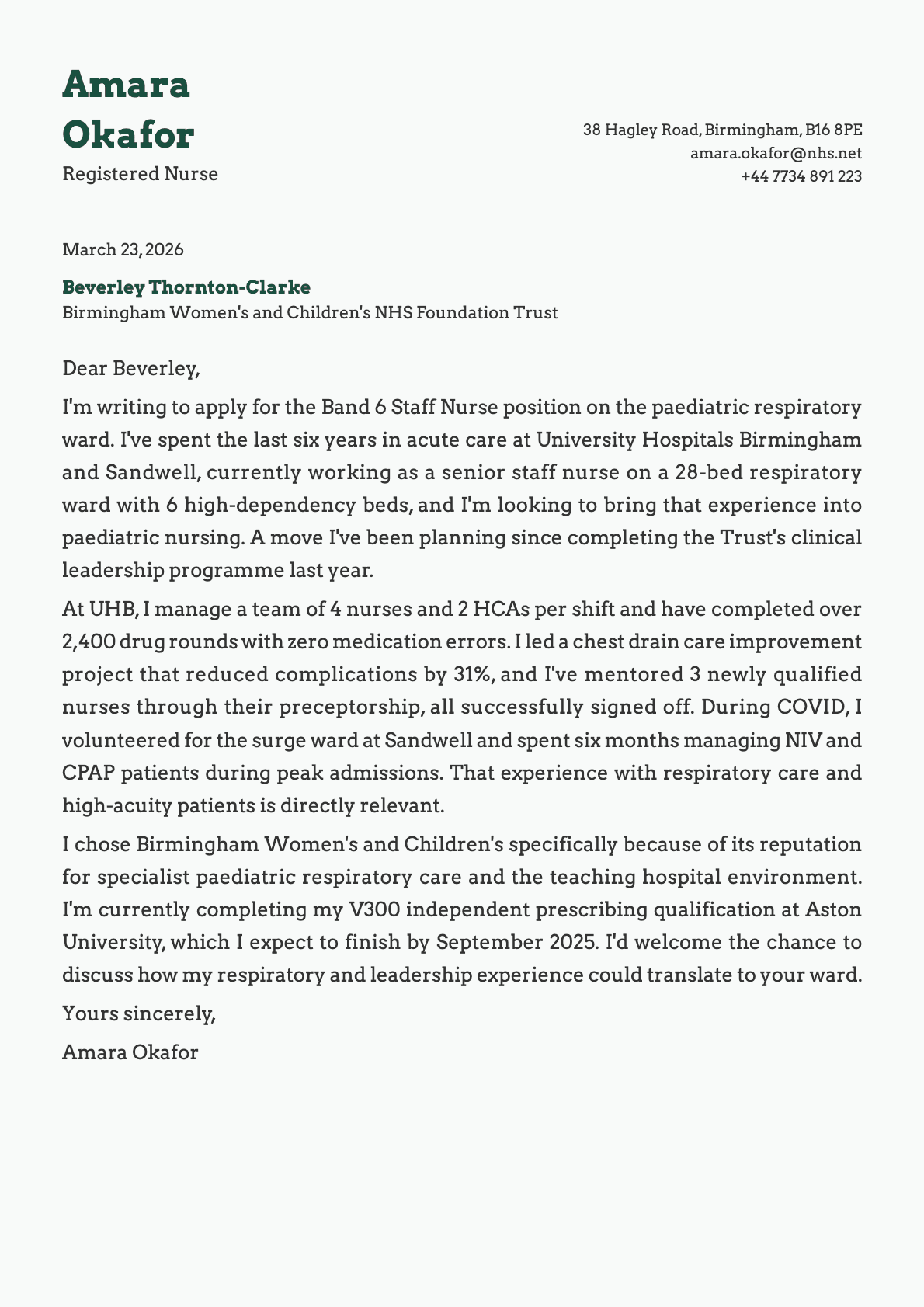
Registered Nurse
A registered nurse cover letter example showing how to present acute care experience, clinical leadership.
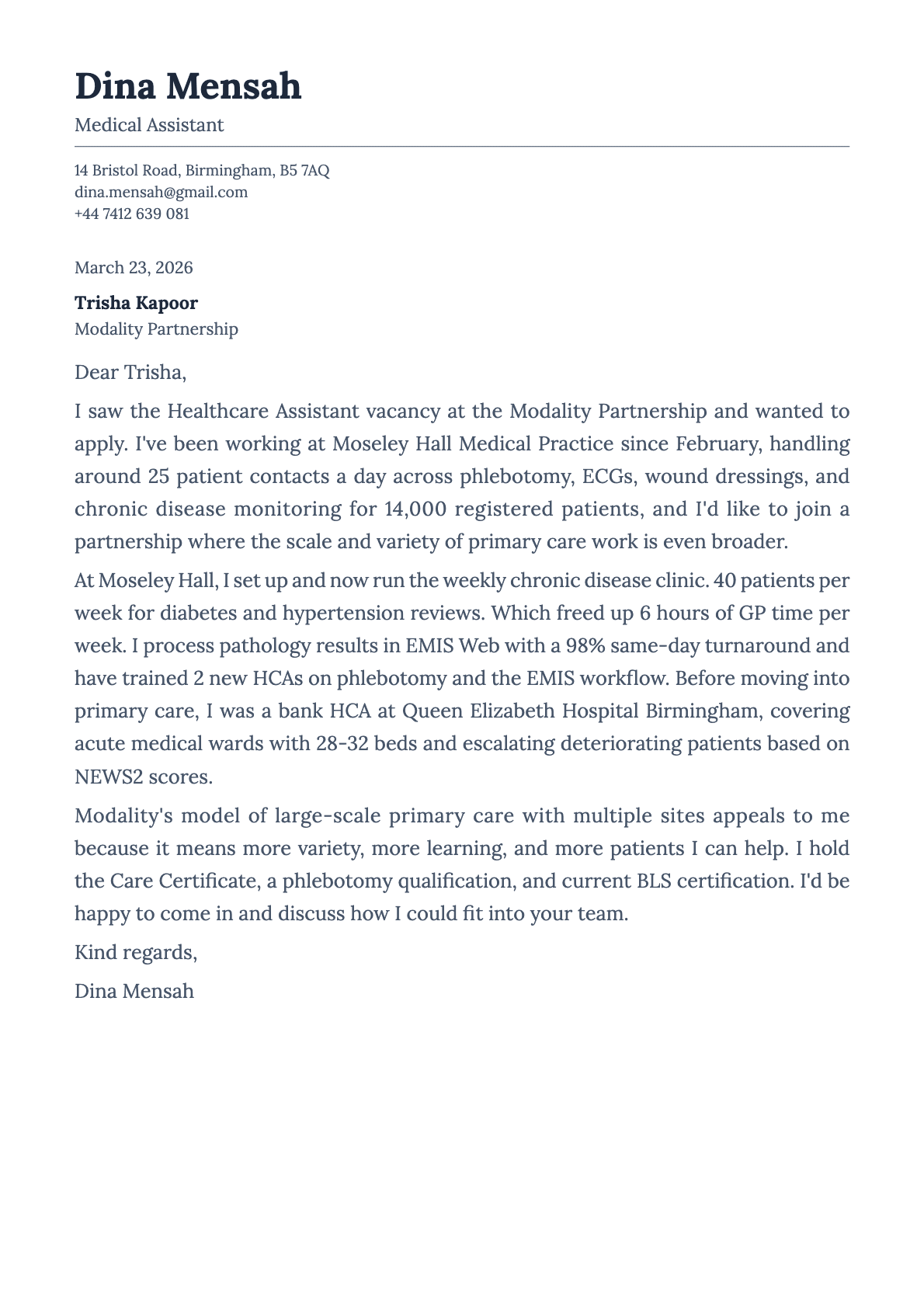
Medical Assistant
A medical assistant cover letter example showing how to present clinical skills, patient volumes, and GP practice experience when applying to a large.
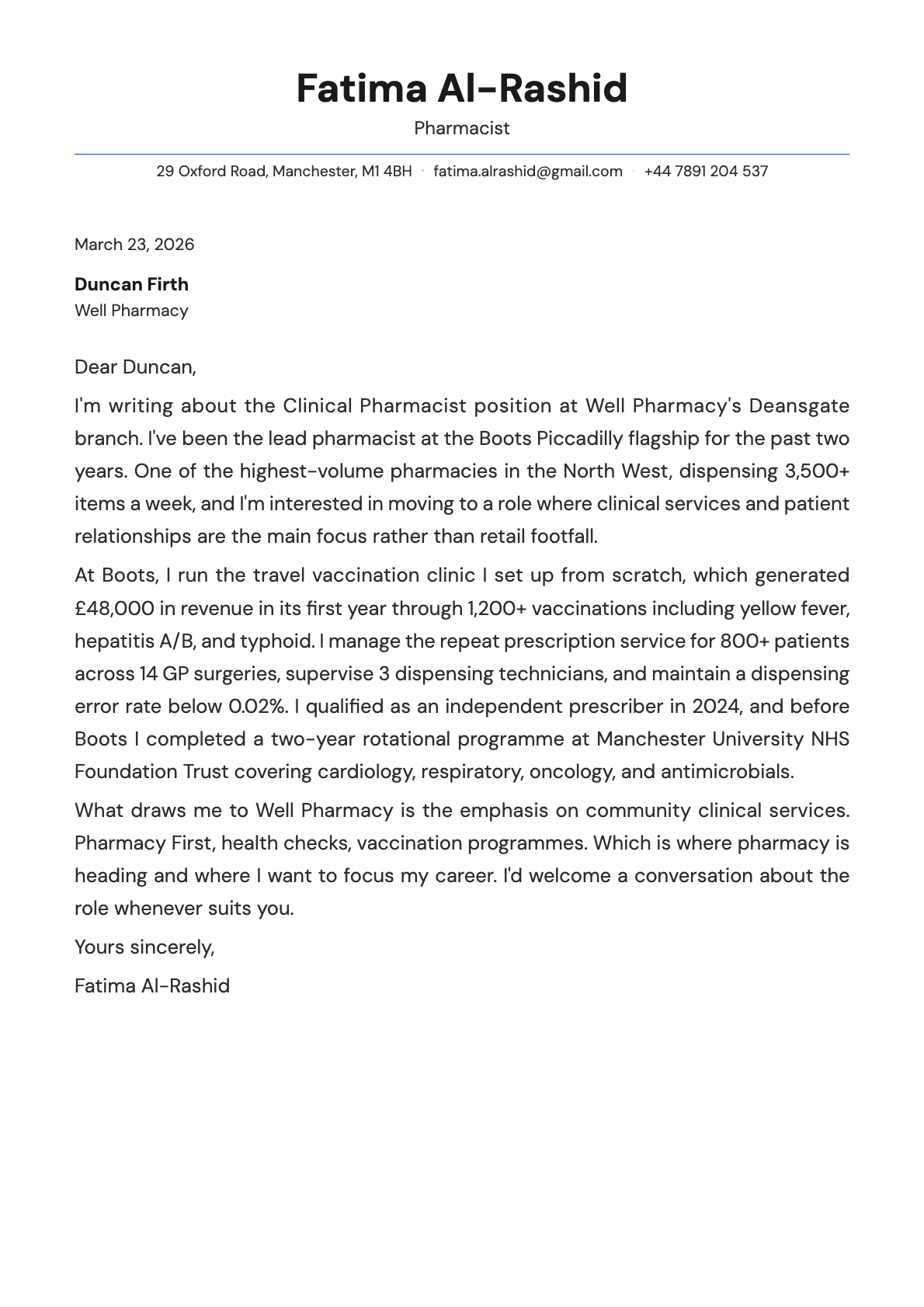
Pharmacist
A pharmacist cover letter example showing how to present clinical services, dispensing volume, and revenue generation when applying to a community.
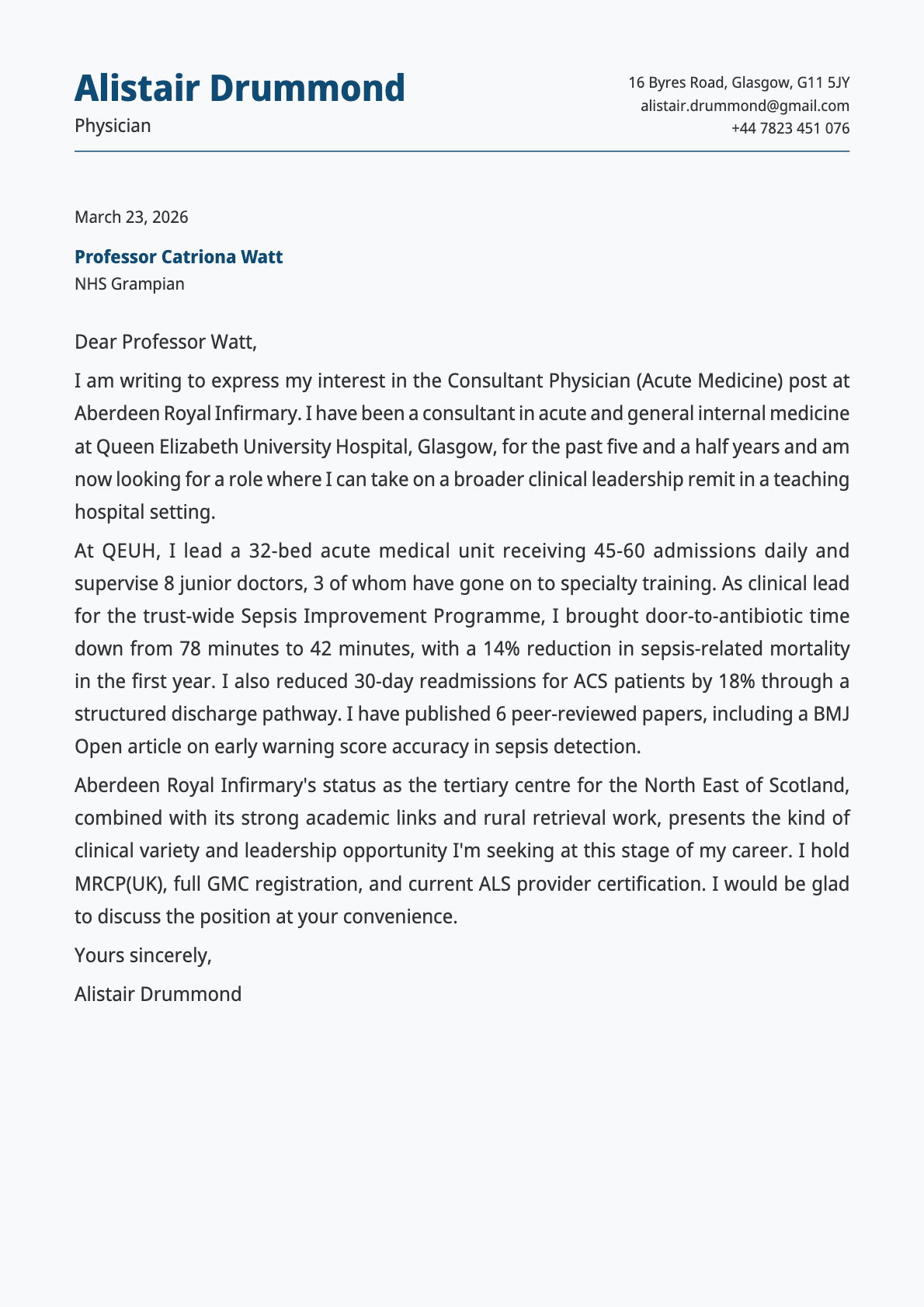
Physician
A physician cover letter example showing how to present clinical leadership, quality improvement projects, and academic credentials for a consultant post.
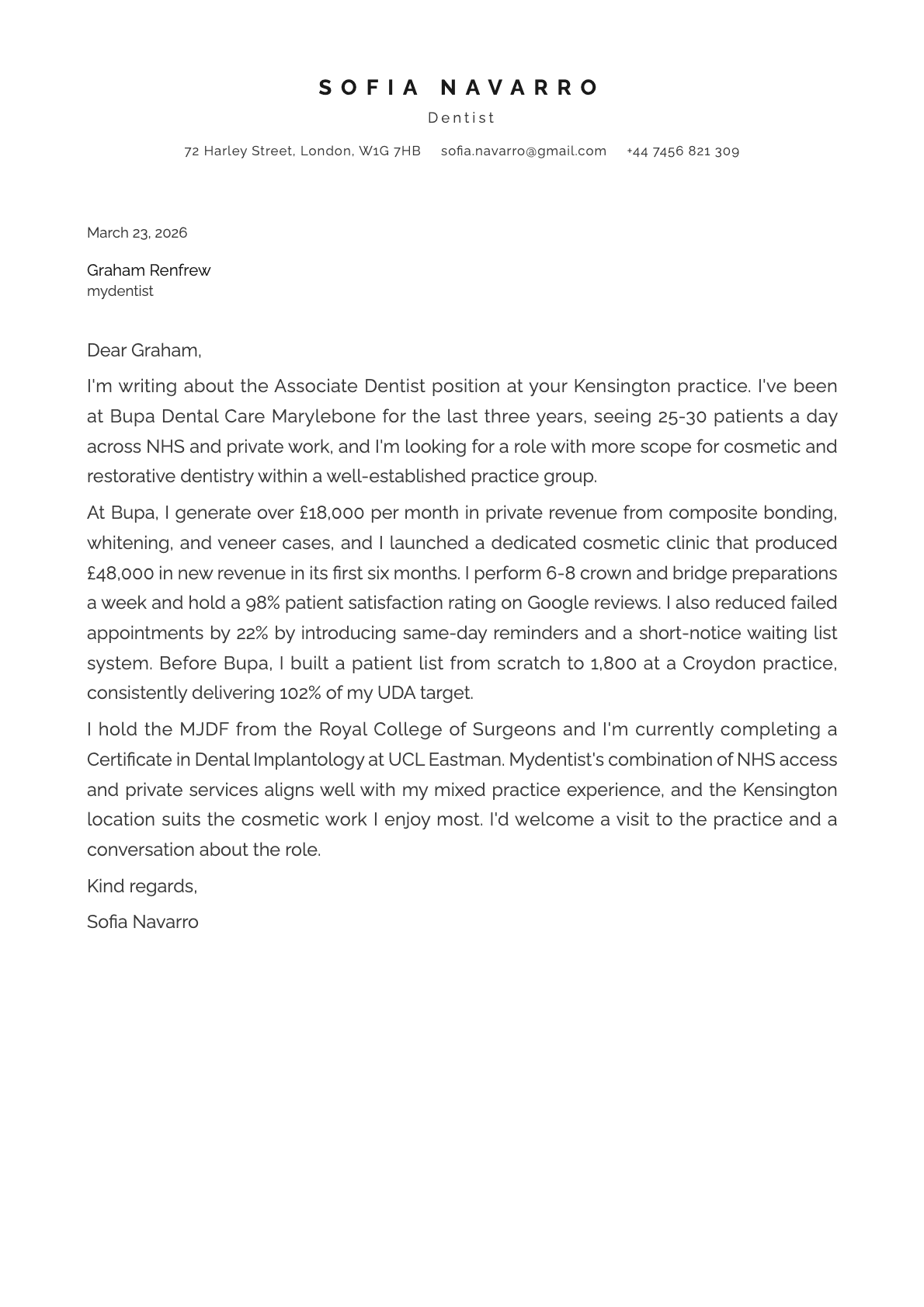
Dentist
A dentist cover letter example showing how to present clinical skills, private revenue generation, and patient satisfaction when applying to a dental.
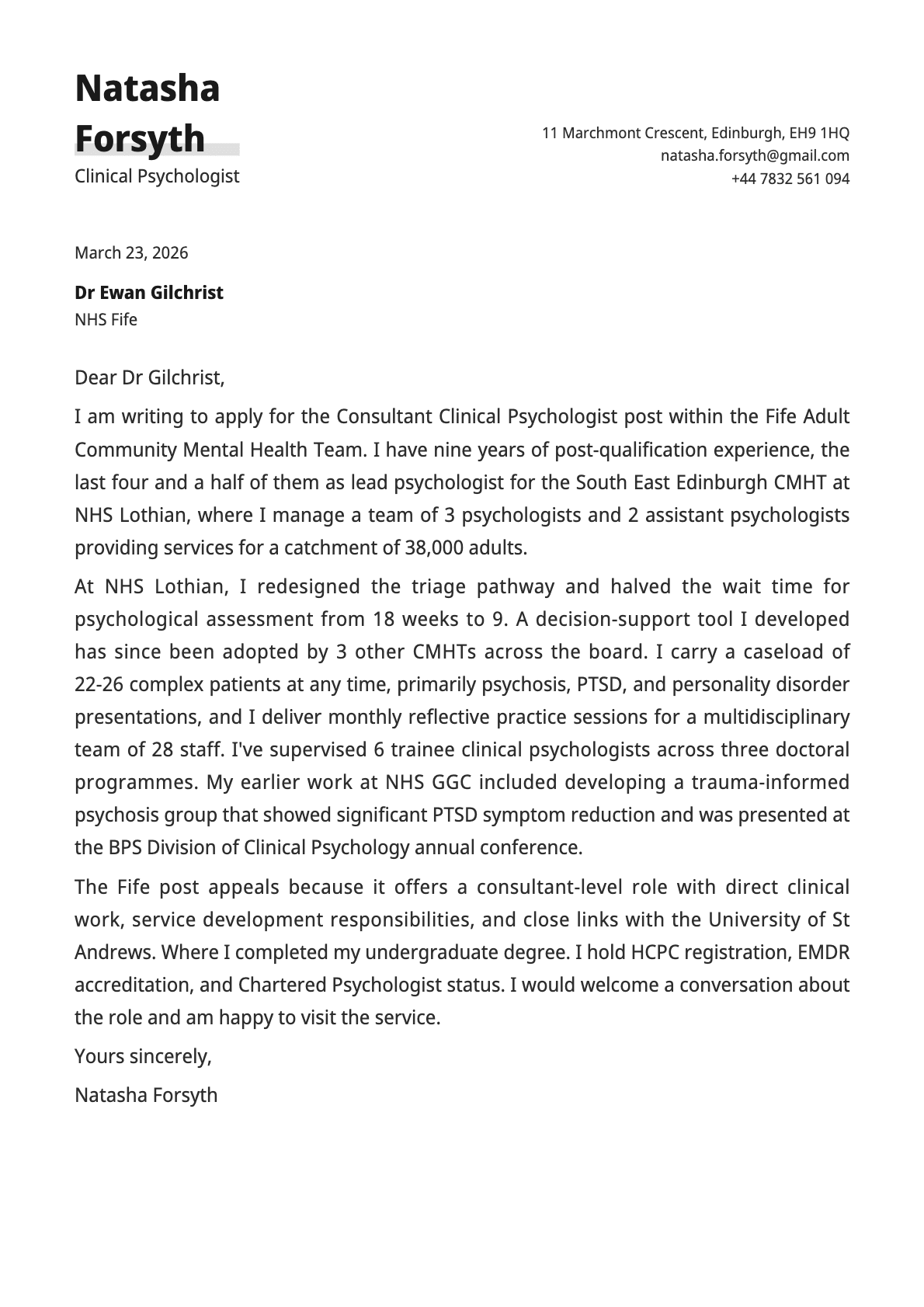
Clinical Psychologist
A clinical psychologist cover letter example demonstrating how to present NHS leadership experience, caseload management.
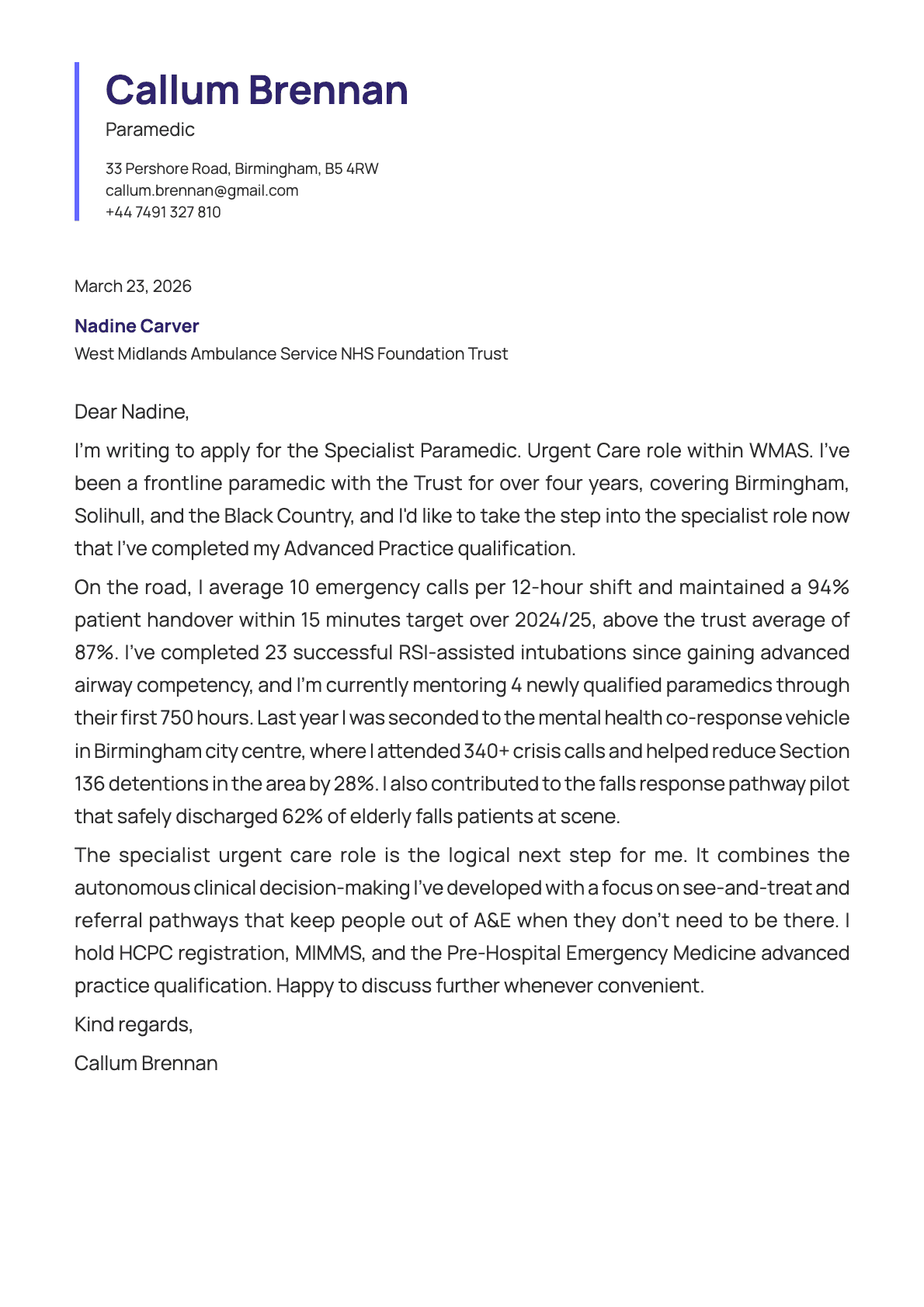
Paramedic
A paramedic cover letter example showing how to present emergency response statistics, advanced clinical skills.
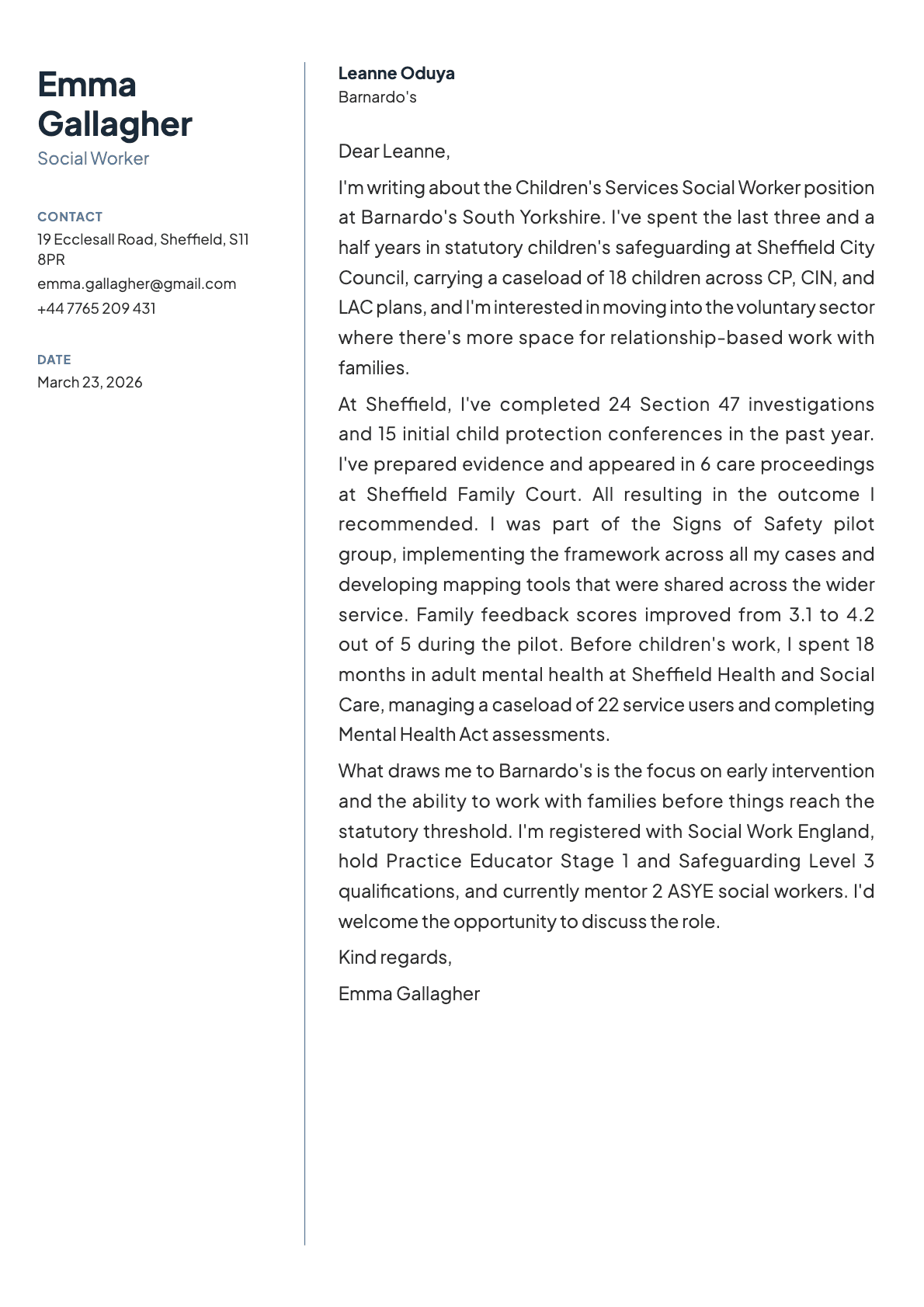
Social Worker
A social worker cover letter example showing how to present safeguarding caseload, court experience, and framework implementation for a voluntary sector.
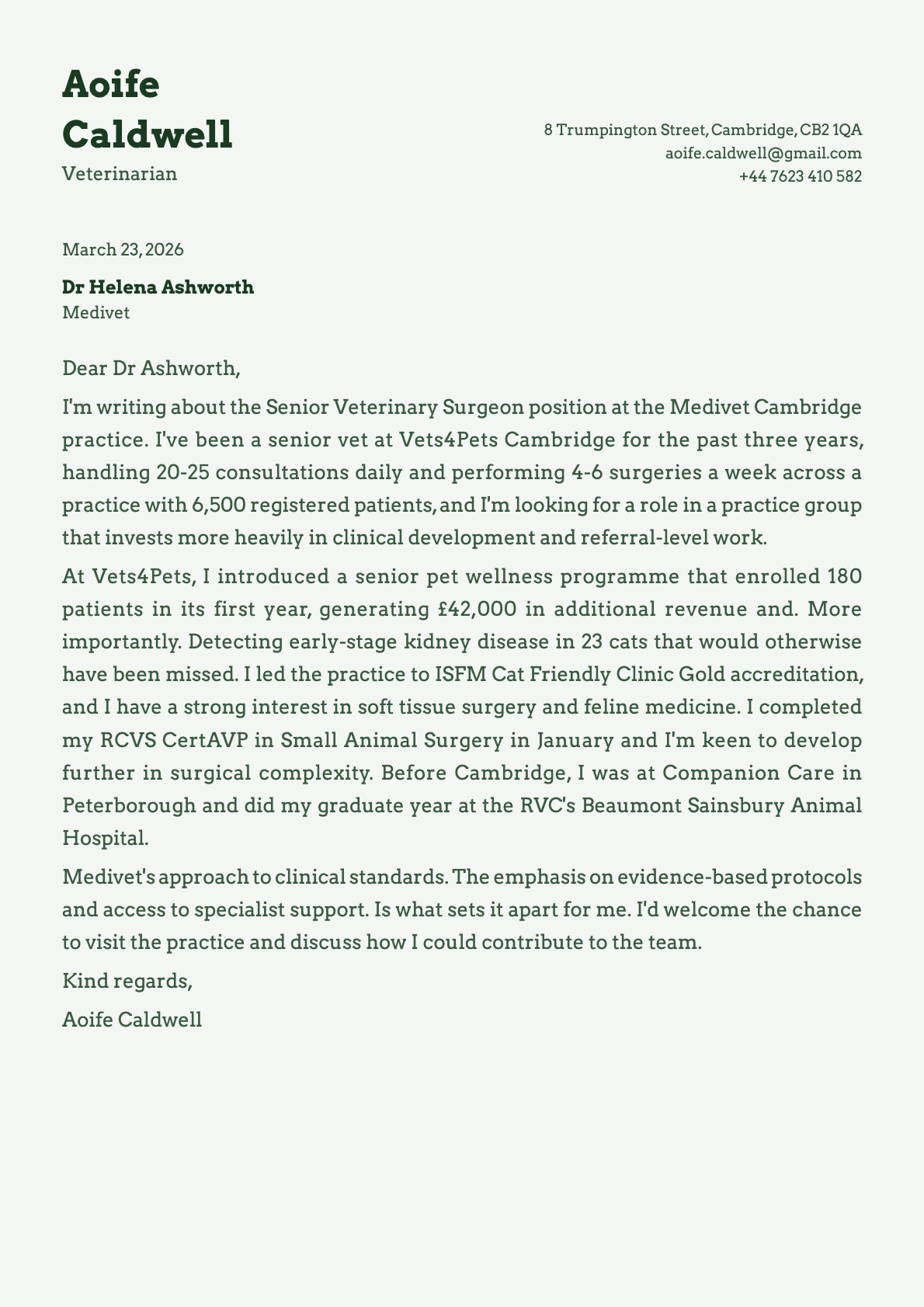
Veterinarian
A veterinarian cover letter example showing how to present clinical caseload, surgical skills.
Related articles

AI Is Screening Your Resume Before Any Human Sees It
AI screens most resumes before a human ever reads them. 97.4% of Fortune 500 companies run an ATS. This is what that means for you and what you can do about it.

The Best Resume Builders in 2026, Compared Honestly
Resume.io, Zety, Enhancv, Kickresume, Teal, and Laddro compared honestly: real pricing, free tiers, mobile apps, and where each tool wins. All prices checked in September 2026.

Burnout Recovery: A Real Timeline, Not 'Take a Bubble Bath'
55% of the U.S. workforce is burned out. Recovery takes 3 to 12 months. Here's what that actually looks like, stage by stage.