Dentist Cover Letter Example
A dentist cover letter example showing how to present clinical skills, private revenue generation, and patient satisfaction when applying to a dental.

Laddro Team
Free to use. No account needed to start.
Free to use. No account needed to start.
Why dentist cover letters need both clinical and commercial detail
Dental hiring managers have a dual concern that most industries do not share. They need a clinician who delivers excellent patient care and a practitioner who can generate revenue. A cover letter that only talks about clinical skills misses half the picture. One that only talks about business performance misses the other half.
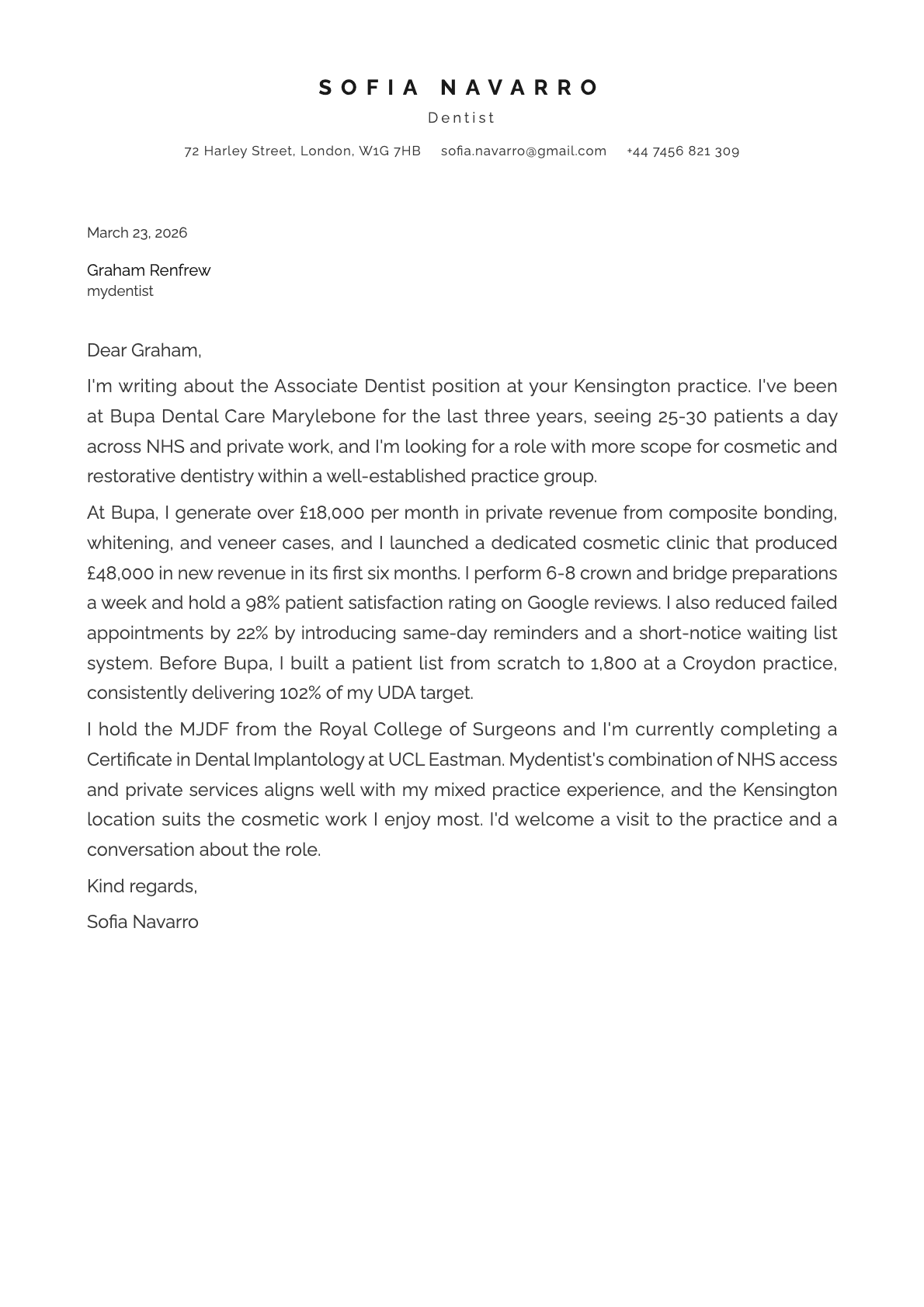
This example from Sofia Navarro gets the balance right. She is an associate dentist at Bupa Dental Care in Marylebone applying for a position at mydentist's Kensington practice. Her letter weaves clinical competence and financial results together so naturally that neither feels forced.
Open with your daily clinical reality
Sofia begins by describing her current workload: 25 to 30 patients a day across NHS and private work at one of the highest-volume Bupa practices in the North West. She also states her reason for the move: more scope for cosmetic and restorative dentistry.
This opening immediately tells the hiring manager two things. First, Sofia can handle volume. Second, she has a clear professional direction, not a vague desire for change.
Your takeaway: State your daily patient volume and the mix of work you handle (NHS, private, cosmetic, restorative). This gives the hiring manager a practical picture of your capacity.
Back up clinical skills with revenue figures
The middle paragraph is where Sofia's letter becomes distinctive. She mentions generating over 18,000 pounds per month in private revenue, launching a cosmetic clinic that produced 48,000 pounds in its first six months, and performing six to eight crown and bridge preparations per week. She also holds a 98% patient satisfaction rating on Google reviews.
These are not boasts. They are business metrics that practice managers care about. A dentist who can build a profitable cosmetic offering is significantly more valuable than one who simply fills chairs.
She also includes an operational improvement: reducing failed appointments by 22% through same-day reminders and a short-notice waiting list system. This shows she thinks about practice efficiency, not just her own chair time.
Your takeaway: Include revenue figures alongside clinical metrics. If you have launched a new service or improved appointment attendance, mention the numbers.
Show your professional development trajectory
Sofia closes by mentioning her MJDF qualification and her current Certificate in Dental Implantology at UCL Eastman. This is strategic: it shows the practice she is not just delivering today's treatment plans but investing in tomorrow's capabilities.
She also ties her experience to the specific practice, noting that mydentist's combination of NHS and private services aligns with her mixed practice background.
What to include in your dentist cover letter
- Daily patient volume and the type of work you perform
- Private revenue generation with specific monthly or annual figures
- Clinical procedures you perform regularly (crowns, bridges, veneers, implants)
- Patient satisfaction scores or review ratings
- Professional qualifications and current courses
- A specific reason for choosing this practice or group
What to leave out
Do not describe your dental school experience unless you graduated recently. Do not list every course you have attended. And do not write about your "passion for creating beautiful smiles." The practice manager wants to see what you deliver, not how you feel about dentistry.
Final thoughts
A strong dentist cover letter treats the application like a business case. You are the product, the practice is the buyer, and your clinical skills and revenue potential are the value proposition. Present both with hard numbers, show that you have researched the practice, and keep it under 300 words. That combination is hard to ignore.
Was this cover letter example helpful?
Rate this example to help us create better content for you.
4.8 average from 96 ratingsBuild your own version
Open this layout in the builder and swap in your own details. It takes a few minutes.
Free to use. No account needed to start.
Related cover letter examples
Registered Nurse
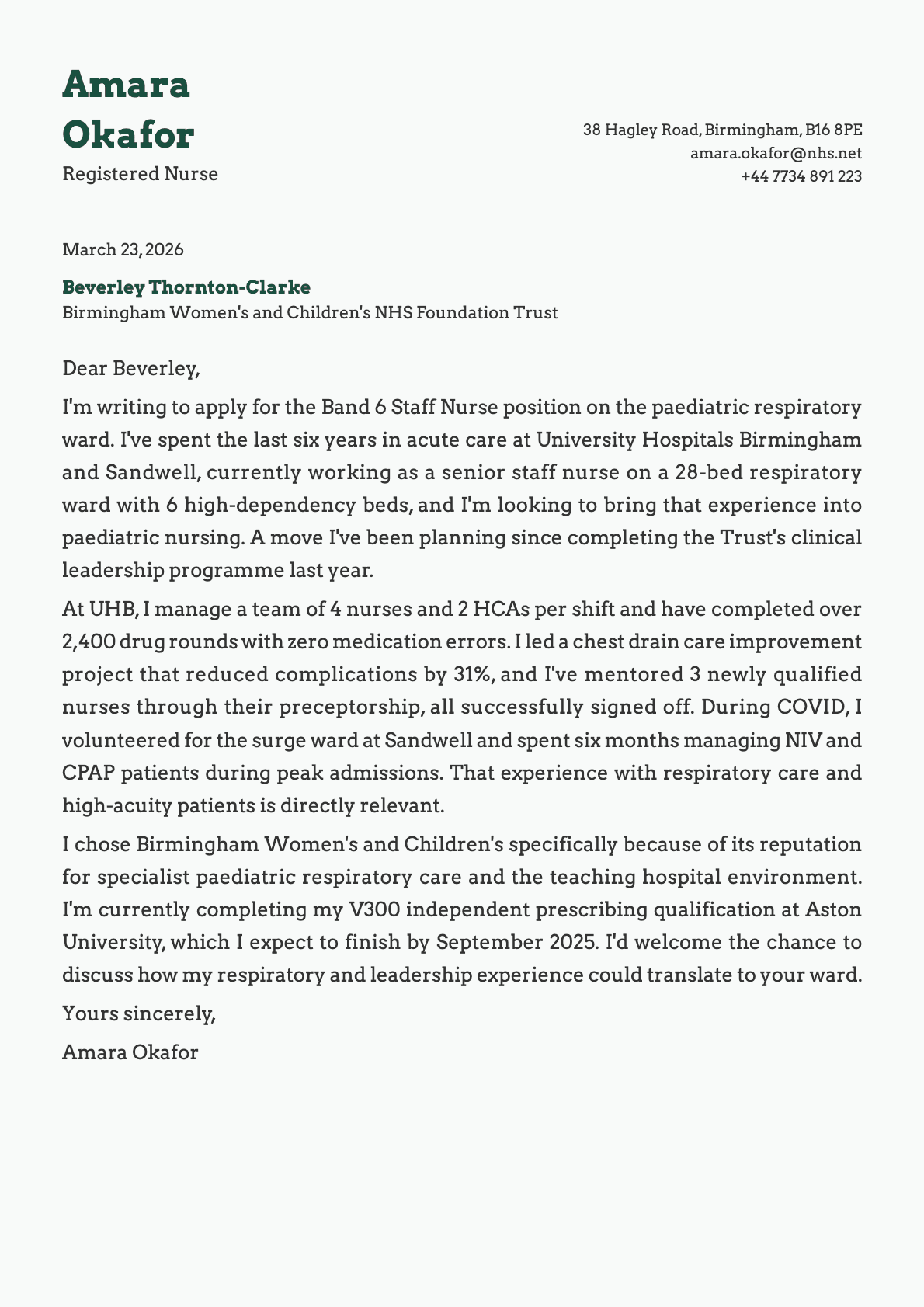
A registered nurse cover letter example showing how to present acute care experience, clinical leadership.
Medical Assistant
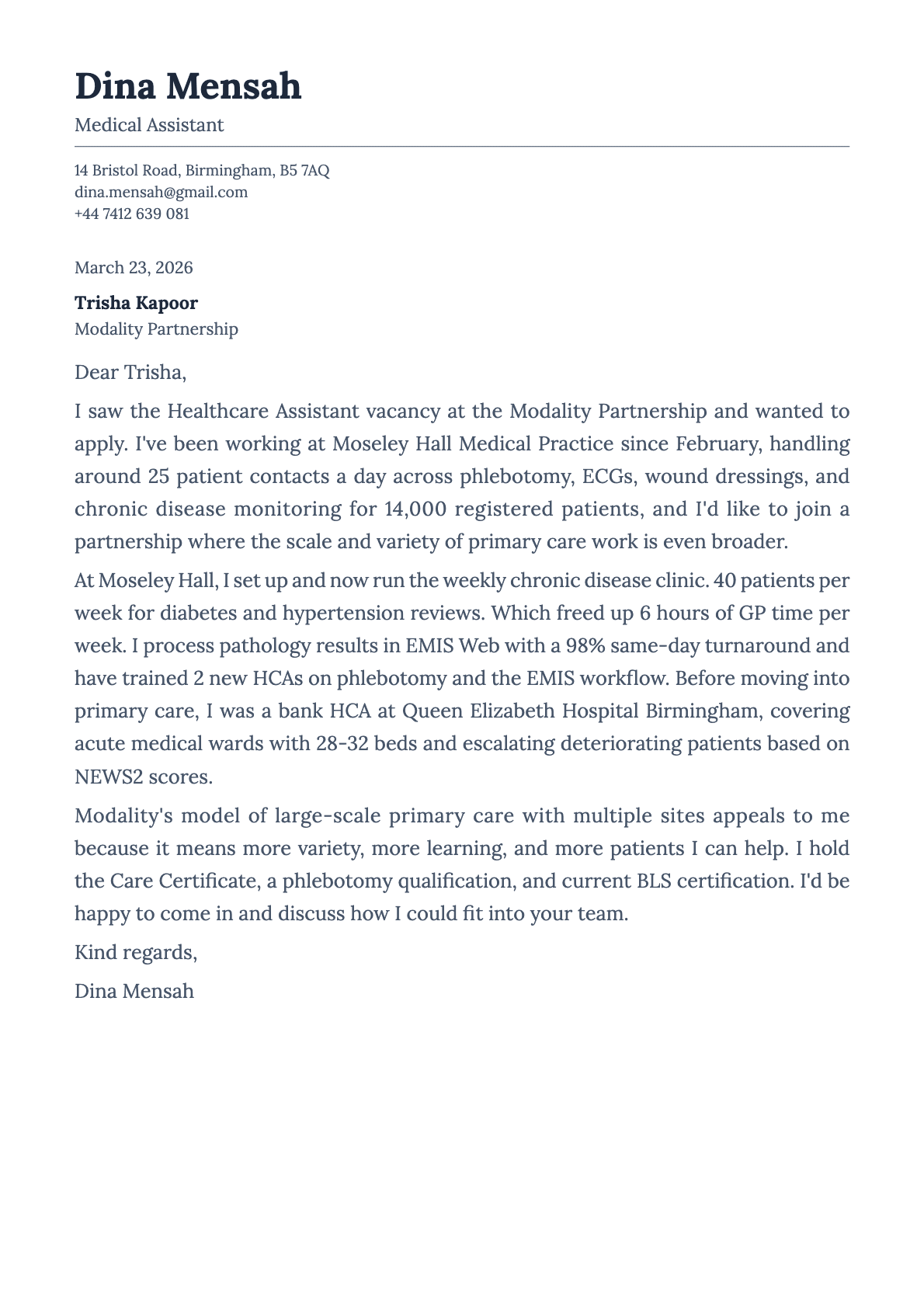
A medical assistant cover letter example showing how to present clinical skills, patient volumes, and GP practice experience when applying to a large.
Pharmacist
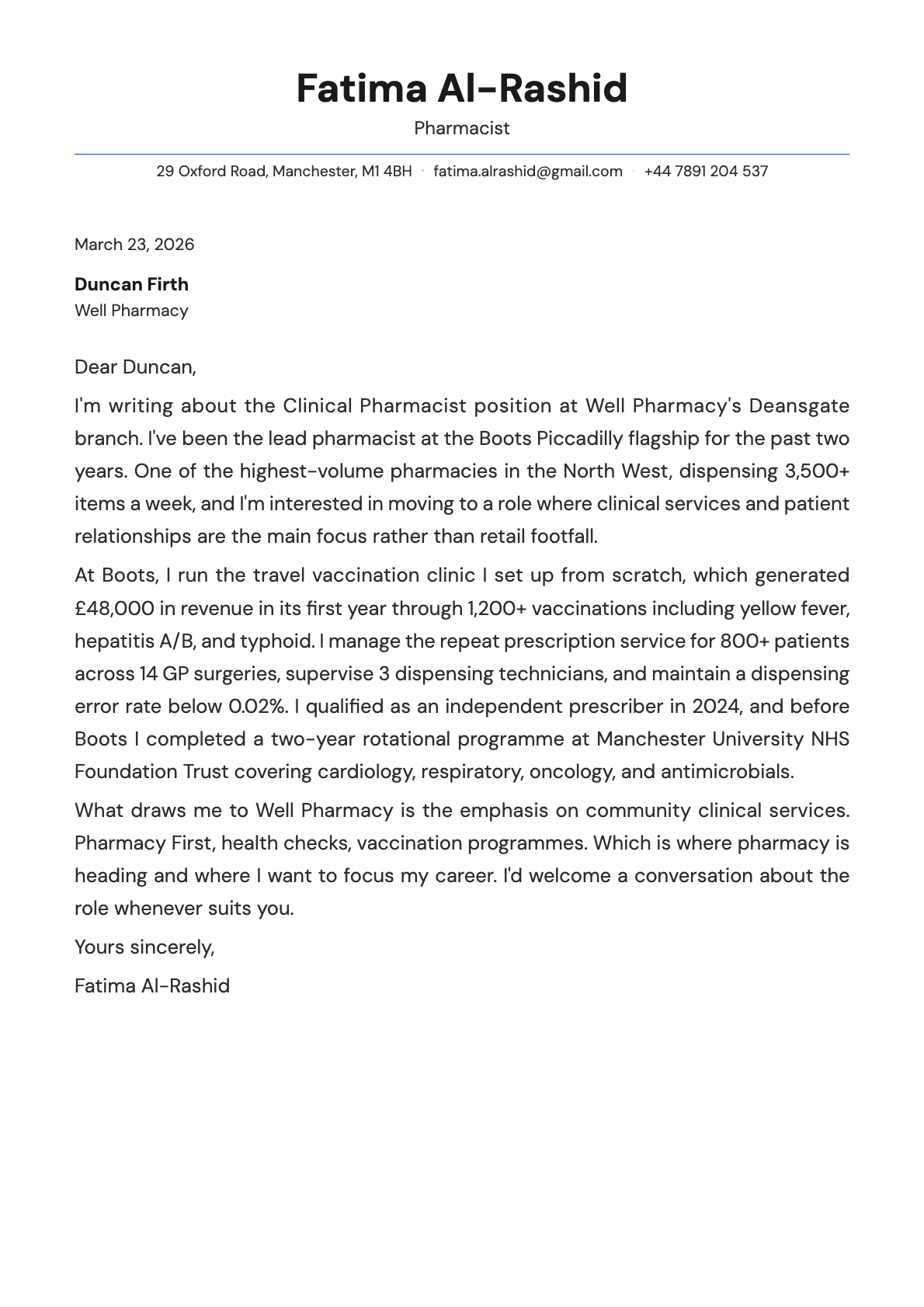
A pharmacist cover letter example showing how to present clinical services, dispensing volume, and revenue generation when applying to a community.
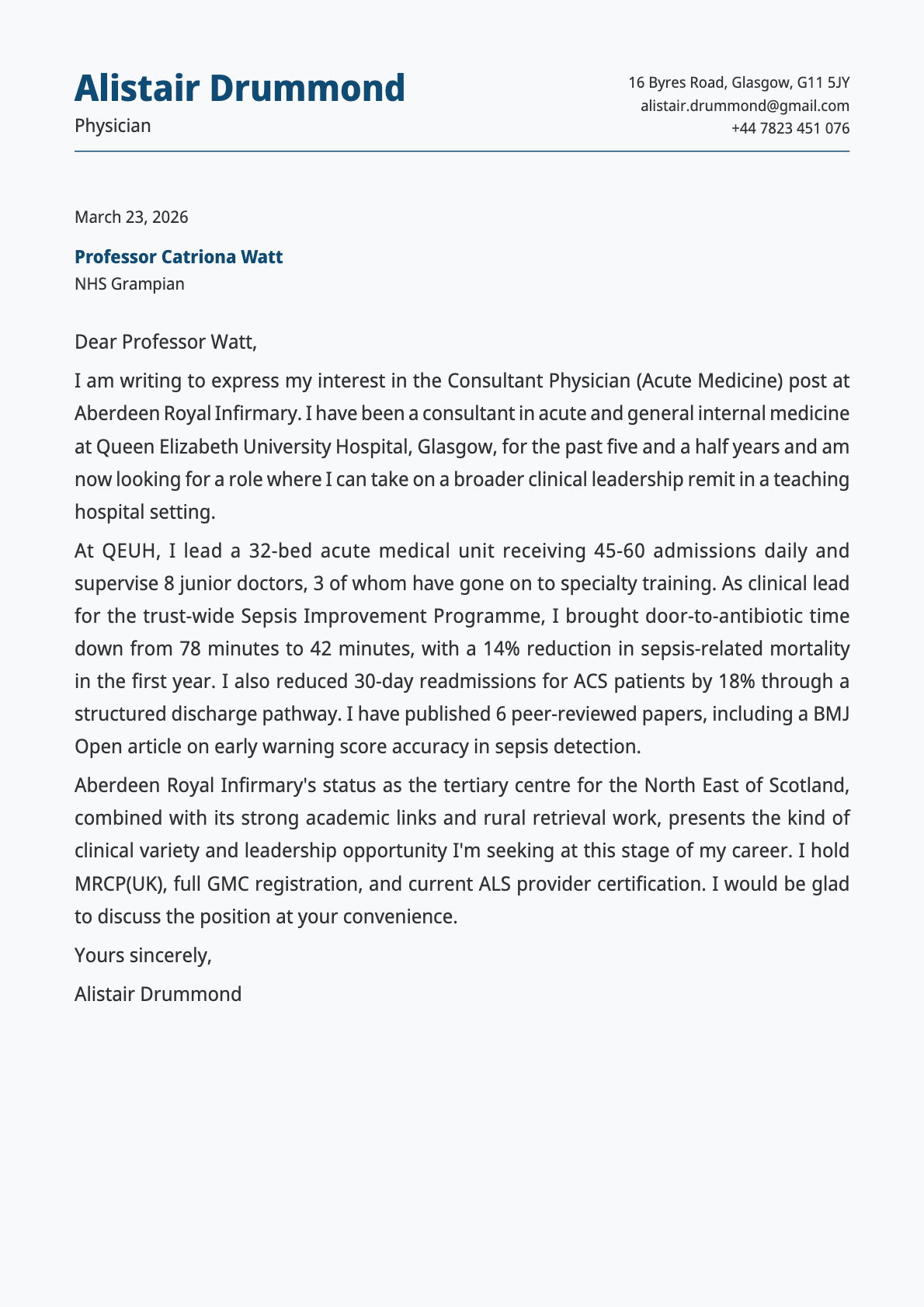
Physician
A physician cover letter example showing how to present clinical leadership, quality improvement projects, and academic credentials for a consultant post.
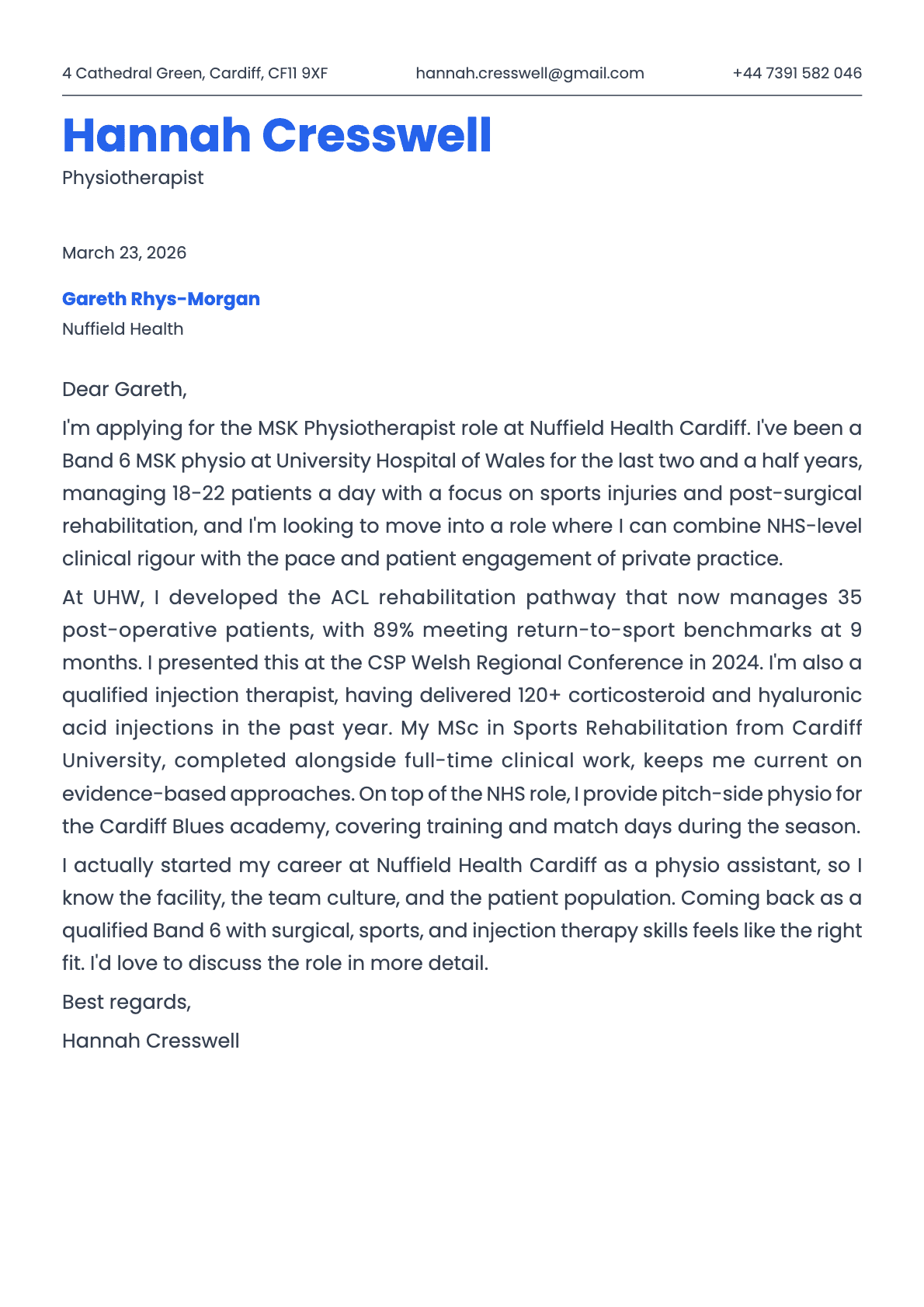
Physiotherapist
A physiotherapist cover letter example showing how to present MSK caseload, rehabilitation pathways.
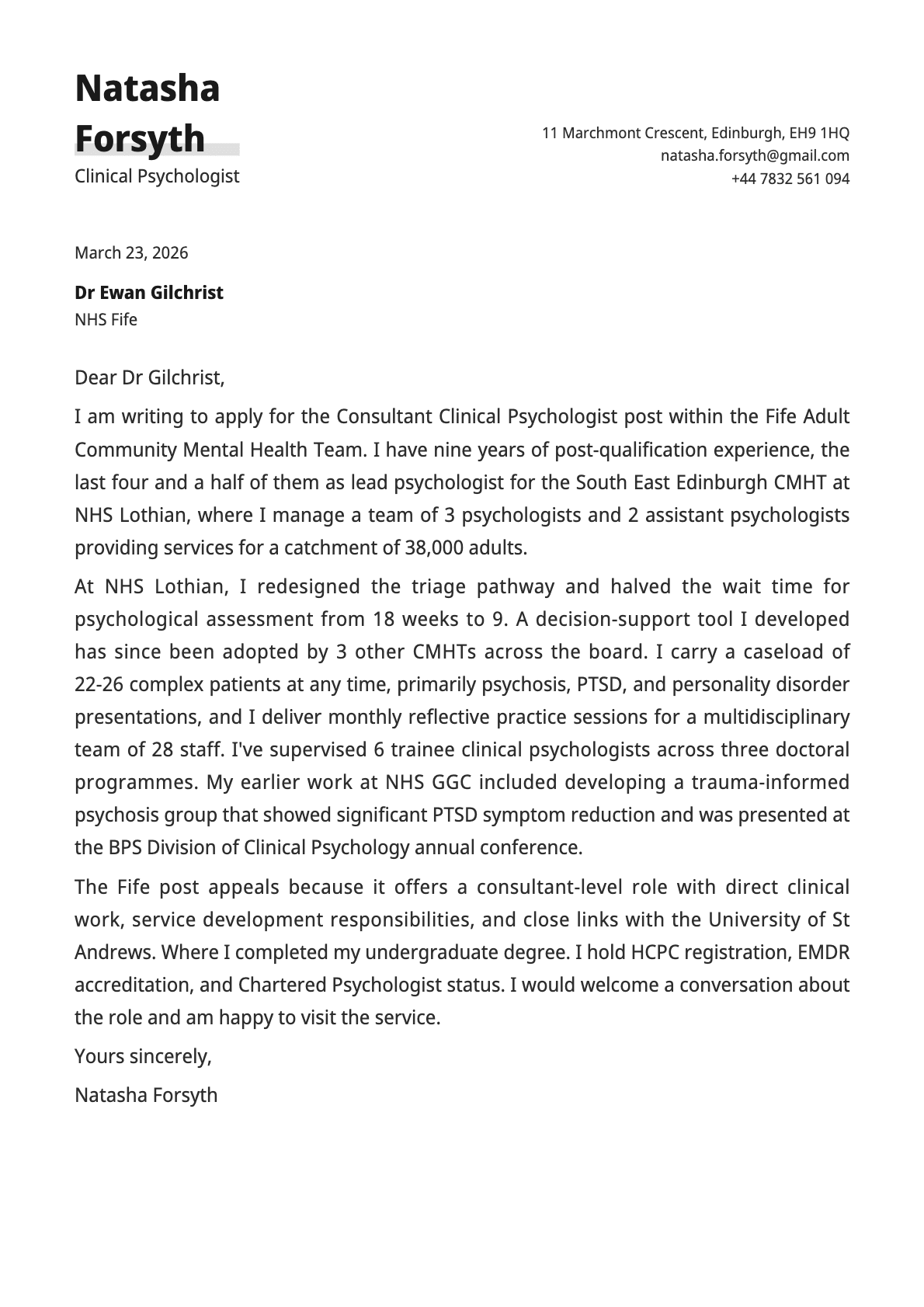
Clinical Psychologist
A clinical psychologist cover letter example demonstrating how to present NHS leadership experience, caseload management.
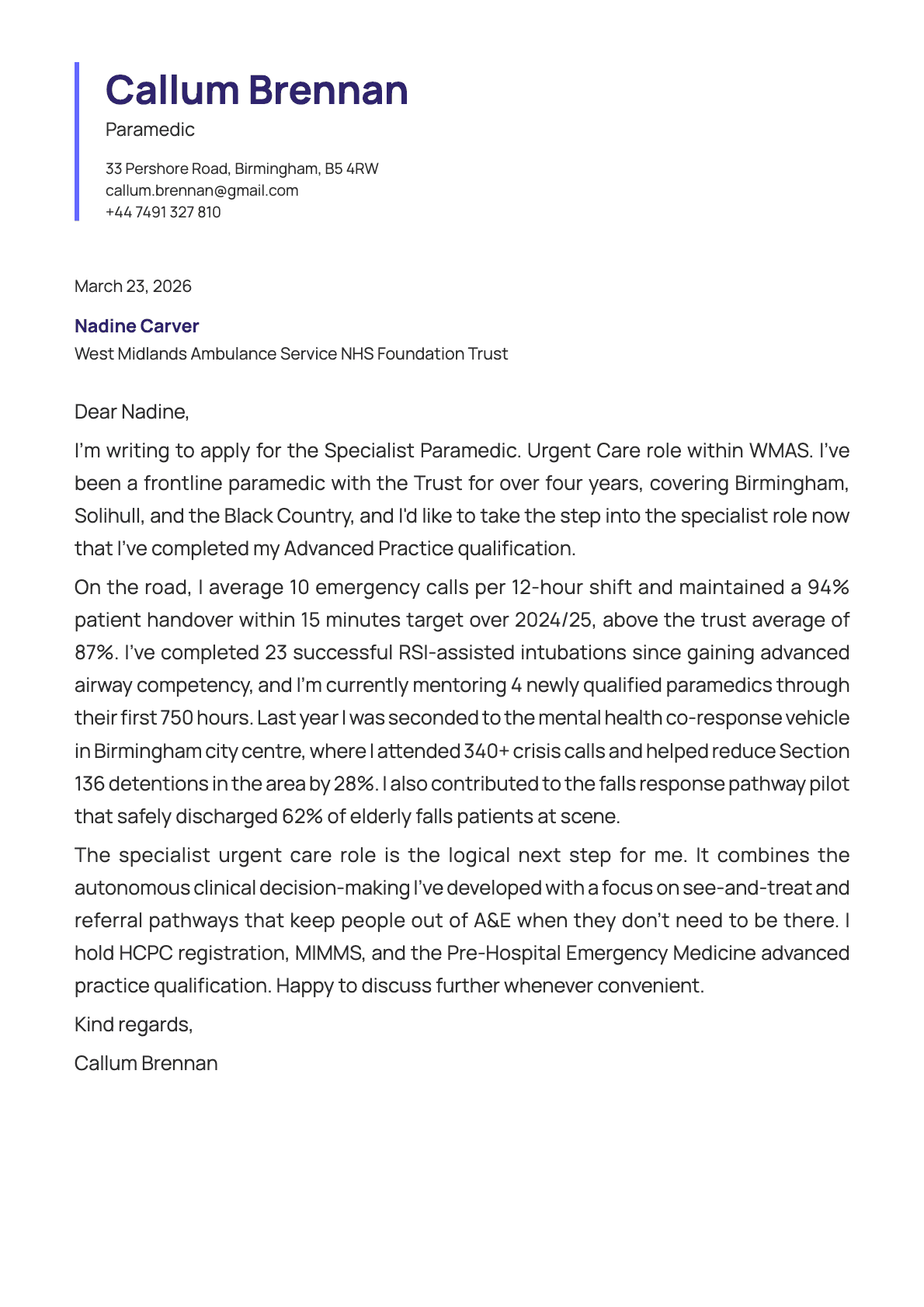
Paramedic
A paramedic cover letter example showing how to present emergency response statistics, advanced clinical skills.
Social Worker
A social worker cover letter example showing how to present safeguarding caseload, court experience, and framework implementation for a voluntary sector.
Veterinarian
A veterinarian cover letter example showing how to present clinical caseload, surgical skills.
Related articles

AI Is Screening Your Resume Before Any Human Sees It
AI screens most resumes before a human ever reads them. 97.4% of Fortune 500 companies run an ATS. This is what that means for you and what you can do about it.

The Best Resume Builders in 2026, Compared Honestly
Resume.io, Zety, Enhancv, Kickresume, Teal, and Laddro compared honestly: real pricing, free tiers, mobile apps, and where each tool wins. All prices checked in September 2026.

Burnout Recovery: A Real Timeline, Not 'Take a Bubble Bath'
55% of the U.S. workforce is burned out. Recovery takes 3 to 12 months. Here's what that actually looks like, stage by stage.