Social Worker Cover Letter Example
A social worker cover letter example showing how to present safeguarding caseload, court experience, and framework implementation for a voluntary sector.

Laddro Team
Free to use. No account needed to start.
Free to use. No account needed to start.
Why social worker cover letters need evidence, not just empathy
Social work is a profession driven by values, but cover letters that focus only on values fall flat. "I am keen about making a difference in the lives of vulnerable people" appears in nearly every social work application. The hiring manager knows you care. What they need to know is whether you can manage a complex caseload, navigate court proceedings, and deliver measurable outcomes for families.
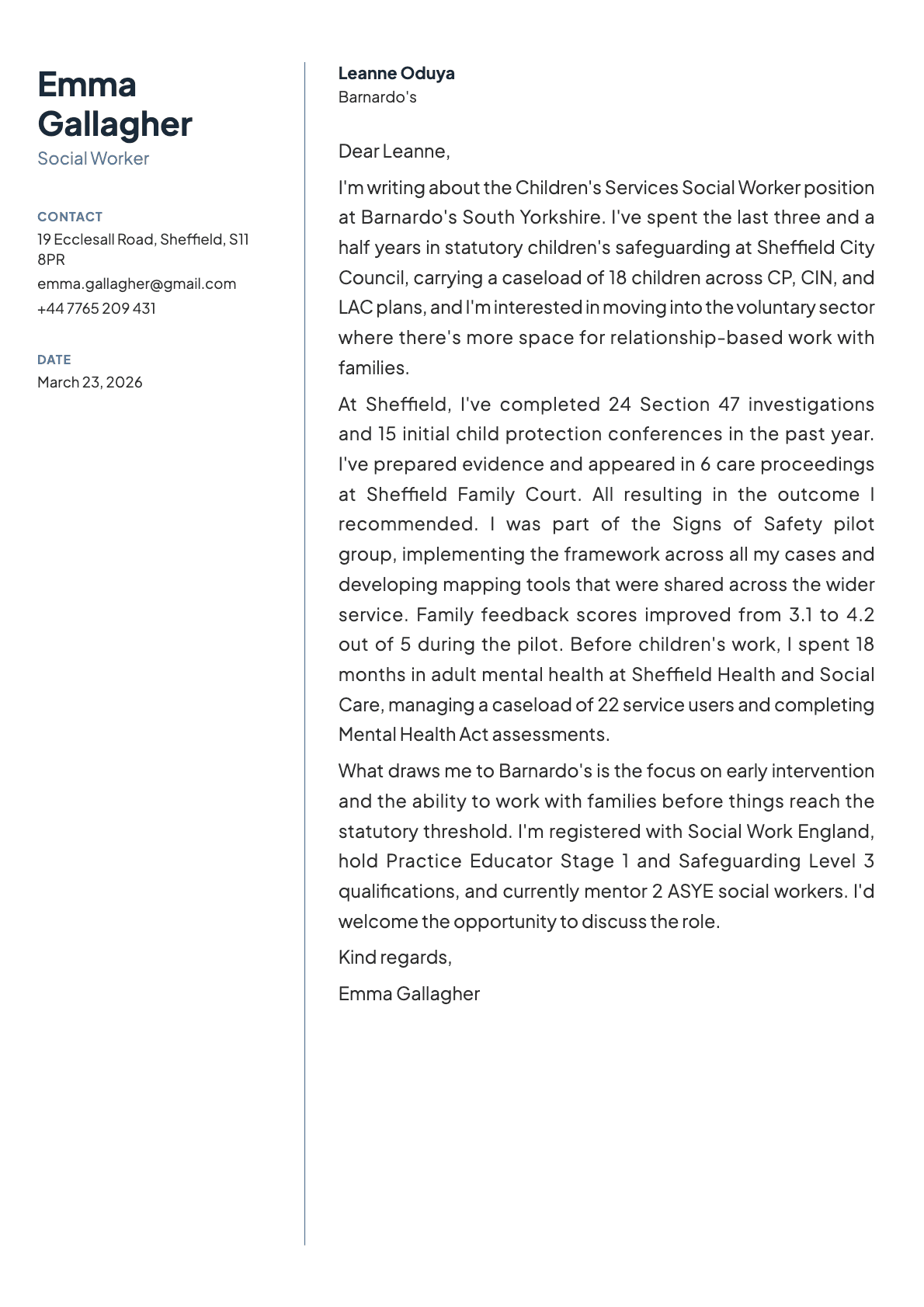
This example from Emma Gallagher shows how. She works in statutory children's safeguarding at Sheffield City Council and is applying for a Children's Services Social Worker role at Barnardo's.
Open with your caseload and specialism
Emma begins by naming her employer, her area of work (children's safeguarding), her caseload (18 children across CP, CIN, and LAC plans), and her reason for the move: she wants to do more relationship-based work with families in the voluntary sector.
This tells the hiring manager three things immediately: her experience level, the complexity of her current work, and her motivation for the move. The reference to wanting more space for relationship-based work is a genuine and specific reason for moving from statutory to voluntary sector practice.
Your takeaway: State your caseload number, the plan types you manage, and the setting you work in. This is the information that social work recruiters use to assess your readiness for the role.
Show the range and complexity of your practice
The body of Emma's letter is built on specifics. She has completed 24 Section 47 investigations and 15 initial child protection conferences in the past year. She has appeared in six care proceedings at Sheffield Family Court, all resulting in the outcome she recommended. She was part of the Signs of Safety pilot group and developed mapping tools shared across the wider service. Family feedback scores improved from 3.1 to 4.2 out of 5 during the pilot.
Her earlier experience in adult mental health adds breadth: a caseload of 22 service users and Mental Health Act assessments.
Your takeaway: Include your statutory work numbers (investigations, conferences, court appearances) and any framework implementation you have been involved in. If feedback scores improved, include the before and after.
Connect your move to the organisation's approach
Emma closes by explaining what draws her to Barnardo's specifically: the focus on early intervention and the ability to work with families before things reach the statutory threshold. She mentions her Social Work England registration, Practice Educator Stage 1, and the fact that she mentors two ASYE social workers.
What to include in your social worker cover letter
- Current caseload with plan types (CP, CIN, LAC, CTO)
- Statutory activities (investigations, conferences, court proceedings) with numbers
- Framework experience (Signs of Safety, Restorative Practice, Motivational Interviewing)
- Feedback or outcome data that shows your impact
- Supervision and mentoring of students or ASYE workers
- Registration and qualifications stated briefly
- A specific reason for this organisation and its practice model
What to leave out
Do not write about why you became a social worker. Do not use the phrase "making a difference" without quantifying what that difference looks like. Do not list every training course you have attended. The hiring manager wants to see practice competence, not training attendance.
Final thoughts
A social worker cover letter should demonstrate that you can hold complexity, work within legal frameworks, and still centre the voice of the child or service user. The best way to do that is with evidence: your caseload numbers, your court outcomes, your framework implementation, and your impact on families. Write with the same precision you bring to your assessments.
Was this cover letter example helpful?
Rate this example to help us create better content for you.
4.7 average from 131 ratingsBuild your own version
Open this layout in the builder and swap in your own details. It takes a few minutes.
Free to use. No account needed to start.
Related cover letter examples
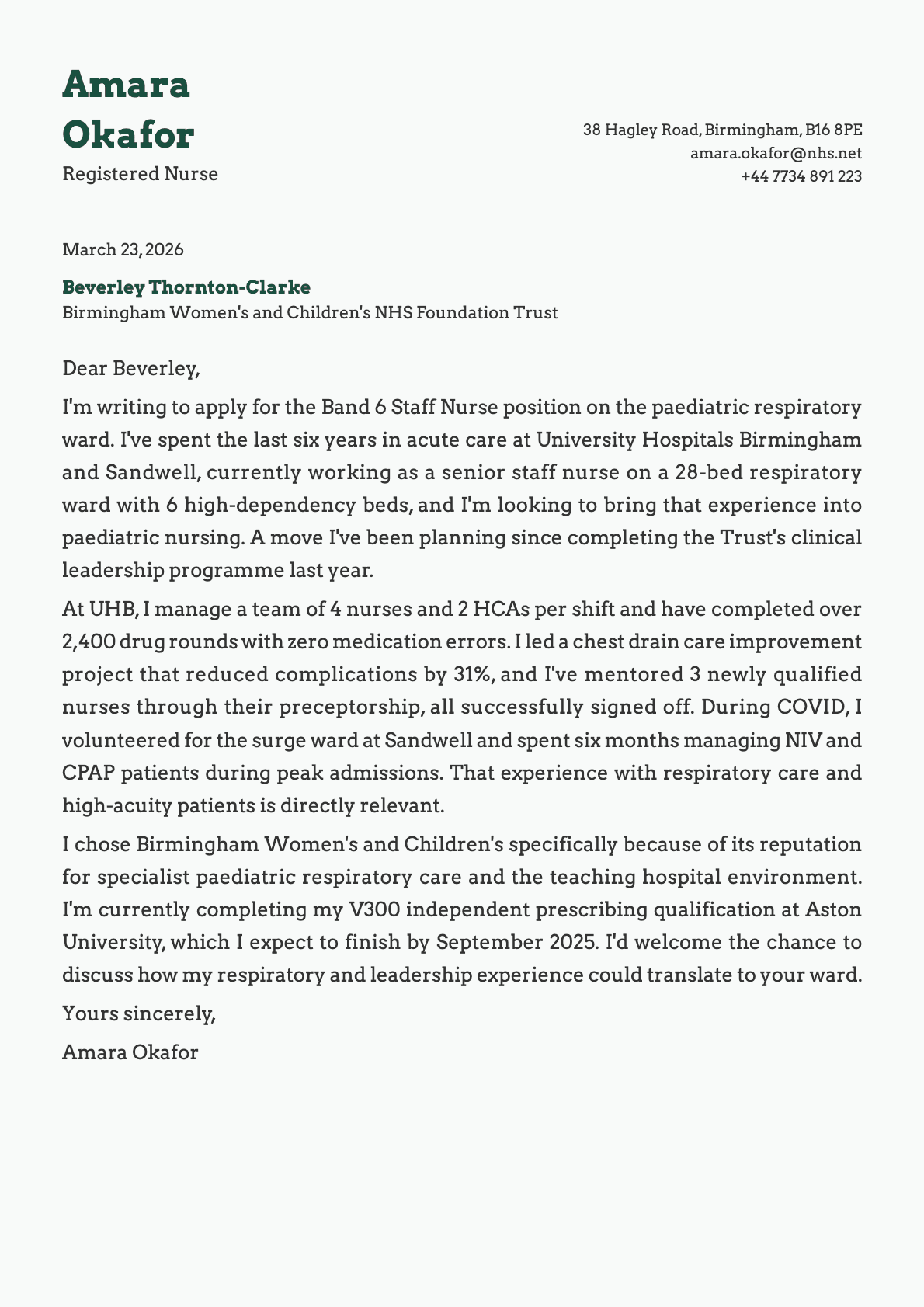
Registered Nurse
A registered nurse cover letter example showing how to present acute care experience, clinical leadership.
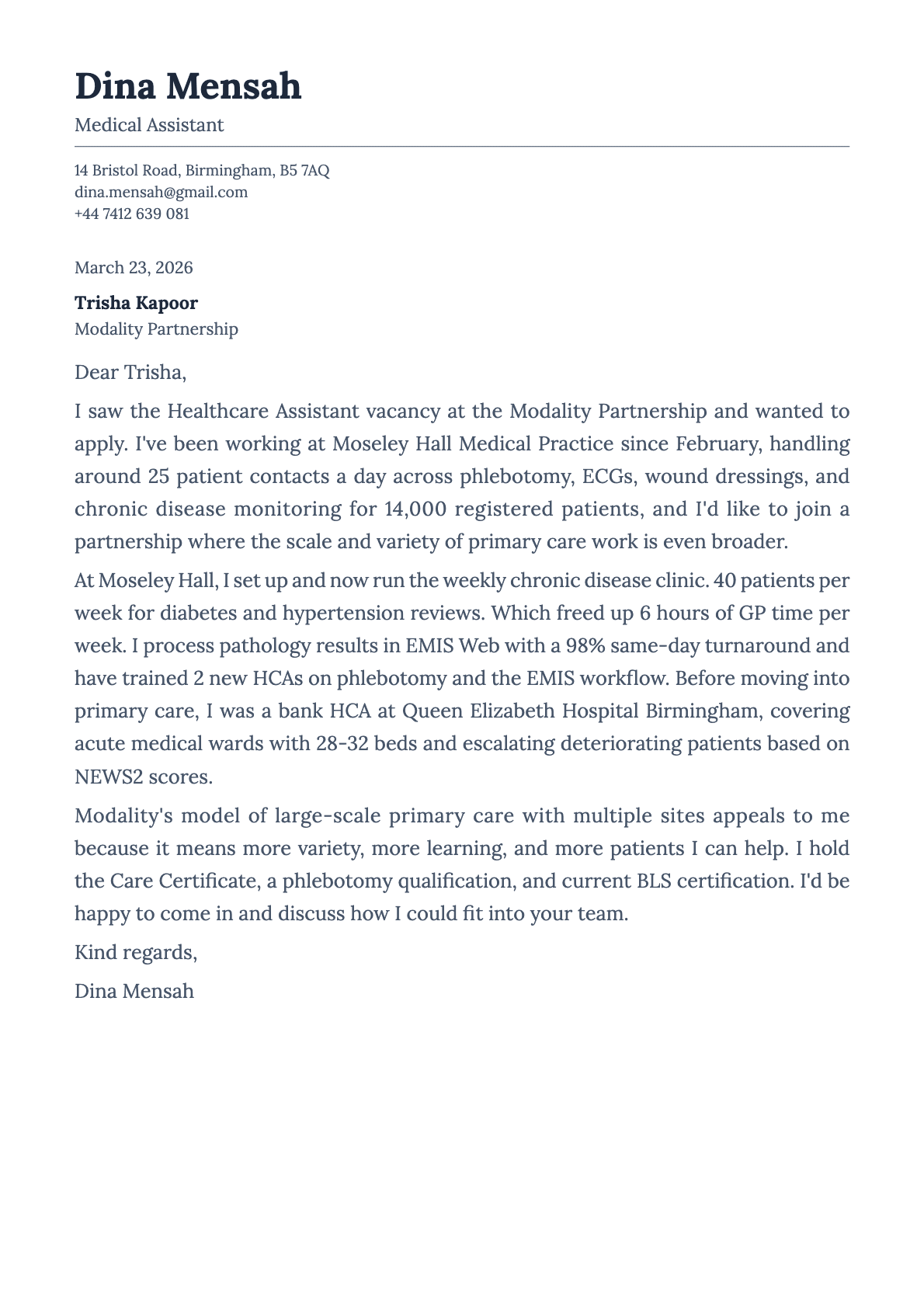
Medical Assistant
A medical assistant cover letter example showing how to present clinical skills, patient volumes, and GP practice experience when applying to a large.
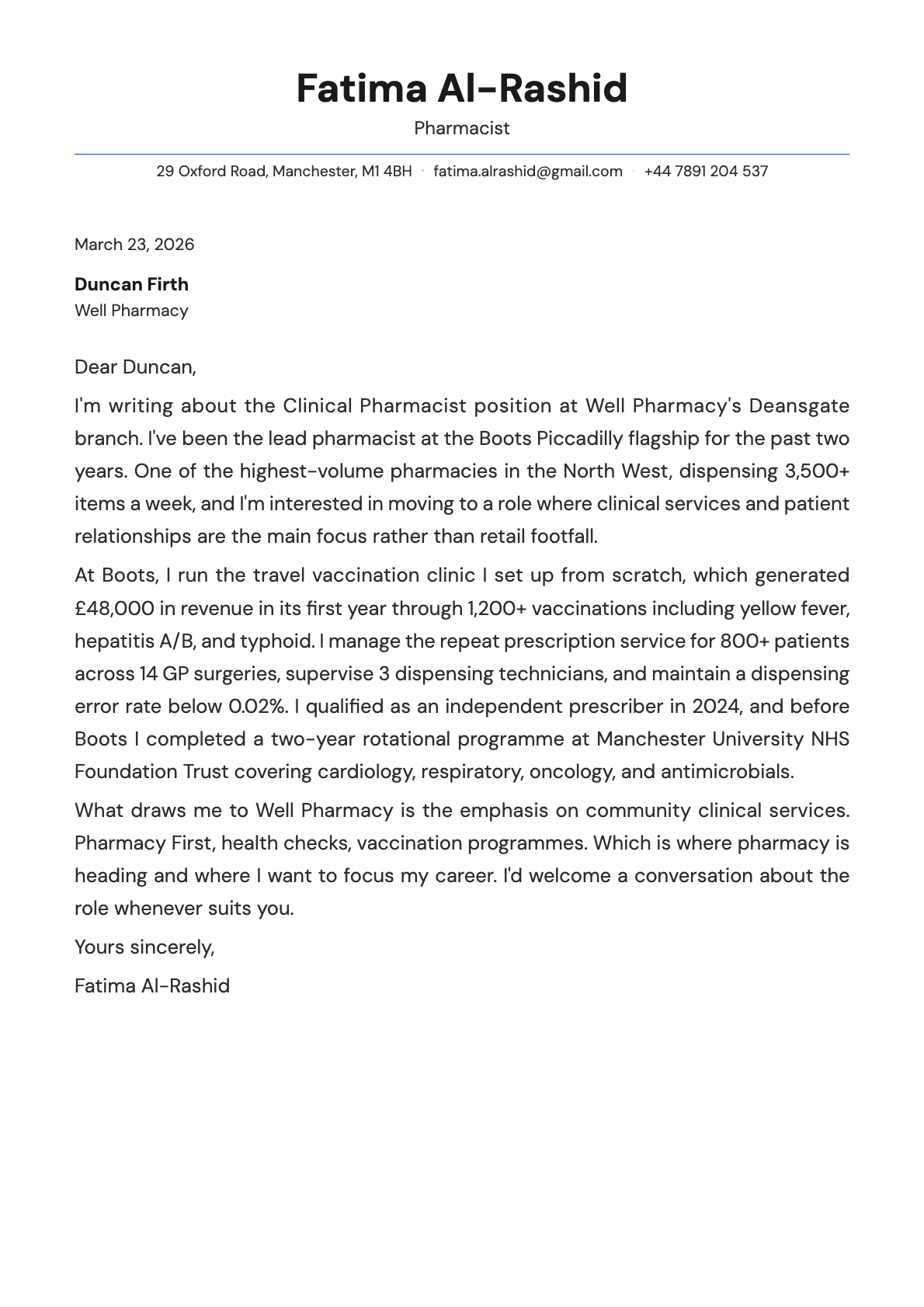
Pharmacist
A pharmacist cover letter example showing how to present clinical services, dispensing volume, and revenue generation when applying to a community.
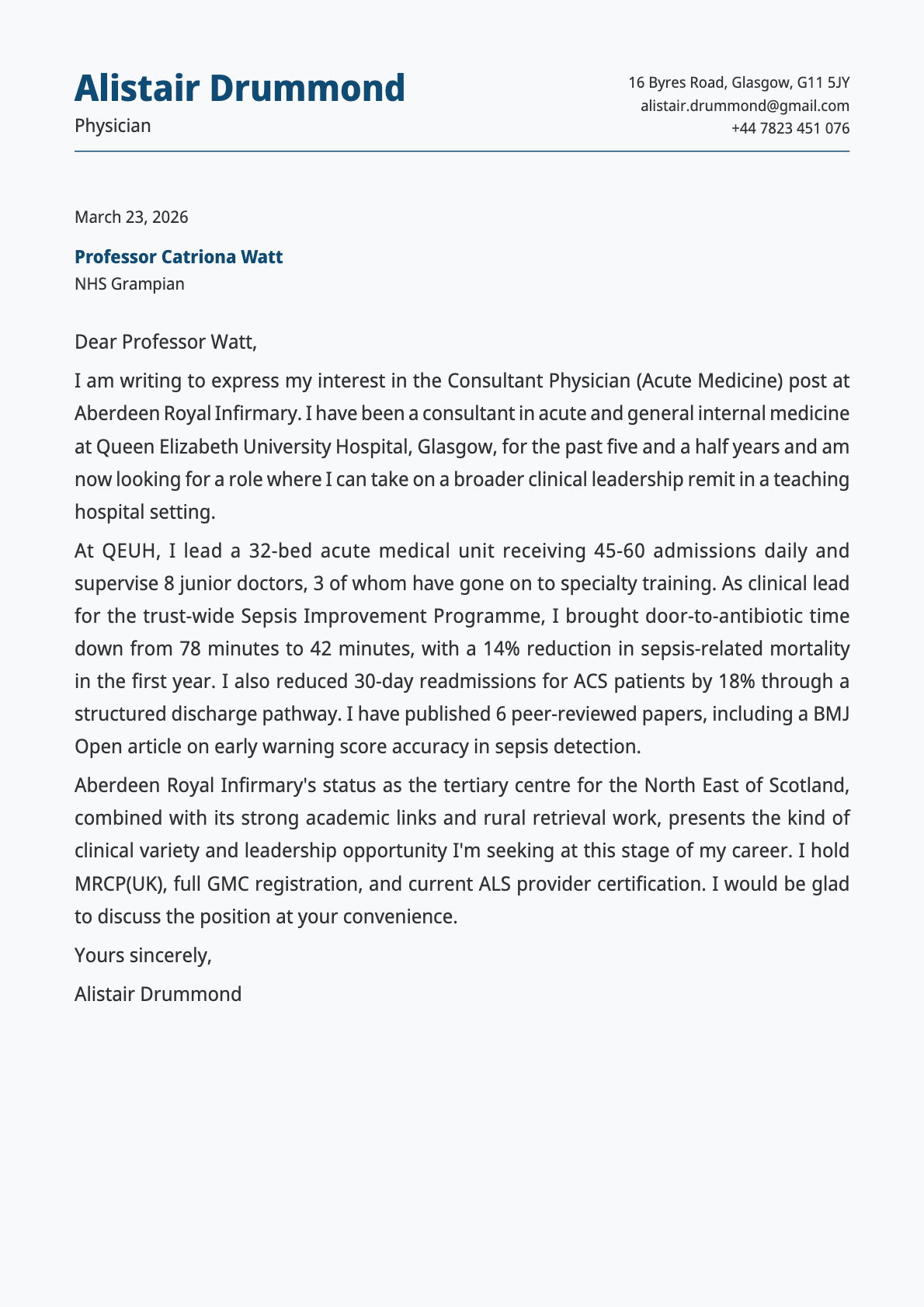
Physician
A physician cover letter example showing how to present clinical leadership, quality improvement projects, and academic credentials for a consultant post.
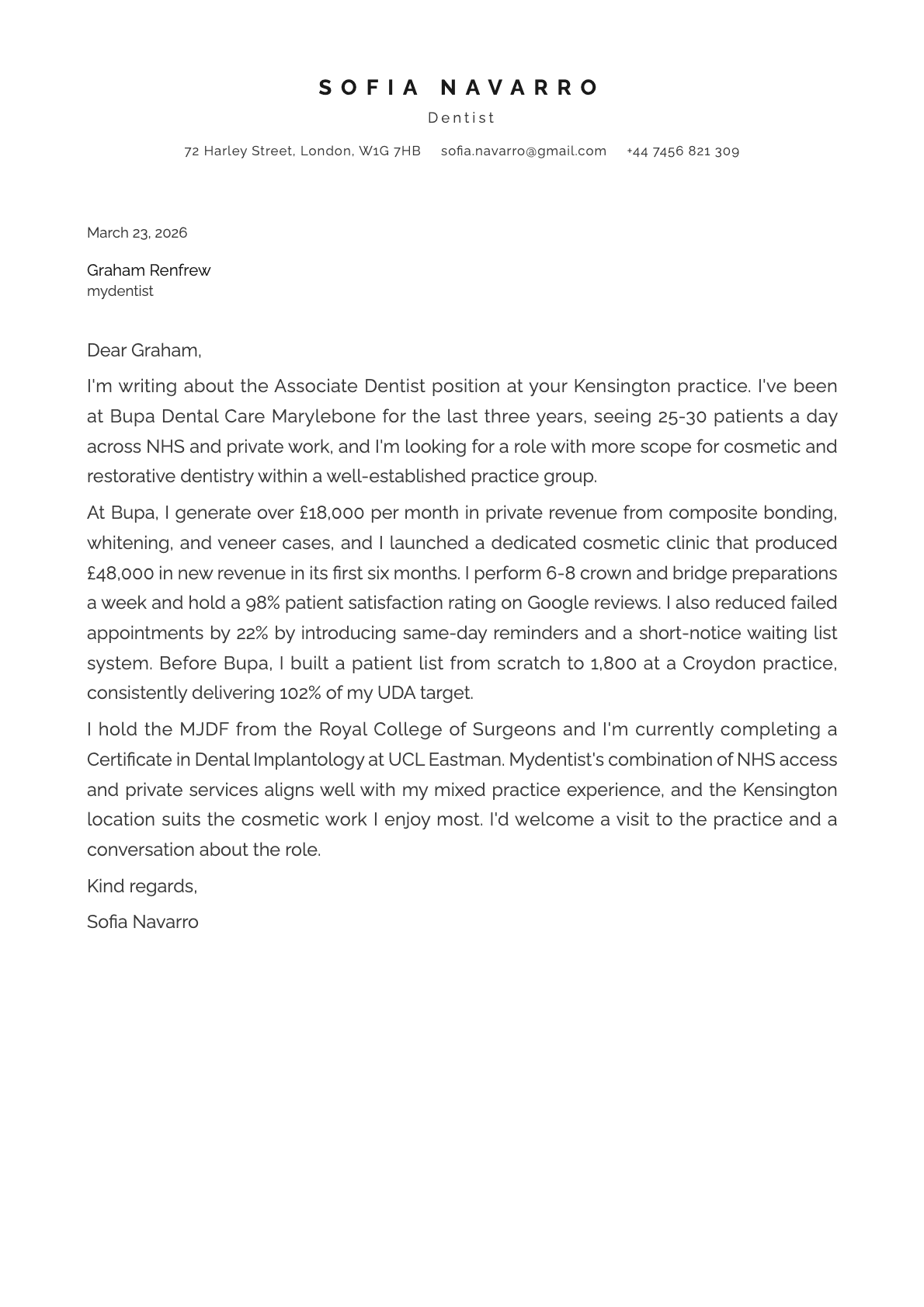
Dentist
A dentist cover letter example showing how to present clinical skills, private revenue generation, and patient satisfaction when applying to a dental.
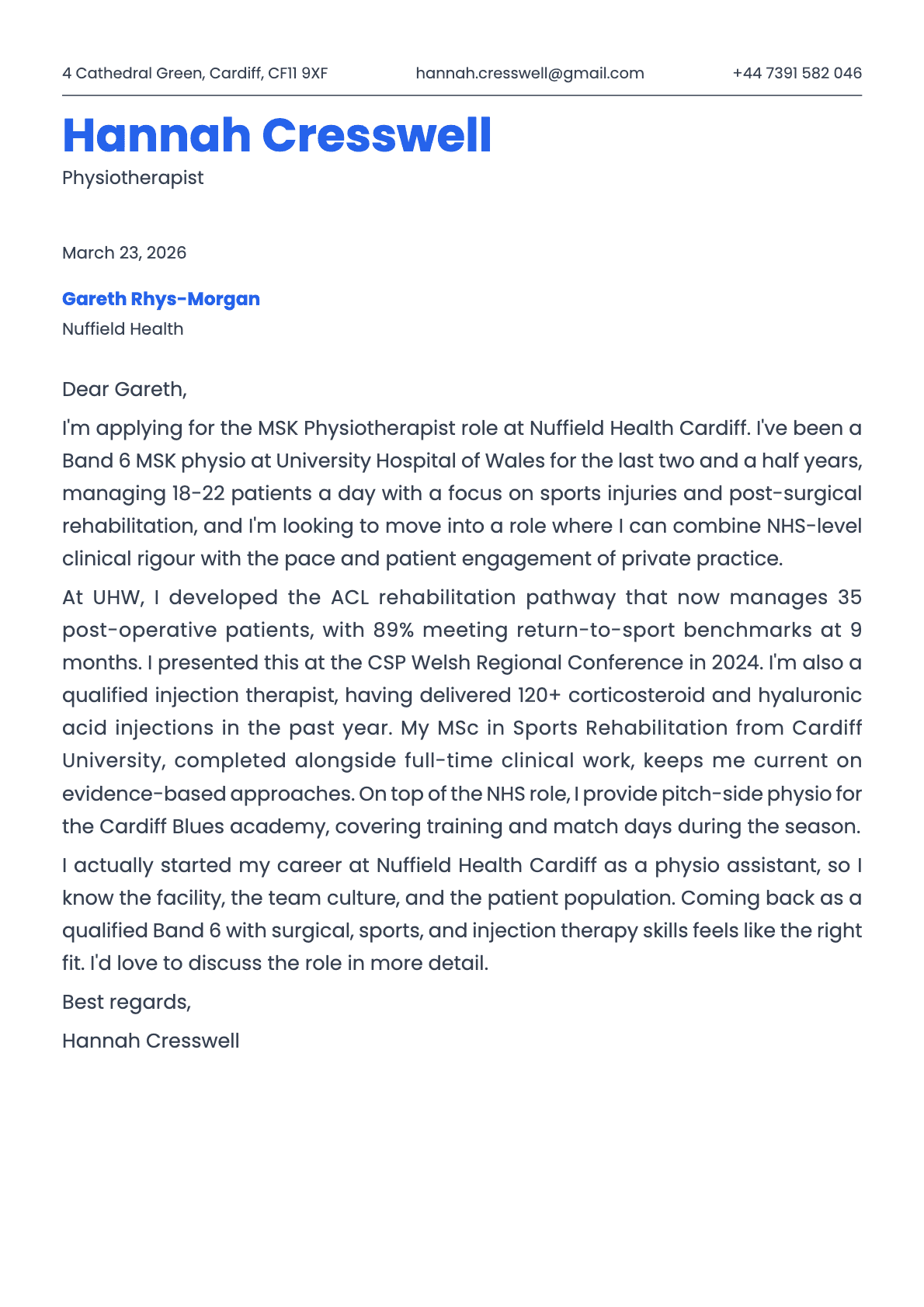
Physiotherapist
A physiotherapist cover letter example showing how to present MSK caseload, rehabilitation pathways.
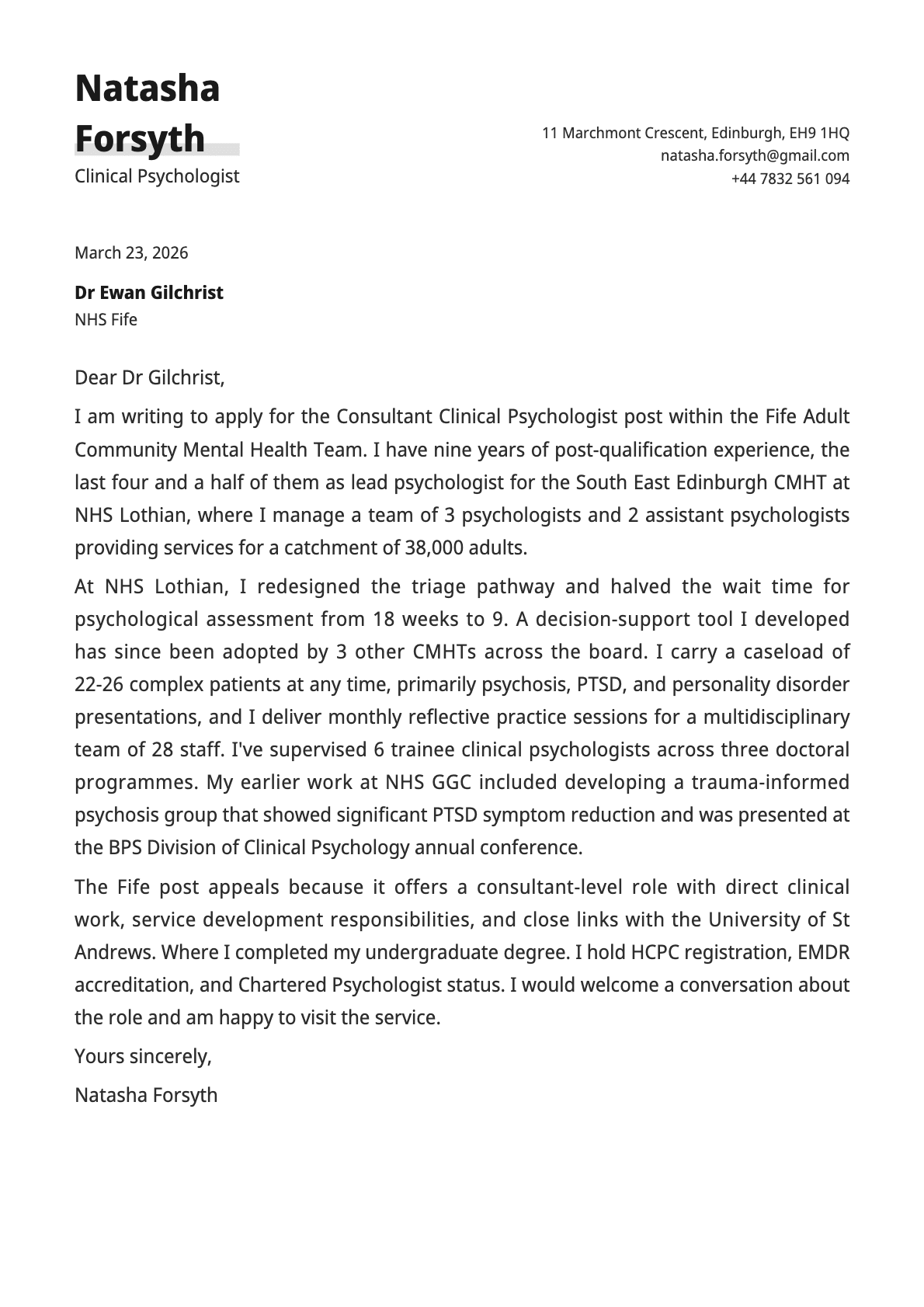
Clinical Psychologist
A clinical psychologist cover letter example demonstrating how to present NHS leadership experience, caseload management.
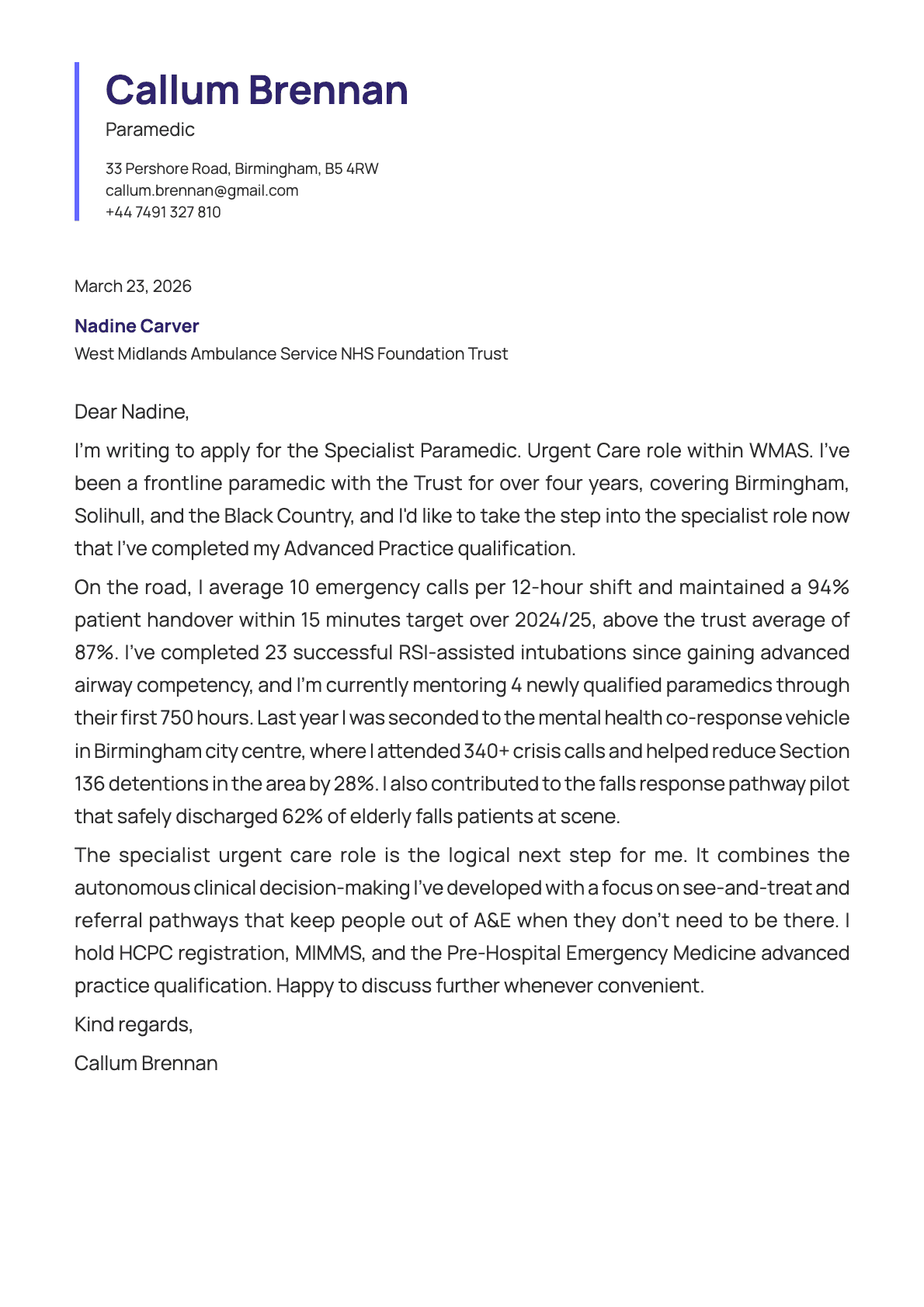
Paramedic
A paramedic cover letter example showing how to present emergency response statistics, advanced clinical skills.
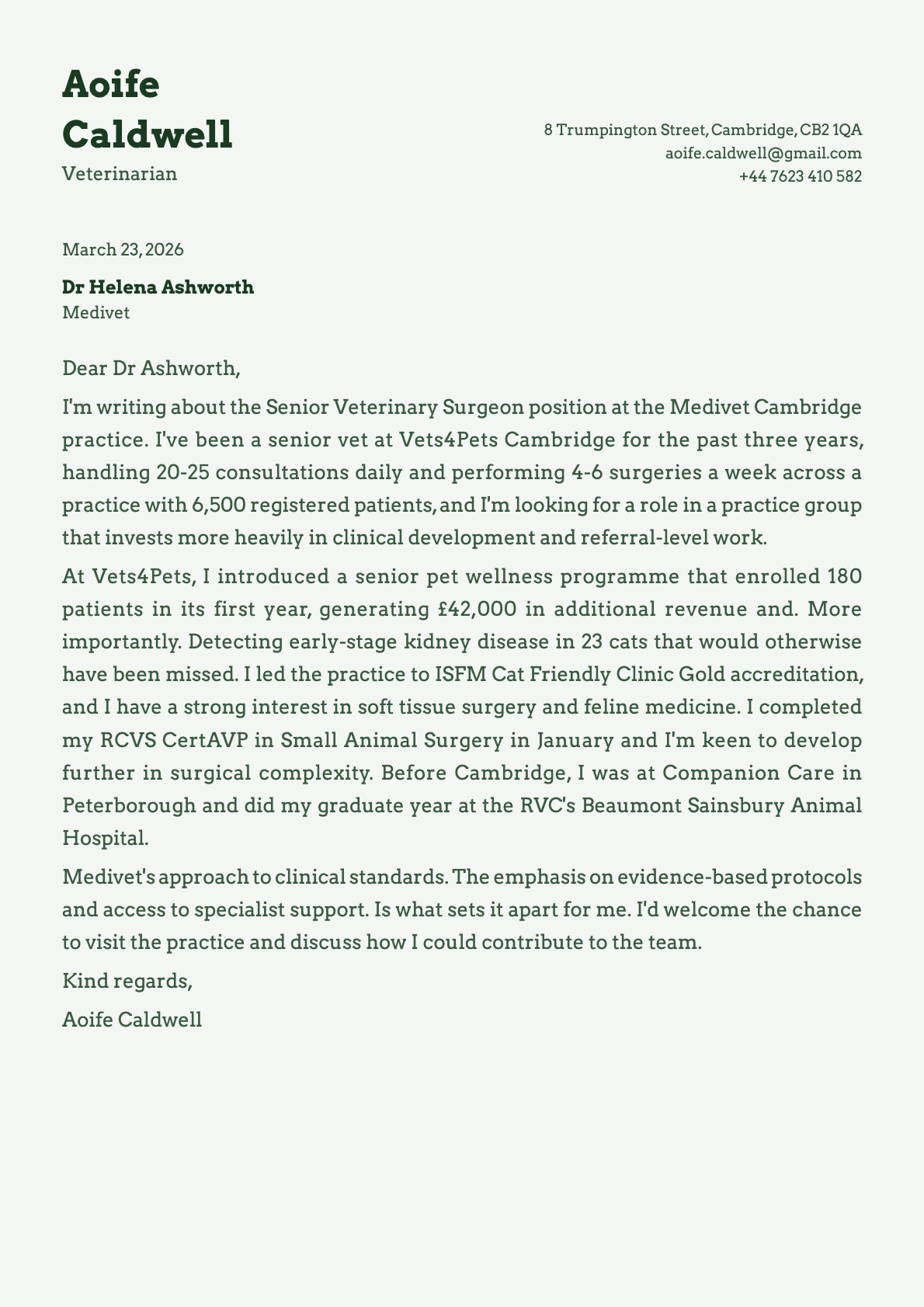
Veterinarian
A veterinarian cover letter example showing how to present clinical caseload, surgical skills.
Related articles

AI Is Screening Your Resume Before Any Human Sees It
AI screens most resumes before a human ever reads them. 97.4% of Fortune 500 companies run an ATS. This is what that means for you and what you can do about it.

The Best Resume Builders in 2026, Compared Honestly
Resume.io, Zety, Enhancv, Kickresume, Teal, and Laddro compared honestly: real pricing, free tiers, mobile apps, and where each tool wins. All prices checked in September 2026.

Burnout Recovery: A Real Timeline, Not 'Take a Bubble Bath'
55% of the U.S. workforce is burned out. Recovery takes 3 to 12 months. Here's what that actually looks like, stage by stage.