Physician Cover Letter Example
A physician cover letter example showing how to present clinical leadership, quality improvement projects, and academic credentials for a consultant post.

Laddro Team
Free to use. No account needed to start.
Free to use. No account needed to start.
What a consultant physician cover letter needs to convey
Applying for a consultant physician post is one of the most high-stakes applications in medicine. The panel reviewing your letter includes clinical directors, medical directors, and potentially the chief executive. They want to see three things: clinical capability at scale, leadership that improves outcomes, and a genuine reason for wanting this particular hospital.
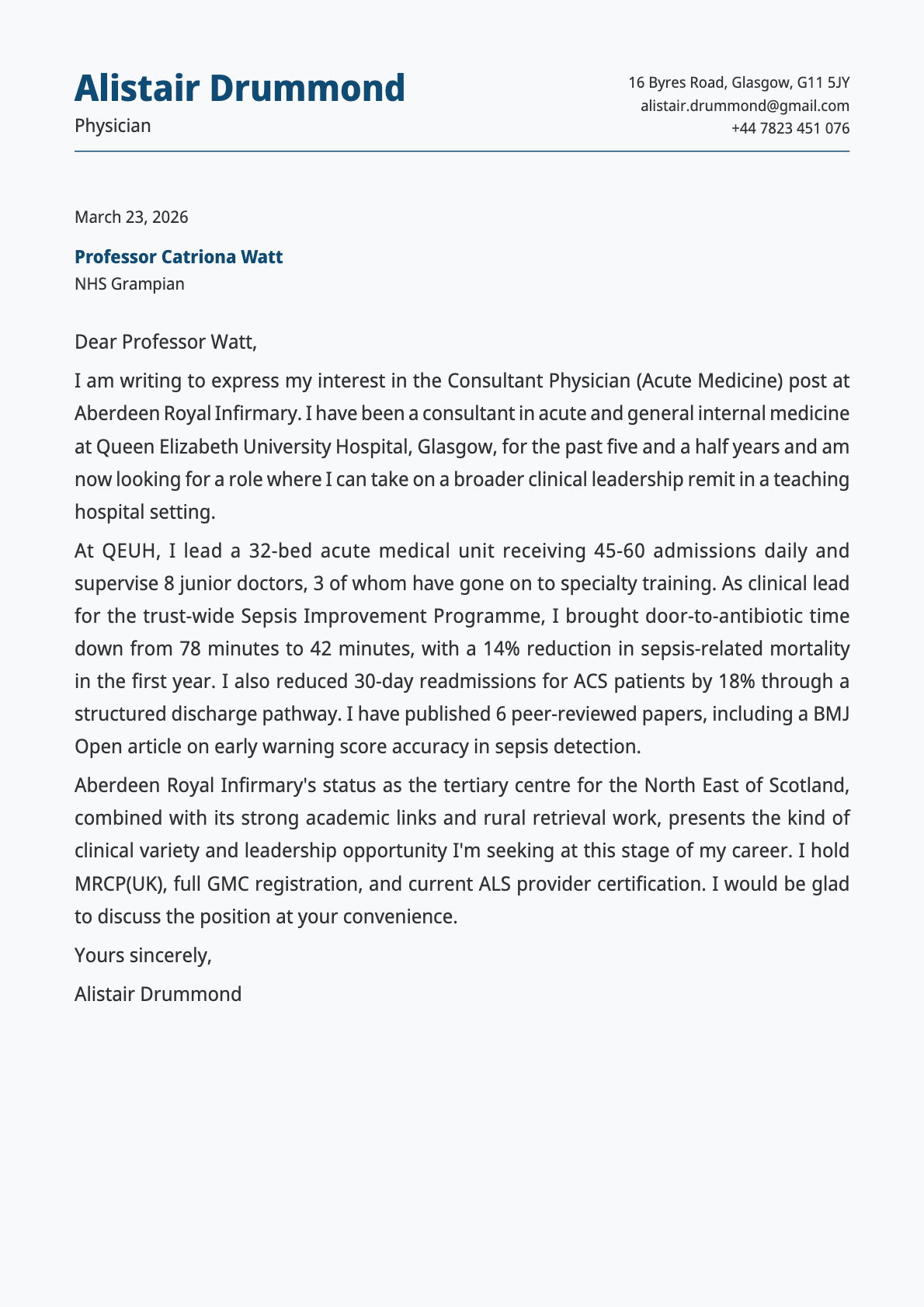
This example from Alistair Drummond shows how to deliver all three. He is a consultant in acute and general internal medicine at Queen Elizabeth University Hospital, Glasgow, applying for a consultant post at Aberdeen Royal Infirmary within NHS Grampian.
Establish your clinical authority immediately
Alistair opens by stating his current role, his years at consultant level (five and a half), and his reason for the move: a broader clinical leadership remit in a teaching hospital setting. He does not start with his medical school or training history. He starts where he is now.
Your takeaway: At consultant level, the panel assumes a strong training background. Lead with your current post, the unit you run, and your reason for seeking this role.
Quantify your leadership and clinical outcomes
The body of the letter is where Alistair demonstrates real impact. He leads a 32-bed acute medical unit receiving 45 to 60 admissions daily. He supervises eight junior doctors. As clinical lead for the Sepsis Improvement Programme, he brought door-to-antibiotic time down from 78 minutes to 42 minutes, with a 14% reduction in sepsis-related mortality in the first year. He also reduced 30-day readmissions for ACS patients by 18% through a structured discharge pathway.
His academic output is mentioned efficiently: six peer-reviewed papers including a BMJ Open article on early warning score accuracy in sepsis detection.
Your takeaway: Name your quality improvement projects with before-and-after metrics. Include bed numbers, admission volumes, and junior doctor supervision. These figures tell the panel what kind of unit you can lead.
Show you understand the hospital's context
Alistair's closing paragraph is specific and informed. He names Aberdeen Royal Infirmary's status as the tertiary centre for the North East of Scotland, its academic links, and its rural retrieval work. He frames these as the clinical variety and leadership opportunity he is seeking at this stage.
This is not flattery. It is evidence that he has researched the post and has a clear reason for applying. Panels can tell the difference between a generic "prestigious institution" line and a candidate who knows what the hospital actually does.
What to include in your physician cover letter
- Current post and unit with bed numbers and admission volumes
- Quality improvement projects with measurable outcomes (mortality reduction, time-to-treatment, readmission rates)
- Supervision and training (junior doctors, registrars, specialty trainees)
- Academic output summarised briefly (number of publications, key journals)
- Professional registrations and memberships (GMC, MRCP, ALS)
- A specific reason for this hospital at this stage of your career
What to leave out
Do not recount your entire training pathway. Do not list every ward you have worked on. Do not describe yourself as "comkeen" or "dedicated." The panel will assess your clinical manner at interview. The cover letter should demonstrate your professional impact.
Final thoughts
A consultant physician cover letter is a concise professional case. It should read like the executive summary of your clinical career: what you lead, what you have improved, and why you want this post. Keep it factual, keep it specific, and let the outcomes speak for themselves. The panels that appoint consultants have read thousands of applications. The ones that stand out are the ones where every sentence contains something measurable.
Was this cover letter example helpful?
Rate this example to help us create better content for you.
4.9 average from 87 ratingsBuild your own version
Open this layout in the builder and swap in your own details. It takes a few minutes.
Free to use. No account needed to start.
Related cover letter examples
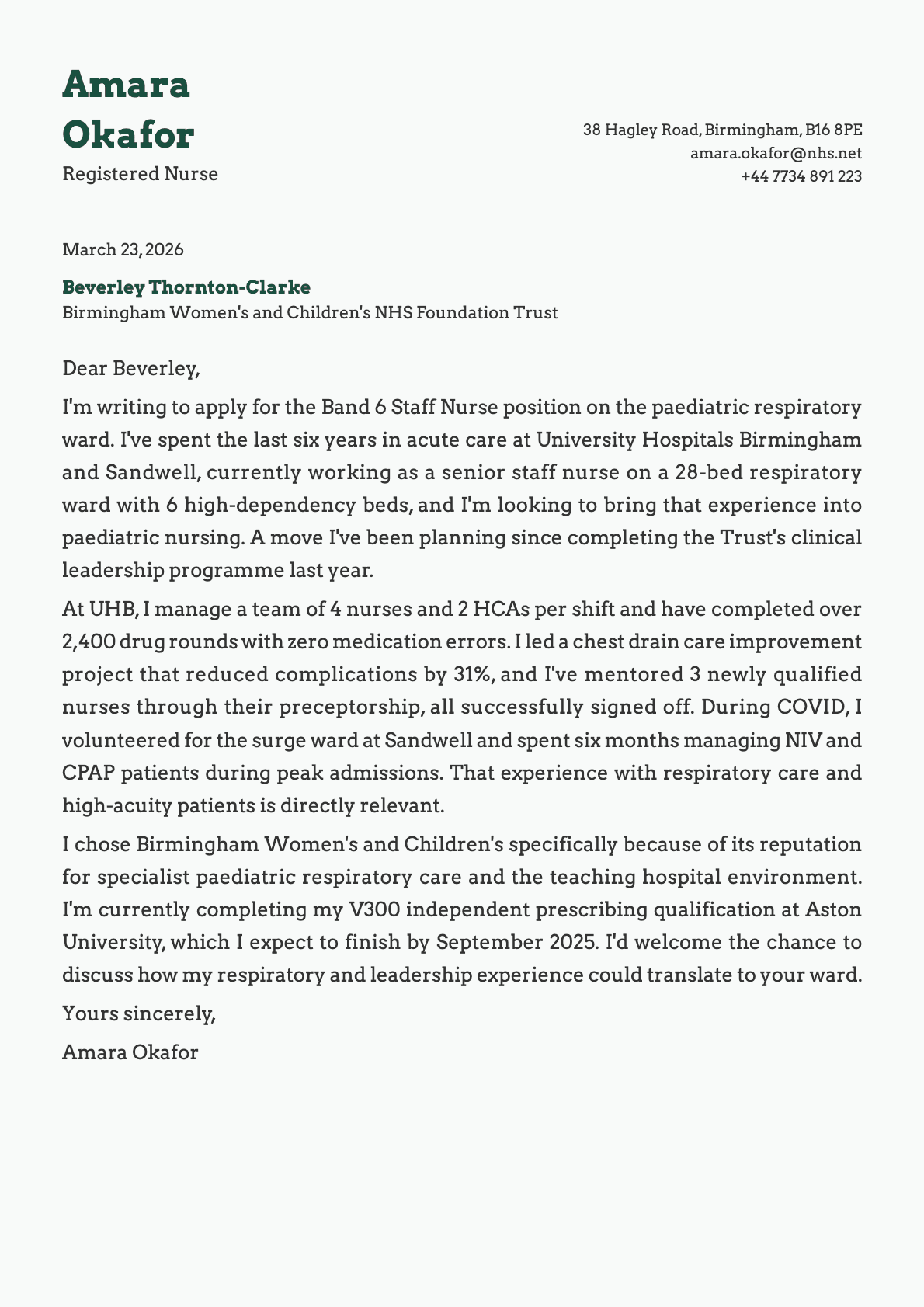
Registered Nurse
A registered nurse cover letter example showing how to present acute care experience, clinical leadership.
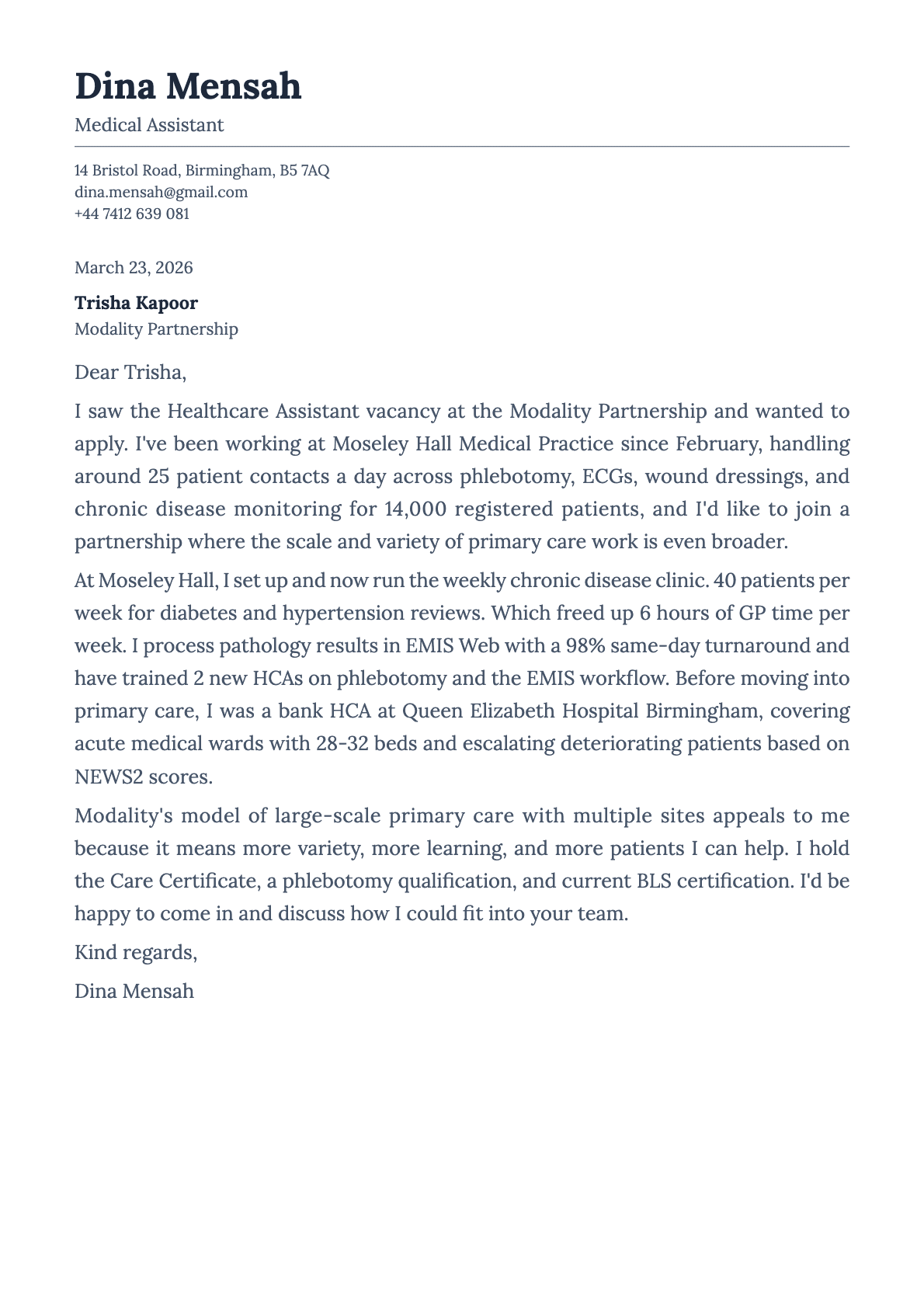
Medical Assistant
A medical assistant cover letter example showing how to present clinical skills, patient volumes, and GP practice experience when applying to a large.
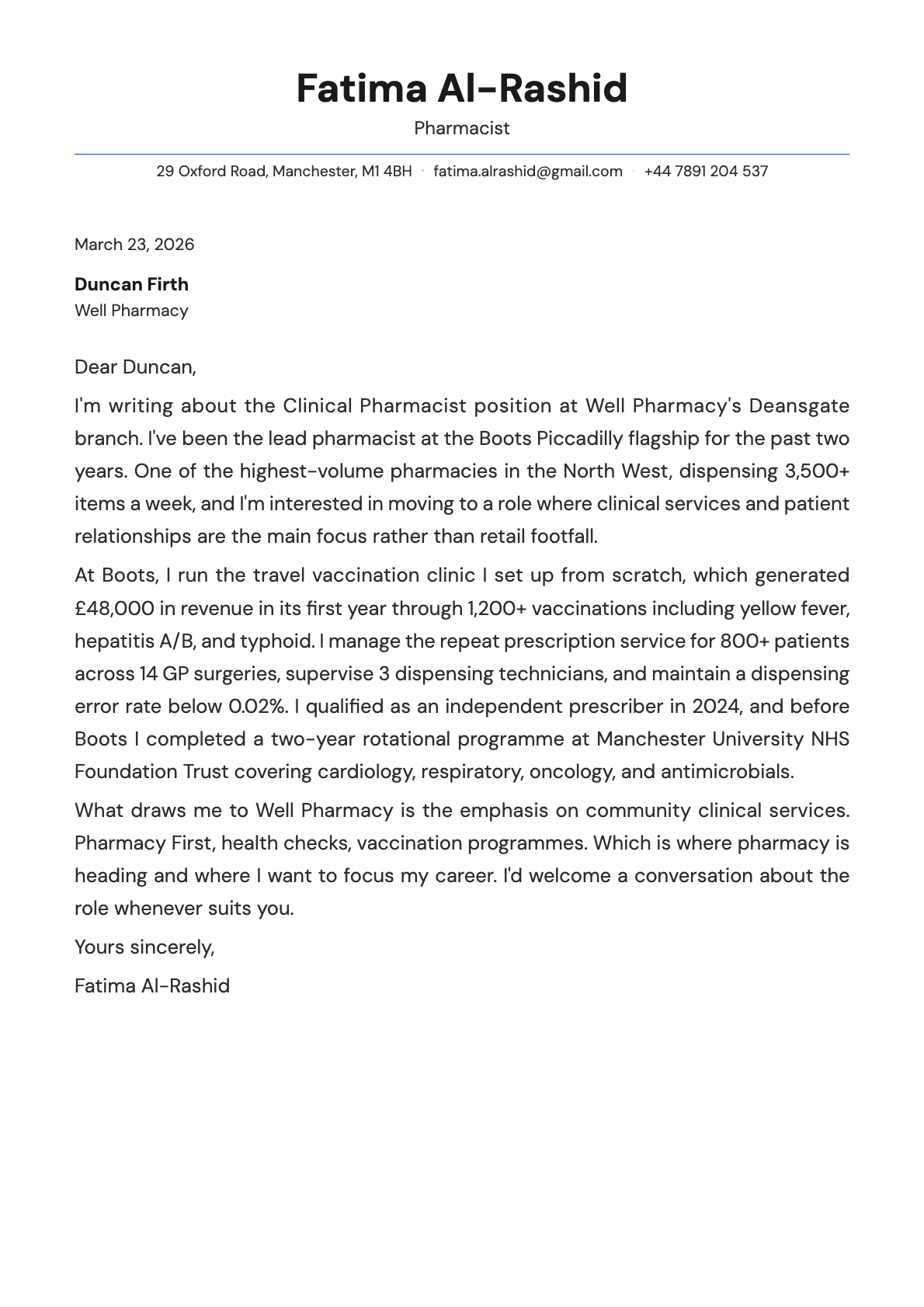
Pharmacist
A pharmacist cover letter example showing how to present clinical services, dispensing volume, and revenue generation when applying to a community.
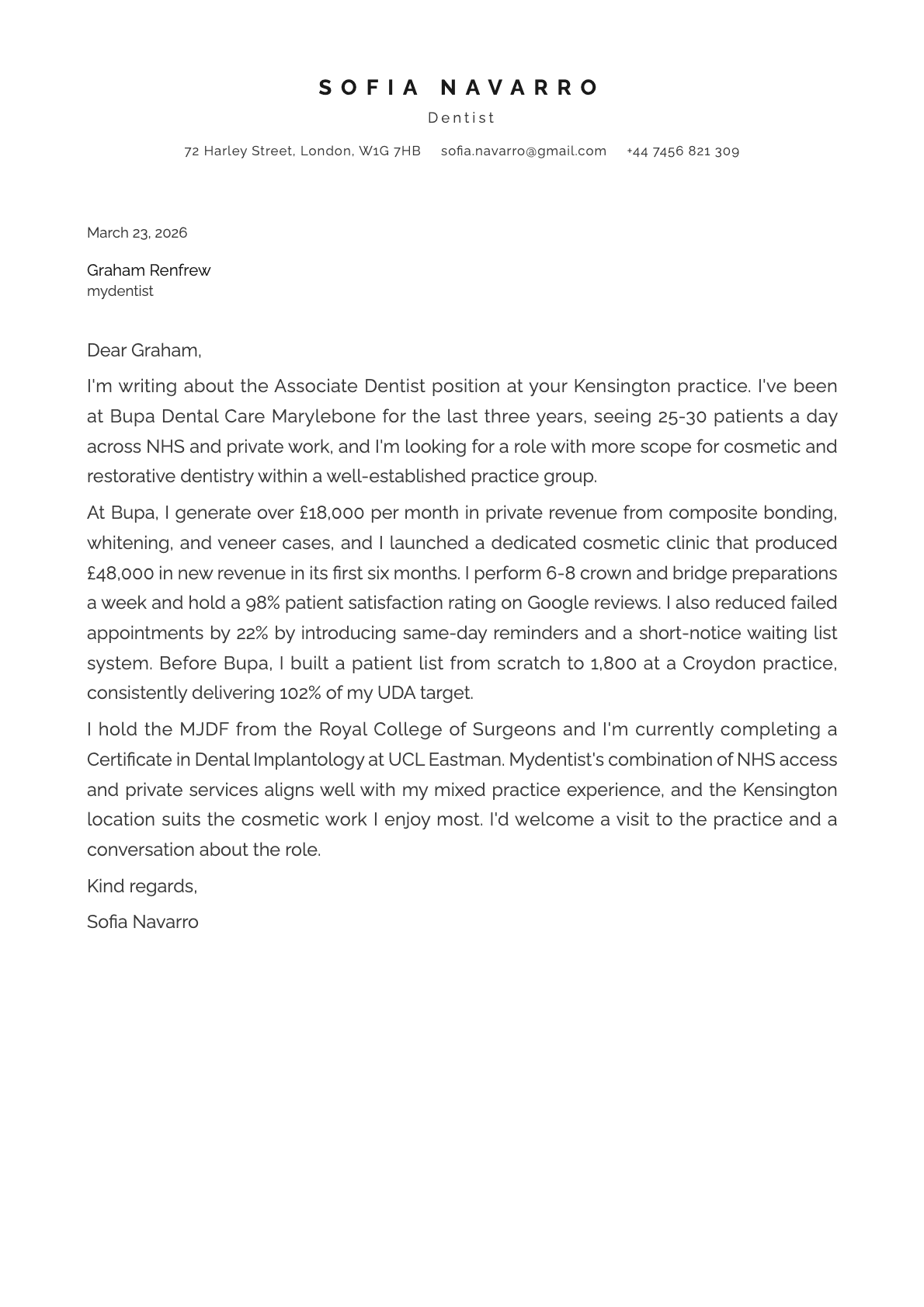
Dentist
A dentist cover letter example showing how to present clinical skills, private revenue generation, and patient satisfaction when applying to a dental.
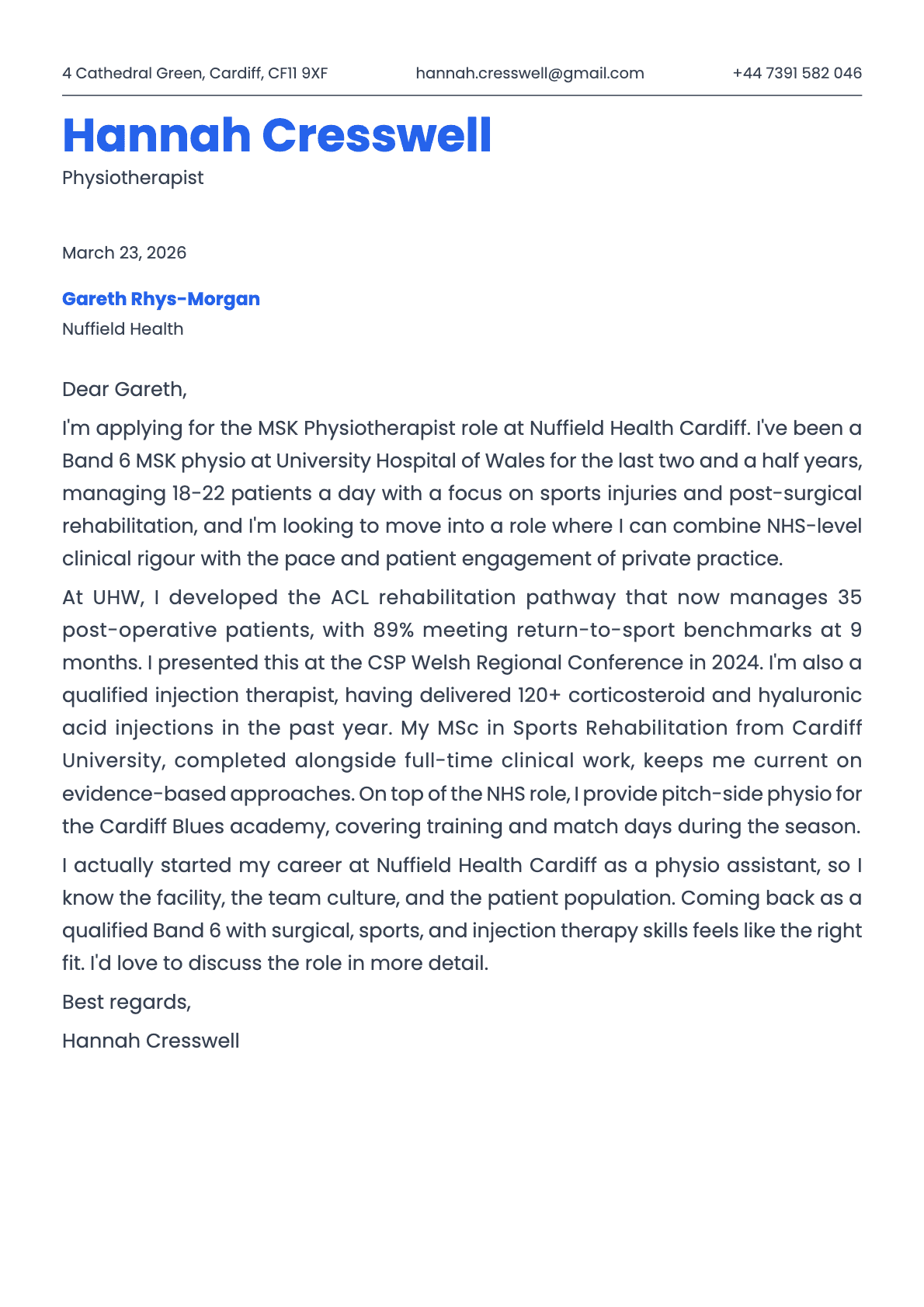
Physiotherapist
A physiotherapist cover letter example showing how to present MSK caseload, rehabilitation pathways.
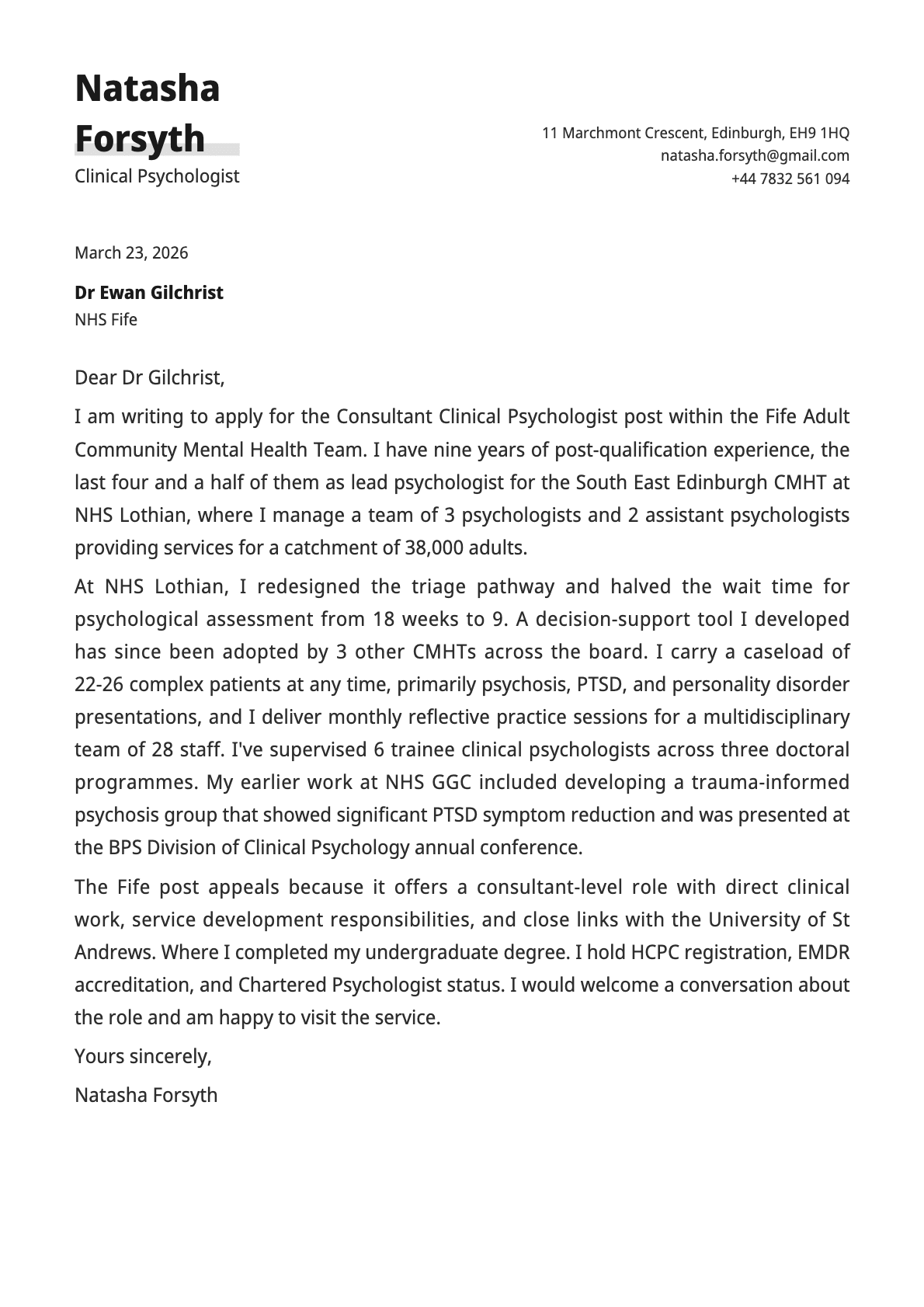
Clinical Psychologist
A clinical psychologist cover letter example demonstrating how to present NHS leadership experience, caseload management.
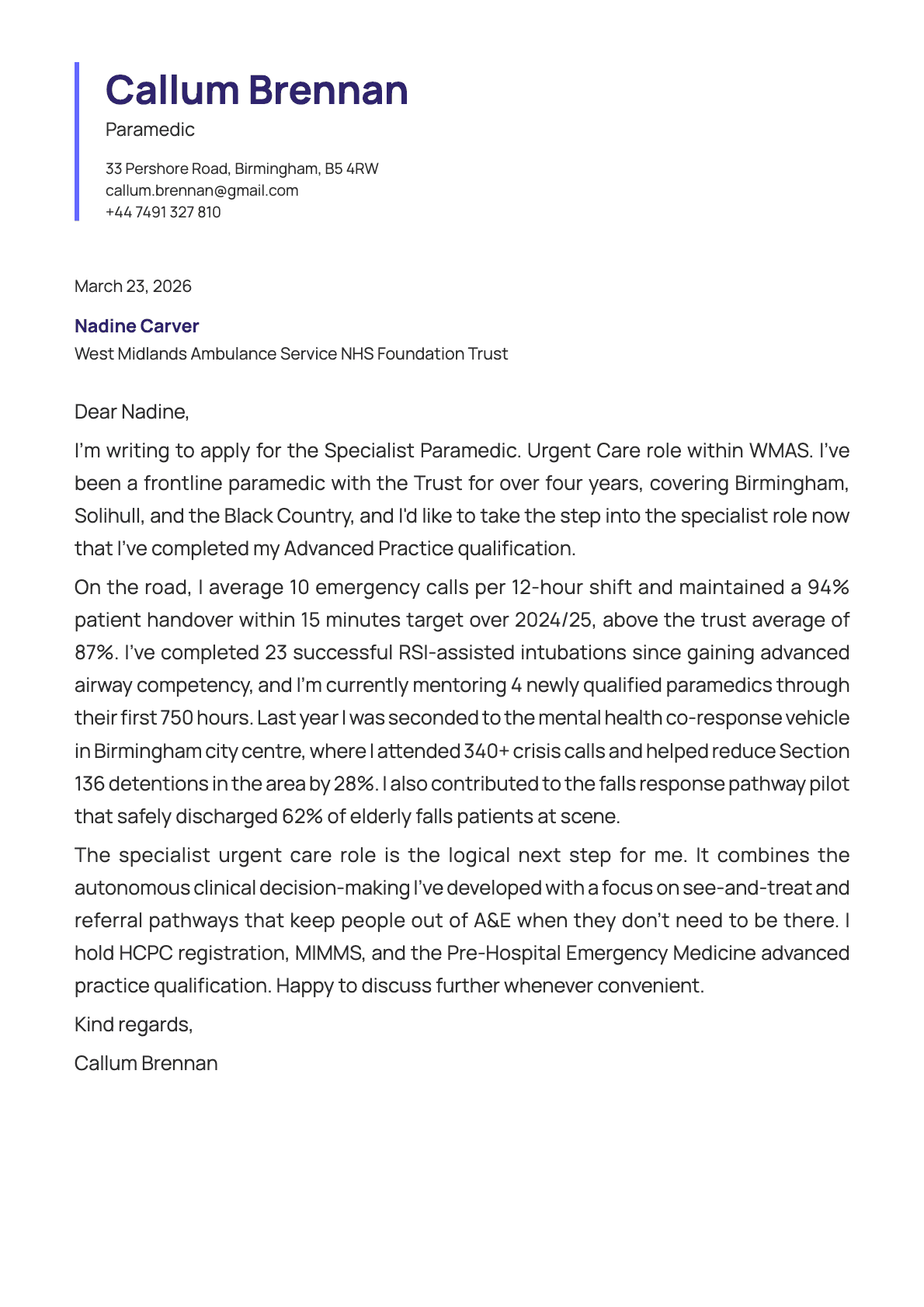
Paramedic
A paramedic cover letter example showing how to present emergency response statistics, advanced clinical skills.
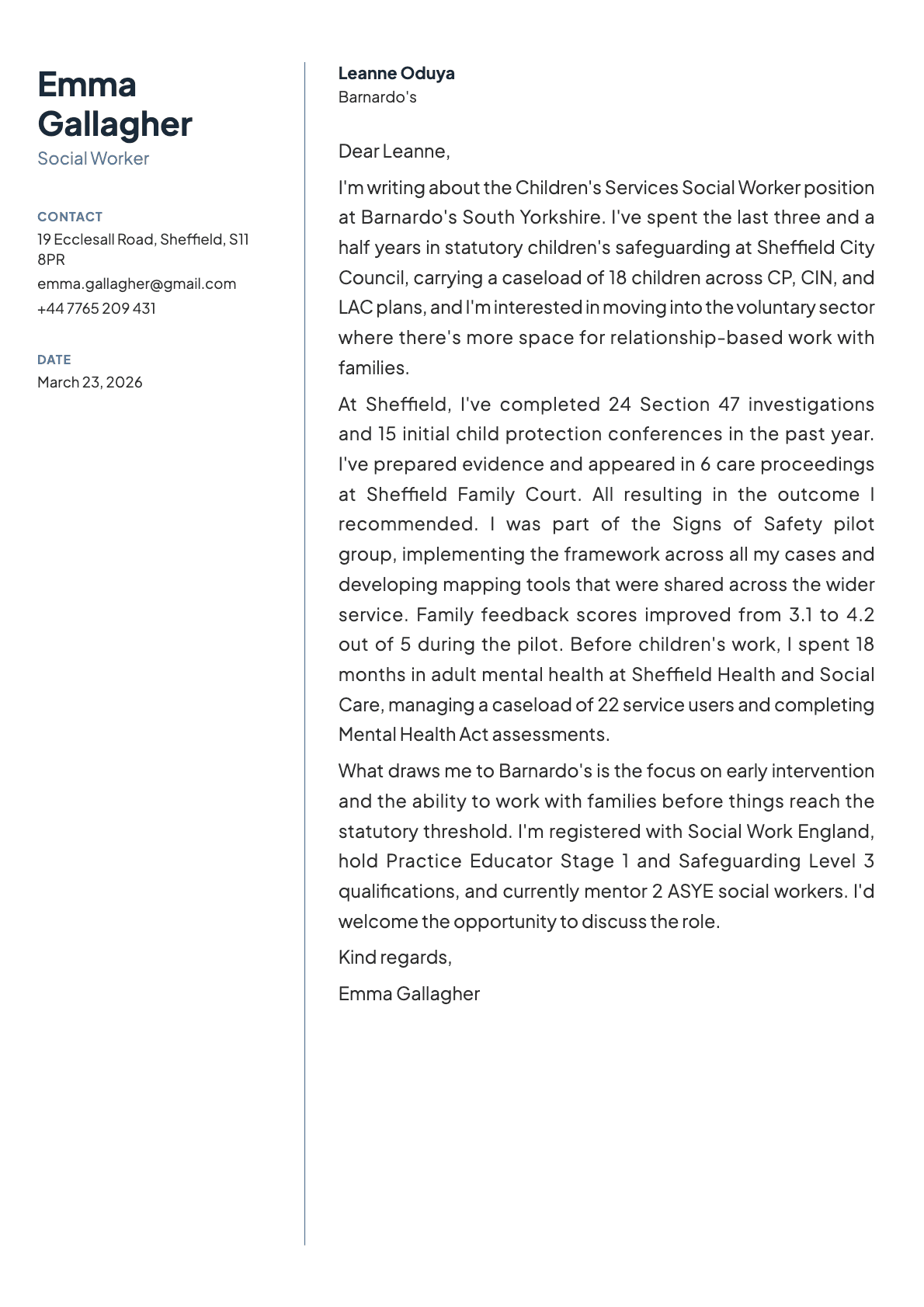
Social Worker
A social worker cover letter example showing how to present safeguarding caseload, court experience, and framework implementation for a voluntary sector.
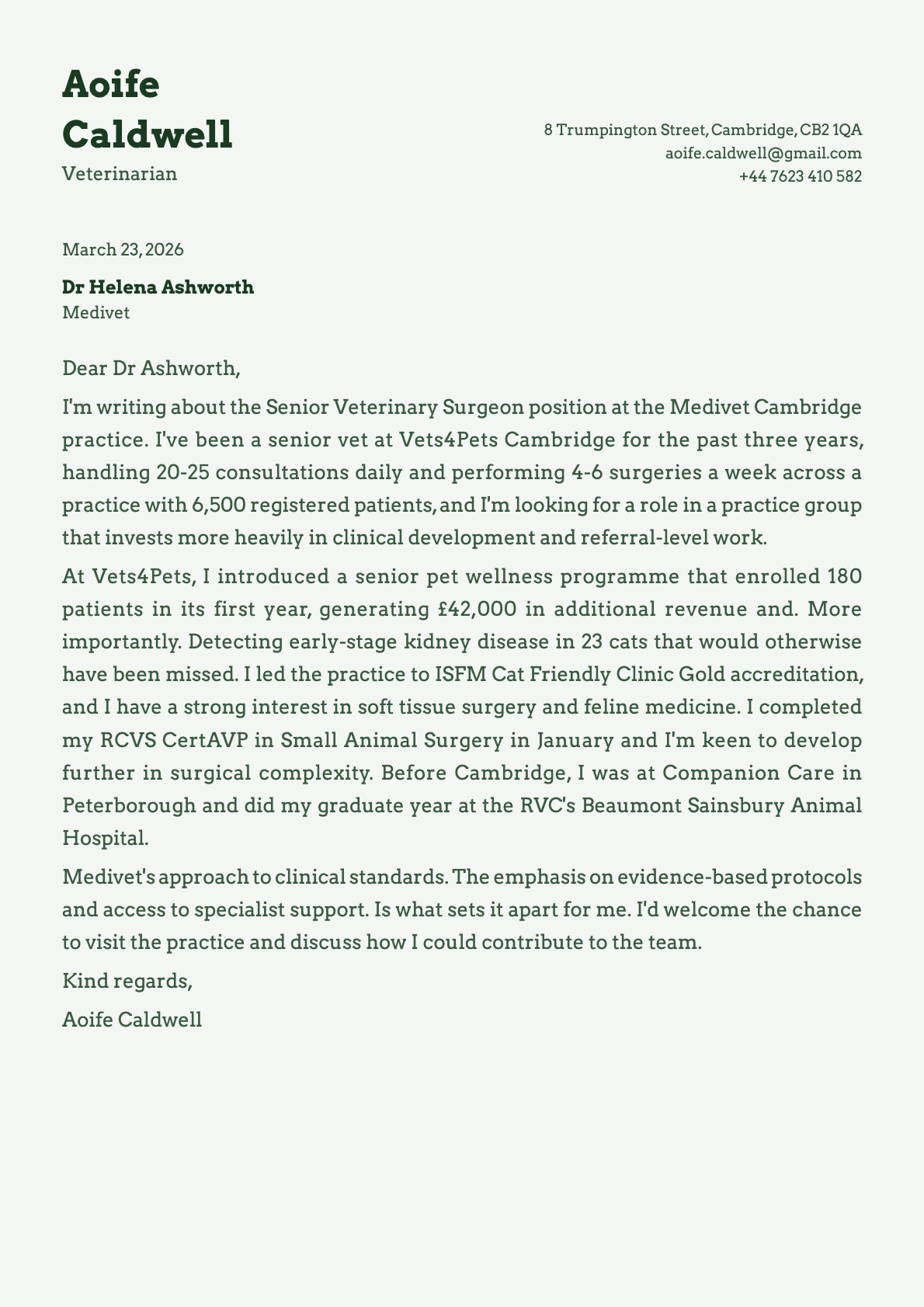
Veterinarian
A veterinarian cover letter example showing how to present clinical caseload, surgical skills.
Related articles

AI Is Screening Your Resume Before Any Human Sees It
AI screens most resumes before a human ever reads them. 97.4% of Fortune 500 companies run an ATS. This is what that means for you and what you can do about it.

The Best Resume Builders in 2026, Compared Honestly
Resume.io, Zety, Enhancv, Kickresume, Teal, and Laddro compared honestly: real pricing, free tiers, mobile apps, and where each tool wins. All prices checked in September 2026.

Burnout Recovery: A Real Timeline, Not 'Take a Bubble Bath'
55% of the U.S. workforce is burned out. Recovery takes 3 to 12 months. Here's what that actually looks like, stage by stage.