Registered Nurse Cover Letter Example
A registered nurse cover letter example showing how to present acute care experience, clinical leadership.

Laddro Team
Free to use. No account needed to start.
Free to use. No account needed to start.
What nursing hiring managers actually want in a cover letter
Nursing recruitment panels read hundreds of cover letters that all say the same thing: "I am a comkeen and dedicated nurse." They know you are. That is why you entered nursing. What they need from your cover letter is something different: evidence of your clinical scope, your safety record, and your ability to lead a team and improve care.
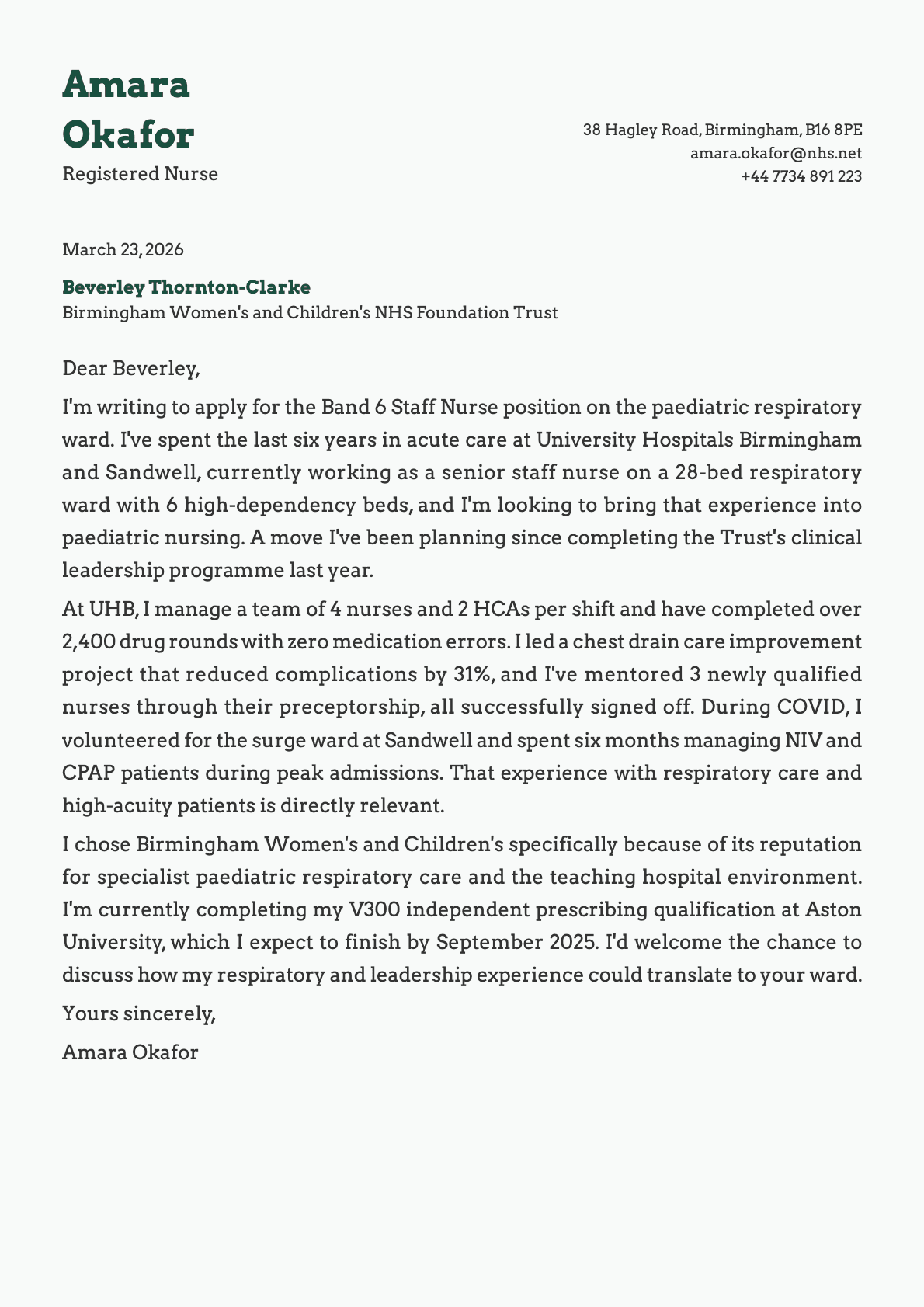
This example from Amara Okafor shows how to write a nursing cover letter that stands on evidence. She is a senior staff nurse on a respiratory ward at University Hospitals Birmingham, applying for a Band 6 post on a paediatric respiratory ward at Birmingham Women's and Children's NHS Foundation Trust.
Open with your clinical context and career intent
Amara begins by naming her current ward (28-bed respiratory ward with six high-dependency beds), her years of experience (six), and her reason for applying: she has been planning a move into paediatric nursing since completing the Trust's clinical leadership programme.
This opening answers three questions at once: where she works, what level she is at, and why she wants this specific role.
Your takeaway: State your ward type, bed numbers, and acuity level in the opening paragraph. If you are changing specialism, explain when you started planning the move and what steps you have taken.
Prove your clinical safety and leadership
The body of Amara's letter is where she differentiates herself. She manages a team of four nurses and two HCAs per shift. She has completed over 2,400 drug rounds with zero medication errors. She led a chest drain care improvement project that reduced complications by 31%. She has mentored three newly qualified nurses through their preceptorship.
Her COVID experience on the surge ward adds further weight: six months managing NIV and CPAP patients during peak admissions, which is directly relevant to the respiratory specialism of the target role.
Your takeaway: Include your safety record (medication errors, incident rates), your leadership scope (shift team size, preceptees mentored), and at least one quality improvement project with its outcome.
Show you have chosen this trust deliberately
Amara closes by naming Birmingham Women's and Children's specifically and citing its reputation for specialist paediatric respiratory care and its teaching hospital environment. She also mentions her V300 independent prescribing qualification in progress, which signals ongoing professional investment.
What to include in your registered nurse cover letter
- Ward type and bed numbers with acuity level
- Shift leadership (team size, skill mix you manage)
- Safety record (drug rounds, incident rates)
- Quality improvement projects with measurable outcomes
- Mentoring and preceptorship experience
- Relevant qualifications and those in progress
- A specific reason for choosing this trust and ward
What to leave out
Do not describe yourself as "keen about patient care." Every nurse is. Do not list every ward you have rotated through during training. Do not include your nursing school grades. The panel cares about what you do now and how well you do it.
Final thoughts
A registered nurse cover letter should read like a clinical profile: factual, specific, and focused on outcomes. The nursing profession values safety, leadership, and continuous improvement. Demonstrate all three with numbers, and your letter will stand out from the hundreds that rely on adjectives alone.
Was this cover letter example helpful?
Rate this example to help us create better content for you.
4.8 average from 175 ratingsBuild your own version
Open this layout in the builder and swap in your own details. It takes a few minutes.
Free to use. No account needed to start.
Related cover letter examples
Medical Assistant
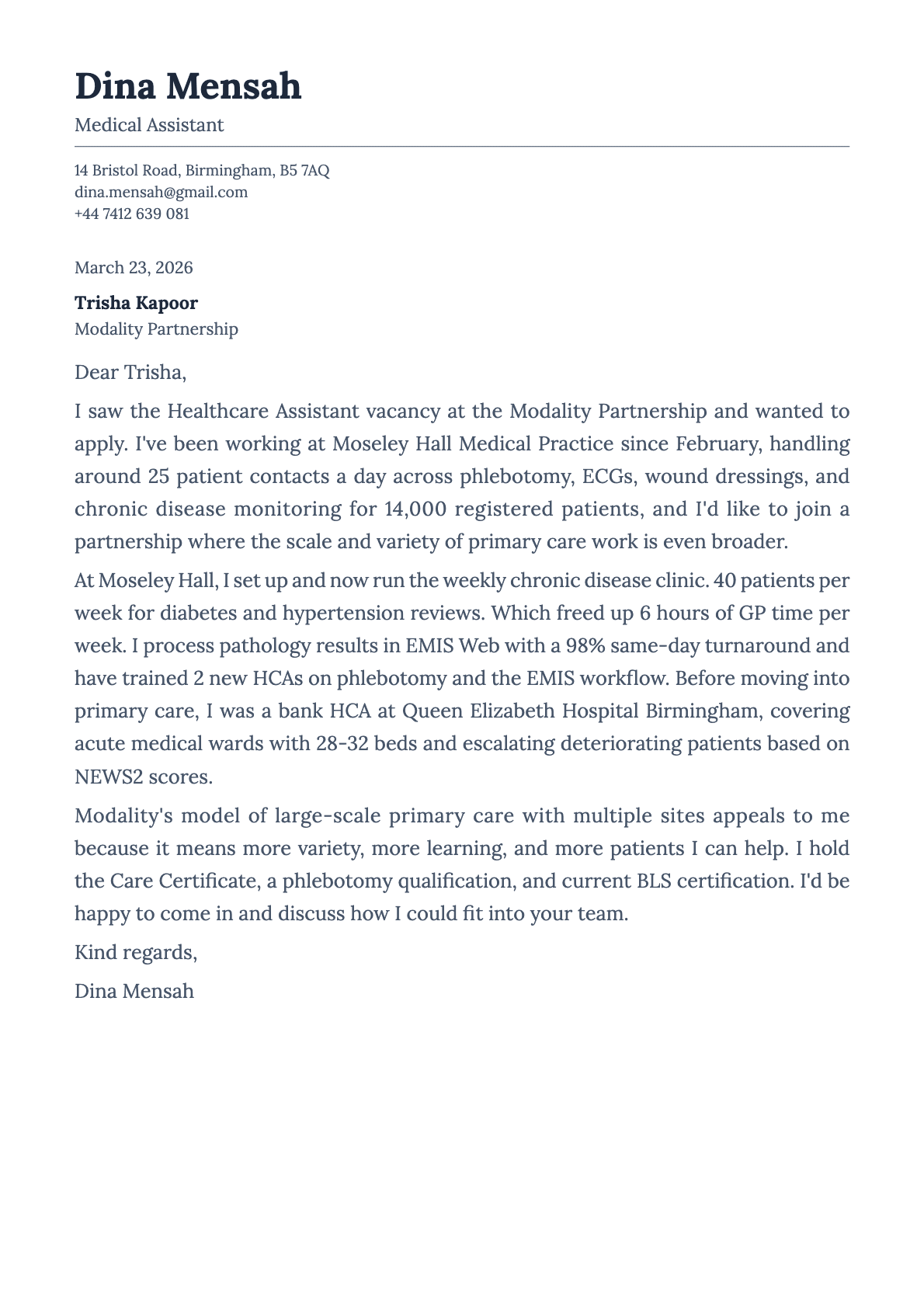
A medical assistant cover letter example showing how to present clinical skills, patient volumes, and GP practice experience when applying to a large.
Pharmacist
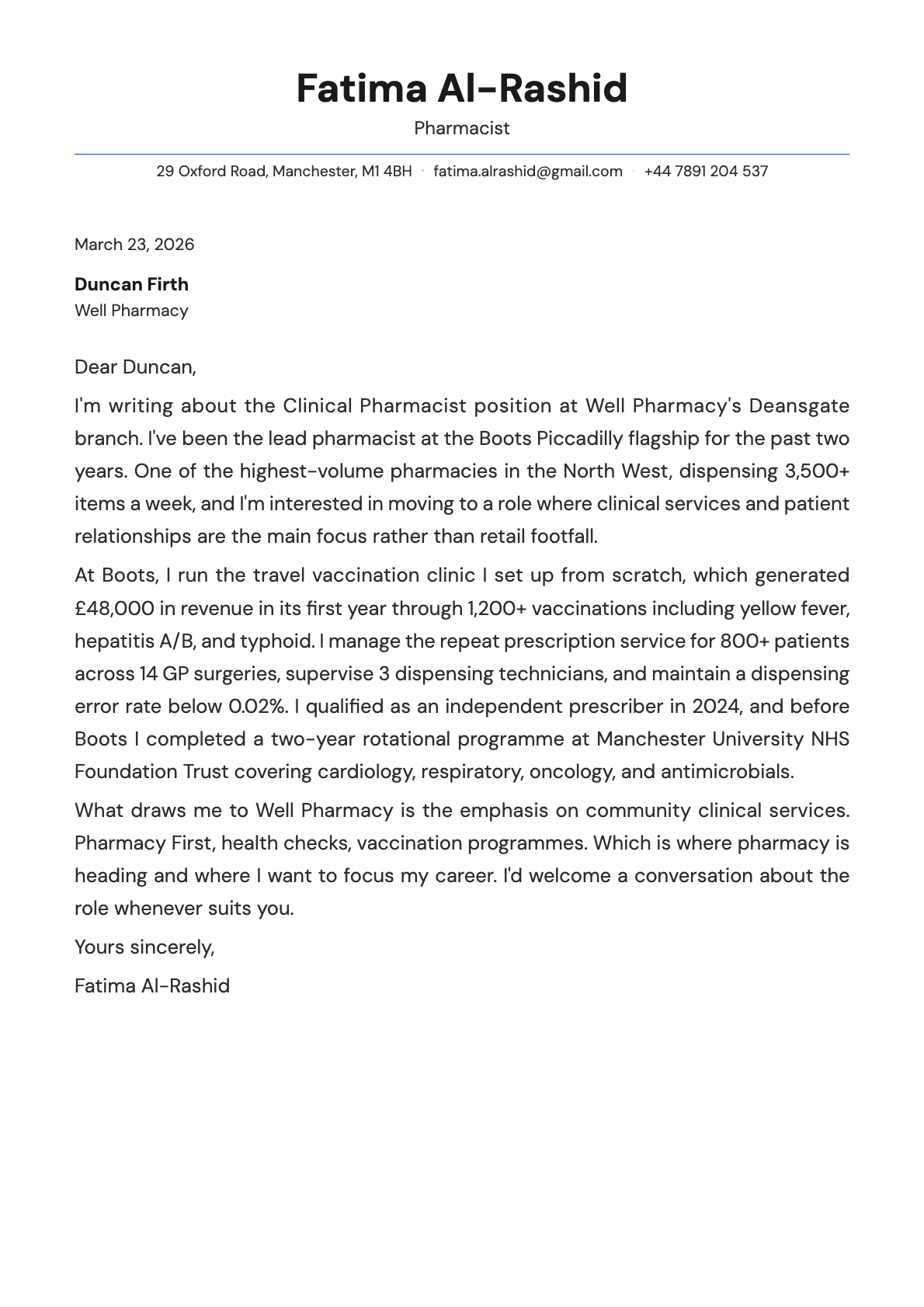
A pharmacist cover letter example showing how to present clinical services, dispensing volume, and revenue generation when applying to a community.
Physician
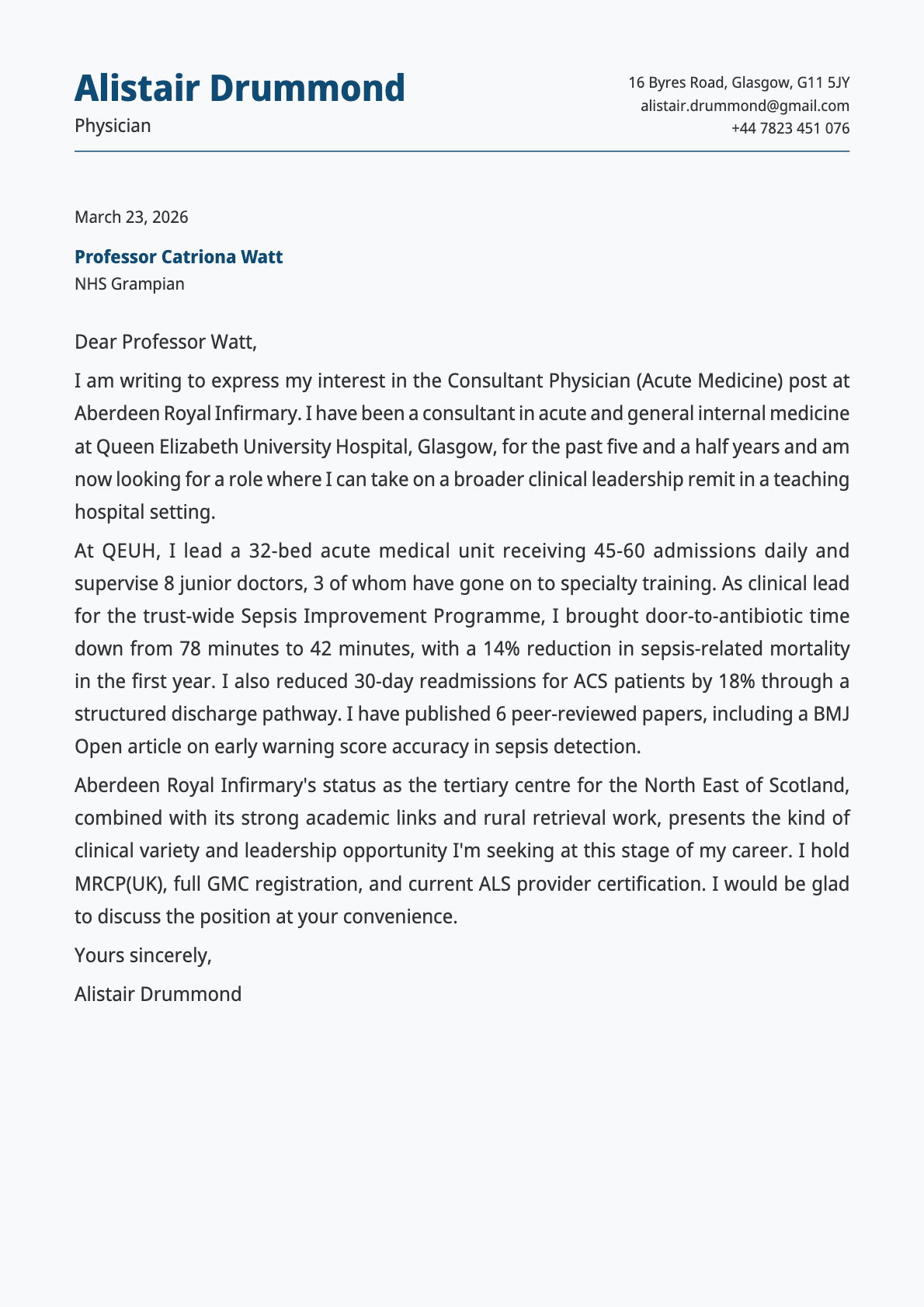
A physician cover letter example showing how to present clinical leadership, quality improvement projects, and academic credentials for a consultant post.
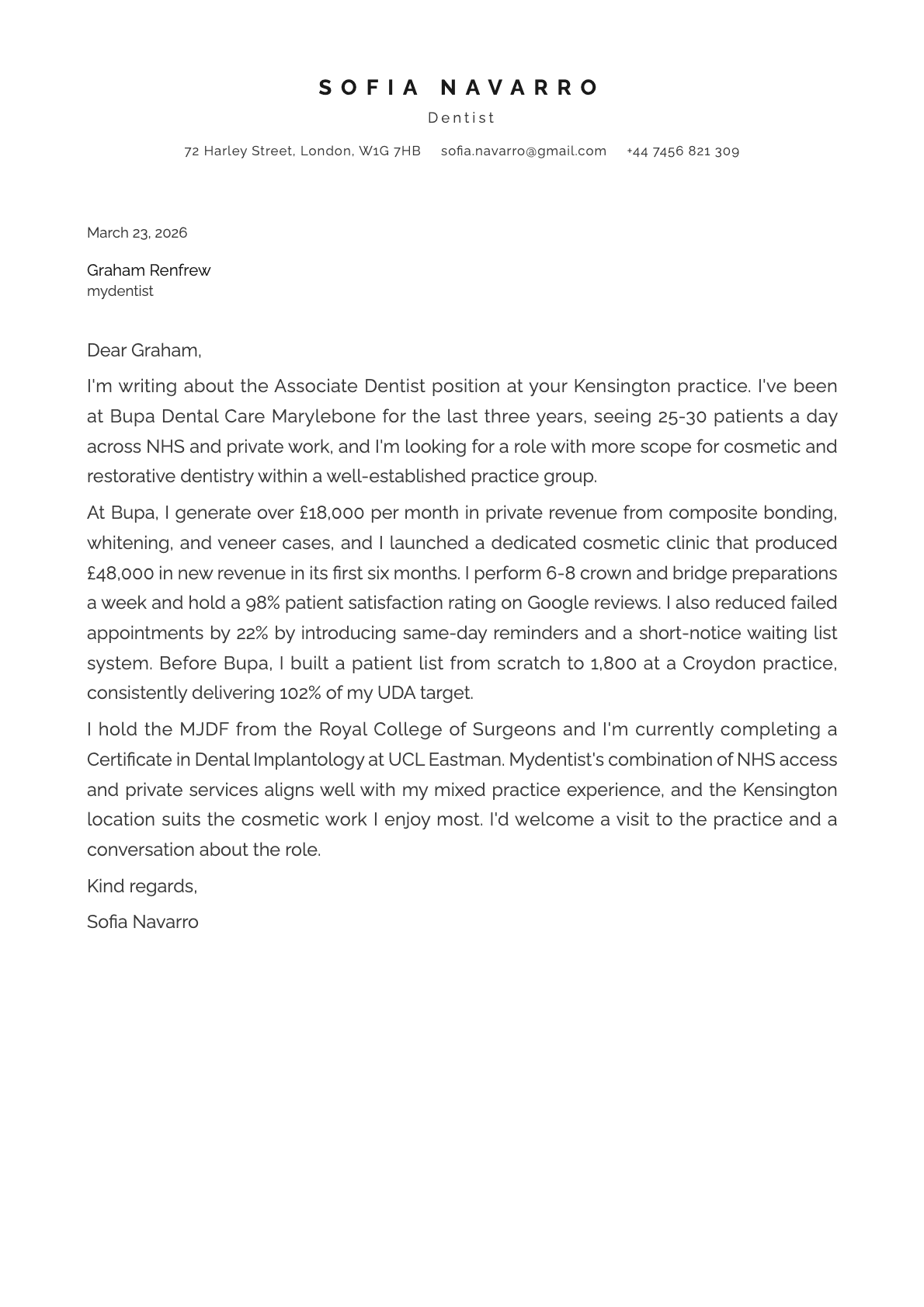
Dentist
A dentist cover letter example showing how to present clinical skills, private revenue generation, and patient satisfaction when applying to a dental.
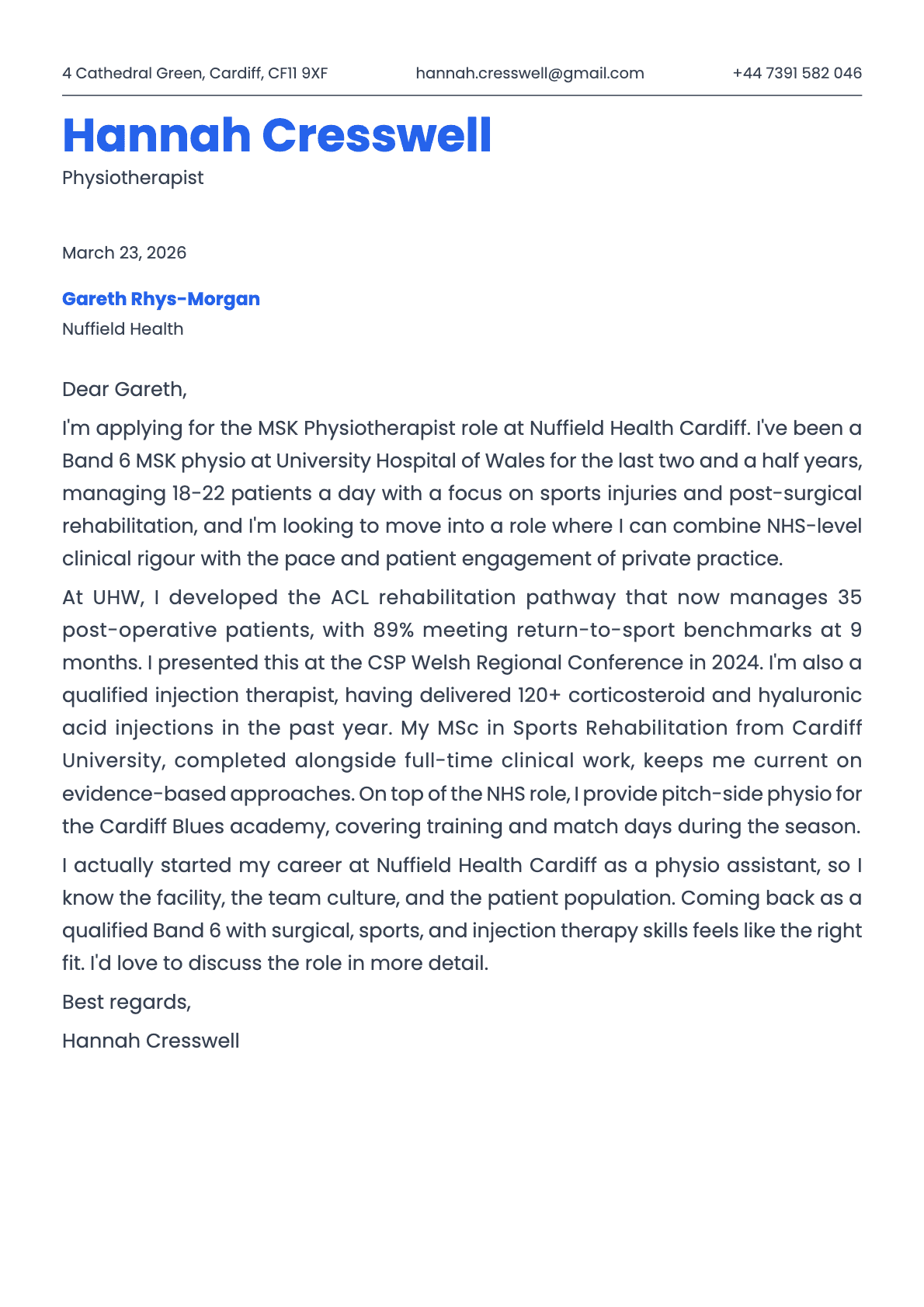
Physiotherapist
A physiotherapist cover letter example showing how to present MSK caseload, rehabilitation pathways.
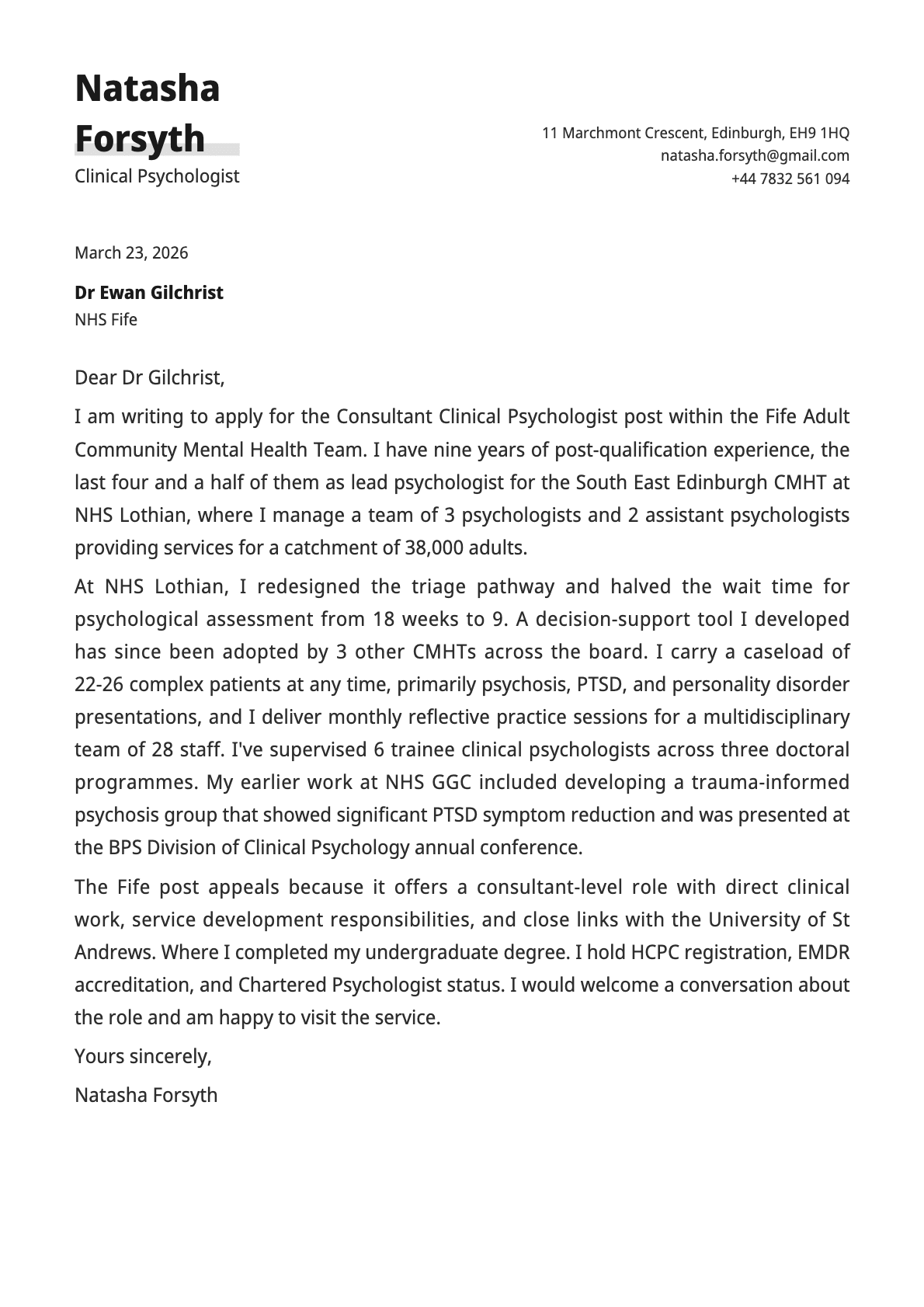
Clinical Psychologist
A clinical psychologist cover letter example demonstrating how to present NHS leadership experience, caseload management.
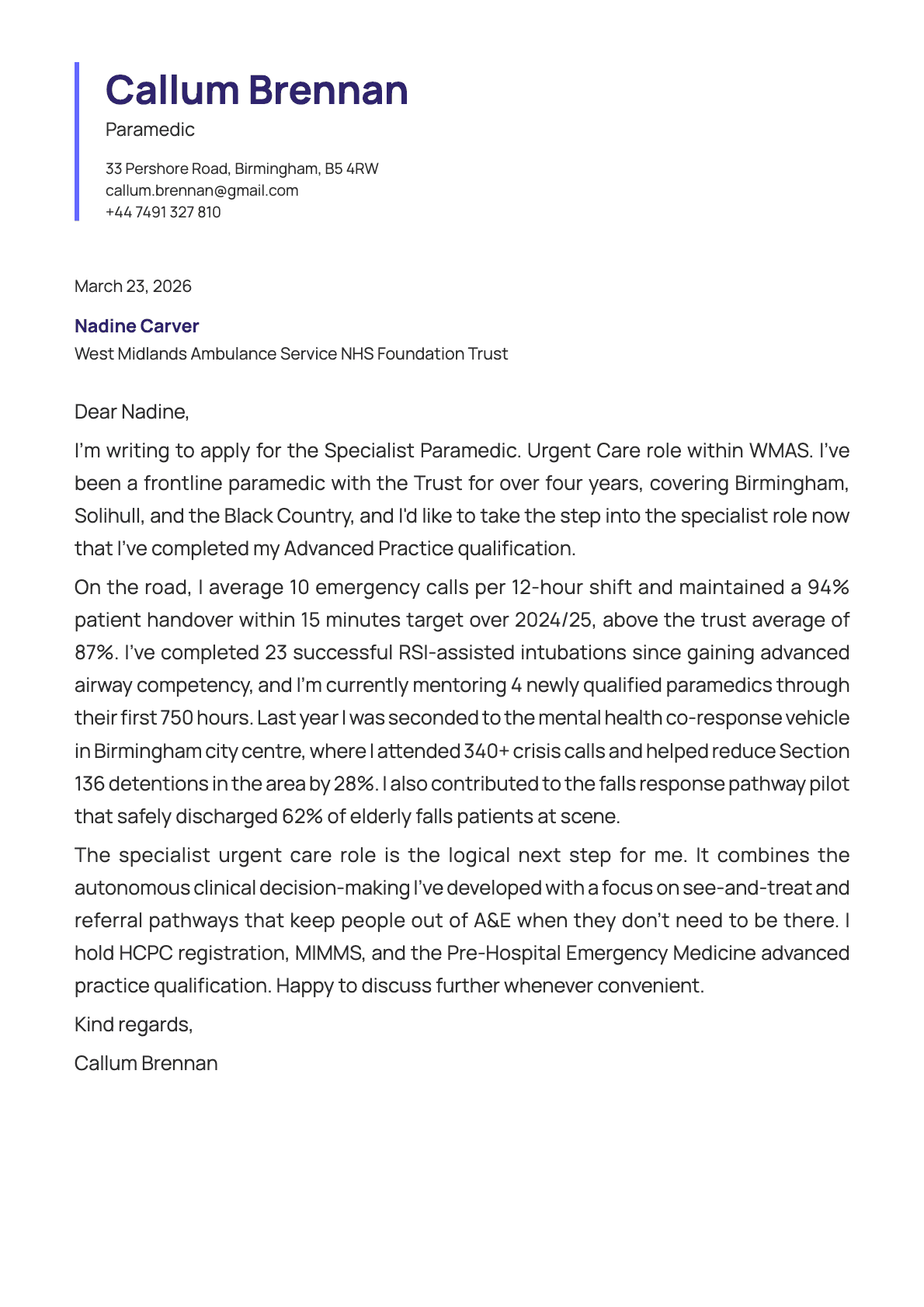
Paramedic
A paramedic cover letter example showing how to present emergency response statistics, advanced clinical skills.
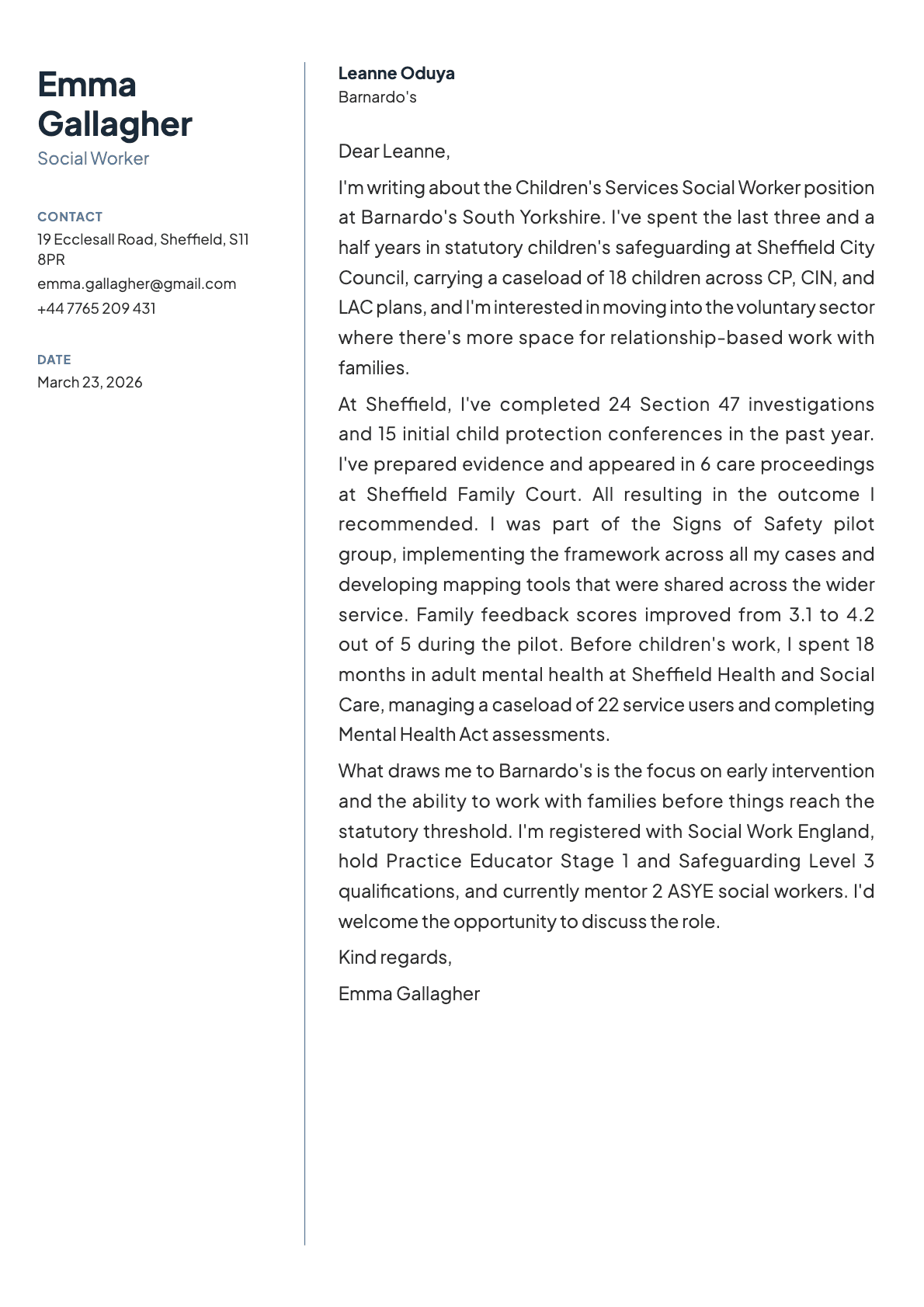
Social Worker
A social worker cover letter example showing how to present safeguarding caseload, court experience, and framework implementation for a voluntary sector.
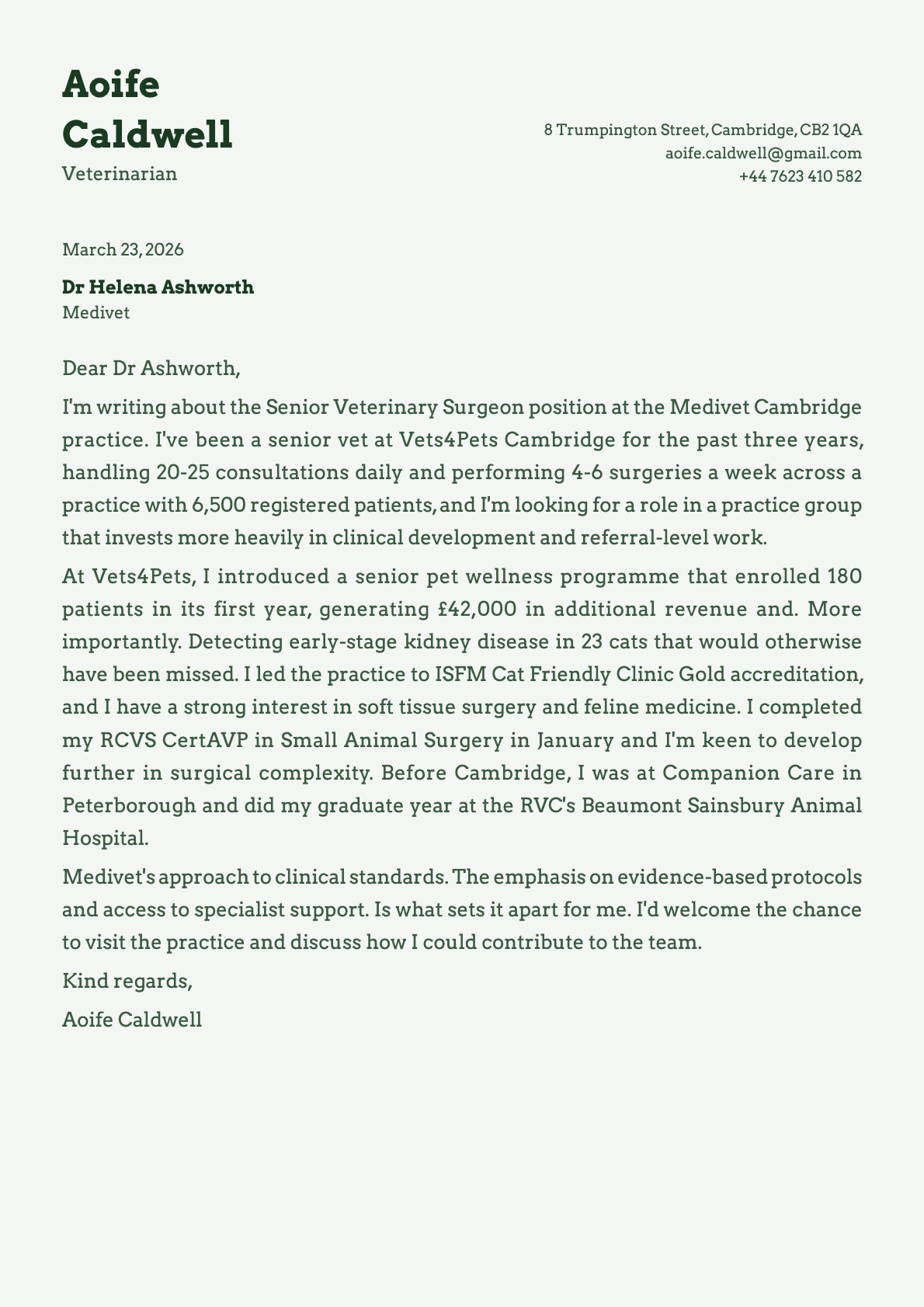
Veterinarian
A veterinarian cover letter example showing how to present clinical caseload, surgical skills.
Related articles

AI Is Screening Your Resume Before Any Human Sees It
AI screens most resumes before a human ever reads them. 97.4% of Fortune 500 companies run an ATS. This is what that means for you and what you can do about it.

The Best Resume Builders in 2026, Compared Honestly
Resume.io, Zety, Enhancv, Kickresume, Teal, and Laddro compared honestly: real pricing, free tiers, mobile apps, and where each tool wins. All prices checked in September 2026.

Burnout Recovery: A Real Timeline, Not 'Take a Bubble Bath'
55% of the U.S. workforce is burned out. Recovery takes 3 to 12 months. Here's what that actually looks like, stage by stage.