Clinical Psychologist Cover Letter Example
A clinical psychologist cover letter example demonstrating how to present NHS leadership experience, caseload management.

Laddro Team
Free to use. No account needed to start.
Free to use. No account needed to start.
Why clinical psychologist cover letters need a different approach
Applying for a consultant clinical psychologist post is not like applying for most jobs. The panel already knows you have a doctorate and HCPC registration. What they want to understand is your clinical scope, your leadership capacity, and whether you can develop a service, not just deliver therapy within one.
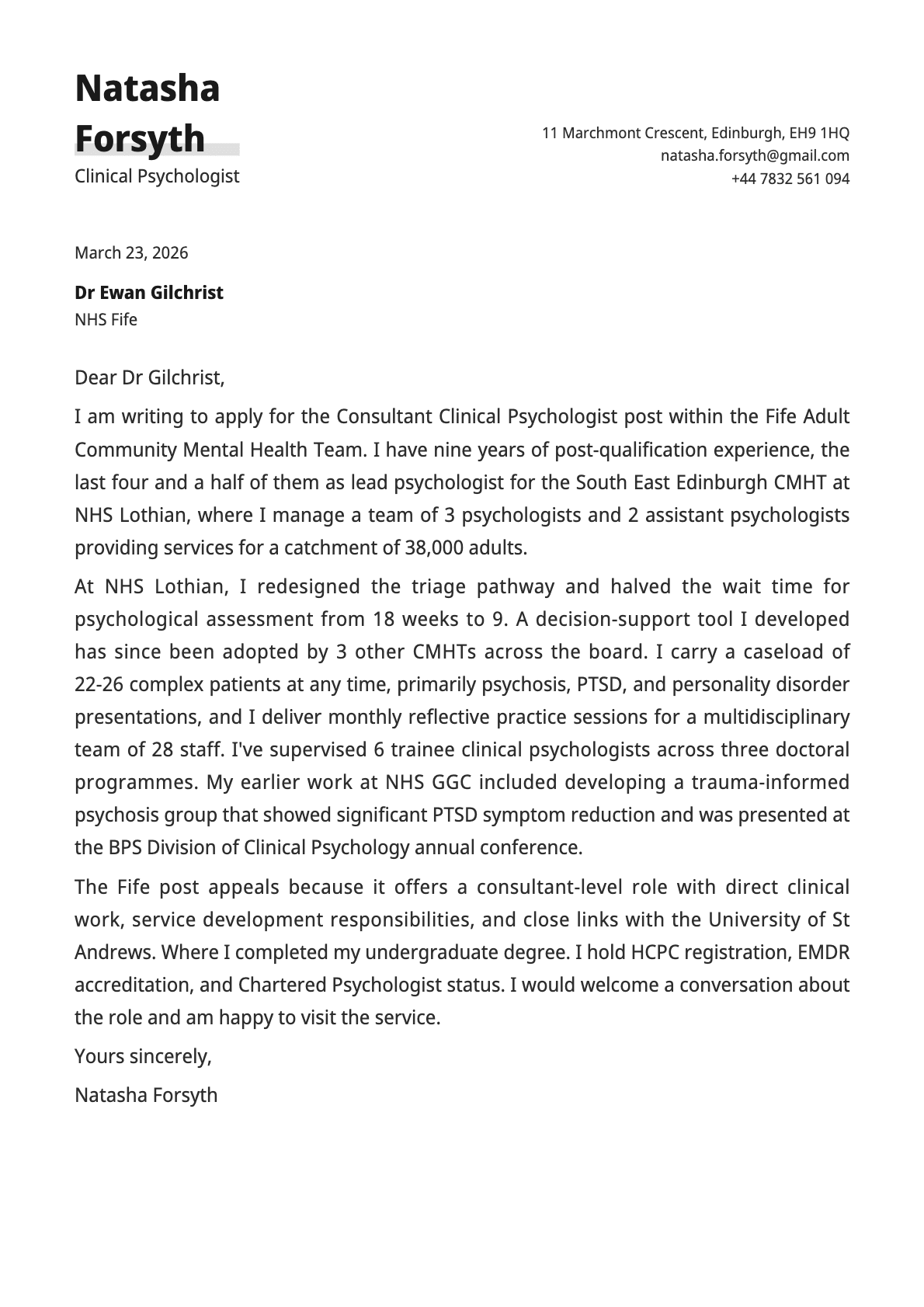
Most clinical psychology cover letters spend too much time describing therapeutic orientations and too little time demonstrating impact. This example from Natasha Forsyth shows a better way. She is a senior clinical psychologist at NHS Lothian applying for a consultant post at NHS Fife, and her letter reads like a case for promotion built on evidence.
Open by establishing your clinical scale
Natasha starts by stating her experience level (nine years post-qualification), her current leadership role (lead psychologist for a community mental health team), and the population she serves (38,000 adults). She manages three psychologists and two assistant psychologists.
This opening works because it immediately tells the panel she is operating at the level the role requires. She does not waste space saying she is "keen about mental health." She shows the scope of her current responsibilities.
Your takeaway: In clinical psychology, numbers matter more than you might think. State your years of experience, team size, caseload range, and catchment population in the first paragraph.
Show service development, not just clinical skill
The middle section is where Natasha's letter becomes genuinely compelling. She describes redesigning a triage pathway that halved wait times from 18 weeks to 9. She mentions a decision-support tool adopted by three other CMHTs. She references a caseload of 22 to 26 complex patients, monthly reflective practice sessions for 28 multidisciplinary staff, and supervision of six trainees across three doctoral programmes.
This is not a list of therapy modalities. It is a track record of making a service work better. Consultant posts require someone who can do both: hold complex clinical work and improve systems at the same time.
Your takeaway: Structure your middle paragraph around service improvements you have led. For each one, include the problem, what you did, and the measurable result.
Connect your career arc to the specific post
Natasha closes with something many applicants overlook: she explains why this particular post appeals. She mentions the consultant-level role combining direct clinical work with service development, the links with the University of St Andrews, and the fact that she completed her undergraduate degree there.
That last detail is personal without being unprofessional. It shows a genuine connection to the area, which matters in NHS recruitment where panels want to know you will stay.
What to include in your clinical psychologist cover letter
- Post-qualification experience stated clearly with years and setting
- Team leadership with specific numbers (staff managed, trainees supervised)
- Service development work with before-and-after metrics
- Complex caseload experience with presentation types named
- Registration and accreditations (HCPC, BPS Chartered status, specialist accreditations)
- A specific reason for wanting this post at this trust
What to leave out
Skip the paragraph about why you became a psychologist. Skip the detailed list of every therapeutic model you have trained in. Skip generic statements about valuing person-centred care. The panel will assess your therapeutic competence at interview. The cover letter should demonstrate your professional impact.
Final thoughts
A consultant clinical psychologist cover letter is a professional document that should read like an executive summary of your career. State your scale, show your impact, and explain why this post is the right next step. If you can halve a waiting list, say so. If you have developed tools that other services adopted, name them. Let the evidence do the persuading.
Was this cover letter example helpful?
Rate this example to help us create better content for you.
4.8 average from 118 ratingsBuild your own version
Open this layout in the builder and swap in your own details. It takes a few minutes.
Free to use. No account needed to start.
Related cover letter examples
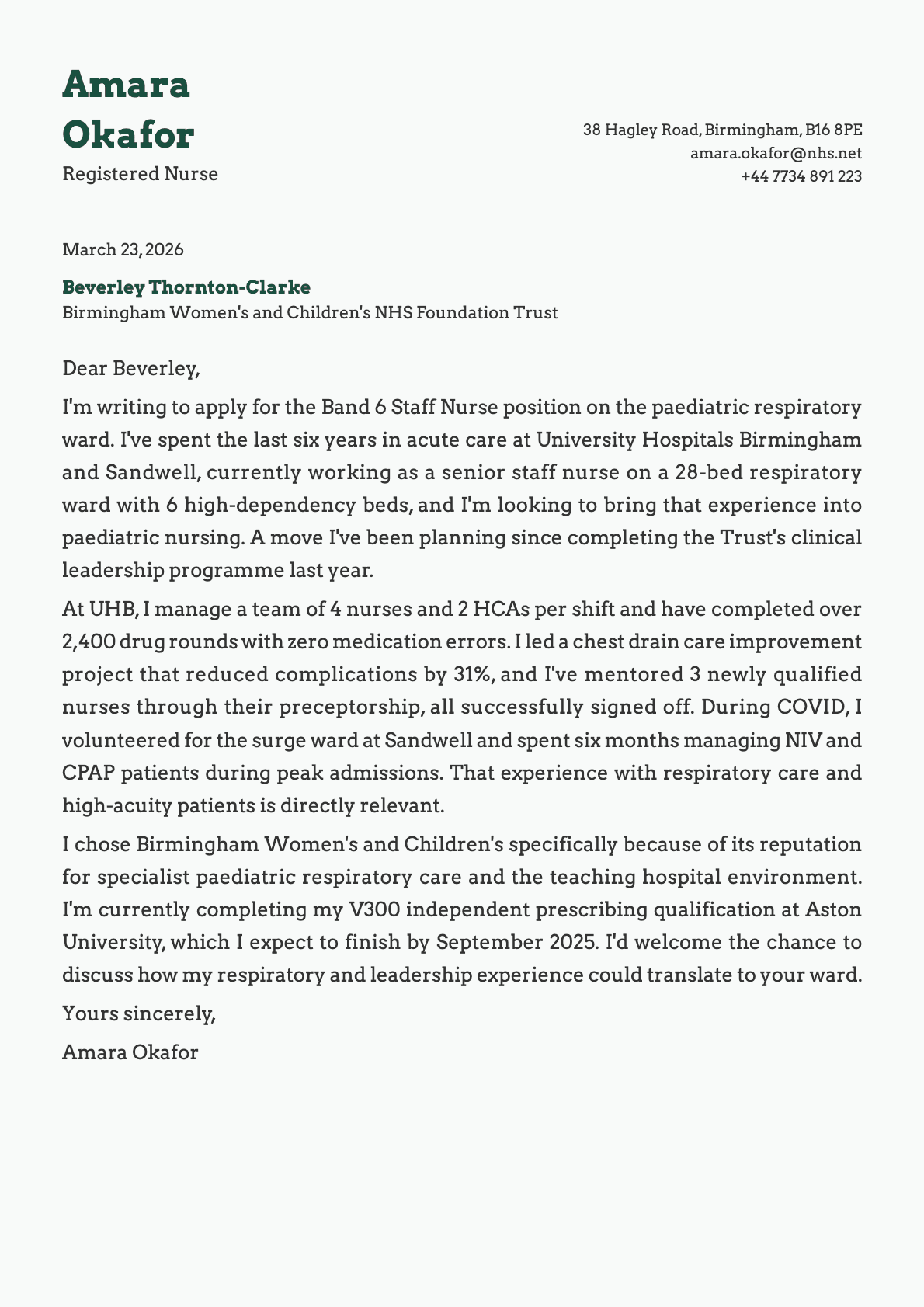
Registered Nurse
A registered nurse cover letter example showing how to present acute care experience, clinical leadership.
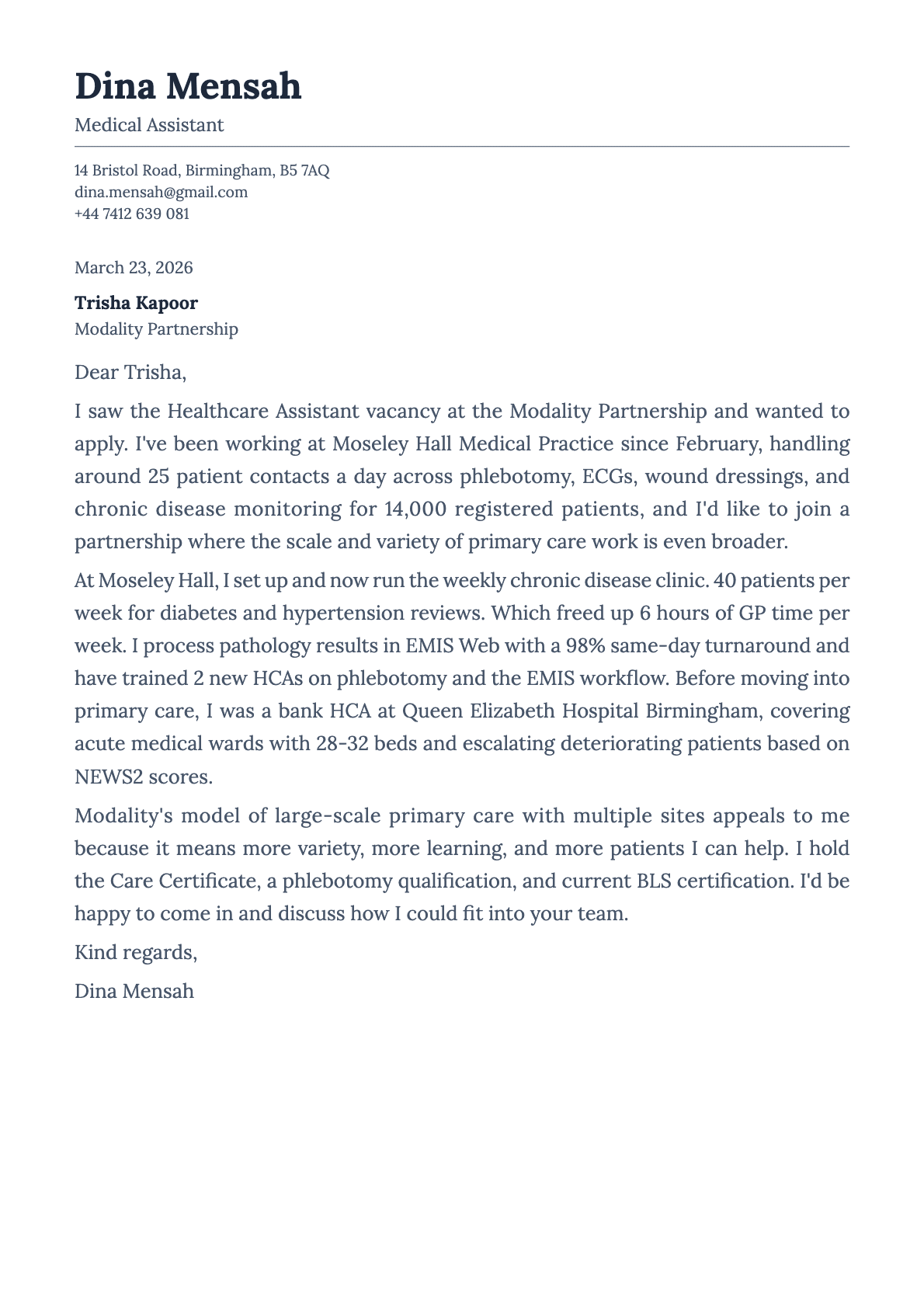
Medical Assistant
A medical assistant cover letter example showing how to present clinical skills, patient volumes, and GP practice experience when applying to a large.
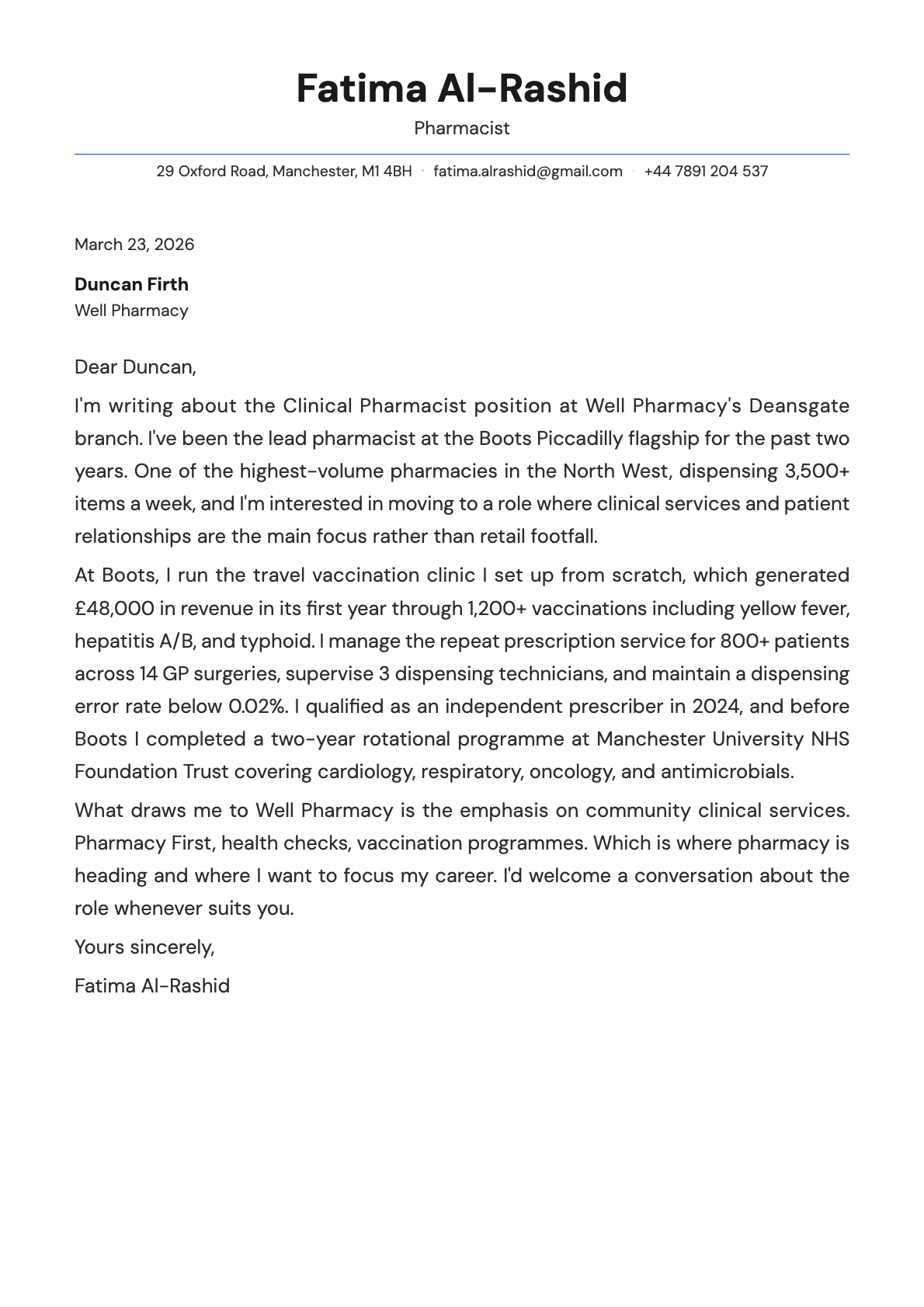
Pharmacist
A pharmacist cover letter example showing how to present clinical services, dispensing volume, and revenue generation when applying to a community.
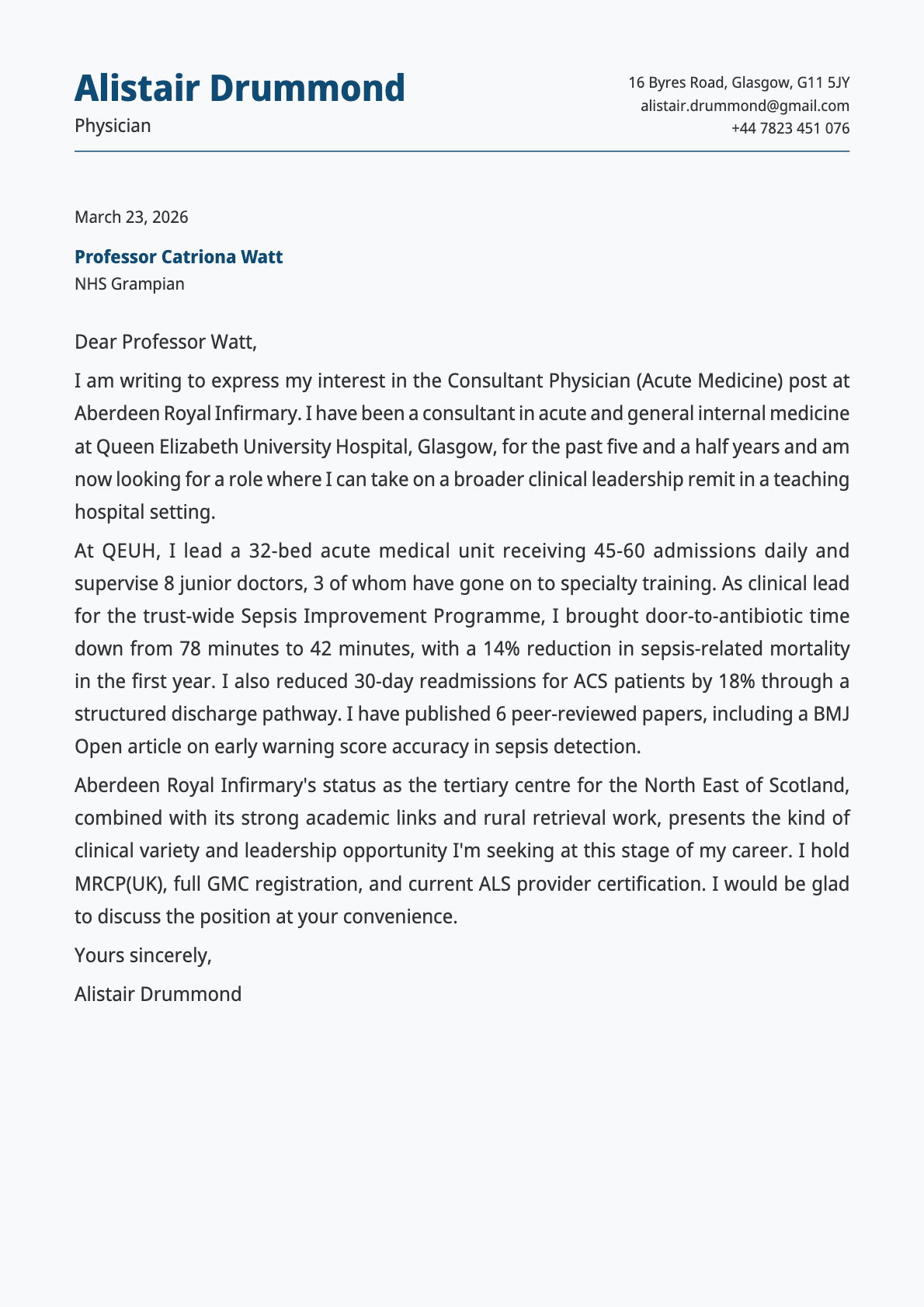
Physician
A physician cover letter example showing how to present clinical leadership, quality improvement projects, and academic credentials for a consultant post.
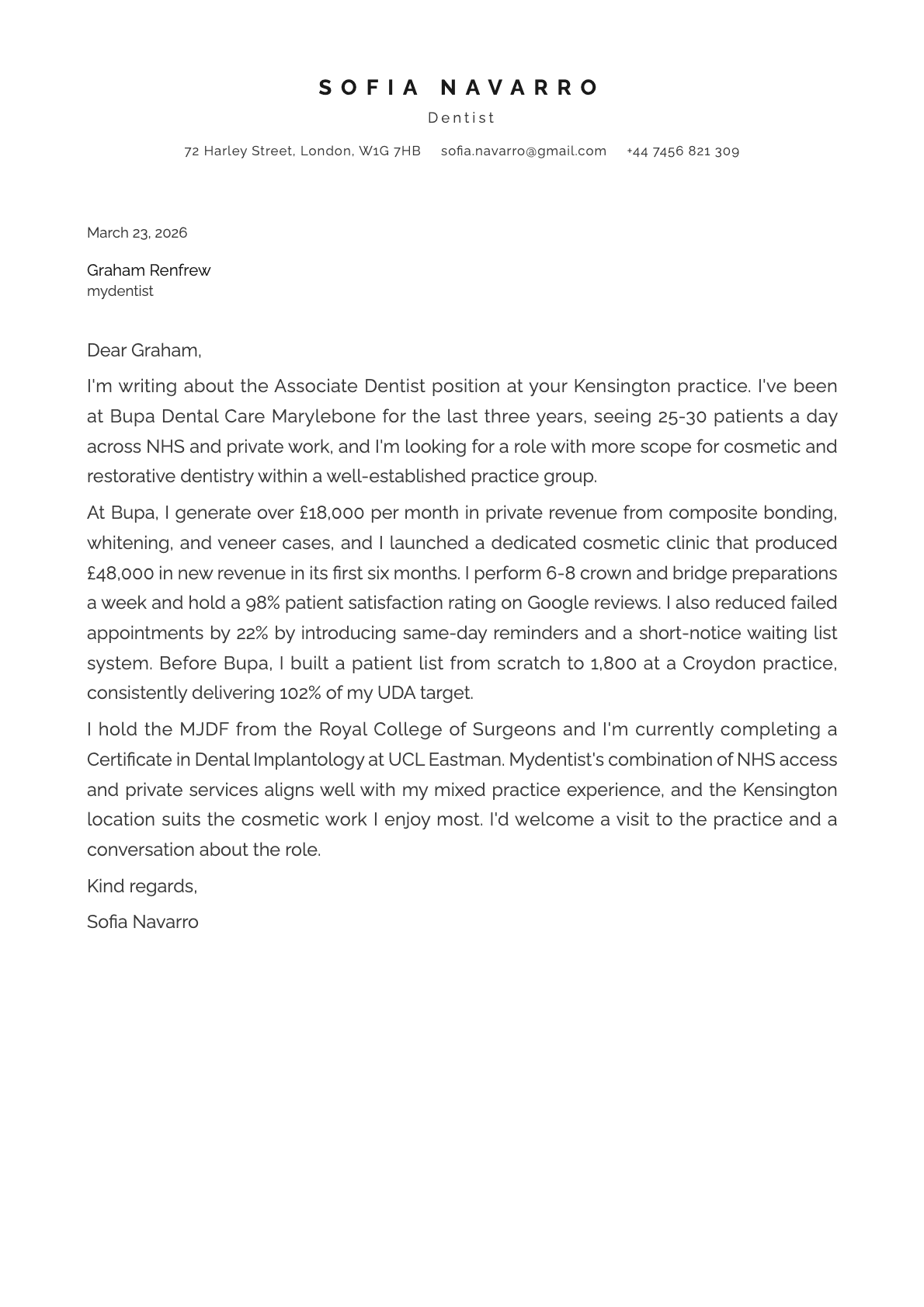
Dentist
A dentist cover letter example showing how to present clinical skills, private revenue generation, and patient satisfaction when applying to a dental.
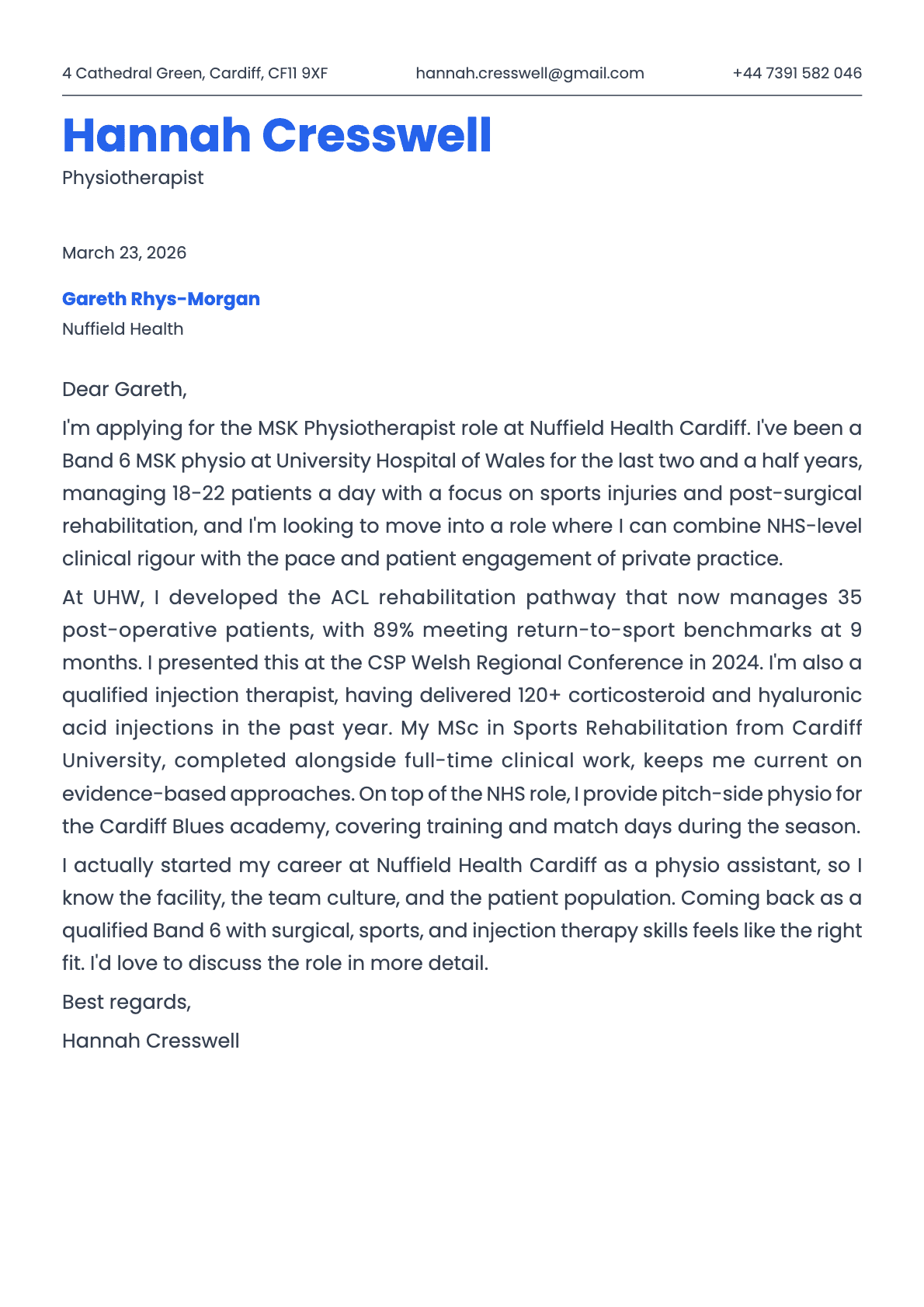
Physiotherapist
A physiotherapist cover letter example showing how to present MSK caseload, rehabilitation pathways.
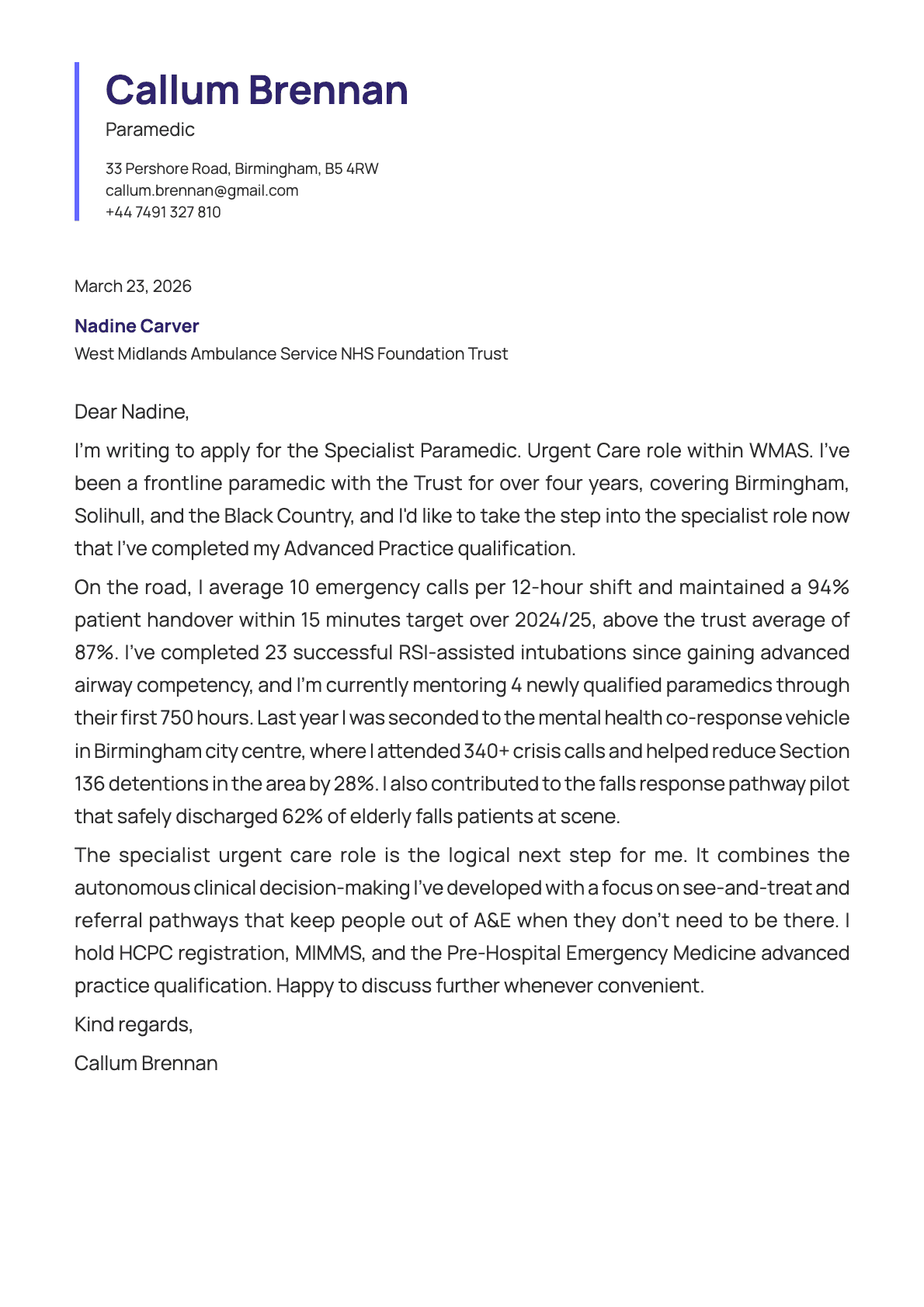
Paramedic
A paramedic cover letter example showing how to present emergency response statistics, advanced clinical skills.
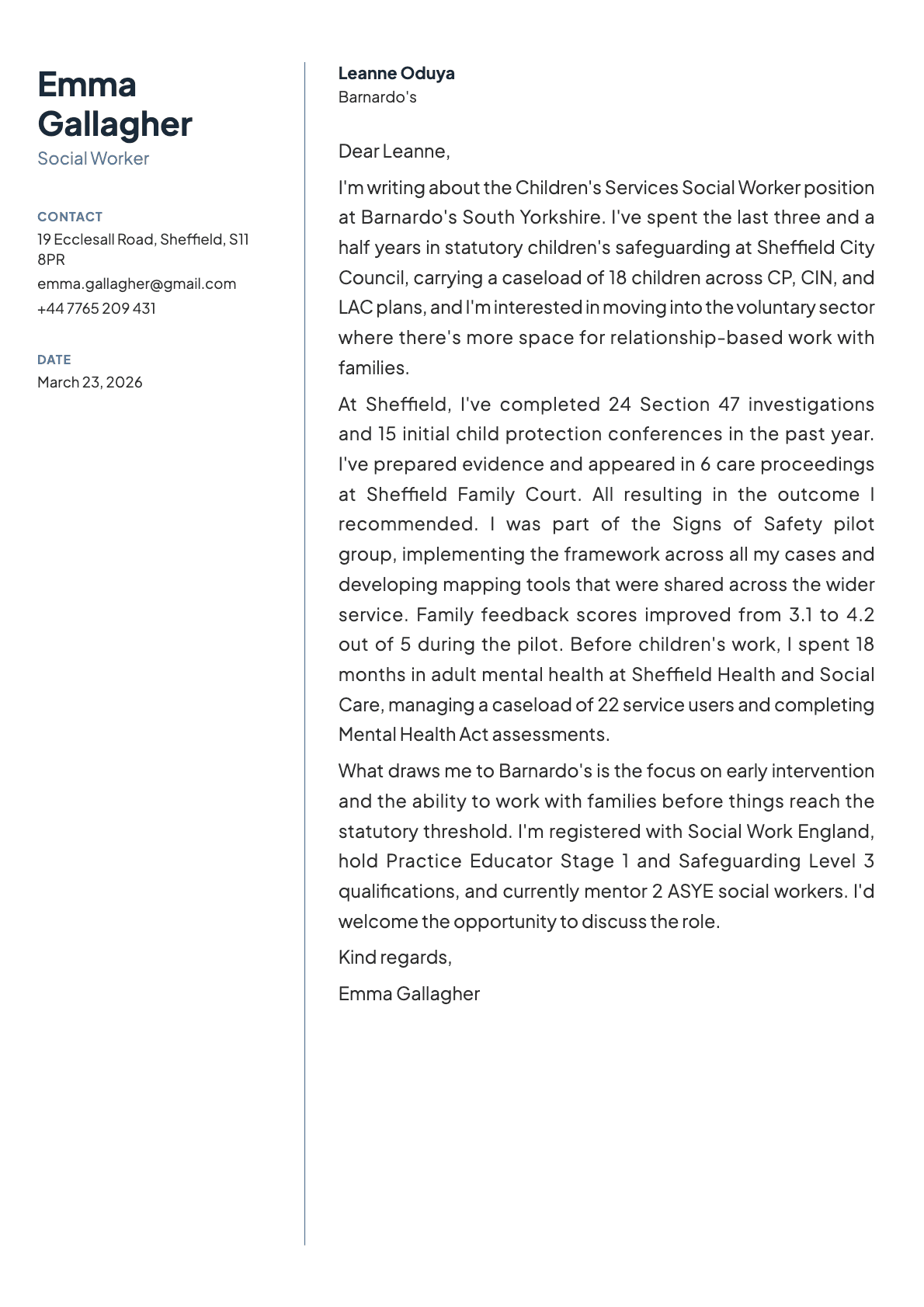
Social Worker
A social worker cover letter example showing how to present safeguarding caseload, court experience, and framework implementation for a voluntary sector.
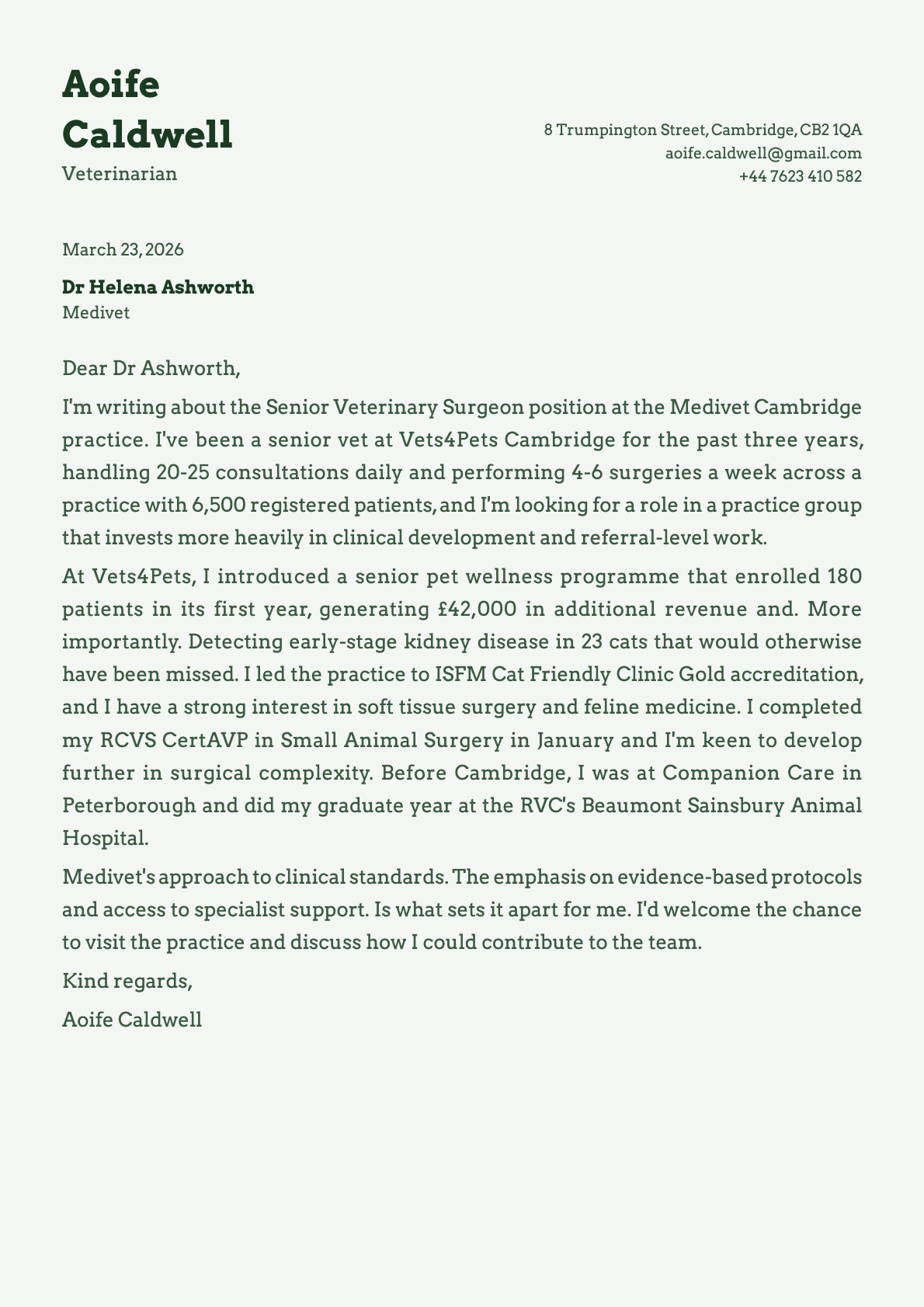
Veterinarian
A veterinarian cover letter example showing how to present clinical caseload, surgical skills.
Related articles

AI Is Screening Your Resume Before Any Human Sees It
AI screens most resumes before a human ever reads them. 97.4% of Fortune 500 companies run an ATS. This is what that means for you and what you can do about it.

The Best Resume Builders in 2026, Compared Honestly
Resume.io, Zety, Enhancv, Kickresume, Teal, and Laddro compared honestly: real pricing, free tiers, mobile apps, and where each tool wins. All prices checked in September 2026.

Burnout Recovery: A Real Timeline, Not 'Take a Bubble Bath'
55% of the U.S. workforce is burned out. Recovery takes 3 to 12 months. Here's what that actually looks like, stage by stage.