Paramedic Cover Letter Example
A paramedic cover letter example showing how to present emergency response statistics, advanced clinical skills.

Laddro Team
Free to use. No account needed to start.
Free to use. No account needed to start.
What makes a paramedic cover letter effective
Paramedic hiring in the NHS is increasingly competitive, especially for specialist roles. The hiring manager needs to see more than "I thrive under pressure and care about saving lives." They need clinical numbers, response performance, and evidence of professional development. The work is measurable, so the cover letter should be too.
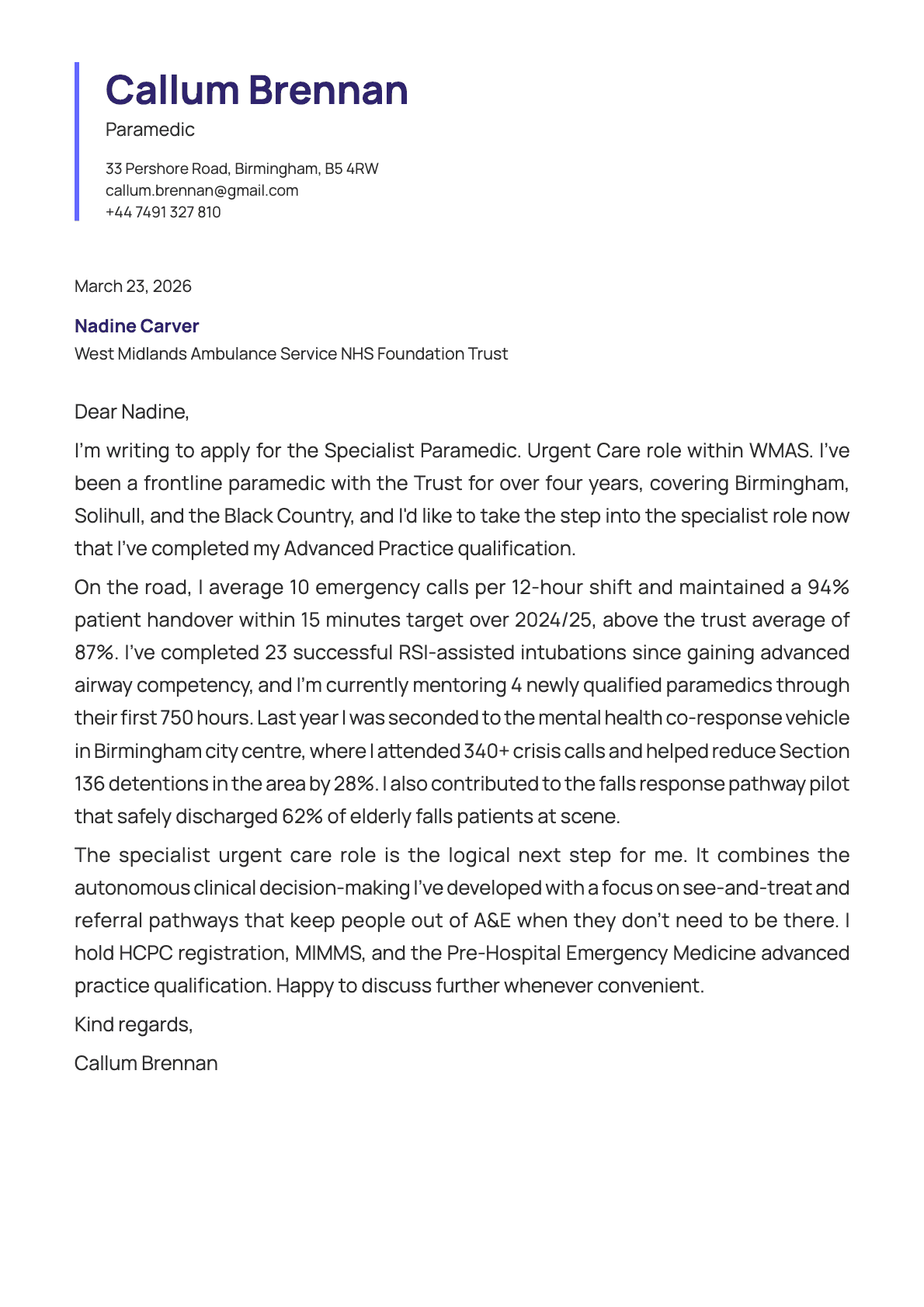
This example from Callum Brennan demonstrates the approach. He is a frontline paramedic with West Midlands Ambulance Service applying for a Specialist Paramedic role in urgent care after completing his Advanced Practice qualification.
Open with your operational context
Callum starts by naming the trust, his years of service, the area he covers, and the qualification that makes him ready for the next step. He does not start with "I am a dedicated paramedic." He starts with his situation and his intent.
This works because it answers the hiring manager's first two questions immediately: what level are you at, and why are you applying?
Your takeaway: Name your trust, your coverage area, and your years of frontline experience in the opening lines. If you have recently completed a qualification that makes you eligible for the role, mention it right away.
Let the numbers tell the clinical story
The body of Callum's letter is where the real strength lies. He averages 10 emergency calls per 12-hour shift. His patient handover within 15 minutes was 94%, above the trust average of 87%. He has completed 23 successful RSI-assisted intubations. He mentors four newly qualified paramedics through their first 750 hours.
Then comes the detail that sets him apart: a secondment to the mental health co-response vehicle, where he attended over 340 crisis calls and helped reduce Section 136 detentions by 28%. He also contributed to a falls response pathway pilot that safely discharged 62% of elderly falls patients at scene.
Your takeaway: Include your call volume, handover times, advanced procedures, and any specialist deployments. For each one, state the outcome or performance metric.
Connect your experience to the specialist role
Callum closes by explaining why the specialist urgent care role is the logical next step: it combines autonomous clinical decision-making with a focus on see-and-treat pathways that keep patients out of A&E when they do not need to be there. This shows he understands the purpose of the role, not just its title.
What to include in your paramedic cover letter
- Call volume per shift and response area
- Performance metrics (handover times, response targets met)
- Advanced clinical procedures with numbers
- Specialist deployments (mental health co-response, critical care, community paramedicine)
- Mentoring and training responsibilities
- HCPC registration and additional qualifications
What to leave out
Do not describe the emotional rewards of being a paramedic. The hiring manager knows. Do not list every vehicle type you have driven. And do not use phrases like "adrenaline-fuelled environment." Focus on clinical performance and professional growth.
Final thoughts
A paramedic cover letter should be direct, evidence-based, and focused on clinical performance. The hiring manager wants to know how many calls you handle, how well you perform against trust targets, what advanced skills you have, and whether you are ready for the next level. Provide those answers with numbers and your letter will stand out from the stack.
Was this cover letter example helpful?
Rate this example to help us create better content for you.
4.8 average from 102 ratingsBuild your own version
Open this layout in the builder and swap in your own details. It takes a few minutes.
Free to use. No account needed to start.
Related cover letter examples
Registered Nurse
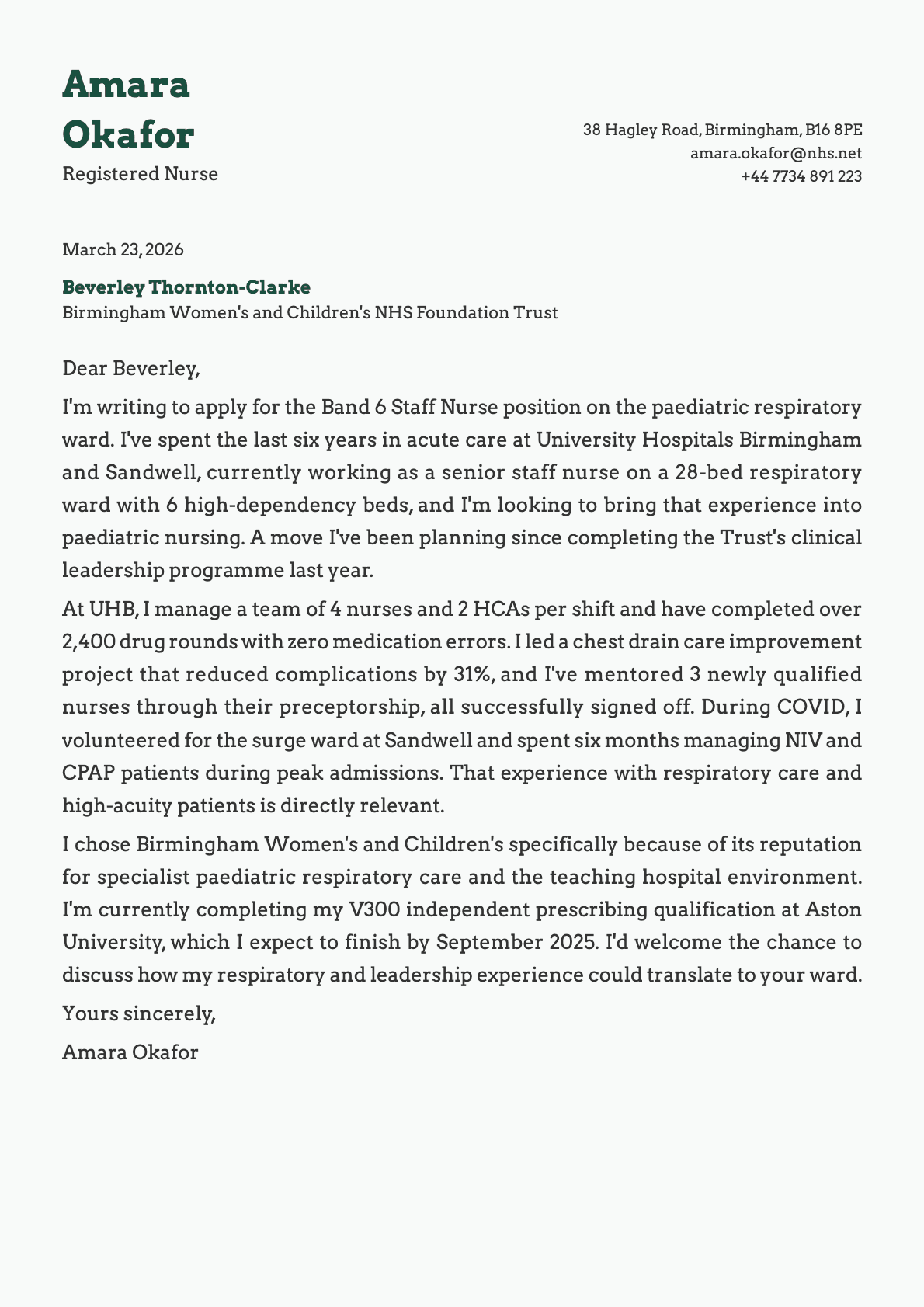
A registered nurse cover letter example showing how to present acute care experience, clinical leadership.
Medical Assistant
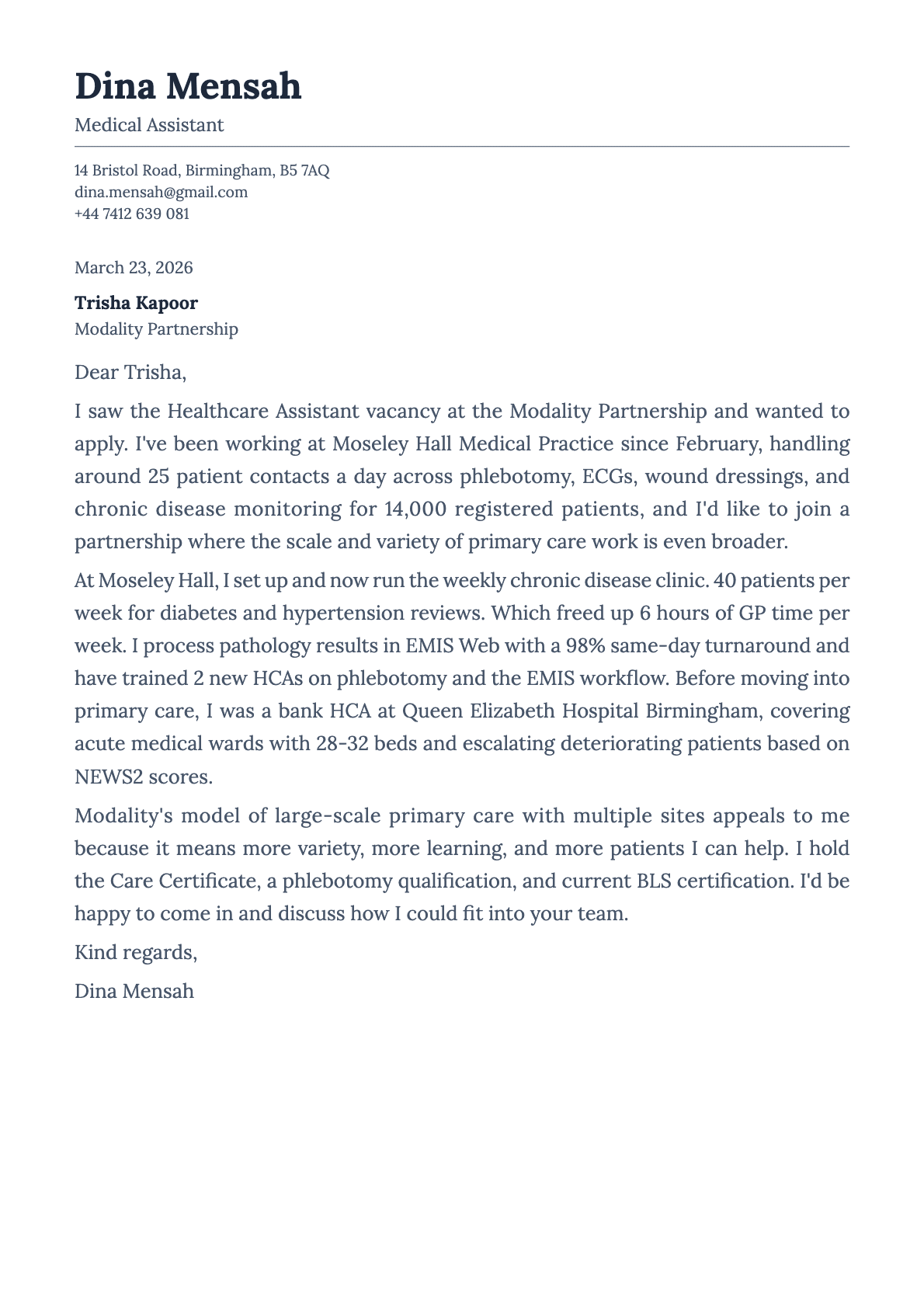
A medical assistant cover letter example showing how to present clinical skills, patient volumes, and GP practice experience when applying to a large.
Pharmacist
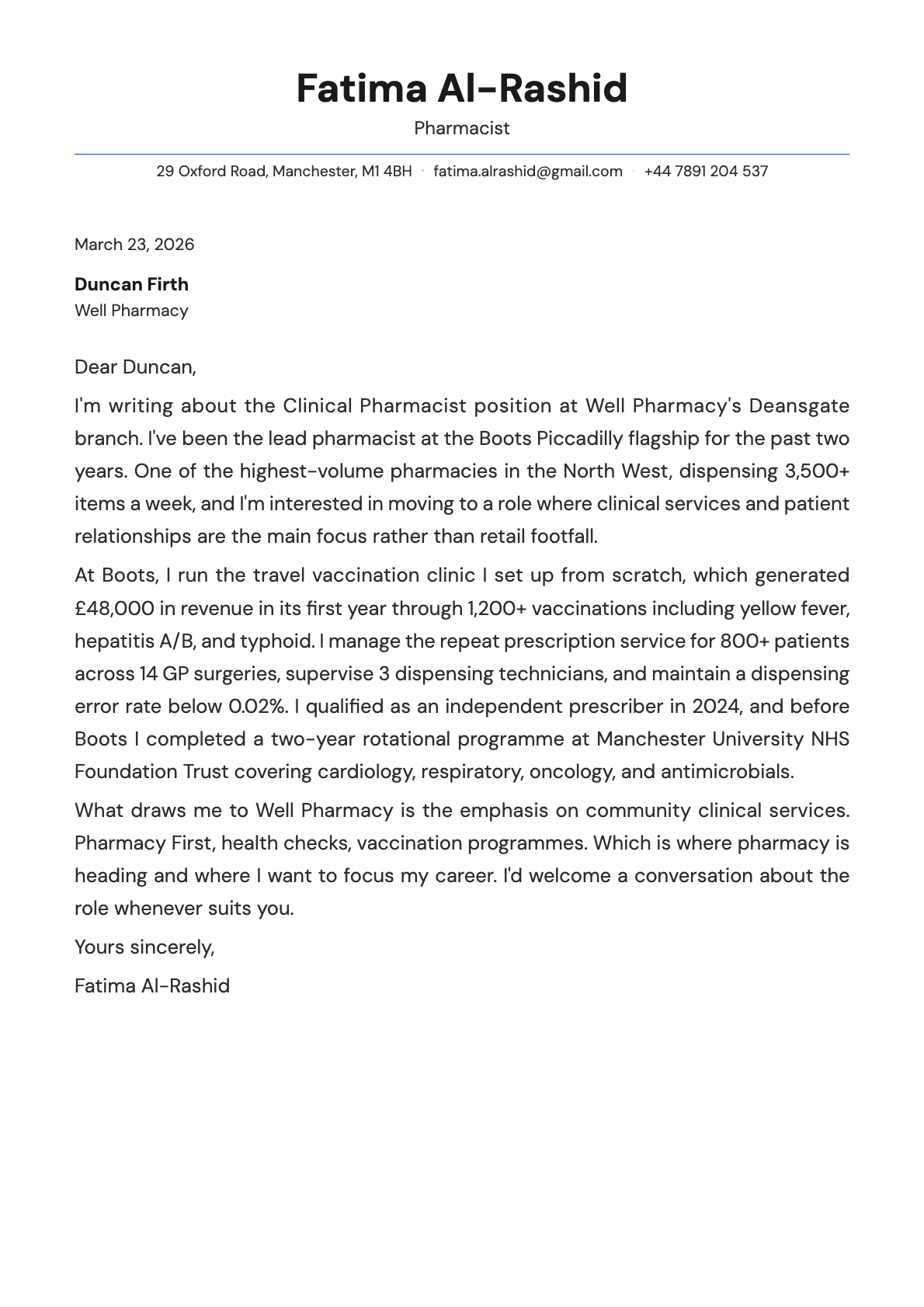
A pharmacist cover letter example showing how to present clinical services, dispensing volume, and revenue generation when applying to a community.
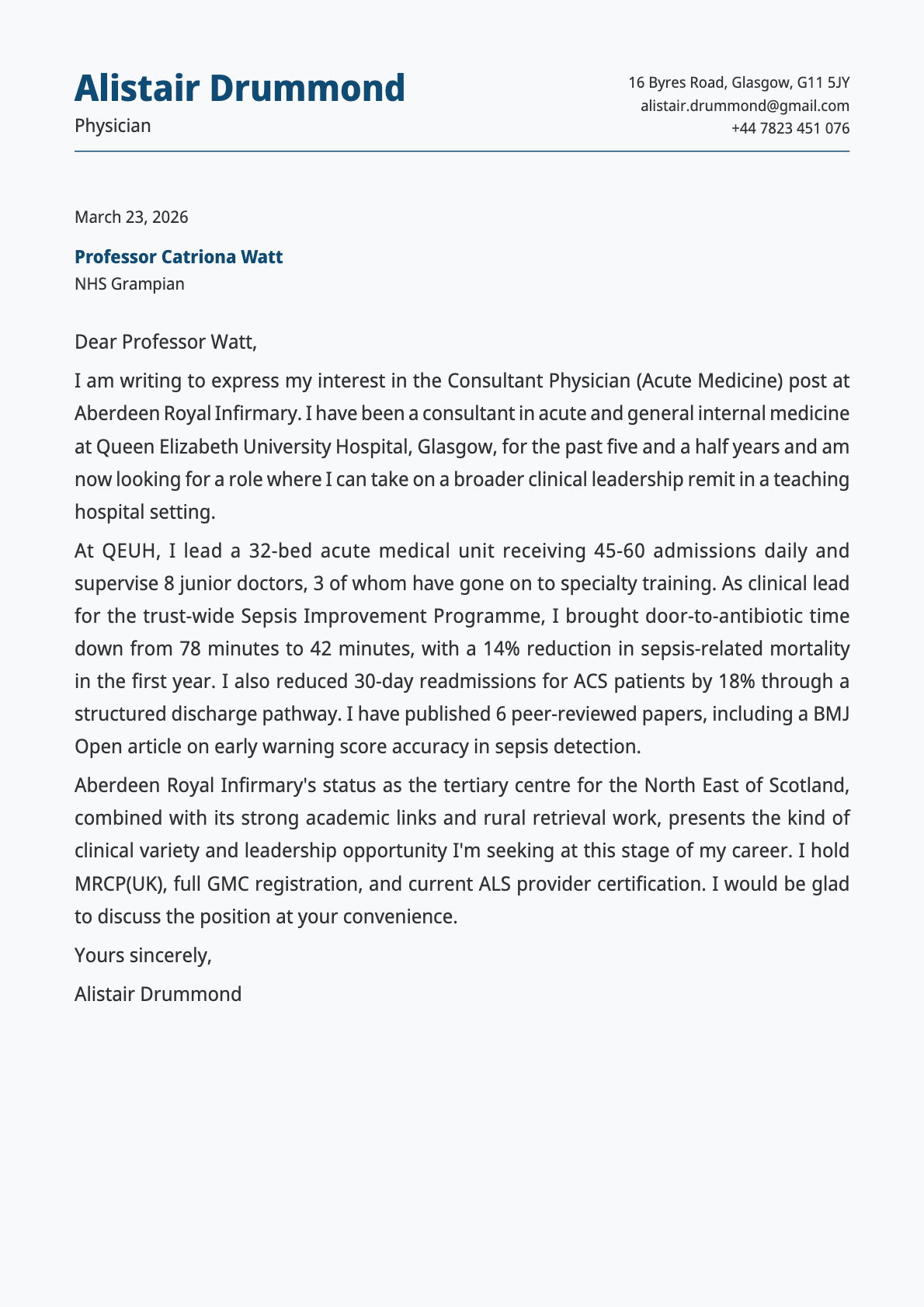
Physician
A physician cover letter example showing how to present clinical leadership, quality improvement projects, and academic credentials for a consultant post.
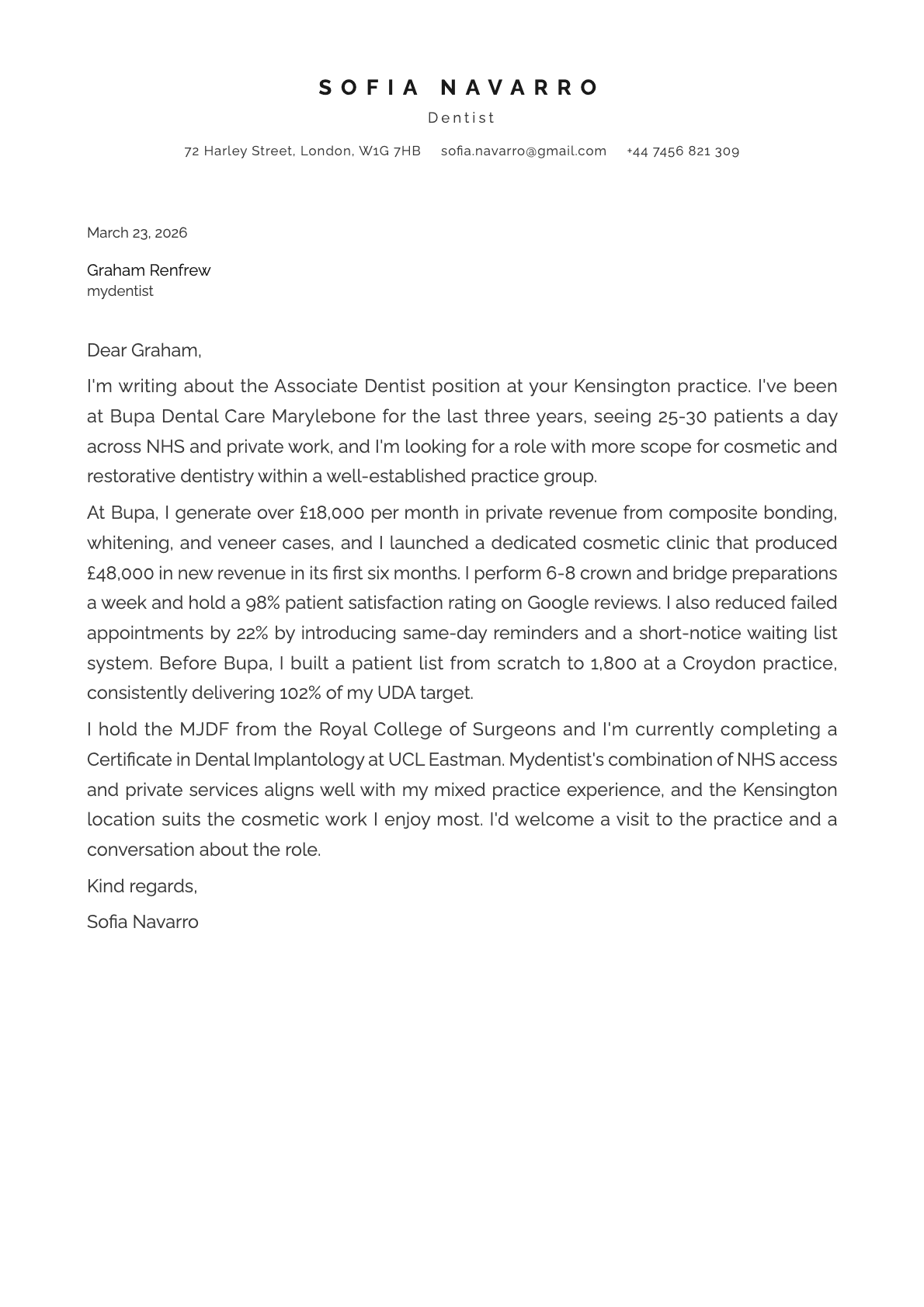
Dentist
A dentist cover letter example showing how to present clinical skills, private revenue generation, and patient satisfaction when applying to a dental.
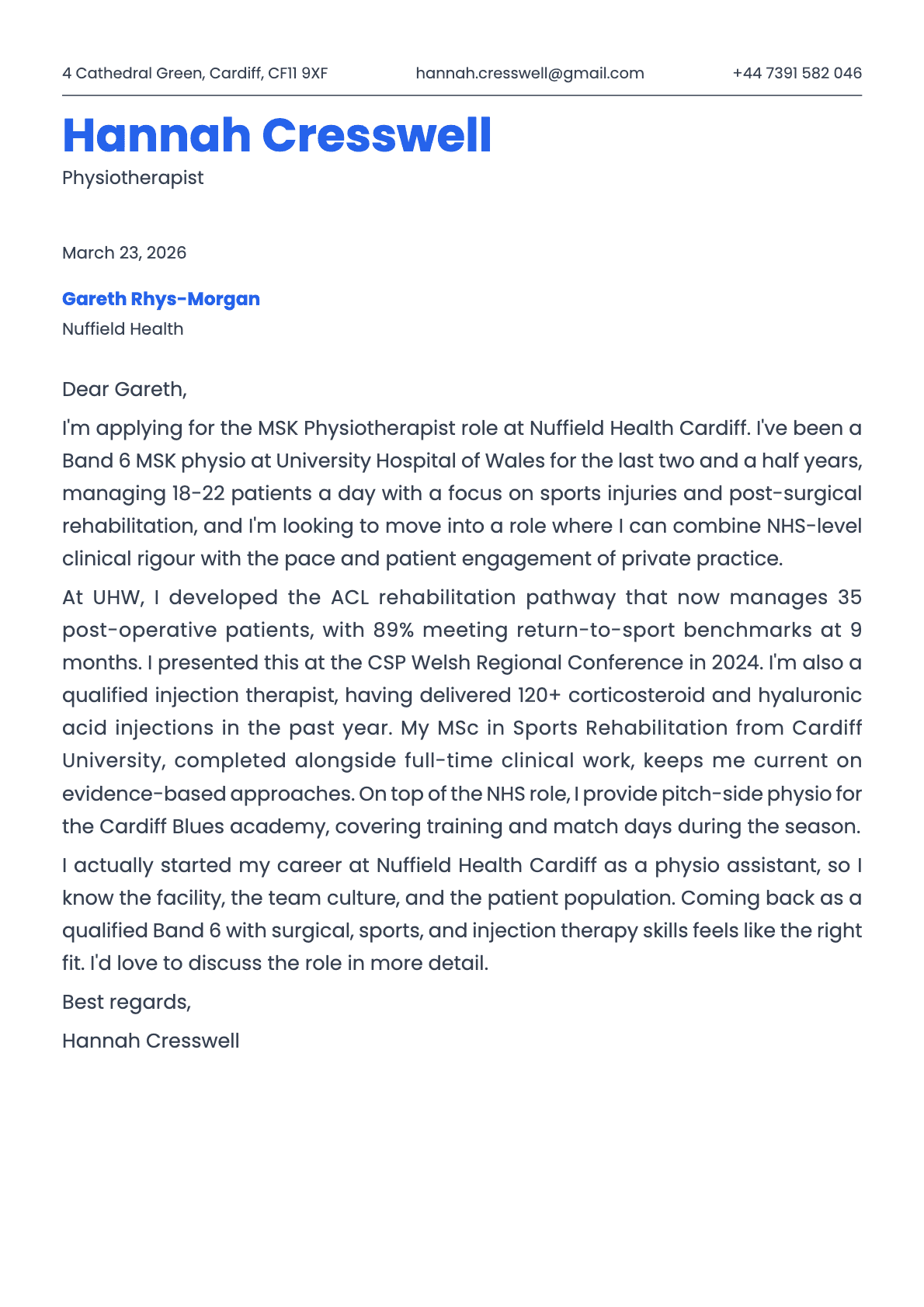
Physiotherapist
A physiotherapist cover letter example showing how to present MSK caseload, rehabilitation pathways.
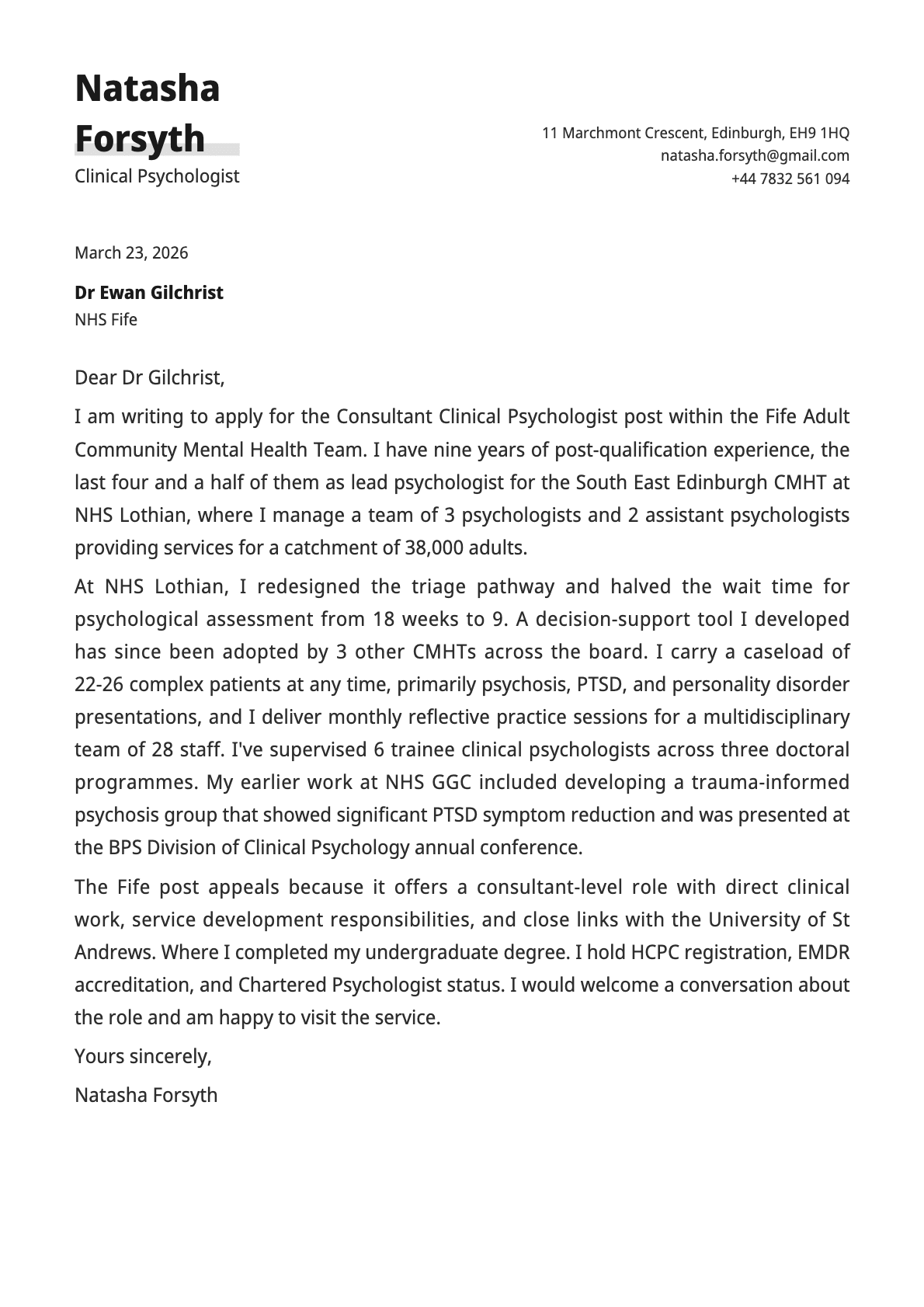
Clinical Psychologist
A clinical psychologist cover letter example demonstrating how to present NHS leadership experience, caseload management.
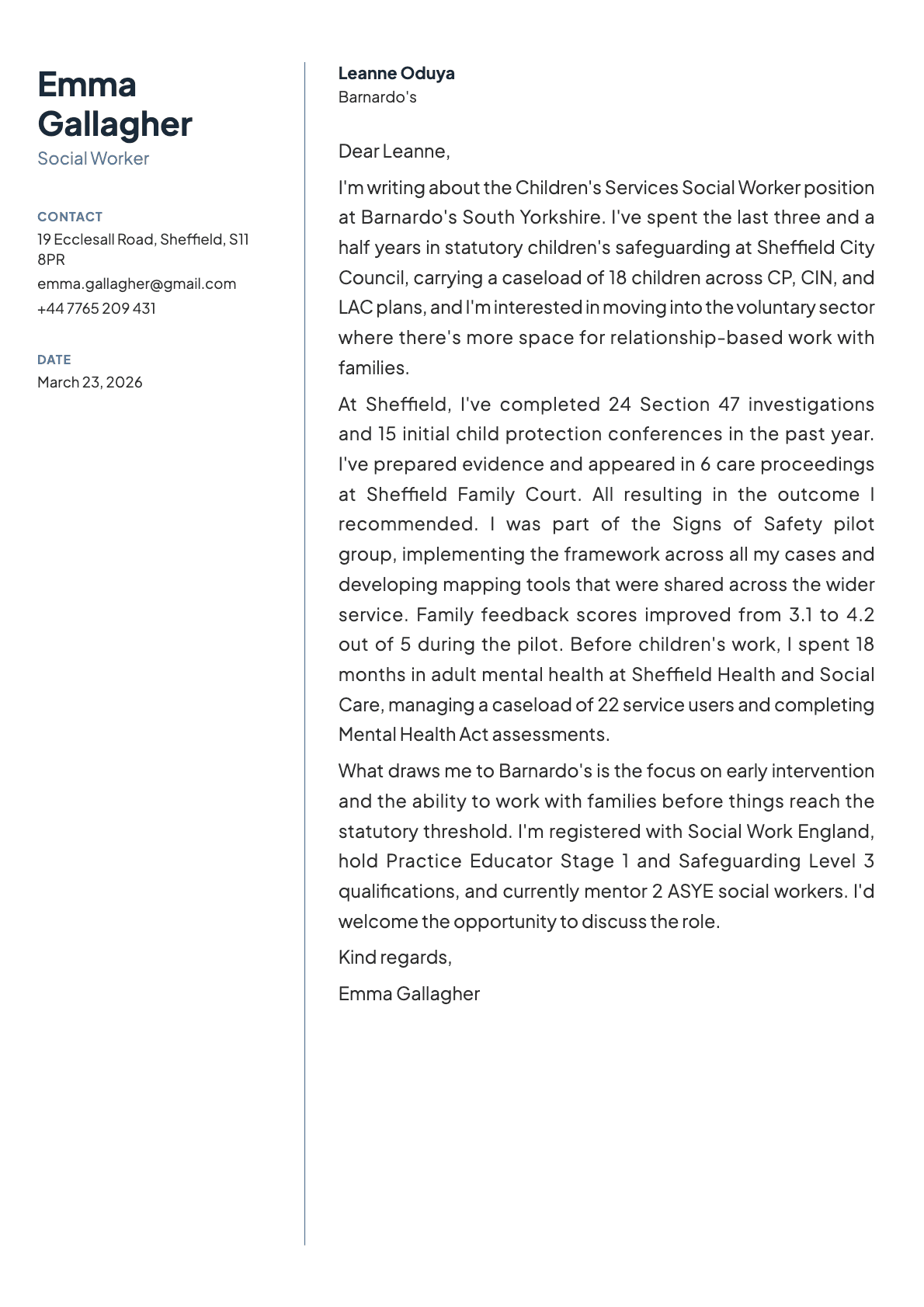
Social Worker
A social worker cover letter example showing how to present safeguarding caseload, court experience, and framework implementation for a voluntary sector.
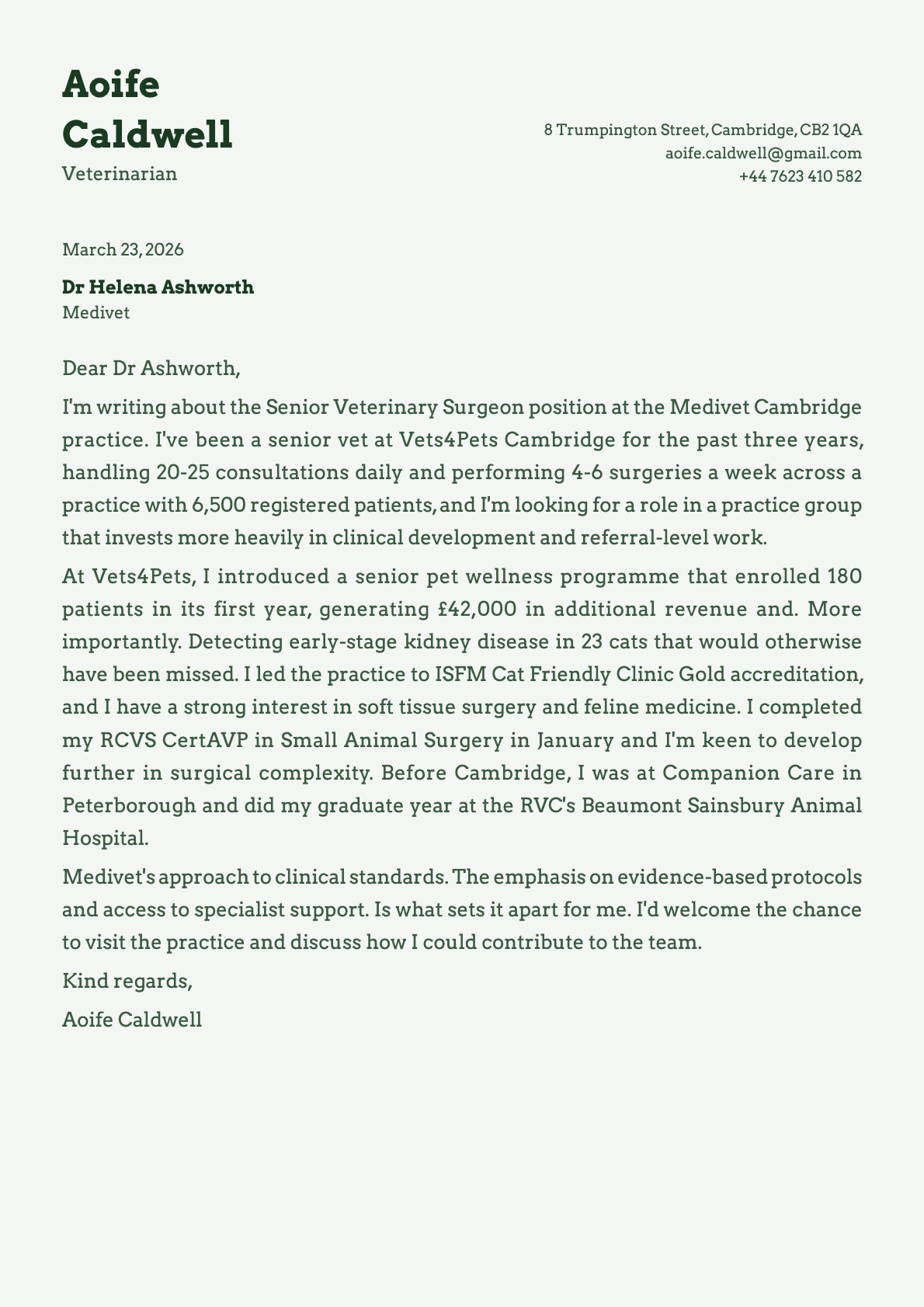
Veterinarian
A veterinarian cover letter example showing how to present clinical caseload, surgical skills.
Related articles

AI Is Screening Your Resume Before Any Human Sees It
AI screens most resumes before a human ever reads them. 97.4% of Fortune 500 companies run an ATS. This is what that means for you and what you can do about it.

The Best Resume Builders in 2026, Compared Honestly
Resume.io, Zety, Enhancv, Kickresume, Teal, and Laddro compared honestly: real pricing, free tiers, mobile apps, and where each tool wins. All prices checked in September 2026.

Burnout Recovery: A Real Timeline, Not 'Take a Bubble Bath'
55% of the U.S. workforce is burned out. Recovery takes 3 to 12 months. Here's what that actually looks like, stage by stage.