Medical Assistant Cover Letter Example
A medical assistant cover letter example showing how to present clinical skills, patient volumes, and GP practice experience when applying to a large.

Laddro Team
Free to use. No account needed to start.
Free to use. No account needed to start.
What hiring managers look for in a medical assistant cover letter
Medical assistant roles in primary care are practical, hands-on positions. The hiring manager wants to know that you can perform clinical tasks safely, manage patient flow, and work within the practice systems. They do not want to read generic paragraphs about caring deeply for patients.
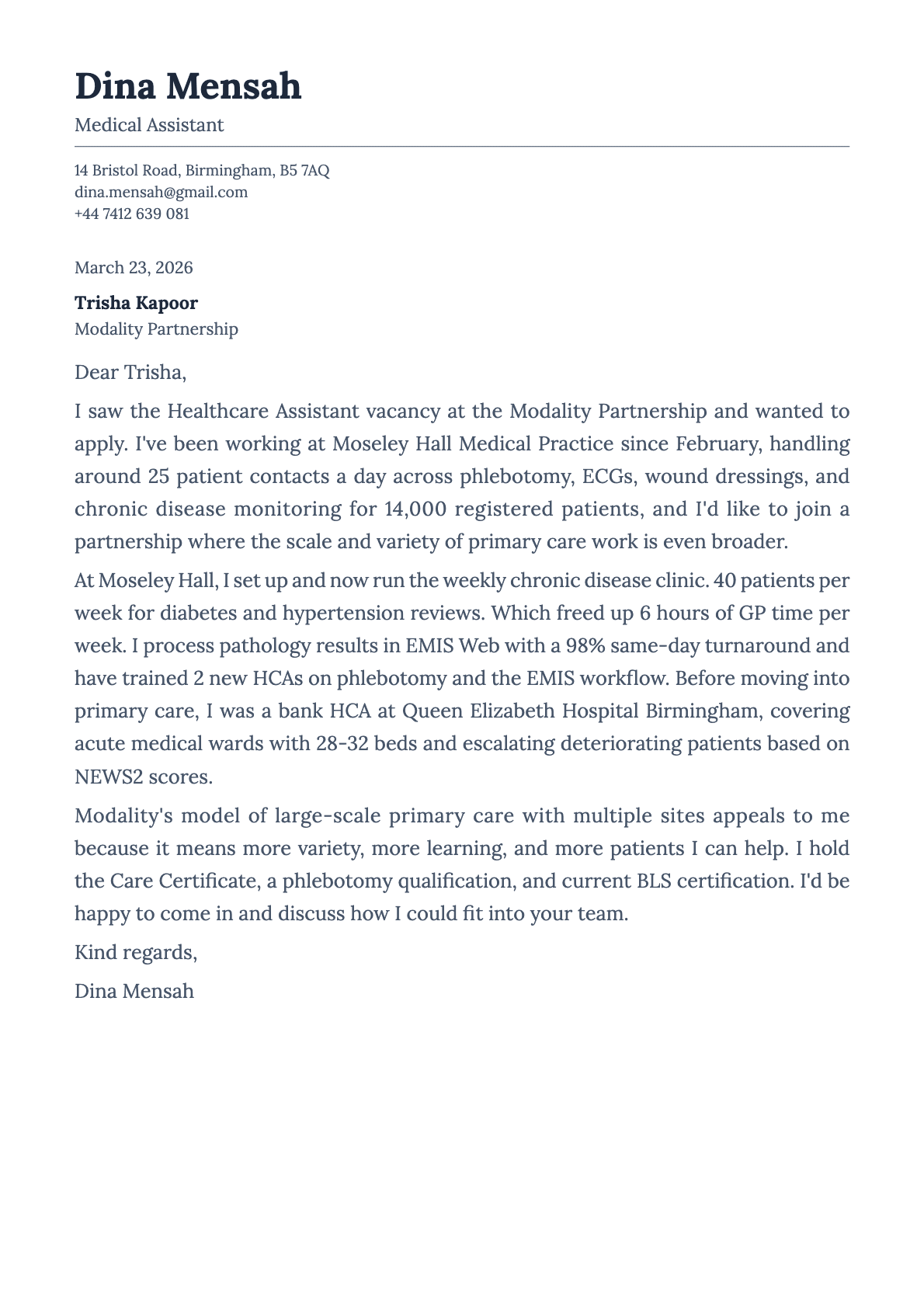
This example from Dina Mensah shows how to write a medical assistant cover letter that proves competence through specifics. She works at a GP practice in Birmingham and is applying to Modality Partnership, one of the largest primary care providers in the country.
Describe your daily clinical workload
Dina opens by naming her current practice, her daily patient volume (about 25 contacts per day), and the clinical procedures she performs: phlebotomy, ECGs, wound dressings, and chronic disease monitoring. She also mentions the practice size (14,000 registered patients), which gives the hiring manager a sense of the environment she works in.
This is far more useful than writing "I am a healthcare professional with excellent patient care skills." The specifics paint a clear picture.
Your takeaway: State your daily patient volume and list the clinical tasks you perform regularly. This is the most important information in a medical assistant cover letter.
Highlight a service improvement you have led
The detail that makes Dina's letter stand out is the chronic disease clinic she set up and runs. Forty patients per week for diabetes and hypertension reviews, which freed up six hours of GP time per week. She also processes pathology results in EMIS Web with a 98% same-day turnaround and has trained two new healthcare assistants.
These details show initiative. She is not just following instructions. She is improving how the practice works and taking responsibility for training others.
Your takeaway: If you have set up a clinic, introduced a new workflow, or trained colleagues, describe it with numbers. These are the details that move your application from the "maybe" pile to the "yes" pile.
Show breadth of experience
Dina briefly mentions her earlier work as a bank healthcare assistant at Queen Elizabeth Hospital Birmingham, covering acute medical wards with 28 to 32 beds. This adds a second clinical context to her profile and shows she can work in both primary and secondary care settings.
What to include in your medical assistant cover letter
- Daily patient volume and the types of contacts you handle
- Clinical procedures you are trained and competent to perform
- Practice systems you use (EMIS Web, SystmOne, etc.)
- Service improvements you have introduced with measurable results
- Qualifications (Care Certificate, phlebotomy, BLS) stated briefly
- Training or mentoring you have provided to junior staff
What to leave out
Do not write about your childhood aspiration to work in healthcare. Do not list every training course you have attended. Keep the focus on what you do now and how well you do it. The cover letter should be a snapshot of your current capability, not a biography.
Final thoughts
A medical assistant cover letter is a practical document. The hiring manager needs to know you can do the clinical work, manage the systems, and contribute to the team from day one. Prove that with specific numbers, name the improvements you have made, and keep the whole thing under 300 words. That combination is exactly what primary care recruitment teams are looking for.
Was this cover letter example helpful?
Rate this example to help us create better content for you.
4.6 average from 108 ratingsBuild your own version
Open this layout in the builder and swap in your own details. It takes a few minutes.
Free to use. No account needed to start.
Related cover letter examples
Registered Nurse
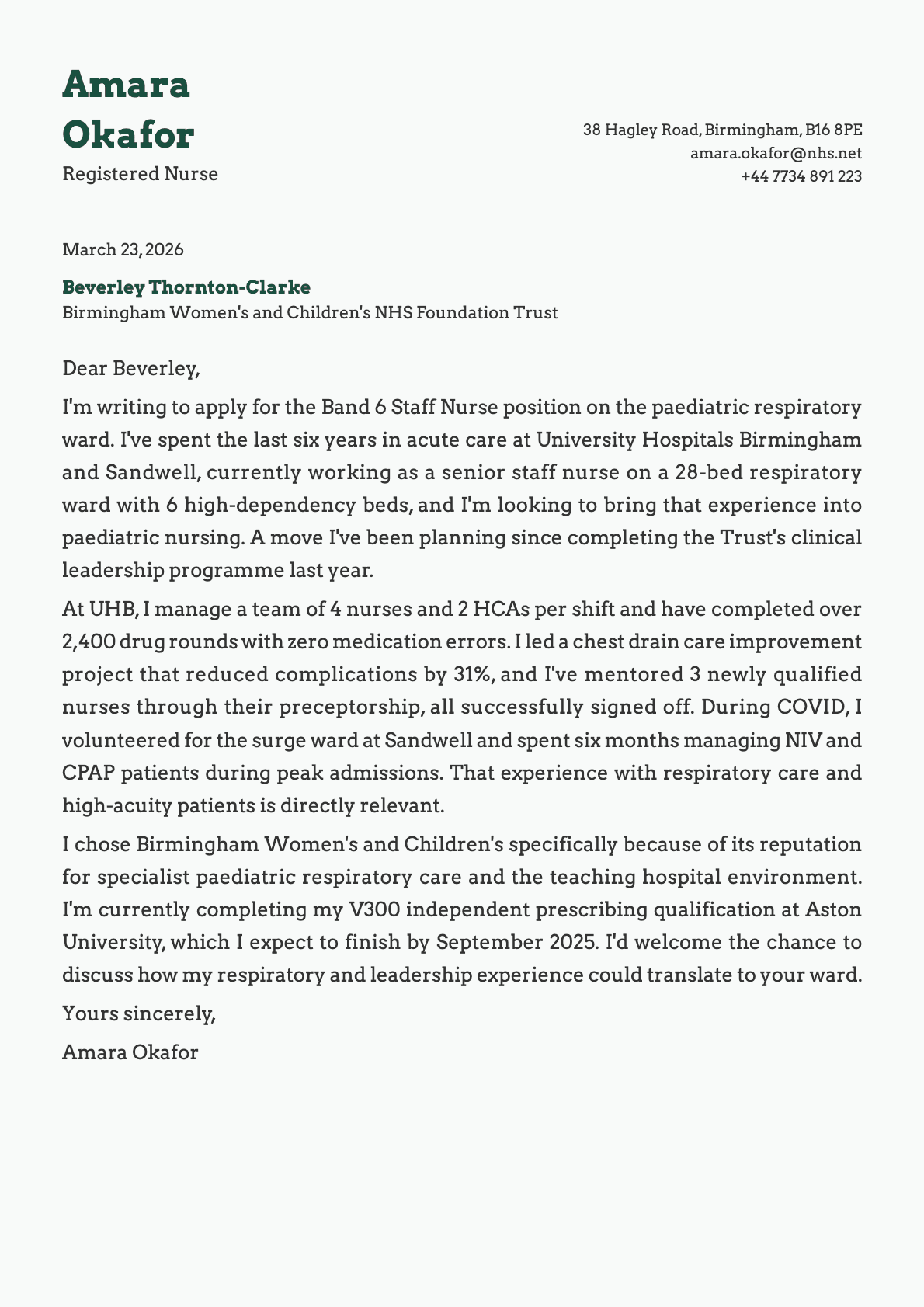
A registered nurse cover letter example showing how to present acute care experience, clinical leadership.
Pharmacist
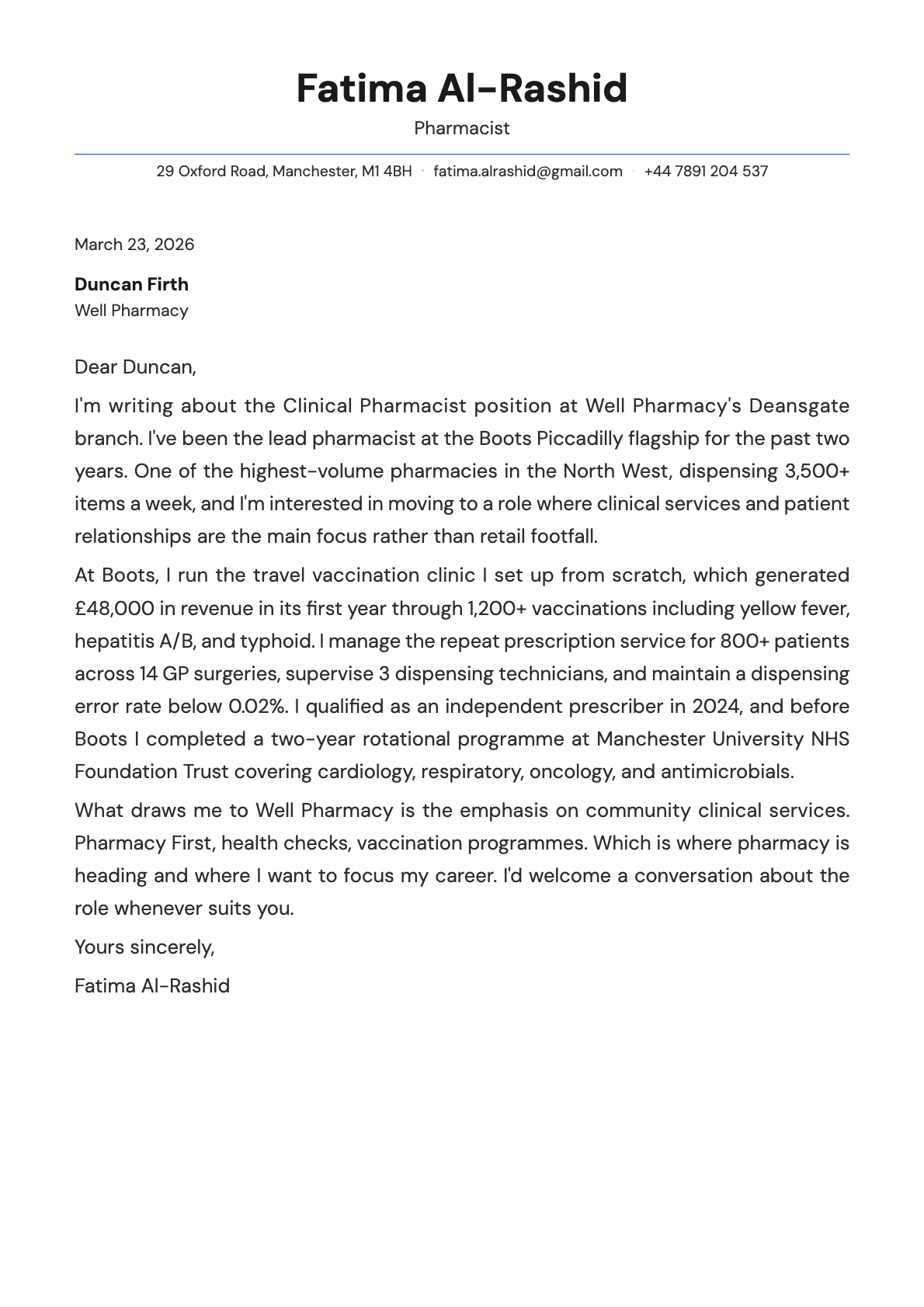
A pharmacist cover letter example showing how to present clinical services, dispensing volume, and revenue generation when applying to a community.
Physician
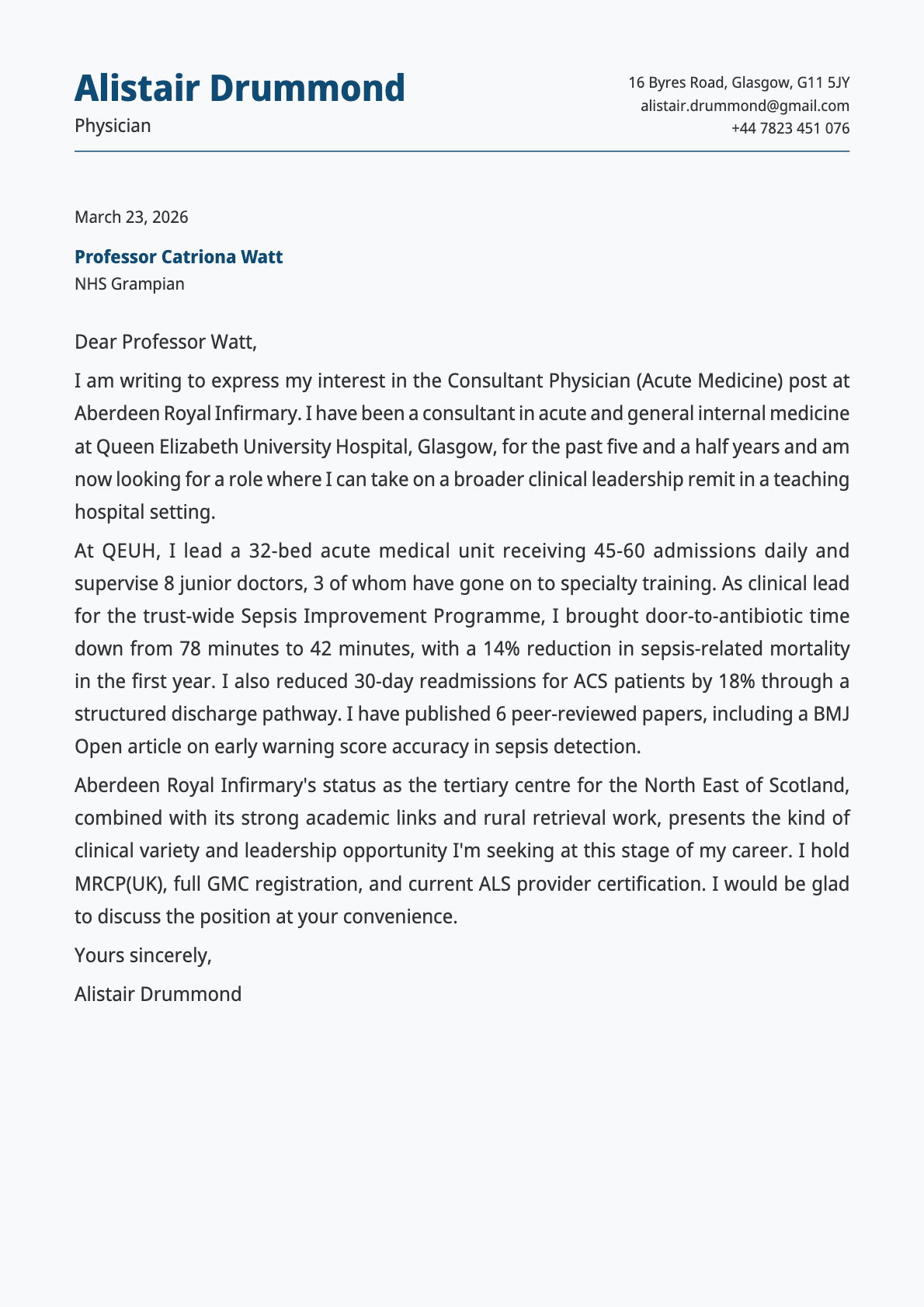
A physician cover letter example showing how to present clinical leadership, quality improvement projects, and academic credentials for a consultant post.
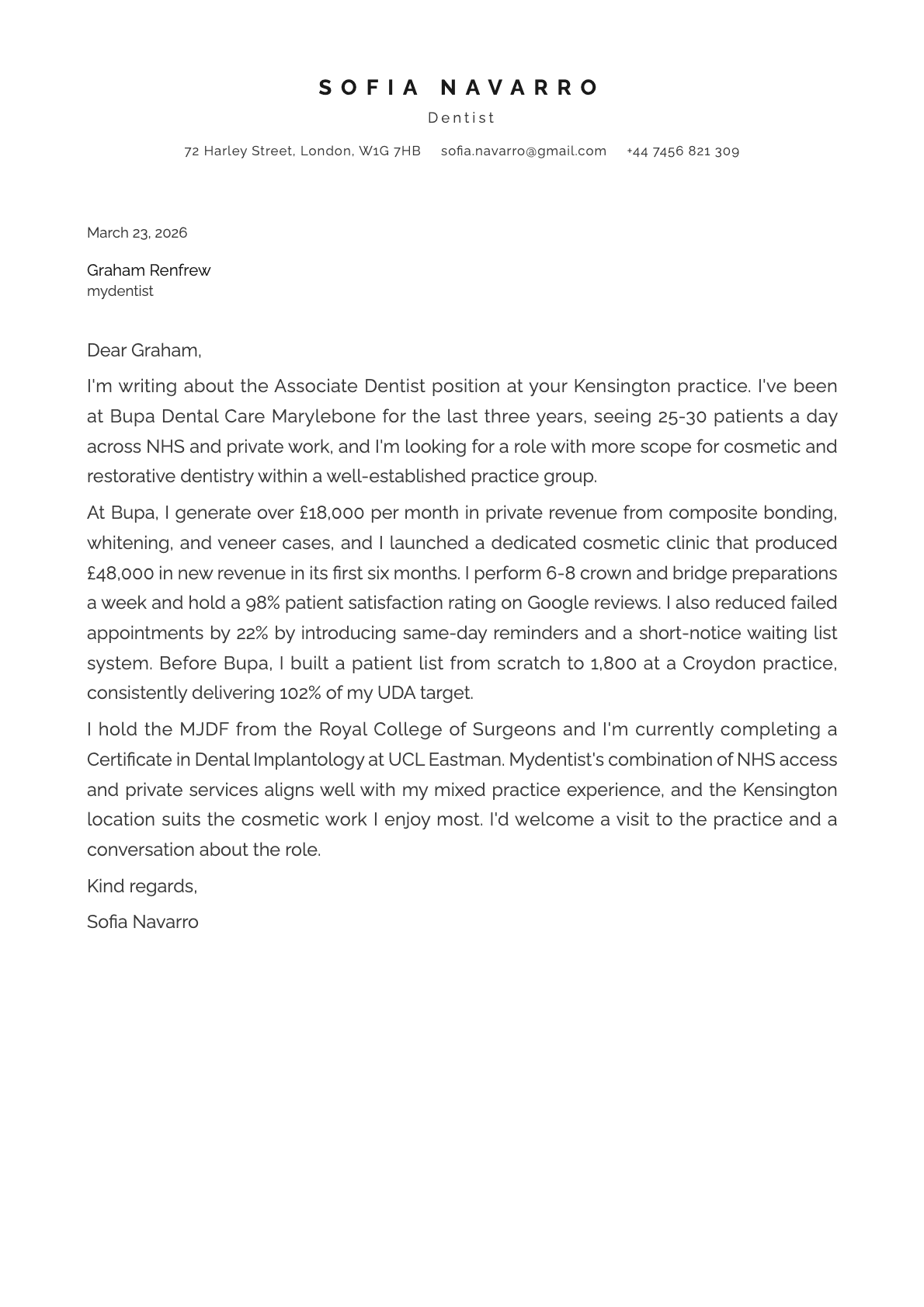
Dentist
A dentist cover letter example showing how to present clinical skills, private revenue generation, and patient satisfaction when applying to a dental.
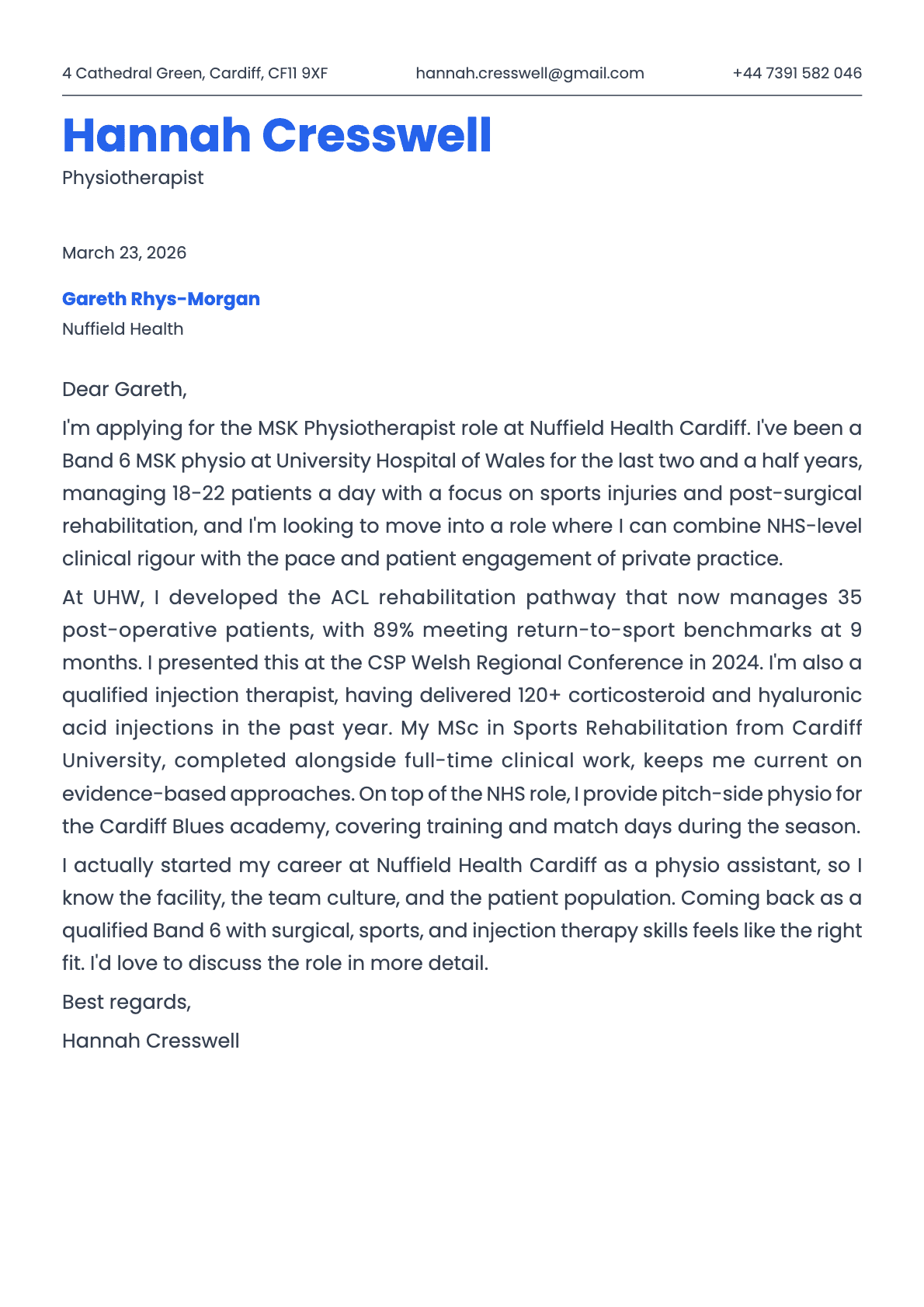
Physiotherapist
A physiotherapist cover letter example showing how to present MSK caseload, rehabilitation pathways.
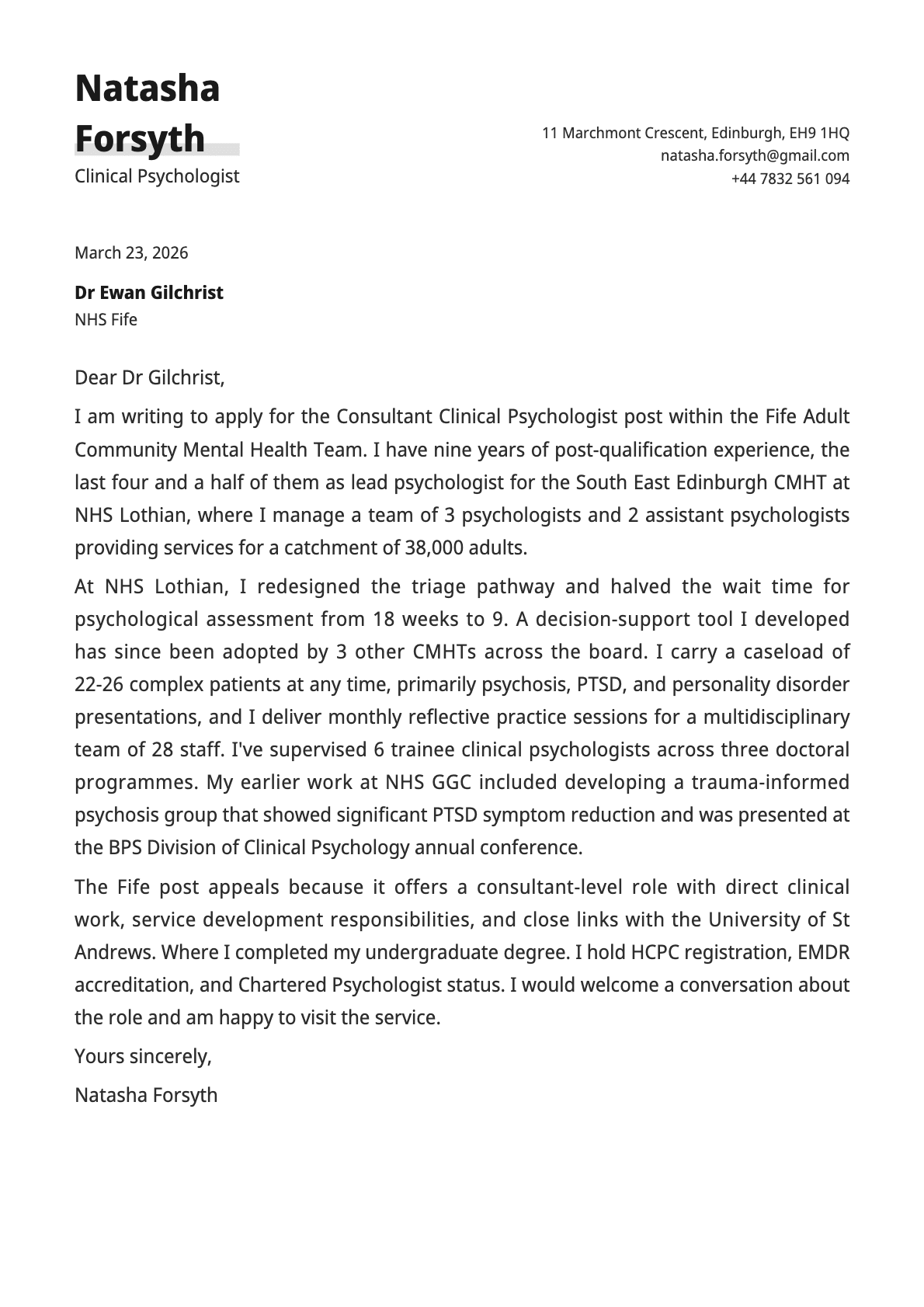
Clinical Psychologist
A clinical psychologist cover letter example demonstrating how to present NHS leadership experience, caseload management.
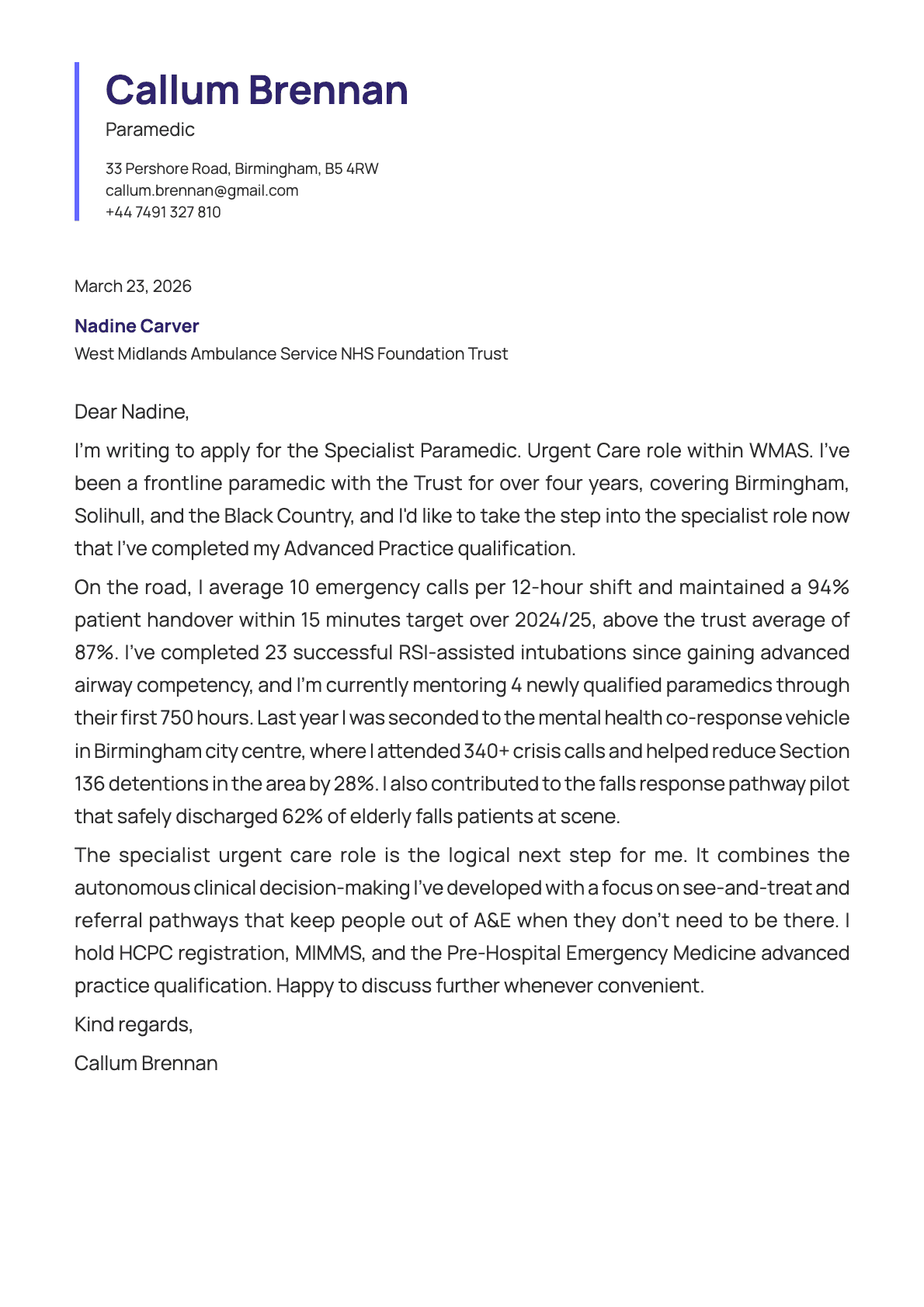
Paramedic
A paramedic cover letter example showing how to present emergency response statistics, advanced clinical skills.
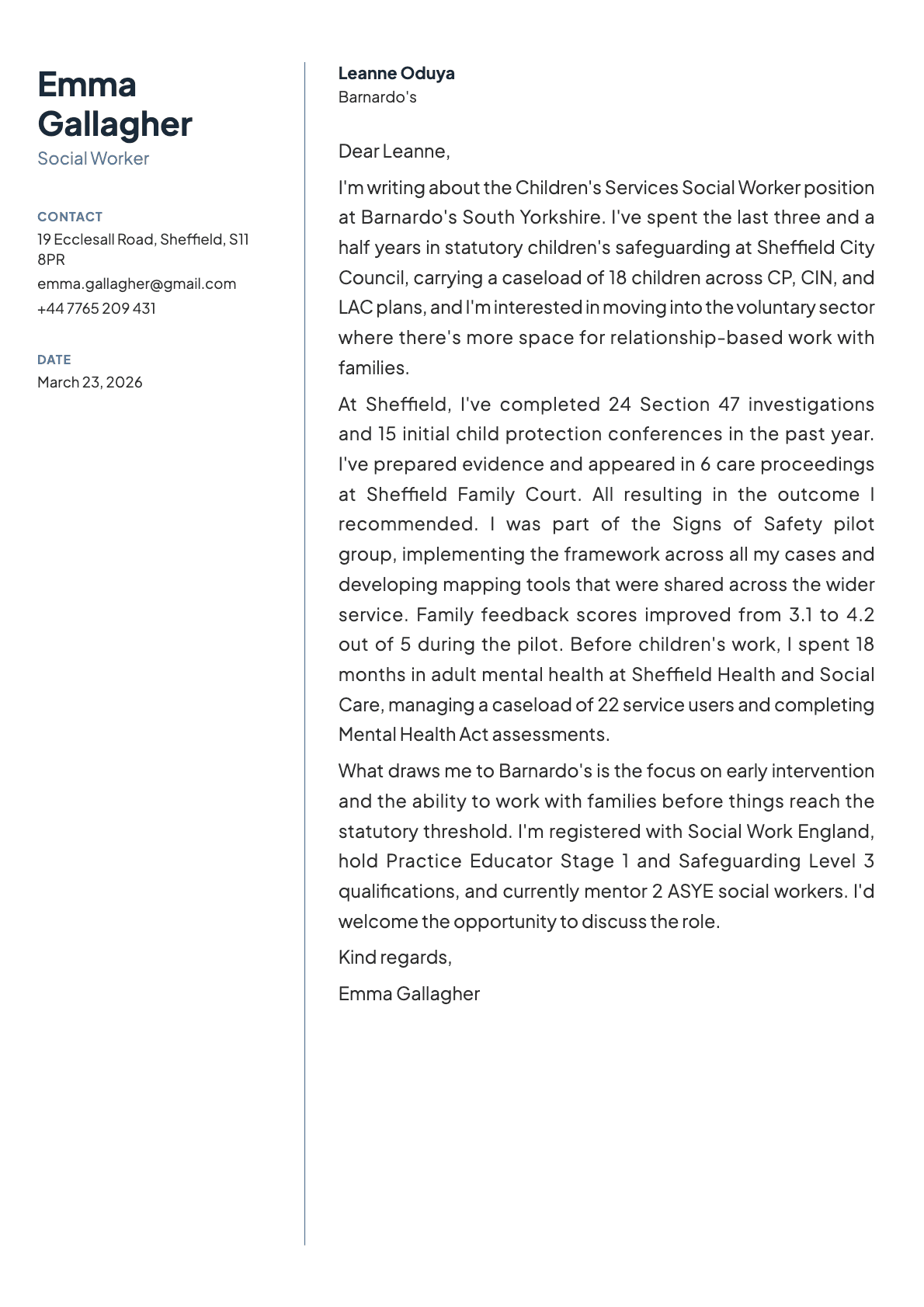
Social Worker
A social worker cover letter example showing how to present safeguarding caseload, court experience, and framework implementation for a voluntary sector.
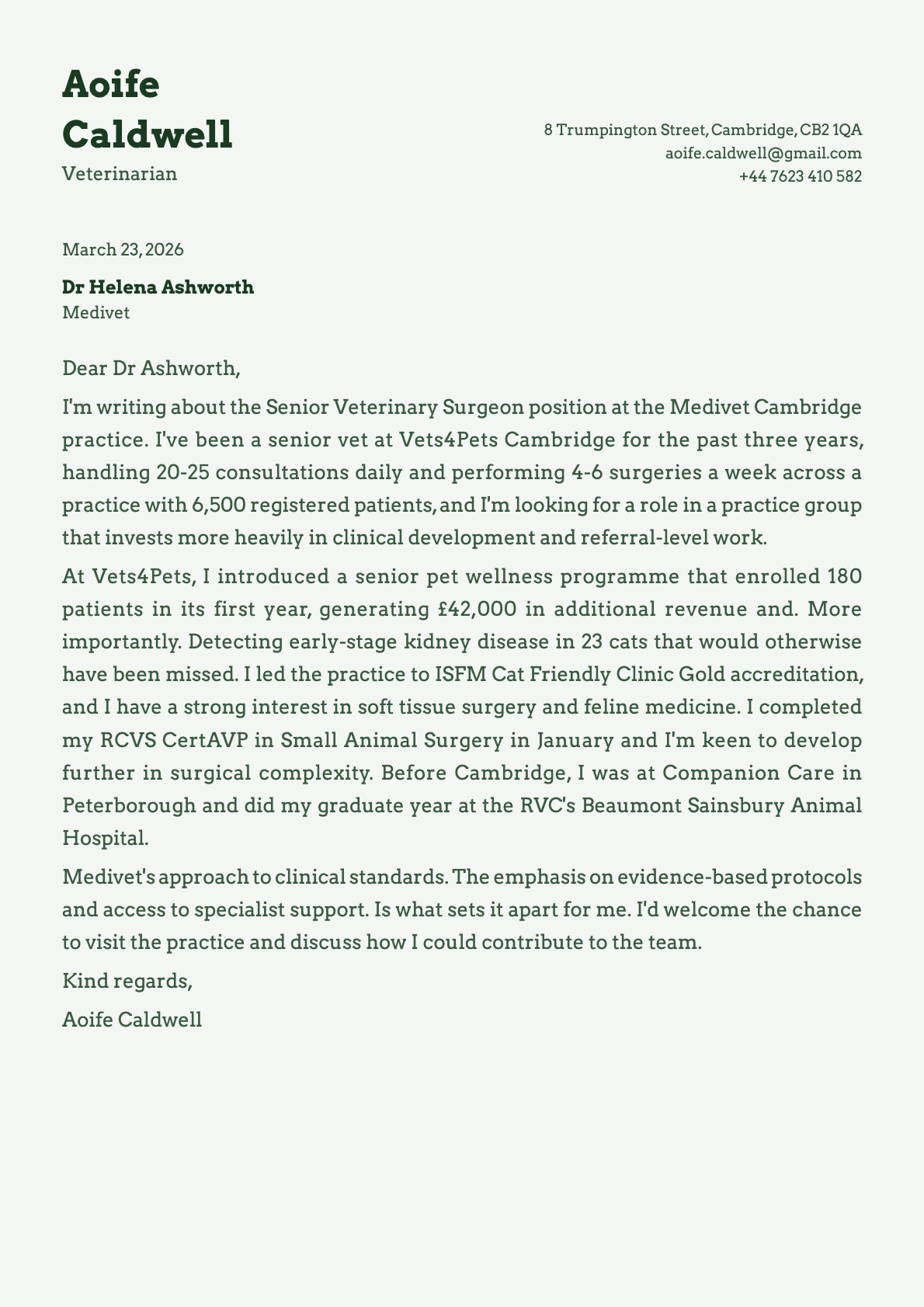
Veterinarian
A veterinarian cover letter example showing how to present clinical caseload, surgical skills.
Related articles

AI Is Screening Your Resume Before Any Human Sees It
AI screens most resumes before a human ever reads them. 97.4% of Fortune 500 companies run an ATS. This is what that means for you and what you can do about it.

The Best Resume Builders in 2026, Compared Honestly
Resume.io, Zety, Enhancv, Kickresume, Teal, and Laddro compared honestly: real pricing, free tiers, mobile apps, and where each tool wins. All prices checked in September 2026.

Burnout Recovery: A Real Timeline, Not 'Take a Bubble Bath'
55% of the U.S. workforce is burned out. Recovery takes 3 to 12 months. Here's what that actually looks like, stage by stage.