Veterinarian Cover Letter Example
A veterinarian cover letter example showing how to present clinical caseload, surgical skills.

Laddro Team
Free to use. No account needed to start.
Free to use. No account needed to start.
What makes a veterinarian cover letter stand out
Veterinary hiring managers face a persistent recruitment challenge, which means most applications get read carefully. But "I have always loved animals" still appears in far too many vet cover letters. The practice owner or clinical director wants to see your consultation volume, your surgical capability, your revenue contribution, and whether you bring a specialism that adds value to the team.
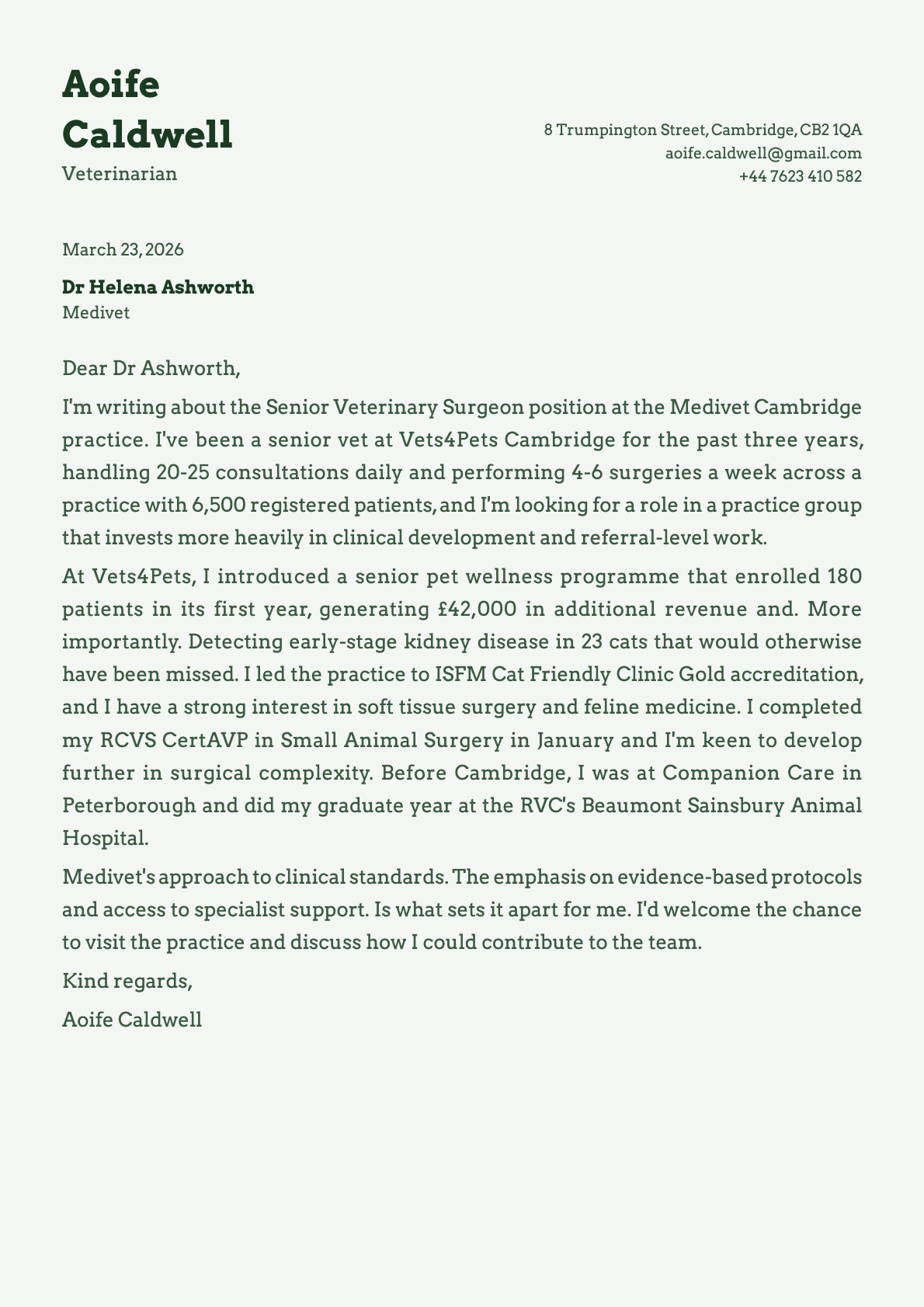
This example from Aoife Caldwell shows the right approach. She is a senior vet at Vets4Pets Cambridge applying for a Senior Veterinary Surgeon position at Medivet. Her letter covers clinical output, practice development, and professional qualifications in three focused paragraphs.
Open with your clinical workload
Aoife begins by stating her daily consultations (20 to 25), weekly surgeries (four to six), and practice size (6,500 registered patients). She names her current employer and explains her reason for the move: a practice group that invests more heavily in clinical development and referral-level work.
This opening immediately tells the hiring manager her capacity and her professional ambition.
Your takeaway: State your daily consultations, weekly surgical caseload, and practice size. These are the numbers veterinary practice managers use to evaluate candidates.
Show practice development alongside clinical skill
The middle of Aoife's letter is where she separates herself from other experienced vets. She introduced a senior pet wellness programme that enrolled 180 patients in its first year, generating 42,000 pounds in additional revenue and detecting early-stage kidney disease in 23 cats that would have otherwise been missed.
She also led her practice to ISFM Cat Friendly Clinic Gold accreditation and mentions her CertAVP in Small Animal Surgery. Her graduate year at the RVC's Beaumont Sainsbury Animal Hospital rounds out a strong clinical history.
Your takeaway: Revenue generation and clinical innovation matter in veterinary practice. If you have launched a wellness programme, introduced a new service, or achieved a practice accreditation, describe it with numbers.
Connect your specialism to the company's ethos
Aoife closes by naming what sets Medivet apart for her: evidence-based protocols and access to specialist support. This is a genuine, specific reason that shows she has researched the group.
What to include in your veterinarian cover letter
- Daily consultation and surgery volume
- Practice size (registered patients, species mix)
- Revenue contributions from services you have developed
- Clinical specialisms (feline medicine, soft tissue surgery, exotics, etc.)
- Professional qualifications (CertAVP, RCVS specialist status, ISFM accreditation)
- A specific reason for choosing this practice or group
What to leave out
Do not write about your love of animals. Do not describe your work experience placements from before vet school. Do not list every species you have treated. Focus on your current capability and what you bring to the team.
Final thoughts
A veterinarian cover letter should convince the practice owner that you can fill chairs, perform surgery safely, develop new clinical services, and enhance the practice's reputation. That requires specific numbers for consultations, surgeries, and revenue, along with evidence of clinical development. Combine these with a genuine reason for wanting the role, and you have a letter that gets noticed.
Was this cover letter example helpful?
Rate this example to help us create better content for you.
4.8 average from 94 ratingsBuild your own version
Open this layout in the builder and swap in your own details. It takes a few minutes.
Free to use. No account needed to start.
Related cover letter examples
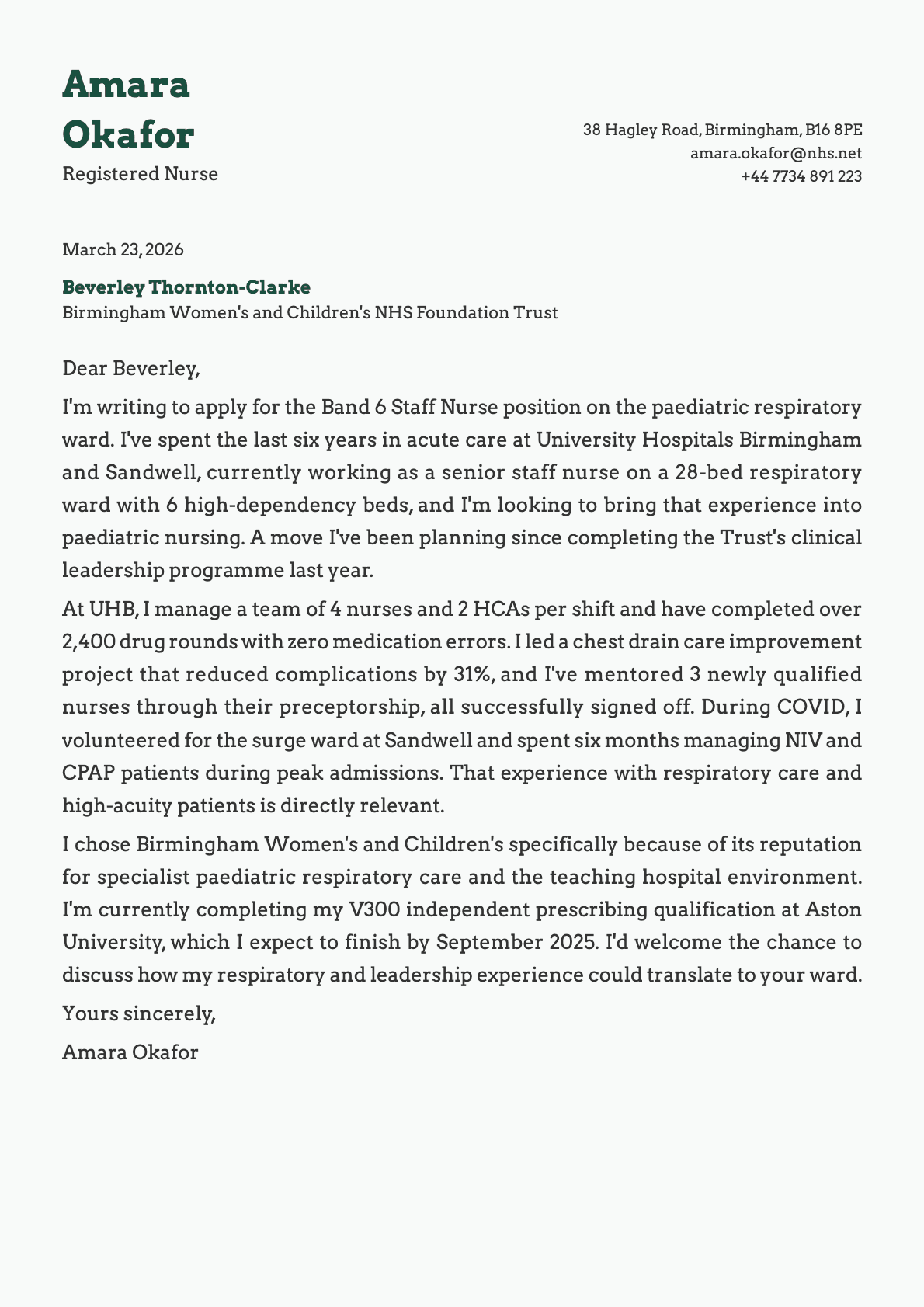
Registered Nurse
A registered nurse cover letter example showing how to present acute care experience, clinical leadership.
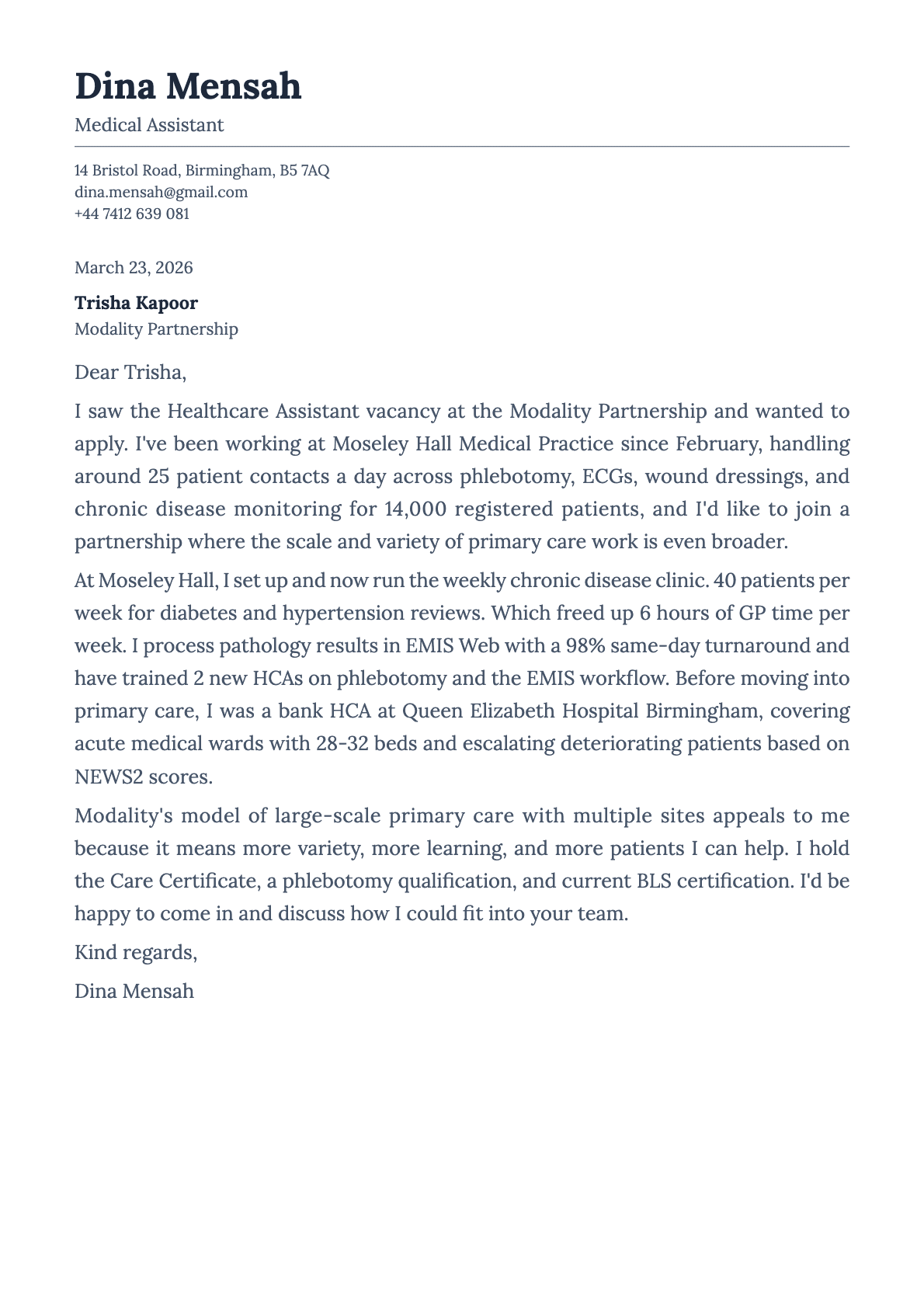
Medical Assistant
A medical assistant cover letter example showing how to present clinical skills, patient volumes, and GP practice experience when applying to a large.
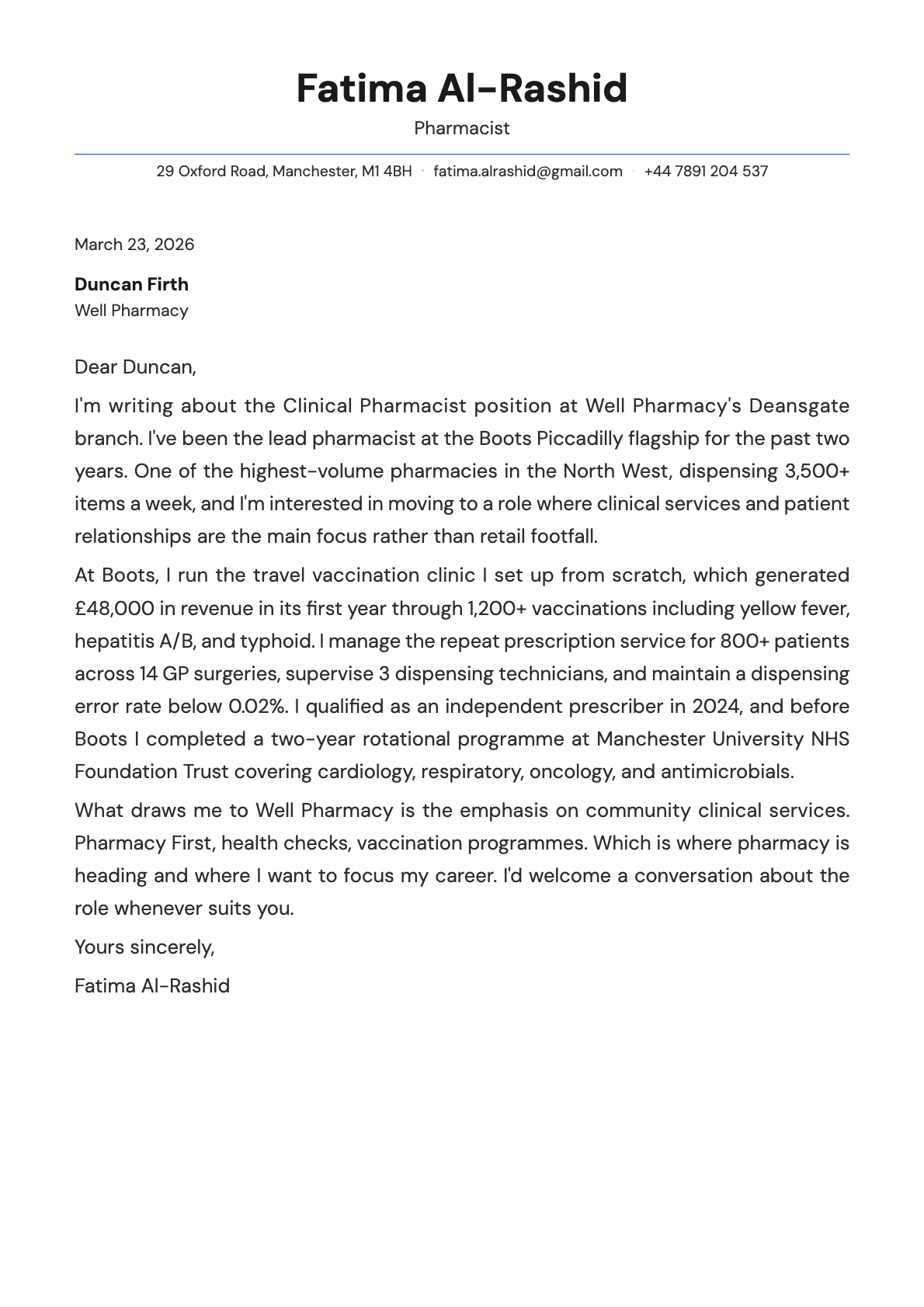
Pharmacist
A pharmacist cover letter example showing how to present clinical services, dispensing volume, and revenue generation when applying to a community.
Physician
A physician cover letter example showing how to present clinical leadership, quality improvement projects, and academic credentials for a consultant post.
Dentist
A dentist cover letter example showing how to present clinical skills, private revenue generation, and patient satisfaction when applying to a dental.
Physiotherapist
A physiotherapist cover letter example showing how to present MSK caseload, rehabilitation pathways.
Clinical Psychologist
A clinical psychologist cover letter example demonstrating how to present NHS leadership experience, caseload management.
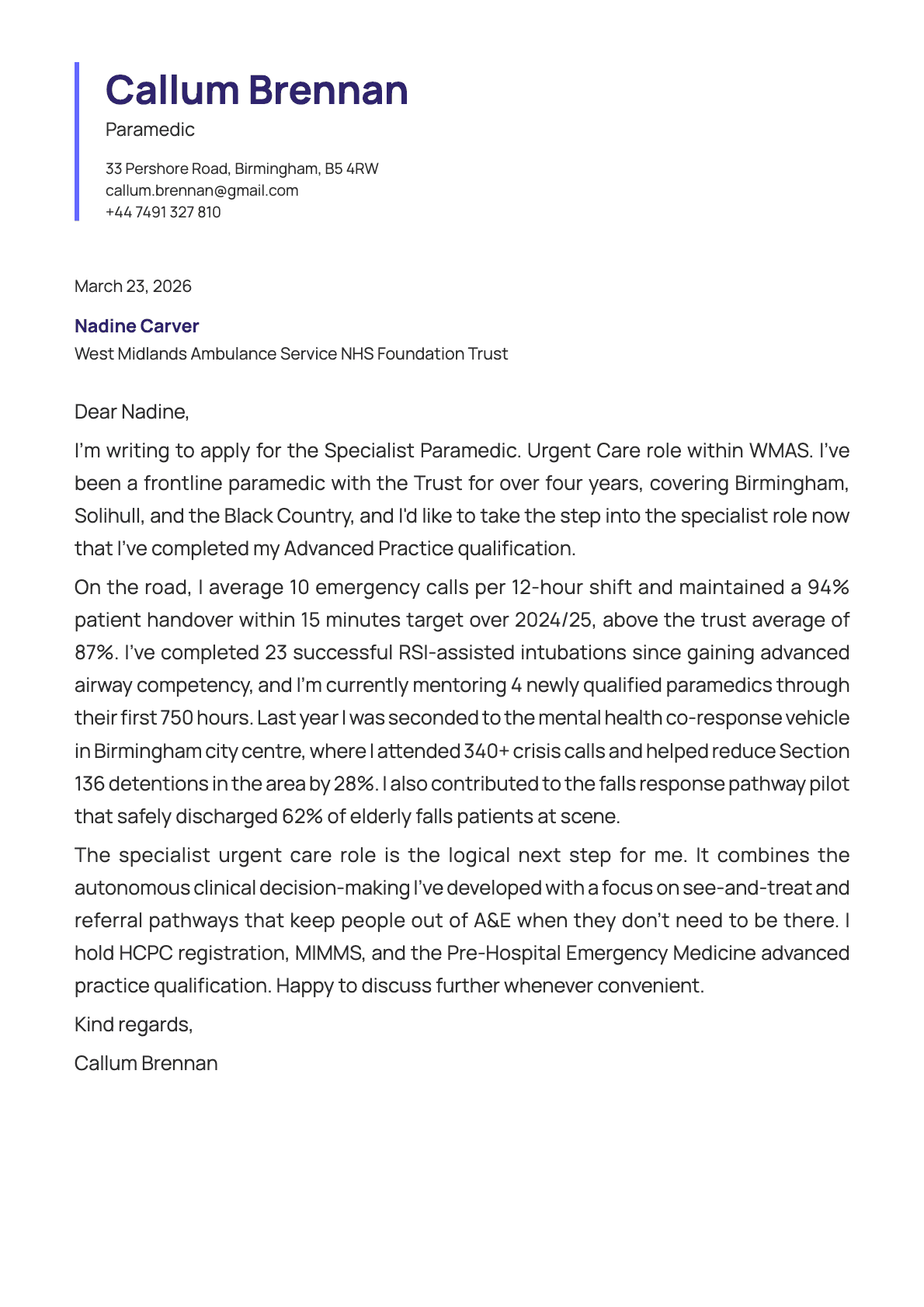
Paramedic
A paramedic cover letter example showing how to present emergency response statistics, advanced clinical skills.
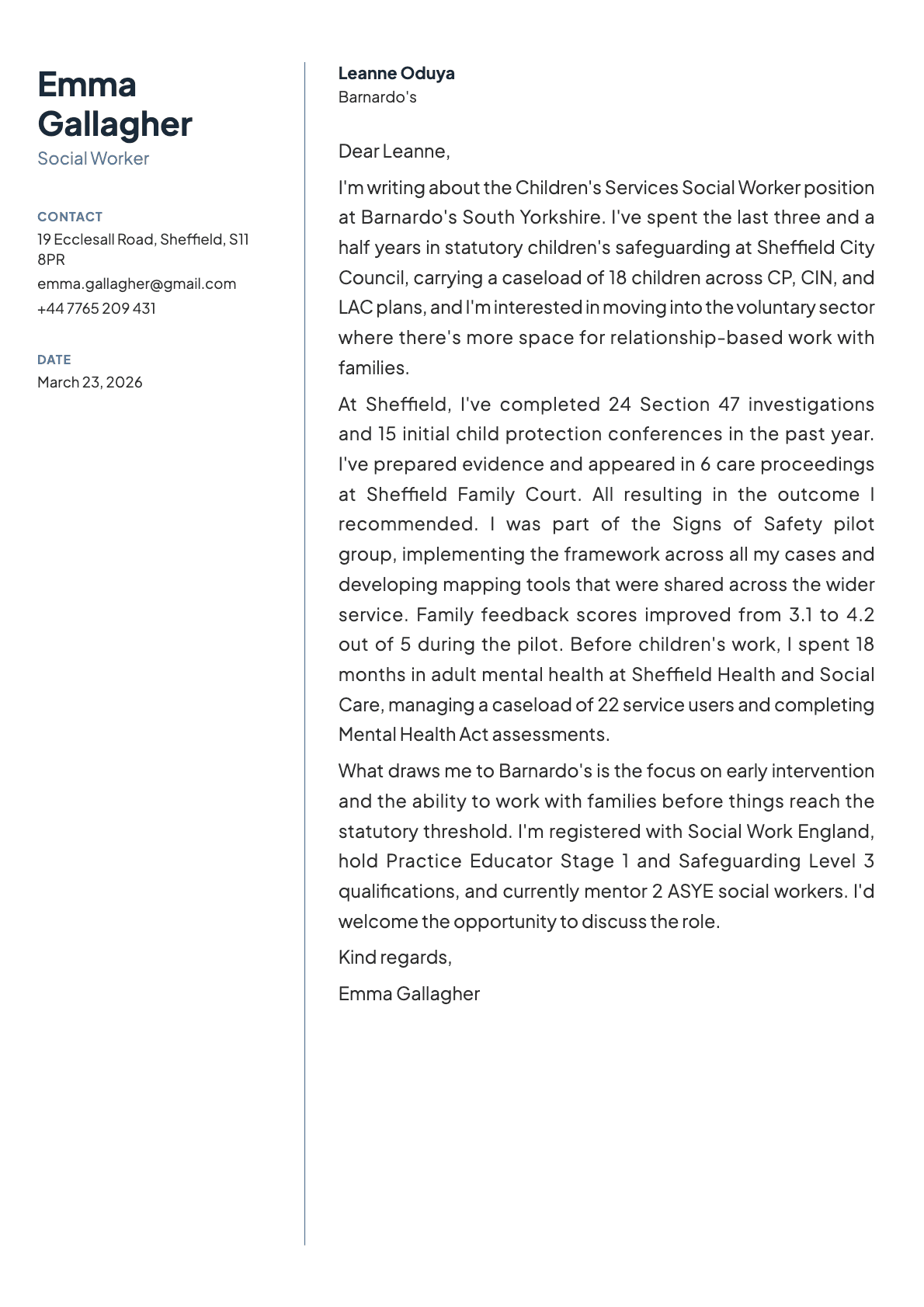
Social Worker
A social worker cover letter example showing how to present safeguarding caseload, court experience, and framework implementation for a voluntary sector.
Related articles

AI Is Screening Your Resume Before Any Human Sees It
AI screens most resumes before a human ever reads them. 97.4% of Fortune 500 companies run an ATS. This is what that means for you and what you can do about it.

The Best Resume Builders in 2026, Compared Honestly
Resume.io, Zety, Enhancv, Kickresume, Teal, and Laddro compared honestly: real pricing, free tiers, mobile apps, and where each tool wins. All prices checked in September 2026.

Burnout Recovery: A Real Timeline, Not 'Take a Bubble Bath'
55% of the U.S. workforce is burned out. Recovery takes 3 to 12 months. Here's what that actually looks like, stage by stage.