Backend Developer Cover Letter Example
A backend developer cover letter example that shows how to present system design, throughput numbers, and reliability metrics to land an interview.

Laddro Team
Free to use. No account needed to start.
Free to use. No account needed to start.
What makes a backend cover letter different
Backend developers build things that nobody sees, which makes them harder to write about. You cannot screenshot a well-designed API. But that does not mean your cover letter should be vague. The trick is translating invisible systems into outcomes that hiring managers immediately understand: throughput, latency, reliability, and cost.
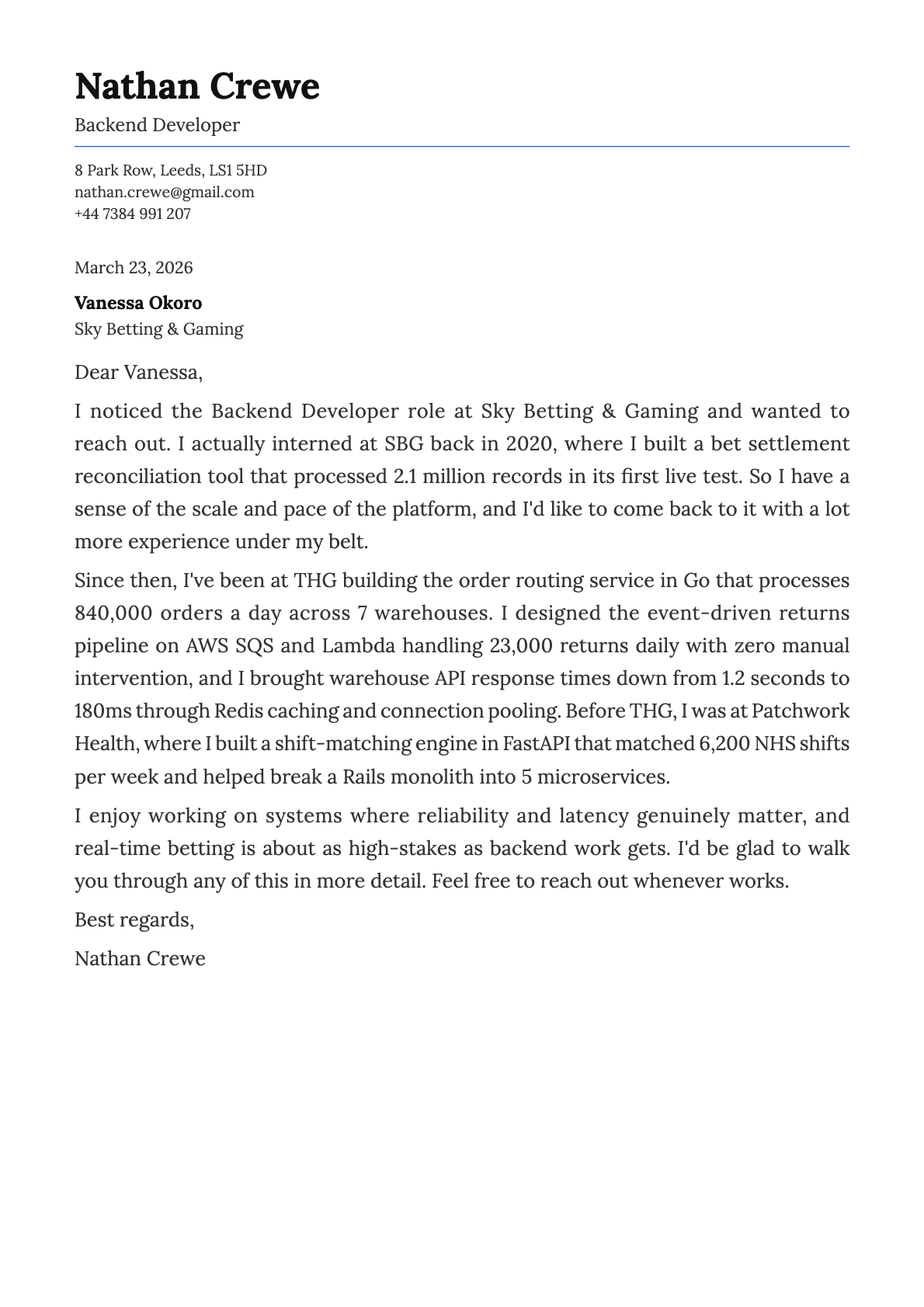
This example comes from Nathan Crewe, a backend developer applying to Sky Betting & Gaming. He currently works at THG and previously interned at SBG, which gives his letter a personal angle that most applications lack.
Use a personal connection if you have one
Nathan opens with a detail most candidates would bury: he interned at Sky Betting & Gaming back in 2020. He built a bet settlement reconciliation tool that processed 2.1 million records in its first live test. That is not just a fun fact. It tells the hiring manager he already understands the platform, the scale, and the pace. He wants to come back with more experience, not start from scratch.
If you have any connection to the company (previous work, open source contributions, use of their product), mention it early. It immediately separates you from the stack of generic applications.
Backend metrics that matter
Nathan's middle paragraph is dense with the kind of numbers backend hiring managers care about. His order routing service processes 840,000 orders a day across 7 warehouses. His event-driven returns pipeline handles 23,000 returns daily with zero manual intervention. He brought API response times down from 1.2 seconds to 180ms through Redis caching and connection pooling.
Each of these tells a story: scale, automation, and performance. The hiring manager does not need to ask "can this person handle our systems?" because the answer is right there.
Your takeaway: Pick metrics that show scale (requests per day, records processed), reliability (uptime, error rates), and performance (latency improvements, cost reductions). These are the language of backend engineering.
Show range across different systems
Nathan mentions two very different employers: THG (e-commerce, Go, AWS) and Patchwork Health (healthcare, FastAPI, Rails). This shows he can adapt to different domains and tech stacks. He is not a one-stack developer.
If you have worked across different industries or languages, highlight that. Backend developers who can context-switch are more valuable than those who only know one ecosystem.
Keep the closing direct
Nathan closes by connecting his interest in reliability and latency to the specifics of real-time betting. "Real-time betting is about as high-stakes as backend work gets." It is a simple observation, but it tells the hiring manager that Nathan understands the domain and is genuinely interested in the challenge, not just the paycheck.
Your backend cover letter checklist
- Open with a connection to the company or a standout metric from your current role
- Include 2-3 specific systems you built or maintained, with scale and performance numbers
- Show range across languages, frameworks, or domains if you have it
- Close with why this company's backend challenges specifically interest you
- Keep it under 350 words
Final thoughts
Backend cover letters succeed when they make the invisible visible. You built systems that handle millions of operations, and the cover letter is your chance to explain what those systems do and why they matter. Write about outcomes, not just architecture.
Was this cover letter example helpful?
Rate this example to help us create better content for you.
4.7 average from 142 ratingsBuild your own version
Open this layout in the builder and swap in your own details. It takes a few minutes.
Free to use. No account needed to start.
Related cover letter examples
Software Engineer
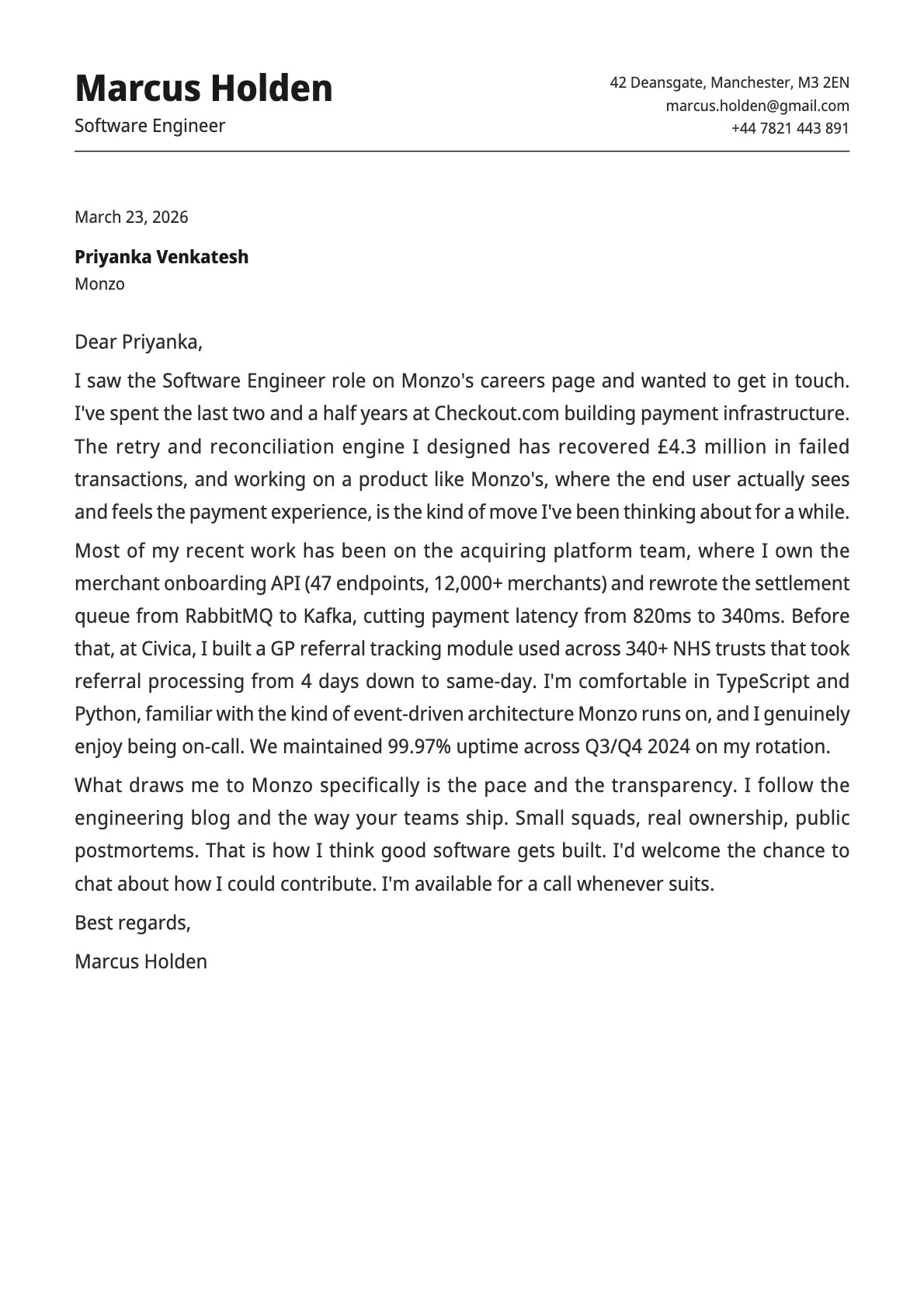
A software engineer cover letter example with practical tips on addressing the hiring manager, showing technical impact.
Frontend Developer
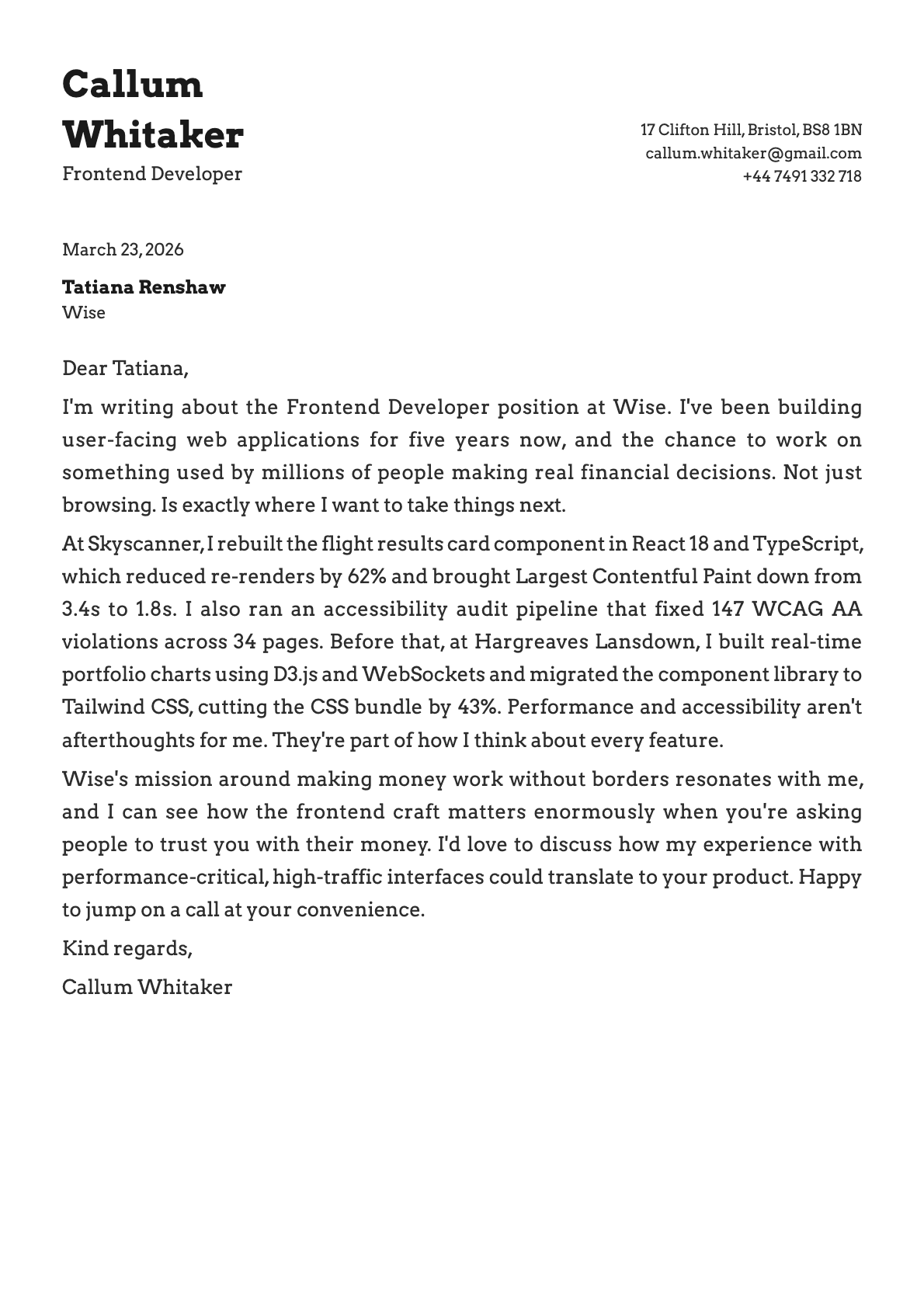
A frontend developer cover letter example showing how to highlight performance wins, accessibility work, and why you want a specific company.
Data Analyst
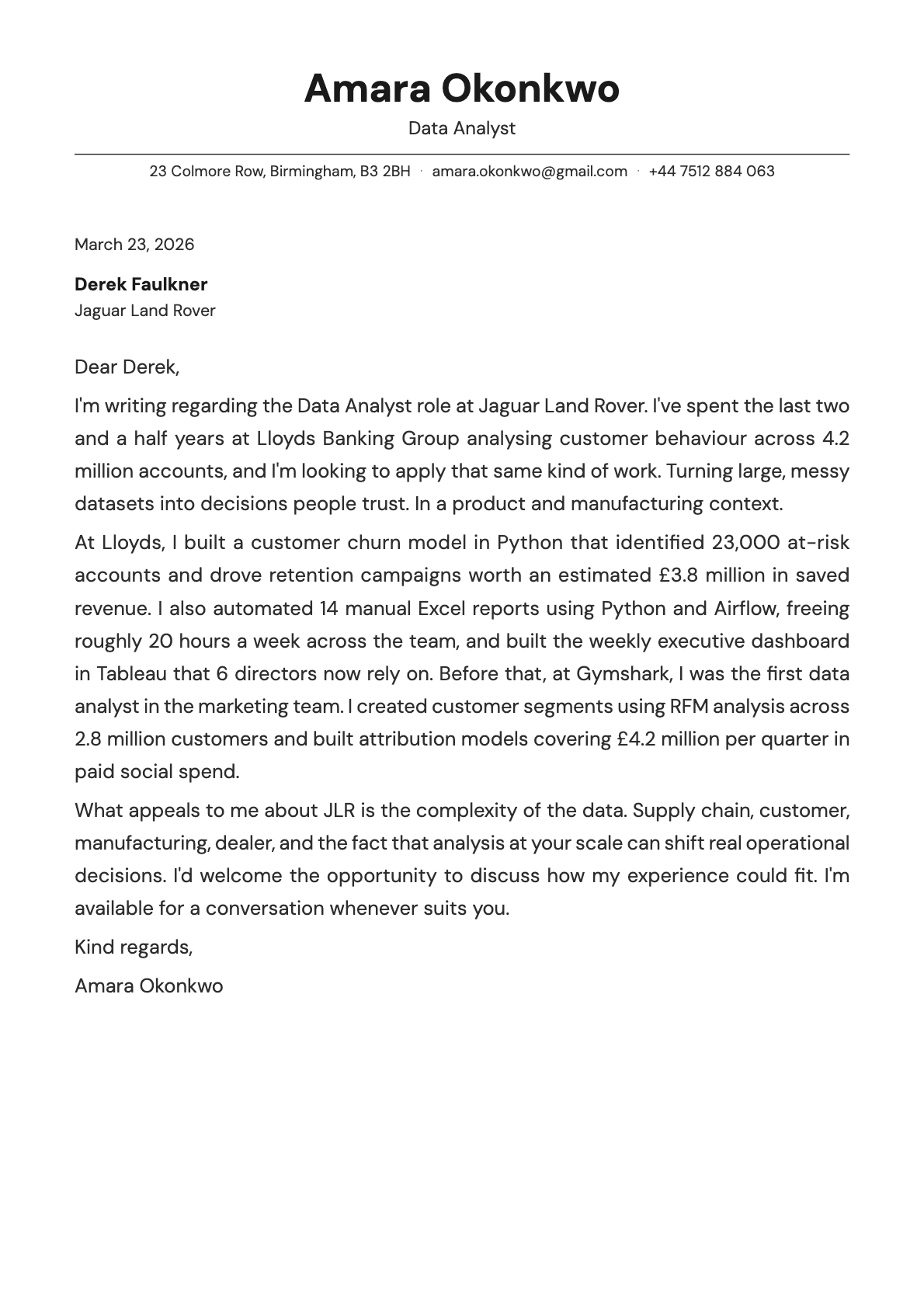
A data analyst cover letter example showing how to present analytical projects, business impact, and your ability to turn messy data into real decisions.
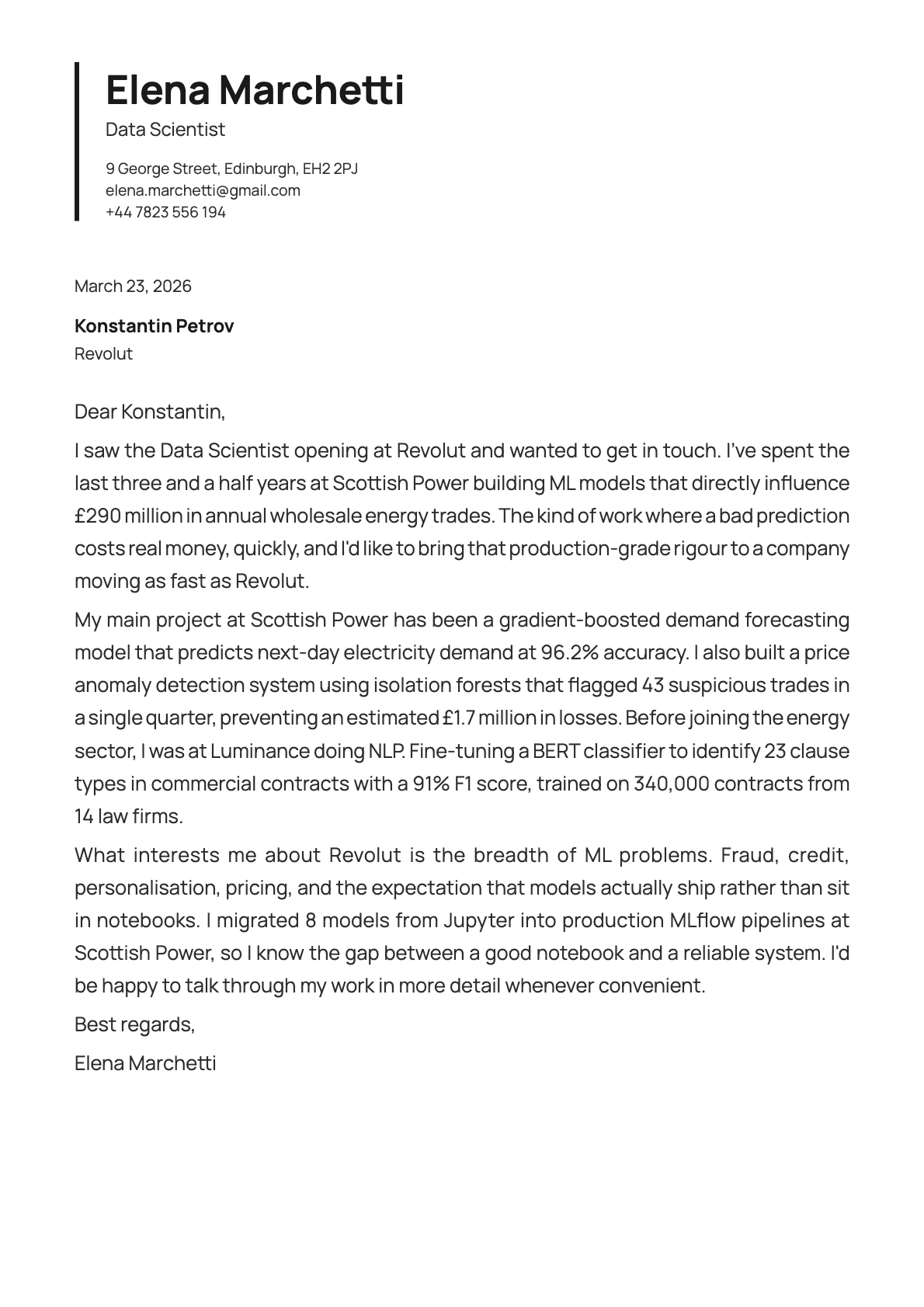
Data Scientist
A data scientist cover letter example showing how to present ML models, production deployments, and measurable outcomes to impress hiring managers.
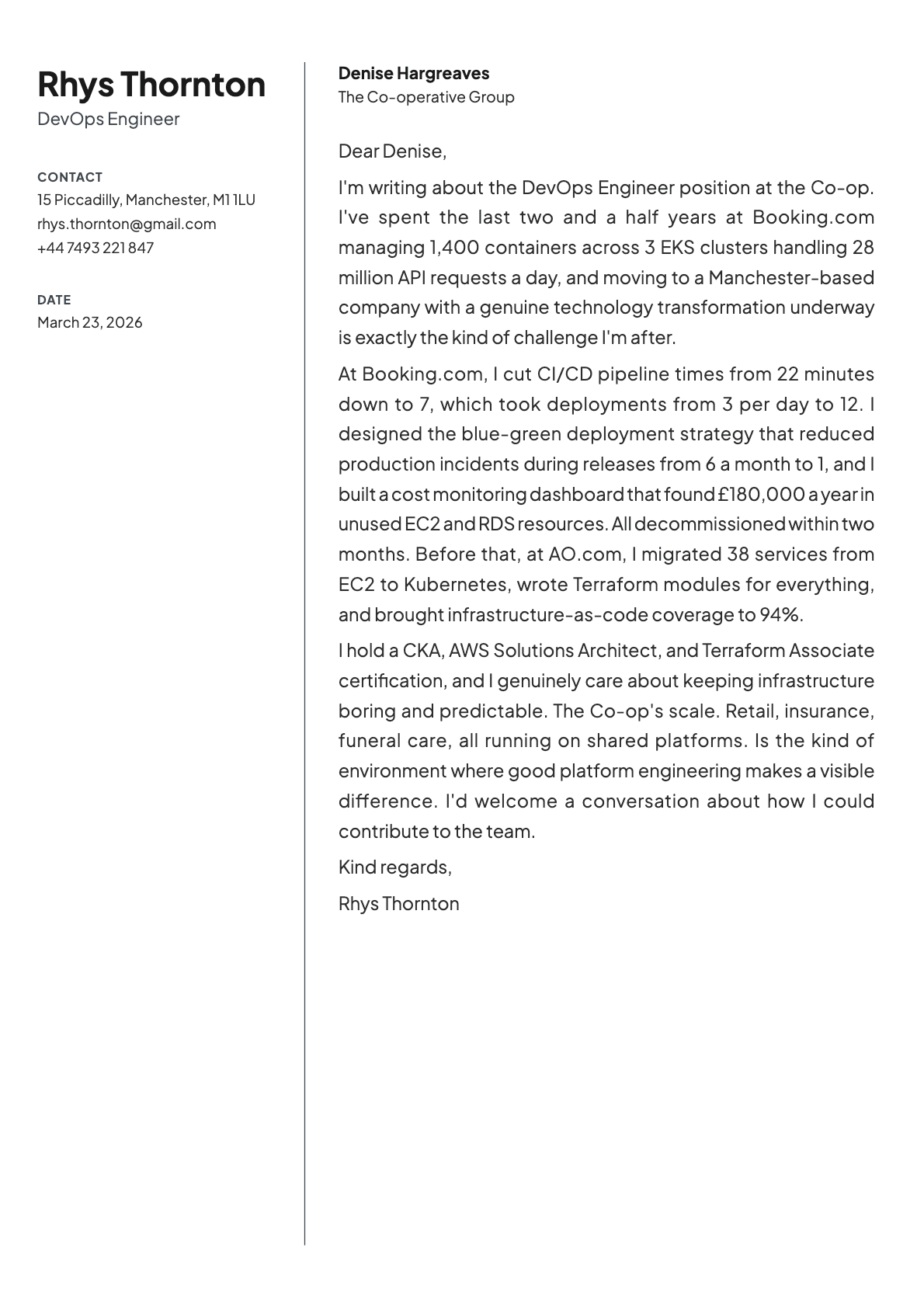
DevOps Engineer
A DevOps engineer cover letter example showing how to present infrastructure wins, CI/CD improvements, and cost savings that hiring managers care about.
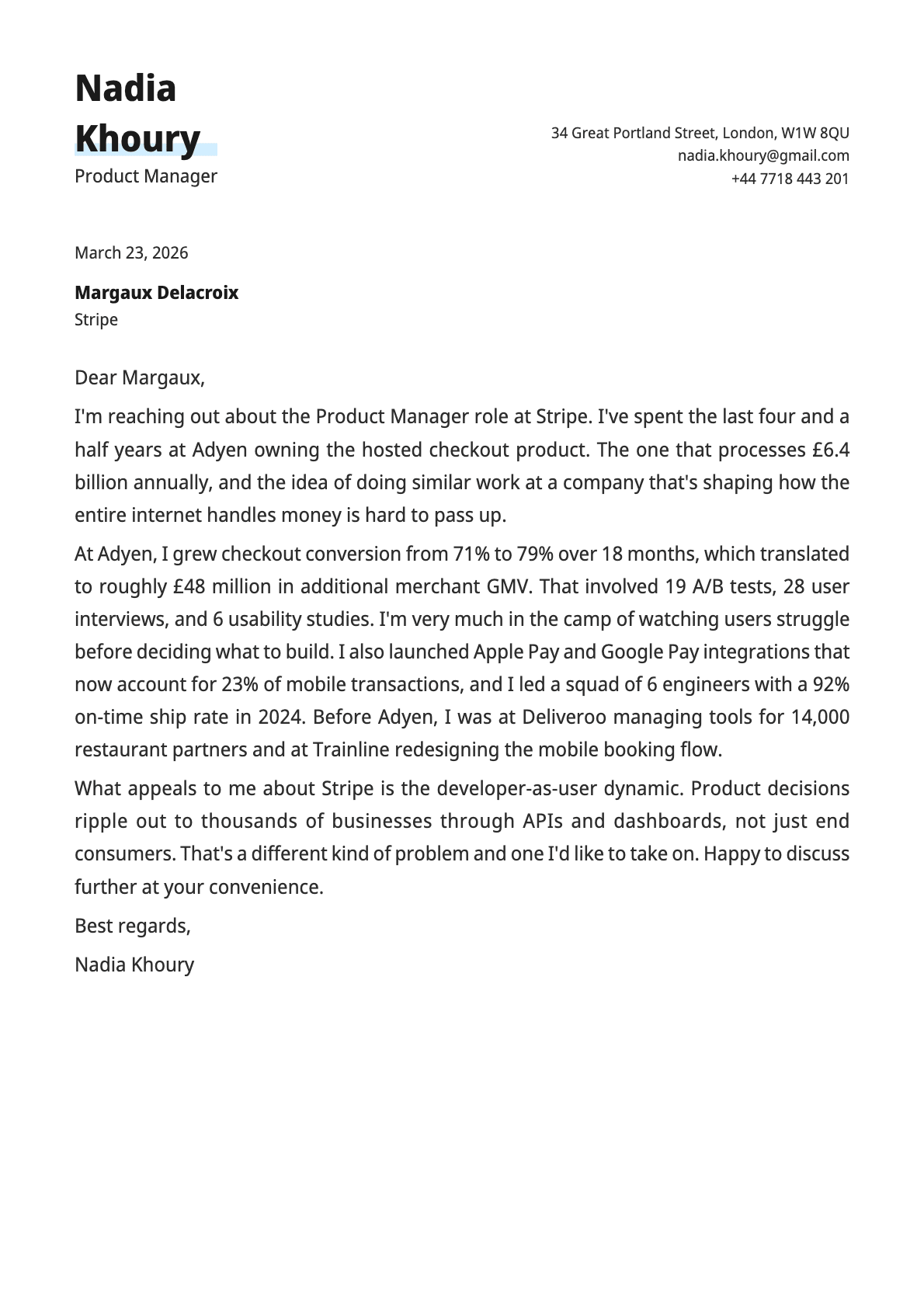
Product Manager
A product manager cover letter example showing how to present conversion improvements, A/B testing, and squad leadership when applying to a payments.
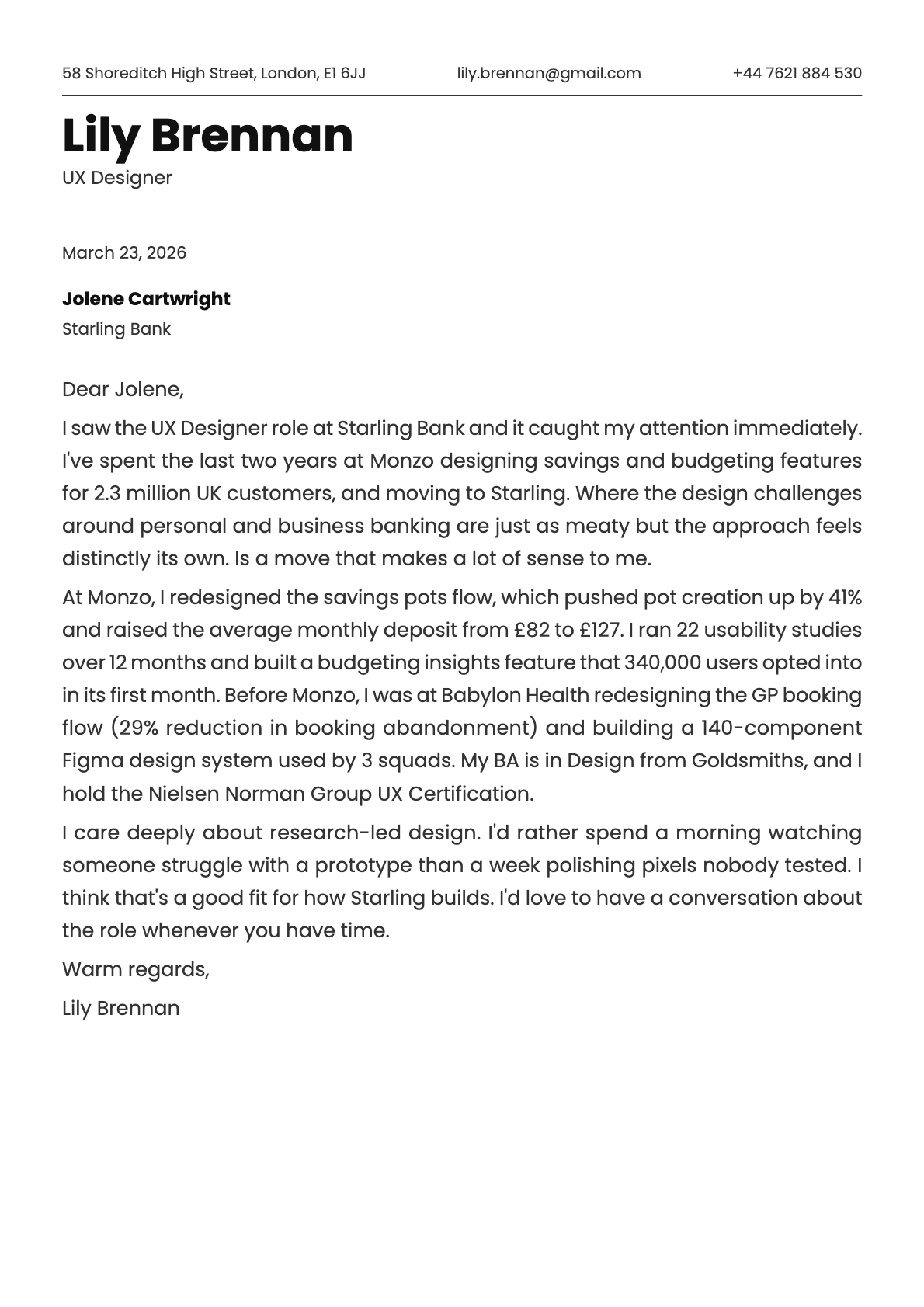
UX Designer
A UX designer cover letter example showing how to present usability research, conversion improvements, and design system work when applying to a digital.
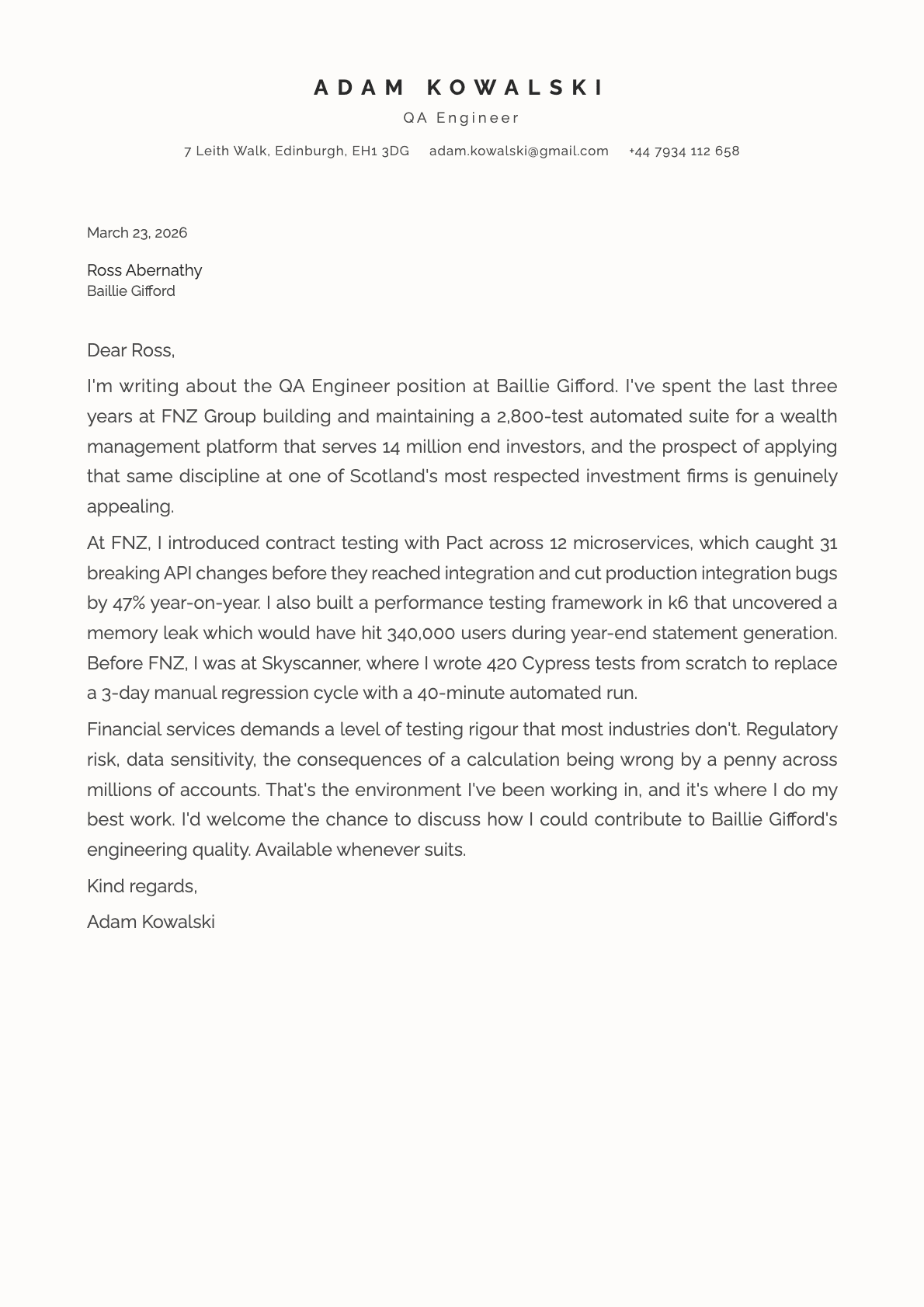
QA Engineer
A QA engineer cover letter example showing how to present automated testing frameworks, contract testing, and quality metrics for a financial services.
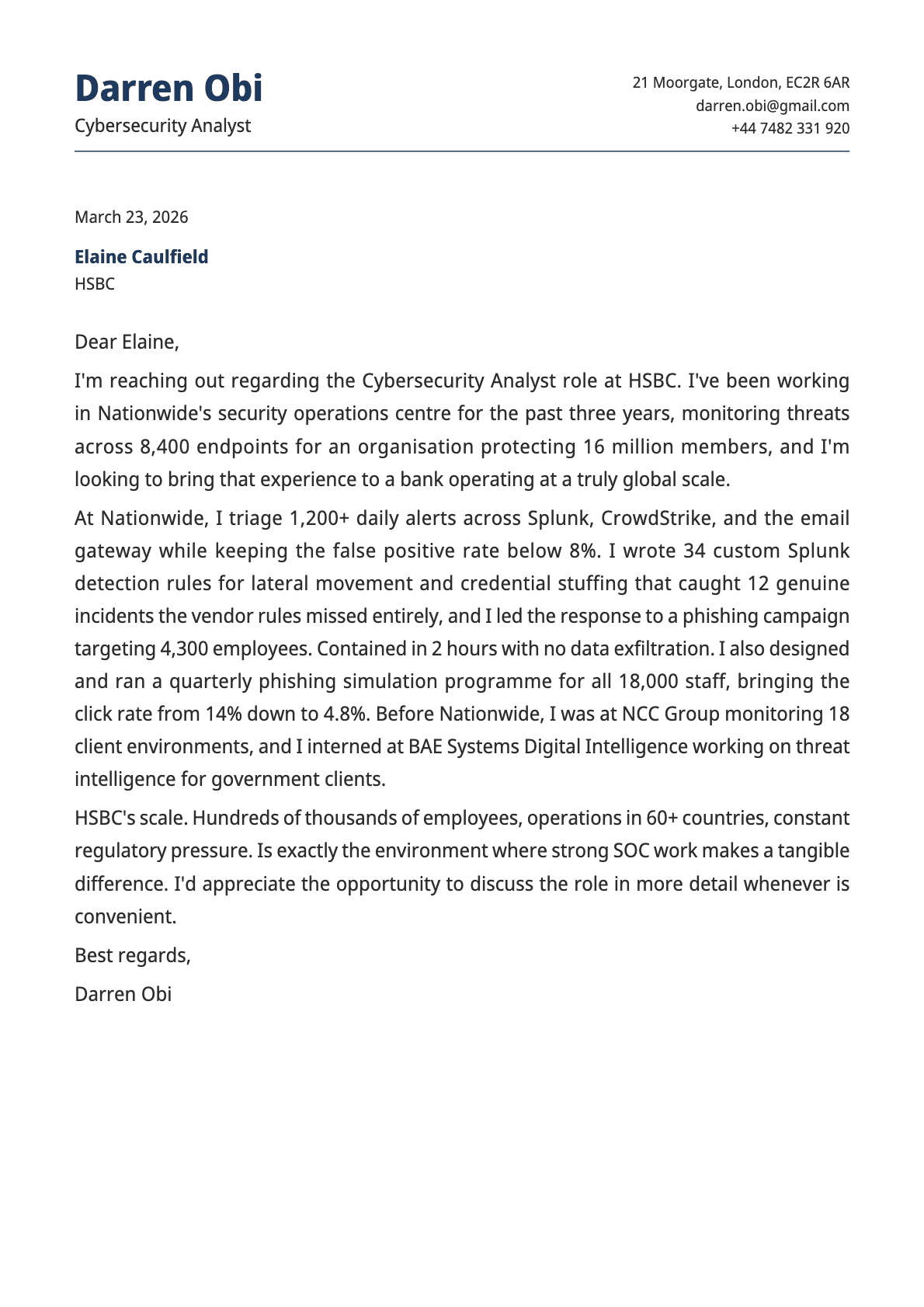
Cybersecurity Analyst
A cybersecurity analyst cover letter example showing how to present SOC experience, threat detection skills, and incident response work for a financial.
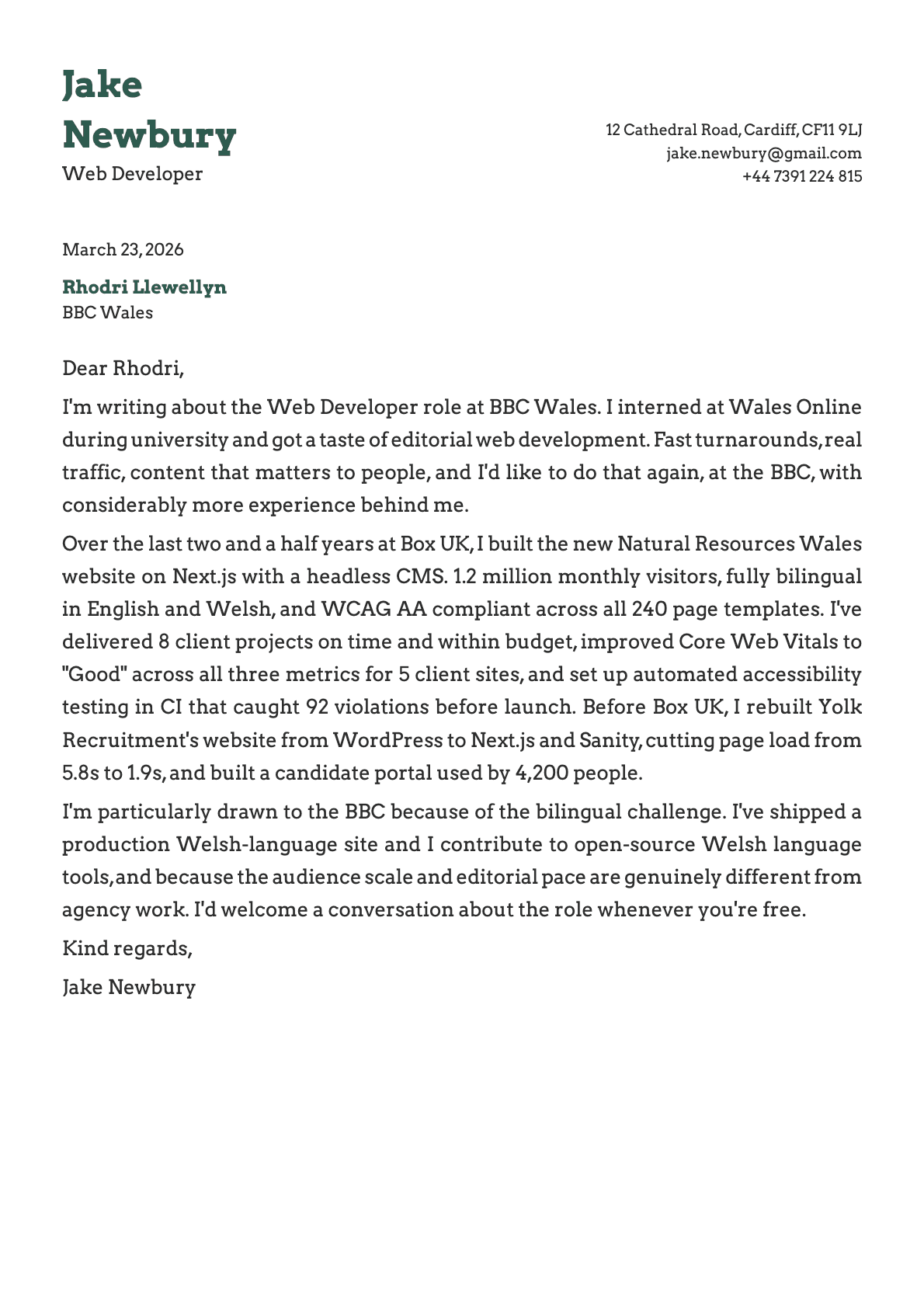
Web Developer
A web developer cover letter example showing how to present Next.js projects, accessibility compliance.
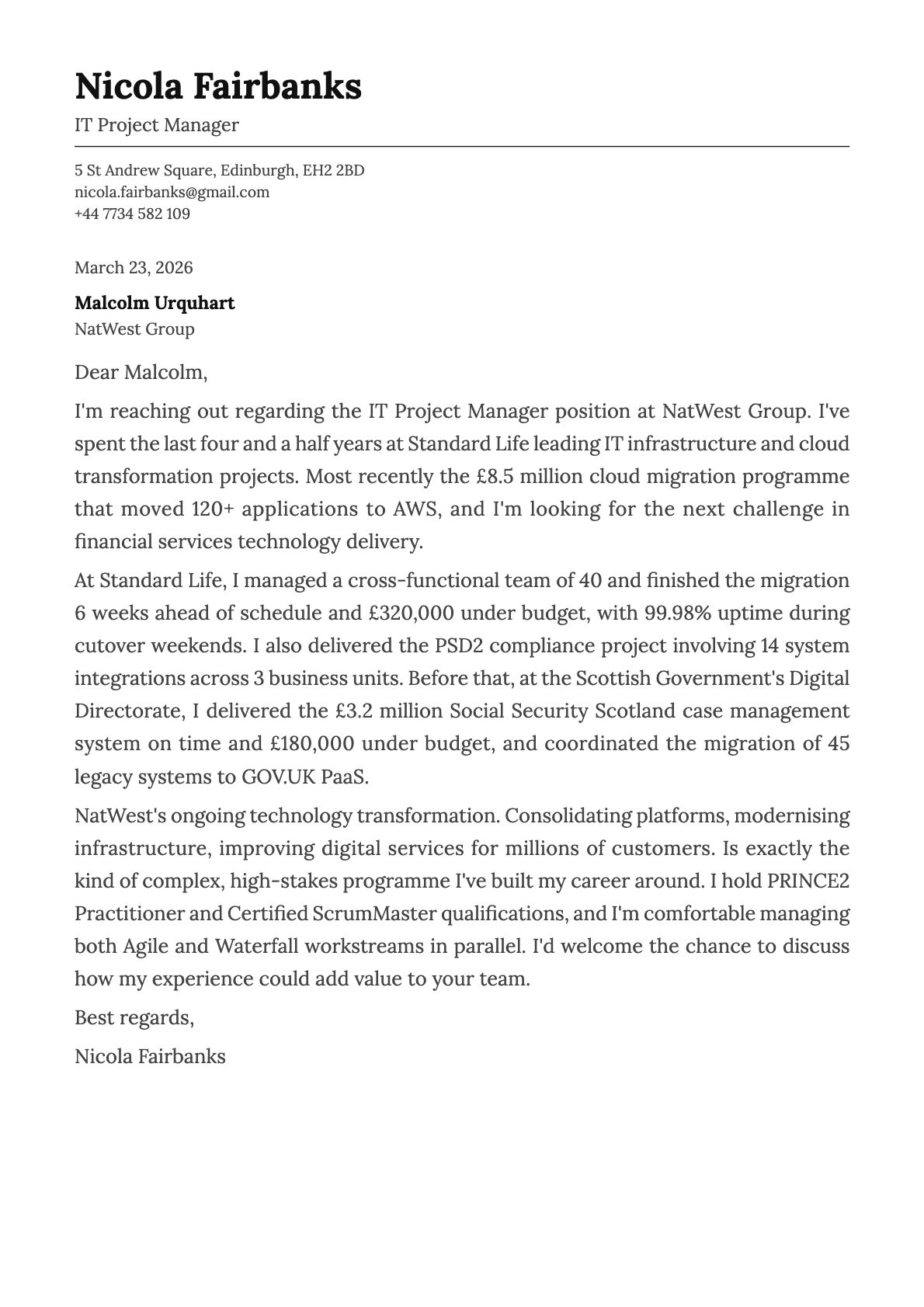
IT Project Manager
An IT project manager cover letter example showing how to present cloud migration experience, budget management.
Related articles

AI Is Screening Your Resume Before Any Human Sees It
AI screens most resumes before a human ever reads them. 97.4% of Fortune 500 companies run an ATS. This is what that means for you and what you can do about it.

ATS Resume Checker: How to Format a CV That Gets Past the Filters
Run the free copy and paste test to see what an ATS actually reads on your CV, then fix the tables, columns and headings that quietly get you filtered out.

The Best Resume Builders in 2026, Compared Honestly
Resume.io, Zety, Enhancv, Kickresume, Teal, and Laddro compared honestly: real pricing, free tiers, mobile apps, and where each tool wins. All prices checked in September 2026.