Cybersecurity Analyst Cover Letter Example
A cybersecurity analyst cover letter example showing how to present SOC experience, threat detection skills, and incident response work for a financial.

Laddro Team
Free to use. No account needed to start.
Free to use. No account needed to start.
The challenge with cybersecurity cover letters
Cybersecurity analysts face a unique problem when writing cover letters. The work is technical, often confidential, and hard to quantify without revealing sensitive details. Many candidates default to listing certifications and tools, which makes every letter look identical.
The approach that works is different: describe the scale of what you protect, the detection capabilities you have built, and the outcomes of your incident response work. This example from Darren Obi demonstrates how. He works in Nationwide's security operations centre and is applying for a role at HSBC.
Start with scale and context
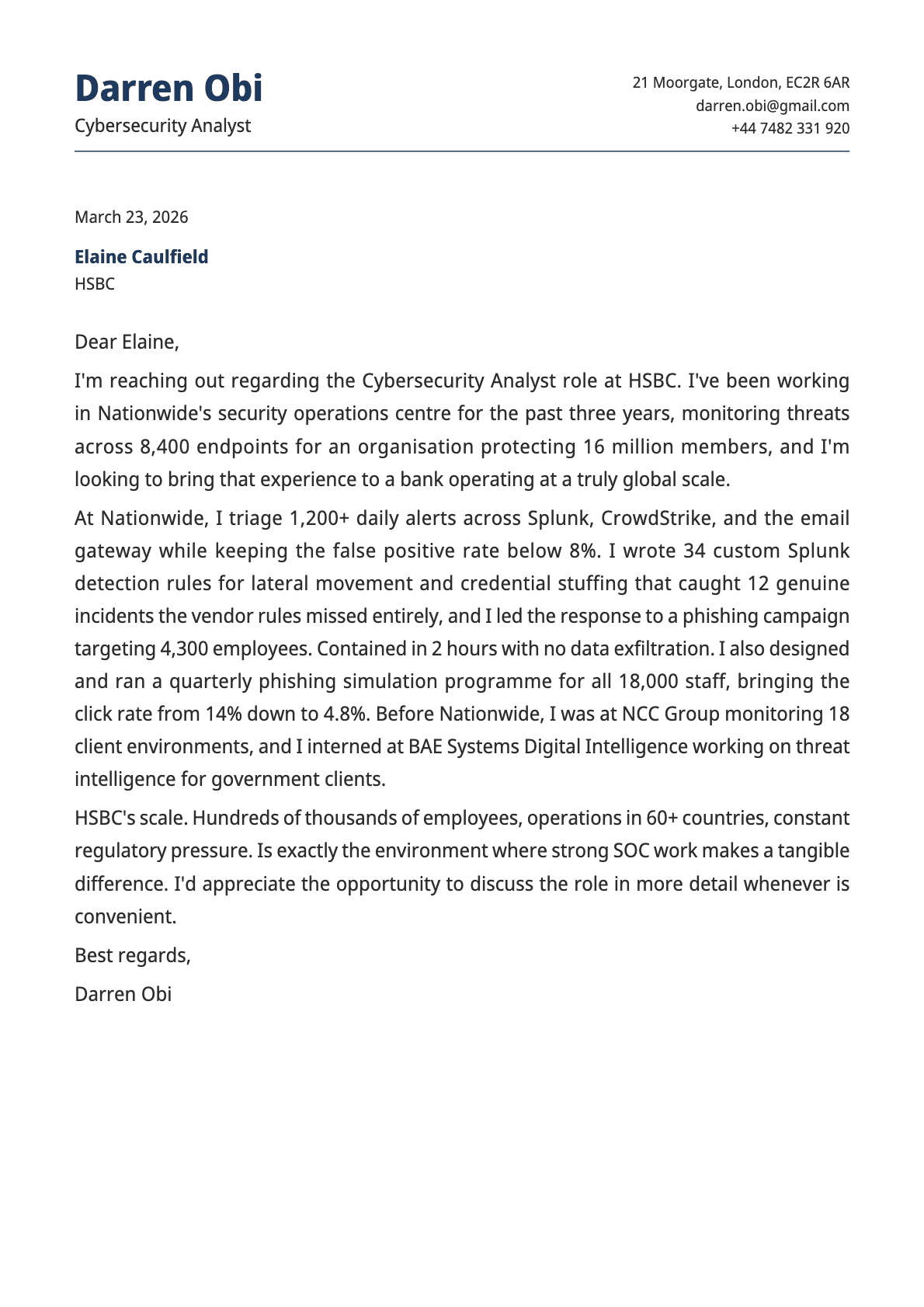
Darren opens by naming where he works, what he protects (8,400 endpoints, 16 million members), and why he wants the new role (a bank operating at global scale). In one sentence, the hiring manager understands his current environment and his motivation.
This is far more effective than opening with "I am a cybersecurity professional with a passion for protecting digital assets." One gives the reader something concrete. The other gives them nothing they have not read before.
Your takeaway: Open with the size of the environment you monitor. Endpoint count, user base, alert volume. These numbers set the scale immediately.
Demonstrate detection and response capability
The body of Darren's letter is packed with specifics. He triages over 1,200 daily alerts. His false positive rate is below 8%. He wrote 34 custom Splunk detection rules that caught 12 genuine incidents the vendor rules missed. He led the response to a phishing campaign targeting 4,300 employees and contained it in two hours with no data exfiltration.
Notice the structure: he names the tool, describes what he built or did, and states the result. He also mentions the phishing simulation programme he designed, which brought the click rate from 14% down to 4.8% across 18,000 staff.
Your takeaway: For each accomplishment, follow the pattern of tool, action, and result. "Experienced with Splunk" becomes "wrote 34 custom Splunk detection rules that caught 12 genuine incidents."
Address why this company needs you
Darren closes by referencing HSBC's specific characteristics: hundreds of thousands of employees, operations in more than 60 countries, and constant regulatory pressure. He connects these to his SOC experience and frames the move as a logical step up in scale.
This works because it shows he understands the difference between protecting a building society with 16 million members and protecting a global bank. The challenges are qualitatively different, and he acknowledges that.
What to include in your cybersecurity cover letter
- Environment scale (endpoints, users, daily alert volume)
- Detection work with specific tools and custom rules you have written
- Incident response examples with timelines and outcomes
- Metrics like false positive rates, detection rates, and programme results
- Previous employers and security contexts (MSSP, in-house SOC, government)
- A clear reason for wanting this specific role
What to leave out
Do not list every certification in your cover letter. Your CV handles that. Do not describe yourself as an "ethical hacker" unless you are applying for a penetration testing role. And avoid vague claims about "staying ahead of evolving threats." Every cybersecurity professional says this. Show it through your work instead.
Final thoughts
A cybersecurity analyst cover letter should read like an incident report: clear, factual, and focused on outcomes. The hiring manager wants to know what you have protected, what you have detected, and how you responded. Deliver those answers with specifics and let your track record do the convincing.
Was this cover letter example helpful?
Rate this example to help us create better content for you.
4.7 average from 134 ratingsBuild your own version
Open this layout in the builder and swap in your own details. It takes a few minutes.
Free to use. No account needed to start.
Related cover letter examples
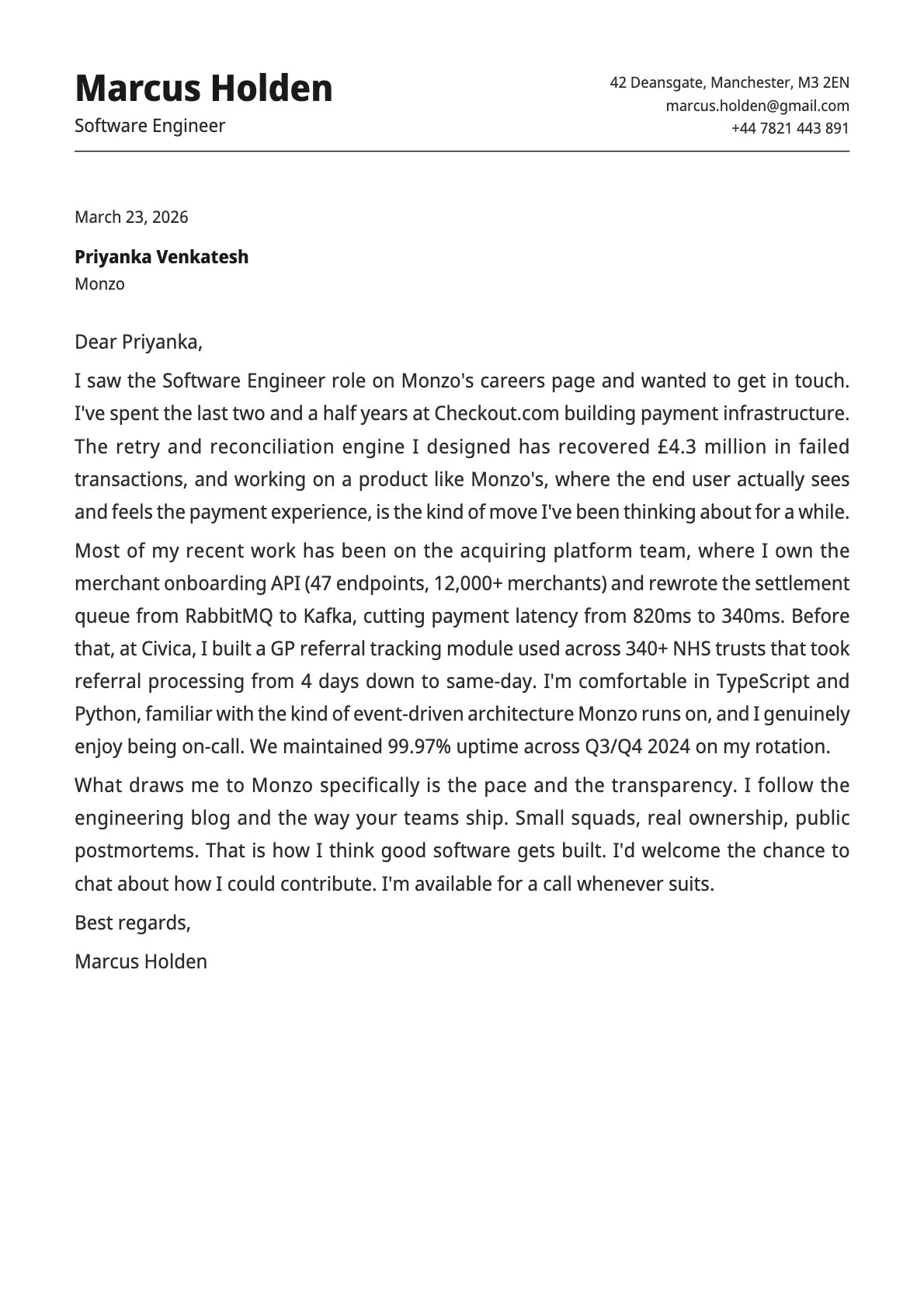
Software Engineer
A software engineer cover letter example with practical tips on addressing the hiring manager, showing technical impact.
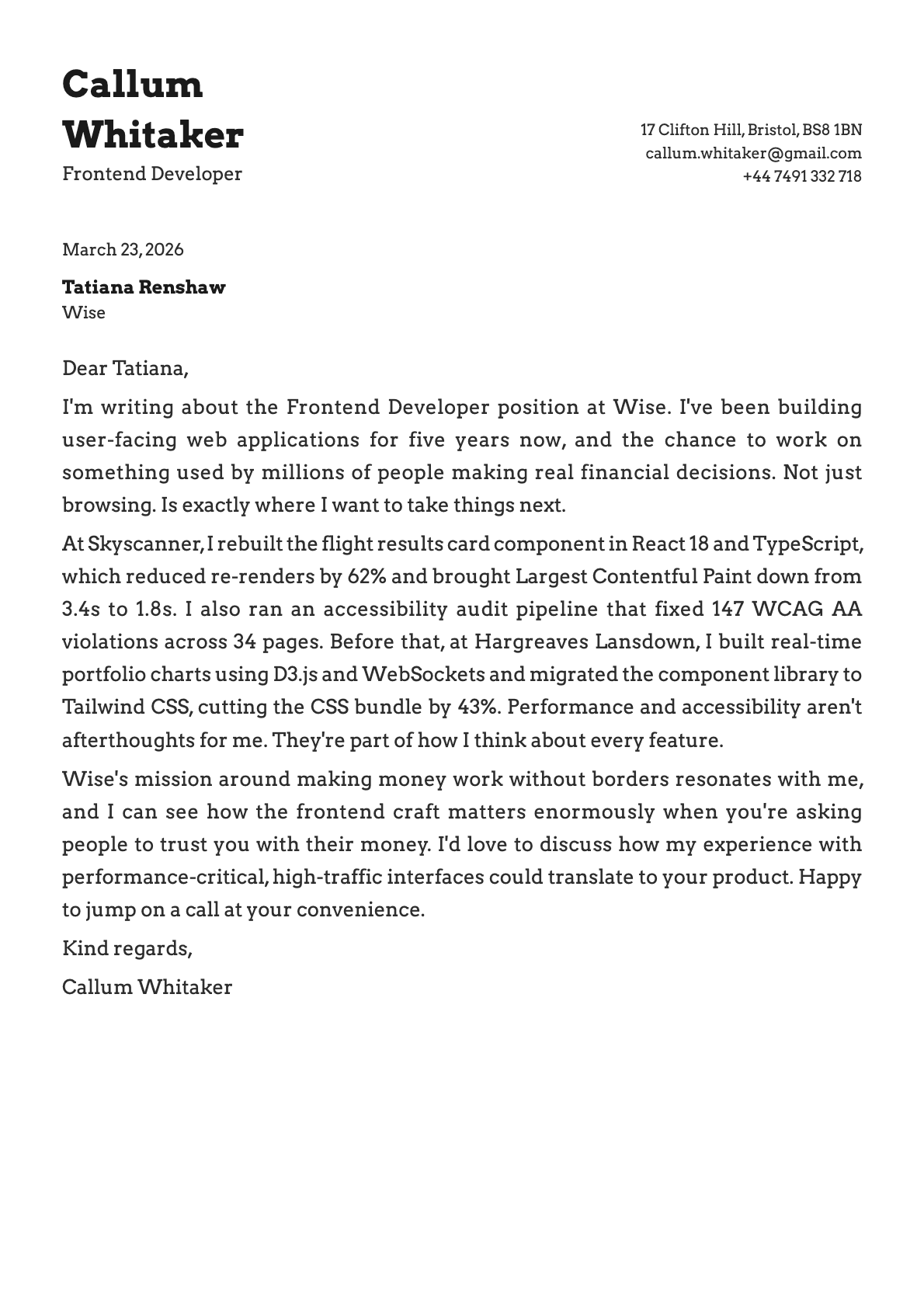
Frontend Developer
A frontend developer cover letter example showing how to highlight performance wins, accessibility work, and why you want a specific company.
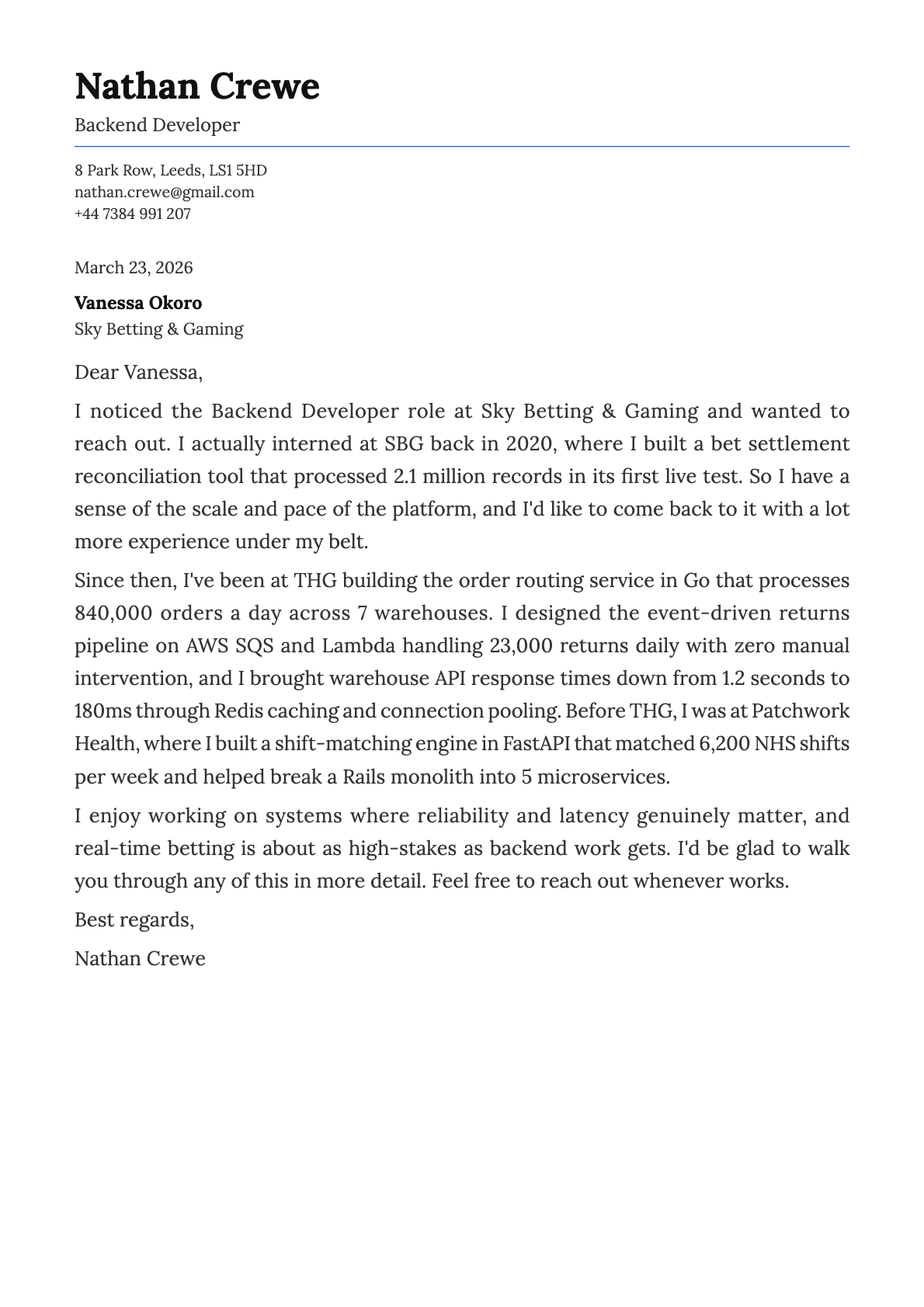
Backend Developer
A backend developer cover letter example that shows how to present system design, throughput numbers, and reliability metrics to land an interview.
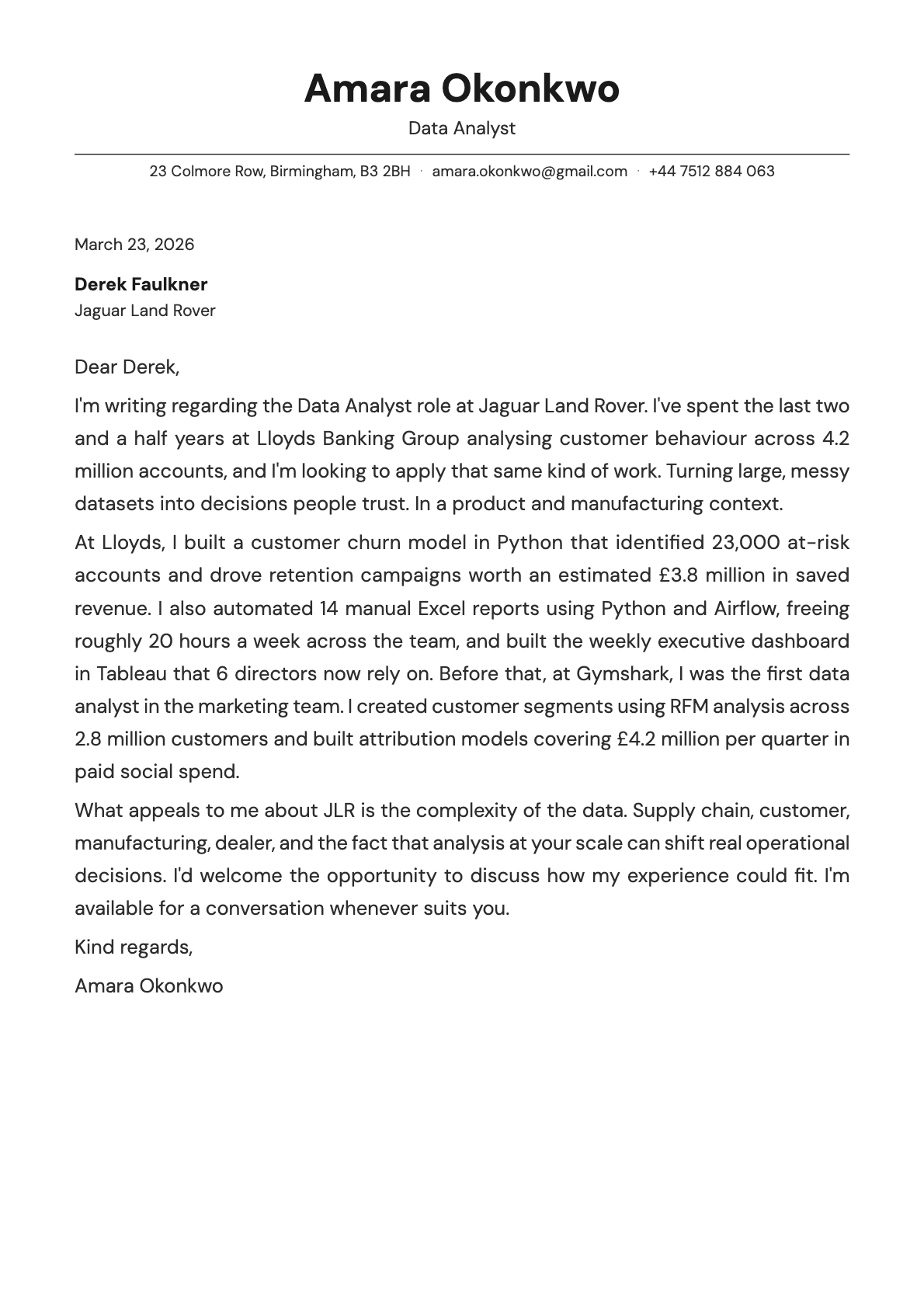
Data Analyst
A data analyst cover letter example showing how to present analytical projects, business impact, and your ability to turn messy data into real decisions.
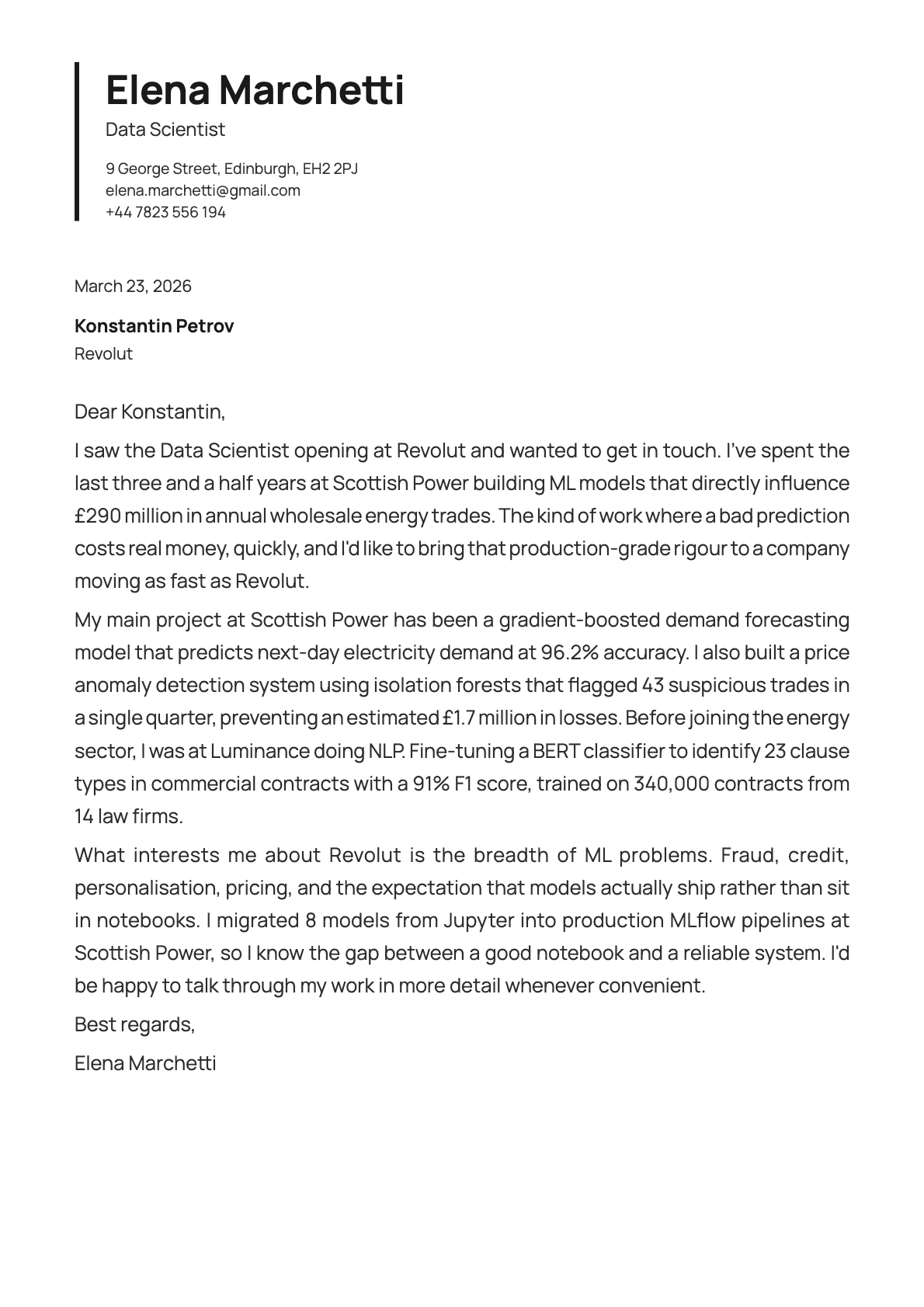
Data Scientist
A data scientist cover letter example showing how to present ML models, production deployments, and measurable outcomes to impress hiring managers.
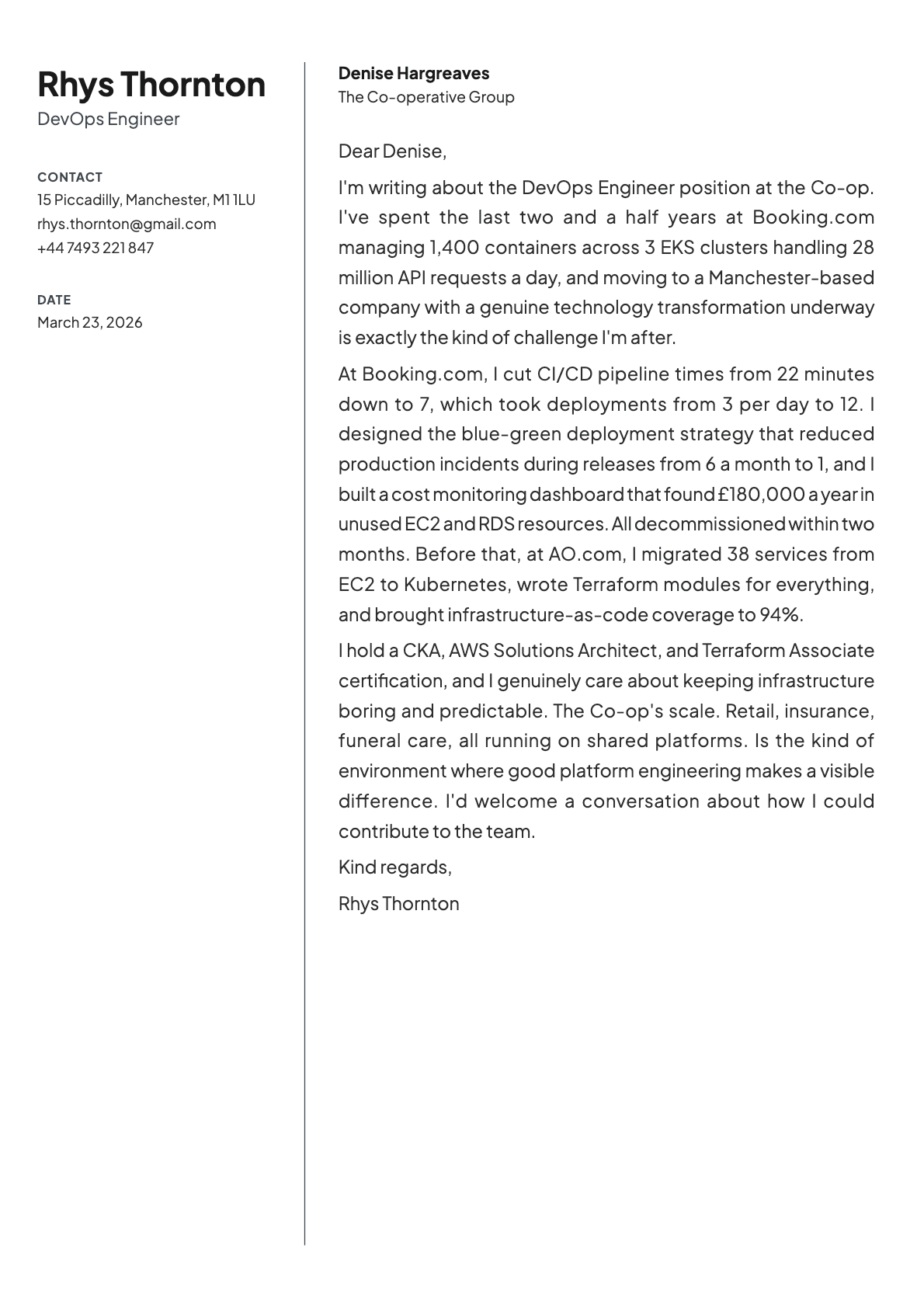
DevOps Engineer
A DevOps engineer cover letter example showing how to present infrastructure wins, CI/CD improvements, and cost savings that hiring managers care about.
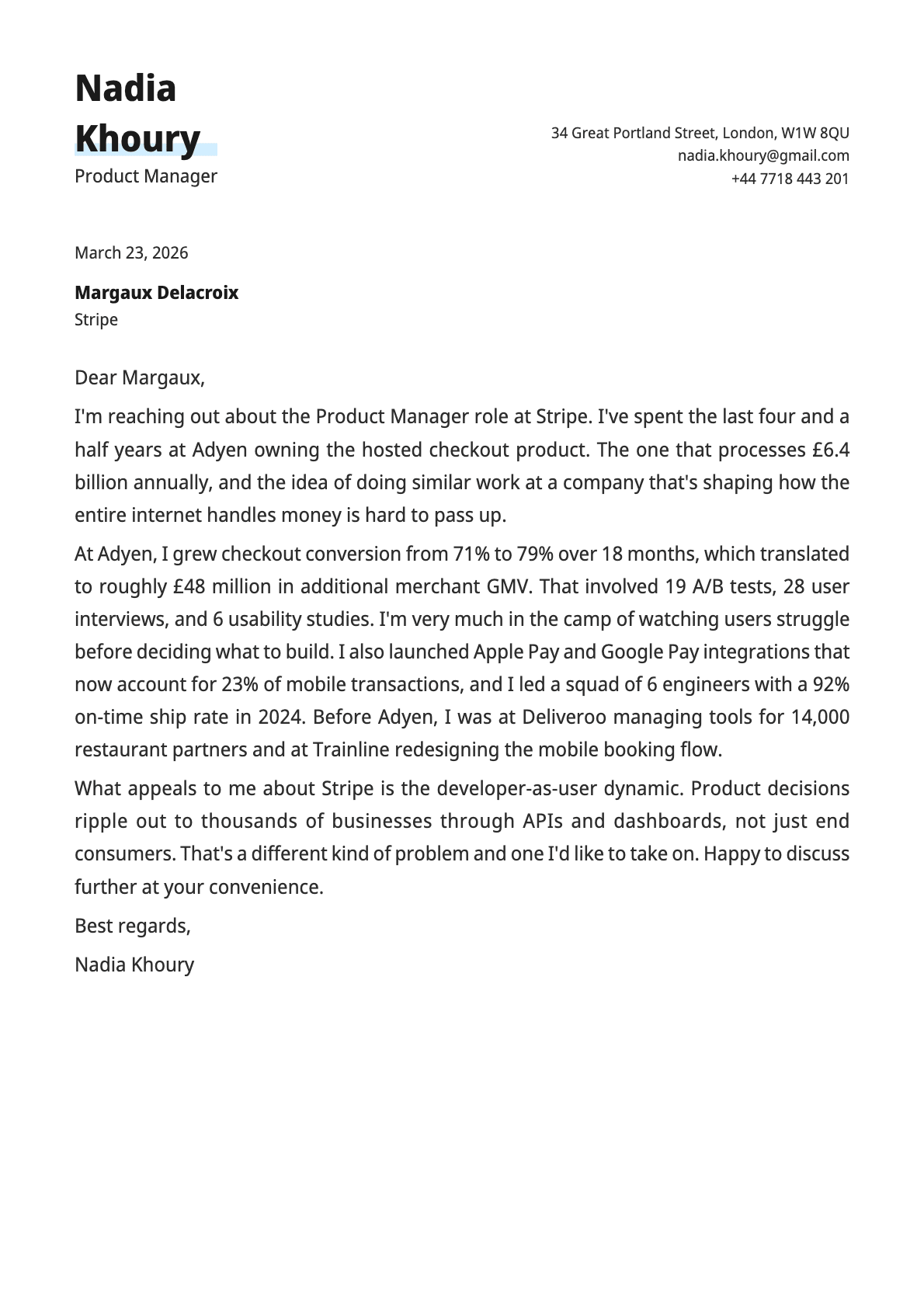
Product Manager
A product manager cover letter example showing how to present conversion improvements, A/B testing, and squad leadership when applying to a payments.
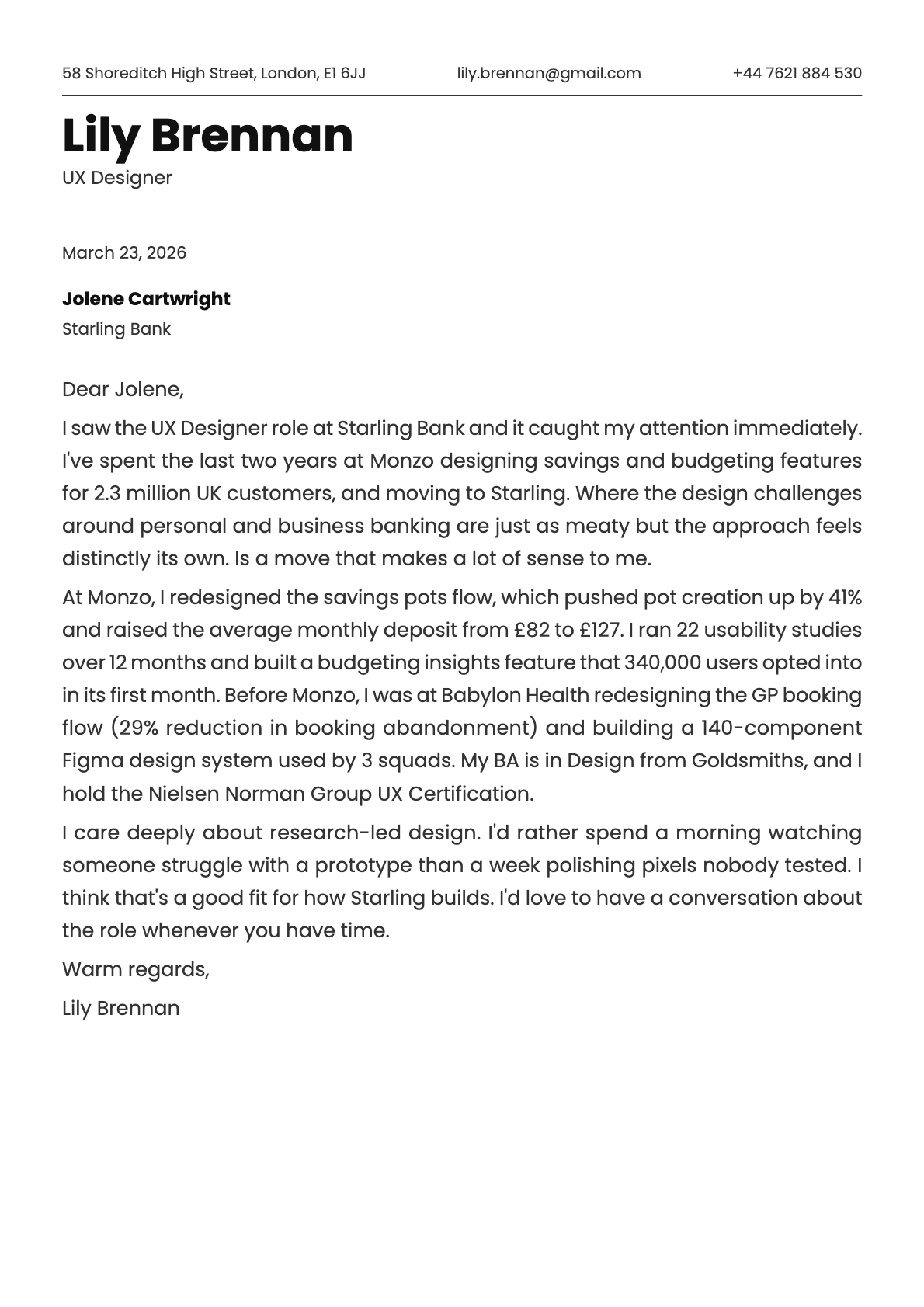
UX Designer
A UX designer cover letter example showing how to present usability research, conversion improvements, and design system work when applying to a digital.
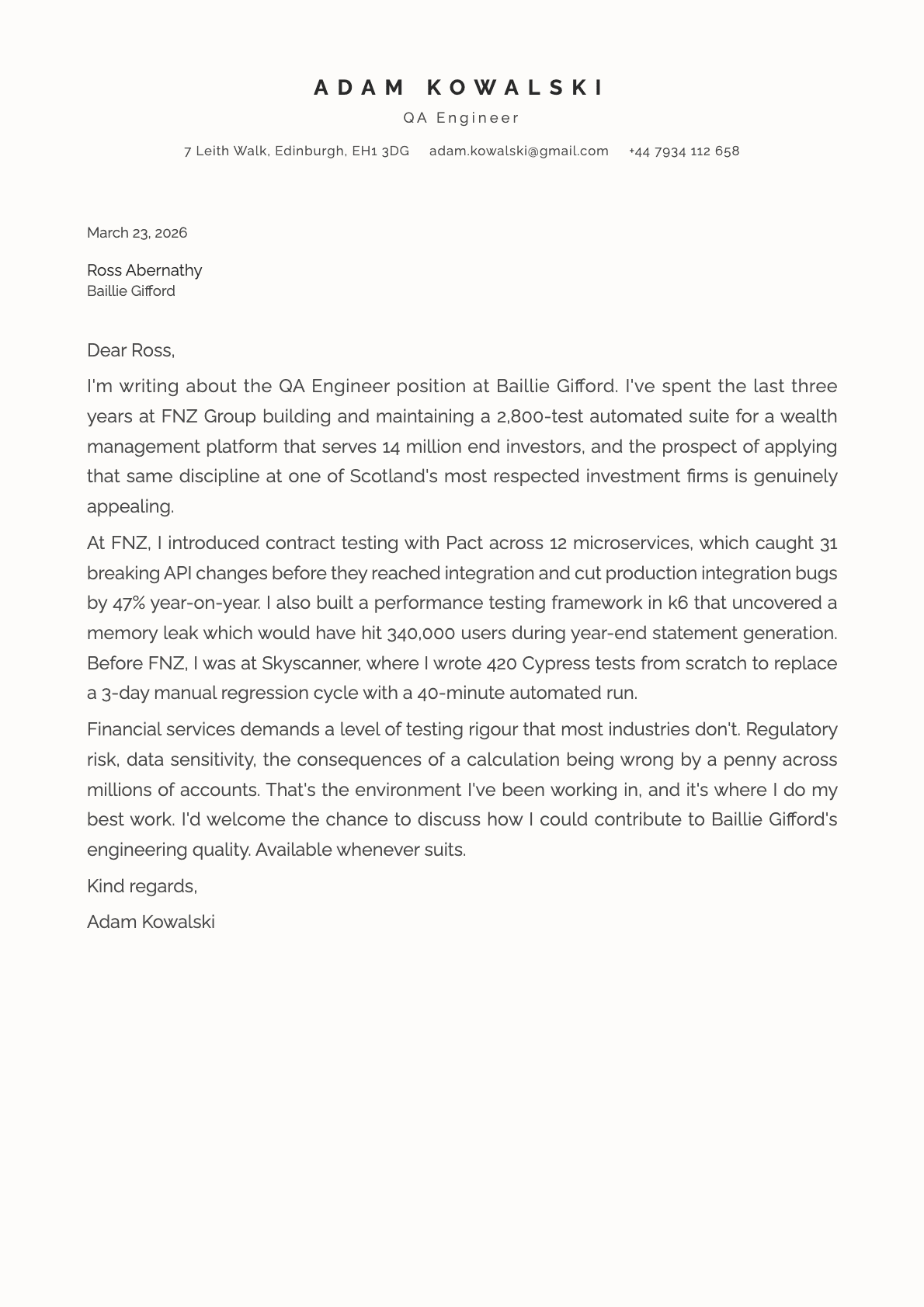
QA Engineer
A QA engineer cover letter example showing how to present automated testing frameworks, contract testing, and quality metrics for a financial services.
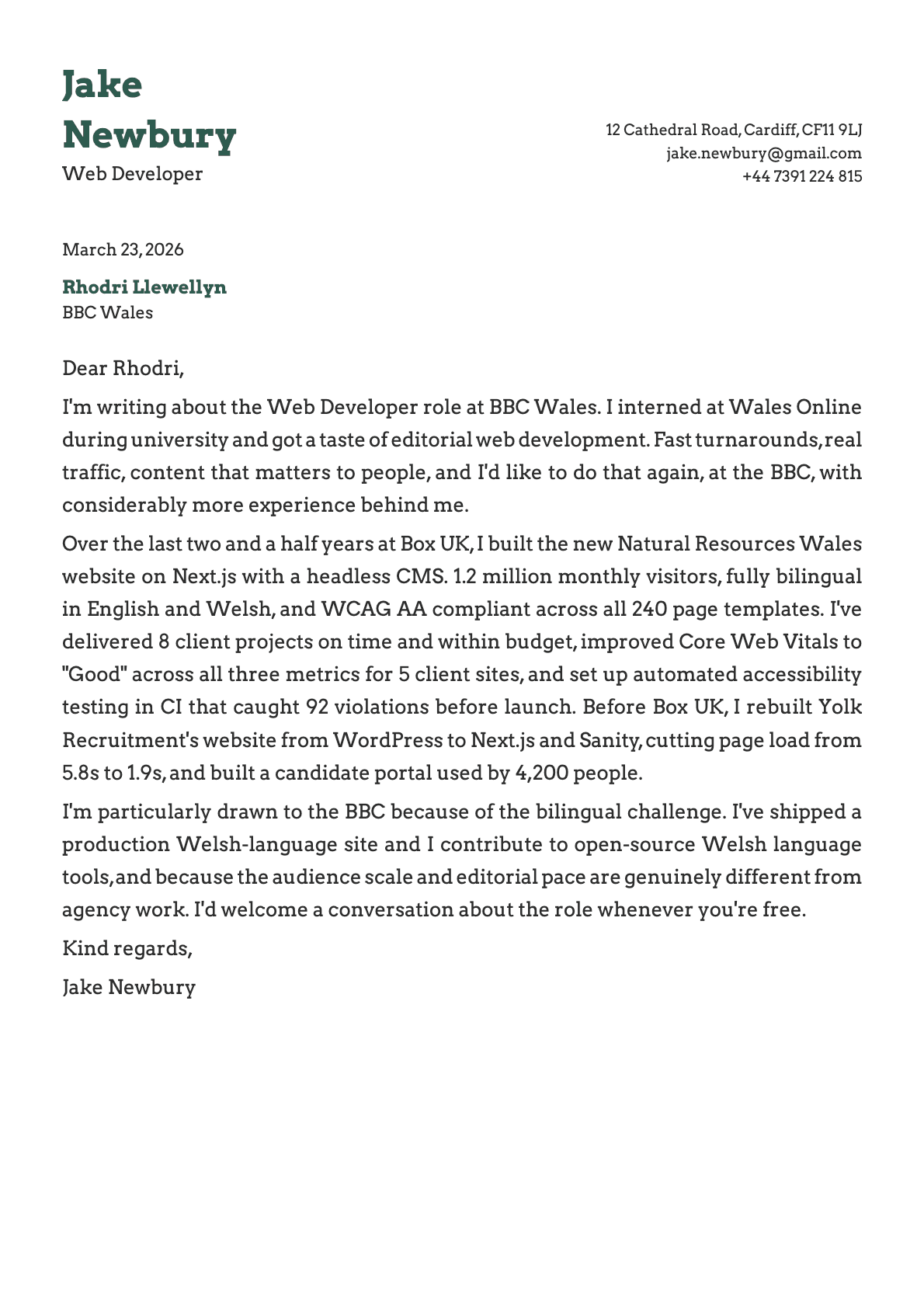
Web Developer
A web developer cover letter example showing how to present Next.js projects, accessibility compliance.
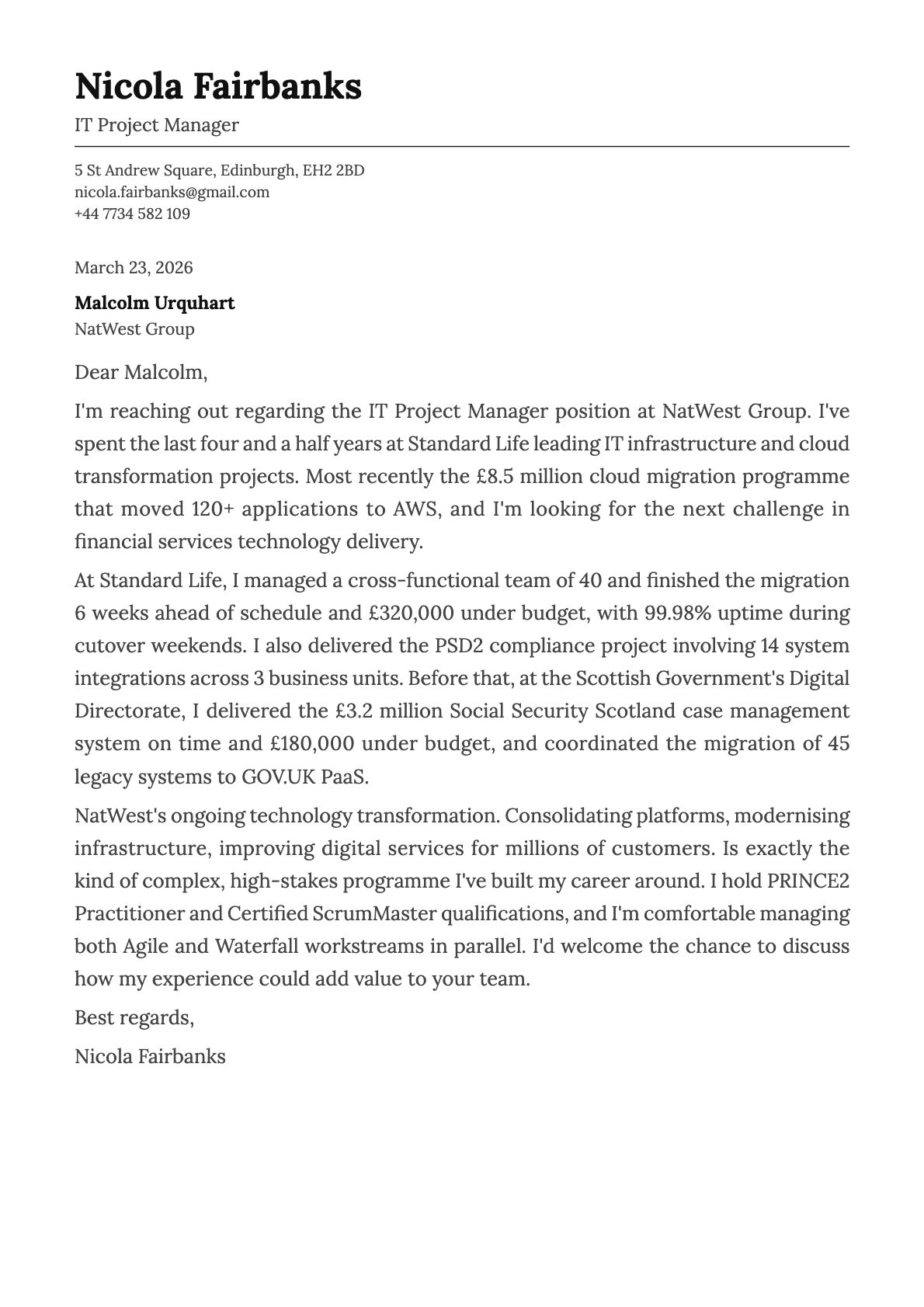
IT Project Manager
An IT project manager cover letter example showing how to present cloud migration experience, budget management.
Related articles

AI Is Screening Your Resume Before Any Human Sees It
AI screens most resumes before a human ever reads them. 97.4% of Fortune 500 companies run an ATS. This is what that means for you and what you can do about it.

ATS Resume Checker: How to Format a CV That Gets Past the Filters
Run the free copy and paste test to see what an ATS actually reads on your CV, then fix the tables, columns and headings that quietly get you filtered out.

The Best Resume Builders in 2026, Compared Honestly
Resume.io, Zety, Enhancv, Kickresume, Teal, and Laddro compared honestly: real pricing, free tiers, mobile apps, and where each tool wins. All prices checked in September 2026.