UX Designer Cover Letter Example
A UX designer cover letter example showing how to present usability research, conversion improvements, and design system work when applying to a digital.

Laddro Team
Free to use. No account needed to start.
Free to use. No account needed to start.
What UX designer cover letters get wrong
Most UX designer cover letters talk about process. They describe how they "empathise with users" and "iterate on designs." The hiring manager at a fintech or tech company already knows the design process exists. What they want to see is the impact of your design decisions: features that moved metrics, research that changed product direction, and systems you built that other teams adopted.
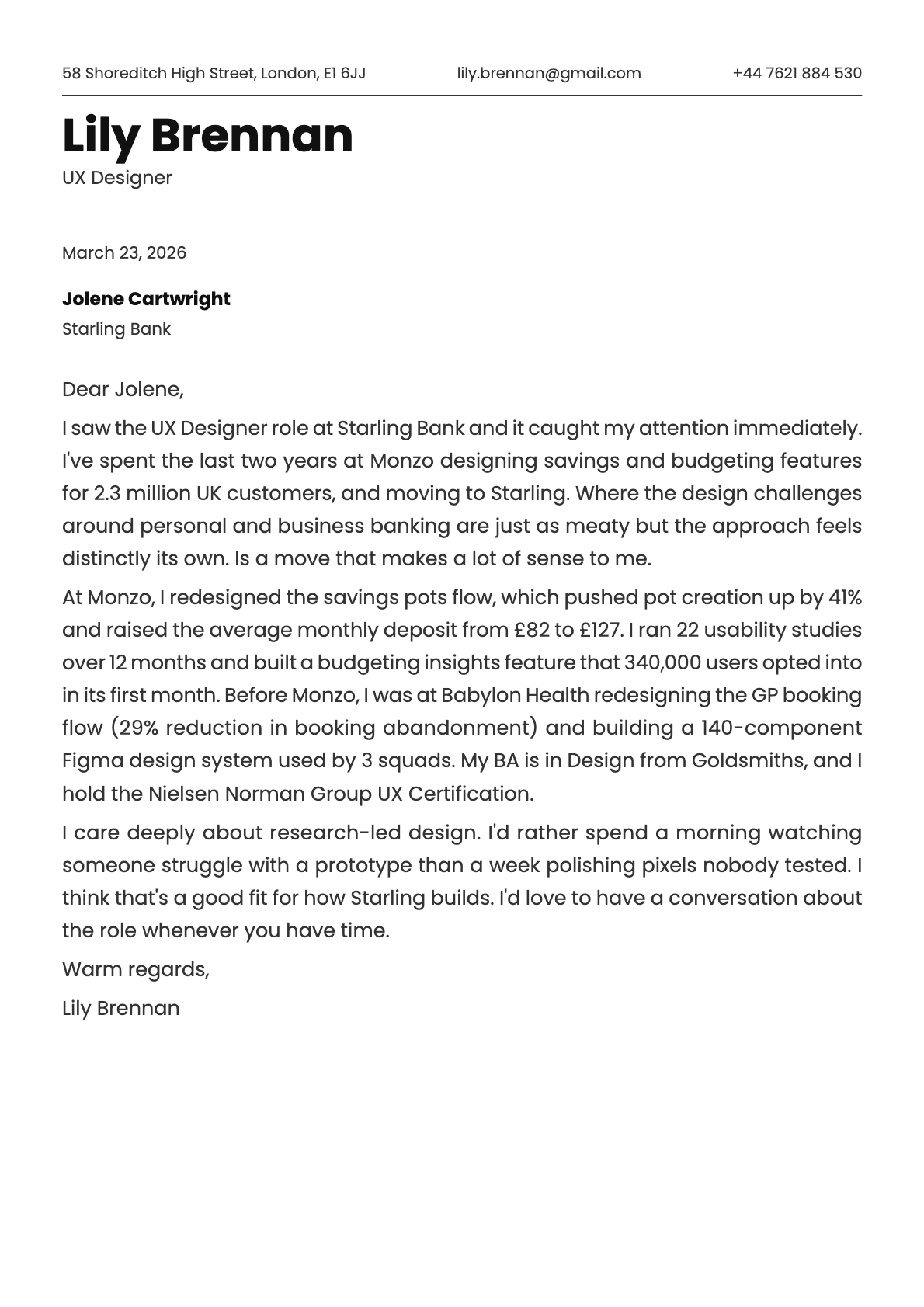
This example from Lily Brennan shows a better approach. She has spent two years at Monzo designing savings and budgeting features for 2.3 million UK customers, and she is applying for a UX Designer role at Starling Bank.
Open with the product and its user base
Lily starts by naming the product area she works on (savings and budgeting), the company (Monzo), and the user base (2.3 million UK customers). She also explains why Starling interests her: the design challenges around personal and business banking are equally compelling, but the approach feels distinct.
This opening immediately places her at the right level. Designing for millions of users in a regulated industry is qualitatively different from designing a marketing website.
Your takeaway: Name the product, the user base, and the company. Let the hiring manager understand the scale and context of your design work from the first sentence.
Lead with metrics, not methods
The body of Lily's letter is where she truly stands out. She redesigned the savings pots flow, pushing pot creation up by 41% and raising the average monthly deposit from 82 to 127 pounds. She ran 22 usability studies over 12 months. She built a budgeting insights feature that 340,000 users opted into in its first month.
Her previous role at Babylon Health adds another result: a 29% reduction in booking abandonment from a GP booking flow redesign. She also built a 140-component Figma design system used by three squads.
Your takeaway: For every design project you mention, include the metric it moved. "Redesigned the checkout flow" becomes "redesigned the checkout flow, increasing completion rate by 18%." Numbers make your design decisions tangible to hiring managers who are not designers.
Show your research philosophy in action
Lily's closing paragraph reveals her design values through action, not abstraction. "I'd rather spend a morning watching someone struggle with a prototype than a week polishing pixels nobody tested." This sentence communicates more about her approach than a paragraph about design thinking ever could.
What to include in your UX designer cover letter
- Product area and user base with specific numbers
- Design projects with the metrics they moved (conversion, adoption, retention)
- Research volume (usability studies, user interviews, A/B tests)
- Design systems you have built with component counts and team adoption
- Tools mentioned in context (Figma, Maze, Dovetail) rather than listed
- A specific reason for wanting this company based on its product challenges
What to leave out
Do not describe the double diamond. Do not list every design tool you have used. Do not write about your "passion for creating beautiful experiences." The hiring manager wants to see what your designs achieved, not how your process looks on paper.
Final thoughts
A UX designer cover letter should demonstrate that your work changes user behaviour and moves business metrics. The best designers are researchers first and pixel-pushers second. If your letter proves that you test before you build and measure after you ship, you will stand out from the portfolio-focused majority. Keep it under 300 words, lead with impact, and let your design decisions speak through their results.
Was this cover letter example helpful?
Rate this example to help us create better content for you.
4.8 average from 159 ratingsBuild your own version
Open this layout in the builder and swap in your own details. It takes a few minutes.
Free to use. No account needed to start.
Related cover letter examples
Software Engineer
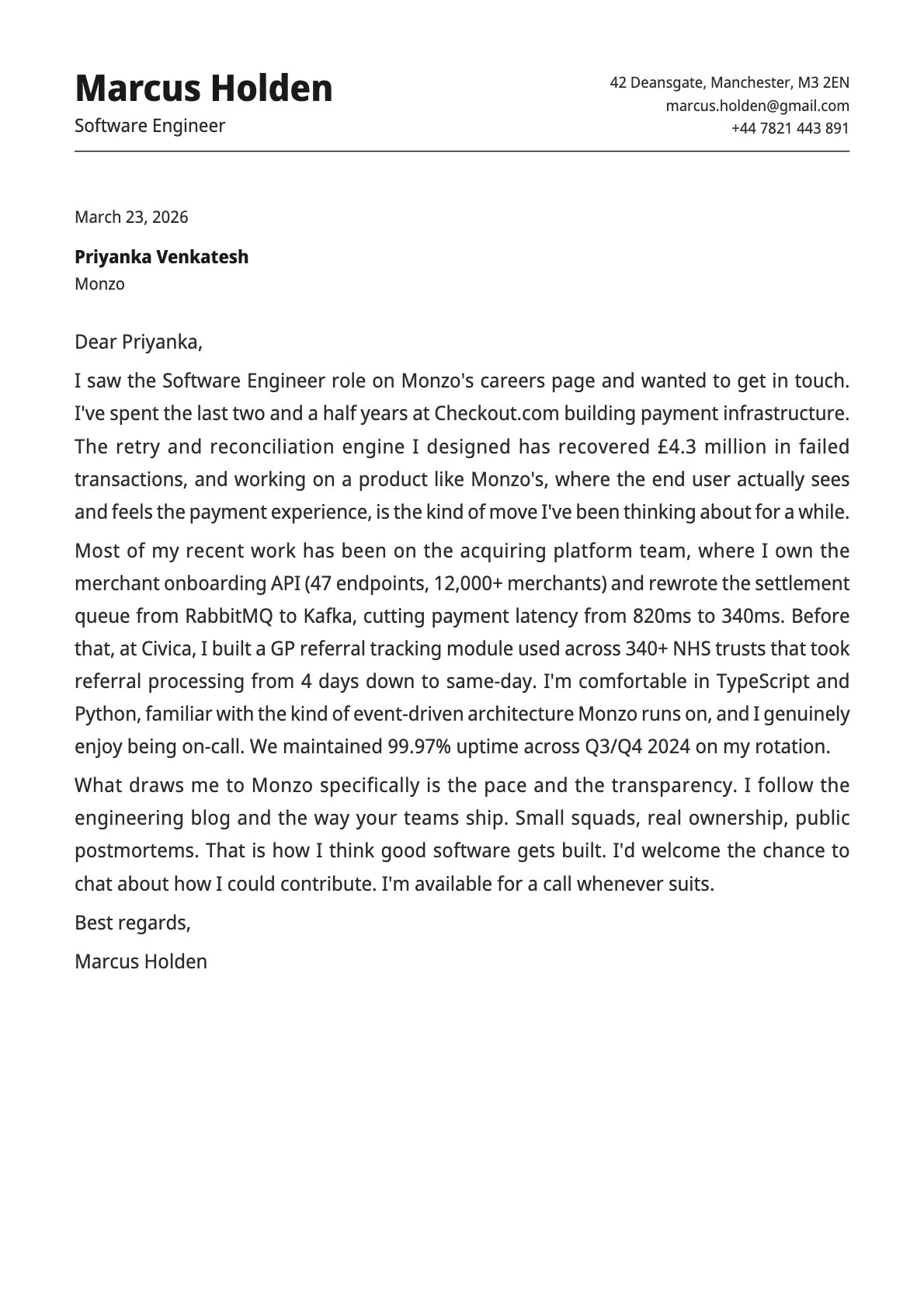
A software engineer cover letter example with practical tips on addressing the hiring manager, showing technical impact.
Frontend Developer
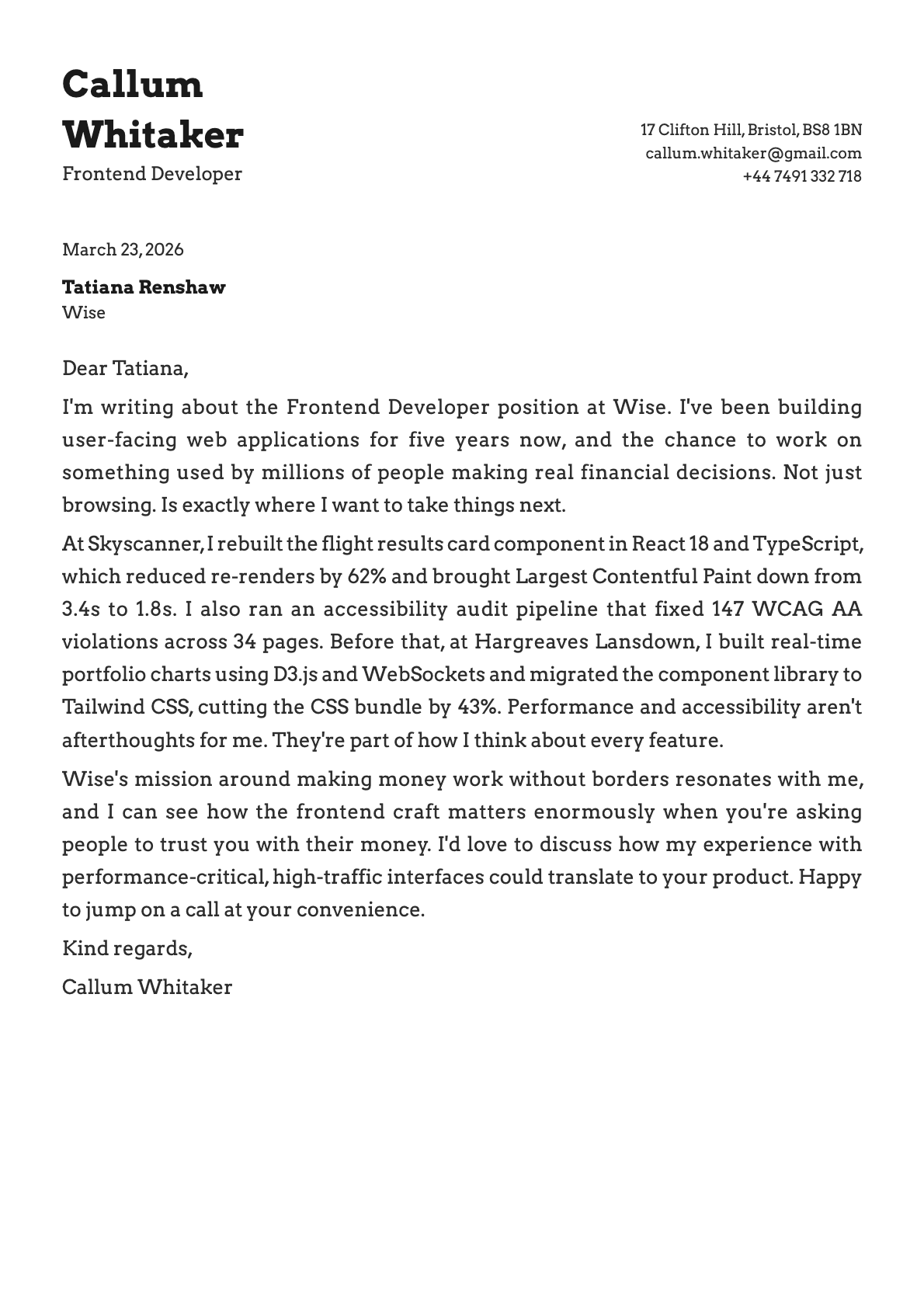
A frontend developer cover letter example showing how to highlight performance wins, accessibility work, and why you want a specific company.
Backend Developer
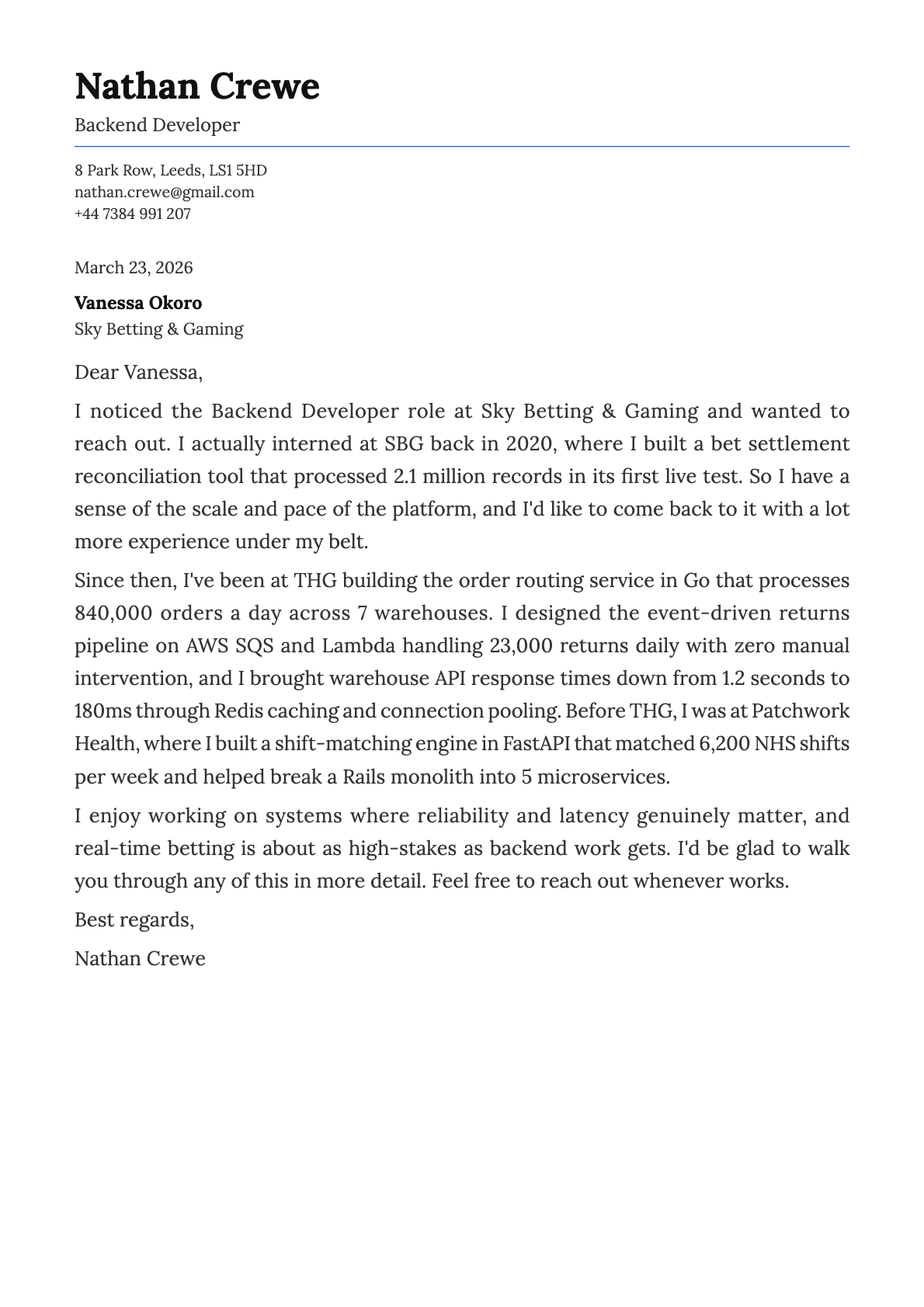
A backend developer cover letter example that shows how to present system design, throughput numbers, and reliability metrics to land an interview.
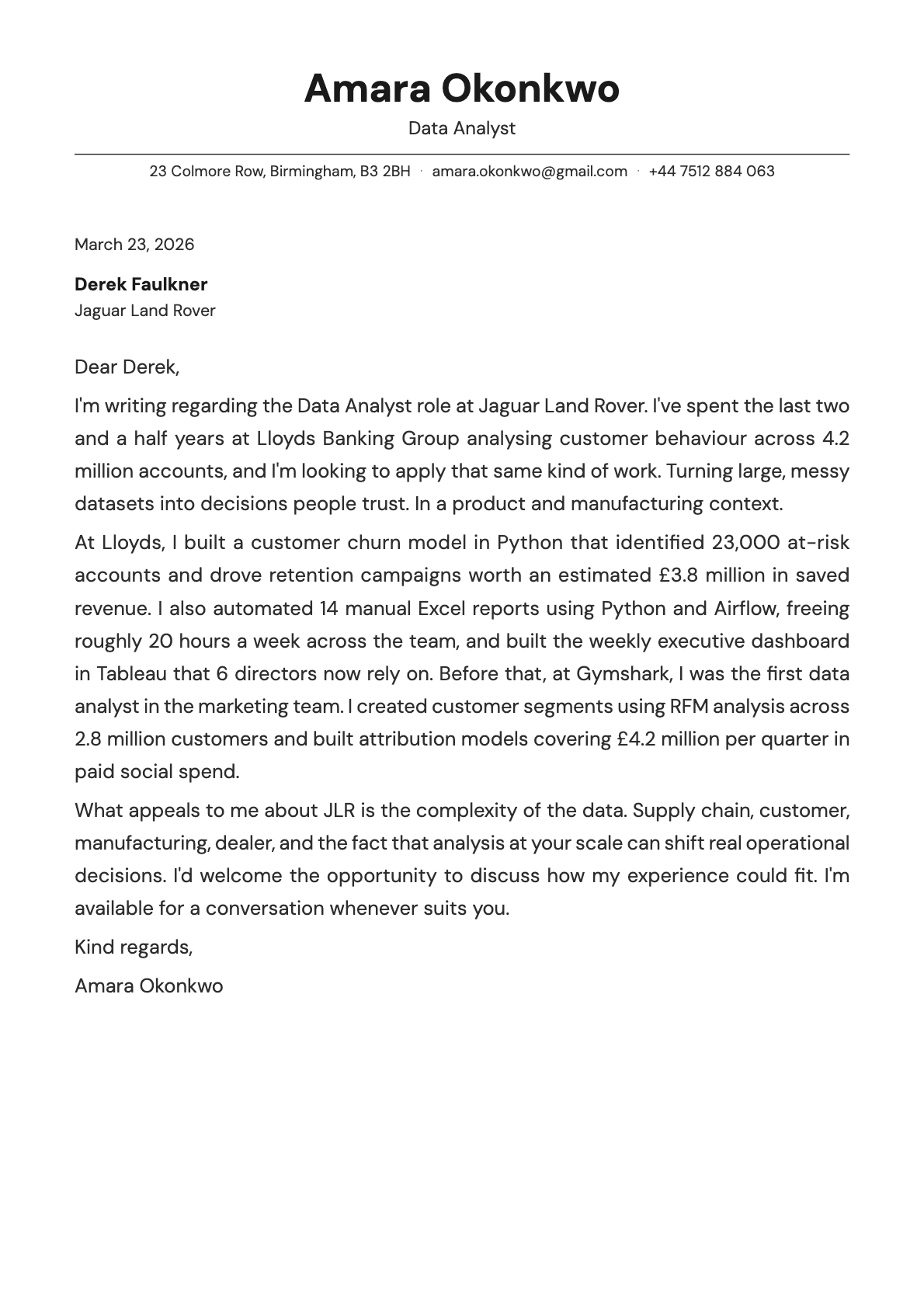
Data Analyst
A data analyst cover letter example showing how to present analytical projects, business impact, and your ability to turn messy data into real decisions.
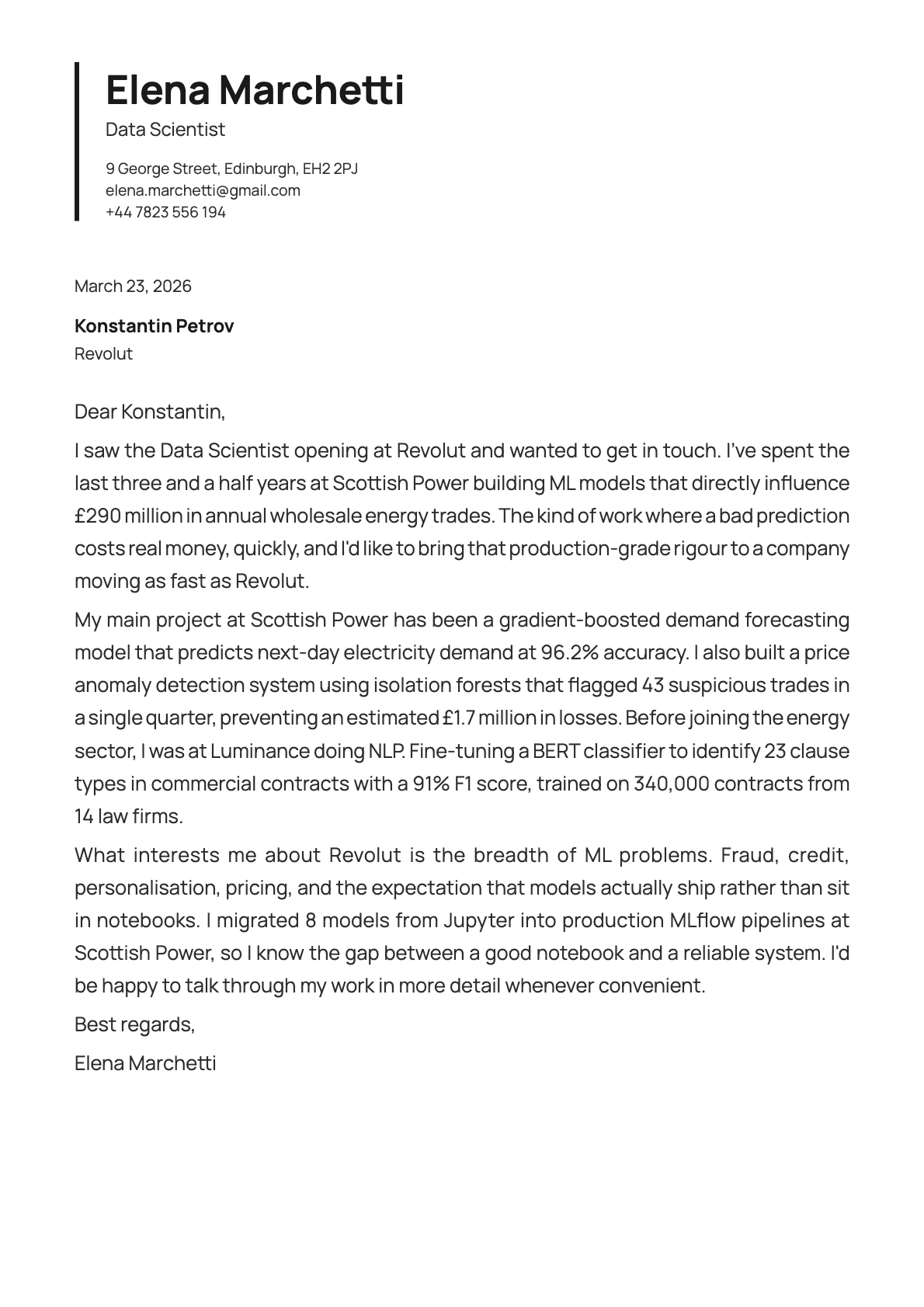
Data Scientist
A data scientist cover letter example showing how to present ML models, production deployments, and measurable outcomes to impress hiring managers.
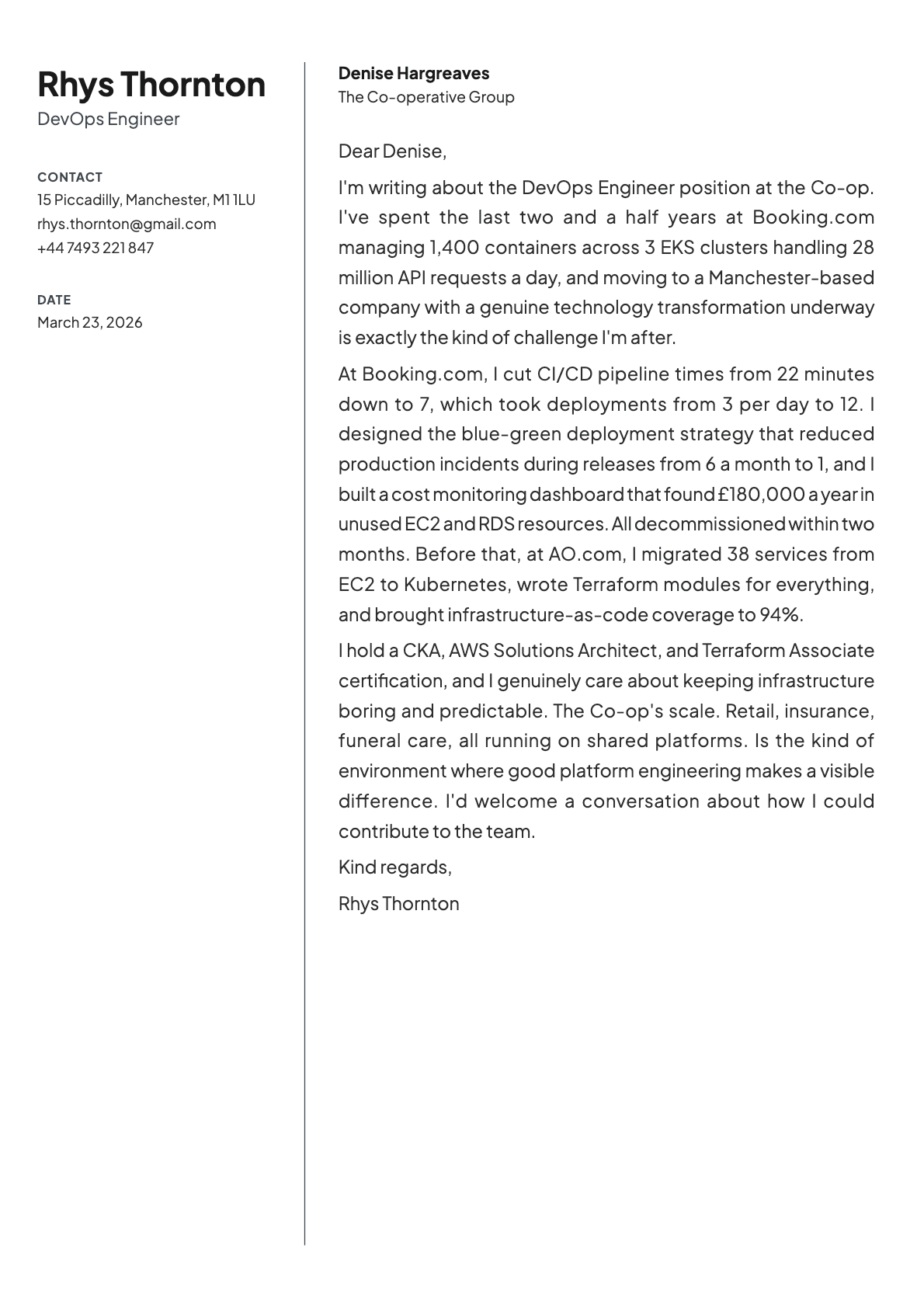
DevOps Engineer
A DevOps engineer cover letter example showing how to present infrastructure wins, CI/CD improvements, and cost savings that hiring managers care about.
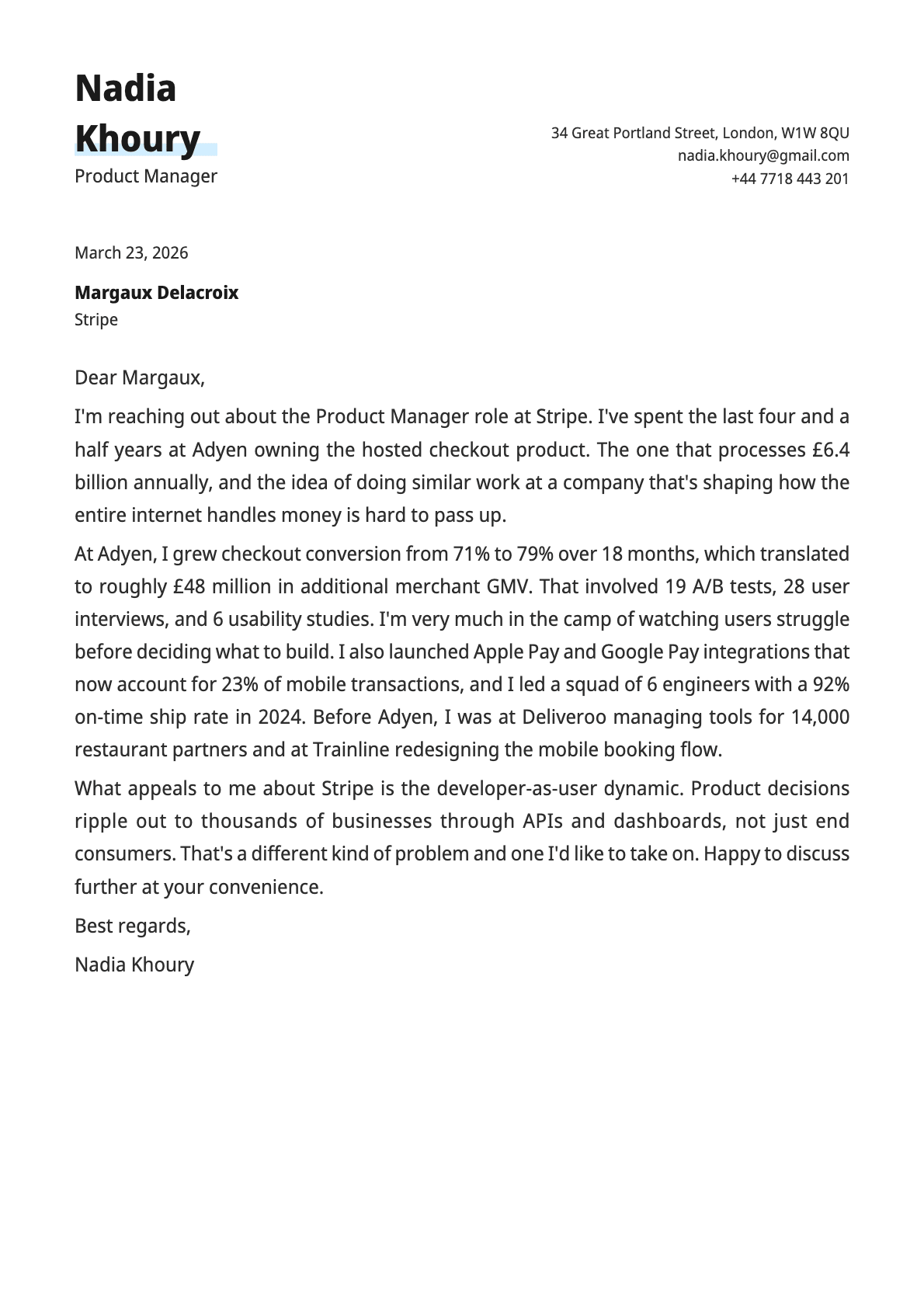
Product Manager
A product manager cover letter example showing how to present conversion improvements, A/B testing, and squad leadership when applying to a payments.
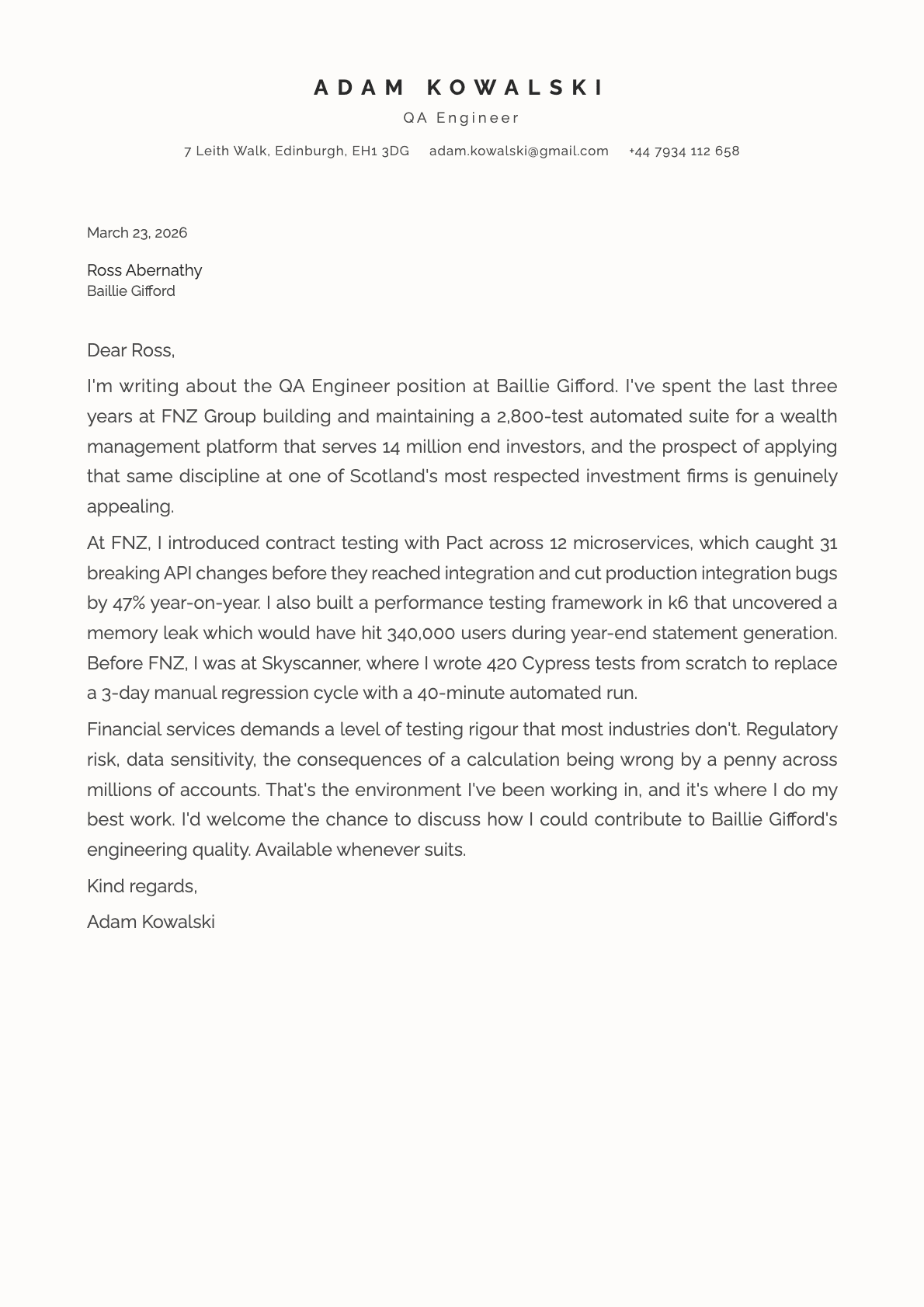
QA Engineer
A QA engineer cover letter example showing how to present automated testing frameworks, contract testing, and quality metrics for a financial services.
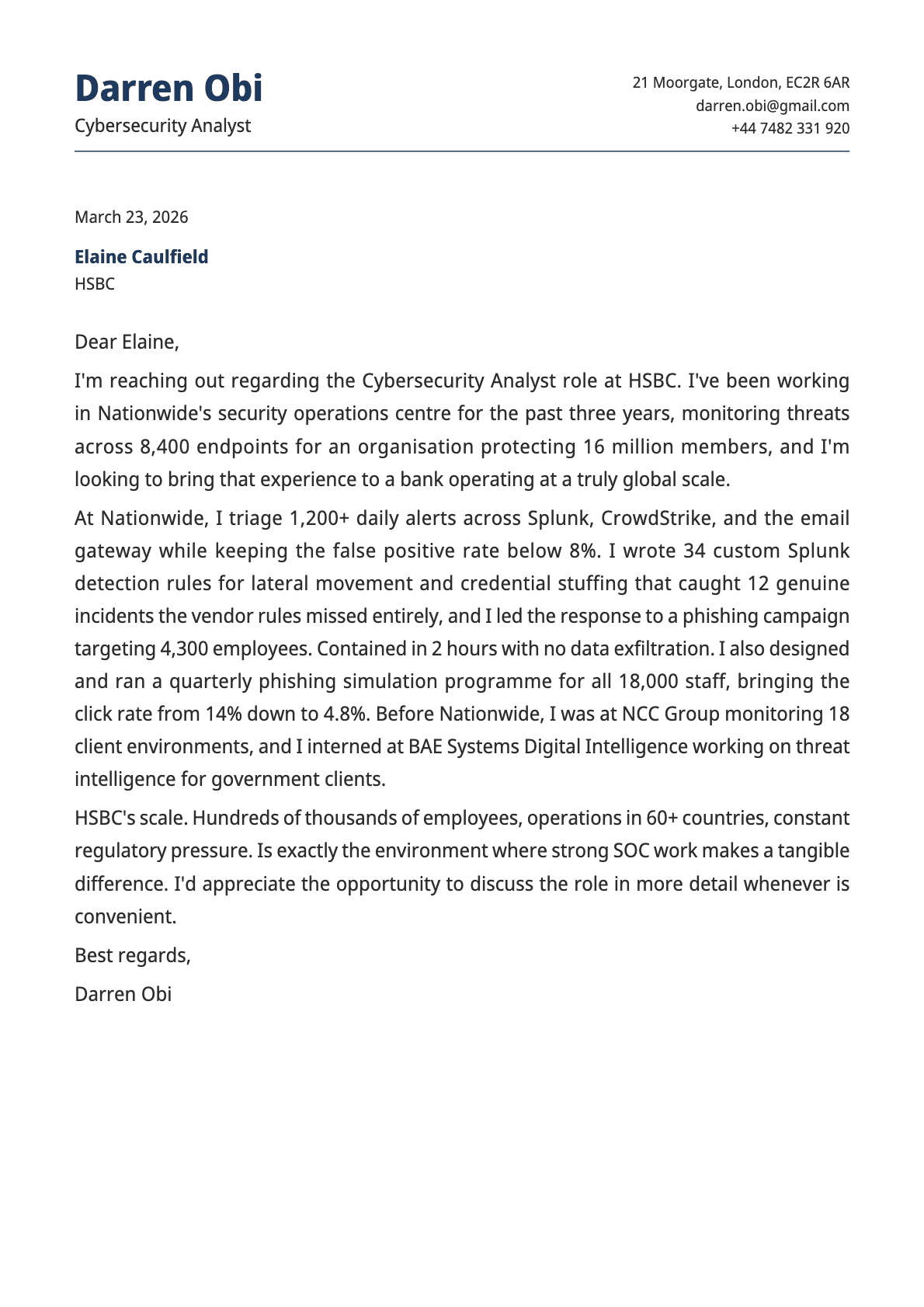
Cybersecurity Analyst
A cybersecurity analyst cover letter example showing how to present SOC experience, threat detection skills, and incident response work for a financial.
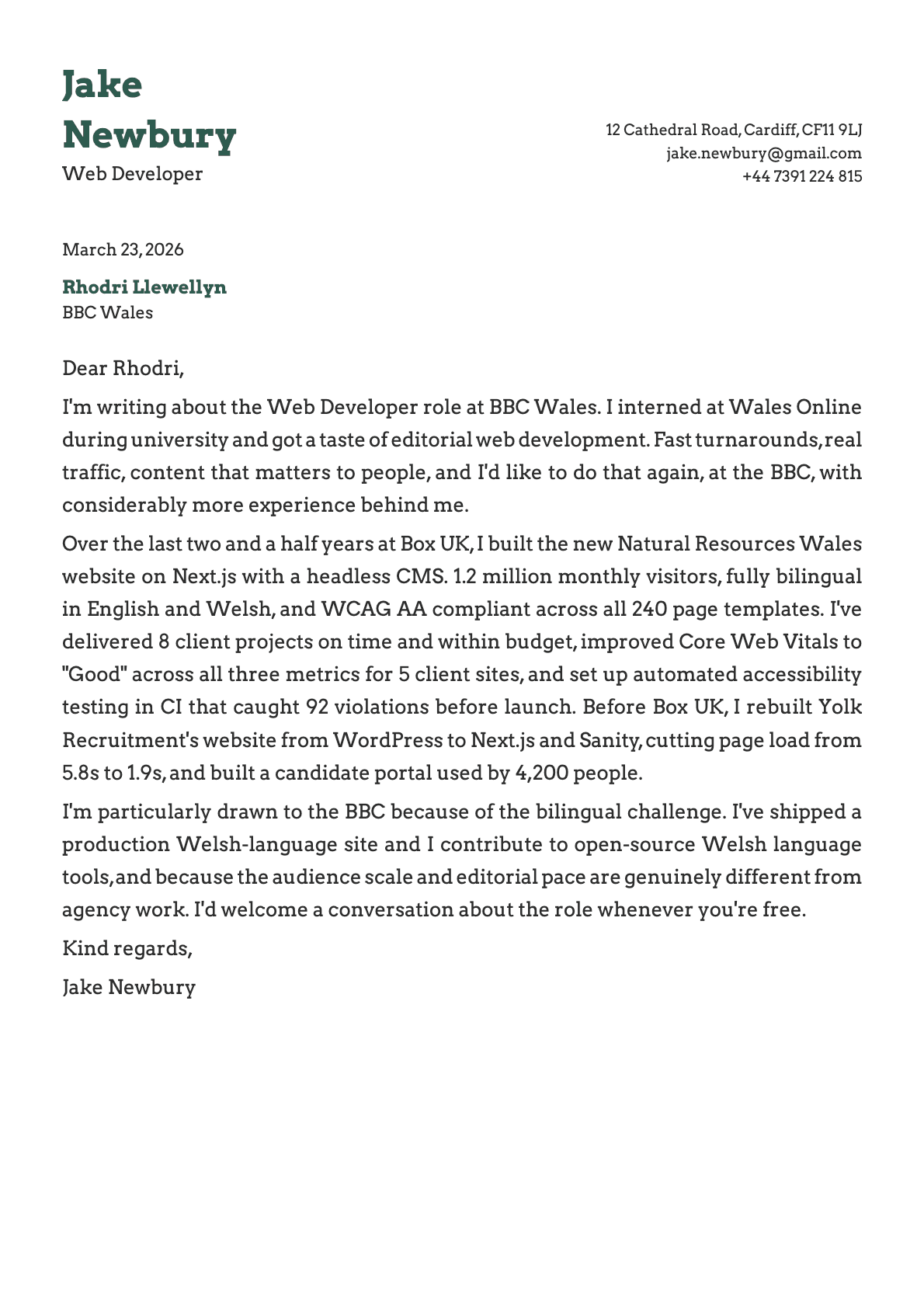
Web Developer
A web developer cover letter example showing how to present Next.js projects, accessibility compliance.
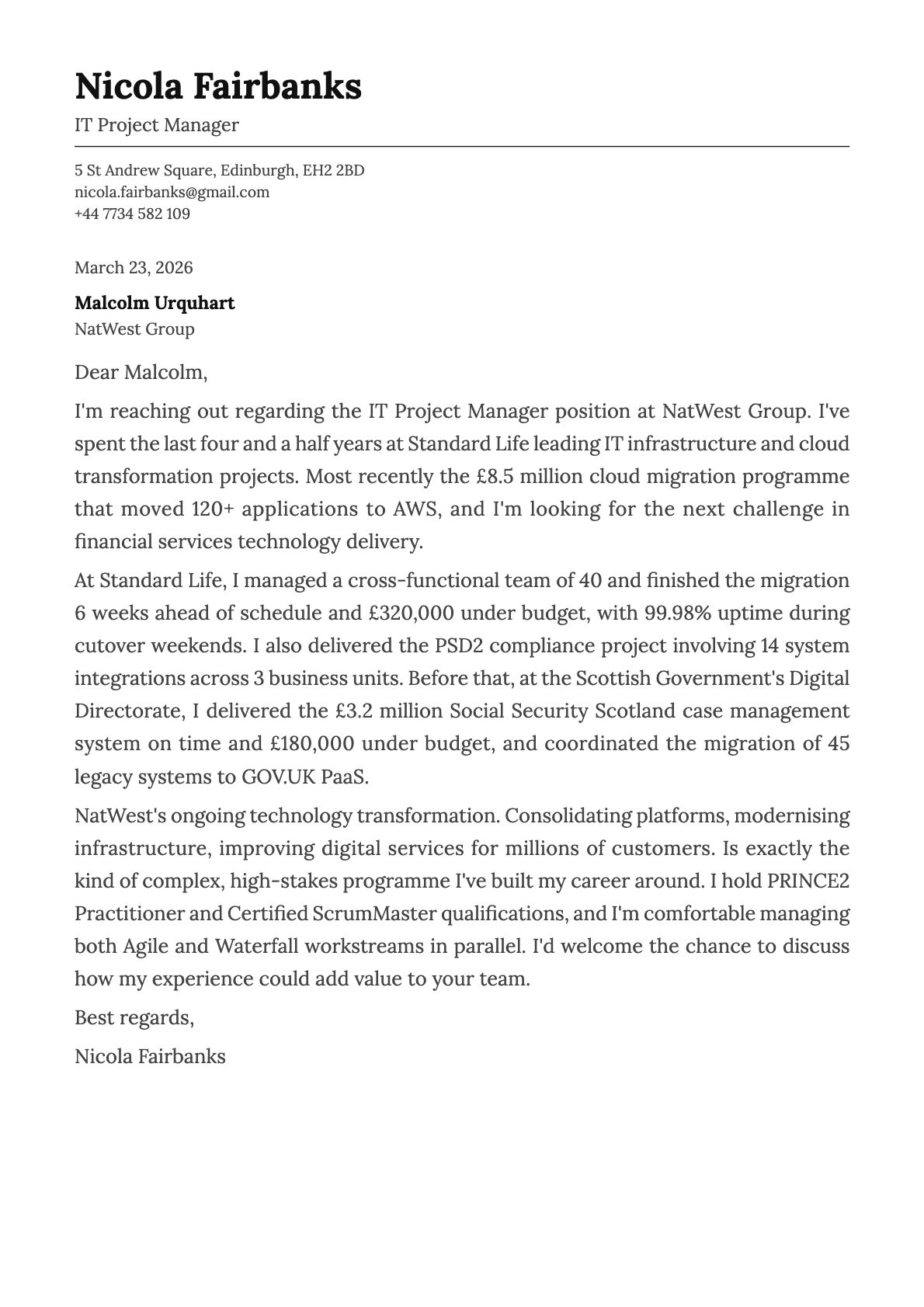
IT Project Manager
An IT project manager cover letter example showing how to present cloud migration experience, budget management.
Related articles
AI Is Screening Your Resume Before Any Human Sees It
AI screens most resumes before a human ever reads them. 97.4% of Fortune 500 companies run an ATS. This is what that means for you and what you can do about it.
ATS Resume Checker: How to Format a CV That Gets Past the Filters
Run the free copy and paste test to see what an ATS actually reads on your CV, then fix the tables, columns and headings that quietly get you filtered out.
The Best Resume Builders in 2026, Compared Honestly
Resume.io, Zety, Enhancv, Kickresume, Teal, and Laddro compared honestly: real pricing, free tiers, mobile apps, and where each tool wins. All prices checked in September 2026.