QA Engineer Cover Letter Example
A QA engineer cover letter example showing how to present automated testing frameworks, contract testing, and quality metrics for a financial services.

Laddro Team
Free to use. No account needed to start.
Free to use. No account needed to start.
The problem with most QA engineer cover letters
QA engineers often undersell themselves in cover letters. The work is deeply technical and directly impacts product reliability, yet many candidates write letters that sound apologetic or overly focused on process compliance. "I ensure quality standards are met" is not a selling point. It is a job description.
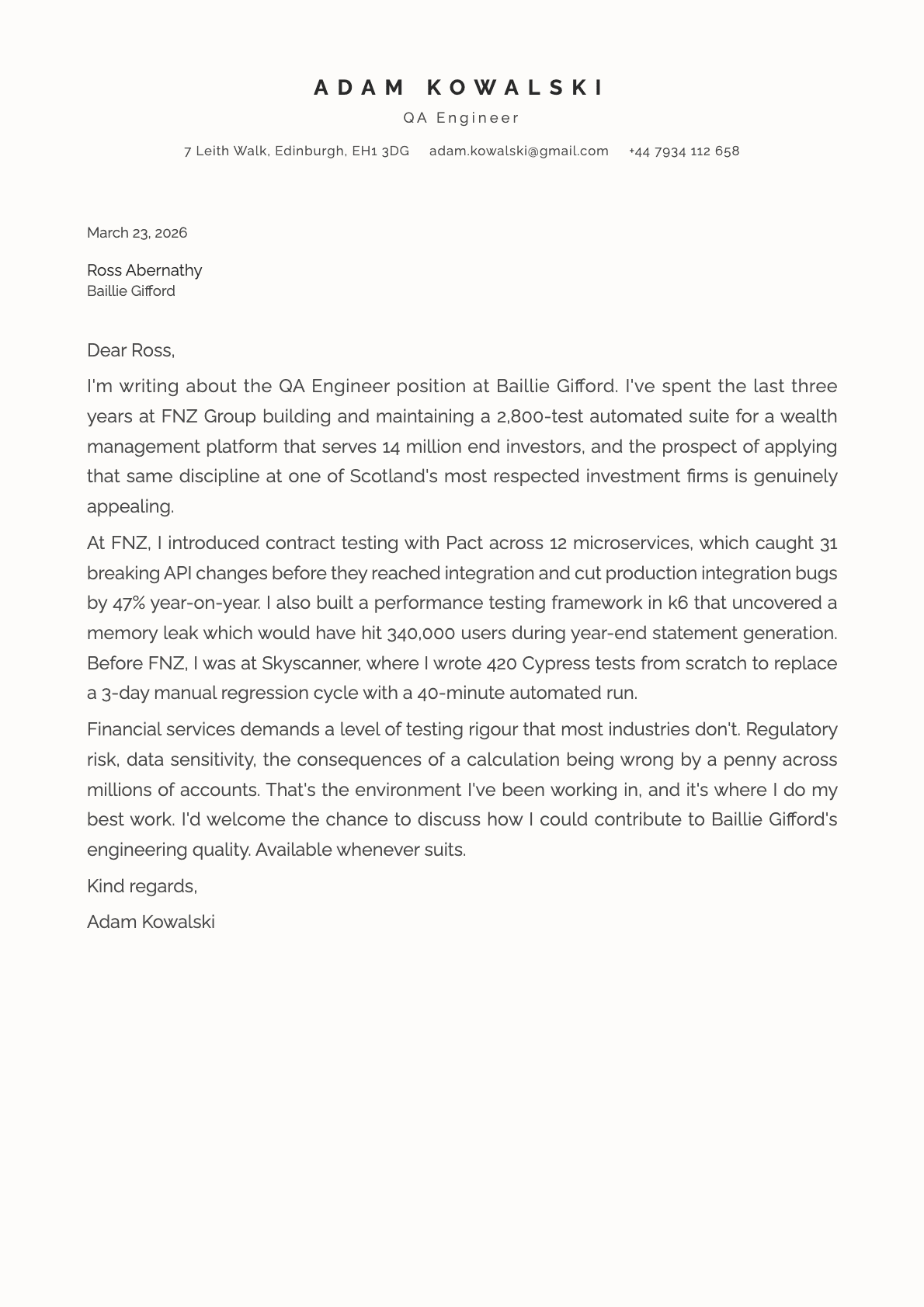
The cover letter that works for a QA engineer is one that quantifies the testing infrastructure you have built, the bugs you have caught, and the confidence you have given to engineering teams. This example from Adam Kowalski shows how. He works at FNZ Group and is applying for a QA Engineer position at Baillie Gifford.
Open with the scale of your testing infrastructure
Adam starts by naming his employer, the size of his test suite (2,800 tests), and the platform's user base (14 million end investors). He then states why Baillie Gifford interests him: applying the same discipline at one of Scotland's most respected investment firms.
This opening gives the hiring manager a clear picture of the scale Adam works at. A 2,800-test automated suite is not a side project. It is production-grade infrastructure.
Your takeaway: Lead with the size and scope of your testing work. Number of tests, platform users, or services covered. This immediately establishes your credibility.
Describe the testing innovations you have introduced
The body of Adam's letter is where the technical depth shows. He introduced contract testing with Pact across 12 microservices, catching 31 breaking API changes before integration and cutting production integration bugs by 47% year-on-year. He built a performance testing framework in k6 that uncovered a memory leak that would have hit 340,000 users during year-end statement generation.
His previous role at Skyscanner adds another dimension: writing 420 Cypress tests from scratch to replace a three-day manual regression cycle with a 40-minute automated run.
Your takeaway: For each testing innovation, state the tool, the scope, and the measurable result. "Introduced contract testing" becomes "introduced contract testing with Pact across 12 microservices, catching 31 breaking API changes."
Connect quality engineering to business risk
Adam's closing paragraph frames QA in financial services terms: regulatory risk, data sensitivity, and the consequences of a calculation being wrong by a penny across millions of accounts. He positions himself as someone who understands not just how to test, but why testing matters in this specific industry.
What to include in your QA engineer cover letter
- Test suite size and automation coverage percentage
- Testing tools and frameworks you use, named in context (Cypress, Pact, k6, Selenium)
- Bugs caught or prevented with specific numbers
- Time savings from automation (manual cycle replaced, regression time reduced)
- Performance or security testing work with outcomes
- Previous employers and platforms that demonstrate your range
What to leave out
Do not list every testing tool in your toolbox without context. Do not describe yourself as "detail-oriented." Do not write about the importance of quality. The hiring manager already believes in quality. They want to see what you have built and what it caught.
Final thoughts
A QA engineer cover letter should read like a quality report: precise, measurable, and focused on outcomes. The best QA engineers prevent problems before users ever see them, and your cover letter should demonstrate exactly that. Show the infrastructure you have built, the defects you have caught, and the confidence you have given to the teams and products you support.
Was this cover letter example helpful?
Rate this example to help us create better content for you.
4.7 average from 127 ratingsBuild your own version
Open this layout in the builder and swap in your own details. It takes a few minutes.
Free to use. No account needed to start.
Related cover letter examples
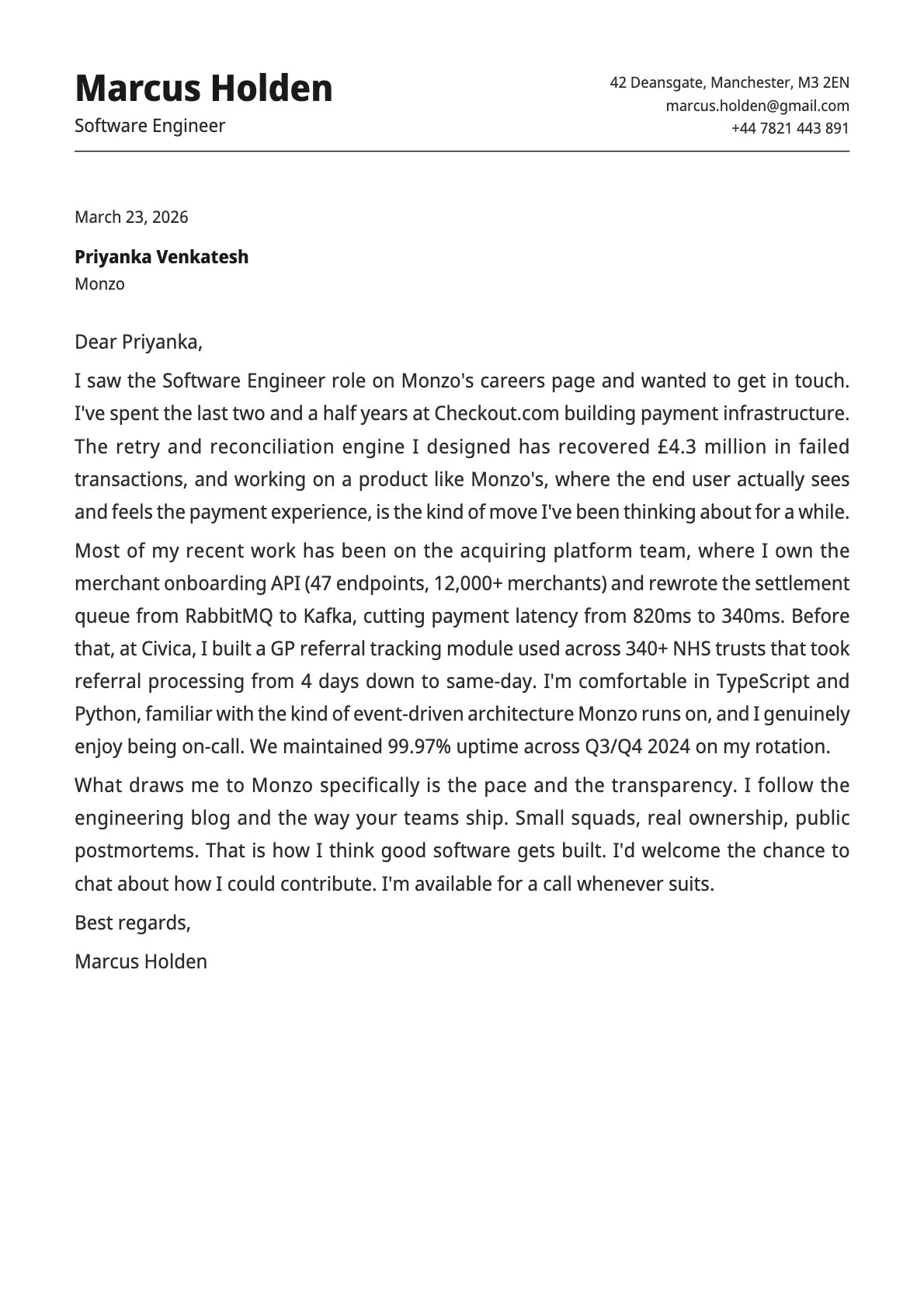
Software Engineer
A software engineer cover letter example with practical tips on addressing the hiring manager, showing technical impact.
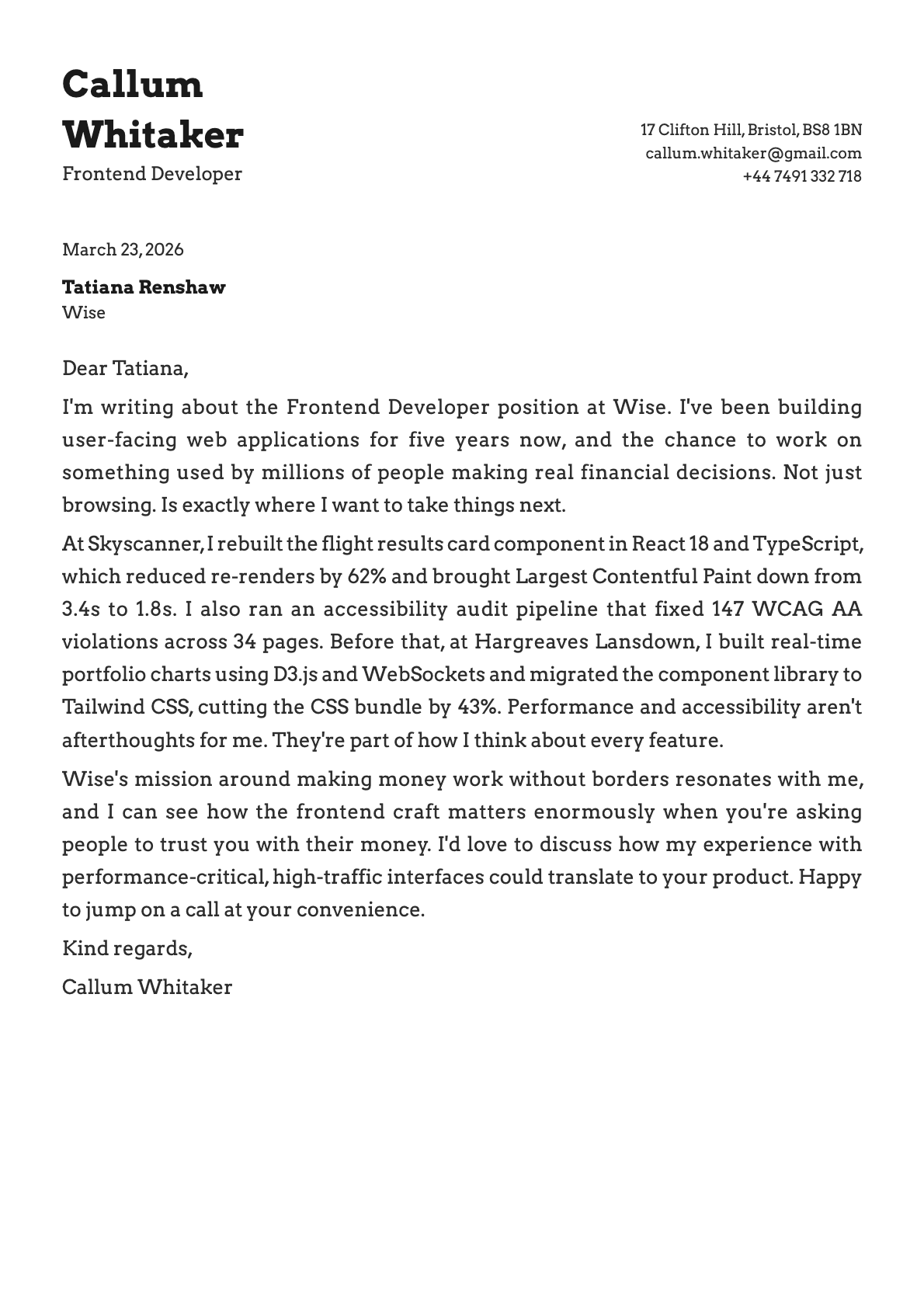
Frontend Developer
A frontend developer cover letter example showing how to highlight performance wins, accessibility work, and why you want a specific company.
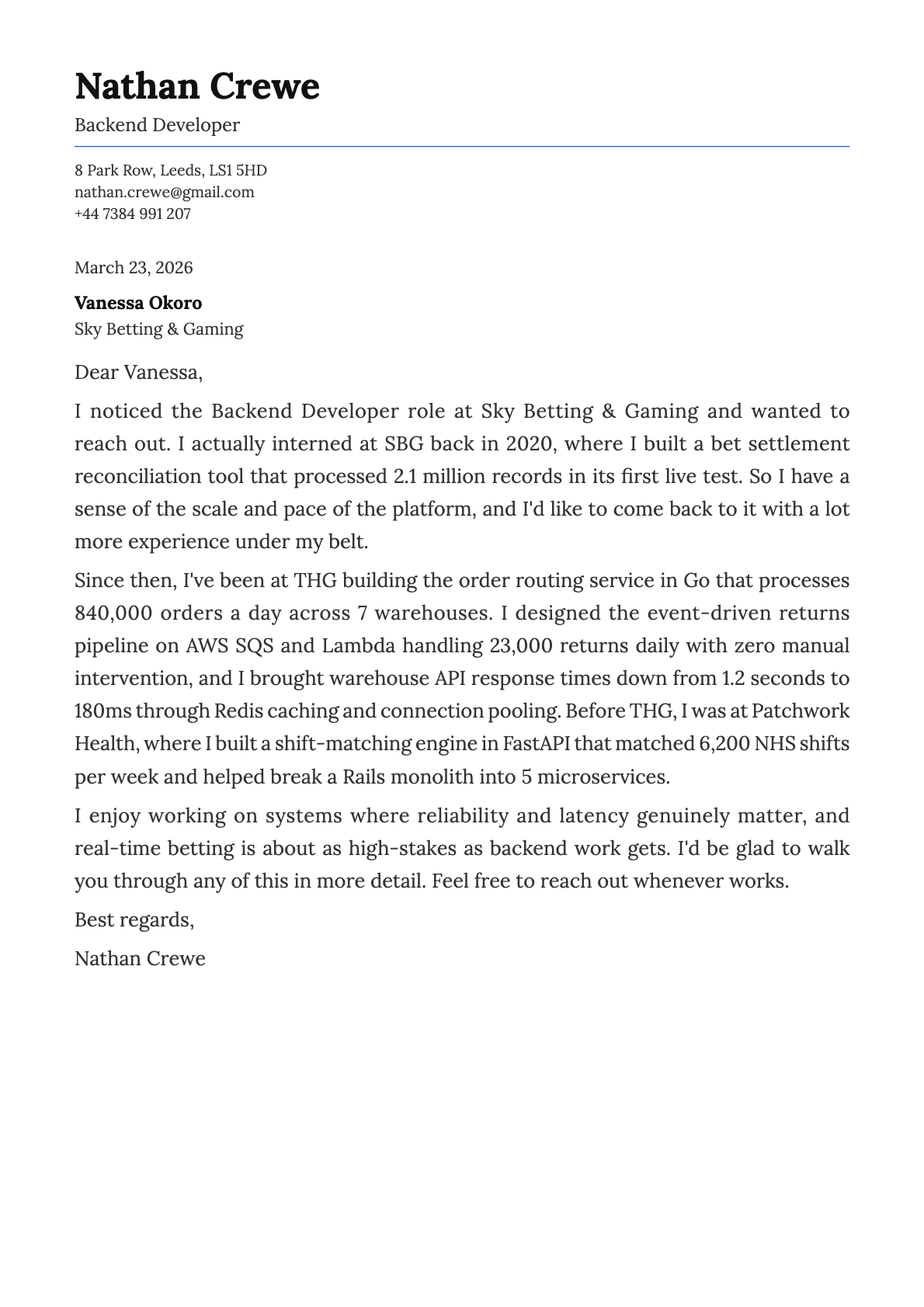
Backend Developer
A backend developer cover letter example that shows how to present system design, throughput numbers, and reliability metrics to land an interview.
Data Analyst
A data analyst cover letter example showing how to present analytical projects, business impact, and your ability to turn messy data into real decisions.
Data Scientist
A data scientist cover letter example showing how to present ML models, production deployments, and measurable outcomes to impress hiring managers.
DevOps Engineer
A DevOps engineer cover letter example showing how to present infrastructure wins, CI/CD improvements, and cost savings that hiring managers care about.
Product Manager
A product manager cover letter example showing how to present conversion improvements, A/B testing, and squad leadership when applying to a payments.
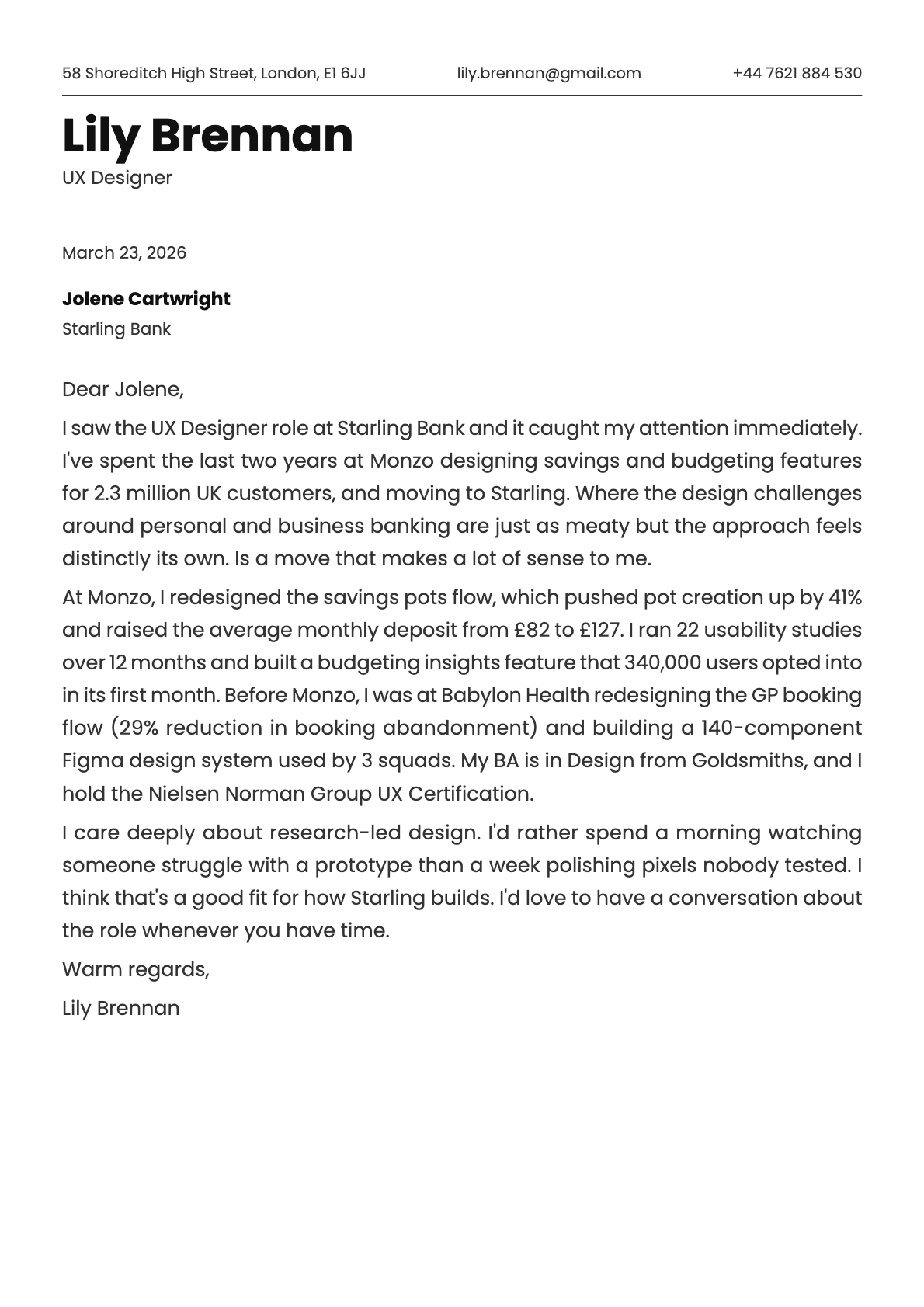
UX Designer
A UX designer cover letter example showing how to present usability research, conversion improvements, and design system work when applying to a digital.
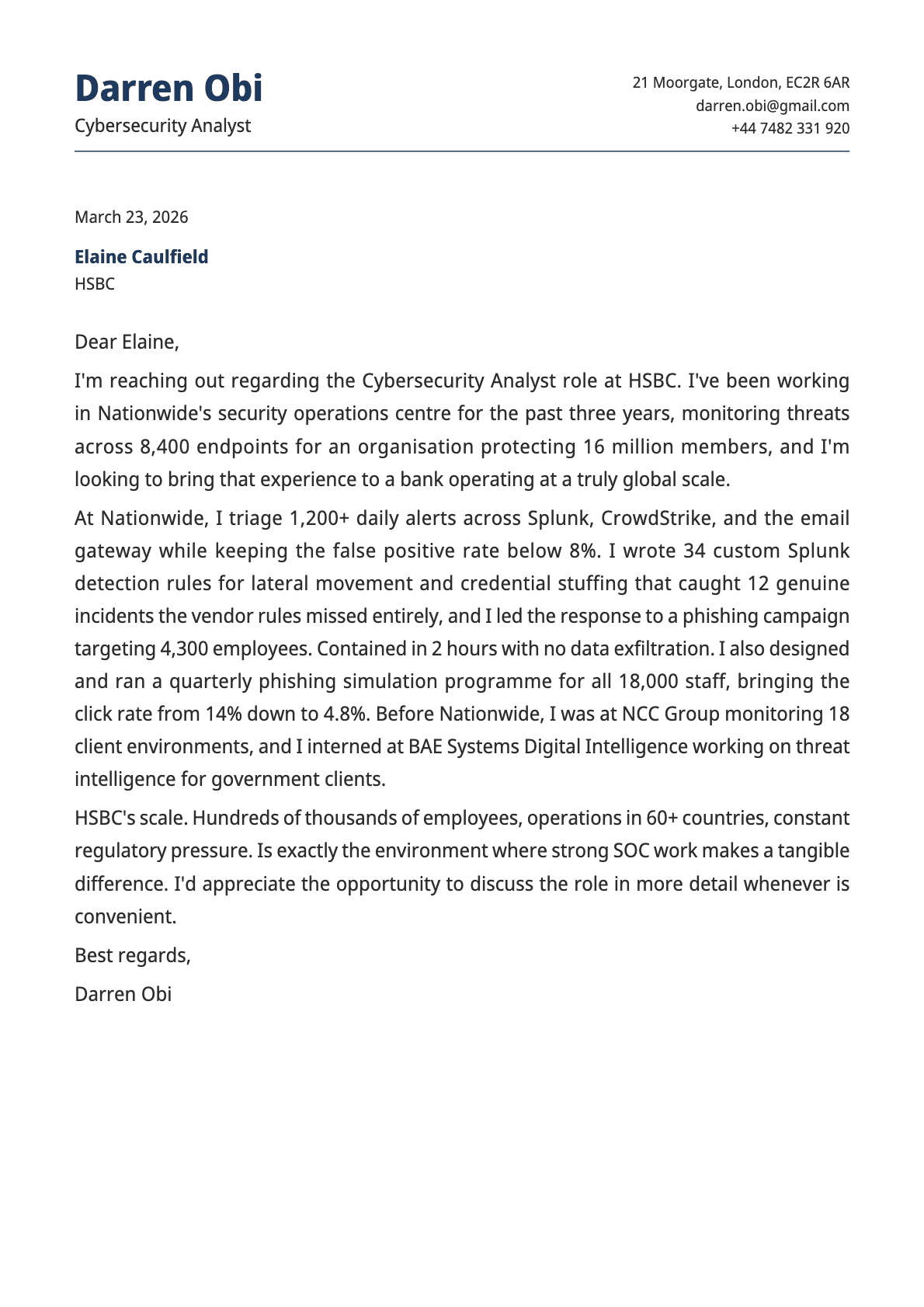
Cybersecurity Analyst
A cybersecurity analyst cover letter example showing how to present SOC experience, threat detection skills, and incident response work for a financial.
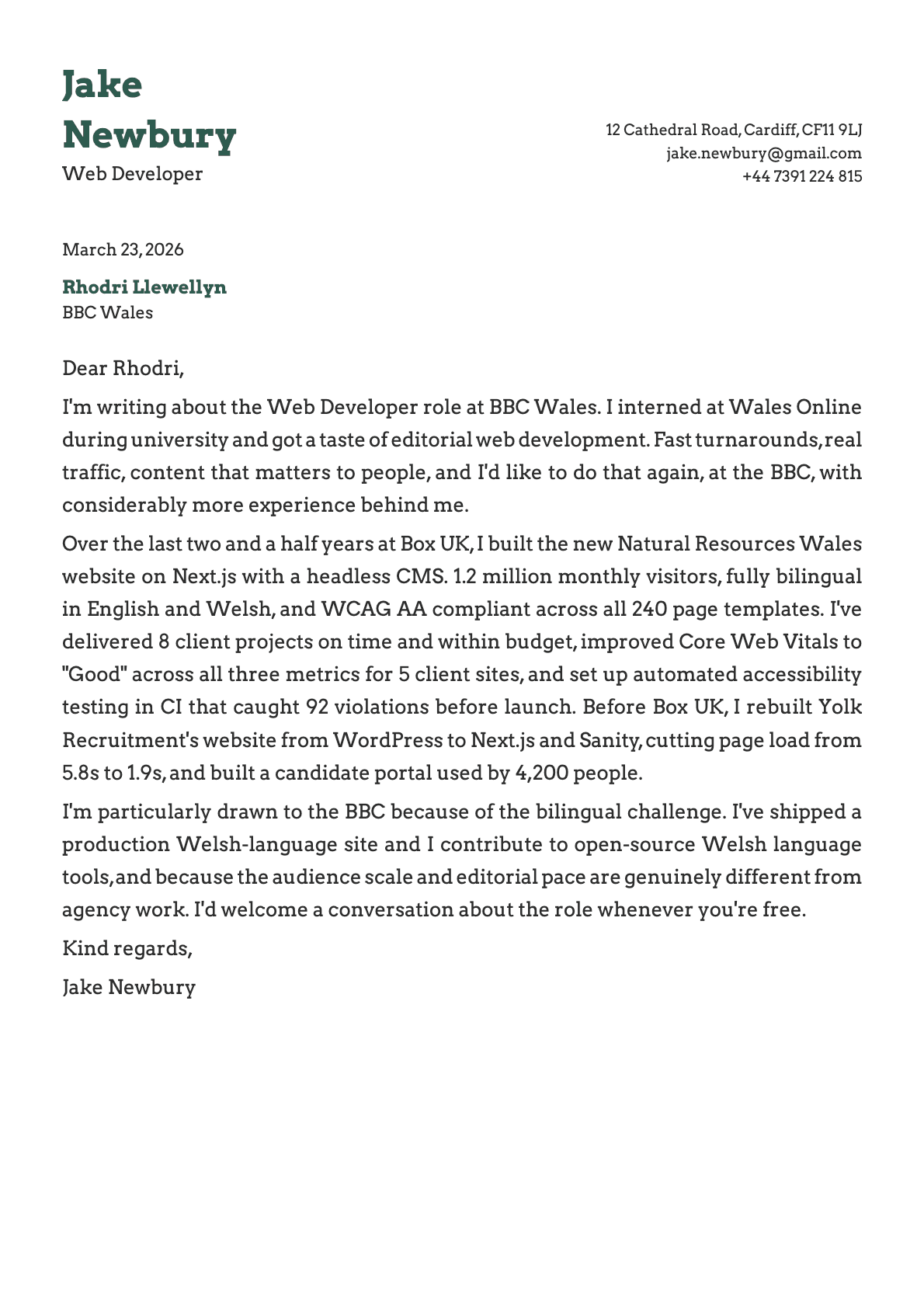
Web Developer
A web developer cover letter example showing how to present Next.js projects, accessibility compliance.
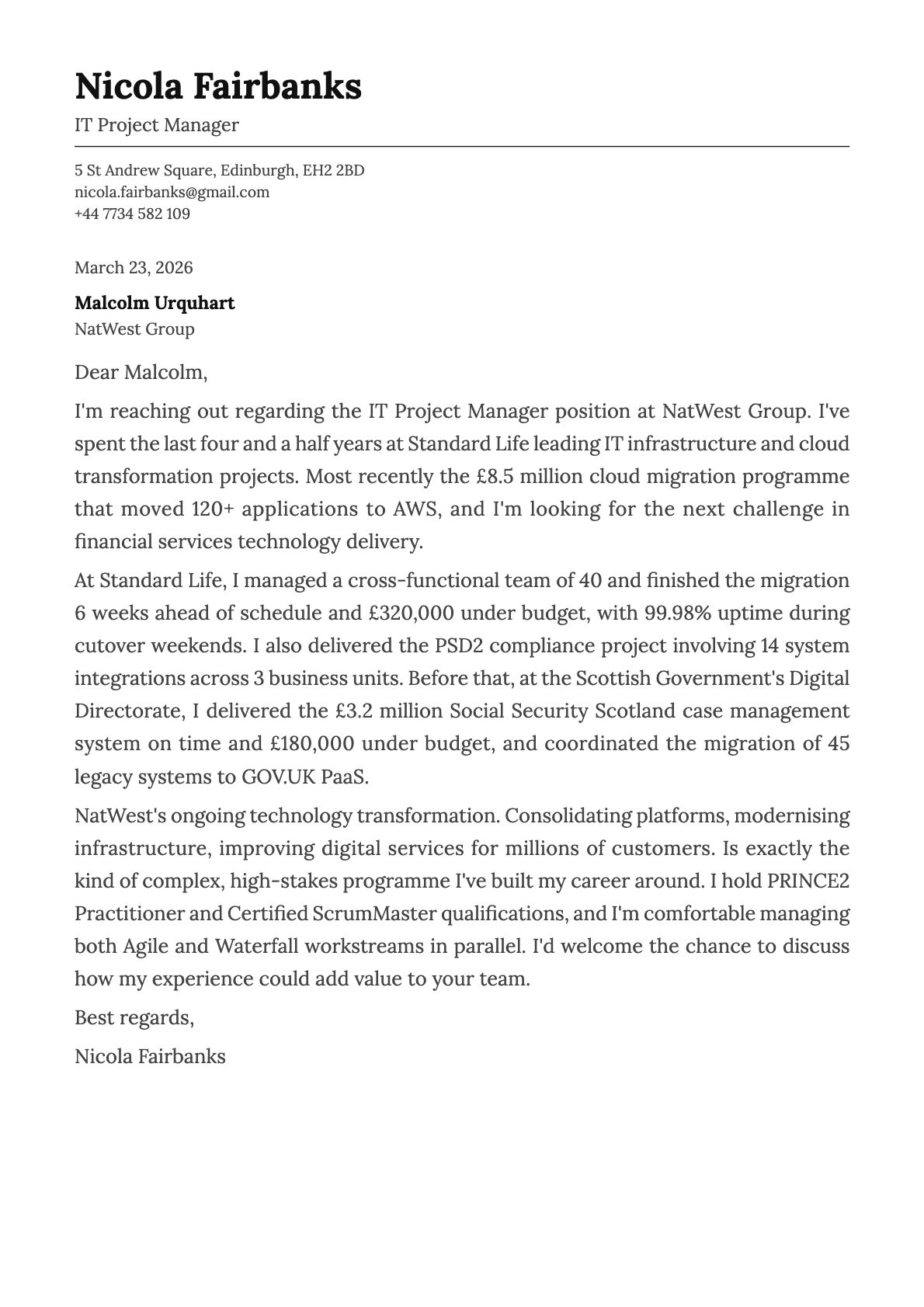
IT Project Manager
An IT project manager cover letter example showing how to present cloud migration experience, budget management.
Related articles

AI Is Screening Your Resume Before Any Human Sees It
AI screens most resumes before a human ever reads them. 97.4% of Fortune 500 companies run an ATS. This is what that means for you and what you can do about it.

ATS Resume Checker: How to Format a CV That Gets Past the Filters
Run the free copy and paste test to see what an ATS actually reads on your CV, then fix the tables, columns and headings that quietly get you filtered out.

The Best Resume Builders in 2026, Compared Honestly
Resume.io, Zety, Enhancv, Kickresume, Teal, and Laddro compared honestly: real pricing, free tiers, mobile apps, and where each tool wins. All prices checked in September 2026.