Frontend Developer Cover Letter Example
A frontend developer cover letter example showing how to highlight performance wins, accessibility work, and why you want a specific company.

Laddro Team
Free to use. No account needed to start.
Free to use. No account needed to start.
The problem with most frontend cover letters
Most frontend developer cover letters read like a list of frameworks. "I am proficient in React, Vue, Angular, Svelte, and Next.js." Great, so is everyone else who applied. The cover letter is not the place to restate your skills section. It is the place to show what you did with those skills and why it mattered.
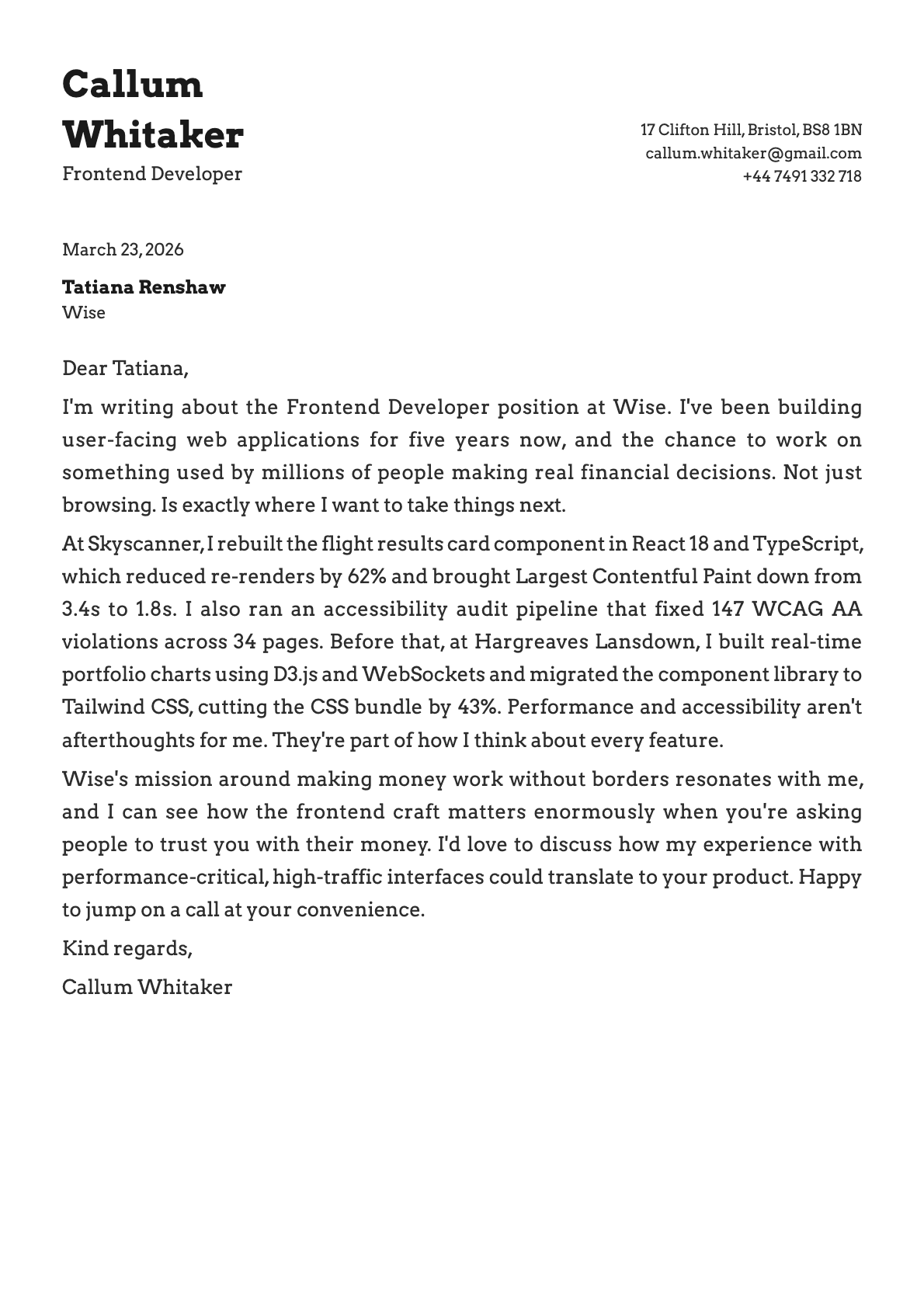
This example comes from Callum Whitaker, a frontend developer with five years of experience applying to Wise. He has worked at Skyscanner and Hargreaves Lansdown, and his letter focuses on performance, accessibility, and why Wise's mission resonates with him.
Lead with your best work
Callum opens by stating his experience level and immediately connecting it to what Wise does. He is not just interested in any frontend role. He wants to build interfaces that millions of people use to make real financial decisions.
Then he gets specific. At Skyscanner, he rebuilt the flight results card component in React 18 and TypeScript, reducing re-renders by 62% and bringing Largest Contentful Paint from 3.4 seconds to 1.8 seconds. Those are not vague accomplishments. They are measurable improvements that any frontend hiring manager would understand.
Your takeaway: Pick your single best frontend accomplishment. Something with a before-and-after number. That goes in your opening paragraph.
Performance and accessibility are your differentiators
What sets Callum apart is that he treats performance and accessibility as first-class concerns, not afterthoughts. He mentions running an accessibility audit pipeline that fixed 147 WCAG AA violations across 34 pages. He talks about migrating a component library to Tailwind CSS and cutting the CSS bundle by 43%.
Most frontend developers talk about building features. Few talk about making those features fast and accessible. If you have done any work in these areas, put it in your cover letter. It signals that you think about the user experience at a deeper level than just making things look right.
Connect your work to their mission
Callum closes by tying his experience back to Wise. He points out that frontend craft matters enormously when you are asking people to trust you with their money. That is a specific insight about the product, not a generic compliment about the company.
This works because it shows the hiring manager that Callum understands what makes frontend work at a fintech different from frontend work at a media company or an e-commerce site.
Structuring your frontend cover letter
Here is a framework that works:
- Opening: Your experience level + one reason this company specifically interests you
- Middle: Two or three accomplishments with metrics (performance, accessibility, bundle size, user adoption)
- Closing: Why your background fits their specific product challenges + availability
Keep it under 350 words. Frontend hiring managers are often engineers themselves, and they appreciate directness.
Common mistakes to avoid
Do not list every framework you have touched. Do not include a paragraph about your "passion for pixel-perfect design." Do not mention your personal portfolio unless it is genuinely impressive and relevant. And do not send the same letter to every company with the company name swapped out. Hiring managers can tell.
Final thoughts
The best frontend cover letters treat the letter itself like a well-built component: clean, purposeful, and focused on the user (in this case, the hiring manager). Show what you have built, show the impact, and show that you understand what makes this company's frontend challenges unique.
Was this cover letter example helpful?
Rate this example to help us create better content for you.
4.7 average from 156 ratingsBuild your own version
Open this layout in the builder and swap in your own details. It takes a few minutes.
Free to use. No account needed to start.
Related cover letter examples
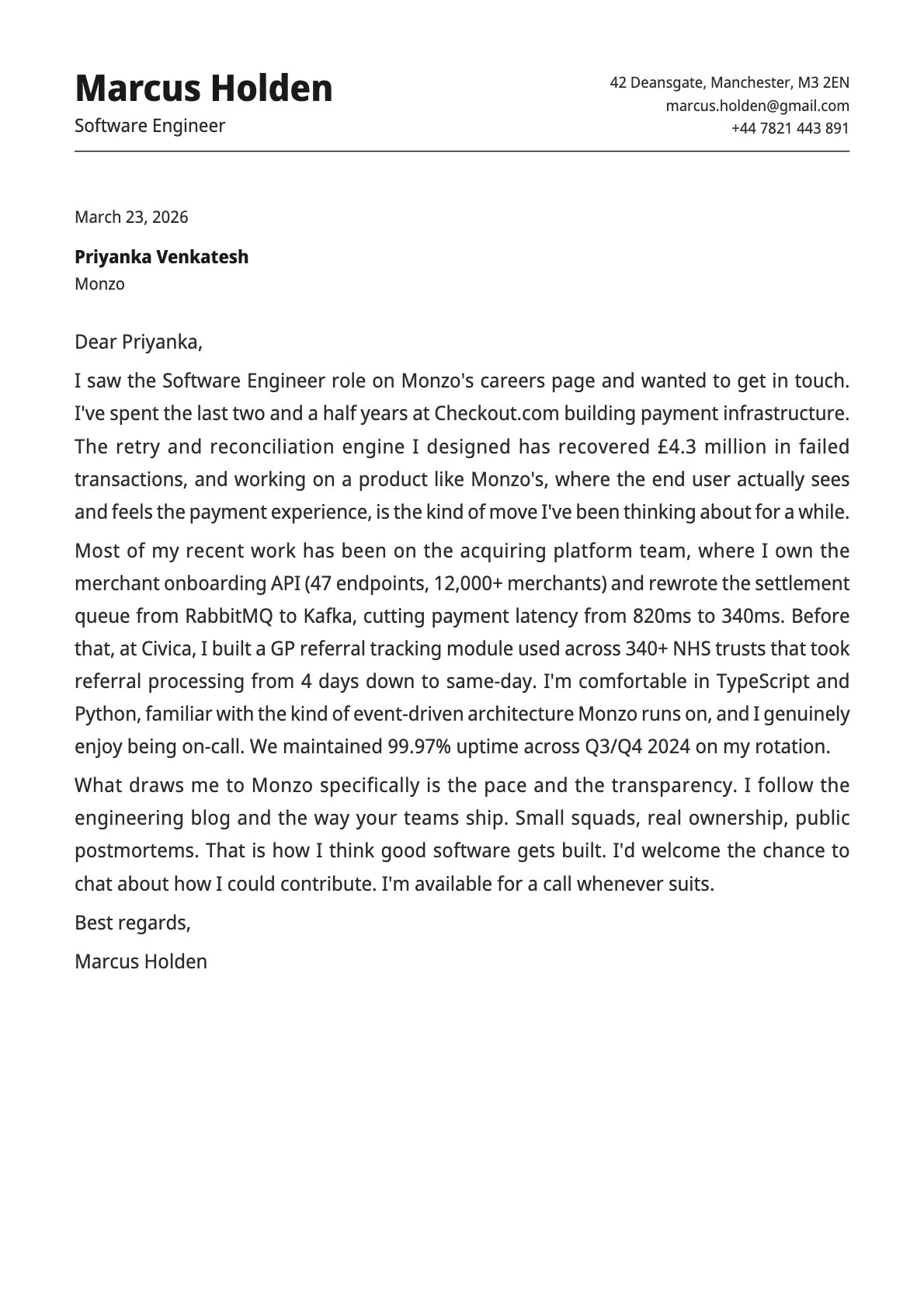
Software Engineer
A software engineer cover letter example with practical tips on addressing the hiring manager, showing technical impact.
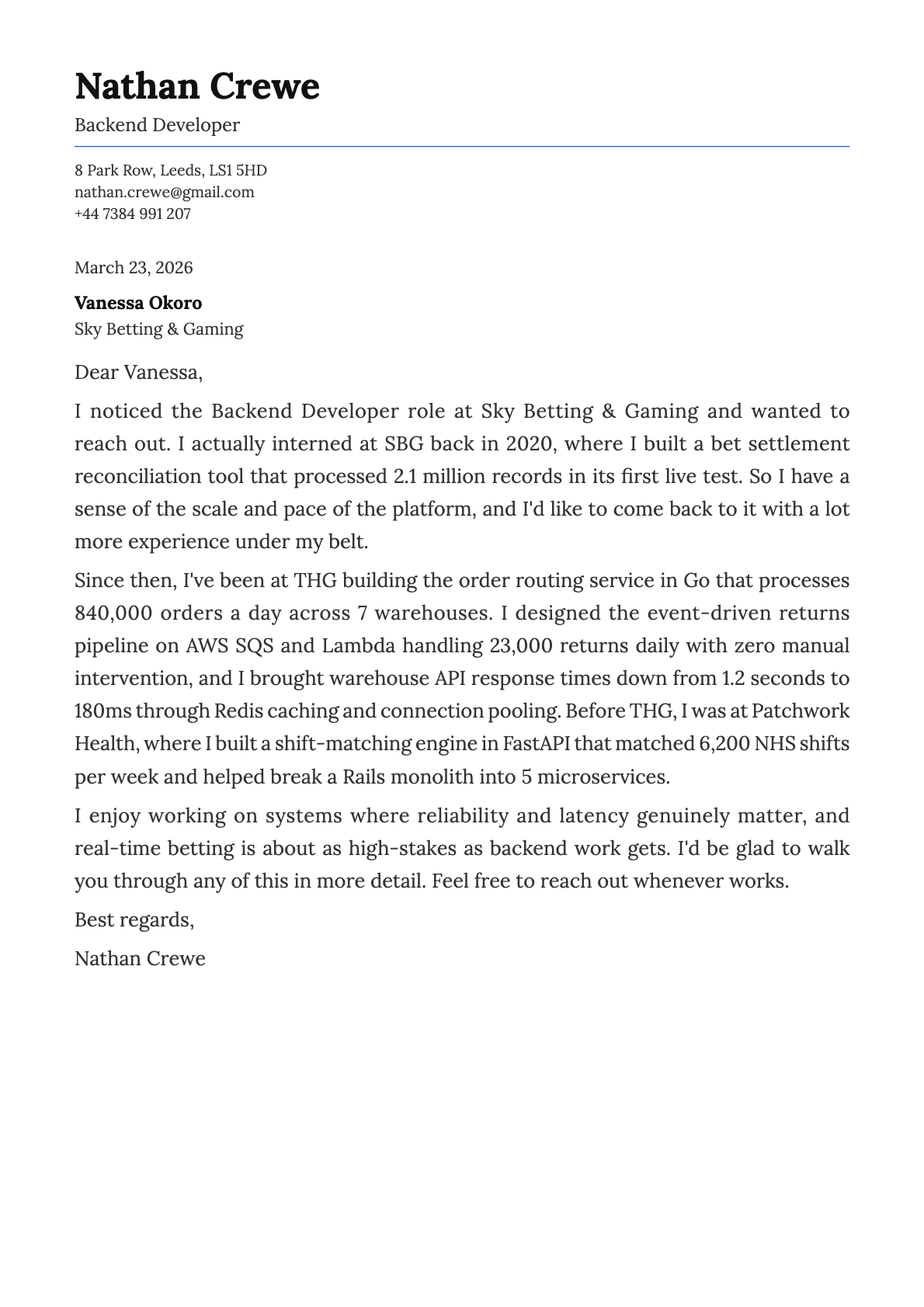
Backend Developer
A backend developer cover letter example that shows how to present system design, throughput numbers, and reliability metrics to land an interview.
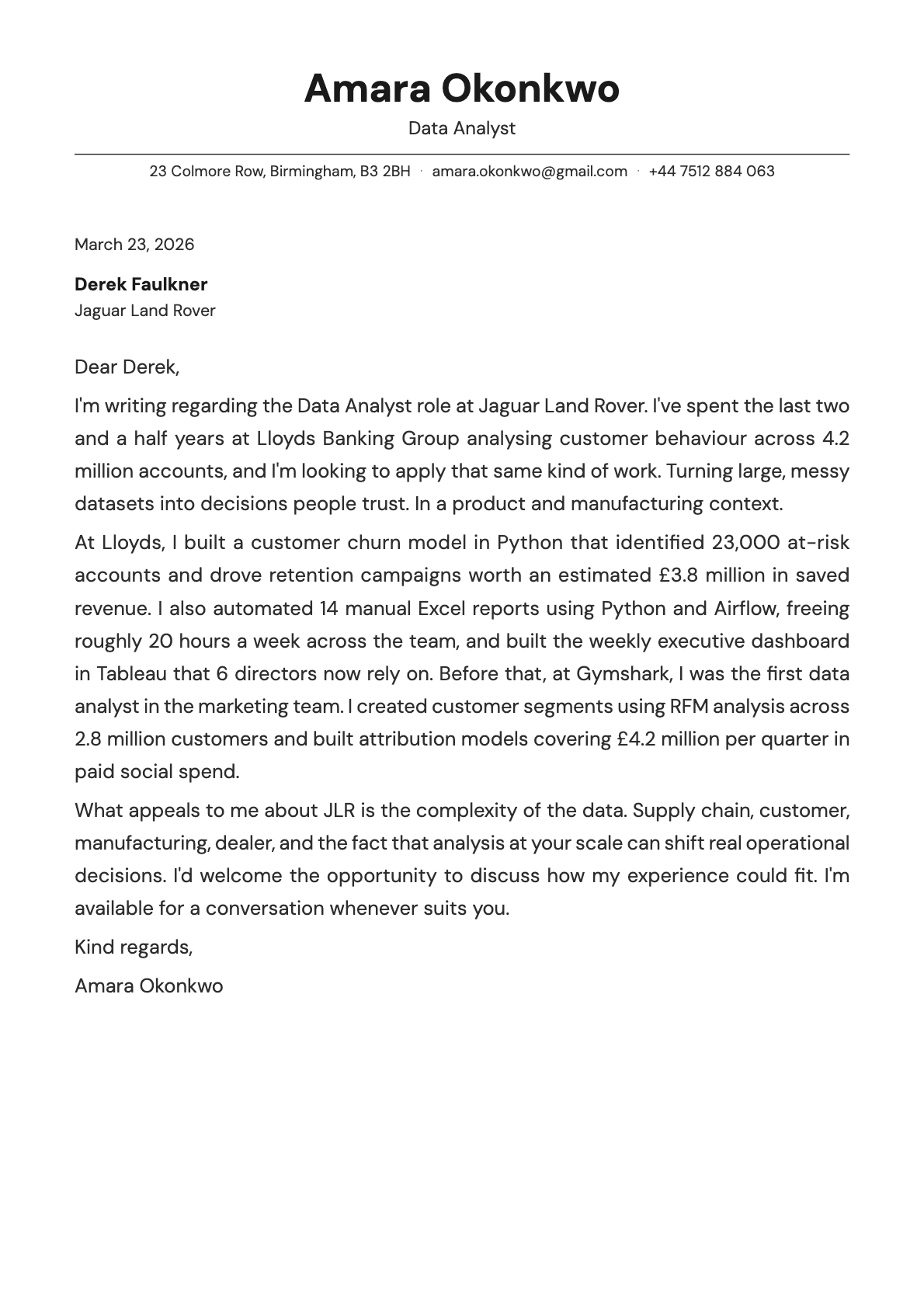
Data Analyst
A data analyst cover letter example showing how to present analytical projects, business impact, and your ability to turn messy data into real decisions.
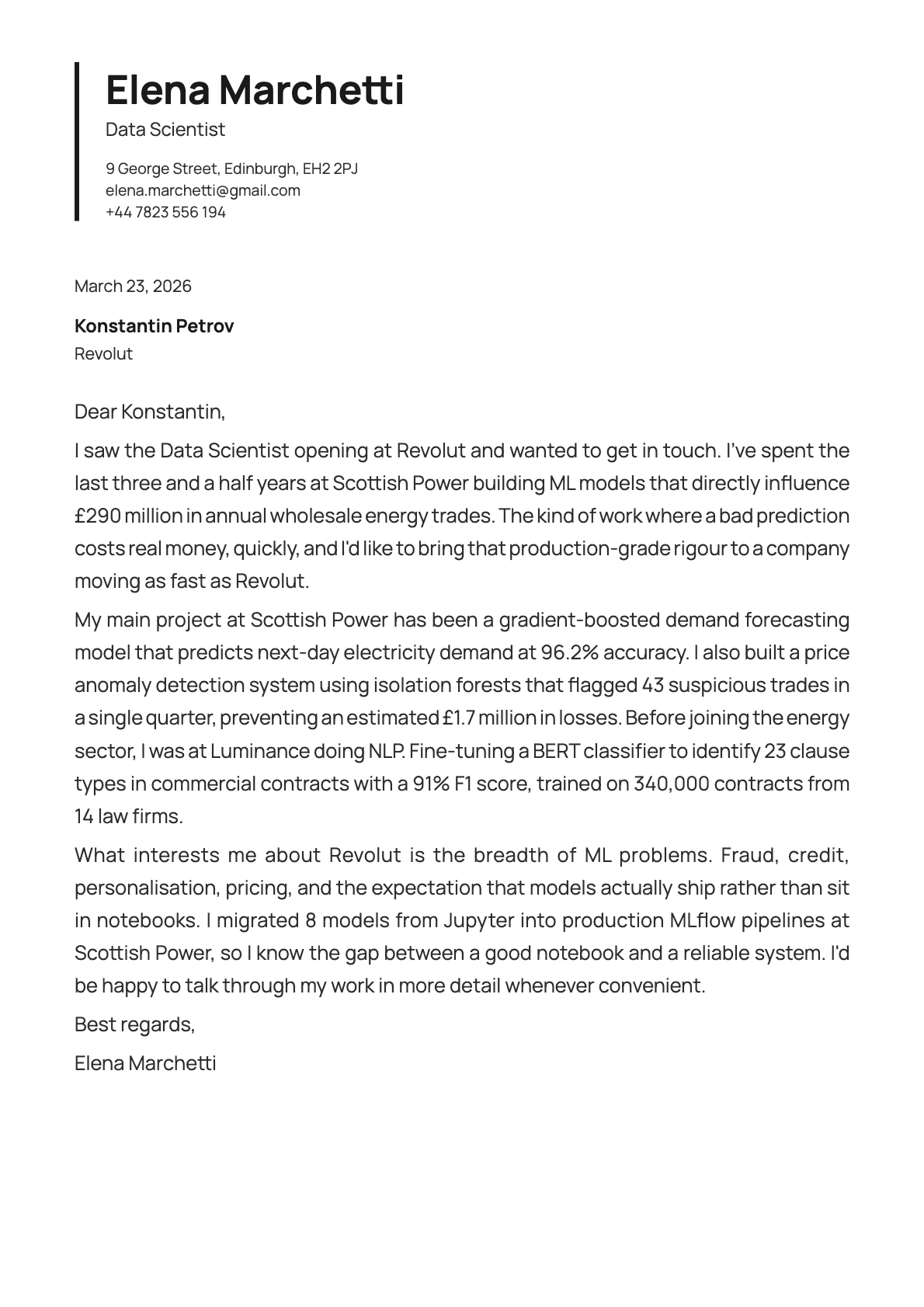
Data Scientist
A data scientist cover letter example showing how to present ML models, production deployments, and measurable outcomes to impress hiring managers.
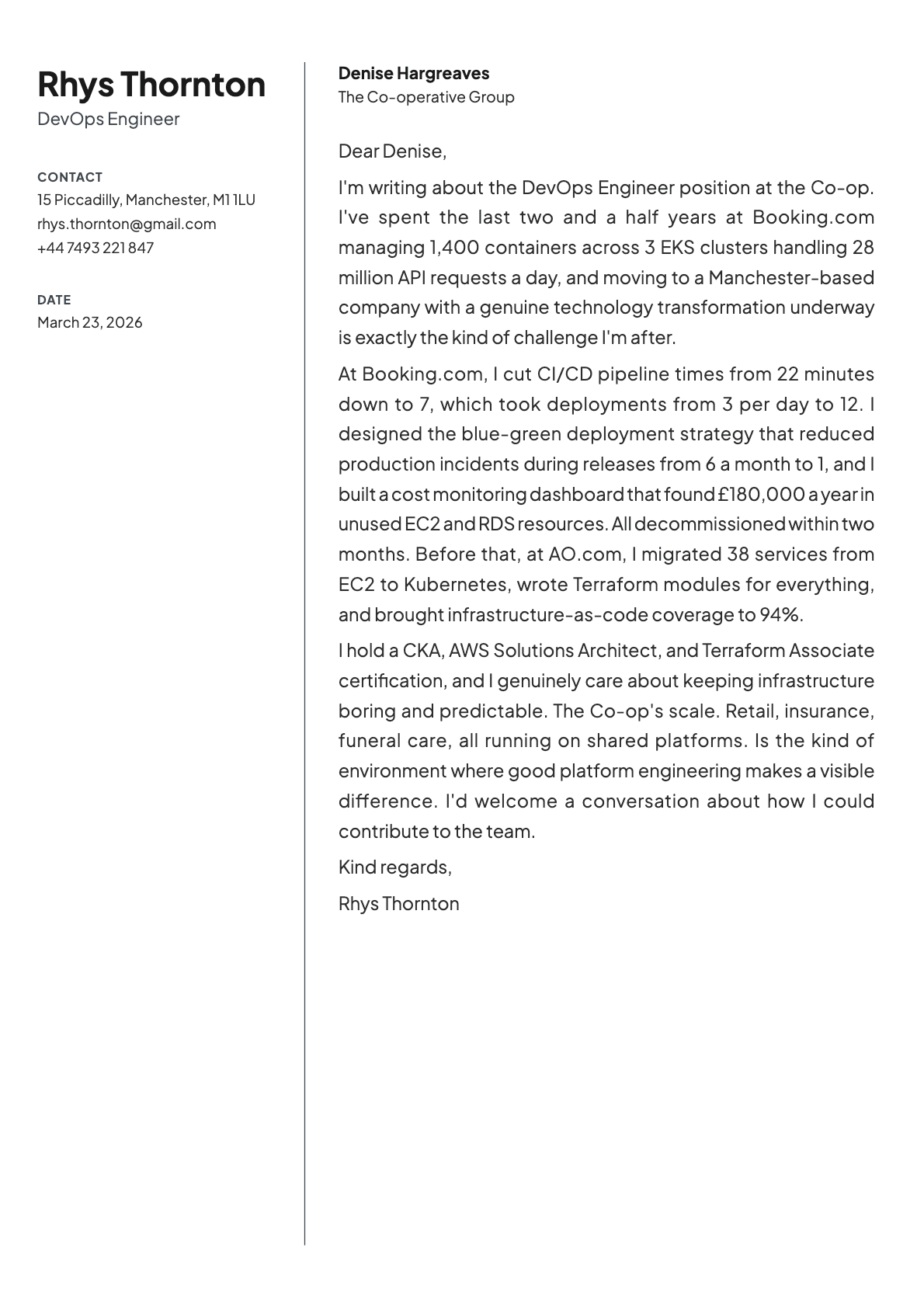
DevOps Engineer
A DevOps engineer cover letter example showing how to present infrastructure wins, CI/CD improvements, and cost savings that hiring managers care about.
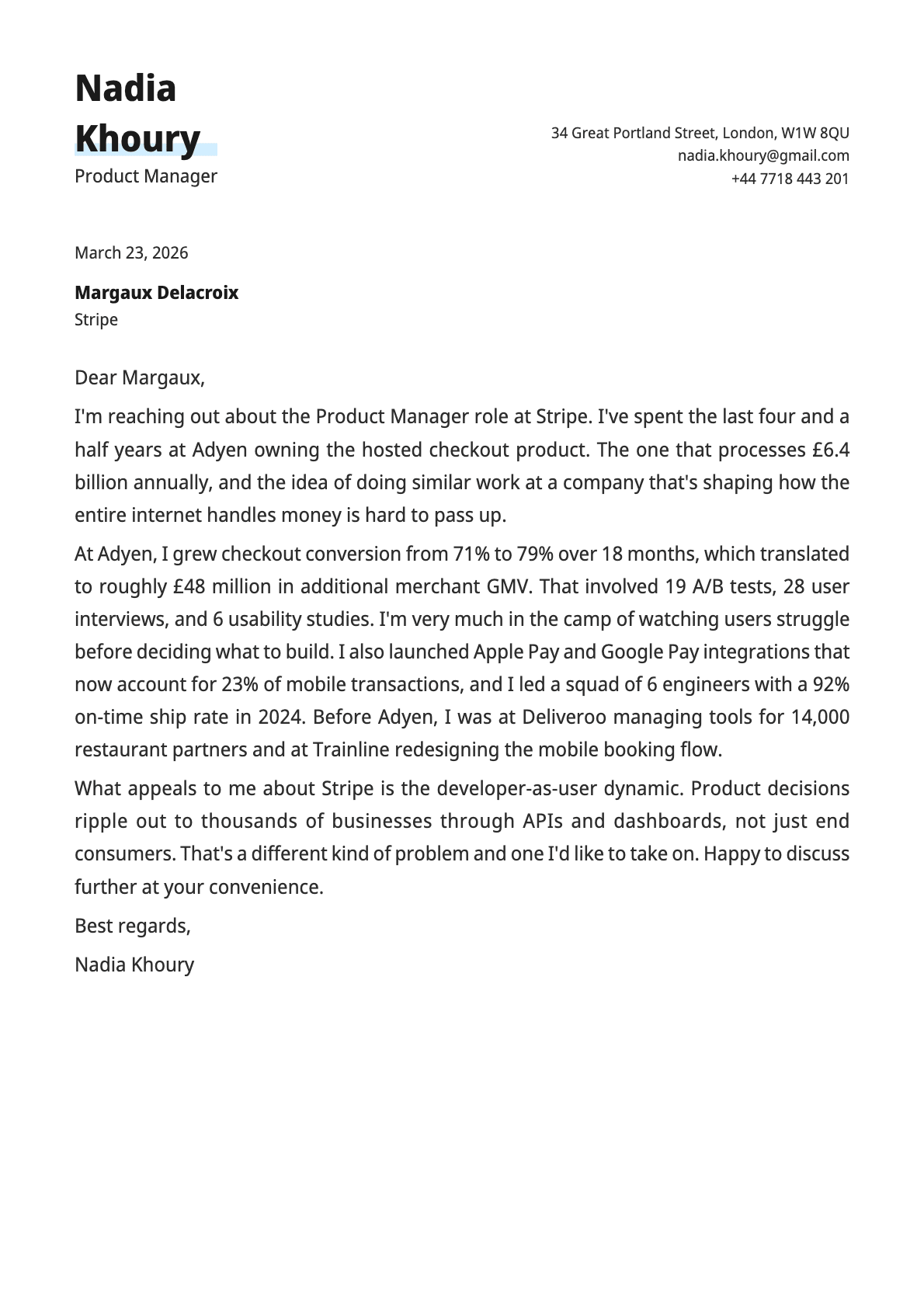
Product Manager
A product manager cover letter example showing how to present conversion improvements, A/B testing, and squad leadership when applying to a payments.
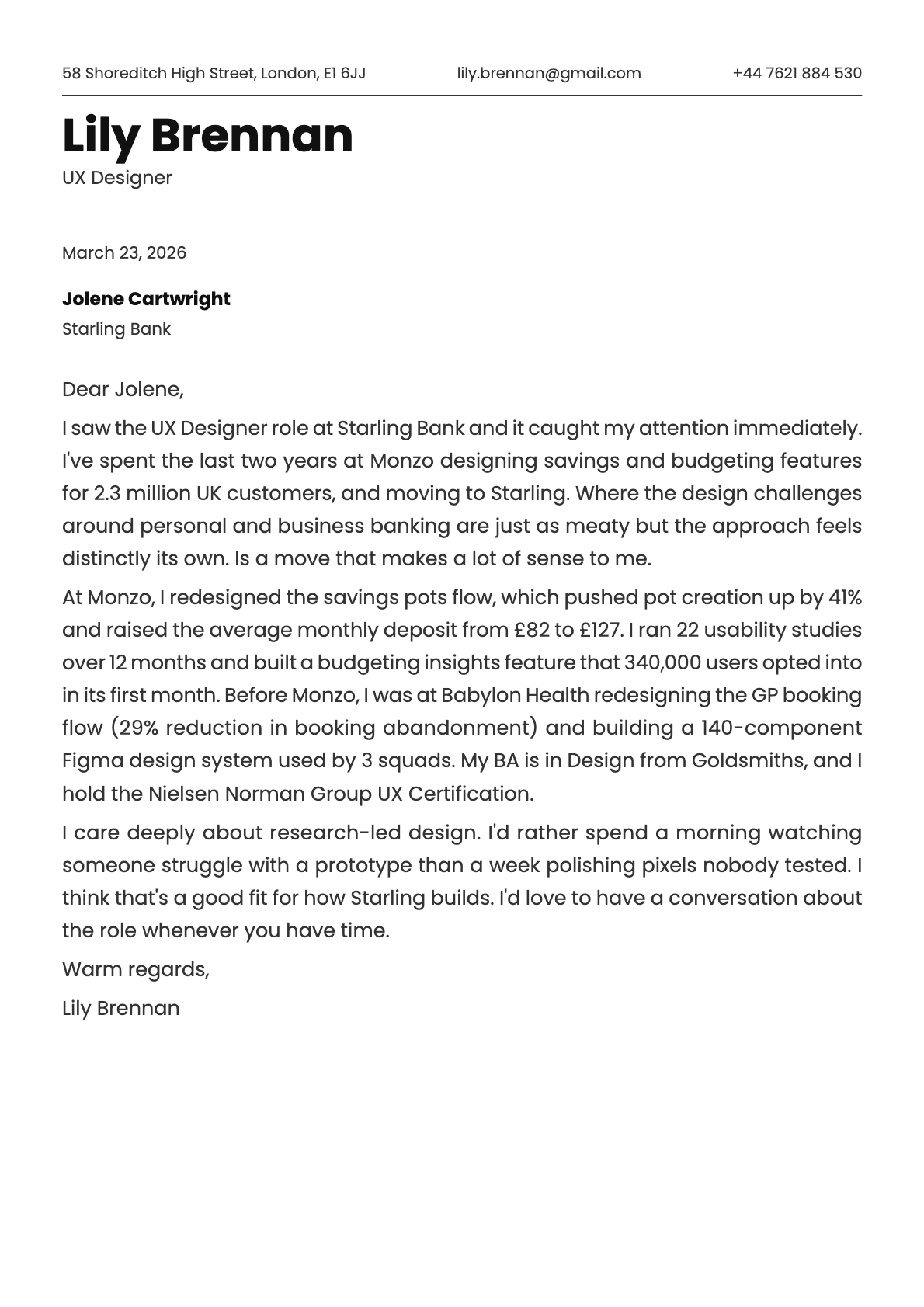
UX Designer
A UX designer cover letter example showing how to present usability research, conversion improvements, and design system work when applying to a digital.
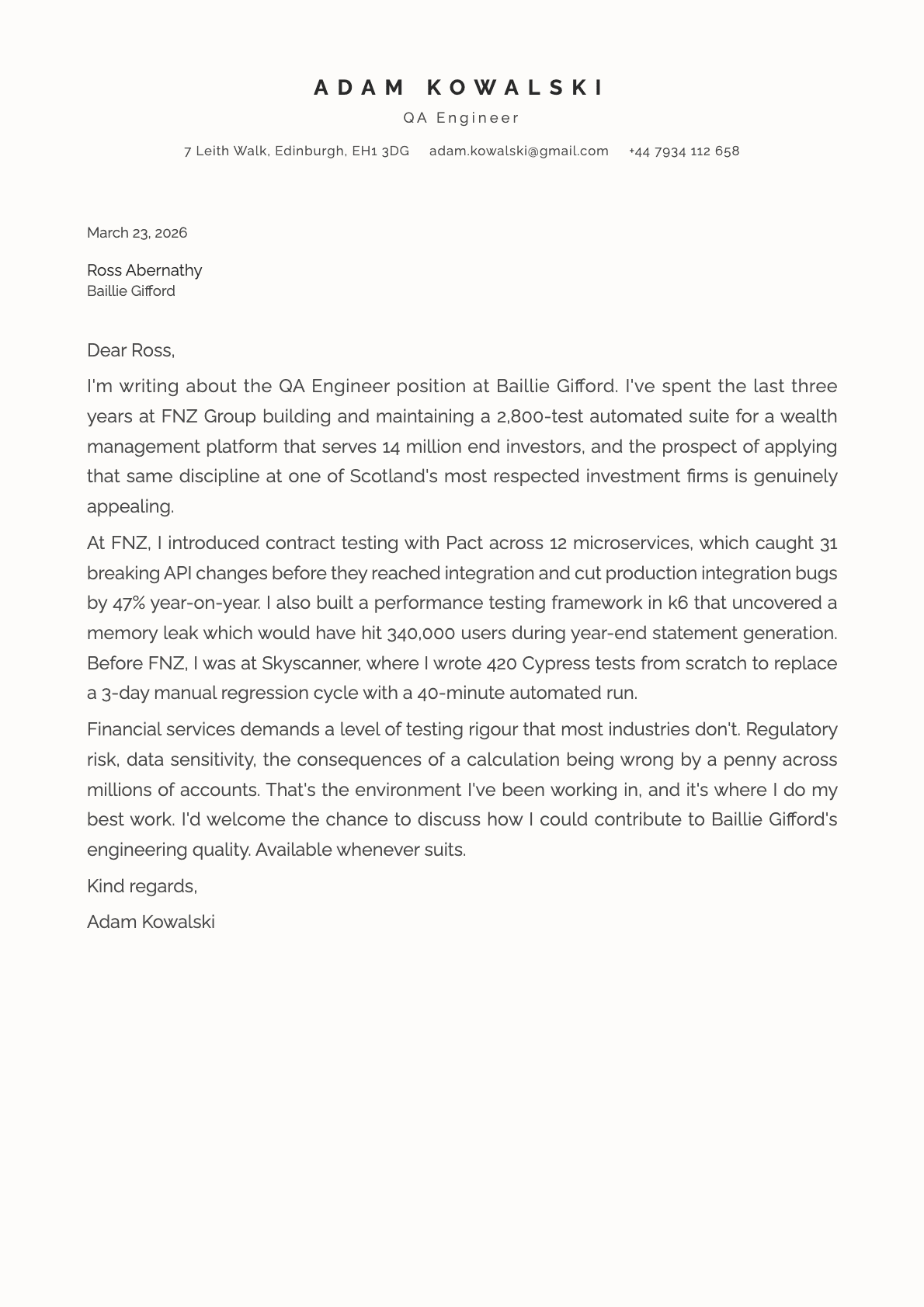
QA Engineer
A QA engineer cover letter example showing how to present automated testing frameworks, contract testing, and quality metrics for a financial services.
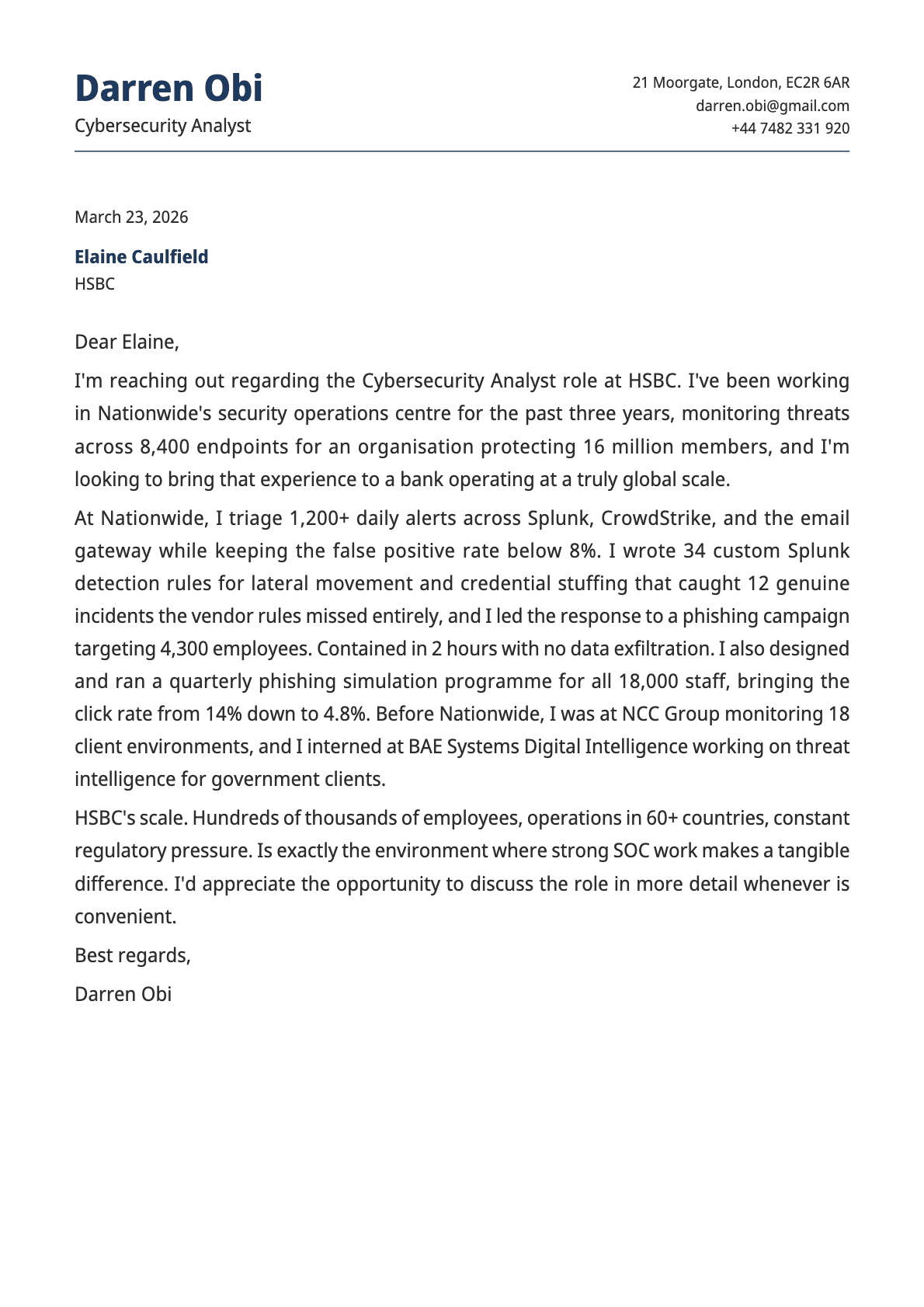
Cybersecurity Analyst
A cybersecurity analyst cover letter example showing how to present SOC experience, threat detection skills, and incident response work for a financial.
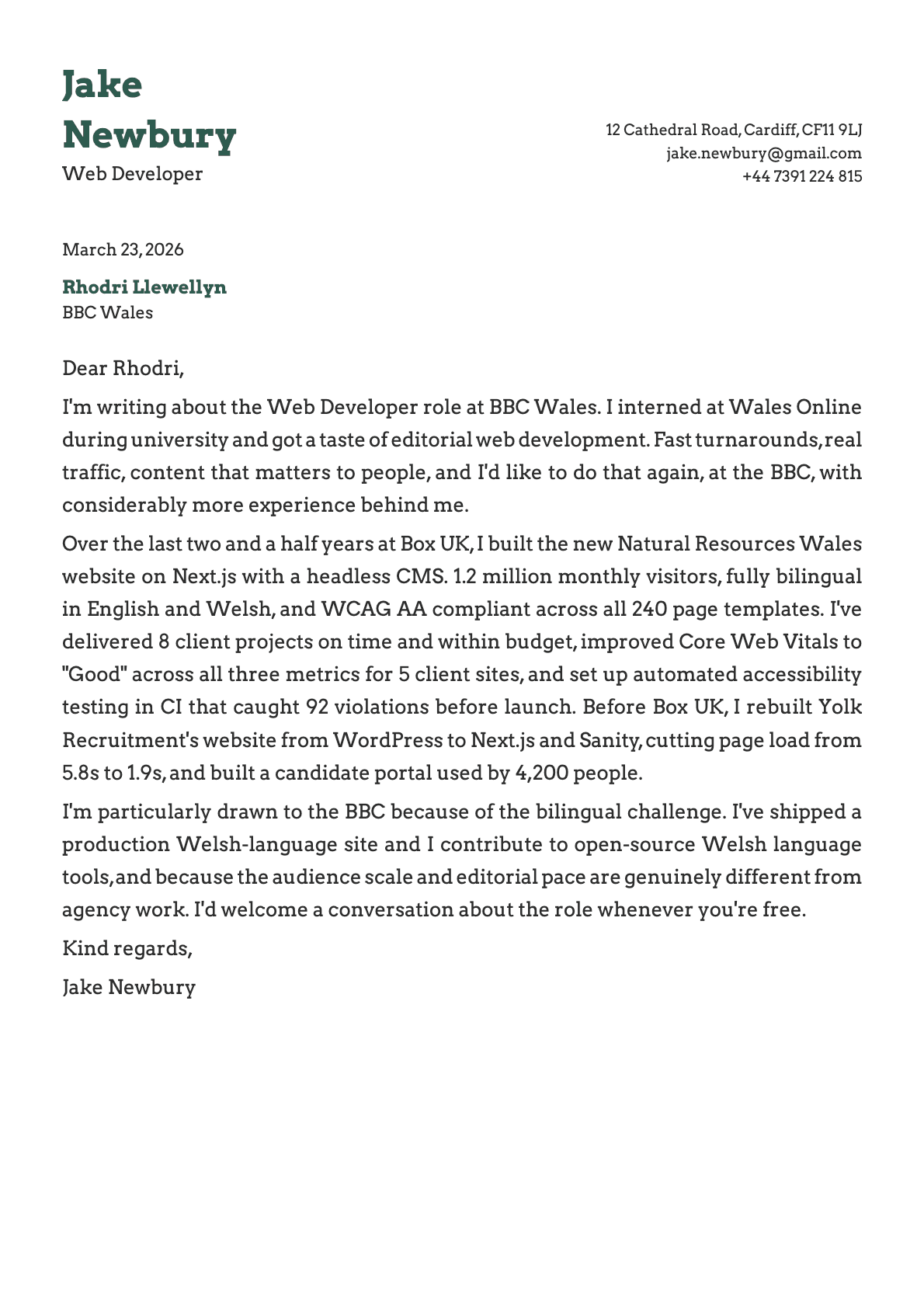
Web Developer
A web developer cover letter example showing how to present Next.js projects, accessibility compliance.
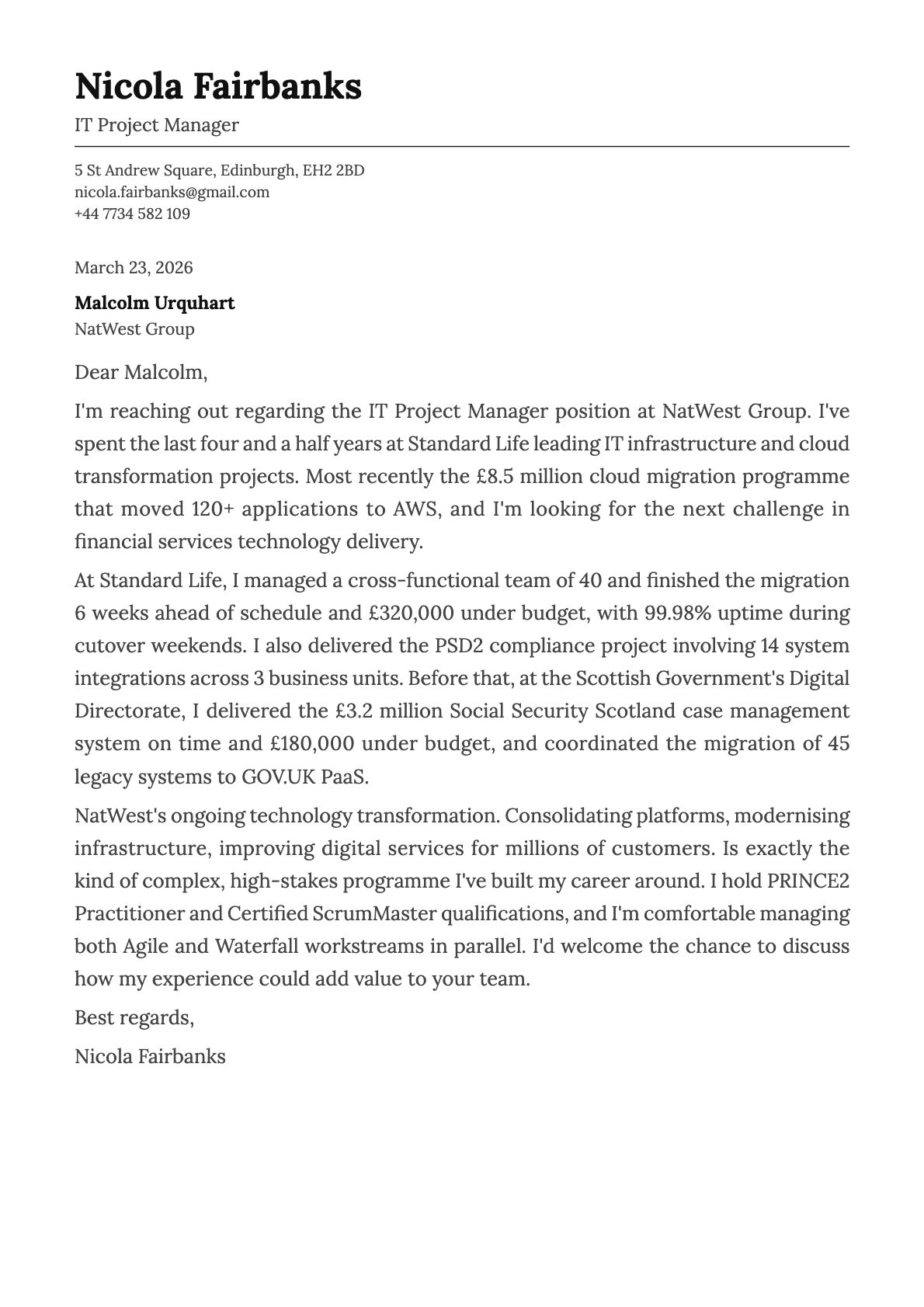
IT Project Manager
An IT project manager cover letter example showing how to present cloud migration experience, budget management.
Related articles

AI Is Screening Your Resume Before Any Human Sees It
AI screens most resumes before a human ever reads them. 97.4% of Fortune 500 companies run an ATS. This is what that means for you and what you can do about it.

ATS Resume Checker: How to Format a CV That Gets Past the Filters
Run the free copy and paste test to see what an ATS actually reads on your CV, then fix the tables, columns and headings that quietly get you filtered out.
The Best Resume Builders in 2026, Compared Honestly
Resume.io, Zety, Enhancv, Kickresume, Teal, and Laddro compared honestly: real pricing, free tiers, mobile apps, and where each tool wins. All prices checked in September 2026.