Software Engineer Cover Letter Example
A software engineer cover letter example with practical tips on addressing the hiring manager, showing technical impact.

Laddro Team
Free to use. No account needed to start.
Free to use. No account needed to start.
Why most software engineer cover letters fall flat
Here is the problem with most software engineer cover letters: they read like a second resume. You list your tech stack, mention you are keen about clean code, and close with "I look forward to hearing from you." The hiring manager has seen this exact letter 40 times this week.
The cover letter that actually works does something different. It connects your specific experience to a specific company and explains, in plain language, what you have built and why it matters.
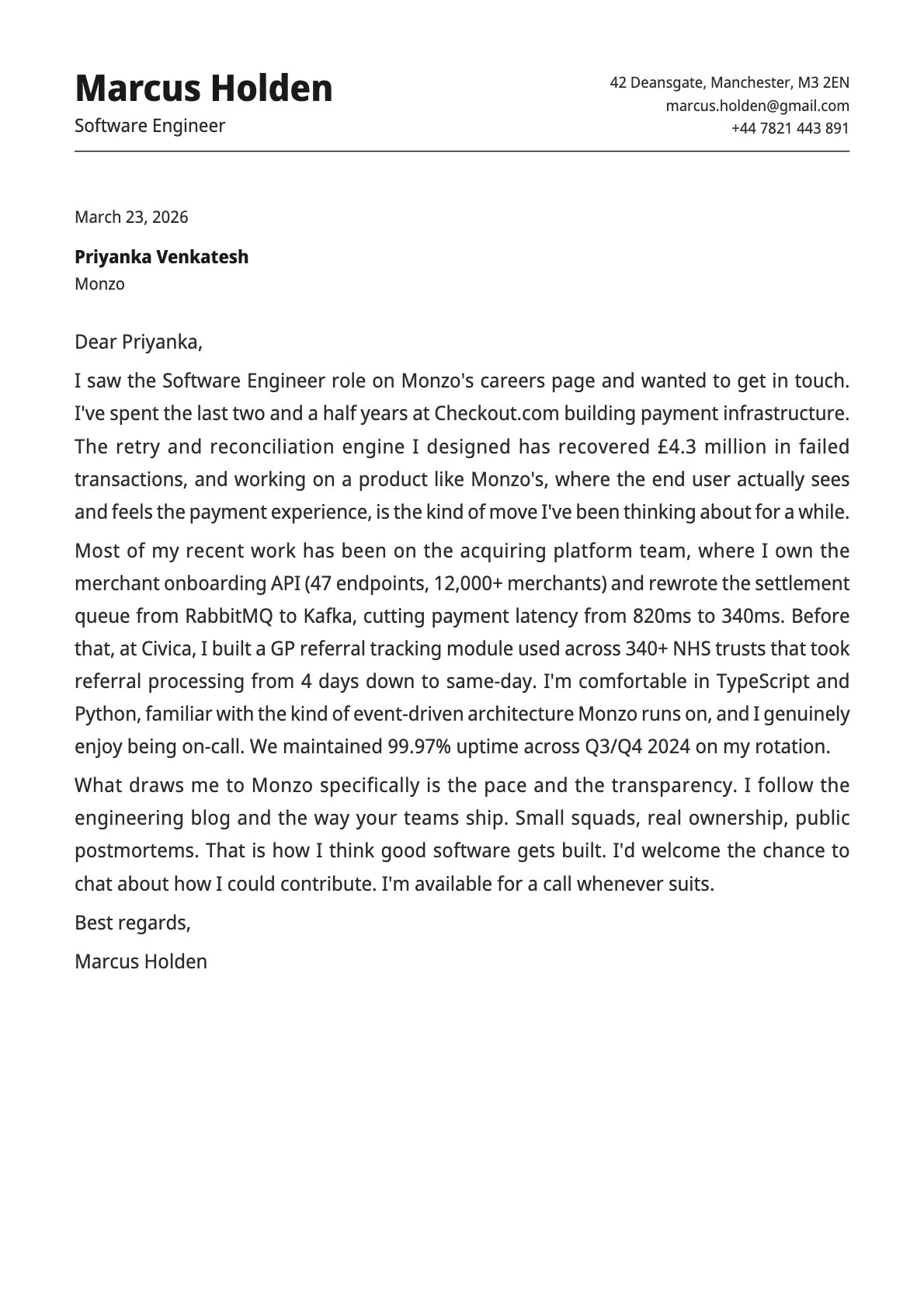
This example comes from Marcus Holden, a mid-level engineer applying for a role at Monzo. He currently works at Checkout.com building payment infrastructure. Let's break down what makes his letter effective and what you can learn from it.
Open with something concrete
Marcus opens by naming the role and immediately connecting it to his current work. He does not waste time with "I am excited to apply" or "I believe I would be a great fit." Instead, he jumps straight into the fact that he designed a retry and reconciliation engine that recovered 4.3 million pounds in failed transactions.
That first paragraph does two things at once: it proves he can do the job and it explains why Monzo specifically interests him. He wants to work on a product where the end user feels the payment experience. That is a real reason, not a generic one.
Your takeaway: Your opening paragraph should name one accomplishment and one reason you want this company. Not the industry. This company.
Show impact with numbers, not buzzwords
The middle of Marcus's letter is where the real selling happens. He talks about owning a merchant onboarding API with 47 endpoints serving 12,000+ merchants. He mentions rewriting a settlement queue from RabbitMQ to Kafka and cutting latency from 820ms to 340ms. He references 99.97% uptime on his on-call rotation.
Notice what he does not do: he does not say "experienced with microservices architecture" or "proficient in event-driven systems." He shows those things by describing actual work. The hiring manager can draw their own conclusions about his proficiency.
Your takeaway: Replace every adjective with a number. Instead of "experienced backend developer," say "built the order processing service handling 200,000 daily transactions." Let the work speak.
Explain why this company, specifically
The closing paragraph is where most engineers phone it in. Marcus does not. He references Monzo's engineering blog, mentions their public postmortems, and calls out the small-squad, real-ownership model. This is not flattery. It is proof that he has actually researched the company and understands how they work.
Hiring managers at companies like Monzo get hundreds of applications. The ones that mention specific things about the company's engineering culture stand out because they show genuine interest, not just a desire for any job.
What to include in your software engineer cover letter
Based on this example, here is a checklist:
- One or two accomplishments with metrics from your current or most recent role
- Specific technologies mentioned in context, not as a shopping list
- A clear reason you want this particular company (reference their product, blog, tech stack, or mission)
- Your availability for a conversation (keep it simple and direct)
What to leave out
Skip the generic opening ("Dear Hiring Manager, I am writing to express my interest..."). Skip the paragraph about your education unless you are a recent graduate. Skip the list of soft skills. And definitely skip the line about being a "team player who thrives in fast-paced environments."
How long should it be?
Marcus's letter is about 300 words. That is the sweet spot. Three paragraphs: what you have done, what you are good at, and why you want this job. Anything longer than a page, and you have lost the reader. Anything shorter than 200 words, and you have not said enough to stand out.
Final thoughts
A good software engineer cover letter is not about proving you can code. Your resume and GitHub do that. The cover letter is about proving you can communicate, that you have done your homework on the company, and that you have a real reason for wanting to be there. Write it like you are emailing a colleague, not like you are filling out a form.
Was this cover letter example helpful?
Rate this example to help us create better content for you.
4.8 average from 187 ratingsBuild your own version
Open this layout in the builder and swap in your own details. It takes a few minutes.
Free to use. No account needed to start.
Related cover letter examples
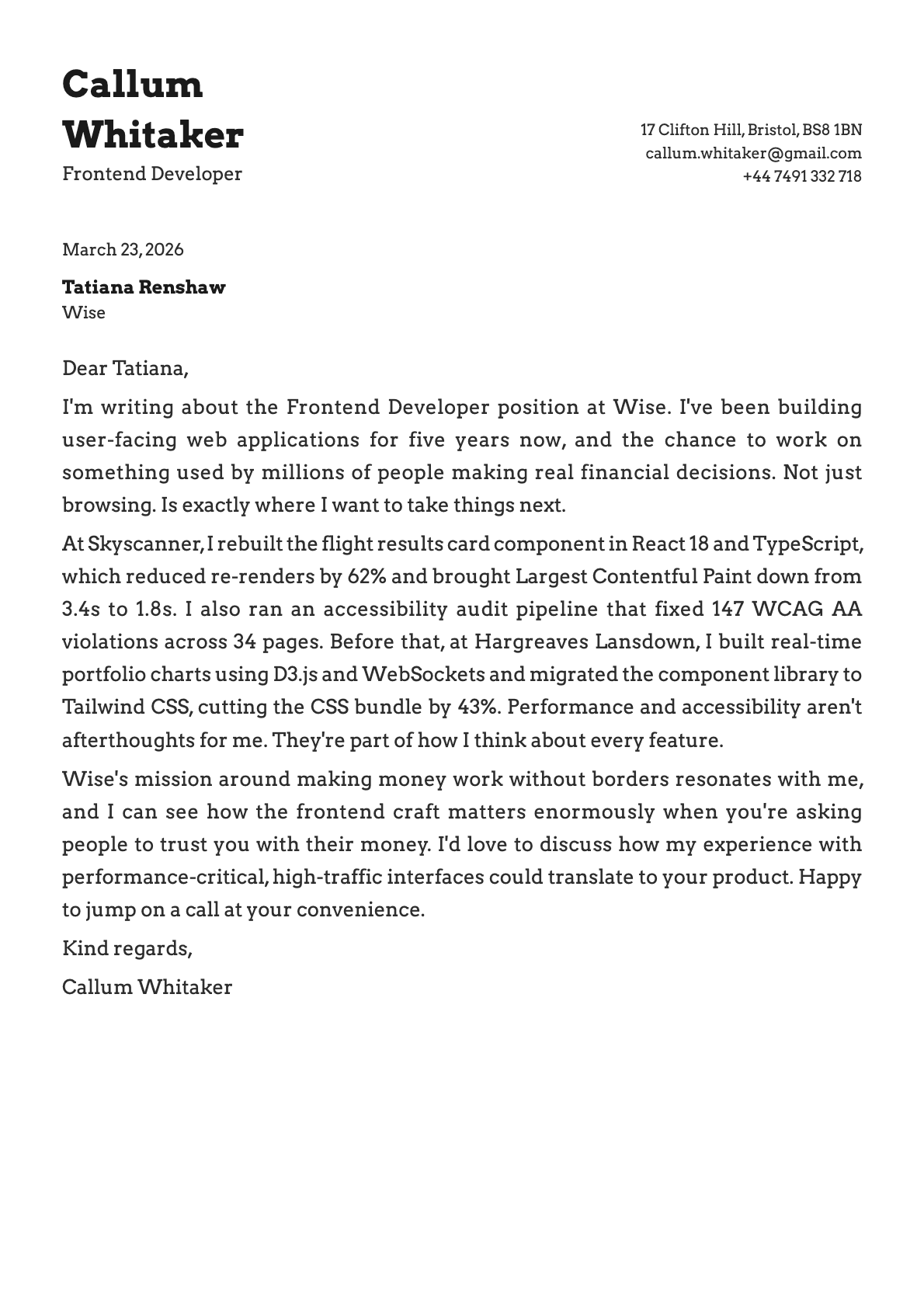
Frontend Developer
A frontend developer cover letter example showing how to highlight performance wins, accessibility work, and why you want a specific company.
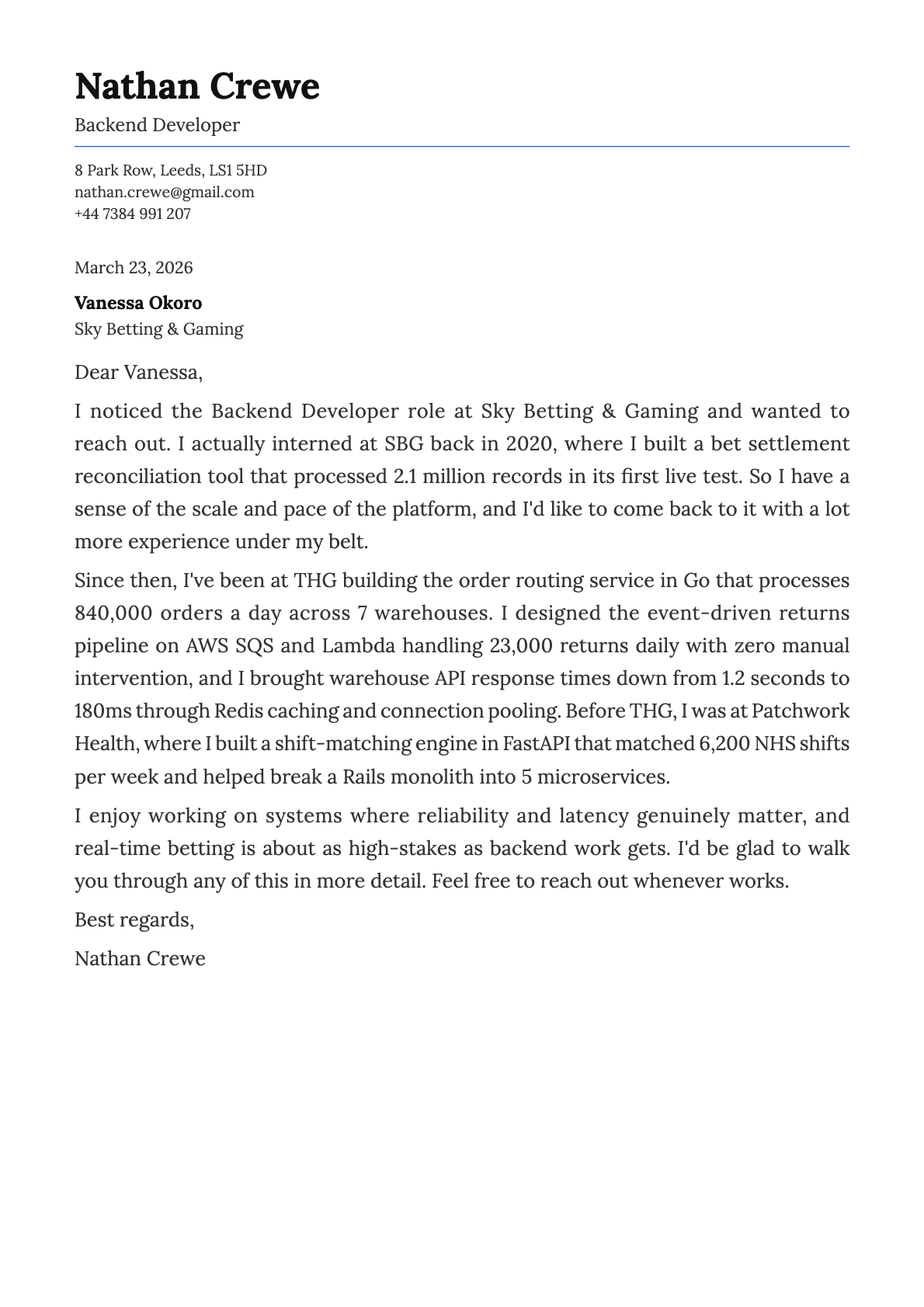
Backend Developer
A backend developer cover letter example that shows how to present system design, throughput numbers, and reliability metrics to land an interview.
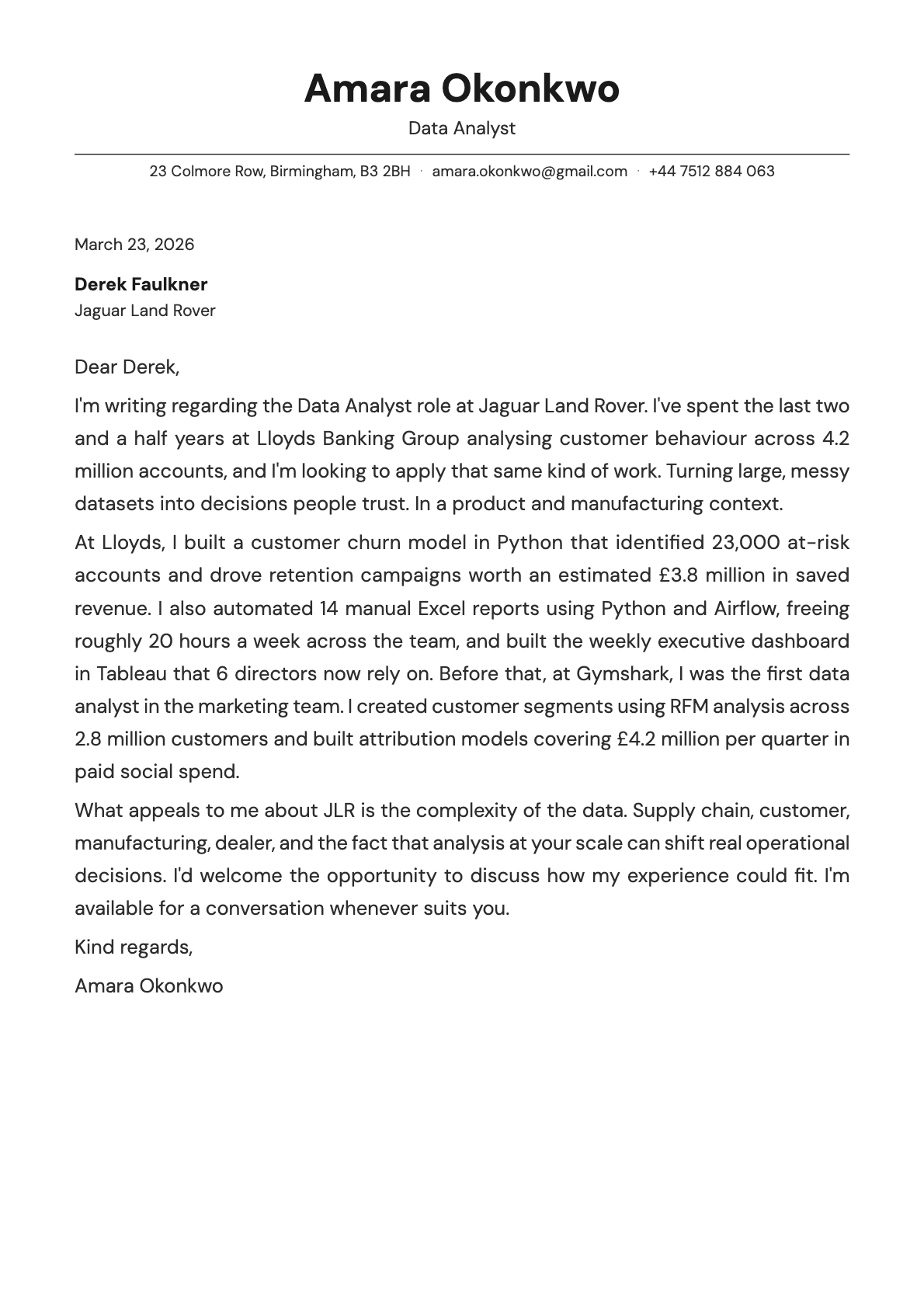
Data Analyst
A data analyst cover letter example showing how to present analytical projects, business impact, and your ability to turn messy data into real decisions.
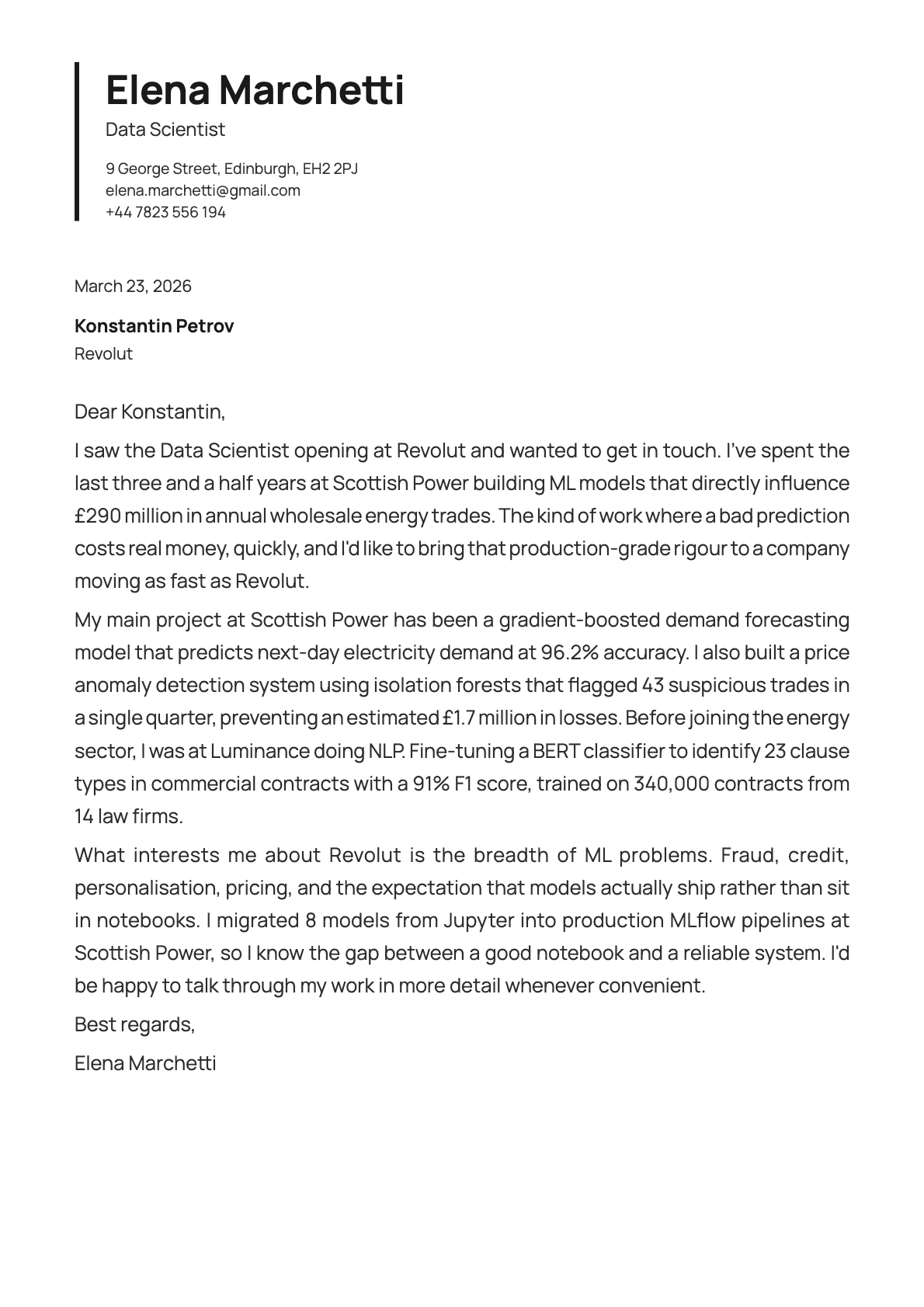
Data Scientist
A data scientist cover letter example showing how to present ML models, production deployments, and measurable outcomes to impress hiring managers.
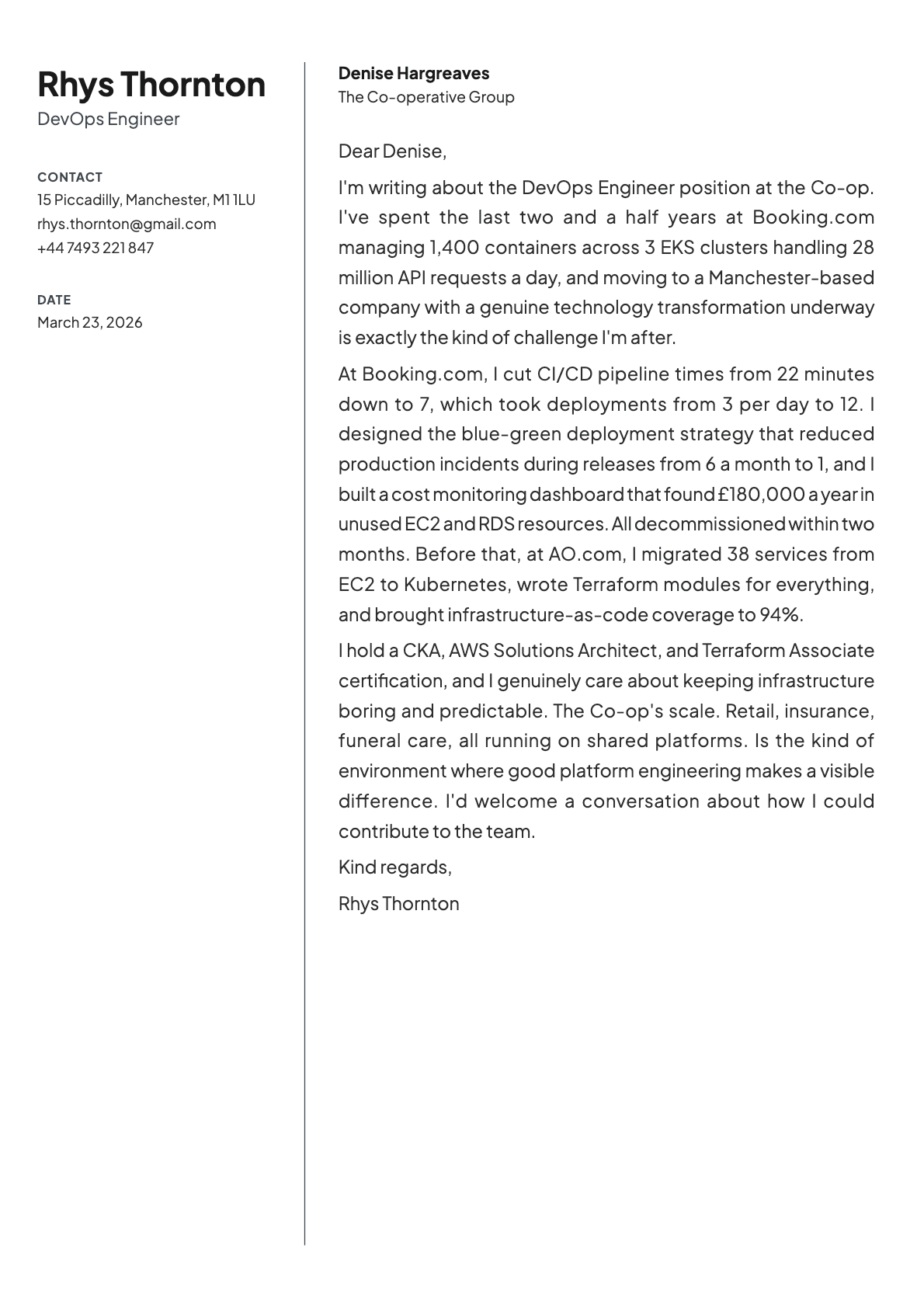
DevOps Engineer
A DevOps engineer cover letter example showing how to present infrastructure wins, CI/CD improvements, and cost savings that hiring managers care about.
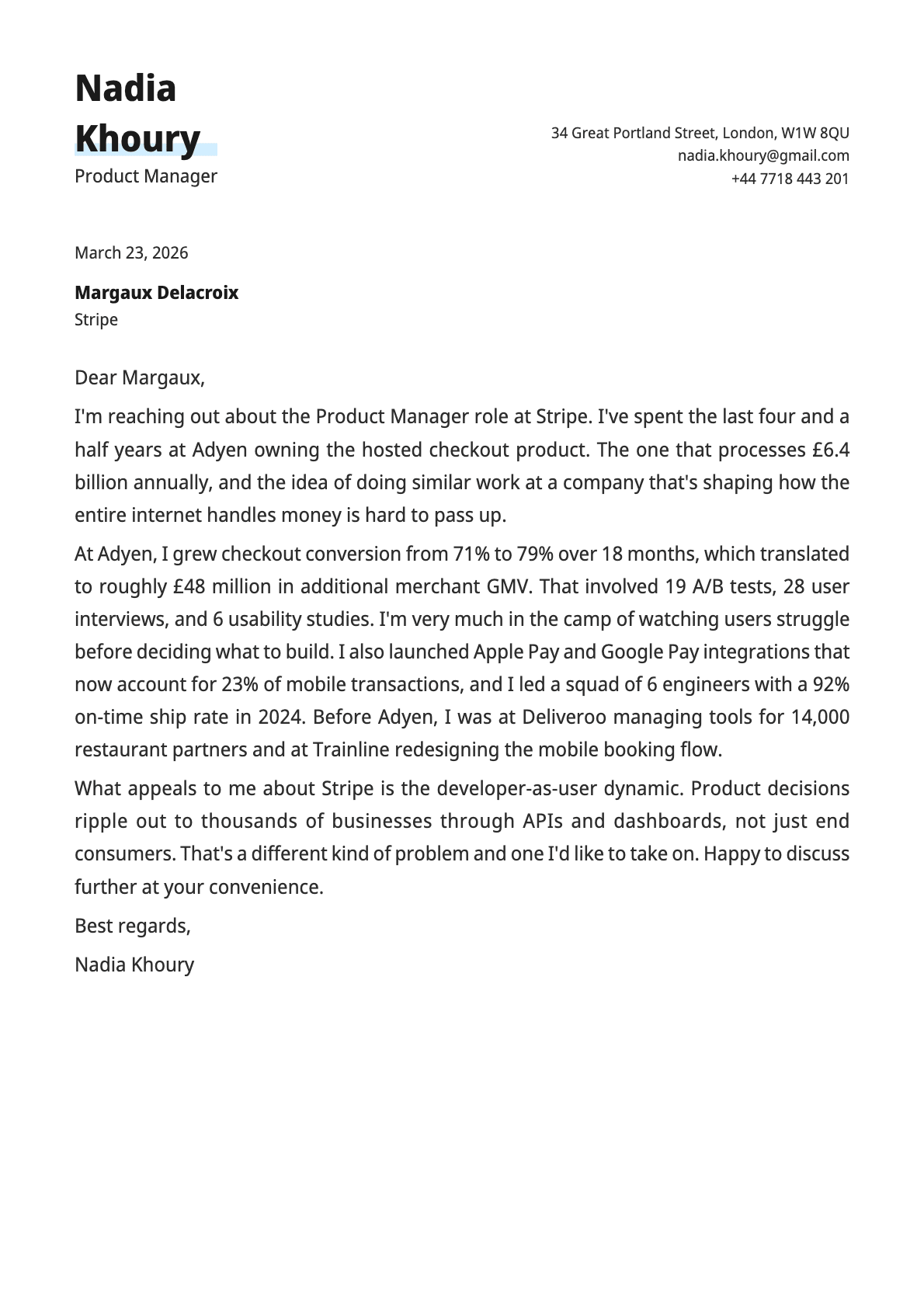
Product Manager
A product manager cover letter example showing how to present conversion improvements, A/B testing, and squad leadership when applying to a payments.
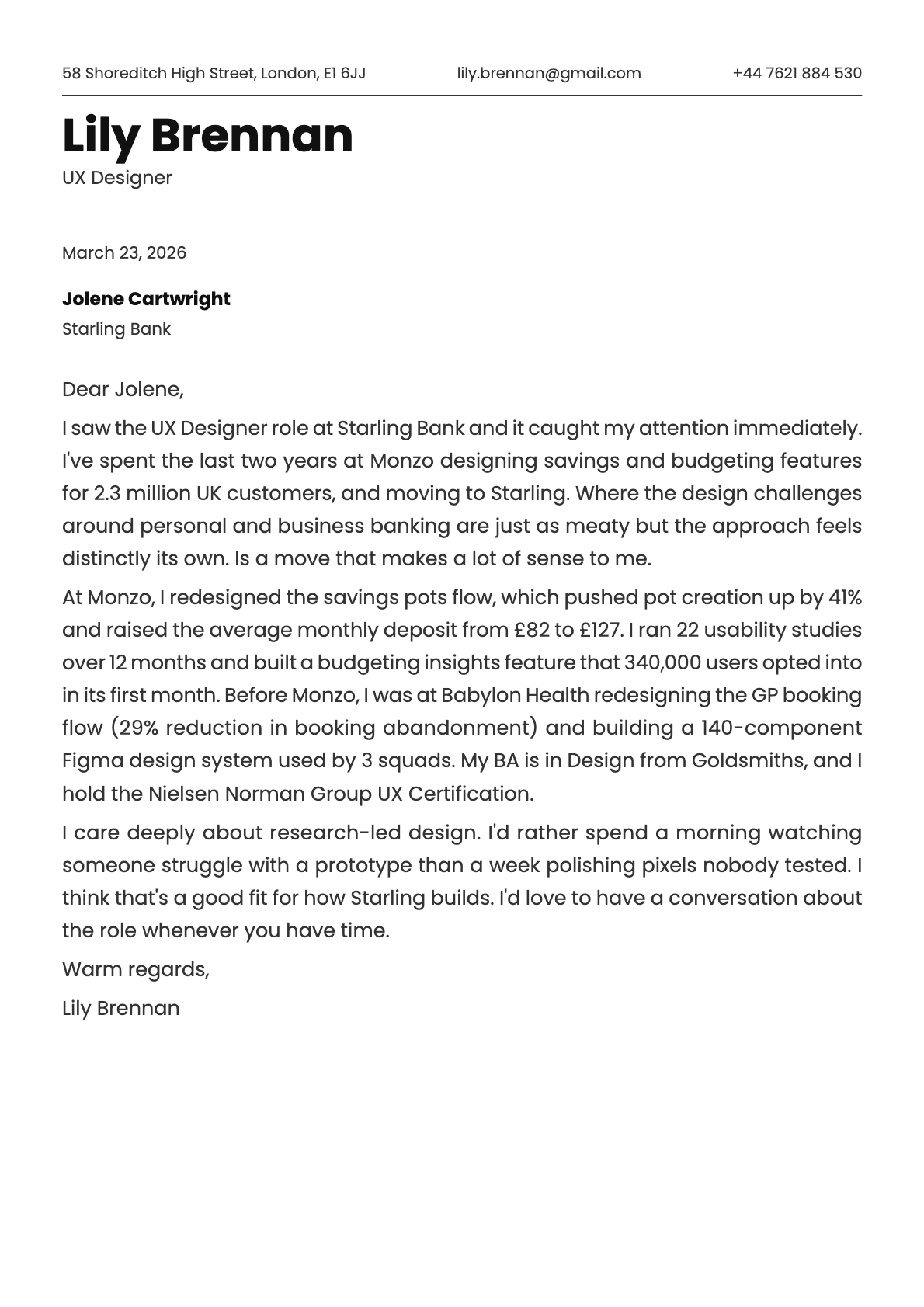
UX Designer
A UX designer cover letter example showing how to present usability research, conversion improvements, and design system work when applying to a digital.
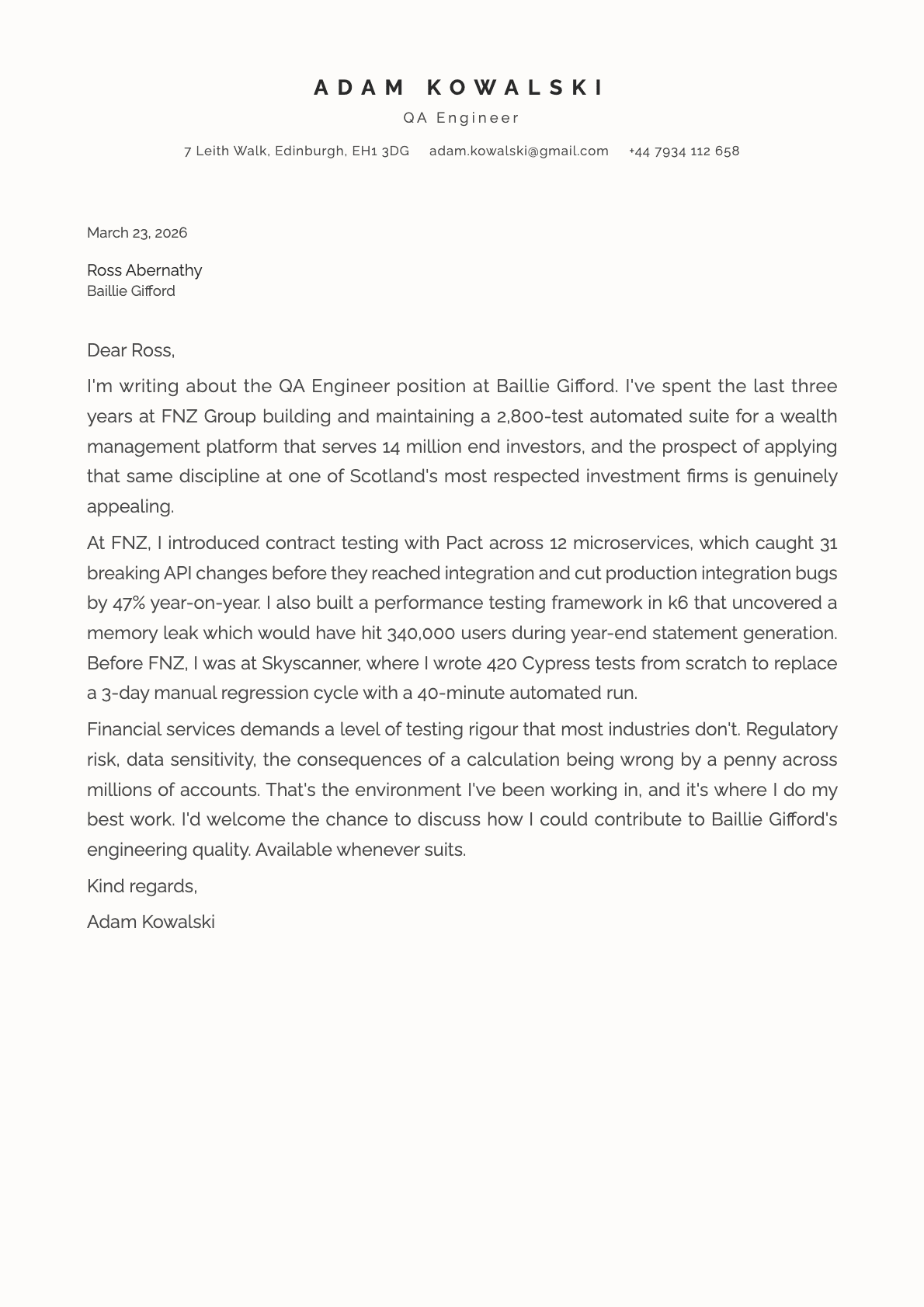
QA Engineer
A QA engineer cover letter example showing how to present automated testing frameworks, contract testing, and quality metrics for a financial services.
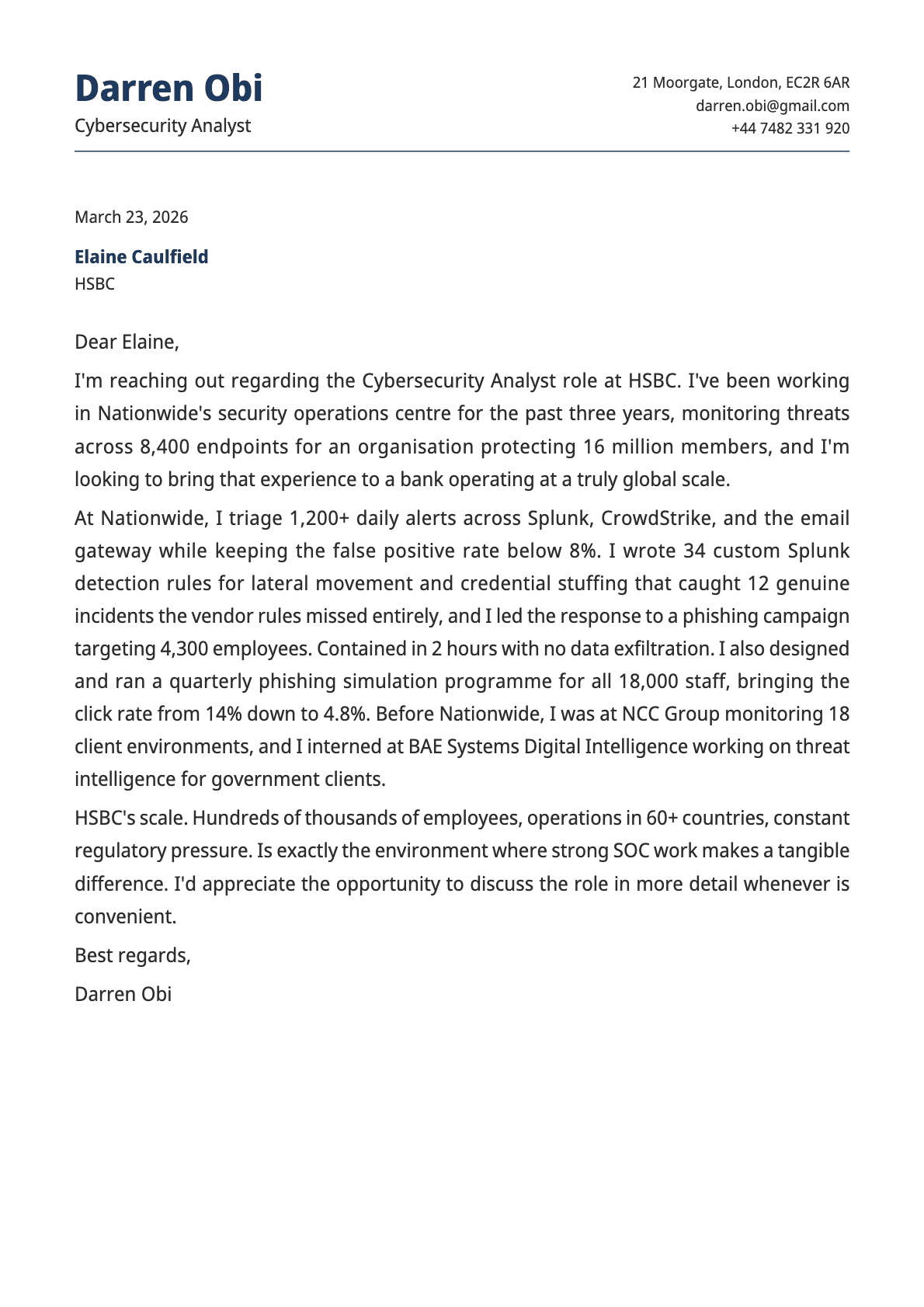
Cybersecurity Analyst
A cybersecurity analyst cover letter example showing how to present SOC experience, threat detection skills, and incident response work for a financial.
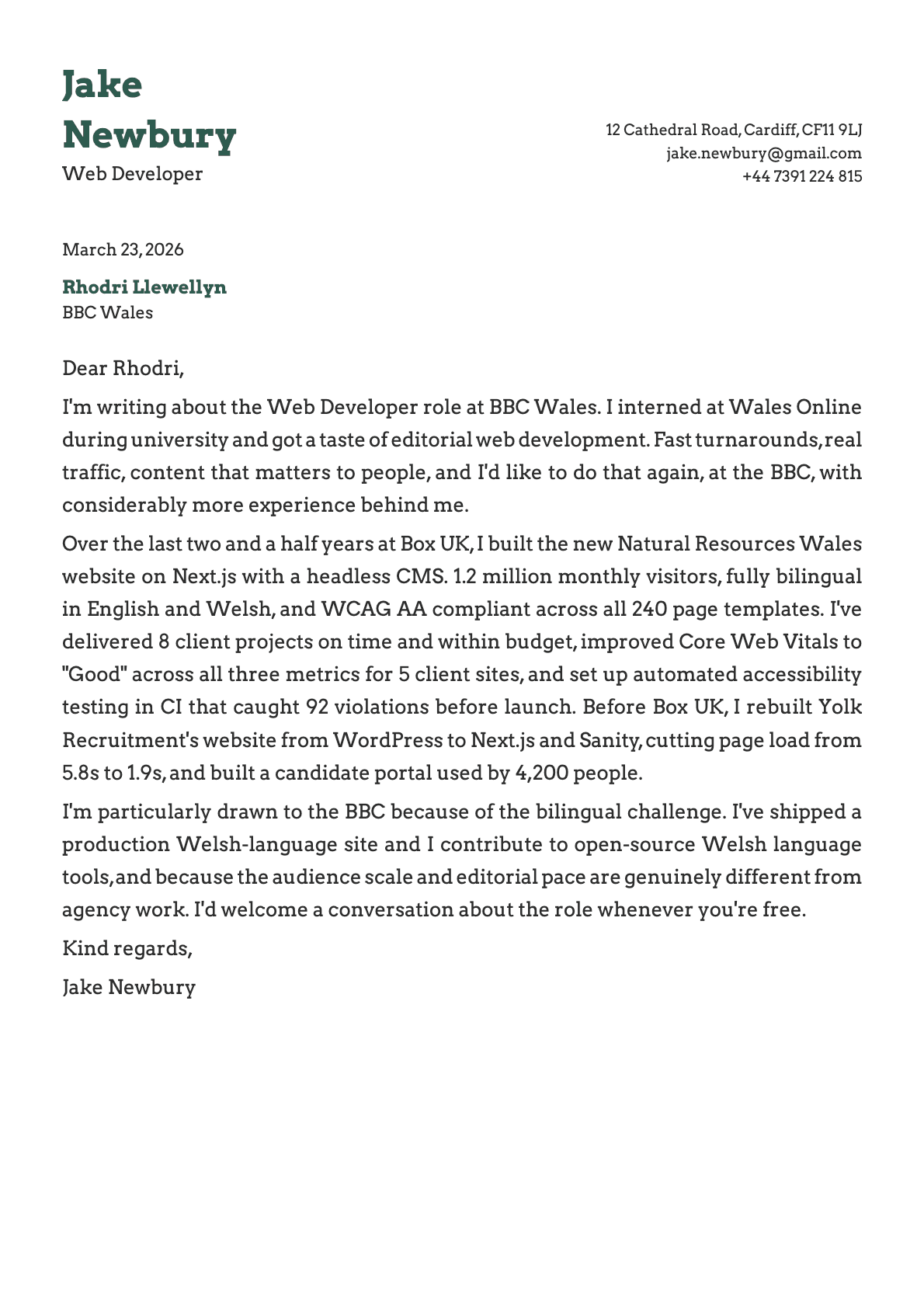
Web Developer
A web developer cover letter example showing how to present Next.js projects, accessibility compliance.
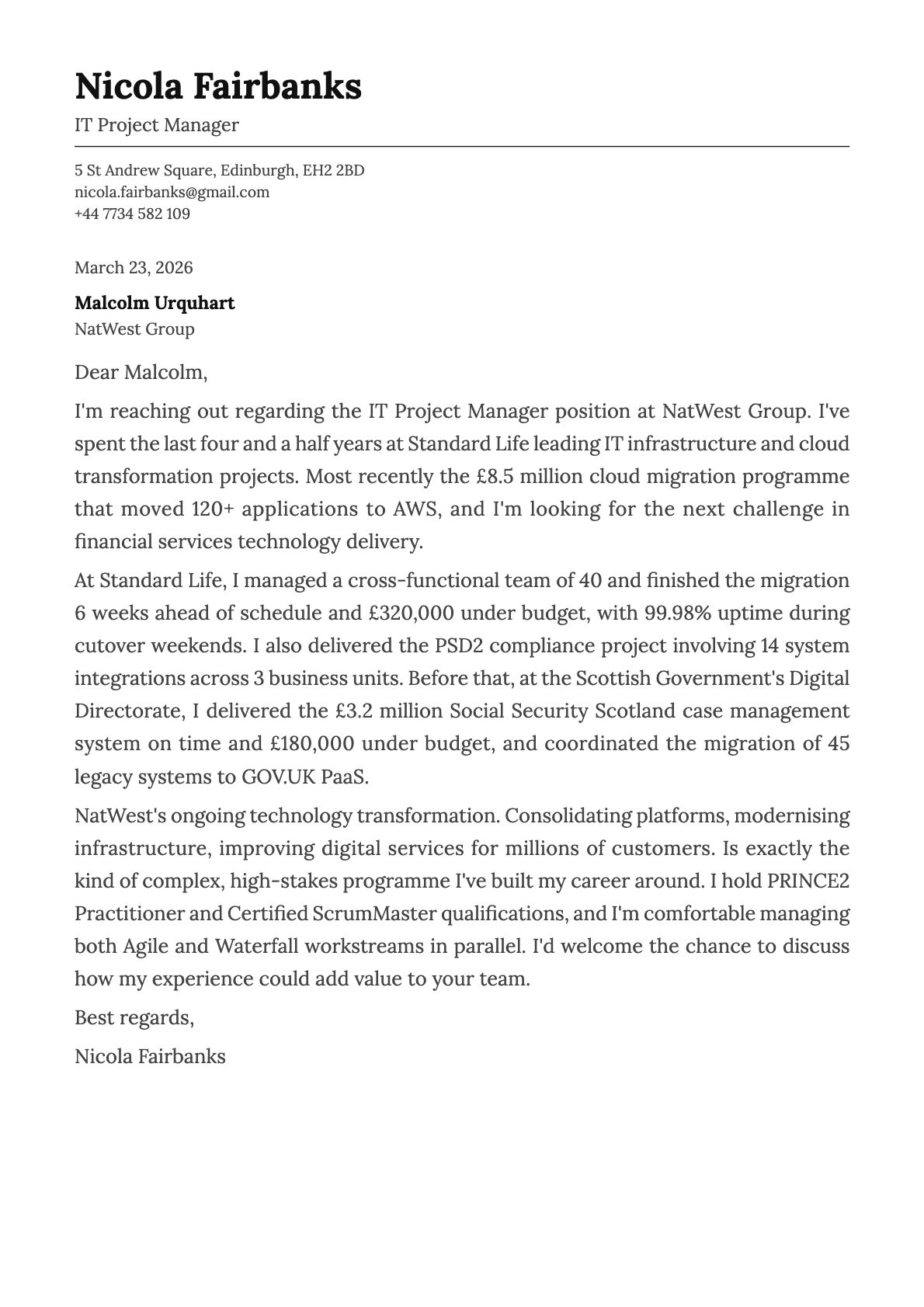
IT Project Manager
An IT project manager cover letter example showing how to present cloud migration experience, budget management.
Related articles

AI Is Screening Your Resume Before Any Human Sees It
AI screens most resumes before a human ever reads them. 97.4% of Fortune 500 companies run an ATS. This is what that means for you and what you can do about it.

ATS Resume Checker: How to Format a CV That Gets Past the Filters
Run the free copy and paste test to see what an ATS actually reads on your CV, then fix the tables, columns and headings that quietly get you filtered out.

The Best Resume Builders in 2026, Compared Honestly
Resume.io, Zety, Enhancv, Kickresume, Teal, and Laddro compared honestly: real pricing, free tiers, mobile apps, and where each tool wins. All prices checked in September 2026.