Web Developer Cover Letter Example
A web developer cover letter example showing how to present Next.js projects, accessibility compliance.

Laddro Team
Free to use. No account needed to start.
Free to use. No account needed to start.
Why web developer cover letters often undersell the work
Web development is one of those fields where the work is visible to millions of people but the cover letters describing it are often invisible. Candidates list frameworks and languages without showing what they built. "Proficient in React and Node.js" appears in thousands of applications. The hiring manager needs to see what your code actually does in production: traffic served, performance achieved, and standards met.
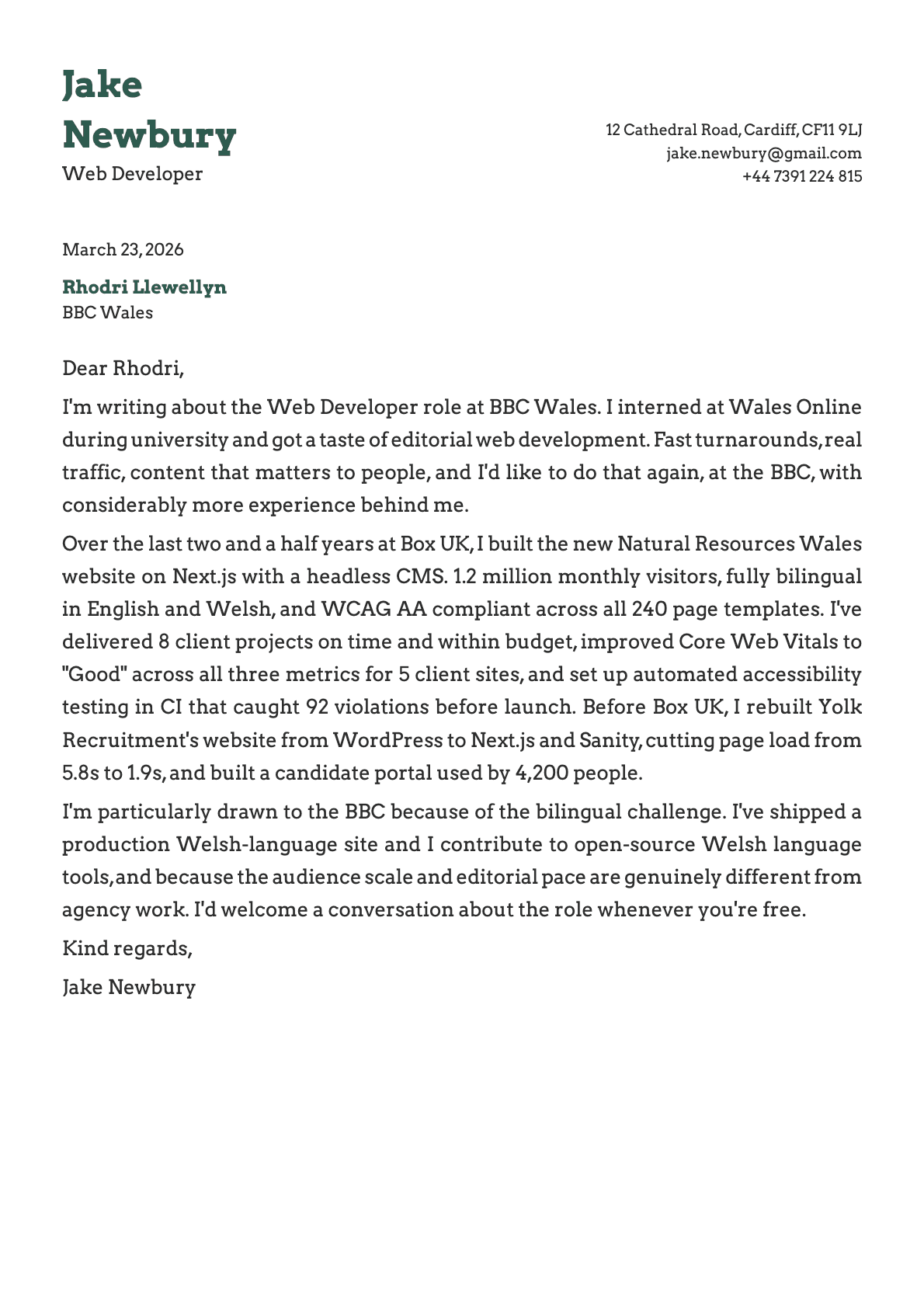
This example from Jake Newbury shows how to present web development work with the specificity it deserves. He works at Box UK in Cardiff and is applying for a Web Developer role at BBC Wales.
Open with a connection to the company
Jake's opening is distinctive. He does not start with a list of technologies. He starts with a personal connection: he interned at Wales Online during university and experienced editorial web development firsthand. Fast turnarounds, real traffic, content that matters to people. He frames the BBC role as returning to that kind of work with considerably more experience.
Your takeaway: If you have a genuine connection to the company or its industry, lead with it. A personal story told in two sentences is more memorable than a skills summary.
Show production-grade work with performance data
The body of Jake's letter is packed with specifics. He built the Natural Resources Wales website on Next.js with a headless CMS: 1.2 million monthly visitors, fully bilingual in English and Welsh, and WCAG AA compliant across all 240 page templates. He has delivered eight client projects on time and within budget. He improved Core Web Vitals to "Good" across all three metrics for five client sites. He set up automated accessibility testing in CI that caught 92 violations before launch.
His previous work includes rebuilding a recruitment website from WordPress to Next.js and Sanity, cutting page load from 5.8 seconds to 1.9 seconds, and building a candidate portal used by 4,200 people.
Your takeaway: For each project, include the technology, the scale (traffic or users), and the quality metric (performance scores, accessibility compliance, delivery record).
Address what makes this role different
Jake closes by naming two things that draw him to the BBC specifically: the bilingual challenge (he has already shipped a production Welsh-language site and contributes to open-source Welsh language tools) and the audience scale and editorial pace that distinguish media development from agency work.
What to include in your web developer cover letter
- Live projects with traffic numbers and technology stack
- Performance improvements (Core Web Vitals, page load times)
- Accessibility compliance with specific standards met
- Delivery track record (projects delivered on time and budget)
- Testing and CI practices you have implemented
- A specific reason for wanting this company or industry
What to leave out
Do not list every language and framework you know. Do not describe yourself as a "full-stack developer" without specifying what you have shipped. Do not mention personal projects unless they have significant traffic or community adoption.
Final thoughts
A web developer cover letter should prove that you build things people use, at scale, with quality. Traffic numbers, performance scores, and accessibility standards are your strongest arguments. Combine those with a genuine reason for wanting the role and keep the whole thing concise. The code speaks, but first your cover letter needs to get you through the door.
Was this cover letter example helpful?
Rate this example to help us create better content for you.
4.7 average from 141 ratingsBuild your own version
Open this layout in the builder and swap in your own details. It takes a few minutes.
Free to use. No account needed to start.
Related cover letter examples
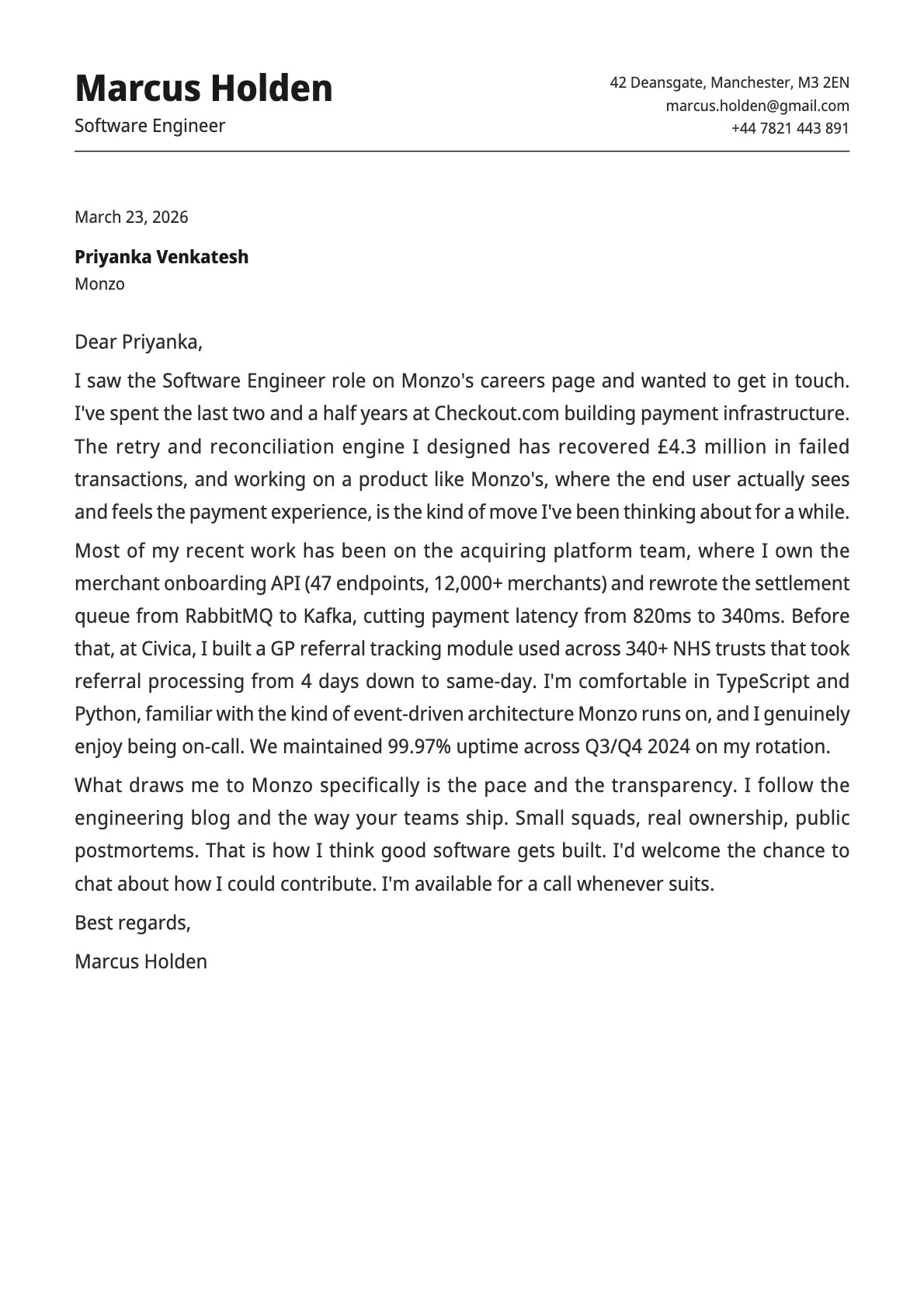
Software Engineer
A software engineer cover letter example with practical tips on addressing the hiring manager, showing technical impact.
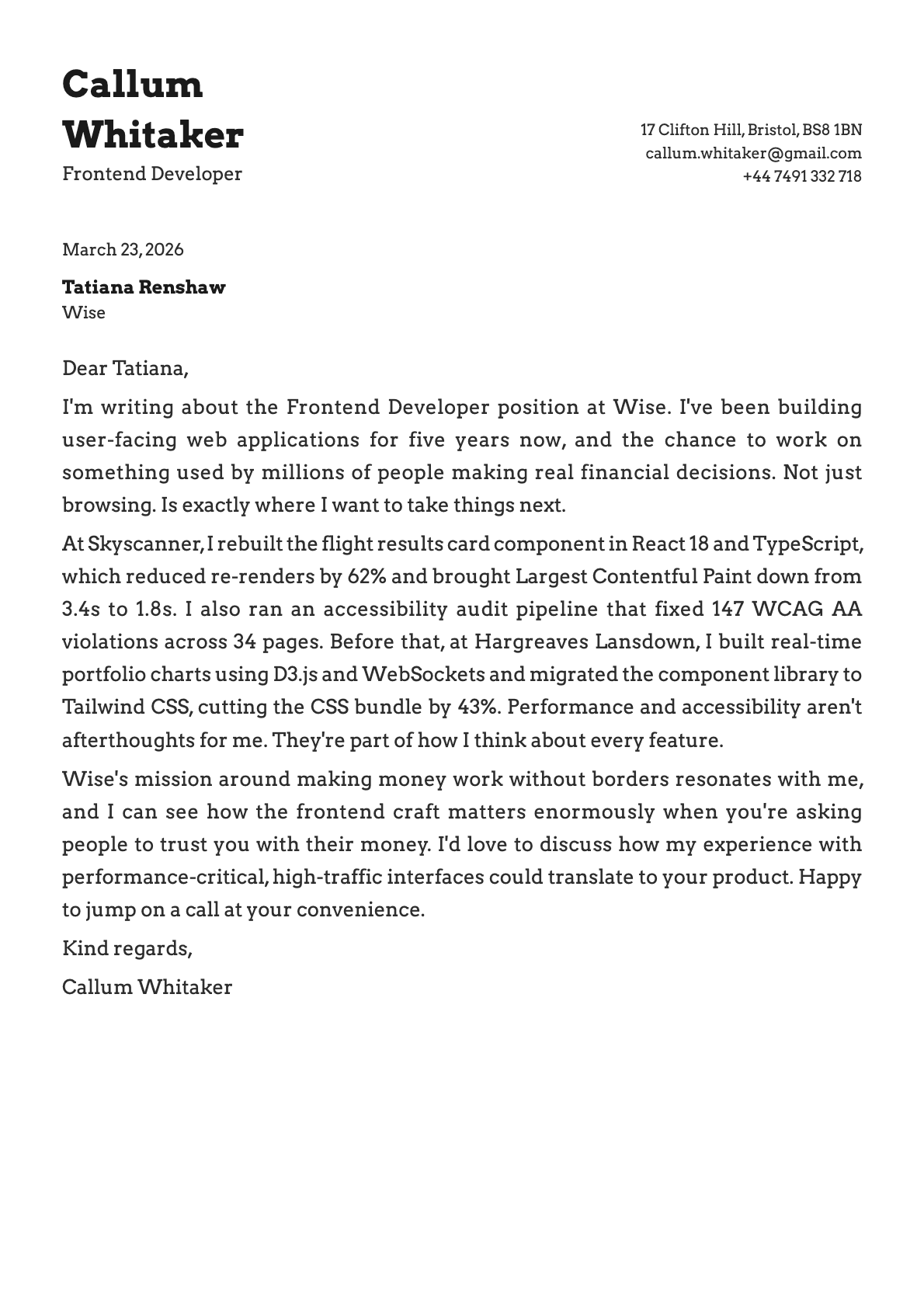
Frontend Developer
A frontend developer cover letter example showing how to highlight performance wins, accessibility work, and why you want a specific company.
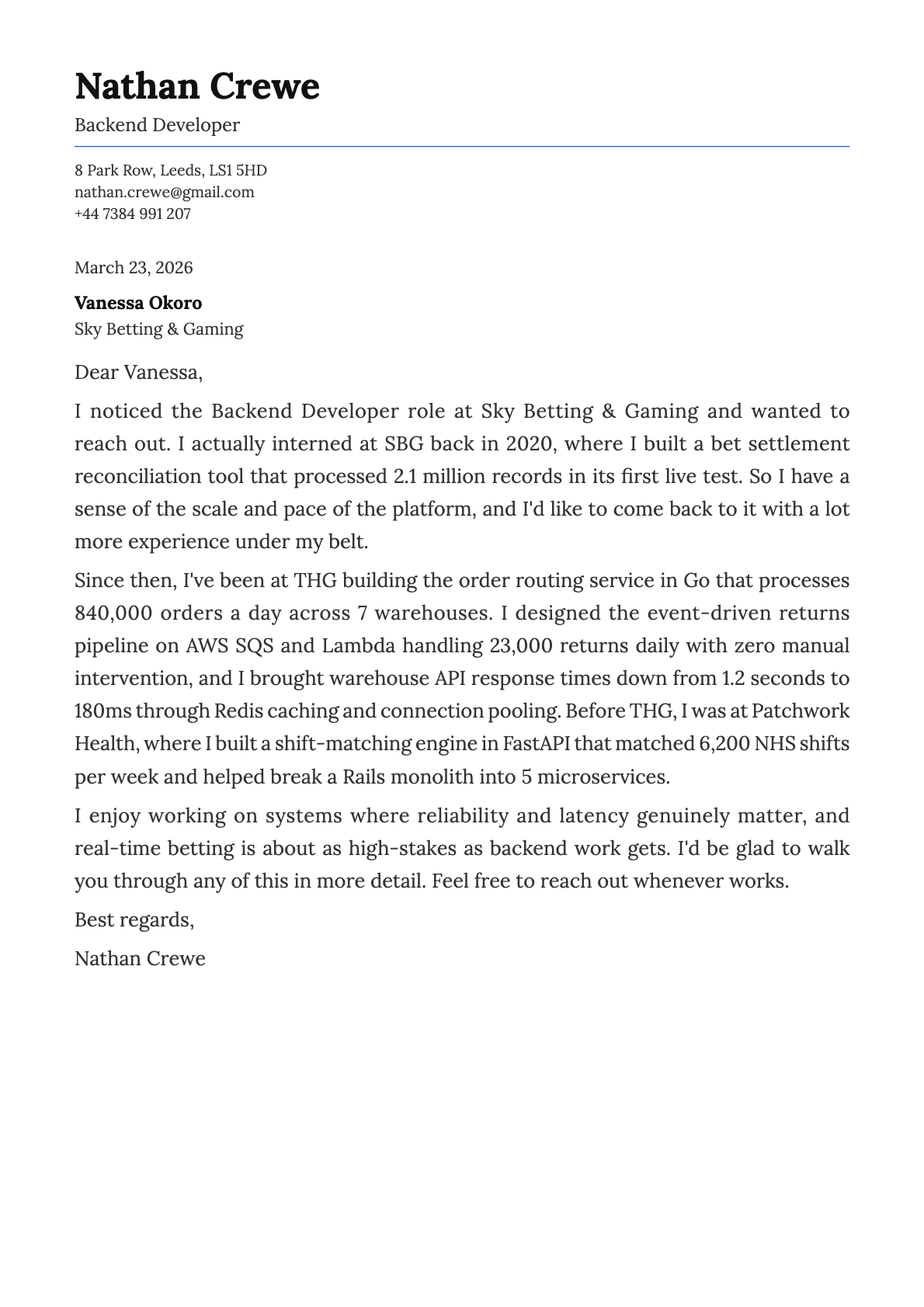
Backend Developer
A backend developer cover letter example that shows how to present system design, throughput numbers, and reliability metrics to land an interview.
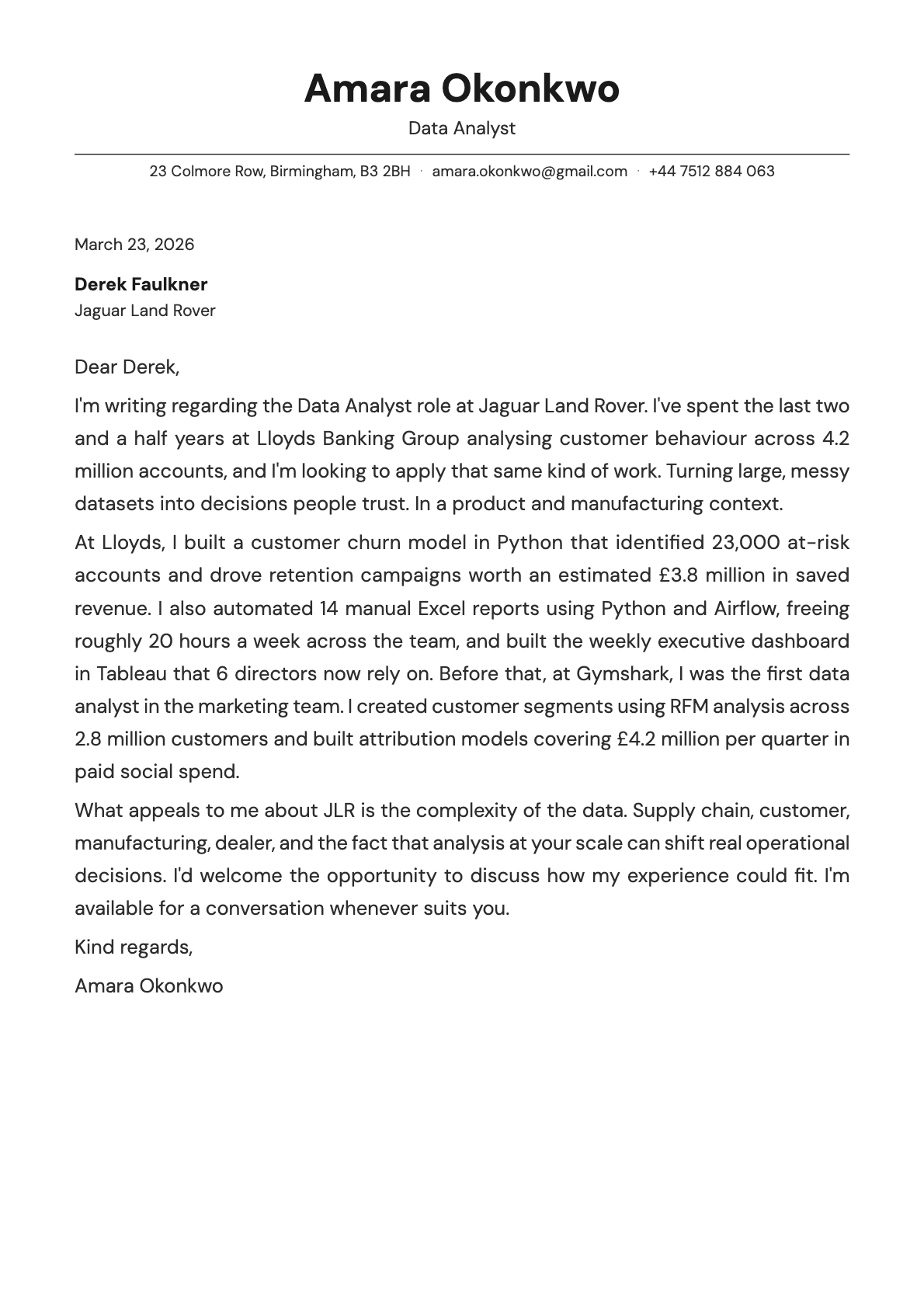
Data Analyst
A data analyst cover letter example showing how to present analytical projects, business impact, and your ability to turn messy data into real decisions.
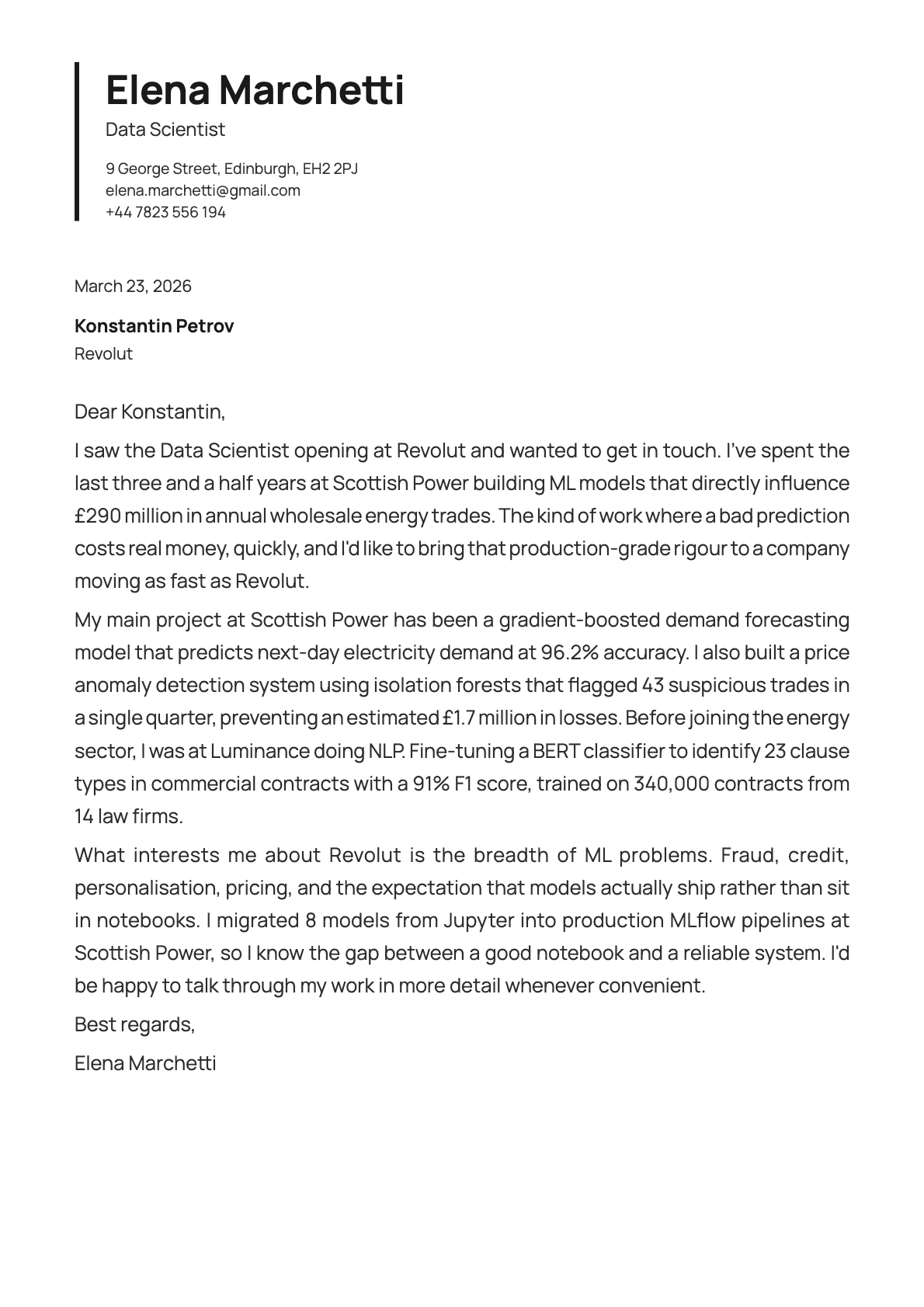
Data Scientist
A data scientist cover letter example showing how to present ML models, production deployments, and measurable outcomes to impress hiring managers.
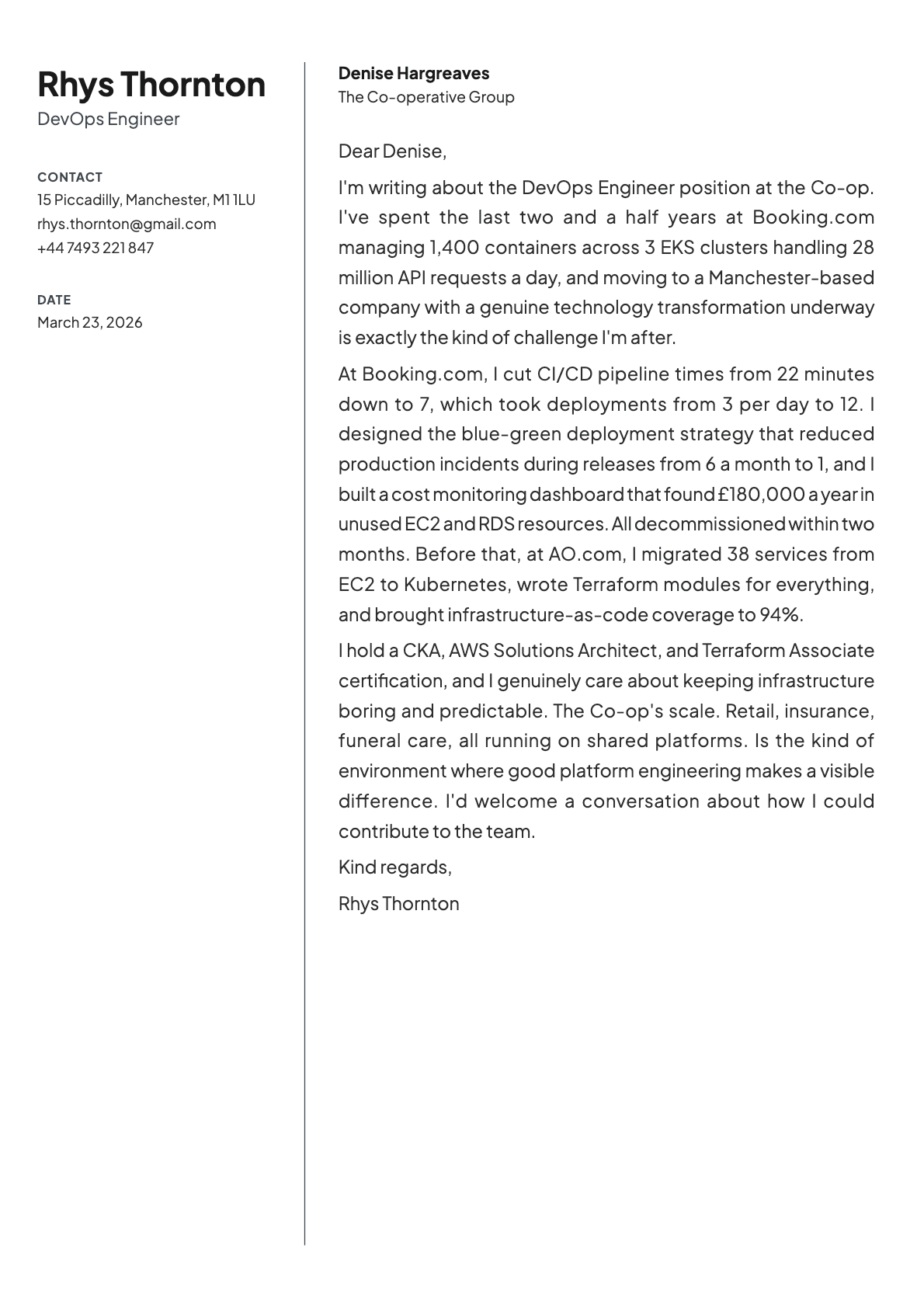
DevOps Engineer
A DevOps engineer cover letter example showing how to present infrastructure wins, CI/CD improvements, and cost savings that hiring managers care about.
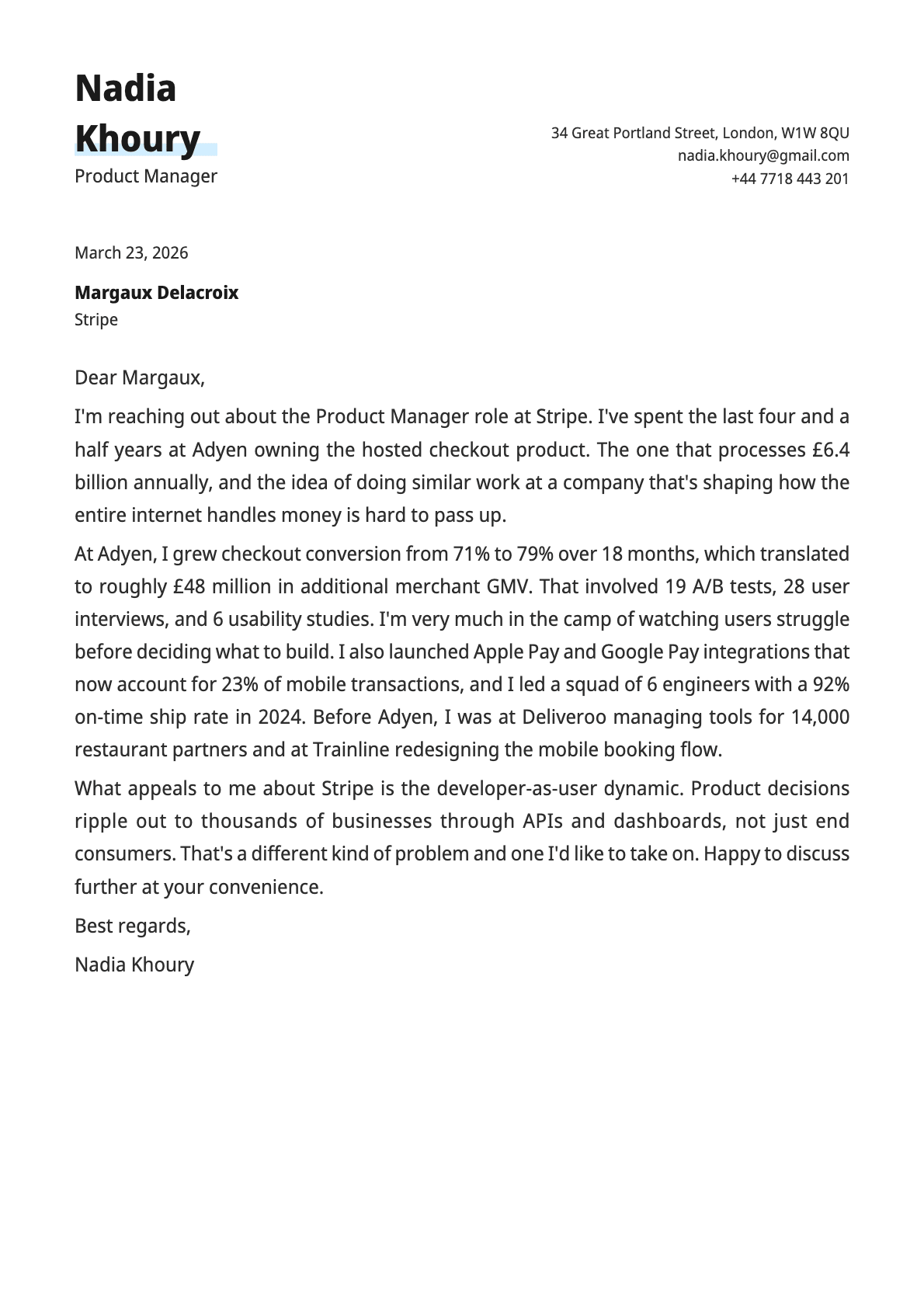
Product Manager
A product manager cover letter example showing how to present conversion improvements, A/B testing, and squad leadership when applying to a payments.
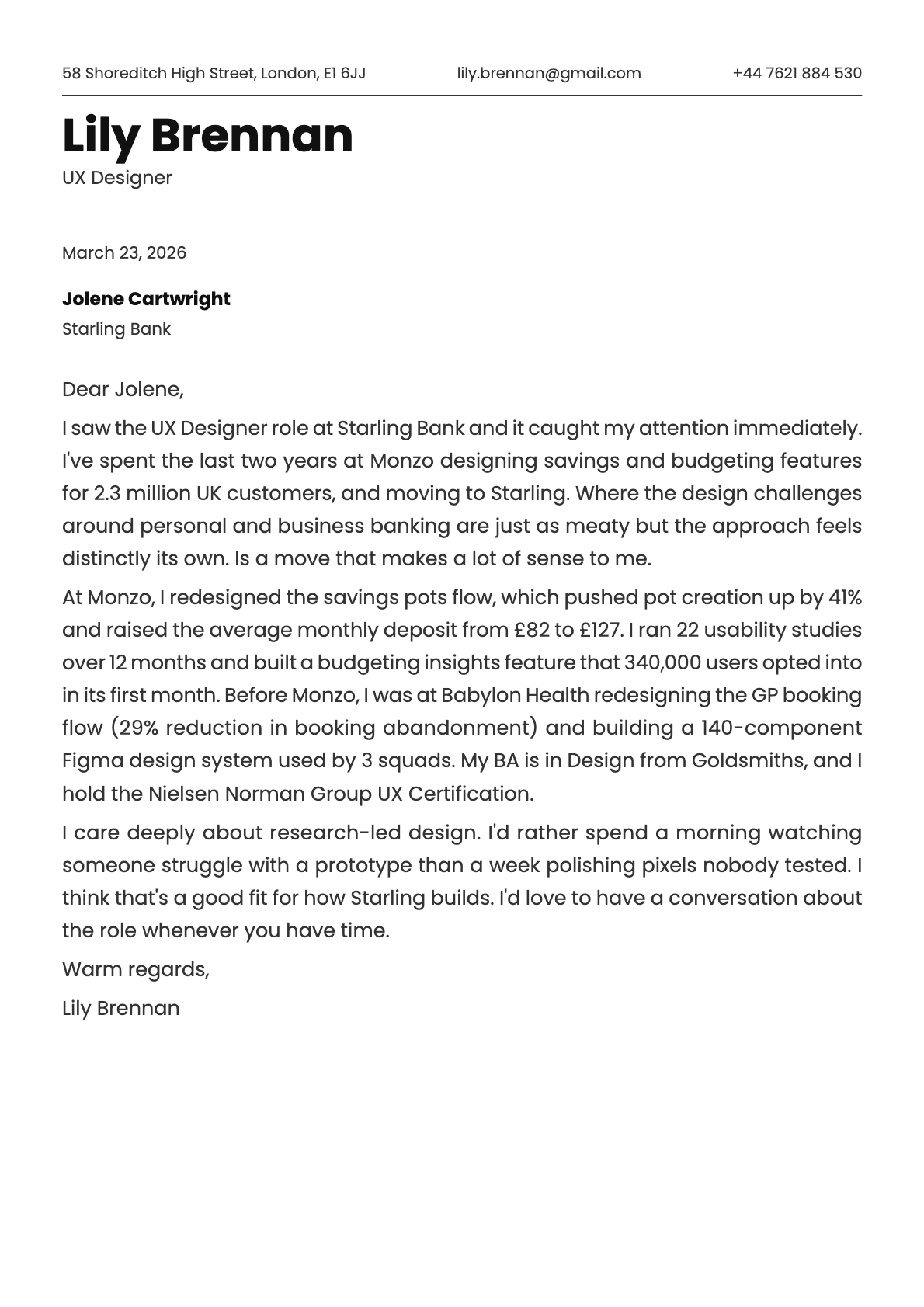
UX Designer
A UX designer cover letter example showing how to present usability research, conversion improvements, and design system work when applying to a digital.
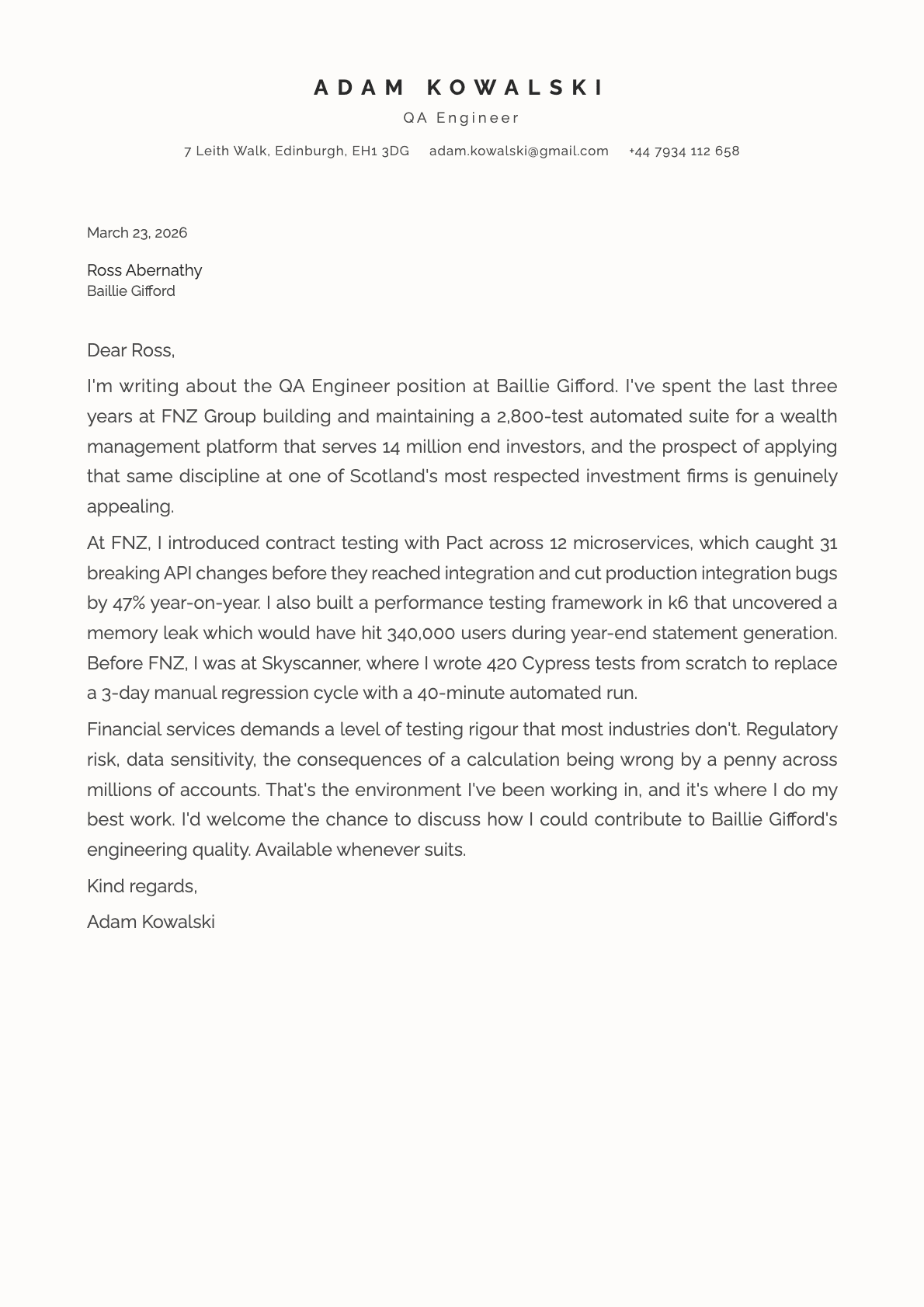
QA Engineer
A QA engineer cover letter example showing how to present automated testing frameworks, contract testing, and quality metrics for a financial services.
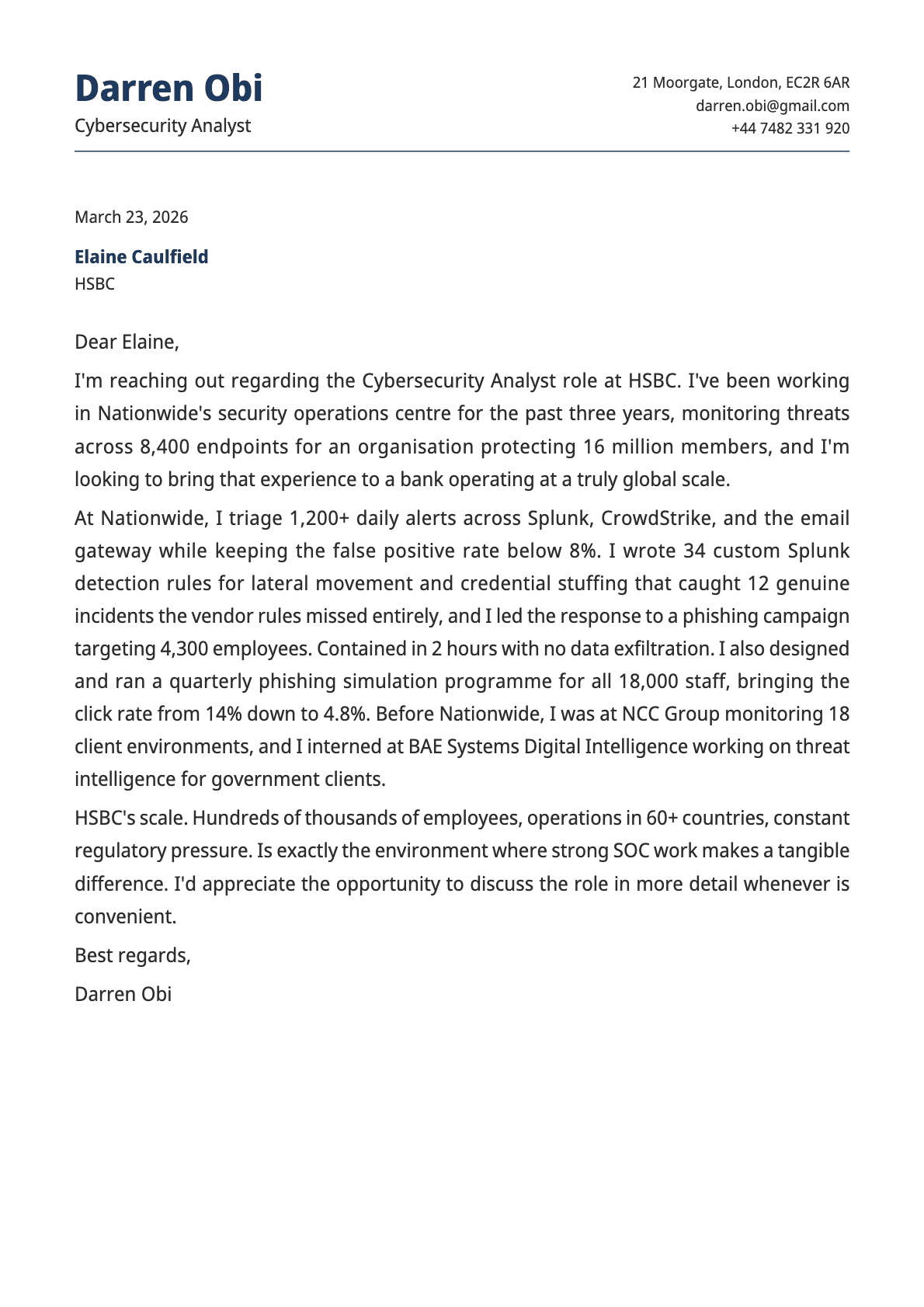
Cybersecurity Analyst
A cybersecurity analyst cover letter example showing how to present SOC experience, threat detection skills, and incident response work for a financial.
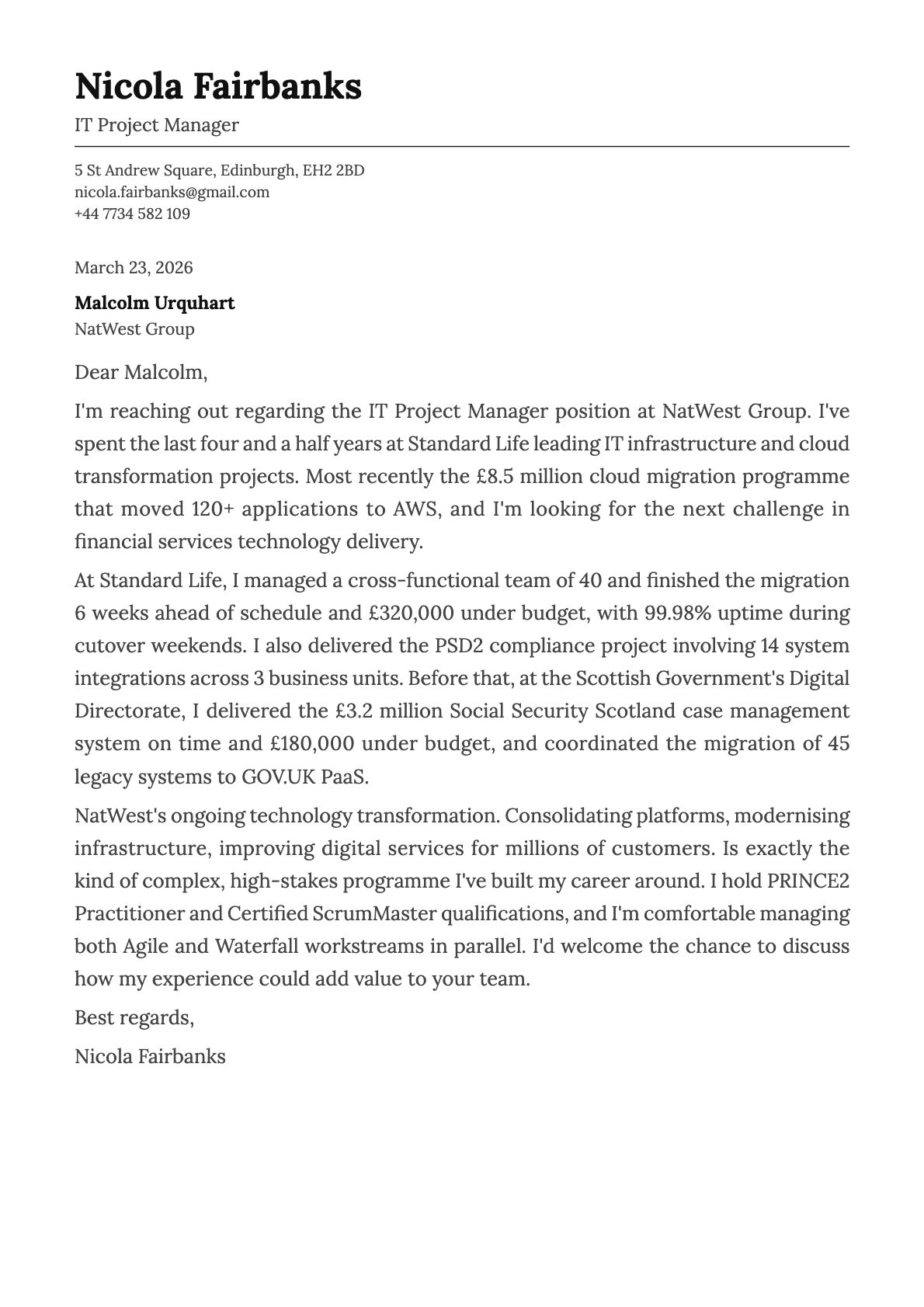
IT Project Manager
An IT project manager cover letter example showing how to present cloud migration experience, budget management.
Related articles

AI Is Screening Your Resume Before Any Human Sees It
AI screens most resumes before a human ever reads them. 97.4% of Fortune 500 companies run an ATS. This is what that means for you and what you can do about it.

ATS Resume Checker: How to Format a CV That Gets Past the Filters
Run the free copy and paste test to see what an ATS actually reads on your CV, then fix the tables, columns and headings that quietly get you filtered out.
The Best Resume Builders in 2026, Compared Honestly
Resume.io, Zety, Enhancv, Kickresume, Teal, and Laddro compared honestly: real pricing, free tiers, mobile apps, and where each tool wins. All prices checked in September 2026.