Data Scientist Cover Letter Example
A data scientist cover letter example showing how to present ML models, production deployments, and measurable outcomes to impress hiring managers.

Laddro Team
Free to use. No account needed to start.
Free to use. No account needed to start.
Why data scientist cover letters need production stories
The biggest mistake data scientists make in cover letters is talking about models like they live in Jupyter notebooks. Hiring managers at production-focused companies want to know if your models actually ship. Can you deploy them? Monitor them? Debug them at 2 AM when the predictions start drifting?
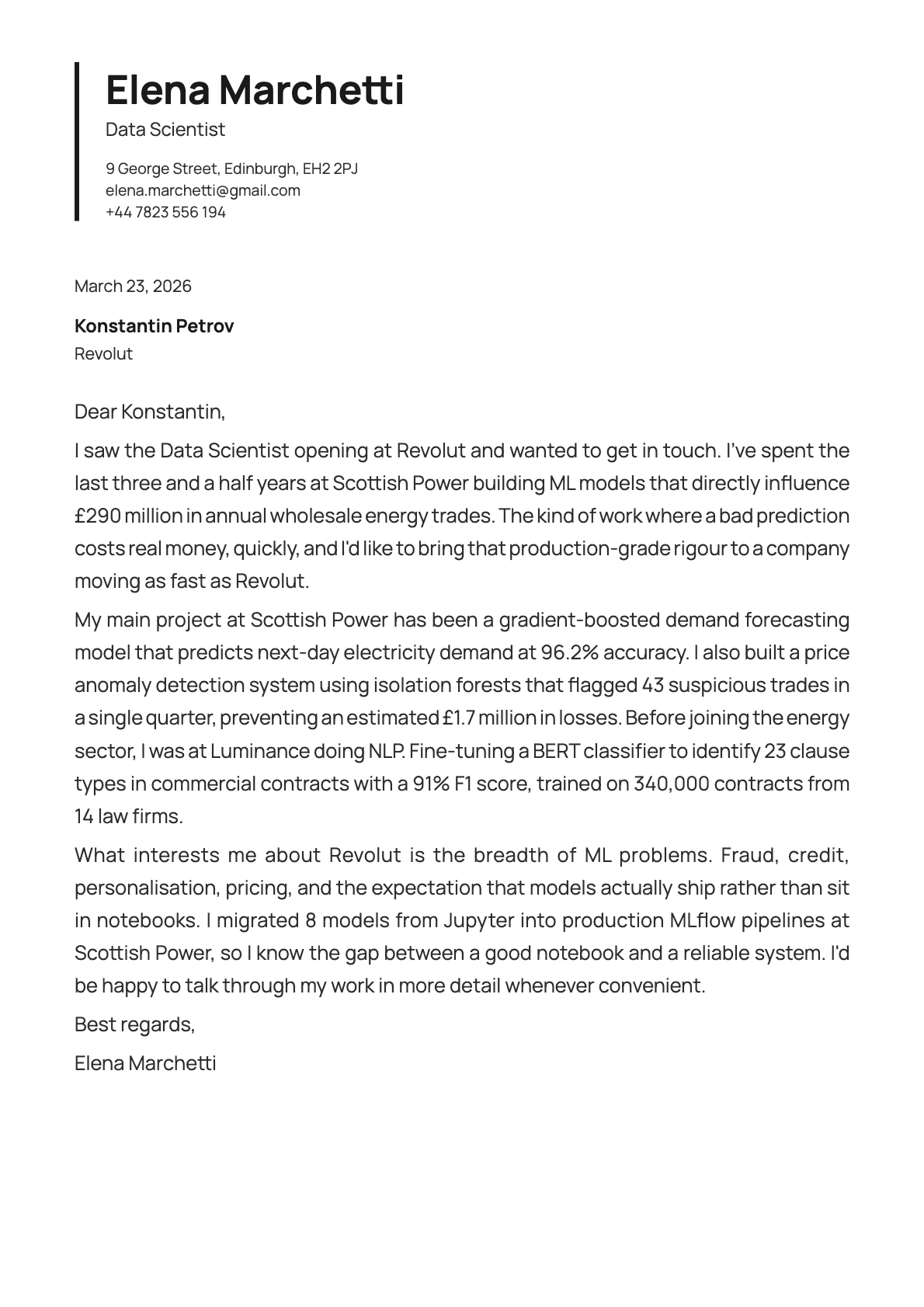
This example comes from Elena Marchetti, a data scientist at Scottish Power applying to Revolut. She builds ML models that influence 290 million pounds in annual wholesale energy trades. Her letter shows what a production-ready data scientist looks like on paper.
Open with the stakes, not the technique
Elena does not lead with "I have experience with gradient-boosted models and isolation forests." She leads with the fact that her predictions influence 290 million pounds in annual trades, and that a bad prediction costs real money. That framing immediately tells the hiring manager this is someone who works on models that matter, not academic exercises.
Your takeaway: Start your cover letter by explaining what is at stake when your models are right or wrong. That instantly separates you from candidates who only talk about techniques.
Show model accuracy and real-world impact together
Elena's demand forecasting model predicts next-day electricity demand at 96.2% accuracy. Her anomaly detection system flagged 43 suspicious trades in a single quarter, preventing an estimated 1.7 million pounds in losses. Her BERT classifier identifies 23 clause types in commercial contracts with a 91% F1 score, trained on 340,000 contracts.
Notice how each accomplishment pairs a technical metric (accuracy, F1 score) with a business outcome (losses prevented, contracts processed). That combination is what makes hiring managers pay attention.
Address the notebook-to-production gap
One of the most important sentences in Elena's letter is this: "I migrated 8 models from Jupyter into production MLflow pipelines." That single detail addresses the biggest concern hiring managers have about data scientists. Can you actually get your work into production?
If you have experience deploying models, monitoring them, or building ML infrastructure, put it in your cover letter. It is often more valuable than the model itself.
Tailoring to a fast-moving company
Elena closes by connecting her background to Revolut's specific ML challenges: fraud, credit, personalization, and pricing. She is not just listing areas. She is showing that she understands the breadth of problems Revolut faces and is excited by the variety.
She also mentions the expectation that models "actually ship rather than sit in notebooks," which directly reflects Revolut's engineering culture. This shows she has done her research.
What to include in your data scientist cover letter
- Model outcomes with numbers: accuracy, F1, AUC paired with business impact
- Production experience: deployment, MLflow, monitoring, CI/CD for ML
- Domain range: show you can apply ML across different problem types
- Company-specific interest: name the ML problems this company faces
Final thoughts
The best data scientist cover letters do not read like a research abstract. They read like a story about models that shipped, predictions that mattered, and systems that run in production. If your models influence real decisions, make that the headline.
Was this cover letter example helpful?
Rate this example to help us create better content for you.
4.9 average from 134 ratingsBuild your own version
Open this layout in the builder and swap in your own details. It takes a few minutes.
Free to use. No account needed to start.
Related cover letter examples
Software Engineer
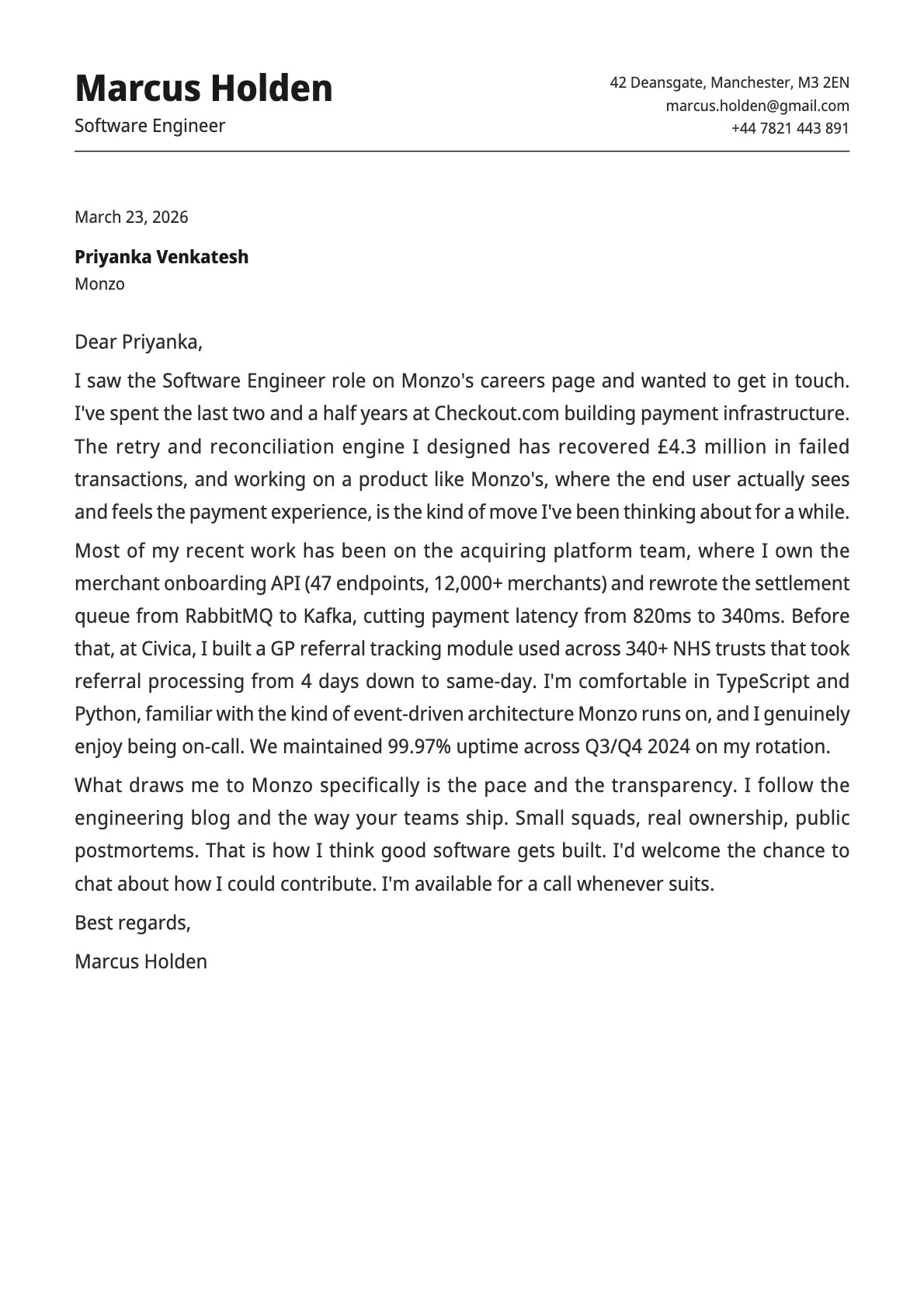
A software engineer cover letter example with practical tips on addressing the hiring manager, showing technical impact.
Frontend Developer
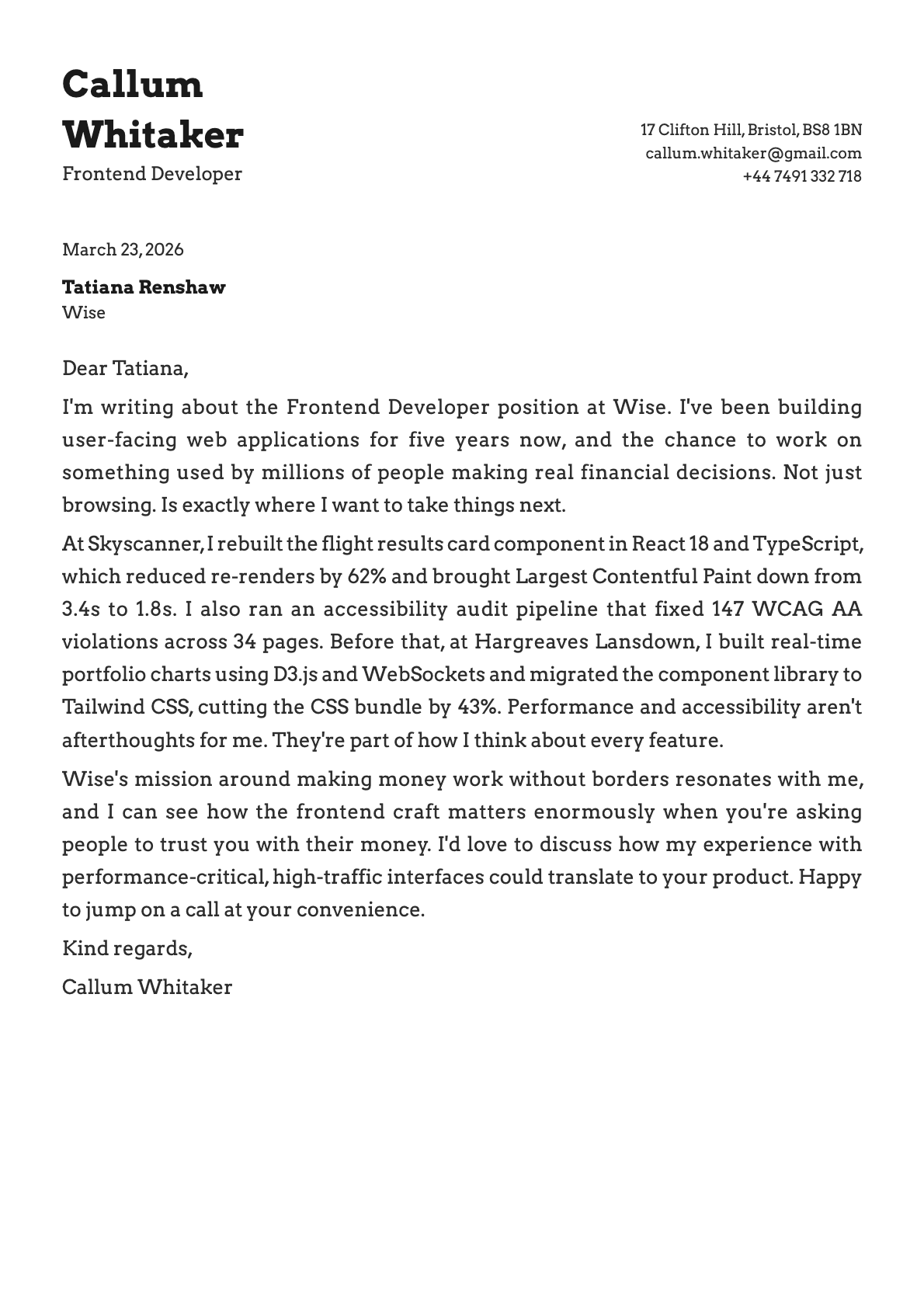
A frontend developer cover letter example showing how to highlight performance wins, accessibility work, and why you want a specific company.
Backend Developer
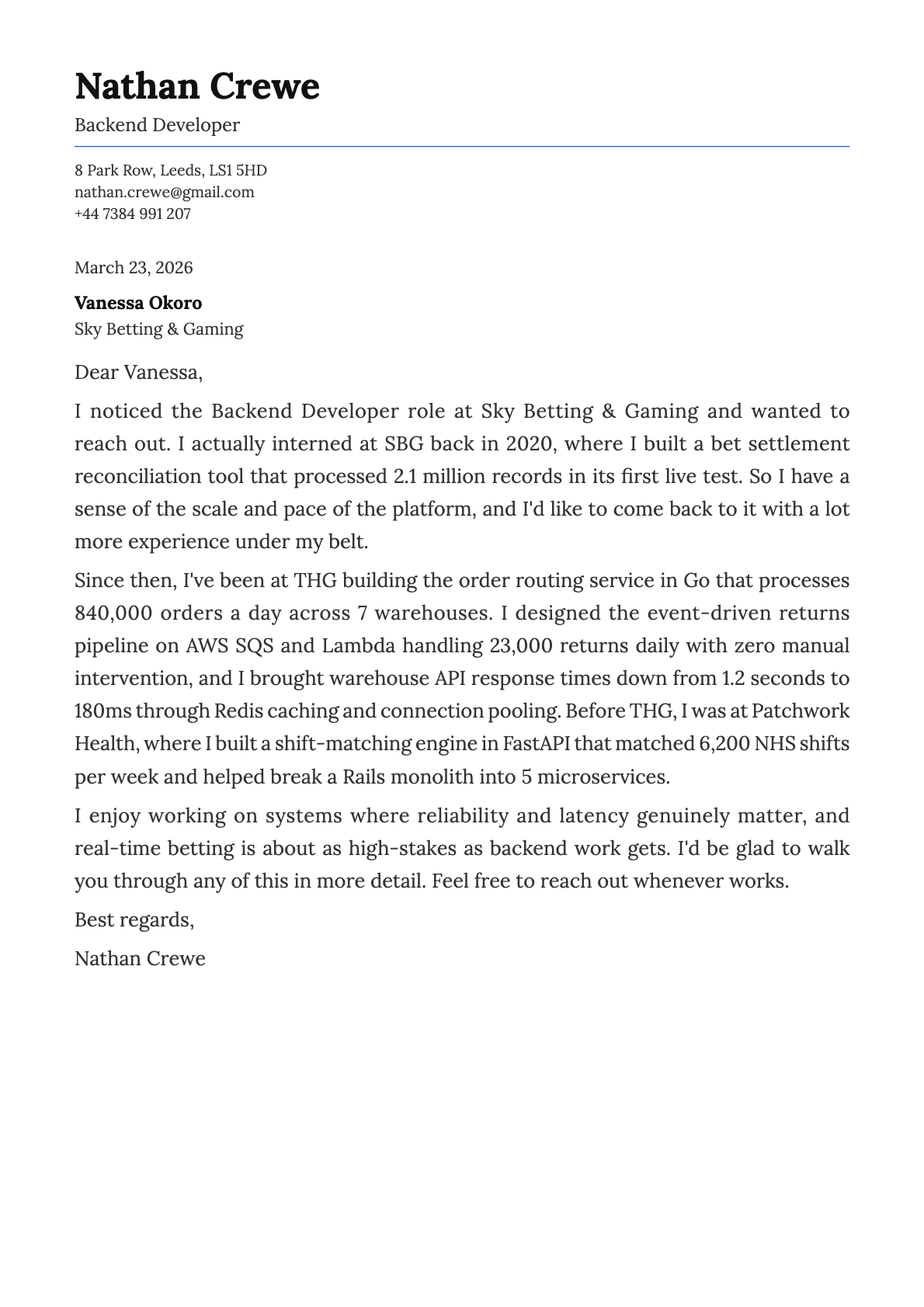
A backend developer cover letter example that shows how to present system design, throughput numbers, and reliability metrics to land an interview.
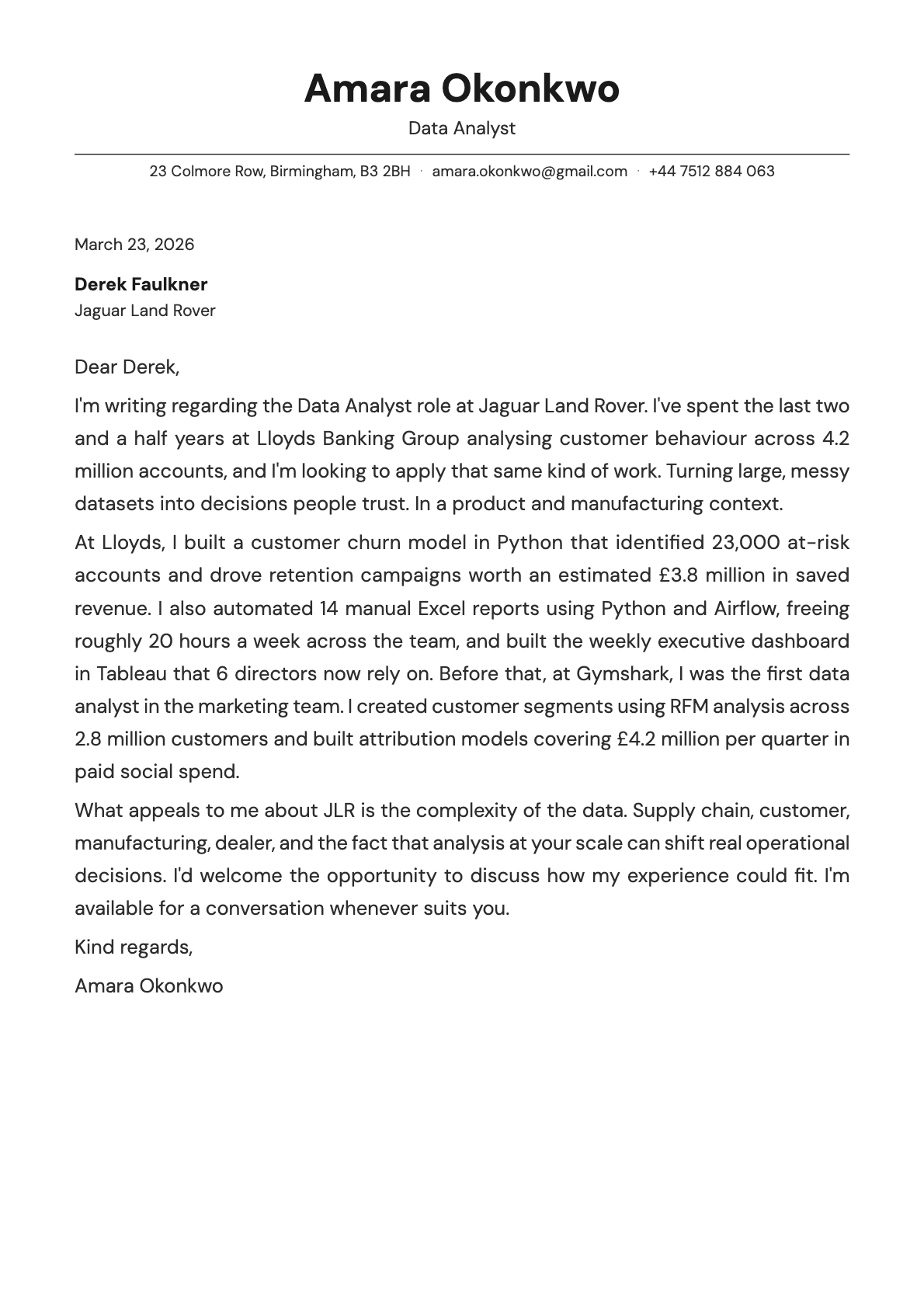
Data Analyst
A data analyst cover letter example showing how to present analytical projects, business impact, and your ability to turn messy data into real decisions.
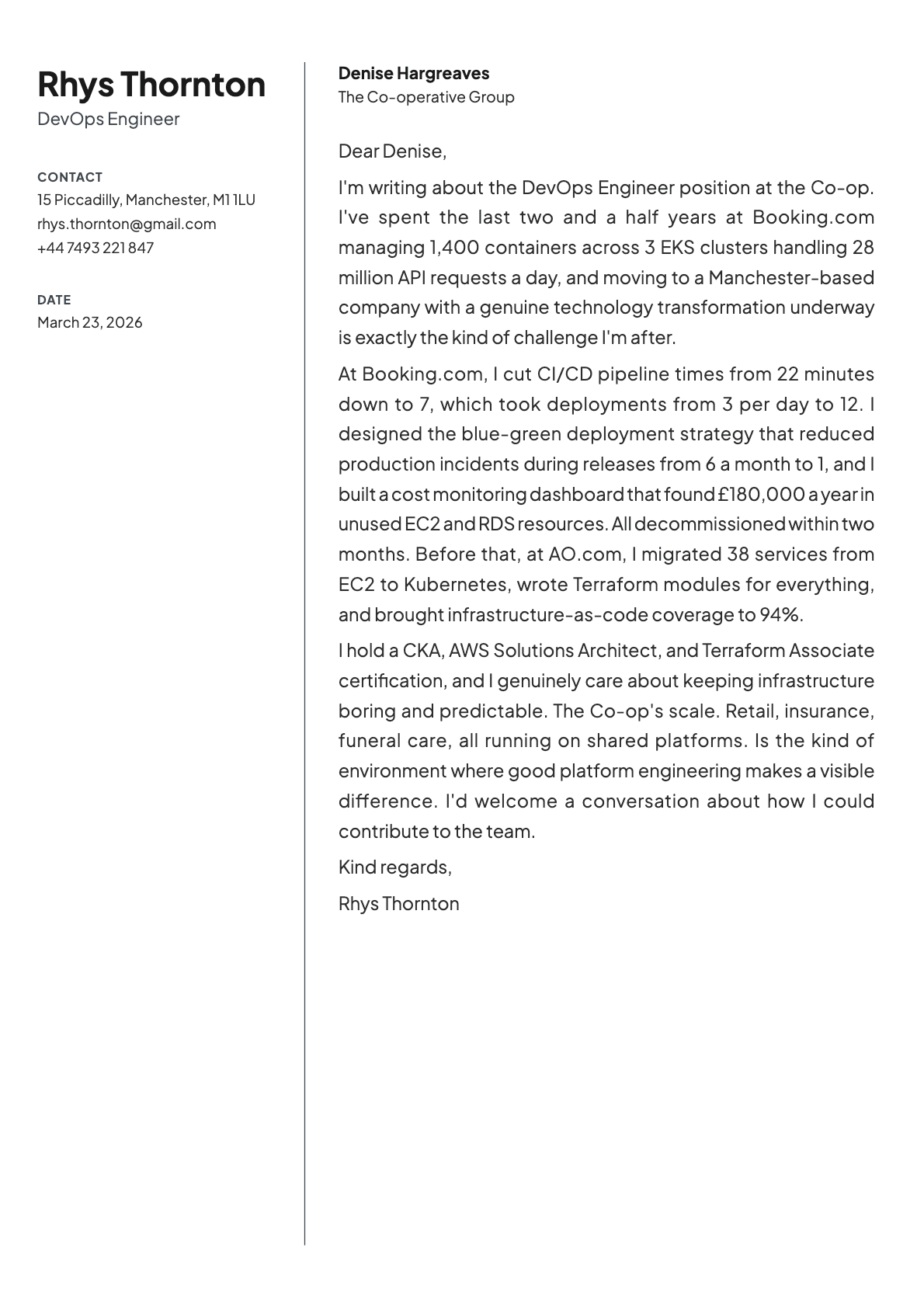
DevOps Engineer
A DevOps engineer cover letter example showing how to present infrastructure wins, CI/CD improvements, and cost savings that hiring managers care about.
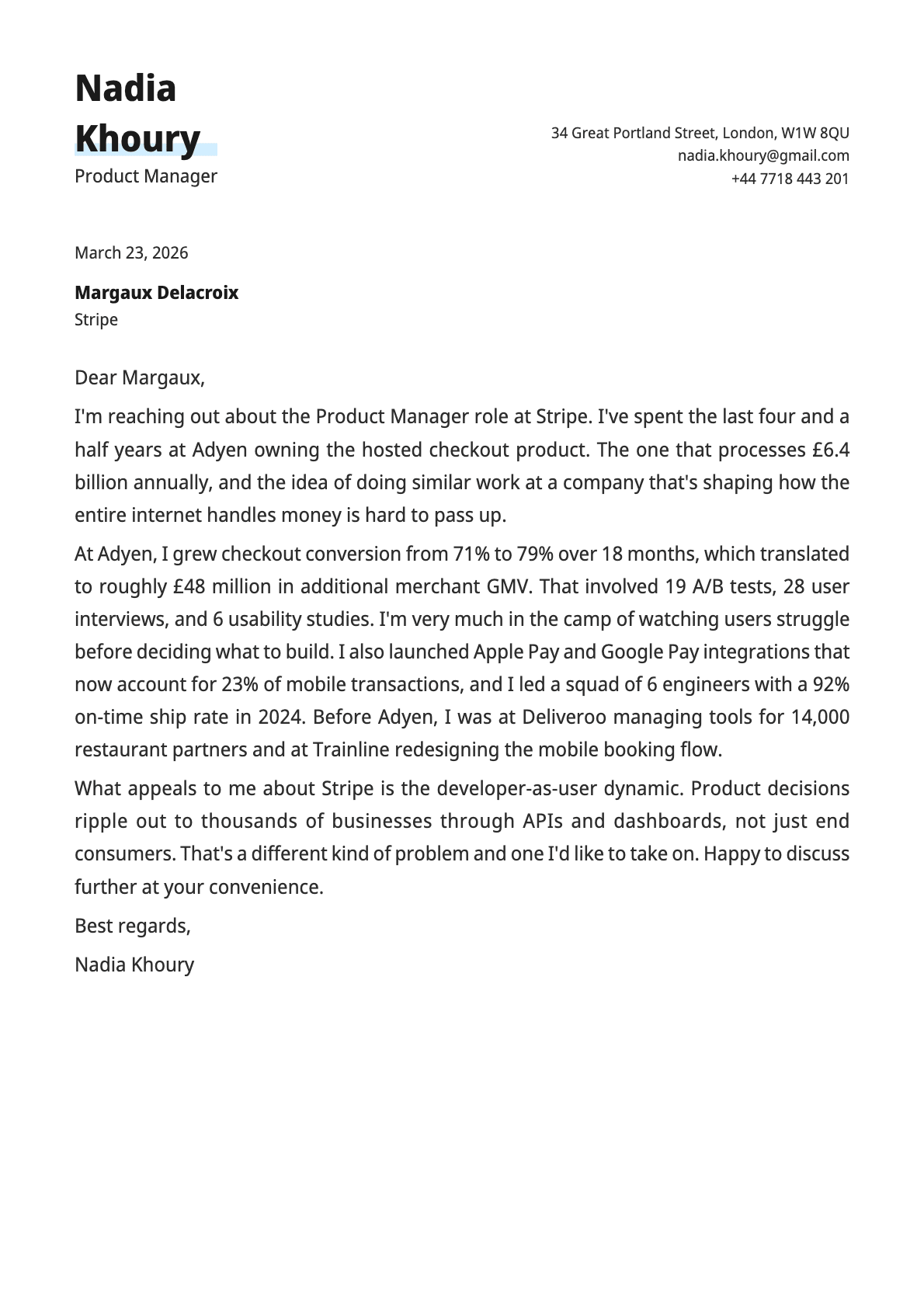
Product Manager
A product manager cover letter example showing how to present conversion improvements, A/B testing, and squad leadership when applying to a payments.
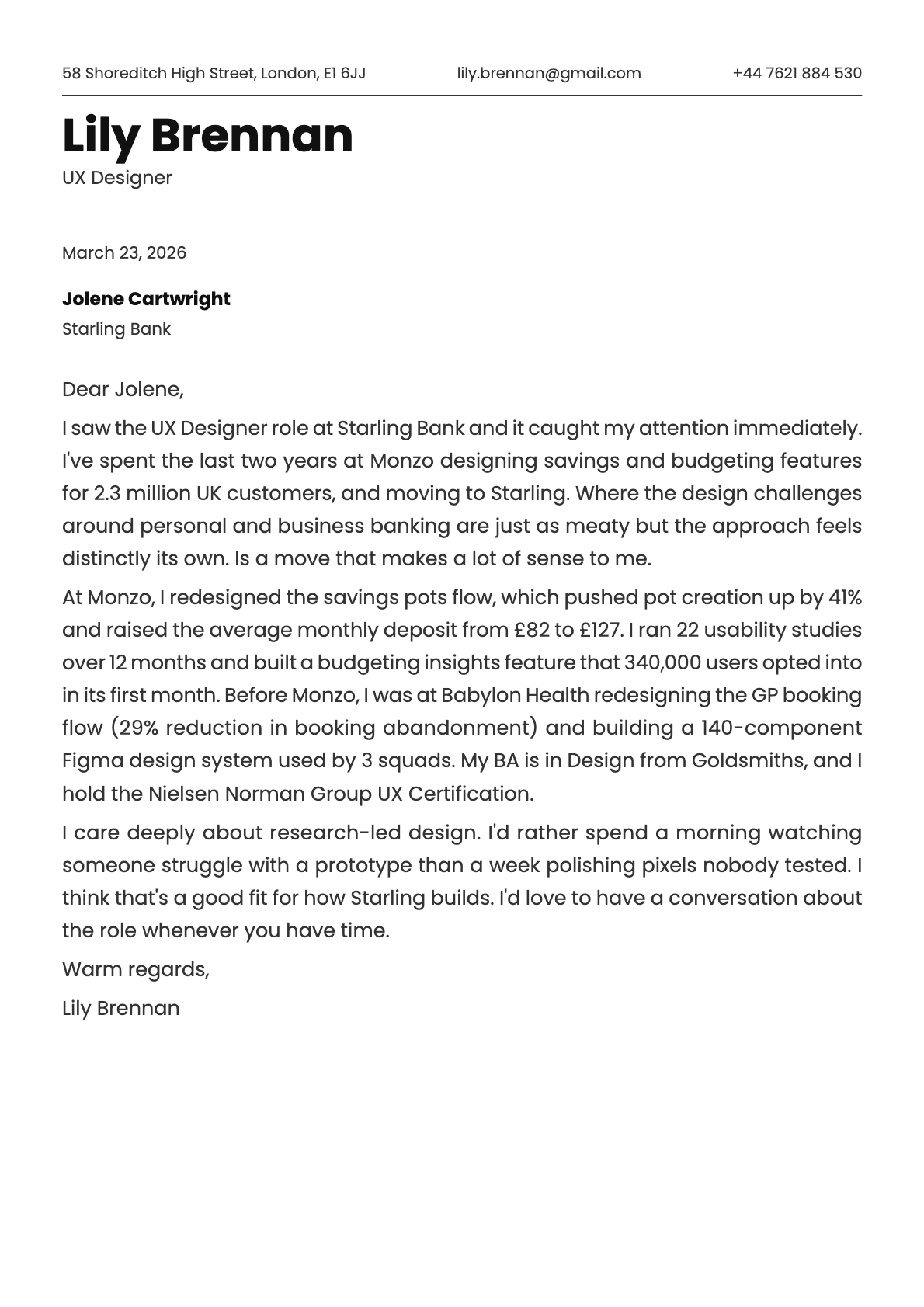
UX Designer
A UX designer cover letter example showing how to present usability research, conversion improvements, and design system work when applying to a digital.
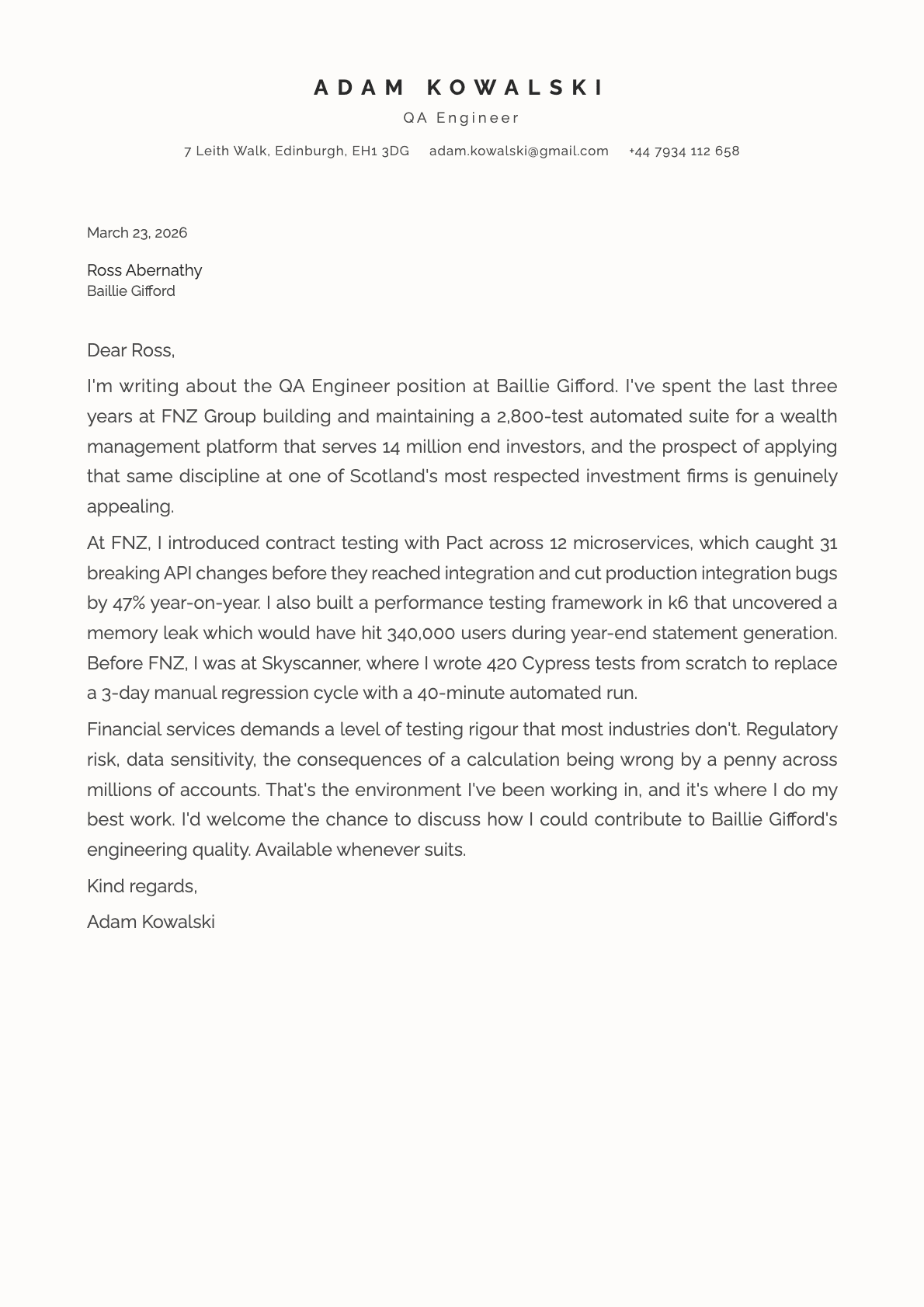
QA Engineer
A QA engineer cover letter example showing how to present automated testing frameworks, contract testing, and quality metrics for a financial services.
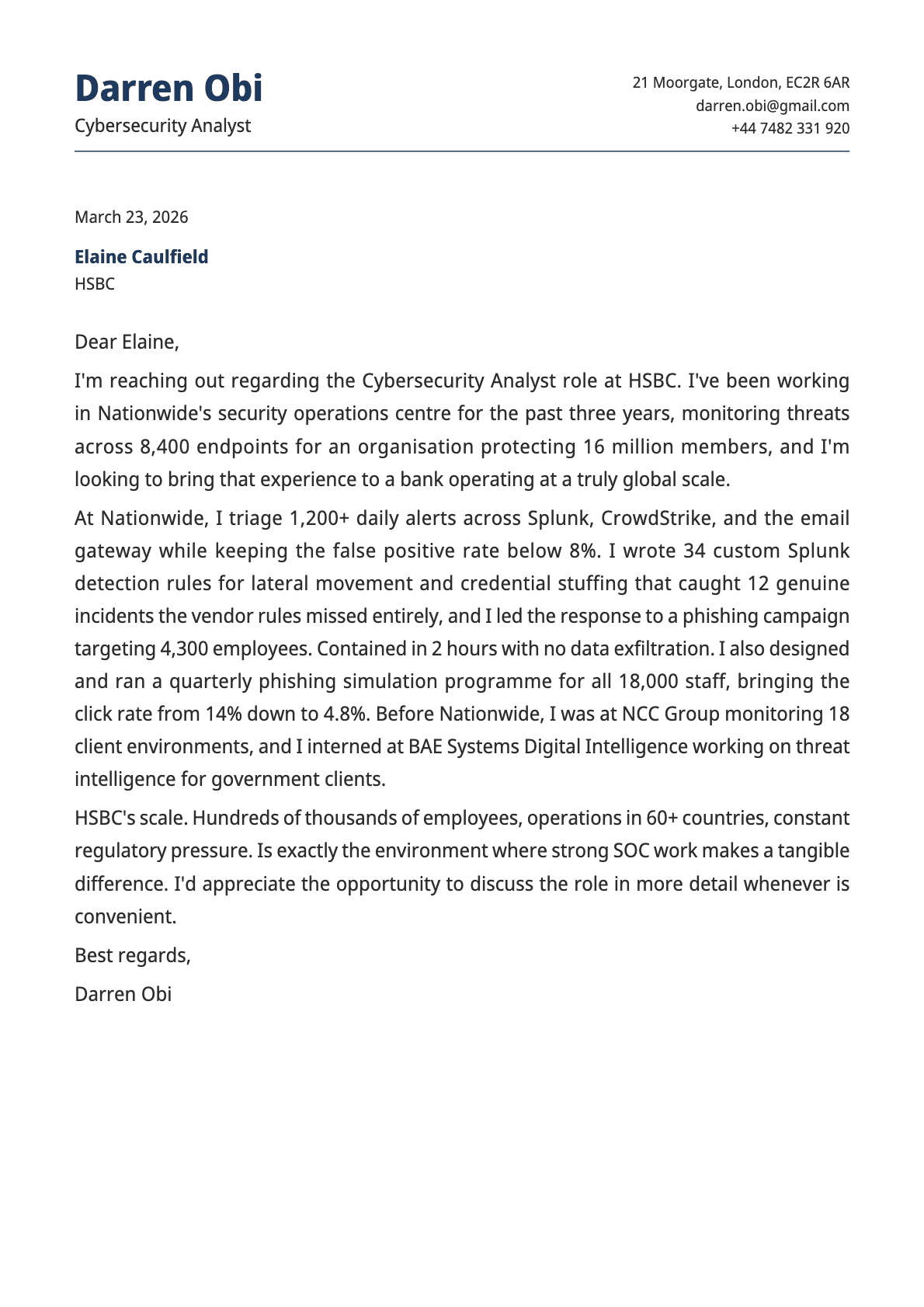
Cybersecurity Analyst
A cybersecurity analyst cover letter example showing how to present SOC experience, threat detection skills, and incident response work for a financial.
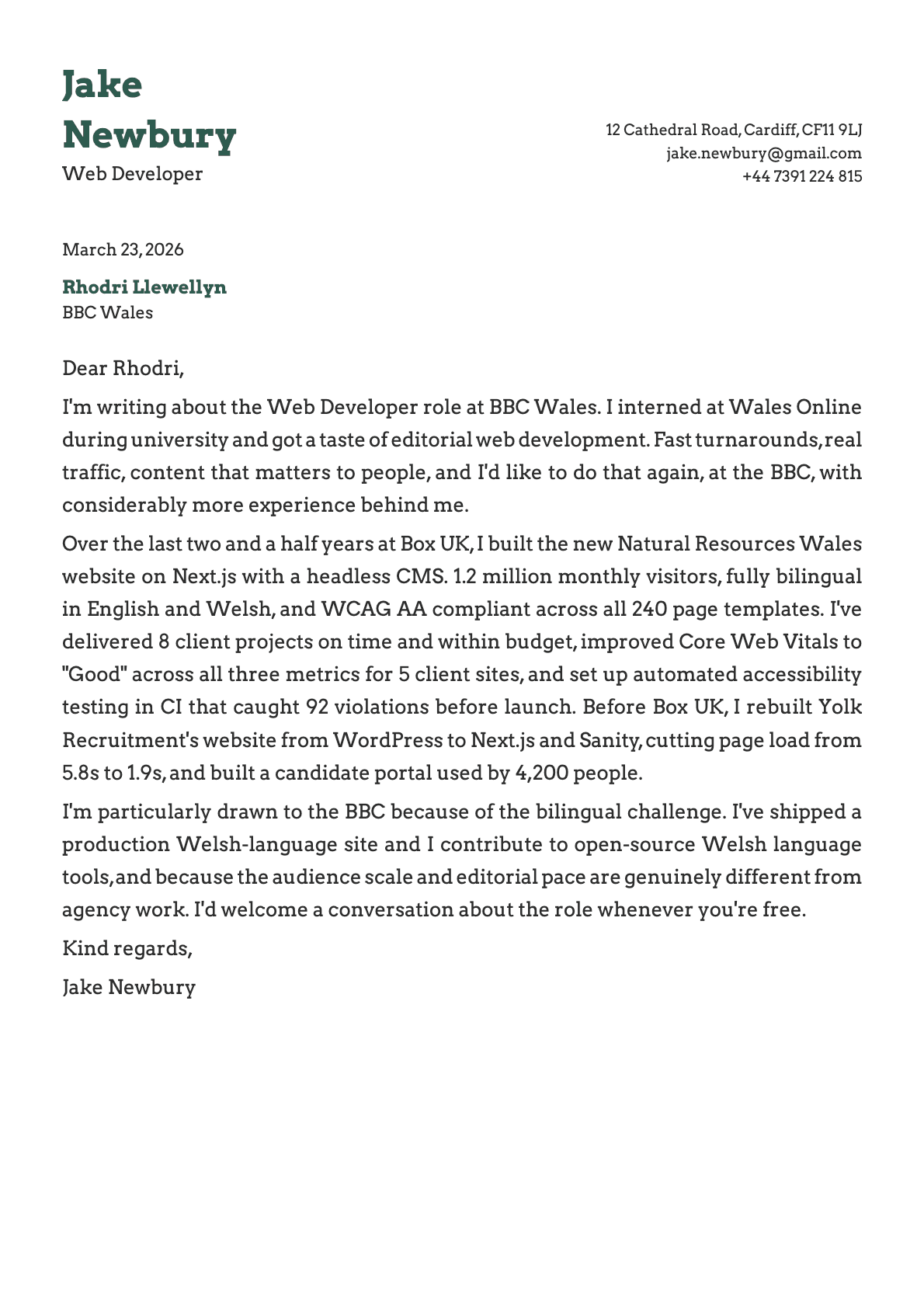
Web Developer
A web developer cover letter example showing how to present Next.js projects, accessibility compliance.
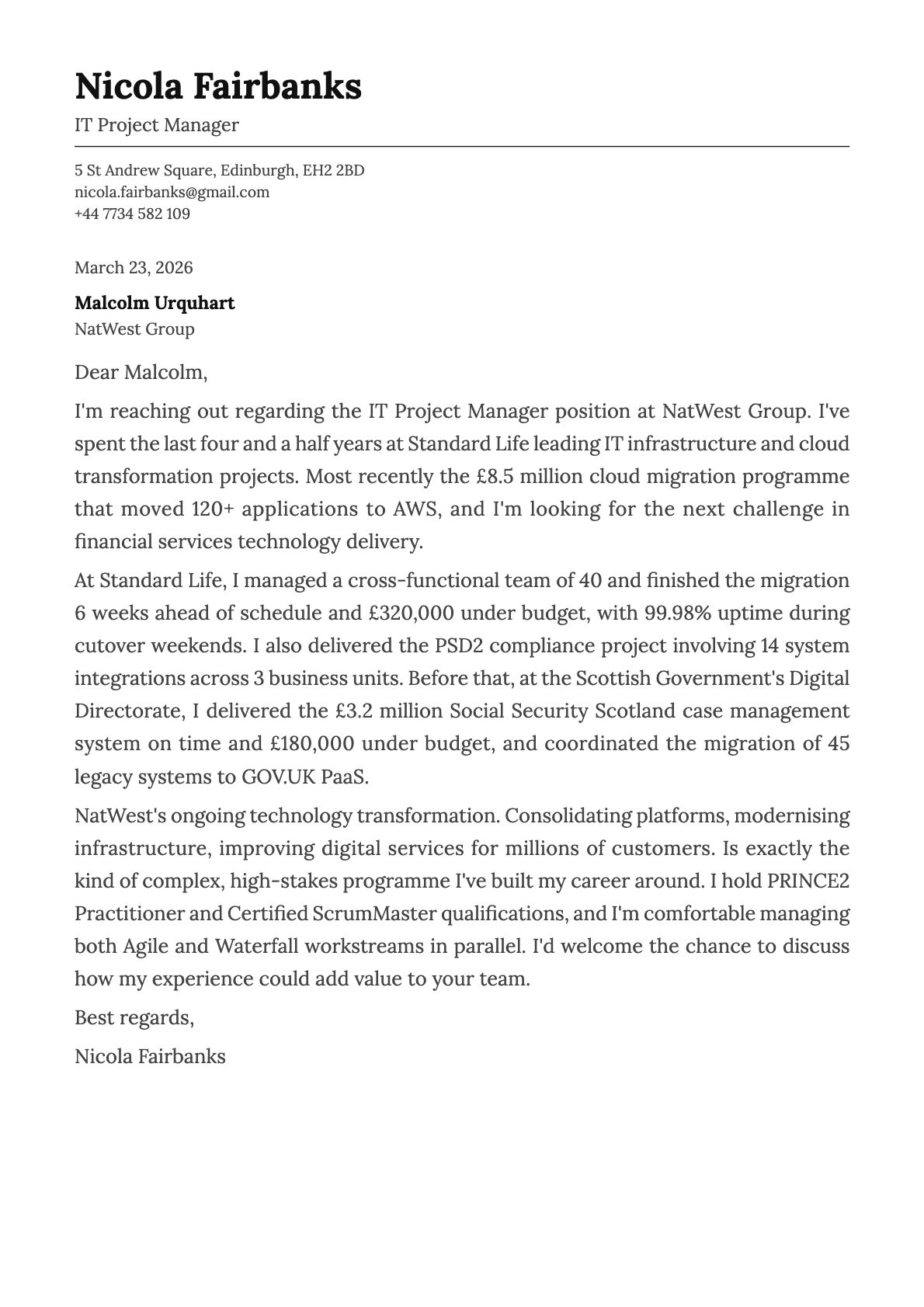
IT Project Manager
An IT project manager cover letter example showing how to present cloud migration experience, budget management.
Related articles

AI Is Screening Your Resume Before Any Human Sees It
AI screens most resumes before a human ever reads them. 97.4% of Fortune 500 companies run an ATS. This is what that means for you and what you can do about it.

ATS Resume Checker: How to Format a CV That Gets Past the Filters
Run the free copy and paste test to see what an ATS actually reads on your CV, then fix the tables, columns and headings that quietly get you filtered out.

The Best Resume Builders in 2026, Compared Honestly
Resume.io, Zety, Enhancv, Kickresume, Teal, and Laddro compared honestly: real pricing, free tiers, mobile apps, and where each tool wins. All prices checked in September 2026.