Junior Operations Coordinator Resume Example
A junior operations coordinator resume example for operations management graduates. See how logistics experience and process improvements impress employers.

Laddro Team
Free to use. No account needed to start.
Free to use. No account needed to start.
Overview
Junior operations coordinators keep things running. They schedule resources, track deliveries, chase suppliers, and flag problems before they escalate. The role suits people who are naturally organised, comfortable with spreadsheets, and not afraid to pick up the phone when something goes wrong.
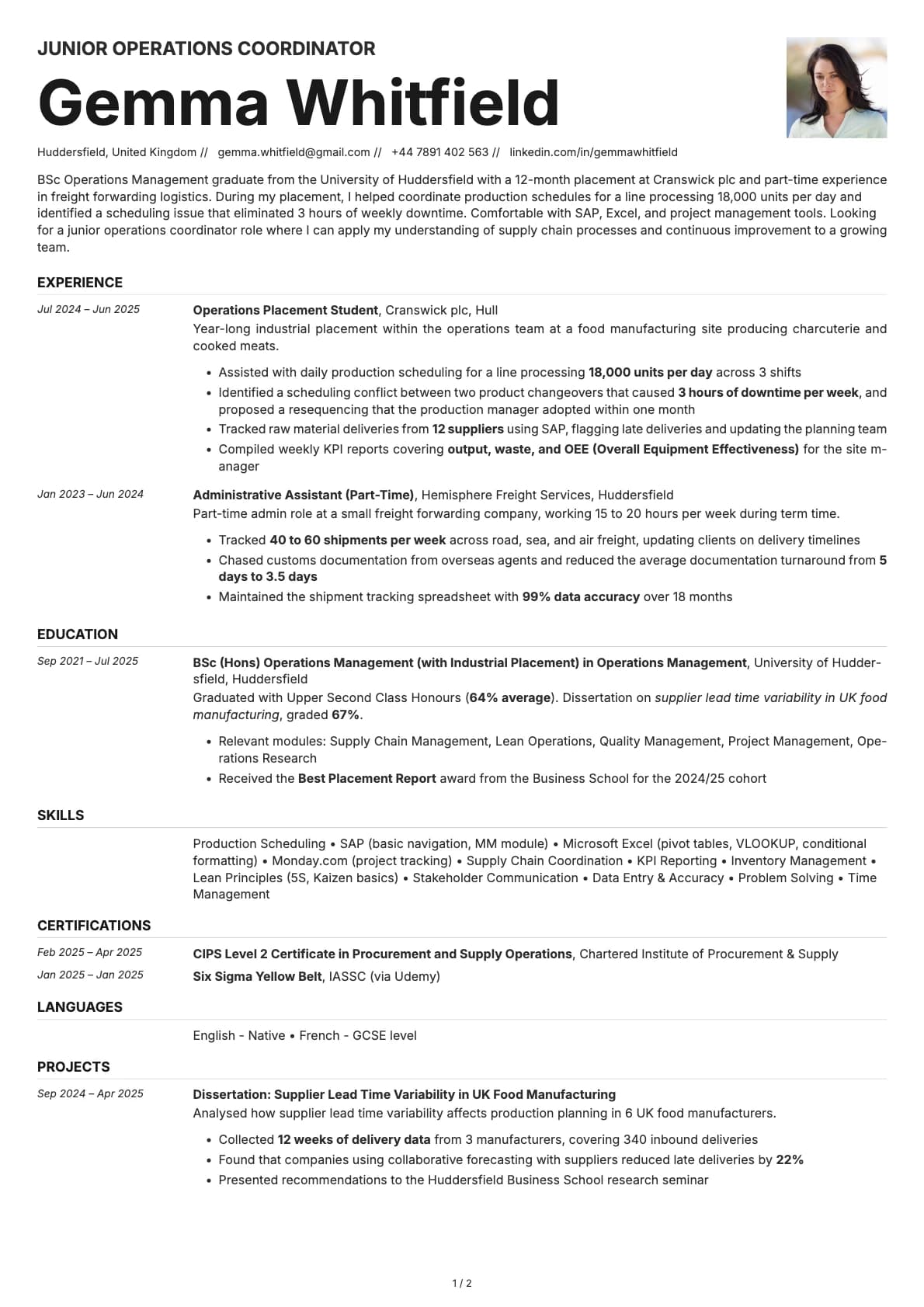
This resume belongs to Gemma Whitfield, a recent BSc Operations Management graduate from the University of Huddersfield. She worked part-time as an admin assistant at a logistics company during her degree and completed a placement year at a mid-sized manufacturer. Her resume works because it is packed with process improvements and efficiency metrics that show she already thinks like an operations professional.
What Makes This Resume Work
The placement year is loaded with measurable impact. Gemma spent 12 months at Cranswick plc, a food manufacturer, where she helped coordinate production schedules for a factory processing 18,000 units per day. She identified a scheduling conflict that was causing 3 hours of downtime per week and proposed a fix that the production manager adopted within a month. That is real operational thinking, not just shadowing.
Admin experience is positioned as operations support. Her part-time role at a freight forwarding company involved tracking 40 to 60 shipments per week, chasing customs documentation, and updating clients on delivery timelines. She framed this as supply chain coordination rather than generic admin work, which is exactly how a hiring manager would read it.
Her skills section is tool-specific. Instead of listing "Microsoft Office," Gemma specifies Excel with pivot tables and conditional formatting, SAP (basic navigation from her placement), and Monday.com for project tracking. This tells employers she can contribute on day one without weeks of software training.
The dissertation is directly applicable. Her research analysed supplier lead time variability across 6 UK food manufacturers and found that companies using collaborative forecasting with suppliers reduced late deliveries by 22%. This shows strategic thinking about the exact problems operations teams deal with daily.
Key Takeaways
If you are graduating with an operations management degree, your placement year or industrial experience is the most valuable section of your resume. Quantify everything: units processed, orders tracked, downtime reduced, accuracy rates maintained. Operations managers hire based on evidence that you can spot inefficiencies and act on them, so make sure every bullet point includes a number or a specific outcome.
Build your own version
Open this layout in the builder and swap in your own details. It takes a few minutes.
Free to use. No account needed to start.
Was this resume example helpful?
Rate this example to help us create better content for you.
4.8 average from 96 ratingsRelated resume examples
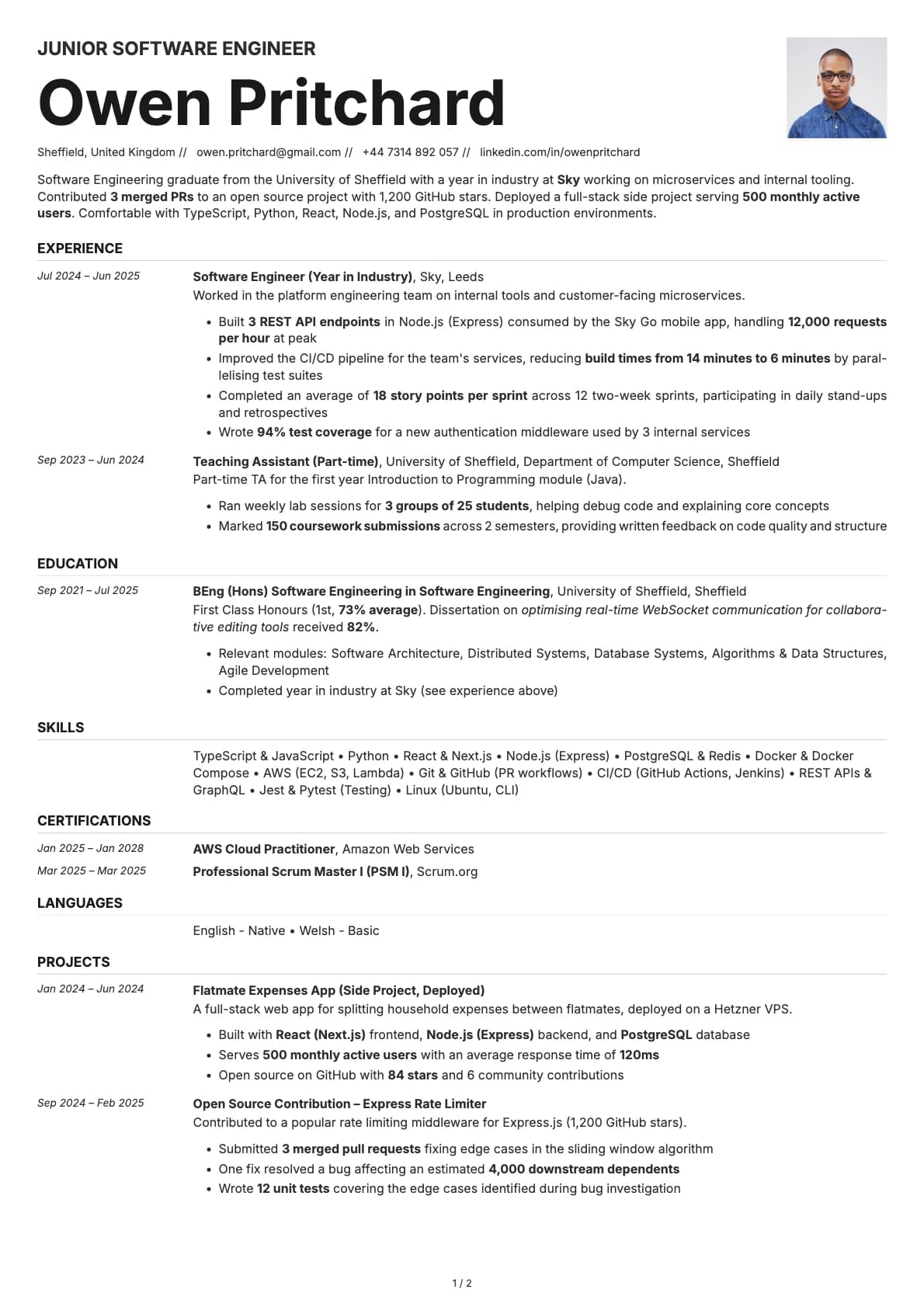
Junior Software Engineer
A junior software engineer resume example with deployed projects, GitHub contributions, and agile sprint experience from a Software Engineering BEng graduate.
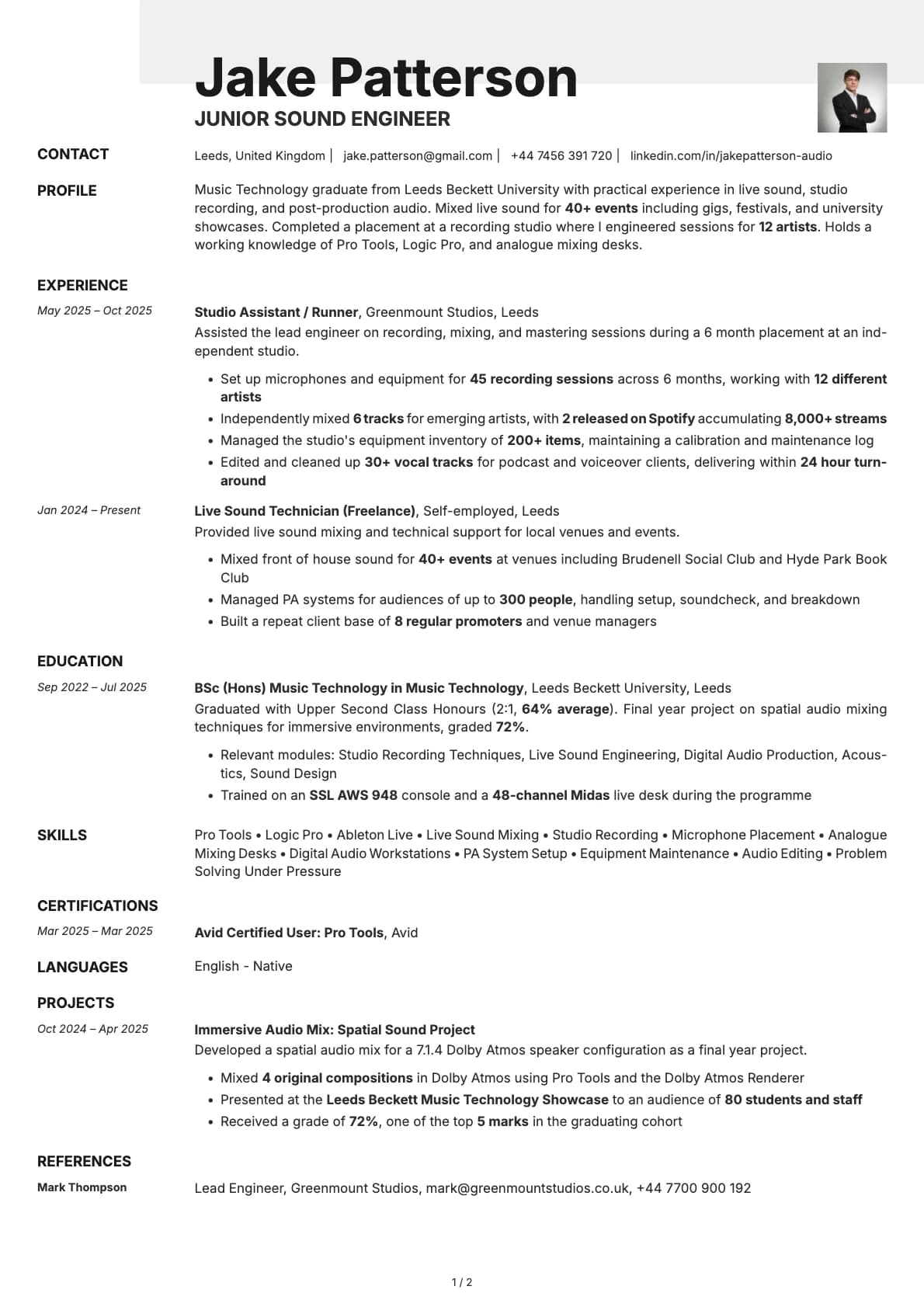
Junior Sound Engineer
A junior sound engineer resume example for graduates. Learn how to present live sound, studio recording, and audio production experience to land your first engineering role.
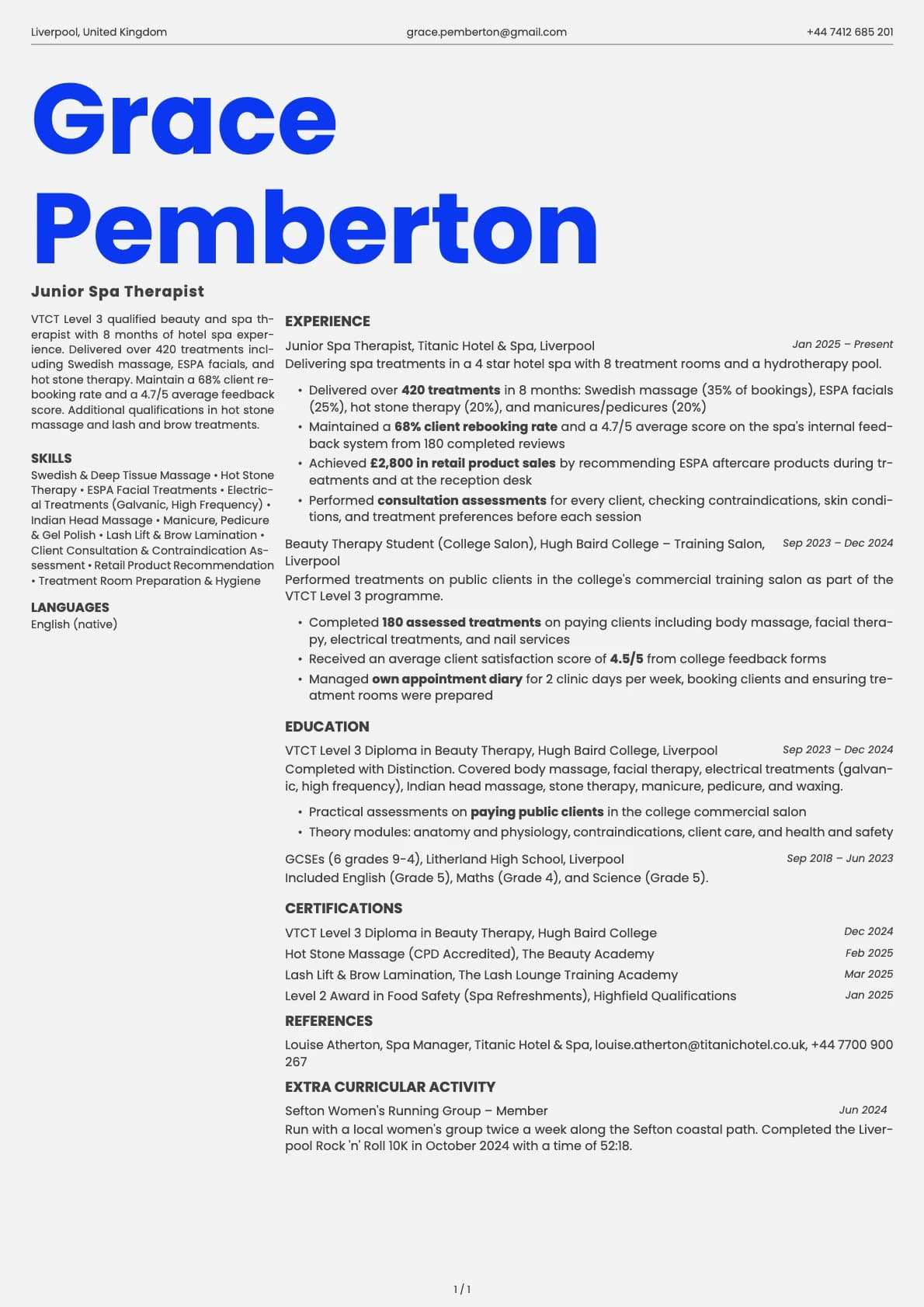
Junior Spa Therapist
A junior spa therapist resume example for VTCT Level 3 qualified therapists. See how to present your treatment skills, client feedback, and spa industry experience.
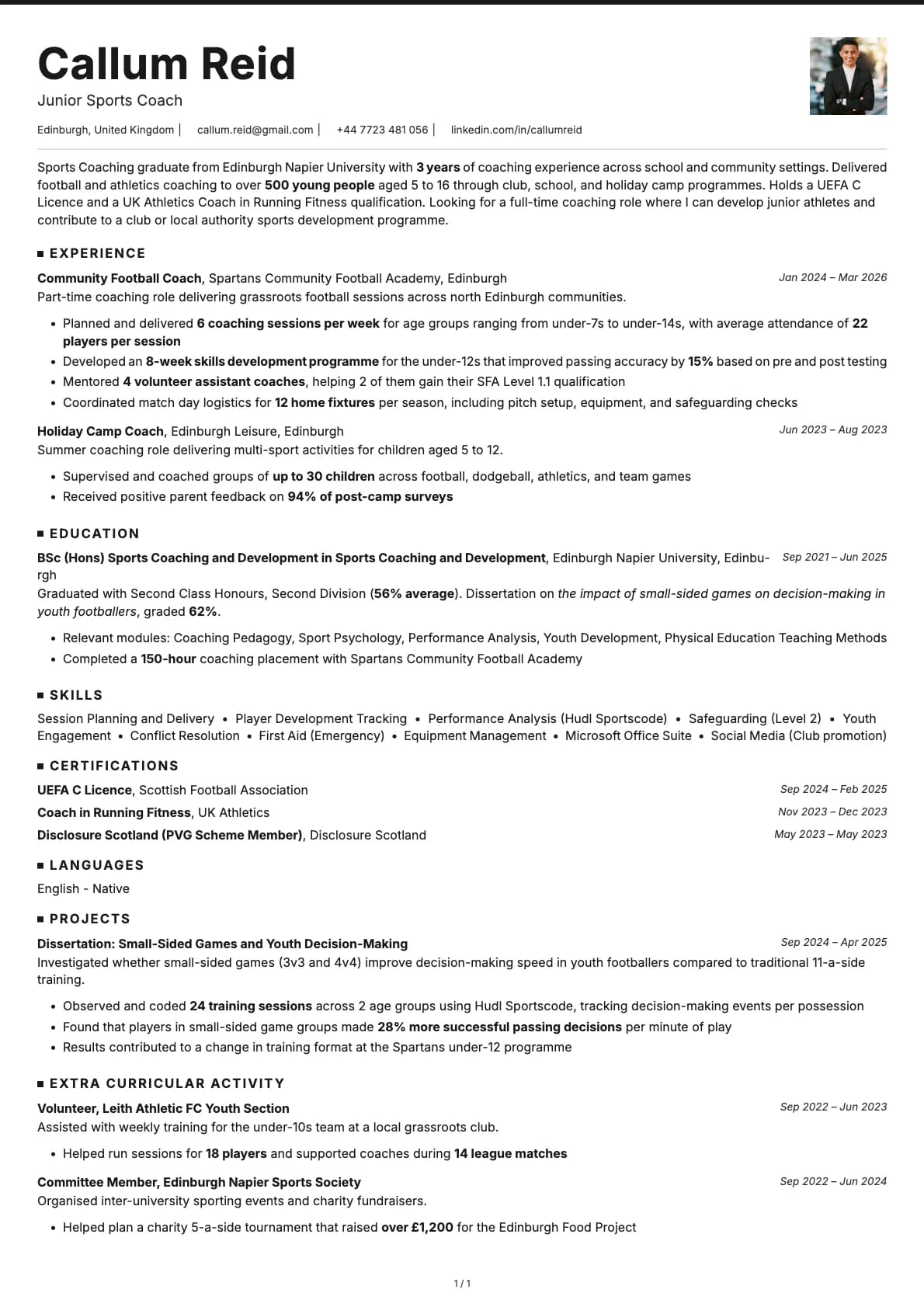
Junior Sports Coach
A junior sports coach resume example showing how to combine a coaching degree, UEFA C Licence, and grassroots football experience into a full-time coaching career.
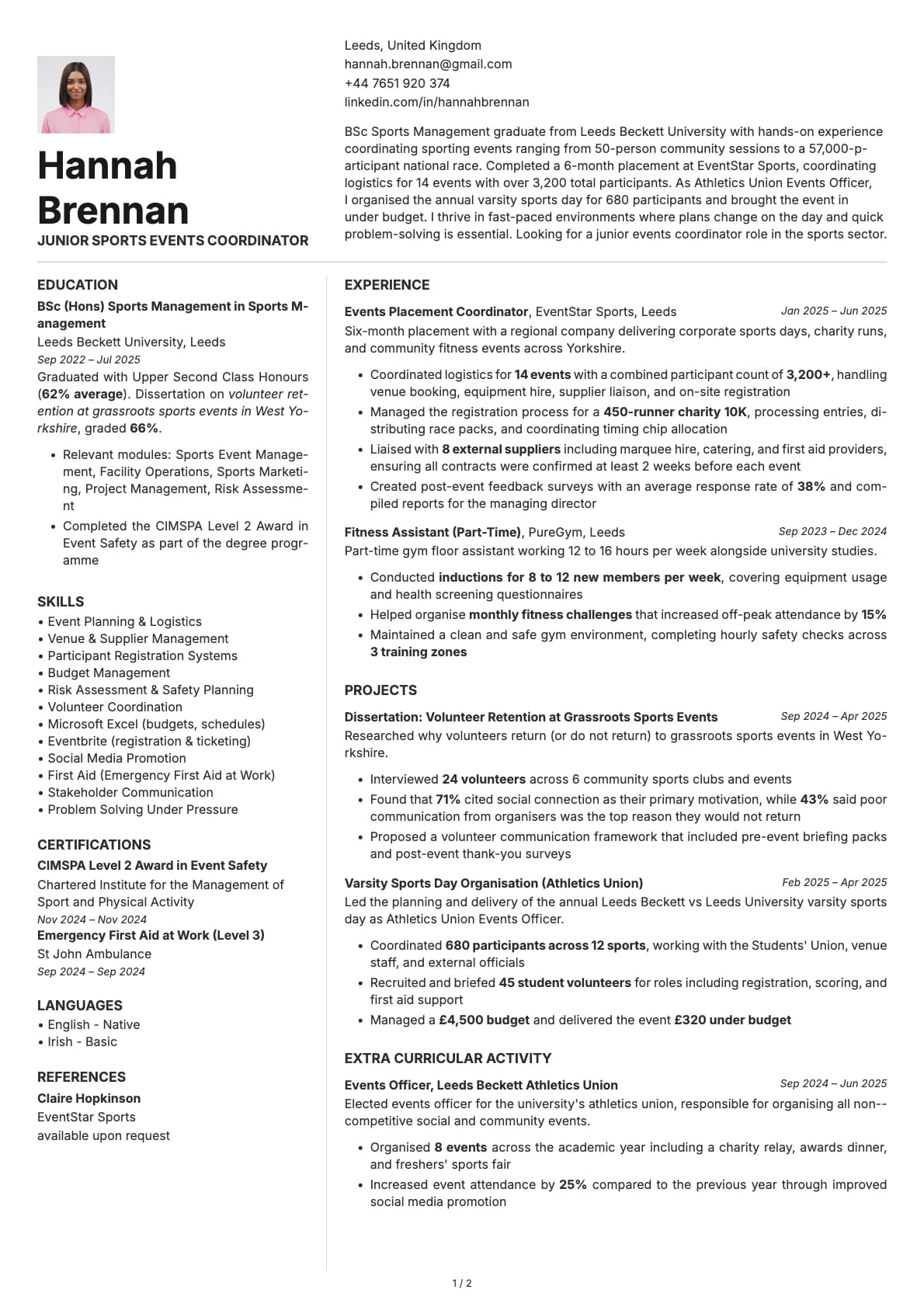
Junior Sports Events Coordinator
A junior sports events coordinator resume example for sports management graduates. See how event logistics and participant numbers make your resume stand out.
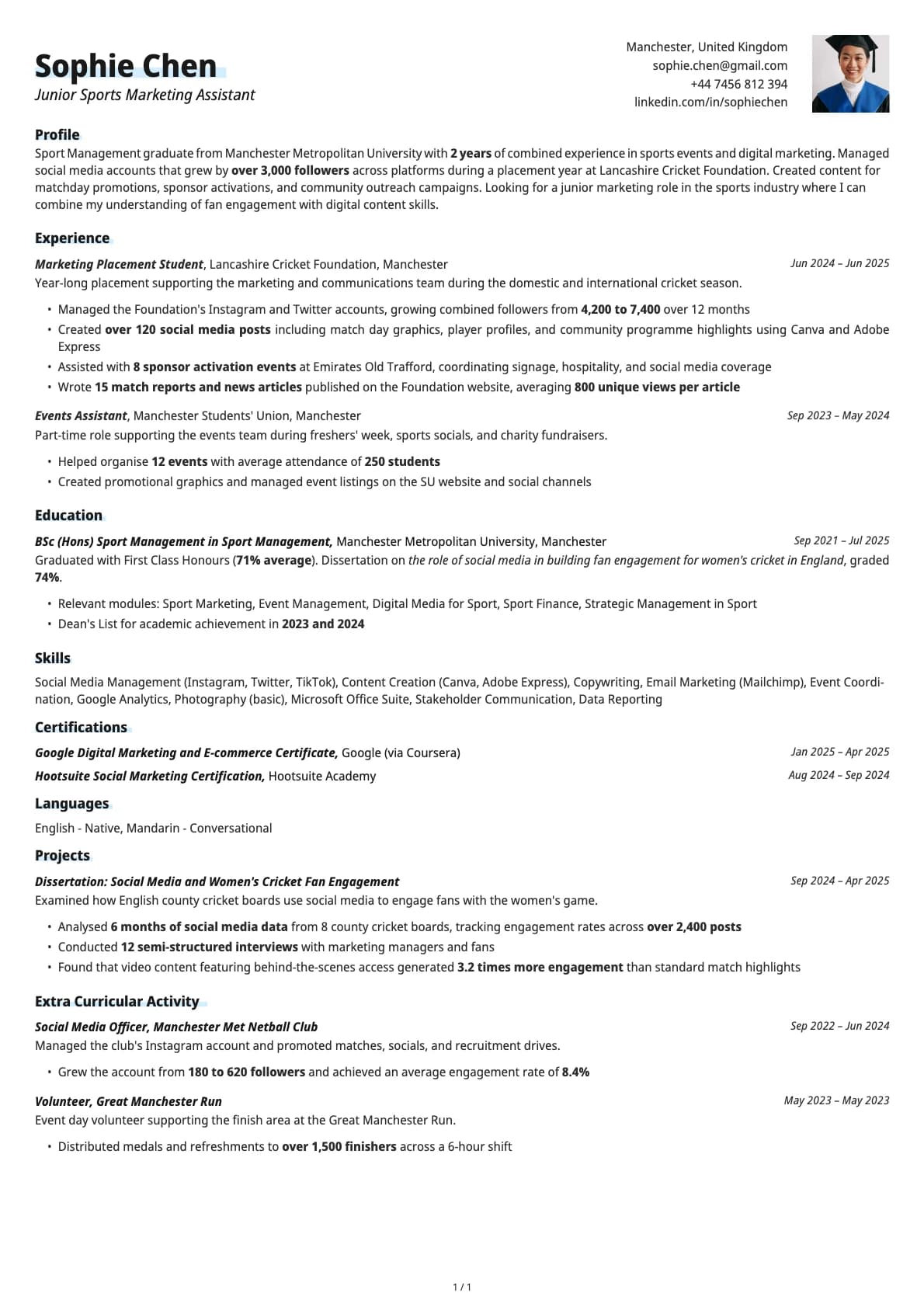
Junior Sports Marketing Assistant
A junior sports marketing assistant resume example showing how to combine a cricket foundation placement, social media growth, and a sport management degree.
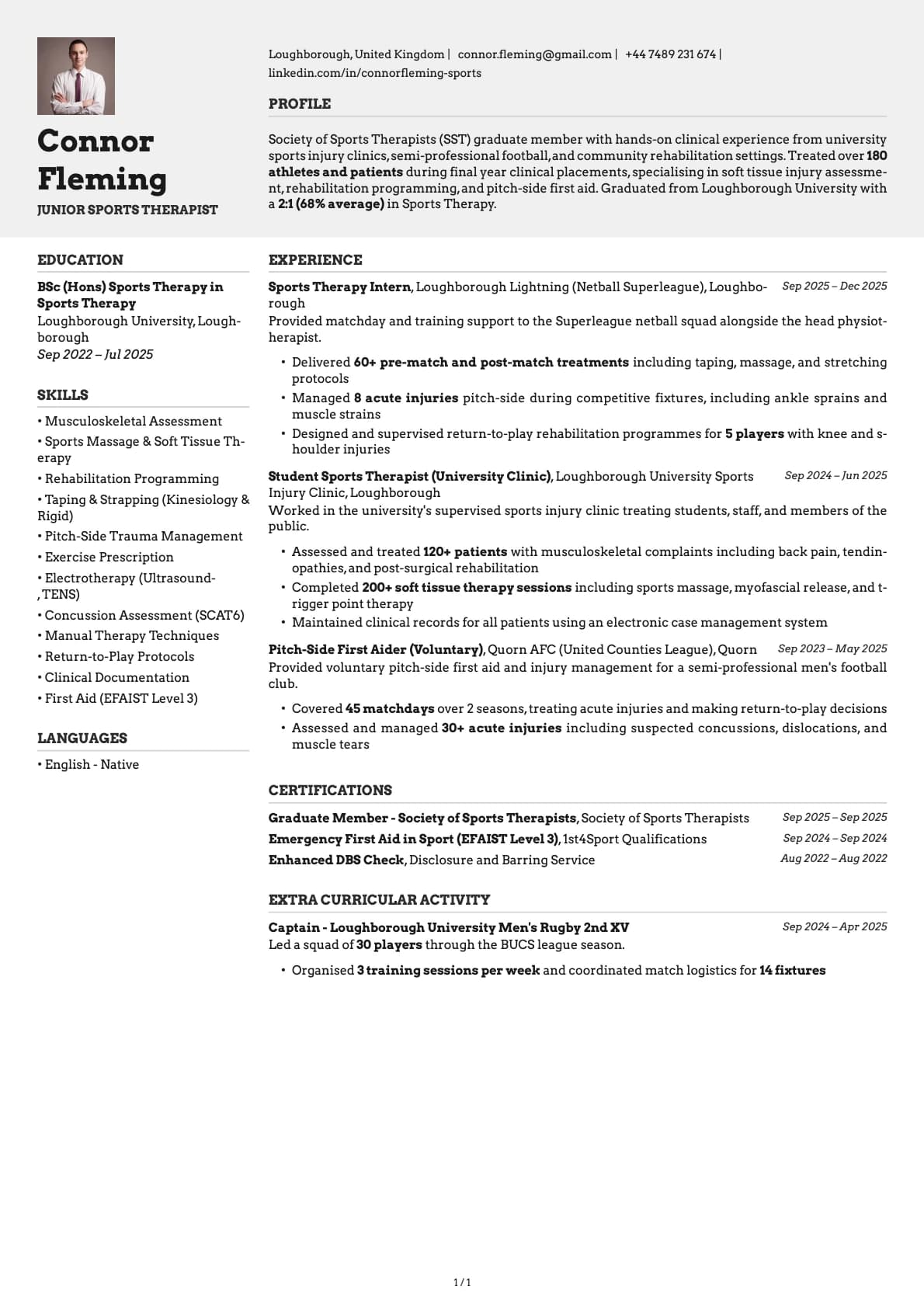
Junior Sports Therapist
A junior sports therapist resume example with clinical treatment numbers, pitch-side experience, and SST membership for new graduates.
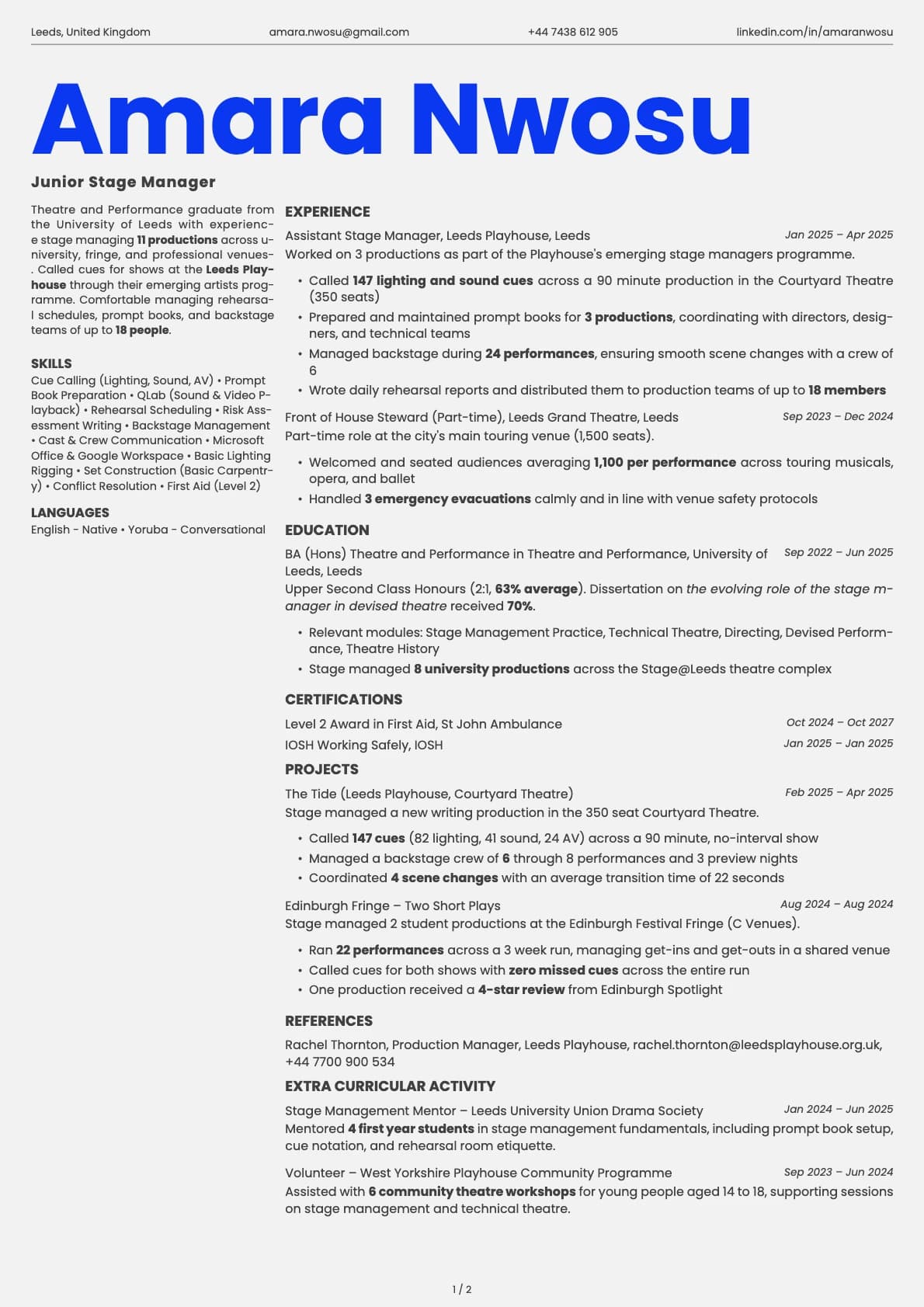
Junior Stage Manager
A junior stage manager resume example with prompt book experience, production counts, and cue calling from a Theatre Studies graduate entering professional stage management.
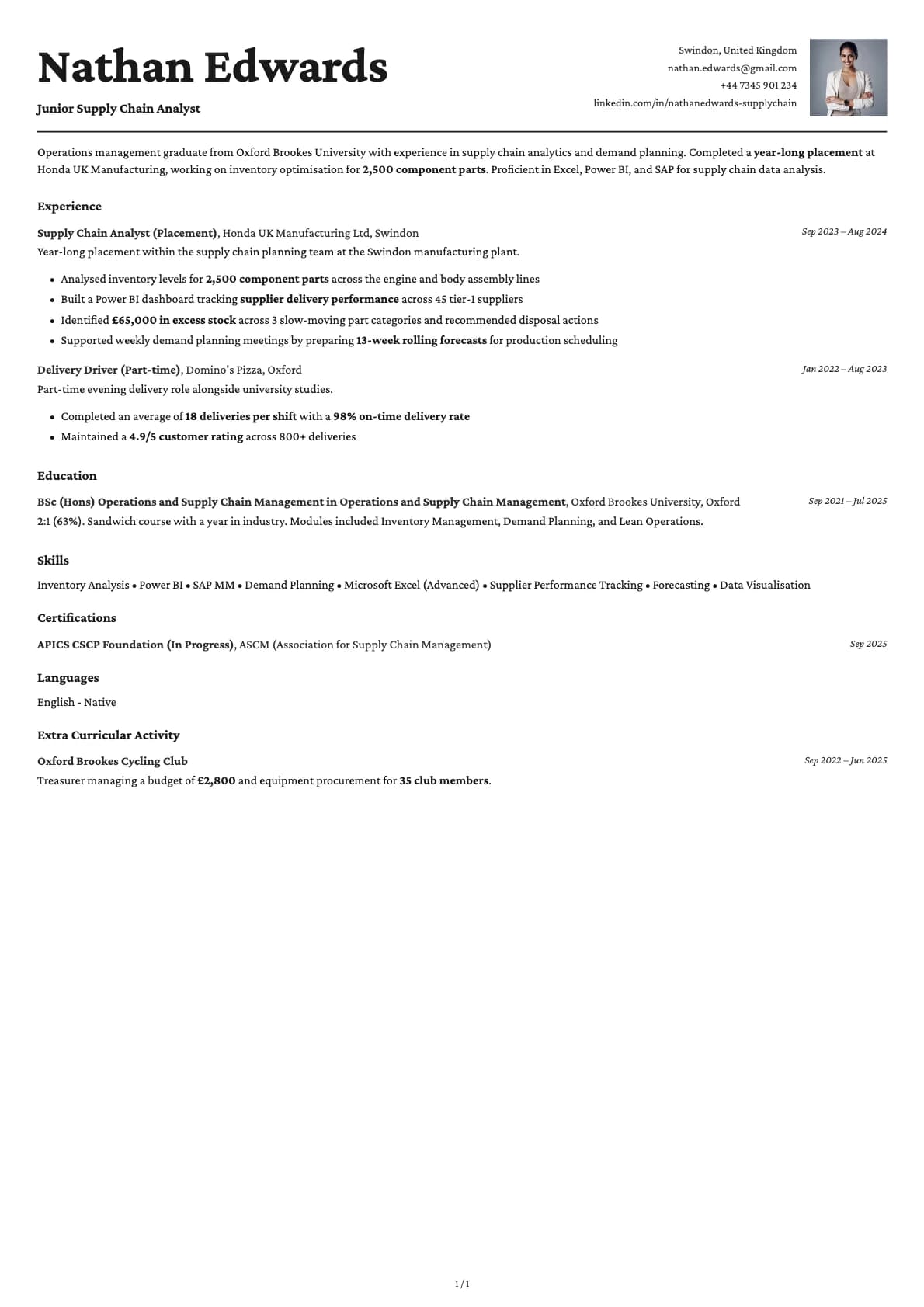
Junior Supply Chain Analyst
A junior supply chain analyst resume example with Honda UK placement and inventory optimisation experience.

Junior Sustainability Consultant
A junior sustainability consultant resume example for environmental science graduates. See how to present carbon auditing, consultancy internships, and environmental volunteering.
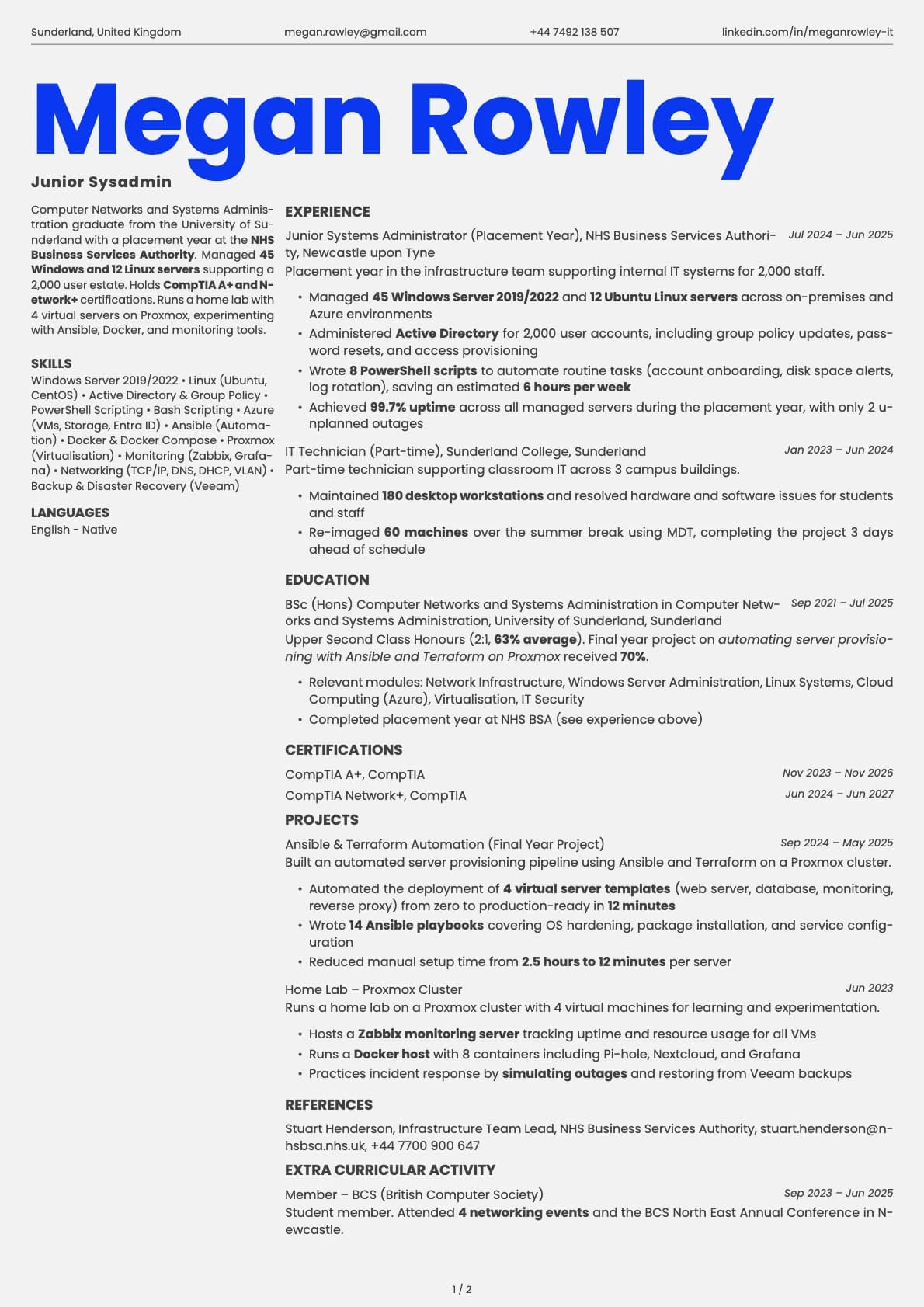
Junior Sysadmin
A junior sysadmin resume example with Linux server management, Active Directory experience, and CompTIA certifications from an IT graduate entering systems administration.
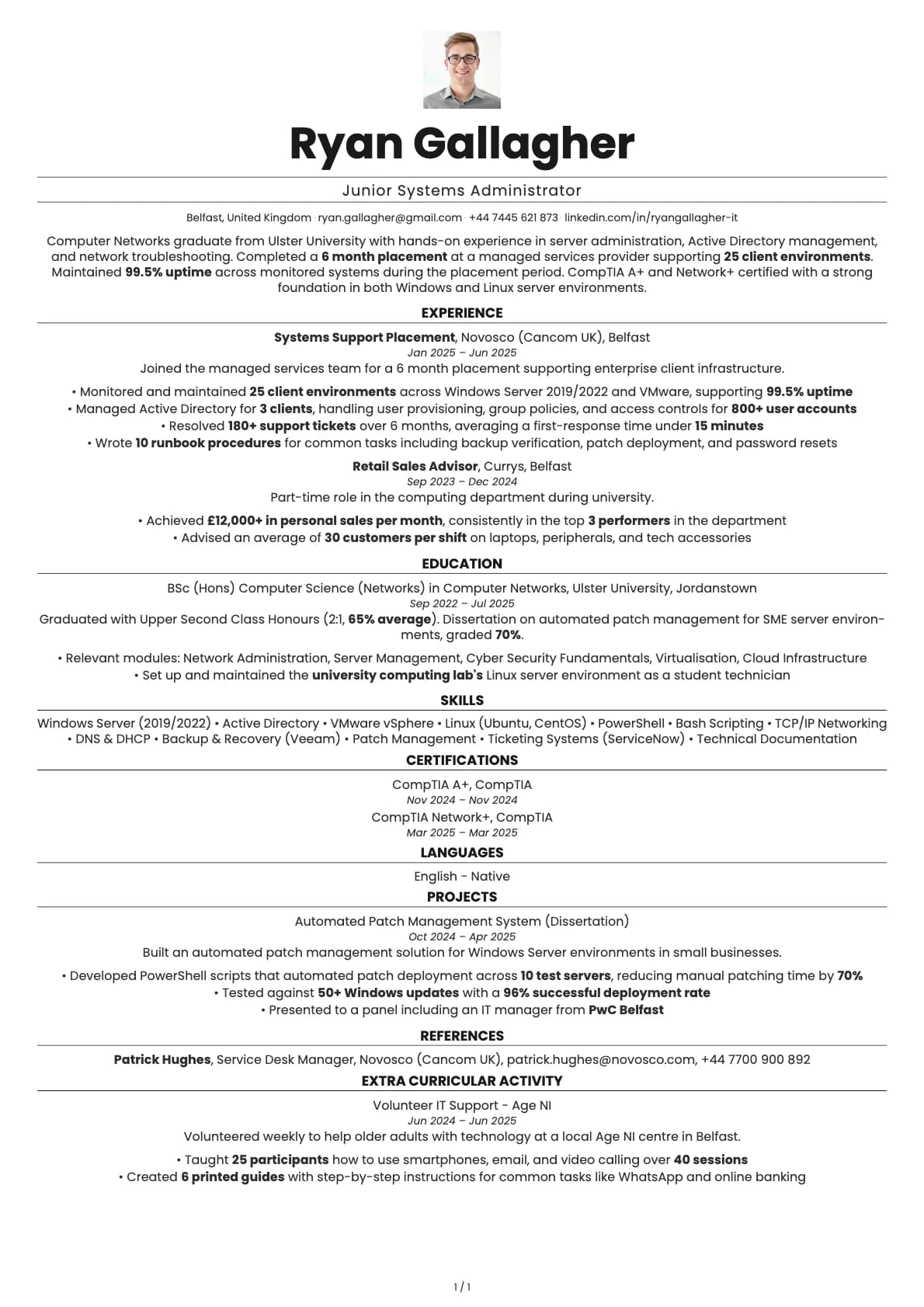
Junior Systems Administrator
A junior systems administrator resume example for graduates. See how to present server management, Active Directory, and CompTIA certifications to land your first sysadmin role.