Junior Painter Resume Example
A junior painter and decorator resume example for NVQ qualified painters. See how to present your decorating skills, site experience, and CSCS card details.

Laddro Team
Free to use. No account needed to start.
Free to use. No account needed to start.
Overview
Painting and decorating is a finishing trade, which means your work is the last thing the client sees. A smudged line, a roller mark on a ceiling, or paint on the carpet will undo weeks of work by other trades. Employers hiring junior painters need to know that you can cut in cleanly, roll out evenly, and prepare surfaces properly. Speed matters, but finish quality matters more at this level.
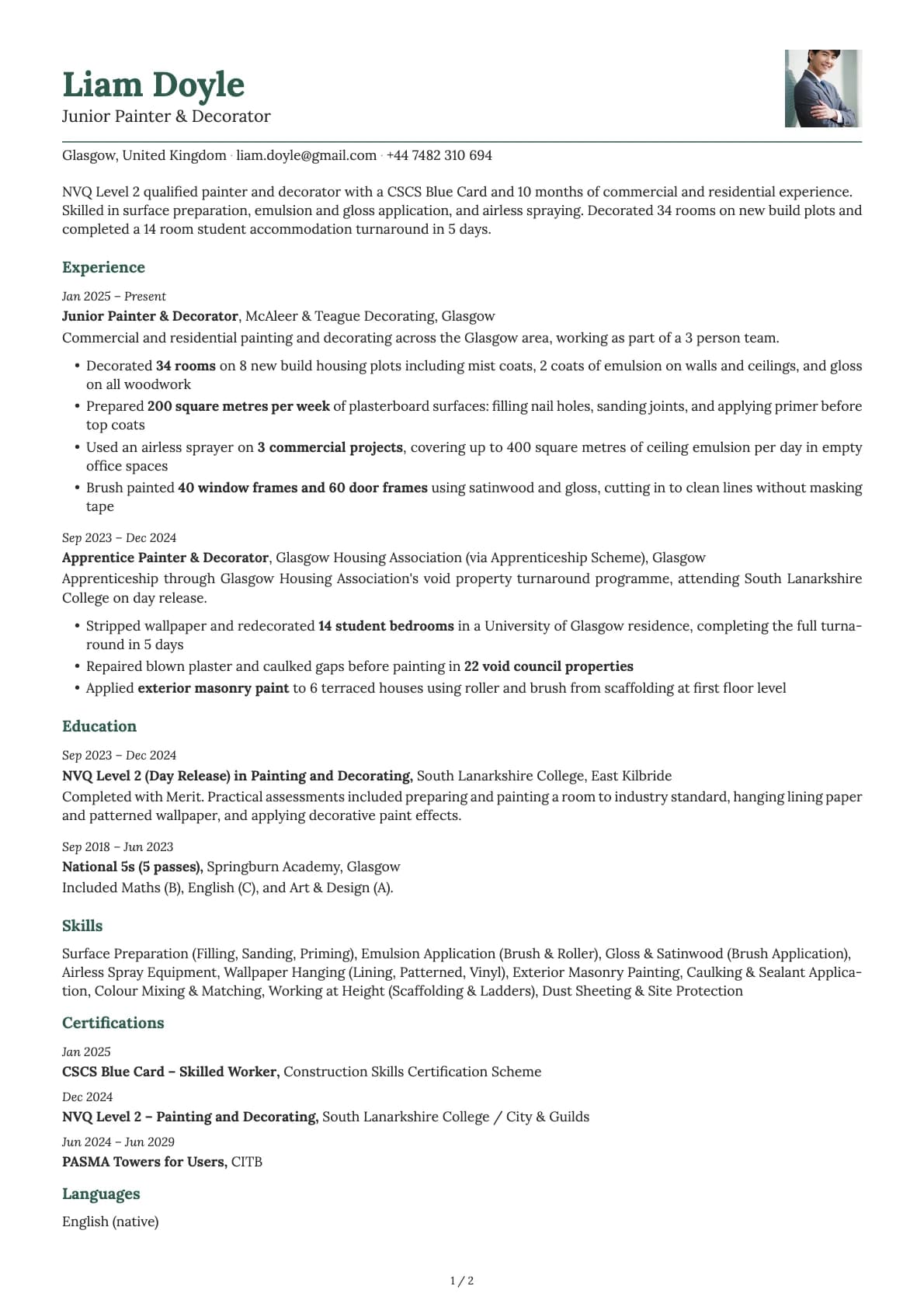
This resume belongs to Liam Doyle, who completed an NVQ Level 2 in Painting and Decorating at South Lanarkshire College and has 10 months of experience with a commercial decorating contractor in Glasgow. He holds a CSCS Blue Card and has worked on office refurbishments, student accommodation turnarounds, and new build housing.
What Makes This Resume Work
Surface preparation is given equal weight to application. Liam's resume mentions filling, sanding, and priming 200 square metres of plasterboard per week on new build plots. It also describes stripping 14 rooms of wallpaper in a student accommodation turnaround and repairing blown plaster before redecorating. This tells the employer he understands that good painting starts with proper prep, not just opening a tin of emulsion.
Application methods are specific. Brush, roller, and airless spray are all mentioned. Liam has used an airless sprayer on 3 commercial projects, covering large areas of emulsion on ceilings and walls in empty office spaces. He has also done detailed brush work on 40 window frames and 60 door frames using gloss and satinwood. The variety shows he is not limited to one method.
Room counts and square metres give scale. 34 rooms decorated on new build plots. 200 square metres of prep per week. 14 student bedrooms turned around in 5 days. An employer can assess both his productivity and his ability to work under time pressure.
The NVQ covers both painting and wallpapering. His college work included hanging lining paper, patterned wallpaper, and vinyl wall coverings. While most commercial work is emulsion and gloss, the ability to hang wallpaper is a valuable extra skill for residential and hotel work.
Key Takeaways
Describe your surface preparation in detail. Filling, sanding, priming, and caulking are as important as the final coat. Employers want painters who prep properly, not those who paint over problems.
Name your application methods and the products you use. Emulsion, gloss, satinwood, masonry paint, and wood stain are all different jobs. Airless spray experience is a significant bonus on commercial projects.
Count rooms, square metres, and turnaround times. Painting is a trade where speed and quality need to balance, and showing both gives an employer confidence.
Build your own version
Open this layout in the builder and swap in your own details. It takes a few minutes.
Free to use. No account needed to start.
Was this resume example helpful?
Rate this example to help us create better content for you.
4.5 average from 79 ratingsRelated resume examples
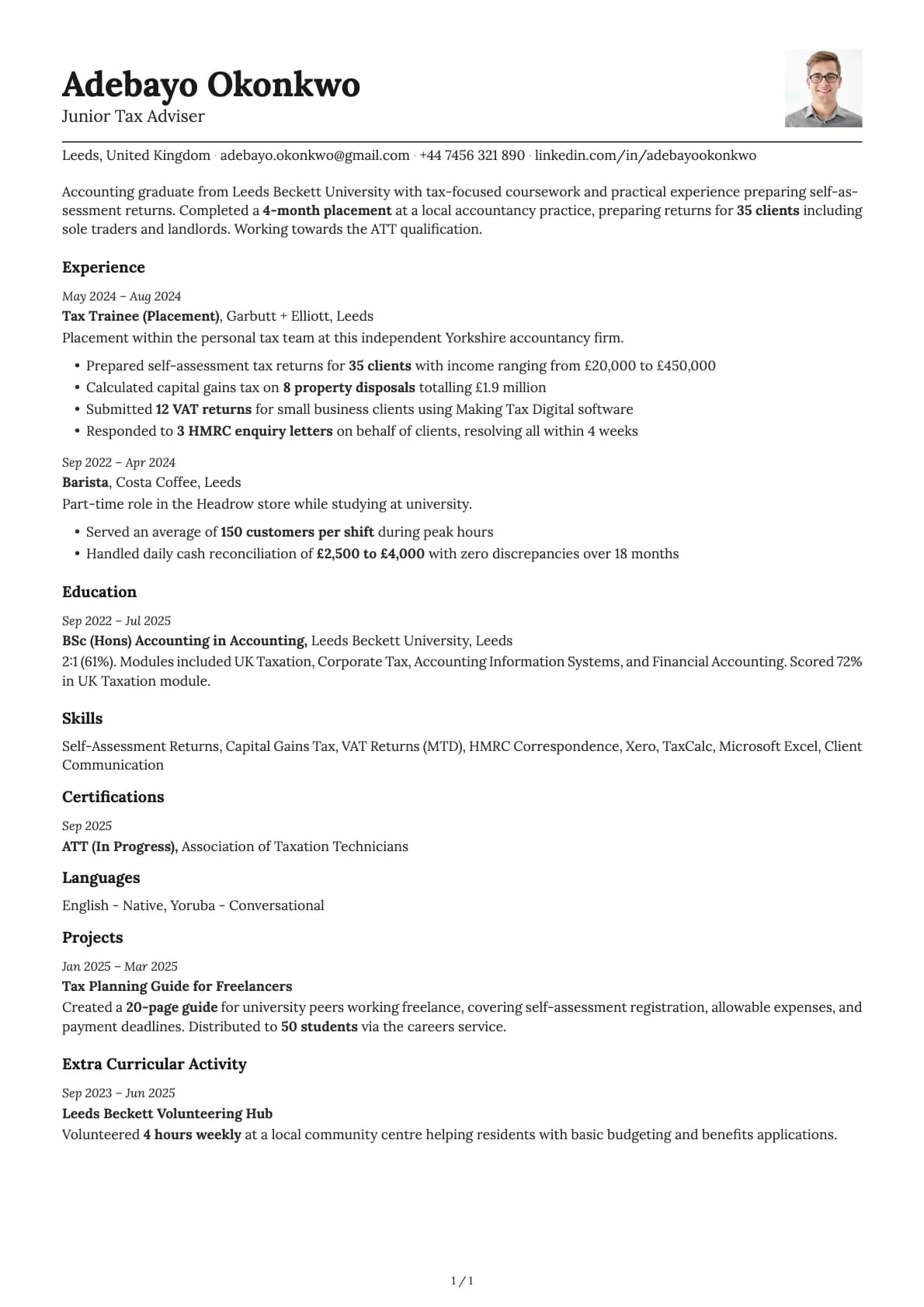
Junior Tax Adviser
A junior tax adviser resume example with placement experience at a regional accountancy firm and ATT study.
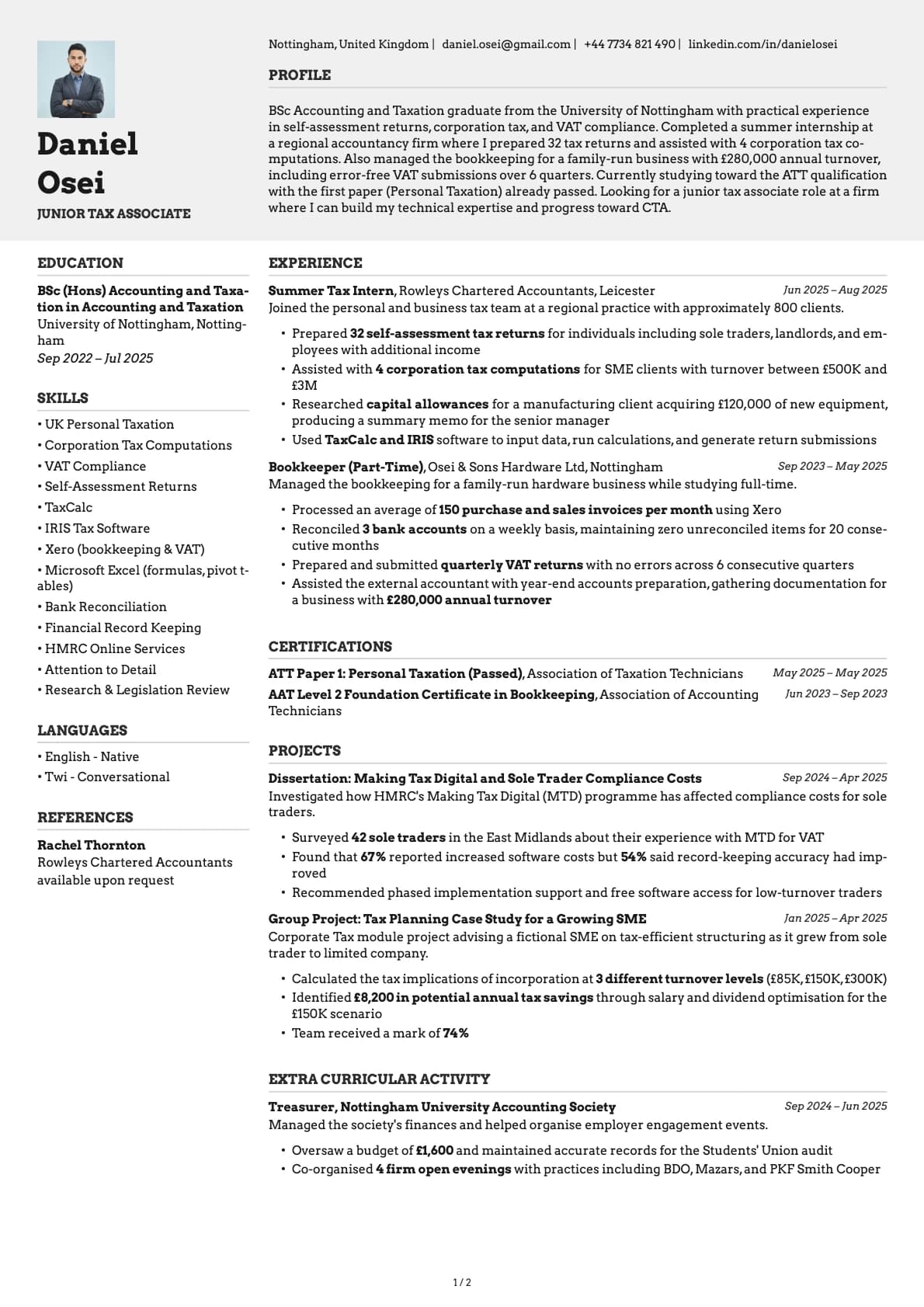
Junior Tax Associate
A junior tax associate resume example for tax and accounting graduates. See how HMRC work experience and ATT progress help you stand out to employers.
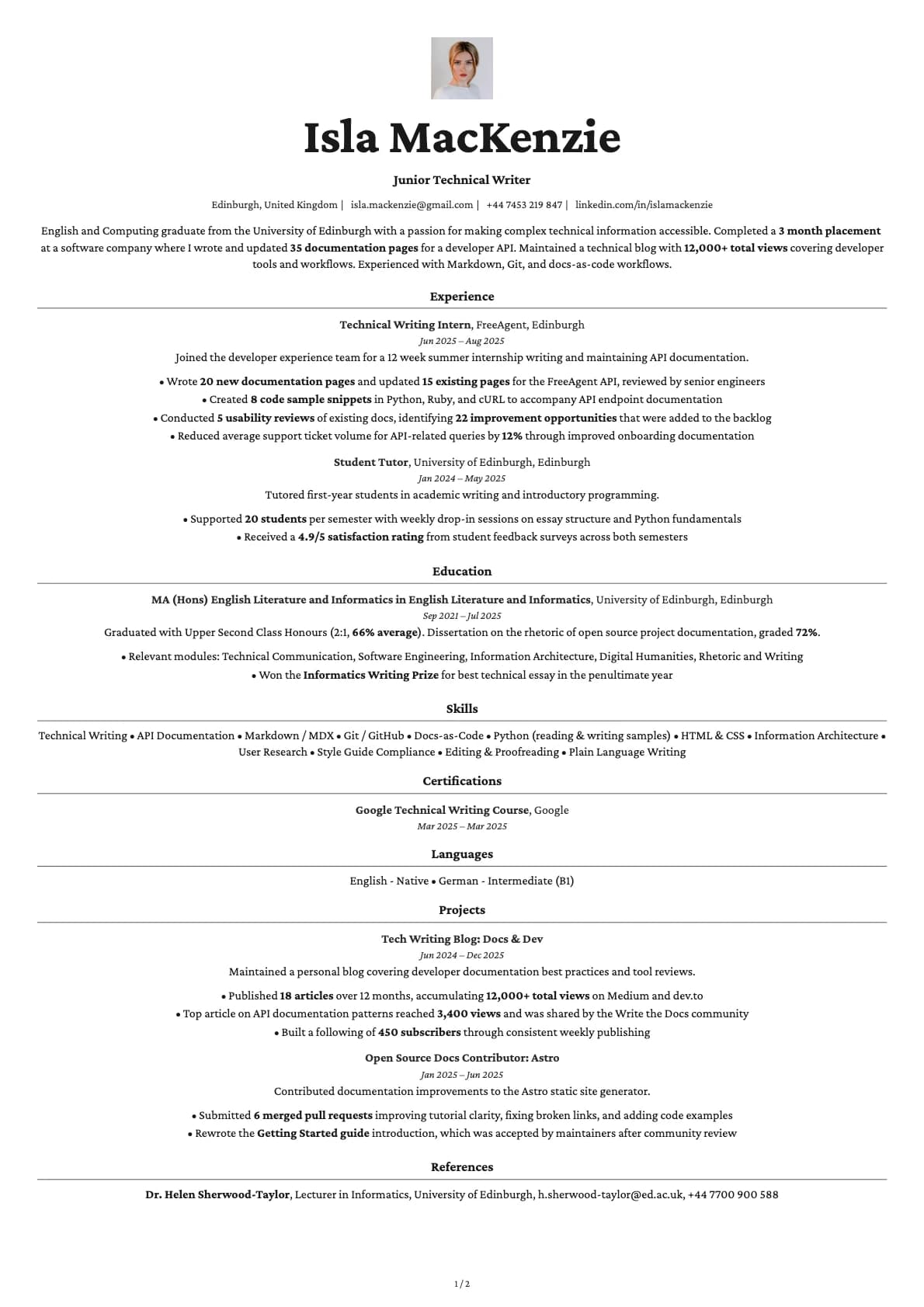
Junior Technical Writer
A junior technical writer resume example for graduates. See how to present documentation experience, API writing samples, and open source contributions to land your first tech writing role.
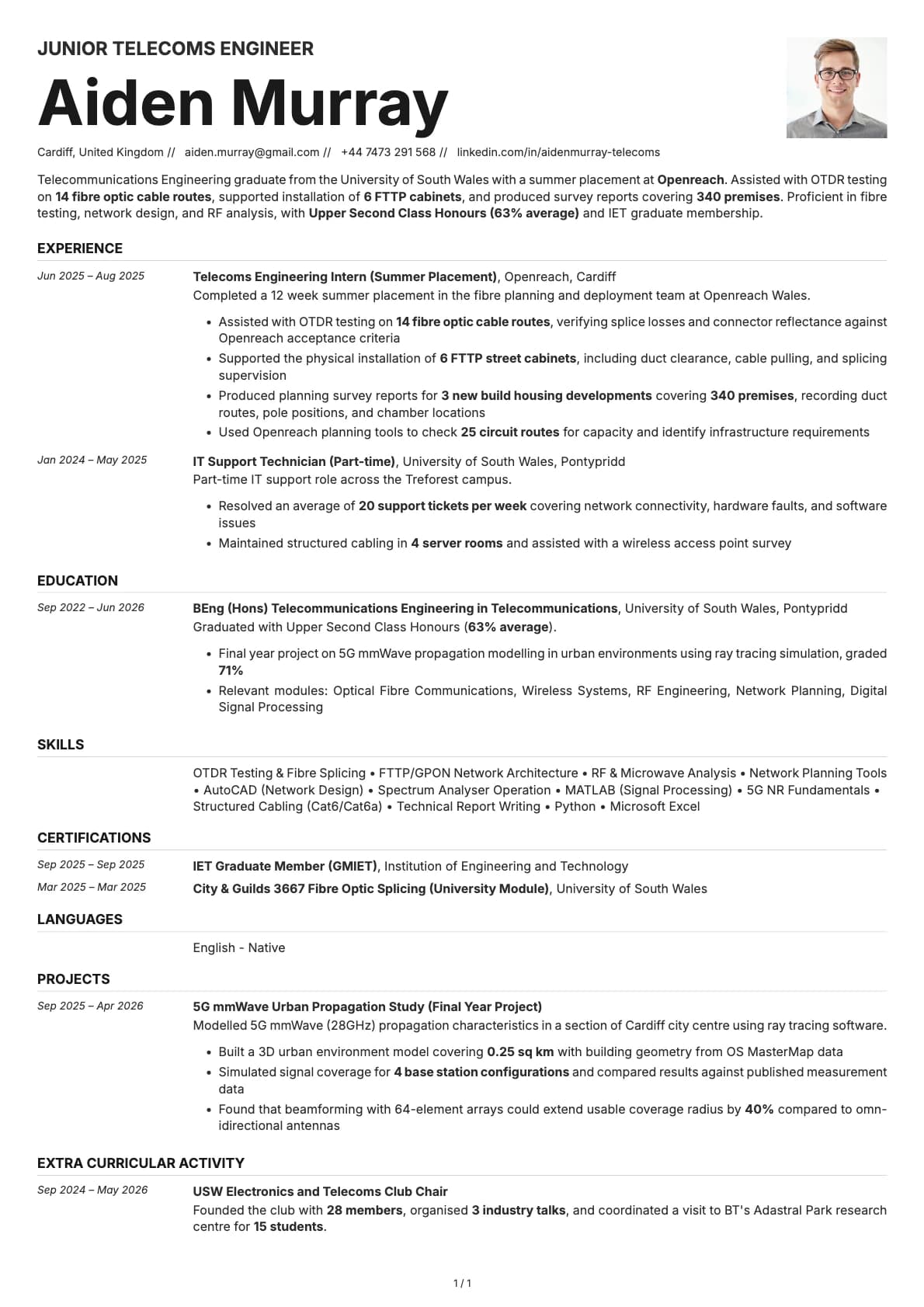
Junior Telecoms Engineer
A junior telecoms engineer resume example with fibre optic network experience, OTDR testing skills, and placement at Openreach.
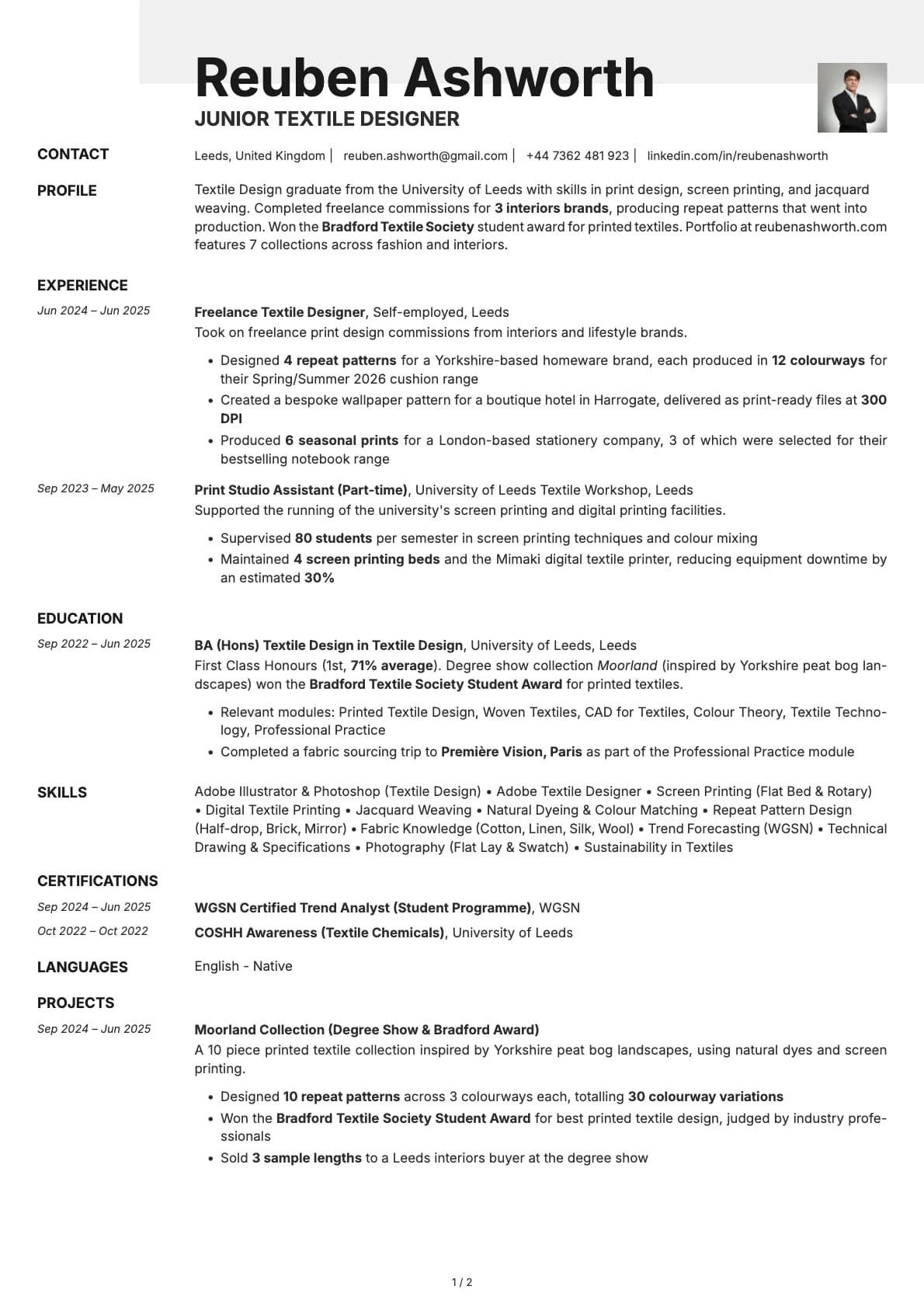
Junior Textile Designer
A junior textile designer resume example with print design projects, client commissions, and weaving skills from a Textile Design BA graduate entering the industry.
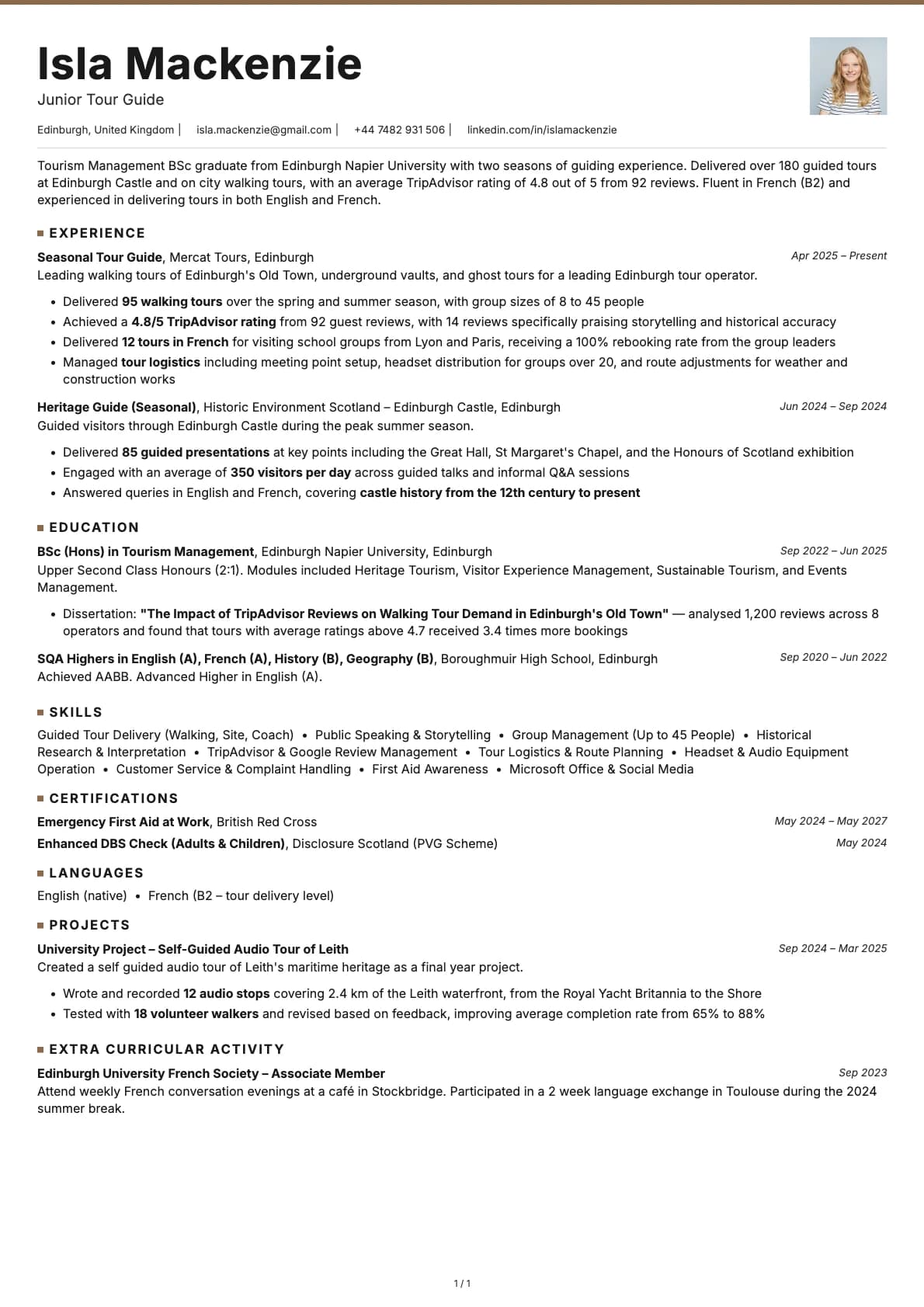
Junior Tour Guide
A junior tour guide resume example for tourism graduates. See how to present your guiding experience, customer satisfaction scores, and language skills for the UK tourism industry.
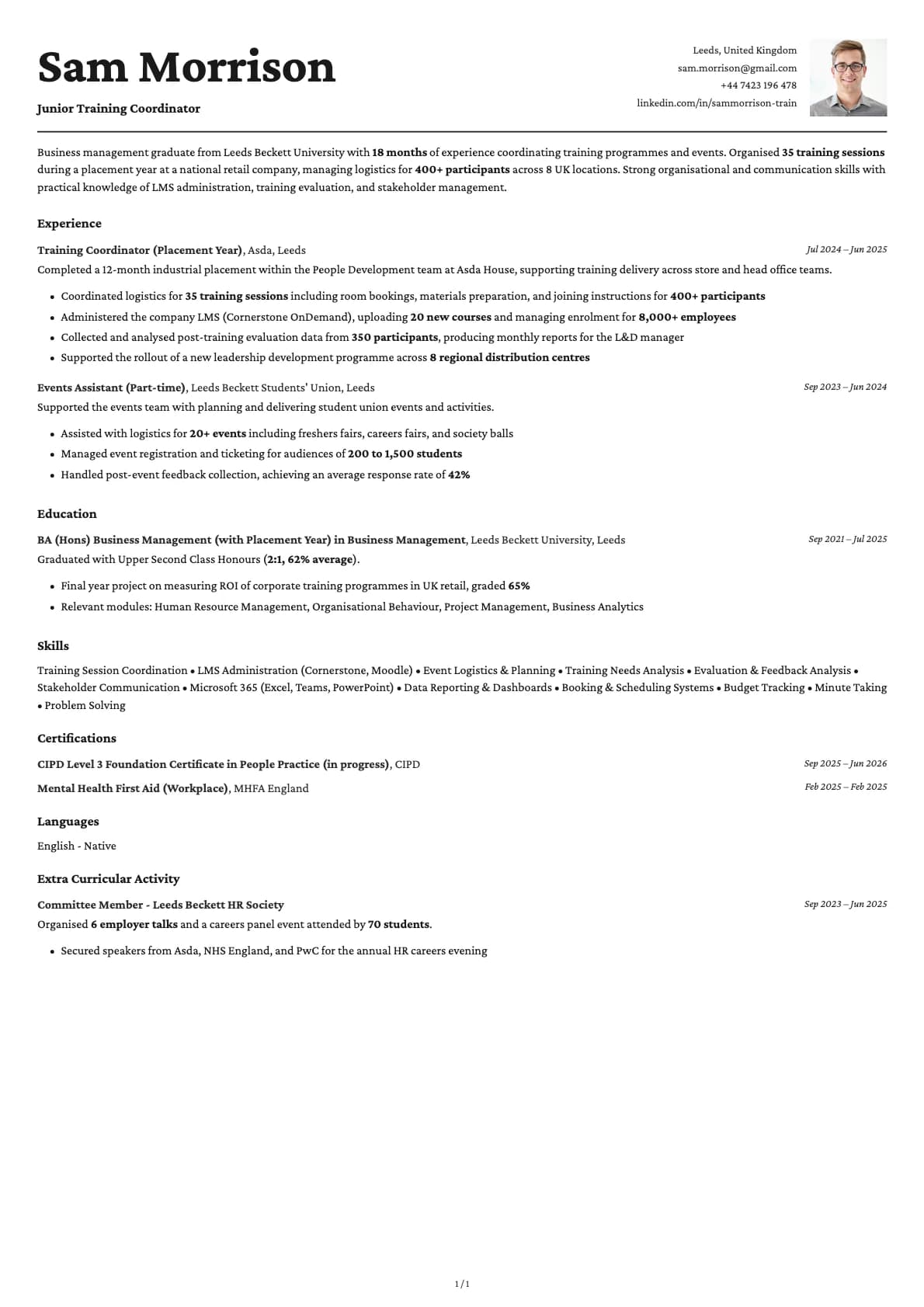
Junior Training Coordinator
A junior training coordinator resume example with LMS administration experience, session coordination numbers, and L&D placement experience.
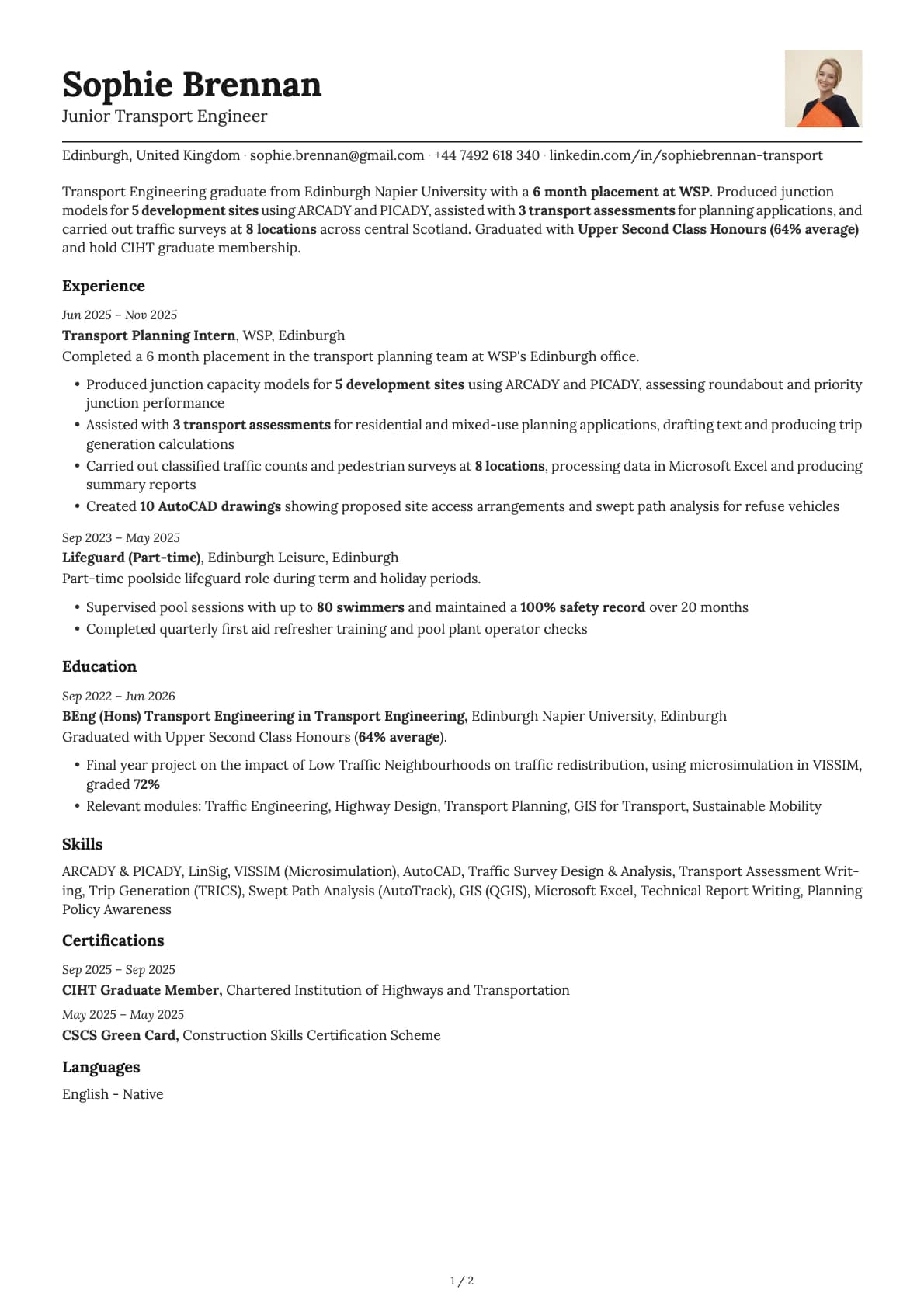
Junior Transport Engineer
A junior transport engineer resume example with traffic modelling experience, ARCADY proficiency, and CIHT membership.
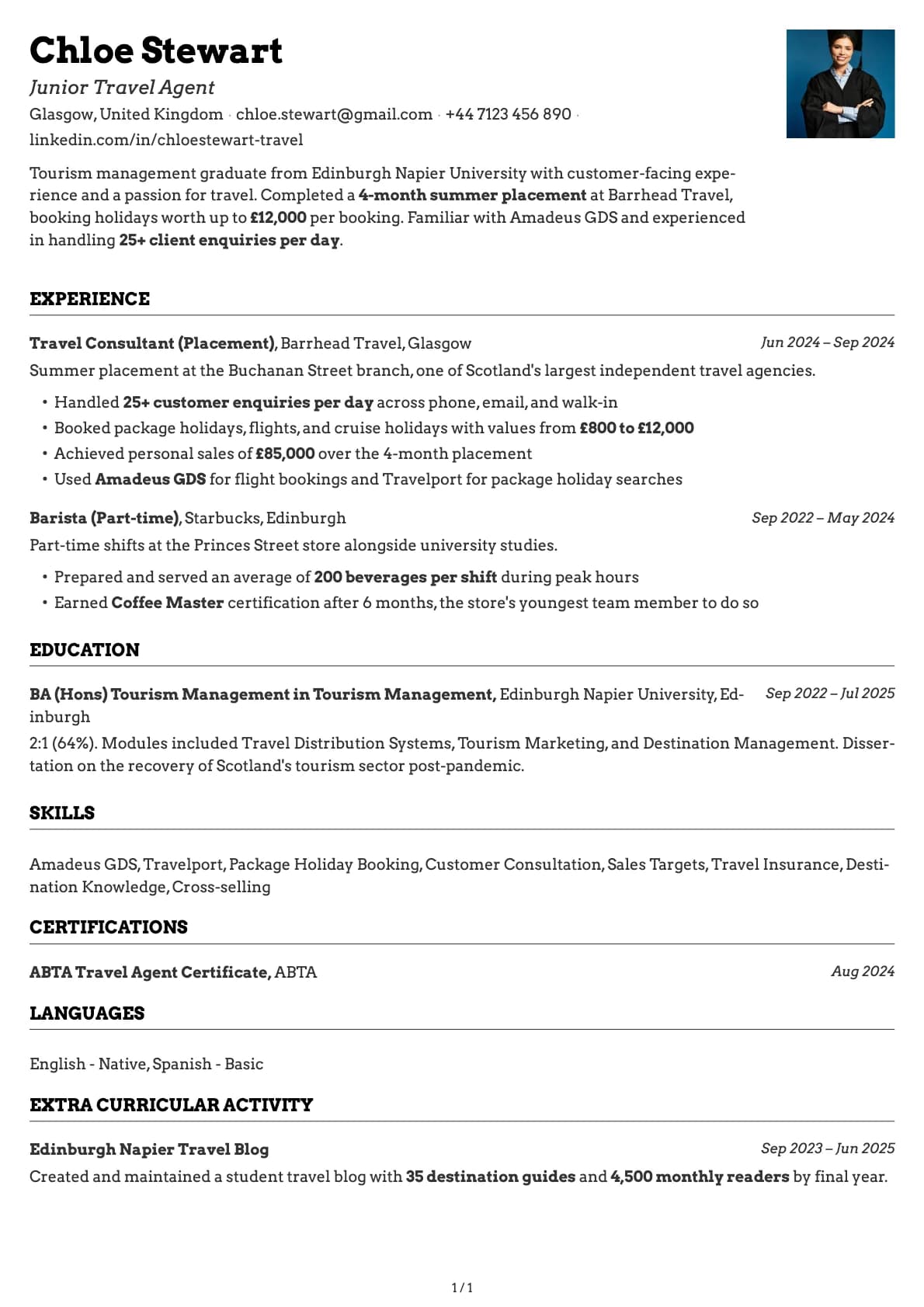
Junior Travel Agent
A junior travel agent resume example with Barrhead Travel placement and Amadeus GDS experience.
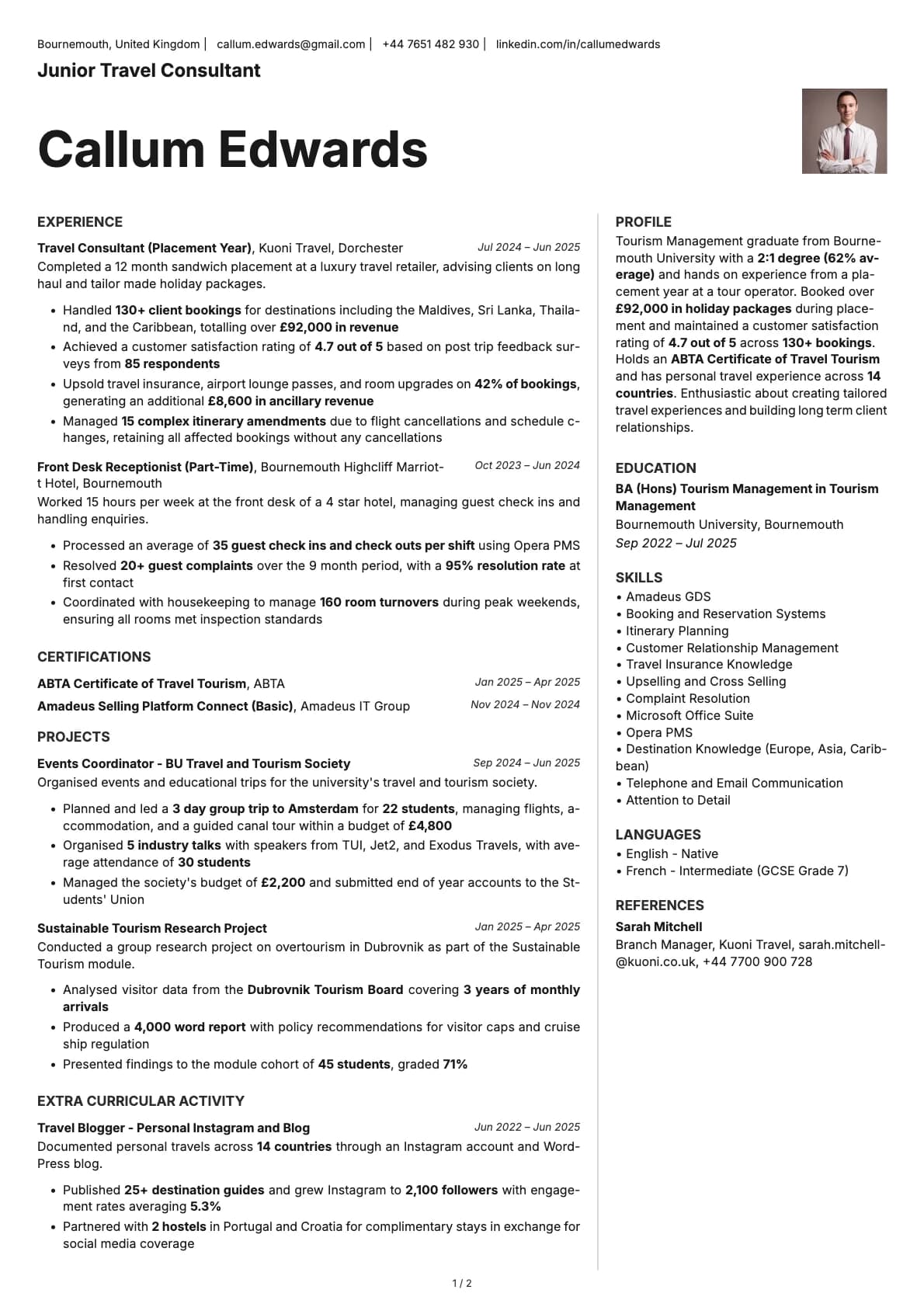
Junior Travel Consultant
A junior travel consultant resume example for tourism graduates. See how to present booking experience, GDS skills, and destination knowledge to impress employers.
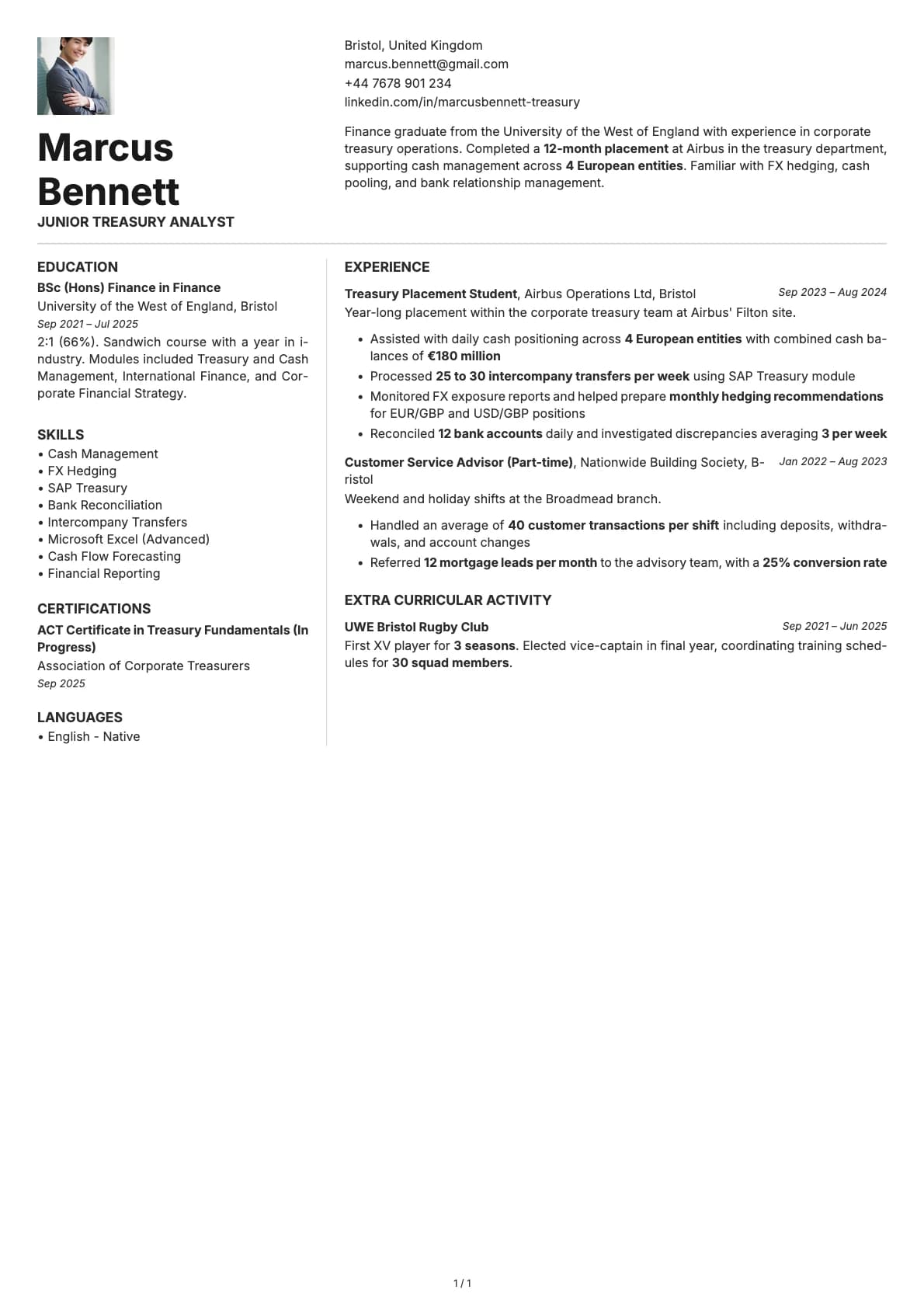
Junior Treasury Analyst
A junior treasury analyst resume example with Airbus placement experience and cash management skills.
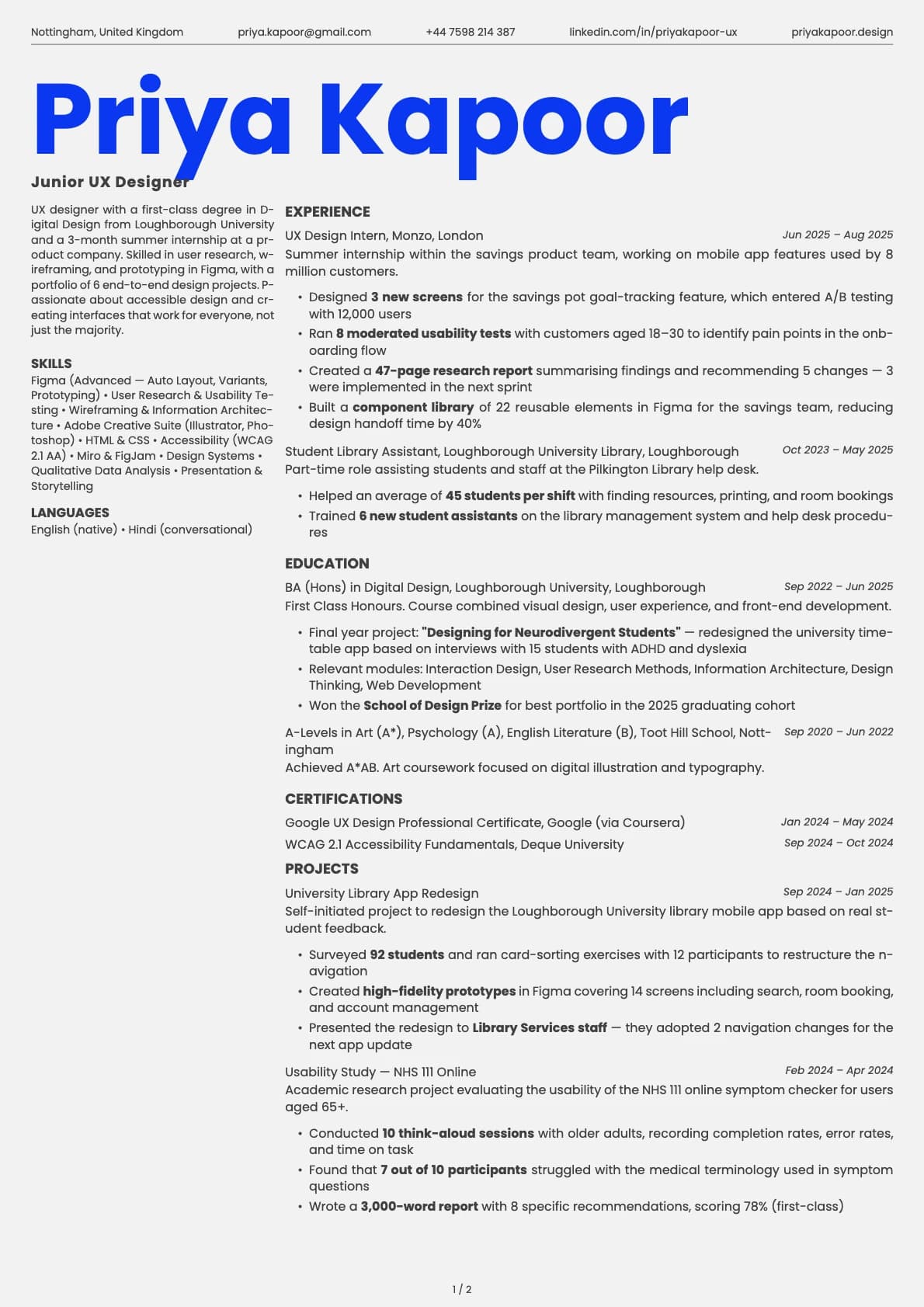
Junior UX Designer
A junior UX designer resume example for recent graduates. Learn how to present your user research, wireframes, and design projects to secure your first UX role.