Junior Sports Coach Resume Example
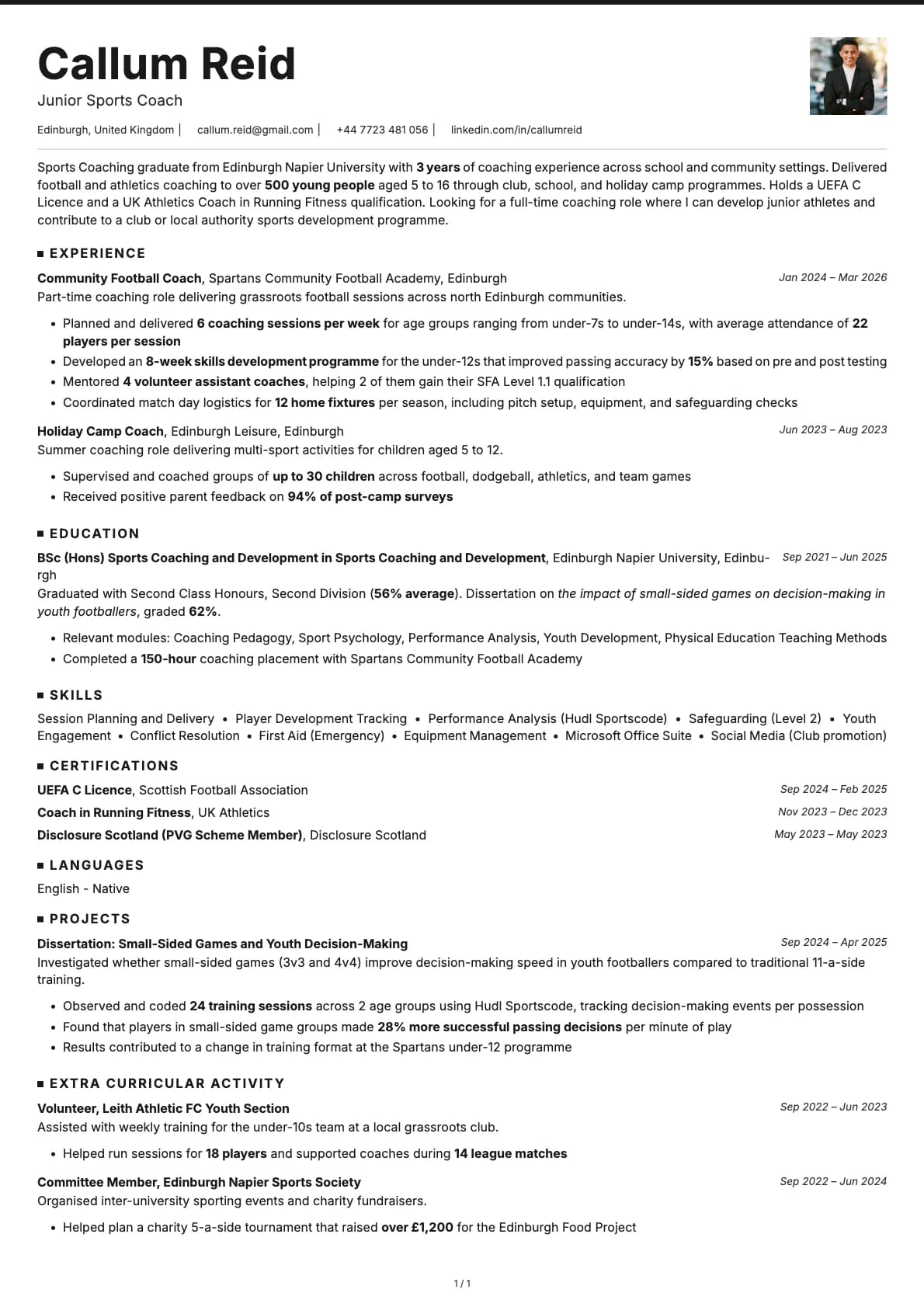
A junior sports coach resume example showing how to combine a coaching degree, UEFA C Licence, and grassroots football experience into a full-time coaching career.

Laddro Team
Free to use. No account needed to start.
Free to use. No account needed to start.
Overview
Sports coaching at the community and junior level is one of those careers where everyone has some experience but few people can document it properly. Clubs, councils, and sports development programmes want coaches who can plan sessions, track player progress, and handle the logistics of match days and safeguarding. A coaching degree and a licence get you in the door, but the numbers on your resume determine whether you get the role.
Callum Reid graduated from Edinburgh Napier University with a BSc in Sports Coaching and Development and has spent over two years coaching football across school, community, and holiday camp settings. He holds a UEFA C Licence from the Scottish Football Association and a UK Athletics Coach in Running Fitness qualification. Through his work at Spartans Community Football Academy and Edinburgh Leisure, he has delivered coaching to over 500 young people aged 5 to 16.
What Makes This Resume Work
The coaching volume is clearly documented. Callum planned and delivered 6 coaching sessions per week for age groups ranging from under-7s to under-14s, with average attendance of 22 players per session. He coordinated match day logistics for 12 home fixtures per season, including pitch setup, equipment, and safeguarding checks. This level of detail tells an employer exactly what a typical week looks like and confirms he can handle the workload.
Player development is measured, not assumed. He developed an 8-week skills development programme for the under-12s that improved passing accuracy by 15% based on pre and post testing. Most junior coaches describe their sessions in vague terms. Callum can point to a structured programme with a measured outcome, which is exactly what sports development managers look for when allocating funding and resources.
Mentoring other coaches shows leadership potential. Callum mentored 4 volunteer assistant coaches, helping 2 of them gain their SFA Level 1.1 qualification. This is significant because it shows he can develop others, not just deliver sessions himself. Clubs and academies that rely on volunteer coaches need staff who can upskill those around them.
The dissertation connects coaching practice to evidence. His research observed and coded 24 training sessions across 2 age groups using Hudl Sportscode, tracking decision-making events per possession. He found that players in small-sided game groups made 28% more successful passing decisions per minute of play. The results contributed to a change in training format at the Spartans under-12 programme. This is not theoretical coaching philosophy; it is applied research that changed a real programme.
Key Takeaways
If you are applying for junior coaching positions, your resume needs session numbers, participant counts, and at least one example of measurable player development. Coaching licences and degrees show you are qualified, but clubs want to know you can run a full programme: sessions, logistics, safeguarding, and volunteer management. If you have used any performance analysis tools or measured improvement over a structured programme, put those numbers on the page. They separate working coaches from qualified ones.
Build your own version
Open this layout in the builder and swap in your own details. It takes a few minutes.
Free to use. No account needed to start.
Was this resume example helpful?
Rate this example to help us create better content for you.
4.6 average from 96 ratingsRelated resume examples
Groundskeeper
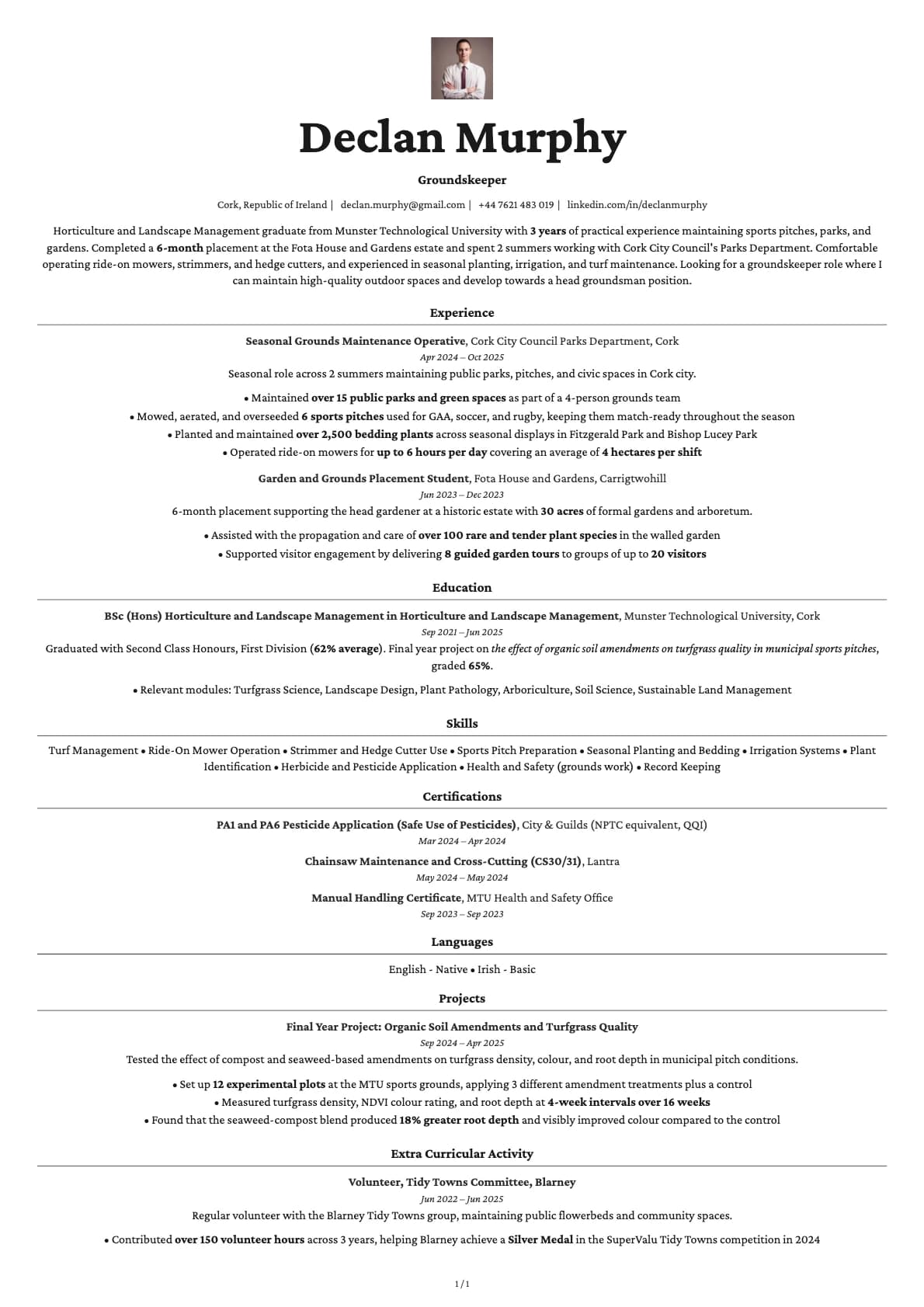
A groundskeeper resume example showing how to combine a horticulture degree with council grounds work and a historic garden placement.
Gym Instructor
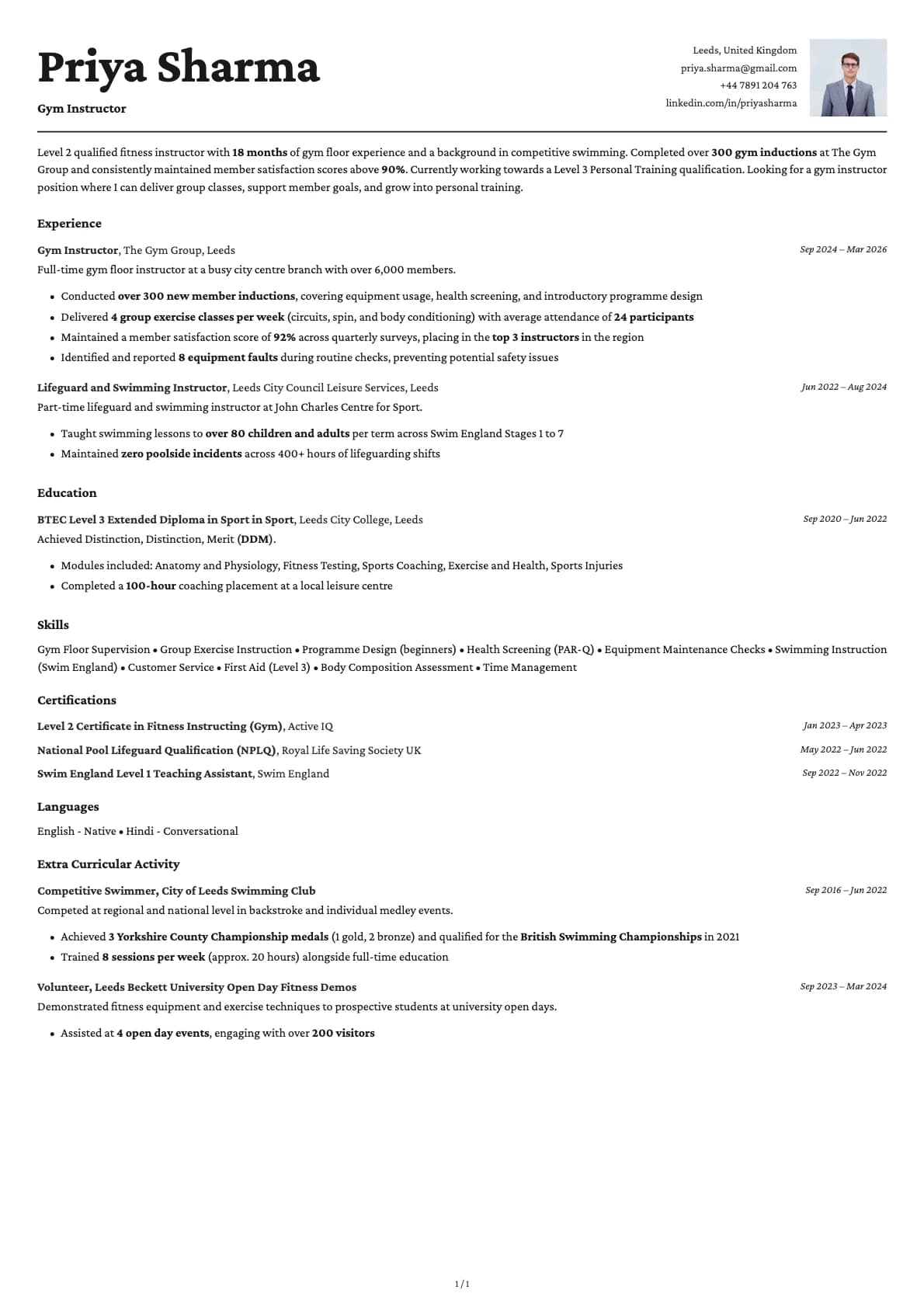
A gym instructor resume example showing how to combine a Level 2 fitness qualification with competitive swimming and strong member satisfaction scores.
Healthcare Assistant
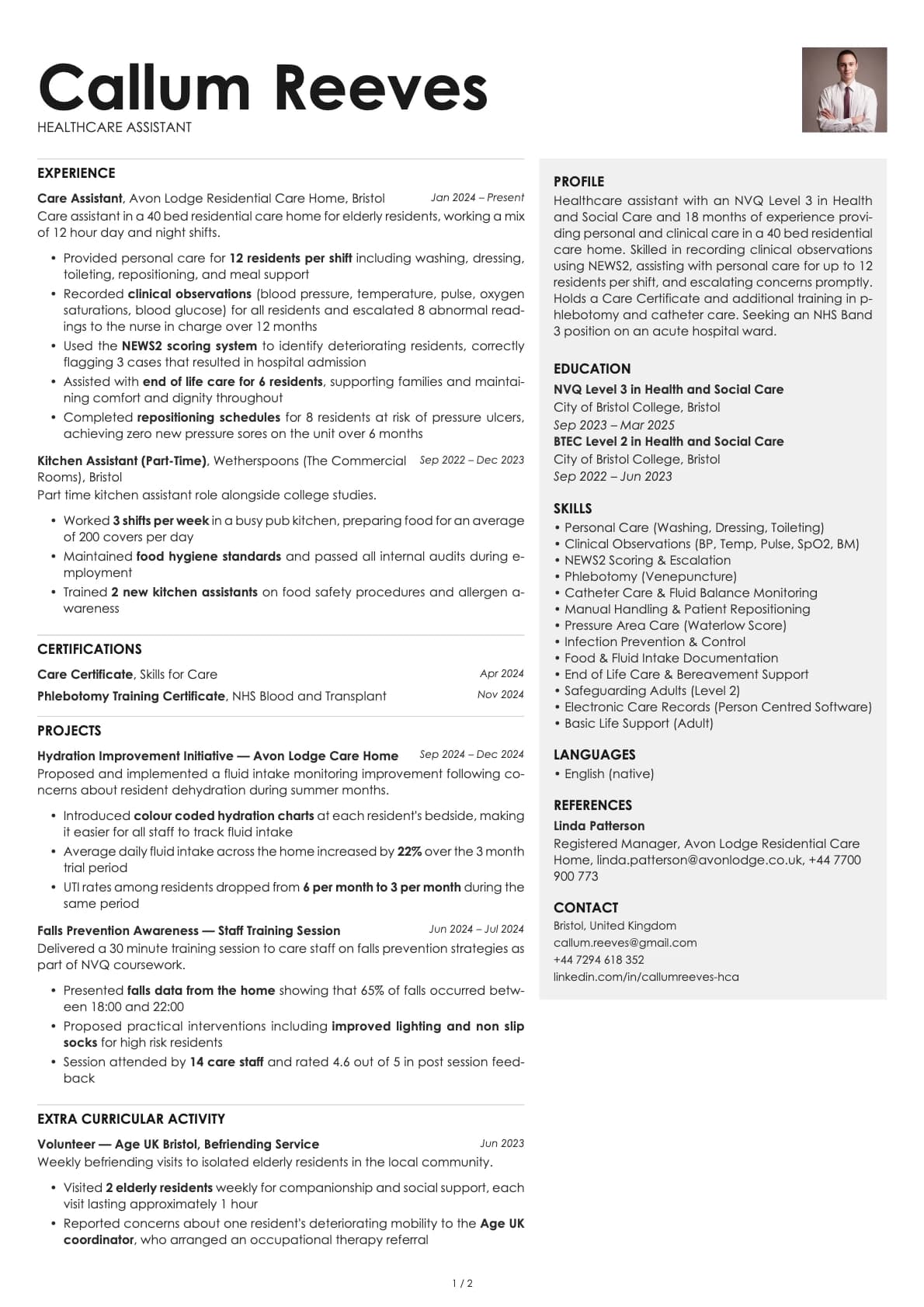
A healthcare assistant resume example for candidates with NVQ Level 3 in Health and Social Care, showing how to present ward experience and patient care skills for NHS Band 3/4 roles.
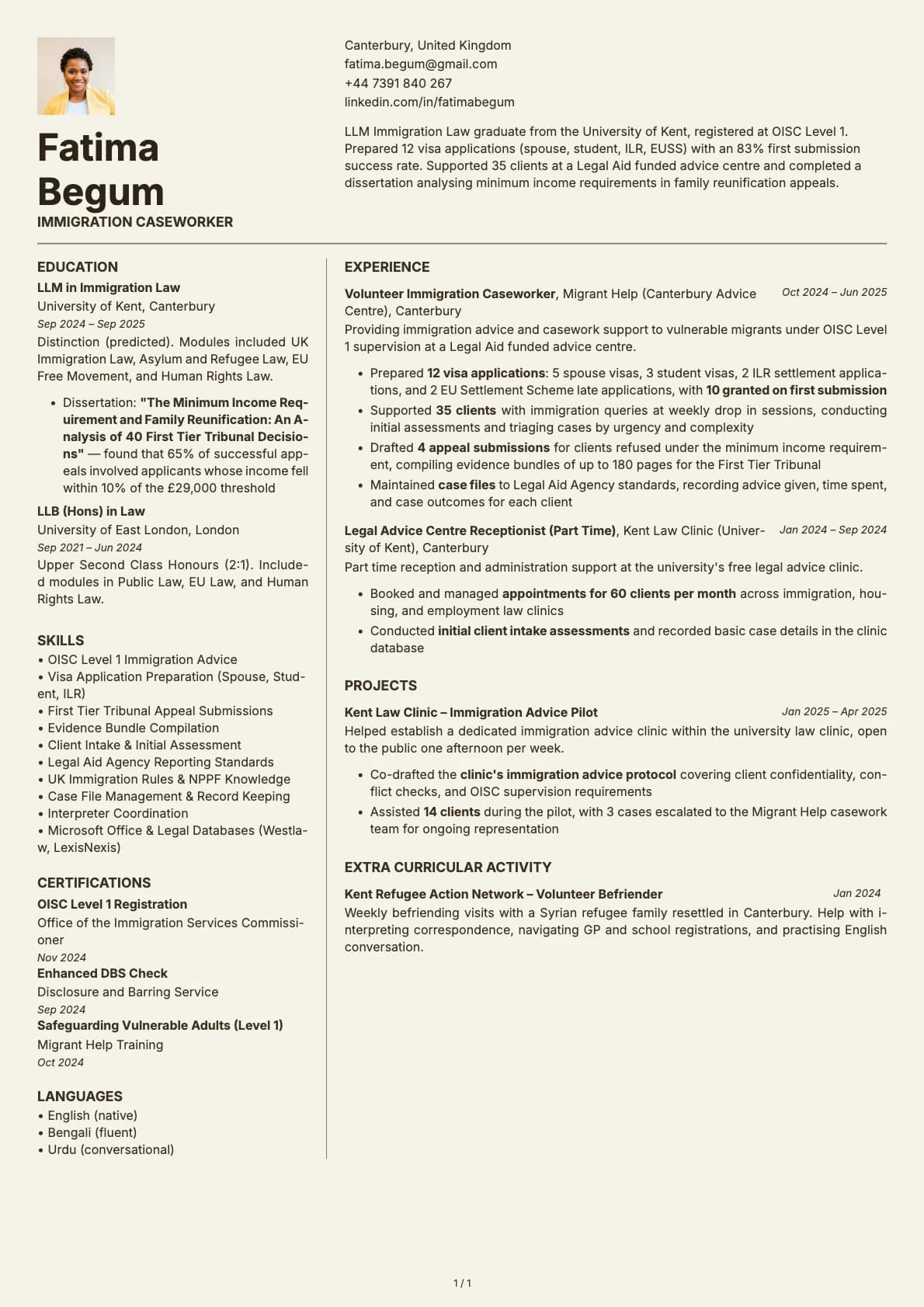
Immigration Caseworker
An immigration caseworker resume example for immigration law graduates. See how to present your OISC registration, casework experience, and visa application knowledge.
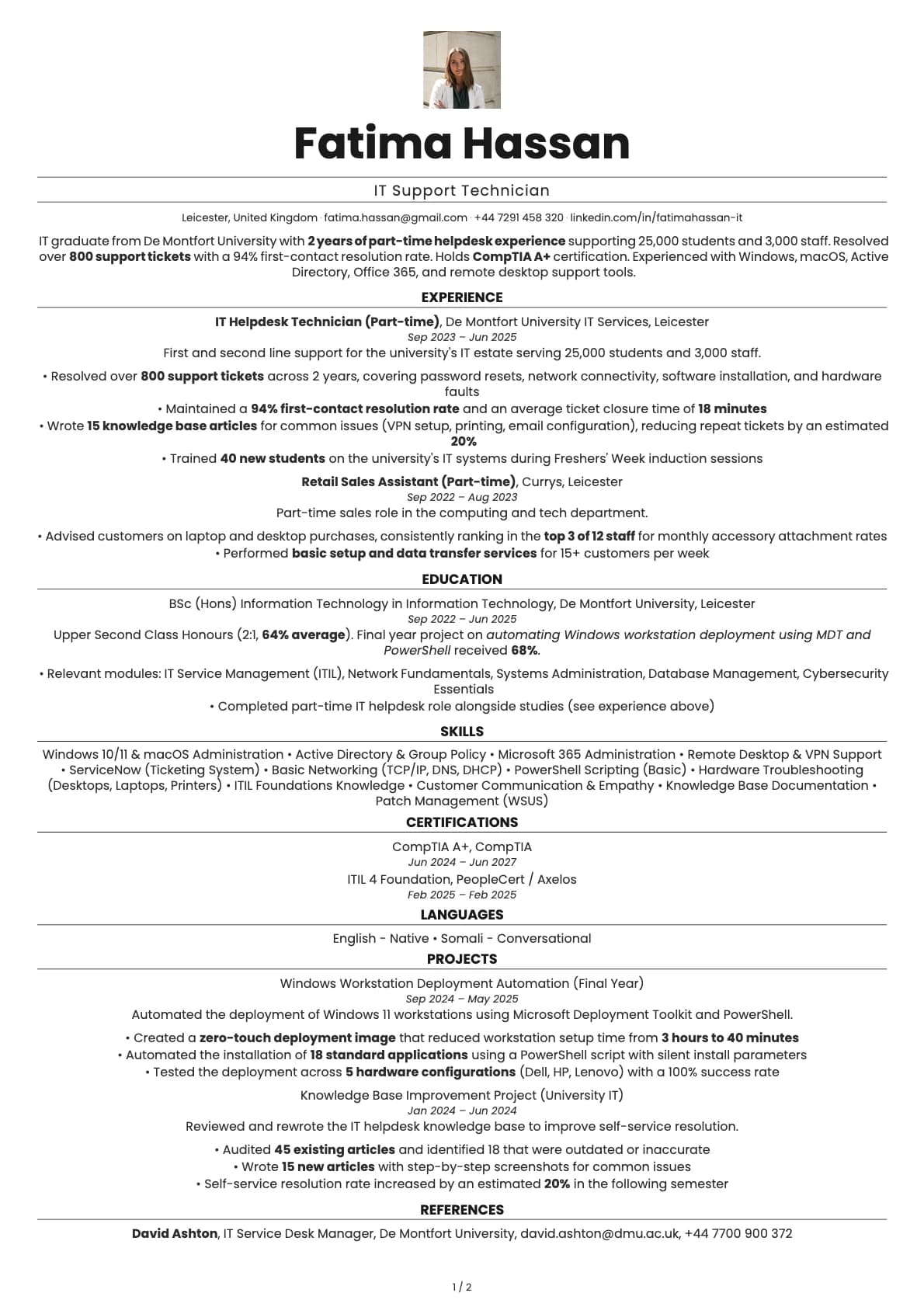
IT Support Technician
An IT support technician resume example with ticket resolution stats, CompTIA certification, and helpdesk experience from an IT graduate starting their career.
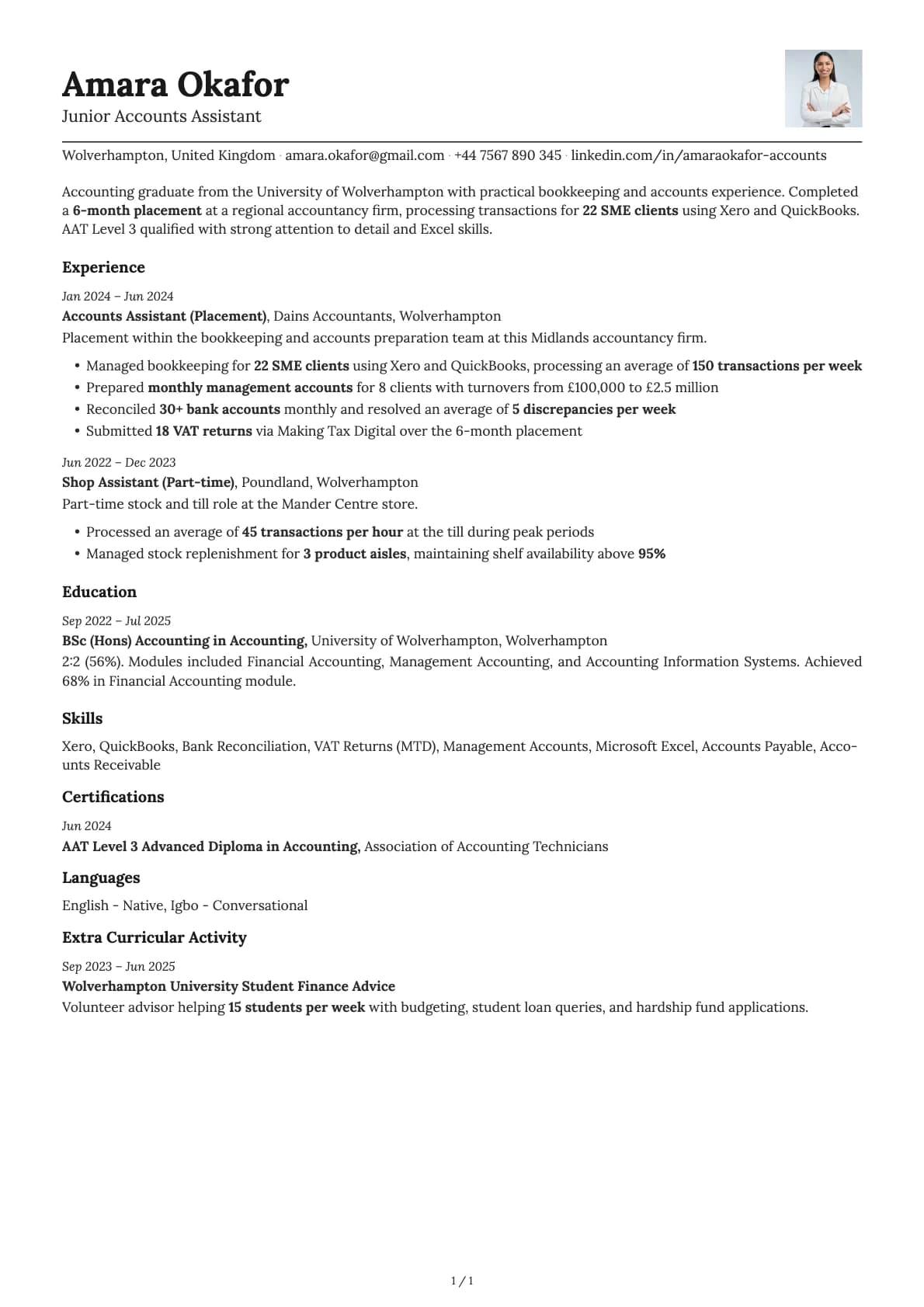
Junior Accounts Assistant
A junior accounts assistant resume example with accountancy firm placement and AAT Level 3 qualification.
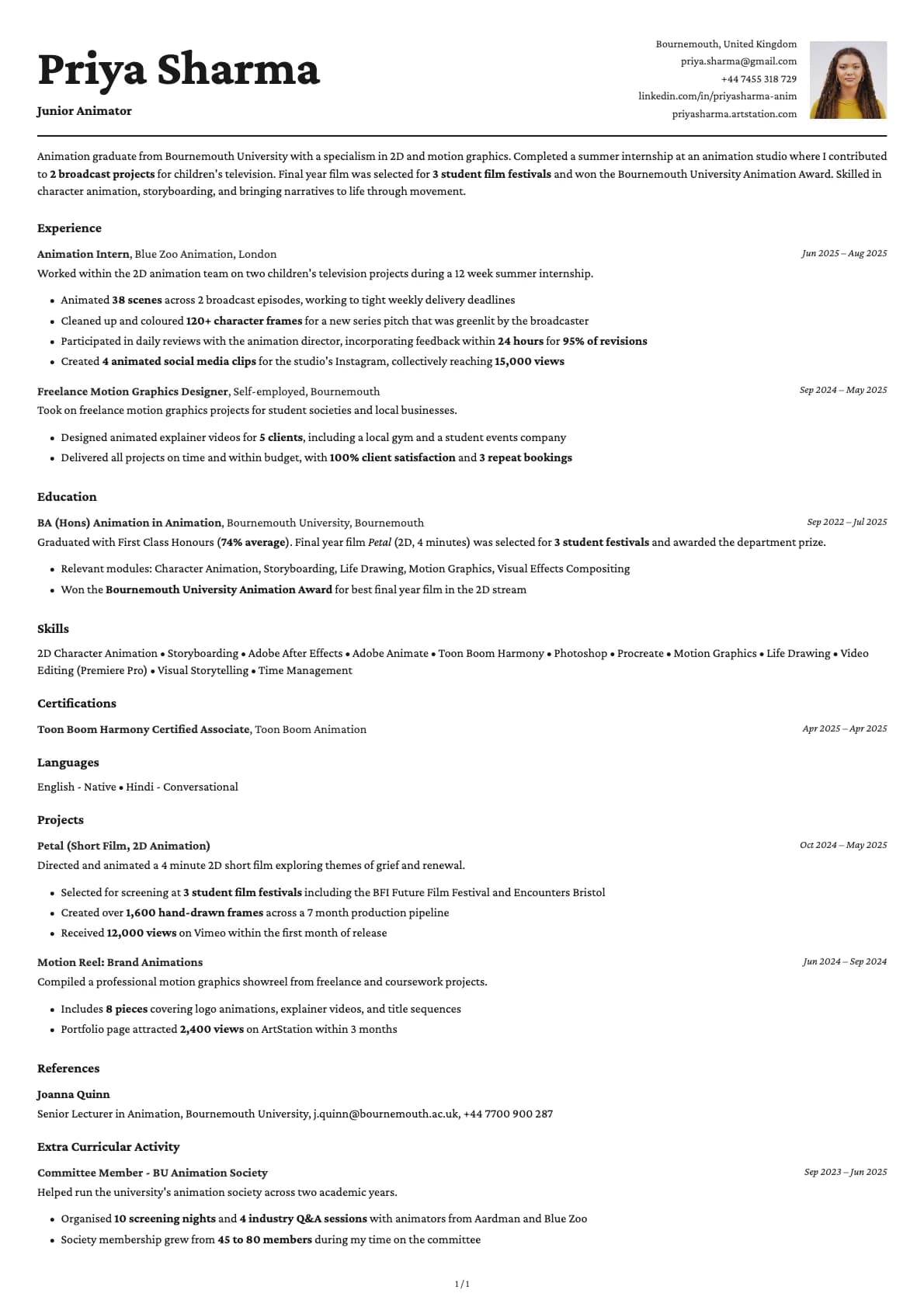
Junior Animator
A junior animator resume example for recent graduates. See how to present showreels, studio experience, and festival selections to land your first animation role.
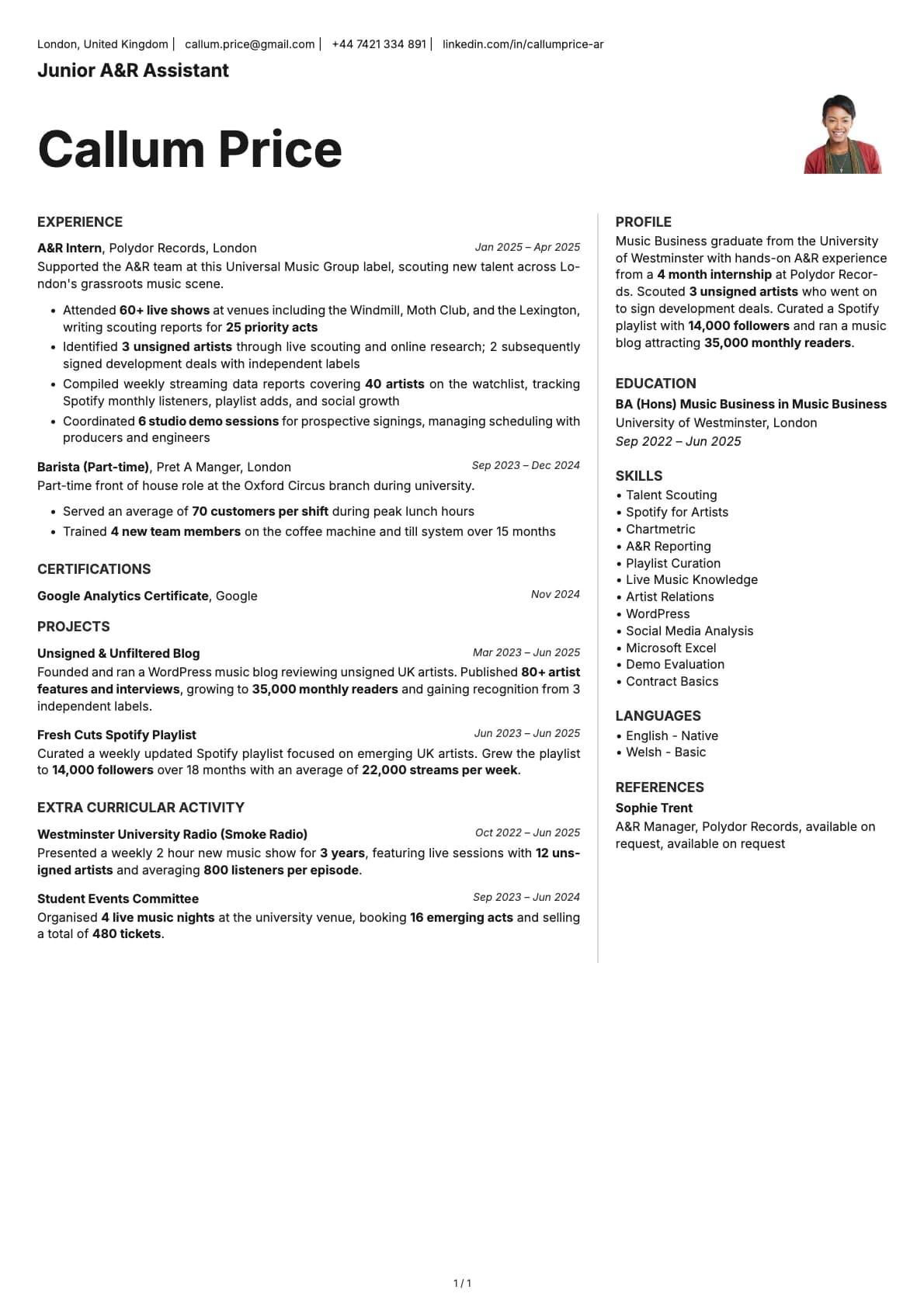
Junior A&R Assistant
A junior A&R assistant resume example with music business degree, label internship, and artist scouting experience for 2026.
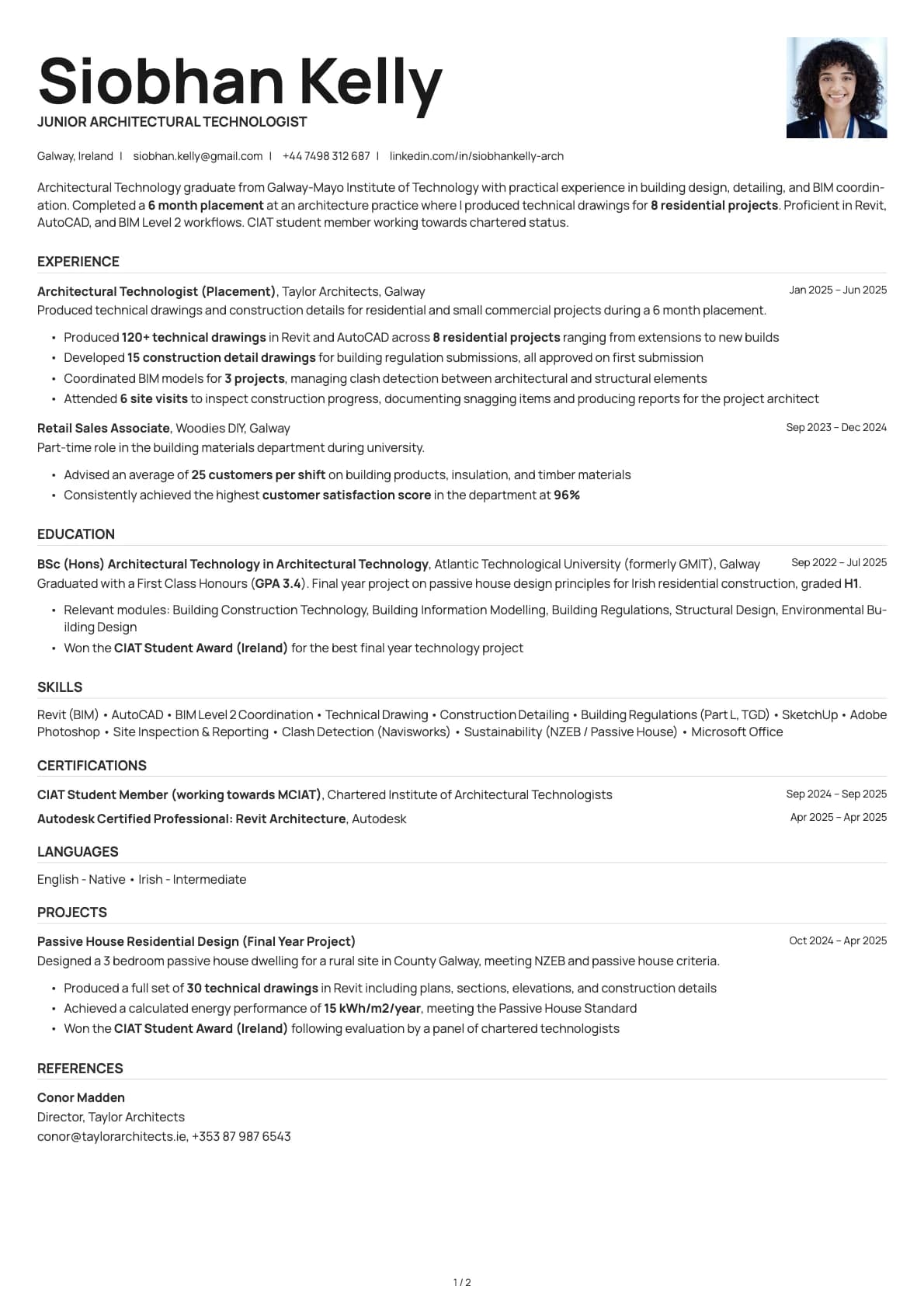
Junior Architectural Technologist
A junior architectural technologist resume example for graduates. See how to present Revit skills, BIM experience, and technical drawing output to land your first architectural technology role.
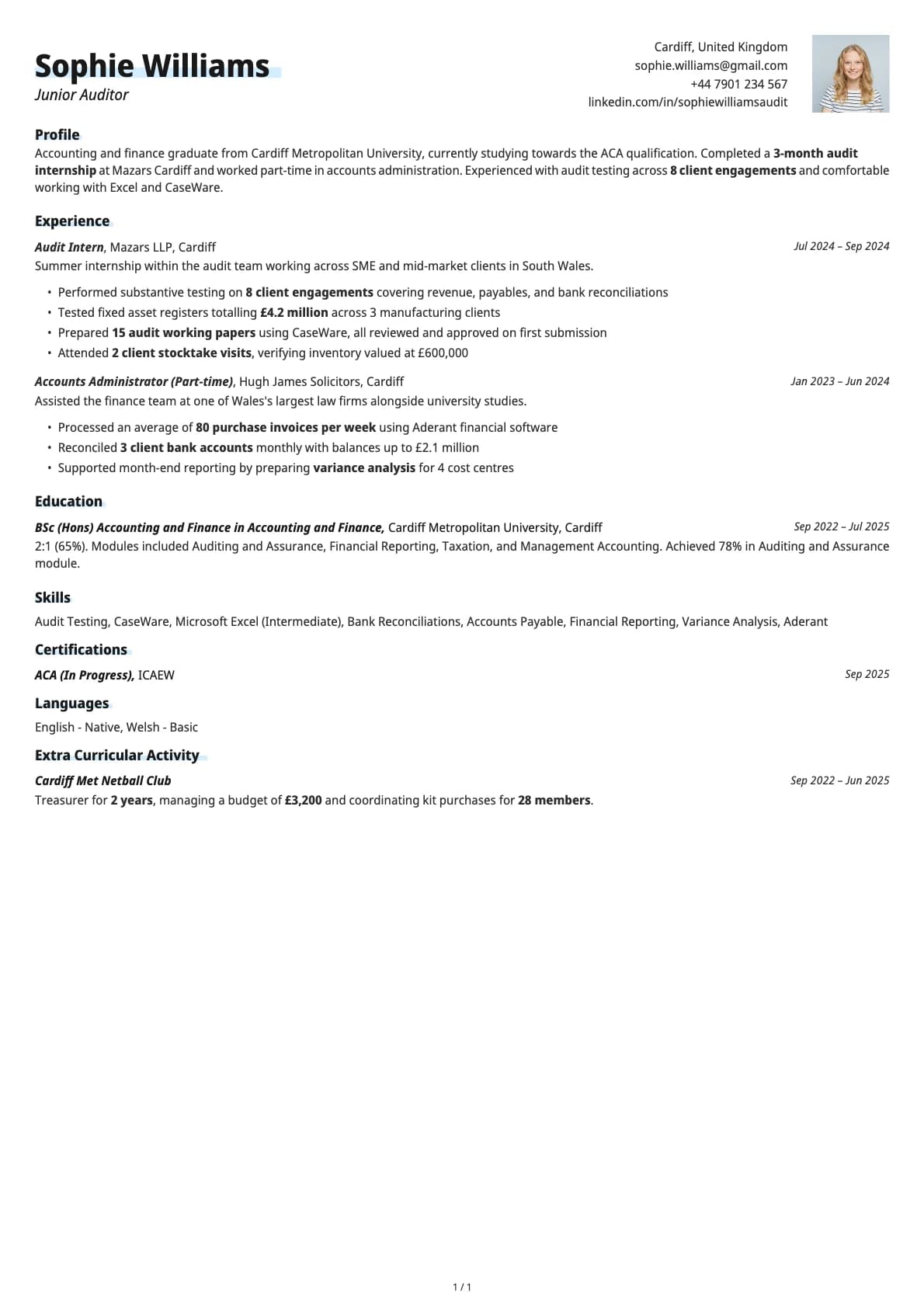
Junior Auditor
A junior auditor resume example with Mazars internship experience and accounts administration background.
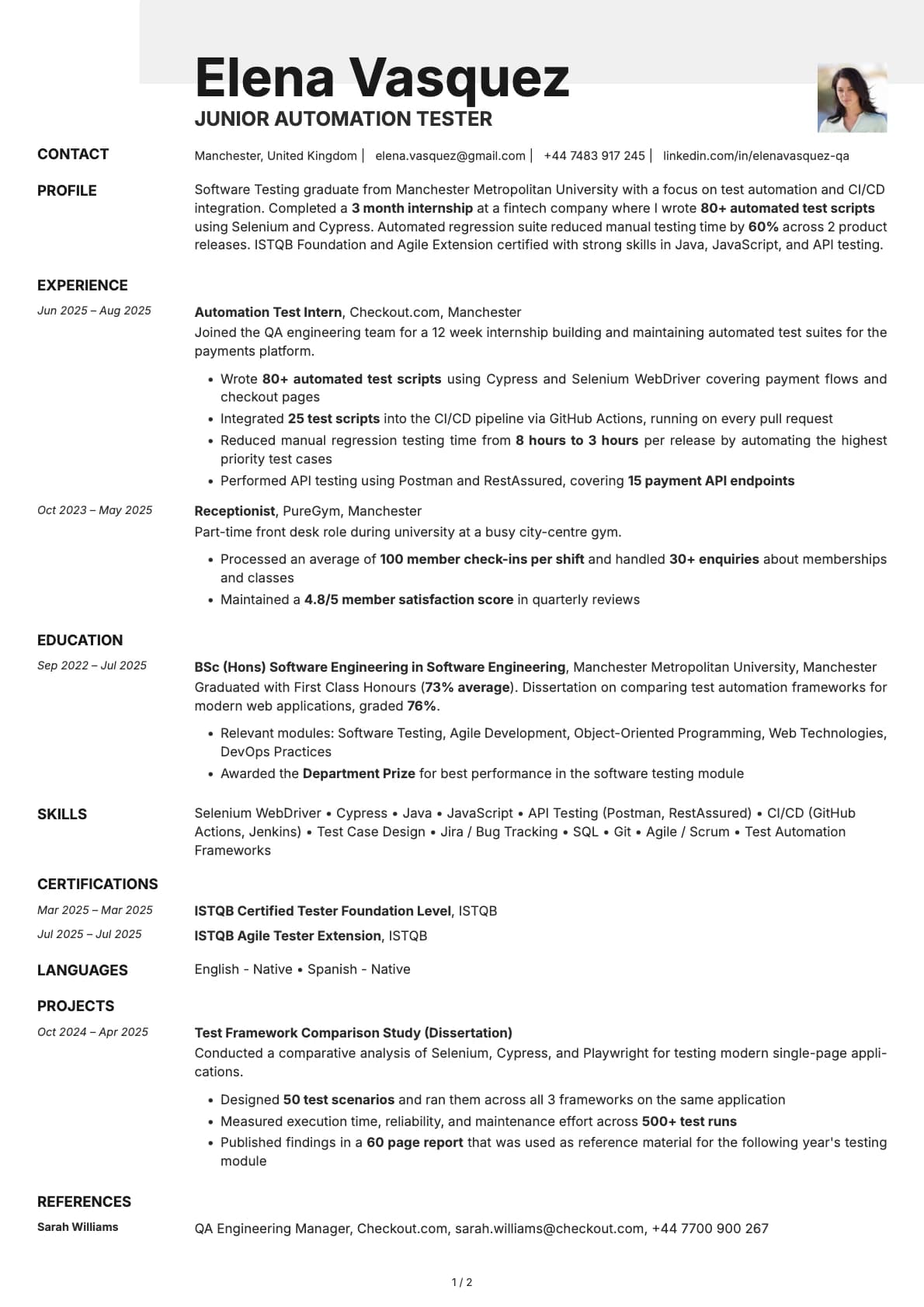
Junior Automation Tester
A junior automation tester resume example for graduates. See how to present test automation scripts, CI/CD integration, and ISTQB certification to land your first automation testing role.
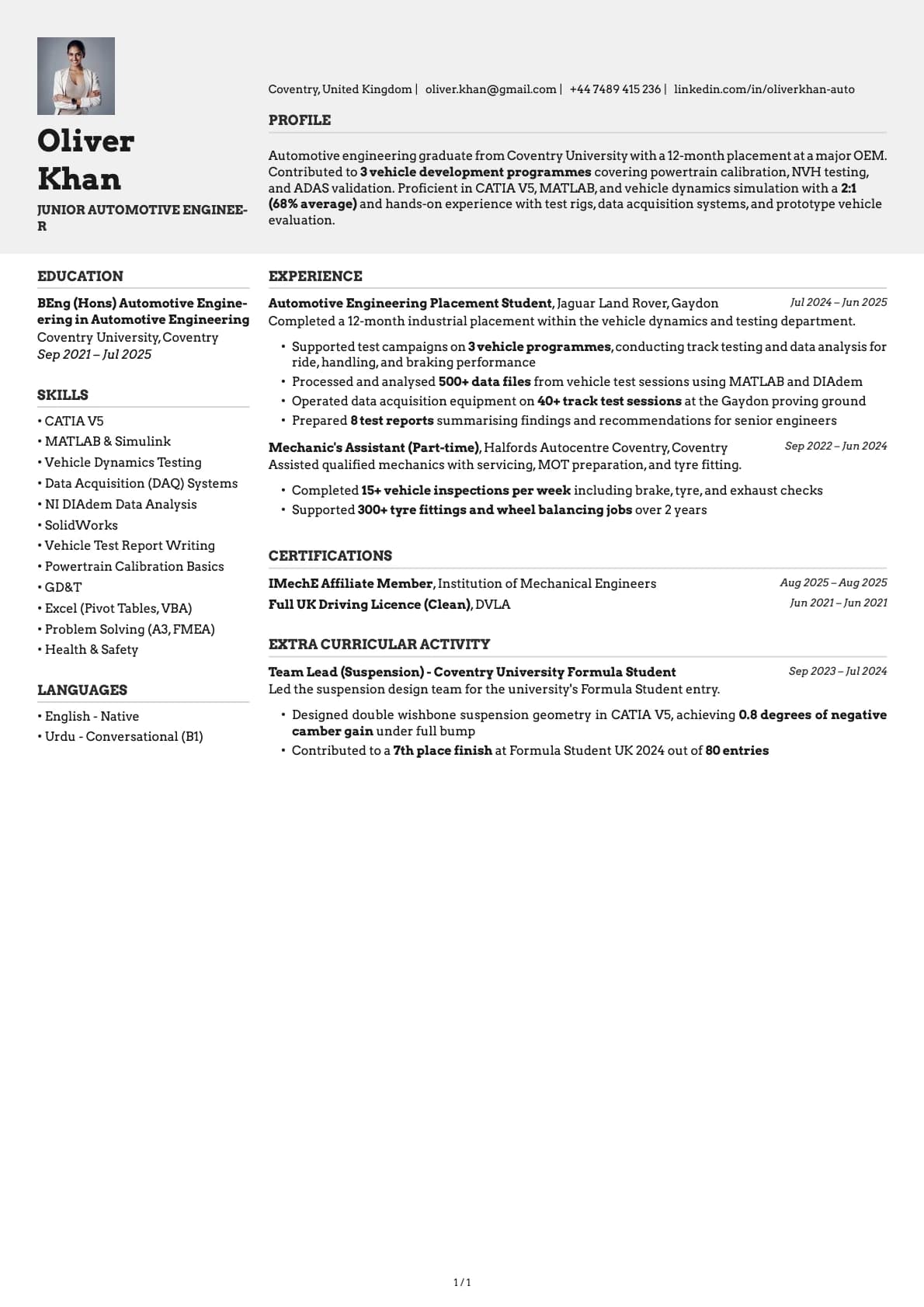
Junior Automotive Engineer
A junior automotive engineer resume example with OEM placement experience, vehicle testing data, and Formula Student achievements.