Junior Sports Events Coordinator Resume Example
A junior sports events coordinator resume example for sports management graduates. See how event logistics and participant numbers make your resume stand out.

Laddro Team
Free to use. No account needed to start.
Free to use. No account needed to start.
Overview
Junior sports events coordinators handle the logistics that make sporting events actually happen. They book venues, manage registrations, coordinate volunteers, liaise with suppliers, and troubleshoot on the day. Employers want someone who has already organised something real, can stay calm when things go sideways, and knows that a 500-person event needs a different plan than a 50-person one.
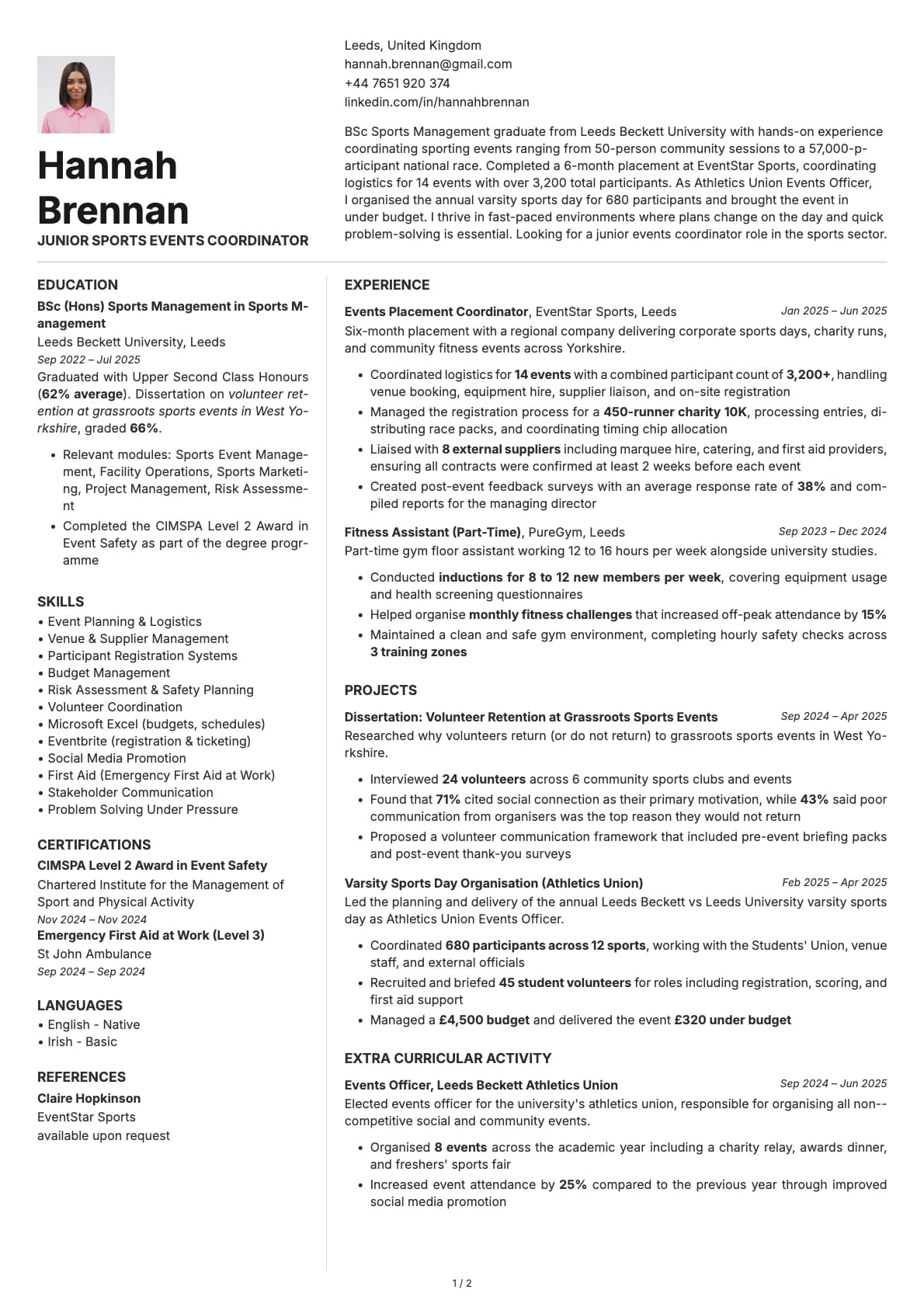
This resume belongs to Hannah Brennan, a recent BSc Sports Management graduate from Leeds Beckett University. She organised events through the university athletics union, volunteered at the Great North Run, and completed a placement with a regional sports events company. Her resume works because every bullet point describes an event she helped deliver, with participant numbers, budgets, and outcomes attached.
What Makes This Resume Work
The placement delivers commercial event experience. Hannah spent 6 months at EventStar Sports, a company that delivers corporate sports days and charity runs across Yorkshire. She coordinated logistics for 14 events with a combined participant count of over 3,200 people. She managed supplier bookings, equipment hire, and on-site registration, which is the core of what junior coordinators do.
University events show leadership and scale. As Athletics Union Events Officer, she organised the annual varsity sports day for 680 participants across 12 sports, coordinating with the Students' Union, venue staff, and 45 volunteers. The event ran on a £4,500 budget and she brought it in £320 under budget. Budget management at that scale is impressive for a student role.
Volunteer experience at a major event adds credibility. Working as a course marshal at the Great North Run (57,000 participants) shows she can operate within a large-scale professional event structure. She managed a section with 3 other marshals, handled 2 medical escalations, and kept her zone incident-free for the duration.
Risk assessment and safeguarding are mentioned explicitly. She holds a CIMSPA Level 2 in Event Safety and has DBS clearance. For sports events roles, where participant welfare is critical, listing these credentials removes a potential barrier that would otherwise slow down her application.
Key Takeaways
If you are applying for sports events roles, the number one thing employers want to see is evidence that you have organised things. University societies, charity runs, community tournaments, and volunteer roles at major events all count. For every event, record the participant numbers, budget, volunteer count, and any problems you solved. Sports events hiring managers read resumes looking for logistics capability, so give them specifics rather than vague claims about being a "team player."
Build your own version
Open this layout in the builder and swap in your own details. It takes a few minutes.
Free to use. No account needed to start.
Was this resume example helpful?
Rate this example to help us create better content for you.
4.8 average from 103 ratingsRelated resume examples
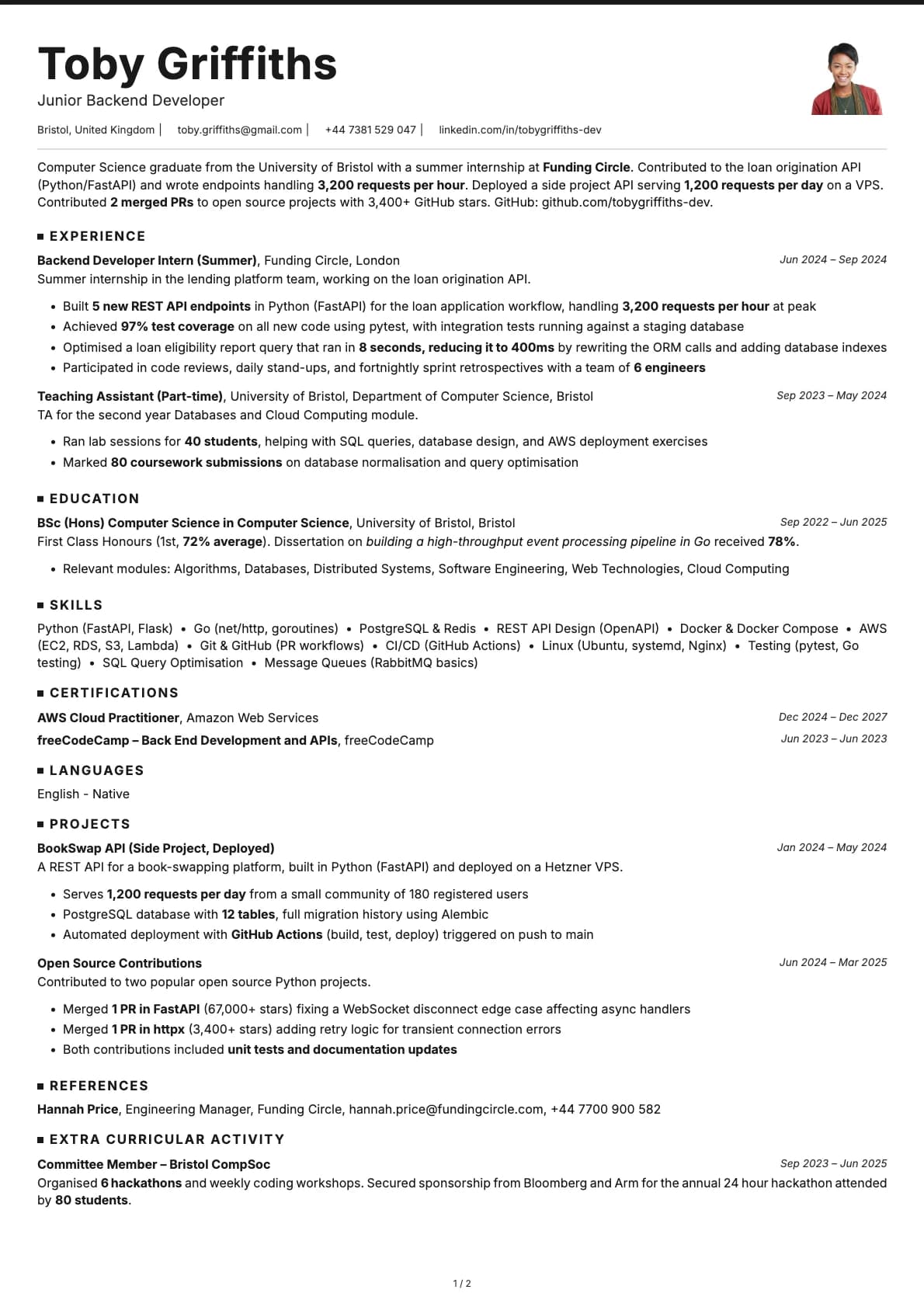
Junior Backend Developer
A junior backend developer resume example with REST API projects, PostgreSQL experience, and deployed services from a Computer Science BSc graduate entering development.
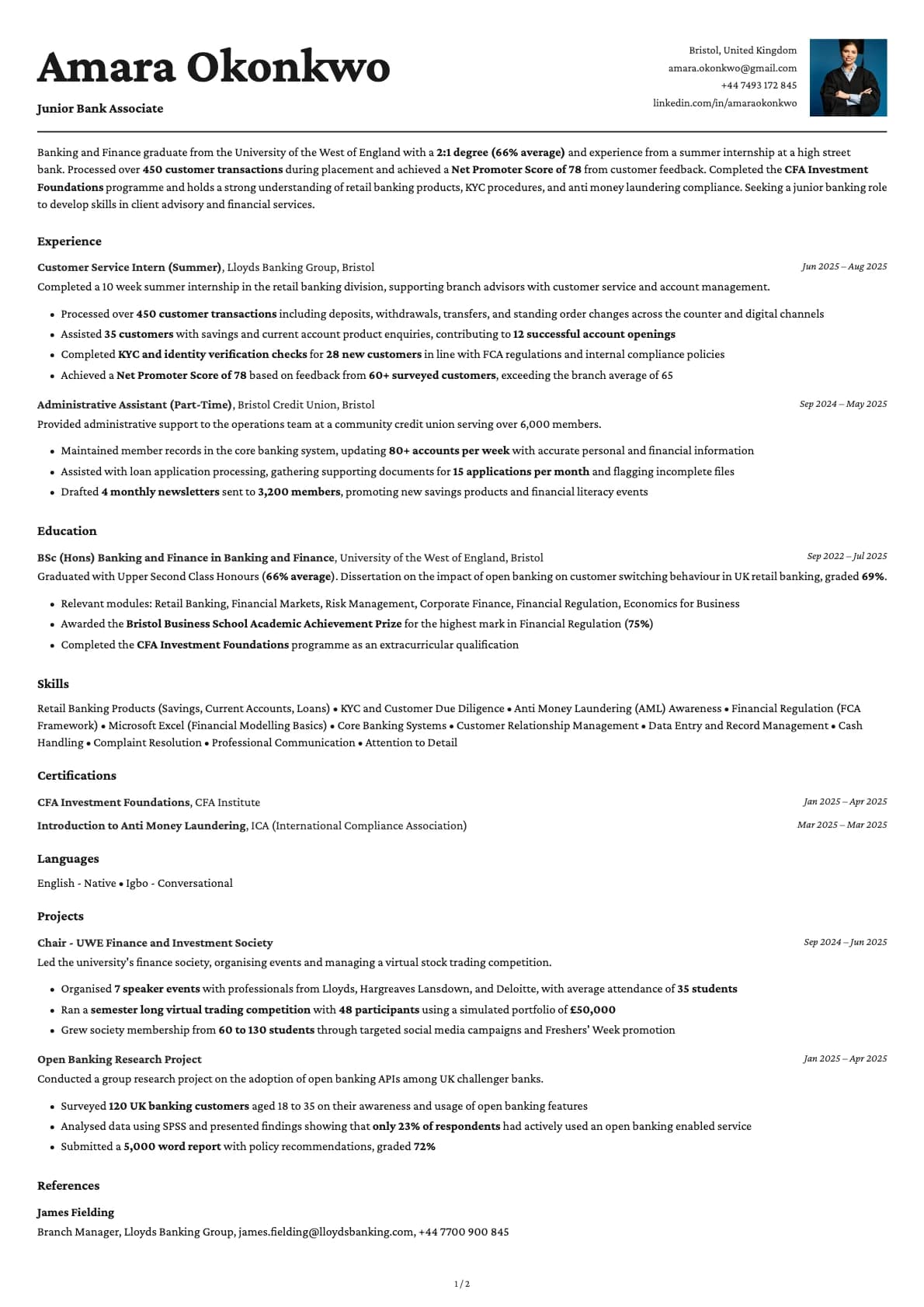
Junior Bank Associate
A junior bank associate resume example for banking graduates. See how to present your compliance knowledge, customer service skills, and internship experience.
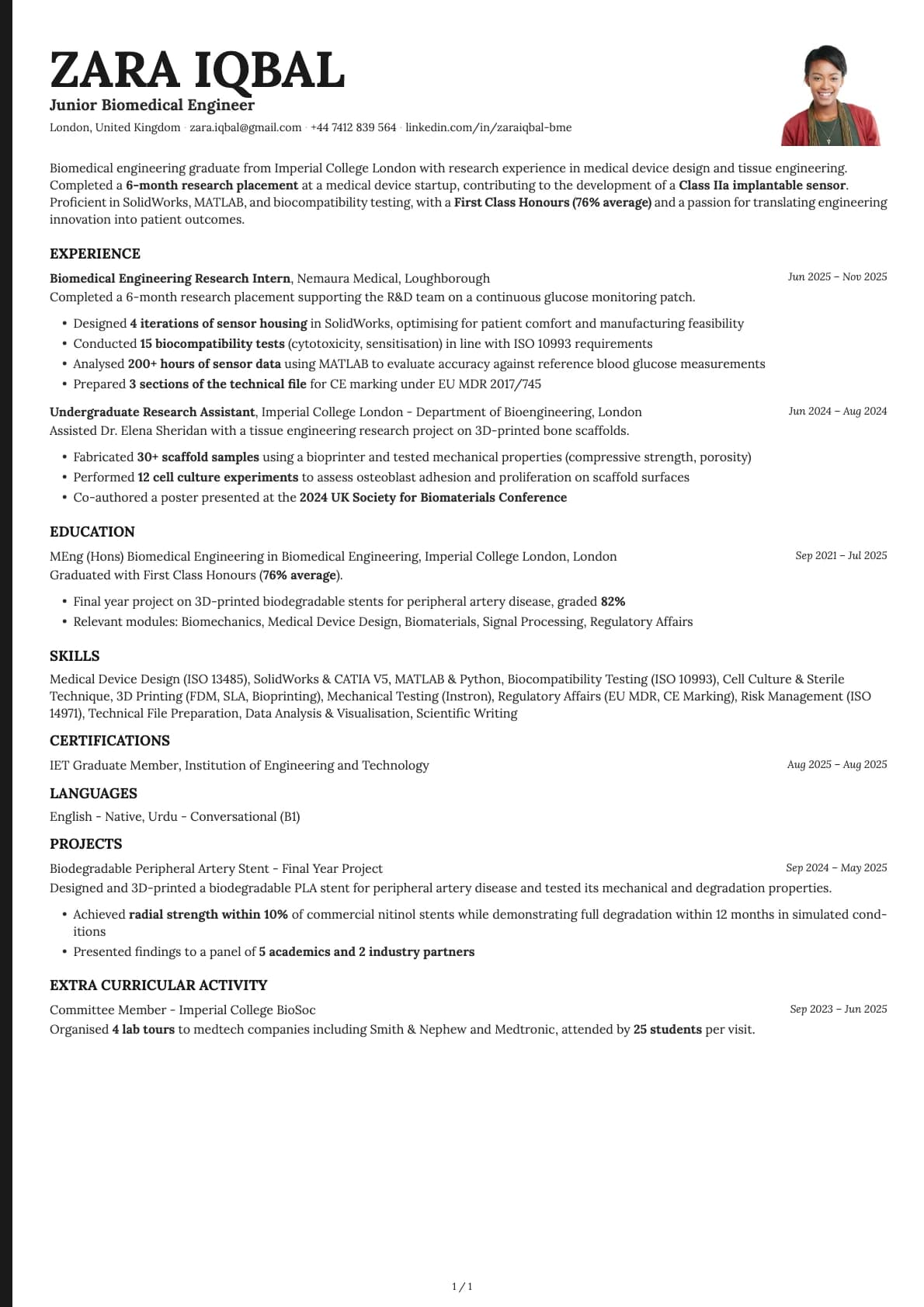
Junior Biomedical Engineer
A junior biomedical engineer resume example with medical device R&D experience, ISO standards knowledge, and research publications.
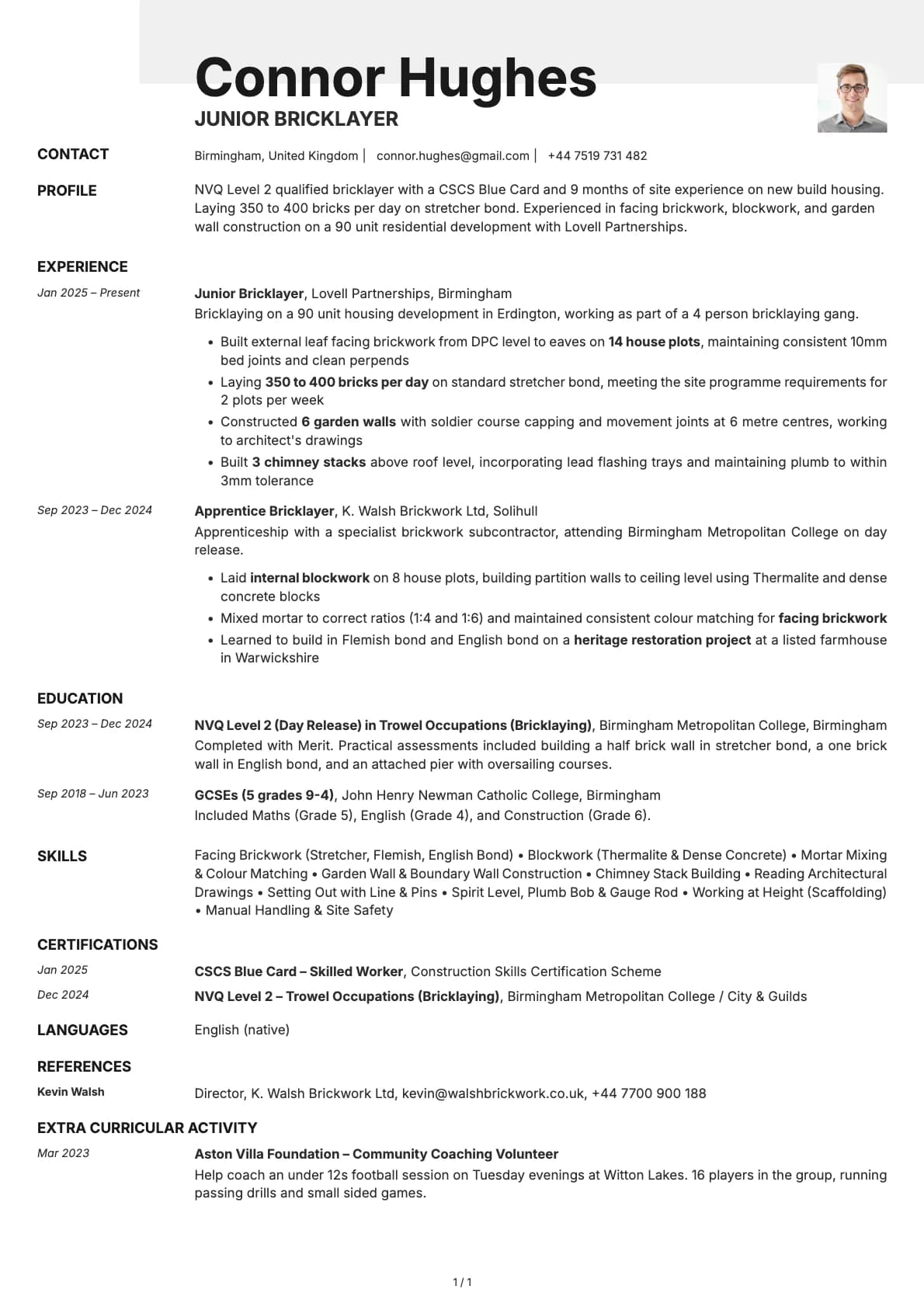
Junior Bricklayer
A junior bricklayer resume example for NVQ qualified bricklayers entering the trade. See how to present your bricklaying skills, CSCS card, and site experience.

Junior Business Analyst
A junior business analyst resume example for career changers. See how to use retail management and a business degree to break into business analysis.
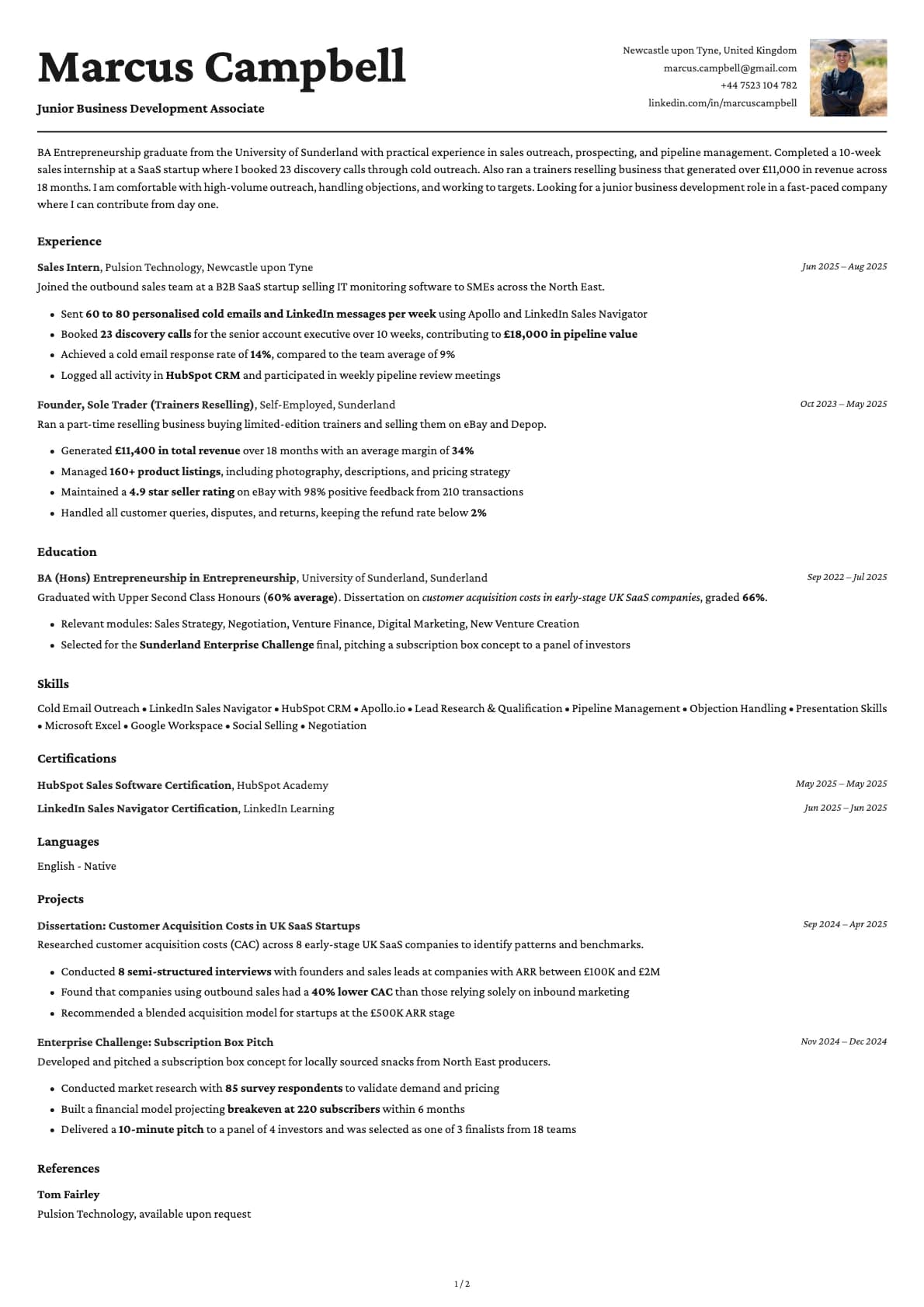
Junior Business Development Associate
A junior business development associate resume example for entrepreneurship graduates. See how cold outreach metrics and startup experience win interviews.
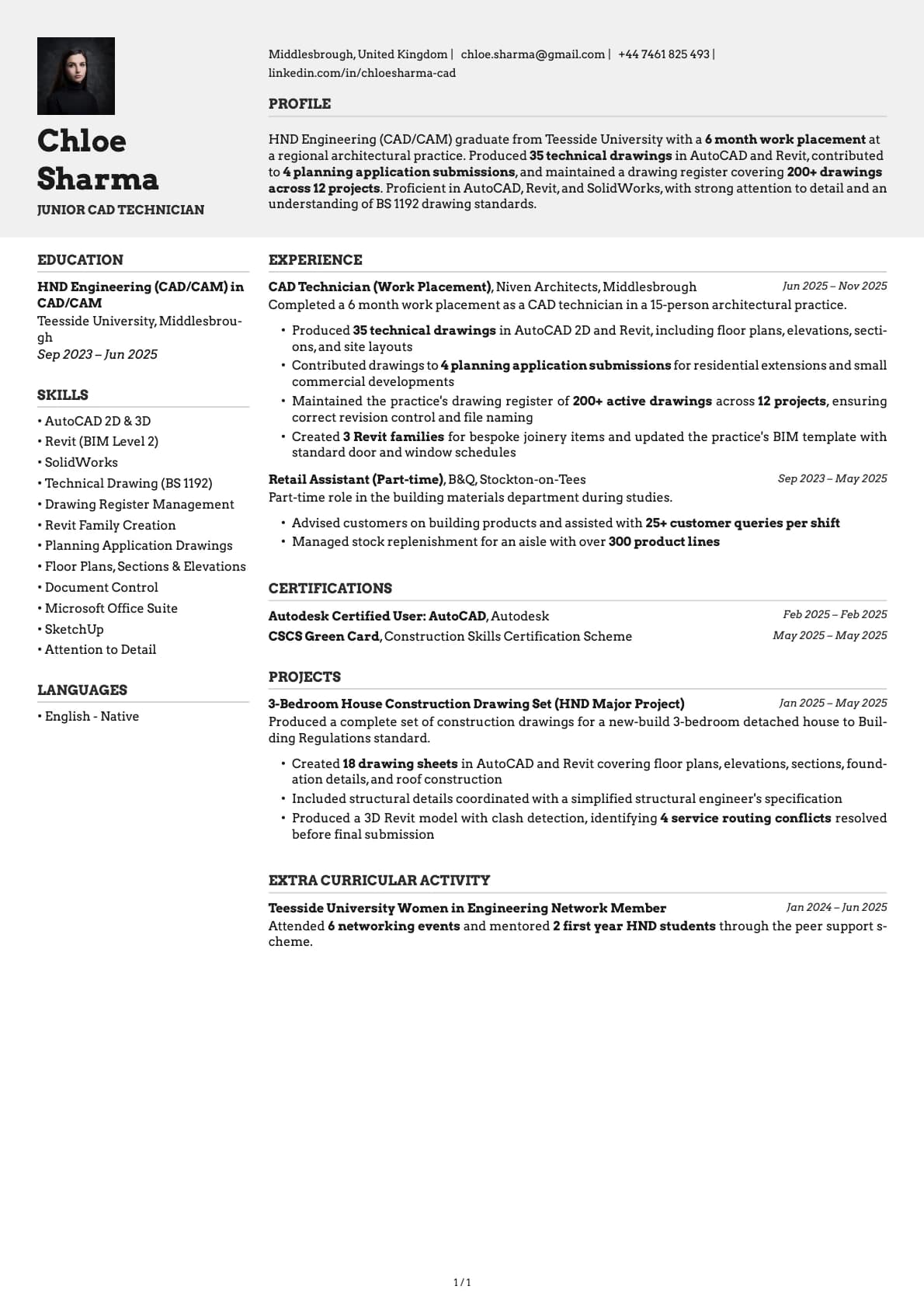
Junior CAD Technician
A junior CAD technician resume example with HND qualification, AutoCAD and Revit proficiency, and architectural practice experience.
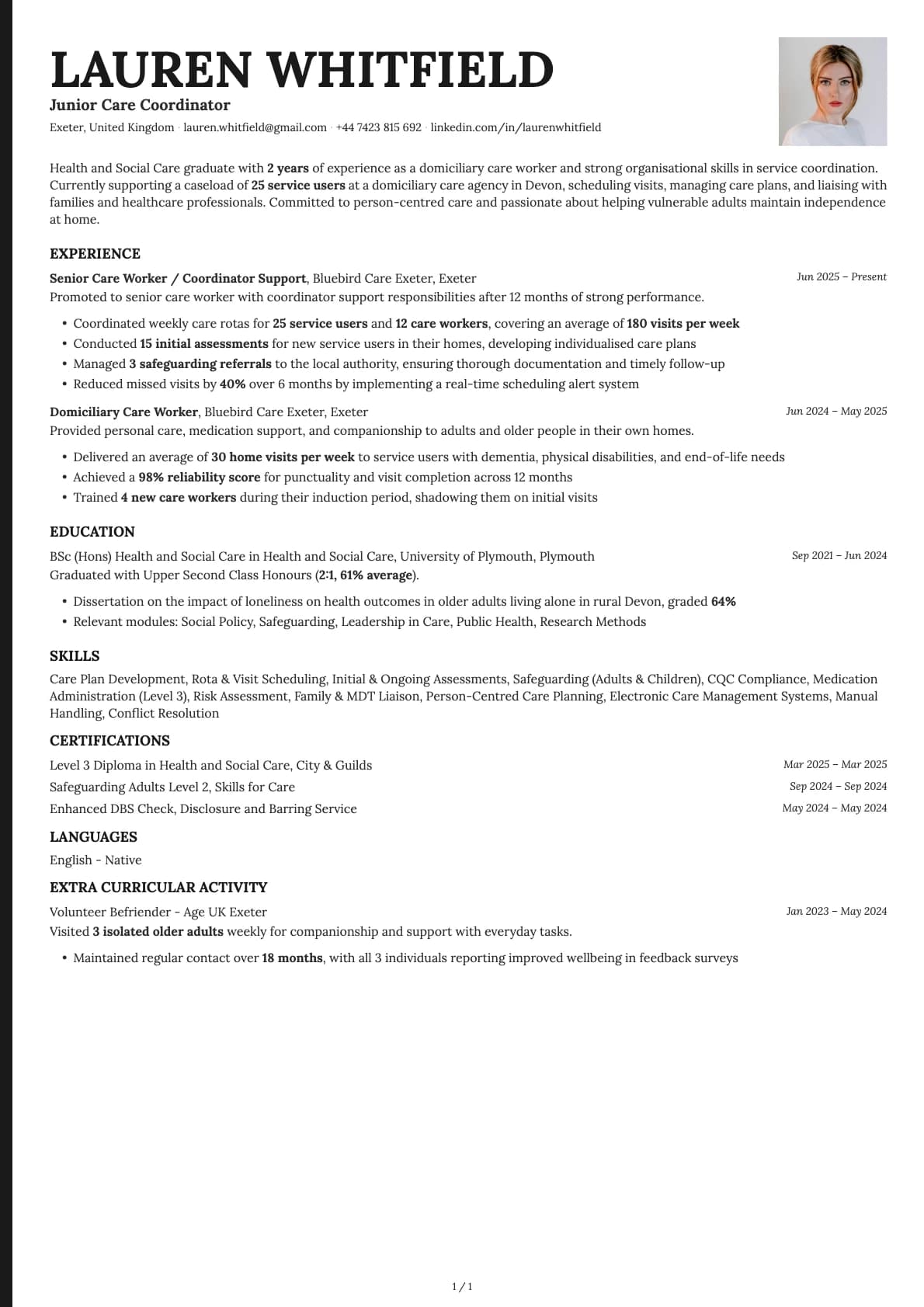
Junior Care Coordinator
A junior care coordinator resume example with domiciliary care experience, rota management numbers, and CQC compliance for new coordinators.
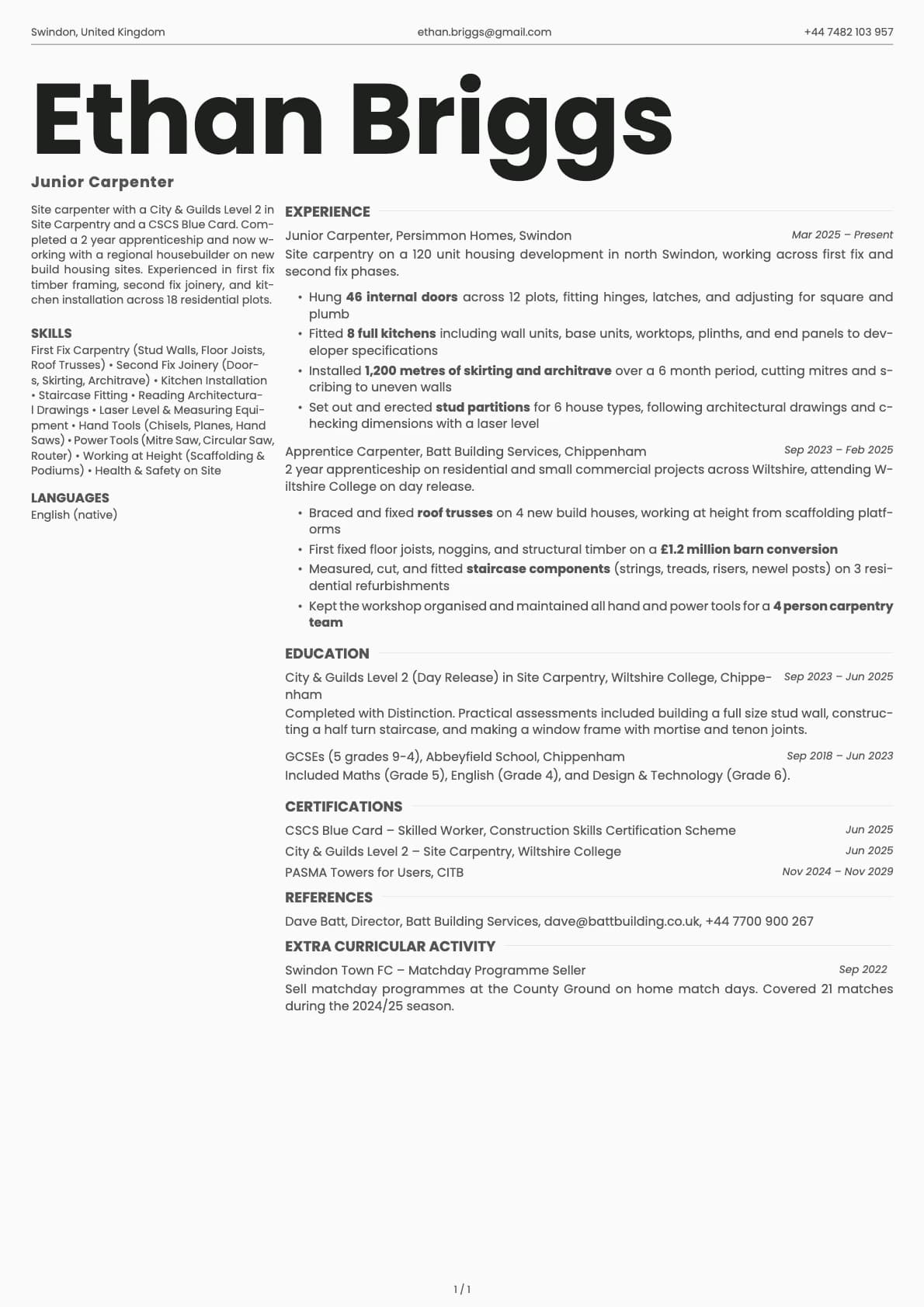
Junior Carpenter
A junior carpenter resume example for carpentry apprenticeship graduates. See how to present your City & Guilds, site joinery experience, and CSCS card details.
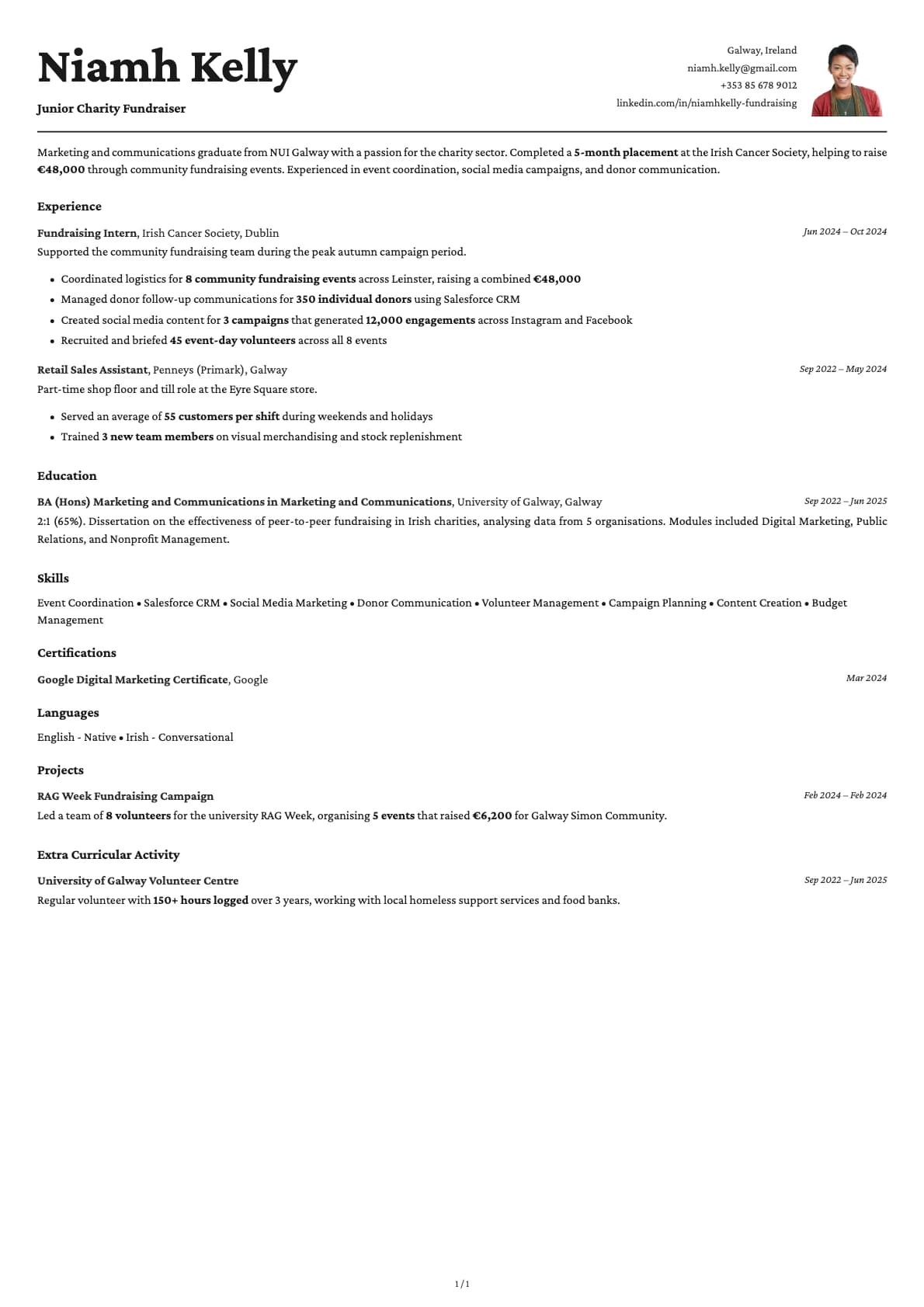
Junior Charity Fundraiser
A junior charity fundraiser resume example with Irish Cancer Society internship and event coordination experience.
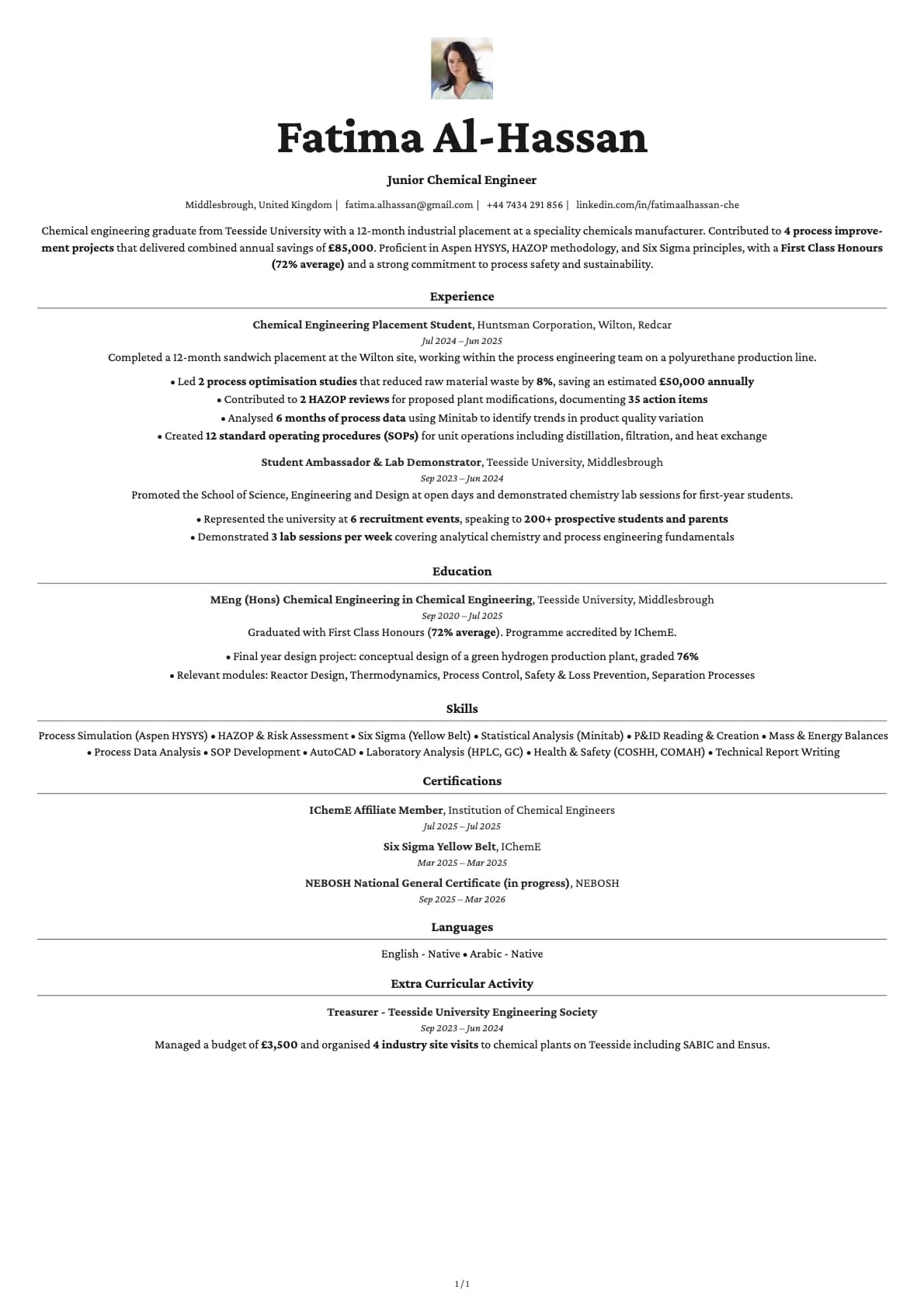
Junior Chemical Engineer
A junior chemical engineer resume example with industrial placement experience, process improvement savings, and IChemE membership for graduates.
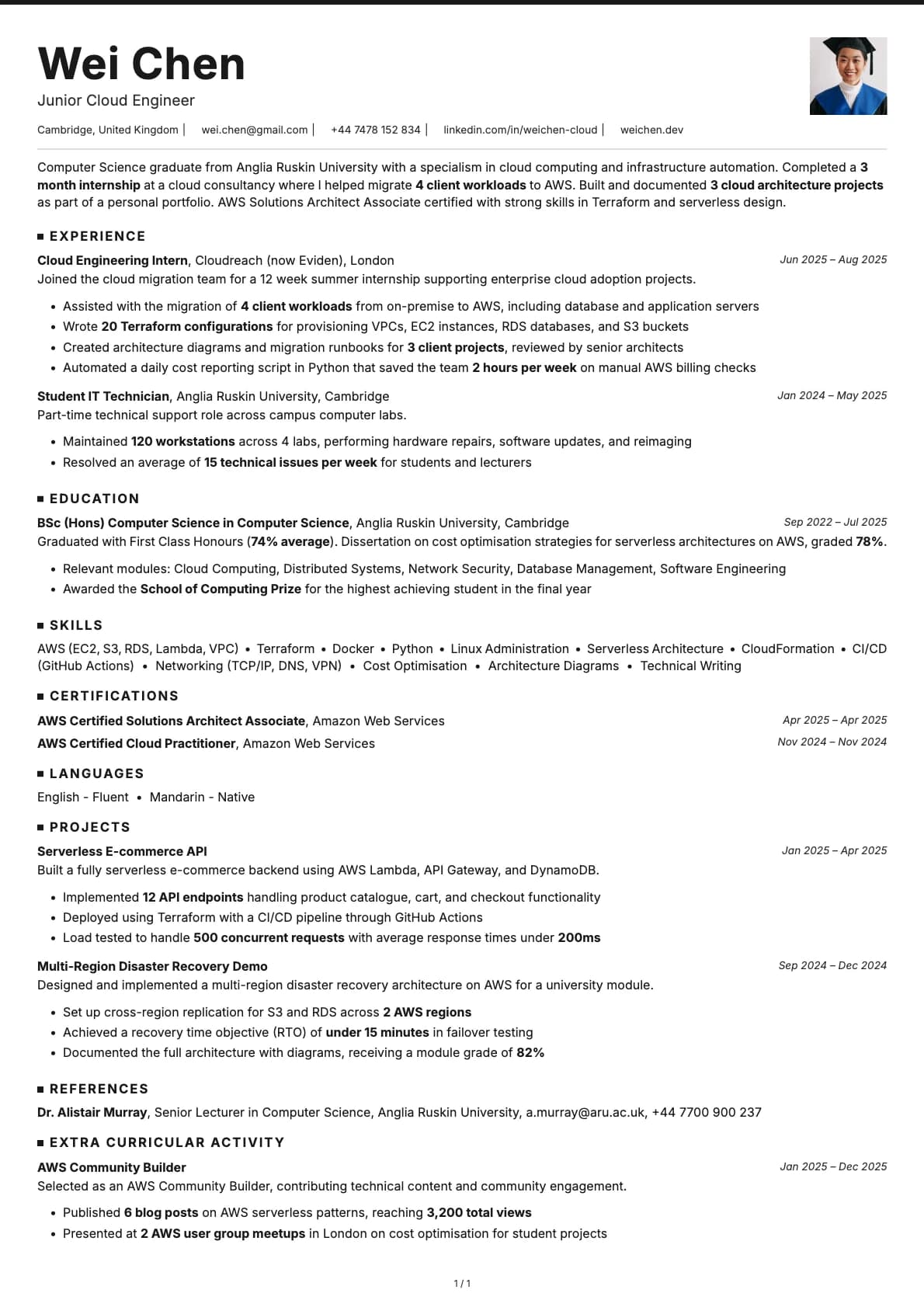
Junior Cloud Engineer
A junior cloud engineer resume example for graduates. Learn how to present AWS experience, Terraform skills, and cloud certifications to land your first cloud engineering role.