Junior Sports Marketing Assistant Resume Example
A junior sports marketing assistant resume example showing how to combine a cricket foundation placement, social media growth, and a sport management degree.

Laddro Team
Free to use. No account needed to start.
Free to use. No account needed to start.
Overview
Sports marketing sits at the intersection of two competitive fields, and junior roles attract graduates from both sport management and general marketing programmes. The ones who get hired tend to have one thing the others lack: real content and engagement metrics from a recognisable sports organisation. A portfolio of Canva graphics and a personal blog are not enough. Employers want to see that you managed an account, grew a following, and understood the commercial side of fan engagement.
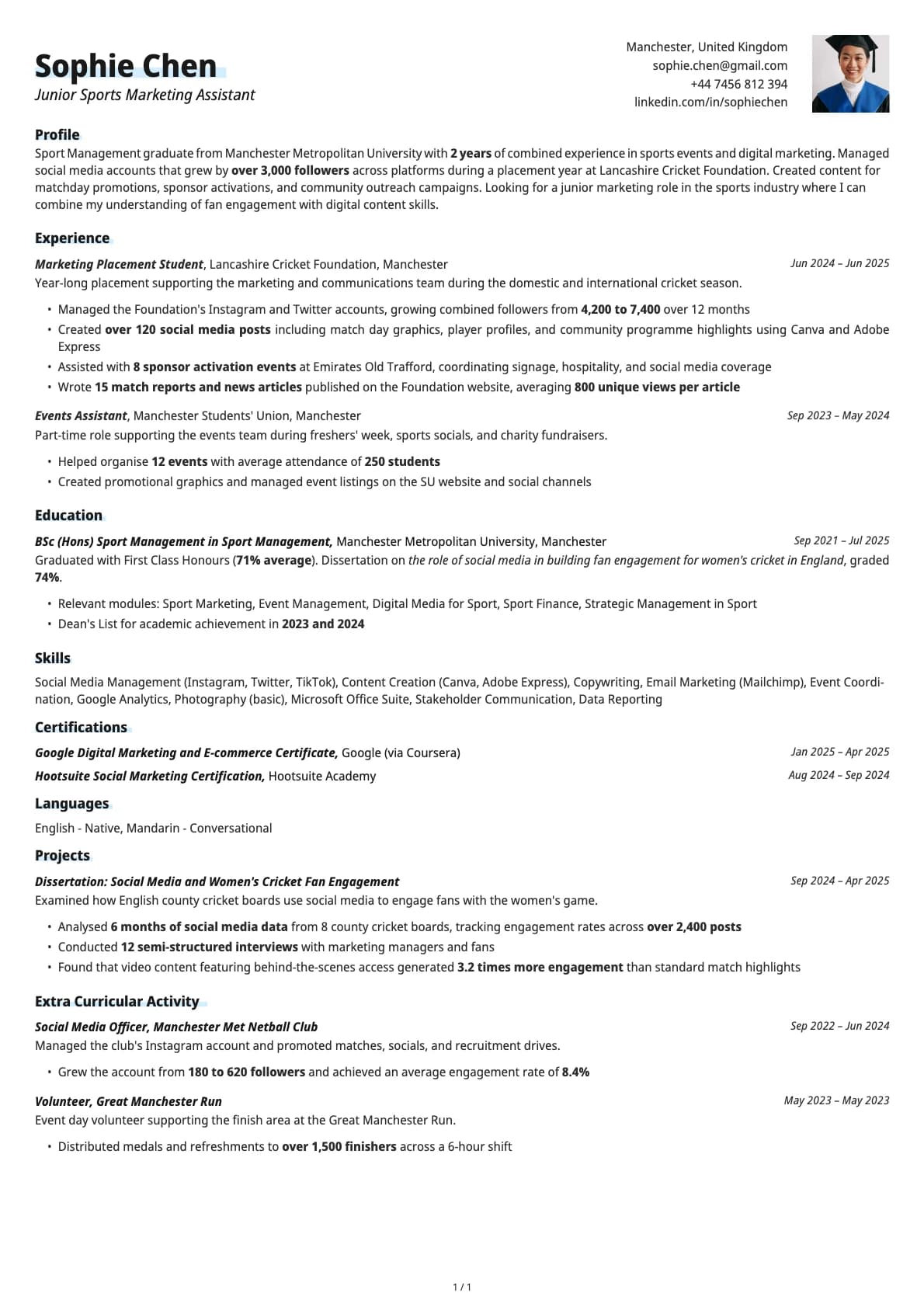
Sophie Chen graduated from Manchester Metropolitan University with a First Class Honours in Sport Management, scoring a 71% average and making the Dean's List in both 2023 and 2024. She completed a year-long marketing placement at Lancashire Cricket Foundation, where she managed social media accounts, created content for matchday promotions and sponsor activations, and wrote match reports for the Foundation website. Her resume leads with growth metrics, not just activity descriptions.
What Makes This Resume Work
The follower growth is specific and verifiable. Sophie managed Lancashire Cricket Foundation's Instagram and Twitter accounts and grew combined followers from 4,200 to 7,400 over 12 months. That is a 76% increase during a single placement year. She also grew the Manchester Met Netball Club Instagram from 180 to 620 followers with an average engagement rate of 8.4%. These are not vanity metrics; they are the numbers that sports marketing hiring managers ask about in interviews.
Content output is at professional volume. She created over 120 social media posts including matchday graphics, player profiles, and community programme highlights using Canva and Adobe Express. She also wrote 15 match reports and news articles published on the Foundation website, averaging 800 unique views per article. This output level shows she can sustain the content pace that sports organisations require during a busy season.
Sponsor activation experience adds commercial awareness. Sophie assisted with 8 sponsor activation events at Emirates Old Trafford, coordinating signage, hospitality, and social media coverage. Most marketing graduates have never been involved in the commercial side of sports events. This experience shows she understands that sports marketing is ultimately about delivering value to sponsors and generating revenue, not just creating content for fans.
The dissertation provides strategic depth. Her research analysed 6 months of social media data from 8 county cricket boards, tracking engagement rates across over 2,400 posts. She conducted 12 interviews with marketing managers and fans and found that video content featuring behind-the-scenes access generated 3.2 times more engagement than standard match highlights. This kind of finding is immediately applicable to a marketing role, and it shows she can think analytically about content strategy.
Key Takeaways
If you are applying for junior sports marketing roles, your resume needs to show growth metrics from accounts you actually managed. Before and after follower counts, engagement rates, and content volume are the three things that separate your application from someone who just studied marketing theory. Get a placement at a club, foundation, or governing body during your degree, and make sure you track the numbers from day one. Sponsor activation experience, even at a basic level, adds a commercial dimension that most junior applicants cannot offer.
Build your own version
Open this layout in the builder and swap in your own details. It takes a few minutes.
Free to use. No account needed to start.
Was this resume example helpful?
Rate this example to help us create better content for you.
4.7 average from 108 ratingsRelated resume examples
Junior Communications Officer
A junior communications officer resume example for graduates. See how to present internal comms, content writing, and stakeholder engagement experience to land your first comms role.
Junior Compliance Officer
A junior compliance officer resume example with insurance compliance internship experience and AML knowledge.
Junior Conservation Officer
A junior conservation officer resume example with wildlife trust placement experience, volunteer coordination, and habitat management skills.
Junior Consultant
A junior consultant resume example with management degree, Big Four internship, and client facing project delivery experience.
Junior Content Writer
A junior content writer resume example for recent graduates. See how to showcase your writing portfolio, SEO knowledge, and published work to land your first content role.

Junior Copywriter
A junior copywriter resume example for English graduates. See how to present freelance writing, student newspaper experience, and a portfolio to land your first agency or in-house role.
Junior Council Officer
A junior council officer resume example showing how to turn a council placement, student politics, and a public policy degree into a local government career.
Junior Court Clerk
A junior court clerk resume example for law graduates. See how to present court administration experience, case file management, and HMCTS placement work to land your first court clerk role.
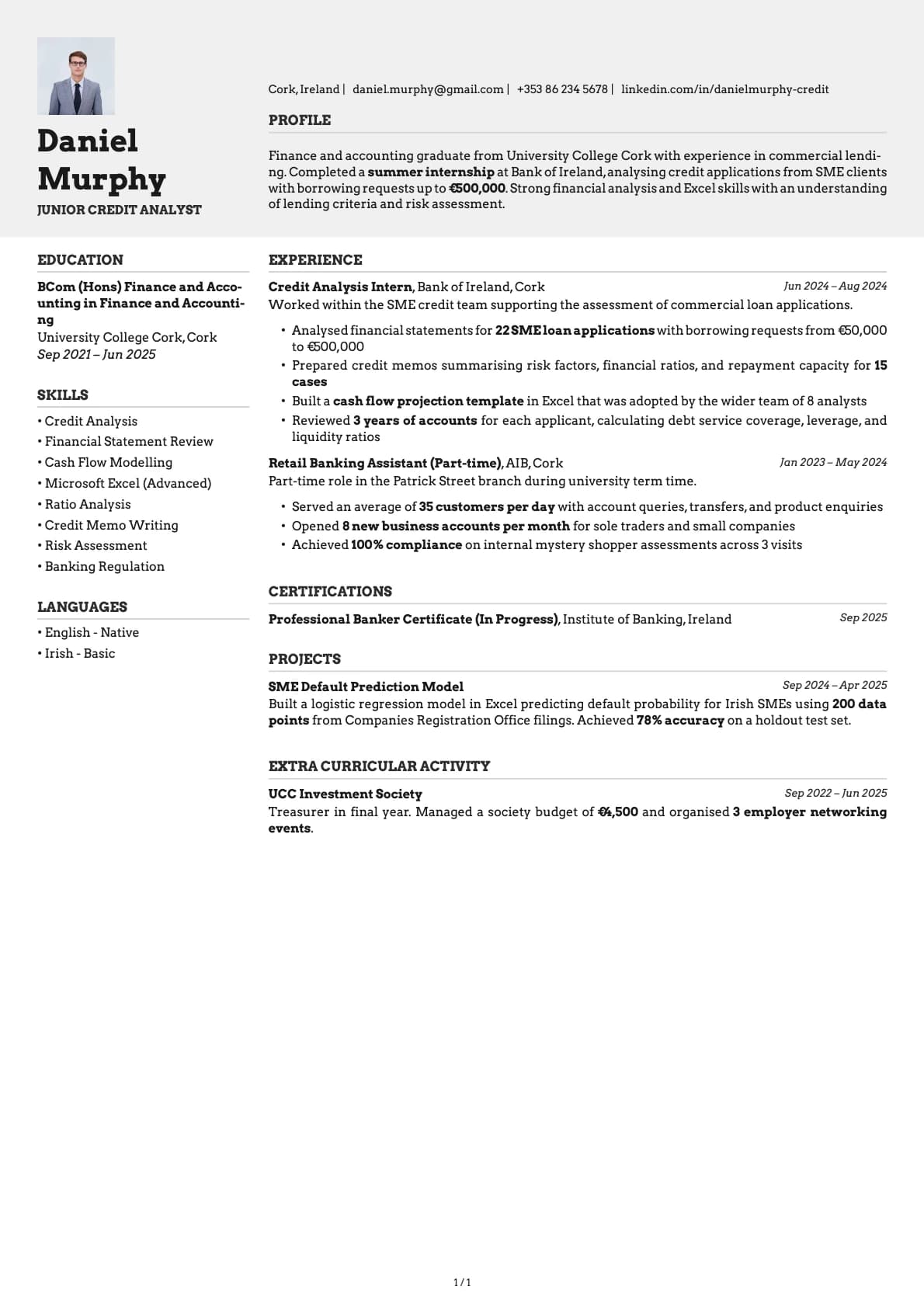
Junior Credit Analyst
A junior credit analyst resume example with Bank of Ireland internship experience and financial analysis skills.
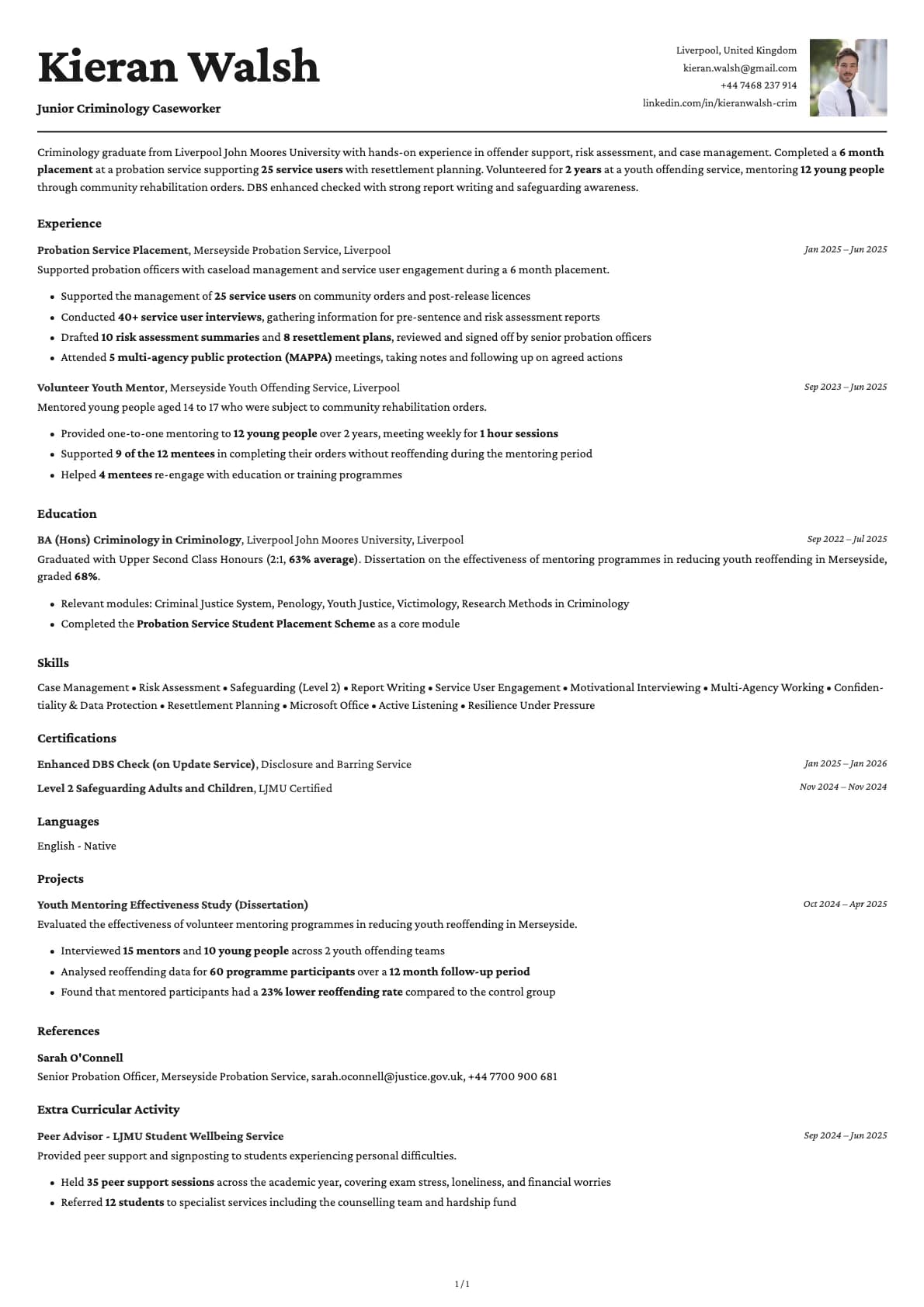
Junior Criminology Caseworker
A junior criminology caseworker resume example for graduates. See how to present probation experience, risk assessment skills, and mentoring work to land your first caseworker role.
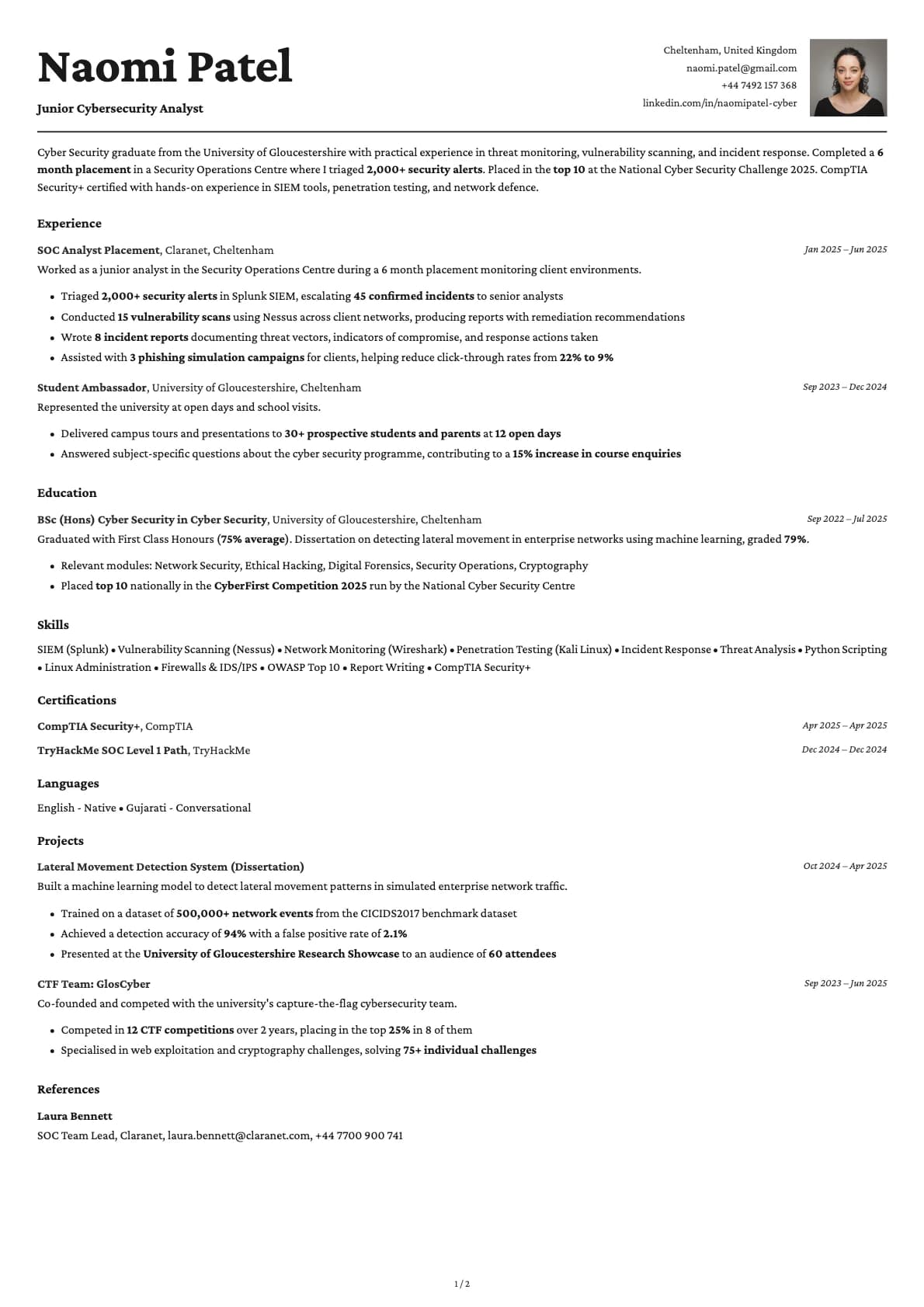
Junior Cybersecurity Analyst
A junior cybersecurity analyst resume example for graduates. See how to present SOC experience, CTF competitions, and Security+ certification to land your first cyber role.
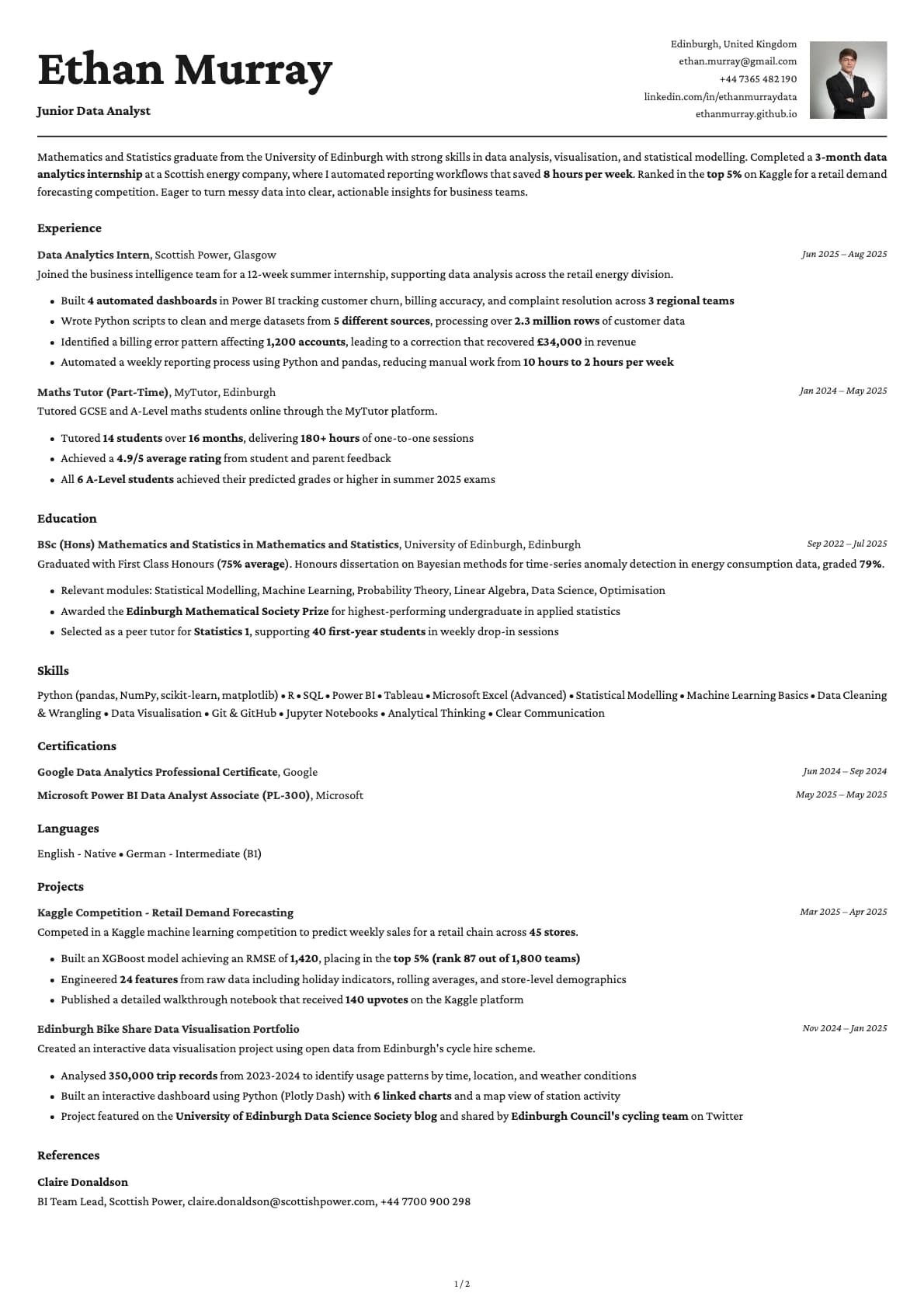
Junior Data Analyst
A junior data analyst resume example for recent graduates. See how to showcase your SQL skills, Python projects, and analytical experience to land your first analyst role.