Junior Software Engineer Resume Example
A junior software engineer resume example with deployed projects, GitHub contributions, and agile sprint experience from a Software Engineering BEng graduate.

Laddro Team
Free to use. No account needed to start.
Free to use. No account needed to start.
Overview
Junior software engineer roles attract hundreds of applicants. The resumes that get interviews are the ones that show deployed code, not just coursework. Hiring managers want to see that you have built something real, worked in a team, and understand the software development lifecycle beyond writing functions in isolation.
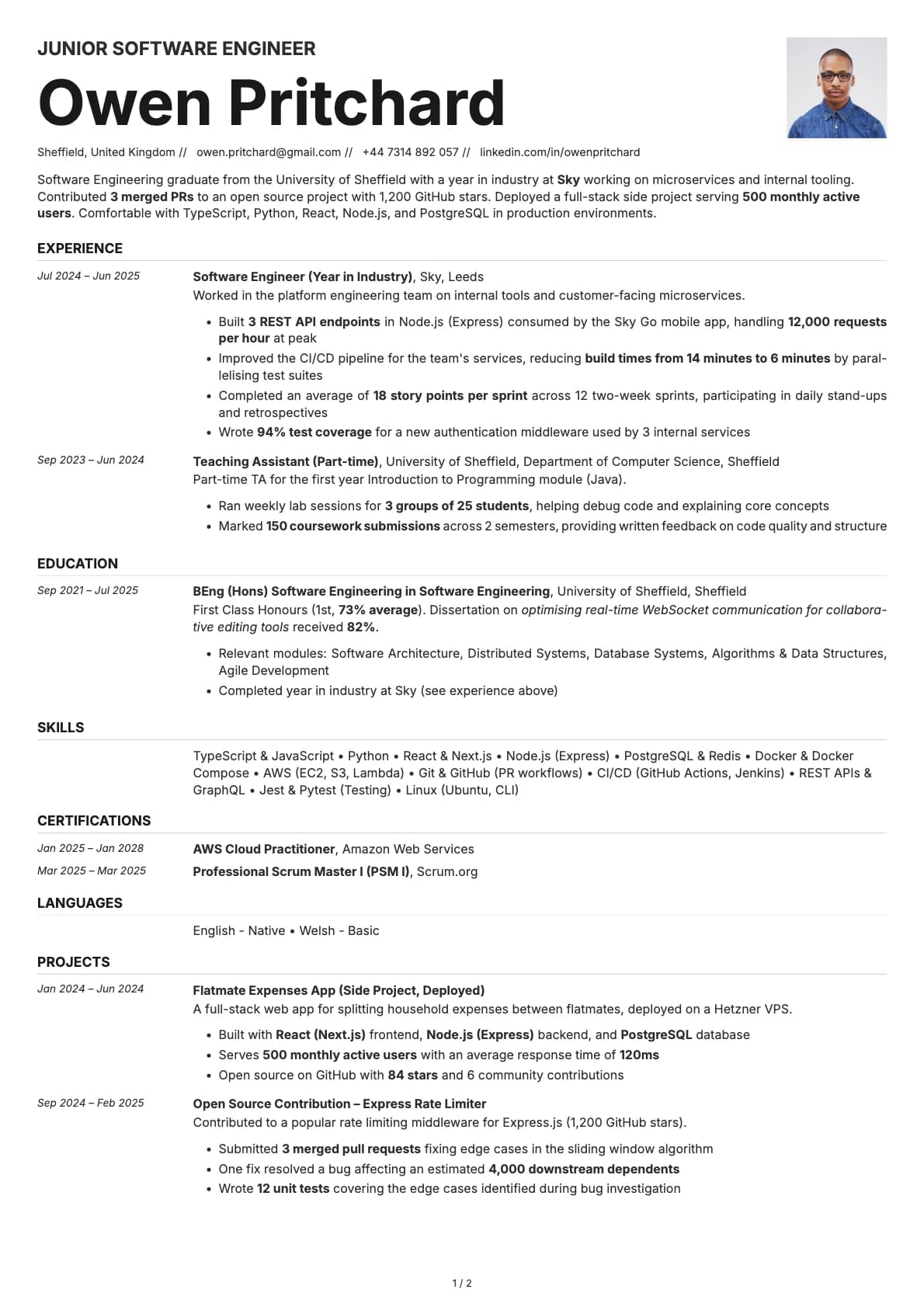
This resume belongs to Owen Pritchard, a Software Engineering graduate from the University of Sheffield. He completed a year in industry at Sky, contributed to an open source project with 1,200 stars on GitHub, and deployed a full stack side project that handles 500 monthly active users. His resume works because every technical achievement is backed by a measurable result.
What Makes This Resume Work
The Sky placement provides enterprise-grade credibility. Working in a company with millions of users exposes you to production systems, CI/CD pipelines, and code review processes that university projects cannot replicate. Owen describes specific contributions: microservices, API endpoints, and sprint velocity improvements.
GitHub activity is quantified, not just mentioned. Rather than saying "active on GitHub," Owen cites a specific open source contribution (3 merged PRs to a project with 1,200 stars) and a personal project with real users. This gives hiring managers something to verify.
Agile experience is described with real metrics. Mentioning sprint velocity, story points completed, and stand-up participation shows Owen understands how engineering teams actually work, not just how to write code in isolation.
The tech stack is specific and current. TypeScript, React, Node.js, PostgreSQL, Docker, and AWS are all listed with context about how they were used. No vague "proficient in multiple programming languages" statements.
Key Takeaways
Junior software engineer resumes must show deployed projects, not just code exercises. Link to your GitHub, describe your contributions in terms of impact (users, performance improvements, merged PRs), and demonstrate that you can work in a team using agile practices. A placement at a recognised company is enormously valuable. If you do not have one, open source contributions and side projects with real users can fill the gap.
Build your own version
Open this layout in the builder and swap in your own details. It takes a few minutes.
Free to use. No account needed to start.
Was this resume example helpful?
Rate this example to help us create better content for you.
4.8 average from 189 ratingsRelated resume examples
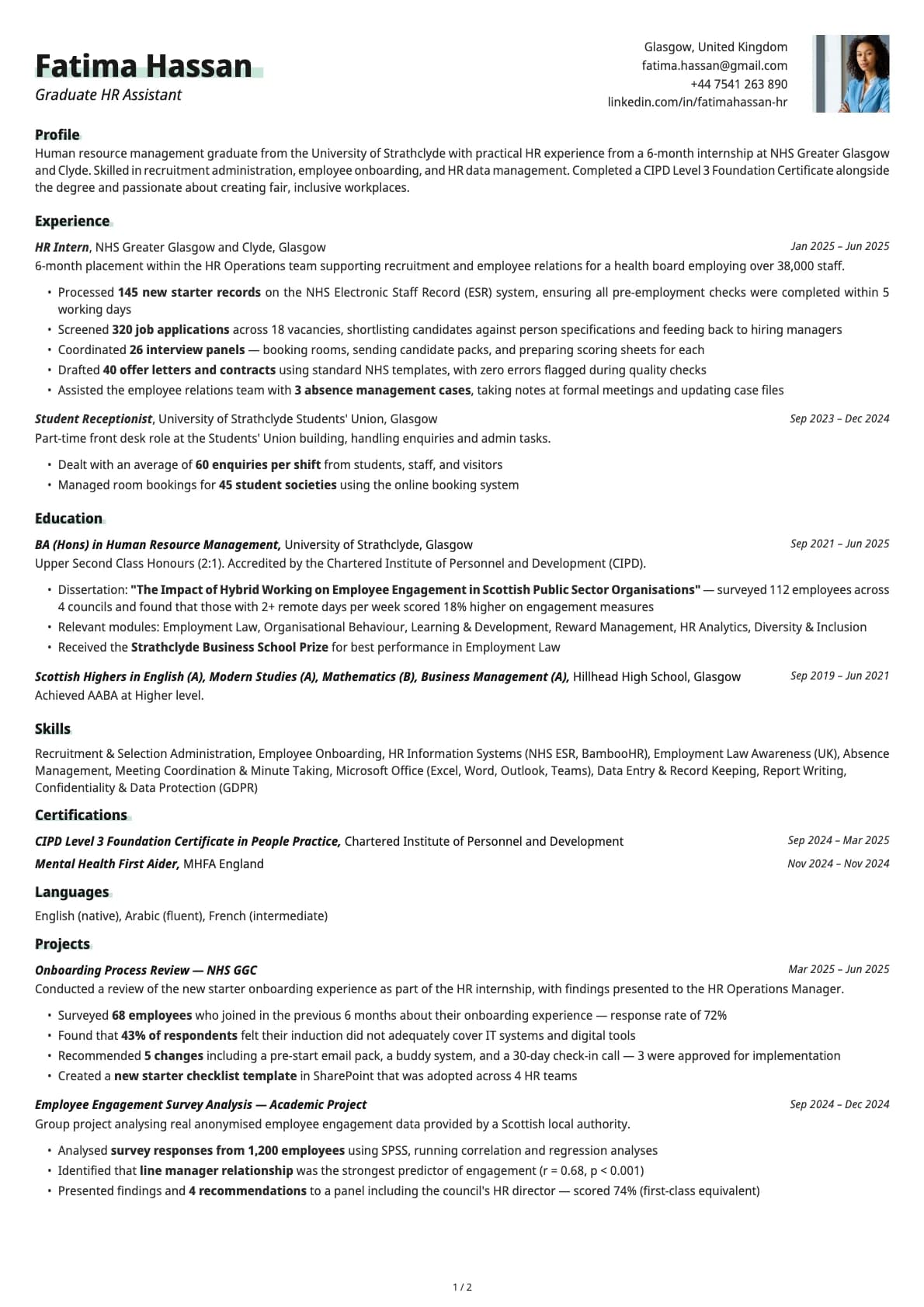
Graduate HR Assistant
A graduate HR assistant resume example for recent graduates. See how to present your people skills, admin experience, and HR knowledge to land your first human resources role.
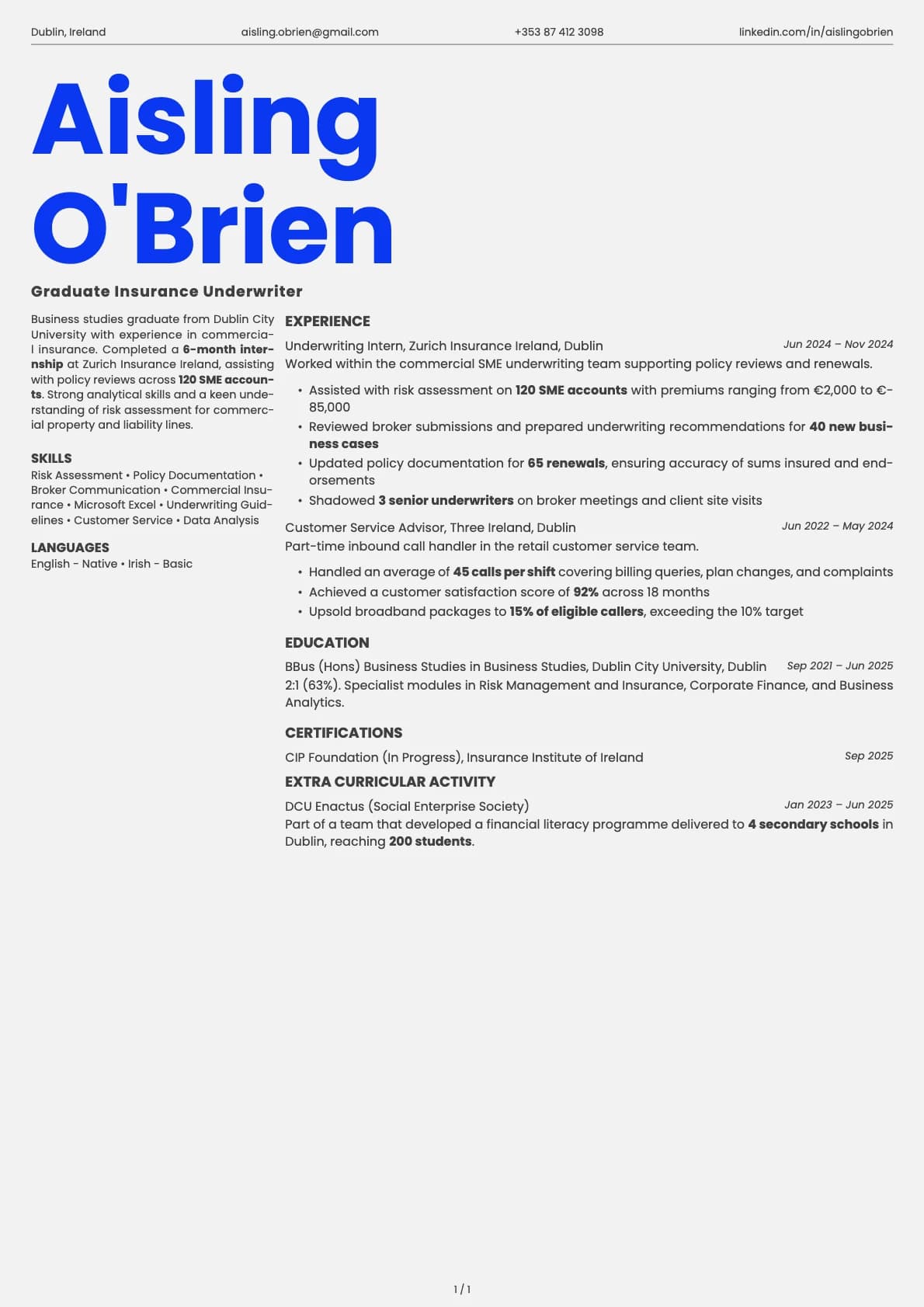
Graduate Insurance Underwriter
A graduate insurance underwriter resume example with Zurich internship experience and commercial insurance knowledge.
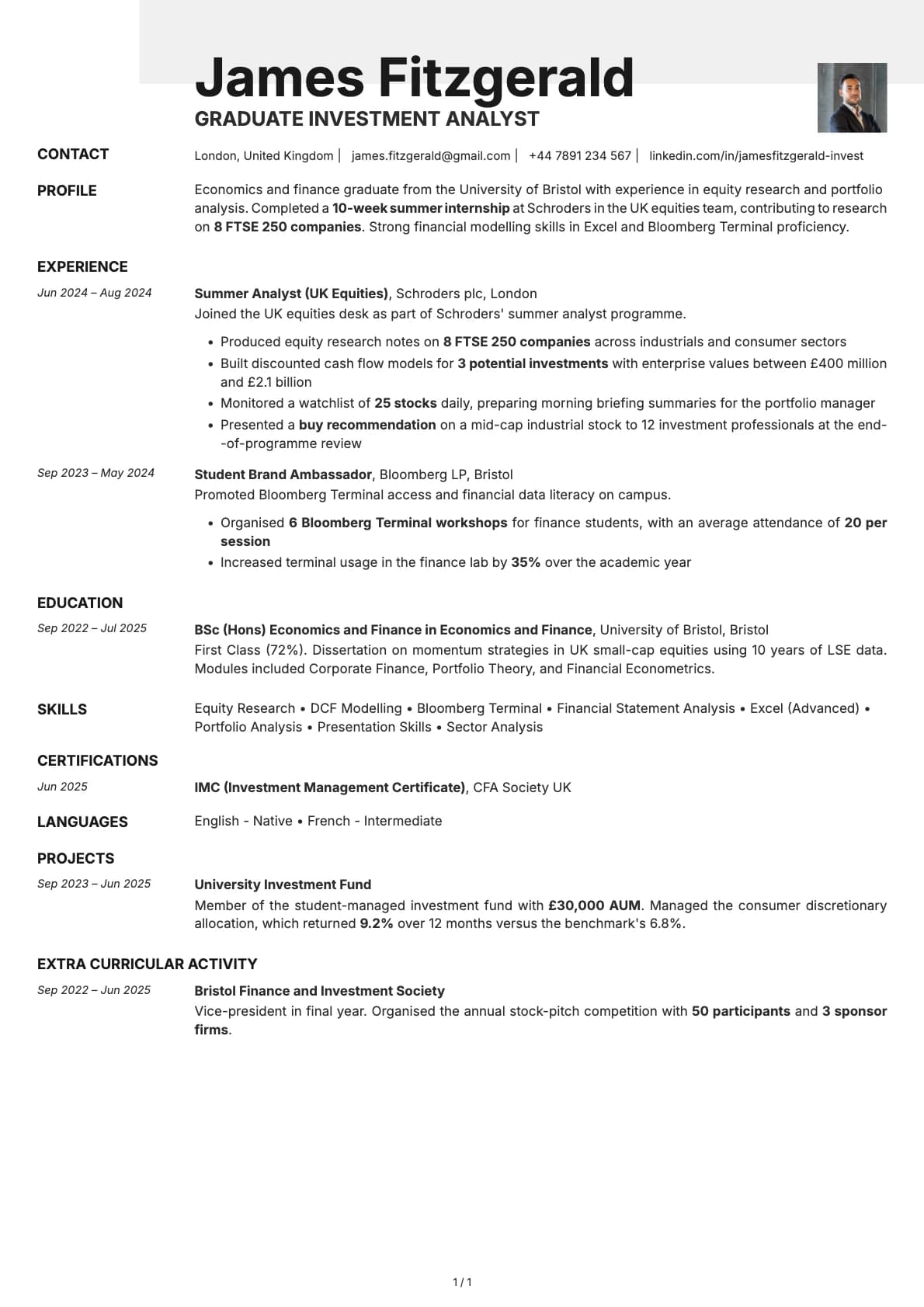
Graduate Investment Analyst
A graduate investment analyst resume example with Schroders internship experience and equity research skills.
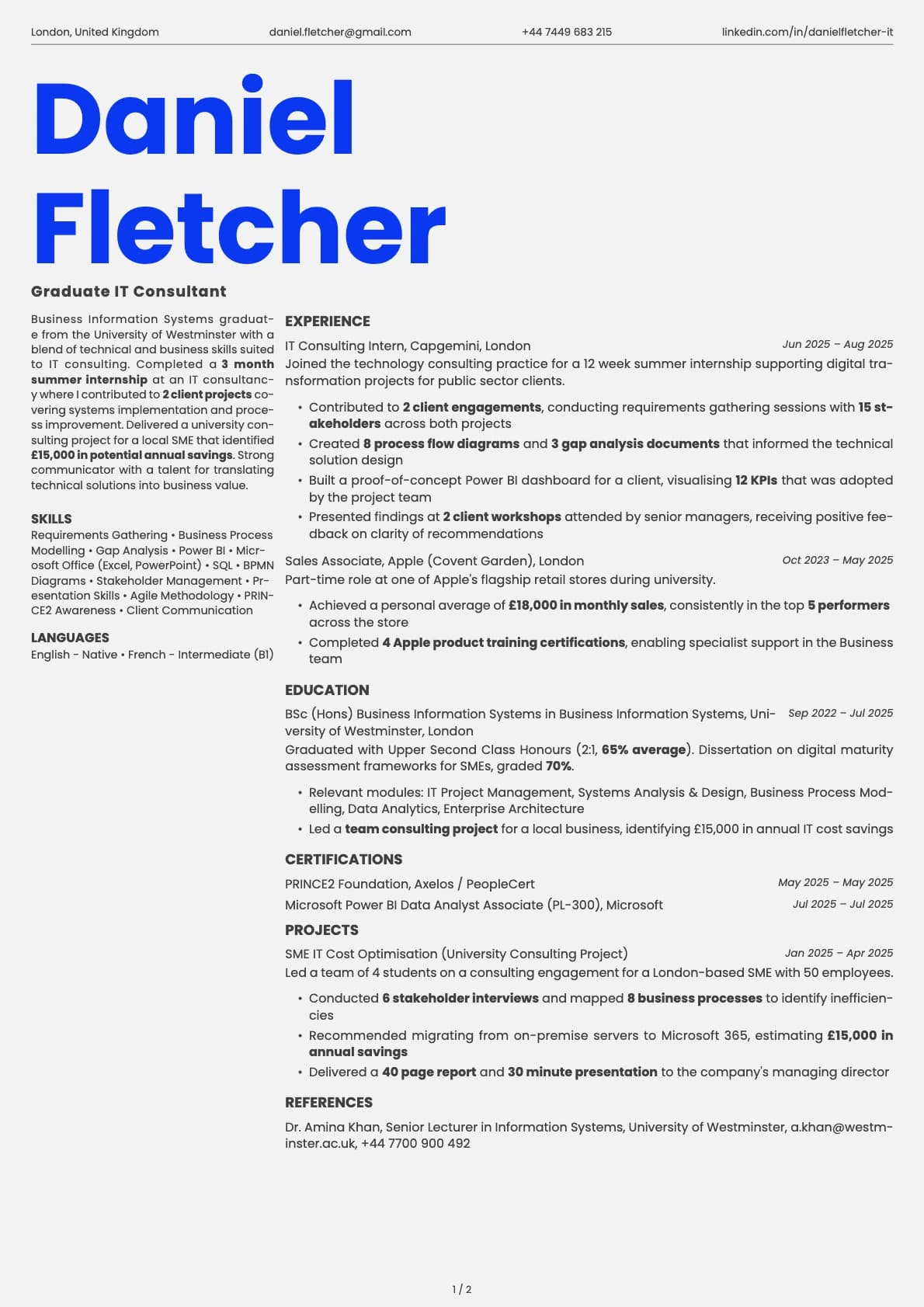
Graduate IT Consultant
A graduate IT consultant resume example. See how to present consulting experience, stakeholder management, and business analysis skills to land your first IT consulting role.
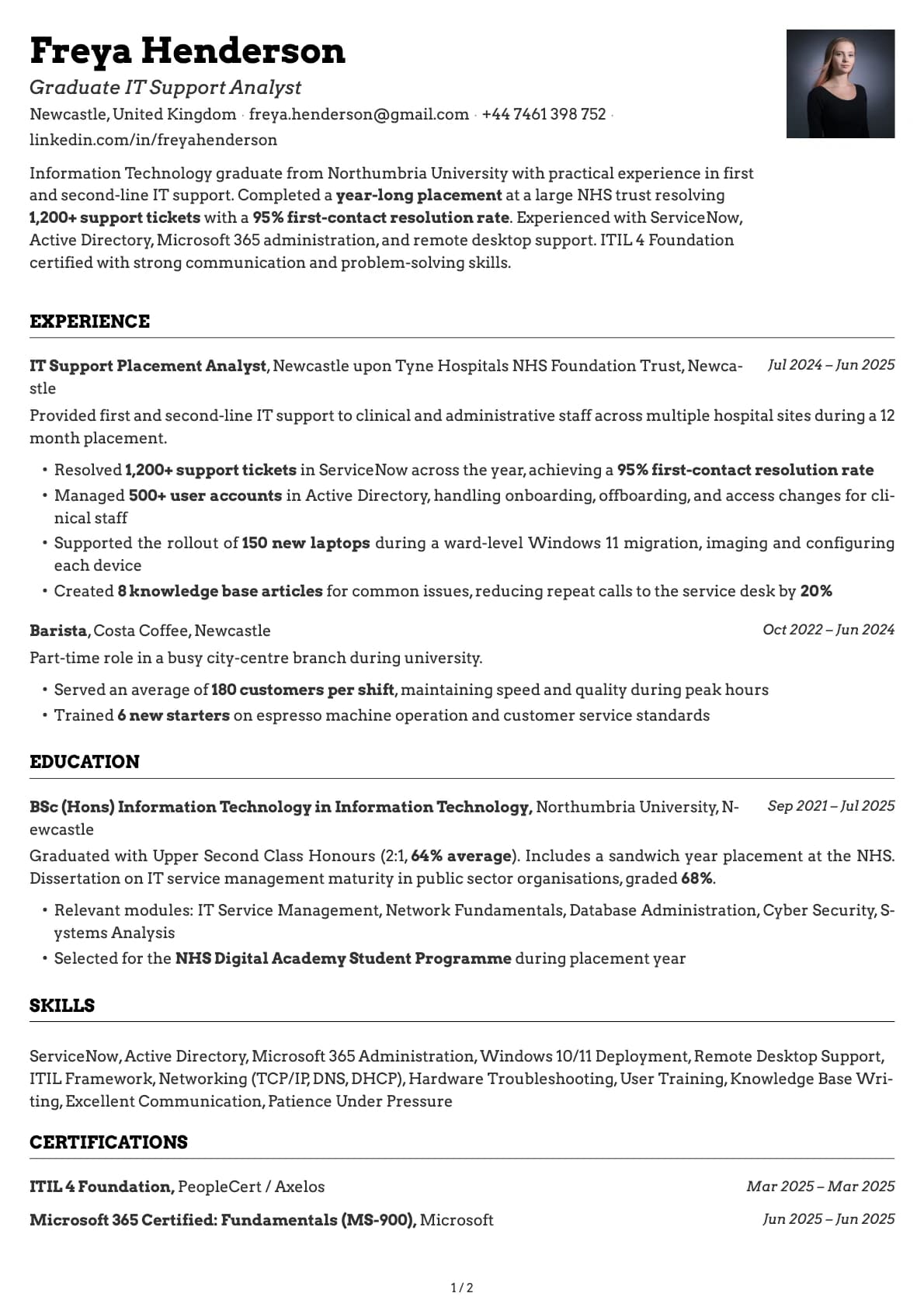
Graduate IT Support Analyst
A graduate IT support analyst resume example. See how to present helpdesk experience, ITIL certification, and service desk metrics to land your first IT support role.
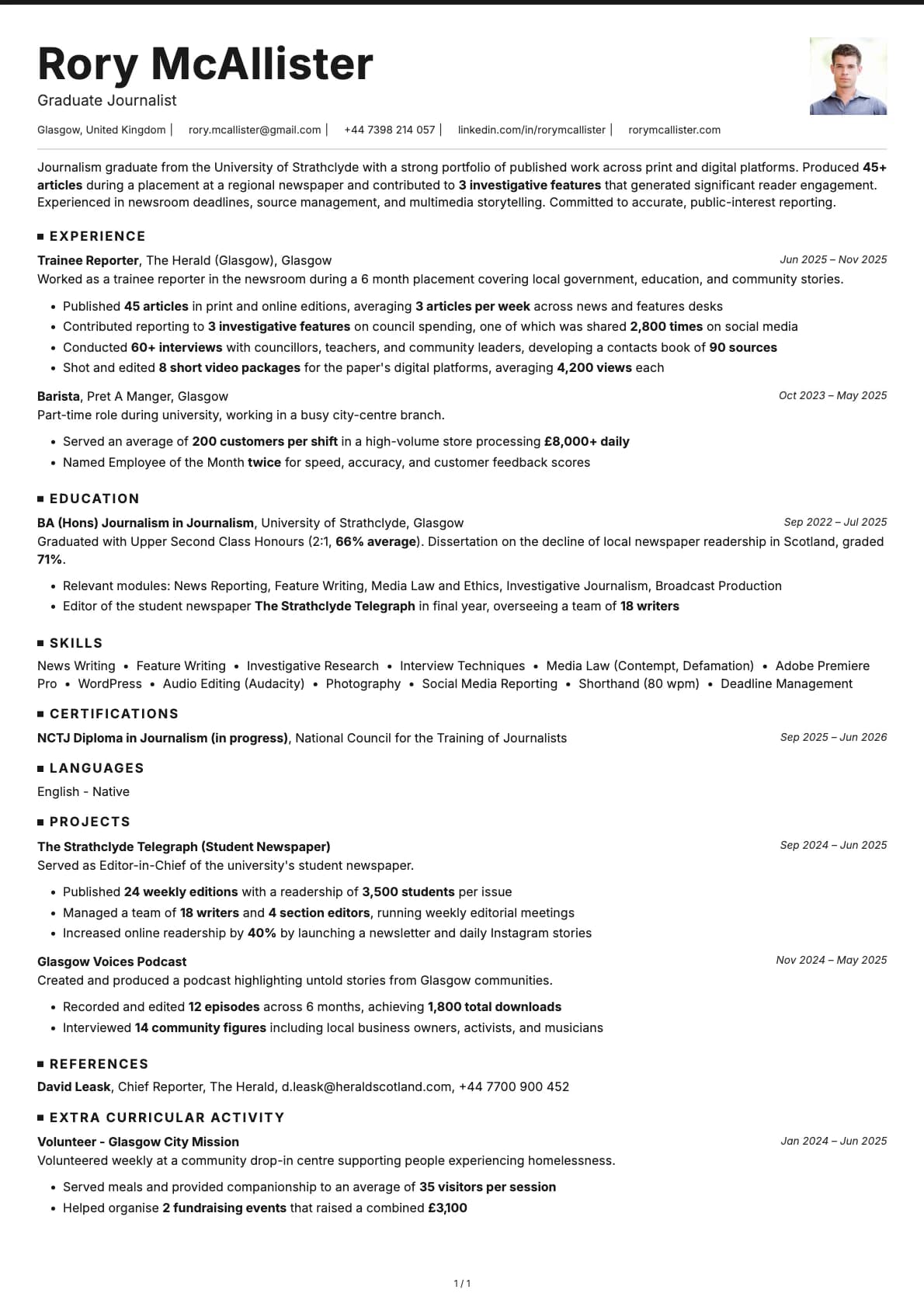
Graduate Journalist
A graduate journalist resume example showing how to present published work, newsroom experience, and multimedia skills to land your first reporting role.
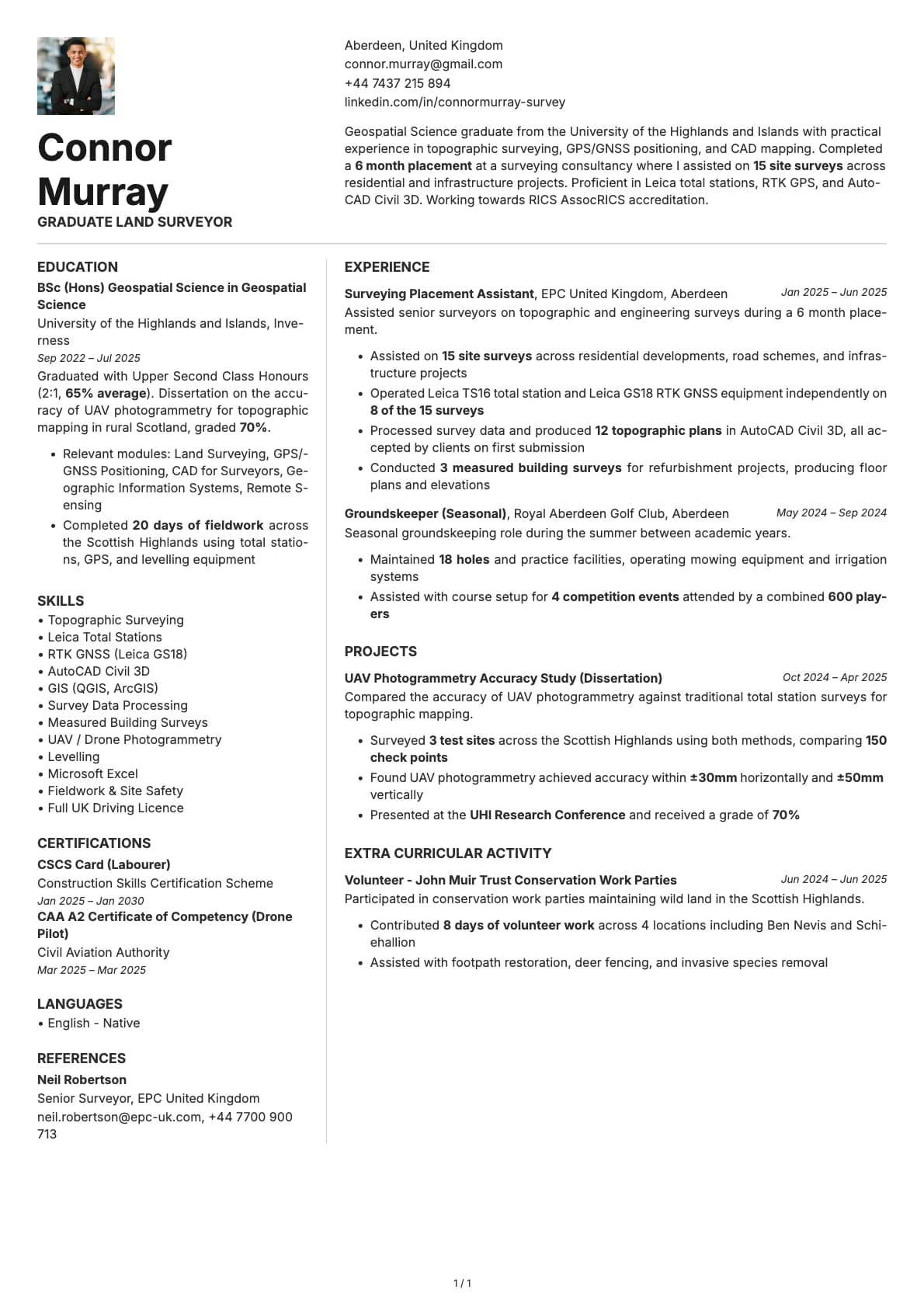
Graduate Land Surveyor
A graduate land surveyor resume example. See how to present site survey experience, GPS/GNSS skills, and CAD output to land your first surveying role.
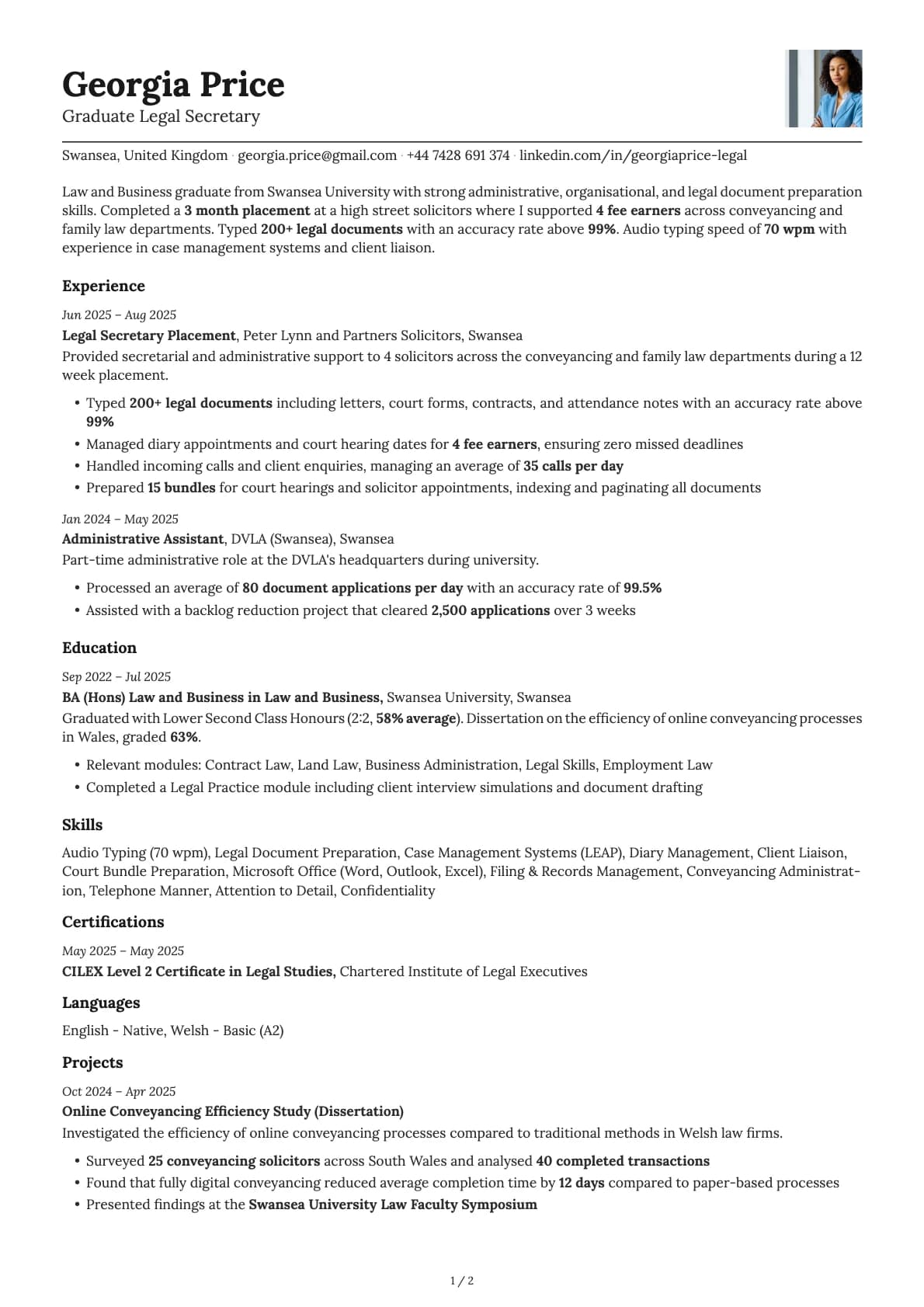
Graduate Legal Secretary
A graduate legal secretary resume example. See how to present typing speed, legal document preparation, and solicitor support experience to land your first legal secretary role.
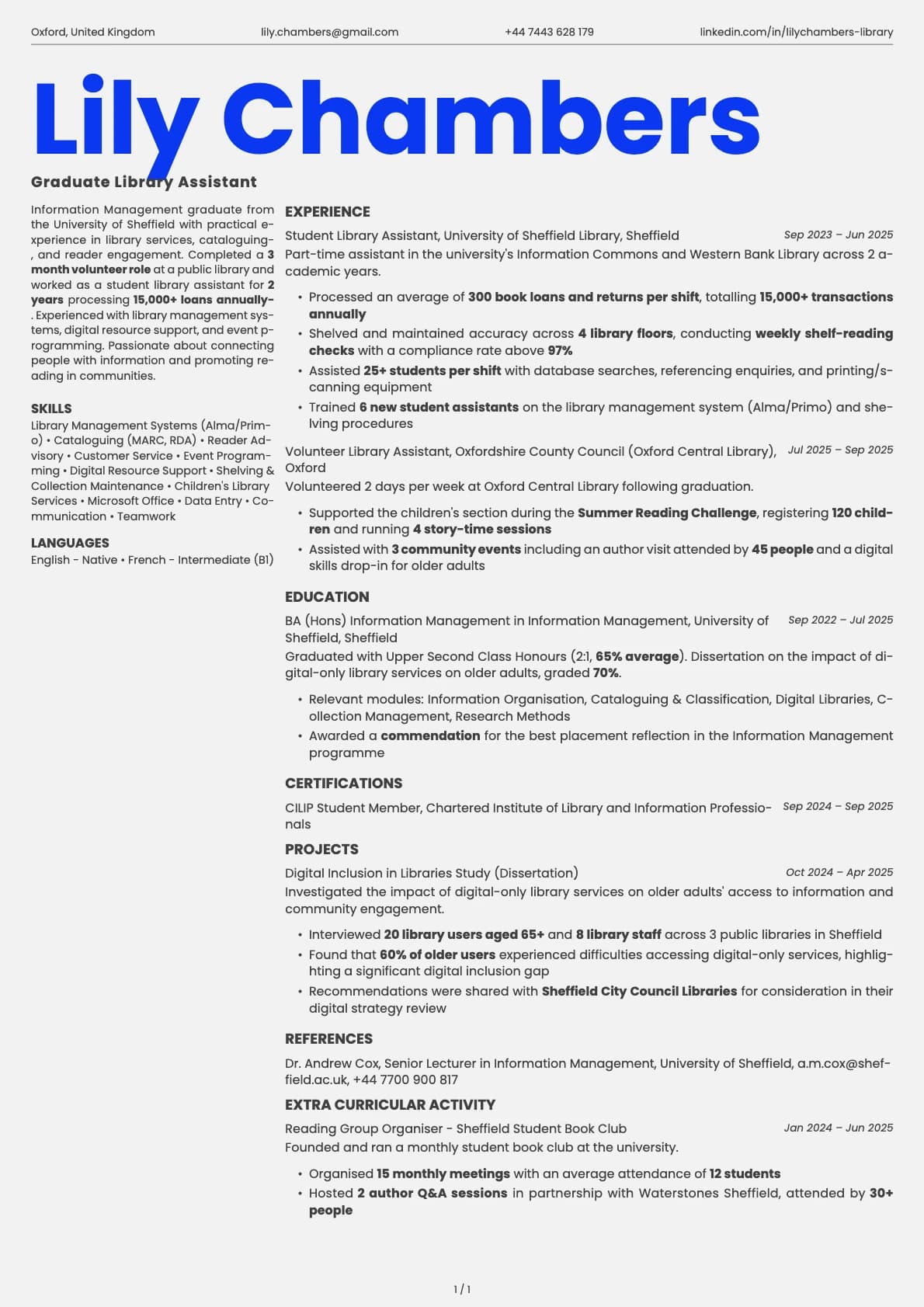
Graduate Library Assistant
A graduate library assistant resume example. See how to present library experience, cataloguing skills, and event programming to land your first library role.
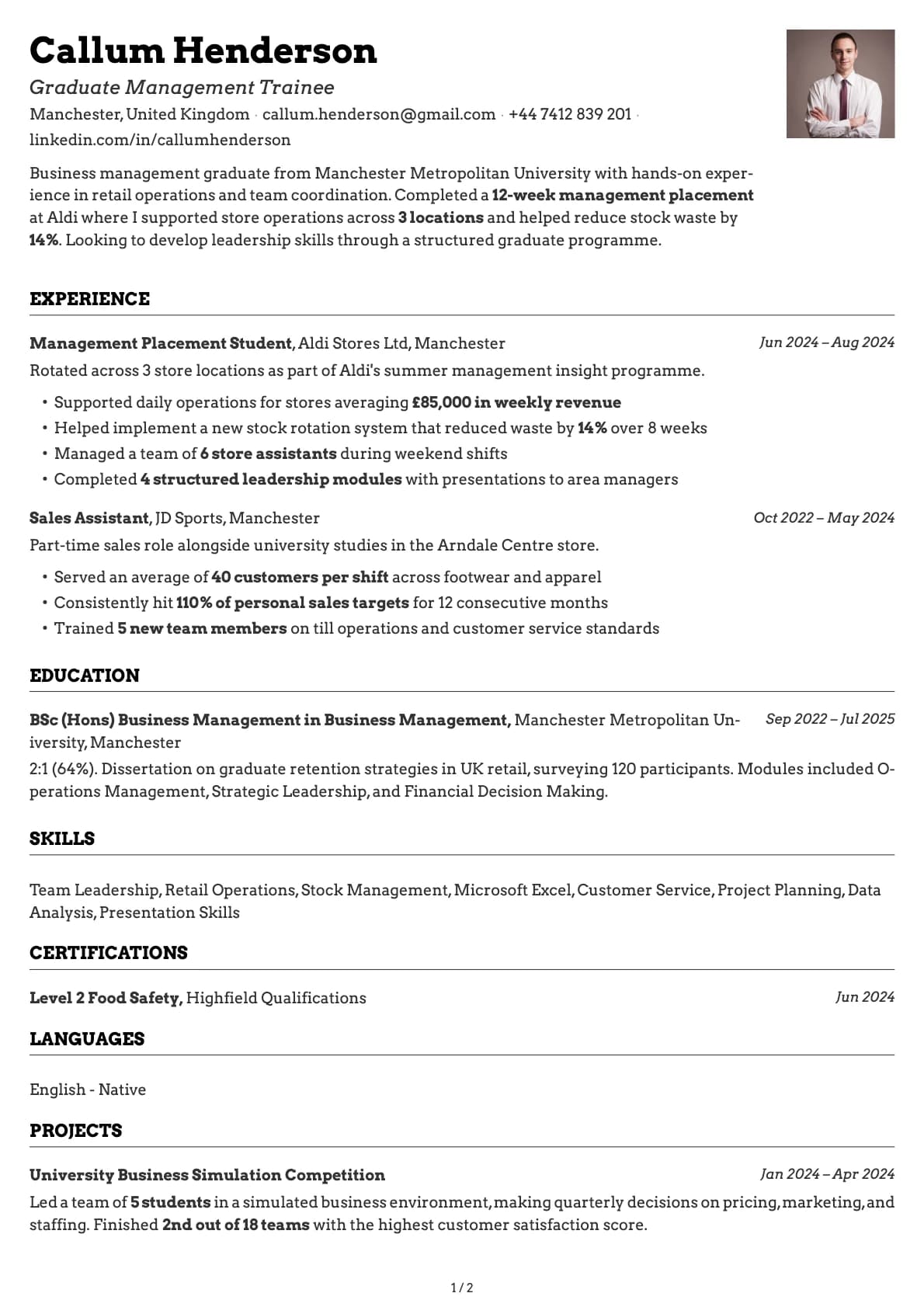
Graduate Management Trainee
A graduate management trainee resume example with retail placement experience and team leadership skills.
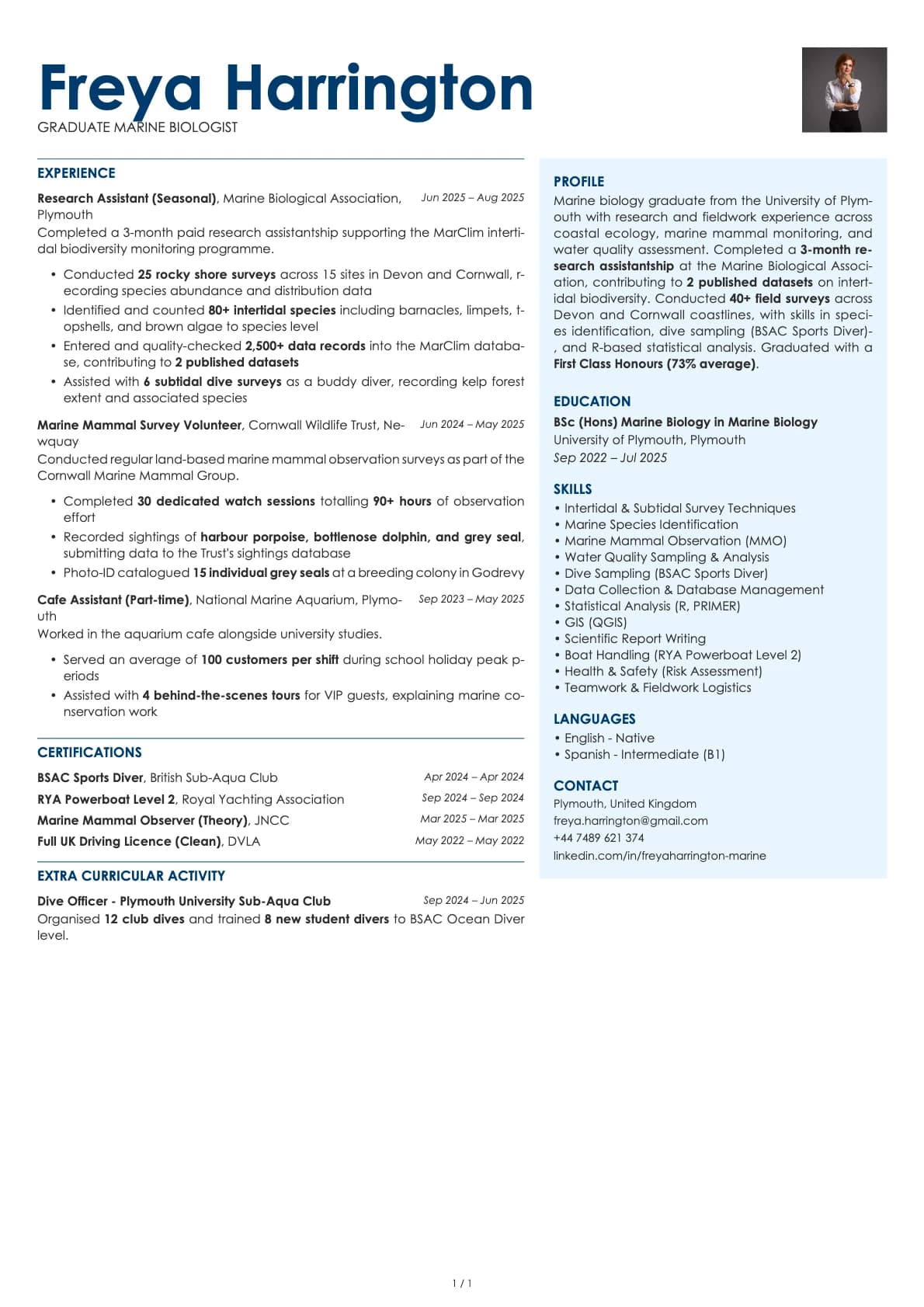
Graduate Marine Biologist
A graduate marine biologist resume example with research placement experience, dive survey qualifications, and intertidal survey numbers.
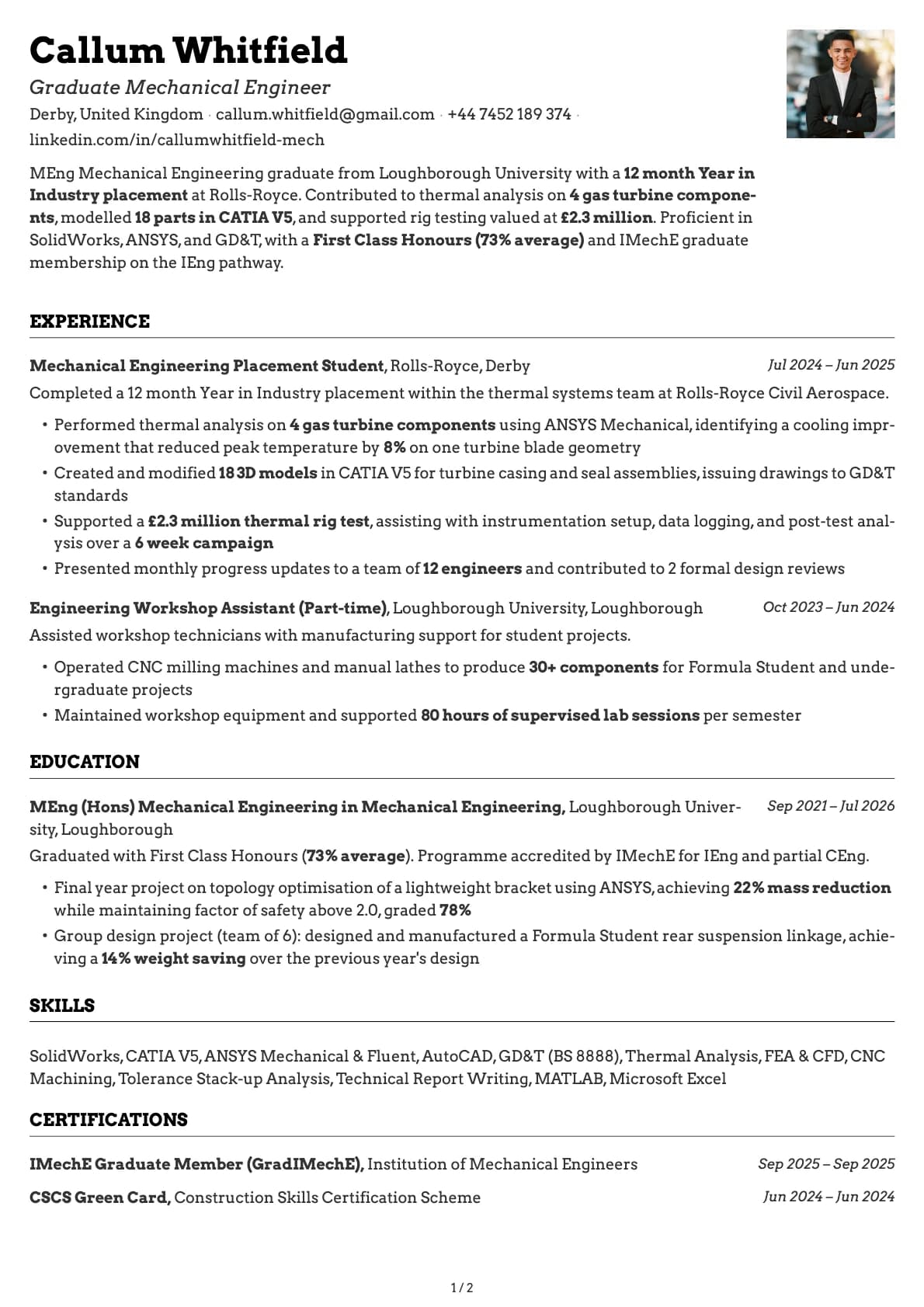
Graduate Mechanical Engineer
A graduate mechanical engineer resume example with Year in Industry placement, SolidWorks proficiency, and IMechE membership on the IEng pathway.