Dentist Resume Example
A dentist resume example with mixed NHS and private practice experience in London.

Laddro Team
Free to use. No account needed to start.
Free to use. No account needed to start.
Overview
Dentist resumes are different from most healthcare resumes. You are not just applying for a clinical role. In many cases, you are applying to be an associate in a practice where you will generate revenue, build a patient list, and contribute to the business. The hiring manager is a practice principal who thinks in UDAs, patient numbers, and private revenue. Your resume needs to speak that language.
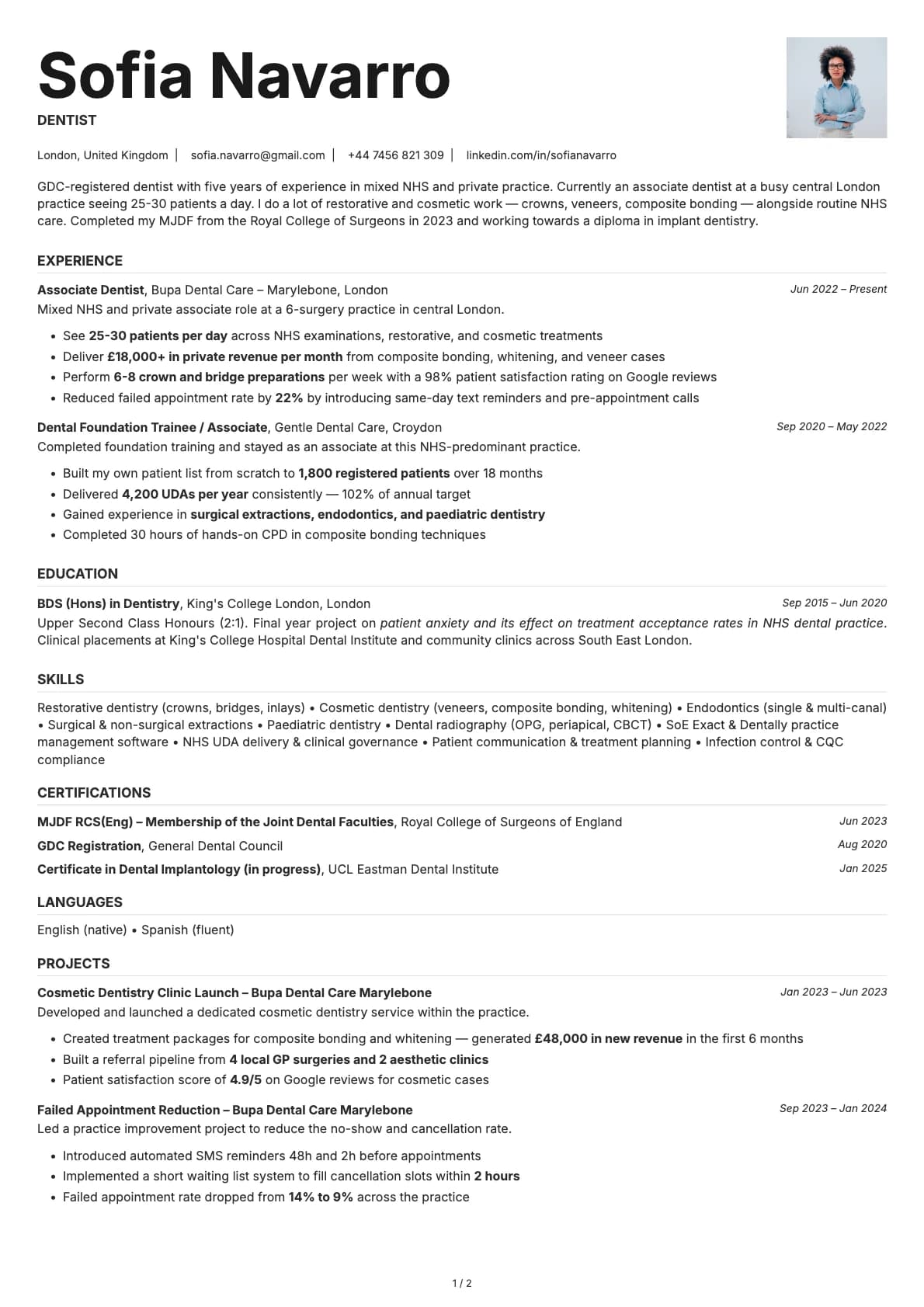
This resume belongs to an associate dentist with five years of experience in mixed NHS and private practice in London. She sees 25-30 patients per day, generates over £18,000 per month in private revenue, and has her MJDF from the Royal College of Surgeons. The resume works because it treats dentistry as both a clinical and a commercial skill.
Summary: registration, speciality, and what you bring
A dentist's summary should cover your GDC registration, your experience level, the type of practice you work in, and what sets you apart.
Here is this resume's summary:
GDC-registered dentist with five years of experience in mixed NHS and private practice. Currently an associate dentist at a busy central London practice seeing 25-30 patients a day. I do a lot of restorative and cosmetic work, crowns, veneers, composite bonding, alongside routine NHS care.
No jargon, no fluff. The reader immediately knows: 5 years, mixed practice, high daily volume, and a clear clinical interest in cosmetic and restorative work.
For yours: Lead with GDC registration and years of experience. Then name your practice type (NHS, private, or mixed) and daily patient volume. Finish with your clinical focus areas.
Experience: UDAs, revenue, and patient outcomes
Practice principals care about two things: can you deliver your UDA target, and can you grow the private side? This resume covers both.
"Deliver £18,000+ in private revenue per month from composite bonding, whitening, and veneer cases"
"Perform 6-8 crown and bridge preparations per week with a 98% patient satisfaction rating on Google reviews"
The private revenue figure tells the principal exactly what this person will bring in. The satisfaction rating shows the work holds up and patients are happy. These are business metrics, not just clinical ones.
For the NHS side:
"Delivered 4,200 UDAs per year consistently, 102% of annual target"
UDA delivery is the foundation of NHS associate dentistry. Hitting 102% of target tells the reader this person meets their contract obligations reliably. If you consistently hit or exceed your UDA target, always include the percentage.
The pattern: For each role, include at least one NHS performance metric and one private revenue or growth figure.
Building your patient list
The foundation training role on this resume includes a detail that many dentists overlook:
"Built my own patient list from scratch to 1,800 registered patients over 18 months"
Building a list is hard. It shows the practice principal that you can attract and retain patients, which directly affects the business. If you have built a list at any point in your career, state the number and the timeframe. Even growing an inherited list from one size to another is worth mentioning.
Clinical skills: be specific about what you do
A dentist's skills section should read like a treatment menu. Not "restorative dentistry" but "crowns, bridges, and inlays." Not "cosmetic dentistry" but "veneers, composite bonding, and whitening."
This resume lists specific procedures alongside their scope. It also includes "Dental radiography (OPG, periapical, CBCT)" which tells the reader this person can interpret all three types of imaging.
Practice management software (SOE Exact, Dentally) is listed too. Just like with dental hygienists, the software you know affects how quickly you can integrate into a new practice. If you use R4, Carestream, or any other system, name it.
Certifications: MJDF and continuing education
For UK dentists, GDC registration is the baseline. After that, the MJDF from the Royal College of Surgeons is the most recognised postgraduate qualification for general dentists. This resume lists it prominently.
The "Certificate in Dental Implantology (in progress)" entry is a smart move. It shows the practice principal that this person is investing in a skill that generates high-value private revenue. If you are currently studying for any clinical qualification, list it with "in progress" and the institution name.
CPD is expected in dentistry, so you do not need to list routine CPD hours. But if you have completed notable hands-on courses (30 hours of composite bonding techniques, as mentioned in this resume), those are worth including because they show clinical development in a specific area.
Projects that show business thinking
This resume includes two projects that are not purely clinical:
- A cosmetic dentistry clinic launch that generated £48,000 in new revenue in 6 months
- A failed appointment reduction project that dropped the no-show rate from 14% to 9%
Both of these show a dentist who thinks about the practice as a business. The cosmetic clinic project is especially strong because it shows initiative: this person identified an opportunity and built a referral pipeline from 4 GP surgeries and 2 aesthetic clinics. Practice principals love associates who bring in business, not just treat it.
Mistakes that dentist resumes make
Not including UDA figures. For NHS roles, your UDA delivery rate is the most important number on the resume. If you do not include it, the practice principal has to assume the worst.
Vague descriptions of clinical work. "Performed a range of dental treatments" tells nobody anything. Name the specific procedures you perform and how many per week.
Ignoring private revenue. If you generate private income for the practice, state the monthly figure. It is the single most compelling data point for a practice principal evaluating an associate.
Listing too many clinical skills without depth. If you list implant dentistry but have only placed 3 implants, that will become obvious in the interview. Be honest about your experience level. "Certificate in Dental Implantology (in progress)" is much better than claiming expertise you do not have yet.
One more thing
Dentist resumes that win associate positions speak two languages: clinical and commercial. Show that you can deliver safe, high-quality care. And show that you understand the business of running a practice. If you can do both on one page, you will be ahead of most applicants.
Build your own version
Open this layout in the builder and swap in your own details. It takes a few minutes.
Free to use. No account needed to start.
Was this resume example helpful?
Rate this example to help us create better content for you.
4.8 average from 94 ratingsRelated resume examples
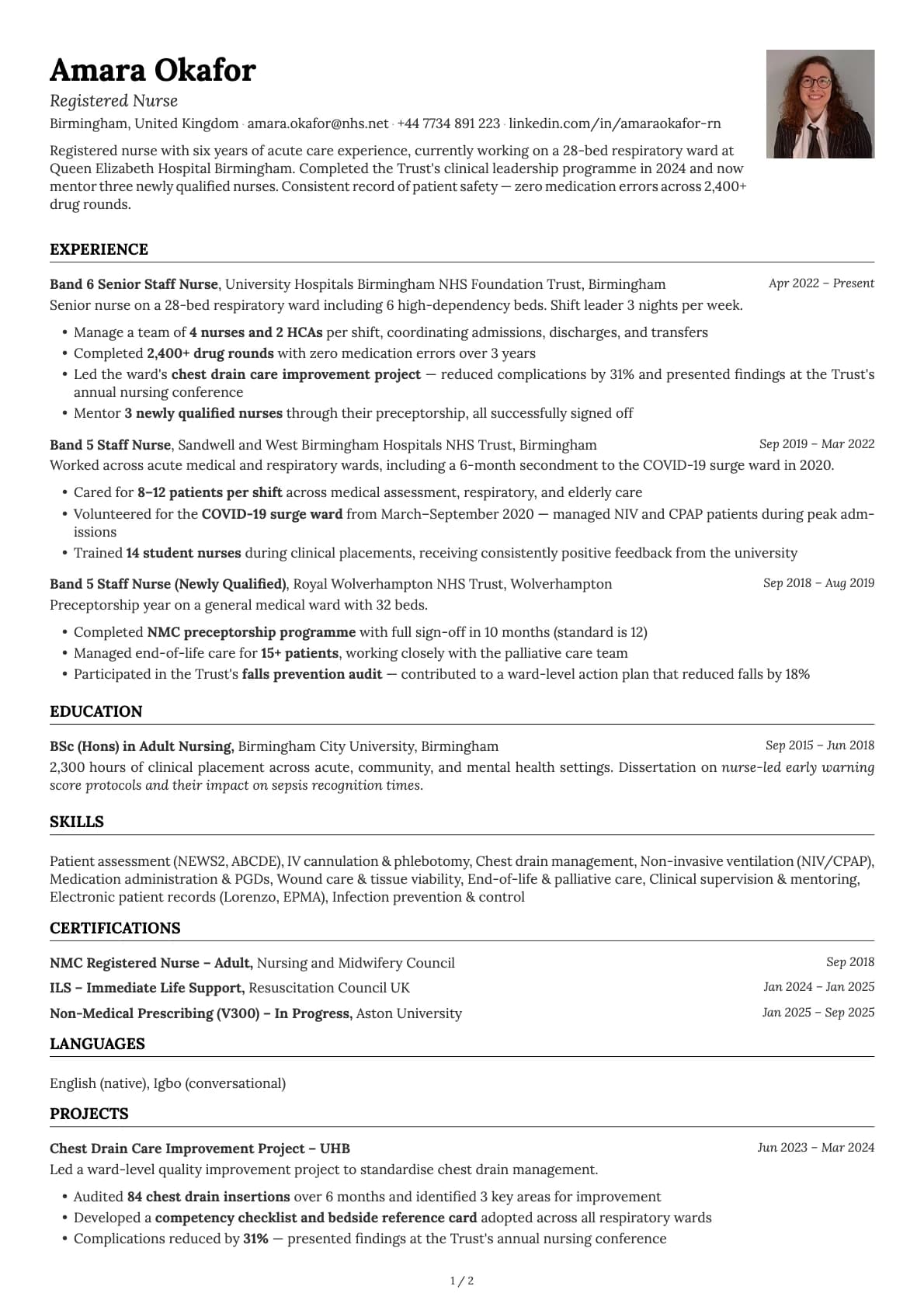
Registered Nurse
A registered nurse resume example with 6 years of acute care experience at NHS hospitals.
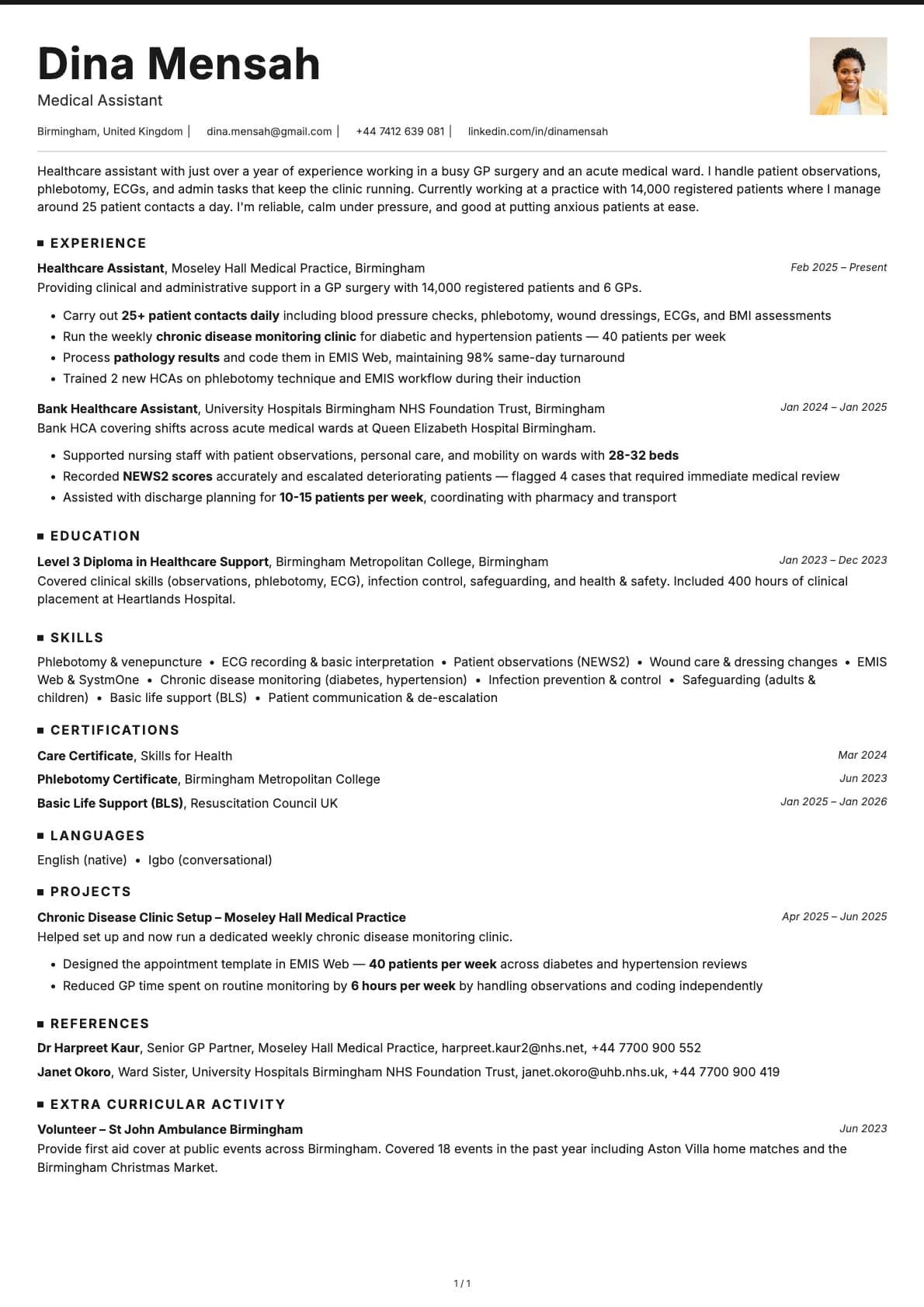
Medical Assistant
A medical assistant resume example with patient contact numbers, clinical skills, and GP surgery experience.
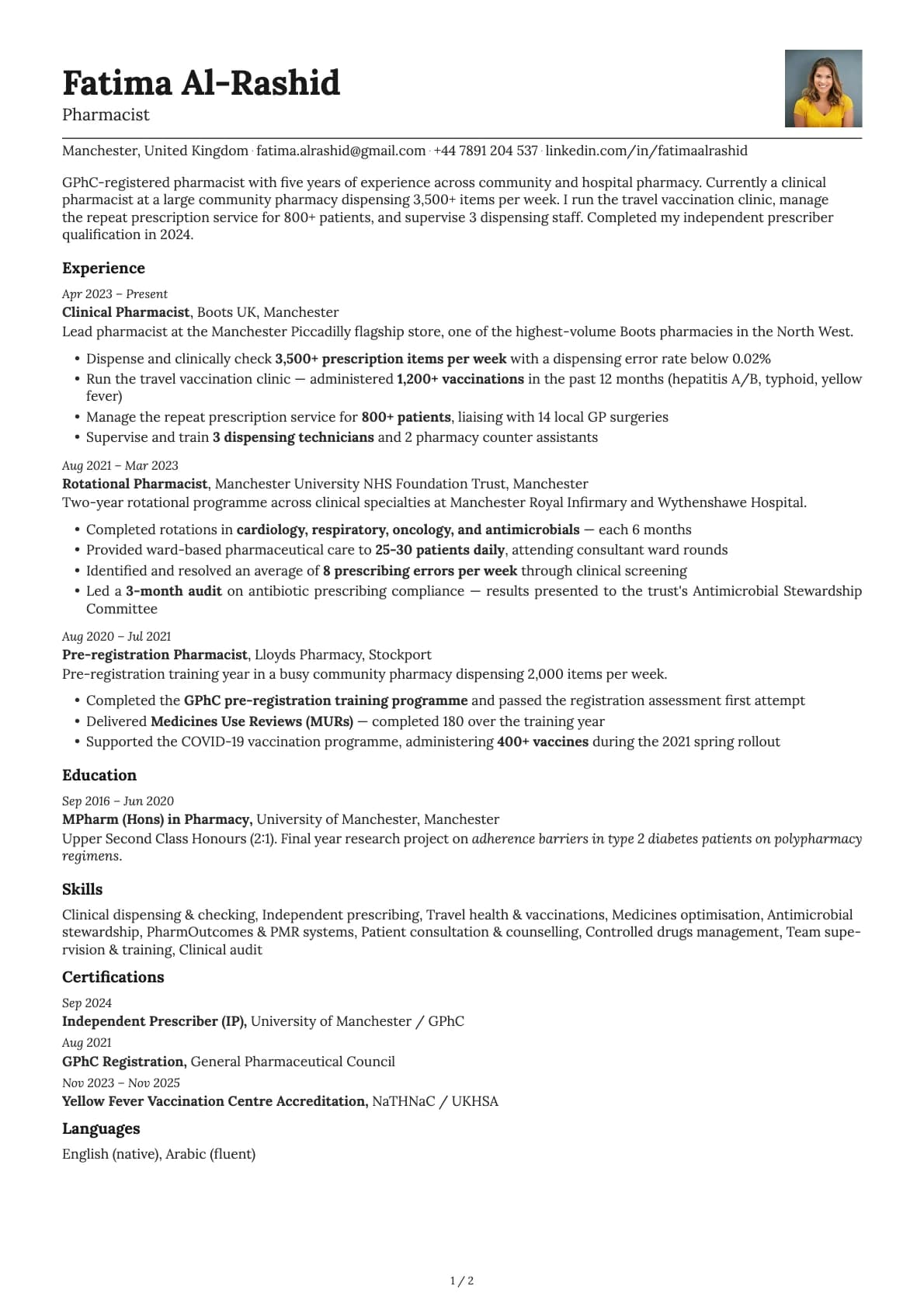
Pharmacist
A pharmacist resume example with community and hospital experience, clinical audit results, and vaccination clinic numbers.
Physician
A physician resume example from a consultant in acute medicine with quality improvement projects, publications, and clinical leadership.
Occupational Therapist
An occupational therapist resume example with caseload details, OT assessment tools, and QI project outcomes.
Veterinarian
A veterinarian resume example with 5 years of small animal practice experience.
Speech & Language Therapist
A speech and language therapist resume example with paediatric and adult caseload experience across NHS trusts.
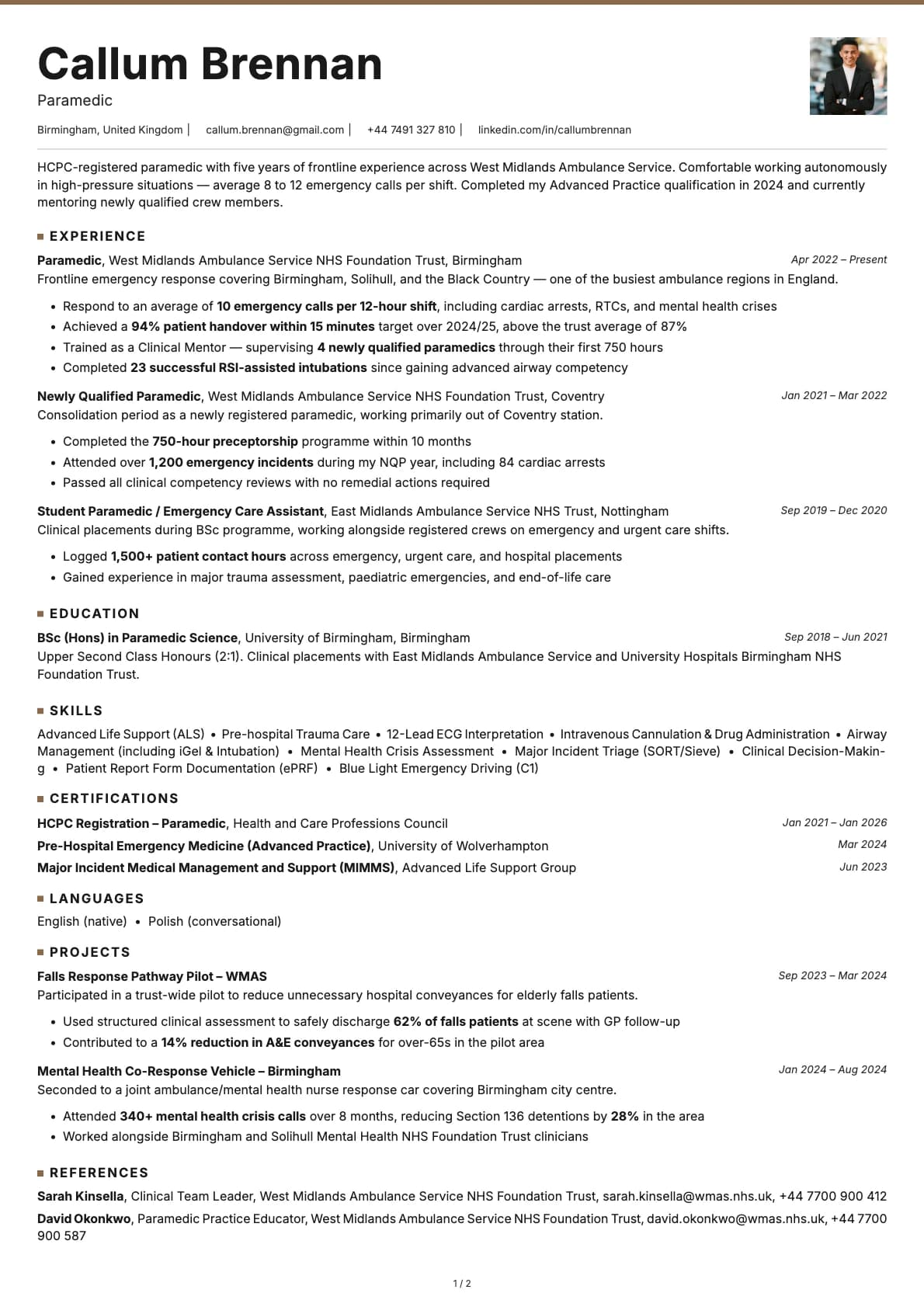
Paramedic
A paramedic resume example with call volumes, clinical competencies, and mentoring experience.
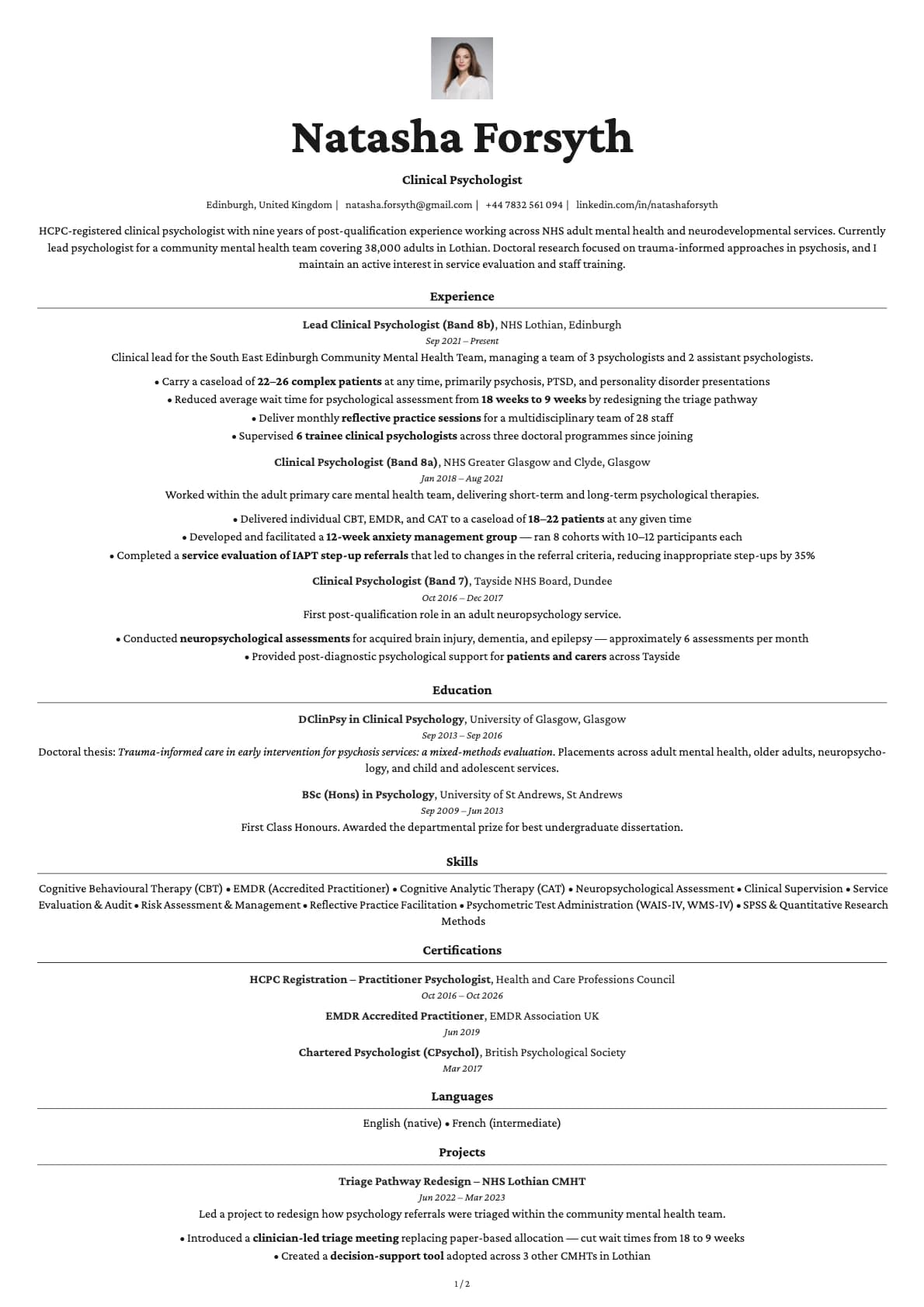
Clinical Psychologist
A clinical psychologist resume example with 9 years of NHS experience across community mental health and neuropsychology.
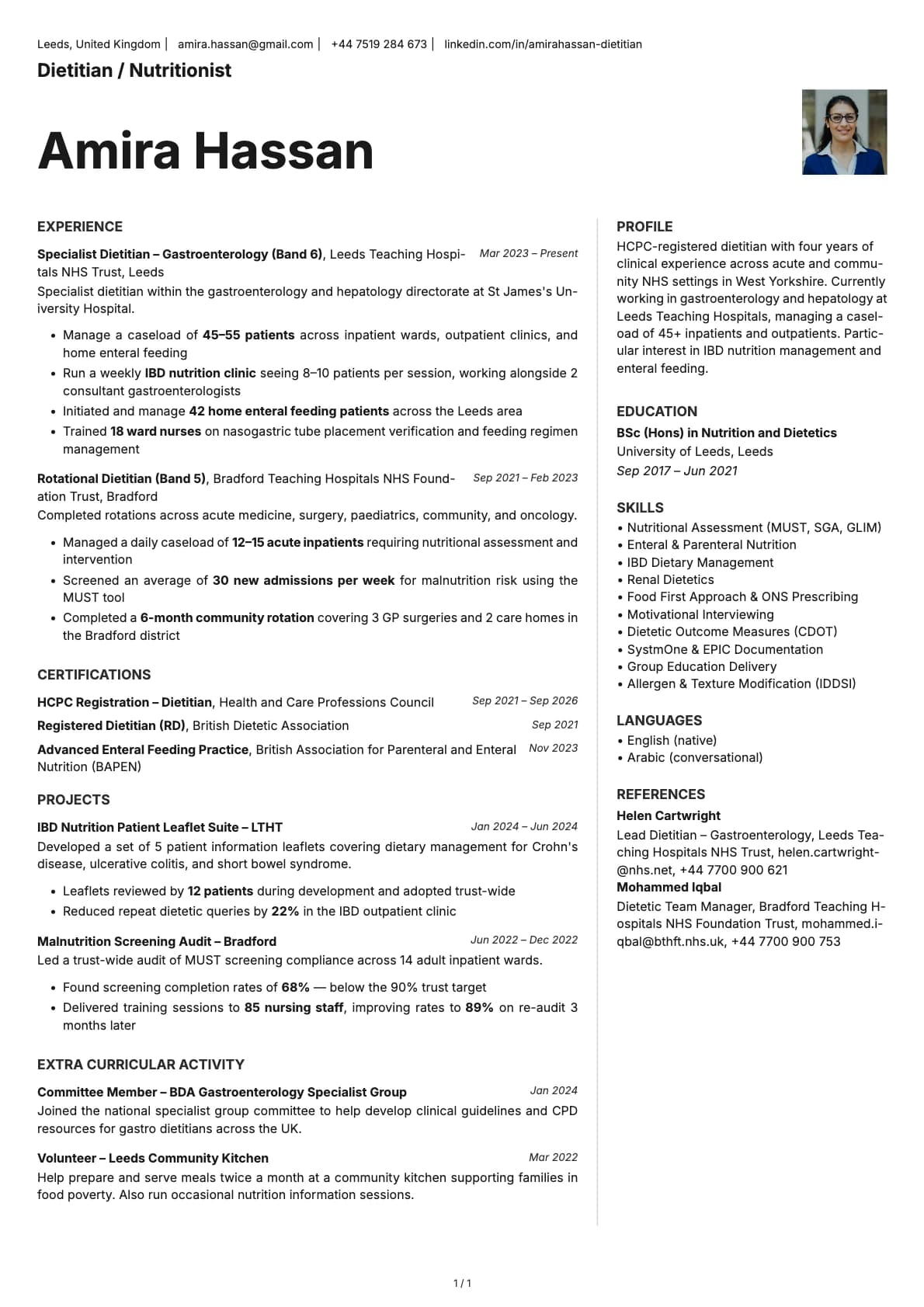
Dietitian / Nutritionist
A dietitian resume example with NHS clinical experience in gastroenterology and community nutrition.
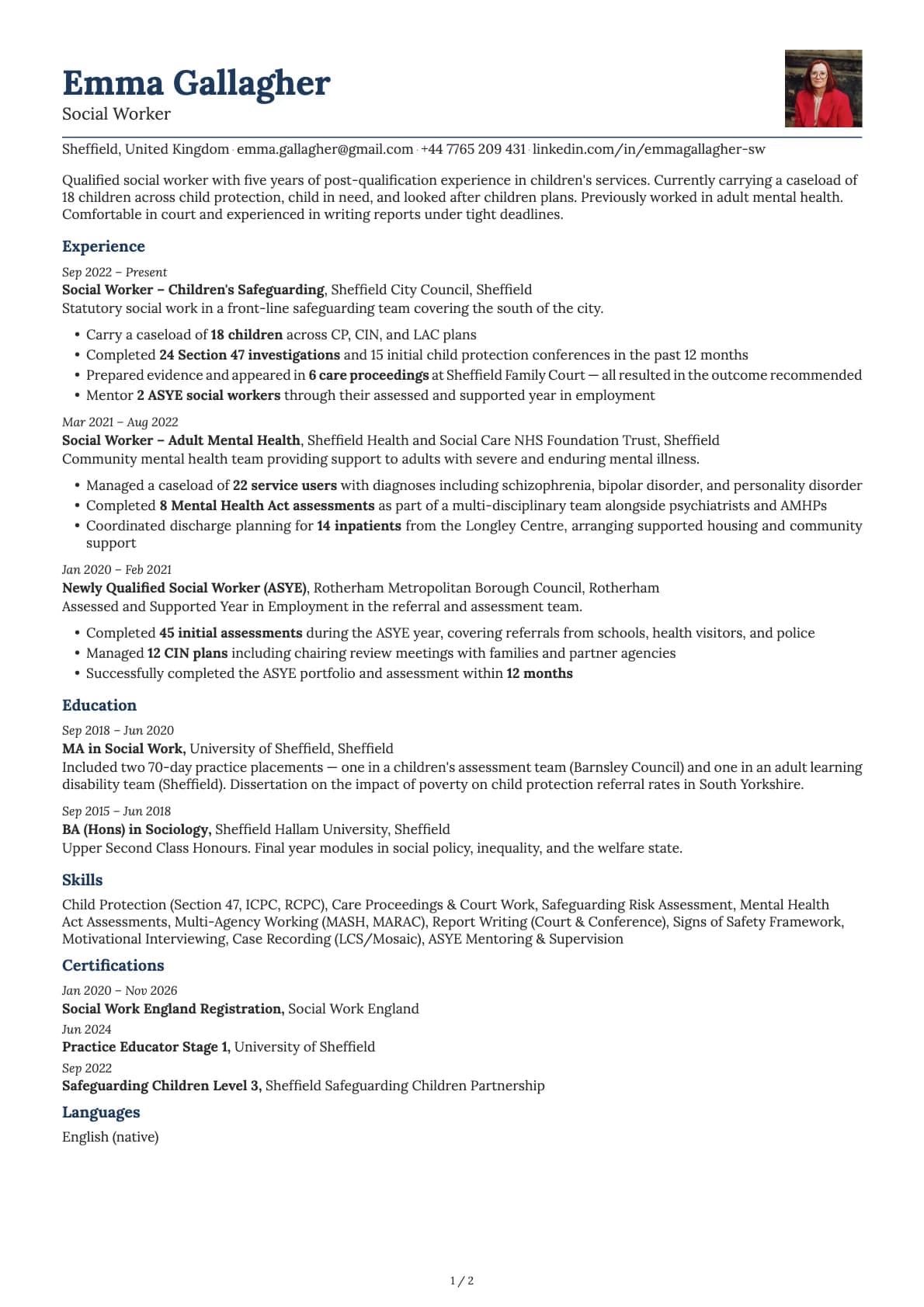
Social Worker
A social worker resume example with caseload numbers, court work, and multi-agency experience.
Dental Hygienist
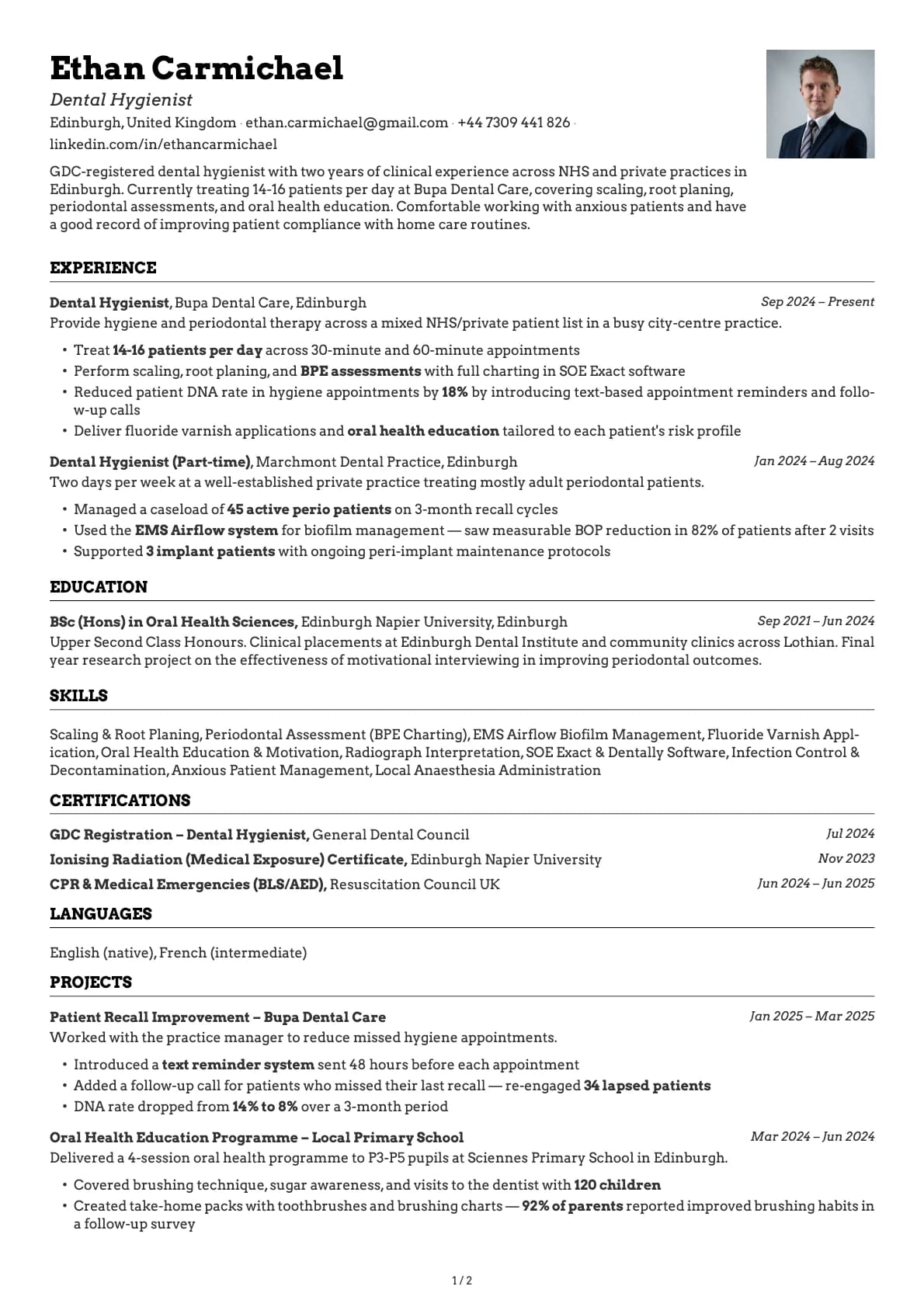
A dental hygienist resume example with NHS and private practice experience in Edinburgh.
Related articles

AI Is Screening Your Resume Before Any Human Sees It
AI screens most resumes before a human ever reads them. 97.4% of Fortune 500 companies run an ATS. This is what that means for you and what you can do about it.

The Best Resume Builders in 2026, Compared Honestly
Resume.io, Zety, Enhancv, Kickresume, Teal, and Laddro compared honestly: real pricing, free tiers, mobile apps, and where each tool wins. All prices checked in September 2026.

Burnout Recovery: A Real Timeline, Not 'Take a Bubble Bath'
55% of the U.S. workforce is burned out. Recovery takes 3 to 12 months. Here's what that actually looks like, stage by stage.