Veterinarian Resume Example
A veterinarian resume example with 5 years of small animal practice experience.

Laddro Team
Free to use. No account needed to start.
Free to use. No account needed to start.
Overview
Vet resumes are read by practice owners and head vets who have done the same job. They have seen the same blocked cats at 2am, performed the same emergency GDVs, and dealt with the same difficult client conversations. So writing "provided high-quality veterinary care" on your resume tells them absolutely nothing useful.
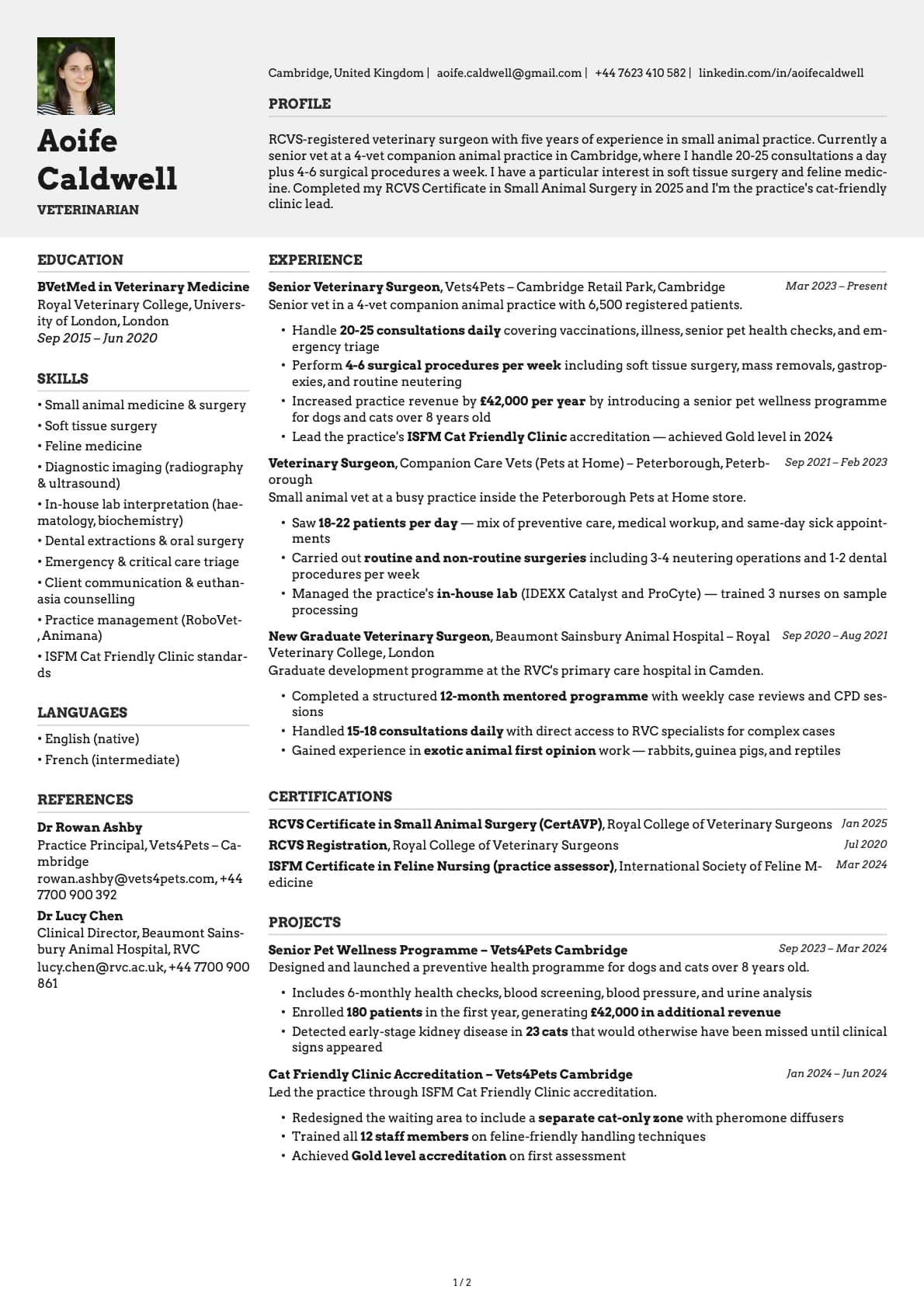
This resume belongs to Aoife, a senior veterinary surgeon at Vets4Pets in Cambridge with five years of small animal experience. She trained at the Royal Veterinary College, completed a graduate year at Beaumont Sainsbury Animal Hospital, and has worked in both corporate and independent-style practices. Her resume works because it is full of numbers. Consultation volumes, surgical caseload, revenue generated, and specific clinical achievements.
Here is how to build your vet resume with the same approach.
Your summary: registration, species, and clinical focus
Here is Aoife's summary:
RCVS-registered veterinary surgeon with five years of experience in small animal practice. Currently a senior vet at a 4-vet companion animal practice in Cambridge, where I handle 20-25 consultations a day plus 4-6 surgical procedures a week. I have a particular interest in soft tissue surgery and feline medicine.
The practice principal reading this immediately knows: RCVS registered, small animal focus, 5 years, and the daily workload (20-25 consults, 4-6 surgeries). The clinical interest in soft tissue surgery and feline medicine tells them what she brings beyond general practice.
For yours: Start with RCVS registration and your species focus (small animal, equine, farm, mixed). Then describe your current practice size and your daily numbers. If you have a clinical interest or are pursuing a certificate, mention it at the end.
How to describe your clinical experience
The goal is to show the practice owner what your working day looks like and what level of clinical work you handle independently.
Aoife's senior vet bullets:
Handle 20-25 consultations daily covering vaccinations, illness, senior pet health checks, and emergency triage
Perform 4-6 surgical procedures per week including soft tissue surgery, mass removals, gastropexies, and routine neutering
Two bullets and the reader has a complete picture of her clinical workload. The consultation types show breadth. The surgical list shows she does more than just neuters. Gastropexies tell the reader she handles a procedure that many general practice vets refer out.
Then there is this:
Increased practice revenue by £42,000 per year by introducing a senior pet wellness programme for dogs and cats over 8 years old
This is a commercial bullet on a clinical resume, and it is very effective. Practice owners are running businesses. Showing that you can generate revenue alongside good clinical work makes you stand out from other applicants.
Your new graduate year
Aoife includes her RVC graduate programme:
Completed a structured 12-month mentored programme with weekly case reviews and CPD sessions
Handled 15-18 consultations daily with direct access to RVC specialists for complex cases
Gained experience in exotic animal first opinion work. Rabbits, guinea pigs, and reptiles
The exotics line is a smart inclusion. Many small animal practices occasionally see rabbits and guinea pigs, and having a vet who is comfortable with them is a bonus. If you have experience with any species beyond the obvious, include it.
Projects that show initiative
Aoife includes two projects: the Senior Pet Wellness Programme and the ISFM Cat Friendly Clinic accreditation.
The wellness programme is particularly strong:
Enrolled 180 patients in the first year, generating £42,000 in additional revenue. Detected early-stage kidney disease in 23 cats that would otherwise have been missed until clinical signs appeared.
This shows both clinical and business value. 23 early kidney disease diagnoses is a tangible patient outcome. £42,000 in revenue proves the programme is commercially viable. If you have ever introduced a new service, protocol, or health plan at a practice, write it up with numbers.
The Cat Friendly Clinic accreditation project:
Redesigned the waiting area to include a separate cat-only zone with pheromone diffusers. Trained all 12 staff members on feline-friendly handling techniques. Achieved Gold level accreditation on first assessment.
This shows leadership and initiative beyond clinical work. If you have been involved in any accreditation, audit, or practice improvement project, include it.
Certifications: RCVS first, then specialist qualifications
For vets, RCVS registration goes at the top. Always. After that, list any certificates or advanced qualifications.
Aoife includes her CertAVP (Small Animal Surgery), RCVS registration, and ISFM Certificate in Feline Nursing (as a practice assessor). The CertAVP is an important differentiator because it shows she has pursued formal post-graduate training beyond the minimum required.
If you are working towards a certificate, include it with the expected completion date. Practice owners want to see that you are developing your clinical skills, not just doing the same work year after year.
Other certifications worth listing: GPCert modules, BSAVA CPD certificates, RCVS Advanced Practitioner status, any species-specific qualifications.
Mistakes vets make on their resumes
No consultation or surgical numbers. "Provided veterinary care" is not a resume bullet. How many consults per day? How many surgeries per week? What procedures can you do independently? These are the numbers practice owners need.
Ignoring the commercial side. Practice owners are employers. If you have increased revenue, improved client retention, or grown a service area, those achievements belong on your resume alongside your clinical work.
Not naming your practice management software. RoboVet, Animana, PetsApp, Vet Envoy, Rapport. If you can use the system the practice runs on, that saves them training time. List it.
Vague species experience. "Small animal experience" could mean anything from hamsters to horses under 148cm. Be specific about the species you see, the procedures you perform independently, and any areas where you have additional training or interest.
One more thing
Aoife's resume uses Limestone, a clean layout that works well with ATS systems. For vet roles, most applications go through Indeed, Vet Record, or direct to the practice. ATS compatibility is less critical than in corporate sectors, but a clean layout still helps the practice owner read your resume quickly during a busy day.
If you are looking for a specific type of practice (farm, equine, referral, emergency), tailor your resume to emphasise the relevant experience. A referral hospital wants to see complex cases and diagnostic workups. A rural mixed practice wants to see that you can handle farm calls and small animal consults. One resume does not fit all.
Build your own version
Open this layout in the builder and swap in your own details. It takes a few minutes.
Free to use. No account needed to start.
Was this resume example helpful?
Rate this example to help us create better content for you.
4.8 average from 119 ratingsRelated resume examples
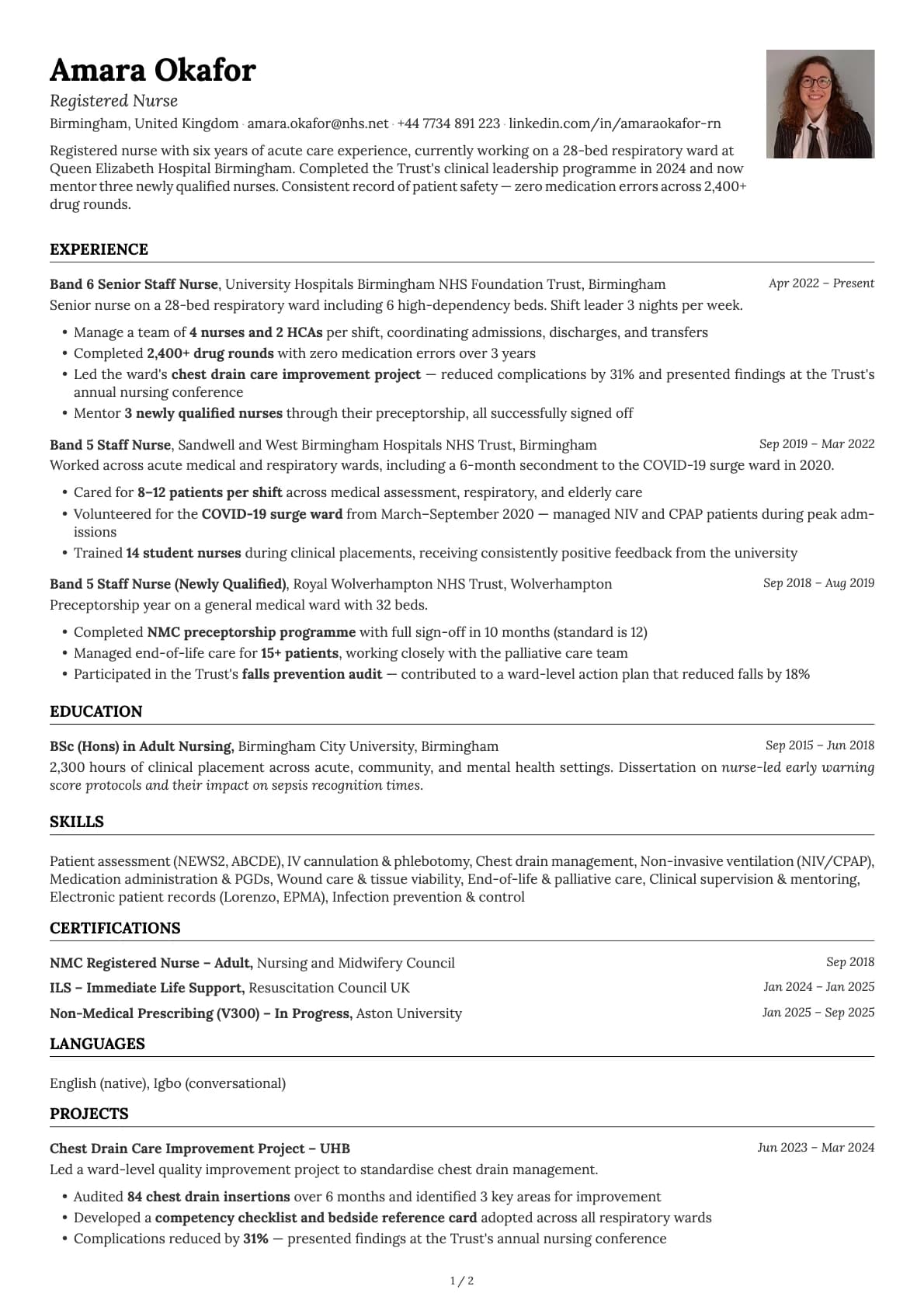
Registered Nurse
A registered nurse resume example with 6 years of acute care experience at NHS hospitals.
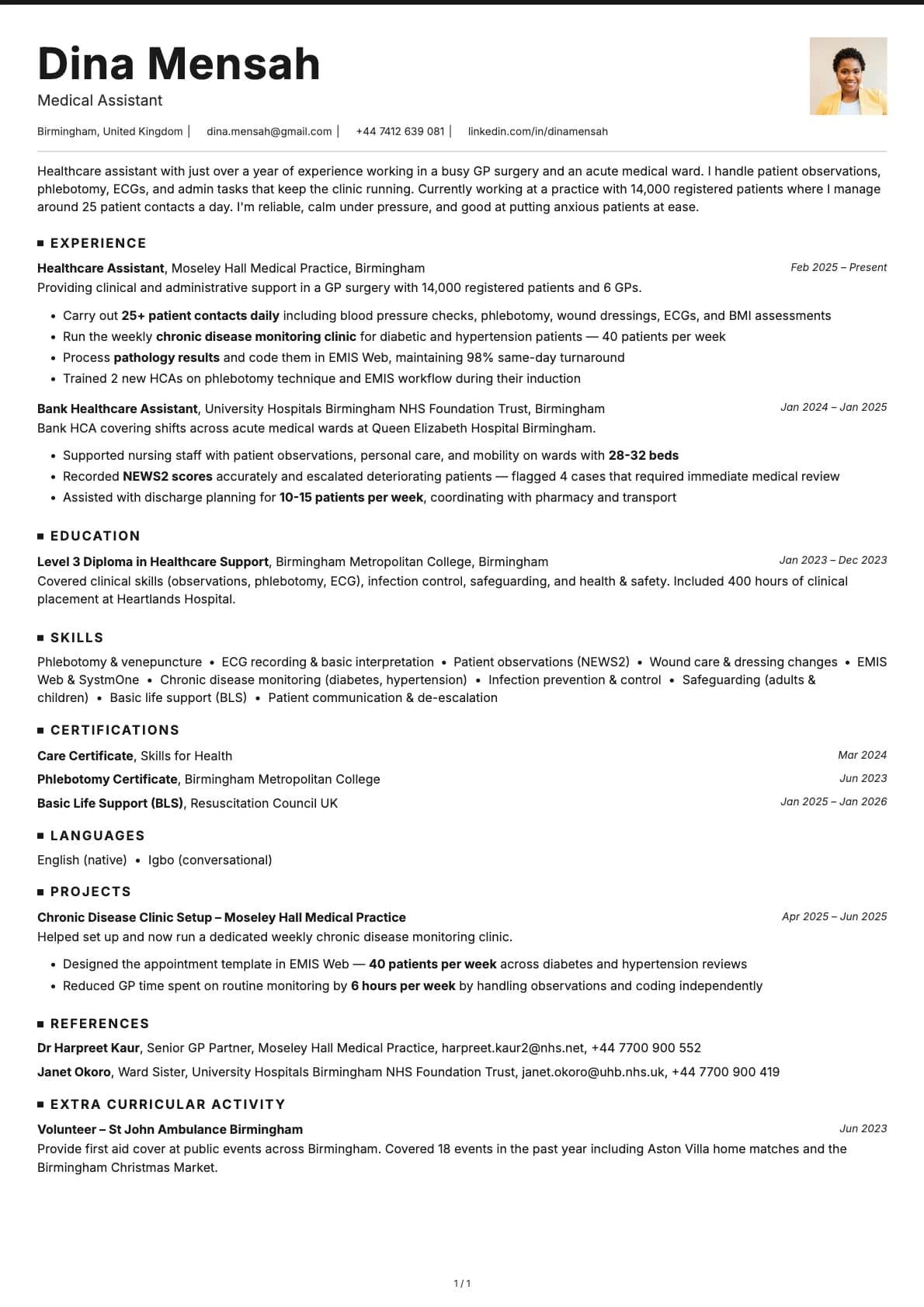
Medical Assistant
A medical assistant resume example with patient contact numbers, clinical skills, and GP surgery experience.
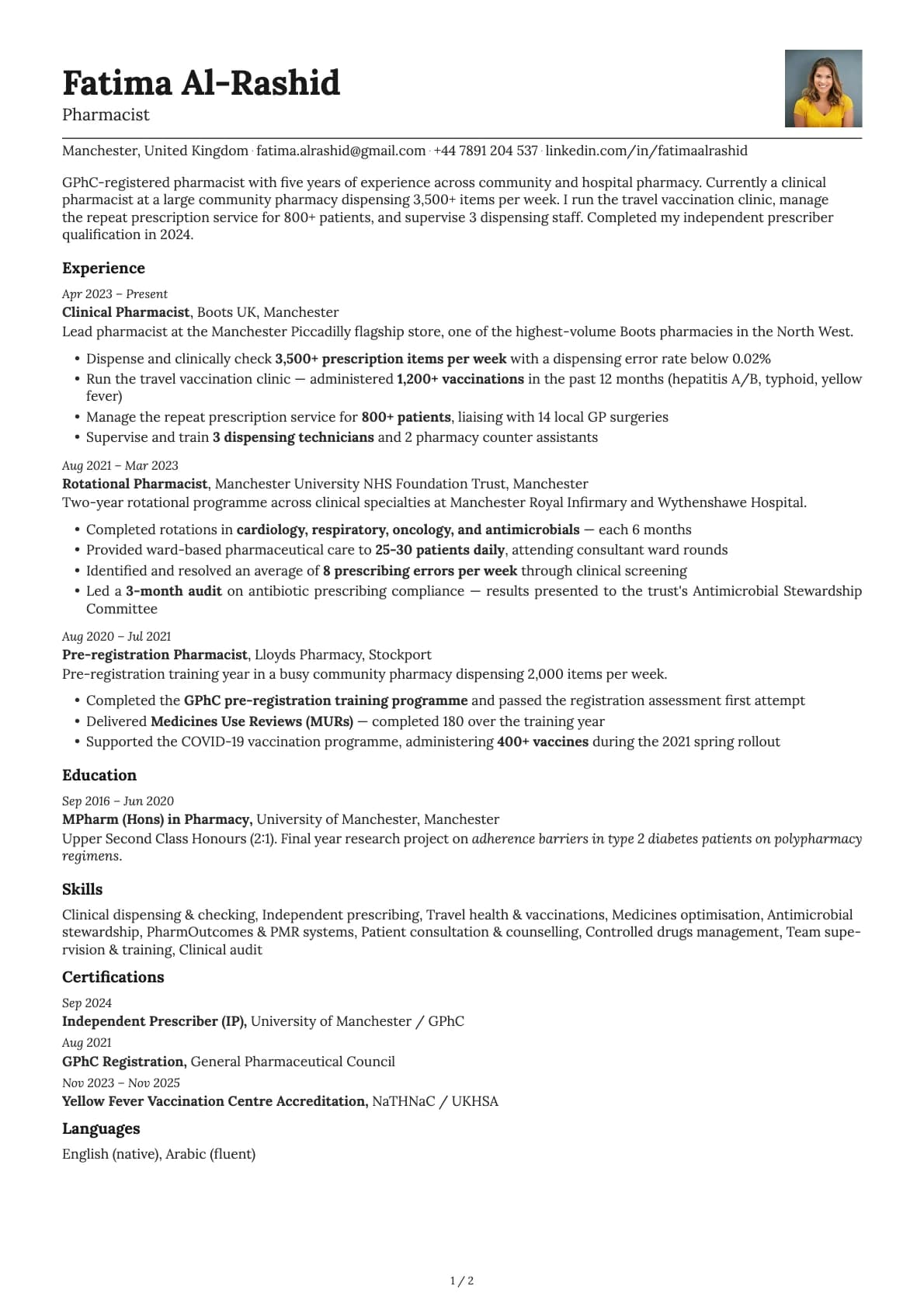
Pharmacist
A pharmacist resume example with community and hospital experience, clinical audit results, and vaccination clinic numbers.
Physician
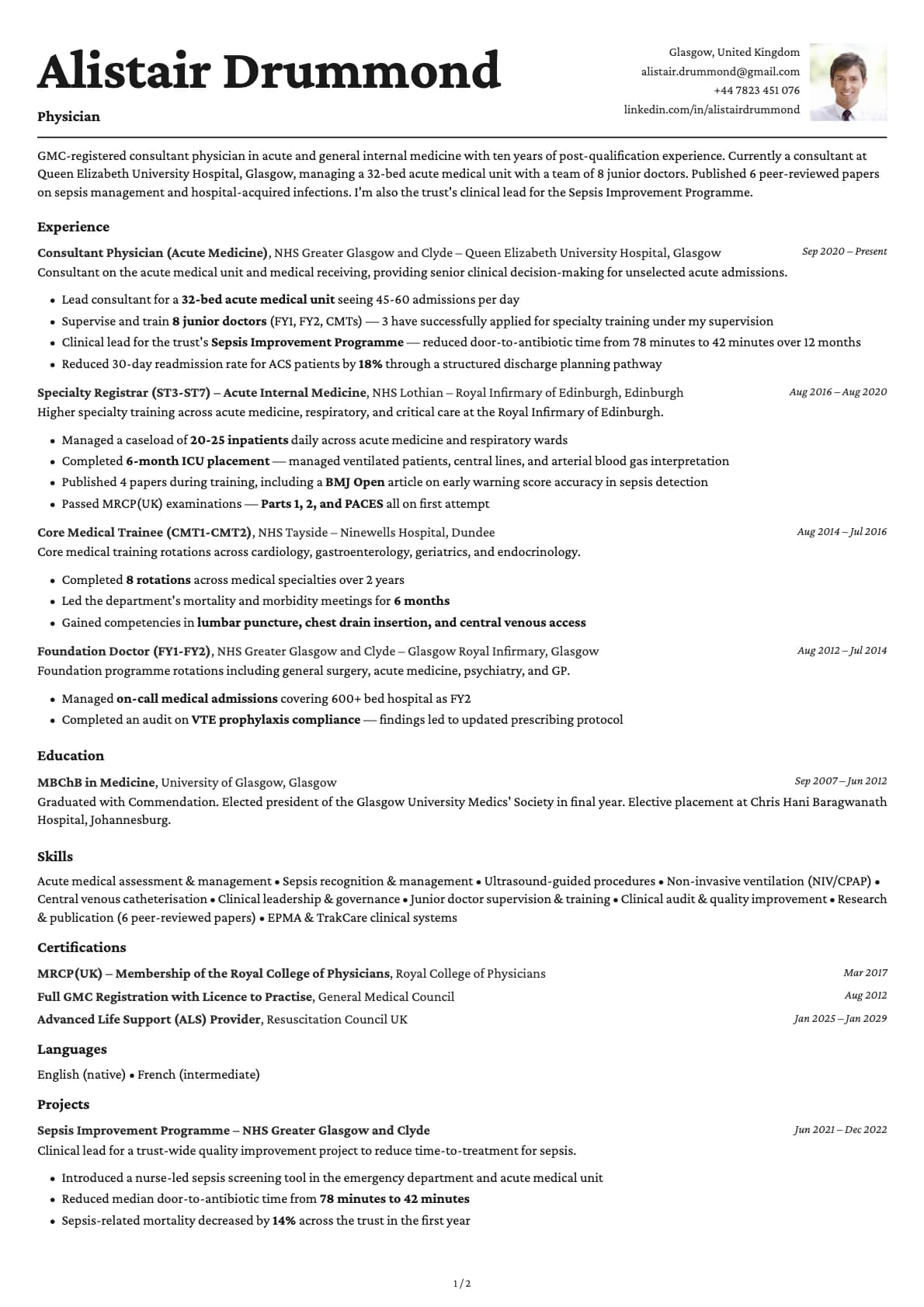
A physician resume example from a consultant in acute medicine with quality improvement projects, publications, and clinical leadership.
Dentist
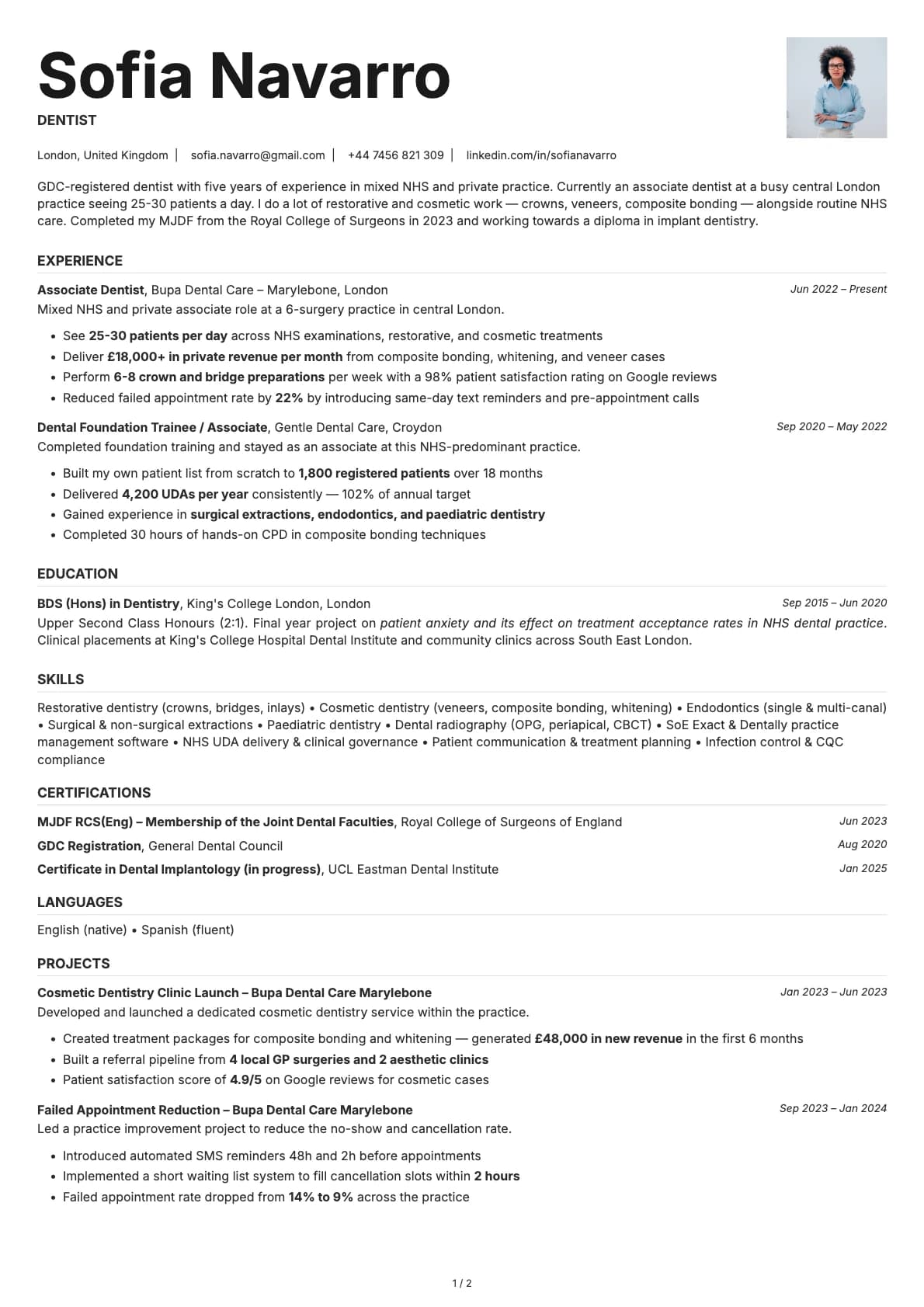
A dentist resume example with mixed NHS and private practice experience in London.
Occupational Therapist
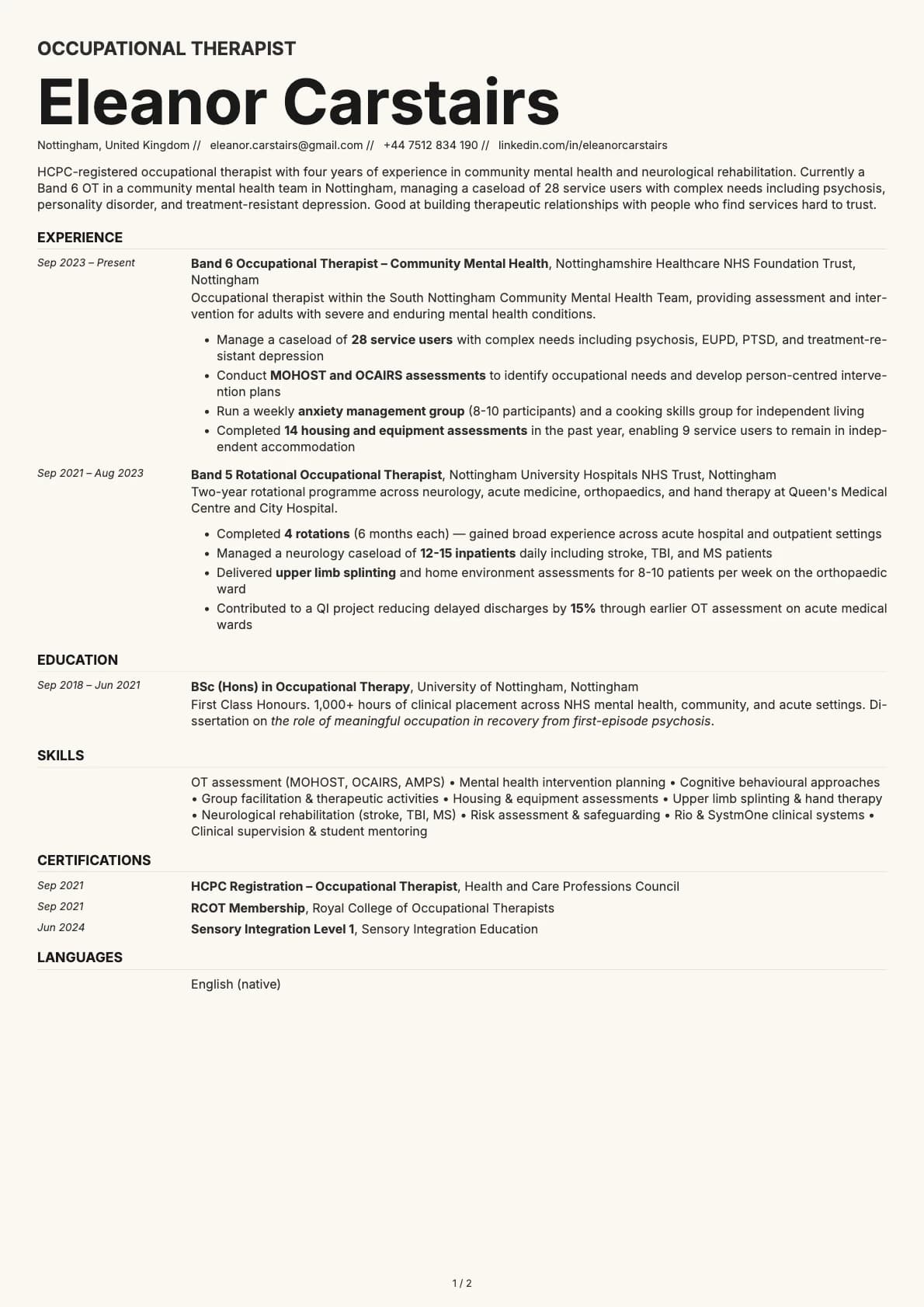
An occupational therapist resume example with caseload details, OT assessment tools, and QI project outcomes.
Speech & Language Therapist
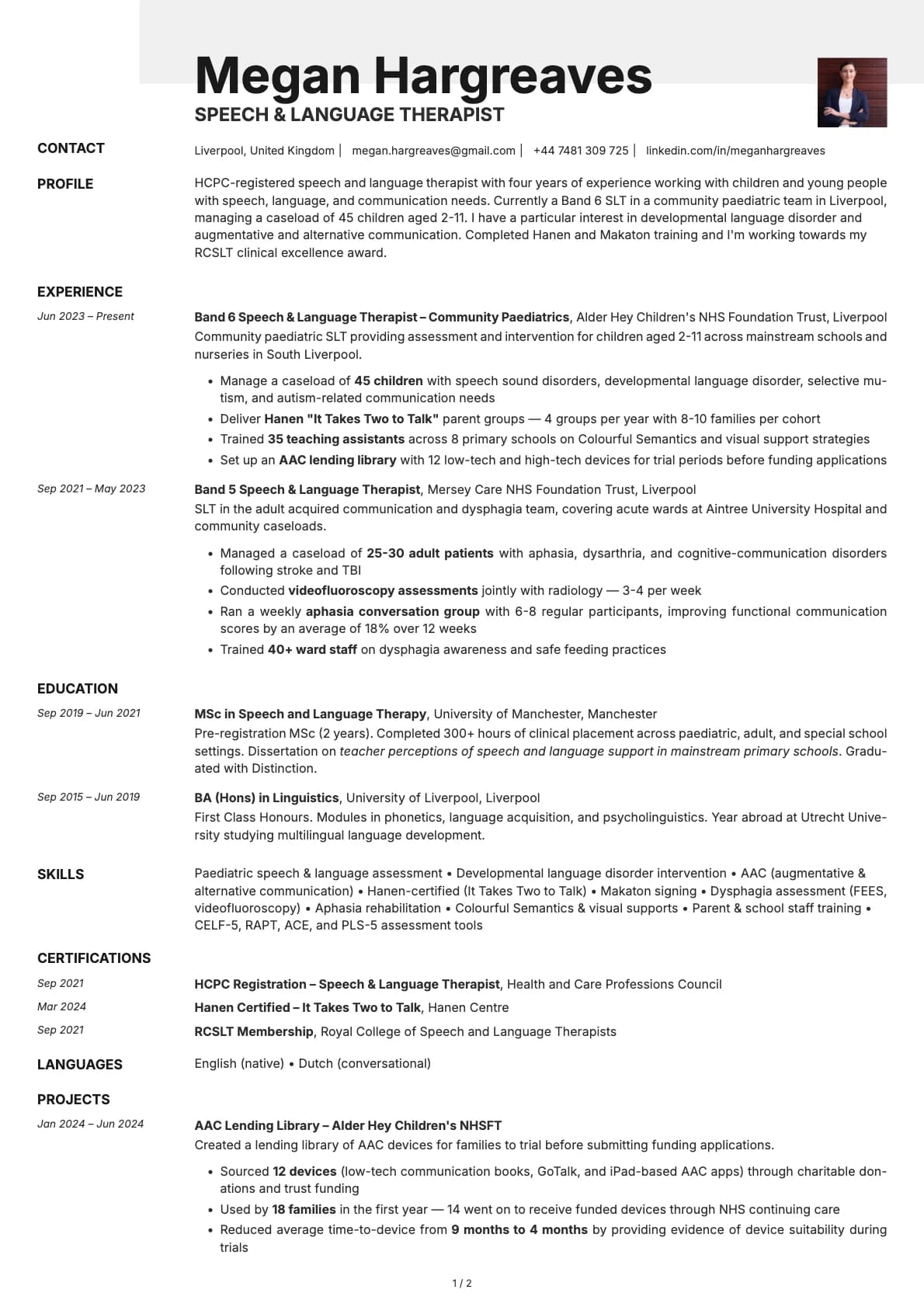
A speech and language therapist resume example with paediatric and adult caseload experience across NHS trusts.
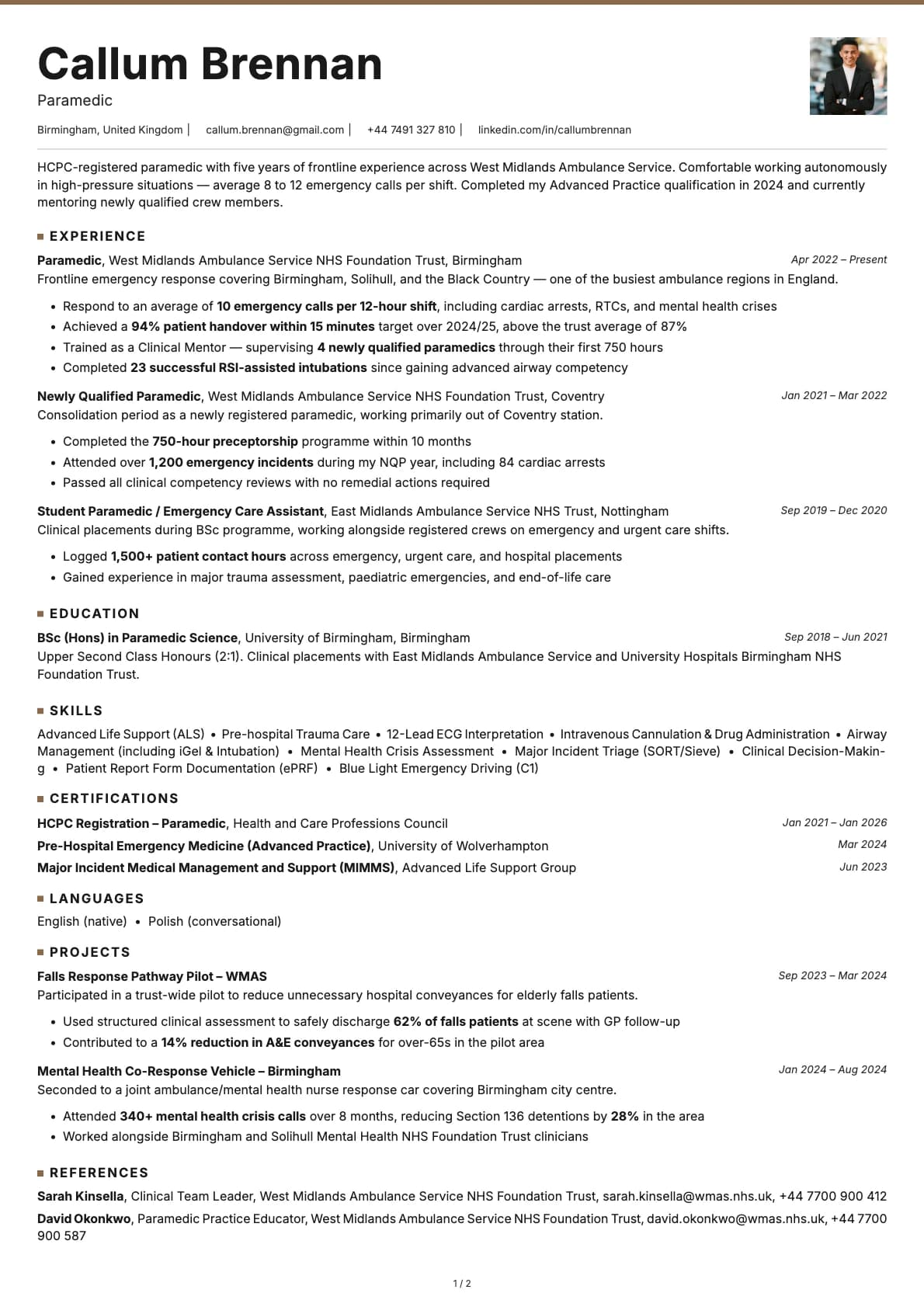
Paramedic
A paramedic resume example with call volumes, clinical competencies, and mentoring experience.
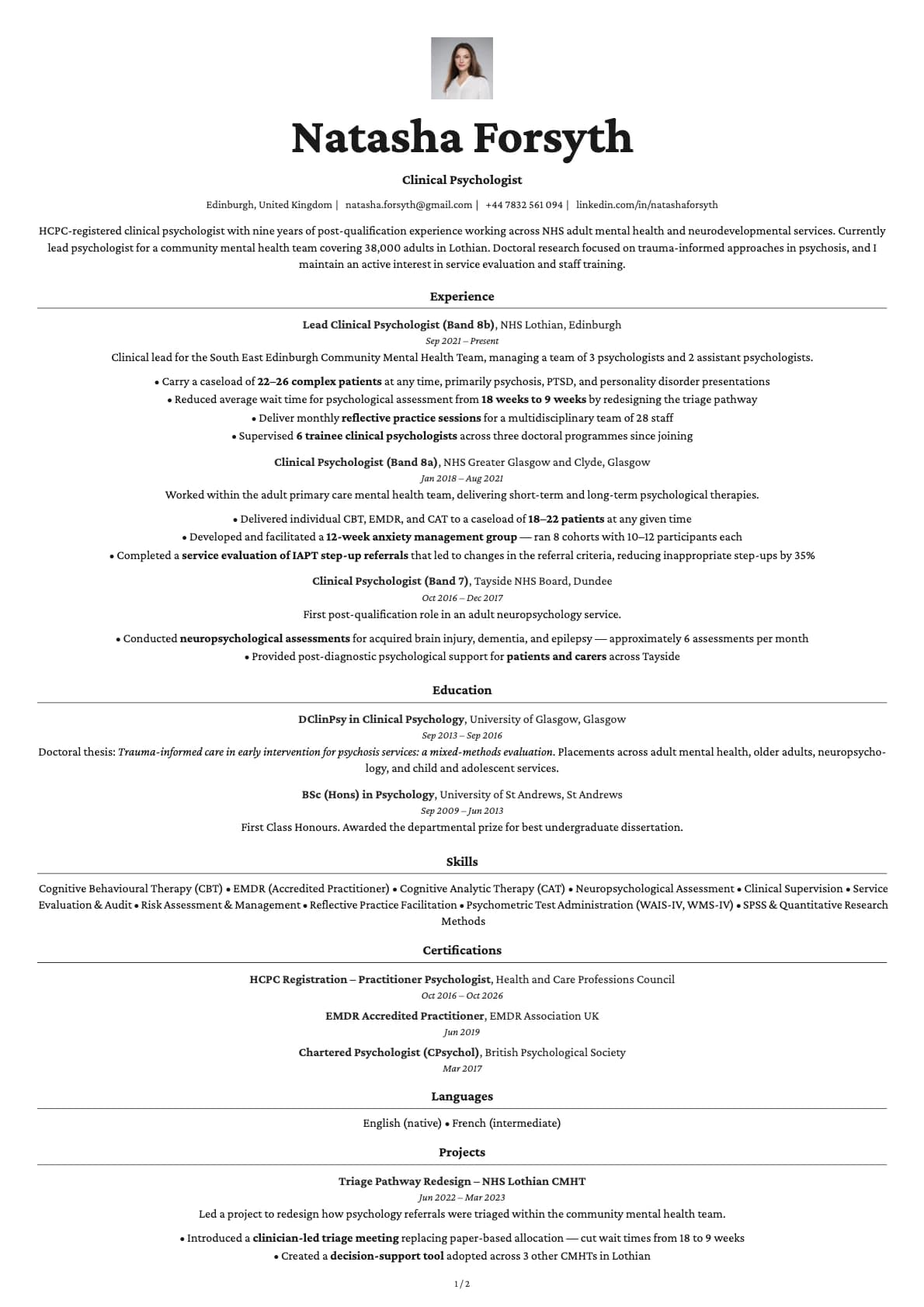
Clinical Psychologist
A clinical psychologist resume example with 9 years of NHS experience across community mental health and neuropsychology.
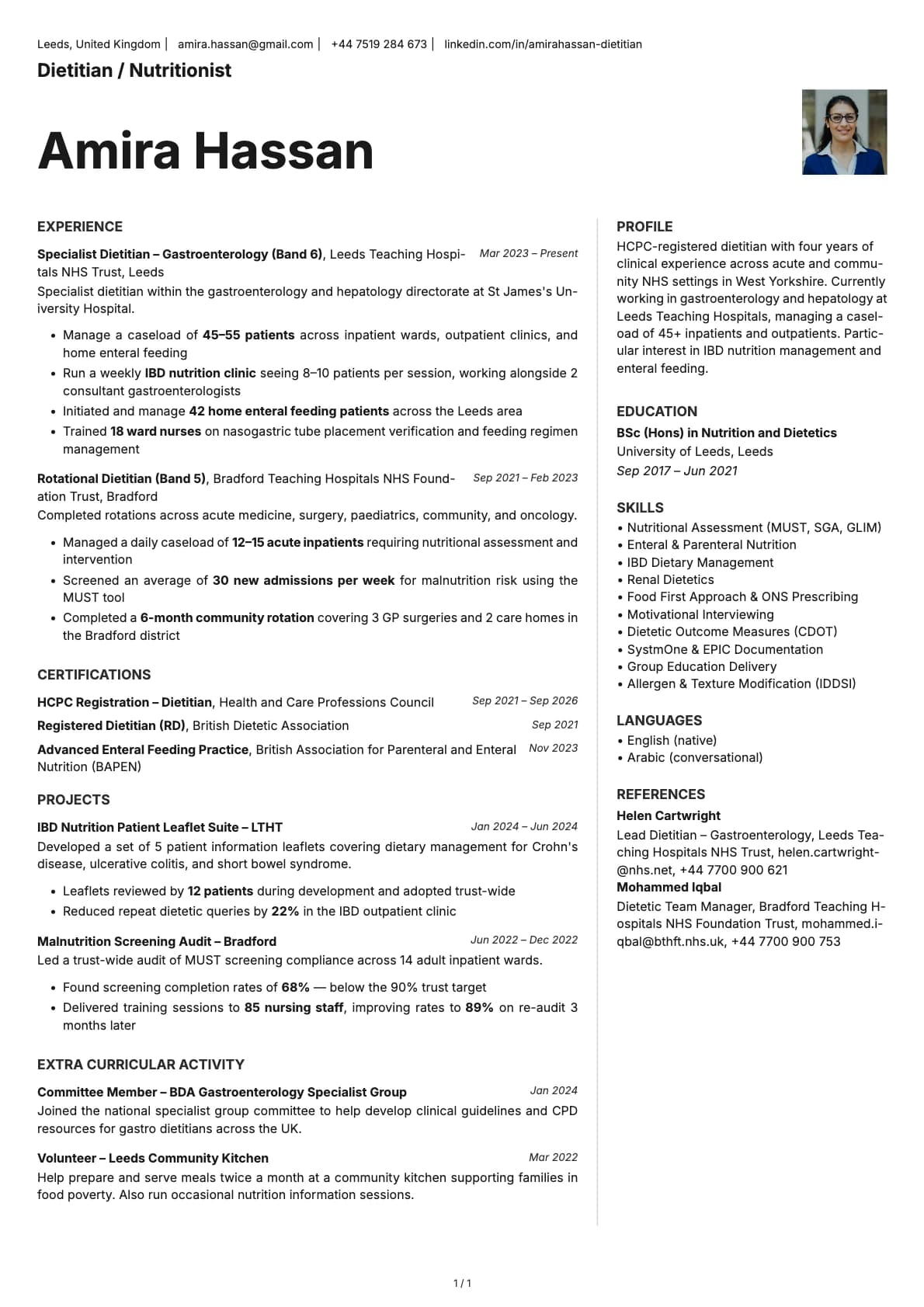
Dietitian / Nutritionist
A dietitian resume example with NHS clinical experience in gastroenterology and community nutrition.
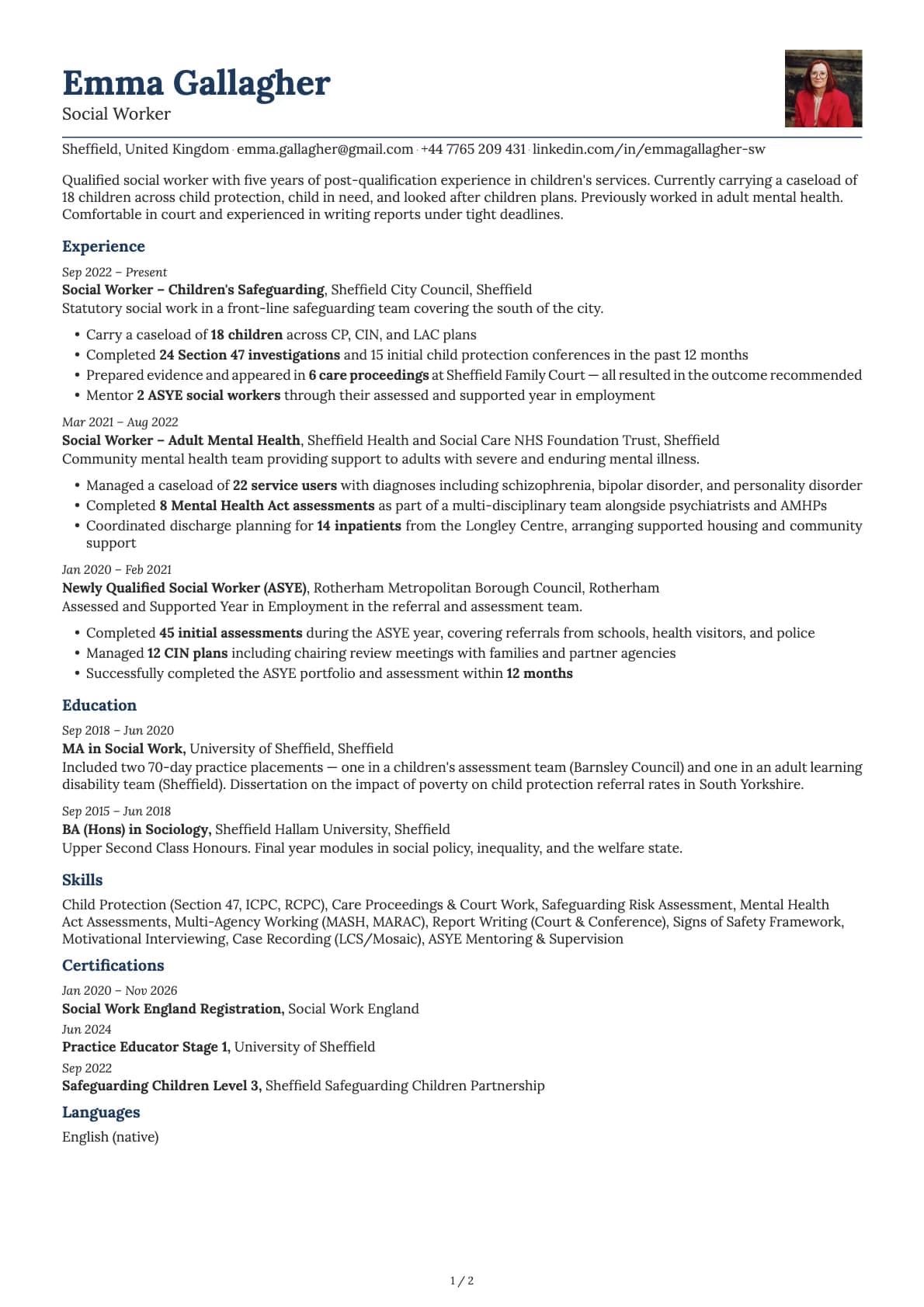
Social Worker
A social worker resume example with caseload numbers, court work, and multi-agency experience.
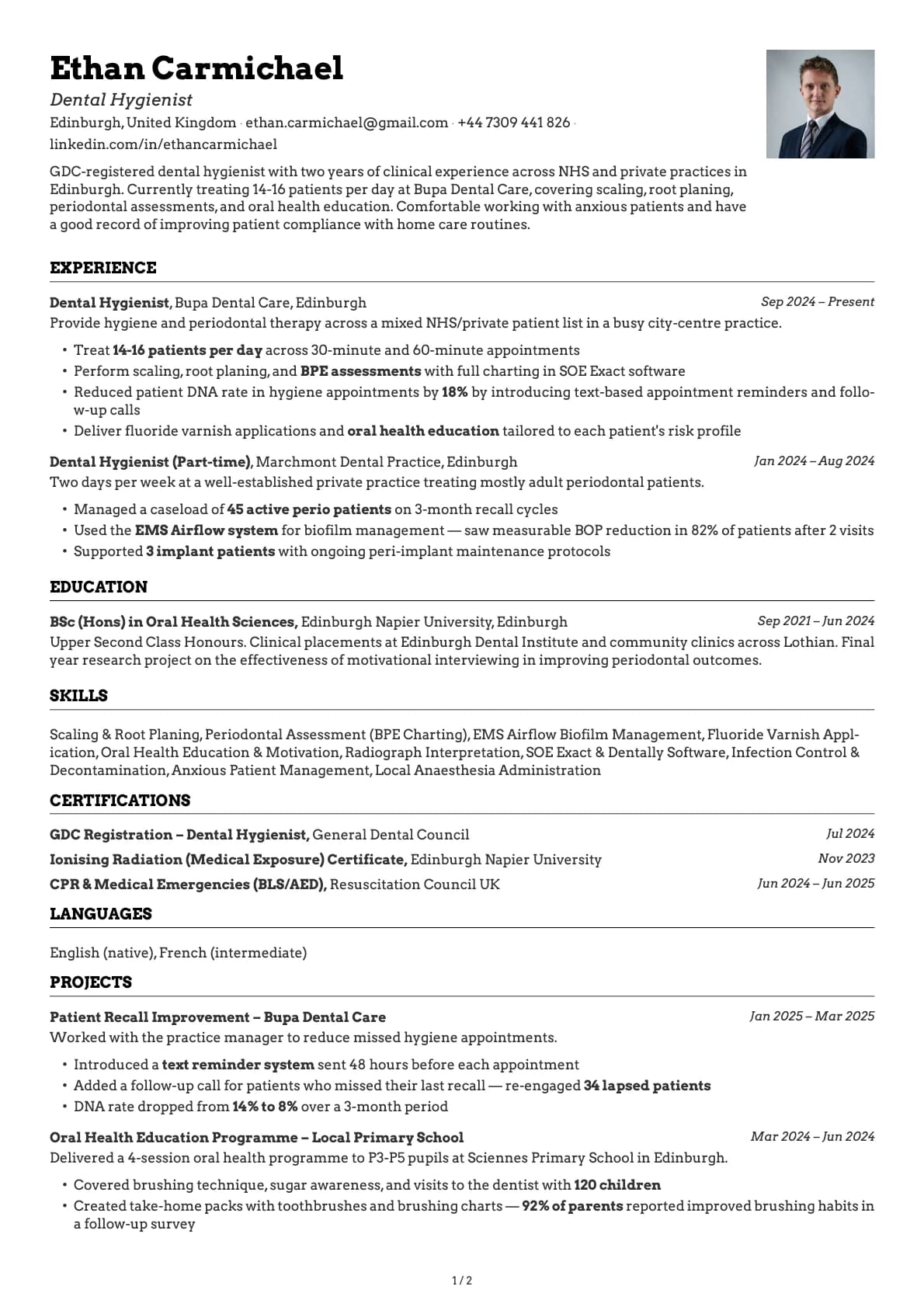
Dental Hygienist
A dental hygienist resume example with NHS and private practice experience in Edinburgh.
Related articles

AI Is Screening Your Resume Before Any Human Sees It
AI screens most resumes before a human ever reads them. 97.4% of Fortune 500 companies run an ATS. This is what that means for you and what you can do about it.

The Best Resume Builders in 2026, Compared Honestly
Resume.io, Zety, Enhancv, Kickresume, Teal, and Laddro compared honestly: real pricing, free tiers, mobile apps, and where each tool wins. All prices checked in September 2026.

Burnout Recovery: A Real Timeline, Not 'Take a Bubble Bath'
55% of the U.S. workforce is burned out. Recovery takes 3 to 12 months. Here's what that actually looks like, stage by stage.