Software Engineer Resume Example
A software engineer resume example with practical tips on how to write your tech stack, quantify your impact, and get past ATS screening.

Laddro Team
Free to use. No account needed to start.
Free to use. No account needed to start.
Overview
Most software engineer resumes look the same. They list React, Node.js, and AWS somewhere near the top, mention "agile methodology" in every job, and have zero numbers. Recruiters see hundreds of these a week and skip them in seconds.
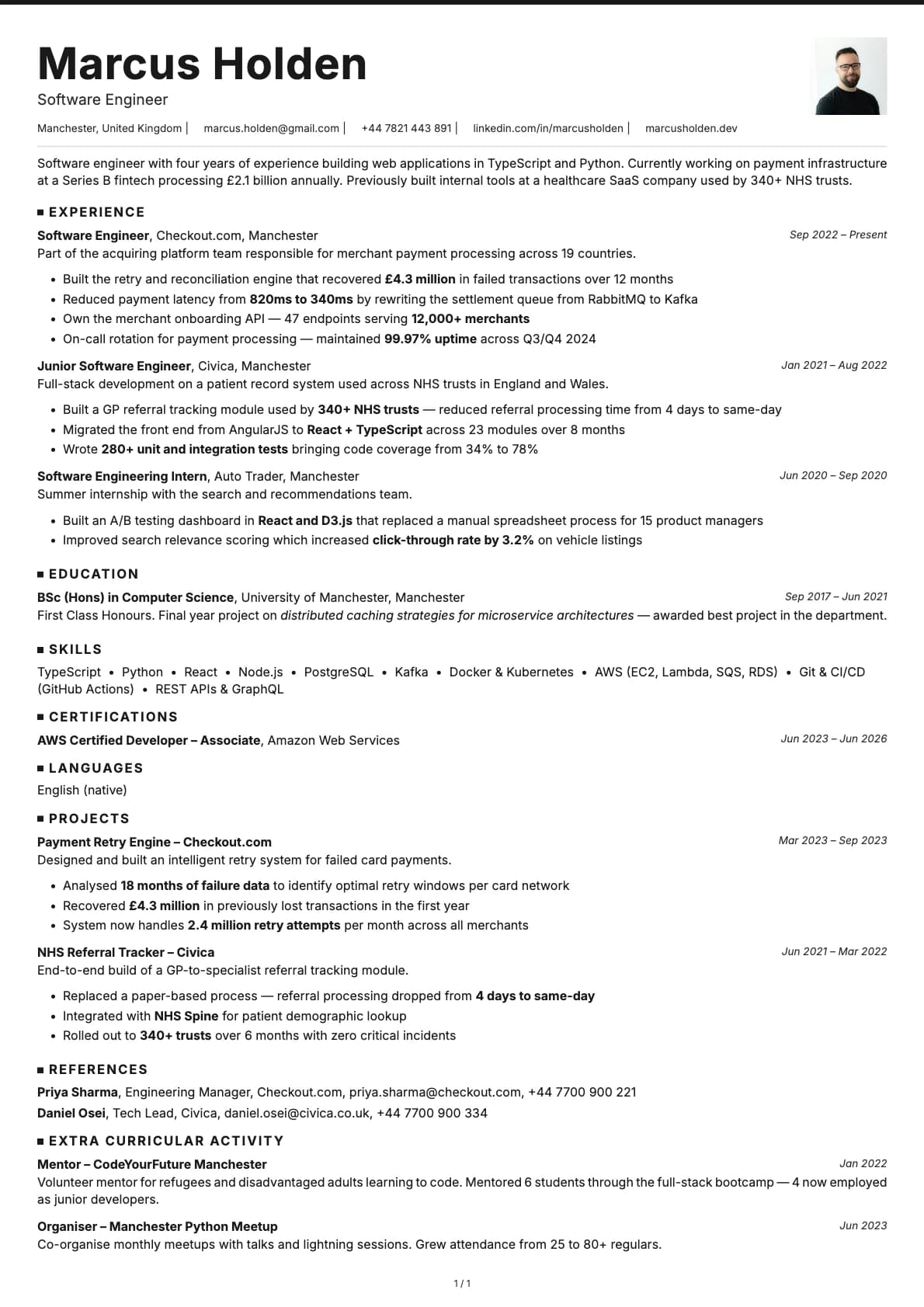
This resume example is different. It belongs to a mid-level engineer with 4 years of experience who currently works on payment infrastructure at Checkout.com. Before that, they built patient record systems for NHS trusts at Civica. Two very different domains, but the resume ties them together with a clear thread: building systems that handle real money or real patient data at scale.
We are going to break down what this resume does well and, more importantly, what you can steal for your own resume today.
The summary that actually works
Here is the summary from this resume:
Software engineer with four years of experience building web applications in TypeScript and Python. Currently working on payment infrastructure at a Series B fintech processing £2.1 billion annually. Previously built internal tools at a healthcare SaaS company used by 340+ NHS trusts.
Notice what is NOT in this summary:
- No "keen developer" or "impact-focused professional"
- No list of 15 technologies
- No objective statement about what kind of role they want
Instead, it answers three questions a recruiter actually cares about: How long have you been coding? What are you working on now? What scale have you operated at?
Try this for yours: Write two sentences. The first one says what you do and how long you have done it. The second one names the most impressive thing about your current or most recent role. Delete everything else.
How to write your experience section (with examples)
This is where most engineers mess up. They write bullets that describe what they were supposed to do instead of what they actually accomplished.
Here is a bad bullet point:
"Developed backend services for the payment processing platform"
Here is the same work written properly:
"Built the retry and reconciliation engine that recovered £4.3 million in failed transactions over 12 months"
The second one tells the same story but now the recruiter knows: it was a retry engine (specific), it dealt with failed transactions (problem solved), and it recovered £4.3 million (measurable impact).
The formula is simple: What you built + What technology you used + What happened because of it.
Not every bullet needs a pound sign or a percentage. Sometimes the impact is operational:
"Own the merchant onboarding API, 47 endpoints serving 12,000+ merchants"
That bullet has no revenue number, but it tells the recruiter this person is trusted with a critical system and a lot of users depend on their work.
What about your first or second job?
If you are earlier in your career, look at how this resume handles the junior role at Civica:
"Built a GP referral tracking module used by 340+ NHS trusts. Reduced referral processing time from 4 days to same-day."
And the internship at Auto Trader:
"Built an A/B testing dashboard in React and D3.js that replaced a manual spreadsheet process for 15 product managers"
Neither of these are groundbreaking engineering feats. But they show someone who understands that software exists to solve a problem for real people. The referral tracker sped up a process. The dashboard replaced spreadsheets.
If you are writing about your first job, focus on what changed because of your work. Did a manual process become automated? Did a slow page get faster? Did a team stop using a spreadsheet? That is your bullet point.
Skills section: less is more
This resume lists 10 skills. Not 25, not 40. Ten.
If you list every technology you have ever opened a tutorial for, the recruiter does not know which ones you are actually good at. A focused list says "these are the tools I use every day and I can talk about them in depth."
One thing this resume could do better: grouping skills by category. If you have room, try organizing them:
- Languages: TypeScript, Python
- Backend: Node.js, PostgreSQL, Kafka
- Cloud: AWS (EC2, Lambda, SQS, RDS)
- Tools: Docker, Kubernetes, GitHub Actions
This makes it easier for a recruiter to scan and for an ATS to match keywords.
The projects section nobody talks about
Projects on a software engineer resume serve a different purpose depending on your experience level.
If you are a new grad or have less than 2 years of experience, projects are essential. They show you can build things outside of a classroom. Include a link to the GitHub repo or a live demo.
If you are mid-level or senior (like in this example), projects reinforce your experience section. The "Payment Retry Engine" project here is actually the same work mentioned in the job entry, but expanded with more detail about the analysis and scale. This is smart because it lets you go deeper without making your experience bullets too long.
What this resume is missing (and that is fine)
No cover letter mention. No references section (though the JSON data includes them, you could leave them off the resume itself and provide on request). No hobbies.
For most software engineering roles, these sections add nothing. Spend that space on another project or more detail in your experience instead.
One last thing
Notice the template choice. This resume uses Graphite, a single-column, ATS-friendly layout with minimal design. No sidebar, no icons, no color blocks. Just clean text with a thin accent line at the top.
For engineering roles where your resume goes through automated screening first, this is the safest choice. You can always use a more visual template for roles where you are sending directly to a hiring manager.
Build your own version
Open this layout in the builder and swap in your own details. It takes a few minutes.
Free to use. No account needed to start.
Was this resume example helpful?
Rate this example to help us create better content for you.
4.9 average from 218 ratingsRelated resume examples
Frontend Developer
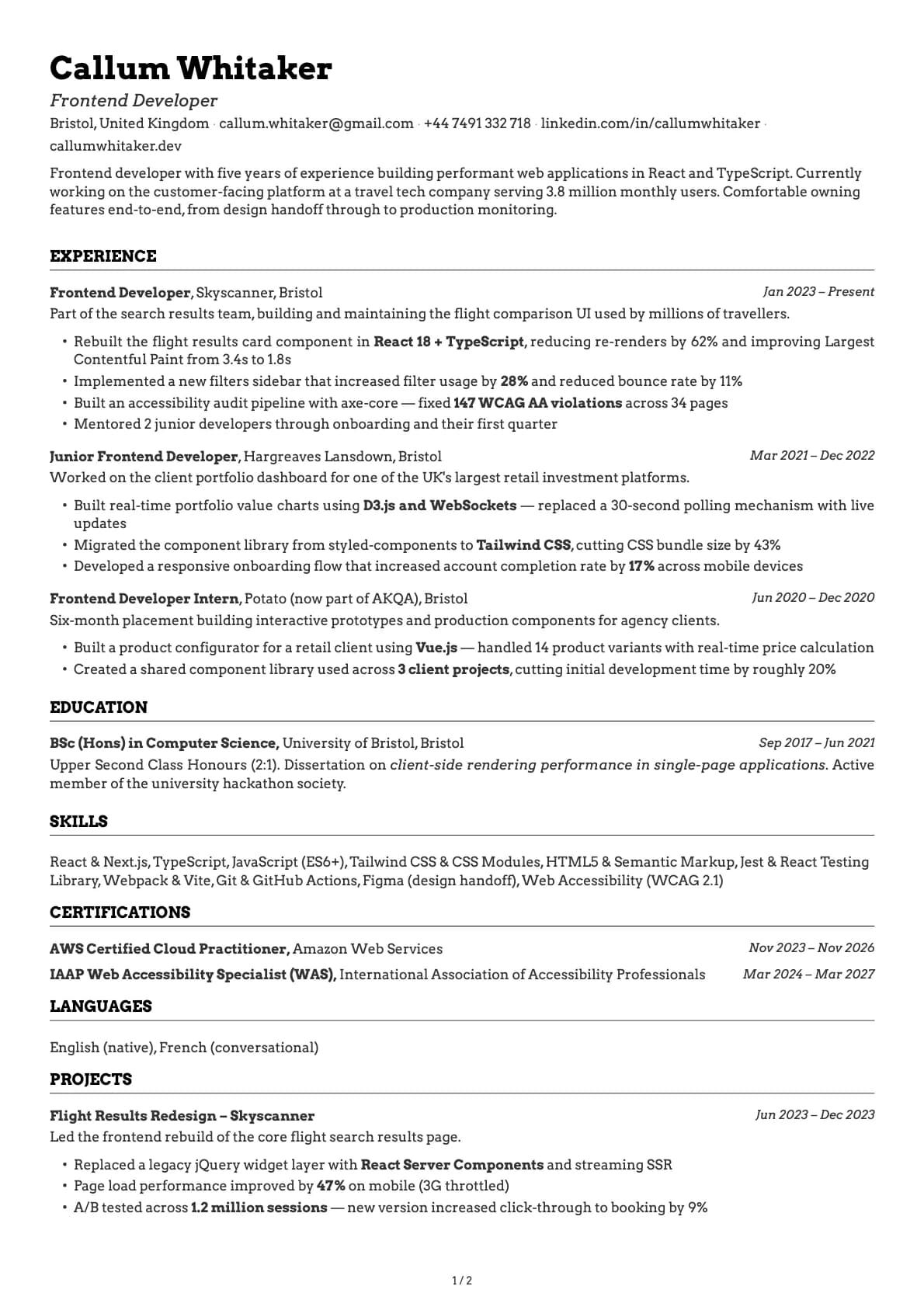
A frontend developer resume example with React and TypeScript experience at Skyscanner and Hargreaves Lansdown.
Backend Developer
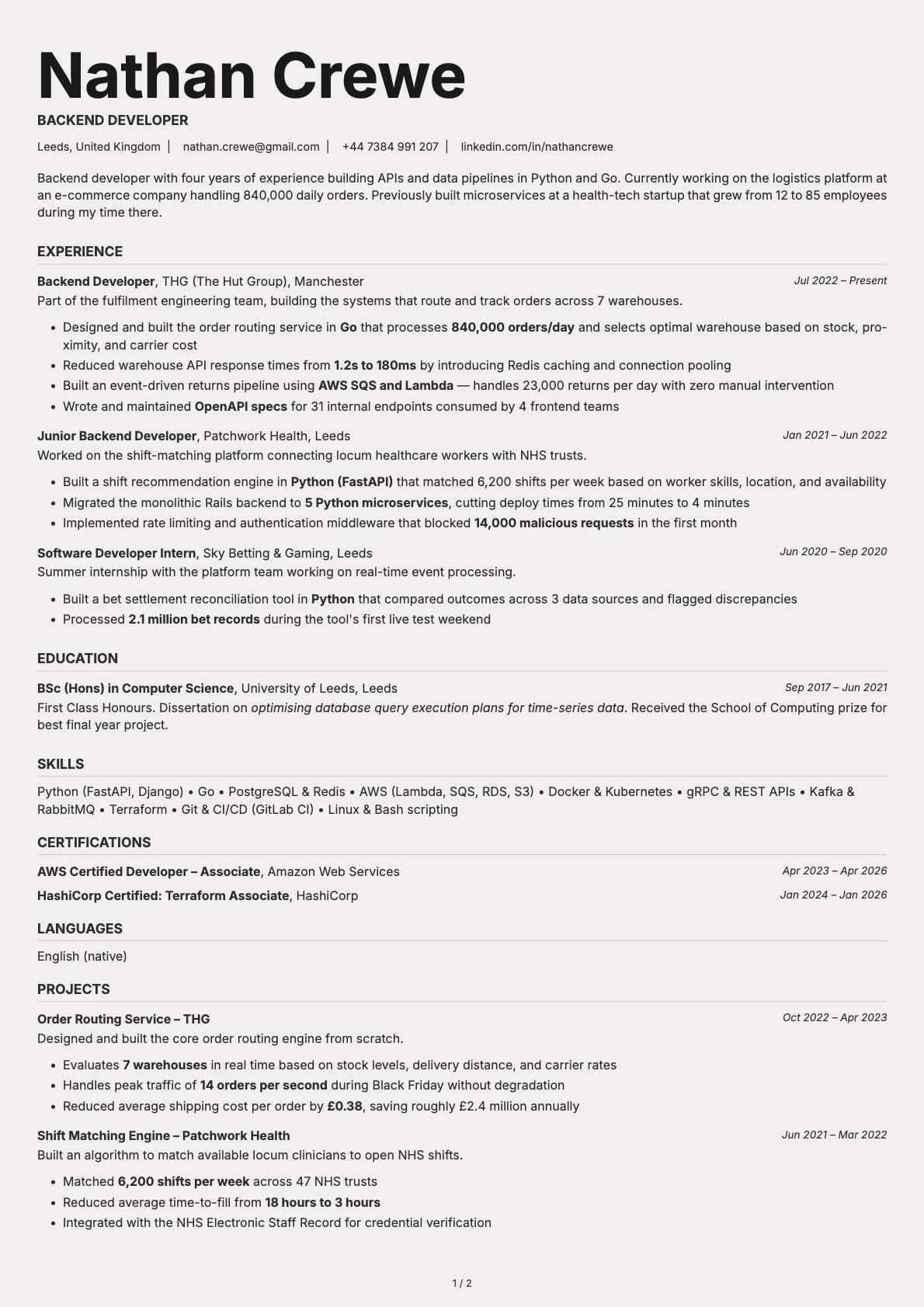
A backend developer resume example with Go and Python experience, system throughput numbers, and infrastructure projects across e-commerce and health-tech.
Data Analyst
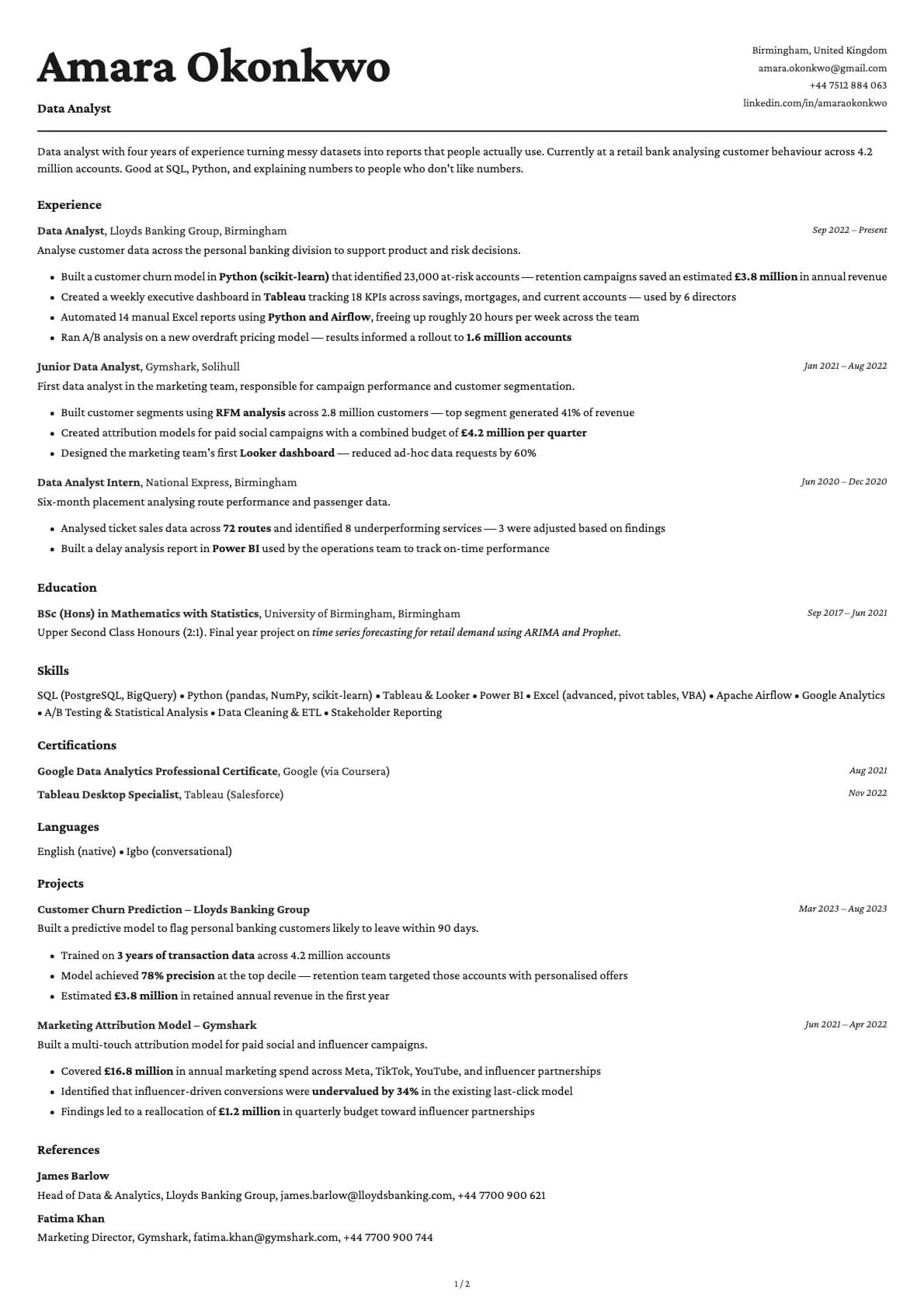
A data analyst resume example with experience at Lloyds Banking Group and Gymshark.
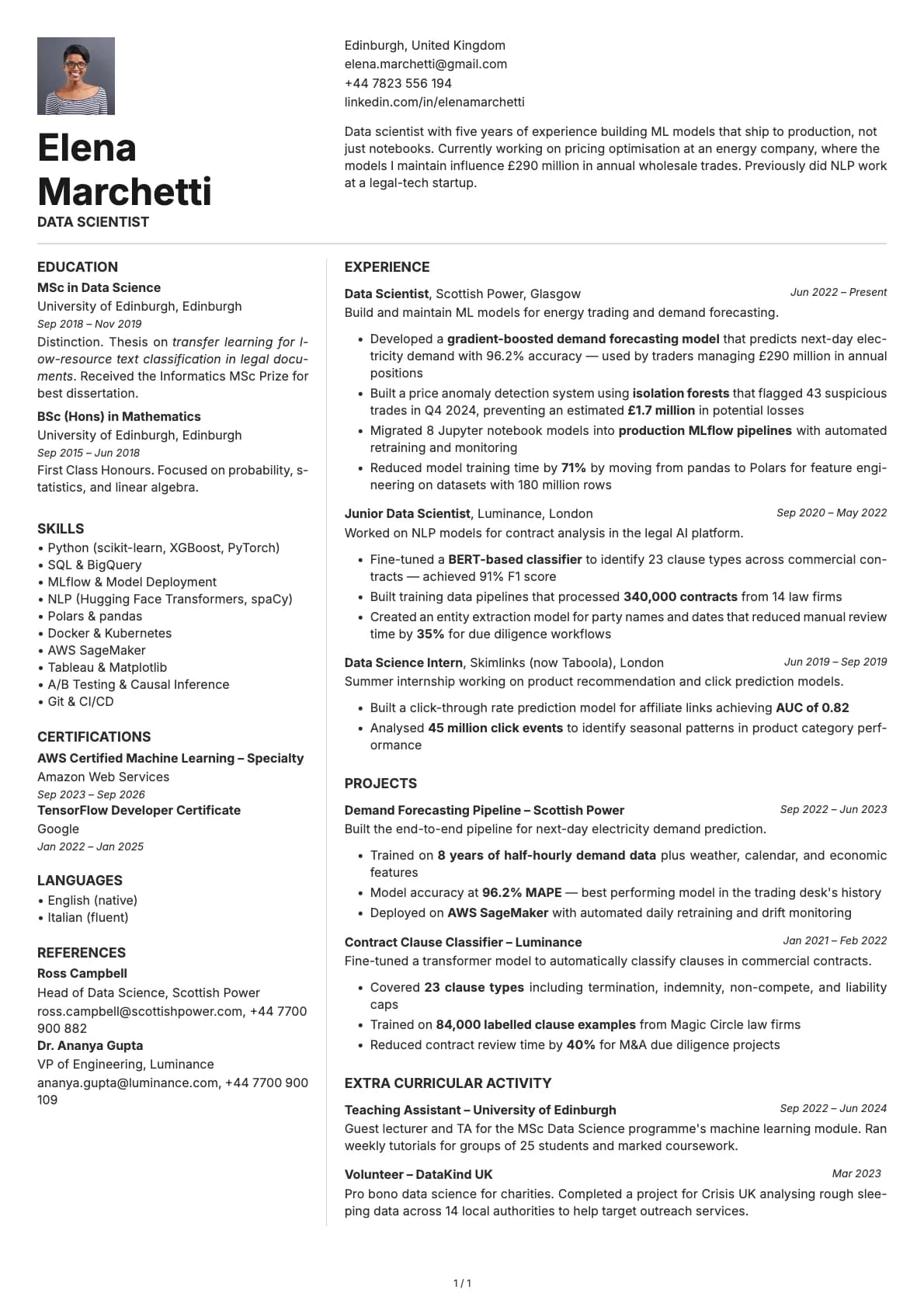
Data Scientist
A data scientist resume example with ML production experience at Scottish Power and NLP work at Luminance.
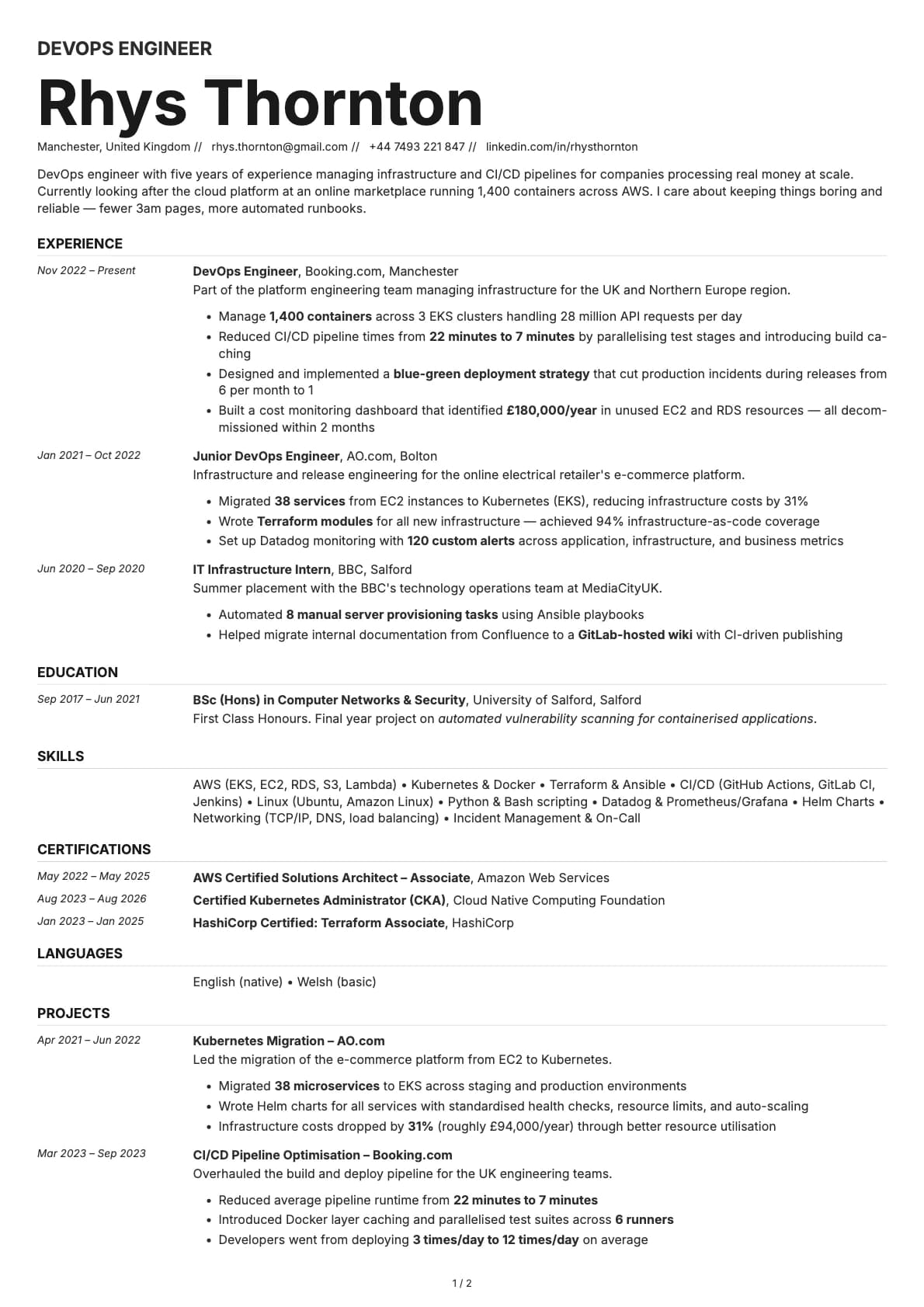
DevOps Engineer
A DevOps engineer resume example with infrastructure experience at Booking.com and AO.com.
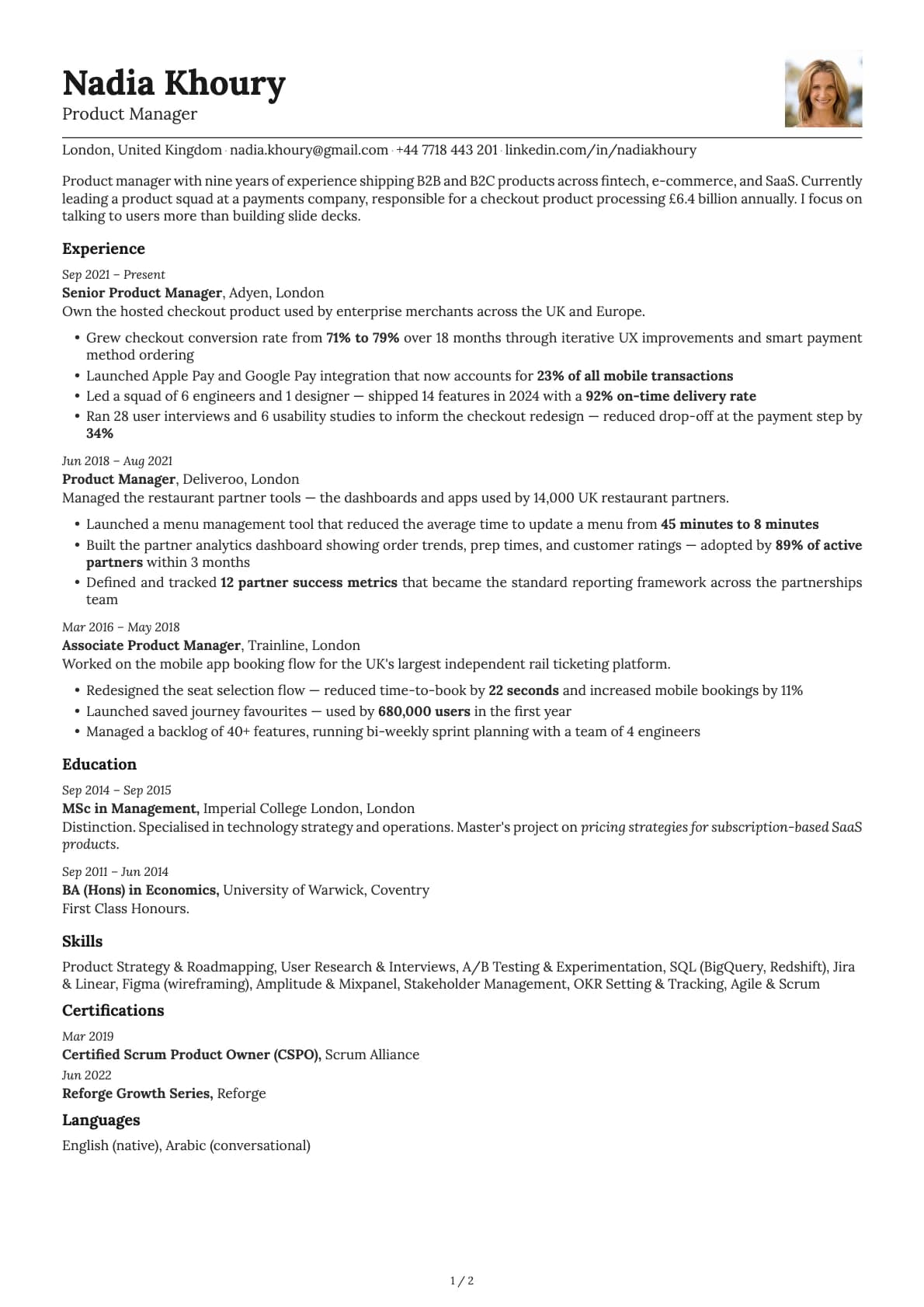
Product Manager
A product manager resume example showing how to present user research, conversion metrics, and feature launches with real business outcomes.
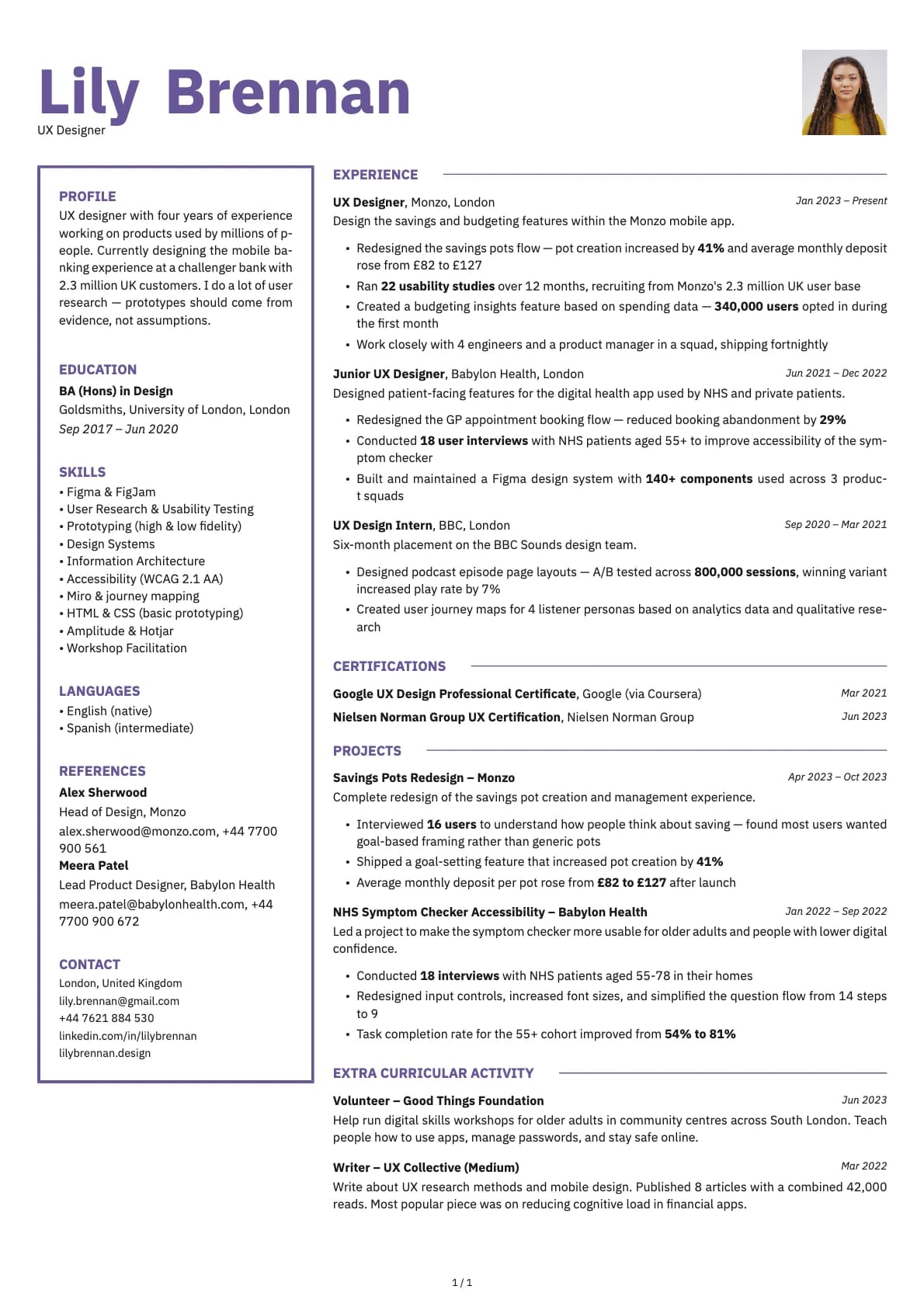
UX Designer
A UX designer resume example with 4 years of product design experience at Monzo and Babylon Health.
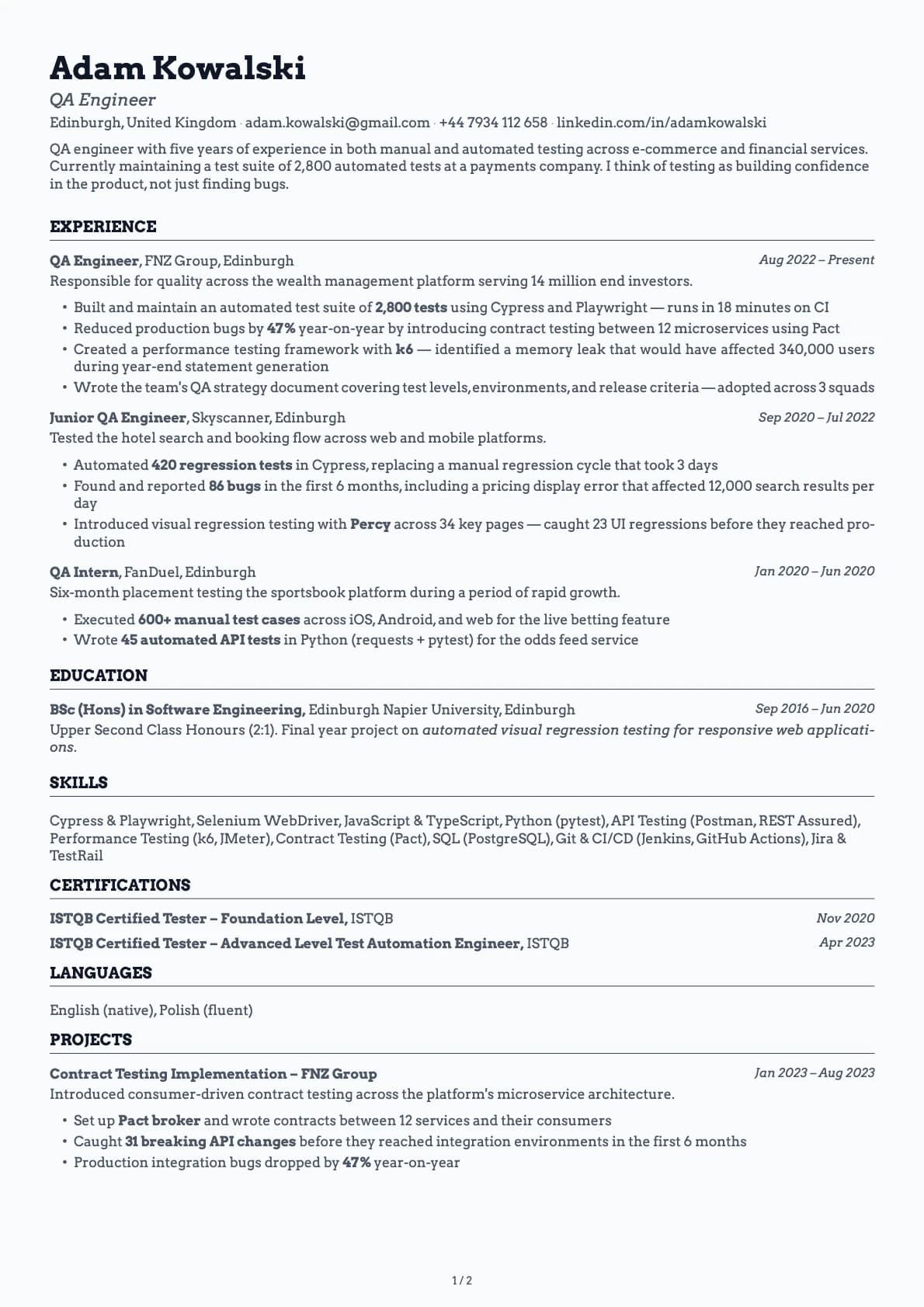
QA Engineer
A QA engineer resume example with automated test suite numbers, production bug reduction, and contract testing implementation details.
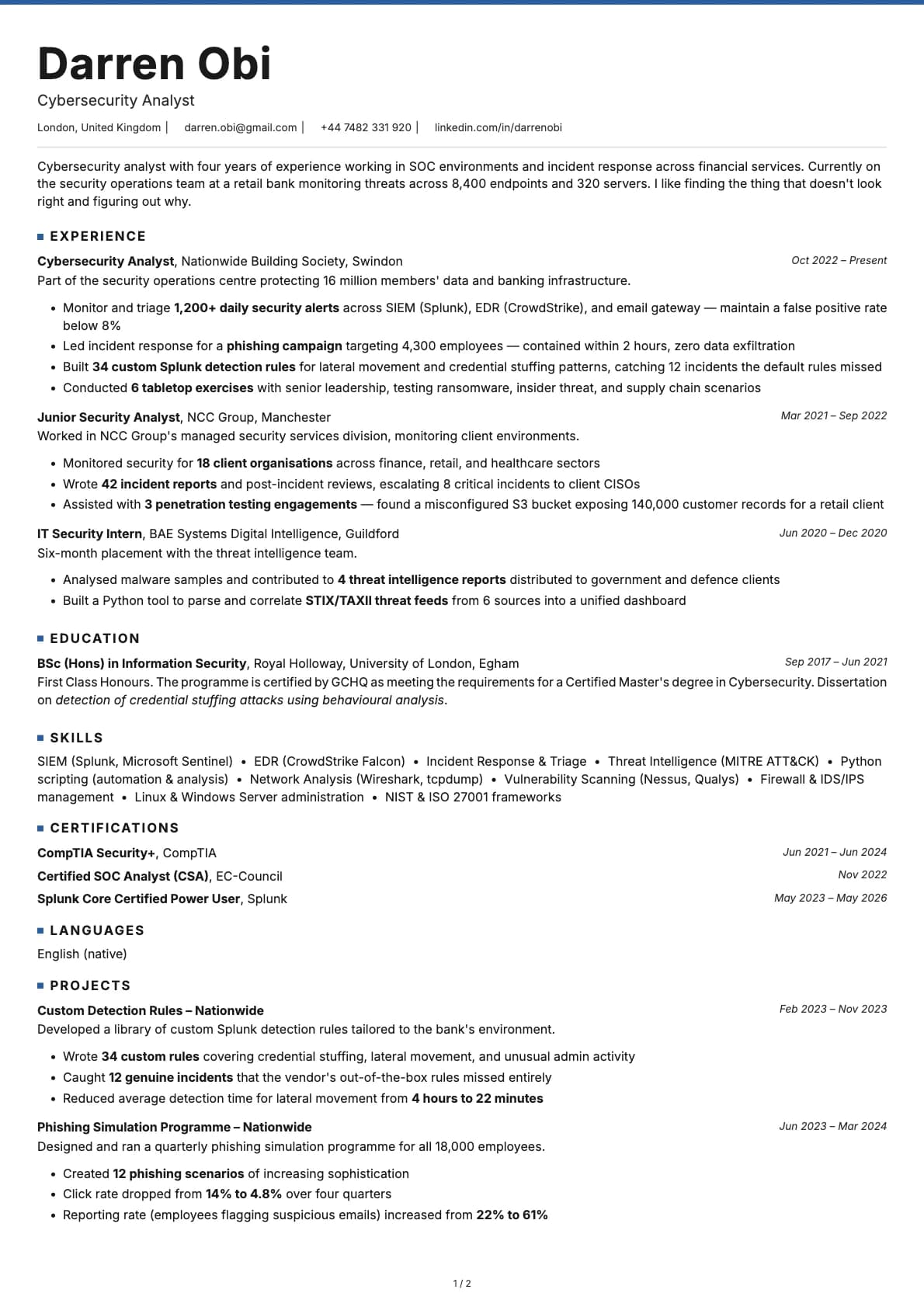
Cybersecurity Analyst
A cybersecurity analyst resume example with SOC experience at Nationwide and NCC Group.
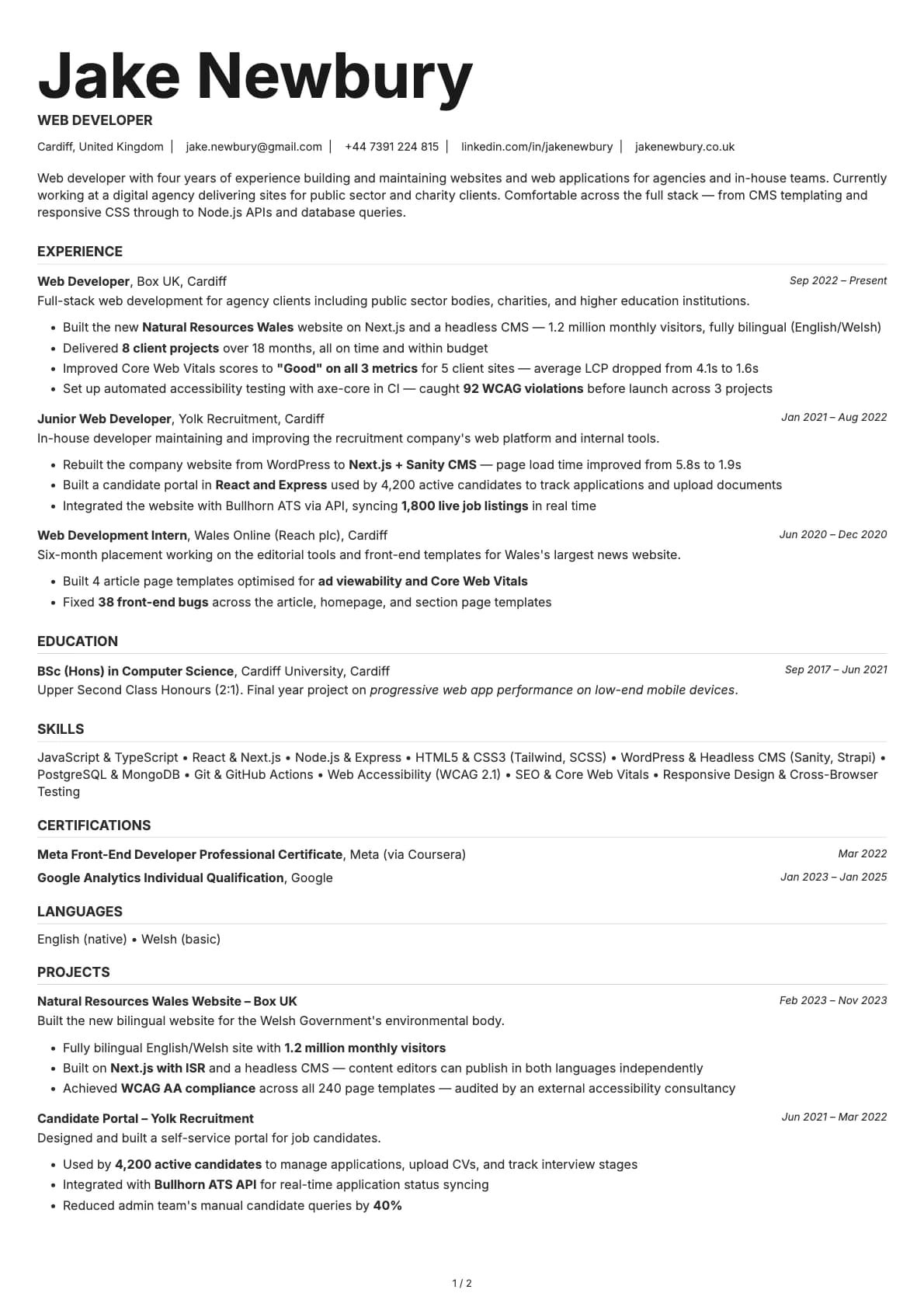
Web Developer
A web developer resume example with agency and in-house experience building Next.js sites, improving Core Web Vitals, and delivering accessible public.
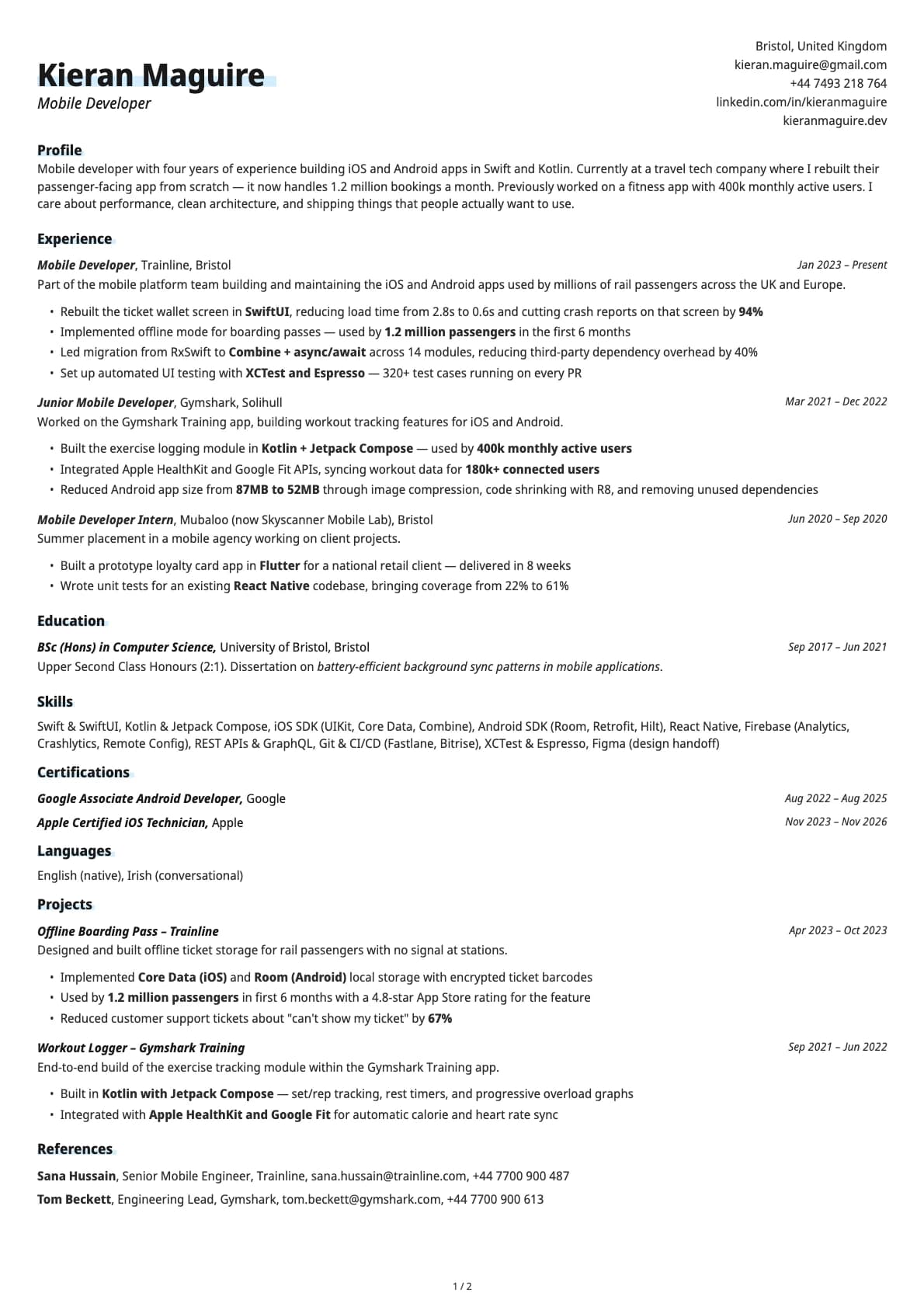
Mobile Developer
A mobile developer resume example with iOS and Android experience, performance metrics, and real app user numbers.
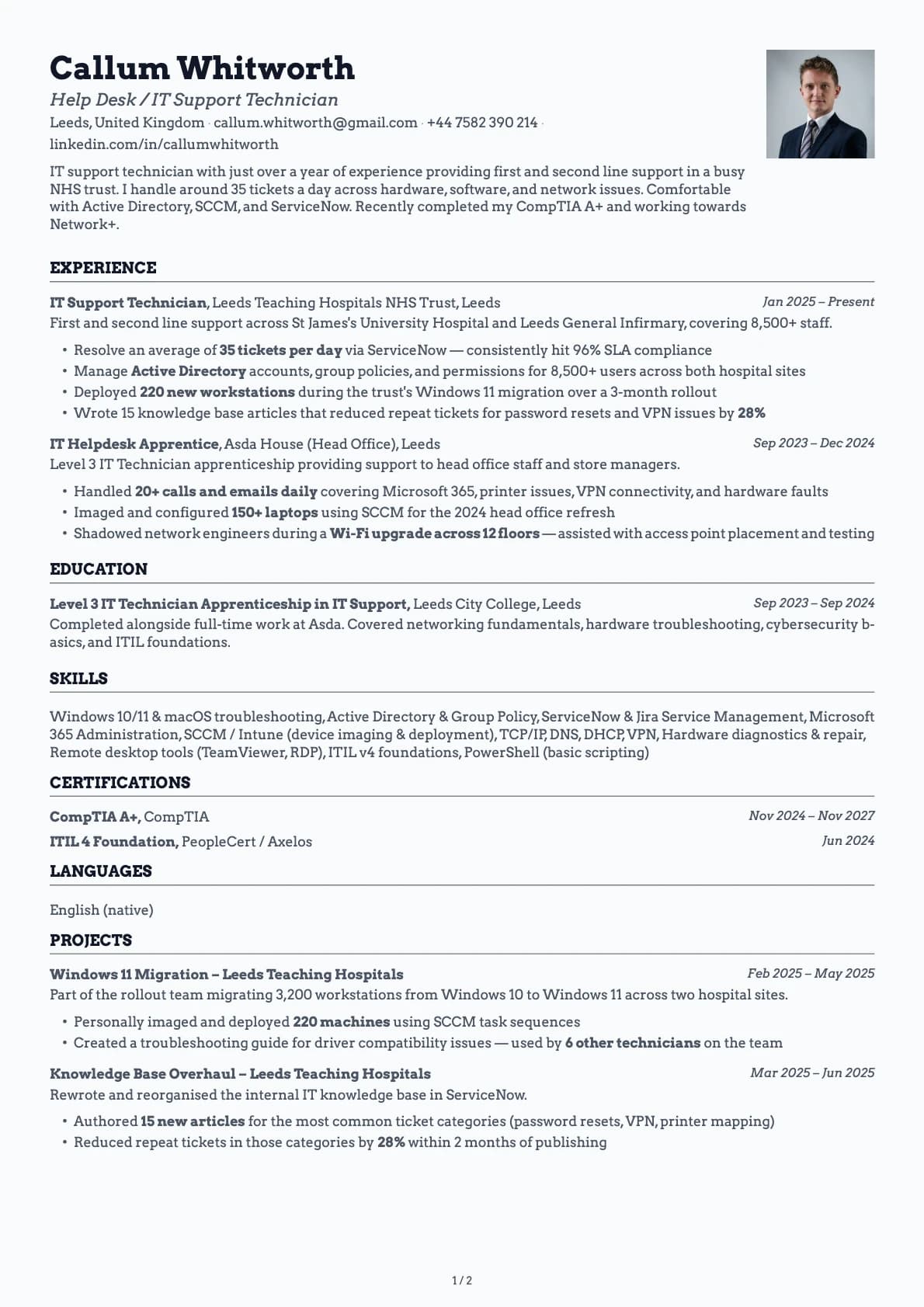
Help Desk / IT Support Technician
A help desk technician resume example with NHS IT support experience.
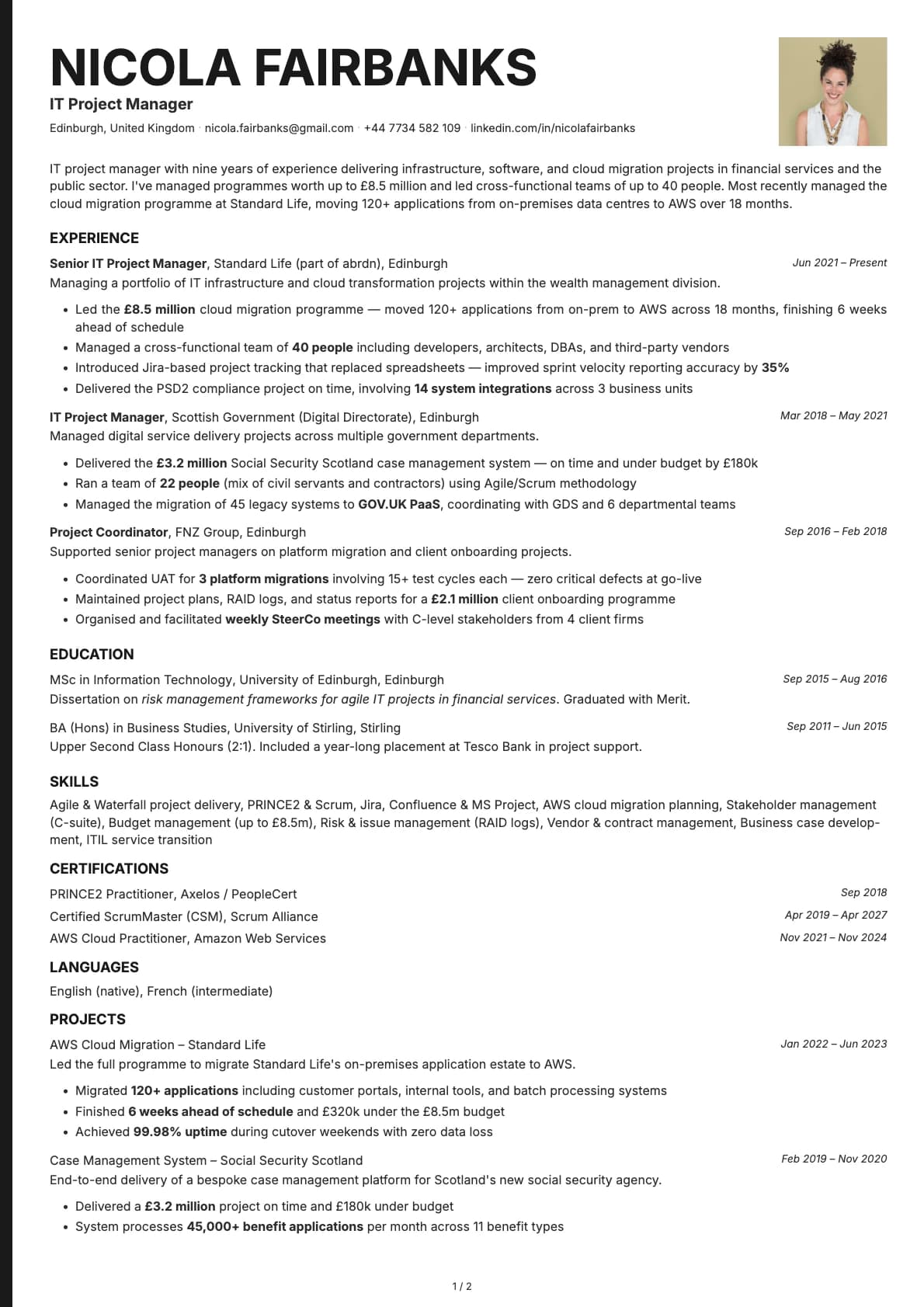
IT Project Manager
An IT project manager resume example with cloud migration, programme budgets up to £8.5 million, and PRINCE2/Scrum certifications.
Related articles

AI Is Screening Your Resume Before Any Human Sees It
AI screens most resumes before a human ever reads them. 97.4% of Fortune 500 companies run an ATS. This is what that means for you and what you can do about it.

ATS Resume Checker: How to Format a CV That Gets Past the Filters
Run the free copy and paste test to see what an ATS actually reads on your CV, then fix the tables, columns and headings that quietly get you filtered out.

The Best Resume Builders in 2026, Compared Honestly
Resume.io, Zety, Enhancv, Kickresume, Teal, and Laddro compared honestly: real pricing, free tiers, mobile apps, and where each tool wins. All prices checked in September 2026.