Dental Hygienist Resume Example
A dental hygienist resume example with NHS and private practice experience in Edinburgh.

Laddro Team
Free to use. No account needed to start.
Free to use. No account needed to start.
Overview
Dental hygienist resumes tend to be short on specifics. "Performed scaling and polishing." "Provided oral health education." These statements describe what every dental hygienist does in every appointment. A practice owner reading your resume already knows the basics. What they want to understand is: how many patients do you see per day, what systems do you use, and do patients come back?
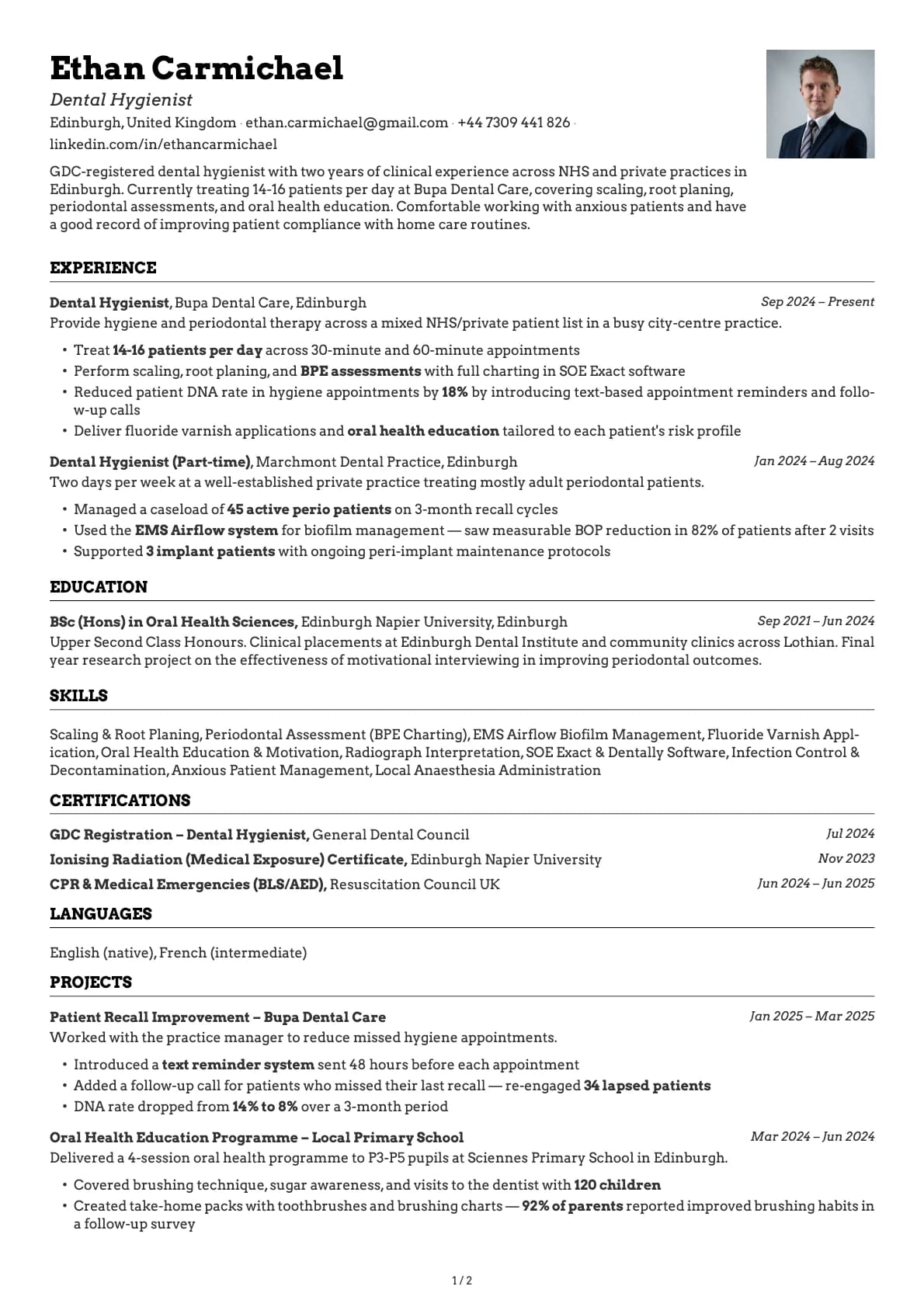
This resume belongs to a GDC-registered dental hygienist with two years of clinical experience across NHS and private practice in Edinburgh. He currently treats 14-16 patients per day at Bupa Dental Care and has reduced his appointment DNA rate by 18%. Even with limited experience, the resume is specific enough to give any practice owner a clear picture of what this person brings.
Summary: registration, volume, and setting
A dental hygienist summary needs to cover your registration status, where you work, how many patients you treat, and what kind of work you do.
Here is this resume's summary:
GDC-registered dental hygienist with two years of clinical experience across NHS and private practices in Edinburgh. Currently treating 14-16 patients per day at Bupa Dental Care, covering scaling, root planing, periodontal assessments, and oral health education.
Two sentences. The GDC registration comes first because that is the first thing a practice will check. Then the daily patient count and the types of treatment. Simple and effective.
For yours: Start with "GDC-registered dental hygienist" and then state your experience level, where you work, and your daily patient numbers. If you work in both NHS and private settings, mention both.
Experience: daily numbers tell the story
Practice owners think in appointments. How many patients can you see? How long are your appointments? Do patients actually show up?
Look at these bullets:
"Treat 14-16 patients per day across 30-minute and 60-minute appointments"
"Reduced patient DNA rate in hygiene appointments by 18% by introducing text-based appointment reminders and follow-up calls"
The first one gives the practice owner exactly what they need to calculate your productivity. The second one shows initiative. DNA rates directly affect practice revenue, and this person took steps to fix it.
The private practice role adds another strong detail:
"Managed a caseload of 45 active perio patients on 3-month recall cycles"
"Used the EMS Airflow system for biofilm management, saw measurable BOP reduction in 82% of patients after 2 visits"
Perio patient management is a skill that differentiates you from a hygienist who only does routine scale and polish appointments. The BOP (bleeding on probing) reduction is a clinical outcome that proves the treatment is working. If you track periodontal outcomes, include them.
Skills: clinical skills and software
Your skills section should be split between clinical procedures and practice management software. Look at this list:
- Scaling and Root Planing
- Periodontal Assessment (BPE Charting)
- EMS Airflow Biofilm Management
- SOE Exact and Dentally Software
- Anxious Patient Management
- Local Anaesthesia Administration
The software matters more than you might think. If the practice uses SOE Exact and you already know it, that saves them weeks of training. If you have used Dentally, R4, CS R4+, or any other practice management system, list it.
"Anxious Patient Management" is a skill worth highlighting too. Many practices specifically look for hygienists who are good with nervous patients, especially for periodontal work. If you have training or experience in this area, include it.
Certifications: GDC first, always
For dental hygienists in the UK, your GDC registration is not optional. It goes at the top of your certifications section. After that, list your radiography certificate (IRMER), BLS/AED, and any additional CPD qualifications.
This resume includes:
- GDC Registration
- Ionising Radiation certificate
- CPR and Medical Emergencies (BLS/AED)
The BLS/AED certification has an expiry date listed (2025). If yours is about to expire, renew it before you apply. An expired BLS certificate is a red flag for any dental practice.
If you have completed any advanced courses (Airflow certification, local anaesthesia, tooth whitening), add them. These show the range of treatments you can offer, which directly affects how much revenue you can generate for the practice.
Projects and community work
This resume includes a patient recall improvement project and an oral health education programme at a primary school. Both are unusual for a dental hygienist resume, and that is what makes them stand out.
The recall project shows business awareness:
"DNA rate dropped from 14% to 8% over a 3-month period"
A practice owner reading that immediately sees someone who cares about the business side of dentistry, not just the clinical side.
The school programme shows community engagement and public health interest. If you have done any outreach work, Dental Aid volunteering, or public health education, include it. It rounds out a clinical resume nicely.
Mistakes that dental hygienist resumes make
Not stating your patient volume. "14-16 patients per day" tells the practice owner everything. Without it, they have no idea how productive you are.
Forgetting the software. Practice management software is a real hiring factor. If you know SOE Exact, Dentally, or R4, say so. If you are trained on multiple systems, list all of them.
Vague descriptions of periodontal work. "Performed periodontal treatment" could mean anything. "Managed 45 active perio patients on 3-month recall with measurable BOP reduction in 82% after 2 visits" tells the full story.
Leaving out your CPD. The GDC requires ongoing CPD. If you have completed verifiable CPD hours beyond the minimum, mention it. This resume notes "12 hours of verifiable CPD through BSDHT courses." That shows commitment to staying current.
One last thing
Even as a newly qualified dental hygienist, you have numbers to work with. Patient volumes, appointment types, recall compliance, and clinical outcomes are all measurable from your first week. Start tracking them now. A resume with real data from even a few months of practice is far more convincing than one that just lists the treatments you are qualified to perform.
Build your own version
Open this layout in the builder and swap in your own details. It takes a few minutes.
Free to use. No account needed to start.
Was this resume example helpful?
Rate this example to help us create better content for you.
4.7 average from 89 ratingsRelated resume examples
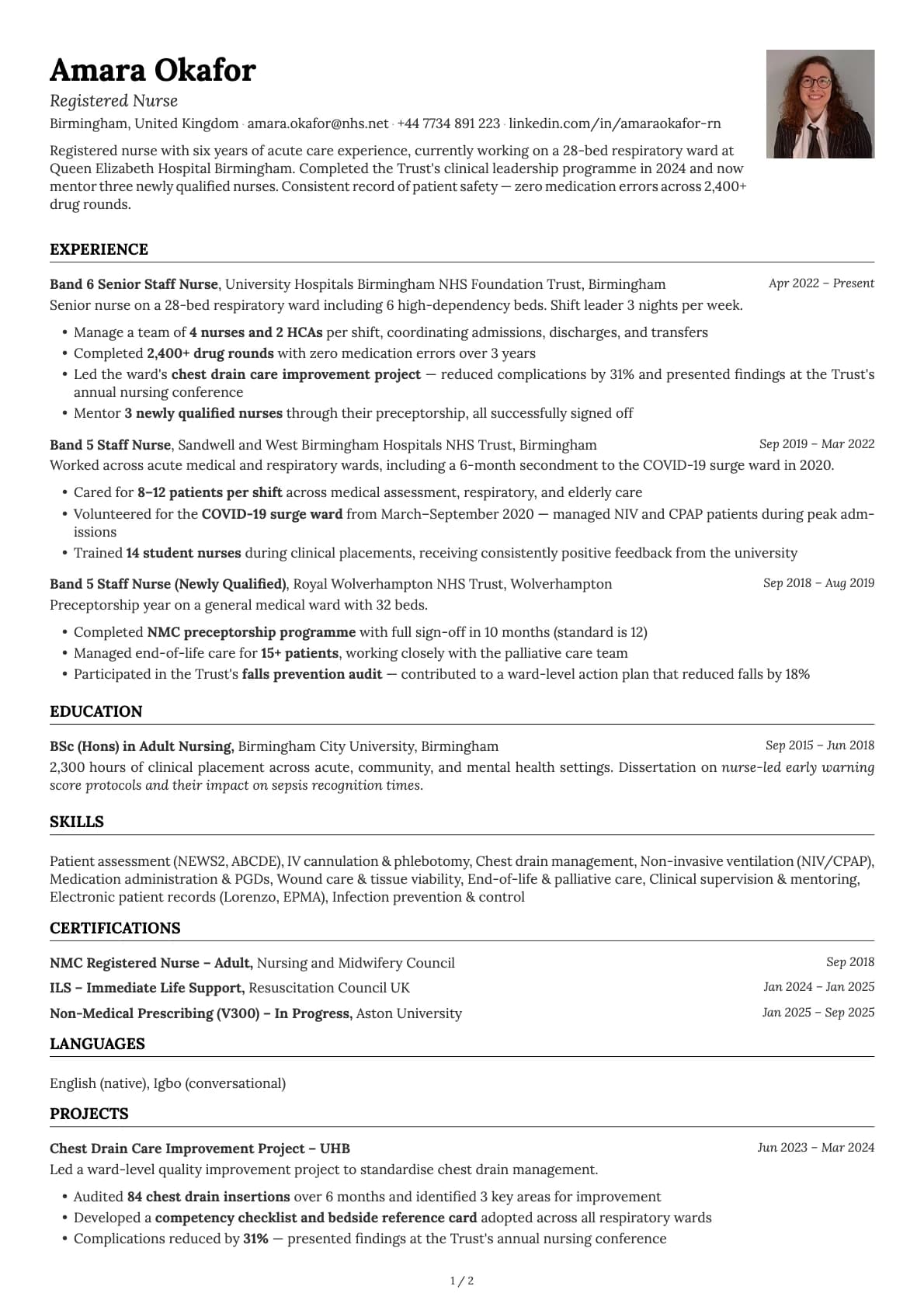
Registered Nurse
A registered nurse resume example with 6 years of acute care experience at NHS hospitals.
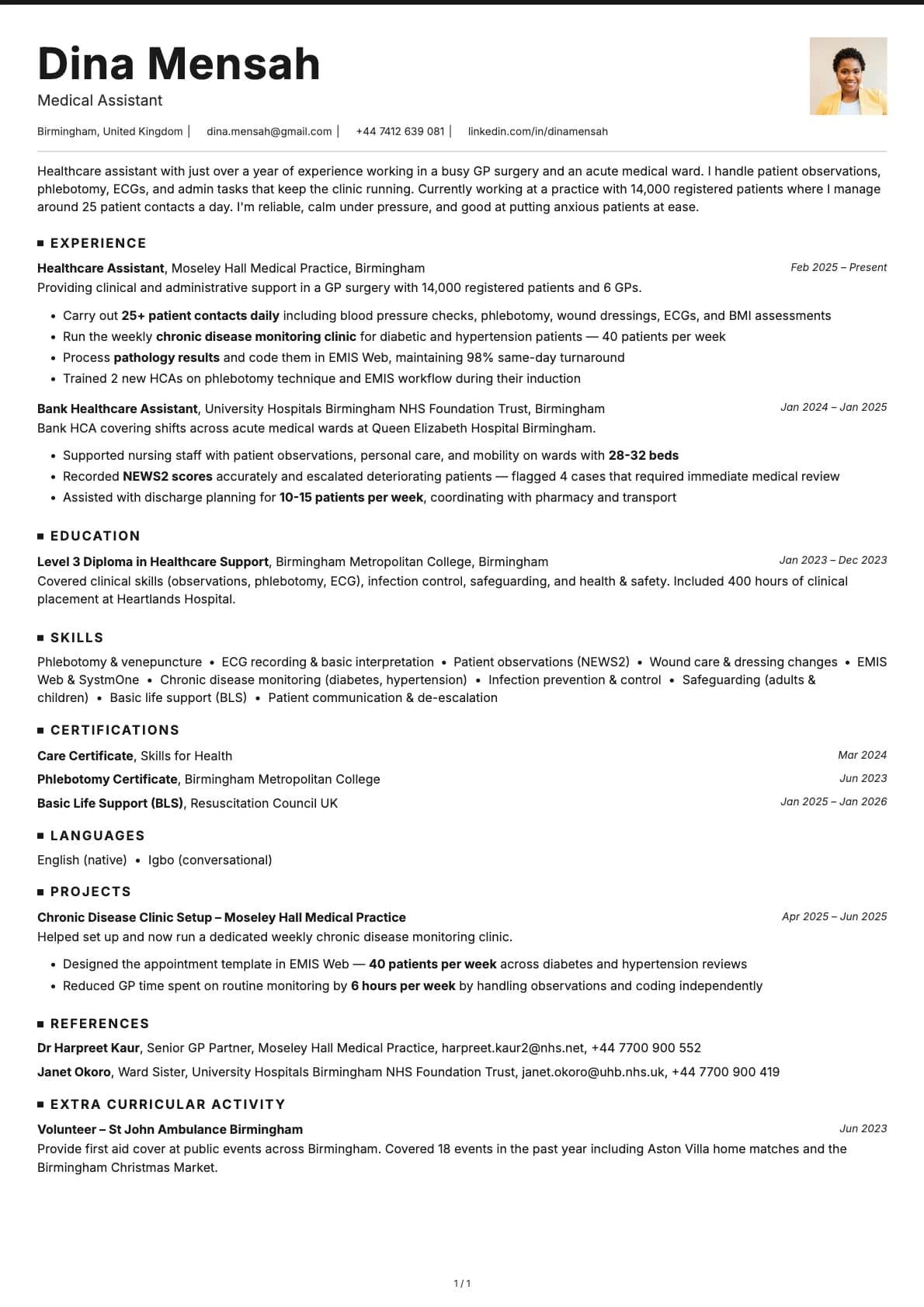
Medical Assistant
A medical assistant resume example with patient contact numbers, clinical skills, and GP surgery experience.
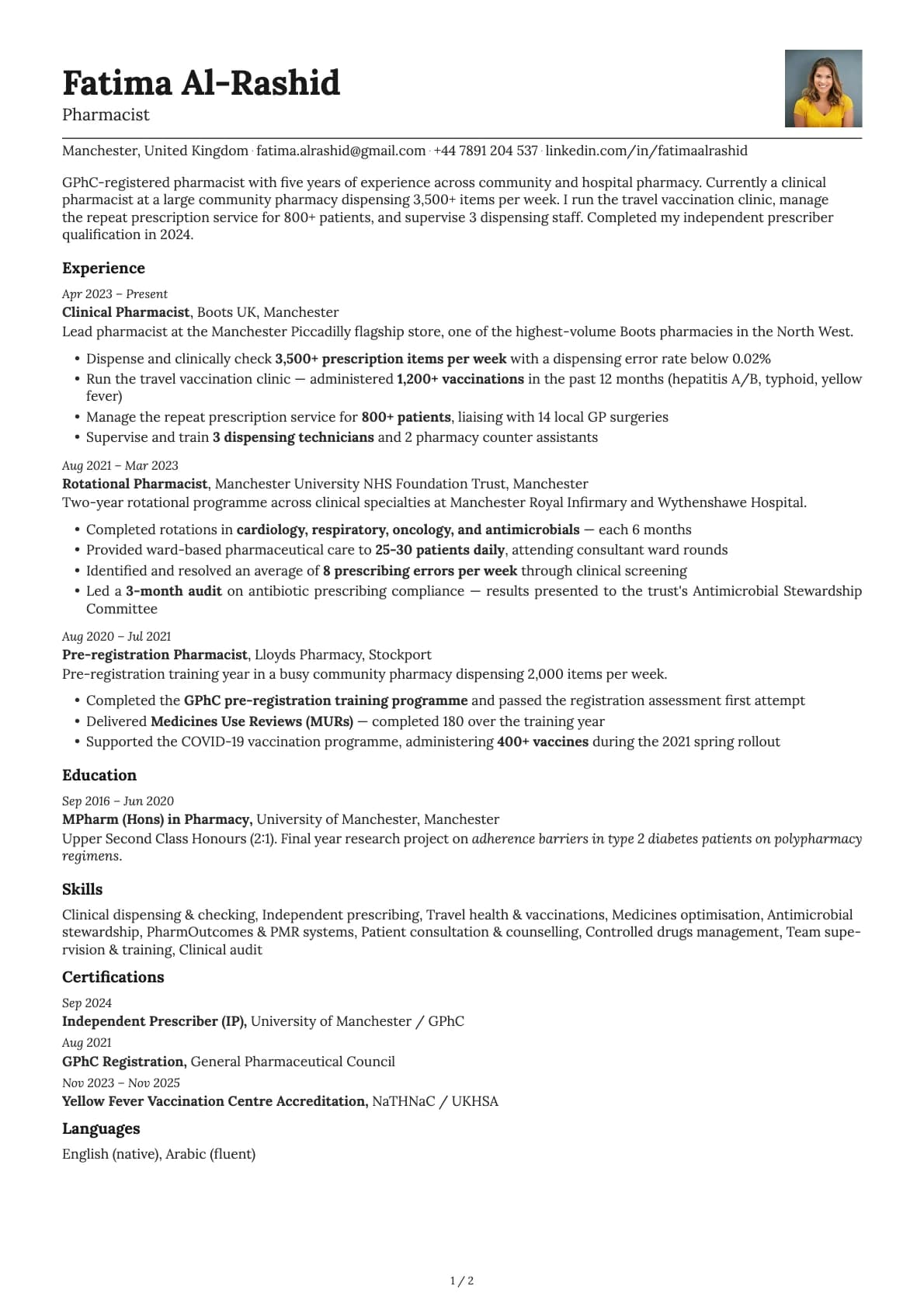
Pharmacist
A pharmacist resume example with community and hospital experience, clinical audit results, and vaccination clinic numbers.
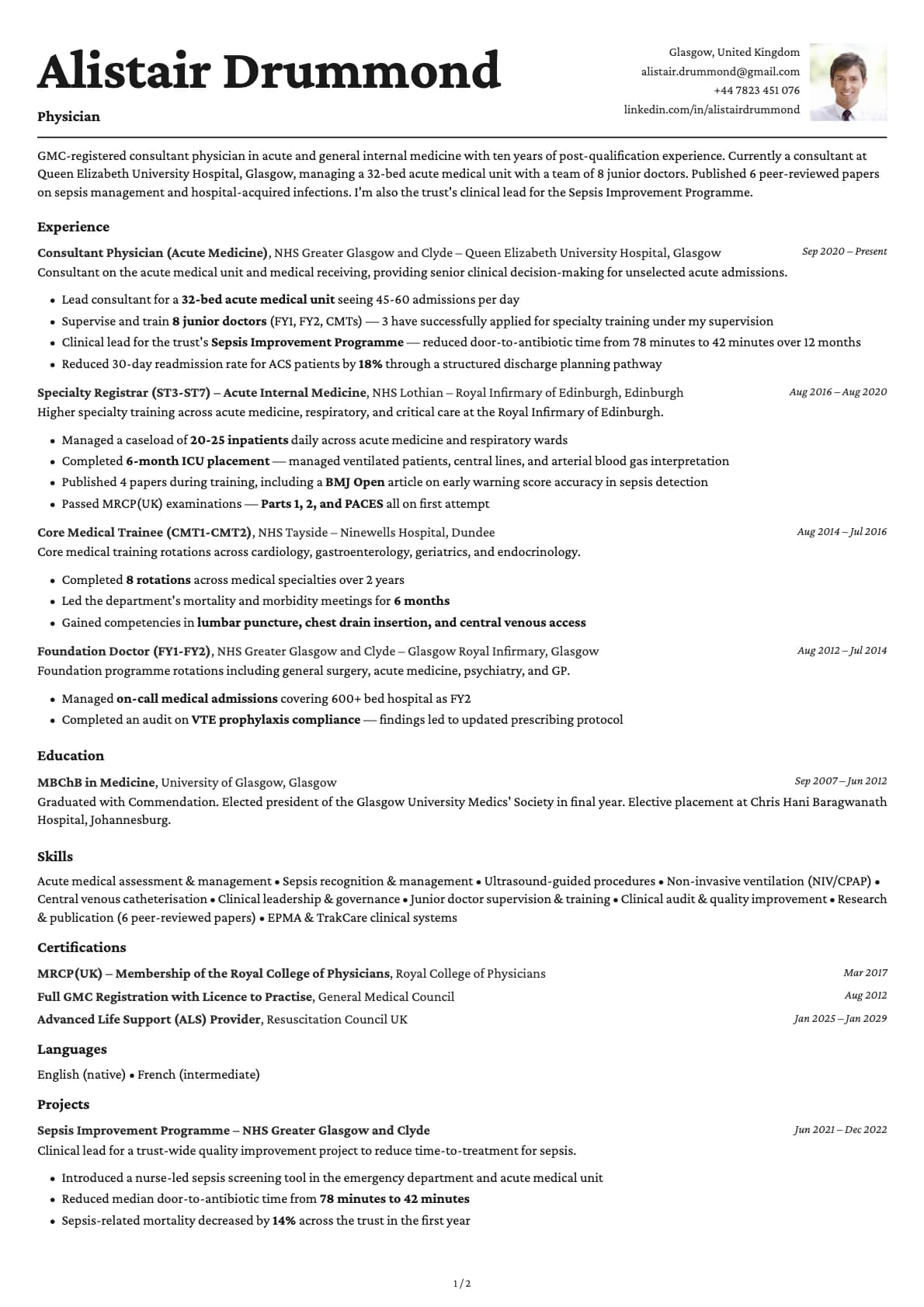
Physician
A physician resume example from a consultant in acute medicine with quality improvement projects, publications, and clinical leadership.
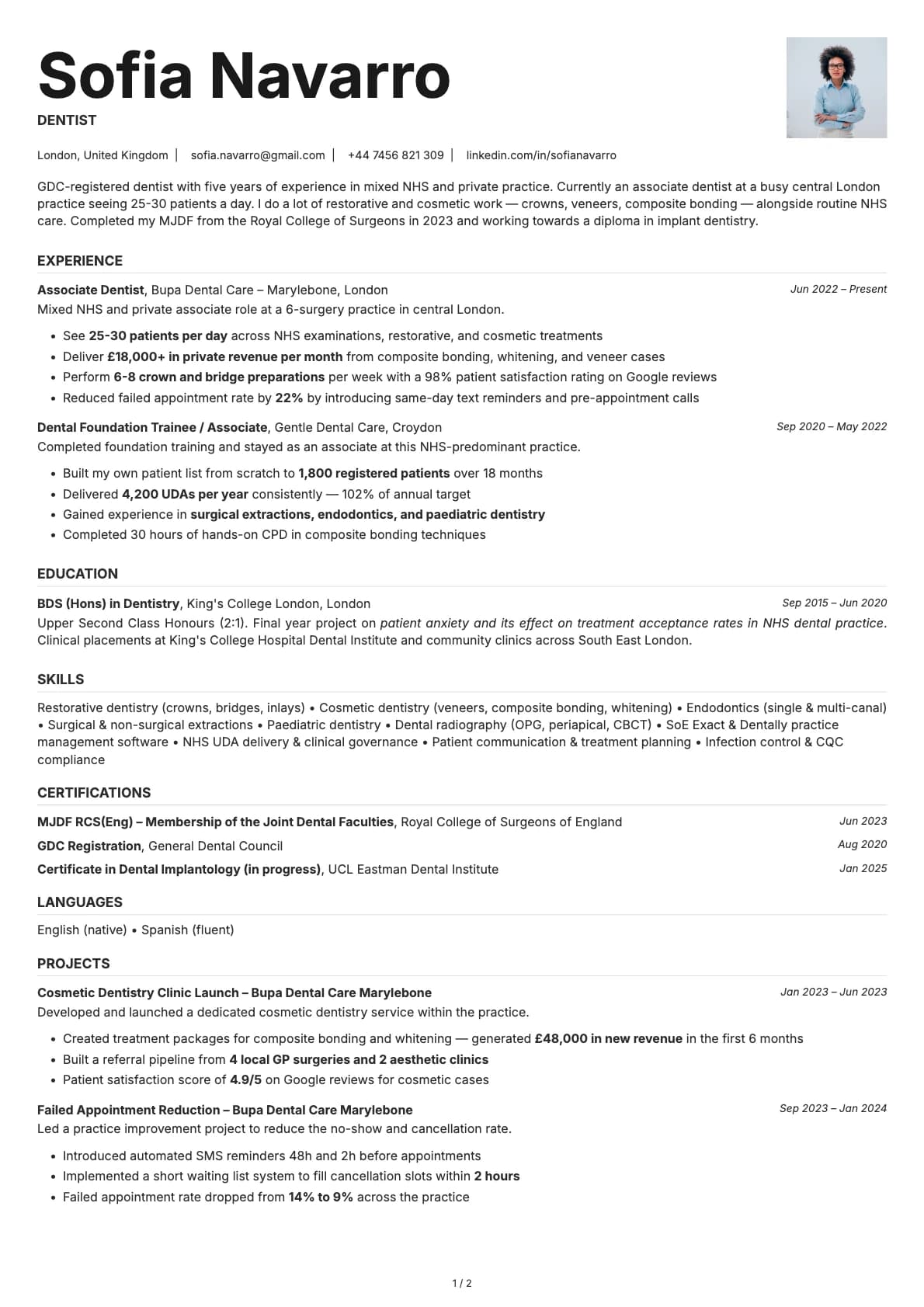
Dentist
A dentist resume example with mixed NHS and private practice experience in London.
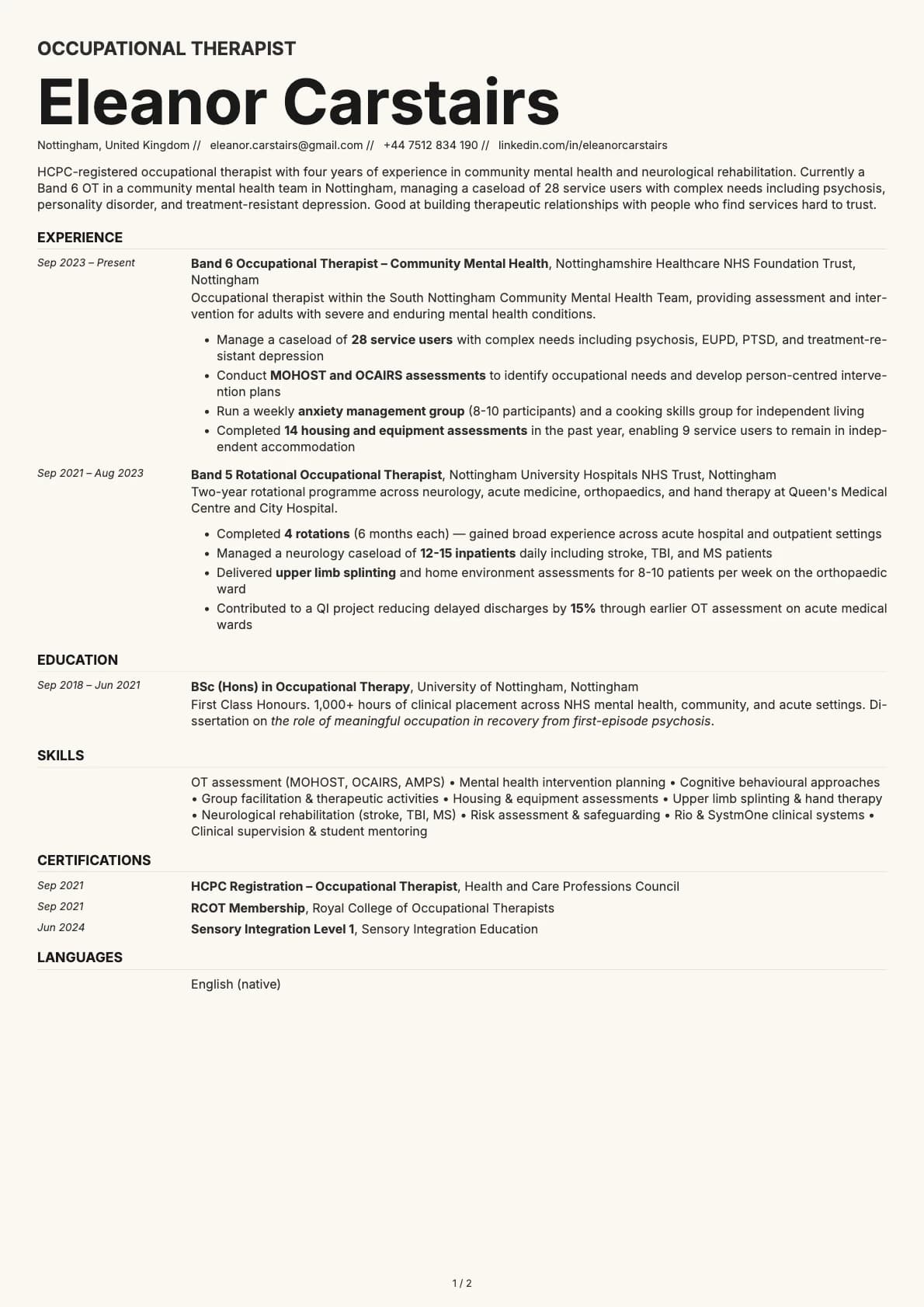
Occupational Therapist
An occupational therapist resume example with caseload details, OT assessment tools, and QI project outcomes.
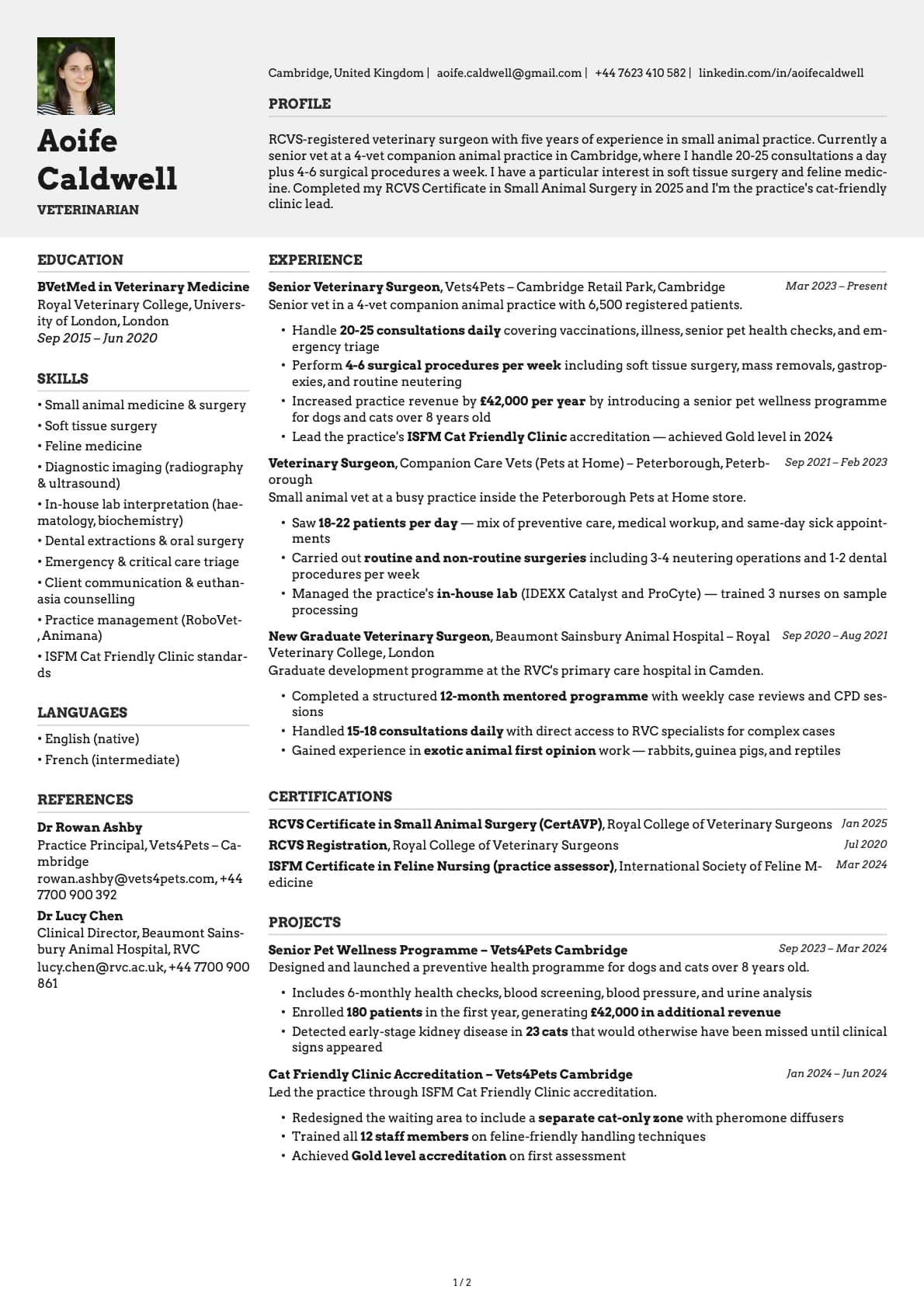
Veterinarian
A veterinarian resume example with 5 years of small animal practice experience.
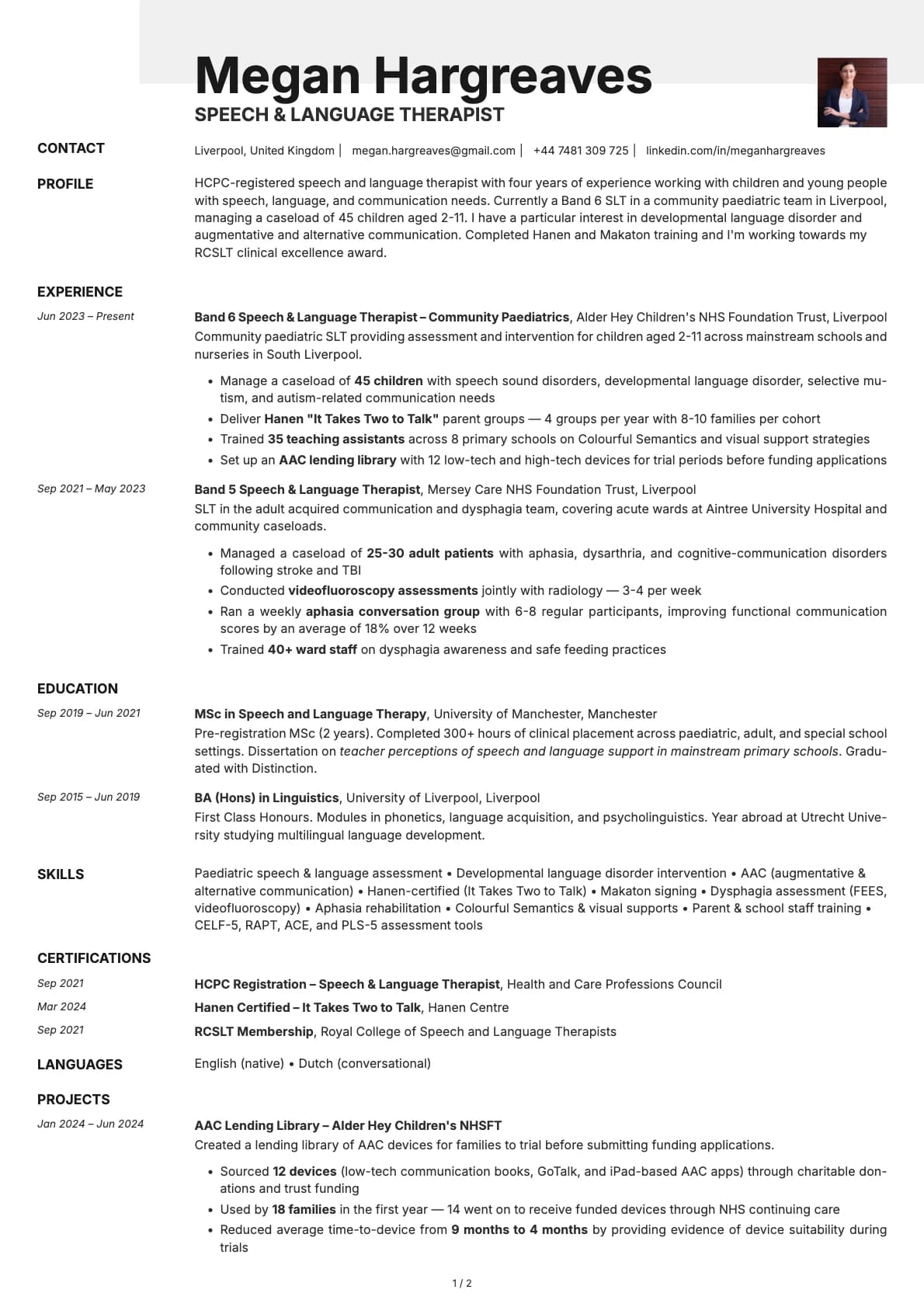
Speech & Language Therapist
A speech and language therapist resume example with paediatric and adult caseload experience across NHS trusts.
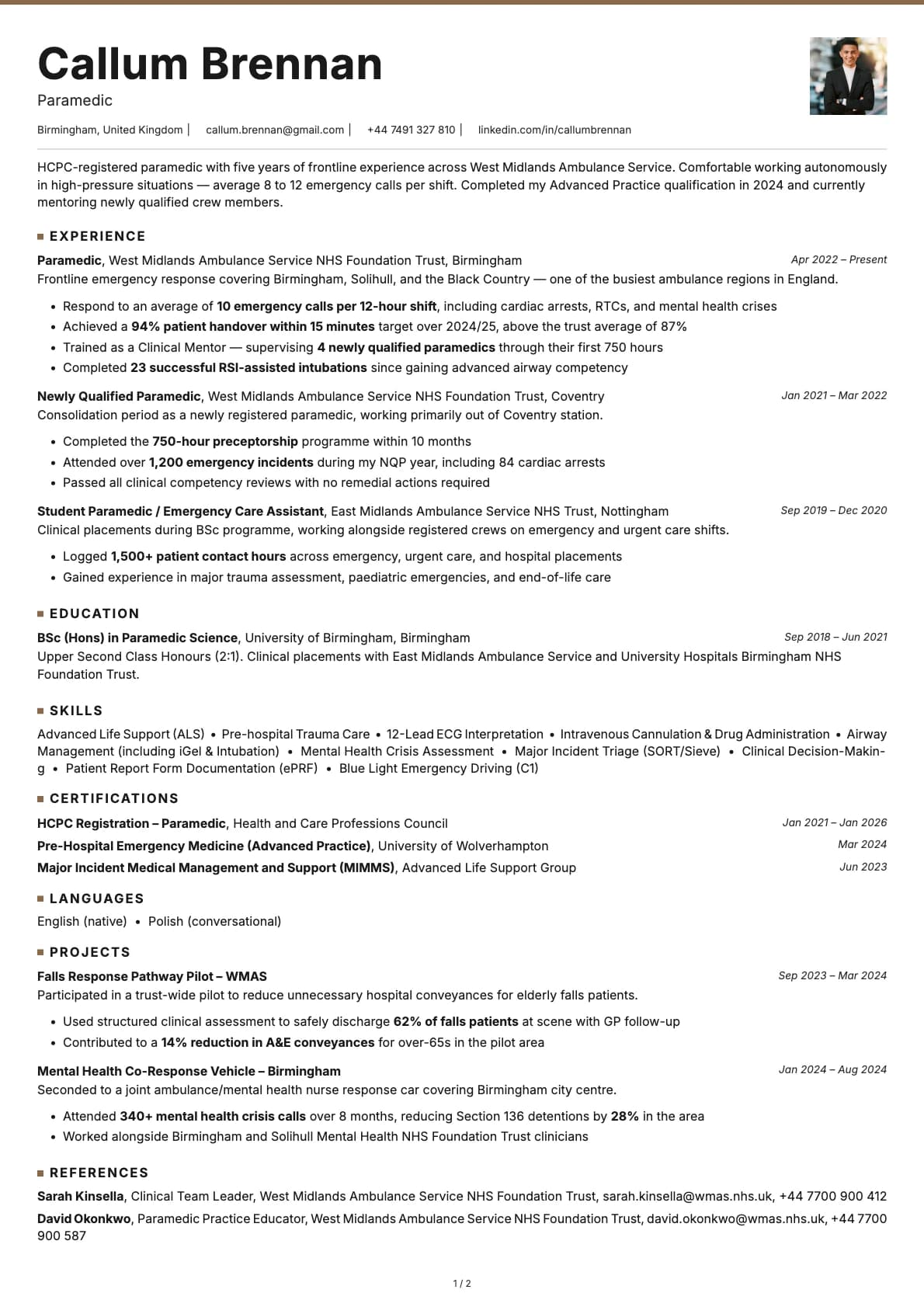
Paramedic
A paramedic resume example with call volumes, clinical competencies, and mentoring experience.
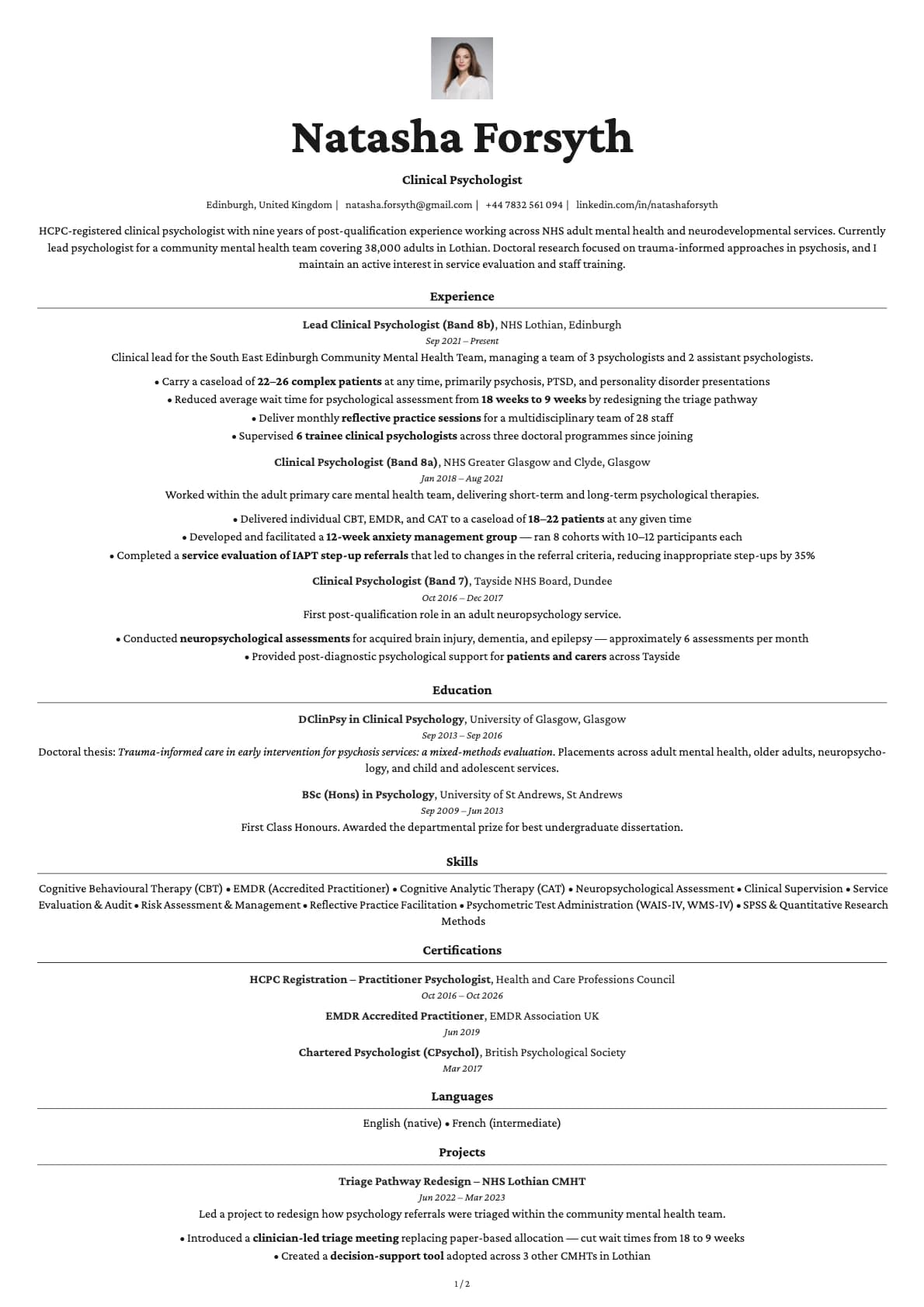
Clinical Psychologist
A clinical psychologist resume example with 9 years of NHS experience across community mental health and neuropsychology.
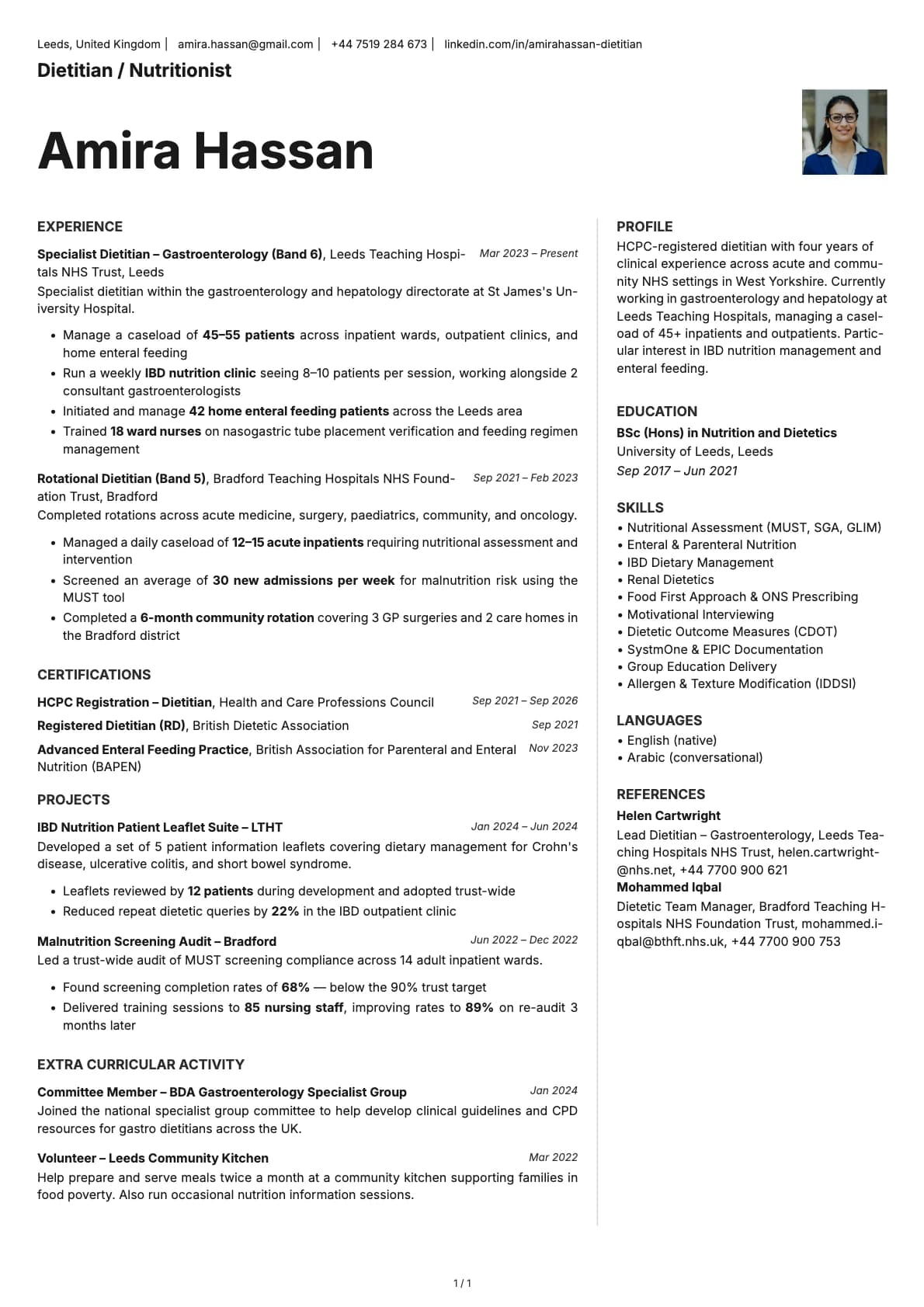
Dietitian / Nutritionist
A dietitian resume example with NHS clinical experience in gastroenterology and community nutrition.
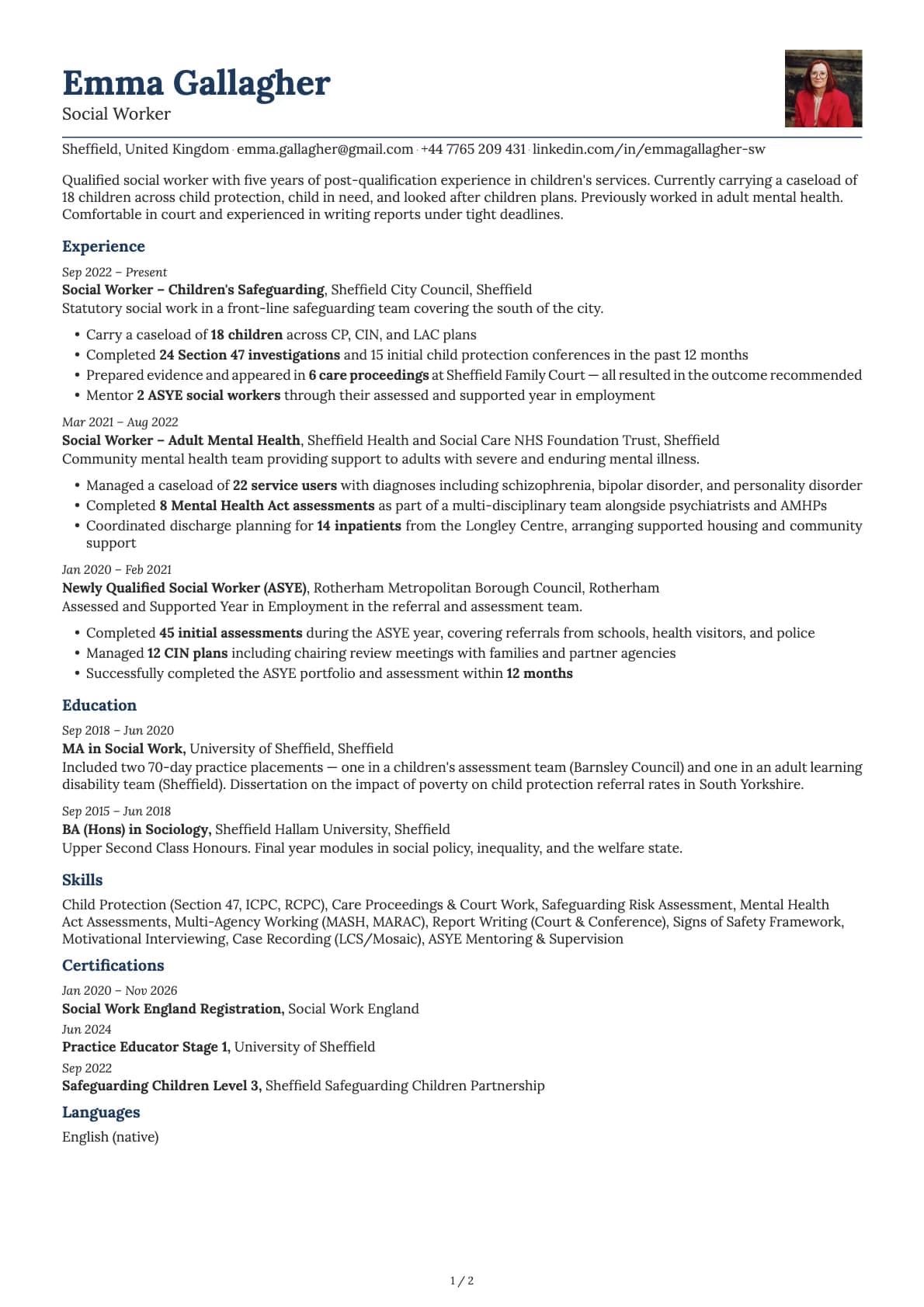
Social Worker
A social worker resume example with caseload numbers, court work, and multi-agency experience.
Related articles

AI Is Screening Your Resume Before Any Human Sees It
AI screens most resumes before a human ever reads them. 97.4% of Fortune 500 companies run an ATS. This is what that means for you and what you can do about it.

The Best Resume Builders in 2026, Compared Honestly
Resume.io, Zety, Enhancv, Kickresume, Teal, and Laddro compared honestly: real pricing, free tiers, mobile apps, and where each tool wins. All prices checked in September 2026.

Burnout Recovery: A Real Timeline, Not 'Take a Bubble Bath'
55% of the U.S. workforce is burned out. Recovery takes 3 to 12 months. Here's what that actually looks like, stage by stage.