Pharmacist Resume Example
A pharmacist resume example with community and hospital experience, clinical audit results, and vaccination clinic numbers.

Laddro Team
Free to use. No account needed to start.
Free to use. No account needed to start.
Overview
Pharmacy resumes tend to look surprisingly similar. GPhC registration, MPharm degree, list of clinical skills, maybe a line about "excellent attention to detail." The problem is that every pharmacist has those things. The hiring manager already knows you can dispense. What they want to see is what makes you different from the other 30 applicants.
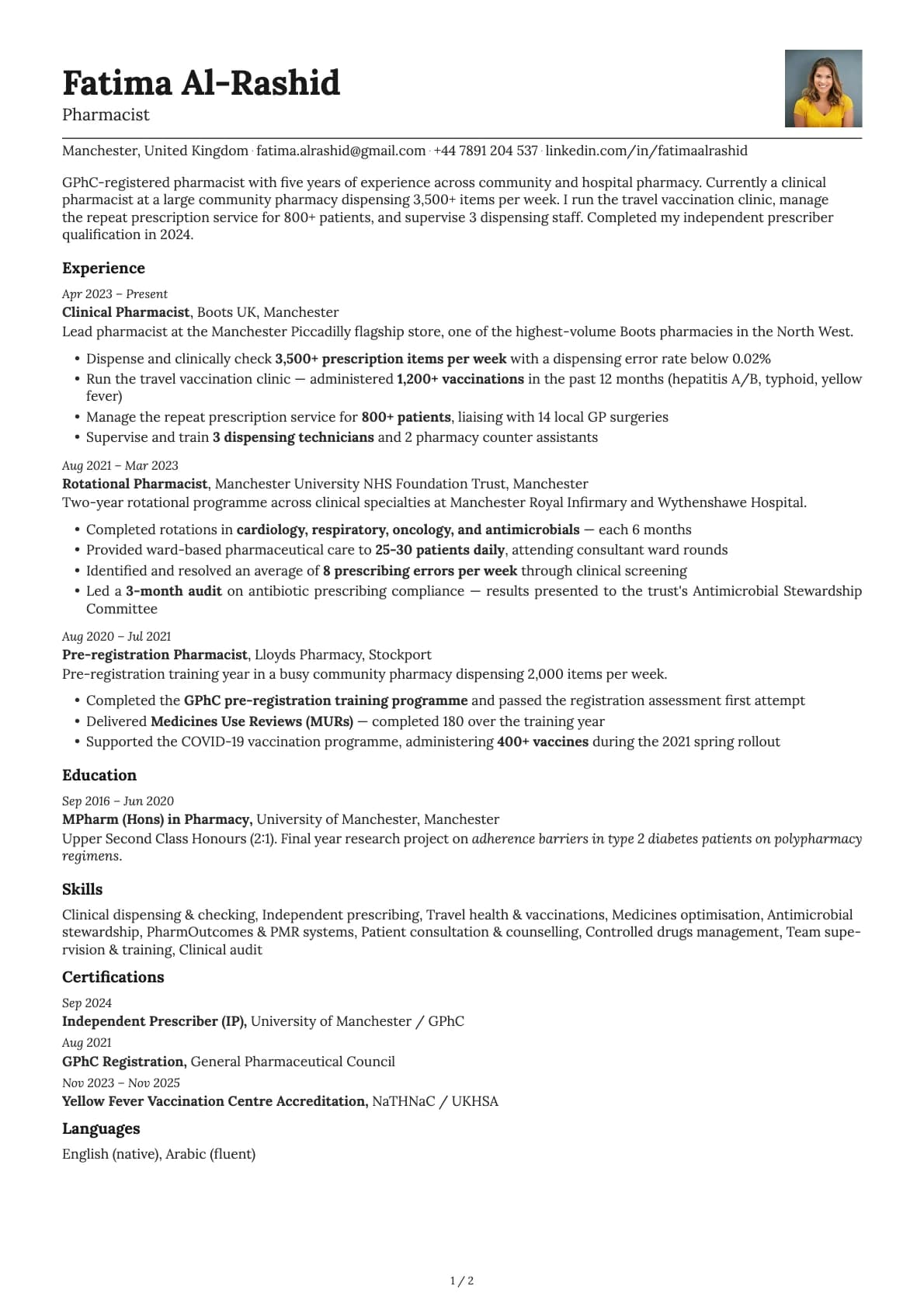
This resume belongs to Fatima Al-Rashid, a clinical pharmacist with five years of experience. She works at the Boots Piccadilly flagship in Manchester, dispensing 3,500+ items per week. Before that, she did a two-year rotational programme at Manchester University NHS Foundation Trust covering cardiology, respiratory, oncology, and antimicrobials. She is also a qualified independent prescriber.
What makes this resume stand out is the numbers. Dispensing volumes, vaccination counts, error rates, audit results. Let us break it down.
Your summary should answer: where, what, and how much
The superintendent or hiring manager reading your CV wants three things immediately: Where do you work now? What do you actually do there? And what scale are we talking about?
Fatima's summary covers all three:
"Currently a clinical pharmacist at a large community pharmacy dispensing 3,500+ items per week. I run the travel vaccination clinic, manage the repeat prescription service for 800+ patients, and supervise 3 dispensing staff."
Three sentences. Each one gives a specific number. There is no "detail-oriented pharmacist with a strong work ethic" anywhere because that phrase adds zero information.
For yours: Name your current setting and its volume. Then pick two or three things you are responsible for and attach a number to each. That is your summary.
How to write experience bullets that actually work
Most pharmacist resumes describe responsibilities. "Responsible for dispensing and clinical checking of prescriptions." That is every pharmacist's job. Your bullets need to go further.
There are three types of bullets that work well for pharmacy:
Volume and accuracy
"Dispense and clinically check 3,500+ prescription items per week with a dispensing error rate below 0.02%"
This tells the hiring manager two things: this is a high-volume environment, and she is accurate. If you work in a busy pharmacy, your dispensing volume is one of your strongest numbers. Use it.
Clinical impact
"Identified and resolved an average of 8 prescribing errors per week through clinical screening"
This is from her hospital rotation. It shows she is catching problems, not just processing scripts. If you work on wards, track how many interventions you make. Even a rough number is better than none.
Service delivery
"Run the travel vaccination clinic, administered 1,200+ vaccinations in the past 12 months"
Vaccination services, MURs, NMS consultations, smoking cessation. If you deliver any clinical services beyond core dispensing, put the numbers in. Fatima's travel clinic generated £48,000 in revenue in its first year. That is the kind of number that makes a pharmacy manager pay attention.
Hospital experience: make your rotations count
If you have done a hospital rotation or training programme, do not just list the departments. Show what you did in each one.
Fatima's rotational role mentions four specialties (cardiology, respiratory, oncology, antimicrobials) and then backs each rotation with specifics: 25-30 patients daily, ward rounds with consultants, 8 prescribing errors caught per week, and a clinical audit presented to the Antimicrobial Stewardship Committee.
If you are applying for a hospital pharmacist role, the hiring panel will score you against a person specification. They need to see evidence of clinical decision-making, not just a list of wards you walked through.
Certifications: order matters
For pharmacy roles, your GPhC registration goes first. Always. It is non-negotiable. After that, list your most relevant clinical qualifications.
Fatima puts her Independent Prescriber qualification second. This is smart because IP is increasingly in demand across both community and primary care roles. If you have it (or are working towards it), make it prominent.
Her Yellow Fever Centre accreditation is also listed with its expiry date. If you hold any time-limited certifications, include the valid dates. Letting a certification lapse before an application raises questions.
The audit that proves clinical leadership
Fatima includes a clinical audit project as a separate entry. She reviewed 420 prescription records, found 23% non-compliance with first-line antibiotic choice, presented to the Antimicrobial Stewardship Committee, and then showed that non-compliance dropped to 11% on re-audit.
This is exactly the kind of thing that NHS interview panels look for. If you have led or contributed to any audit, quality improvement project, or guideline review, put it on your resume. Use the format: what was the problem, what did you do, and what changed.
Even if the change was small, showing that you audited something and presented findings demonstrates clinical governance awareness. That matters more than another line about dispensing.
Mistakes pharmacists make on their resumes
Not stating your dispensing volume. A pharmacy dispensing 1,200 items per week is very different from one dispensing 4,000. The number tells the reader what pace you can handle.
Burying independent prescriber status. If you are an IP, it should be visible within the first few lines of your resume. It is one of the most in-demand qualifications in pharmacy right now.
Listing every clinical skill without context. "Medicines optimisation" on its own means nothing. "Managed the repeat prescription service for 800+ patients, liaising with 14 local GP surgeries" tells a story.
Forgetting systems. PharmOutcomes, PMR, EMIS, SystmOne. If you use any clinical or dispensing system, name it. Employers want to know if you can hit the ground running.
One more thing
Pharmacy is shifting fast. Independent prescribing, clinical pharmacist roles in primary care, vaccination services, and Pharmacy First are all expanding what pharmacists do. Your resume needs to reflect that shift. If you are still writing about dispensing like it is 2015, you are selling yourself short. Show the clinical services, the patient consultations, the audit work, and the prescribing. That is what gets you the interview.
Build your own version
Open this layout in the builder and swap in your own details. It takes a few minutes.
Free to use. No account needed to start.
Was this resume example helpful?
Rate this example to help us create better content for you.
4.8 average from 142 ratingsRelated resume examples
Registered Nurse
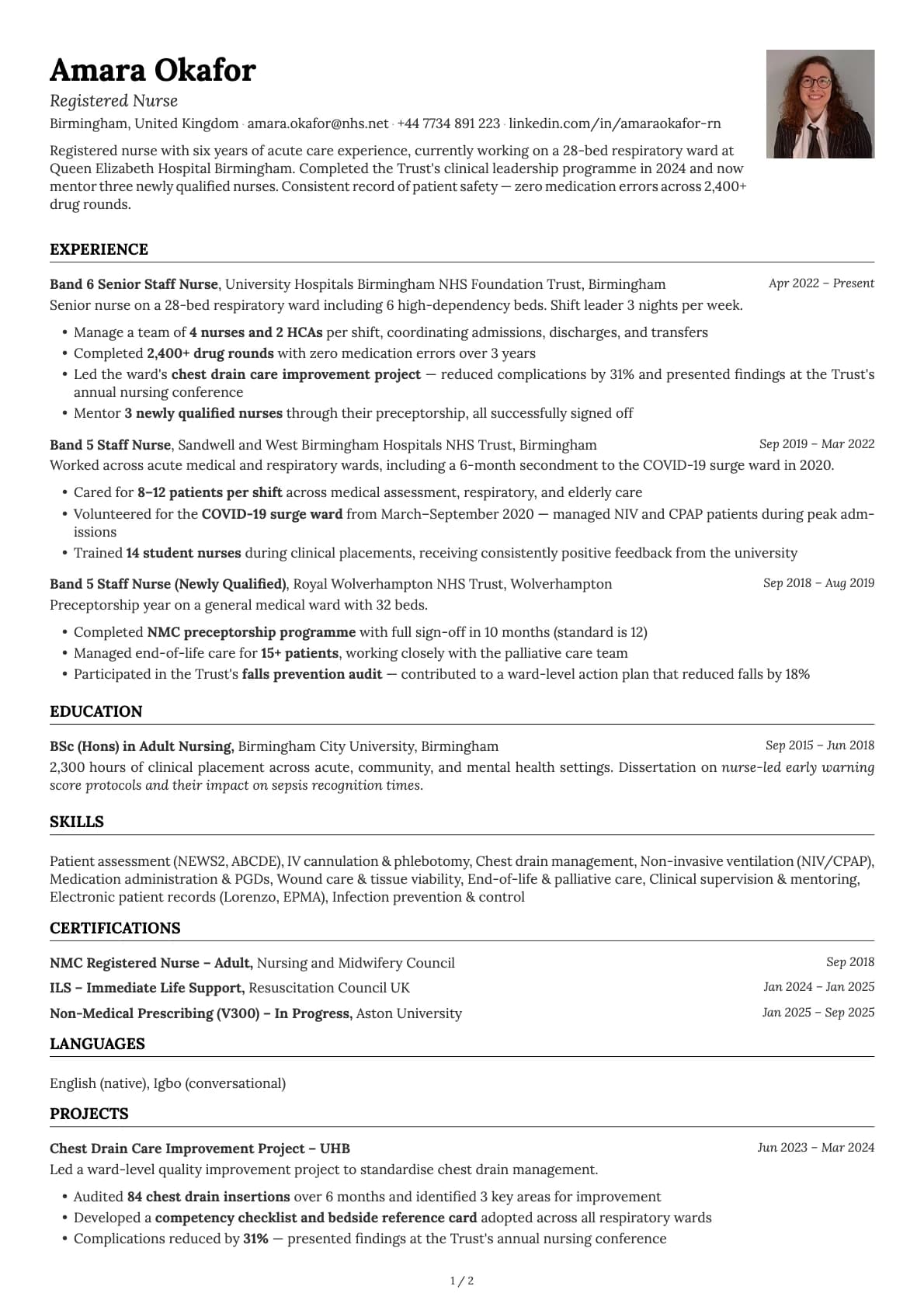
A registered nurse resume example with 6 years of acute care experience at NHS hospitals.
Medical Assistant
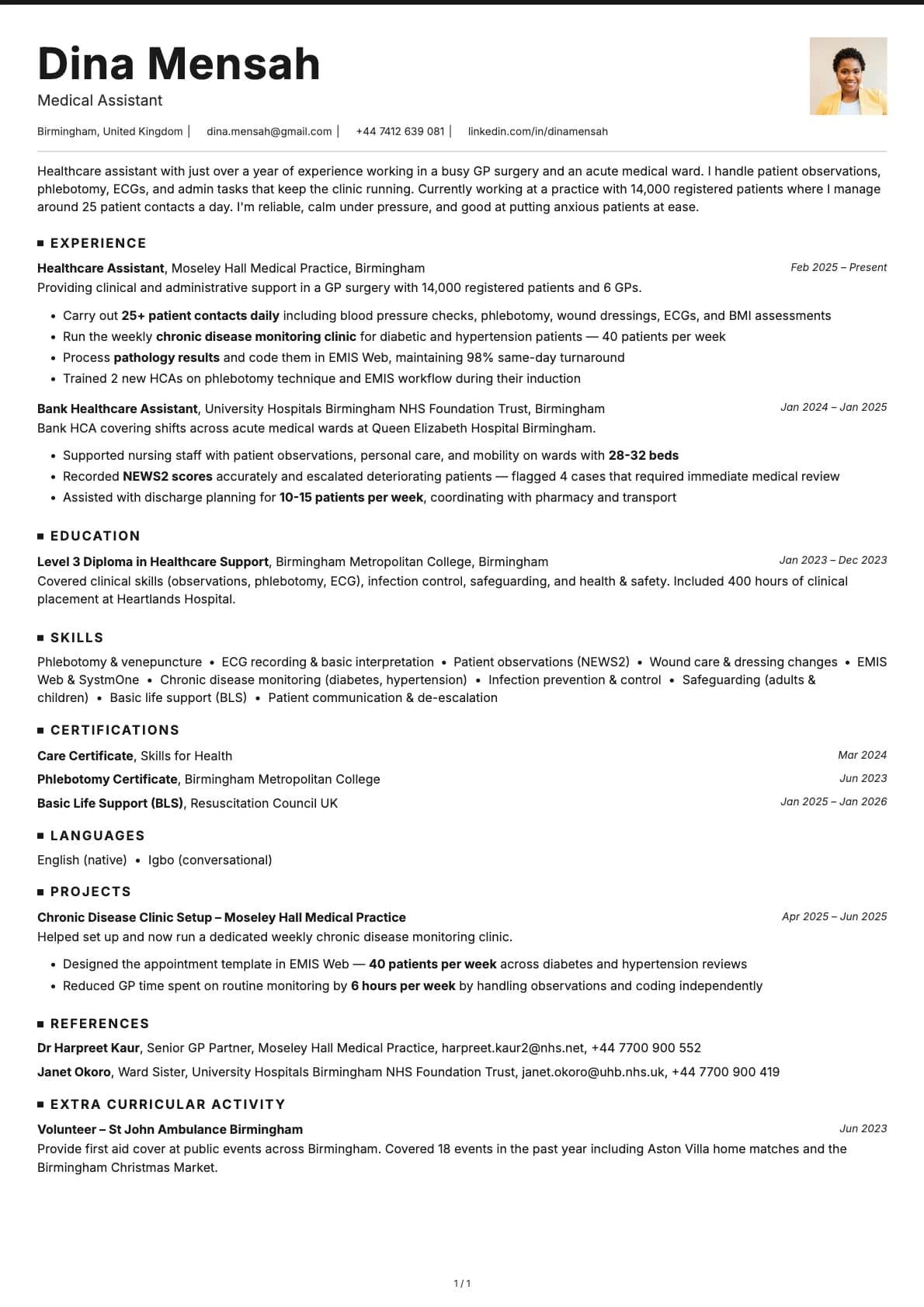
A medical assistant resume example with patient contact numbers, clinical skills, and GP surgery experience.
Physician
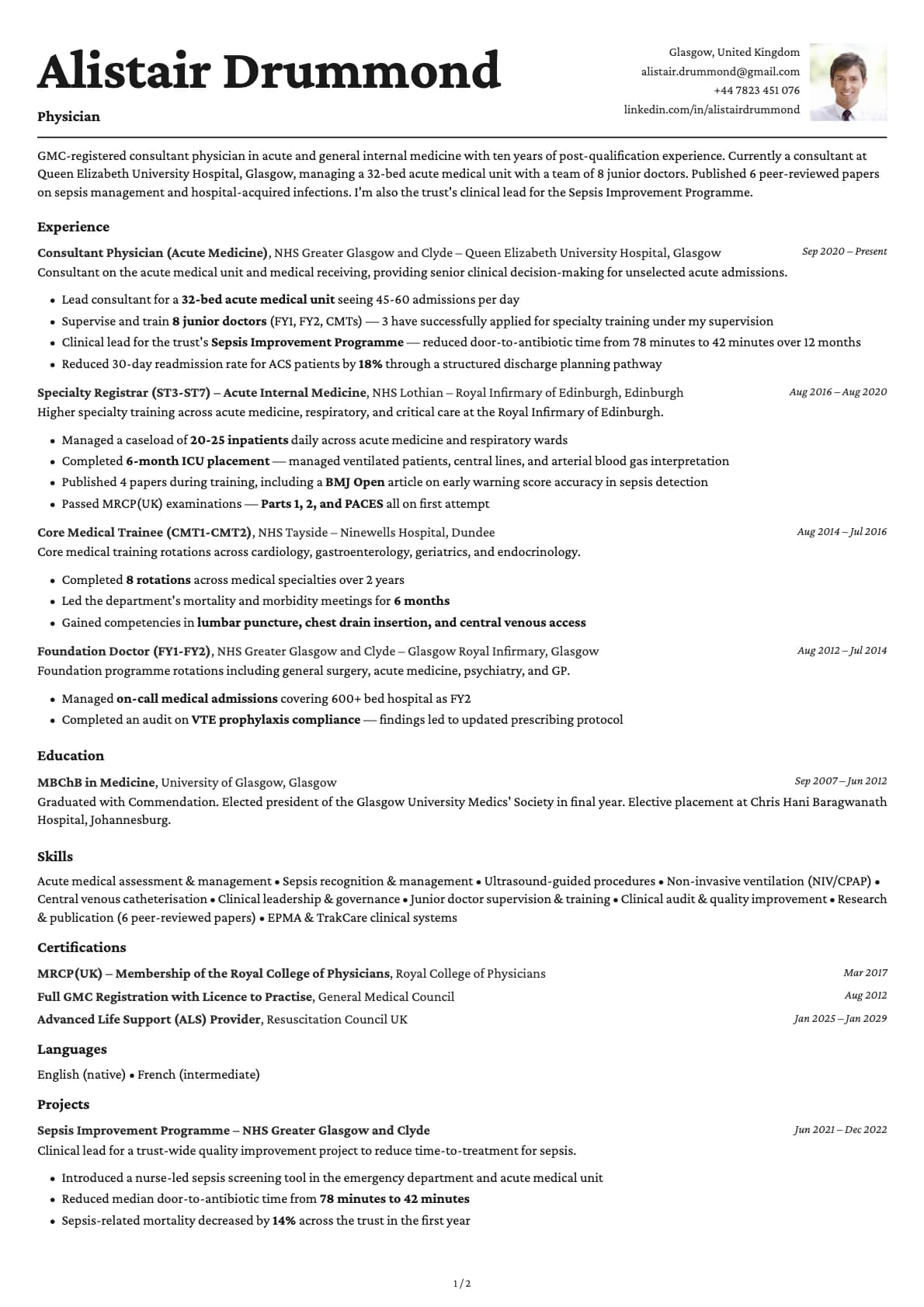
A physician resume example from a consultant in acute medicine with quality improvement projects, publications, and clinical leadership.
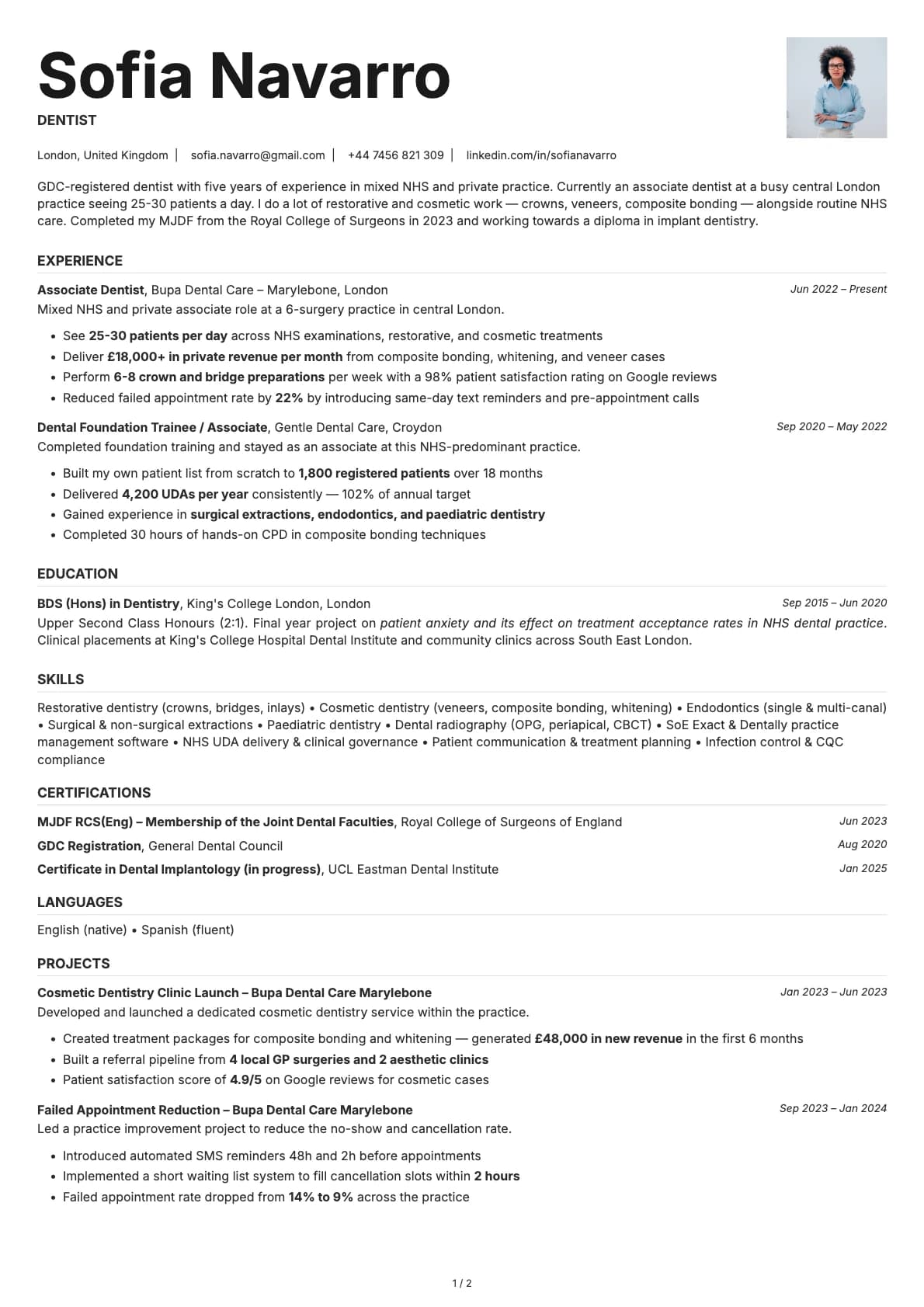
Dentist
A dentist resume example with mixed NHS and private practice experience in London.
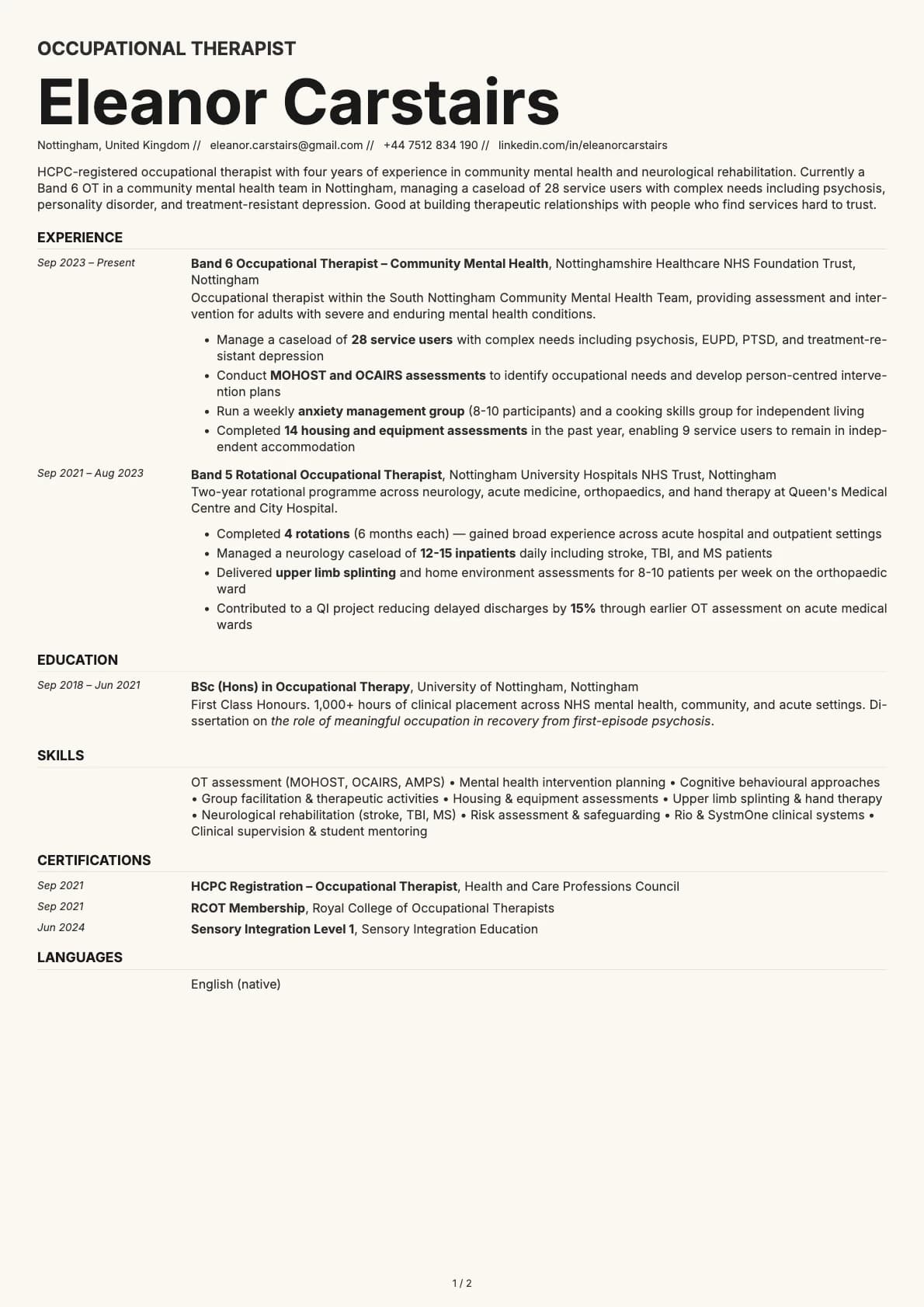
Occupational Therapist
An occupational therapist resume example with caseload details, OT assessment tools, and QI project outcomes.
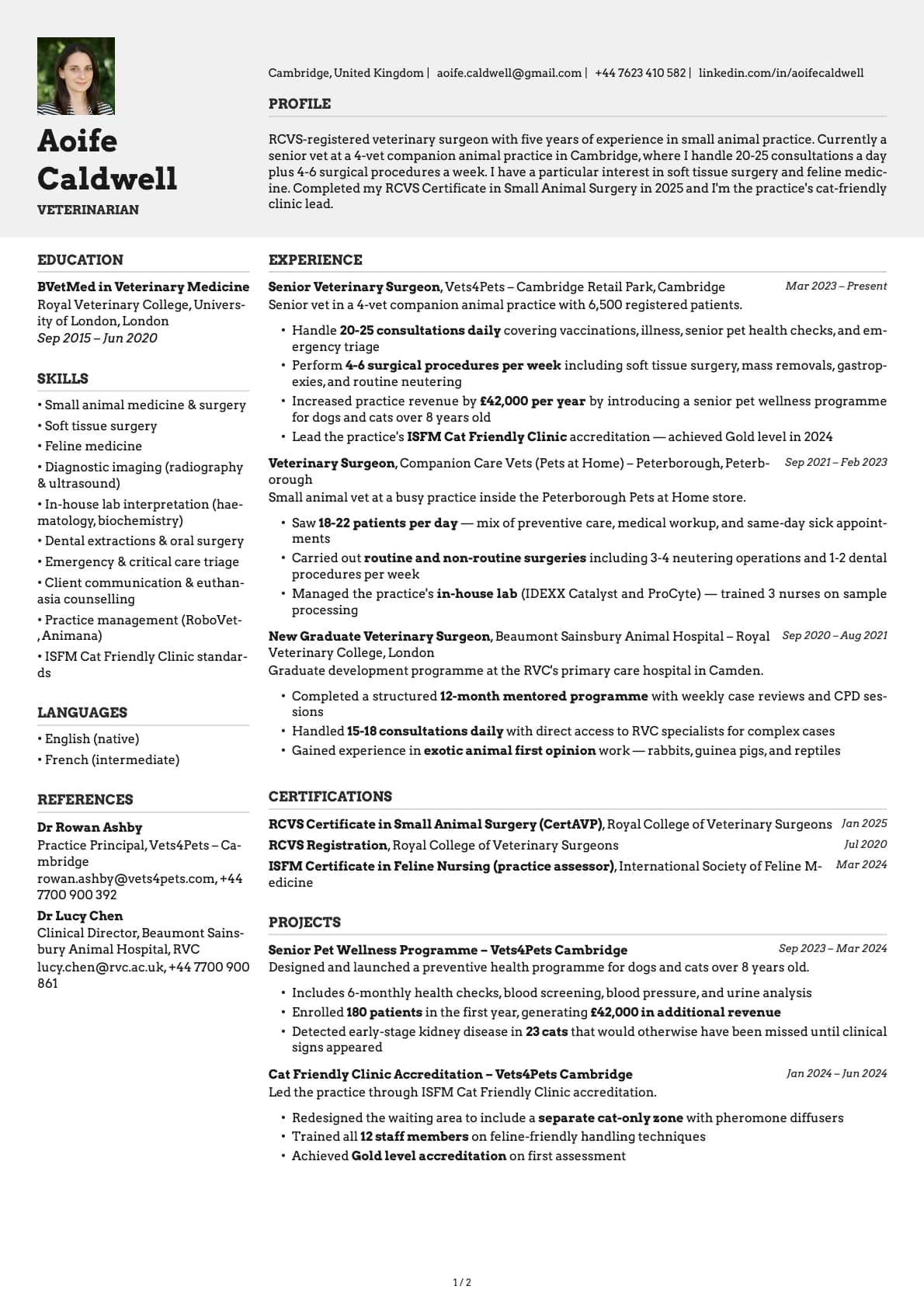
Veterinarian
A veterinarian resume example with 5 years of small animal practice experience.
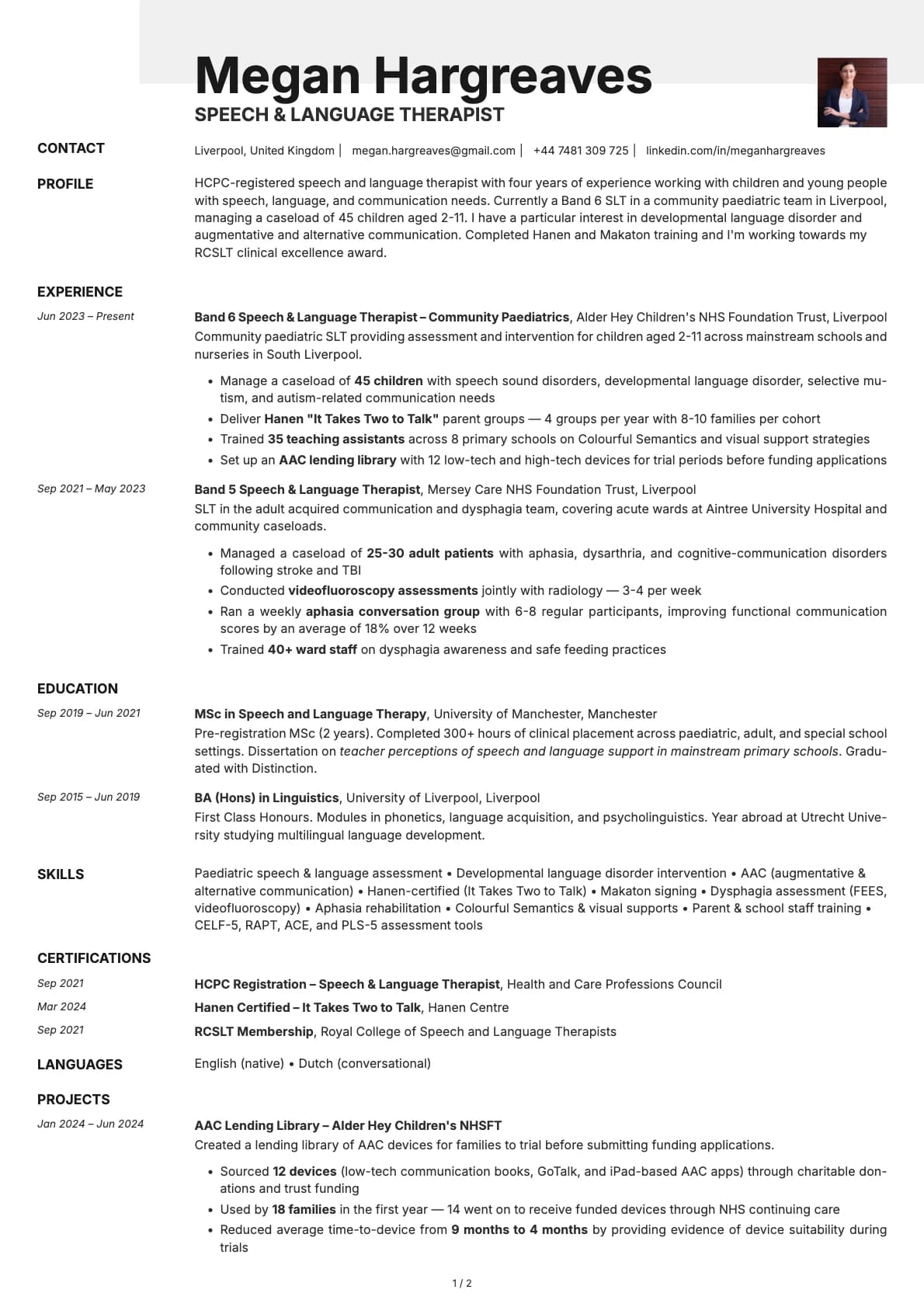
Speech & Language Therapist
A speech and language therapist resume example with paediatric and adult caseload experience across NHS trusts.
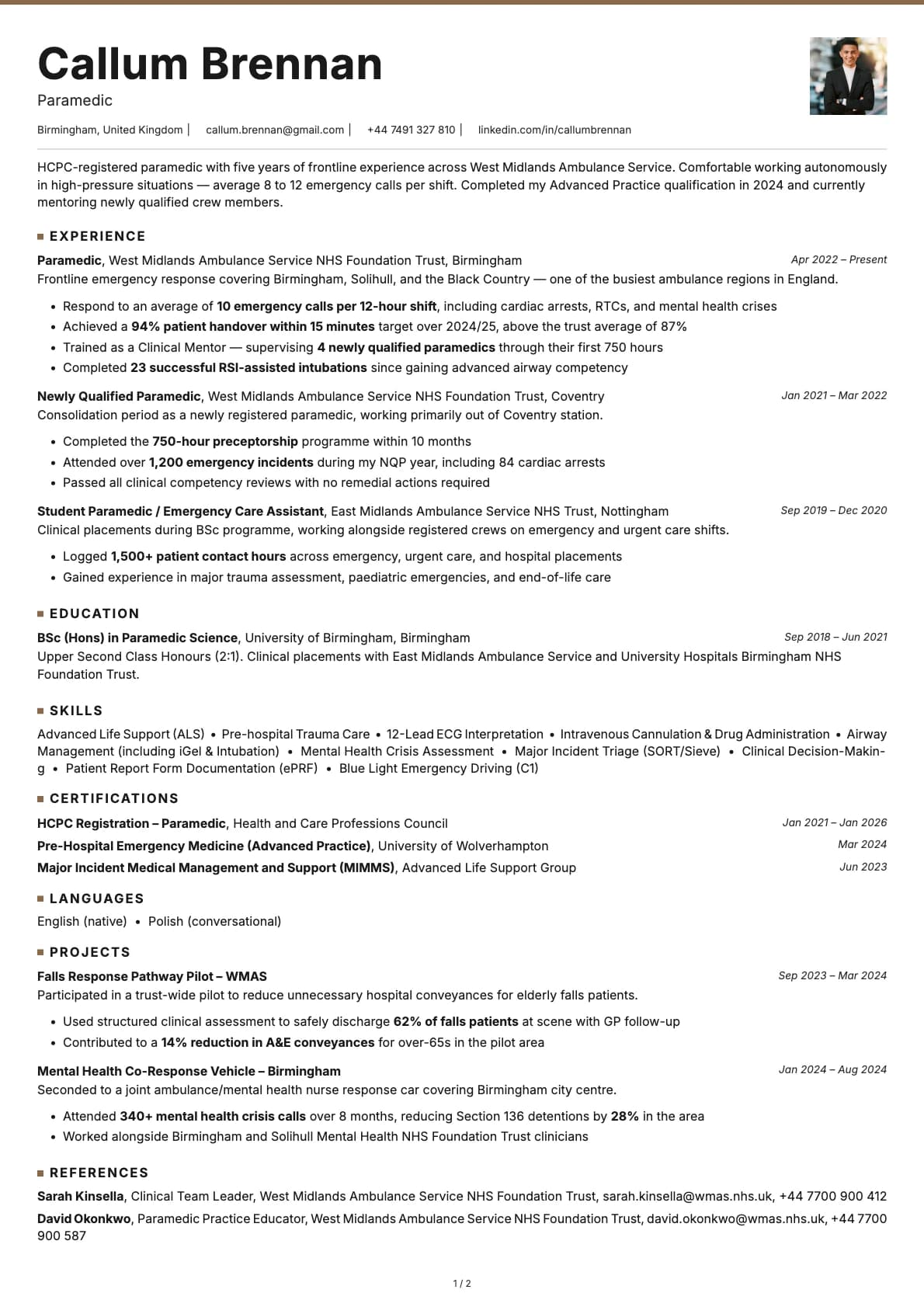
Paramedic
A paramedic resume example with call volumes, clinical competencies, and mentoring experience.
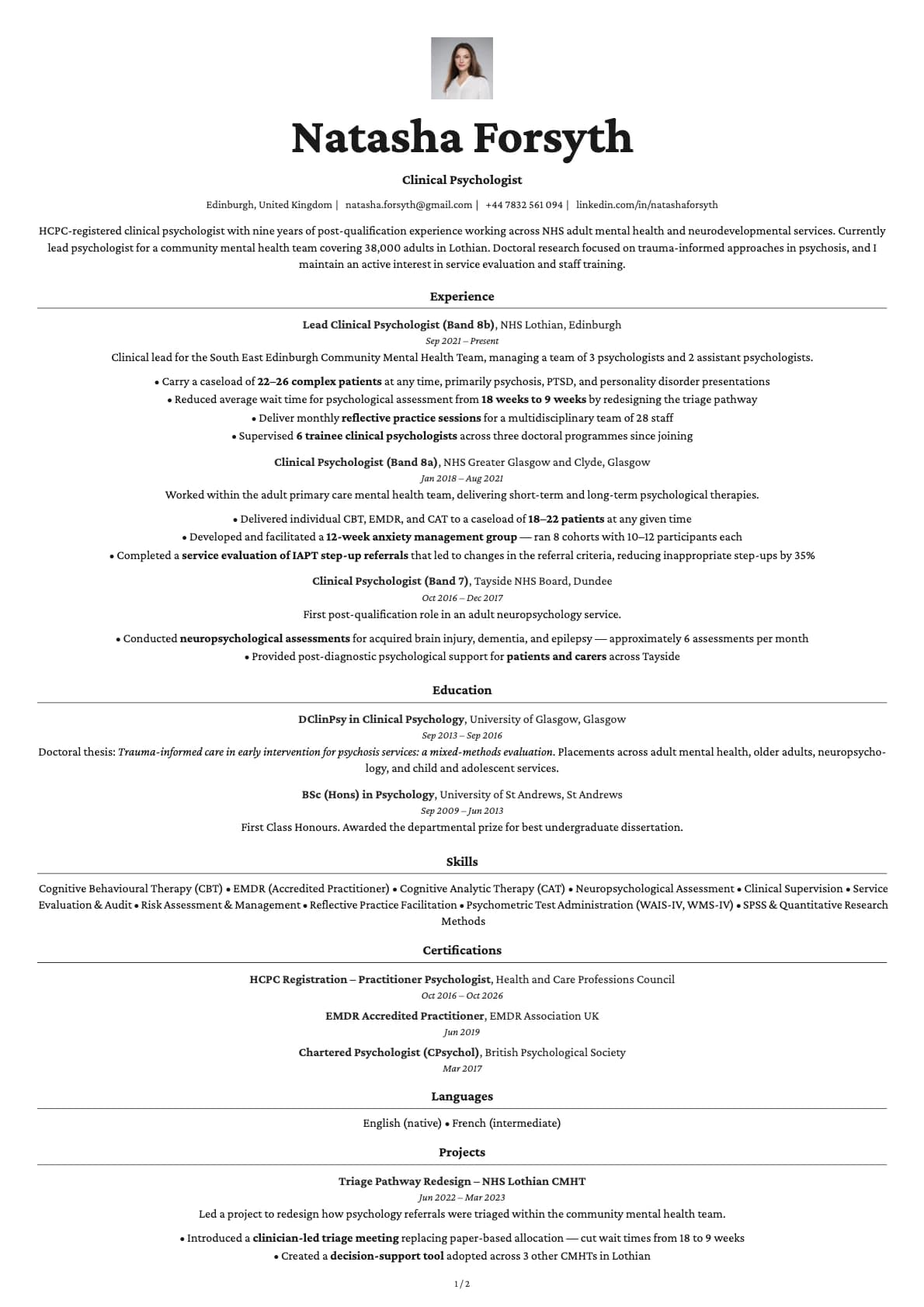
Clinical Psychologist
A clinical psychologist resume example with 9 years of NHS experience across community mental health and neuropsychology.
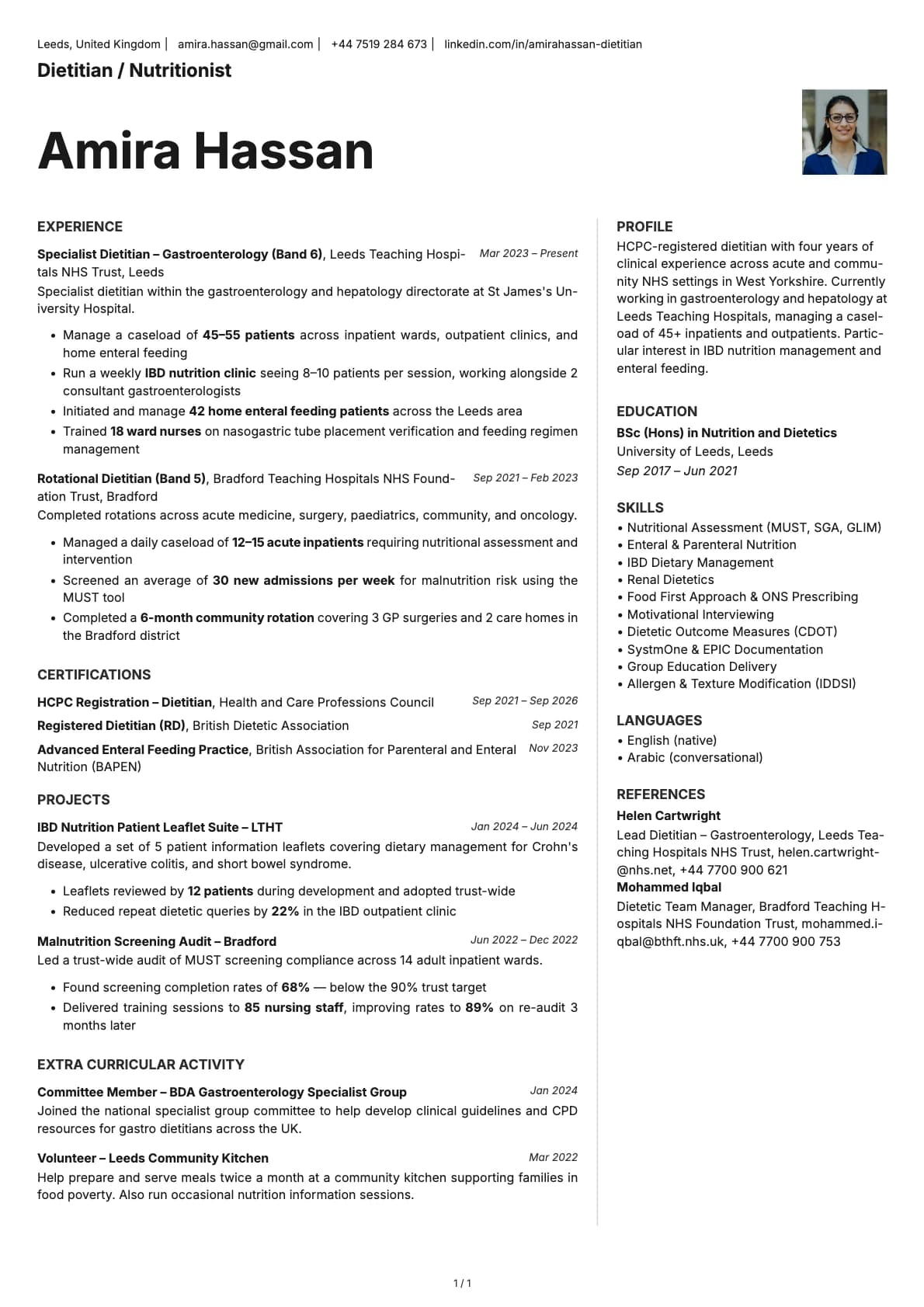
Dietitian / Nutritionist
A dietitian resume example with NHS clinical experience in gastroenterology and community nutrition.
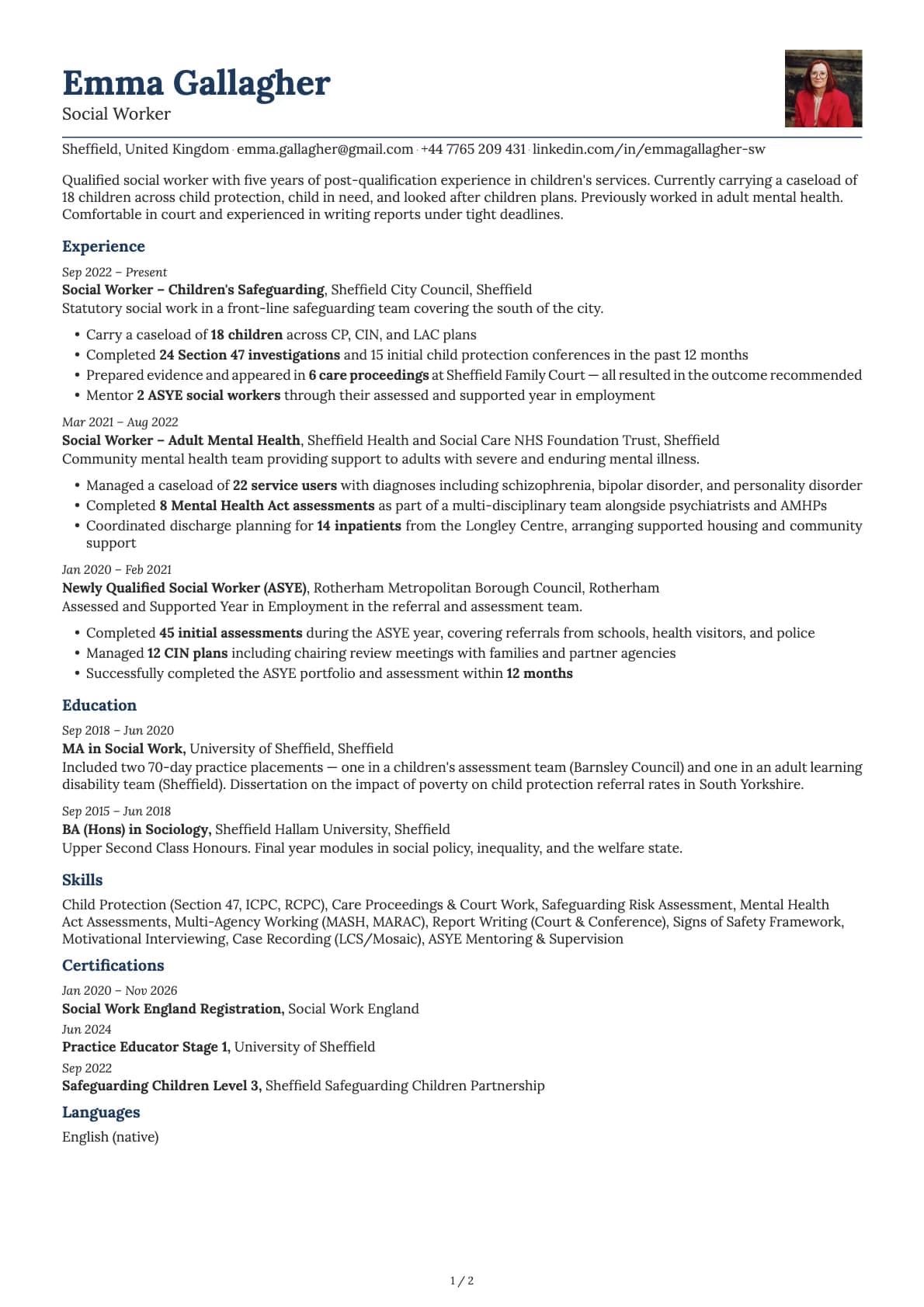
Social Worker
A social worker resume example with caseload numbers, court work, and multi-agency experience.
Dental Hygienist
A dental hygienist resume example with NHS and private practice experience in Edinburgh.
Related articles

AI Is Screening Your Resume Before Any Human Sees It
AI screens most resumes before a human ever reads them. 97.4% of Fortune 500 companies run an ATS. This is what that means for you and what you can do about it.

The Best Resume Builders in 2026, Compared Honestly
Resume.io, Zety, Enhancv, Kickresume, Teal, and Laddro compared honestly: real pricing, free tiers, mobile apps, and where each tool wins. All prices checked in September 2026.

Burnout Recovery: A Real Timeline, Not 'Take a Bubble Bath'
55% of the U.S. workforce is burned out. Recovery takes 3 to 12 months. Here's what that actually looks like, stage by stage.