Speech & Language Therapist Resume Example
A speech and language therapist resume example with paediatric and adult caseload experience across NHS trusts.

Laddro Team
Free to use. No account needed to start.
Free to use. No account needed to start.
Overview
Speech and language therapy resumes have a unique challenge. The person reading yours probably has an SLT background. They know what a caseload looks like, they know what Hanen is, and they can tell immediately if you are padding your experience with vague statements about "supporting communication development."
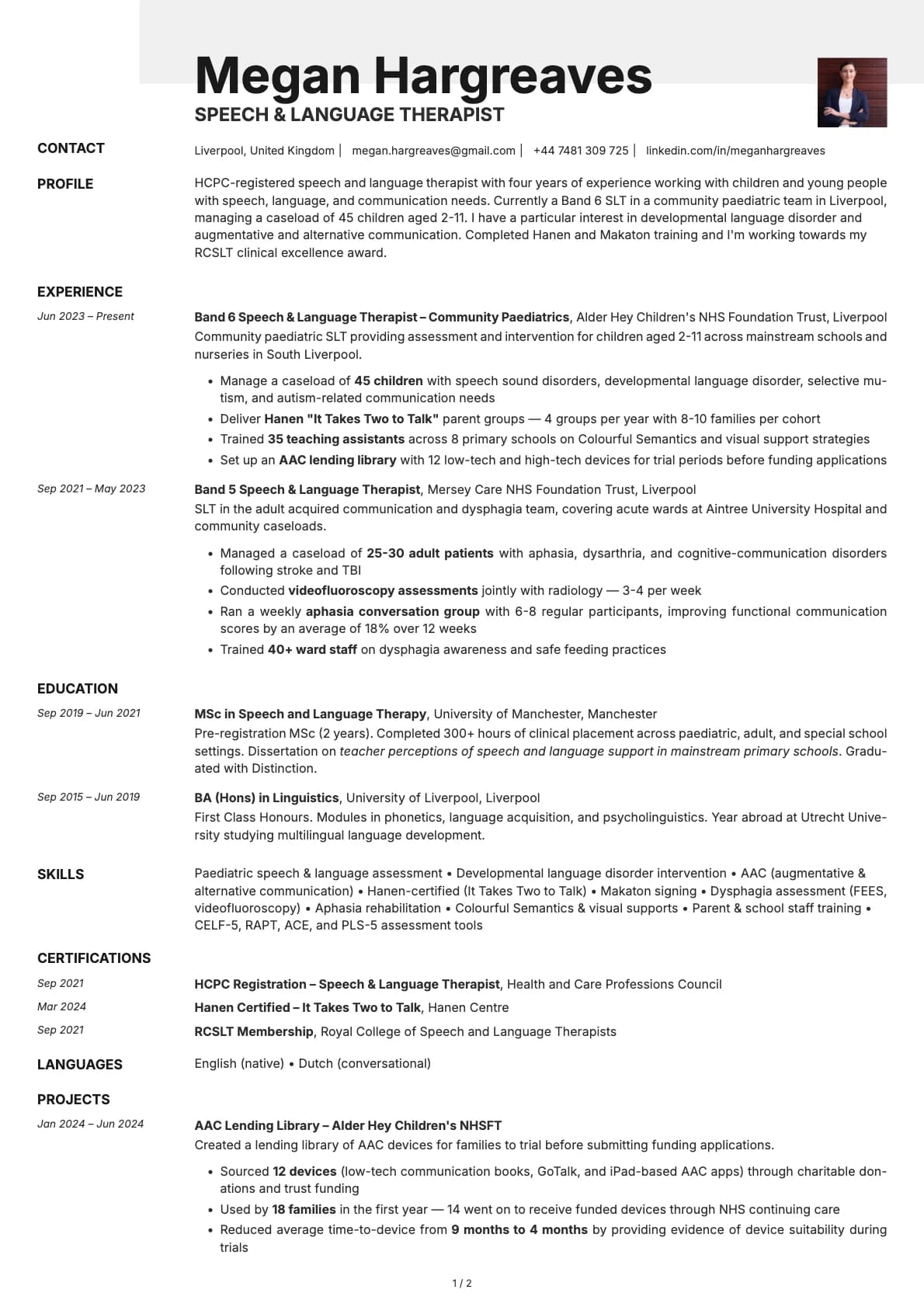
This resume belongs to Megan, a Band 6 SLT working in community paediatrics at Alder Hey Children's NHS Foundation Trust in Liverpool. She has four years of experience spanning both paediatric and adult acquired communication, with her MSc from the University of Manchester. What makes this resume work is the specificity. Caseload numbers, assessment tools named by abbreviation, parent group sizes, and a project with real outcomes.
Let us go through each section so you can apply the same structure to your own resume.
Write your summary around your band, setting, and caseload
The first thing a hiring manager wants to know: what band are you, what population do you work with, and how big is your caseload?
Here is how this resume handles it:
HCPC-registered speech and language therapist with four years of experience working with children and young people with speech, language, and communication needs. Currently a Band 6 SLT in a community paediatric team in Liverpool, managing a caseload of 45 children aged 2-11.
Three sentences in and the recruiter already knows her registration status, her band, her setting, and her caseload size. Compare that with "experienced speech and language therapist with a strong commitment to improving communication outcomes." That second version tells the reader nothing useful.
For yours: Start with your HCPC registration and years of experience. Then name your current band, setting, and caseload size. If you have a clinical interest (like Megan's focus on DLD and AAC), mention it last.
How to describe your clinical experience
Most SLT resumes list responsibilities. "Provided assessment and intervention for children with SLCN." Every SLT does that. Your resume needs to show the scale and specifics of your work.
Look at what Megan writes for her Band 6 role:
Manage a caseload of 45 children with speech sound disorders, developmental language disorder, selective mutism, and autism-related communication needs
One bullet and the recruiter knows: the caseload size (45), the age range (implied by the setting), and the clinical presentations she handles. That is much more useful than "assess and treat a range of speech and language difficulties."
Then there is this:
Deliver Hanen "It Takes Two to Talk" parent groups. 4 groups per year with 8-10 families per cohort
This tells the recruiter she is Hanen-certified, she runs groups independently, and she can quantify her group therapy workload. If you run any group programmes, write them this way. Name the programme, state how often, and give the numbers.
What about your earlier roles?
For her Band 5 post at Mersey Care, Megan describes adult acquired work:
Ran a weekly aphasia conversation group with 6-8 regular participants, improving functional communication scores by an average of 18% over 12 weeks
Even though she has moved into paediatrics, this bullet shows she can measure outcomes. The 18% improvement on the Conversation Analysis Profile is specific and credible. If you have outcome data from any intervention, include it.
Name your assessment tools
SLT recruiters scan for specific assessment tools that match their service requirements. This resume lists CELF-5, RAPT, ACE, and PLS-5 in the skills section. If the job spec mentions any of these, having them on your resume is a direct keyword match.
One thing Megan does well is separating clinical tools from broader skills. Her skills list includes both assessment tools and broader competencies like "Parent & school staff training." This makes it easy for the recruiter to scan.
For your resume: If you are paediatric, list your go-to assessments (CELF, RAPT, PLS, BPVS, ACE). If you are in adult acquired, list your aphasia batteries (CAT, PALPA, BDAE) and dysphagia tools (FEES, videofluoroscopy). If you do both, group them clearly.
Projects that show clinical impact
Megan includes two projects. The standout is the AAC Lending Library she set up at Alder Hey:
Sourced 12 devices through charitable donations and trust funding. Used by 18 families in the first year. 14 went on to receive funded devices through NHS continuing care. Reduced average time-to-device from 9 months to 4 months.
This is excellent because it shows initiative beyond the day-to-day caseload. She identified a problem (families waiting too long for AAC devices), built a solution, and can prove the impact with numbers. You do not need to create a lending library to have a project worth including. An audit, a training programme you developed, or a pathway you redesigned all count.
The format is simple: state the problem, describe what you did, and give the outcome.
Certifications and CPD matter more than you think
For SLT roles, your HCPC registration goes first. Always. After that, list relevant specialist training.
Megan includes her Hanen certification and RCSLT membership. If you have completed Makaton training, Derbyshire Language Scheme, Elklan, or any other specialist programme, list it. These are direct keyword matches for many job specs.
She also mentions working towards her RCSLT clinical excellence award in the summary. Listing in-progress qualifications shows career development without overclaiming. Include an expected completion date if you have one.
Mistakes that trip up SLT applicants
Vague caseload descriptions. "Managed a caseload of children with SLCN" tells the recruiter nothing. How many children? What age range? What conditions? Be specific.
Not naming your assessment tools. If the job spec asks for experience with CELF-5 and you just write "carried out standardised assessments," you have missed a free keyword match.
Ignoring training and supervision experience. From Band 6 upward, you are expected to train others. Megan trained 35 teaching assistants across 8 schools and trained 40+ ward staff on dysphagia awareness. If you have trained anyone, put a number on it.
Using a creative template with sidebars. Many NHS trusts use ATS systems that cannot parse columns or text boxes. Stick with a clean, single-column layout.
One more thing
Read the person specification before you apply. NHS SLT posts are scored against it. If the spec says "experience with augmentative and alternative communication," the phrase needs to appear somewhere on your resume. If it says "evidence of multi-disciplinary working," you need a bullet that explicitly mentions working with other professionals.
Match their language exactly. If they call it "speech, language, and communication needs," use that phrase. If they say "dysphagia," do not substitute "swallowing difficulties" even though it means the same thing. The shortlisting panel and the ATS are both looking for their words.
Build your own version
Open this layout in the builder and swap in your own details. It takes a few minutes.
Free to use. No account needed to start.
Was this resume example helpful?
Rate this example to help us create better content for you.
4.7 average from 134 ratingsRelated resume examples
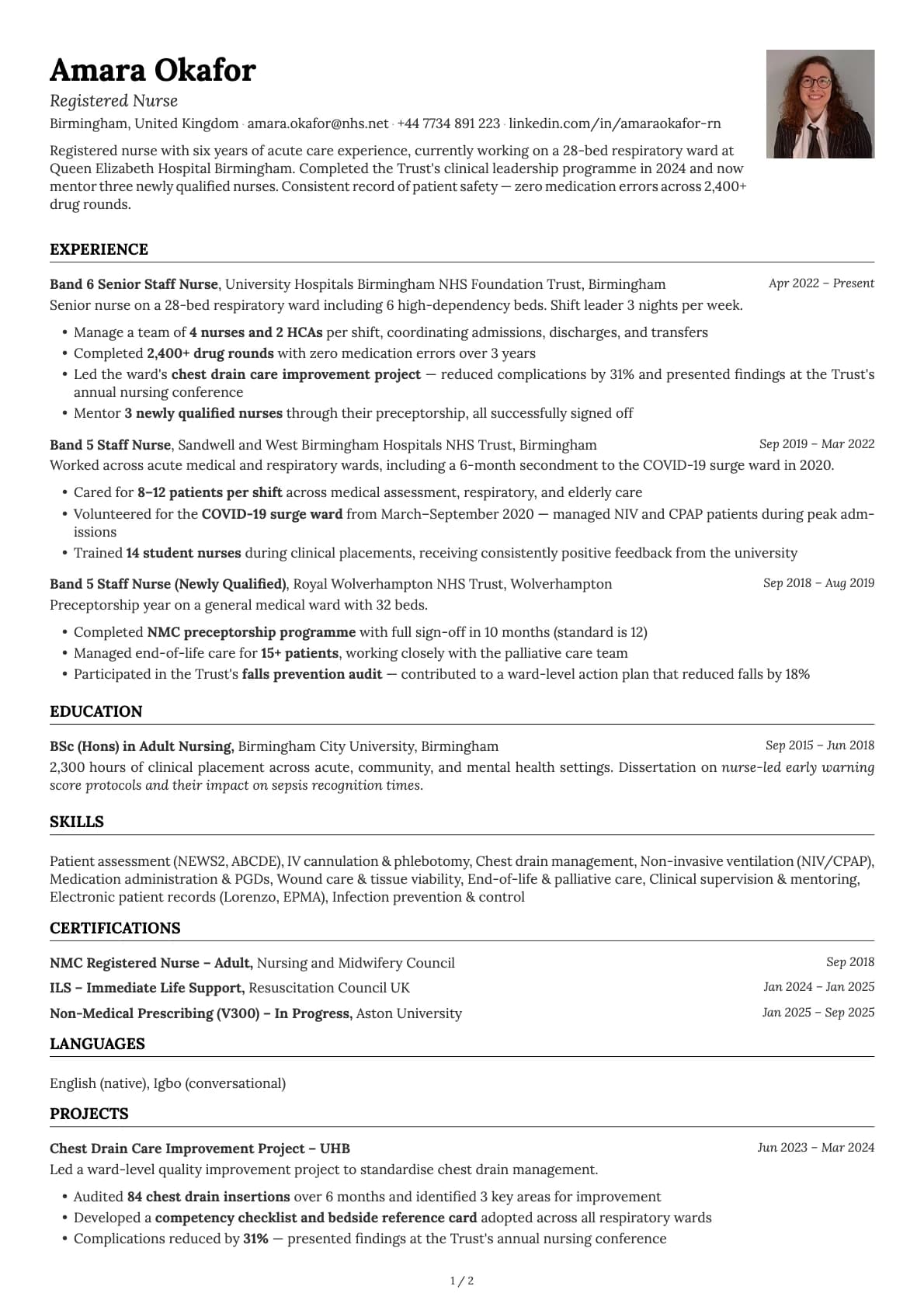
Registered Nurse
A registered nurse resume example with 6 years of acute care experience at NHS hospitals.
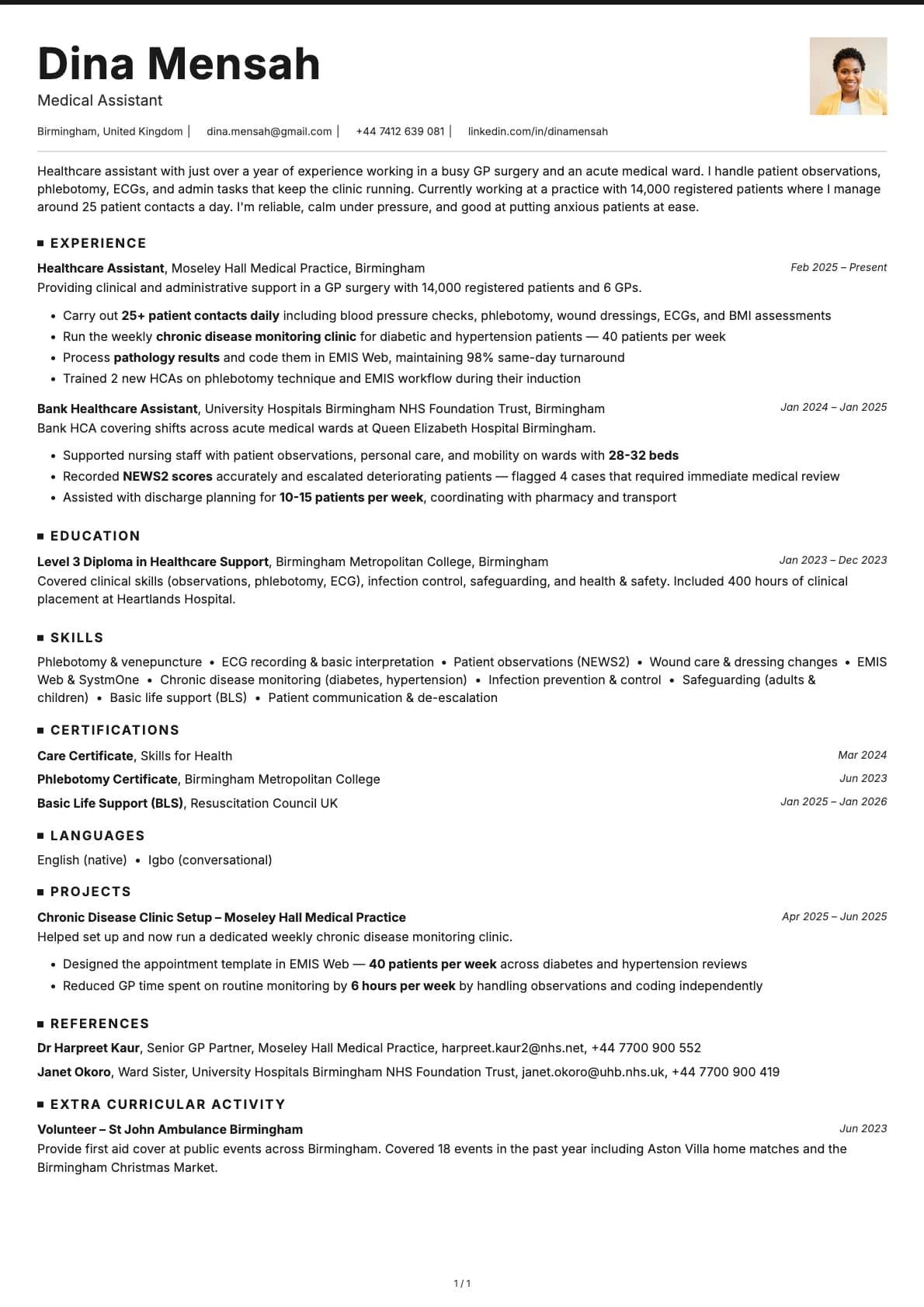
Medical Assistant
A medical assistant resume example with patient contact numbers, clinical skills, and GP surgery experience.
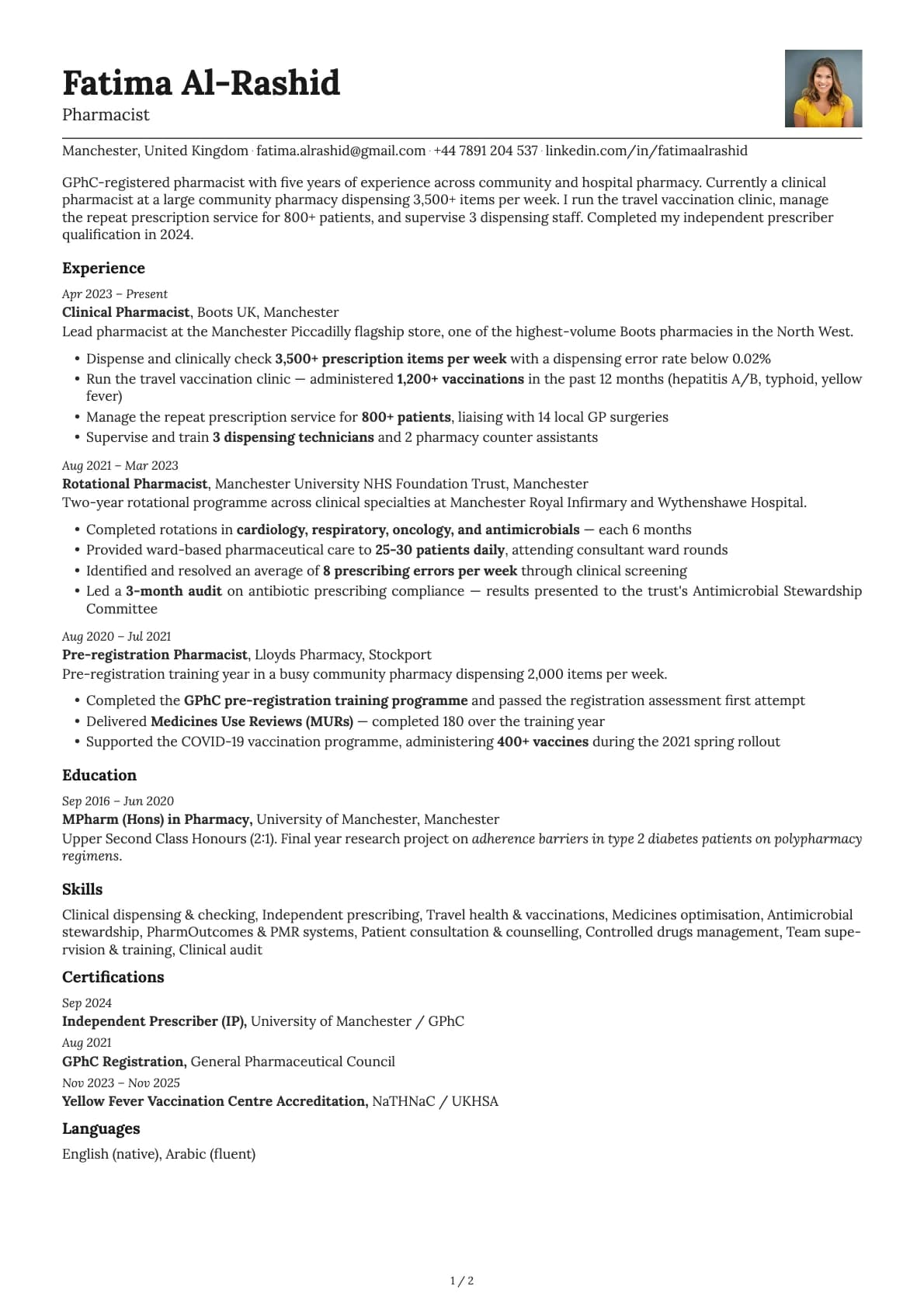
Pharmacist
A pharmacist resume example with community and hospital experience, clinical audit results, and vaccination clinic numbers.
Physician
A physician resume example from a consultant in acute medicine with quality improvement projects, publications, and clinical leadership.
Dentist
A dentist resume example with mixed NHS and private practice experience in London.
Occupational Therapist
An occupational therapist resume example with caseload details, OT assessment tools, and QI project outcomes.
Veterinarian
A veterinarian resume example with 5 years of small animal practice experience.
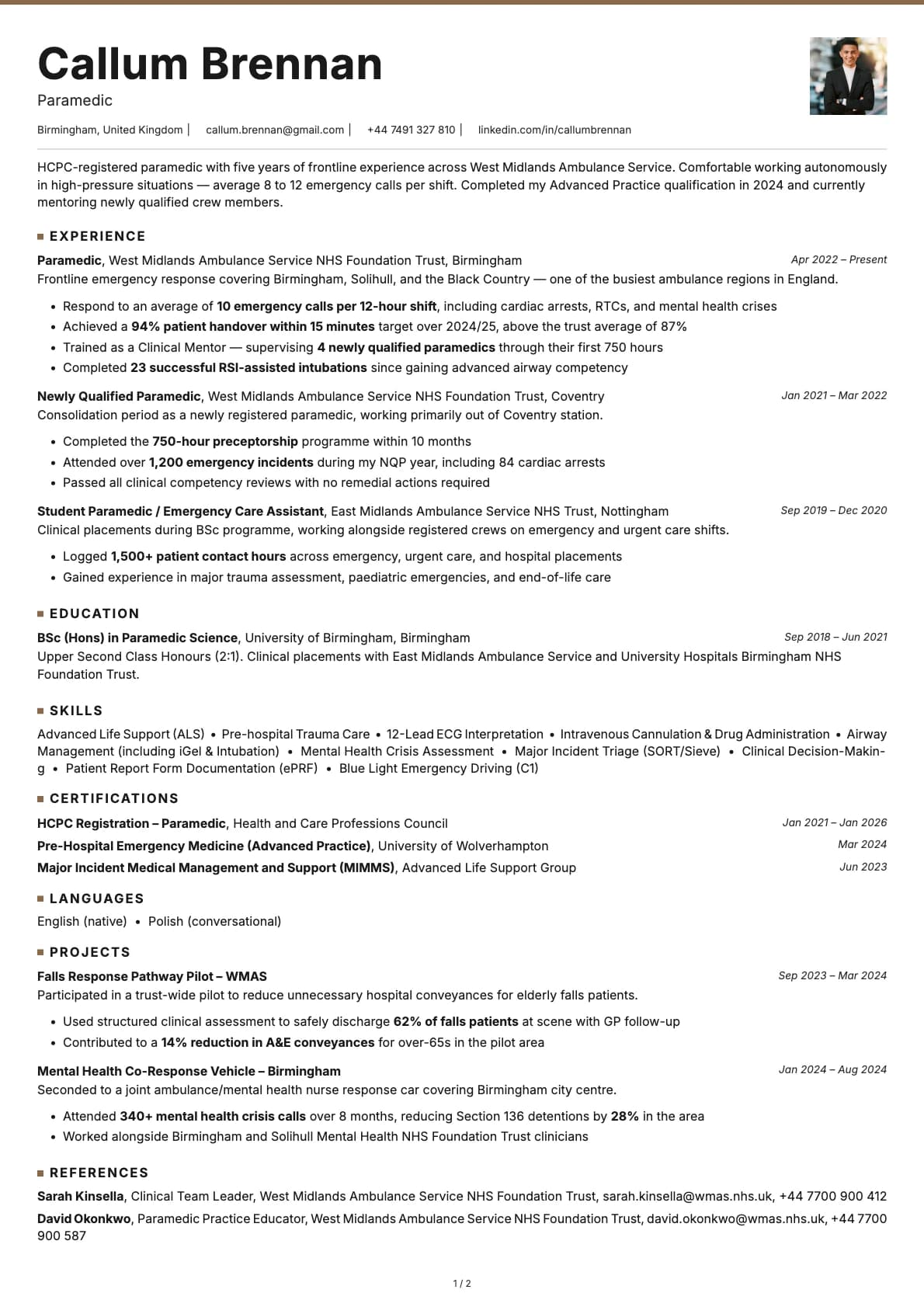
Paramedic
A paramedic resume example with call volumes, clinical competencies, and mentoring experience.
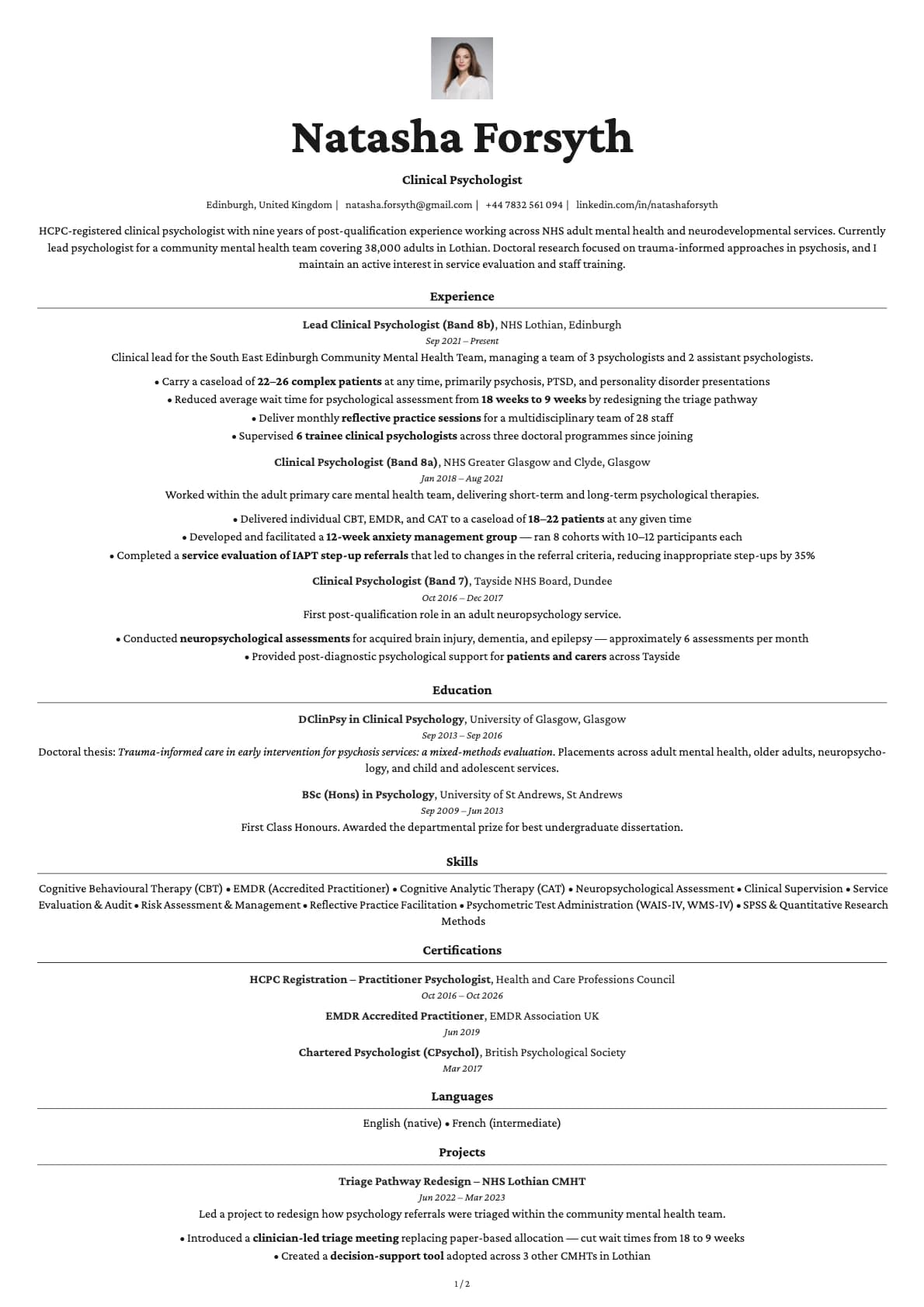
Clinical Psychologist
A clinical psychologist resume example with 9 years of NHS experience across community mental health and neuropsychology.
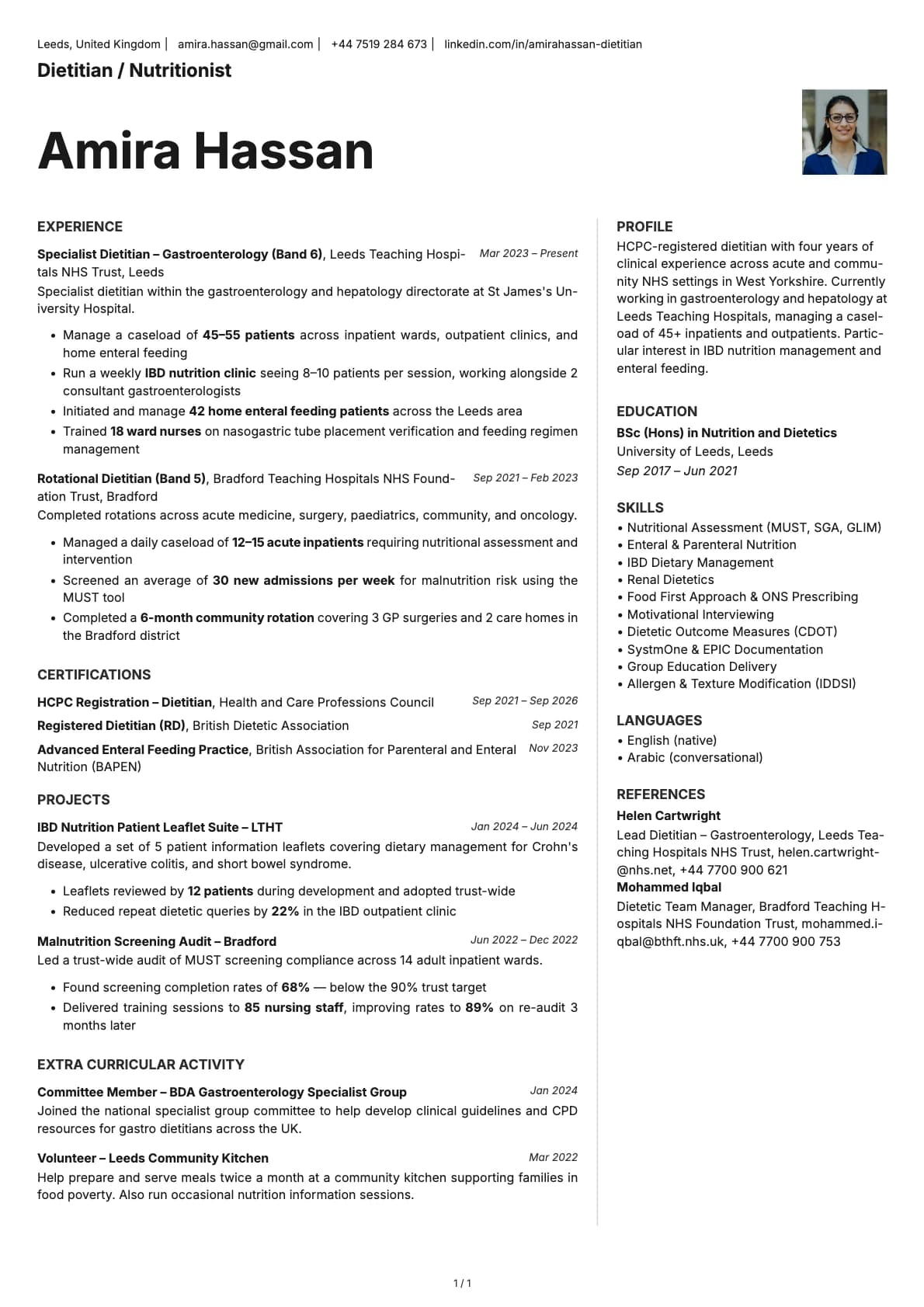
Dietitian / Nutritionist
A dietitian resume example with NHS clinical experience in gastroenterology and community nutrition.
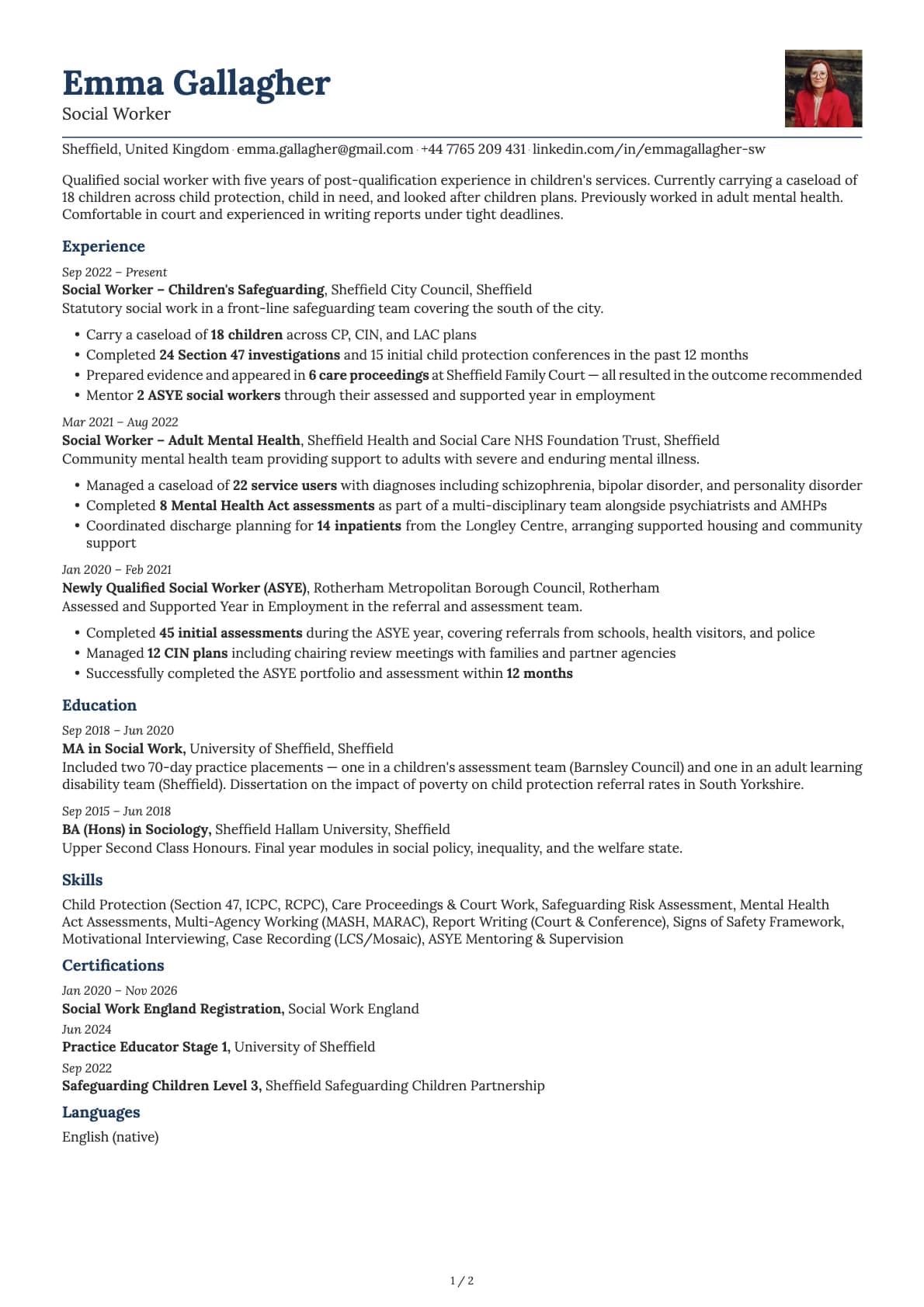
Social Worker
A social worker resume example with caseload numbers, court work, and multi-agency experience.
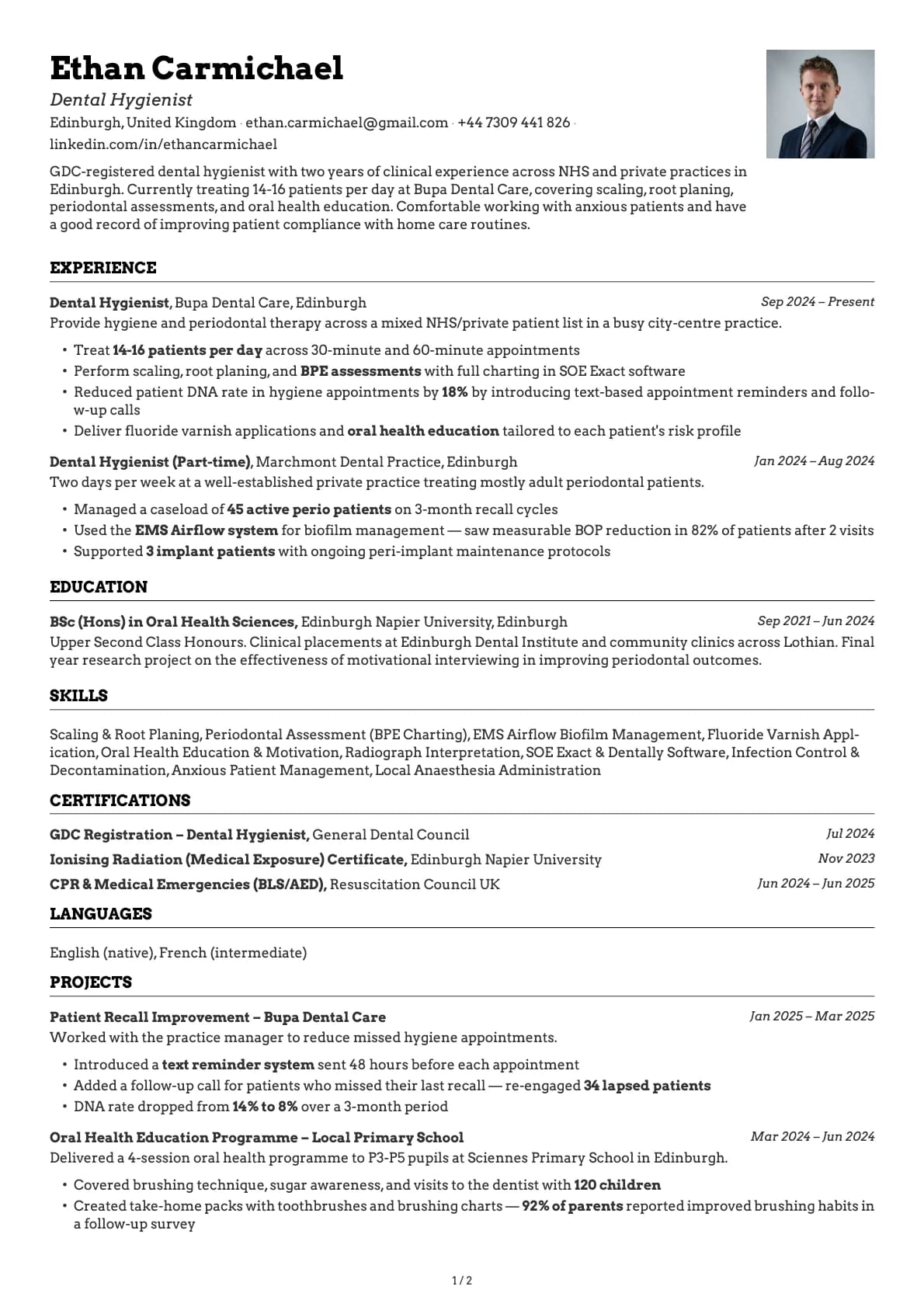
Dental Hygienist
A dental hygienist resume example with NHS and private practice experience in Edinburgh.
Related articles

AI Is Screening Your Resume Before Any Human Sees It
AI screens most resumes before a human ever reads them. 97.4% of Fortune 500 companies run an ATS. This is what that means for you and what you can do about it.

The Best Resume Builders in 2026, Compared Honestly
Resume.io, Zety, Enhancv, Kickresume, Teal, and Laddro compared honestly: real pricing, free tiers, mobile apps, and where each tool wins. All prices checked in September 2026.

Burnout Recovery: A Real Timeline, Not 'Take a Bubble Bath'
55% of the U.S. workforce is burned out. Recovery takes 3 to 12 months. Here's what that actually looks like, stage by stage.