DevOps Engineer Resume Example
A DevOps engineer resume example with infrastructure experience at Booking.com and AO.com.

Laddro Team
Free to use. No account needed to start.
Free to use. No account needed to start.
Overview
DevOps engineer resumes are often just a wall of tools. Kubernetes, Terraform, Docker, Jenkins, AWS, GCP, Ansible, Prometheus, Grafana. The list goes on. But a hiring manager scanning your resume does not want a technology inventory. They want to know: what did you build, how big was it, and did it actually make things more reliable?
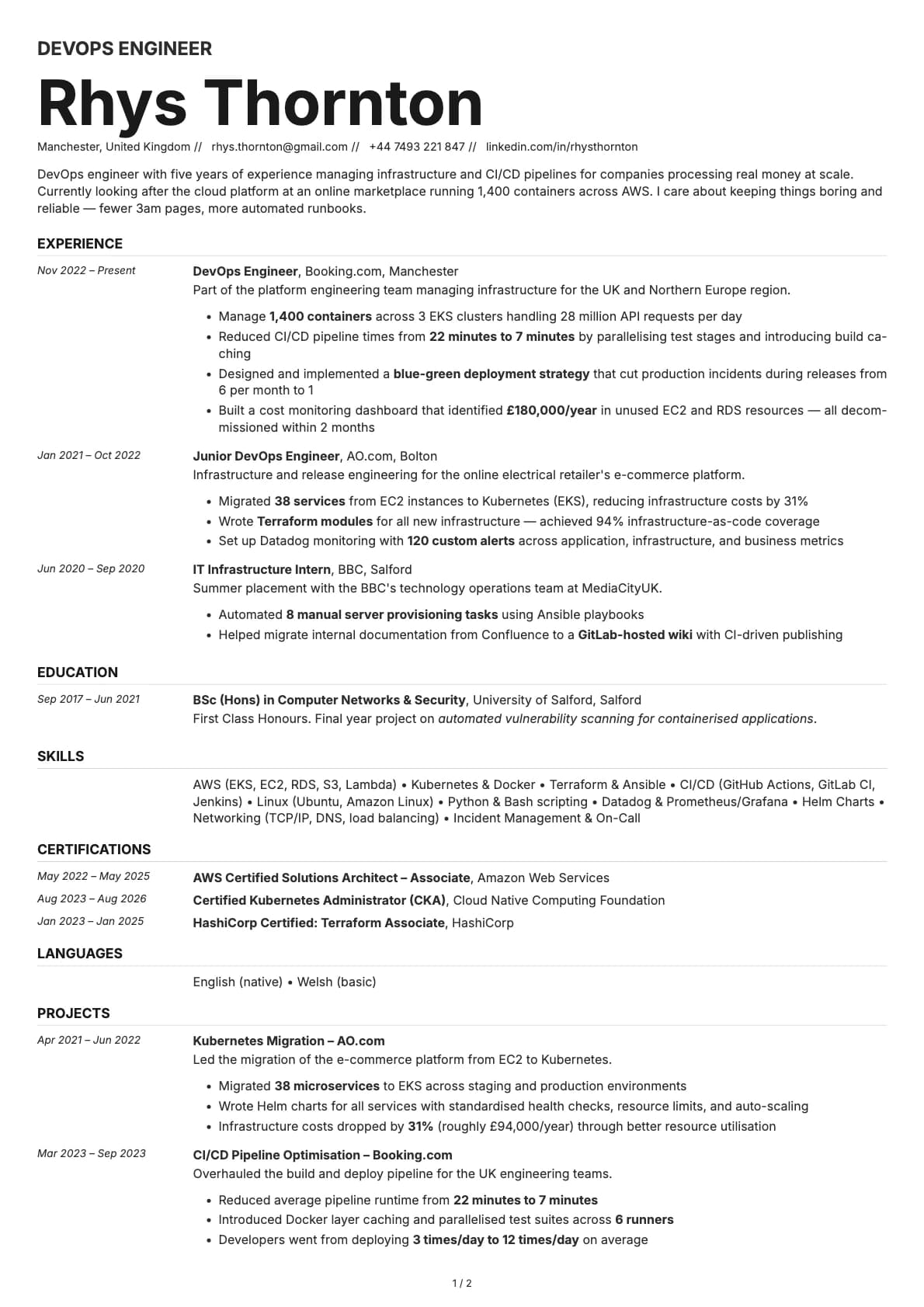
This resume belongs to a DevOps engineer with five years of experience, currently at Booking.com managing 1,400 containers across 3 EKS clusters that handle 28 million API requests per day. Before that, he migrated 38 services from EC2 to Kubernetes at AO.com. Every bullet on this resume ties a tool to a scale number to a business outcome. That is what makes it work.
Summary: infrastructure scale and philosophy
A DevOps engineer summary should tell the reader what kind of infrastructure you manage, at what scale, and how you think about the work.
Here is this one:
DevOps engineer with five years of experience managing infrastructure and CI/CD pipelines for companies processing real money at scale. Currently looking after the cloud platform at an online marketplace running 1,400 containers across AWS. I care about keeping things boring and reliable, fewer 3am pages, more automated runbooks.
The "boring and reliable" line is doing real work. It tells the hiring manager this person values stability over novelty. In DevOps, that is exactly the right mindset. Nobody wants an infrastructure engineer who is excited about rebuilding things that already work.
For yours: State your experience level and what you manage (containers, pipelines, cloud infrastructure). Include one scale metric (container count, request volume, number of services). Then add one line about how you approach the work.
Experience: scale, speed, and savings
DevOps bullets need three things: what you manage, how big it is, and what improved.
Look at these:
"Manage 1,400 containers across 3 EKS clusters handling 28 million API requests per day"
That is a scope bullet. No result, just scale. And it works because the numbers speak for themselves. 1,400 containers and 28 million daily requests is a serious production environment.
"Reduced CI/CD pipeline times from 22 minutes to 7 minutes by parallelising test stages and introducing build caching"
Before-and-after with a specific technique. The hiring manager now knows this person can diagnose slow pipelines and fix them. The method (parallelising tests, build caching) shows technical depth.
"Built a cost monitoring dashboard that identified £180,000/year in unused EC2 and RDS resources, all decommissioned within 2 months"
Cost optimisation is one of the most valued DevOps skills right now. Every company wants to spend less on cloud. If you have ever found and eliminated waste, put a number on it.
The formula for each bullet: What you did + what tools you used + what the measurable outcome was (speed, cost, reliability, or deployment frequency).
Migrations are resume gold
The AO.com role centres on a Kubernetes migration:
"Migrated 38 services from EC2 instances to Kubernetes (EKS), reducing infrastructure costs by 31%"
"Wrote Terraform modules for all new infrastructure, achieved 94% infrastructure-as-code coverage"
Migrations are one of the most impressive things you can put on a DevOps resume. They are complex, risky, and high-impact. If you have been involved in any migration (cloud to cloud, monolith to microservices, VMs to containers), describe it with the number of services migrated and the result.
The "94% infrastructure-as-code coverage" is a great detail too. It tells the reader the team is almost fully automated and this person drove that effort.
Certifications: match them to your tools
This resume includes three certifications that directly match the work described:
- AWS Solutions Architect (matches the AWS infrastructure)
- Certified Kubernetes Administrator (matches the EKS clusters)
- HashiCorp Terraform Associate (matches the IaC work)
Each cert reinforces something already on the resume. That is the right approach. Do not collect certifications for tools you do not use. Instead, get certified in the tools you work with daily. It validates your experience and helps with ATS keyword matching.
If you are early in your DevOps career, the AWS Solutions Architect Associate is the most broadly useful starting point. Follow it with CKA if you work with Kubernetes, or the Terraform Associate if you work with infrastructure as code.
Deployment frequency: the metric nobody includes
One bullet on this resume is easy to overlook but very telling:
"Developers went from deploying 3 times/day to 12 times/day on average"
Deployment frequency is one of the DORA metrics. It is a direct measure of how well your CI/CD pipeline supports the engineering team. If you have improved deployment frequency, reduced lead time for changes, lowered change failure rate, or cut mean time to recovery, include those numbers. They are the gold standard for measuring DevOps effectiveness.
Mistakes DevOps engineers make on resumes
Listing tools without context. "Experienced with Kubernetes" means nothing. "Manage 1,400 containers across 3 EKS clusters" means everything. Every tool on your resume should have a scale number attached to it somewhere.
No reliability metrics. If you reduced production incidents, improved uptime, or cut mean time to recovery, say so. "Cut production incidents during releases from 6 per month to 1" is a powerful bullet because it shows direct impact on system reliability.
Ignoring the business side. DevOps engineers often forget that cloud costs are a business concern. If you have saved money through right-sizing, spot instances, reserved capacity, or decommissioning unused resources, include the figure. £180,000 per year in cloud savings gets attention from hiring managers and their bosses.
Using a two-column template. DevOps resumes go through ATS systems just like any other tech role. Stick with a single-column, clean layout. This resume uses Zinc, which is readable and ATS-safe.
One final thought
The best DevOps resumes read like infrastructure case studies. What was the problem? What did you build? What improved? If every bullet on your resume answers those three questions, you are already ahead of most applicants who just list their tool stack and call it a day.
Build your own version
Open this layout in the builder and swap in your own details. It takes a few minutes.
Free to use. No account needed to start.
Was this resume example helpful?
Rate this example to help us create better content for you.
4.8 average from 137 ratingsRelated resume examples
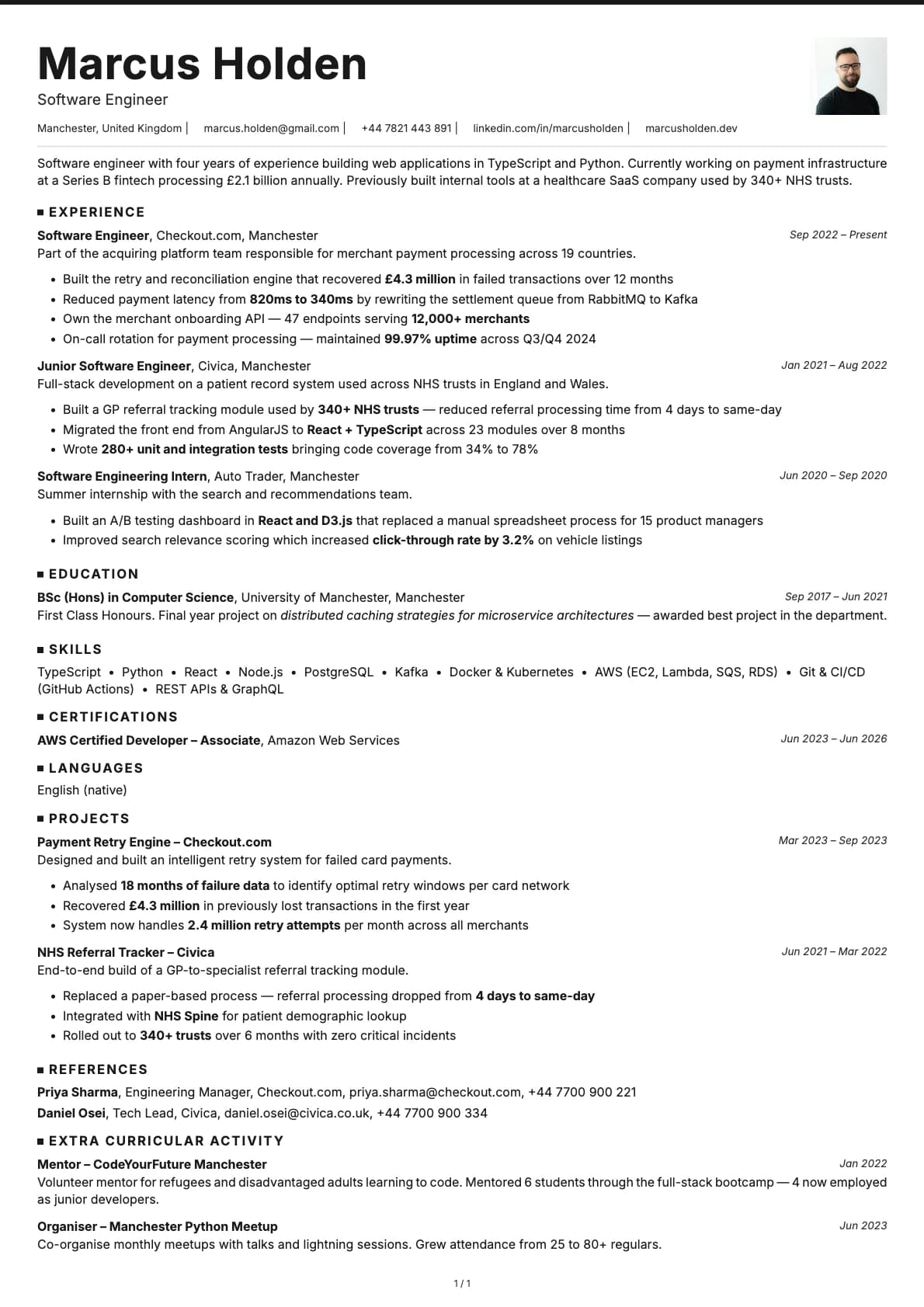
Software Engineer
A software engineer resume example with practical tips on how to write your tech stack, quantify your impact, and get past ATS screening.
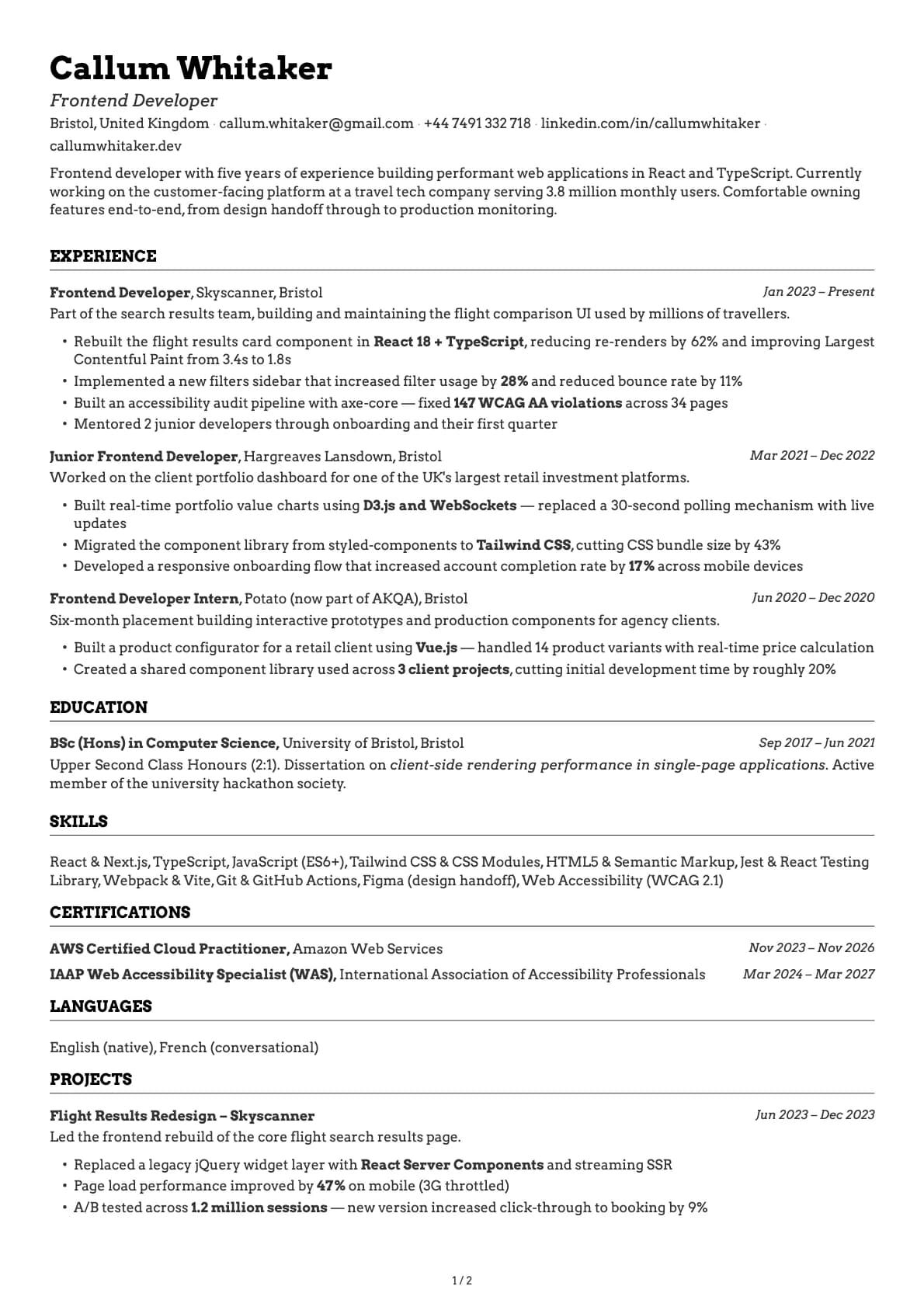
Frontend Developer
A frontend developer resume example with React and TypeScript experience at Skyscanner and Hargreaves Lansdown.
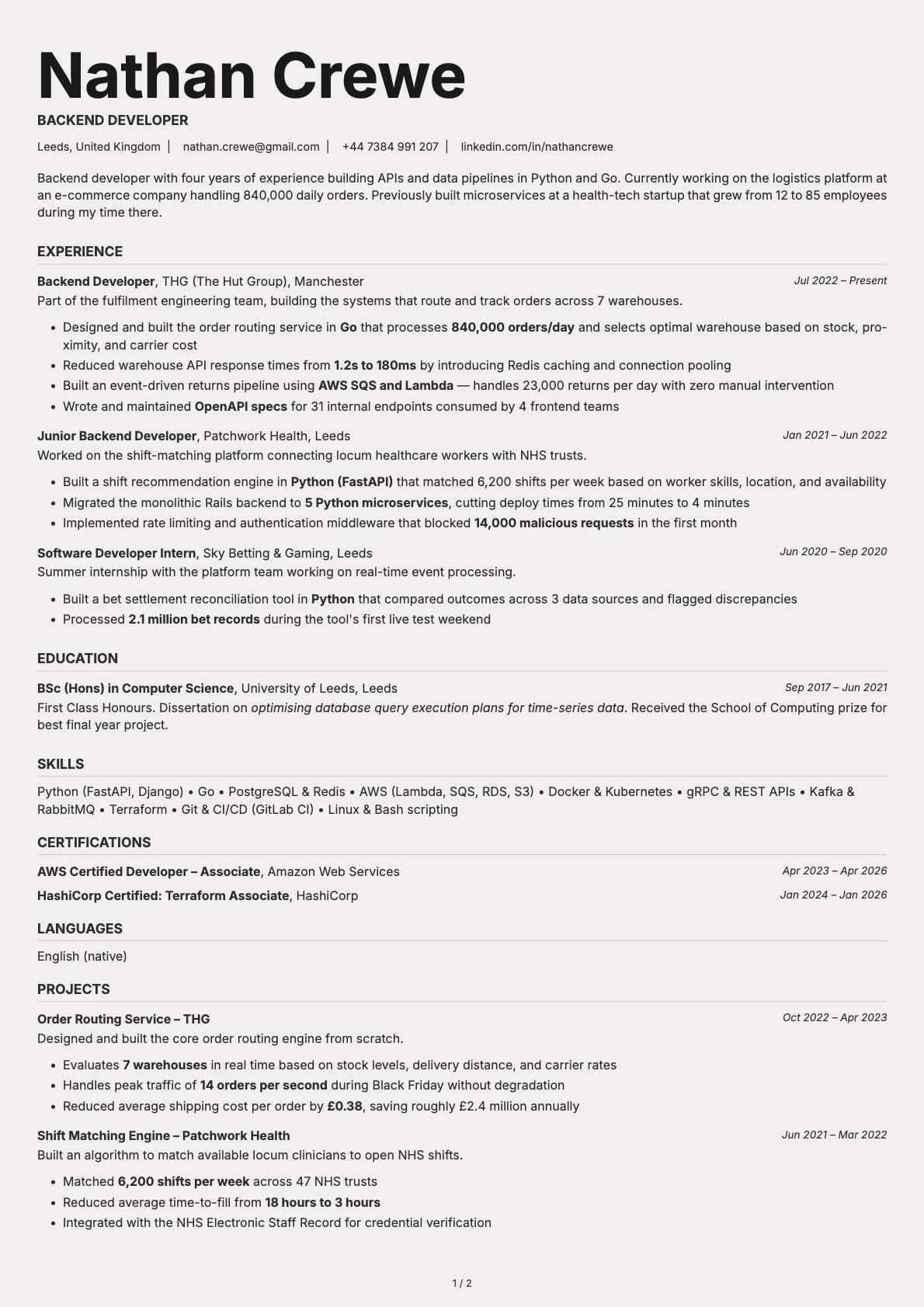
Backend Developer
A backend developer resume example with Go and Python experience, system throughput numbers, and infrastructure projects across e-commerce and health-tech.
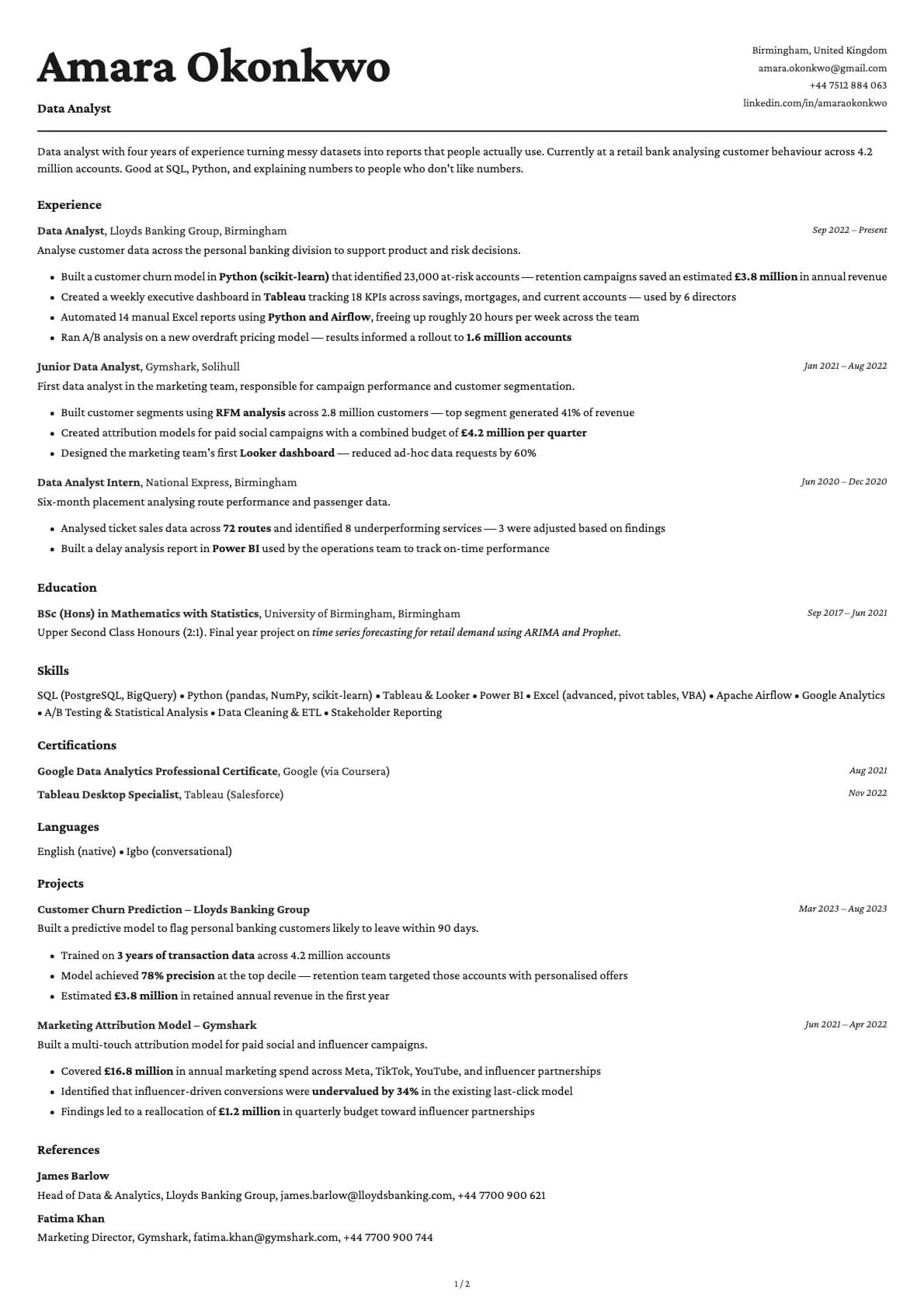
Data Analyst
A data analyst resume example with experience at Lloyds Banking Group and Gymshark.
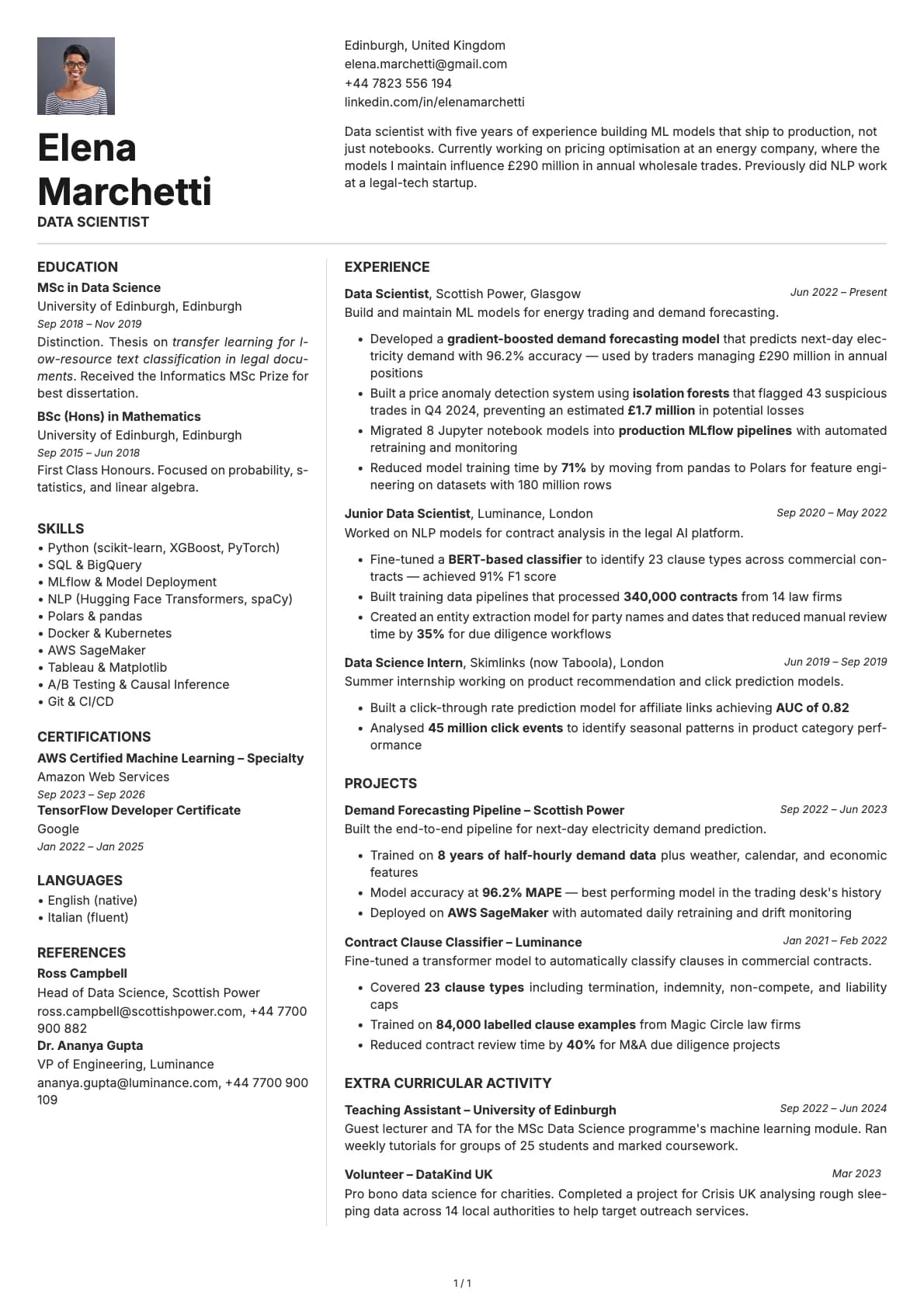
Data Scientist
A data scientist resume example with ML production experience at Scottish Power and NLP work at Luminance.
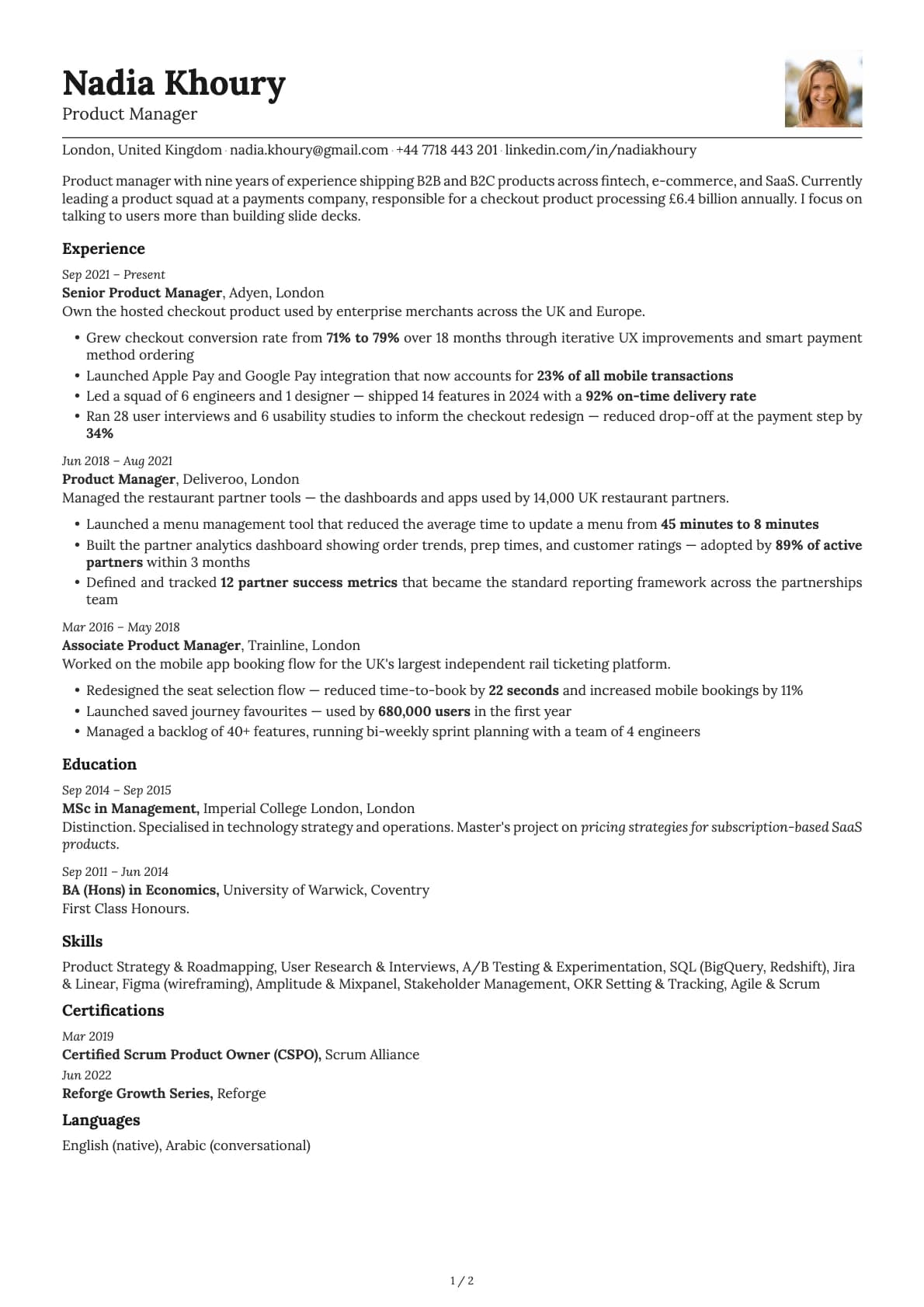
Product Manager
A product manager resume example showing how to present user research, conversion metrics, and feature launches with real business outcomes.
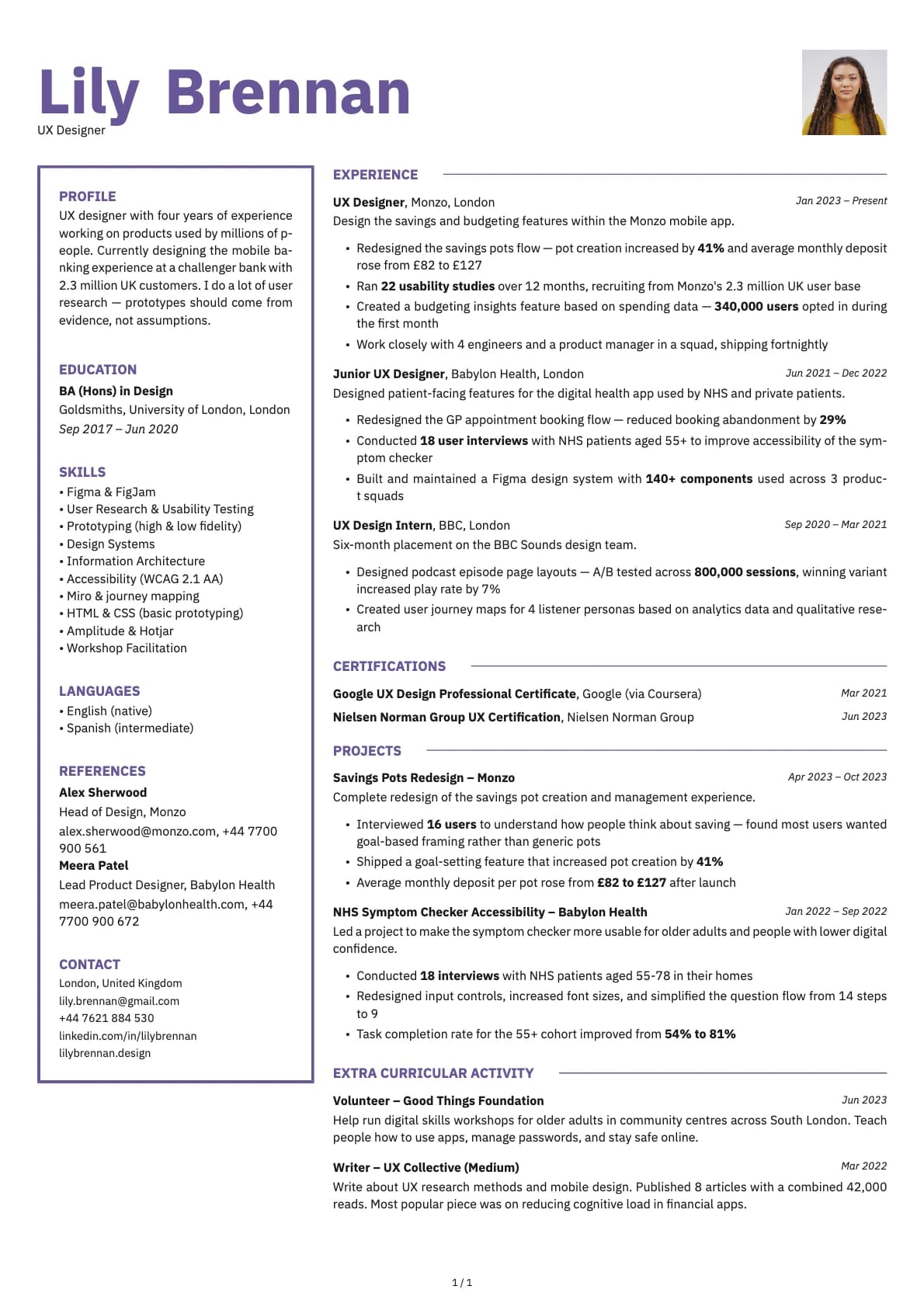
UX Designer
A UX designer resume example with 4 years of product design experience at Monzo and Babylon Health.
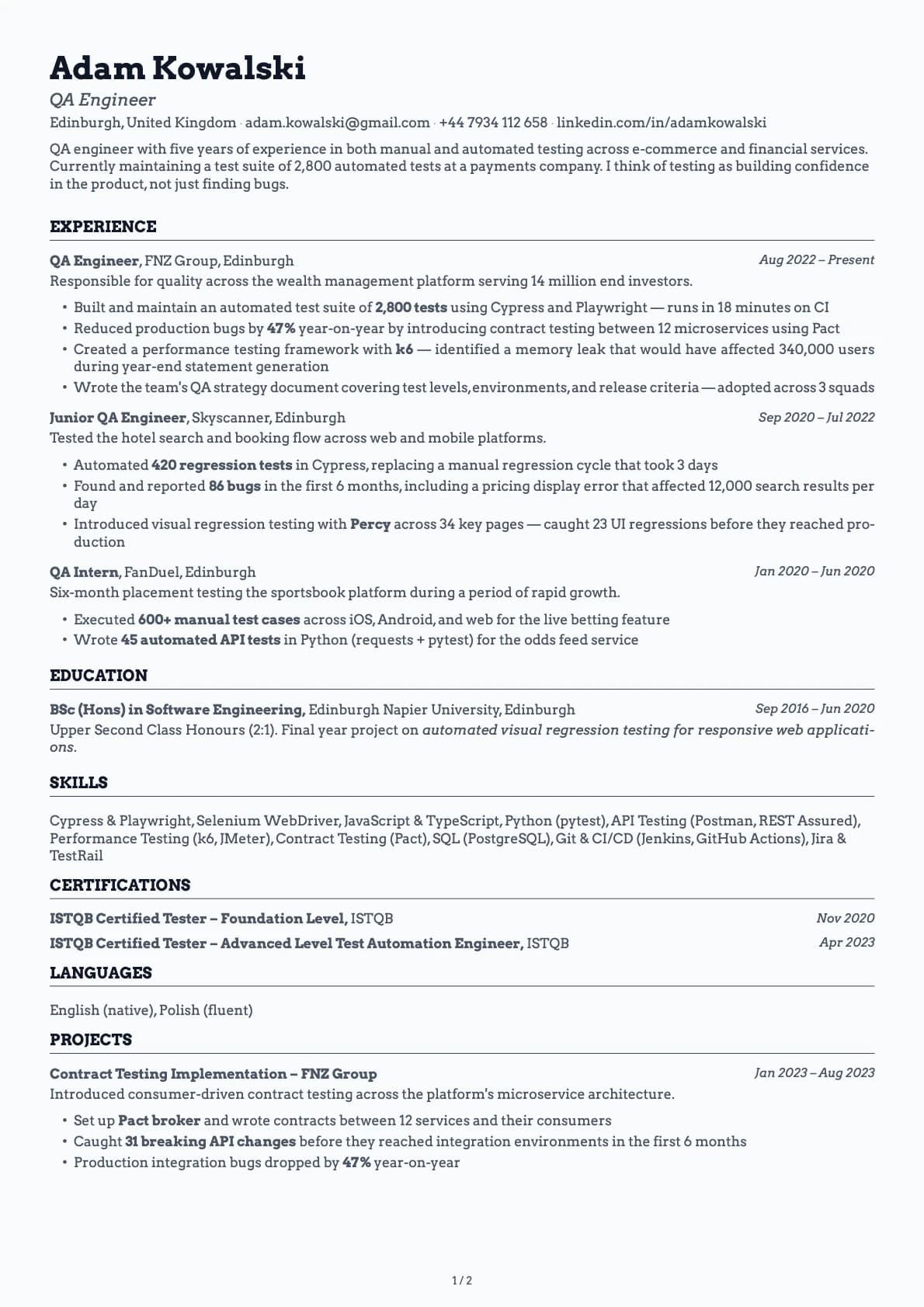
QA Engineer
A QA engineer resume example with automated test suite numbers, production bug reduction, and contract testing implementation details.
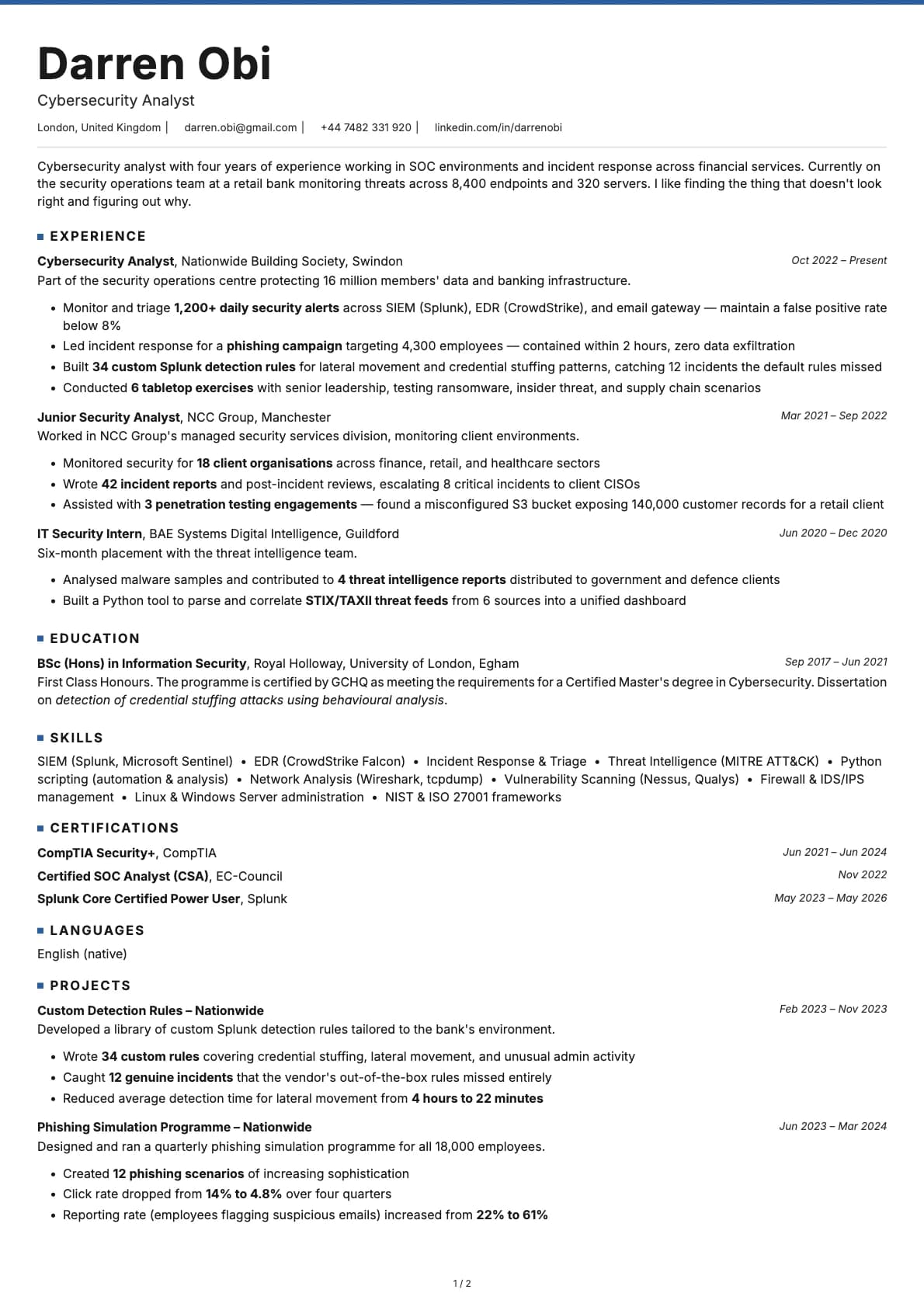
Cybersecurity Analyst
A cybersecurity analyst resume example with SOC experience at Nationwide and NCC Group.
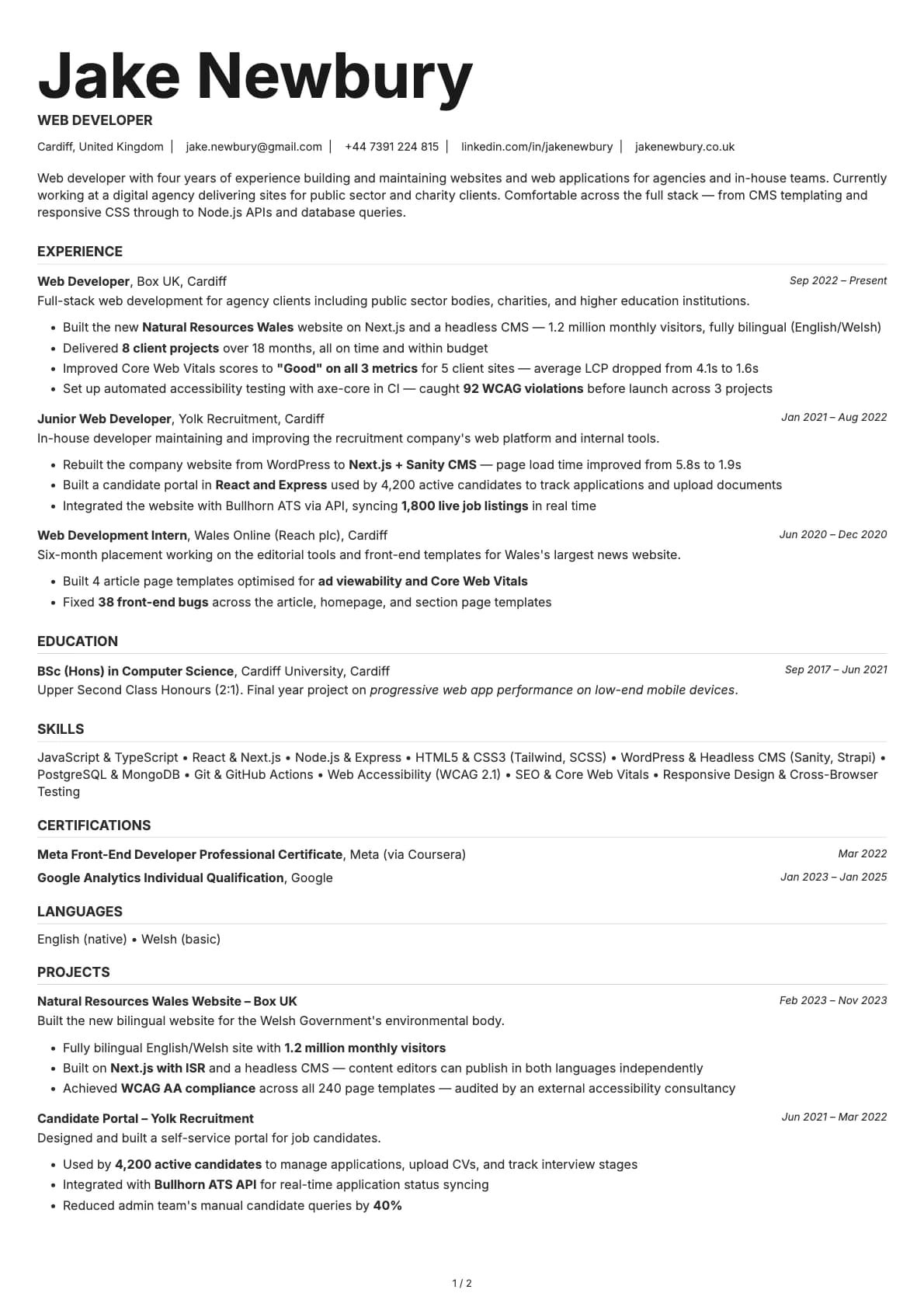
Web Developer
A web developer resume example with agency and in-house experience building Next.js sites, improving Core Web Vitals, and delivering accessible public.
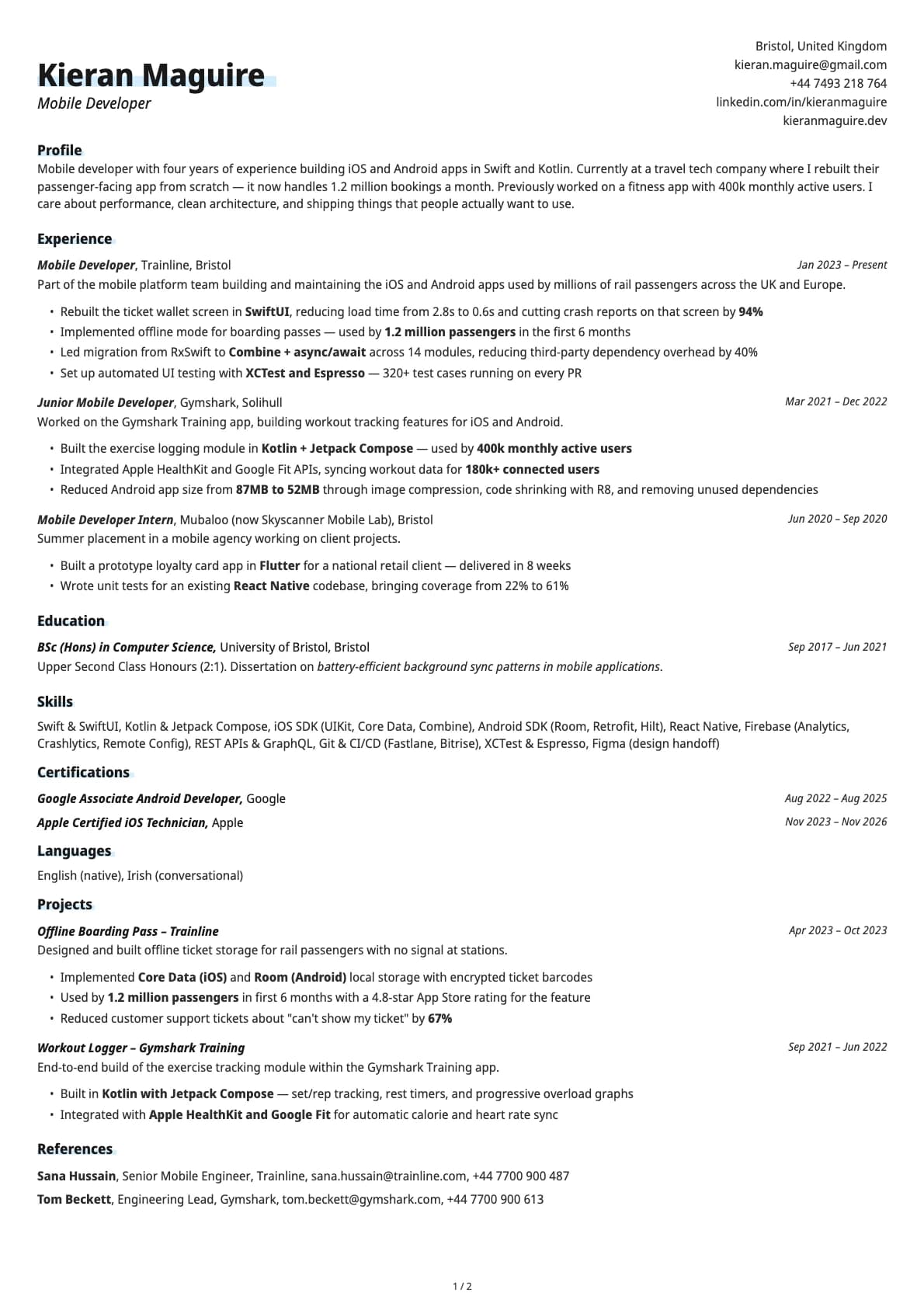
Mobile Developer
A mobile developer resume example with iOS and Android experience, performance metrics, and real app user numbers.
Help Desk / IT Support Technician
A help desk technician resume example with NHS IT support experience.
IT Project Manager
An IT project manager resume example with cloud migration, programme budgets up to £8.5 million, and PRINCE2/Scrum certifications.
Related articles

AI Is Screening Your Resume Before Any Human Sees It
AI screens most resumes before a human ever reads them. 97.4% of Fortune 500 companies run an ATS. This is what that means for you and what you can do about it.

ATS Resume Checker: How to Format a CV That Gets Past the Filters
Run the free copy and paste test to see what an ATS actually reads on your CV, then fix the tables, columns and headings that quietly get you filtered out.

The Best Resume Builders in 2026, Compared Honestly
Resume.io, Zety, Enhancv, Kickresume, Teal, and Laddro compared honestly: real pricing, free tiers, mobile apps, and where each tool wins. All prices checked in September 2026.