Data Analyst Resume Example
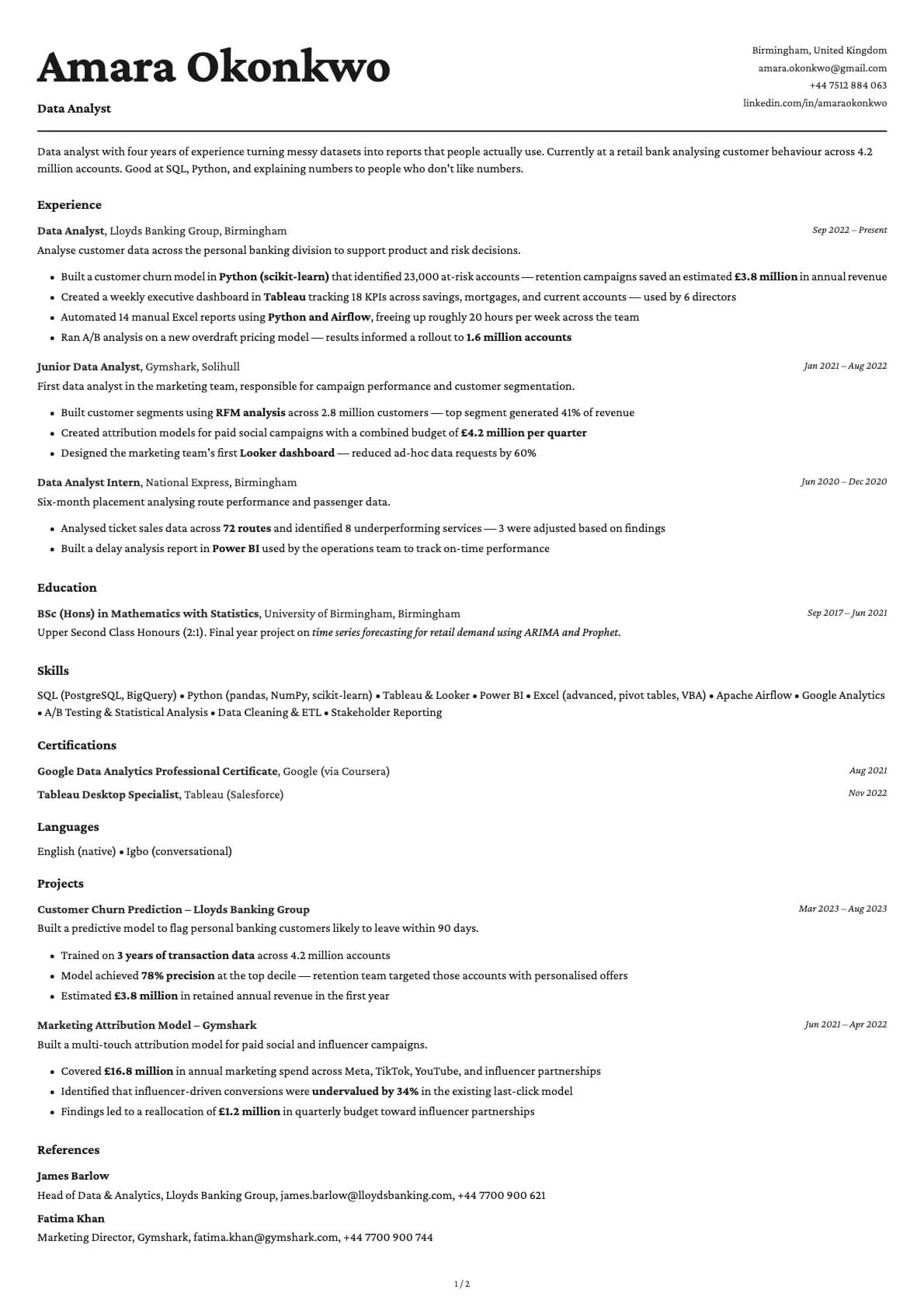
A data analyst resume example with experience at Lloyds Banking Group and Gymshark.

Laddro Team
Free to use. No account needed to start.
Free to use. No account needed to start.
Overview
Data analyst resumes are full of tools. SQL, Python, Tableau, Power BI, Excel. Everyone lists them. But listing tools is not the same as showing what you did with them. A hiring manager does not care that you know pandas. They care that you used pandas to build something that saved the company money or changed a decision.
This resume belongs to a data analyst with four years of experience, currently at Lloyds Banking Group analysing customer behaviour across 4.2 million accounts. Before that, she was the first data analyst on the marketing team at Gymshark. What makes this resume strong is not the tool list. It is the fact that every bullet connects a technical skill to a business outcome.
Your summary: what you analyse, not just how
A data analyst summary should tell the reader what domain you work in, what scale of data you handle, and what kind of decisions your work supports.
Here is this one:
Data analyst with four years of experience turning messy datasets into reports that people actually use. Currently at a retail bank analysing customer behaviour across 4.2 million accounts. Good at SQL, Python, and explaining numbers to people who don't like numbers.
That last line is doing real work. It tells the reader this person can communicate findings to non-technical stakeholders. That skill is often more valuable than the SQL itself.
For yours: Name the domain (banking, e-commerce, marketing), the data volume, and one thing that makes you different. The "explaining to non-technical people" angle works well if it is true.
Experience: connect every tool to a result
This is where most data analyst resumes go wrong. They describe what they built without saying what it did. A dashboard is not impressive. A dashboard that 6 directors use every week to make decisions about mortgages and savings products is impressive.
Look at this bullet:
"Built a customer churn model in Python (scikit-learn) that identified 23,000 at-risk accounts, retention campaigns saved an estimated £3.8 million in annual revenue"
Tool (Python, scikit-learn) plus output (churn model) plus business result (£3.8 million saved). That is the complete picture.
Here is another:
"Automated 14 manual Excel reports using Python and Airflow, freeing up roughly 20 hours per week across the team"
Automation bullets are strong because the benefit is obvious. 20 hours per week is essentially half a person's job. The hiring manager can immediately see the ROI.
The formula: What you built + what tool you used + what happened because of it (in business terms).
Earlier roles: show your growth
The Gymshark role is described as "first data analyst in the marketing team." That is a powerful detail. It tells the reader this person built the function from scratch, not just joined an existing team.
The bullets match that narrative:
"Built customer segments using RFM analysis across 2.8 million customers, top segment generated 41% of revenue"
"Designed the marketing team's first Looker dashboard, reduced ad-hoc data requests by 60%"
"First" anything is worth mentioning. First dashboard, first automated pipeline, first segmentation model. It shows you can build from nothing, which is a completely different skill from maintaining something that already exists.
Even the internship at National Express adds value:
"Analysed ticket sales data across 72 routes and identified 8 underperforming services, 3 were adjusted based on findings"
The key phrase is "3 were adjusted based on findings." That proves someone actually used the analysis to make a decision. If your work influenced a business outcome, always mention it.
Skills: group them logically
This resume lists 10 skills, and they are grouped in a logical order: SQL first (the most-used tool for any data analyst), then Python, then visualisation tools, then supporting skills like A/B testing and stakeholder reporting.
If you know SQL, Python, and at least one visualisation tool (Tableau, Looker, or Power BI), you cover the requirements for most data analyst roles. Do not pad the list with tools you used once in a course. A focused list of tools you use daily is more convincing than a long list of everything you have touched.
One thing to note: this resume includes "Stakeholder Reporting" as a skill. That is not a technical tool. But it is a skill that separates mid-level analysts from juniors. If you regularly present findings to senior leaders, include it.
Projects: go deeper on your best work
The projects section on this resume expands on the churn model and the attribution model mentioned in the experience section. This is smart. It gives the reader more detail about the methodology and scale without making the experience bullets too long.
The attribution model project includes this line:
"Identified that influencer-driven conversions were undervalued by 34% in the existing last-click model"
That is a finding, not just a deliverable. It shows analytical thinking. The reader knows this person did not just build a model. They used it to discover something that changed how the company spent £1.2 million per quarter.
Mistakes data analysts make on their resumes
Leading with tools instead of impact. "Proficient in SQL, Python, Tableau, and Excel" belongs in the skills section, not your summary or experience bullets. Lead with what you did, then mention the tool in parentheses.
No business context. "Created a Tableau dashboard" means nothing without context. Who used it? How often? What decisions did it support? Always connect the technical work to the business question it answered.
Listing Excel as an advanced skill without proof. Everyone claims to be good at Excel. If you genuinely use VBA, pivot tables, or Power Query at an advanced level, mention the specific thing you built with it. Otherwise, leave it lower in the list.
Ignoring data quality work. Cleaning messy data is not glamorous, but it is a huge part of the job. If you built an ETL pipeline, fixed data quality issues, or standardised a dataset, include it. It shows you understand the full lifecycle of analysis.
One last thought
Data analysis is about telling stories with numbers. Your resume should do the same thing. Every bullet should answer: what was the question, what did you find, and what happened next? If you can answer all three for each point on your resume, you are in good shape.
Build your own version
Open this layout in the builder and swap in your own details. It takes a few minutes.
Free to use. No account needed to start.
Was this resume example helpful?
Rate this example to help us create better content for you.
4.8 average from 204 ratingsRelated resume examples
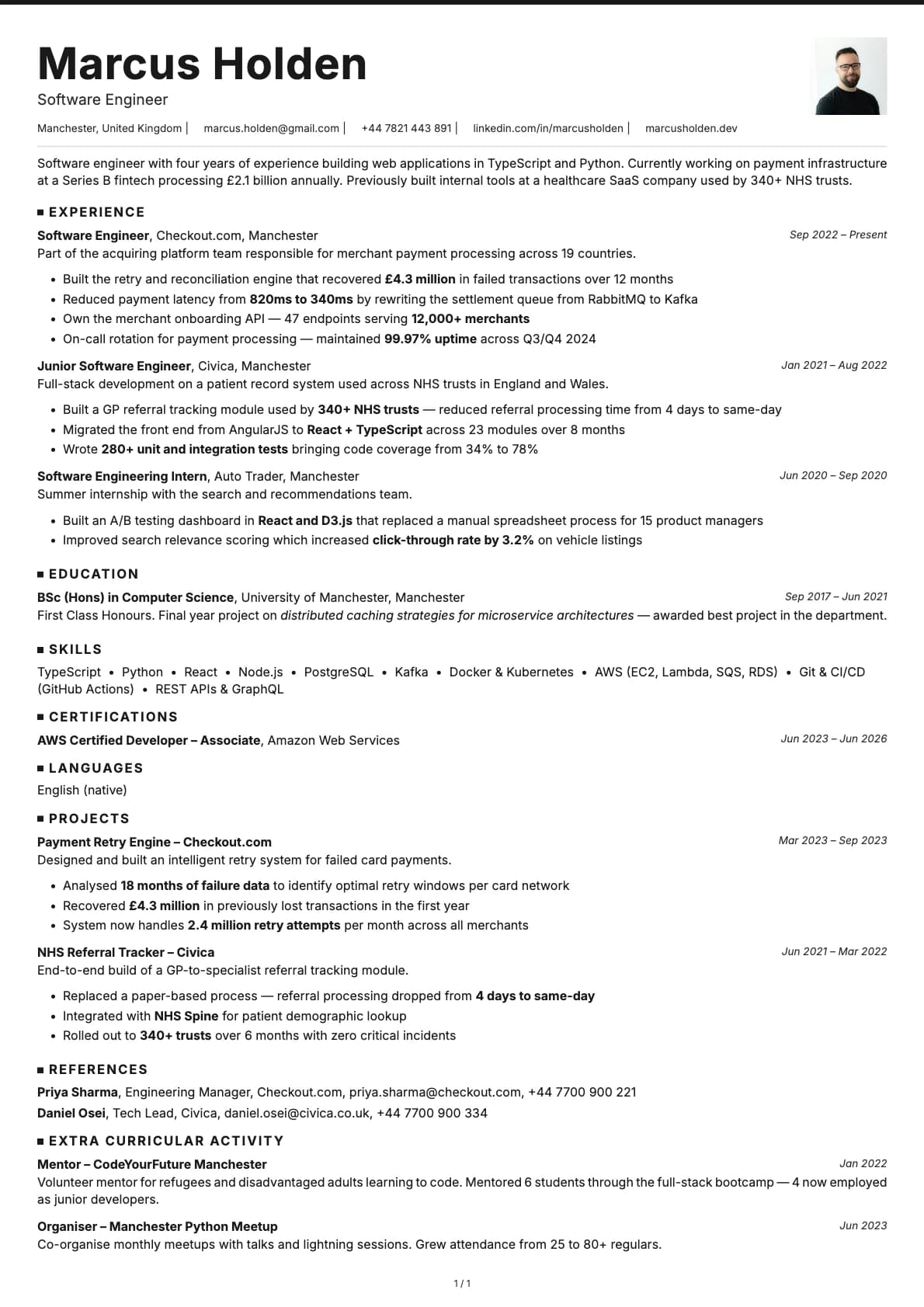
Software Engineer
A software engineer resume example with practical tips on how to write your tech stack, quantify your impact, and get past ATS screening.
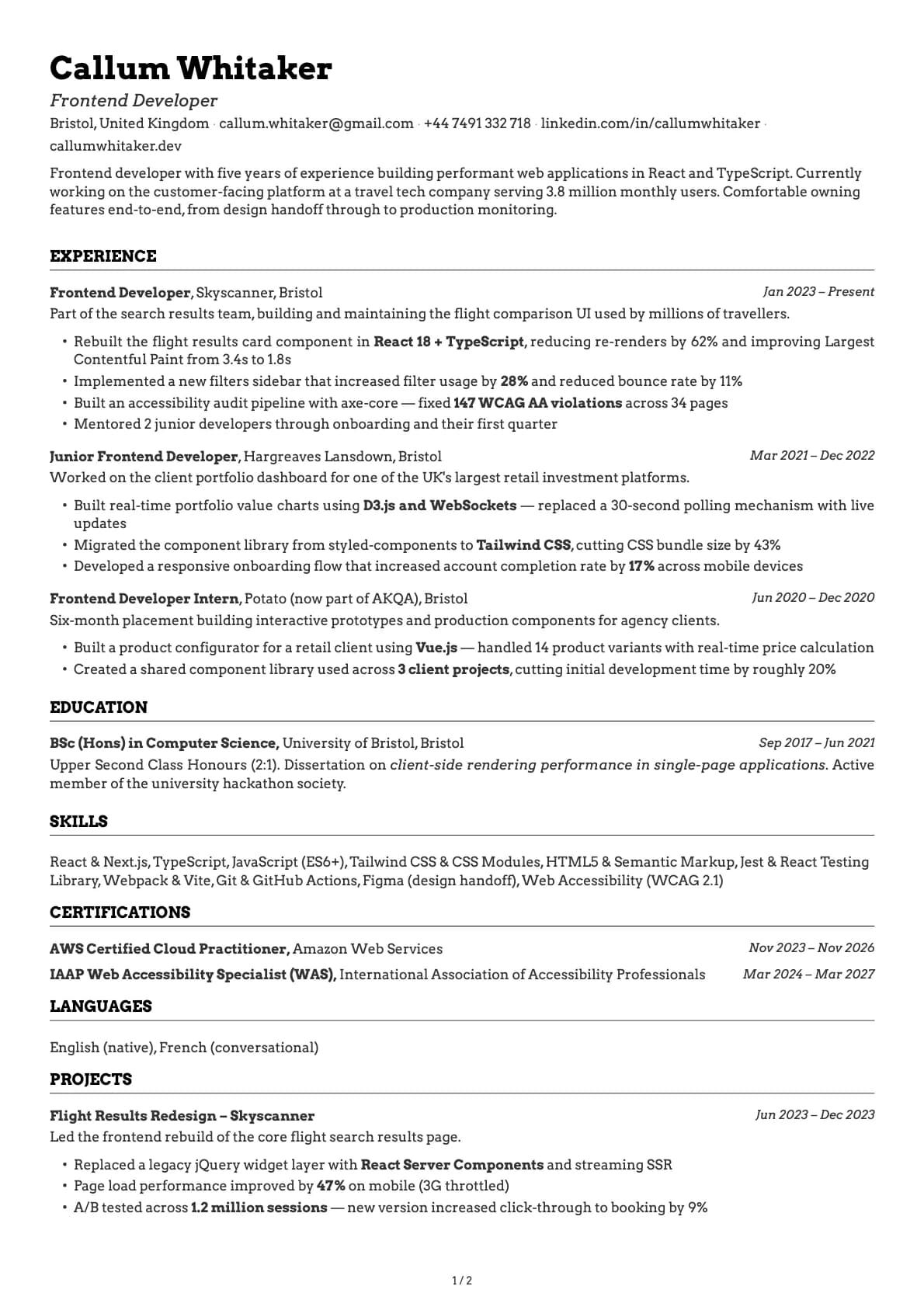
Frontend Developer
A frontend developer resume example with React and TypeScript experience at Skyscanner and Hargreaves Lansdown.
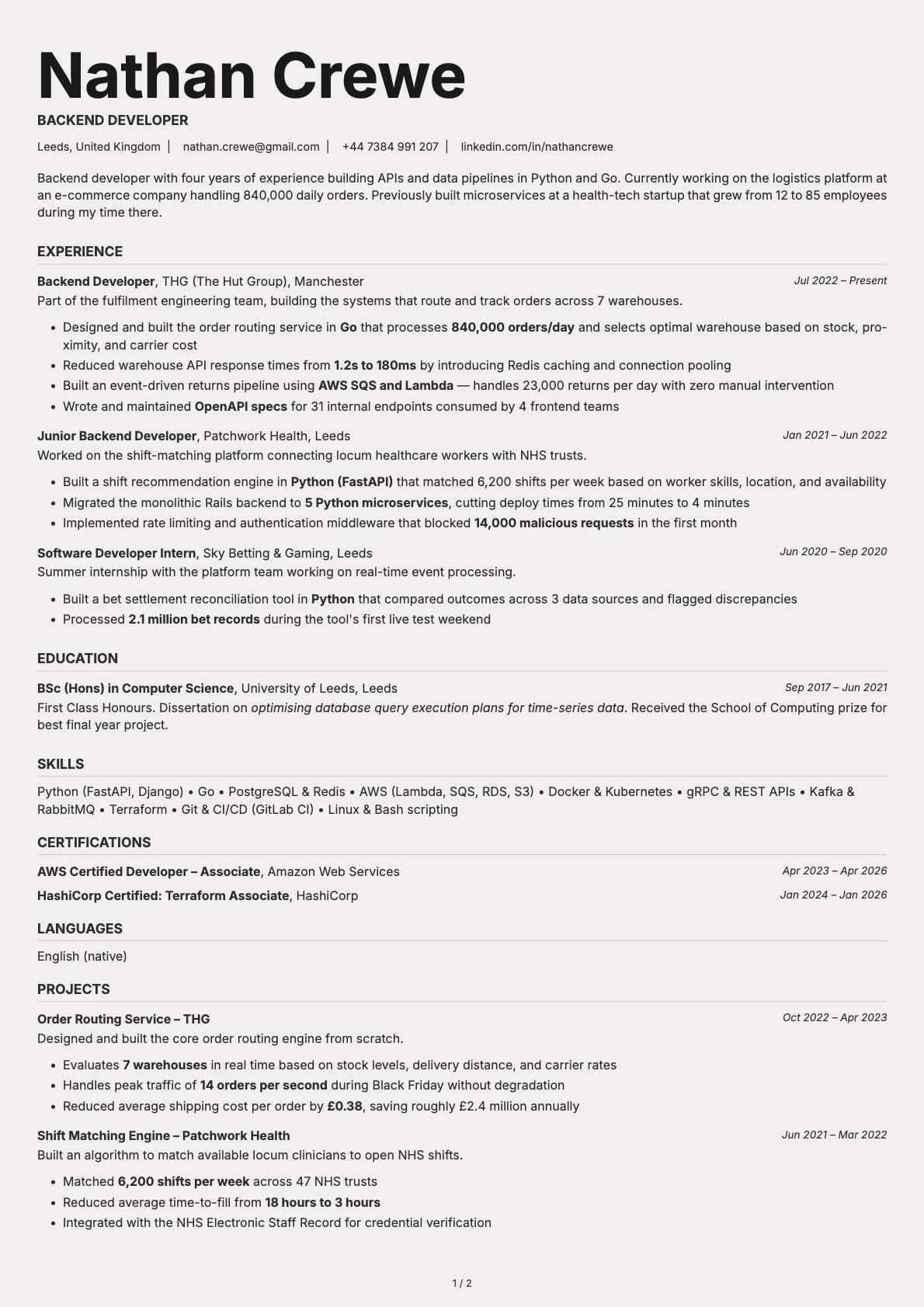
Backend Developer
A backend developer resume example with Go and Python experience, system throughput numbers, and infrastructure projects across e-commerce and health-tech.
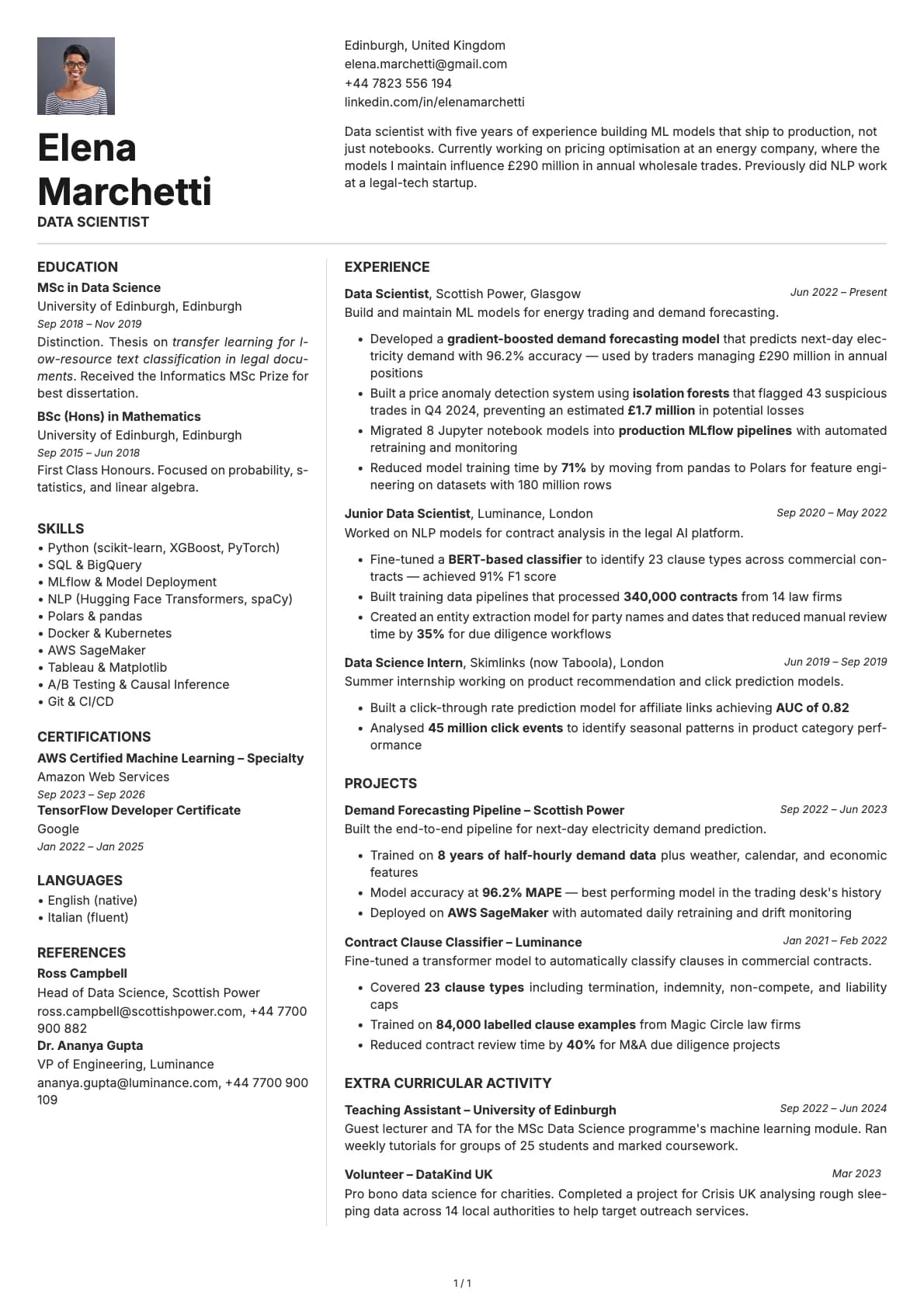
Data Scientist
A data scientist resume example with ML production experience at Scottish Power and NLP work at Luminance.
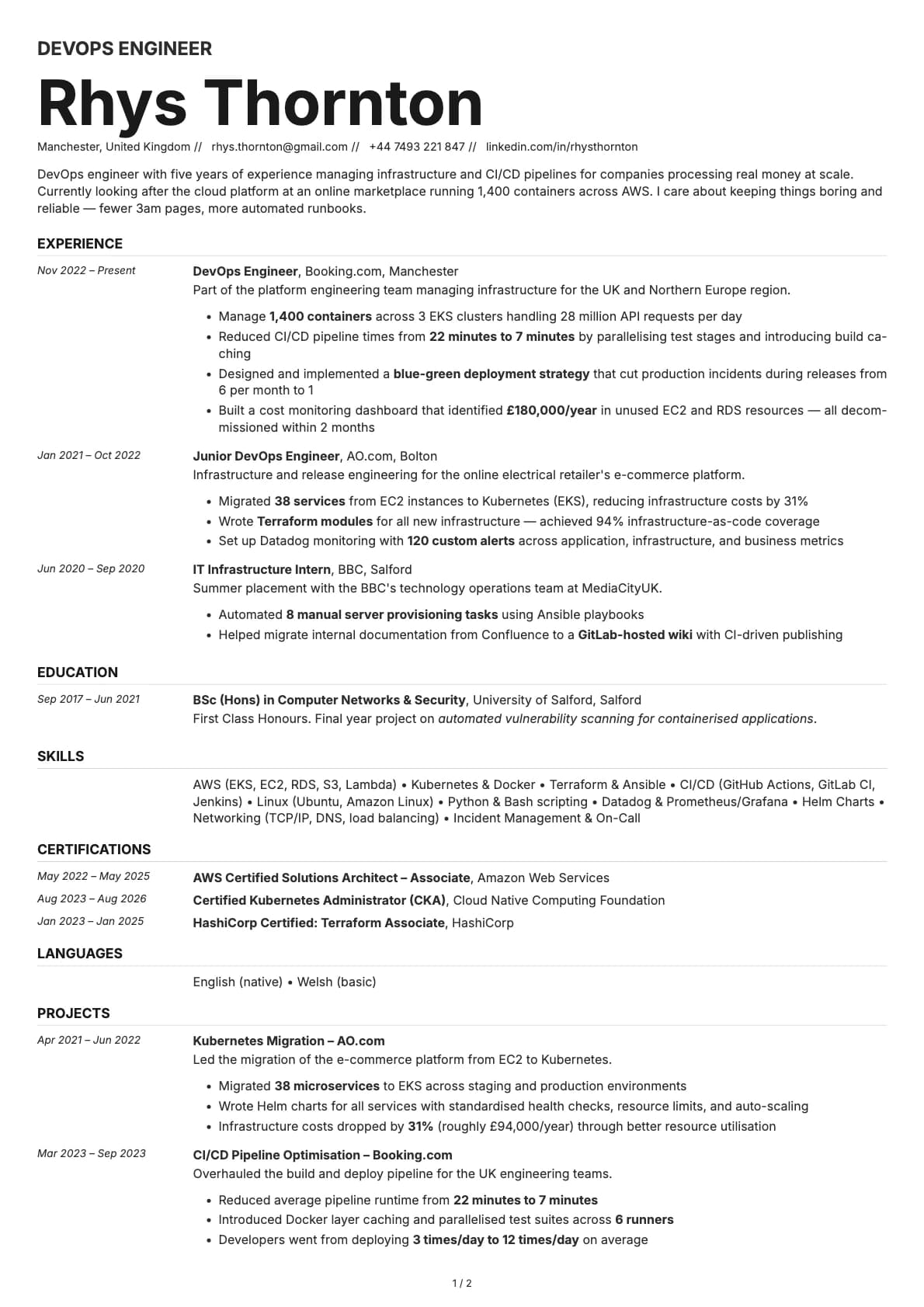
DevOps Engineer
A DevOps engineer resume example with infrastructure experience at Booking.com and AO.com.
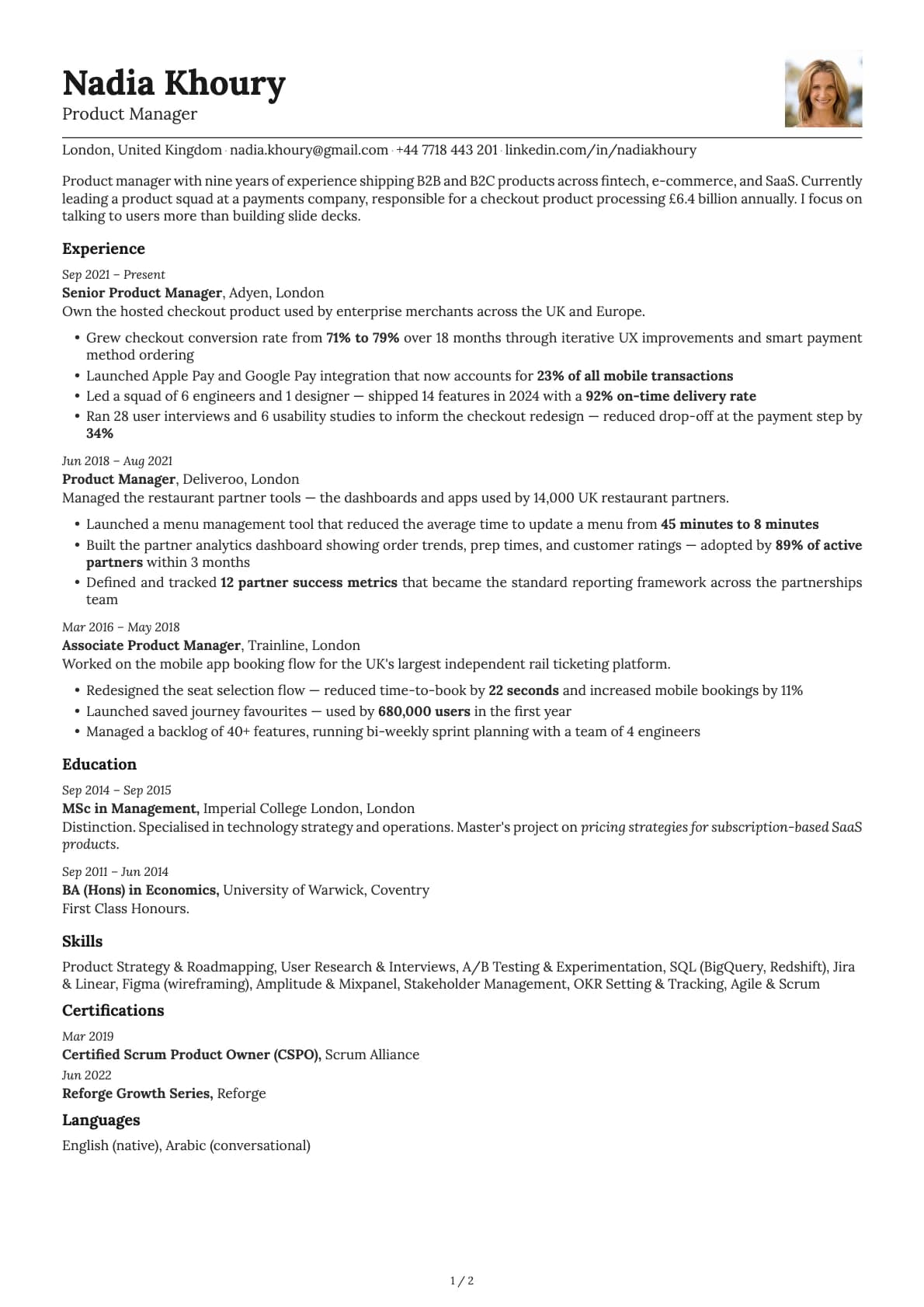
Product Manager
A product manager resume example showing how to present user research, conversion metrics, and feature launches with real business outcomes.
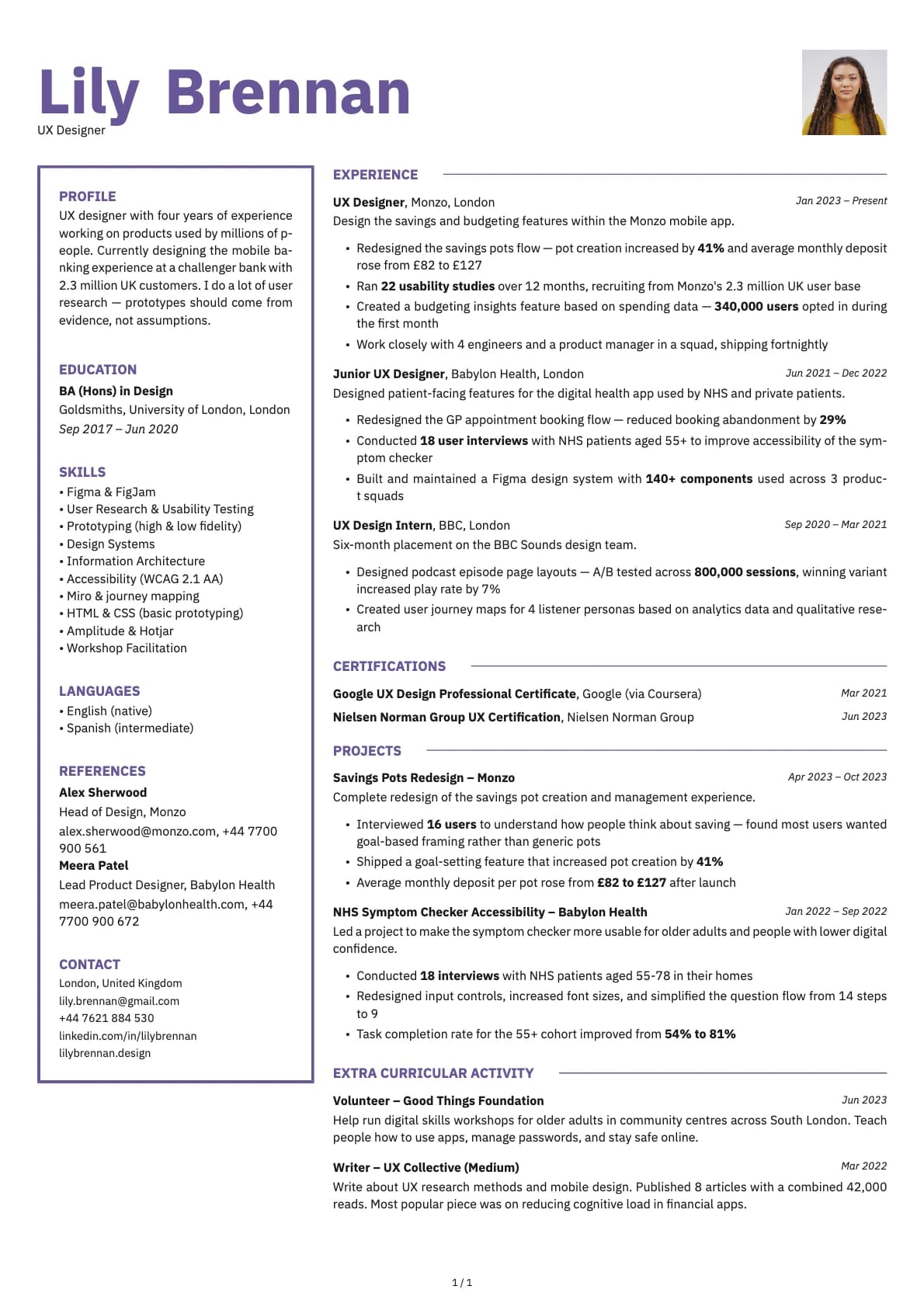
UX Designer
A UX designer resume example with 4 years of product design experience at Monzo and Babylon Health.
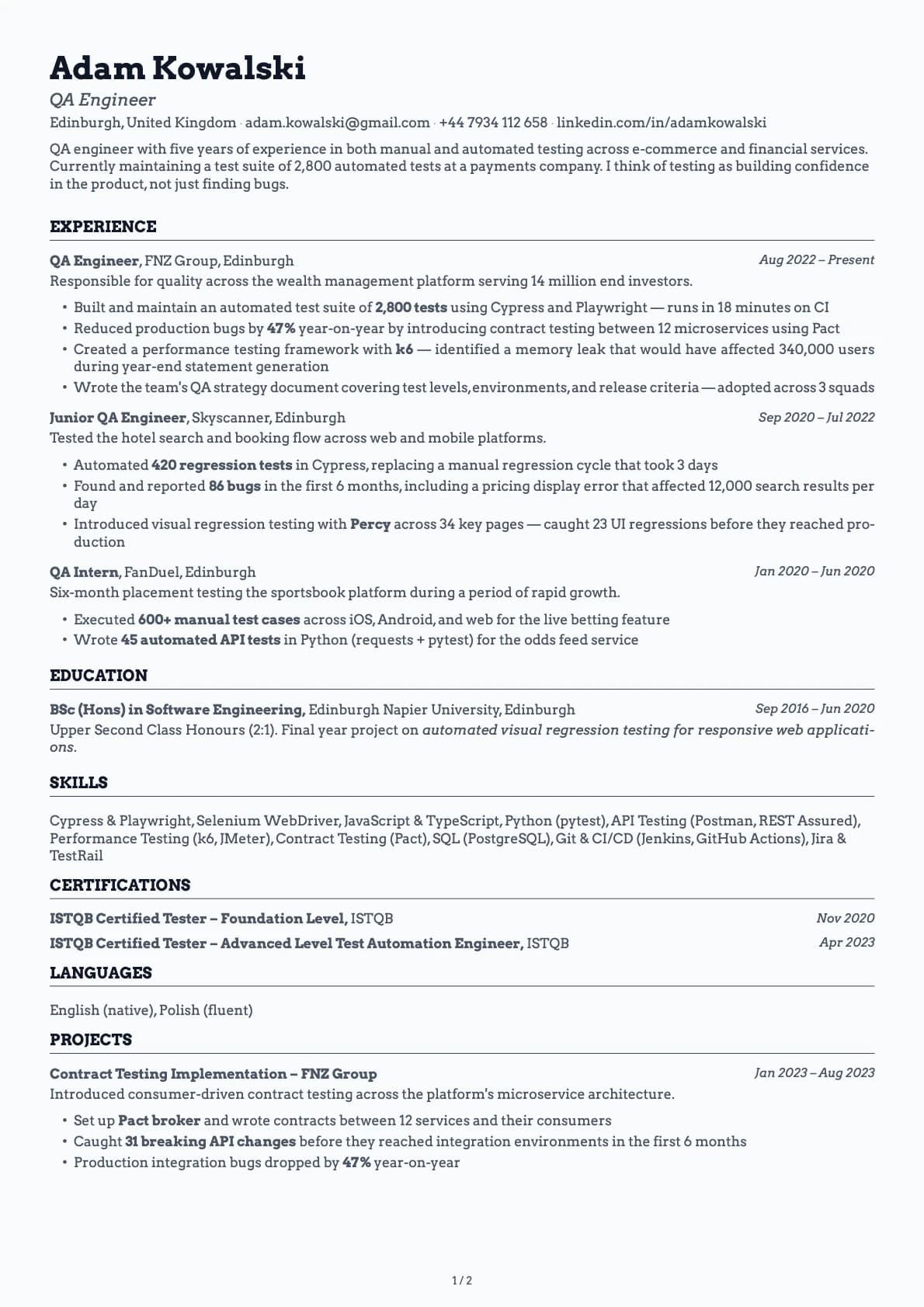
QA Engineer
A QA engineer resume example with automated test suite numbers, production bug reduction, and contract testing implementation details.
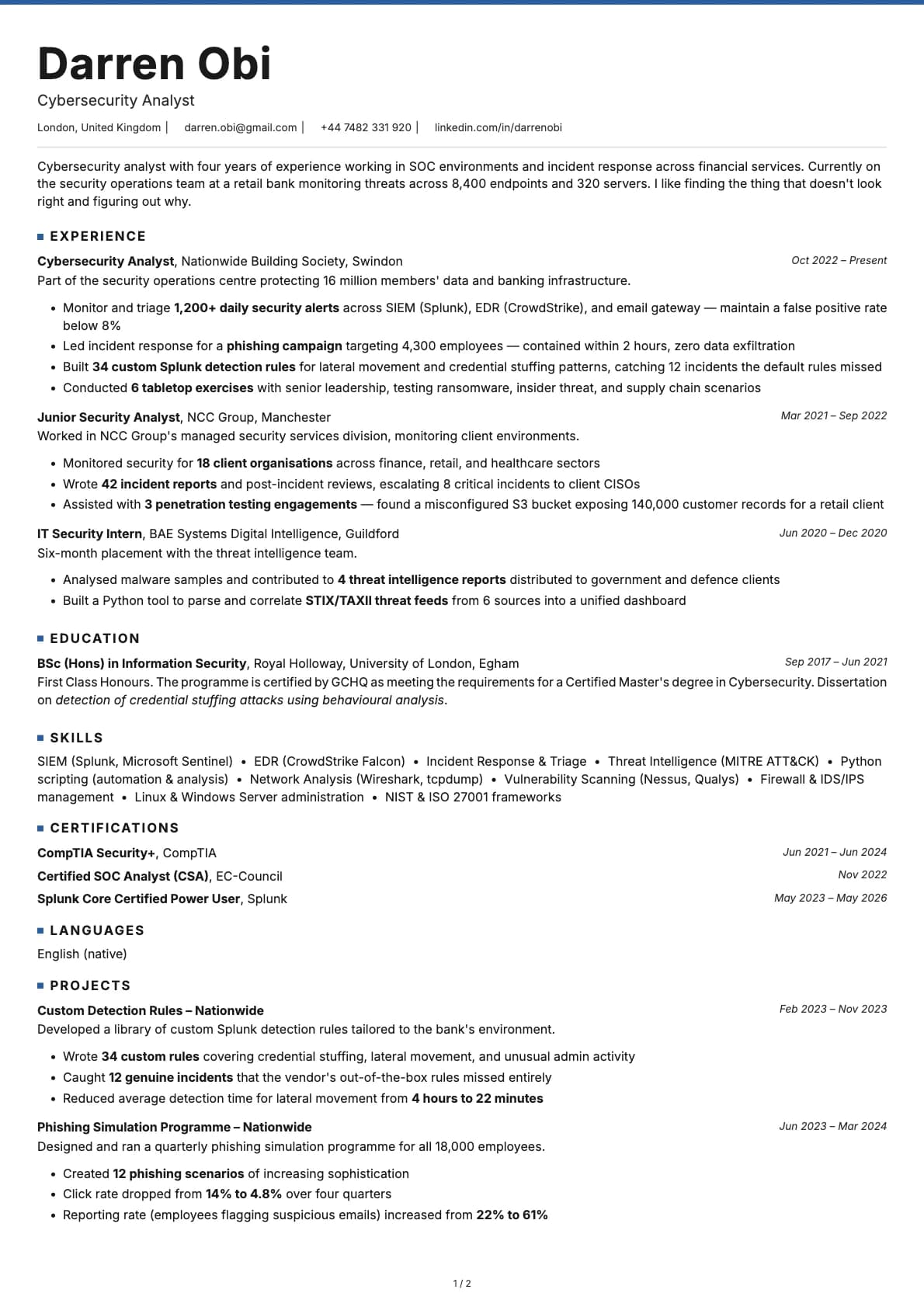
Cybersecurity Analyst
A cybersecurity analyst resume example with SOC experience at Nationwide and NCC Group.
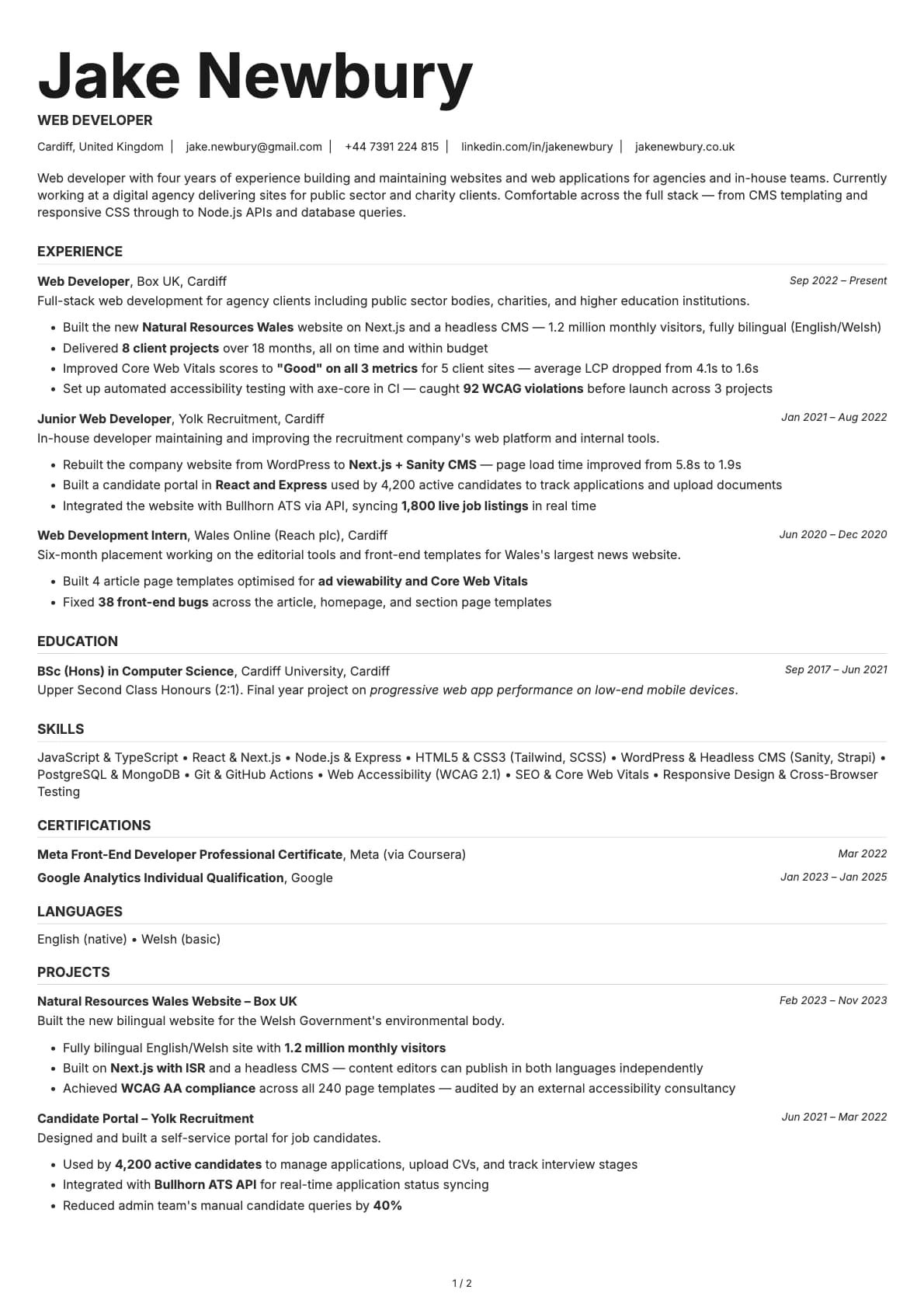
Web Developer
A web developer resume example with agency and in-house experience building Next.js sites, improving Core Web Vitals, and delivering accessible public.
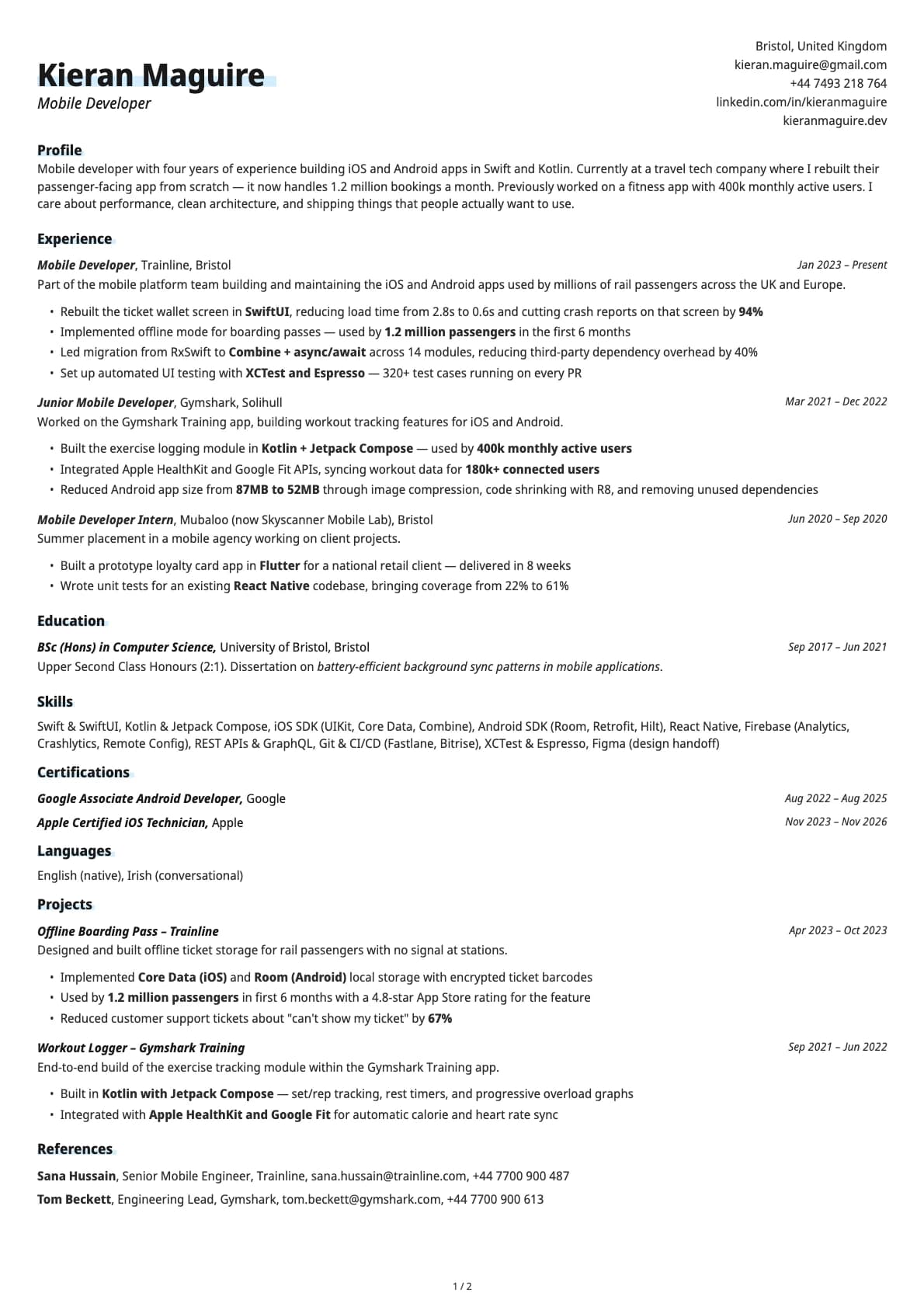
Mobile Developer
A mobile developer resume example with iOS and Android experience, performance metrics, and real app user numbers.
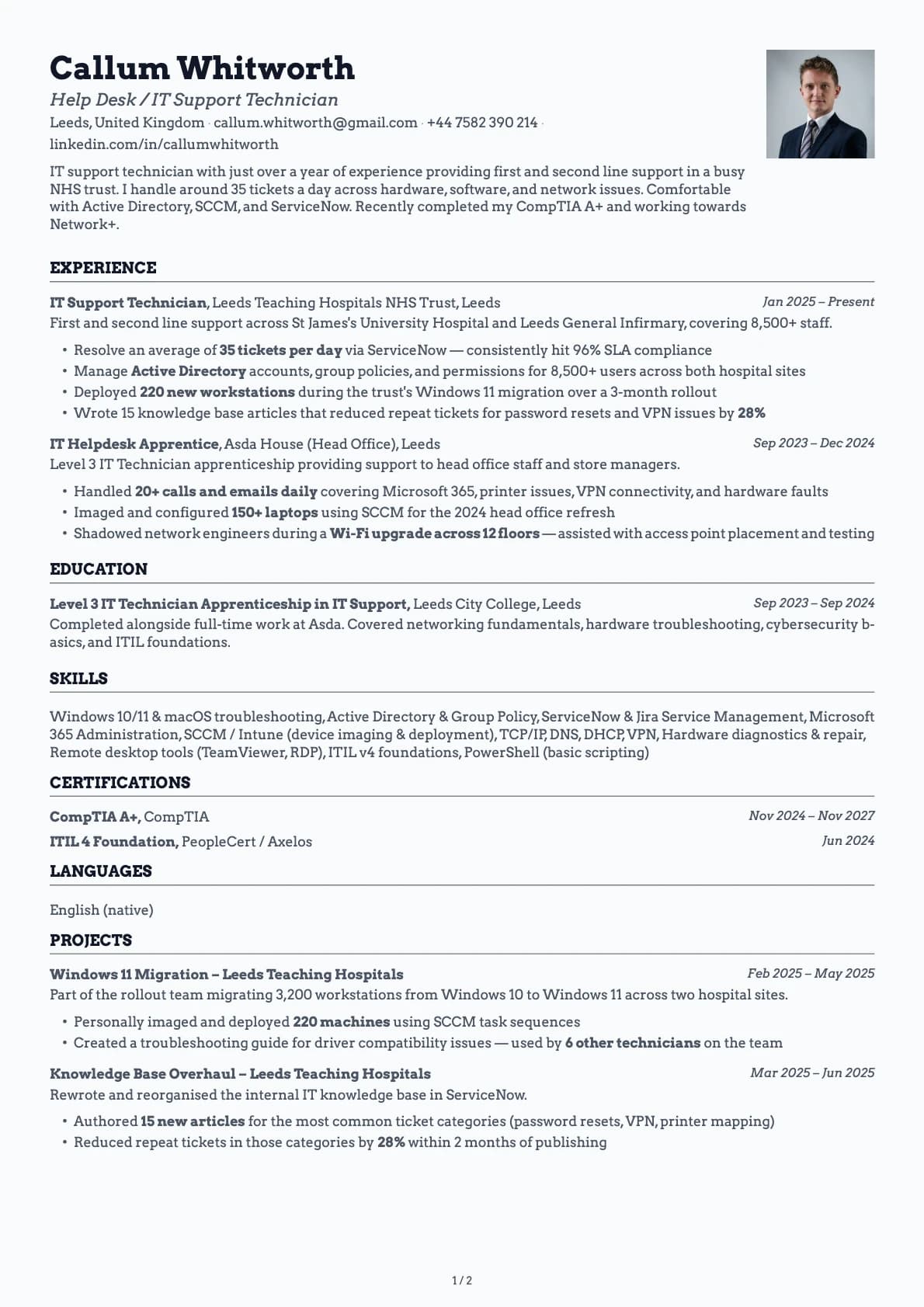
Help Desk / IT Support Technician
A help desk technician resume example with NHS IT support experience.
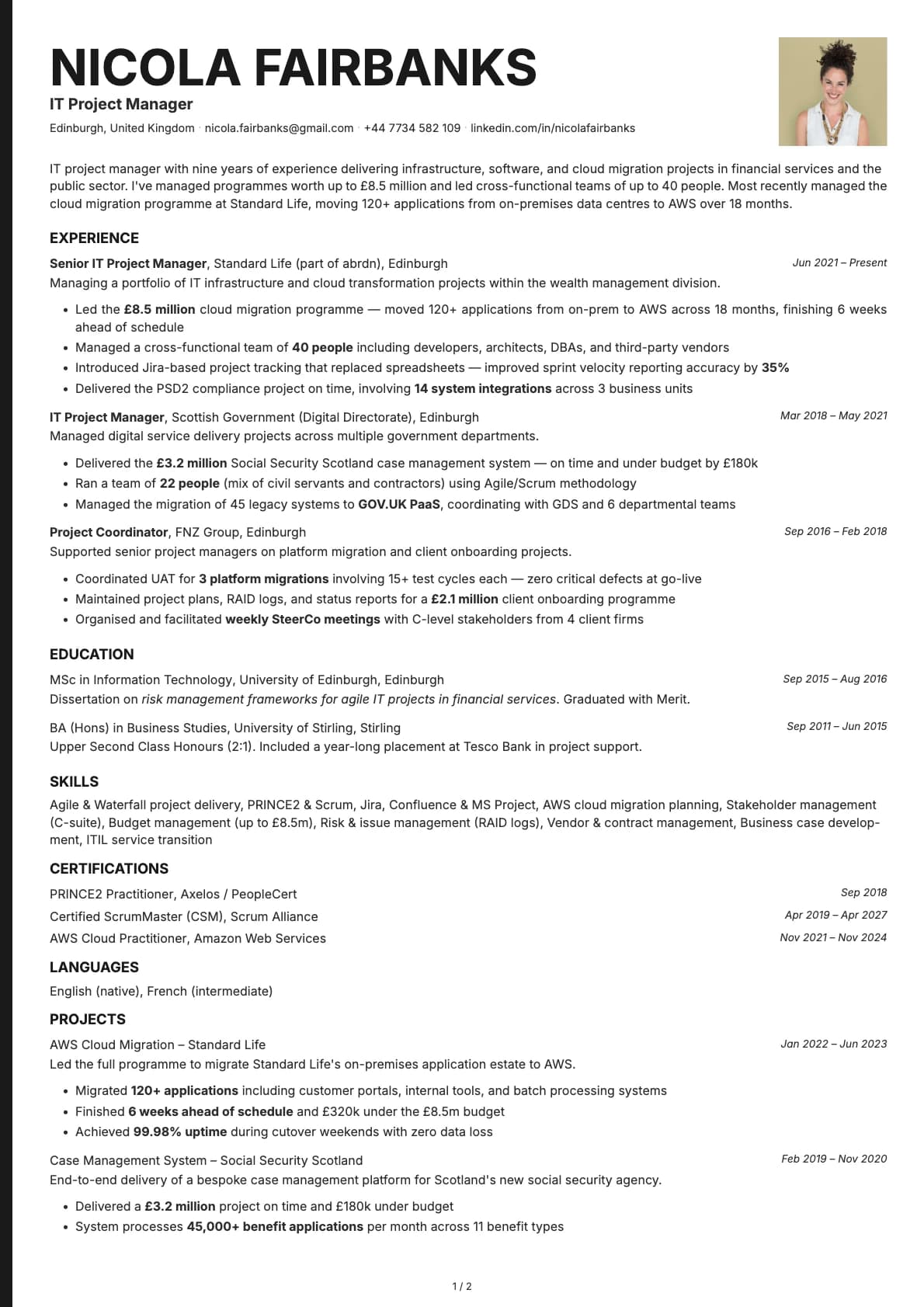
IT Project Manager
An IT project manager resume example with cloud migration, programme budgets up to £8.5 million, and PRINCE2/Scrum certifications.
Related articles

AI Is Screening Your Resume Before Any Human Sees It
AI screens most resumes before a human ever reads them. 97.4% of Fortune 500 companies run an ATS. This is what that means for you and what you can do about it.

ATS Resume Checker: How to Format a CV That Gets Past the Filters
Run the free copy and paste test to see what an ATS actually reads on your CV, then fix the tables, columns and headings that quietly get you filtered out.

The Best Resume Builders in 2026, Compared Honestly
Resume.io, Zety, Enhancv, Kickresume, Teal, and Laddro compared honestly: real pricing, free tiers, mobile apps, and where each tool wins. All prices checked in September 2026.